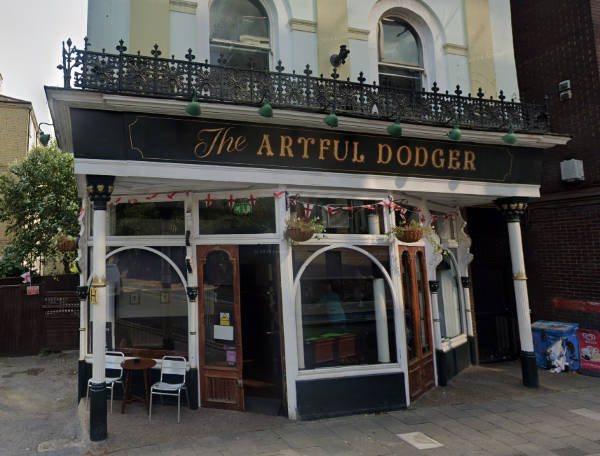
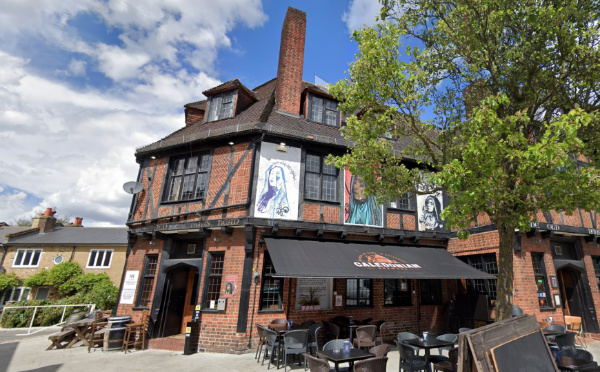
It won’t come as a surprise, but this pub, located a short distance east of Tower Hill, is named for the character from Charles Dickens’ Oliver Twist.
PICTURE: Google Maps
Located in Royal Mint Street, the pub was formerly known as the Crown and Seven Stars. It closed in 1981 and reopened under its current name in 1985.
While the history of the Crown and Stars apparently goes back some years earlier, the current four storey building, which is Grade II-listed, dates from a rebuild in the 1820s. But the facade, which features a crown and seven stars on the uppermost level, was partially rebuilt in the 1880s.
It’s not quite clear why the pub is so re-named – there doesn’t appear to be any particular connection of the character – known as the Artful Dodger but whose ‘real’ name in the novel is Jack Dawkins – with the location except that it’s in the East End where large sections of the book are set.
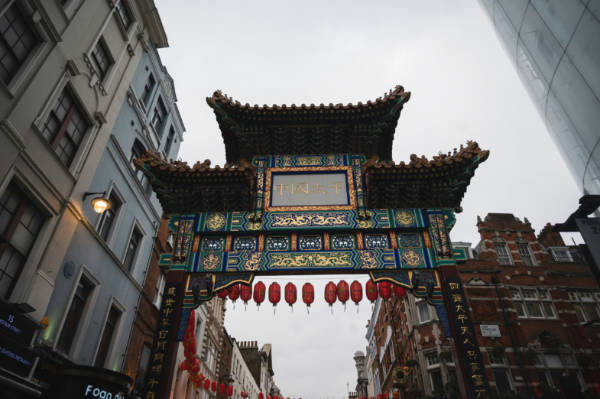
• Lunar New Year festivities will be held in Chinatown in central London this weekend including lion dances and the Chinese New Year Parade. Lion dances will be held throughout Chinatown on Saturday and Sunday while the parade kicks off at 10am on Sunday just east of Trafalgar Square reaching the square at 12 where an afternoon of festivities will be held. For more, see www.london.gov.uk/events/lunar-new-year-festival-spring-2026. Meanwhile, Lunar New Year celebrations will also be held in Greenwich on Saturday. The celebrations include lion dances, musical and dance performances, a martial arts demonstration, workshops including one on Tibetan dance and another on lantern making and the chance to sample Asian food. For more, see www.rmg.co.uk/lunarnewyear.
• A new exhibition at the Young V&A in Bethnal Green takes a look behind the scenes of stop-motion classics such as Wallace & Gromit, Chicken Run and Shaun the Sheep. Inside Aardman: Wallace & Gromit and Friends, created primarily for children and families and marking Aardman’s 50th annversary, features some 150 objects including never-seen-before models, sets and storyboards from Aardman’s archives as well as interactive activities ranging from designing characters and experimenting with lighting through to creating live action videos. Among the items on show are early sketches of Wallace & Gromit, a hand-drawn storyboard from The Wrong Trousers (1993) train chase, Wallace & Gromit’s motorbike and sidecar from Vengeance Most Fowl (2024), and the airship model from The Pirates! (2012). Admission charge applies. Runs until 15th November. For more, see vam.ac.uk/young.
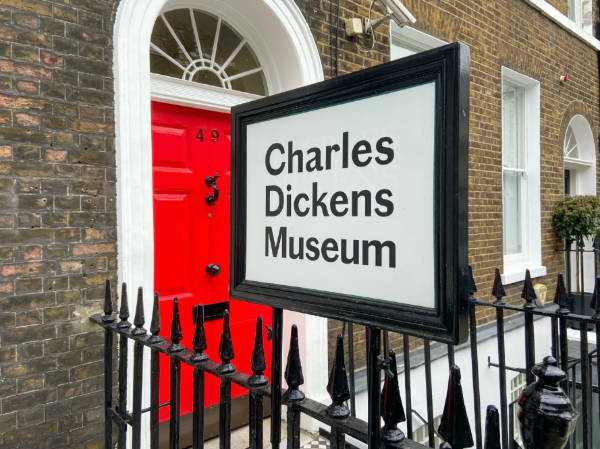
• The women who influenced Charles Dickens are at the centre of a new exhibition at the Charles Dickens Museum.Extra/Ordinary Women features a portrait of Dickens’ daughters, Katey and Mamie, on display for the first time, Catherine Dickens’s cookbook, and a draft preface to an 1857 manual for educating working class children written by penned by Angela Burdett Coutts and including edits by Dickens in blue ink as well as items owned by Ellen Ternan, best known for her 12-year extra-marital relationship with Dickens. Admission charge applies. Runs until 6th September. For more, see https://dickensmuseum.com/blogs/all-events/extra-ordinary-women.
Send all items for inclusion to exploringlondon@gmail.com
The real person behind writer Charles Dickens’ ‘Inspector Bucket’, Charles Frederick Field was a police officer with the Metropolitan Police who rose to the rank of inspector before, following retirement, becoming a private detective.
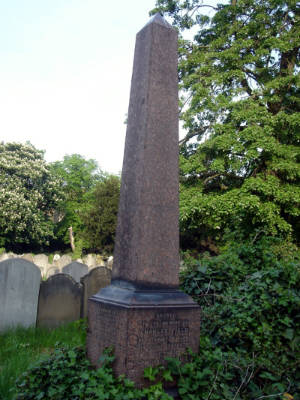
Field’s funerary monument in Brompton Cemetery. PICTURE: Edwardx (licensed under CC BY-SA 1.0)
Field, the son of a Chelsea pub proprietor, had apparently wanted to be an actor but due to his straitened economic situation had instead joined the Metropolitan Police at its founding in 1829.
Field served in several divisions across London, eventually rising to the rank of inspector. He joined the Detective Branch, which had only been formed in 1842, in 1846.
It was while with the Detective Branch that he encountered Dickens and they formed what’s described as a lasting friendship. From 1850 onwards Dickens wrote as series of articles about the world of the Detective Branch and the work of Field (sometimes using a pseudonym) including his essay ‘On Duty With Inspector Field’.
Dickens is also believed to have used Field as the model for Inspector Bucket in Bleak House, first published as a serial in 1852 and 1853.
Field, who was noted as a bit of a raconteur and for his love of disguises even when not really required (perhaps explained by theatrical bent), retired from the Met in 1852 and set up his own enquiry office. He apparently caused controversy after his retirement by using his rank in his private work which somewhat soured his relationship with the force.
Field, who died in 1874 and is buried in Brompton Cemetery, has since been the subject of several works of fiction.
• The enduring appeal of Charles Dickens’ works and how they have been adapted for the stage, screen and radio is the focus of a new exhibition at the Charles Dickens Museum in Bloomsbury. Showtime! looks at productions starting from as far back as 1837 and including such classics as The Muppets Christmas Carol and Oliver! the musical with objects on show including original playbills, posters, programmes, photographs and props. There’s also the opportunity to hear from actors and writers about what makes Dickens so adaptable and see Dickens’ own works which he annotated with stage directions. The display can be seen until 26th January. Admission charge applies. For more, see www.dickensmuseum.com.
• A major new exhibition on the future of food – how science is creating more sustainable ways of producing and consuming food – opens at the Science Museum today.Future of Food reveals how the way we grow food and eat impacts the climate, nature, and society. Among the more than 100 objects on show are cricket burgers and cell-grown salmon as well as 3,500-year-old fermented sourdough bread, the first Quorn burger dating from 1981 and the first beef steak grown outside a cow. There is also the chance to join a multiplayer interactive game and create your own “future for food”. Runs until 4th January. Admission is free. For more, see https://www.sciencemuseum.org.uk/see-and-do/future-of-food.
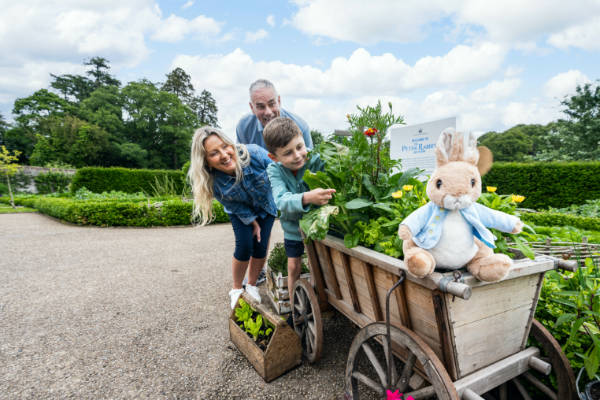
The Peter Rabbit Adventure at Hampton Court Palace. PICTURE: Courtesy of Historic Royal Palaces.
• Peter Rabbit is hopping over to Hampton Court Palace to take part in a new family trail that brings Beatrix Potter’s beloved characters to life in the palace gardens from tomorrow. The Peter Rabbit Adventure, included as part of the palace admission, is spread over the Kitchen Garden, Tiltyard, and Wilderness and the activities on the trail will introduce little ones to the plants, vegetables and wildlife that inhabit the gardens. These include the chance to use Mrs Tiggy-winkle’s washing equipment to make music among the trees, to join in a search for Peter Rabbit under wheelbarrows and flowerpots in the Tiltyard, and to try to hop, skip and jump as high as Peter and his friends. A larger-than-life Peter Rabbit will be greeting families in the Kitchen Gardens. Runs until 7th September. For more, see https://www.hrp.org.uk/hampton-court-palace/whats-on/the-peter-rabbit-adventure/.
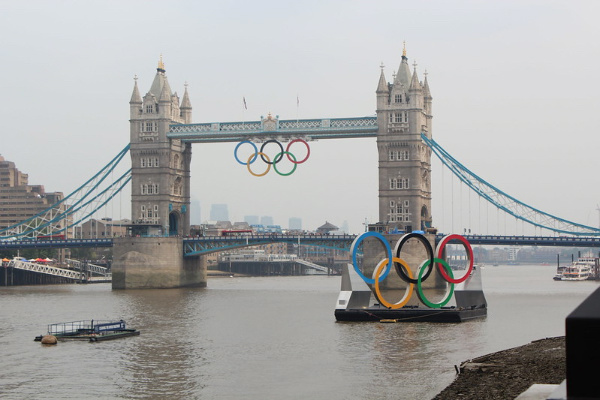
Memories of 2012. This year the Games are in Paris but there’s plenty of places to watch on a big screen in London. PICTURE: Peter Burgess (licensed under CC BY 2.0)
• The Olympics are in full swing across the Channel in Paris and to ensure you don’t miss any of the action, big screens are showing the coverage across London. Among them are official Team GB Fanzones – there’s a list of locations on the Team GB website here. Other locations include Lyric Square in Hammersmith, Bishops Square in Spitalfields, the Old Royal Naval College grounds in Greenwich and by the Thames at London Bridge as part of the Summer by the River festival.
• New portraits of human rights campaigner Peter Tatchell and singer Sam Smith have gone on display at the National Portrait Gallery as part of its History Makers Display. The full-length portrait of Tatchell, which has been acquired by the gallery, was painted by artist Sarah Jane Moon to coincide with his 70th birthday on 25th January, 2022, and is the first portrait of Tatchell to enter the gallery’s collection.. Meanwhile, titled Gloria, the portrait of five-time Grammy Award winner Smith is the work of artistic duo Pierre Commoy and Gilles Blanchard and was created in 2023. It’s on loan from the singer. For more, see www.npg.org.uk.
• On Now: Faithful Companions: Charles Dickens & his Pets. This exhibition at the Charles Dickens Museum in Bloomsbury takes a look at the many pets – dogs, ravens, goldfinches, and cats – that lived in the home of Charles Dickens, exploring the stories of the likes of Grip the raven and Timber the dog as well as those of animals made famous in his novels. The display includes hand-written letters, family photo albums and artworks. Runs until 12th January next year. Admission charge applies. For more, head to https://dickensmuseum.com/blogs/all-events/faithful-companions-charles-dickens-his-pets.
Send all items for inclusion to exploringlondon@gmail.com
This district of London, which lies to the south-east of Peckham in the London Borough of Southwark, is believed to owe its name to a local tavern named, you guessed it, the Nun’s Head on the linear Nunhead Green (there’s still a pub there, called The Old Nun’s Head, in a building dating from 1905).
The Old Nun’s Head near Nunhead Green. PICTURE: Google Maps
There may well have been actual nuns here (from which the tavern took its name) – it’s suggested that there was a nunnery here which may have been connected to the Augustinian Priory of St John the Baptist founded in the 12th century at Holywell (in what is now Shoreditch).
A local legend gets more specific. It says that when the nunnery was dissolved during the Dissolution, the Mother Superior was executed for her opposition to King Henry VIII’s policies and her head was placed in a spike on the site near the green where the inn was built.
While the use of the name for the area goes back to at least the 16th century, the area remained something of a rural idyll until the 1840s when the Nunhead Cemetery, one of the “Magnificent Seven” cemeteries of Victorian London, was laid out and the area began to urbanise.
A fireworks manufactory – Brocks Fireworks – was built here in 1868 (evidenced by the current pub, The Pyrotechnists Arms). The railway arrived in 1871.
St Antholin’s Church was built in 1877 using funds from the sale of the City of London church, St Antholin’s, Budge Row, which was demolished in 1875. St Antholin’s in Nunhead was destroyed during the Blitz and later rebuilt and renamed St Antony’s (the building is now a Pentecostal church while the Anglican parish has been united with that of St Silas).
There’s also a Dickens connection – he rented a property known as Windsor Lodge for his long-term mistress, actress Ellen Ternan, at 31 Lindon Grove and frequently visited her there (in fact, it has even been claimed that he died at the property and his body was subsequently moved to his home at Gad’s Hill to avoid a scandal).
Nunhead became part of the Metropolitan Borough of Camberwell in 1900. These days, it’s described by Foxtons real estate agency as “a quiet suburb with pretty roads and period appeal”.
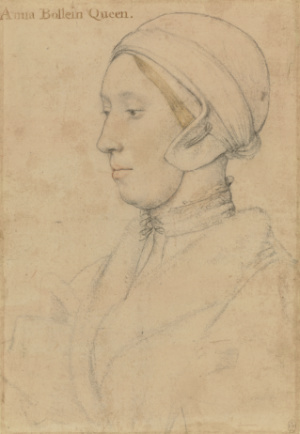
• The largest exhibition of the work of Tudor-era artist Hans Holbein the Younger has opened at The Queen’s Gallery, Buckingham Palace.Holbein at the Tudor Court features more than 50 works by Holbein including intimate portrait drawings of the royal family and the Tudor nobility including one of few surviving drawings of Anne Boleyn made during her lifetime, drawings of Jane Seymour and Sir Thomas More, and an unfinished portrait of King Henry VIII’s son Prince Edward. Other portraits include that of Derich Born, a 23-year-old Steelyard merchant, and one of Richard Southwell, a convicted murderer who was one of King Henry VIII’s closest advisors. The exhibition also features objects including a Brussels tapestry, jewel-like miniatures and Henry VIII’s magnificent armour, usually on show at Windsor and in London for the first time in a decade. Runs until 14th April. Admission charge applies. For more, see www.rct.uk/collection/themes/exhibitions/holbein-at-the-tudor-court/the-queens-gallery-buckingham-palace
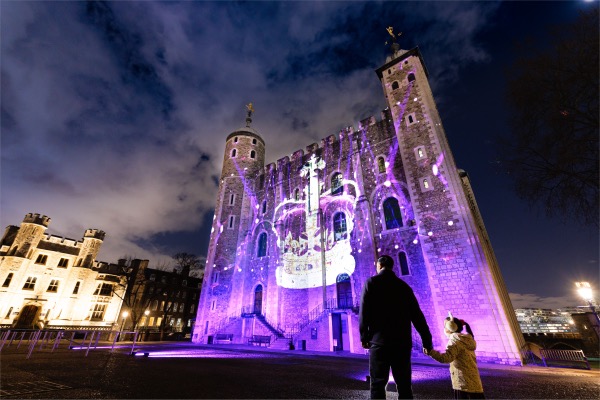
• The magnificence of coronations and the Crown Jewels will be on show at the Tower of London from tomorrow night in a new light and sound show. Crown and Coronation – which has been created by Historic Royal Palaces in partnership with Luxmuralis as part of an artistic collaboration between artist Peter Walker and composer David Harper – brings the “spectacle, significance and shared experience” of coronations to life and demonstrates the pivotal role of the Crown Jewels in the ceremony as it takes visitors on a journey through the past 1,000 years. Images of the jewels will be projected on the White Tower in the show with visitors then able to view the actual jewels themselves in a special after hours opening. But you’ll have to be quick – the show can only be seen for nine days, ending on 25th November before it embarks on a two year UK-wide tour. Admission charge applies. For more, see www.hrp.org.uk/tower-of-london/.
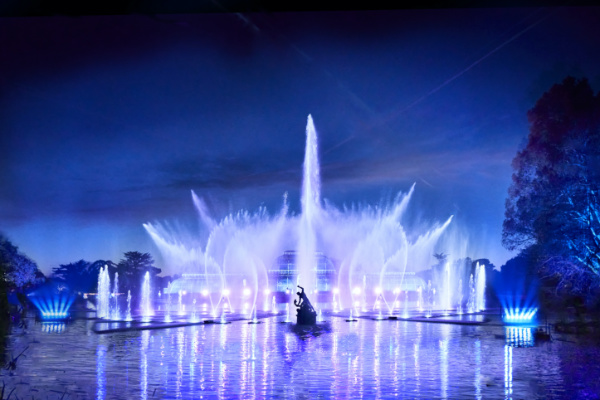
• Christmas returned to Kew this week with the launch of it’s new festive light trail featuring seven new installations. Highlights of this year’s trail include three metre tall illuminated flowers, cascading lights suspended from the tree canopy, one of the longest light tunnels to ever feature in Kew’s Christmas celebrations and the Hive – which recreates life inside a beehive – as well as the iconic Palm House light show, the twinkling tunnel of light inspired by arched church windows known as the ‘Christmas Cathedral’, and a ‘Fire Garden’ at the Temperate House. There’s also festive treats to sample and visitors can experience a traditional Christmas dinner at The Botanical Brasserie. Admission charges applies. Runs until 7th January (advance bookings only). For more, see www.kew.org/christmas.
• Charles Dickens’ friendship and collaboration with writer Wilkie Collins is explored in a new exhibition at The Charles Dickens Museum in Bloomsbury. Dickens met Collins, who would become one of his most significant friends, in 1851 as they performed together in a play at the house of John Forster and their personal and professional relationship lasted more than 15 years. The display features works produced as a result of the friendship – everything from articles in Dickens’s Household Words through to novellas and plays such as The Lazy Tour of Two Idle Apprentices and The Frozen Deep – and features original letters, historic objects, and interactive displays focusing on everything from the pair’s moustache-growing contests and cruising international entertainment districts to co-writing side by side, discussing writer’s block and plot devices. Admission is included with general admission. Runs until 25th February. For more, see https://dickensmuseum.com.
• A piece of the only surviving dress worn by Queen Elizabeth I, Charles Dickens’ court suit, an RSC robe worn by David Tennant as Richard II, and the coronation glove of Queen Elizabeth II are among highlights of a new exhibition at the Guildhall Art Gallery. Marking the 400th anniversary of the Worshipful Company of Gold and Silver Wyre Drawers, Treasures of Gold and Silver Wire features more than 200 objects related to royalty, the arts, military, and the church spanning the period stretching from the Middle Ages to today. Other highlights include a uniform of the State Trumpeter, The Jubilee Cope from St Paul’s Cathedral, a robe of Order of the Garter and the burse of the Great Seal of King Charles II. The exhibition, which opens on Friday, runs until 12th November. Admission charge applies. For more, see www.cityoflondon.gov.uk/events/treasures-of-gold-and-silver-wire-exhibition.
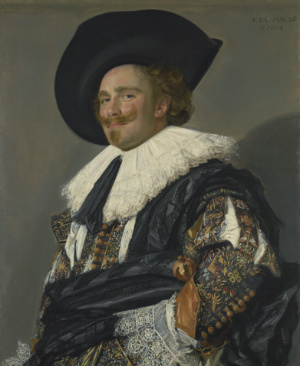
• The Laughing Cavalier serves as the centrepiece of a new exhibition of Frans Hals works at the National Gallery – the largest focused the 17th century Dutch painters’ works in more than 30 years. The Credit Suisse Exhibition: Frans Hals, which has been organised with the Rijksmuseum, Amsterdam features some 50 of the artists works gathered from across the globe. Alongside The Laughing Cavalier which is on loan from the Wallace Collection, highlights include Portrait of Isaac Massa (1626), Portrait of Pieter Dircksz. Tjarck (about 1635–38), The Rommel-Pot Player (1618–22) and Portrait of Tieleman Roosterman (1634). Admission charge applies. Runs until 21st January.
• A major exhibition on the work of Flemish artist Peter Paul Rubens (1577-1640) has opened at the Dulwich Picture Gallery. Rubens & Women features more than 40 paintings and drawings along with archival material and challenges the perception that the artist only painted one type of women as it explores his relationships with women and how they nourished his career and creativity. Highlights include Portrait of a Woman (c1625), Marchesa Maria Serra Pallavicino or Marchesa Veronica Spinola Doria (1606-07), The Virgin in Adoration of the Child (c1616), Looking Down (Study for head of St Apollonia) (1628), Ceres and Two Nymphs (1615-17), The Birth of the Milky Way (1636-1638), and Clara Serena Rubens, the Artist’s Daughter (c1620-23). The exhibition runs until 28th January. Admission charge applies. For more, see www.dulwichpicturegallery.org.uk.
• An interactive exhibition exploring email’s impact in our lives – how it shapes our work, relationships, cultures and economies – opens at The Design Museum today.Email is D̶e̶ad̶ ̶, being held in partnership with Intuit Mailchimp, charts the history of email, from its embryonic beginnings in the 1970s to what the email experience might be like in 2070. Admission is free. Runs until 22nd October. For more, see https://designmuseum.org.
Send all items to exploringlondon@gmail.com for inclusion.
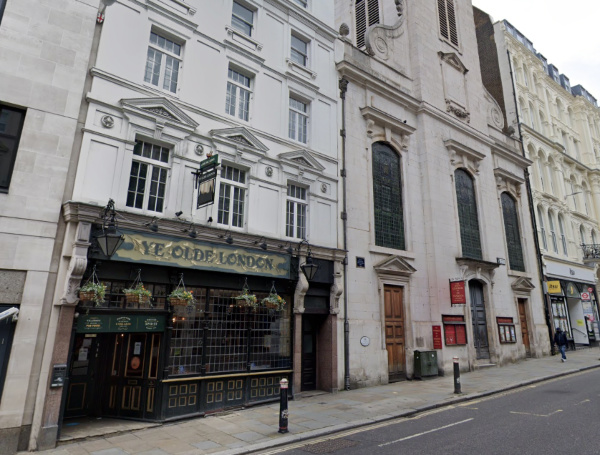
Site of the London Coffee House. PICTURE: Google Maps
Established in the early 1730s on Ludgate Hill (next to St Martin Ludgate), the proprietor of this establishment was one James Ashley (hence the coffee house also being known as Ashley’s London Punch House – the punch was apparently particularly affordable).
It was known to have been frequented by the likes of Joseph Priestley and his friend, American Benjamin Franklin, while James Boswell described its customers as being primarily physicians, dissenting clergy and “masters of academies”.
Its location also meant it served as a place where Old Bailey juries which could not reach a decision were sequestered for the night.
Continued to be favoured by Americans, in 1851 philanthropist George Peabody gave a dinner here for those from the United States who were connected with the Great Exhibition being held in Hyde Park.
In 1806, a statue of Hercules and a hexagonal Roman altar, dedicated to Claudia Martina by her soldier husband, were found here. The coffee house has also been identified as the “Coffee House on Ludgate Hill” mentioned in Charles Dickens’ Little Dorritt.
It closed in 1867. The site is now occupied by a pub, The Ye Olde London.
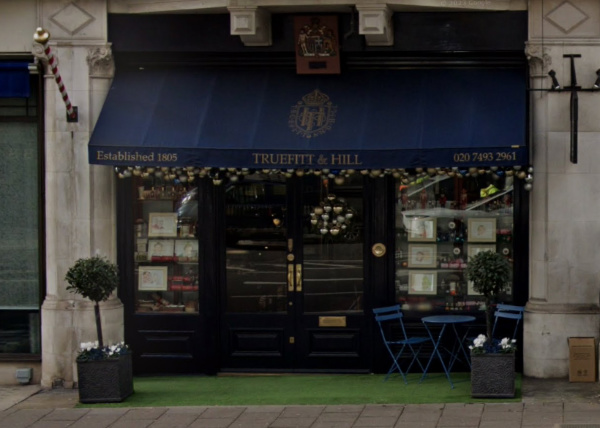
William Francis Truefitt, who styled himself as hairdresser to the British Royal Court, established his first barbershop at 2 Cross-Lane, Long Acre, on 21st October, 1805 – famously on the same day as the Battle of Trafalgar.
In 1811, he moved the business to 40 Old Bond Street. In 1935, Truefitt acquired Old Bond Street firm Edwin S Hill & Co – which had been established in 1911 – and the firm moved to its address at 23 Old Bond Street.
The company, which now has outlets around the world – received its first Royal Warrant – wigmaker – from King George III and also held a warrant from the late Prince Philip.
Royalty aside, customers at the shop have included everyone from Lawrence Olivier to Mahatma Gandhi, Frank Sinatra, John Wayne, David Niven, Oscar Wilde and Winston Churchill. The firm was also referenced by such literary luminaries as Charles Dickens and William Thackeray.
The firm moved to its current location at 71 St James’s Street in 1994.
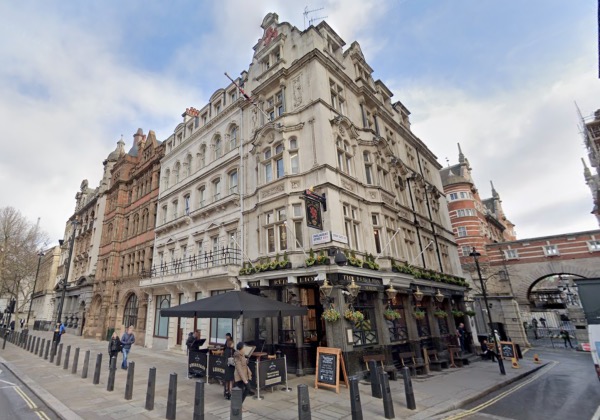
There has been a pub on this storied Whitehall location, located between conveniently for politicians between the Houses of Parliament and Downing Street, since at least the 15th century.
Then named Hopping Hall, a pub is recorded on this site at 48Parliament Street (on the corner with Derby Gate) as early as 1434. It passed into the hands of the Crown by 1531 and by the early 19th century it had taken on the name of the Red Lion (at the time, it was visited by Charles Dickens as a young man). The current, now Grade II-listed, building was erected on the site in 1890.
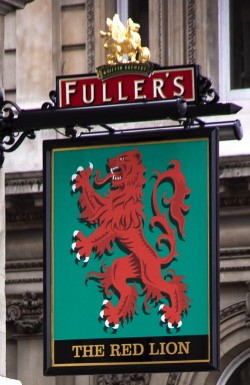
The pub’s name – one of the most common in England (there’s several more in London alone) – apparently originated at the ascension of the Scottish King James I to the throne in 1603. The King ordered that all significant buildings display the red heraldic lion of Scotland and that included pubs. Hence the Red Lion.
The four storey pub has been popular among politicians (and journalists interviewing politicians) including Prime Ministers – indeed, it’s claimed to have served every PM up until Edward Heath in the 1970s (as such it’s one of the many pubs in London which features division bells, although the function of these has apparently been replaced by an app).
This Chelsea terraced house, now owned by the National Trust, was once the home of the Victorian literary couple, essayist and historian Thomas Carlyle and his wife (and skilled letter writer) Jane.
The Carlyles moved into the red brick property at 24 Cheyne Row (formerly number 5) in 1834, having left rural Scotland to see what they could make of themselves in London.
As their stars rose – by mid 19th century Thomas, the “sage of Chelsea”, had become an influential social commentator, the home became something of a hub for Victorian literati with the likes of Charles Dickens, Alfred, Lord Tennyson, George Eliot and William Thackeray all visiting them here.
When Thomas died at the property on 5th February, 1881 (Jane had died in 1866), the home reverted to the landlord but a group of admirers decided it needed to be preserved as a memorial to their friend. They raised funds through a public subscription and in 1895 opened it as a shrine to the writer.
The National Trust took over the running of the house, which was built in around 1708, in 1936 with the enthusiastic support of founder Octavia Hill who herself was a Carlyle fan.
The property, which still retains many of its original fixtures and fittings, features a recreation of the couple’s parlour based on Robert Tait’s painting A Chelsea Interior which depicts the Carlyles in the room in 1857.
The property also boasts the attic study that Thomas had constructed in August, 1853, and where he wrote The French Revolution, Latter Day Pamphlets and Fredrick the Great. His attempts at sound-proofing it had failed.
Meanwhile, Jane’s dressing room features a pair of original chintz curtains which she made in the late 1840s.
Inside the parlour at Carlyle’s House. PICTURE: Kotomi_ (licensed under CC BY-NC 2.0)
Among the items on show in the property is a necklace given to Jane by German writer and stateman Johann Wolfgang von Goethe which features a pendant containing a portrait of him. There’s also a a decoupage screen made by Jane using prints in 1849 and wallpapers by William Morris.
The property, which also features a small walled garden and a bust of Thomas Carlyle on the facade, is currently undergoing restoration work and will reopen in March.
WHERE: Carlyle’s House, 24 Cheyne Row, Chelsea (nearest Tube stations are Sloane Square and South Kensington); WHEN: Check website when it reopens; COST: £9 adults/£4.50 children; WEBSITE: www.nationaltrust.org.uk/carlyles-house.
Charles Dickens’ A Christmas Carol is forever linked to Christmas in London. So, with Christmas almost upon us, here’s a quick look at five locations mentioned or alluded to in the famous book…
1. 16 Bayham Street, Camden Town. Bob Cratchit’s house is described as being in Camden Town but what’s interesting is that as a child Dickins’ himself lived here at this property. So whether or not it’s the actual address Dickens had in mind for Cratchit’s property, it’s certainly in the vicinity.
2. The Royal Exchange. Referenced in regard to Ebenezer Scrooge who did business there. The current building was still being completed when Dickens wrote A Christmas Carol in 1843 following a fire at the premises several years before. It was opened in 1844.
3. Simpsons Tavern. Scrooge is said to have taken his “melancholy dinner in his usual melancholy tavern” which has been suggested could refers to Simpsons. Located in Ball Court, the current premises opened in 1757. The George & Vulture in Michael’s Alley is also mentioned as a possibility.
4. Newman’s Court. Located near Cornhill (which is mentioned in the book as the site where Bob Cratchit goes on a slide after leaving Scrooge’s office), it’s been suggested more than once that while the location of Scrooge’s counting house is not specified in the text, a location in Newman’s Court would fit the bill.
5. Leadenhall Market. Following Scrooge’s transformation, he sends a boy out to buy a turkey- commentators suggest the poulterer the boy attends was located in Leadenhall Market which would have been a predecessor to the current building which dates from 1881.
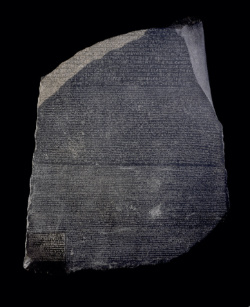
• Marking 200 years since French Egyptologist Jean-Francois Champollion (1790-1832) was able to decipher hieroglyphs using the Rosetta Stone, a new exhibition opening at the British Museum explores how the stone and other inscriptions and objects helped scholars unlock one of the world’s oldest civilisations.Hieroglyphs: unlocking ancient Egypt centres on the Rosetta Stone but also features more than 240 other objects, many of which are shown for the first time. Alongside the Rosetta Stone itself, highlights include: “the Enchanted Basin”, a large black granite sarcophagus from about 600 BCE which is covered with hieroglyphs and images of gods; the richly illustrated, more than 3000-year-old Book of the Dead papyrus of Queen Nedjmet which measures more than four metres long; and the mummy bandage of Aberuait, a souvenir from one of the earliest ‘mummy unwrapping events’ in the 1600s where attendees each received a piece of the linen, preferably inscribed with hieroglyphs. There’s also the personal notes of key figures in the race to decipher hieroglyphs including those of Champollion which come from the Bibliothèque nationale de France as well as those of England’s Thomas Young (1773 – 1829) from the British Library. The exhibition can be seen in the Sainsbury Exhibition Gallery until 19th February. Admission charge applies. For more, see britishmuseum.org/hieroglyphs.
• King Charles III will be crowned at Westminster Abbey on 6th May next year, Buckingham Palace has announced this week. The Queen Consort, Camilla, will be crowned alongside him in the first such coronation since 12th May, 1937, when King George VI and Queen Elizabeth were crowned in the abbey. The ceremony, which will be conducted by the Archbishop of Canterbury, will, according to the palace, “reflect the monarch’s role today and look towards the future, while being rooted in longstanding traditions and pageantry”. King Charles III is expected to sign a Proclamation formally declaring the coronation date at a meeting of the Privy Council later this year. The first documented coronation at Westminster Abbey was that of King William the Conqueror on 25th December, 1066, and there have been 37 since, the most recent being that of Queen Elizabeth II on 2nd June, 1953.
• A new dark comedy, The Admiral’s Revenge, has opened in The Admiral’s House in the Old Royal Naval College, Greenwich. The play, set in 1797, features sea shanties, puppetry and follows a crew of shipmates in the wake of the ill-fated Battle of Tenerife. Audiences have the chance to explore the Admiral’s House before the show and enjoy a complimentary rum cocktail. Runs until 12th November. For ticket prices, head to https://ornc.org/whats-on/1797-the-mariners-revenge/.
• A new exhibition exploring Charles Dickens’ interest in the paranormal has opened at the Charles Dickens Museum in Bloomsbury.To Be Read At Dusk: Dickens, Ghosts and the Supernatural explores Dickens’ famous ghost stories, including A Christmas Carol, and reveals his influence on the genre. Highlights include a copy of The Chimes which Dickens gifted to fellow author Hans Christian Anderson, original John Leech sketches of Dickens’ ghosts of the past, present and future and original tickets and playbills relating to the author’s public performances of his ghost stories. The display will also look into Dickens’ own views on the supernatural as a fascinated sceptic and includes correspondence in which he was asking about the location of a supposedly haunted house. Runs until 5th March. Admission charge applies. For more, see https://dickensmuseum.com/blogs/all-events/to-be-read-at-dusk-dickens-ghosts-and-the-supernatural.
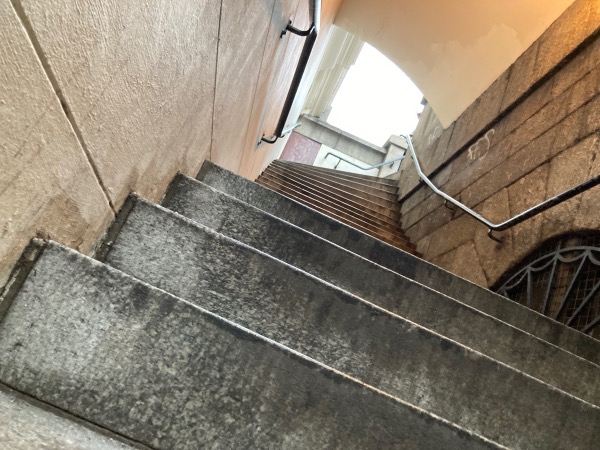
We close our series of historic London stairs with a stairway that has raised its share of controversy in recent years, largely due to the plaques associated with it.
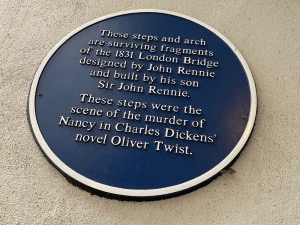
The steps, which are located in Southwark at the southern end of London Bridge and which lead down to Montague Close, are a remnant of the John Rennie-designed London Bridge which was completed in 1831 and which was replaced in the mid-20th century (and which was sold off and relocated to Lake Havasu in the US).
The controversy arises through the plaques associated with the steps which state that the steps where the scene of the murder of Nancy in Charles Dickens’ Oliver Twist. There’s a couple of problems with that claim.
The first is that Nancy wasn’t murdered here in the book – it is in their lodgings that Bill Sikes kills Nancy believing she has betrayed him. The confusion probably comes about because the musical Oliver! did set Nancy’s murder on the steps.
The bridge does, however, play a role in the book and have a connection to Nancy and its probably due to this connection that it has its name, Nancy’s Steps.
Because it was on steps located here – “on the Surrey bank, and on the same side of the bridge as Saint Saviour’s Church [now known as Southwark Cathedral]” that Nancy talks to Oliver’s benefactors while Noah Claypole eavesdropped on the conversation (which leads him reporting back to Sikes and eventually to her murder).
The second error made in the plaque is that Rennie’s bridge (and hence the steps) was completed in 1831 and with Oliver Twist published in serial form just a few years later can’t be the “ancient” bridge referred to in the text. The reference can only relate to the medieval bridge which occupied the site for hundreds of years until it was demolished following the completion of Rennie’s bridge.
It’s 260 years ago this month that a supposed poltergeist known as the ‘Cock Lane Ghost’ was at the centre of an infamous scandal.
There had been several reports of strange sounds and spectral appearances at the property prior to January, 1762, but it was the events which took place that month which were to elevate the hauntings to the national stage.
Cock Lane, shown in Charles Mackay’s 1852 work ‘Haunted Houses’. PICTURE: Via Wikipedia
It was in that month that Elizabeth Parsons, the 11-year-old daughter of Richard Parsons, the officiating clerk at St Sepulchre Church, reported hearing knockings and scratchings while she was lying in bed. Her father, Richard Parsons, the officiating clerk at nearby St Sepulchre, enlisted the aid of John Moore, assistant preacher at St Sepulchre and a Methodist, to find their cause and the two concluded that the spirit haunting the house was that of Fanny Lynes, who had formerly lived in the property before apparently dying of smallpox in early February, 1760.
The two men devised a system for communicating with the spirit based on knocks and based on the answers they received, concluded that Lynes had not died of smallpox but actually been poisoned with arsenic by her lover (and brother-in-law) William Kent.
Kent had been married to Fanny’s sister Elizabeth and after her death, he had lived with Lynes as man and wife despite prohibitions on them being married due to their status as in-laws. Parsons, who was their landlord at the time, had taken a loan from Kent while they were living at the property but subsequently refused to pay it back leading Kent to successfully sue him for its recovery.
It was against that backdrop – and earlier reports that the ghost of Fanny’s sister Elizabeth had haunted the property after her death – that the story of ‘Scratching Fanny’ began to spread and led to crowds gathering in Cock Lane to witness the phenomena. Writer Horace Walpole was among them – he attended along with Prince Edward, the Duke of York and Albany, and, apart from not hearing the ghost (he was told it would appear the next morning at 7am), noted that the local alehouses were doing a great trade.
Such was the case’s fame that the Lord Mayor of London, Sir Samuel Fludyer, ordered an investigation – among those who was involved was famed lexicographer Samuel Johnson. They concluded that the girl had been making the noises herself (Dr Johnson went on to write an account of it which was published in The Gentlemen’s Magazine). Further investigations were held – Fanny’s body even exhumed – and Elizabeth was later seen concealing a small piece of wood (apparently to make the sounds), subsequently confessing that her father had put her up to it.
Kent, however, was determined to clear his name and Moore, along with Parsons, Parson’s wife Elizabeth, Mary Frazer, a relative of Parsons, and a tradesman Richard James, were all subsequently charged with conspiracy to take Kent’s life by alleging he had murdered Frances. The trial, which took place at Guildhall before Lord Chief Justice William Murray, on 10th July, 1762, saw guilty verdicts returned for all five defendants. Moore and Richards agreed to pay Kent a sum of more than £500 but the others refused and so in February the following year they were sentenced – Parsons to three turns in the pillory and two years imprisonment, his wife Elizabeth to a year in prison and Frazer to six months hard labour in Bridewell.
The case, which also caused controversy between the new Methodists and Anglicans over the issue of ghosts, was widely referred to in literature of the time including by satirical poet Charles Churchill in his work The Ghost. It was also referenced by William Hogarth in his prints and Victorian author Charles Dickens even alluded to the story in A Tale of Two Cities.
Christmas is fast arriving so we went in search of some related monuments in London and found one depicting two famous characters from an iconic Yuletide text.
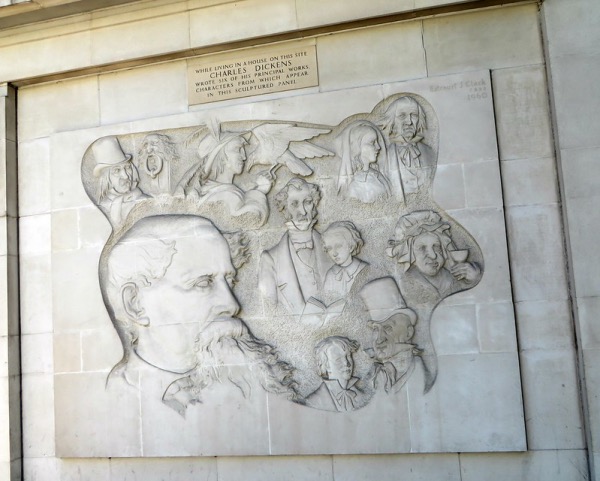
Located on the site of a house where 19th century writer Charles Dickens wrote six of his famous books, including A Christmas Carol, is a stone relief featuring several characters from them including Scrooge and Marley’s Ghost (represented as a door knocker in the top left).
The bas-relief is the work of Estcourt J “Jim” Clack and features a large portrait of Dickens as well as the characters who, alongside the characters from A Christmas Carol.
They apparently include Barnaby Rudge with his raven ‘Grip’ (from the book of the same name), Little Nell and Granddad (The Old Curiosity Shop), Dombey and his daughter Florence (Dombey and Son), Sairey Gamp (Martin Chuzzlewit), David Copperfield and Wikins Micawber (David Copperfield).
Correction: The name of Barnaby Rudge’s raven has been corrected.
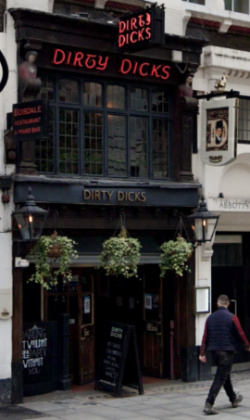
This City of London pub, located close to Liverpool Street Station, was originally known as The Old Jerusalem and dates back to the mid-18th century.
Dirty Dicks. PICTURE: Courtesy of Google Maps.
But the pub’s name was changed in the 19th century, inspired by the tragic history of a local businessman by the name of Nathaniel (there are some that suggest his name was Richard) Bentley.
The story goes that Bentley, who owned a hardware shop and warehouse, had been something of a dandy in his youth, earning the nickname, the “Beau of Leadenhall Street”.
But when his fiance died on the eve of their wedding day, he broke down and subsequently refused to clean anything, including himself (there was also speculation that he’d closed the dining room where the wedding breakfast was to be held with the spread still on the table). His home, shop and warehouse in Leadenhall Street became filthy and so famous that letters were apparently addressed to ‘The Dirty Warehouse, London’. He died in 1809 and the warehouse was later demolished.
William Barker, the owner of The Old Jerusalem, subsequently changed the name of his pub to Dirty Dick’s and it apparently became known for its own lack of cleanliness in sympathy with the man after whom it was named.
Charles Dickens is said to have been a patron of this establishment and it’s said that Bentley’s story inspired Dickens to create the character of Miss Havisham for this book, Great Expectations.
In keeping with its name, the cellar bar was for years cluttered with cobwebs and all sorts of items including a mummified cat but more recent years have seen the clutter removed (although some has been preserved and relocated to a glass display case).
The pub, at 202 Bishopsgate, is now owned by Young’s. For more, see www.dirtydicks.co.uk.
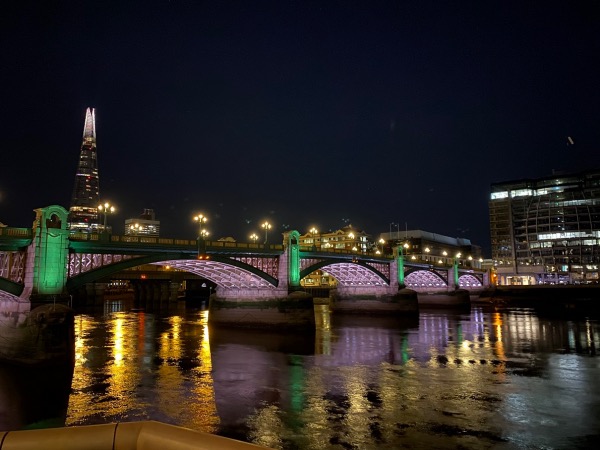
Southwark Bridge lit up to mark its 100th birthday. PICTURE: Courtesy of the City of London Corporation.
Southwark Bridge celebrated its 100th birthday earlier this month so we thought it a good time to have a quick look at the bridge’s history.
The bridge was a replacement for an earlier three-arch iron bridge built by John Rennie which had opened in 1819.
Known by the nickname, the “Iron Bridge”, it was mentioned in Charles Dickens’ Our Mutual Friend and Little Dorrit. But the bridge had problems – its narrow approaches and steep gradient led it to become labelled “the curse of the carman [cart drivers] and the ruin of his horses”.
Increasing traffic meant a replacement became necessary and a new bridge, which featured five arches and was made of steel, was designed by architect Sir Ernest George and engineer Sir Basil Mott.
Work on the new bridge – which was to cost £375,000 and was paid for by the City of London Corporation’s Bridge House Estates which was originally founded in 1097 to maintain London Bridge and expanded to care for others – began in 1913 but its completion was delayed thanks to the outbreak of World War I.
The 800 foot long bridge was finally officially opened on 6th June, 1921, by King George V who used a golden key to open its gates. He and Queen Mary then rode over the bridge in a carriage.
The bridge, now Grade II-listed, was significantly damaged in a 1941 air raid and was temporarily repaired before it was properly restored in 1955. More recently, the bridge was given a facelift in 2011 when £2.5 million was spent cleaning and repainting the metalwork in its original colours – yellow and ‘Southwark Green’.
The current bridge has appeared in numerous films including 1964’s Mary Poppins and, in more recent times, 2007’s Harry Potter and the Order of the Phoenix.



 Exploring London