(In)famous Londoners – Alice Tankerville…

The only woman prisoner recorded as having escaped from the Tower of London, Alice Tankerville was accused, along with her common-law husband John Wolfe, of committing piracy in 1533.

The Tower of London on the bank of the Thames. PICTURE: Juhi Sewchurran/Unsplash

It was alleged that Tankerville had lured two wealthy Italian merchants into a wherry out in the Thames where her accomplices – including Wolfe and two men disguised as watermen – had robbed and murdered them. They were also accused of burgling a home near St Benet Gracechurch where the two men had been staying.

Despite apparently having attempted to seek sanctuary in a special precinct near Westminster Abbey, the couple were arrested, charged with piracy and murder among other things, and, following a trial neither apparently attended, found guilty.

Taken to the Tower of London in 1534 (Wolfe had done a previous stint there for the theft of 366 gold crowns from a ship berthed at the Hanseatic League’s Steelyard but had eventually been released due to a lack of evidence), Alice is said to have been imprisoned in Coldharbour Gate.

Alice wasn’t done yet, however. On 23rd March that year, she managed to escape, apparently with the aid of gaoler John Bawde who provided her with ropes and a key.

It was a short-lived liberation – believed to have been wearing man’s clothes, she and Bawde were arrested trying to reach waiting horses on a road just outside the Tower (it’s worth noting that not only was Alice the only women prisoner to ever escape the Tower of London, she was also the only escapee during the reign of King Henry VIII).

Both she and Wolfe were subsequently executed and due to the nature of their crime, their execution took place on the Thames.

They were hanged in chains in the Thames near the site of their crime and, before a small flotilla of boats filled with sight-seers come to witness the event, were slowly drowned as the tide rose. Their bodies were then left hanging on the spot as a warning to others.

Lost London – The Chinese Bridge and Pagoda, St James’s Park…

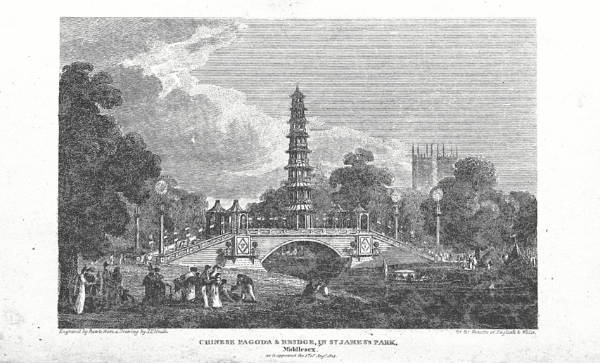
Briefly a sizeable landmark on London’s skyline, this seven-storey high structure and bridge were built over the canal in St James’s Park in 1814 as part of celebrations over the 100th anniversary of the accession of the House of Hanover, the 16th anniversary of Nelson’s victory at the Battle of the Nile and the signing of Treaty of Paris with France on 30th May following Napoleon’s abdictation in April.

British Library digitised image from “A Topographical and Historical Description of London and Middlesex” By Brayley, Brewer, and Nightingale

The pagoda and bridge, designed by none other than John Nash and Auguste Pugin, were among a number of structures built for the celebrations held in Royal Parks on 1st August – others included a ‘Temple of Concord’ and a naval arch. There was also a naval re-enactment on The Serpentine in Hyde Park.

As well as bands, food stalls and marquees for guests, the event, which was billed (among other names) as the Grand Jubilee, also included balloon ascents and fireworks.

The latter wasn’t good news for the pagoda – it was hit by a stray firework and destroyed (and tragically at least one person lost their life). The bridge lasted a few years longer – it apparently survived until 1825.

This Week in London – Showtime! at the Charles Dickens Museum; the ‘Future of Food’; and, Peter Rabbit hops to Hampton Court…

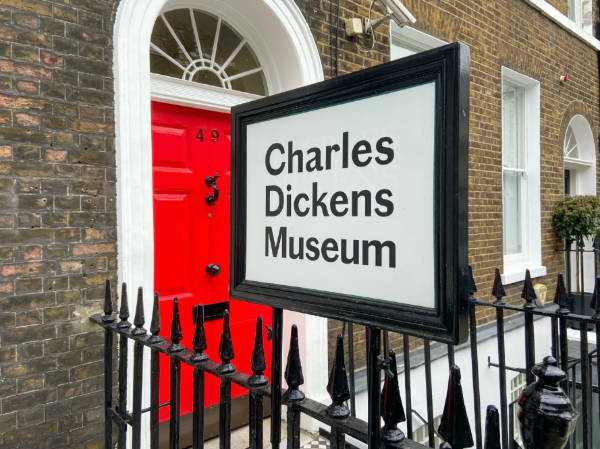
PICTURE: VV Shots/iStockphoto

The enduring appeal of Charles Dickens’ works and how they have been adapted for the stage, screen and radio is the focus of a new exhibition at the Charles Dickens Museum in Bloomsbury. Showtime! looks at productions starting from as far back as 1837 and including such classics as The Muppets Christmas Carol and Oliver! the musical with objects on show including original playbills, posters, programmes, photographs and props. There’s also the opportunity to hear from actors and writers about what makes Dickens so adaptable and see Dickens’ own works which he annotated with stage directions. The display can be seen until 26th January. Admission charge applies. For more, see www.dickensmuseum.com.

A major new exhibition on the future of food – how science is creating more sustainable ways of producing and consuming food – opens at the Science Museum today. Future of Food reveals how the way we grow food and eat impacts the climate, nature, and society. Among the more than 100 objects on show are cricket burgers and cell-grown salmon as well as 3,500-year-old fermented sourdough bread, the first Quorn burger dating from 1981 and the first beef steak grown outside a cow. There is also the chance to join a multiplayer interactive game and create your own “future for food”. Runs until 4th January. Admission is free. For more, see https://www.sciencemuseum.org.uk/see-and-do/future-of-food.

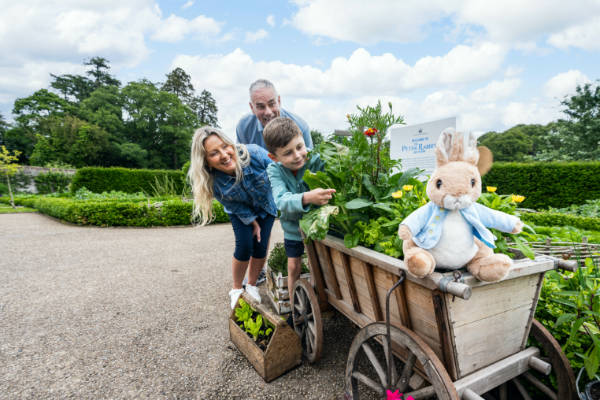
The Peter Rabbit Adventure at Hampton Court Palace. PICTURE: Courtesy of Historic Royal Palaces.

Peter Rabbit is hopping over to Hampton Court Palace to take part in a new family trail that brings Beatrix Potter’s beloved characters to life in the palace gardens from tomorrow. The Peter Rabbit Adventure, included as part of the palace admission, is spread over the Kitchen Garden, Tiltyard, and Wilderness and the activities on the trail will introduce little ones to the plants, vegetables and wildlife that inhabit the gardens. These include the chance to use Mrs Tiggy-winkle’s washing equipment to make music among the trees, to join in a search for Peter Rabbit under wheelbarrows and flowerpots in the Tiltyard, and to try to hop, skip and jump as high as Peter and his friends. A larger-than-life Peter Rabbit will be greeting families in the Kitchen Gardens. Runs until 7th September. For more, see https://www.hrp.org.uk/hampton-court-palace/whats-on/the-peter-rabbit-adventure/.

Send all inclusions to exploringlondon@gmail.com

What’s in a name?….Giltspur Street

This City of London street runs north-south from the junction of Newgate Street, Holborn Viaduct and Old Bailey to West Smithfield. Its name comes from those who once travelled along it.

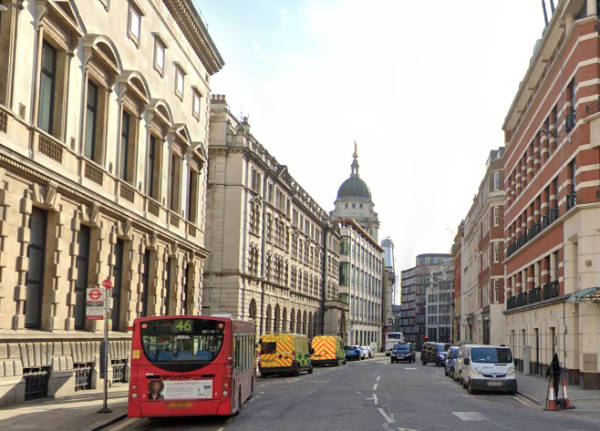
Looking south down Giltspur Street, with the dome of the Old Bailey visible, in 2018. PICTURE: Courtesy of Google Maps

An alternative name for the street during earlier ages was Knightrider Street which kind of gives the game away – yes, the name comes from the armoured knights who would ride along the street in their way to compete in tournaments held at Smithfield. It’s suggested that gilt spurs may have later been made here to capitalise on the passing trade.

The street is said to have been the location where King Richard II met with the leaders of the Peasant’s Revolt who had camped at Smithfield. And where, when the meeting deteriorated, the then-Lord Mayor of London William Walworth, ending up stabbing the peasant leader Wat Tyler who he later captured and had beheaded.

St Bartholomew’s Hospital can be found on the east side of the street. On the west side, at the junction with Cock Lane is located Pye Corner with its famous statue of a golden boy (said to be the place where the Great Fire of London was finally stopped).

There’s also a former watch house on the west side which features a monument to the essayist late 18th century and 19th century Charles Lamb – the monument says he attended a Bluecoat school here for seven years. The church of St Sepulchre-without-Newgate stands at the southern end with the Viaduct Tavern on the opposite side of the road.

The street did formerly give its name to the small prison known as the Giltspur Street Compter which stood here from 1791 to 1853. A prison for debtors, it stood at the street’s south end (the location is now marked with a City of London blue plaque).

Treasures of London – The Royal Mews…

Usually Treasures of London focuses on an object held in a museum or gallery or an outdoor feature such as sculpture or memorial but in honour of its 200th birthday this year, today we’re taking a look at the Royal Mews at Buckingham Palace.

Here are some facts about the Mews which you may not know…

Subscribe for just £3 a month to access all of Exploring London’s content…

Famous Londoners – Edward R Murrow…

A titan of American broadcast journalism, Edward R Murrow’s name is synonymous with London during World War II from where, as a correspondent for CBS, he famously provided live radio broadcasts at the height of the Blitz.

Edward R Murrow, seen in a screenshot in 1961. PICTURE: Via Wikipedia

Murrow, who joined CBS in the US in 1935, went to London in 1937, initially to serve as director of the network’s European operations. Said to have been deeply committed to exposing the threat Nazism posed to Americans, he was soon deeply involved in reporting events leading up to and during World War II with his first on the scene news report taking place in March, 1938, when he reported live from Vienna, Austria, during Hitler’s annexation.

Following the breakout of the war in 1939, Murrow remained based in London and went on to provide his famous live broadcasts during the Blitz, opening them with the iconic words, “This is London” and, later, ending them with “Good night and good luck”.

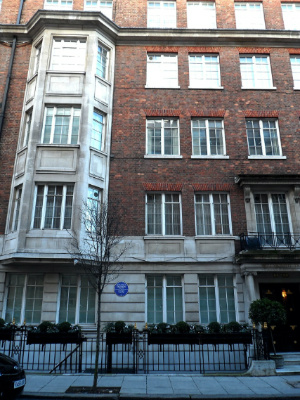
Weymouth House in Westminster where Edward R Murrow stayed during his time in London. PICTURE: Spudgun67 (licensed under CC BY-SA 4.0)

His wartime dispatches – which were broadcast from a studio in the sub-basement of the BBC’s Broadcasting House (which was bombed more than once) as well as from locations including Traflagar Square and a rooftop during the bombing raids – were to win him considerable acclaim and also saw him undertake such feats as joining combat missions in the skies over Europe and being one of the first two reporters to enter Buchenwald concentration camp in Germany in April, 1945.

Such was his standing that then British Prime Minister Winston Churchill even offered to make him joint-director of the BBC (a job offer he declined).

Murrow made his last report from London in March, 1946, before returning to the US to head CBS News. he continued to work with CBS until resigning in 1961 to take up a position as head of the United States Information Agency, a job he held until 1964.

He died at the age of 57 after being diagnosed with lung cancer at his home in Pawling, New York, on 27th April, 1965.

During his time in London, Murrow lived in a flat at Weymouth House, 84-94 Hallam Street in Westminster. An English Heritage Blue Plaque now commemorates his stay there.

Murrow is, of course, also the subject of the 2005 film – and subsequent Broadway production – Good Night, and Good Luck (although that focuses on his later stand against US Senator Joe McCarthy and his hunt for communists).

Where’s London’s oldest…(still running) Indian restaurant)?

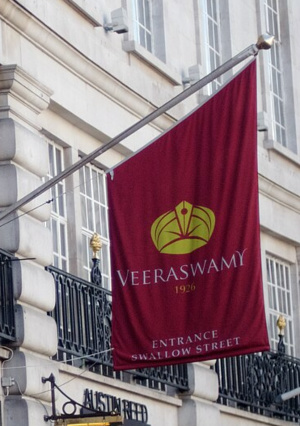
The oldest Indian restaurant in London – and, according to the website, the UK – Veeraswamy was founded in 1926, at 99 Regent Street.

PICTURE: Alex.muller (licensed under CC BY-SA 3.0)

The restaurant was opened by Edward Palmer, the great-grandson of General William Palmer, who was secretary to Warren Hastings, the first Governor General of India and the Moghul Princess Faisan Nissa Begum.

It’s name is said to have come from his mother’s family and Palmer is said to have been greatly influenced by the princess in the creation of the menu.

The restaurant – located in Victory House and entered from Swallow Street – was taken over by the MP William Steward in 1934. He sold it in 1967 and the restaurant later passed through several hands.

The current owners – Namita Panjabi & Ranjit Mathrani of MW Eat – bought it in 1996. They have since modernised the menu and interiors.

Over the years, the restaurant has attracted a star-studded clientele which included royalty including Edward, Prince of Wales (later King Edward VIII), King Abdullah of Jordan, and the Maharajah of Cooch-Behar as well as Winston Churchill, actor Marlon Brando and Princess Anne.

In 2016, the restaurant was awarded a Michelin star.

The restaurant, which is located on the Crown Estate, is currently collecting signatures for a petition asking King Charles III to intercede with the Crown Commissioners, asking them to renew its lease after the commissioner served a notice to vacate. The matter is currently before the courts.

For more, see www.veeraswamy.com/.

10 historic London docks…8. St Saviour’s Dock…

Located in an inlet where the River Neckinger enters the Thames just to the east of Tower Bridge, this dock has been used since the early middle ages.

Subscribe for just £3 a month to see all of Exploring London’s content – and support our work.

This Week in London – New room for Turner at Tate Britain; slavery and Caribbean post ships; and, ‘The Power of Trees’ at Kew…

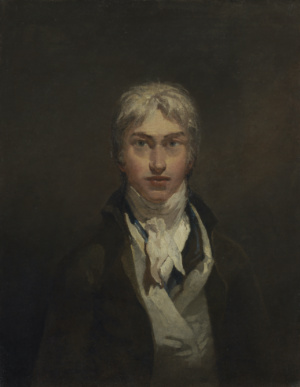
JMW Turner, ‘Self-Portrait’, c1799, PICTURE: Courtesy of Tate

A new room dedicated to the watercolours and drawings of painter JMW Turner has opened at the Tate Britain to mark the 250th anniversary of his birth. The new room at the Millbank gallery, whichfeatures some of the more than 100 works by Turner on display in the gallery, includes the earliest Turner in Tate’s collection, made when he was only 12-years-old, as well as a dramatic image of a building on fire, long thought to be the Houses of Parliament but now revealed to in fact be the Tower of London. The display draws on the latest research developed in preparing a new catalogue of Turner’s 37,500 works on paper which, to be completed this year, will be freely accessible on Tate’s website from November and offers a news insight into the artist’s ideas and methods. Further events related to Turner are planned for later this year. The new room can be seen daily. Entry is free. For more on how the Tate is marking the Turner anniversary, see tate.org.uk/turner-250.

The stories of enslaved people – whose labour fuelled 19th century postal ships between the UK and the Caribbean – are explored in an exhibition at the Postal Museum in Clerkenwell. Voices of Resistance: Slavery and Post in the Caribbean draws on letters between plantation owners and managers to provide glimpses into the lives of enslaved people who worked on the plantations and celebrates their courageous acts of resistance. The display also features a movie by filmmaker Emmanual Phillips which honours the Caribbean coal workers involved in refuelling postal ships on the island of St Thomas (and which was created in partnership with Dollar fo’ Dollar, St Thomas-based organisation that works to ensure the legacies of the coal workers live on to inspire people). Entry is included in the museum ticket. Runs until 5th January. For more, see www.postalmuseum.org.

On Now: The Power of Trees. This exhibition at Kew Garden’s Shirley Sherwood Gallery of Botanical Art celebrates trees and their use as a source of artistic inspiration across cultures and time. The display features a variety of botanical works including 20 newly commissioned botanical artworks created by the artists of the Bedgebury Florilegium Society and Horizontal – Vaakasuora, a spectacular cinematic installation from Finnish artist Eija-Liisa Ahtila. Entry is free with Kew Gardens admission. Runs until 14th September. For more, see www.kew.org.

Send all items to exploringlondon@gmail.com.

Lost London – Gatehouse Prison…

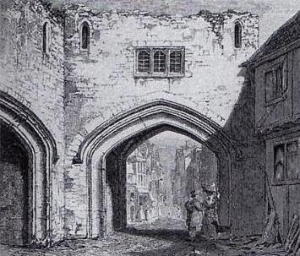
Located in what was the gatehouse of Westminster Abbey, this small prison dates from 1370.

It was built by Walter de Warfield, then the abbey’s Cellarer, and featured two wings, built at right angles to each other.

The Gatehouse Prison in an 18th century depiction. PICTURE: Wikipedia

Under the jurisdiction of the Abbot, the prison had two sections – one for clerics and one for laymen. The Abbey’s Janitor was its warder.

Among the most famous inmates was the Cavalier poet Richard Lovelace who was imprisoned for petitioning to have the Clergy Act 1640 annulled. While inside, he wrote the famous work, To Althea, from Prison which features the famous lines: “Stone walls do not a prison make, Nor iron bars a cage”.

Other notables include Sir Walter Raleigh, held here on the night before he was beheaded in Old Palace Yard on 29th October 1618, diarist Samuel Pepys – detained for a few weeks in 1689 on suspicion of being a Jacobite (but released because of ill health), and Gunpowder Plot conspirator Thomas Bates.

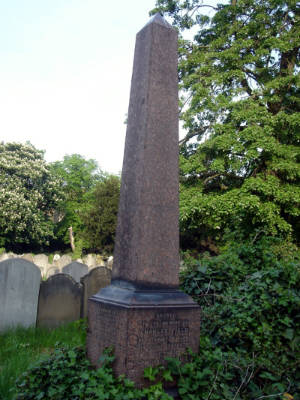
Falling into a state of decay, the prison was demolished in 1776-77 (although one wall stood until the 1830s). A gothic column, the Westminster Scholars’ Memorial which is also known as the Crimea and Indian Mutiny Memorial, now stands on the site.

Treasures of London – The Anglo-Saxon archway, All Hallows by the Tower…

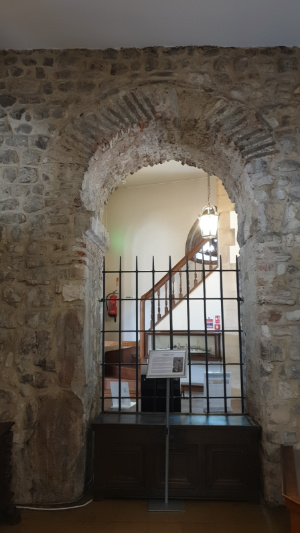
PICTURE: JRennocks/Wikipedia (licensed under CC BY-SA 4.0)

This rounded arch in the Church of All Hallows is believed to be oldest surviving arch of the Anglo-Saxon period surviving in the City of London.

The arch can be found at the west end of the nave and dates from an earlier church on the site, possibly built as early as the 7th century (the church was later rebuilt and expanded several times, survived the Great Fire in 1666, and was then largely destroyed during the Blitz before being rebuilt and reconsecrated in 1957).

Roman tiles have been reused in the arch’s construction as well as Kentish ragstone and it doesn’t include a keystone.

The arch was fully revealed after a bombing during the Blitz in 1940 brought down a medieval wall and revealed it.

The arch has given some weight to the idea that the Anglo-Saxon church was founded not long after Erkenwald founded Barking Abbey in the 7th century (he went on to become the Bishop of London in 675).

WHERE: All Hallows by the Tower, Byward Street (nearest Tube station is Tower Hill); WHEN: 8am to 5pm Monday to Friday; 10am to 5pm Saturday and Sunday; COST: Free; WEBSITE: https://www.ahbtt.org.uk/

This Week in London – Of livery companies and pancakes; Museum of the Home celebrates East Enders; and, the ‘Hallelujah Chorus’ at the Foundling Museum…

Guildhall Yard where the annual Inter-Livery Pancake Race is held. PICTURE: David Adams

Shrove Tuesday, also known as Pancake Day, takes place this coming Tuesday and to mark the event, representatives from the City of London’s livery companies are coming in their annual Inter-Livery Pancake Race around Guildhall Yard. The event is organised by the Worshipful Company of Poulters while the Worshipful Company of Gunmakers provide the starting gun, the Worshipful Company of Clockmakers time the races and the Worshipful Company of Fruiterers provide lemons to accompany the pancakes. The starter’s gun fires at noon. Entry is free.

East Enders is celebrating its 40th anniversary and to mark the occasion, the Museum of the Home in Hoxton is featuring props and costumes from the show in its displays. EastEnders at 40: Icons of Home and Drama features props and costumes including the costumes from Syed and Amira’s wedding in 2010, Kat Slater’s leopard print coat and Frank Butcher’s spinning bow tie. Runs until 22nd June. Admission is free. For more, see www.museumofthehome.org.uk.

• The origins of the Hallelujah Chorus and its special connecting to the Foundling Hospital is the subject of a new display at the Foundling Museum in Bloomsbury. Composer George Frideric Handel first held a benefit concert at the venue in 1749 in which he premiered his Foundling Hospital Anthem. He returned the following year to perform the Messiah, which had made its debut in Dublin in 1742, and this event proved so popular it was held annually until the 1770s. The display can be seen until 29th March, 2026. Admission charge applies. For more, see https://foundlingmuseum.org.uk/event/hallelujah-display/.

Send items to exploringlondon@gmail.com

10 London mysteries…10. Who was Jack the Ripper?

Linked to the brutal slayings of at least five women in the later half of 1888, the identity of Jack the Ripper is London’s most infamous mystery and one which continues to fuel speculation – and make headlines – more than 130 years later.

Subscribe for just £3 a month to gain access to all Exploring London’s content…

10 London mysteries – 7. The mysterious pyramid of St Anne’s Limehouse…

On first glance, this stone pyramid standing in the churchyard of St Anne’s Limehouse appears to be a grave marker or tomb, albeit a rather unusual one.

Subscribe for just £3 a month to gain access to all Exploring London’s content – and support our work at the same time!

LondonLife – Never forget…

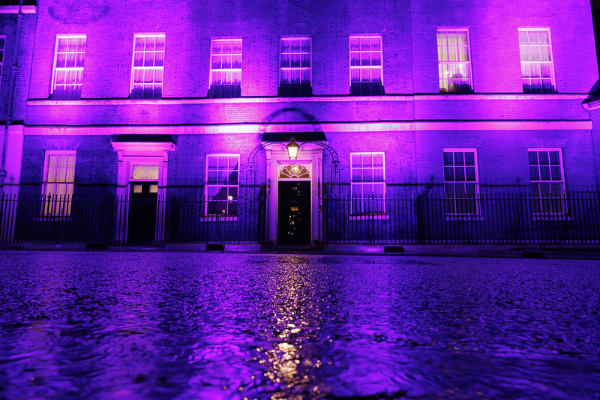
10 Downing Street is lit to mark Holocaust Memorial Day on 27th January. PICTURE: Simon Dawson/No 10 Downing Street (licensed under CC BY 2.0)
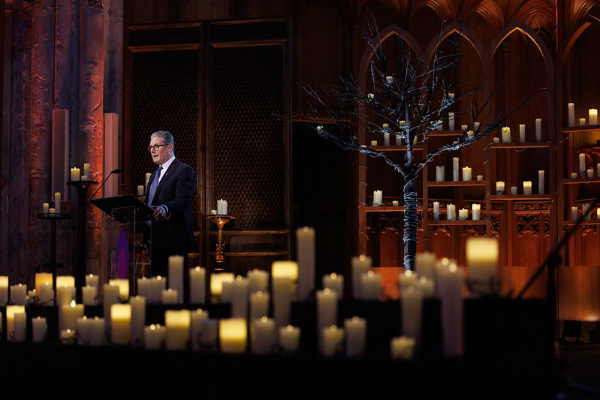
Prime Minister Keir Starmer speaks as he attends a Holocaust Memorial Day event at the Guildhall . PICTURE: Simon Dawson/No 10 Downing Street (licensed under CC BY 2.0)
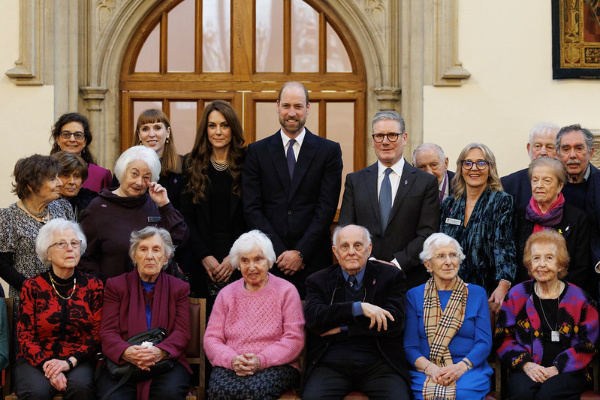
Prime Minister Keir Starmer poses for a photo with the Prince and Princes of Wales and survivors of the Holocaust as they attend a Holocaust Memorial Day event at the Guildhall. PICTURE: Simon Dawson/No 10 Downing Street (licensed under CC BY 2.0)

This Week in London – Marking Turner’s 250th; ‘Helios’ at the Painted Hall; Churchill in cartoons; and, Royal Parks’ new Elizabeth II garden wins grant…

JMW Turner, Self-Portrait, c.1799
Image courtesy of Tate

• Cultural institutions across the UK have announced a year long celebration of renowned painter JMW Turner in honour of the 250th anniversary of his birth. Turner 250 includes more than 30 events with Turner’s birthday on 23rd April a particular focus. Events on the day include the opening of an exhibition of Turner’s rarely-seen images of wildlife at Turner’s House in Twickenham, and the opening of a newly refreshed room in Tate Britain’s Clore Gallery which will be home to a permanent free display of 100 works by the artist. More information will be forthcoming.

• Luke Jerram’s newest and most ambitious large scale artwork, Helios, is making its London premiere at the Old Royal Naval College. Co-commissioned by the Old Royal Naval College, this new seven-metre celestial artwork depicts the Sun in all its glory at a scale of 1:200 million. The imagery for the artwork has been compiled using photographs of the Sun provided by astrophotographer Dr Stuart Green (taken between May, 2018, to June, 2024) and NASA observations of the Sun along with guidance from solar scientist, Professor Lucie Green of University College London (UCL). The sculptural work is accompanied by a specially created surround sound composition created by acclaimed artists Duncan Speakman and Sarah Anderson. Runs from Saturday until 25th March. Admission charge applies. For more, see https://ornc.org/whats-on/helios/

Helios by Luke Jerram in the Painted Hall. PICTURE: Courtesy of the Old Royal Naval College.

On Now: Churchill in Cartoons: Satirising a Statesman. The Imperial War Museum in Lambeth is marking the 150th anniversary of the birth of Sir Winston Churchill with this exhibition examining how Churchill is represented in political cartoons, both during his life and after. The display features 24 original artworks spanning the period from 1909 to 2003 and examines how these portrayals influenced public perception of the statesman, from his early career as an MP to the role he played in both World Wars, the “Wilderness Years” between and after he lost the 1945 General Election. Among the works are
a cartoon from Punch magazine in 1914 depicting Churchill supporting the Roman sea god Neptune with aircraft (representing the establishment of the Royal Naval Air Service), a 1941 David Low cartoon shows a cigar-smoking Churchill with US President Franklin D Roosevelt during their Atlantic Conference, and, a cartoon by US cartoonist Jim Berryman marking Churchill’s defeat in the 1945 election. The free exhibition closes on 23rd February. For more, see www.iwm.org.uk/events/churchill-in-cartoons-satirising-a-statesman.

Royal Parks have been awarded a £450,000 grant to support the creation of a new, two-acre garden in The Regent’s Park. The garden, to be funded with the grant from the Garfield Weston Foundation, will commemorate the life and legacy of Queen Elizabeth II and will feature a circular pond enhancing wildlife habitats, a central promenade with an accessible platform over the pond, and a vibrant flower garden showcasing species which were significant to the late Queen, such as the specially bred Narcissus ‘Diamond Jubilee’ or Tulipa ‘Royal Celebration’. The new garden is set to open in 2026.

Send all items for inclusion to exploringlondon@gmail.com.

What’s in a name?…Archway…

This north London district in the London Borough of Islington owes its name to a bridge which straddles Archway Road (part of the Great North Road or A1).

The bridge’s origins go back to the early 19th century when work began on a 230 metre-long tunnel underneath Highgate Hill which would allow users to bypass the hill’s steep gradient. If completed, it’s said it would have been the earliest road tunnel in Britain.

But in April, 1812, the tunnel collapsed and a cutting through the hill, utilising the work done on the collapsed tunnel, was then proposed. It would become Archway Road.

Hornsey Lane, however, ran across the top of the hill linking Highgate to its west to Crouch End in the east, and to ensure the lane remained when the cutting was completed, it was decided to build a viaduct to carry the lane across the cutting.

The bridge over Archway Road (the A1) as it is today. PICTURE: Google Maps

The resultant structure was designed by none other than John Nash in the style of a Roman aqueduct and opened in 1813.

Archway Road, which ran underneath the arch, was operated as a toll road until 1871.

The bridge, meanwhile, was demolished in 1900 and replaced by a cast iron bridge, designed by Alexander Binnie, which still stands.

The area was referred to as Highgate Archway but gradually the Highgate was dropped and plain Archway adopted.

This was reinforced by the naming of the Tube station in Junction Road which was originally named Highgate when it opened in 1907 as the terminus of the Northern Line but was renamed Archway (Highgate) in 1939 and then just Archway in 1947.

Landmarks in this predominantly leafy residential area include the Whittington Hospital, originally built as the Holborn Union Infirmary 1877-79, on Highgate Hill.

On a similar theme, the Whittington Stone can also be found at the bottom end of Highgate Hill. It is said to commemorate the spot where Dick Whittington, having decided to leave London after failing to make his fortune, heard the Bow Bells ringing and turned back (the stone is topped with a statue of Whittington’s famous cat).

The green expanse of Hampstead Heath lies just to the west.

London pub signs – The Betjeman Arms…

This St Pancras pub – located inside St Pancras International Station itself – bears the name of poet, writer, broadcaster and activist Sir John Betjeman.

The Betjeman Arms seen in 2016. PICTURE: Elliott Brown (licensed under CC BY-SA 2.0)

Betjeman, who was Poet Laureate from 1972 until his death in 1984, did have a particular connection to this location: he helped save the George Gilbert Scott-designed station from demolition in the 1960s with the station eventually awarded Grade I listed status in 1967.

The campaign to save St Pancras was just one of the many to save historic buildings that Betjeman was involved in, although not all were successful.

Betjeman is also remembered in a larger-than-life statue of the man which is located on the station concourse. Martin Jennings’ bronze statue depicts the poet and stands on a slate roundel featuring a selection of his writings.

The pub, which features a Betjeman ale, is now part of the Young’s group. For more, head to www.thebetjemanarms.co.uk/.

What’s in a name?…Honor Oak

Yes, this small south London district, located to the south of Peckham, was actually named for an oak.

In this case it was an oak which stood atop the 90 metre high One Tree Hill – the last in a line of hills which stretch north from Croydon.

The replanted oak. PICTURE: Doyle of London (licensed under CC BY-SA 4.0)

There’s a couple of possible explanations for the name – the first is that the oak in question once marked the southern boundary of the estates or “honour” of the 12th century Earls of Gloucester – hence ‘Honor Oak’.

The second is that Queen Elizabeth I apparently had a picnic with Sir Richard Bulkeley of Beaumaris under its branches on May Day, 1602. Hence again ‘Oak of Honor’ or ‘Honor Oak’.

Sadly, the original tree is gone – it was apparently hit by lightning in the 1880s – and a replacement, which can still be seen today, was subsequently planted nearby.

There’s a few stories surrounding the hill and its oak including that it was here that the Roman general Paulinus overcome Boudicca in 61AD. Another says that the highwayman Dick Turpin used it as a lookout.

Its height did see the hill put to use as a beacon by the Admiralty during the Napoleonic Wars and as a semaphore station by the East India Company. A beacon on top of the hill was erected to commemorate the Silver Jubilee of King George V in 1935 and subsequently used for celebrations including the coronation of Queen Elizabeth II and the Queen’s silver and golden jubilees.

There was also a gun emplacement built upon the hill during World War I.

The area around the hill was largely rural until the late 18th century. In 1809, the Croydon Canal Company constructed a canal which ran from Croydon north to New Cross and which included numerous locks. It was taken over almost 30 years later by the Croydon and London Railway for its new line (the current railway line, the stops on which include Honor Oak Park (opened in 1886), runs along the same course).

View from the top of One Tree Hill in 2016. PICTURE: Maureen Barlin (licensed under CC BY-NC-ND 2.0)

There was a bid to incorporate One Tree Hill into a golf course in the late 1800s but following a protest, this was halted and in 1905 the hill was acquired by the Camberwell Borough Council as public open space. It remains so today.

The Church of St Augustine was built to the designs of William Oakley on the hill’s east side in the late 19th century.

Famous residents in the streets around the hill have included Spike Milligan.

The Honor Oak Reservoir lies just to the north of the hill. It was constructed between 1901 and 1909 and was the largest brick built underground reservoir in the world. The roof of the still-in-use reservoir is grassed over and used as a golf course. A rather grand pumping station stands nearby.

LondonLife – John Keats at Moorgate…

The new sculpture of John Keats with Lord Mayor of the City of London, Michael Mainelli.. PICTURE: Courtesy of the City of London Corporation.

A new sculpture of Romantic poet John Keats has been unveiled near his birthplace in Moorgate to mark the 229th anniversary of his birth.

The work of British artist Martin Jennings, the sculpture is a bronze cast of an enlarged life mask of Keats which was made when he was 21 (he died just four years later of consumption in 1821).

A plaster cast of the life mask is owned by Keats House, in Hampstead, and it was scanned and digitally enlarged as the basis for the sculpture which is mounted on a stone plinth. The plinth in turn is set in a circular slate base inscribed with some words from the Keat’s Ode on Idolence.

The new statue, which was unveiled last Thursday, was funded by former City of London Corporation Alderman, Bob Hall, who has donated it to the City of London Corporation. Hall has previously funded a statue of poet John Donne – the work of Nigel Boonham – which sits outside St Paul’s Cathedral.

Keats was son of an ostler at an inn and livery stable called The Swan and Hoop, which stood not far from the modern-day Moorgate station.