Best known for his defeat of Napeleon at the Battle of Waterloo, Arthur Wellesley, the Duke of Wellington, was not a native Londoner. But his involvement in the military and politics meant he went on to have a significant impact on the city.
 Wellesley (whose surname was actually Wesley until his family changed it in 1798) was born in Ireland in early May, 1769, and, following his schooling – including time spent at Eton and in France, he entered the British Army as an ensign in 1787, subsequently serving as an aide-de-camp to two Lords Lieutenant of Ireland. While in Ireland, he was also elected an MP in the Irish Parliament.
His military career took him to the Netherlands and then India, where he was later appointed Governor of Seringapatam and Mysore.
Returning to Europe, Wellesley took a leave of absence from the army and, having been knighted, again entered politics becoming the Tory MP for Rye in 1806, then MP for Newport on the Isle of Wight before being appointed Chief Secretary for Ireland.
He left these tasks to fight in the Napoleonic Wars – most notably in the Peninsular War where he led the allied armies to victory at the 1813 Battle of Vitoria (and was subsequently promoted to the rank of field marshal).
Following Napoleon’s exile, Wellington was created the Duke of Wellington. He served briefly as ambassador to France before Napoleon’s return in 1815. It was for his subsequent role at the Battle of Waterloo, in which Napoleon was finally and totally defeated, that Wellington is mostly remembered now.
Entering politics after his return to England in 1819, he was named Commander-in-Chief of the British Army in 1827 and was twice elected Prime Minister, from 1828-30 and again in 1834, before his death in 1852 after which he received a state funeral.
 It’s not hard to find reference to the duke in today’s London and countless pubs testify to his one-time popularity.
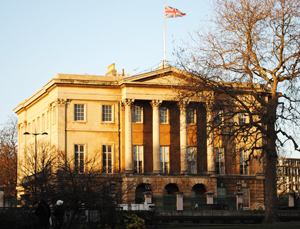
He purchased his most famous residence, Apsley House (which attracted the nickname of Number 1 London, thanks to it being the first house one encountered in London after passing through the toll gate) in 1817. Indeed, it was the installation of iron shutters at this property – a measure taken to prevent a mob demanding electoral reform from destroying it – that led to him being given the nickname, the “Iron Duke”.
These days Apsley House is managed by English Heritage and contains the Duke’s collection of artworks and furnishings.
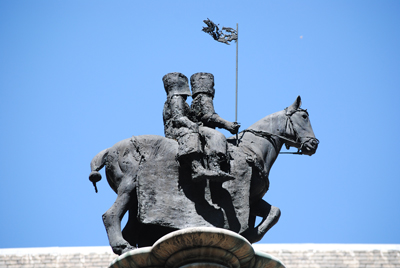
Opposite Apsley House, close to Hyde Park Corner, stands an equestrian statue of Wellington and behind it Wellington Arch, which dates from between 1826-30, and originally stood parallel to the Hyde Park Screen. In 1846, a vast statue of the Duke was mounted on top of the arch but this was replaced with a sculpture of Peace in her Quadriga when the arch was relocated to its present site in 1882 due to a need to widen the road. There are great views from the top.
At Hyde Park Corner, close to Park Lane, stands another memorial to Wellington, this time a massive statue of the Greek hero Achilles. It was put there in 1822 (and incidentally sparked considerable controversy – it was London’s first nude public sculpture in centuries and despite the careful placing of a fig leaf, didn’t please everybody).
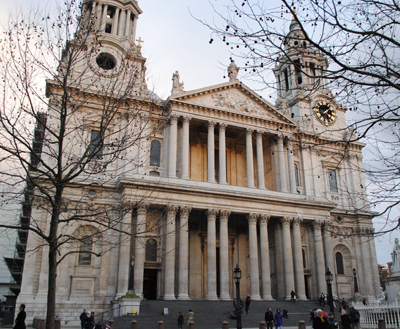
Wellington was buried in St Paul’s Cathedral and his huge block-like tomb in the crypt is given a level of prominence only equaled by that of Admiral Nelson.
The National Portrait Gallery this week launches an exhibition, Thomas Lawrence: Regency Power and Brilliance, which features the Duke’s favorite painting of himself (not the one above). The painting, by Sir Thomas Lawrence, hasn’t been on public exhibition for 60 years. From 21st October.
PICTURES: Image of the Duke of Wellington is by Sir Thomas Lawrence (1814). Source: Wikipedia.