Where’s London’s oldest…lived in house?

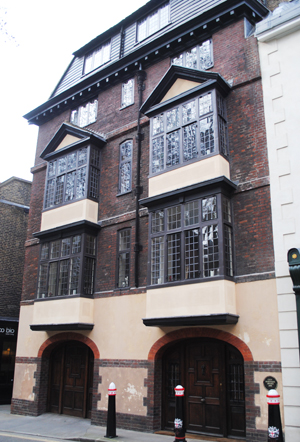
Like many in our series on London’s oldest, this one is a little subjective. But based on our survey of the data out there, we’re opting for 41-42 Cloth Fair, right beside St Bartholowmew the Great, in the City.

The only house to have survived the Great Fire of London in 1666, this five bedroom property – which we can confirm is still up for sale with a guide price of more than £5.9 million following a major restoration – was apparently completed around 1614.

It was originally constructed as part of a development initiated by Robert, Baron Rich, which featured 11 houses around a courtyard and was known as Launders Green (being located on what was the former laundry ground of the monastery at St Barts).

The red brick house, which was awarded a City Heritage award in 2000 for the sensitive restoration work, retains many of its original features.

Interestingly, windows on the second floor contain autographs of some of the famous people who have been to the property over the years including Queen Elizabeth, the Queen Mother, former PM Winston Churchill and Poet Laureate John Betjeman.

Happy St David’s Day!

It’s St David’s Day, Wales’ national day of celebration, so you may have noticed the Welsh flag flying in a few places you wouldn’t normally see it – including at 10 Downing Street. In keeping with the theme of all things Welsh, we’re taking a look at a couple of Welsh-related sites in London…

St Benet, Paul’s Wharf – Known as London’s “Welsh church”, the current St Benet’s was rebuilt to the designs of Christopher Wren after the Great Fire of 1666 although a church has stood on this site for 900 years. Services have been held at the church (pictured right) in Welsh since 1879 after Queen Victoria granted Welsh Anglicans the right to worship in their own language there. Known formally at St Benet’s Metropolitan Welsh Church, the premises, located just off Queen Victoria Street in the City, has also been the church of the College of Arms since 1555. Among other historic titbits is the suggestion that both Anne Boleyn and Lady Jane Grey – the “nine day Queen” – may have received the last rites here before going on to their executions at the Tower of London, that 17th century architect Inigo Jones was buried here, and that King Charles II had a special door built for himself in the side of the building and a private room where he could take part in services. See www.stbenetwelshchurch.org.uk

The London Welsh Centre – Located in Gray’s Inn Road, the centre’s origins go back to the founding of the Young Wales Association in 1920, created to provide a focus for young Welsh people in London. The organisation, which initially didn’t have a permanent home, held meetings in several locations before moving to the current premises in the 1930s. Today the premises is used by the London Welsh Centre and is the base for three choirs – the London Welsh Chorale, The London Welsh Gwalia Male Choir and The London Welsh Male Voice Choir. It also provides Welsh language classes and hosts concerts and other cultural events. See www.londonwelsh.org.

Memorial to Welsh poet Iolo Morganwg – A memorial plaque to this Welsh poet and antiquarian stands on Primrose Hill on the site where the first meeting of the Gorsedd of Bards of the Isle of Britain, convened by Morganwg, was held in 1792. The plaque was unveiled in 2009. Follow this link for more information.

Do you know of any other Welsh-related sites in London? Let us know…

Famous Londoners – Geoffrey Chaucer

Best remembered for his landmark Middle English work in The Canterbury Tales, Geoffrey Chaucer is known by many as “the father of English literature”.

But he also had a distinguished career as a diplomat, civil servant and courtier and while much of his life (and death) remain something of a mystery, there’s no doubt that he spent a considerable part of it in London.

Chaucer (the name comes from the Latin for ‘shoemaker’) was born into a wealthy London family sometime between 1340 and 1345 and nothing is known of his early life or education. In 1357 he was working as a page in the household of Elizabeth, Countess of Ulster and daughter-in-law of King Edward III.

Two years later, he travelled in the retinue of the countess’ husband, Lionel, Duke of Clarence, to France with the army of King Edward III but in 1360 was captured near Rheims. He was subsequently ransomed with the king himself contributing to the sum needed.

Soon after Chaucer formally joined King Edward III’s court and was over the next two decades was sent on numerous missions by him to places as far flung as France, Genoa, Florence and possibly Padua (it was on these trips that he was apparently exposed to the writings of men such as Dante, Boccaccio and Froissart).

In 1366 he married Philippa Roet, a lady-in-waiting to Philippa of Hainault, King Edward III’s queen (and, some suggest, the sister to Katherine Swynford, mistress to John of Gaunt). Chaucer and his wife are believed to have three or four children – their son, Thomas, was later chief butler to English kings and served as the Speaker of the House of Commons.

In 1374, Chaucer was appointed as Comptroller of Customs for the Port of London, a post which he held until 1386 or so. It was during this time that he wrote many of his other major works including Parlement of Foules and Troilus and Criseyde (he had written his first major work, The Book of the Duchess, in honor Blanche of Lancaster, the late wife of his friend John of Gaunt sometime earlier following her death in 1369). Chaucer was also known at this time to have lived rent free in an apartment above the now removed Aldgate.

At some time in the 1380s, it is suggested Chaucer moved out to Kent where he is thought to have started work on The Canterbury Tales and where he also served as a local MP. His wife is believed to have died while they were there.

In 1389, he was appointed to the position of Clerk of the King’s Works and oversaw building projects at the Palace of Westminster, St George’s Chapel at Windsor Castle, and at the Tower of London (building the wharf). Later he served as deputy forester of the royal forest of North Petherton in Somerset.

Chaucer’s name disappears from records in 1400 and he is believed to have died either that year or shortly after. The cause of his death remains unknown although writer Terry Jones, in his book Who Murdered Chaucer?, has suggested Chaucer was murdered in 1402 at the behest of Thomas Arundel, the Archbishop of Canterbury – a claim which has met with short shrift with many.

Chaucer’s remains were later transferred to a more elaborate tomb and he become the first writer to occupy a space in Poet’s Corner – a fitting place for a towering figure of English literature.

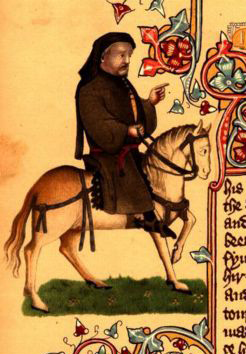
PICTURE: Image of Chaucer as a pilgrim from Ellesmere Manuscript in the Huntington Library in San Marino, California. The manuscript is an early publishing of the Canterbury Tales. Source: Wikipedia.

What’s in a name?…Covent Garden

Now a favored place for people-watching among Londoners and visitors alike, Covent Garden takes its name from the ‘Convent Garden’ which occupied the site in medieval times.

The ‘convent garden’, said to be a 40 acre kitchen garden, belonged to the Abbey or ‘Convent’ of St Peter in Westminster (Westminster Abbey was once the church of this religious foundation) which owned the site from the 13th century until 1548 when the land passed into control of King Henry VIII during the Great Dissolution.

He granted much of the land to John Russell, the 1st earl of Bedford, and it was the 4th earl, Francis Russell, who commissioned Inigo Jones to design a great public square. The new square featured grand houses along the northern and eastern sides and a church – St Paul’s (pictured right) – on the west while to the south, between the square and the Strand, stood the mansion of the Bedford family.

A fruit and vegetable market was licensed in 1670 but its growth – and the development of other squares offering a much greater level of privacy – led the wealthy who had originally occupied the houses to move elsewhere. The market, meanwhile, continued to grow and in the 1830s, the main market building which still stands there today was constructed.

Further buildings followed in the 1800s and the market continued to occupy the site until as recently as 1973 when it was finally moved out to Nine Elms and the area began a transformation into the shopping precinct it now is.

Lost London – York Watergate

There’s several places along Victoria Embankment where it’s possible to see where the River Thames bank stood before the massive mid-19th century project to reclaim land. Not the least of them is located in the downstairs foyer to Somerset House, where looking through the glass floor, you can see the pebbles of the original riverbank.

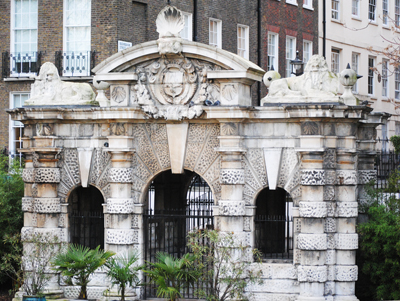
Another is York Watergate, once the river entrance to the Duke of Buckingham’s London mansion, and now stranded some distance from the water in Victoria Embankment Gardens.

The mansion, known as York House, was originally located on the southside of the Strand. Originally built in the 13th century, it was later acquired by King Henry VIII and granted to the Archbishop of York, Nicholas Heath, in 1556 (hence its name). The house became the home of George Villiers, the first Duke of Buckingham and somewhat sycophantic favorite of King James I, in the early 1620s.

When the duke was stabbed to death in 1628, the property passed to his son, the second Duke of Buckingham (also George), who later sold it to a land developer. It was apparently as a condition of the sale that the streets there now include the duke’s full name – hence George Court, Villiers Street, Duke Street, the slightly ludicrous Of Alley, and Buckingham Street.

The impressive Italianate watergate, which stands below the junction of Buckingham Street and Watergate Walk just a short walk into the gardens from Embankment tube station, was designed by the irrepressible Inigo Jones and built in 1626. Though weathered, it still bears the coat of arms of the Duke of Buckingham on the front.

Famous Londoners – Sherlock Holmes

The world’s most famous detective, Sherlock Holmes is one of London’s most widely known characters.

While Holmes’ early life is something of a mystery, it is known that he lived at his most famous address, 221B Baker Street, from 1881 until his retirement in the early 1900s (when he moved to Sussex and took up beekeeping). It was from there that he lived and worked along with his colleague, Dr John H. Watson (Dr Watson lived with Holmes at the address both prior to his marriage and following his wife’s death).

Baker Street is these days home to the Sherlock Holmes Museum where the rooms have been reconstructed as they would have been in Holmes’ day – including his famous study where you can sit in his chair by the fire – and filled with artefacts from his many cases (there is however some confusion over the address as the current location of 221B Baker Street is located in what was, prior to the 1930s, known as Upper Baker Street).

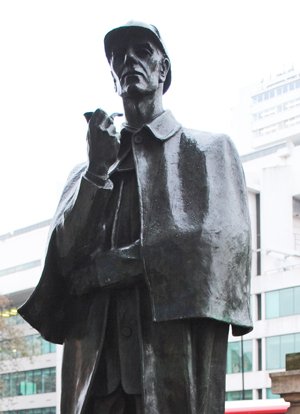
Nearby – just out the front of the Baker Street tube station – stands a statue of Holmes, commissioned by the Sherlock Holmes Society in 1999 and sculpted by John Doubleday (see picture).

Holmes has numerous associations with locations and buildings in London and while there’s far too many to mention here, there are a couple of addresses worth noting. Among them is:

• the Criterion Restaurant at 224 Piccadilly, site of Holmes’ and Watson’s first meeting on New Year’s Day, 1881 (there’s a commemorative wall plaque inside);

• the former site of Scotland Yard, headquarters of the metropolitan police, in the Westminster street now called Great Scotland Yard;

• the Sherlock Holmes pub, just off Northumberland Avenue near Craven Avenue – formerly known as the Northumberland Arms, it featured in the book The Hound of the Baskervilles and now contains a large collection of Sherlock Holmes memorabilia;

• the historic restaurant Simpson’s-in-the-Strand at 100 Strand, where Holmes and Watson dined;

• and, The Royal Opera House in Covent Garden – one of Holmes’ favorite ways to pass the time.

Holmes’ contribution to the art of detection has rippled across the globe and following the first recounting of his exploits in the 1887 book A Study in Scarlet, his deeds have provided the inspiration for countless books, films, and TV series.

Around London – City’s history goes online; London’s oldest structure discovered?; and, my, how prices have changed…

• Four hundred years of London’s history is being put online as part of a new project on the City of Westminster’s website. The council is publishing a new picture depicting a different historical event from the city’s tumultuous history every day throughout 2011 under its A date with history project. The images, taken from the council’s archives, include photographs, engravings and sketchings. They include a black and white photo of queues of people waiting on Vauxhall Bridge to pay their final respects to King George V lying in state at Westminster Hall after his death on 20th January, 1936, another photograph showing the King and Queen with PM Winston Churchill inspecting damage to Buckingham Palace’s swimming pool following a raid during the Blitz in September, 1940, a hand-colored print depicting the execution of King Charles I on 30th January, 1649, and an engraving showing a comet passing by the spire of St Martin in the Field in 1744. It is the first time the images have been made freely available online. To see the images, head to www.westminster.gov.uk/archives/day-by-day.

What could be London’s oldest structure has been unearthed on the Thames foreshore. Six timber piles up to 0.3 metres in diameter have been discovered only metres from the MI6 headquarters in Vauxhall, part of what archaeologists believe is part of a prehistoric structure which stood on the river bank more than 6,000 years ago during the Mesolithic period when the river was lower. The find, made by a Thames Discovery Programme team, is only 600 metres away from a Bronze Age timber bridge or jetty dating from 1,500 BC which was discovered in 1993. The piles may be able to be seen from Vauxhall bridge during low tides between 10.25am on 22nd January and 11.15am on 23rd January.

Homes in London were purchased for an average price of £14,000 back in 1910, according to land tax valuations documents released online this week. Ancestry.co.uk has placed the London, England Land Tax Valuations 1910 – compiled as part of David Lloyd George’s 1910 Finance Act, known as the Domesday Survey – online to help people discover more about the financial situations of their ancestors. The documents put the value of the Bank of England at £110,000, the Old Bailey at £6,600, and Mansion House at a more impressive £992,000. The average value of property on Fleet Street was £25,000 (compared with £1.2 million today) while in Cannon Street, the average value was £20,000 (£2.2 million) and in Chancery Lane, the average value was just £11,000 (£1.1 million).

What’s in a name?…Marylebone

This curiously named part of London, pronounced Mar-lee-bone, takes it’s name from a church dedicated to St Mary which was originally built near a small river or stream called the Tyburn or Tybourne. Hence St Mary-le-Burn became St Marylebone.

There was a medieval village here which during the 18th century became subsumed into greater London as fashionable people sought land to the west of the city. The area – in particular Harley Street – became known as a location of choice for doctors to site their consulting rooms and is still known for its medical establishments.

Among the significant sites is the St Marylebone Parish Church (pictured right) which, consecrated in 1817, was where poets Robert Browning and Elizabeth Barrett were married in 1846 following their elopement, the John Nash-designed All Souls Church in Langham Place, the Langham Hotel which opened in 1865 and boasted Oscar Wilde and Mark Twain among guests, 221B Baker Street, fictional home of Sherlock Holmes and now the site of the Sherlock Holmes Museum, and the famous wax museum, Madame Tussauds.

Marylebone is also home to the world famous Wallace Collection, bequeathed to the government in 1897, the concert hall Wigmore Hall, the Royal Academy of Music and the Royal Institute of Architects, and the art-deco headquarters of the BBC, Broadcasting House. Marylebone High Street remains a shopping mecca offering a diverse range of independent boutiques and specialty shops while in the south, Marylebone includes one of London’s most famous shopping strips on Oxford Street.

Other famous people connected with the area include four time Prime Minister William Gladstone who lived at 73 Harley Street from 1876 to 1882, writer Charles Dickens who lived at 18 Bentinck Street while working as a court reporter in the 1830s, author Edward Gibbon, who lived at 7 Bentinck Street while writing his landmark text The Decline and Fall of the Roman Empire from the 1770s, and Sir Arthur Conan Doyle, creator of Sherlock Holmes, who worked in Upper Wimpole Street in the 1890s.

Treasures of London – The Magna Carta

It’s regarded as one of the seminal documents of medieval England. First issued 15th June, 1215, the Magna Carta (“Great Charter”) was endorsed by England’s barons and King John at Runnymede near Windsor Castle and put limits in the power of the king by demanding he govern according to established feudal law.

The document was forced upon King John by rebellious barons after he broke away from established customs and imposed oppressive taxes and fines and seized the estates of nobles.

Its terms were immediately repudiated by the king, leading to further rebellion which ended when the king died on 18th October, 1216. Less than a month after the king’s death, the regent, William Marshal, issued a revised version of the document and a second revision almost exactly a year later. A further version was later issued by King Henry III and later confirmed by King Edward I.

Copies of the document were sent throughout the land in 1215. There is now a copy in the Lincoln Cathedral Archives and another in Salisbury Cathedral Chapter House while the British Library has two copies, both from the collection of Sir Robert Cotton, who died in 1631. One of the library’s two copies was burned in a fire 100 years after Sir Robert’s death and still bears fire damage.

The text of the Magna Carta is not abstract in nature but deals in detail with practical realities, covering issues ranging from what happens when a noble who holds land from the Crown dies through to who heirs may marry, standard measures of wine, ale and corn and the removal of foreign knights from the country.

Only three of the Magna Carta’s 63 clauses are still law: one guaranteeing the liberties of the English Church; another confirming the privileges of London and other towns; and a third, often viewed as a forerunner of clauses contained in documents such as American Bill of Rights and Universal Declaration of Human Rights, which states that no free man shall be imprisoned, dispossessed, outlawed or exiled without the lawful judgement of his equals or by the law of the land.

The legacy of the Magna Carta is not however in the individual rights it seeks to uphold but rather the principle that for the first time in English history, it elevates the law above all men, even the king.

WHERE: Sir John Ritblat Gallery: Treasures of the British Library: Magna Carta and associated documents, The British Library, 96 Euston Road (nearest tube station is Kings Cross St Pancras or Euston); WHEN: 9.30am to 6pm Monday, Wednesday, Thursday and Friday; closes 8pm Tuesday and 5pm Saturday; 11am to 5pm Sunday; COST: Entry is free; WEBSITE: www.bl.uk or for a detailed guide and virtual tour of the Magna Carta, see  www.bl.uk/treasures/magnacarta/index.html.

Around London – 100 years since the Siege of Sidney Street;

It’s 100 years since the Siege of Sidney Street and the Houndsditch Murders and to mark the occasion, the Museum of London Docklands opens a special exhibition this Saturday.

The murders took place on 16th December, 1910, when a group of Latvian revolutionaries attempted to break into a jeweller’s shop in Houndsditch. Three City of London policemen were killed and two more disabled for life in the gunfight which broke out.

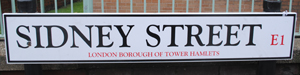
Two weeks later, on 3rd January, 1911, the Siege of Sidney Street began when more than 200 armed police and a detachment of Scots Guards besieged a home at 100 Sidney Street in Stepney where two of the Houndsditch gang were believed to be hiding.

The exhibition, which has been put together in partnership with the Jewish East End Celebration Society, features objects from the trial of suspected gang members as well as never-before-seen objects including guns taken from the crime scene and safe-breaking equipment. The overcoat Winston Churchill wore on the day of the siege – he attended in his capacity as Home Secretary – will also be on display.

London Under Siege: Churchill and the Anarchists, 1911, runs from 18th December to April 2011. Entry is free. For more information, see www.museumindocklands.org.uk.

• Meanwhile a plaque was unveiled today on the site in Cutler Street where three policemen – Sergeant Robert Bentley, 36, Sergeant Charles Tucker, 46, and PC Walter Choat, 34 – were killed during the gunfight with the gang. Two other policemen were disabled for life and a fireman, Superintendent Charles Pearson, later died after he entered the Sidney Street property which had been gutted by fire. A plaque will be unveiled in his honor on 6th January.

What’s in a name?…Whitehall

Running southward from Trafalgar Square towards the Houses of Parliament (the southern part of Whitehall is actually known as Parliament Street), Whitehall is lined with government buildings – everything from the Foreign Office to the Cabinet Office, from the Scotland and Wales Offices to the Ministry of Defence – and has become so identified with government that its very name is now used to mean just that. But where does the name come from?

Whitehall takes its name from the Palace of Whitehall which once stood on the site of the current street. The palace’s origins go back to the 14th century when a grand house known as York Place was built as the London residence of the Archbishops of York.

The building was gradually expanded over the years – work which continued when Thomas Wolsey was made Archbishop of York in 1513. When Cardinal Wolsey fell from favour in the late 1520s, however, King Henry VIII seized the house along with his other assests.

With the royal Palace of Westminster badly damaged in a fire in 1512, King Henry VIII had been staying at Lambeth Palace. He saw the newly acquired palace, renamed Whitehall, as a suitable new home and continued expansion works, constructing a series of recreationally-oriented buildings on the west side of what is now Whitehall including tennis courts, a cockfighting pit and a tiltyard for tournaments. By the time of Henry VIII’s death in 1547, the palace covered 23 acres and was the largest in Europe.

The palace continued to be used by subsequent monarchs until much of it was destroyed by fire in 1698. These days the only surviving part of the palace is the Banqueting House. Built by Inigo Jones for King James I, it was from a window on the first floor of this 1622 building that King Charles I stepped onto a scaffold where his head was cut off.

Apart from the Banqueting House, other significant sites in Whitehall including the Cenotaph, the focus of Remembrance Sunday commemorations. Downing Street, meanwhile, runs off the south-eastern end of Whitehall and behind gates which have blocked it off since 1989, stands the Prime Minister’s official residence.

Around London – West End’s VIP day; National Curry Week; Kenwood House to close for repairs; and Horatio’s handwriting…

• Oxford Street and Regent Street in London’s West End will be closed to cars and buses this Saturday (27th November) as part of the sixth annual West End VIP Day. The day, which is sponsored by American Express,  will also bring singers, entertainers and celebrities hit the streets as they fundraise for the Starlight Children’s Foundation. Other entertainment will include a seven foot climbing wall on Regent Street, giant TV screens, fair ground style rides and the chance to climb inside a lifesize snow globe. Runs from 9am to 10pm. For more information, see www.westendlondon.com/vip.

• This week was National Curry Week, so to celebrate, we thought we’d tell you about London’s oldest curryhouse (in fact it’s said to be the oldest in the UK). Veeraswamy was founded in 1926 at its current location of 99 Regent Street (entry via Swallow Street) by, according to the restaurant’s website, “the great grandson of an English General, and an Indian princess”. Customers are said to have included Indira Gandhi, Charlie Chaplin, King Hussein of Jordan and Marlon Brando. See www.nationaleatingoutweek.com or www.veeraswamy.com.

Kenwood House in Hampstead, north London, is set to undergo major repair and conservation works meaning the house will be closed to the public from early summer 2012 for just over a year. The grounds will remain open. The current house was designed by Robert Adam and built over the period of 1762 to 1779 for William Murray, 1st Earl of Mansfield and the Lord Chief Justice. It now houses a collection of paintings bequeathed to the nation in 1927 by Edward Cecil Guinness, 1st Earl of Iveagh, which includes works by Rembrandt, Vermeer, Gainsborough and Turner. For more information, see www.english-heritage.org.uk/daysout/properties/kenwood-house/.

On now: Compare Horatio Nelson’s handwriting before and after he lost his right arm in battle at a special showing of two of his letters at the Wellcome Collection tomorrow night (26th November). The letters are part of Hands: Amazing Appendages, a one night only show. There will also be the chance to try out some nail art, try out some surgeon’s tools and hear talks and see performances. Admission is free (but some talks and performances will be tickets – tickets available on the night only from 7pm). See www.wellcomecollection.org/whats-on/events/hands.aspx.


What’s in a name?…Pall Mall

This curiously named street in the heart of London’s St James district traces the origins of its moniker back to the 17th century when the game of “pall mall” (“pell mell” and “paille maille” being among a host of alternative spellings) was played there.

The game, mentioned by Samuel Pepys in his famous diary, involves the use of a mallet and ball similar to that used in modern croquet but, according to some commentators, pall mall was more likely a predecessor of golf than croquet, with players attempting to belt the ball as far as possible along a pitch before putting the ball through a hoop suspended high off the ground.

Pall Mall, which runs parallel to The Mall from St James’ Street in the west to Haymarket in the east with an eastern extension, Pall Mall East, completing the journey from Haymarket into the northern end of Trafalgar Square, became famous in the 19th and early 20th centuries for housing numerous ‘gentlemen’s clubs’. Among those still in business are the Travellers Club, the Athaenaeum Club, the Reform Club, the Army and Navy Club, the Oxford and Cambridge Club, and the Royal Automobile Club.

St James’s Palace sits at the street’s western end and it is of note that nearly all of the southern side of the street is still part of the Crown Estate (the exception being a home Charles II is believed to have given to the actress Nell Gwynne, who apparently sensibly demanded the freehold on the property).

Other buildings along the street include Schomberg House, built for the Duke of Schomberg in the late 17th century (only the facade of which remains), and the Sir Christopher Wren-designed Marlborough House, which is tucked in between Pall Mall and The Mall and sits opposite St James’s Palace. The National Gallery and the Royal Academy also both briefly had homes in Pall Mall.

Wren’s London – 10. The Monument, The Temple Bar, and more churches…

So we come to the final in our series on Wren’s London. This week we take a quick look at some of Wren’s remaining London works (keep an eye out for our upcoming ‘daytripper’ on Oxford for some detail of his works there)…

• The Monument. Built between 1671-77 to commemorate the Great Fire of London, it was designed by Wren and Dr Robert Hooke. For further information, see our previous post.

The Temple Bar. Designed by Sir Christopher Wren in 1672 to replace a crumbling wooden predecessor, it’s only recently been returned to the City and now stands adjacent to St Paul’s. For further information, see our previous post.

Churches. We’ve only looked in depth at a few of the existing churches Wren designed in London. But here are some of the others among the more than 50 he designed that still stand:

St Benet Paul’s Wharf. Originally completed in 1685, it claims to be the only “undamaged and unaltered” Wren church in the city, having survived World War II intact. Now the Welsh church of the City of London. See www.stbenetwelshchurch.org.uk.

St James Garlickhythe. Built according to Wren’s design, it was completed in 1682 (the tower not until 1717). It is known as ‘Wren’s Lantern’ due to its light interior. See www.stjamesgarlickhythe.org.uk.

St Margaret Pattens. Built between 1684 and 1687 after the previous church was destroyed in the Great Fire, the church gets its unusual name of ‘pattens’ from wooden undershoes that were worn to elevate people out of the mud, and were sold nearby. See www.stmargaretpattens.org.

• St Margaret Lothbury. Completed in 1692, it now incorporates seven adjacent parishes thanks to losses in the Great Fire, World War II and building projects and is now officially known as the parish church of “St Margaret Lothbury and St Stephen Coleman St with St Christopher-le-Stocks, St Bartholomew-by-the-Exchange, St Olave Old Jewry, St Martin Pomeroy, St Mildred Poultry and St Mary Colechurch.” See www.stml.org.uk.

St Martin-within-Ludgate. Rebuilding was largely completed by 1680. The previous church on the site was where William Penn, founder of Pennsylvania, was married. See www.stmartin-within-ludgate.org.uk.

Others, some of which have been rebuilt since Wren’s day, include St Andrew-by-the-Wardrobe, St Andrew Holborn, St Anne and St Agnes (Now St Anne’s Lutheran Church), St Clement Eastcheap, St Lawrence Jewry, St Mary Abchurch, St Mary Aldermary, Mary-le-Bow, St Michael, Cornhill, St Michael Paternoster Royal, St Nicholas Cole Abbey (being redeveloped as a centre for religious education), St Peter upon Cornhill, and St Vedast alias Foster. (We’ll be featuring some in more detail in later entries).

Wren’s London – 9. Marlborough House

We’re nearing the end of our series on Wren’s London (next week we’ll take a final look at some of the Wren designs we’ve not yet mentioned), so this week we look at one of his lesser known (and less accessible) designs – Marlborough House.

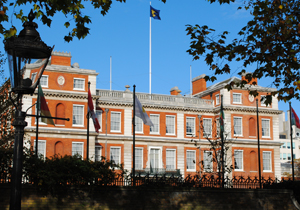
Tucked away behind high brick walls next to St James’ Palace just off Pall Mall, Marlborough House was built for Sarah Churchill, the Duchess of Marlborough – a confidant of Queen Anne – and completed in 1711.

The duchess, who secured a lease of the site from Queen Anne, selected Sir Christopher as the architect in preference to Sir John Vanbrugh, but she later fell out with Wren and, after dismissing him, oversaw the completion of the building herself. It is believed that the design of the house was actually the work of Wren’s son, also named Christopher, although the plans were undoubtedly drawn up under Wren senior’s watchful eye.

The house, built of red Dutch bricks brought to England as ballast in troop transports, was noted for its plain design. But the walls of the central salon and staircases were decorated with scenes of battles the Duke had fought in.

The property remained in the hands of the Dukes of Marlborough until it was acquired by the Crown in 1817. The building – which was substantially extended in the mid 1800s to the designs of Sir James Pennethorne – was subsequently used by members of the royal family including Princess Charlotte (only daughter of the future King George IV) and her husband Prince Leopold (later the King of the Belgians), Queen Adelaide, widow of William IV, Edward, Prince of Wales (later Edward VII), George, Prince of Wales (later George V), King Edward VII’s widow, Queen Alexandra, and, lastly, Queen Mary, widow of  George V.

Following the death of the Queen Dowager in 1953, Queen Elizabeth II donated it for use by the Commonwealth Secretariat who still occupy the building today.

WHERE: Pall Mall (nearest Tube stations are Green Park and Piccadilly); WHEN: Two hour tours are usually held every Tuesday morning (check first); WEBSITE: www.thecommonwealth.org/Internal/191086/34467/marlborough_house/

Daytripper – The Historic Dockyard, Chatham

Once a pivotal player in ensuring the UK’s navy remained on top at sea, the Historic Dockyard in Chatham has been involved in preparing ships involved in some of history’s greatest naval engagements – everything from England’s defeats of the Spanish Armada in 1588 to Admiral Lord Nelson’s famous victory at the Battle of Trafalgar.

Located 35 miles south-east of London on the River Medway, these days the dockyard plays host to tourists rather than hundreds of craftsmen who once worked there, eager to gain an insight into its rich history (as well as two film crews for movies and TV series).

While the history of the dockyard on its present site goes back to the 1600s, most of the surviving buildings date from between 1700 to the end of the Napoleonic Wars in 1815, during which time the Chatham Dockyard built and launched 125 ships including Nelson’s Victory (which can now be found at Portsmouth).

The dockyard officially closed in 1984 and is now under the care of the Chatham Historic Dockyard Trust.

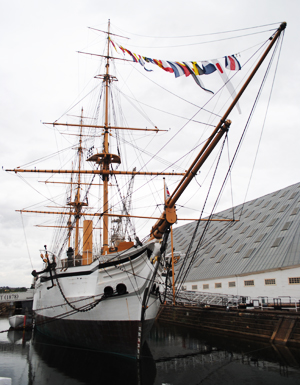
Attractions these days are many and range from the chance to ramble over historic warships permanently docked there – these include the sloop, the HMS Gannet – launched in 1878 it served as an anti-slaver and later as a training ship, the HMS Cavalier – launched in 1944, it was one of 96 emergency destroyers built during the Second World War and, having served in various places around the world until being ‘paid off’ in 1972, is now preserved as a memorial, and the last vessel built for the Royal Navy there, the Oberon class submarine HMS Ocelot – launched in 1962.

Other features include the Wooden Walls of England – an interactive walk-through looking at what life was like aboard England’s timber-hulled vessels of the mid-1700s, No 1 Smithery which now houses the maritime model collections of the National Maritime Museum and the Imperial War Museum as well as paintings and other artefacts, the Royal National Lifeboat Institution’s collection of historic lifeboats and The Royal Dockyard Museum which houses a large range of artefacts.

Also well worth a visit is the still working Victorian Ropery. Its curmudeonly attendants who provide a fascinating insight in what life was like for those formerly employed there and you can see how rope is still made in the 346 metre long rope house which, when constructed, was the longest brick building in Europe.

There’s also a cafe on site and a range of other odd artefacts at various locations – including the railway carriage used by Lord Kitchener in Sudan in 3 Slip – The Big Space – as well as the historic buildings of the dockyard itself.

There’s certainly more than can be seen in a day but thankfully all tickets are valid for a year.

WHERE: Chatham, Kent (nearest railway station is Chatham). For detailed driving instructions see website; WHEN: Open everyday until 12th December from 10am-4pm (check for times after that); COST: £15 an adult/£12.50 concessions/£10.50 children (aged five to 15 years)/£42.50 for a family; WEBSITE: www.thedockyard.co.uk

Wren’s London – 8. Old Royal Naval College, Greenwich

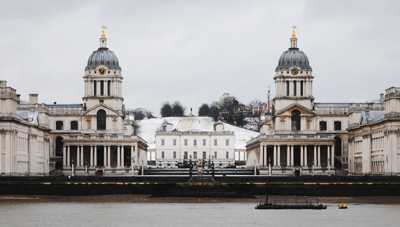
Hunkering down on the south bank of the Thames, the Old Royal Naval College at Greenwich is yet another Wren masterpiece and the centrepiece of the UNESCO-listed Greenwich Maritime World Heritage Site.

What is now known as the college was originally designed as a ‘hospital’ or retirement home for old or infirm sailors. Established by Royal Charter in 1694, it was King William III who pushed the project into fruition as per the wishes of his then late wife Queen Mary II.

Wren was selected to design the building and along with the diarist John Evelyn, who had been appointed treasurer, laid the foundation stone on 30th June, 1696.

Wren’s initial design – for a three side courtyard facing the river – was rejected by Queen Mary who insisted the view from the existing Queen’s House to the river be maintained. So, instead, the hospital was built as a series of four pavilions, each with its own court, with the Queen’s House standing as it’s centrepiece when viewed from the river.

Wren himself never lived to see the building’s completion – it was in the end completed by a number of other famous architects including Sir John Vanbrugh, Thomas Ripley, and Wren’s pupil Nicholas Hawksmoor. Fortunately Wren had laid out all the foundations which ensured the basic design conformed to his plans.

The first 42 pensioners moved in in 1706 and the numbers grew as buildings were completed to a peak of 2,710 in 1814. However, declining numbers of pensioners by the mid 1800s – thanks to a period of peace on the seas and the success of a program which saw more pensioners living with their families, eventually led to the hospital’s closure in 1860.

In 1873, the Royal Naval College took over the premises, assuming the role of both the former Naval College at Portsmouth and the School or Naval Architecture and Marine Engineering which had been based in South Kensington. The Naval Staff College opened on the site in 1919 and further navy departments including the Department of Nuclear Science and Technology moved there in later years. The Royal Navy left the college in 1998.

Now in the care of the Greenwich Foundation, the college is now used by the University of Greenwich and the Trinity College of Music as well as for public events. The public can also visit certain parts of the former college including the grounds, the spectacular Painted Hall and the Chapel.

The domed Painted Hall, which features a series of classically themed paintings with King William III and Queen Mary II at its heart, was originally planned by Wren to be the hospital’s dining hall but due to the length of time it took for Sir James Thornhill to complete – 19 years – his paintings it was never used as such. Instead it stood empty until the body of Admiral Lord Nelson was brought there to lie in state in January 1806. In 1824 it became the National Gallery of Naval Art but in the 1930s became a dining room again with the gallery’s contents transferred to the National Maritime Museum.

The Chapel of St Peter and St Paul, meanwhile was completed in 1751 to the design of Sir Thomas Ripley but was gutted by fire only 28 years later. It was then rebuilt, largely to the designs of James “Athenian” Stuart with some of the detailing designed by his Clerk of Works William Newton, and was reopened in 1789. Restored in the 1950s, it is said to look “almost as it was” when it opened in 1789. The chapel is still in use for services.

WHERE: Located adjacent to Greenwich Pier with entry from Cutty Sark Gardens, College Approach, Romney Road Gate, Royal Gate or Park Row, Greenwich (nearest DLR station is Cutty Sark for Maritime Greenwich); WHEN: The Painted Hall and Chapel are open daily from 10am to 5pm (chapel used for worship on Sunday mornings, open for sightseeing  from 12.30pm); COST: Free (Booked guided tours are available for £5 an adult/children under 16 free); WEBSITE: www.oldroyalnavalcollege.org

A Moment in History – Guy Fawkes and the Gunpowder Plot

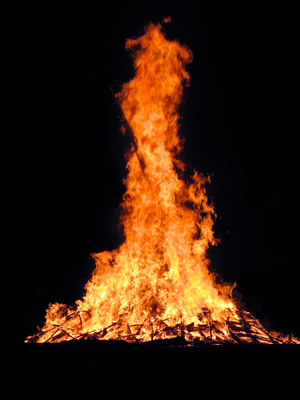
This week, on November 5th and surrounding days, people across England will mark Bonfire Night, an annual event which involves burning effigies of Guy Fawkes on top of a bonfire and setting off copious amounts of firecrackers.

So who was Guy Fawkes and what’s it all about?

Bonfire Night (the 5th November is also known as Guy Fawkes Day or Fireworks Night) has its origins in 1605 when a group of Catholics – including Guy or Guido Fawkes (the latter the Spanish form of his name) – attempted to blow up parliament in what became known as the Gunpowder Plot.

Born in York in 1570, Fawkes converted to Catholicism some time before selling his inheritance and heading to continental Europe where he fought as a mercenary for Catholic Spain against the Protestant Dutch in the Eighty Years War.

Having later travelled to Spain where he unsuccessfully tried to drum up support for a Catholic rebellion in England, he then returned to England where he was introduced to Robert Catesby, who planned to assassinate King James I and much of parliament and put a Catholic monarch back on the throne.

Having leased an undercroft beneath the House of Lords, the group of 13 plotters stockpiled gunpowder there with Fawkes put in charge of lighting it on 5th November before making his escape to the Continent. An anonymous letter, however, to Catholic Lord Monteagle warning him not to attend the State Opening of Parliament, led authorities to the site around midnight on 4th November and there they found Fawkes guarding the 36 barrels of gunpowder.

Arrested (he initially gave them the name of John Johnson), he subsequently confessed under torture and was sentenced to be hung, drawn and quartered – a sentence which he shortened by leaping off the scaffold and breaking his own neck before it could be carried out. The other plotters were also either killed, imprisoned or executed.

Bonfires were supposed to have been lit the night after the plot was foiled – 5th November – to celebrate the king’s safety and they have been ever since that date (in fact, James I passed an Act of Parliament making 5th November a day of thanksgiving – it remained in force until 1859).

Effigies of Fawkes followed (although some people substitute that of Fawkes with other people) as did the firecrackers. Some children carry effigies of Fawkes around asking for a “penny for the Guy” in an effort to apparently raise money for firecrackers. The poem which starts “Remember, remember, the fifth of November” is also associated with the night.

The night, which is now celebrated for all sorts of reasons – some suggest Guy Fawkes should be recognised as a hero for defending persecuted people against governments, is reportedly still observed in places as far afield as the US and New Zealand.

The cellar where Fawkes was arrested no longer exists – it was destroyed during a fire which consumed much of the medieval Houses of Parliament in 1834. But interestingly, the Yeoman of the Guard still do search the Houses of Parliament before each State Opening of Parliament. Two confessions signed by Fawkes are held at the National Archives.

PICTURE:  Agata Urbaniak (www.sxc.hu)

Wren’s London – 7. Kensington Palace

A once favored residence of British monarchs, Kensington Palace’s connections with royalty date back to 1689 when, then a private country home known as Nottingham House, the building was purchased by King William III and Queen Mary II.

The royal couple turned to Sir Christopher Wren, then Surveyor of the King’s Works, who was charged with adapting the property into a suitably regal residence.

Wren’s work included the addition of four new pavilions – one at each corner – to provide extra accommodation for the king and queen. The King’s Apartments, approached by a Grand Staircase, were located in the south east, and the Queen Apartment’s in the north west. While many later additions were made, the basic layout of these buildings remains true to Wren’s original design.

Among the many spectacular original rooms is the King’s Gallery, built for William in 1695. It features an 1694 wind dial connected to a weather vane which turns according to the direction of the prevailing wind.

The property’s subsequent royal residents have included Queen Anne, King George I and King George II (it was King George III who made Buckingham Palace his primary London residence). Princess (later Queen) Victoria was born here in 1819 (it was she who first opened the State Apartments to visitors in 1899) while more recent residents in the palace’s private areas have included Princess Margaret and, of course, Diana, Princess of Wales.

WHERE: The Broad Walk, Kensington Gardens, Kensington (nearest tube stations are High Street Kensington or Queensway); WHEN: Daily 10am to 5pm (last admission 4pm); COST: £12.50 adult/£11 concession/£6.25 child/£34 family (online booking discounts available, Historic Royal Palaces members free); WEBSITE: www.hrp.org.uk/KensingtonPalace

PICTURE: Historic Royal Palaces/newsteam.co.uk

Famous Londoners – Arthur Wellesley, the Duke of Wellington

Best known for his defeat of Napeleon at the Battle of Waterloo, Arthur Wellesley, the Duke of Wellington, was not a native Londoner. But his involvement in the military and politics meant he went on to have a significant impact on the city.

Wellesley (whose surname was actually Wesley until his family changed it in 1798) was born in Ireland in early May, 1769, and, following his schooling – including time spent at Eton and in France, he entered the British Army as an ensign in 1787, subsequently serving as an aide-de-camp to two Lords Lieutenant of Ireland. While in Ireland, he was also elected an MP in the Irish Parliament.

His military career took him to the Netherlands and then India, where he was later appointed Governor of Seringapatam and Mysore.

Returning to Europe, Wellesley took a leave of absence from the army and, having been knighted, again entered politics becoming the Tory MP for Rye in 1806, then MP for Newport on the Isle of Wight before being appointed Chief Secretary for Ireland.

He left these tasks to fight in the Napoleonic Wars – most notably in the Peninsular War where he led the allied armies to victory at the 1813 Battle of Vitoria (and was subsequently promoted to the rank of field marshal).

Following Napoleon’s exile, Wellington was created the Duke of Wellington. He served briefly as ambassador to France before Napoleon’s return in 1815. It was for his subsequent role at the Battle of Waterloo, in which Napoleon was finally and totally defeated, that Wellington is mostly remembered now.

Entering politics after his return to England in 1819, he was named Commander-in-Chief of the British Army in 1827 and was twice elected Prime Minister, from 1828-30 and again in 1834, before his death in 1852 after which he received a state funeral.

It’s not hard to find reference to the duke in today’s London and countless pubs testify to his one-time popularity.

He purchased his most famous residence, Apsley House (which attracted the nickname of Number 1 London, thanks to it being the first house one encountered in London after passing through the toll gate) in 1817. Indeed, it was the installation of iron shutters at this property – a measure taken to prevent a mob demanding electoral reform from destroying it – that led to him being given the nickname, the “Iron Duke”.

These days Apsley House is managed by English Heritage and contains the Duke’s collection of artworks and furnishings.

Opposite Apsley House, close to Hyde Park Corner, stands an equestrian statue of Wellington and behind it Wellington Arch, which dates from between 1826-30, and originally stood parallel to the Hyde Park Screen. In 1846, a vast statue of the Duke was mounted on top of the arch but this was replaced with a sculpture of Peace in her Quadriga when the arch was relocated to its present site in 1882 due to a need to widen the road. There are great views from the top.

At Hyde Park Corner, close to Park Lane, stands another memorial to Wellington, this time a massive statue of the Greek hero Achilles. It was put there in 1822 (and incidentally sparked considerable controversy – it was London’s first nude public sculpture in centuries and despite the careful placing of a fig leaf, didn’t please everybody).

Wellington was buried in St Paul’s Cathedral and his huge block-like tomb in the crypt is given a level of prominence only equaled by that of Admiral Nelson.

The National Portrait Gallery this week launches an exhibition, Thomas Lawrence: Regency Power and Brilliance, which features the Duke’s favorite painting of himself (not the one above). The painting, by Sir Thomas Lawrence, hasn’t been on public exhibition for 60 years. From 21st October.

PICTURES: Image of the Duke of Wellington is by Sir Thomas Lawrence (1814). Source: Wikipedia.