The Bloody Tower (centre, with the gateway) at the Tower of London. PICTURE: David Adams
Carrying rather a gruesome name, this rectangular-shaped tower sits over a gate leading from outer ward into the inner ward in the Tower of London.
The tower, which once controlled the watergate before the outer walls were constructed, was originally known as the Garden Tower due to its location adjoining the Tower Lieutenant’s Garden.
To see the rest of this post (and all of our coverage), subscribe for just £3 a month. This small contribution – less than the cost of a cup of coffee – will help us continue and grow our coverage.We appreciate your support!
Hanging in the Tudor Great Hall at Hampton Court Palace, this series of 10 huge tapestries are believed to have been commissioned by King Henry VIII and were first hung in the hall in 1546.
To see the rest of this post (and all of our coverage), subscribe for just £3 a month. This small contribution – less than the cost of a cup of coffee – will help us continue and grow our coverage.We appreciate your support!
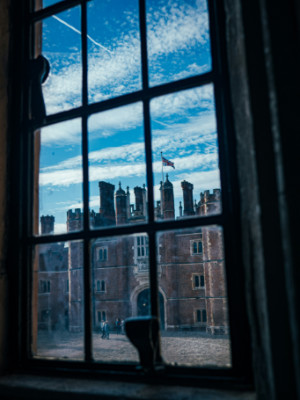
Looking out a window at Hampton Court Palace. PICTURE: Greg Willson/Unsplash
• The oldest surviving rooms at Hampton Court Palace – the Wolsey Rooms which King Henry VIII and Thomas Wolsey once used – are the location of a new display opening today exploring the early years of Henry VIII’s reign and the lives of the ‘ordinary’ men and women who shaped the Tudor dynasty.The Tudor World has, at its centre, rare surviving paintings from the Royal Collection including The Embarkation of Dover – depicting the Tudor navy – and The Field of Cloth of Gold which details Henry VIII’s summit with King Francis I of France in 1520. Also on show is a gold ring believed to have belonged to the Boleyn family, a brightly coloured silk hat linked to King Henry VIII, Wolsey’s portable sundial, a wooden chest used to hide religious contraband by Catholic priests during the reign of Queen Elizabeth I, and, an original Tudor chain pump used to help empty the Hampton Court cesspool. Among the stories of “ordinary” Tudor people being shared is that of Anne Harris, Henry VIII’s personal laundry woman who washed the bandages for his leg ulcers and, Jacques Francis, a free-diver from West Africa who was involved in the expedition to salvage guns from the sunken Mary Rose and who later became one of the first Black African voices heard in an English court, when he was called to testify in a case concerning his employer, Paulo Corsi. Included in palace admission. For more, see www.hrp.org.uk/hampton-court-palace/.
• Crossing Borders, a day of free activities, performances and workshops run by local newly arrived people, will be held at the Horniman Museum Gardens in Forest Hill this Saturday. The day will feature arts and crafts workshops led by IRMO, dance performances by Miski Ayllu and the Honduran Folkloric Pride Group, the chance to learn circus skills with young people from Da’aro Youth Project and South London Refugee Association, and the opportunity to make kites with Southwark Day Centre for Asylum Seekers. The free event runs from 11am to 4pm. For more, see https://www.horniman.ac.uk/event/crossing-borders/.
• Transport for London customers can save 30 per cent on entry to the Painted Hall at the Old Royal Naval College when using the TfL network until 17th November. Simply show customers show your TfL journey on the day of your visit via the TfL Oyster and Contactless app and receive the discount, taking the adult entry price, when booked online to just £11.55. For bookings, head to https://londonblog.tfl.gov.uk/2022/07/27/in-the-city/.
Send all items for inclusion to exploringlondon@gmail.com.
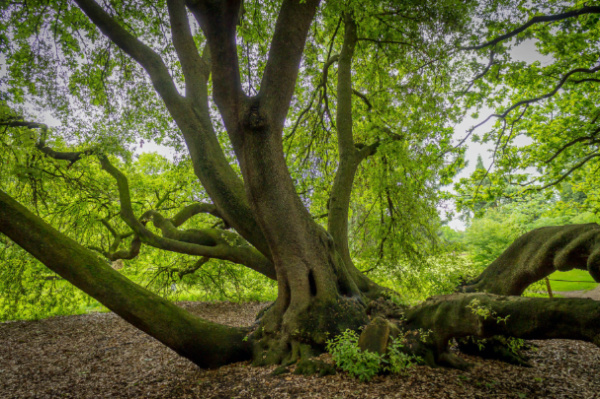
Said to be the oldest of its species in the UK (and a contender for the oldest tree in London), this holm oak (Quercus ilex), also known as a holly leaved oak, is believed to be more than 500-years-old.
The site was the home of senior clergy for much longer – Waldhere, the Bishop of London, first bought the site in 704 AD. And over the years, Fulham Palace and its gardens have evolved significantly with some of the current structures dating from Tudor times.
The Bishops of London left the palace in 1973 and it’s now managed under a trust which was established in 2011.
It’s possible this immense evergreen oak, which is native to the Mediterranean region, was among a number planted in the mid-16th century during the tenure of Bishop Edmund Grindal (about 1553 to 1559).
Bishop Grindal is known to have had a keen interest in the garden and who is credited with introducing the tamarisk tree to England and growing grapes which were sent to Queen Elizabeth I.
It’s also possible the tree was planted during the later tenure of Bishop John Aylmer (1576 to 1594).
The oak, which was coppiced many years ago extending its life, is among the original 41 trees awarded “Great Tree” status in 1988.
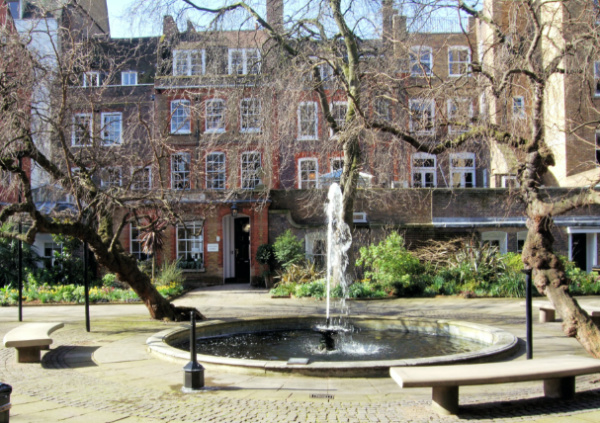
The two gnarled mulberry trees on either side of the fountain. PICTURE: Jim Linwood (licensed under CC BY 2.0)
While there’s been gardens here dating back possibly as far as the middle of the 12th century when the Templars established a preceptory here, these two trees have a more recent historic (and royal) link.
The gnarled black mulberrys (Morus nigra) in the Fountain Court were planted here on 20th June, 1887, to commemorate the Golden Jubilee of Queen Victoria.
There were actually four mulberry trees planted to mark the occasion – which was celebrated with a grand dinner in the nearby Middle Temple Hall – but these two trees are the only survivors, the other two having been removed in the 1970s.
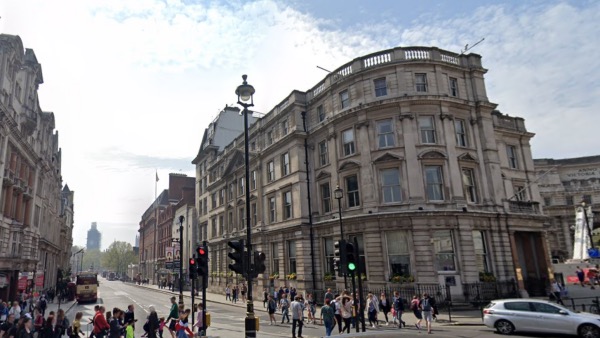
Looking down Whitehall from where the Charing Cross stood today. Locket’s stood on the right. PICTURE: Courtesy of Google Maps.
A famous “ordinary” where meals could be obtained at preset prices, Locket’s was founded by Adam Locket just south of Charing Cross in the 17th century.
A popular meeting place after attending the theatre, the establishment was known for the quality of its food. It was frequented by the well-to-do as well as dramatists like Sir George Etherege (who apparently didn’t pay his bill).
Following Adam Locket’s death in about 1688, he was succeeded by his son Edward who ran it until about 1702. It survived through the reign of Queen Anne but contemporary references – it had been mentioned by writers such as John Vanbrugh and William Congreve – became increasingly scanty and then disappeared altogether after her death in 1714.
Drummond’s Bank later occupied the site where Locket’s had stood.
Spring is upon us, so we thought it an appropriate time to consider some of London’s greatest natural assets – its trees. But, as well as being significant for their environmental impact, each of these trees (or, in some cases, the remains of them), are significant for historic reasons (we’ve previously mentioned a couple including what’s believed to be the oldest tree and the unusual – and sadly now deceased – Hardy Tree).
PICTURE: Steve Daniels (licensed under CC BY-SA 2.0)
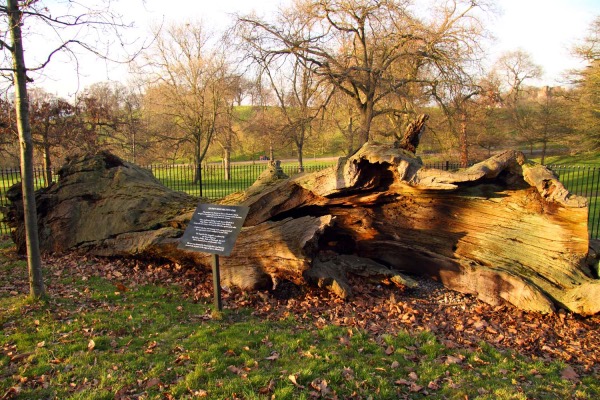
First up, it’s the tree known as Queen Elizabeth’s Oak in Greenwich. Thought to date from possibly as far back as the late 13th century, this tree survived until the 19th century before its carcass finally fell to the ground during a storm in 1991. It has lain in Greenwich Park ever since.
The tree, which is located at the end of what is now Lover’s Walk close to the Maze Hill Gate, was located in the grounds of Greenwich Palace (also known as the Palace of Placentia) and was there when King Henry VIII resided at the palace.
In fact, it’s said that he and Anne Boleyn danced around the oak while courting, and (and here’s where the name comes from) that Elizabeth, their daughter (and later Queen Elizabeth I), picnicked under its canopy (some accounts suggest she actually picnicked in the tree’s hollow – but still then upright – trunk).
Following the creation of what is now Greenwich Park, the hollow tree was apparently used as a prison for those caught illicitly on the grounds. They were secured behind a heavy wooden door fitted to the trunk (a park keeper’s lodge was built nearby in the 17th century; it was demolished in the 1850s).
The tree, one of 3,000 in the park, had died in the 19th century and was reduced to an eight metre high stump, partly supported by ivy, when it was blown over by the storm in June, 1991.
A replacement oak, which was donated by the Greenwich Historical Society was planted nearby by the Duke of Edinburgh on 3rd December, 1992, to mark Queen Elizabeth II’s 40 years on the throne.
A ring analysis carried out on the tree found in 2014 it dated back to at least 1569 but with the core missing a precise date of germination couldn’t be found. Estimates, however, place the date of germination to the last 13th or early 14th century. The analysis placed the tree’s death to between 1827 and 1842.
The tree is marked with a plaque and both it and the new tree are surrounded by an iron railing.
A suffragette and women’s right’s campaigner, Princess Sophia Jindan Alexandrovna Duleep Singh was the daughter of the deposed Maharaja Sir Duleep Singh, last Sikh emperor of Punjab, and god-daughter of Queen Victoria and is known for having leveraged her position to advocate for the rights of others.
Princess Sophia Duleep Singh selling subscriptions for the ‘Suffragette’ newspaper outside Hampton Court in London in about 1913. PICTURE: Via Wikipedia/Public Domain.
Singh was born on 8th August, 1876, at a house in Belgravia, the third daughter of the Maharajah and his German-born first wife, Bamba Müller. The fifth of six children, she was named Sophia for her maternal grandmother, a formerly enslaved woman from Ethiopia who married a wealthy German banker, and Alexandrovna in tribute to her godmother, Queen Victoria.
Following his forced abdication, the Maharaja had travelled to England as a boy in 1854 where he lived on an annual government pension of £25,000. Having later married Bamba in Cairo, he returned to England where in 1863 he purchased Elvedon Hall in Suffolk (which he later rebuilt). Sophia subsequently spent her childhood there.
But after the breakdown of her parents’ marriage (after which her father remarried before being exiled to Paris where he campaigned for a return to India until his death in 1889) and the death of her mother in 1887 from typhoid (she had contracted the disease but survived), Sophia and her siblings were placed in the care of Arthur Craigie Oliphant – chosen by Queen Victoria to be guardian – first at their home in Folkestone and then in Brighton.
After finishing her education at a girls school in Brighton, Sophia and her sisters sisters Bamba and Catherine embarked upon a six-month tour of Holland, Germany, Greece, Italy, and Egypt.
Sophia, who had inherited some of her father’s fortune, was given Faraday House – part of the Hampton Court estate – as a grace-and-favour apartment by Queen Victoria in 1896 (along with an annual grant to maintain the property and a key to Hampton Court Palace where she could walk her dogs).
The princess took a keen interest in dogs – she was a member of the Ladies’ Kennel Association and showed her dogs on several occasions – as well in music, photography and fashion. She also supported Indians in London, particularly those in the Sikh community, and travelled to India a number of occasions.
Princess Sophia is known for her work in the women’s suffrage movement and was an active member of the Women’s Social and Political Union. She was present in Parliament Square ion 18th November, 1910, when more than 300 suffragettes including Emmeline Pankhurst gathered and demanded to see the Prime Minister HH Asquith and, having refused to disperse when he refused to see them, were met with a violent response by police. The day, which resulted in injuries to more than 200 women including two who died of them, became known as Black Friday.
Sophia was also, perhaps more importantly in terms of public impact, a member of the Women’s Tax Reform League and refused to pay fines on a couple of occasions, protesting that taxation without representation was “tyranny” (with the result that some of her jewels were confiscated and auctioned off).
During World War I, Princess Sophia – as well as being part of a 10,000-strong march calling for the establishment of a female volunteer force – was involved in fundraising for organisations such as the Red Cross and in support of Indian soldiers and also worked as a nurse at the Brighton Pavilion and other hospitals where Indian soldiers were recovering.
During World War II, Sophia moved to Penn, Buckinghamshire, with her sister Catherine, and took in evacuee children from London.
Having never married, Princess Sophia died in her sleep in Penn on 22nd August, 1948. A full band played Wagner’s Funeral March at her cremation and her ashes were taken to India for burial.
Sophia’s name and image are among those on the plinth of the statue of Millicent Fawcett in Parliament Square. In 2023, an English Heritage Blue Plaque was unveiled on Faraday House in Richmond.
Sources: Historic Royal Palaces; Oxford Dictionary of National Biography; BBC.
Once a medieval royal palace, Eltham Palace in London’s east was transformed into a 1930s house which incorporates the medieval great hall.
Tudor ruins in the garden of Eltham Palace (with the home behind). PICTURE: Peter Gasston (licensed under CC BY-NC-ND 2.0)
But there are also some other remains of the former medieval palace on the site – including the footings of the palace’s west range incorporating royal apartments used in the Tudor era.
These included separate apartments for the king and queen as well as a gallery where the king could walk in inclement weather.
The ruins feature diamond-patterned brickwork (pictured), part of the west range which was built during the reign of Queen Elizabeth I in the 1580s.
There are also the remains of a tower of yellow brick, which possibly dates from the 14th century when, prior to the site being a royal palace, it was rebuilt as a manor house by Anthony Bek, Bishop of Durham (it was Bek who gave the manor to the future Edward II in 1305).
These days the ruins lie within the home’s magnificent gardens, recreated to show how they might hav. Alongside the remains of the west range (and the medieval great hall which dates from the reign of King Edward IV and is largely intact), are the remains of a late 15th century bridge over a medieval moat, at the south end of which are the remains of a gatehouse.
There’s also an oak pedestrian bridge, supported by medieval brick and foundations which once formed part of the main southern entrance to the palace.
WHERE: Eltham Palace, Court Yard, Eltham, Greenwich (nearest train station is Mottingham); WHEN: 10am to 4pm Wednesday to Sunday; COST (advance online tickets): £14.50 adults/£8.60 children/£12.70 concessions/£37.60 family (can include a donation/English Heritage members free); WEBSITE: www.english-heritage.org.uk/visit/places/eltham-palace-and-gardens/.
London’s oldest roundabout is said to be located in Southwark at the intersection of Borough, Westminster Bridge, Waterloo, London and Blackfriars Roads.
St George’s Circus was built in 1771 (during the reign of King George III) and designed by Robert Mylne as a grand southern entrance to London with radiating roads leading to three bridges over the Thames: London Bridge, Westminster Bridge and Blackfriars Bridge.
Mylne also designed the obelisk which still stands in the centre of the circus. As well as showing the date on which it was erected, the obelisk also records distances to Palace Yard in Westminster, Fleet Street, and London Bridge. Gas lamps were placed at each corner to illuminate the intersection.
The now Grade II*-listed obelisk has a rather interesting history in itself. Having stood at the roundabout for more than a century, in about 1897 it was relocated to Geraldine Mary Harmsworth Park outside the Imperial War Museum on Lambeth Road to make way for a clocktower designed to mark Queen Victoria’s Diamond Jubilee.
The clocktower itself, however, was removed in the 1930s to help with traffic flow. It wasn’t until 1998 that the obelisk was moved back to its original site (now minus the oil lamps).
Interestingly, an Act of Parliament passed in 1812 specifies that all buildings on the intersection must be located 240 feet from the obelisk (the reason, apparently, for curved facades on some of the surrounding buildings).
This year marks the 300th anniversary of the death of Sir Christopher Wren (25th February, 1723), whose designs helped to transform post-Great Fire London.
In a new series we’re looking at 10 locations which help tell Wren’s story but while we’ve previously runs numerous articles focused on the many buildings he designed, in this series the focus is more on his personal life.
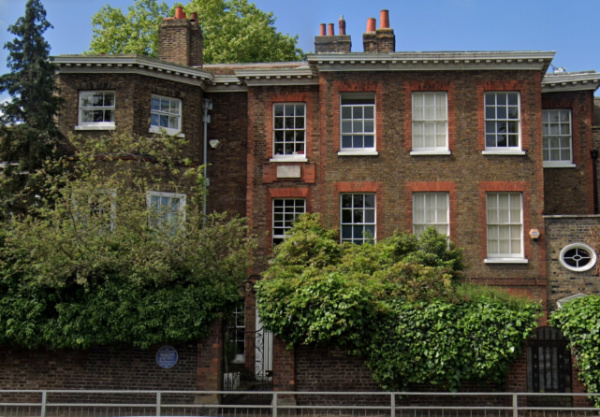
The Old Court House, East Molesey (the blue plaque can be seen on the front wall). PICTURE: Courtesy of Google Maps
First up, it’s one of the most well-known properties related to Wren’s life – the home in which he spent the latter years after his life just outside Hampton Court Palace.
Known as the Old Court House, Wren first came to live in the house after he was appointed Surveyor-General to King Charles II in 1669. His post brought with it lodgings at the royal palaces and at Hampton Court Palace, it was the Old Court House (the property had been built for in 1536 as a wood and plaster house; Wren’s immediate predecessor in the office, Sir John Denham, had rebuilt it partly in brick).
Then in 1708, Queen Anne granted him a 50-year lease on the property, apparently at least partly in lieu of overdue fees he was owed for the building of St Paul’s Cathedral. It’s also believed that the Queen had granted the lease on condition that Wren repair or rebuilt the property.
Wren, who had hitherto only lived intermittently at the property (presumably while working on Hampton Court Palace on the orders of King William III and Queen Mary II), made some major alterations to the property from 1710 onwards (it’s suggested this was done to the designs of Wren’s assistant William Dickinson).
He came to live here on a more permanent basis after he retired from the Office of Works in 1718 and remained here until his death in 1723 (although he didn’t die here – more on that later).
It’s said Wren, whose time as the Royal Surveyor-General spanned the reigns of six monarchs, spent his time here “free from worldly affairs”, choosing to and pass his days ‘in contemplation and studies”.
It was subsequently the home of Wren’s son Christopher (1645-1747) and his grandson Stephen (b 1772). It remained a grace and favour house associated with Hampton Court Palace until 1958.
The Grade II* brown and red brick property, which was combined with the house next door in the early 19th century and them divided off in 1960, is now in private ownership and there’s an English Heritage Blue Plaque on the outside wall mentioning Wren’s residence.
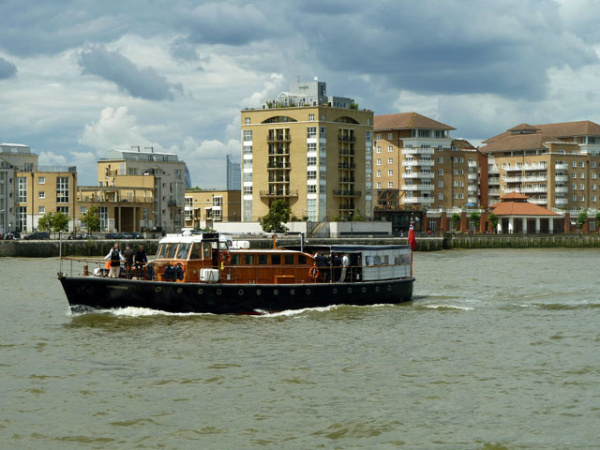
The MV Havengore. PICTURE: Robin Webster (licensed under CC BY-SA 2.0)
Still plying the waters of the Thames, the MV Havengore is perhaps most famous for having carried the coffin of Sir Winston Churchill on the River Thames as part of his state funeral in 1965.
The MV Havengore – named for a low-lying island off the coast of Essex – was originally constructed as a hydrographic survey launch for the Port of London Authority in 1956. As the PLA’s principal survey vessel and flagship, she was moored at Gravesend and tasked with recording changes to Thames bed and estuary. She became the first survey vessel in the UK to have a computer to record survey data.
The highpoint of her during her almost 40 years of service with the PLA came on 30th January, 1965, when she transported the body of Churchill from Tower Pier to Festival Pier. On the journey, she was saluted by flight of 16 fighter jets while dock cranes were made to bow as she passed (there’s a plaque on board commemorating her role in the funeral).
But the almost 26 metre long vessel also participated in other historic events including the river pageant to celebrate the Queen Elizabeth II’s Silver Jubilee in 1977 and, more recently, the flotilla formed to celebrate the Queen’s Diamond Jubilee in 2012 as well as the Thames tribute to the Queen’s long reign in 2015 and the Queen’s 90th birthday parade in 2016.
The MV Havengore was withdrawn from service in 1995 and sold after which she underwent restoration and refitting at the Chatham Historic Dockyard. The vessel was then used to provide excursions for underprivileged children on the Medway.
This month marks the 150th anniversary of the fire which destroyed the first Alexandra Palace in the north of London, only two weeks after it was opened.
Conceived by British architect Owen Jones as a “palace of the people”, the palace at Muswell Hill was created to serve as a public centre of recreation, entertainment and education for the people of north London as something of a counterpart to the Crystal Palace in the city’s south.
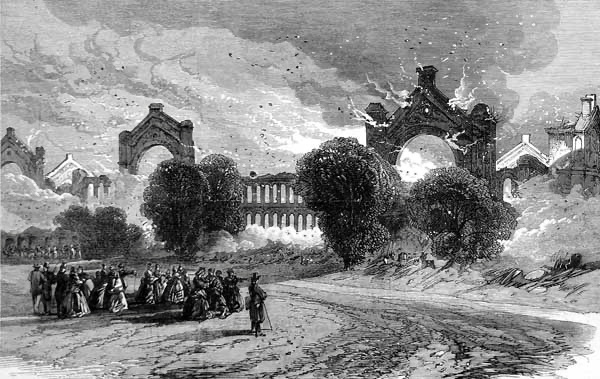
The 1873 fire as depicted in the Illustrated London News.
Designed by Alfred Meeson and John Johnson, the massive glass, iron and brick building covered some 250,000 square feet. It was constructed using recycled materials from the vast temporary building built for the 1862 International Exhibition in South Kensington. Building works commenced in September, 1865, and it was completed in early 1873.
Officially named Alexandra Palace after the popular Princess of Wales, Alexandra of Denmark (although the name Palace of the People – which had originally been given to the project – remained an alternative as did, later, the shortened “Ally Pally”), it featured a vast 900 foot long central nave capped with a 220 foot high dome as well as first floor galleries and terraces.
The palace and surrounding park were officially opened on 24th May, 1873, the 54th birthday of Queen Victoria. The grand celebration, which was attended by tens of thousands of people, featured concerts, recitals and ended with fireworks.
It was only 16 days after the opening, at lunchtime on 9th June, that the palace was destroyed by a fire believed to have started when a burning ember from a brazier being used by plumbers working on the roof set fire to the building’s timber. Numerous horse drawn and manual fire engines were dispatched to the scene along with some 120 firefighters but to no avail.
Tragically three staff members died as a result of the blaze which left only the outer walls of the palace standing. Among the items destroyed was a collection of English pottery and porcelain which, comprising some 4,700 items, had been on loan.
Plans to rebuild the palace were quickly acted upon and a new and improved palace opened on 1st May, 1875. This building survived a fire in 1980 but about a third of the building was destroyed.
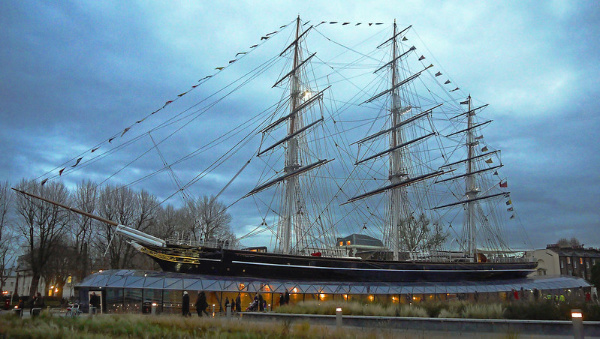
Almost destroyed in a May, 2007, fire, the Cutty Sark, the world’s last surviving 19th century tea clipper, is now a major international tourist attraction (although no longer in the Thames but on a dry dock beside the river).
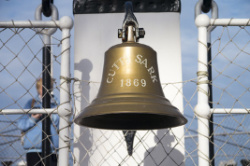
The Cutty Sark was built in Dumbarton, Scotland, in 1869, for shipping company Willis & Sons.
Designed by Hercules Linton specifically for the China tea trade (meaning with speed in mind), she cost some £16,150 and featured some 32,000 square feet of sails, a staggering 11 miles of rigging with a main mast standing 153 feet high and a hull sheathed in a copper and zinc alloy to prevent damage.
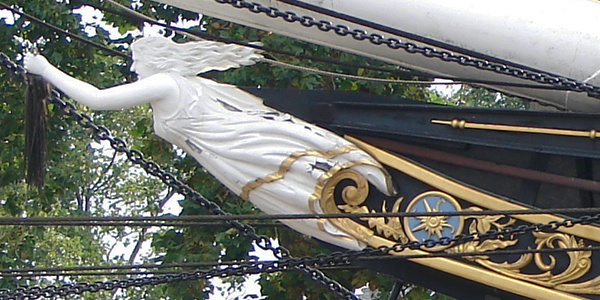
Her name was taken from a Robert Burns poem, Tam o’ Shanter, in which a witch is given the nick-name Cutty-sark because of the short undergarment – in 18th century Scots, a “cutty-sark” or “little shirt” – that she wore (the vessel’s figurehead is a representation of the witch).
On her maiden voyage, the Cutty Sark departed from London on 15th February, 1870, bound for Shanghai and carrying a general cargo including wine, spirits and beer and manufactured goods. Reaching its destination on 31st May, it then returned to London, arriving on 13th October laden with 1,305,812 lbs of tea.
It subsequently made another seven trips to China, collecting its last tea cargo in 1877. Unable to source further tea cargoes, the ship was then used to transport different cargoes to various destinations around the world including everything from coal and gunpowder, to jute, whiskey and buffalo horns.
There was a tragic episode aboard the ship in 1880 when the First Mate Sidney Smith killed seaman John Francis. Smith was confined by Captain James Wallace then helped him escape at Anger in Indonesia. The crew refused to work as a result and Wallace decided to continue the voyage with just six apprentices and four tradesmen but when the ship was becalmed in the Java Sea for three days, he committed suicide by jumping overboard. Wallaces was replaced by William Bruce but a later inquiry suspended him from service because of his incompetence.
While it was never the fastest ship on the tea trade (although it came close on return journey from Shanghai before a rudder mishap in 1872), it did establish itself between the mid-1880s and early 1890s as the fastest ship in the wool trade.
But with steamships starting to dominate the wool trade, in 1895, the Cutty Sark was sold to Portuguese firm J Ferreira & Co and, renamed the Ferreira, spent the next 20 years transporting cargoes between ports including Oporto, Rio, New Orleans and Lisbon.
Damaged during a storm in 1916, the clipper was subsequently converted into a barquentine in Cape Town, South Africa, and then sold in 1920 to Wilfred Dowman, a retired windjammer skipper and owner of the training ship Lady of Avenel.
The Cutty Sark’s figurehead. PICTURE: Sanba38 (licensed under CC BY-SA 3.0)
Her former name now restored, Dowman set about restoring the ship – now docked at Falmouth in Cornwell – back to being a tea clipper and using her as a cadet training ship.
Following Dowman’s death in 1936, the Cutty Sark was given to the Incorporated Thames Nautical Training College, Greenhithe, Kent, where she was used as an auxiliary vessel for the cadet training ship HMS Worcester.
The Cutty Sark was sent to London and moored in the Thames for the 1951 Festival of Britain before returning to Greenhithe.
The deteriorating state of the ship led to the formation of The Cutty Sark Society and in a ceremony held just before the coronation of Queen Elizabeth II, Prince Philip, patron of the society, took possession of the ship on its behalf.
In December, 1954, the ship was towed to a specially constructed dry dock at Greenwich and after three years of restoration work was opened to the public by Queen Elizabeth II in 1957.
The ship has remained there ever since. In November 2006, the ship’s rig was dismantled in preparation for a restoration project but a fire broke out aboard the ship on 21st May, 2007, and almost destroyed it.
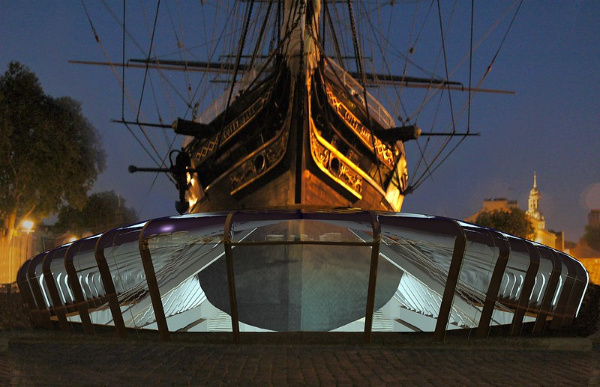
Following a major restoration and development project which saw the lower part of the ship, from the waterline down, encased in glass, it was officially reopened by Queen Elizabeth II and Prince Philip on 25th April, 2012. It is now under the operational management of Royal Museums Greenwich.
WHERE: The Cutty Sark, King William Walk, Greenwich (nearest DLR is Cutty Sark; nearest overground stations are Greenwich and Maze Hill); WHEN: Daily 10am to 5pm; COST: £18 adults; £9 children; WEBSITE: www.rmg.co.uk/cuttysark.
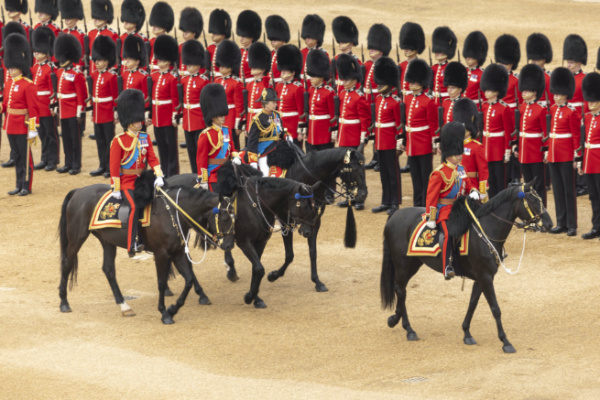
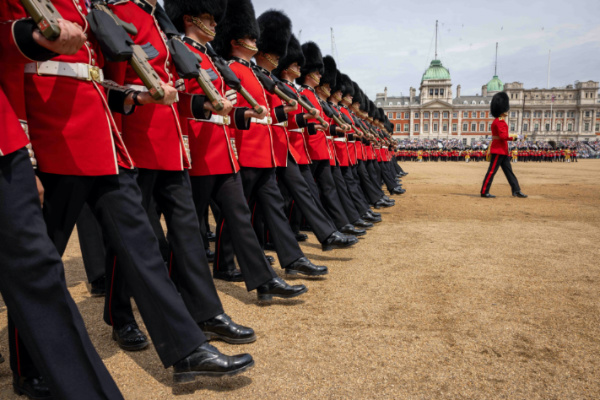
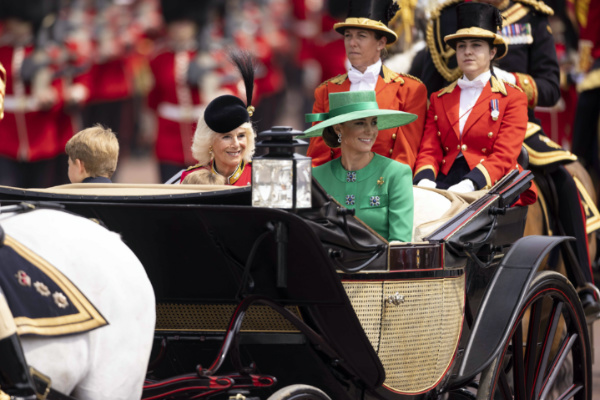
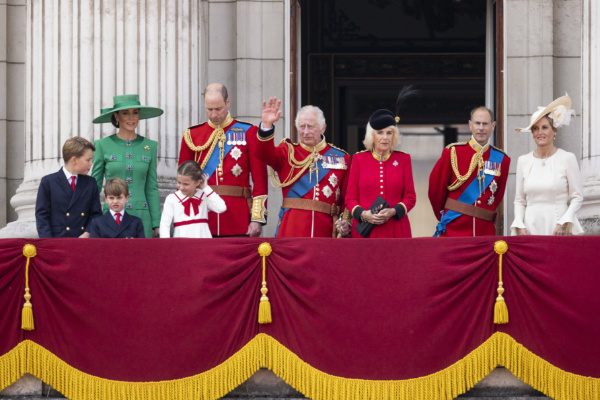
King Charles III attended his first Trooping the Colour as monarch on Saturday. The King rode on horseback for the ceremony in keeping with the tradition his mother, Queen Elizabeth II, had kept until 1986 when she was 60. More than 1,400 soldiers, 200 horses and 400 musicians took part in the event which also featured a flypast and Buckingham Palace balcony appearance. The Trooping of the Colour has marked the official birthday of the British sovereign for more than 260 years. This year it was the Welsh Guards who held the honour of trooping their colour for the King’s Birthday Parade.
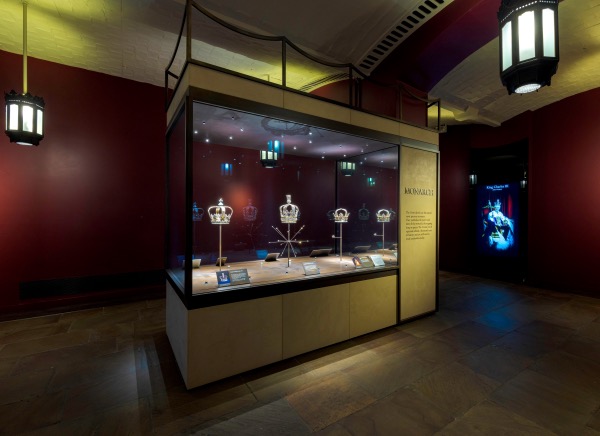
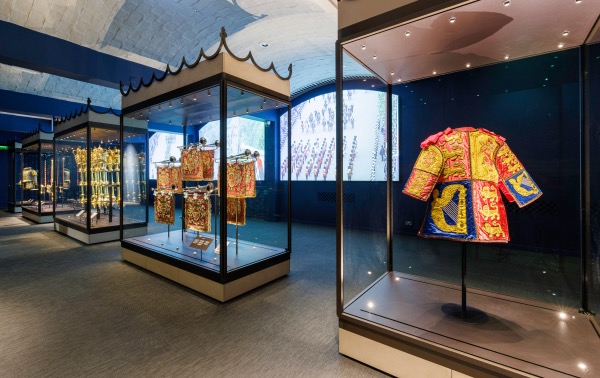
• A new display of the Crown Jewels opens in the Tower of London’s Jewel House tomorrow – the first major change to the display in more than a decade. Opening just weeks after the coronation regalia was used in the coronation of King Charles III and Queen Camilla at Westminster Abbey, the re-presentation of the jewels comes about thanks to a partnership between Historic Royal Palaces and royal jewellers Garrard and is the culmination of a four year project aimed at delving deeper into the history of the collection and coronations. The display, which features images from the recent coronation, starts with a celebration of the timelessness of monarchy featuring the State Crown frames worn by King George I, King George IV and Queen Victoria. It explains how historic jewels including the Black Prince’s Ruby have passed from crown to crown and explores the origins of the current jewels, starting with the destruction of the medieval coronation regalia in 1649. The story of gems including the Koh-i-Noor and Cullinan Diamond will also be explored while at the heart of the display is a room dedicated to the spectacle of the Coronation Procession. It ends with the Treasury containing more than 100 objects including the St Edward’s Crown of 1661, the Sovereign’s Sceptre with Cross and the Sovereign’s Orb. As an added spectacle, for nine nights in November, the Tower will also host a touring light and sound show, Crown and Coronation, which, created in partnership with Luxmuralis Artist Collaboration, will feature imagery and footage of monarchs and coronations past, along with images of the regalia. Images will be projected on buildings of the Inner Ward including the White Tower. The light and sound show, which will run at the Tower from 17th to 25th November, will tour the UK in 2024. Entry is included in general admission. For more, see www.hrp.org.uk/tower-of-london/whats-on/the-crown-jewels/.
• The almost 30-year conflict in Northern Ireland known as The Troubles is the subject of a new exhibition at the Imperial War Museum.Northern Ireland: Living with the Troubles, which opens tomorrow, features familiar objects including rubber bullets, propaganda posters and a Good Friday Agreement booklet as well as rarer items such as a screen-printed handkerchief made by UVF paramilitaries in the Long Kesh internment camp. There will also be the chance to hear first-hand testimonies including from republican and loyalist paramilitaries as well as British soldiers, local police and ordinary civilians, and the opportunity to see archival photography depicting hunger strike riots, army checkpoints and bomb wreckage. Admission is free. Runs until 7th January. For more, see www.iwm.org.uk/visits/iwm-london.
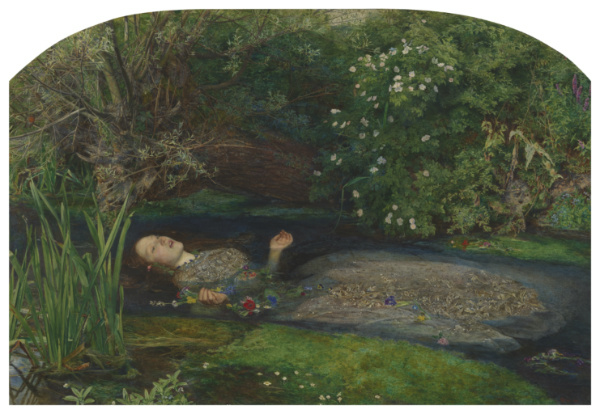
Sir John Everett Millais, Ophelia, 1851-2, Oil paint on canvas; Support: 762 × 1118 mm, frame: 1105 × 1458 × 145 mm PICTURE: Tate (Seraphina Neville)
•Tate Britain has completed a complete rehang of its free collection displays – the first for 10 years. Visitors can see more than 800 works by 350 artists including iconic treasures such as John Everett Millais’ Ophelia (pictured above), William Hogarth’s The Painter and his Pug, David Hockney’s A Bigger Splash, Barbara Hepworth’s Pelago and Chris Ofili’s No Woman, No Cry. The collection also includes more than 100 works by JMW Turner, rooms devoted to such luminaries as William Blake, John Constable, the Pre-Raphaelites and Henry Moore, and a series of changing solo displays exploring other ground-breaking artists such as Annie Swynnerton, Richard Hamilton, Aubrey Williams and Zineb Sedira. Some 70 of the works in the collection – ranging from Tudor portraits to contemporary installations – which have been acquired in the last five years alone. For more, see www.tate.org.uk.
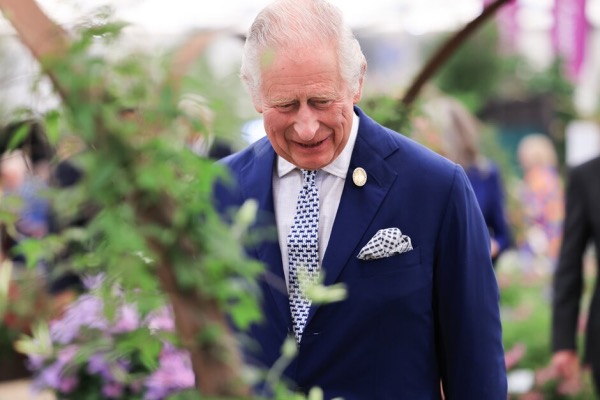
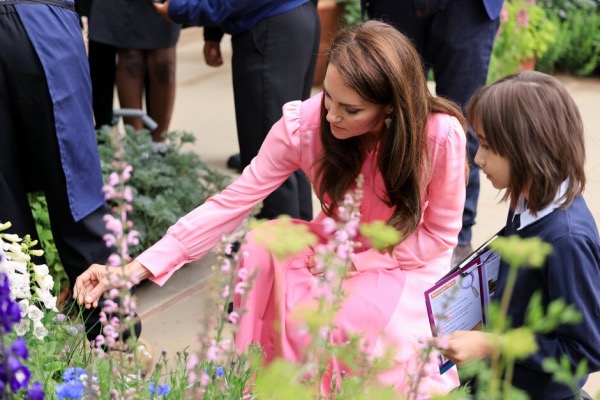
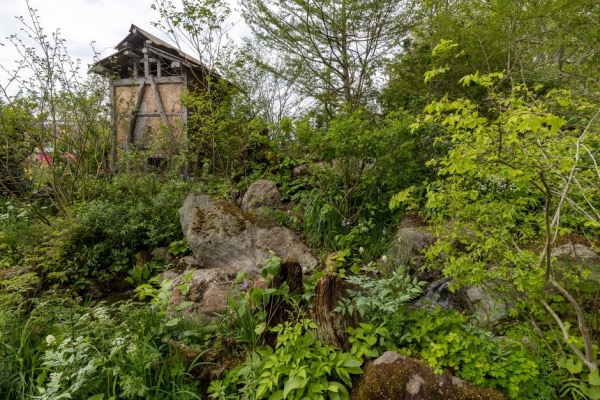
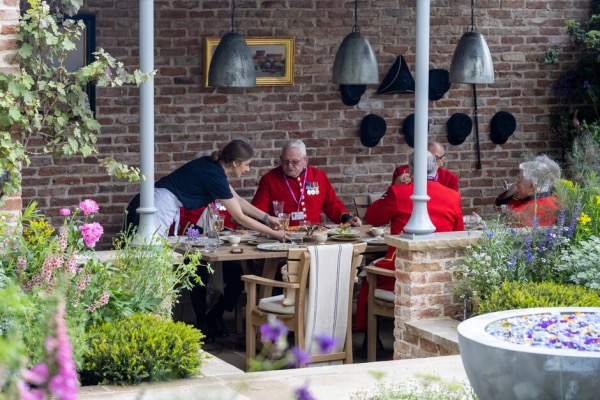
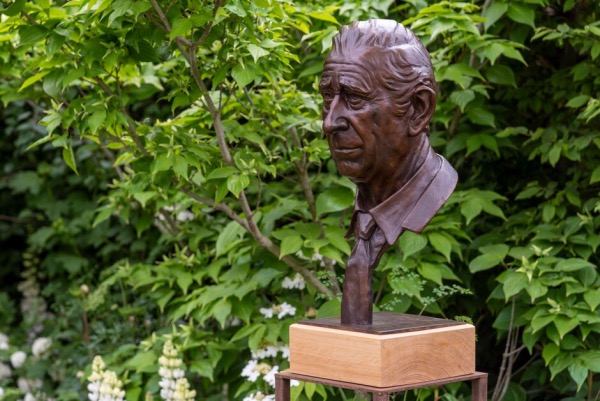
The Chelsea Flower Show returned to London this week with King Charles III making his first visit to the show as monarch and tributes in honour of his coronation and the passing of Queen Elizabeth II last year. The show runs until 27th May. For more, see www.rhs.org.uk/chelsea.
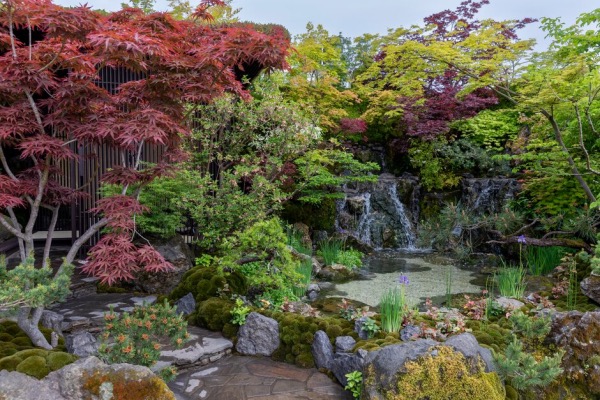
King Charles III visits The Chelsea Flower Show 2023. ALL PICTURES: Courtesy of Royal Horticultural Society/Chelsea Flower Show 2023Princess of Wales Kate Middleton visits RHS Chelsea Flower Show 2023. She is pictured on Savills Garden designed by Mark Gregory.‘A Letter from a Million Years Past’. Designed by Jihae Hwang. Sponsored by Korea Forest Service, Hoban Cultural Foundation and MUUM Ltd. Show Garden. RHS Chelsea Flower Show 2023. Stand no 328.Chelsea pensioners eating at meal in the Savills Garden. Designed by Mark Gregory. Sponsored by Savills. Show Garden. RHS Chelsea Flower Show 2023. Stand no 324.RHS Garden of Royal Reflection and Celebration featuring a bust of King Charles III. Designed by Dave Green. Feature Garden. RHS Chelsea Flower Show 2023. Stand no 111.‘The Biophilic Garden Otsu – Hanare’. Designed by Kazuyuki Ishihara. Sponsored by Glion and Ishihara Kazuyuki Design Laboratory. Sanctuary Garden. RHS Chelsea Flower Show 2023. Stand no 280.
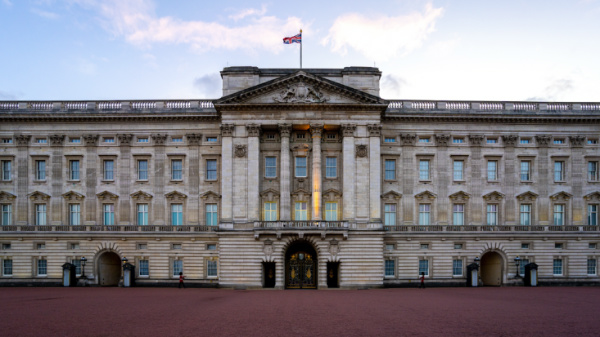
Buckingham Palace will play an important role in this weekend’s coronation of King Charles III – not only as the location from which he and Queen Camilla will leave for the ceremony, but also for the famous balcony appearance.
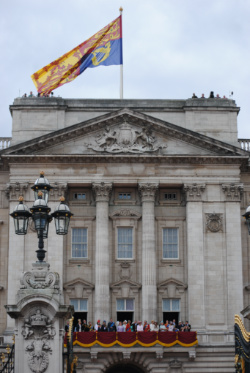
Not just for coronations – the Royal Family on the Buckingham Palace balcony at Trooping the Colour in 2010. PICTURE: David Adams
Monarchs have only been living at the palace since 1837 when Queen Victoria moved in and it has been the official London residence of kings and queens ever since (although it should be noted that since becoming King, Charles has reportedly continued to reside at Clarence House and apparently intends continuing to do so following the coronation).
The palace has been in royal hands since 1761 when King George III bought what was then Buckingham House for the use of his wife Queen Charlotte, given, in particular, its proximity to St James’s Palace where court was held. Hence it become known as the Queen’s House.
King George IV intended using it the same way but in the 1820s had a change of heart and decided, with the aid of architect John Nash, to transform it into a palace. The ballooning work was unfinished when he died, and his successor and younger brother, King William IV, replaced Nash with Edward Blore to complete the work (thanks, apparently, to Nash’s budget blow-outs).
But William didn’t move into the property (in fact, he offered it up as a new home for parliament after much of the old Houses of Parliament were consumed by fire in 1834 – an offer which was not taken up).
Queen Victoria, however, decided to make it her home and she became the first monarch to leave the palace headed to a coronation when she did so in June, 1838.
Victoria also made the first balcony appearance by a monarch at the palace, doing so during celebrations to make the opening of the Great Exhibition in 1851.
But the first balcony appearance by a monarch immediately after their coronation was her son King Edward VII, who appeared on the balcony with his wife Queen Alexandra, to the joy of onlookers following his coronation on 9th August, 1901. Every monarch since has done so after their coronation (King Edward VIII, of course, never having had a coronation).
The King’s mother, Queen Elizabeth II, was the first monarch to watch a flypast on the balcony after her coronation, a tradition the King is expected to continue.
Buckingham Palace has also been the site of Coronation Banquets since the coronation of Queen Victoria (when it replaced Westminster Hall as the location). Queen Elizabeth held two Coronation Banquets in the palace following her coronation on 3rd and 4th June, each attended by 400 guests.
Few details have yet been released about King Charles III’s Coronation Banquet.
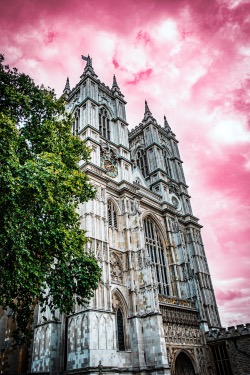
Westminster Abbey has been centre-stage at coronations since at least the Norman Conquest.
William the Conqueror set the precedent for coronations at the abbey when he decided not to get crowned at Winchester Cathedral (where Edward the Confessor had been crowned) and instead chose to be crowned at the minster built by Edward the Confessor (there is some suggestion King Harold Godwinson, the last Saxon King, was crowned at Westminster Abbey before the Conquest but no documentary evidence exists for this).
William the Conqueror’s coronation was held on Christmas Day, 1066, and since then some 39 coronations have been carried out (King Charles III’s will be the 40th).
A view of the pulpit and to the right the Cosmati Pavement and behind it the High Altar inside Westminster Abbey. PICTURE: PJ photography/Shutterstock
Arrangements for the coronation ceremony are the responsibility of the Earl Marshal and the coronation committee but the abbey’s dean acts as a liaison with the sovereign and assists the Archbishop of Canterbury who is usually the bishop who crowns the monarch.
Since the late 14th century, the service has largely followed that laid down in the Liber Regalis (Royal Book), an illuminated manuscript created in around 1390.
Since 1308, the heart of the coronation service has taken place on the Cosmati Pavement, located just before the High Altar, in what is known as the “Coronation Theatre”.
Having processed into the abbey and been acclaimed or “recognised” as sovereign by those present, the monarch then makes promises to God and the people they rule in what is known as the Oath, before being presented with a Bible.
Then, seated in the Coronation Chair, the monarch is anointed with holy oil while a canopy is held over them to shield this most sacred part of the ceremony from the eyes of those gathered.
Still seated, the monarch is then invested with the coronation regalia, including the Sovereign’s Ring, the Sovereign’s Orb, the Sceptre with Cross and the Sceptre with Dove, before St Edward’s Crown is brought from the altar and placed on the monarch’s head (it’s only since that coronation of King James I in 1603 that both the anointing and the crowning are carried out while the monarch is seated on the Coronation Chair – before that, the chair was used for only one aspect of the ceremony).
The monarch then moves to a throne and receives the homage of the royal princes and senior peers. It’s at this point that the coronation of a Queen Consort typically takes place in a simpler form of the ceremony.
The monarch then retires into St Edward’s Chapel where they dress on a purple robe known as the Imperial State Robe or Robe of Estate as well as the Imperial State Crown before processing back out through the abbey.
Other elements of the coronation include music which since the Coronation of King George II has included the George Fredric Handel anthem, Zadok the Priest. The introit I was glad has been sung at every coronation since that of King Charles I in February, 1626.
The abbey is currently closed in preparation for the Coronation of King Charles III. It reopens on Monday, 8th May. The Coronation Theatre will remain in place for visitors to see until 13th May.
WHERE: Westminster Abbey, Westminster (nearest Tube station is Westminster or St James’s Park); WHEN: Open to tourists everyday except Sunday (times vary so check the website); COST: £27 an adult/£24 for seniors (65+)/£12 a child (6-17 years); WEBSITE: www.westminster-abbey.org.
• The coronation of King William I (aka William the Conqueror) was marred by riots. The new King had chosen to be crowned in Westminster Abbey on Christmas Day, 1066, in a display of power (kings had in the past been crowned in Winchester). But when shouts of support for the new king were mistakenly thought to be an assassination attempt, Norman soldiers outside the abbey began setting fire to nearby houses, causing the abbey to fill with smoke and the congregation to flee while outside people rioted. William nonetheless ensured the service was completed.
• Henry, the eldest son of King Henry II, had a coronation service at Westminster Abbey while his father was still monarch – the only instance of this occurring. While crowning the heir during the lifetime of the monarch was a more common practice in France, it was not so in England. But in an effort to settle the succession, King Henry II had Henry crowned on 14th June, 1170. Sadly Henry, known as Henry the Young King, did not live to succeed his father but died at just the age of 28 in 1183 after contracting dysentery while campaigning with his younger brother Richard (later King Richard I) against their father. King Henry II died on 6th July, 1189, and was succeeded by Richard.
• There has only been one coronation in the abbey in which two monarchs were crowned at the same time. After King James II was deposed, William of Orange and his wife Mary were jointly invited to rule in what was known as the Glorious Revolution. They were crowned together at Westminster Abbey on 11th April, 1689. King William III sat in the Coronation Chair while another chair was specifically made for Queen Mary II, and, while the king was crowned using the traditional regalia, a special set of regalia was made for Mary.
• Only two of King Henry VIII’s six wives had coronations. Catherine of Aragon was crowned alongside the King on 24th June, 1509 (she sat on a lower chair). Anne Boleyn, meanwhile, was crowned on 1st June, 1533. Interestingly, she was crowned with St Edward’s Crown which had up until then only been used to crown the monarch. Jane Seymour died before she could be crowned (there had been plague in London at the time she married Henry), while his marriage with Anne of Cleves was annulled before she could be crowned and Catherine Howard was executed before any coronation took place. By the time the king married Catherine Parr, he was ageing and ill and a coronation was unlikely to be high on his agenda.
• King Henry VI is the youngest monarch to have been crowned at Westminster Abbey. He was aged just eight-years-old when he was crowned on 6th November, 1429, having become king at the age of just eight-months-old when his father, King Henry V, died on 31st August, 1422 (other children to have been crowned in the abbey include King Edward VI, who was just nine at his coronation). King Charles III – whose coronation will take place on 6th May – will be the oldest monarch to have been crowned at the abbey.
Correction: We’ve corrected the position of the two Catherines after the names were accidentally transposed.







 Exploring London