Treasures of London – Queen Victoria outside Kensington Palace…

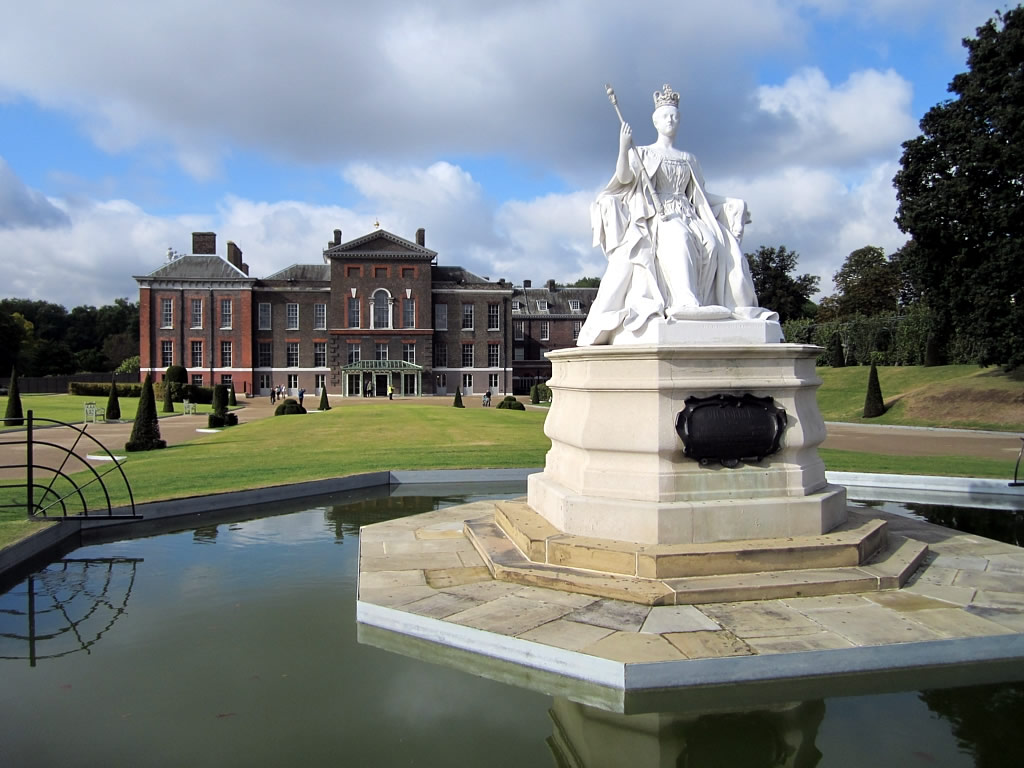
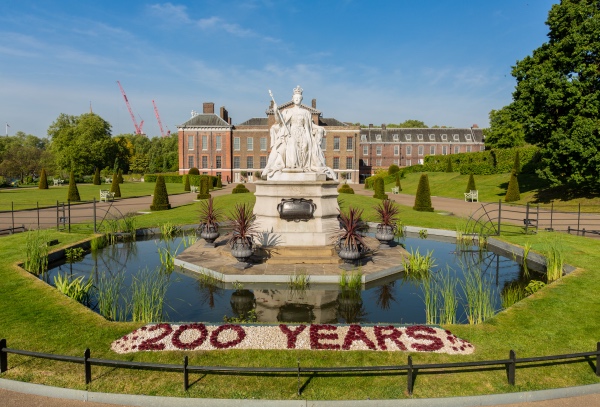
This statue in Kensington Gardens, just to the east of Kensington Palace, is one of numerous depicting the Queen located around London. But what sets this one apart is the sculptor – none other than the Queen’s daughter, Princess Louise.

The statue was erected in 1893 and funded by the citizens of Kensington – officially the Kensington Golden Jubilee Memorial Executive Committee – to commemorate the Queen’s Golden Jubilee (actually held in 1887).

Kensington Palace was, of course, where the Queen was born and lived until her accession to the throne.

Made of marble, the statue depicts Victoria, seated and wearing her coronation robes in 1837 at the age of just 18. It sits on a plinth in the middle of a small ornamental pond.

Princess Louise, the Duchess of Argyll, had been taught by sculptor Mary Thornycroft and and Sir Edgar Boehm and was widely known among artists. She was apparently approached by her friend, painter Alma Tadema, about making the work and initially refused before later agreeing to make it.

Other works she created include a memorial commemorating those who fought in the South African War in St Paul’s Cathedral and another statue of Queen Victoria, this one located in Montreal, Canada.

Princess Louise married John, Marquess of Lorne, heir of the Duke of Argyll, who went on to serve as Governor-General of Canada from 1878-1884.

PICTURE: David Stanley (licensed under CC BY 2.0)

This Week in London – Queen Victoria at Buckingham Palace; royal etchings; and, Ed Ruscha at Tate Modern…

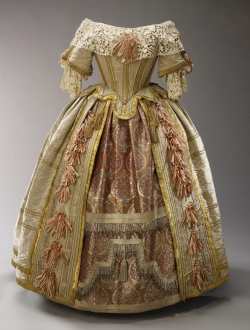
The impact of Queen Victoria on Buckingham Palace, transforming what was empty residence into “the most glittering court in Europe”, is a special focus of this year’s summer opening of Buckingham Palace. Marking the 200th anniversary of the birth of the Queen, the exhibition Queen Victoria’s Palace recreates the music, dancing and entertaining that characterised the early part of the Queen’s reign using special effects and displays. Highlights include the Queen’s costume (pictured) for the Stuart Ball of 13th July, 1851, where attendees dressed in the style of King Charles II’s court. There’s also a recreation of a ball held in the palace’s newly completed Ballroom and Ball Supper Room on 17th June, 1856, to mark the end of the Crimean War and honour returning soldiers which uses a Victorian illusion technique known as Pepper’s Ghost to bring to life Louis Haghe’s watercolour, The Ball of 1856. The table in the State Dining Room, meanwhile, has been dressed with items from the ‘Victoria’ pattern dessert service, purchased by the Queen at the 1851 Great Exhibition, and the room also features the Alhambra table fountain, a silver-gilt and enamel centrepiece commissioned by Victoria and Albert in the same year, and silver-gilt pieces from the Grand Service, commissioned by the Queen’s uncle, King George IV, on which sit replica desserts based on a design by Queen Victoria’s chief cook, Charles Elme Francatelli. The summer opening runs until 29th September. Admission charges apply. For more, see www.rct.uk/visit/the-state-rooms-buckingham-palace. PICTURE: Royal Collection Trust/ © Her Majesty Queen Elizabeth II 2019

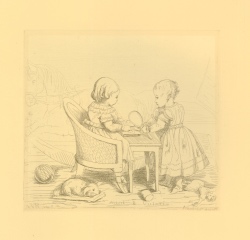
 The Victorian reign is also the subject of a new exhibition at the British Museum where rare etchings by Queen Victoria and Prince Albert have gone on display. At home: Royal etchings by Queen Victoria and Prince Albert features 20 artworks that they created during the early years of their marriage and depict scenes of their domestic lives at Windsor Castle and Claremont including images of their children and pets. The display includes three works donated to the museum by King George V, Queen Victoria’s grandson, in 1926, and it’s the first time they’ve gone on public display. Prince Albert introduced the Queen to the practice of etching soon after their wedding and under the guidance of Sir George Hayter they made their first works on 28th August, 1840. They would go on to collaborate on numerous works together. The display can be seen in Room 90a until mid-September. Admission is free. For more, see www.britishmuseum.org. PICTURE: The Princess Royal and Prince of Wales, 1843, by Albert, Prince Consort (after Queen Victoria) © The Trustees of the British Museum.

American artist Ed Ruscha is the subject of the latest “Artist Rooms” annual free display in the Tate Modern’s Blavatnik building on South Bank. The display features works spanning Ruscha’s six-decade career, including large, text-based paintings and his iconic photographic series. There is also a display of Ruscha’s artist’s books – including Various Small Fires 1964 and Every Building on the Sunset Strip 1966 – as well as some 40 works on paper gifted to Tate by the artist. Highlights include his series of photographs of LA’s swimming pools and parking lots, paintings inspired by classic Hollywood cinema, and works such as DANCE? (1973), Pay Nothing Until April (2003) and Our Flag (2017). Runs until spring 2020. Admission is free. For more, see www.tate.org.uk.

Send all items for inclusion to exploringlondon@gmail.com.

10 sites from Victoria and Albert’s London – 5. West End theatres…

Queen Victoria and Prince Albert both had an abiding love of performance and were avid theatre-goers (the Queen first attended the theatre as monarch to watch The Siege of Rochelle and Simpson & Co at the Drury Lane Theatre just a few months after ascending the throne in 1837).

Until Prince Albert’s death in 1861, they were regularly seen at various theatres with the Queen attending both ‘in state’ (that is, formally as monarch with all the pomp and ceremony that entails) as well as in private (despite Prince Albert’s concerns over her security). The royal couple’s visits to the theatre generally took place from February to June when the Queen was principally in residence at Buckingham Palace.

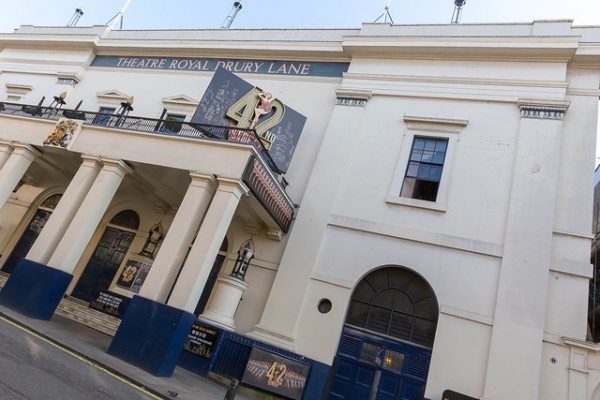
As well as the Drury Lane Theatre (more formally, the Theatre Royal Drury Lane – pictured above in 2018), other theatres they attended include the Theatre Royal Haymarket and the Covent Garden Theatre, now the Royal Opera House.

They also attended the now demolished Princess’s Theatre in Oxford Street, most notably to see Charles Kean’s production of The Corsican Brothers in February, 1852. Keen not only directed but played both brothers mentioned in the title. So enamoured was the Queen of it, that she would see it four times.

The royal couple were such great admirers of Kean that they even had him stage private theatrical performances at Windsor Castle and when he died, Queen Victoria sent a letter of condolence to his wife.

PICTURE: Marco Verch (licensed under CC BY 2.0)


10 sites from Victoria and Albert’s London – 4. Hyde Park…

As well as being a location for Queen Victoria and Prince Albert’s carriage rides, Hyde Park was the scene of what the Queen described as “the greatest day in our history” – the opening of the Great Exhibition in 1851.

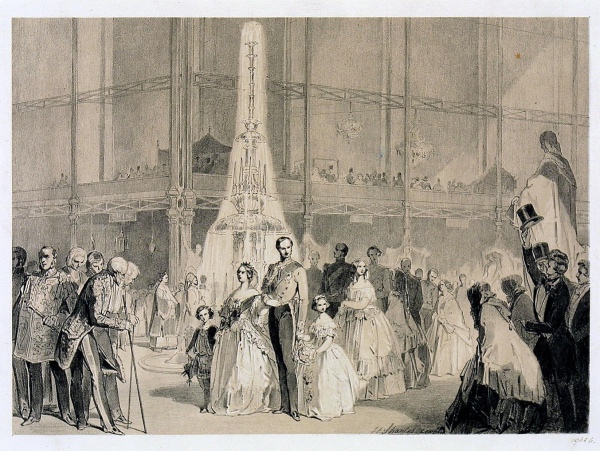
Designed by Joseph Paxton, the vast Crystal Palace had been constructed on the south side of the park and it was at noon on 1st May, 1851 (having already celebrated their son Arthur’s first birthday), that the Queen and Prince arrived in a closed carriage to officially open the exhibition, encountering, as they did so, the biggest crowd they’d ever seen.

They were greeted by massed choirs as they entered the Crystal Palace after which Prince Albert delivered an address to the Queen and she made a short reply before the choir then sang the Hallelujah Chorus. The Royal Family – the Queen holding the hand of Bertie, the Prince of Wales, and the Prince holding that of Princess Victoria “Vicky” – then toured the building, cheered on by thousands of onlookers.

The exhibition, with its thousands of displays from around the world, was then officially declared open by the Lord Chamberlain and 100 cannons were fired outside.

The royal couple returned to Buckingham Palace where, for the first time, they walked out onto the balcony to greet the thousands of people massed outside.

Victoria described the day as one to “live for ever” in her journal. Paul Thomas Murphy, in his book Shooting Victoria, records that she went on to write: “God bless my dearest Albert, God bless my dearest country, which has shown itself so great to-day. One felt so grateful to the great God, who seemed to pervade all and to bless all.”

Interestingly, the park was also where Queen Victoria, in the presence of Prince Albert and other members of the Royal Family, presented 62 men with the first Victoria Crosses on 26th June, 1857. It was also where, sadly without the Prince, the Queen made a surprise appearance on 22nd June, 1887, as thousands of school children ate a free meal given as a gift to celebrate her Golden Jubilee.

PICTURE: ‘Her Majesty and the Princes passing through the Crystal Palace’, 1851 Sharles, H (artist) ; Ackermann & Co. (printer and publisher)/© Victoria and Albert Museum London.

WHERE: Hyde Park (nearest Tube stations are Lancaster Gate, Marble Arch, Hyde Park Corner and Knightsbridge); WHEN: 5am to midnight; COST: Free; WEBSITE: www.royalparks.org.uk/parks/hyde-park

10 sites from Victoria and Albert’s London – 3. Constitution Hill…

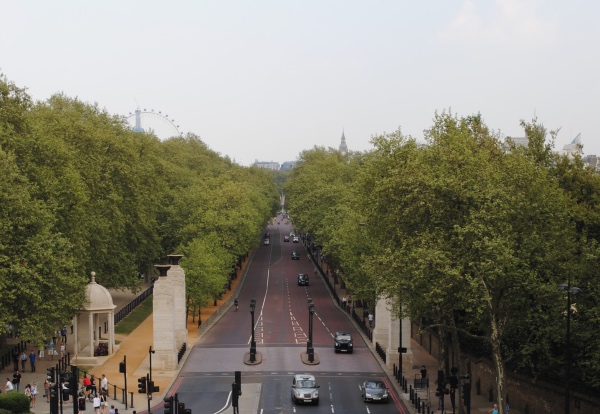
It was on this road connecting the western end of The Mall outside Buckingham Palace with Hyde Park Corner that an infamous incident took place during Queen Victoria and Prince Albert’s early years together.

For it was from a footpath on Constitution Hill that the first of eight assassination attempts were made on the Queen as the couple – the Queen then pregnant – rode out from the palace in a low slung carriage headed for Hyde Park as was their custom.

Edward Oxford was just 18-years-old when at on 10th June, 1840, he took up a position on a footpath on Constitution Hill where he stood for a couple of hours before, at about 6pm, as the royal couple’s carriage sailed past, he fired two pistols at them.

Both shots missed (in fact, no bullets were ever found) and Queen Victoria was quick to order the carriage to drive on (she and Albert would also ride out along the same route the next day despite the scare – this time there was a sizeable crowd of well-wishers eager to convey their good sentiments to the Queen and a procession of these followed their carriage up the hill to Hyde Park).

Oxford, meanwhile, was immediately seized by onlookers and stripped of his guns. He immediately admitted his crime, was subsequently arrested, charged with treason and later acquitted on grounds of insanity before being detained in an asylum at Her Majesty’s pleasure (he was eventually discharged with the proviso that he head to one of England’s overseas colonies and ended up living out his days in Melbourne, Australia).

An interesting footnote is that future artist John Everett Millais, then aged just 11-years-old, was among those standing on Constitution Hill watching the Queen drive past on the day of the assassination attempt.

There were another seven assassination attempts on Queen Victoria over the ensuing years. For more on them, check out Paul Thomas Murray’s detailed book Shooting Victoria: Madness, Mayhem and the Modernisation of the Monarchy.

PICTURE: A view down Constitution Hill towards Buckingham Palace fro, the top of Wellington Arch.

10 sites from Victoria and Albert’s London – 2. Buckingham Palace…

You may have noticed that last week we kicked off a new Wednesday series on 10 (more) London garden squares, only having kicked off a new series on 10 sites from Victoria and Albert’s London the week before. To clarify, we are currently running the Victoria and Albert series, the garden squares entry snuck in by accident (but we’ll be returning to the garden squares down the track)! Apologies for any confusion...


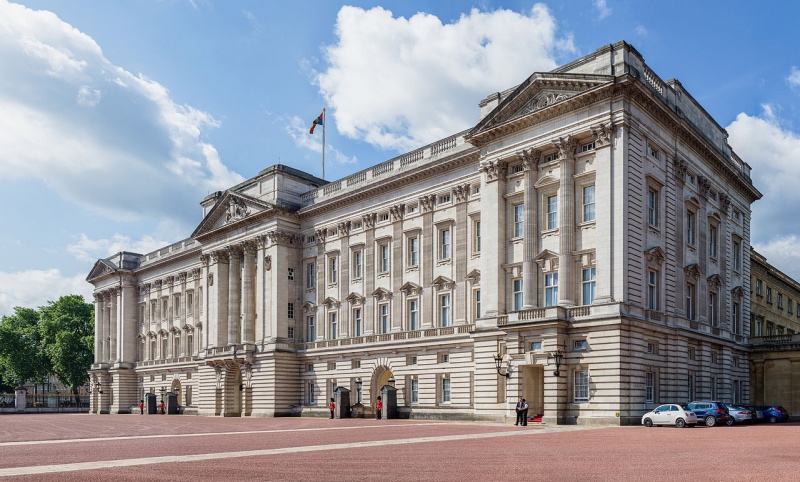
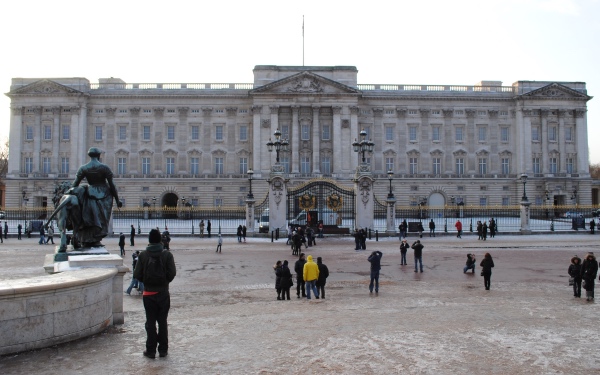
Queen Victoria, the first British monarch to use Buckingham Palace as an official residence, moved her household into the palace just three weeks after ascending to the throne on 20th June, 1837.

The palace, which had been empty for seven years following the death of her uncle King George IV, had been undergoing a grand repurposing under architect John Nash, transforming it from a house into a palace.

Originally built in 1703 as a London residence for John Sheffield, the 3rd Earl of Mulgrave, in 1761 the property had been purchased by King George III as a family home for his wife Queen Charlotte (14 of the couple’s 15 children were born here).

Remodelling of the property began the following year and had been continued by King George IV following his accession to the throne in 1820. As a result of the ongoing work, George IV never lived in the palace nor did his successor, King William IV, who preferred Clarence House.

The building works still weren’t finished when Victoria moved in. Her ministers had advised her to remain at Kensington Palace, her childhood home, until the works were finished but Victoria wasn’t having any of that – the move would help her escape the overbearing care of her mother Victoria, Duchess of Kent, the ambitious Sir John Conroy, and the so-called (and stifling) ‘Kensington System’ of rules under which she’d been brought up.

When Victoria married Albert (see the previous entry) on 10th February, 1840, the newly weds made the palace their London home. It was here that, over the next 17 years, Victoria would give birth to eight of their nine children (starting with Victoria ‘Vicky’, in 1840), and where the couple would work, controversially at side-by-side desks.

The couple’s growing family was soon stretching the palace accommodations and following a request from Queen Victoria, in 1846 some £20,000 was granted by Parliament on 13th August to complete and extend the grand property with an additional £50,000 for the works raised from the sale of the Royal Pavilion to the Brighton Corporation.

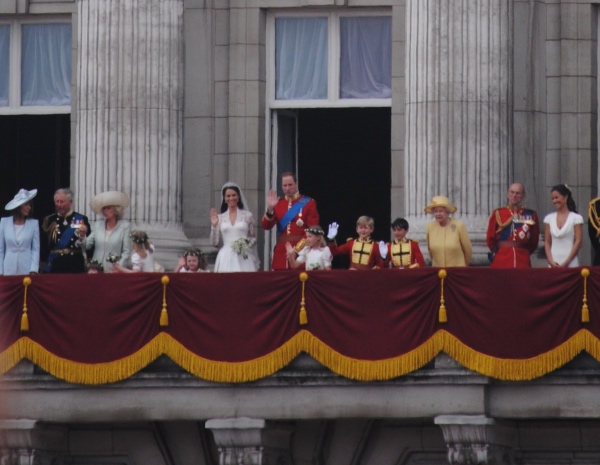
Under the direction of architect Edward Blore and builder Thomas Cubitt, the East Wing was added at the front of the palace, enclosing what had previously been a horseshoe-shaped courtyard and creating the famous central balcony where the Royal Family now gather on special occasions. Queen Victoria made the first public appearance on the balcony in 1851 during the Great Exhibition (pictured above are members of the Royal Family at the wedding of Prince William and Kate Middleton).

A new ballroom – designed by Nash’s student James Pennethorne – was added to the State Rooms shortly after. This was inaugurated in May, 1856, with a ball held there the following month to mark the end of the Crimean War.

The ball was one of several held at the palace during those years along with official royal ceremonies and other entertainments including musical performances by the likes of Felix Mendelssohn and Johann Strauss II.

A new exhibition, Queen Victoria’s Palace, opens at Buckingham Palace next month. 

WHERE: State Rooms, Buckingham Palace (nearest Tube stations are Victoria, Green Park and Hyde Park Corner); WHEN: 20th July to 29th September (opening at 9am, closing times vary – see website for details); COST: £25 an adult/£14 a child (under 17s/under fives free)/£22.80 concession/£64 family; WEBSITE: www.royalcollection.org.uk/visit/buckinghampalace.

PICTURES: Top – Diliff (licensed under CC BY-SA 1.0); Lower – David Adams.

10 sites from Victoria and Albert’s London – 1. Chapel Royal, St James’s Palace…

This year marks the 200th anniversary of the births of both Queen Victoria (24th May) and Prince Albert (26th August) and, in celebration, we’re running a special series on London locations that played a key role in their joint lives.

First up is the Chapel Royal at St James’s Palace where the royal couple were married on 10th February, 1840. It was the first marriage of a reigning queen since Queen Mary I in 1554.

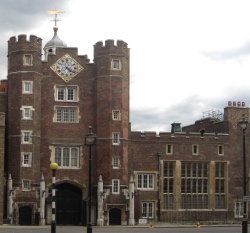
The chapel, which hosted the christening of Prince George in 2013 and Prince Louis in 2018, was built in about 1540 and substantially altered since, including under the eye of Sir Robert Smirke in 1837.  It was built on a north-south axis rather than the more usual east-west (a sizeable window on its northern wall can be seen to the right of the palace’s main gatehouse – see picture).

The chapel, which features a richly decorate ceiling said to have been painted by Holbein, has been used regularly by the Chapel Royal – a department of Royal Household – since 1702.

At the wedding, the Queen wore a white satin gown with a deep flounce of handmade Honiton lace, designed by William Dyce, which featured a long veil and an 18 foot long train (she had 12 train bearers). Her jewellery included a sapphire broach given to her by Albert and she wore a headress of orange blossoms. Victoria’s dress is said by some to have popularised the idea of the white wedding dress among the English (although there is apparently some debate over this).

Among those in attendance was Victoria’s mother, the Dowager Duchess of Kent and Strathearn, Albert’s father and brother, the Duke and Prince of Saxe-Coburg and Gotha respectively, and various other royals including Queen Adelaide, the widow of King William IV, as well as the Prime Minister, Lord Melbourne (who, in fact, carried the Sword of State). Given the fact Victoria’s father was dead, it was her uncle, the Duke of Sussex, who walked her up the aisle.

It was a big affair in the city – people lined the roads between Buckingham and St James’s palaces and some reportedly even climbed trees for a better view. Victoria wrote in her diary that she’d never seen such crowds “and they cheered most enthusiastically”.

The wedding breakfast, which featured a 300lb cake which was nine foot in circumference, was held at Buckingham Palace after which the newly weds headed off to Windsor for a two day honeymoon.

Famously, before the wedding, the Archbishop of Canterbury had apparently asked Victoria whether, given she was Queen, she wanted to remove the word “obey” from her wedding vows. Victoria had refused.

There are limited opportunities for the public to attend services in the Chapel Royal at certain times of the year.

PICTURE: Johan Bilien (licensed under CC BY-SA 2.0)

LondonLife – Queen Victoria turns 200…

Queen Victoria was born on 24th May, 1819, at Kensington Palace and to celebrate the bicentenary, the palace, as well as holding two new exhibitions inside – Victoria: A Royal Childhood and Victoria: Woman and Crown, also features a new floral display in the surrounding gardens. A new display in the Sunken Garden which features plant species connected to the Victorian period – including heliotrope, canna, pelargonium and begonia – was planted this month for visitors to enjoy over the summer months. In addition, the palace’s gardens and estates team are showcasing a selection of new plant species discovered during the Queen’s reign around the formal gardens – everything from the Chilean lantern tree identified in 1848 to the Chinese fringe tree identified in 1845 – while the decorative pond which surrounds the statue of the Queen outside the East Front of the palace is being planted with aquatic plants and marginals that highlight and complement the iconic sculpture. There is also a special floral illustration using Victorian-style carpet bedding formed of Sempervivum ‘Mahogany’ to spell out ‘200 years’ in front of the statue (see picture). For more, see www.hrp.org.uk/Victoria2019. PICTURE: © Historic Royal Palaces/Richard Lea-Hair.

This Week in London – Kensington Palace celebrates Victoria; unseen Leonardo; and, William Hogarth and sound…


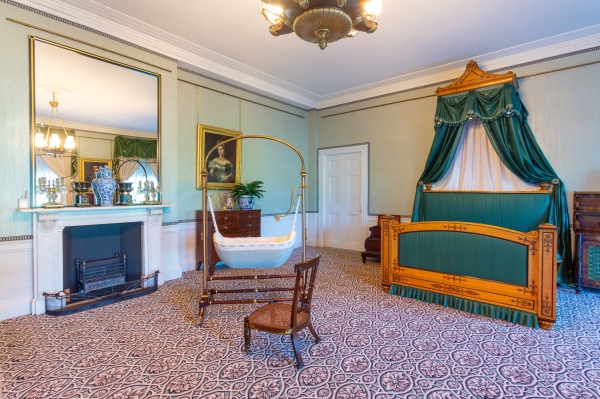
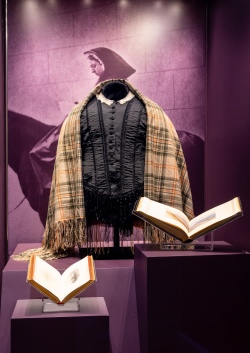
Queen Victoria’s childhood and later life are being re-examined in two new displays which open this week at Kensington Palace to mark the 200th anniversary of her birth. Victoria: A Royal Childhood features objects related to her early years – such as a scrapbook of mementos created by her German governess, Baroness Lehzen (on public display for the first time) – shown along a newly presented route through the rooms she once occupied in the palace. Visitors will experience how her childhood was governed by the strict rules of the ‘Kensington System’ and see how she escaped isolation and family feuding into a fantasy world of story writing, doll making and drawing inspired by her love of opera and ballet. Her education, family life, closest friendships and bitter struggles are explored with interactive displays helping visitors bring to life the rooms in which she lived. Meanwhile, the palace is also hosting another new exhibition – Victoria: Woman and Crown – which looks at the private woman behind the public monarch and examines her later life, including her response to the death of Prince Albert, her role in shaping royal dynasties and politics across Europe and her complex love affair with India. Among objects on show here are rare survivals from the Queen’s private wardrobe including a simple cotton petticoat dated to around the time of her marriage, and a fashionable pair of silver boots, both of which were recently acquired by Historic Royal Palaces with support from Art Fund. Entry to the two exhibitions is included in the standard admission charge. The palace gardens, meanwhile, are being planted with a special floral display in celebration of the anniversary centred on plant species connected to the Victorian period  including heliotrope, canna, pelargonium and begonia. For more, see www.hrp.org.uk/Victoria2019. PICTURES: Top  – The Birth Room in ‘Victoria: A Royal Childhood’; Right – Queen Victoria’s Highland dress in the ‘Victoria: Woman and Crown’ exhibition (Both images © Historic Royal Palaces/Richard Lea-Hair)

A newly identified sketch of the Renaissance master Leonardo da Vinci goes on public view for the first time at The Queen’s Gallery, Buckingham Palace, from tomorrow. Marking 500 years since the artist’s death, Leonardo da Vinci: A Life in Drawing also features the only other surviving portrait of Leonardo made during his lifetime as well as 200 of his drawings in which is a comprehensive survey of his life. The newly identified sketch was discovered by Martin Clayton, head of prints and drawings at the Royal Collection Trust, while he was undertaking research for the exhibition and has been identified as a study of Leonardo made by an assistant shortly before da Vinci’s death in 1519. The other contemporary image of Leonardo, by his pupil Francesco Melzi, was produced at about the same time. Other highlights of the exhibition include Leonardo’s Studies of hands for the Adoration of the Magi (c1481) – also on public display for the first time, studies for The Last Supper and many of the artist’s ground-breaking anatomical studies, such as The Fetus in the Womb (c1511). The drawings in the Royal Collection have been together since Leonardo’s death and are believed to have been acquired in the reign of King Charles II. Runs until 13th October. Admission charge applies. For more, see www.rct.uk/leonardo500/london.

The use of sound in the art of William Hogarth is being explored in a new exhibition opening in The Foundling Museum on Friday. Hogarth & the Art of Noise focuses on the work The March of the Guards to Finchley and unpacks the social, cultural and political context in which it was created including the Jacobite uprising, the plight of chimney boys and the origins of God Save the King. It uses sound, wall-based interpretation, engravings and a specially commissioned immersive soundscape by musician and producer Martin Ware to reveal how Hogarth orchestrated the natural and man-made sounds of London. Complementing the exhibition is a display of works from contemporary British artist Nicola Bealing which takes as its starting point subjects and narratives found in 18th century broadside ballads. Runs until 1st September. Admission charge applies. For more, see www.foundlingmuseum.org.uk.

Send items for inclusion to exploringlondon@gmail.com.

This Week in London – Victoria’s coronet in new display; Edvard Munch at the British Museum; and Abram Games wartime posters…

A sapphire and diamond coronet made for Queen Victoria goes on permanent display in the V&A’s William and Judith Bollinger Gallery from today. The new display is being unveiled as part of the V&A’s commemoration of the 200th anniversary of the births of the Queen and her husband, Prince Albert. The coronet was designed for the Queen by Prince Albert in 1840, the year they were married. Albert based the design on the Saxon Rautenkranz (circlet of rue) which runs diagonally across the coat of arms of Saxony. Victoria wore the coronet in a famous portrait by Franz Xavier Winterhalter completed in 1842 and again in 1866 when she wore it instead of her crown at the opening of Parliament. Entrance to the gallery is free. For more, see www.vam.ac.uk.

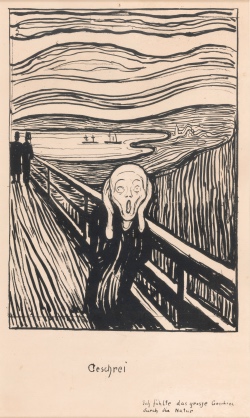
A major new exhibition of the work of Edvard Munch (1863-1944) opens at the British Museum in Bloomsbury today. Edvard Munch: love and angst, a collaboration with Norway’s Munch Museum, features 83 artworks taken from the museum’s collection as well as loans from across the UK and Europe. Highlights include a black-and-white lithograph of The Scream – the first time any version of the work has been on show in the UK for a decade, Vampire II – considered to be one of his most elaborate and technically accomplished prints, the controversial erotic image Madonna, and, Head by Head, a print representing the complex relationship between human beings. All of the latter three latter prints are being displayed alongside their original matrix (the physical objects Munch used to transfer ink onto paper). Runs until 21st July in the Sir Joseph Hotung Exhibition Gallery. Admission charge applies. For more, see www.britishmuseum.org. (PICTURE: The Scream (1895), Edvard Munch (1863-1944), Private Collection, Norway. Photo: Thomas Widerberg)

A retrospective of the work of Abram Games (1914-1996), a poster artist for the War Office during World War II, has opened at the National Army Museum in Chelsea. The Art of Persuasion: Wartime Posters By Abram Games features more than 100 posters he designed while working in the War Office’s Public Relations Department between 1941 and 1945. It explores how his Jewish refugee heritage, his experiences while a soldier and the turbulent politics of the time shaped his career and how his work – Games is described as a “master of reductive design” – still influences design professionals today. In conjunction with the opening of the exhibition last week, Games has been commemorated with an English Heritage Blue Plaque at his former home in Golders Green. Runs until 24th November. Admission charge applies. For more, see www.nam.ac.uk/artofpersuasion.

Send all items for inclusion to exploringlondon@gmail.com.

This Week in London – ‘Beasts of London’; the Cold War remembered; Prince Albert and the V&A; and, ‘Power UP’ returns..

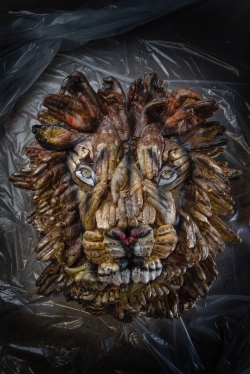
A state-of-the-art, multi-sensory experience focusing on the beasts, large and small, that have helped shaped London opens at the Museum of London tomorrow. Beasts of London, being run in conjunction with the Guildhall School and Music & Drama, tells the story of the capital from before London existed through to the city today, all through the perspective of animals. Inspired by objects in the museum’s collection, the nine “episodes” of the experience encompass subjects including the arrival of the Romans, the creation of the first menageries during the medieval period, the plague years of the 1600s, the first circuses in the late 1700s, the end of the animal-baiting period in the Victorian era and the role of animals in today’s contemporary city. There’s also a special episode on the contribution horses have made to the city. Well-known identities including Kate Moss, Brian Blessed, Pam Ferris, Nish Kumar, Stephen Mangan, Angellica Bell and Joe Pasquale provide voices for the animals alongside actors from the Guildhall School. The family-friendly experience can be enjoyed until 5th January, 2020. Admission charge applies. For more, see www.museumoflondon.org.uk/beastsoflondon. PICTURE: Lion sculpture; courtesy Museum of London.

A new exhibition about Britain’s role in the Cold War opens at the National Archives in Kew today – exactly 70 years since the formation of NATO. Protect and Survive: Britain’s Cold War Revealed features original documents including political memos, spy confessions, civil defence posters and even a letter from Winston Churchill to the Queen as it explores the complexities of government operations during a time of paranoia, secrets and infiltration. Other highlights include George Orwell’s infamous list of suspected communist sympathisers, Winston Churchill and Joseph Stalin’s ‘percentages agreement’, a plan of Lionel ‘Buster’ Crabb’s fateful spy mission, ‘Atom spy’ Klaus Fuchs’ confession and Civil Defence posters. There’s also a recreated government bunker and a 1980s living room showing the impact of the Cold War on both government and ordinary lives as well as digital screens on which Dame Stella Rimington, the first female Director General of MI5, shares her experiences along with insights from historian Dominic Sandbrook and curator Mark Dunton. The display is being accompanied by a series of events including night openings, film screening and talks. Runs until 9th November (30th anniversary of the fall of the Berlin Wall). Admission charge applies. For more, see nationalarchives.gov.uk/coldwar.

Prince Albert’s personal contributions to the V&A’s Library collection are the subject of a new exhibition which opened this week as part of the South Kensington Institute’s celebration of the 200th anniversaries of the births of both the Prince and Queen Victoria. Prince Albert: Science & the Arts on the Page features books and photographs include one volume containing a letter written by the Prince’s librarian Ernst Becker highlighting Albert’s wish to promote knowledge and learning in science and the arts. There’s also a volume of songs written and set to music by Albert and his brother, featuring amendments in Albert’s own hand, as well as his signed season ticket to the Great Exhibition of 1851. Runs until 1st September on the Library Landing. Admission is free. Head here for more.

Forty years of computer game history is once again on show at the Science Museum from Saturday. Returning for its fourth year, Power UP features 160 consoles and hundreds of games, from retro classics like Space Invaders to the latest in VR technology. Special events include two adults-only evening sessions on 10th and 17th April. Runs until 22nd April. For more, see sciencemuseum.org.uk/power-up.

Send all items for inclusion to exploringlondon@gmail.com.

10 historic London hotels…10. The Hotel Russell (the Kimpton Fitzroy London Hotel)…

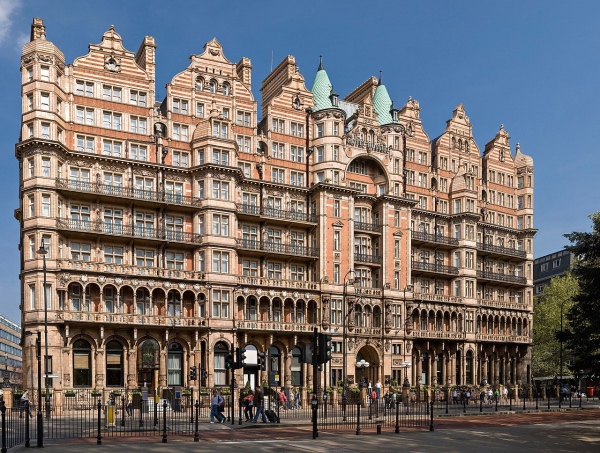
Designed by the architect Charles Fitzroy Doll in distinctive French Renaissance-style for the Frederick Hotels Company, the Hotel Russell opened on the east side of Russell Square in 1898.

The now Grade II*-listed building, which is said to have been based on the 16th century Château de Madrid in Paris, is clad in decorative Doulton’s thé-au-lait (“tea with milk”) terracotta.

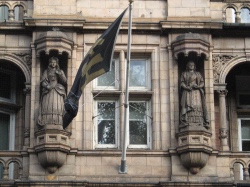
Its facade incorporates the coats-of-arms of the world’s nations as they were in 1898 and above the entrance are life-sized statues of four queens – Elizabeth I, Mary II, Anne and Victoria – which were designed by sculptor Henry Charles Fehr (pictured). The Guilford Street frontage features busts of four Prime Ministers: Lord Derby, Lord Salisbury, William Gladstone, and Benjamin Disraeli.

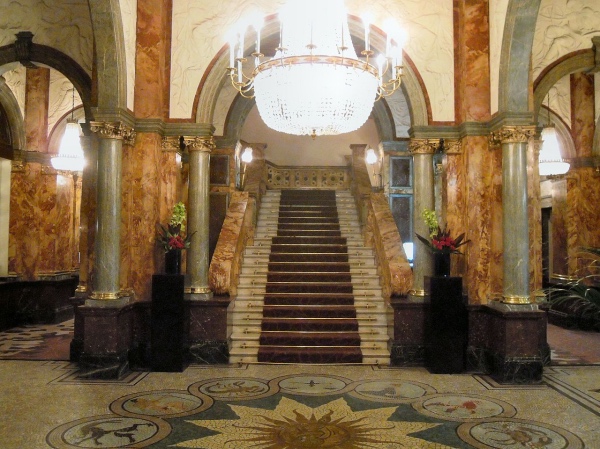
The hotel’s interior features ornate fixtures and fitting including a Pyrenean marble staircase which runs off the opulent marble foyer and an interior courtyard housing a Palm Court. Each bedroom was fitted with an en-suite bathroom.

Its restaurant, now named the Neptune but originally named after Doll, was designed almost identically to the RMS Titanic‘s dining room (Doll designed both). That’s not the only Titanic connection – the hotel also features a bronze statue of a dragon on the stairs named ‘Lucky George’ and the Titanic carried an identical statue.

The hotel survived World War II largely intact – with the exception of a roof-top dome which was damaged in an air raid in 1941 and not replaced.

Fast forward to April, 2018, and the hotel reopened as the The Principal Hotel (on the 106th anniversary of the sinking of the Titanic) following an extensive £85 million, two year renovation by designer Tara Bernerd.

But the Principal Hotel Company sold its portfolio of hotels to Covivio a few months later and they, in turn, leased the management of the hotels to the InterContinental Hotels Group. The Principal was renamed the Kimpton Fitzroy London in October that year.

Alongside 330 or so rooms, amenities at the five star hotel include the glass-roofed Palm Court, cocktail bar Fitz’s (named for Charles Fitzroy Doll), and the coffee shop Burr & Co. There’s also a grand ballroom, meeting rooms and a fitness centre.

Interestingly, Doll designed another hotel, the Imperial, also on Russell Square, which opened in 1911. It was demolished in 1966.

For more, see www.kimptonfitzroylondon.co.uk/us/en/.

PICTURES: Top – David Iliff (licensed under CC BY 3.0); Right and below – Jack1956.

This is the final in our series on historic London hotels. We’ll be launching a new special series next Wednesday.

LondonLife – Queen posts her first Instagram image from the Science Museum..

Queen Elizabeth II posted her first Instagram photo while visiting the Science Museum in South Kensington last Thursday in a promotion for its exhibition on computers. Under the account @theroyalfamily, the Queen posted two images of a letter at the museum which comes from the Royal Archives. It was written to Prince Albert and Queen Victoria by Charles Babbage and in it, the 19th century inventor and mathematician spoke of his invention of an “Analytical Machine” upon which the first computer programs were written by Ada Lovelace, daughter of Lord Byron. Having explained the origins of the letter, the Queen added: “Today, I had the pleasure of learning about children’s computer coding initiatives and it seems fitting to me that I publish this Instagram post, at the Science Museum which has long championed technology, innovation and inspired the next generation of inventors. Elizabeth R.” The Royal Family’s Instagram account has some 4.9 million followers. For more on the Science Museum, see www.sciencemuseum.org.uk.


10 historic London hotels…9. The Connaught…

The Connaught Hotel, another five star Mayfair establishment, was built in 1892 on the site of smaller hotel which had opened in what is now Carlos Place in the early 19th century.

Known as The Prince of Saxe-Coburg Hotel (or The Coburg for short), the first hotel on the site opened in 1815 as an offshoot of Alexander Grillon’s hotel in Albemarle Street. The Coburg was created out of two houses owned by the Duke of Westminster.

In 1892, the owners of The Coburg – Lewis Isaacs and H L Florence – embarked upon a complete rebuild of the hotel and in 1897 it reopened with a 90-year lease on the building signed by Sir John Blundell Maple, of a famous furniture making family.

The new premises was renamed The Connaught during World War I amid anti-German sentiment. The new moniker was a reference to the seventh child of Queen Victoria, Prince Arthur, the Duke of Connaught and Strathearn.

Frequented by the gentry between the wars thanks to its handy position between Buckingham Palace and Harley Street, during World War II the hotel served as home to French President General Charles de Gaulle.

In the post war years, the hotel soon established a reputation for fine food and drink thanks in part to the opening, in 1955, of The Grill Room. This was only enhanced with the arrival of Michel Bourdin as head chef in 1975 – a position he held for 26 years.

Queen Elizabeth, the Queen Mother, opened the hotel’s new kitchens in 1992 and 10 years later Angela Harnett’s Menu at The Connaught opened, winning a Michelin star in 2004 (it closed in 2007).

In the mid 2000s, the Grade II-listed hotel underwent a major £70 million restoration and refurbishment with new additions including a new wing, the Aman Spa and a Japanese garden. In 2008, French chef Hélène Darroz opened a restaurant at the hotel and the following year, in 2009, a new art deco ballroom designed by Guy Oliver – Mayfair’s first in more than 80 years – opened its doors.

Most recently, in 2017, New York-based French chef Jean-Georges Vongerichten opened a new restaurant at the Connaught. Other newer additions include Tadao Ando’s Silence, a water feature installed outside the main entrance in 2011.

With around 120 rooms and suites (not to mention the world-famous Connaught Bar), the hotel, which had been acquired by the Savoy Group in the 1950s, is now part of the Maybourne Hotel Group along with Claridge’s.

Famous names which have been recently associated with the hotel include Kim Kardashian, Kanye West and Gwyneth Paltrow. And, of course, Ralph Lauren, who was so enamoured of the hotel’s famous staircase that he had a replica made for his Madison Avenue store in New York.

For more, see www.the-connaught.co.uk.

PICTURE: Via Google Street View.


10 historic London hotels…3. Claridge’s…

This five star Mayfair establishment owes its origins and name to William Claridge, possibly a former butler, and his wife Marianne, who took over management of a small hotel at 51 Brook Street in 1853.

In 1854, they purchased the adjoining Mivart’s Hotel, first established in 1812, and substantially expanded the premises. It apparently combined the two names – Mivart’s and Claridge’s – for a short time before the reference to Mivart’s was dropped.

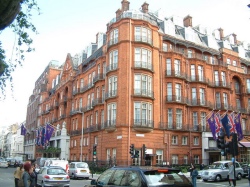
The hotel, which stands on the corner with Davies Street, was bought by Richard D’Oyly Carte (owner of The Savoy) in 1893 and subsequently rebuilt in red brick to the designs of CW Stephens (of Harrods fame) with interiors by Sir Ernest George and the inclusion of modern amenities including en suite bathrooms and lifts. The hotel, which is now Grade II-listed, reopened in 1898, with some 203 rooms and suites.

It was extended in the late 1920s with the addition of 80 new rooms and a ballroom while the lobby was redesigned by art deco pioneer Oswald Milne (much of that decoration, including work by Basil Ionides, remains).

The hotel’s reputation as a place to stay among the well-to-do was given a significant boost when Empress Eugenie, wife of French Emperor Napoleon III stayed in 1860 and entertained Queen Victoria and Prince Albert.

It was also favoured by exiled royals during World War II including King Peter II and Queen Alexandria of Yugoslavia all staying here. In fact, their son, Crown Prince Alexander II, was born in suite 212 in 1945 (now named the Prince Alexander Suite).

The story goes that Prime Minister Winston Churchill declared the suite Yugoslav territory for a day (although evidence supporting the story about Churchill’s involvement is apparently scarce). It’s also said that a spadeful of dirt from Yugoslavia was placed under the bed so the Crown Prince could literally be born on Yugoslav soil (but there’s no mention of this aspect of the story on Crown Prince Alexander II’s official website).

Churchill and Clementine stayed in a suite here on the sixth floor after the wartime PM’s unexpected defeat in the general election of 1945.

Other luminaries to have stayed here include American actors Cary Grant, Katharine (and Audrey) Hepburn, Yul Brynner and Bing Crosby (Spencer Tracey famously said he didn’t want to go to heaven when he died but to Claridge’s) as well as director Alfred Hitchcock, Aristotle and Jackie Onassis, and, more recently, everyone from Mick Jagger and Madonna to Brad Pitt and Tom Cruise. Kate Moss celebrated her 30th birthday here.

And, of course, royals including the late Queen Mother, Queen Elizabeth II and Prince Phillip have all been regular diners.

The hotel, which underwent a major restoration from 1996 and saw 25 new suites designed by David Linley opened in 2012, is now part of the Maybourne Hotel Group, having parted ways with the Savoy Hotel in the mid-noughties.

Current facilities include the restaurant Fera at Claridge’s (this opened in 2014 after the closure of Gordon Ramsay at Claridge’s in 2013) as well as The Foyer & Reading Room (where afternoon tea is served), The Fumoir cocktail bar, Claridge’s Bar and a health club and spa.

The Claridge’s Christmas Tree is a much anticipated part of London’s festive season, with recent years seeing a different world-renowned designer taking on the task of decorating it, including the likes of John Galliano, Domenico Dolce and Stefano Gabbana, and Christopher Bailey of Burberry.

The hotel was the subject of a three part documentary, Inside Claridges, in December, 2012.

For more, see www.claridges.co.uk.

PICTURE: Tim Westcott (licensed under CC BY-SA 2.0)


What’s in a name?…Exhibition Road…

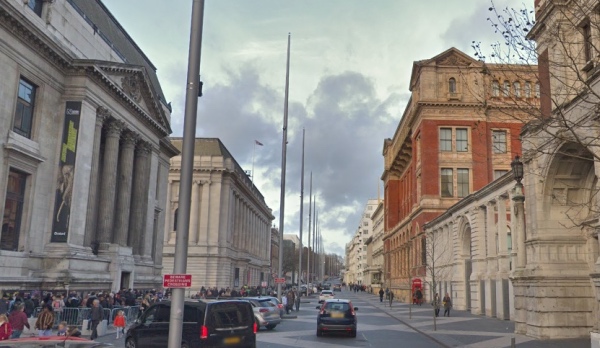
This important Kensington thoroughfare runs through the heart of South Kensington’s world-famous museum precinct from Thurloe Place, just south of Cromwell Road, all the way to Hyde Park.

Along its length, it takes in such important institutions as the Victoria & Albert Museum, the Natural History Museum, Science Museum and Imperial College London while Royal Albert Hall is only a stone’s throw to the west.

It was, as might be expected given the name, indeed laid out as part of Prince Albert’s grand scheme surrounding the Great Exhibition of 1851 as a means of accessing the vast Crystal Palace which was located in Hyde Park (before moving out to south London).

It wasn’t the only road in the area built specifically for that purpose – the transecting Cromwell Road and Queen’s Gate, which runs in parallel and, yes, is named for Queen Victoria, were also built for to provide access to the Great Exhibition.

After the exhibition was over, Exhibition Road formed part of the precinct known as “Albertopolis” in which, inspired by the Great Exhibition, became something of a knowledge and cultural centre featuring various museums and the great concert hall which sadly Albert didn’t live long enough to see.

In the 2000s, a scheme to give pedestrians greater priority along the road was realised (in time for the 2012 Olympics).

PICTURE: Looking north along Exhibition Road from the intersection with Cromwell Road (the Natural History Museum is on the left; the Victoria & Albert Museum – and the Aston Webb Screen – on the right)/Google Maps.


Lost London – St George’s Circus Clocktower…

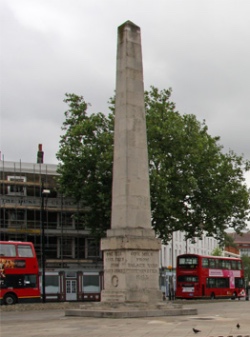
Erected around the turn of the 19th century to celebrate Queen Victoria’s Diamond Jubilee in 1897 (some put the date  of its erection at about 1897; others in about 1905), the clocktower replaced an obelisk that had previously stood in the centre of St George’s Circus in  Southwark.

The rather ornate tower was designed by architect and engineer Jan F Groll and featured four oil lamps to help light the intersection, described as the first purpose-built traffic junction in England.

It survived until the late 1930s when it was demolished after being described as a nuisance to traffic.

Meanwhile, the Robert Mylne-designed obelisk had been first erected in 1771 and marked one mile from Palace Yard, one mile 40 feet from London Bridge and one mile, 350 feet from Fleet Street (Mylne, incidentally, was the architect of the original Blackfriars Bridge).

Following its removal, it was taken to Geraldine Mary Harmsworth Park where it stood until 1998 when it was moved back to its position in St George’s Circus where it now stands. It was Grade II*-listed in 1950.

There’s a replica of the obelisk in Brookwood Cemetery – it marks the spot where bodies taken from the crypt of the Church of St George the Martyr, located in Borough High Street, in 1899 were reinterred to ease crowding.

PICTURE: Once the site of a clocktower, the obelisk has since been returned to St George’s Circus (Martin Addison/licensed under CC BY-SA 2.0/image cropped)

Lost London – The Imperial Institute…


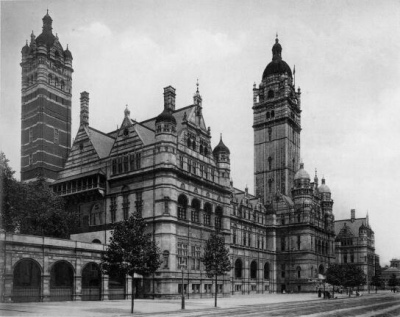
An ornate turreted building in South Kensington, construction of the Imperial Institute began in 1887 – the year of Queen Victoria’s Golden Jubilee.

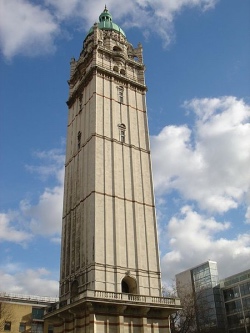
Designed by Thomas Edward Collcutt and paid for almost entirely by public subscription, the huge 213 metre long building featured three “Renaissance-style” towers with copper covered domes. Foremost among them was the 87 metre high Queen’s Tower (initially known as the Collcutt Tower after the architect).

Officially opened by Queen Victoria in 1893 (although the building was apparently never completed), the building – which was built to mark the Queen’s Golden Jubilee – was intended as an exhibition space to showcase the Empire’s industrial and commercial resources and also as a location for research and meetings.

The idea for a permanent exhibition space for colonial “produce” had apparently been enthusiastically backed by the Prince of Wales (and the Queen herself) following a series of exhibitions showcasing the wares of India and the colonies in preceding years.

But the enthusiasm for the institute, said to have cost more than £350,000, quickly waned (perhaps because of a vagueness over its purpose) and despite efforts to encourage people to use it through introducing “attractions” like a billiards room, the financial position of the institute became somewhat straitened.

Help came from the University of London which took over half of the building just six years later in 1899 and other tenants followed in attempt to keep money for maintenance flowing. Various government departments took on responsibility for the building in the following years.

With its purpose increasingly questioned by the middle of the 20th century, when Imperial College needed to expand, it was decided to demolish the building. Demolition started in 1957 and ran into the mid-1960s. Thanks to public protests led by Poet Laureate Sir John Betjeman, the Queen’s Tower, however, was preserved and is now part of Imperial College.

The tower, which once had a public viewing gallery (now closed) contains 10 bells, known as the Alexandra Peal, which are hung about halfway up the tower. They given by a Mrs Elizabeth A Miller, of Melbourne, Australia, in 1892 as a gift and are named after Queen Victoria, the then Prince and Princess of Wales, and other children and grandchildren of the Queen. They are rung on important college occasions.

Meanwhile, the institute, renamed the Commonwealth Institute, relocated to Kensington High Street. It later went into liquidation. That site now houses the recently unveiled Design Museum.

PICTURE: Top – Imperial Institute during the Edwardian era (public domain); Below –  The Queen’s Tower is all that now remains of the institute (licensed under CC BY-SA 3.0

London Pub Signs – The Victoria, Paddington…

No prizes here for guessing that this pub owes its name to the long serving 19th century monarch, Queen Victoria.

There’s apparently a story that the Queen stopped off here on her way to Paddington Station and that, as a result, the pub was named in her honour.

Whatever the truth of that, the now Grade II-listed pub – located at 10a Strathearn Place (on the corner with Surrey Place) – was apparently built in 1838 – the first year if Victoria’s reign (and possibly a more valid reason for its name) and remodelled around the turn of the 20th century.

It features a luxuriously decorated interior with fireplaces, mirrors, and an original counter as well as paintings of the Queen, Prince Albert and their family.

The upstairs Theatre Bar features decorative elements taken from the former Gaiety Theatre which were installed in the late 1950s.

The pub, which was apparently patronised by the likes of author Charles Dickens (he is said to have written some of Our Mutual Friend here), Sir Winston Churchill and Charlie Chaplin as well as David Bowie – who did a live performance when launching an EP here in the 1960s.

It’s also been associated with more recent celebs like musicians Ronnie Wood and Liam Gallagher, artist Damien First and actor Keira Knightley.

There’s also a story that in 1960s one of the paintings on the walls was found to be a valuable portrait of a member of the Royal Family. It’s now apparently in the Royal Collection.

The pub is now part of the Fuller’s group – and has twice won their ‘Pub of the Year’ award. For more, see www.victoriapaddington.co.uk.

PICTURE: Ewan Munro (licensed under CC BY-SA 2.0)

10 subterranean sites in London – 6. Guildhall crypts…

Located beneath Guildhall’s Great Hall is the oldest surviving part of the structure, the largest of London’s medieval crypts.

Dating from the reign of King Edward the Confessor in the 11th century, the vaulted East Crypt is considered to be one of the finest examples of its kind in England with a ceiling featuring a series of carved bosses depicting heads, shields and flowers.

It features a series of stained glass windows depicting five famous Londoners – Geoffrey Chaucer, William Caxton, Sir Thomas More, Sir Christopher Wren and Samuel Pepys.

The pillars holding up the roof, meanwhile – once located at ground level – show signs of where horses were once tied up while their riders went about their business.

The West Crypt, which is believed to date from the 13th century, was sealed off after collapsing under the weight of the roof of the Great Hall which fell down during the Great Fire of London in 1666. It was reopened in 1973.

The windows of the West Crypt represent some of the City of London’s livery companies (pictured above, right).

One of the most famous incidents took place in the crypts on 9th July, 1851, when Queen Victoria attended a banquet here during a state visit.

The crypts today are available to hire for atmospheric events.

WHERE: Guildhall, Guildhall Yard, City of London (nearest Tube stations are Bank, Mansion House and Moorgate); WHEN: 10am to 4.30pm daily (when not being used for events); COST: Free; WEBSITE: www.cityoflondon.gov.uk/things-to-do/visit-the-city/attractions/guildhall-galleries/Pages/guildhall.aspx.