LondonLife – The ups and downs of life at Canary Wharf…


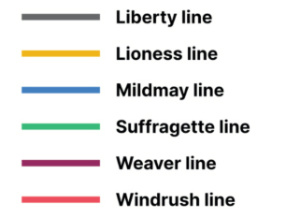
Each of London’s six Overground lines are for the first time being given a new name and colour by which they can be identified.

The new names and colours – which include the Lioness line (yellow), Mildmay line (blue), Windrush line (red), Weaver line (maroon), Suffragette line (green) and Liberty line (Grey) – were chosen through engagement with customers, stakeholders, historians, industry experts and local communities, according to Transport for London.
Mayor of London, Sadiq Khan, described the move as a “hugely exciting moment, transforming how we think about London’s transport network”.
“Giving each of the Overground lines distinct colours and identities will make it simpler and easier for passengers to get around. In re-imagining London’s tube map, we are also honouring and celebrating different parts of London’s unique local history and culture.
Each of the new lines’ names reflects an aspect of the city’s culture and history. The Lioness line, which runs from Euston to Watford Junction through Wembly, honours the achievements and legacy of England women’s football team while the the Mildmay line, which runs from Stratford to Richmond/Clapham Junction through Dalston, honours a small charitable hospital in Shoreditch that played a pivotal role in the HIV/AIDS crisis in the 1980s and Windrush Line, which runs from Highbury & Islington to Clapham Junction/New Cross/Crystal Palace/West Croydon, honours the Windrush generation and runs through areas with strong ties to Caribbean communities today, such as Dalston Junction, Peckham Rye and West Croydon.
Meanwhile the The Weaver line, which runs from Liverpool Street to Cheshunt/Enfield Town/Chingford, runs through areasknown for their textile trade such as Liverpool Street, Spitalfields, Bethnal Green and Hackney, the Suffragette line, which runs from Gospel Oak to Barking Riverside, celebrates how the working-class movement in the East End fought for votes for woman and paved the way for women’s rights and ends at Barking, home of the longest surviving Suffragette Annie Huggett, who died at 103. The Liberty Line, which runs from Romford to Upminster, celebrates the freedom described as a “defining feature of London” and references the historical independence of the people of Havering, through which it runs.
For more on the new names and colours, see https://tfl.gov.uk/modes/london-overground/overground-line-naming?cid=naming-overground.

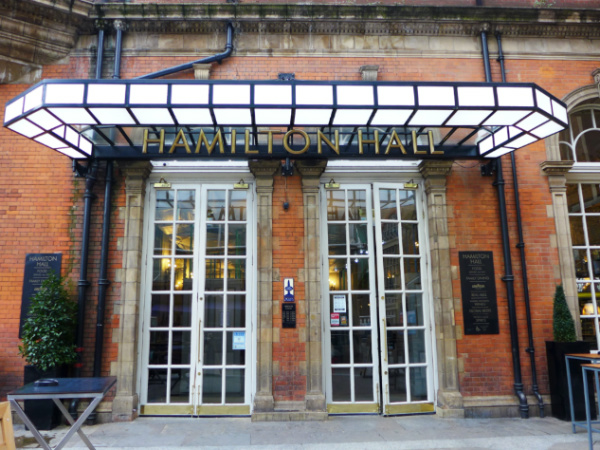
This pub’s location on the street level concourse of Liverpool Street Station is a clue to the origins of its name.
The Hamilton refers to Lord Claud Hamilton, the chairman of the Great Eastern Railway Company, which originally built Liverpool Street Station (itself named after early 19th century Prime Minister, Lord Liverpool).
The pub itself is actually located in what was the ballroom of the Great Eastern Hotel which originally dates from the 1880s. The now II*-listed hotel – minus its ballroom – still exists in the same location, these days as Andaz London Liverpool Street, part of the Hyatt Group.
The pub features many of the ballroom’s original features and is partly decorated in the 18th century French style.
For more, see www.jdwetherspoon.com/pubs/all-pubs/england/london/hamilton-hall-city-of-london

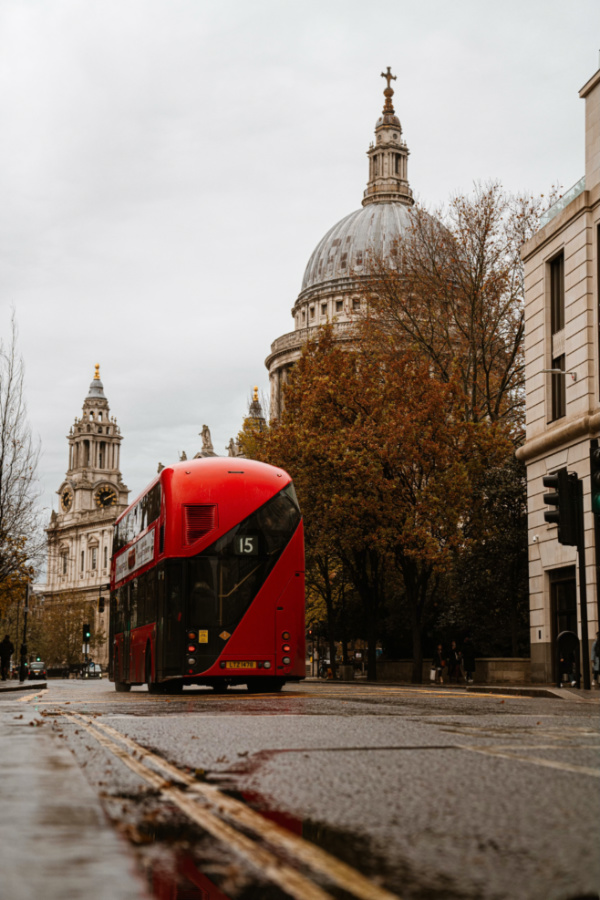
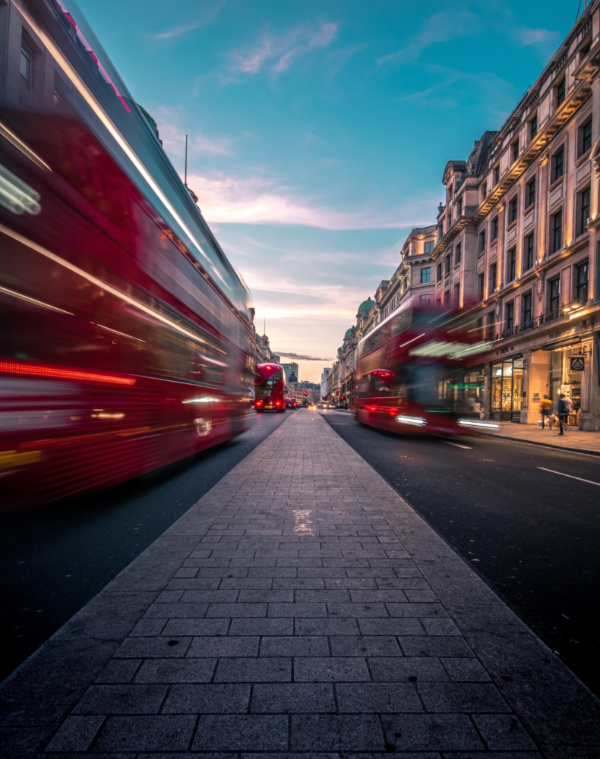
The number 15 runs from Blackwall Station via Poplar High Street through the City, finishing at Charing Cross Station.

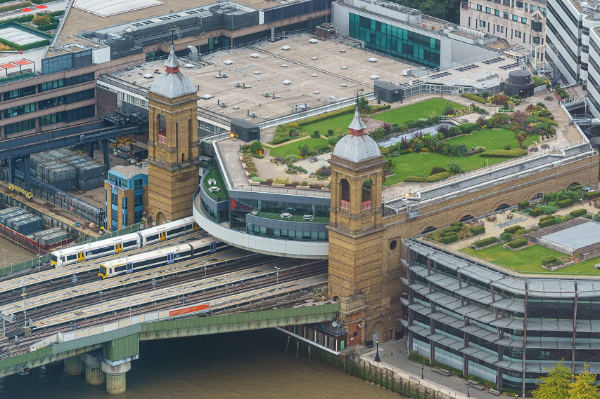
This establishment in the Cannon Street Station in the City of London is a modern take on the pub but thanks to the name and location comes with built-in history.
Sir John Hawkshaw (1811-1891) was a railway engineer who, importantly given this pub’s location, is recognised for his work on the original Cannon Street railway station – which he designed with JW Barry – as well as the adjoining Cannon Street Railway Bridge over the Thames (it was originally named ‘Alexandra Bridge’ in honour of Princess Alexandra of Denmark, wife of Edward, the Prince of Wales)
The original Cannon Street station, which opened on 1st September, 1866, featured two “Wren-style” towers which stand 135 feet high and faced the Thames (these two towers, now Grade II listed, are still there today). They helped support the station’s single arched iron and glass roof which stretched some 700 feet in length to cover the railway platforms (an adjoining Italianate-style hotel and forecourt designed by Barry opened the following year).
While Hawkshaw’s two towers remain (and it should be noted that the engineer was also famous for his work on other projects including, among others, the Severn Tunnel and Suez Canal), the current Cannon Street Station is a much more modern structure dating originally from the 1980s with some works being completed in the last decade or so.
The site’s known history, meanwhile, goes back much further, however. Prior to Hawkshaw’s station, since 1690 the site had been occupied by the livery hall of the Worshipful Company of Plumbers. Prior to that it was the site of the Steelyard and, much further back in time, the remains of a Roman palace have been found beneath the site which date from the 1st century.
The modern pub, located in the station, is part of the JD Wetherspoon chain.
For more on the pub, see https://www.jdwetherspoon.com/pub-histories/england/london/the-sir-john-hawkshaw-cannon-street.


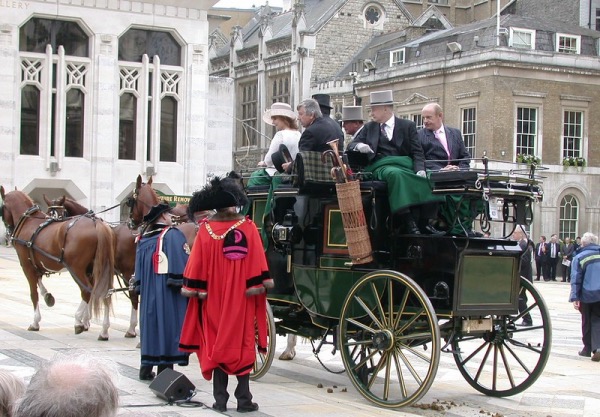
• The ceremony of Cart Marking takes place this Saturday in Guildhall Yard. Hosted by the City of London and the Worshipful Company of Carmen, the ceremony dates back 500 years and involved people having their carts marked – with a brand – after paying the appropriate licence fee. More than 50 vintage vehicles – ranging from handcarts, to horse-drawn, steam and modern vehicles – will take part in the event, entering Guildhall Yard through its famous arch and then symbolically marked with a brand. Entry to watch the event is free. For more, see www.cartmarking.org.
• Four rare K8 phonebooks – located in the London Underground network – have been listed at Grade II. The K8 kiosks were the last generation of the classic public telephone box and some 11,000 were installed across the UK between 1968 and 1983. Only around 50 now remain in their original position – most of them were removed by British Telecom following its privatisation in 1984. The K8 was replaced by the sleek silver KX100 kiosk, which in turn were made virtually obsolete by mobile phones. While most of the surviving K8s were located in Hull, there are four in the London Underground network including blue boxes at High Street Kensington and Chorleywood stations, a maroon one at Chalfont and Latimer and a white one at Northwick Park.
• It’s Ice Weekend at the London Canal Museum. Events – including a showing of rare film of ice harvesting, ice cream making demonstrations, and talks about the ice trade – take place on both Saturday and Sunday but the chance to visit the facility’s ice well takes place on Sunday only. Admission charges apply. For more, see www.canalmuseum.org.uk/whatson/icewell-visit.htm. The event is part of the 2023 Festival of Archaeology.
Send all items to exploringlondon@gmail.com


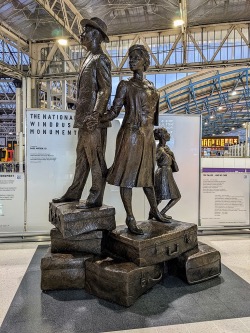
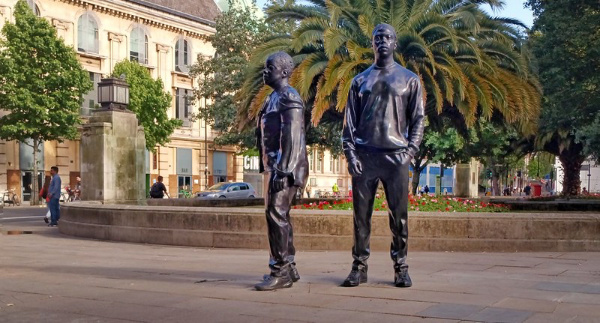
The National Windrush Monument (right) was unveiled at Waterloo Station on Windrush Day (23rd June). The bronze sculpture – the work of US-based Jamaican artist Basil Watson – memorialises the British West Indian immigrants who came to the UK on board HMT Empire Windrush in 1948 and later ships and who subsequently became known as the Windrush generation. Funded by a £1 million government grant, it depicts a man, woman and child who, dressed in their “Sunday best”, are climbing a pile of suitcases which represent all the possessions they brought with them. The memorial, which is located inside the station through which thousands of the Windrush Generation passed on their way to their new lives in the UK, was unveiled by the Duke and Duchess of Cambridge. Floella Benjamin, chair of the Windrush Commemoration Committee, reportedly said the monument will “act as a symbolic link to our past and a permanent reminder of our shared history and heritage for generations to come“. Meanwhile, a public bronze sculpture was unveiled outside Hackney Town Hall on the same day which also commemorates the Windrush generation. Warm Shores, the work of London artist Thomas J Price, depicts larger than life-sized a man and woman and was based on 3D scans of real-life residents.


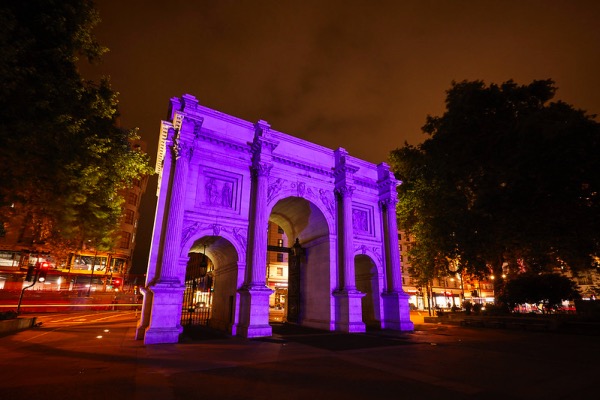
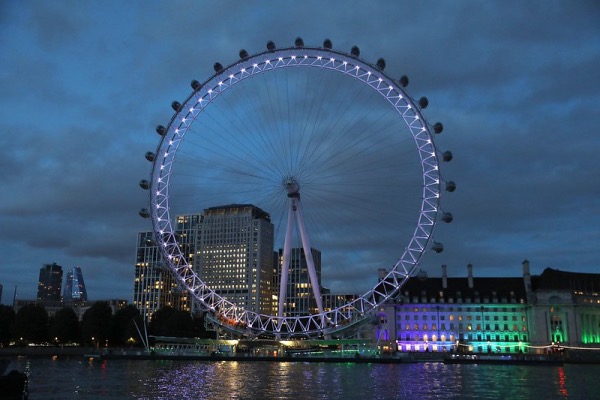
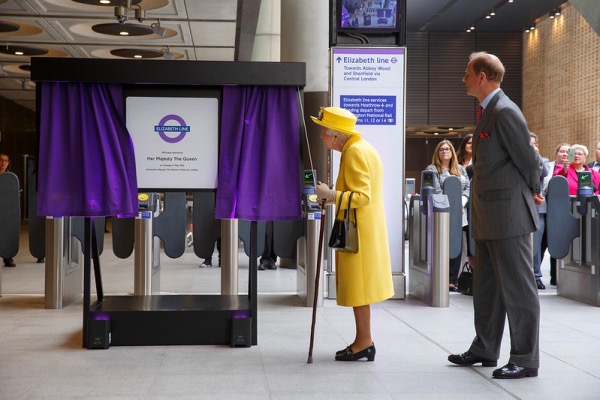
Iconic London locations including Tower Bridge, The London Eye, and Marble Arch turned purple last night to mark the opening of the new Elizabeth Line today. Thousands of people are today expected to use the new Tube line which provides faster journeys between Paddington and Abbey Wood via 10 new stations using Class 345 trains that are more and than one-and-a-half times longer than a standard Tube train and able to carry 1,500 passengers. The line’s opening is the latest step in the £18.8 billion Crossrail project which is linking Reading, to the west of London, with Heathrow before travelling through central London to connect with Shenfield and Abbey Wood in the east. Sadiq Khan, the Mayor of London, said it was an “historic day”. “This is a huge moment, not just for London but the entire country – particularly in this special Jubilee year…This brand new line is the most significant addition to our transport network in decades.” Last week, the Queen and Prince Edward attended Paddington Station to mark the completion of the new line.


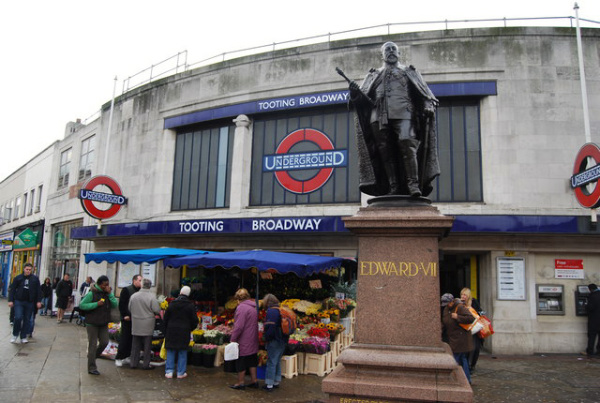
It’s a rather incongruous place for a king. Standing outside the entrance to Tooting Broadway Underground Station is a large-than-life statue of King Edward VII, who ruled from 1901-1910.
Erected in 1911 after the King’s death, the statue is the work of Louis Fritz Roselieb (later Roslyn) and was funded through a public subscription.
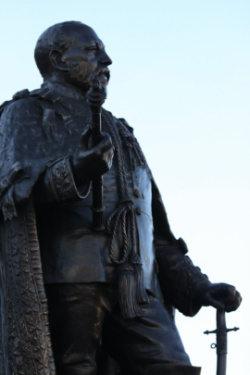
The statue depicts the King in royal regalia holding a sceptre in his right hand with his left hand resting on his sword hilt. The plinth features bronze reliefs on either side depicting representations of ‘peace’ and ‘charity’.
Given Tooting Broadway Underground Station didn’t open until 1926, the statue wasn’t initially located in relation to it.
In fact, it was originally located on a traffic island a short distance from its current siting but was moved after the area was remodelled in 1994.
It isn’t, of course the only statue of King Edward VII in London – the more well known one can be found in Waterloo Place. It was unveiled by his son, King George V, in 1921.

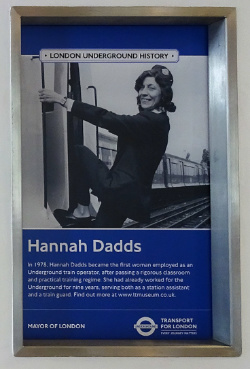
As the first female driver on London’s Tube, Hannah Dadds broke new ground for working women.
Born on 16th October, 1941, Dadds grew up in the Forest Gate area of Newham. She left school when just 15 and worked in various jobs – including as a shop assistant and at the Bryant and May match factory – before in 1969 joining the London Underground to work as a “railwoman” at the Upton Park Underground Station, earning just over £13 a week.
Dadds went on to become a ticket collector at Tower Hill station and in 1976 became a train guard.
Following the passing of the 1975 the Sex Discrimination Act which opened up new jobs to women, in October, 1978, Dadds completed a seven week training course and, amid considerable fanfare, became the first female train driver on the Tube, driving her first train out of the Acton Depot to Ealing Broadway.
Initially assigned to the District line, she would go on to also drive trains on the Bakerloo and Jubilee lines. Dadds was also sometimes was paired with her sister, Edna, who joined the Underground after her sister and worked as a guard (they became the first all-female crew on the Underground).
Dadds, who retired in 1993, subsequently split her time between London and Spain. She died in 2011.
A plaque commemorating Dadds’ pioneering efforts was unveiled at Upton Park station in May, 2019, with her family and friends in attendance.

The DLR, or Docklands Light Rail, is a driverless train network connected to the Tube system.
The DLR, which is located at the eastern end of the city, connects to the Tube network at numerous stations including Bank, Tower Gateway and Canary Wharf. It reaches as far south as Lewisham, east to Beckton and Woolwich Arsenal and north to Stratford International.
The 24 mile-long network, which first opened on 31st August 1987 and has since been extended numerous times, has 45 stations. It also provides connections to the Emirates Air Line and London City Airport.
The DLR trains run from around 5.30am to around 12.30am from Monday to Saturday with Sunday services starting later and finishing earlier.
The fares are the same as the Tube and you can use Oyster cards.
In the 2019/2020, the line hosted more than 115 million passenger journeys.
For a route map, head to https://content.tfl.gov.uk/dlr-route-map.pdf

• The largest collection of Spitfires gathered under one roof can be seen at the Imperial War Museum Duxford’s AirSpace hall. Twelve of the iconic planes have been gathered at the airfield, often referred to as the “home of the Spitfire”. Spitfire: Evolution of an Icon, which is being accompanied by a programme of tours, talks, events and family activities, shows how the plane evolved throughout World War II in order to keep pace with German aircraft development. As well as the IWM’s iconic Mk Ia Spitfire, the display also features Mk V, Mk IX and Mk XIV models. The Spitfires be seen until 20th February. Admission charge applies. For more including details of events, head to www.iwm.org.uk/events/spitfire-evolution-of-an-icon.
• A new exhibition focused on photographs of iconic 70s and early 80s band The Jam opens at the City of London Corporation’s Barbican Music Library tomorrow. True is the Dream features the photography of Derek D’Souza who has captured the band and frontman Paul Weller, who went on to found The Style Council, on film over several decades. D’Souza’s work include a career-defining shoot of the band at Chiswick House. The display is free to see until 16th May. For more, see www.barbican.org.uk/whats-on/2022/event/true-is-the-dream.
• The Waterloo & City line has reopened following a brief closure over Christmas. The London Underground line, which connects Waterloo to Bank, was temporarily closed by Transport for London in late December following increasing COVID cases in the capital and the impact on staff absence. Meanwhile, the Bank branch of the Northern line (between Moorgate and Kennington) for 17 weeks from 15th January to allow for upgrade works.
Send all items to exploringlondon@gmail.com.
Spotted in Sloane Square Tube station. PICTURE: John Cameron/Unsplash
• Kew Gardens have unveiled a new programme of well-being events with the aim of encouraging people to enjoy the outdoors after the COVID-19 lockdown. The events, all of which will be COVID-19 safe and follow government guidelines, including everything from forest bathing sessions in the Arboretum inspired by the Japanese art of Shinrin-yokuto, a rare chance to cycle through the gardens on an evening bike ride, pilates in the Nash Conservatory and yoga sessions in the Temperate House. Check the Kew website for dates and times and admission charges.

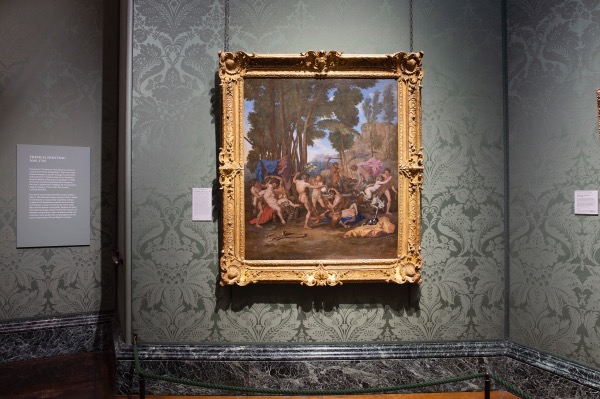
• The creator of The Triumph of Silenus (c1637), which was one of the first paintings to enter the collection of The National Gallery when it did so in 1824, has been confirmed as 17th century French painter Nicolas Poussin. The painting had long been plagued by questions of authenticity but following recent conservation work and in-depth technical analysis, it has been confirmed as a work of Poussin. The confirmation means the gallery holds 14 works by Poussin, making it one of the world’s leading collections of paintings by him. Later this year, the picture will feature in a new exhibition, Poussin and the Dance.
• People will have the chance to see parts of Euston Station usually not accessible to the public on a new virtual tour announced by the London Transport Museum. The tour is part of the next season of ‘Hidden London’ virtual events with new dates also to be announced for tours of King William Street, Brompton Road, Holborn (Kingsway) and Aldwych. Meanwhile, the museum will recommence its ‘Secrets of Central London’ walking tour in the West End on 17th May. Charges apply. For more on the virtual tours and dates, head to www.ltmuseum.co.uk/hidden-london/virtual-tours.
Send all items for inclusion to exploringlondon@gmail.com.
The last of the three hills at least partly within the walls of the old City of London is Tower Hill, located at the City’s eastern end.
Famed as a site of public execution, Tower Hill – which rises to almost 14 metres above sea level – was traditionally where traitors who had been imprisoned in the nearby Tower of London met their final moments.
More than 120 people have been executed on the site, everyone from Sir Simon de Burley, tutor to King Richard II, in 1388, through to Thomas Cromwell in in 1540 and a soldier arrested during the Gordon Riots of 1780.
These days the gallows and scaffold – and the crowds which accompanied them – are long gone, marked by a stone set in the pavement at the western end of Trinity Square.
The hill, which is just to the north of the Tower of London and takes its name from it, was historically part of the tower liberties – meaning authorities could ensure nothing was developed on it which would affect the defences of the fortress.
It is the site of one of the remaining sections of the Roman and medieval wall which once surrounded the City of London (the hill is located on both sides of the wall).
A Tube station, Tower Hill, which opened in 1884 (it was originally named Mark Lane and the name changed to Tower Hill in 1946; it relocated to the current site in 1967).
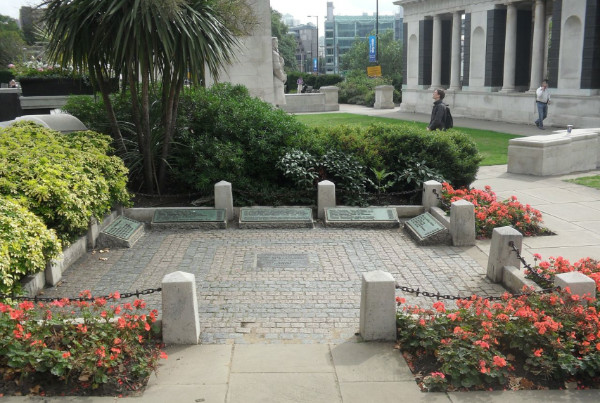
The hill is also home to the Tower Hill Memorial – a pair of memorials dedicated to the mercantile marines who died in World War I and World War II – set inside the public park known as Trinity Square Gardens.
PICTURE: Samuel Regan-Asante/Unsplash
Commonly used as a nickname to describe the London Underground, the “Tube” is an obvious reference to shape of the tunnels themselves.

The word is believed to have been first popularised around 1890. Underground lines had previously been constructed using the ‘cut and cover’ method – that is, digging out the trench for the Underground line, lining the tunnel with iron and them covering it.
Thanks to its depth (due to the fact it had to pass under the Thames), City and South London Railway’s line from King William Street (a now disused station) to Stockwell was the first to be created by boring a tunnel through the earth and then lining it to create a tube. The line, a forerunner of what is now the Northern Line, opened in December, 1890. It was the first true ‘tube’ of the Underground system.
The construction of the line was followed in 1900 by the opening of the Central London Railway’s line from Shepherd’s Bush to Bank (now part of the Central Line) which was given the nickname the “Twopenny Tube”.
The name stayed and was soon applied to the entire network of Underground lines (and interestingly, it wasn’t until 1908 that the word “Underground” first appeared in stations).