This Week in London – Bridges in focus; cheap entry to Tower Bridge; WW1 nurse honoured; and, Dennis Hopper’s photographs…

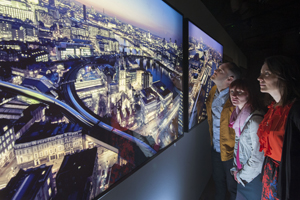
Bridge-ExhibitionA new exhibition on London’s bridges commemorating the 120th anniversary of the opening of Tower Bridge opens at the Museum of London Docklands tomorrow. The largest art exhibition ever staged at the museum, Bridge features rarely seen contemporary and historical works, photography, films and maquettes of London’s bridges and explores the role they play in the city. Highlights include Giovanni Battista Piranesi’s 1766 etching A view of the intended bridge at Blackfriars, London, Charles Ginner’s 1913 work London Bridge, and Ewan Gibbs’ 2007 linocut London. The exhibition will also feature a rare photograph taken by William Henry Fox Talbot in 1845, Old Hungerford Bridge. The oldest photograph in the museum’s collection, it will only be on display for one month from tomorrow. The exhibition, entry to which is free, runs until 2nd November. For more, see www.museumoflondon.org.uk/docklands/. (PICTURE: © Museum of London Docklands).

Don’t forget there is a special admission entry offer of just £1.20 to the Tower Bridge Exhibition this Monday, 30th June – 120 years to the day since the Prince of Wales (later King Edward VII) opened the iconic structure. Tickets must be bought at the door. There will be some Victorian re-enactors at the bridge on the day including police, tourists and engineers and each visitor will receive a special ticket which replicates the design of the invite to the 1894 ceremony (a limited edition commemorative badge will also be available to buy). For more, see www.towerbridge.org.uk.

The Australian-born nurse responsible for the entire nursing operation on the Western Front during World War I has been commemorated with an English Heritage Blue Plaque unveiled at her former home in Chelsea. Maud McCarthy, one-time Army Matron-in-Chief, was in charge of more than 6,000 British, Imperial and American nurses in 1918. Her accolades included the Florence Nightingale Medal – the highest international distinction a nurse can receive. McCarthy lived at 47 Markham Square for almost 30 years after the war, from 1919 until shortly before her death in 1949. For more, see www.english-heritage.org.uk/discover/blue-plaques/.

An exhibition featuring more than 400 photographs taken by the late US actor, film director and artist Dennis Hopper opened at the Royal Academy of Arts off Piccadilly today. Dennis Hopper: The Lost Album is the first time the body of work – first shown in Texas in 1970 – has been displayed in the UK. The photographs document the social and cultural life of the American Sixties and cover a range of themes and subjects. They include portraits of the likes of Paul Newman, Andy Warhol and Jane Fonda, and images depicting members of counter-cultural movements as well as events such as the 1965 march civil rights march from Selma to Montgomery. Admission charge applies. Runs until 19th October. For more, see www.royalacademy.org.uk.

Send all items of interest for inclusion to exploringlondon@gmail.com.

What’s in a name?…Maida Vale

This district in west London – located to the south-west of St Johns Wood – takes its name from the Italian town of Maida in Calabria where, in 1806, the British won a victory over Napoleon.

Led by Sir John Stuart (later Count of Maida), about 5,000 British troops defeated a larger number of French in a battle in what was a much-needed boost to the British after the defeat at Austerlitz in December the previous year.

Regent's-Canal-looking-toward-Little-VeniceThere was apparently a pub located in the area named, in the wake of the victory, ‘The Hero of Maida’ in reference to Stuart and his role in the battle. The pub has since gone but its name lives on in the street and the district which still carries it.

Landmarks in Maida Vale include the basin – complete with houseboats and the puppet theatre barge – known as Little Venice (some say this name was coined by poet Robert Browning; others attribute it to Lord Byron) where Regent’s Canal meets with the Paddington arm of the Grand Junction Canal (pictured is Regent’s Canal looking toward Little Venice).

Maida Vale is also home to the BBC Maida Vale Studios (on Delaware Road) while notable residents have included computer science pioneer Alan Turing who was born at 2 Warrington Crescent in 1912 and David Ben-Gurion, first Prime Minister of Israel, who lived at 75 Warrington Crescent.

The area to the south-west is unofficially known as Maida Hill and this was apparently initially the name used for the entire area until the more romantic Maida Vale came into usage in the mid 19th century. Maida Vale also gives its name to a Tube station – it opened in 1915.

This Week in London – Norman Shaw’s drawings on display; Tower Bridge art; and, German medals from World War I…

Drawings by the renowned Victorian-era British architect Norman Shaw (1831-1912) are the subject of a new display at the Royal Academy of Arts. Shaw’s building works included New Scotland Yard on Embankment and renovations and additions to the likes of Burlington House, home of the RA. The display Dream, Draw, Work will explore the materials, draughtsmanship and design practices of Shaw and his staff and many of the works in the display bear the marks of extensive handling. As well as the drawings, photographs of Shaw’s London buildings will be displayed in the Royal Academy’s Architecture Space. Opens in the Tennant Gallery tomorrow and runs until October 26. Entry is free. For more, see www.royalacademy.org.uk.

An exhibition of artworks depicting Tower Bridge over its 120 year history opens at the Guildhall Art Gallery on Saturday. Tower Bridge: A Celebration of 120 Years includes paintings from the gallery’s permanent collection, contemporary interpretations and archive material. For more, follow this link.

On Now: The other side of the medal: how Germany saw the First World War. This free display in Room 69a of the British Museum focuses on medals made by artists who lived and worked in Germany from 1914-1919. While smaller struck ‘medalets’ were mass produced, the larger cast medals – such as those featured in this display – were produced in smaller numbers and mostly cast in iron because bronze was required for shell casings. While some of the medals, unusually modernist in style, were used to influence opinion against Germany’s enemies, others provided what the museum describes as a “more universal criticism about the futility of war and waste of human life”. Among the motifs used was that of Death who can be seen killing soldiers and attacking ships or giant Zeppelin airships. The medals were not officially produced or sanctioned and attracted their fair share of controversy (one depicts the passenger ship Lusitania, sunk by a German U-boat in 1915, as laden with armaments). The display can be seen until 23rd November. For more, see www.britishmuseum.org.

Send all items of interest for inclusion to exploringlondon@gmail.com.
 

Lost London – The Steelyard…

The Thames-side property known as the Steelyard – the phrase comes from the Dutch-German word Stahlhof and relates either to a steel beam used for weighing goods or a courtyard where the goods were sold – was the main trading base of the Hanseatic League in London from the 13th century onward.

Located near where Walbrook flows out of the Thames on the north bank (the site is now at least partly covered by Cannon Street Station), the walled compound – which at some point housed as many as 400 people – was in some senses a mini city within a city complete with a hall, warehouses, a weighing house and counting houses as well as residences and a chapel.

While the community – which represented an alliance of towns and cities in northern Europe – was mentioned as far back as the late 1200s, it wasn’t until 1303 that King Edward I formerly confirmed the tax and customs concessions of the merchants (at some point, in return for privileges they were given, the group was charged with keeping up the maintenance of Bishopsgate).

The power of the trading post had grown substantially by the 15th century and the concessions the group had been granted meant there was inevitably considerable friction with English merchants. There was also some official friction and one example of it was when the Steelyard was closed temporarily in the 15th century when the Hanse cities were at war with England.

In 1598 Queen Elizabeth I took away the Steelyard’s trading privileges (after which the compound was apparently looted). It was subsequently allowed to reopen by King James I but never regained the prominence it had previously had.

Much of the compound was destroyed in the Great Fire of London but nonetheless, the Steelyard was rebuilt and continued to provide links between German cities and the English until the mid 1800s when the land was sold off and, in 1866, Cannon Street Station built on the site.

A couple of surviving objects from the Steelyard include a series of at least eight portraits of Hanse merchants painted by Hans Holbein the Younger and a stone model of the Hanseatic Arms which were placed over the gate into the compound can be seen at the Museum of London.

10 sites from Shakespearean London – 1. The Globe…

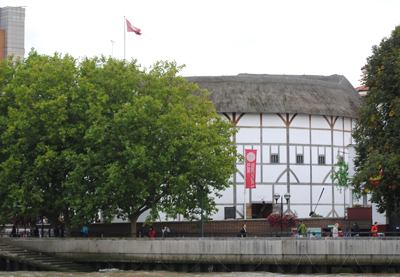
The-GlobeMention William Shakespeare and London in the same breath and everyone immediately thinks of one building – the reconstructed Globe on Bankside. So we thought that to kick off our new series – being run in honour of the 450th anniversary of the playwright’s birth – we’d take a look at history of the iconic structure.

The-Globe2The original Globe Theatre, located a few hundred metres to the south, opened in 1599 as a home for the actors’ company known as the Lord Chamberlain’s Men (later renamed the King’s Men on the accession of King James I in 1603), of which Shakespeare was a member. Founded by James Burbage, this merry band was originally was housed at London’s first purpose-built playhouse Shoreditch before lease disputes led them to establish a new theatre in Southwark, close to the then existing theatre, The Rose.

Up and running by 1599 (Shakespeare was among four actors who bought a share in the property to help fund the new building which used timbers from the former Shoreditch theatre), the new theatre was used for 14 years until, during a performance of Henry VIII in 1613, wadding from a stage cannon ignited and the theatre burned to the ground. Rebuilt with a tiled roof, it remained the home of the company until it was closed down by the Puritan government in 1642 and demolished two years later.

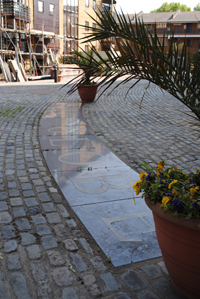
You can see the original site of The Globe just in nearby Park Street. The shape of the structure is marked by a dark line embedded in the pavement (pictured).

The reconstructed building which stands proudly by the water today was the vision of the late American actor, director and producer, Sam Wanamaker. He founded the Shakespeare Globe Trust which, with the on-site assistance of Queen Elizabeth II, opened the theatre at its current site in 1997 (sadly, Wanamaker had died three-and-a-half-years previously).

The building’s design was drawn from sifting through what little historical evidence could be found including the findings of an archaeological dig at the original site, descriptions contained in Shakespeare’s plays (including the line from Henry V – “Or may we cram within this wooden ‘O’), and printed panoramas from the time, although it should be noted that much – particularly the design of the stage – is speculative.

Meanwhile the techniques used in the construction of the theatre were the subject of years of research and were in accord with those of the early 17th century  and included using oak laths and staves to support lime plaster and then covering the walls in white lime wash while the roof was made of water reed thatch.

One of the best ways to see the theatre and make the most of the atmosphere is to see a play from a standing position in the pit!

WHERE: Globe Theatre Exhibition & Tour, Shakespeare’s Globe, 21 New Globe Walk (nearest Tube stations are Southwark and London Bridge); WHEN: Exhibition is open 9am to 5.30pm daily – tours run at various times, see website for details; COST: Exhibition and tour cost is £13.50 adults/£12 seniors/£11 students/£8 children (5-15 with children under five free)/£36 family of four; WEBSITE: www.shakespearesglobe.com.

10 significant sites from Georgian London – 10. Wesley’s Chapel…

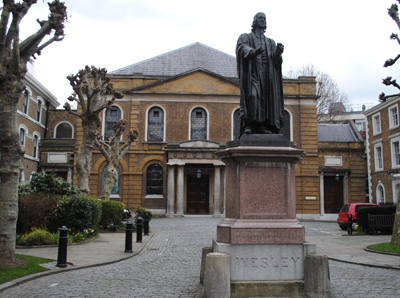
Wesley's-ChapelIt’s a church with a difference for the final entry in our Georgian series. Known as the “Cathedral of Methodism”, the Grade I-listed chapel on City Road in the Borough of Islington was first opened in 1778 just over the road from Bunhill Fields graveyard and remains in use today.

Methodism’s founder, John Wesley, had already established a London base in a former cannon foundry close by known as the Foundery when the fact the lease was expiring and plans for residential development of the area led him to look elsewhere for a headquarters for the Methodism movement (which he still then considered part of the Anglican Church).

Wesley's-graveWesley approached the City of London for a new site and, following a massive fundraising effort, in April, 1777, the building’s foundation stone was laid. The architect for the new building was George Dance the Younger, then surveyor to the City of London, and the builder, a local preacher named Samuel Tooth.

The new chapel – which Wesley described as “perfectly neat, but not fine” – was opened on All Saints Day, 1778 – apparently Wesley spent the first 15 minutes of his sermon railing against the elaborate hats worn by female congregants.

The chapel last underwent a major restoration in the 1970s after it was found to be unsound and was reopened in 1978 in the presence of Queen Elizabeth II and the Duke of Edinburgh exactly 200 years after Wesley first opened it.

Inside the chapel – which features seats upon a gallery as well as the ground floor – features a ceiling said to have been the widest unsupported ceiling in England at the time it was built (the present one is a replica; the original had been damaged by fire in 1879).

The original pillars used in the chapel to support the gallery were ship’s masts from the naval dockyard at Deptford given as a gift from King George III – these were replaced during the centenary commemoration of Wesley’s death with pillars of French jasper in 1891 but a couple of originals can still be seen in the vestibule.

Memorials inside the chapel include those to John and Charles Wesley and early Methodists John Fletcher and Thomas Coke.

Next to the chapel is the house Wesley lived in during the last 11 years of his life (this can be visited – and we’ll cover it in more detail in a later post) and underneath it in the crypt is the Museum of Methodism – well worth a visit in its own right.

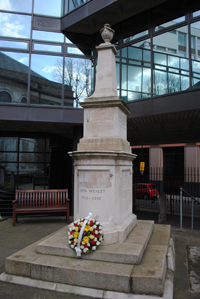
Wesley’s tomb (pictured) is located behind the east end of the church (accessed through the chapel) and outside the entrance to the chapel is a statue of Wesley. The grave of Susanna Wesley, mother of the Wesleys, can be found across the road in Bunhill Fields.

WHERE: Wesley’s Chapel, 49 City Road (nearest Tube station Old Street and Moorgate);  WHEN: 10am to 4pm Monday to Saturday (services Sunday – check website for details); COST: free but donations welcome; WEBSITE: www.wesleyschapel.org.uk.

This Week in London – A rare chance to walk through a Thames tunnel; Matisse at the Tate; and, Spitting Image on show…

It’s a rare chance to walk the historic Thames Tunnel between Wapping and Rotherhithe – the first tunnel ever dug under a navigable waterway. Transport for London and London Overground are offering the chance to purchase tickets to walk the tunnel – built by Marc Brunel, it’s now used by the London Overground – over the May Bank Holiday weekend on 24th to 26th May. Tickets, which cost £18 plus booking fee, go on sale today at 10am via the London Transport Museum in Covent Garden and are strictly limited (with no on the day admissions allowed). Proceeds from the day will go to the Railway Children’s Charity and the Brunel Museum. Also, worth noting is that the London Transport Museum is offering tours of its depot this Friday and Saturday. Admission charge applies. For more, see www.ltmuseum.co.uk.

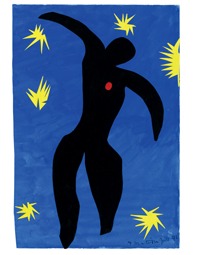
MatisseThe paper cut-outs of Henri Matisse are the focus of a landmark exhibition which opened at Tate Modern last week. Henri Matisse: The Cut-Outs features about 130 works created between 1937 and 1954 with many seen together for the first time. Highlights include maquettes featured in the 1947 book Jazz, The Snail and its sister work Memory of Oceania (both 1953) and the largest number of the Blue Nudes ever shown together. The display takes an in-depth look at the methods and materials Matisse used in the production of the cut-outs. Runs until 7th September (and keep an eye out for the accompanying film, Matisse: Live in cinemas). Admission charge applies. For more, see www.tate.org.uk. PICTURE: Henri Matisse, Icarus 1946, Maquette for plate VIII of the illustrated book Jazz 1947, Digital image: © Centre Pompidou, MNAMCCI, Dist. RMN-Grand Palais / Jean-Claude Planchet, Artwork: © Succession Henri Matisse/DACS 2014.

On Now: Spitting Image. This exhibition at the Cartoon Museum in Bloomsbury centres on the partnership of three dimensional artists Peter Fluck and Roger Law and their key role in the creation of what became known as Spitting Image. It features caricature drawings and photographs created for magazines in the 1970s and 1980s of the likes of Paul McCartney, Michael Jackson, Kate Moss, Saddam Hussein, Billy Connolly, Rupert Murdoch, Jo Brand and John Paul II as well as members of the Royal Family and politicians including Margaret Thatcher. Also present are some of the puppets used in the TV show which ran for 18 series between 1984 and 1996 – these include those of Thatcher, The Queen, Princess Diana and Mr Spock. Runs until 8th June (with selected late opening nights). Admission charge applies. For more, see www.cartoonmuseum.org.

Send all items of interest for inclusion to exploringlondon@gmail.com.
10 significant sites from Georgian London – 8. Marble Hill House…

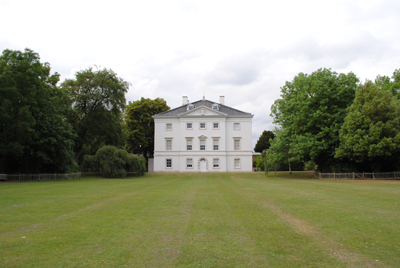
Marble-Hill-HouseA Palladian villa located on the bank of the Thames between Richmond and Twickenham, Marble Hill House was built in the mid to late 172os for Henrietta Howard, mistress of King George II and later Countess of Suffolk.

The symmetrical property – seen as a model for later Georgian-era villas in both England and overseas – was constructed by Roger Morris. He, along with Henry Herbert – a friend of the countess and later the 9th Earl of Pembroke – was also involved in its design as was Colen Campbell, architect to the Prince of Wales and future King George II, who is believed to have drawn up the first sketch designs for the house.

As well as being familiar with the work of neo-Palladian Inigo Jones, Lord Herbert had travelled in Italy and there is it believed had directly encountered the works of sixteenth century Italian architect Andrea Palladio whose architecture the property emulated (see our earlier post on Chiswick House here).

Key rooms include the ‘great room’ – a perfect cube, this is the central room of the house and boasts a wealth of gilded carvings; the dining parlour which had hand-painted Chinese wallpaper; and, Lady Suffolk’s rather sparsely furnished but nonetheless impressive, bedchamber.

Marble-Hill-GrottoHoward, who as well as being a mistress of King George II both before and after his accession to the throne in 1727, was a Woman of the Bedchamber to his wife, Queen Caroline of Ansbach, and, as a result, initially spent little time at the property (which coincidentally was built using money the King had given her while he was still Prince of Wales).

But after she become the Countess of Suffolk in 1731 when her estranged husband Charles Howard became 9th Earl of Suffolk after his brothers’ deaths, Lady Suffolk was appointed Mistress of the Robes, and following the death of her husband in 1733, retired from court.

In 1735 following the end of her intimate relationship with the King, she married a second time, this time happily, to George Berkeley, younger brother of the 3rd Earl of Berkeley and an MP. Together the new couple split their time between a house in Savile Row and Marble Hill. Her husband died in 1746 and Lady Suffolk, who had come to be considered a very “model of decorum”, died at Marble Hill in 1767.

Among the visitors who had spent time at the property were poet and neighbour Alexander Pope (responsible for the design of the grounds along with royal landscape gardener Charles Bridgeman), writer and satirist Jonathan Swift, and, in Lady Suffolk’s later years, Horace Walpole – son of PM Sir Robert Walpole and builder of the Gothic masterpiece Strawberry Hill.

Following Lady Suffolk’s death, later residents of the property included another Royal Mistress – Mrs Fitzherbert, mistress to the future King George IV, Swedenborgian Charles Augustus Tulk and Jonathan Peel, brother of Sir Robert Peel (you can read more about Sir Robert Peel here).

Following the latter’s death, the house stood empty for many years before publication of plans for a redevelopment by then owner William Cunard caused a public outcry which saw the property pass into the hands of the London County Council around the year 1900.

The house opened to the public as a tea room in 1903 and remained as such until the mid-1960s when, now in the hands of the Greater London Council, it underwent a major restoration project and was reopened as a museum. In 1996, the house – which now stands on 66 acres and can be seen in a much lauded view from Richmond Hill – came into the care of English Heritage.

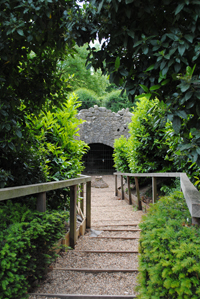
The grounds – Marble Hill Park – are open to the public for free and include a cafe located in the former coach house. Other features in the grounds include Lady Suffolk’s Grotto – pictured above – based on one at Pope’s residence nearby. It was restored after being rediscovered in the 1980s.

WHERE: Marble Hill House, Richmond Road, Twickenham (nearest Tub-e station is Richmond (1 miles) or train stations at St Margaret’s or Twickenham);  WHEN: Various times Saturday and Sunday – entry to the house by guided tour only; COST: £5.90 adults/£3.50 children (5-15 years)/£5.30 concession/£15.30 family; WEBSITE: www.english-heritage.org.uk/daysout/properties/marble-hill-house/.

10 significant sites from Georgian London – 7. Somerset House…

Somerset-House

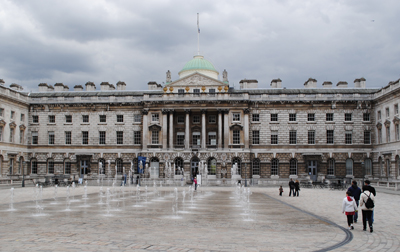
Constructed on the site of the Duke of Somerset’s Tudor-era mansion, Somerset House as we know it today owes its origins to a national scheme aimed at creating public buildings in London which would rival those of Continental cities.

The campaign led to the passing of an Act of Parliament in 1775 for the construction of a new public building at Somerset House to house government agencies such as the Navy Office, Salt Office, Surveyor General of Lands, the King’s Bargemaster and the offices of the Duchy of Lancaster and Cornwall as well as various learned societies.

The former building – which had been worked on by the likes of Sir Christopher Wren and which had been used as a residence for the likes of King Charles II’s queen, Catherine of Braganza, following his death, had fallen into a state of considerable disrepair and was demolished in 1775.

William Robinson, secretary of the Office of Works, was initially given the job of designing the new building (much to the discontent of some) but after his sudden death the same year, the task was given to Sir William Chambers, comptroller of the Office of Works and one of England’s leading architects.

The basic design was as it appears today – four ranges built around a central court (now named the Edmond J Safra Fountain Court). The Strand Block, located to the north and the most highly decorated of the buildings inside and out, was built first and largely completed by 1780, the Embankment Building (home of the Navy Office) in 1786 and the east and west ranges two years later.

When Chambers died with the work unfinished in 1796, it was carried to completion by James Wyatt and declared complete in 1801, despite the fact elements of Chambers’ design were still outstanding. It had cost more than £460,000, in excess of three times Robinson’s original estimate.

One of the first new occupants – thanks to a decision by King George III – was the fledgling Royal Academy of Arts (it had been one of the last occupants of the former premises) and its focal point was the Great Exhibition Room where exhibitions were held until 1836. Others in the new building included The Royal Society (it remained until 1837 when, like the RA, it moved to Burlington House) and the Society of Antiquaries (it moved to Burlington House in 1874).

As well as being home to various offices of the Navy Board (the southern building, where it was housed, contains the stunning, now restored, Nelson stair), Somerset House was also home to the Inland Revenue.

New additions were made to the original design in the nineteenth century – the extension of the south block to the east and addition of a New Wing to the west – and the construction of the Victoria Embankment (see our earlier post here) meant the two watergates Chambers had designed became landlocked. Somerset House no longer rose directly from the water as he’d intended but from a roadway (as it does today – we’ve mentioned this before but you can see the original riverbank by looking through the glass floor of the building’s Embankment entrance).

Somerset House is these days home to a range of cultural and artistic organisations – from the British Fashion Council to the National Youth Orchestra and, in the north wing, the Courtauld Institute of Art. And as well as hosting various art installations, the central courtyard is host to an ice-skating rink over winter.

For more on Somerset House, see www.somersethouse.org.uk.

This Week in London – Sutton Hoo rediscovered; The Sixties at Tower Bridge; and, the British Library celebrates spring…

• Celebrating 75 years since its discovery this year, the Anglo-Saxon treasure of Sutton Hoo has a new home from this week with the reopening of the renovated gallery housing early medieval artefacts at the British Museum. Excavated at a site in Suffolk in 1939, the Sutton Hoo ship burial is described as the richest intact burial to survive from Europe. It featured a 27 metre long ship and objects including an iconic helmet and is thought to be linked to the death of an Anglo-Saxon king in the early 600s. The treasure now forms the centrepiece of the gallery – Room 41 – which was last renovated in 1985. Other objects in the gallery – which covers Europe during the period from 300 to 1100 – include the Kells Crozier, the Lycurgus Cup, and the Fuller Brooch as well as new objects never shown before such as late Roman mosaics, a copper alloy necklace from the Baltic Sea region and a gilded mount found in a lump of material taken from a Viking woman’s grave. Admission to the gallery – the refurbishment of which was made possible through a donation from Sir Paul and Lady Jill Ruddock – is free. For more, see www.britishmuseum.org.

Twiggy The Sixties are the focus of a new photographic exhibition at Tower Bridge which opens tomorrow. The Sixties features more than 60 iconic images of everyone from actors like Peter Sellers and Elizabeth Taylor to Prime Minister Harold Wilson, fashion icons like Twiggy (pictured), racing car driver Jackie Stewart and activists like the Aldermaston marchers. A rare photograph of comic pair Dudley Moore and Peter Cook – taken as a publicity still for the film The Wrong Box – is a highlight. The images can be seen on the bridge’s West Walkway – located 42 metres above the River Thames – and admission is included in the entry fee to Tower Bridge. Runs until 31st December. For more, see www.towerbridge.org.uk. PICTURE: © Getty Images 

The British Library’s annual celebration of fashion, film and design kicks off today. Now in its third year, the Spring Festival, which runs over the weekend, will give people the chance to see selected material from the newly acquired archive of screenwriter, novelist and playwright Hanif Kureishi (he will also be present, speaking with writer Rachel Holmes about his career). Other events celebrate fashion and film in the Jazz Age, the British newspaper archive and the resources the library has for film-makers. For full details, see www.bl.uk/whatson/exhibitions/spring-festival-2014/events/index.html.

Send all items of interest for inclusion to exploringlondon@gmail.com.
 

A Moment in London’s History – When the last ‘frost fair’ was held on the Thames…

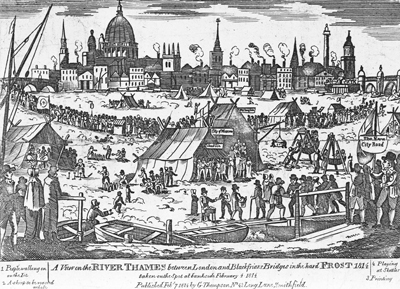
A-view-of-the-River-Thames-1814-by-G-Thompson-©-Museum-of-London

Held during particularly cold winters when the River Thames froze over, ‘frost fairs’ had been part of London’s history, from the Middle Ages up until the last one was held in February 1814, two hundred years ago last month.

The five day revelry started on 1st February and took place on a stretch of the river between Blackfriars and London Bridge (it was the medieval London Bridge in particular – with its 19 arches and wide piers – which helped to slow the river enough to freeze, something unlikely to happen again with the current bridge).

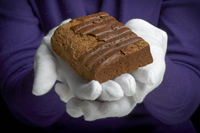
Gingerbread-bought-at-the-last-Frost-Fair-of-1814-©-Museum-of-LondonPeople began to venture out onto the ice and an impromptu fair started taking shape as tents and booths were established selling all manner of food including roast ox, drinks including alcohol like gin as well as hot chocolate, tea and coffee, and souvenirs to take advantage of the passing traffic (a piece of gingerbread from the fair is a star attraction at the Museum of London’s current exhibition on the fair – pictured right). Some of the tents were known by names (similar to a pub sign), such as the Moscow and the Wellington.

Other attractions recorded include children’s play equipment, a gambling den, and printing presses which produced keepsakes to mark the occasion. There were even reports of sightings of an elephant crossing the river.

Several people apparently died at the fair having sunk beneath the ice by the time the snow turned to rain and the ice began to break up. An engraving of the frost fairs by Richard Kindersley can be found on a pedestrian walkway underneath the Southwark end of Southwark Bridge.

The dates for Frozen Thames: Frost Fair 1814 at the Museum of London have been extended until 21st April (there is an accompanying exhibition, Frozen Thames: Frost Fair 1684 running concurrently at the Museum of London Docklands). Admission is free. For more, see www.museumoflondon.org.uk.

MAIN PICTURE: A view of the river Thames, 1814, George Thompson © Museum of London. This print shows the 1814 Frost Fair from the south bank of the Thames, with St Paul’s in the background.

A Moment in London’s History – When London Bridge was pulled down…

This year we’re launching a new regular edition to Exploring London in which we take a brief look at a moment in the city’s long and colourful history.

London-BridgeFirst up, we travel back exactly 1,000 years to 1014. The story – recorded in Viking Skaldic poetry but apparently not in Anglo-Saxon sources – goes that during the ongoing conflict between the Danes and Anglo-Saxons, the Danish had taken the city, occupying both the city proper and Southwark. At that stage, there was a timber bridge crossing the Thames.

Desperate to regain the city (the Viking ruler Sweyn died on 3rd February that year – this may have been why the attack was launched), the Anglo-Saxon King Æthelred (known to history as ‘the Unready’) and his Norwegian Viking allies apparently under King Olaf II sailed up the Thames in a large flotilla.

Despite meeting fierce resistance from the Danish occupiers – they lined the bridge and attacked the invasion force with spears – the attackers, apparently using thatching stripped from the rooves of nearby houses to shield themselves, managed to get close enough to attach cables to the bridge’s piers and then pull the bridge down.

There’s much speculation that the song London Bridge is falling down was inspired by the incident but it, like much of this story itself, remains just that – conjecture (but it’s still a nice story!)

The bridge was subsequently rebuilt and King Æthelred died only two years later, on 23rd April, 2016. The crown passed to his son Edmund Ironside but he too died after ruling for less than a year before the Viking Canute was crowned king.

For more on the history of London Bridge, see our earlier posts Lost London – London Bridge and Lost London: Gates Special – The Stone Gate, London Bridge.

PICTURE: Not the original London Bridge

Famous Londoners – Jonathan Wild…

The self-styled “Thief-Taker General”, Jonathan Wild was one of the most famous figures of London’s underworld in the early 18th century, credited by some as being the city’s first organised crime boss.

Jonathan-WildBorn to a family in Wolverhampton, Wild – who had at some point undertaken an apprenticeship as a buckle-maker – was married and had a son when he first came to London as a servant in 1704 and although he returned to the city of his birth after being dismissed, he apparently abandoned his family and returned to the capital in 1708.

Little is known of the first couple of years he spent in London but records show he was arrested for debt in March 1710 and sent to Wood Street Compter where he quickly ensconced himself and was even awarded the “liberty of the gate” – meaning he could leave the prison at night to aid in the apprehension of thieves.

It was also during this period that he came under the influence of a prostitute Mary Milliner. Upon his release in 1712 – thanks to an Act of Parliament passed to help debtors – he lived with her as her husband (despite his earlier marriage – and hers) in Covent Garden.

Acting as her protector when she was on the street, Wild also branched into the business of being a fence or receiver of stolen goods and racketeering offences like extortion. In 1713, he joined Charles Hitchen to be his assistant. Hitchen, who had been suspended from his position as the City’s Under Marshal thanks to his practice of extorting thieves and their victims (it’s thought he may have taught Wild the craft), was then working as a thief-taker.

Wild apparently took to the new role with fervour for when Hitchen was reappointed to his post as Under Marshal, Wild parted from his company and continued his work as a thief-taker, opening his own office in the Blue Boar Tavern in Little Old Bailey.

Wild’s method of operation was simple enough – he would organise thieves to steal items and then, when it was announced that said items were stolen, claimed to have found them and would return them to the rightful owners for a “reward”. At the same time, he’d often also aid the police by bringing to justice thieves from rival gangs (including Hitchen’s, for they were now rivals) or those of his own gang who had crossed him – and in all his dealings manage to keep at arm’s length from the actual business of stealing and receiving.

By 1718, Wild – who wore a sword as a sign of his authority and had pretensions of being a “squire” – was calling himself the “Thief-Taker General of Great Britain and Ireland”. It’s said that more than 60 thieves were sent to the gallows on the back of his testimony including the prolific housebreaker (and jail escapee) Jack Sheppard and his associate Joseph “Blueskin” Blake (who almost succeeded in killing Wild while he was awaiting trial).

Wild’s pursuit of Sheppard was the beginning of his own downfall (although authorities had as early as 1717 passed an Act of Parliament aimed squarely at ending his criminal enterprise, it seemed to have had little effect, at least initially). Sheppard’s demise had been unpopular with the masses and the press of the day – and in February 1725, Wild himself was arrested for assisting in the jailbreak of one of his gang members. Other members of the gang turned against him and eventually, in May that same year, he was sentenced to death for the theft of lace.

Having unsuccessfully attempted to kill himself by drinking laudanum before his execution, Wild was hanged at Tyburn on 24th May before a large and raucous crowd which apparently included an 18-year-old Henry Fielding.

Wild was buried in secret in the churchyard of St Pancras Old Church next to his third wife (and one of his many lovers), Elizabeth Mann (she had died in 1718 and he apparently married another woman shortly after). His body was later reported to have been dug up and eventually, following the recovery of a body with a hairy chest from the Thames which was identified as being Wild’s, a skeleton said to have been his was donated to the Royal College of Surgeons (it’s now on display in the Hunterian Museum).

The subject of numerous articles, books and ballads, Wild’s story has been since told numerous times and for varying purposes. Among them are Daniel Defoe’s True and Genuine Account of the Life and Actions of the Late Jonathan Wild, published in 1725, Henry’s Fielding’s ironic The History of the Life of the Late Mr Jonathan Wild the Great (1743), and John Gay and John Rich’s The Beggar’s Opera (1728) which features the character Peachum, said to have been based on Wild.

PICTURE: From “Ticket to the Hanging of Jonathan Wild”/Wikimedia Commons

To read more about Jonathan Wild, see Gerald Howson’s Thief-taker General: The Rise and Fall of Jonathan Wild.

What’s in a name?…Limehouse

Limehouse

This part of East London is believed to take its name not from lime trees nor from a house bearing that name. Rather it owes its origins to the process by which chalk shipped from Kent was converted into lime.

The process of ‘lime burning’ – which took place in these parts on the northern bank of the River Thames – involves heating the chalk in a bottle-shaped kiln, also known as an oast. Hence ‘lime oast’ became corrupted into Limehouse.

St-Anne's-LimehouseThe earliest reference to the name comes from the early medieval era but in later centuries the area was noted not so much for its lime-burning but its links with shipping – particularly following the opening on the Limehouse Cut in 1770 which linked the Thames with the River Lea and allowed goods to taken from the north of London directly to ships on the Thames without the need to navigate around the Isle of Dogs (see our earlier post on the Limehouse Cut). Limehouse Basin (pictured above, from the Limehouse Cut) opened in the early 19th century.

The area, which became increasingly industrialised as a result, is also known for its links to the Chinese community – and this included, in the Victorian era, opium dens, but the association ended around the 1950s by which time the Chinese community had largely moved to Soho (where Chinatown still stands today).

Among the area’s most prominent buildings are the Nicholas Hawksmoor-designed church, St Anne’s Limehouse (pictured), and the historic pub, The Grapes.

What’s in a name?…Millbank

Millbank

The origins of this Thames-side district of London are as obvious as they sound – it was the site of a mill which stood on the west bank of the river.

The mill, which had served Westminster Abbey since at least the 16th century, stood here until about 1735 when it was demolished and replaced by a mansion built by Sir Robert Grosvenor, a member of the Grosvenor family responsible for developing parts of Mayfair.

The house was pulled down in 1809 to make way for Millbank Prison, which was the country’s first national prison and which was where prisoners were held before their transportation to Australia.

The prison closed about 1890 (a buttress which once stood at the top of the prison’s river steps commemorates the prison – pictured above).

The site is now occupied by some of the more interesting buildings in the area – including the Chelsea College of Arts (buildings formerly used by the  Royal Army Medical School, Tate Britain (which opened in 1897 as the National Gallery of British Art), and a housing development known as the Millbank Estate, constructed to providing housing for 4,500 members of the working class.

While the area was previously known for having been dominated by marshland, land was eventually reclaimed along the waterfront and an embankment established, defining the course of the river.

As well as the district, the name Millbank is also the name of the street which runs along the riverbank between the Houses of Parliament and Vauxhall Bridges.

For more on London’s prisons, check out Geoffrey Howse’s A History of London’s Prisons.

10 (more) curious London memorials…10. Memorial to 16th century navigators…

16th-century-navigators

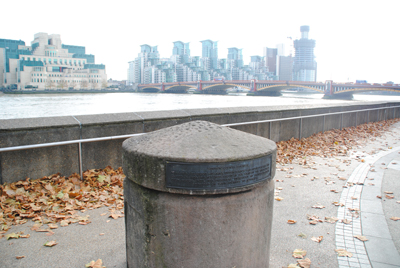
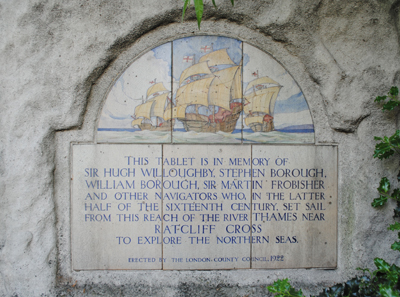
In the final of our series looking at London memorial, we head out to Shadwell in the city’s east where on the bank of the Thames, we find a memorial tablet dedicated to a group of 16th century navigators who set sail from near this point.

Located in Edward VII Memorial Park, the tablet can be found – rather oddly – on the landward side of the Wapping cupola, built to disguise a ventilation shaft and spiral staircase for the Rotherhithe road tunnel which opened in 1908 (the road is the A101). The cupola has a twin on the other side of the river in Rotherhithe.

Erected in 1922, the memorial specifically names arctic explorers Sir Hugh Willoughby, Stephen Borough, William Borough, and Sir Martin Frobisher but then goes on to state that it is also dedicated to the “other navigators who, in the latter half of the sixteenth century, set sail from this reach of the River Thames near Ratcliff Cross to explore the Northern Seas.”

Sir Hugh and his crew died while on an expedition in 1553 after becoming separated from the other ships on the expedition (Stephen Borough, master of one of the other ships, survived that expedition) while Sir Martin Frobisher made several unsuccessful attempts to find the North West passage in the late 1500s.

Ratcliffe Cross was a point on the northern bank of the river located just to the east of the park at the top of Ratcliffe Stairs and was an important navigation point for Thames watermen.

10 (more) curious London memorials…8. The SOE Memorial…

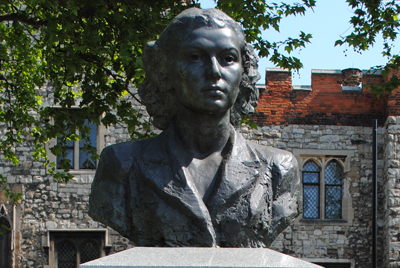
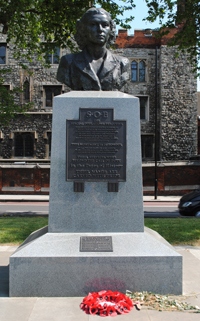
SOE-bigTucked away on Albert Embankment just to the north of Lambeth Bridge, this moving memorial was only unveiled in 2009 and formally honours the under-cover agents who worked for the Allies behind enemy lines during World War II.

The plinth is topped with a larger-than-life bust of Londoner Violette Szabo, sculpted by London artist Karen Newman. Szabo, who here gazes out across the Thames, was tortured and executed after being captured by the Germans while on a mission behind enemy lines following the D-Day landings.

SOEThe daughter of a French mother and English father, Szabo grew up in South London and, when World War II broke out in 1939, volunteered to work as an undercover operative in France as member of the British Special Operations Executive (SOE).

She had successfully completed one mission and had returned to France for a second when she was discovered and sent to a prison camp where she was unsuccessfully tortured for information.

Posthumously awarded the George Cross and the Croix de Guerre, a plaque on the memorial says she was among the 117 SOE agents who did not survive their missions to France. As many as 407 SOE agents were sent on “sabotage missions” to occupied France to fight with the French resistance.

Surprisingly, this SOE Memorial was apparently the first public memorial to honour the work of the unit. Formed on the orders of PM Sir Winston Churchill, it consisted of agents from various countries who were devoted to the Allied cause. Its feats included a raid which destroyed a factory in the Telemark region of Norway where the Germans were trying to produce heavy water which is used in the creation of atomic bombs – an operation which receives a special mention on the memorial.

The memorial was officially unveiled by the Duke of Wellington on 4th October, 2009. One of the plaques on it states that the monument “is in honour of all the courageous S.O.E. Agents: those who did survive and those who did not survive their perilous missions”. “Their services were beyond the call of duty. In the pages of history their names are carved with pride.” Enough said.

For more on the history of women serving in the SOE, see Squadron Leader Beryl E Escott’s book The Heroines of SOE: F Section: Britain’s Secret Women in France.

LondonLife – Steps to nowhere…

Endless-Stair

Inspired by Escher’s staircase, the London Design Festival’s landmark project Endless Stair has taken up residence outside the Tate Modern overlooking the River Thames. Designed by Alex de Rijke of dRMM and Dean of Architecture at the Royal College of Art (in collaboration with AHEC, ARUP, Nüssli, Imola Legno, SEAM and Lumenpulse), the 187 step stairway is constructed from a series of giant interlocking staircases shaped from American tulipwood. The stairway will be in place until 10th October. The London Design Festival, meanwhile, kicked off on Saturday and runs until 22nd September. It features more than 300 events with the V&A once again the festival’s central hub. For more – including a full programme of events –  see www.londondesignfestival.comPICTURE: Cityscape


LondonLife – Riverside idyll…

Isleworth

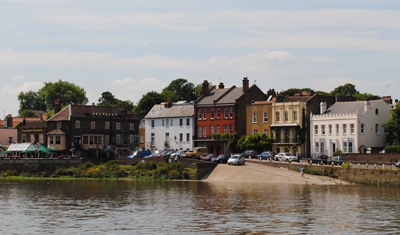
The riverside community of Old Isleworth on the bank of the River Thames in London’s west (as taken from the opposite bank). In the left of the frame is the London Apprentice pub (see our earlier story on it here). We’ll resume our special series – 10 (more) curious London memorials – next week.

London Pub Signs – Ye Olde Watling…

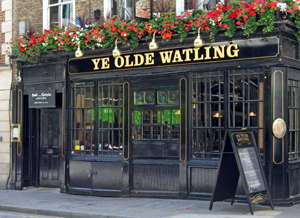
Ye-Olde-WatlingThis pub, located in the City, takes its name from the street upon which it stands – Watling Street.

The street, which is just 180 metres long, bears the same name as a great Roman road which ran all the way from Dover through London to the long gone Roman town of Viroconium (now known as Wroxeter in Shropshire).

The Roman road followed, to some extent, the route of an ancient Celtic pathway. But while the Celtic pathway crossed the Thames at Westminster, the Roman road, once the bridge was constructed, crossed at London Bridge and headed through London, apparently taking in this surviving piece.

The building itself – located on the intersection with Bow Lane – is said to have been constructed from old ship’s timbers by none other than Sir Christopher Wren in 1668. The upstairs rooms were said to have been used as a drawing office during the construction of Wren’s masterpiece, St Paul’s Cathedral. It may have also been used as  pub by the workmen building the cathedral – in fact it’s said to have been the first pub built after the Great Fire of 1666.

The pub is part of the Nicholson group. For more on it, check out www.nicholsonspubs.co.uk/yeoldewatlingwatlingstreetlondon.

PICTURE: Duncan Harris/Wikipedia