Where’s London’s oldest…underground line?

The city’s first underground line – and the first underground line in the world – was the Metropolitan Line, which opened in 1863 with the aim of helping to reduce London’s growing traffic congestion problem.

Running for three miles, the new railway, constructed by the Metropolitan Railway Company, ran for three miles under New Road, from Paddington to Farrington Street and took three years to build.

It was constructed using a technique known as “cut and cover” which involved digging a trench and building a tunnel inside before covering it back up.

Almost 40,000 passengers journeyed between Paddington and Farringdon on the day it opened, with the journey taking about 18 minutes.

The success of the new railway sparked a flurry of interest and in 1868, the first section of the District Line was opened, the same year the St John’s Wood Railway Company opened a line from Baker Street to Swiss Cottage.

Having grown substantially since it’s earliest days, today only six miles (9.7 kilometres) of the Metropolitan Line’s 41.5 miles (66.7) kilometres actually run underground.

The line now carries about 53 million passengers annually and 49 trains operate on it during peak periods.

Lost London – York Watergate

There’s several places along Victoria Embankment where it’s possible to see where the River Thames bank stood before the massive mid-19th century project to reclaim land. Not the least of them is located in the downstairs foyer to Somerset House, where looking through the glass floor, you can see the pebbles of the original riverbank.

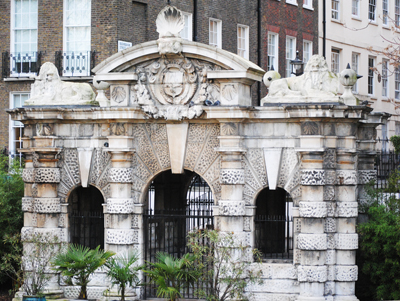
Another is York Watergate, once the river entrance to the Duke of Buckingham’s London mansion, and now stranded some distance from the water in Victoria Embankment Gardens.

The mansion, known as York House, was originally located on the southside of the Strand. Originally built in the 13th century, it was later acquired by King Henry VIII and granted to the Archbishop of York, Nicholas Heath, in 1556 (hence its name). The house became the home of George Villiers, the first Duke of Buckingham and somewhat sycophantic favorite of King James I, in the early 1620s.

When the duke was stabbed to death in 1628, the property passed to his son, the second Duke of Buckingham (also George), who later sold it to a land developer. It was apparently as a condition of the sale that the streets there now include the duke’s full name – hence George Court, Villiers Street, Duke Street, the slightly ludicrous Of Alley, and Buckingham Street.

The impressive Italianate watergate, which stands below the junction of Buckingham Street and Watergate Walk just a short walk into the gardens from Embankment tube station, was designed by the irrepressible Inigo Jones and built in 1626. Though weathered, it still bears the coat of arms of the Duke of Buckingham on the front.

Around London – New fourth plinth sculptures announced; Australian Season at British Museum; and Kenwood House shows off gardens…

• Sculptures of a child on a rocking horse and a giant blue cockerel will occupy Trafalgar Square’s fourth plinth in 2012 and 2013 respectively, it was announced late last week. The Mayor of London, Boris Johnson, described the artworks as “witty and enigmatic creations”. The first proposed first sculpture, correctly titled Powerless Structures, Fig. 101, is the creation of Elmgreen & Dragset while the second, Hahn/Cock, is that of Katharina Fritsch. The plinth is currently occupied by Yinka Shonibare’s Nelson’s Ship in a Bottle. See www.fourthplinth.co.uk.

The British Museum has announced it will be holding a series of exhibitions and events focusing on Australia later this year. Highlights of Australian Season will include Australia Landscape: Kew at the British Museum (21st April to 16th October), an exhibition of prints and drawings dating from the ‘Angry Penguin’ school of the 1940s through to the rise of Aboriginal printmaking (Out of Australia: prints and drawings from Sidney Nolan to Rover Thomas, from 26th May to 11th September), and an exhibition focusing on indigenous Australian baskets (Baskets and belong: Indigenous Australian histories, 26th May to 29th August). See www.britishmuseum.org.

On Now: Kenwood House in Hampstead is hosting a new exhibition, The Gardens of English Heritage. The exhibition, which is based on the publication of the same name, features stunning images of some of the UK’s most impressive gardens.Runs until 3rd April. For more information, see www.english-heritage.org.uk/daysout/properties/kenwood-house/

Curious London Memorials – 4. The Suffragette Memorial

Tucked away in a corner of Christchurch Gardens, opposite New Scotland Yard in Victoria Street, St James, this memorial was only erected in 1970.

Designed to resemble an uncurling scroll, the bronzed glass fibre scroll – designed by Edwin Russell – was put there by the Suffragette Fellowship (a group which was founded in 1926 to commemorate the suffrage movement of the early 20th century) and dedicated to the “courage and perseverance of all those men and women who in the long struggle for votes for women, selflessly braved derision, opposition and ostracism, many enduring physical violence and suffering”.

The monument, which is located near Caxton Hall – a now-listed building opened as the Westminster Town Hall in 1883 and “historically associated with women’s suffrage meetings”, was unveiled by former campaigner and hunger-striker Lillian Lenton.

While we’re on the subject of women’s suffrage, we should also mention the memorial to the most prominent member of the early 20th century women’s suffrage movement, Emmeline Pankhurst (1857-1928). Located not far away in Victoria Tower Gardens, right under the shadow of Victoria Tower at the southern end of the Houses of Parliament, stands a 1930 statue of the suffrage leader, who was imprisoned for her stand.

The statue is accompanied by two bronze medallions – one commemorating Mrs Pankhurst’s daughter and suffragette, Dame Christabel Pankhurst (1880-1958), and the other showing the badge of the Women’s Social Political Union (WSPU).

It’s Burns Night…

It’s Burns Night so to celebrate we thought we’d take a very quick look at some of the more Scottish-related parts of London…

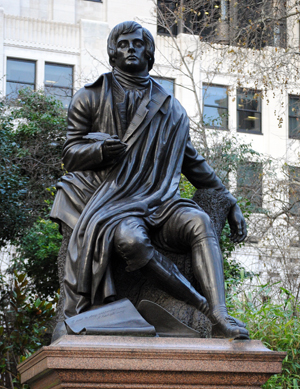
First up is the poet Robert Burns himself (picture right). A grand statue of the celebrated Scot, an 1884 bronze by John Steell, stands in Victoria Embankment Gardens.

The Scotland Office. Located in Dover House, Whitehall. The core of the building, designed by James Paine, was built in the 1750s and passed through several hands until it became the now defunct Scottish Office in 1885. It’s been home to the Scotland Office since 1999.

Crown Court Church in Covent Garden is the longest-established Church of Scotland church in England. The church’s origins go back to the early 1700s with a church on the current site since 1719. The current building dates from 1909.

St Columba’s in Knightsbridge. Another of  the eight churches within the Church of Scotland’s Presbytery of England, this church was rebuilt after the original was destroyed during the Blitz.

• Among the many places where you can celebrate Burns Night in London is the modern bar and restaurant Albannach in Trafalgar Square and, for those who prefer something more traditional, the Boisdale of Belgravia in Ecclestone Street, Belgravia (founded by the son of the 24th chief of Clanranald).

Any others you’d like to tell others about?

What’s in a name?…Isle of Dogs

Located in a great bend of the River Thames to the east of the City, the Isle of Dogs isn’t really an isle at all but a broad peninsula of land jutting out to the south of Poplar, opposite Greenwich.

Formerly known as Stepney Marsh, for centuries the area was protected by a great embankment and in the 13th and 14th centuries came to be home to a small agricultural community. After the embankment was breached, however, the area reverted to marshland and only came back into more intensive use with the opening of the West India and East India docks in the early 1800s (amalgamated in 1838) and Millwall Dock in the 1860s. The linking of these docks in the early 1900s apparently made the “isle” an island for the first time.

At the same time, the area also became noted for shipbuilding – among the vessels constructed here was Isambard Kingdom Brunel’s SS Great Eastern, the biggest ship ever built when launched in the late 1850s.

The population of the area rose thanks to the docks and by 1901 – following the development of Cubitt  Town, named for developer William Cubitt – the population had risen to 21,000. Heavily bombed in World War II, the isle saw a resurgence in the Fifties and Sixties but gradually declined in the following years as new shipping technologies made the docks obsolete. The last of the docks closed in 1980.

The area has since been redeveloped in a project initially driven by the London Docklands Development Corporation and is now in effect a city within a city, housing homes, apartments, retail precincts and office buildings – including One Canada Square, the highest tower in London, at Canary Wharf (the highest tower in London until recently surpassed by the currently-under-construction Shard in Southwark), linked to the rest of the city via the Docklands Light Railway (DLR).

But what about the name Isle of Dogs? One theory is that it was here King Henry VIII kept his hunting dogs (the earliest reference to the Isle of Dogs is apparently on a map dated 1588) while others suggest the name comes from dogs King Edward III kept there. Others have suggested the name is a corruption of ‘Isle of Ducks’, that the area is named for packs of dogs who roamed wild in the marshlands here or that it comes from the fact dead dogs washed up on banks of the Thames here. As for which is the truth? Take your pick.

Tower Hamlets, the local authority, offers a great free walk through the area which gives you a glimpse into its history. See http://bit.ly/dRzcP9.

Treasures of London – The Crown Jewels

No series on the treasures of London would be complete without a mention of the Crown Jewels, housed – except when being used – under tight security in the same place they’ve been since the early 1300s – the Tower of London.

The jewels, which are described as a ‘working collection’, include the coronation regalia and feature some 23,578 gems  – the Imperial State Crown alone boasts 2,868 diamonds, 273 pearls, 17 sapphires, 11 emeralds and five rubies.

The regalia itself is made up of the crowns of the sovereigns, consorts and Princes of Wales as well as sceptres, orbs, rings, swords, spurs, bracelets, robes, and the oldest piece, a 12th century anointing spoon.

It and three steel coronation swords are the only pieces to survive the destruction of all the pre-Civil War regalia in 1649-50, carried out at the behest of Oliver Cromwell following the execution of King Charles I (many of the earlier crown jewels, dating from the Anglo-Saxon period, had already been replaced in the early 13th century after items were lost while being taken across The Wash during the reign of King John in 1216).

Following Cromwell’s destruction, new regalia was made on the orders of King Charles II. Modelled on that of his father, it was used in the king’s coronation on 23rd April, 1661, and cost more than £12,000.

Today, St Edward’s Crown – with which the sovereign is crowned by the Archbishop of Canterbury – is the principal piece of the regalia. Other items include the Sovereign’s Sceptre, topped with 530 carat First Star of Africa – the largest flawless cut diamond in the world, Queen Victoria’s small diamond crown, and the Imperial Crown of India. There is also a crown made for Queen Elizabeth, the Queen Mother, for her 1937 coronation which features the famous Koh-i-Nur (‘Mountain of Light’) diamond.

Until 1303, the Crown Jewels had been housed at Westminster Abbey. Following a successful robbery that year, however (after which most items were recovered), they were moved to the Tower.

The most famous attempt to steal the Crown Jewels was made by an Irishman, Colonel Thomas Blood, in 1671. He and his gang had arranged to see the jewels (this could be done for a fee) but when they arrived, used a mallet to knock out the jewel keeper before stabbing him.

Colonel Blood had hidden King Charles II’s crown under his cloak, squashing its arches of in the process, while his companion Robert Perot had stuck the coronation orb down his breeches and Blood’s son was in the process of sawing the sceptre in half when the keeper’s son returned unexpectedly and raised the alarm.

Arrested, Blood got off rather lightly – King Charles II decided, apparently for some unknown reason, to pardon him. Security around the jewels, however, was tightened – iron bars were used instead of wooden ones and people were thenceforth forbidden from handling the jewels.

The Crown Jewels are now housed in the Jewel House at the Tower, built in 1967 in the west wing of the Waterloo Barracks, and guarded by the Yeomen Warders.

WHERE: Tower of London (nearest tube station Tower Hill); WHEN: 9am to 4.30pm, Tuesday to Saturday, 10am to 4.30pm Sunday to Monday (until 28th February); COST: £18.70 adults; £10.45 children under 15; £15.95 concessions; £51.70 for a family (prices, which include a voluntary donation, are valid until 28th February); WEBSITE: www.hrp.org.uk/toweroflondon/. For more on the Crown Jewels, see www.royal.gov.uk/MonarchUK/Symbols/TheCrownJewels.aspx or the Royal Collection website, http://bit.ly/i9FM3
Around London – Composer Herbert Howells honored; London Eye’s new name; and, the Natural History Museum’s new gallery…

Composer and teacher Herbert Howells has been commemorated with a blue plaque on his former home in Barnes, south west London. Known for composing “recognisably English” works, Howells is considered by man to be the last of the great English Romantic composers and is particularly remembered for this contributions to the Anglican liturgy. According to English Heritage, Howells lived at the house at 3 Beverley Close from 1946 until a few weeks before he died in 1983. For more on Howells, see www.howellstrust.org.uk.

The London Eye is to have a name change. Having started life as the Millennium Wheel (while still under construction), it was officially named the British Airways London Eye when it first opened in March 2000 and later renamed the Merlin Entertainments London Eye when the BA naming deal expired. Following a new deal, the wheel will be known as the EDF Energy London Eye from the end of this month.

On Now – The Natural History Museum’s new Images of Nature gallery opens tomorrow. The new permanent gallery showcases the museum’s collection of natural history artworks and includes works by bird illustrator, John Gerrard Keulemans, and botanical artist, Georg Ehret as well as a range of more modern-day creations such as a 3D scan of a shark’s head. The gallery also boasts a temporary annual exhibition with the first, a rotating collection of Chinese watercolors, featuring works by 19th century amateur naturalist John Reeves as well as contemporary works by the museum’s Shanghai-based artist-in-residence. Entry is free. See www.nhm.ac.uk.

Curious London Memorials – 3. Charing Cross

Another royalty-related memorial, the Charing Cross – located outside Charing Cross railway station – is actually an embellished Victorian replica of one of a series of medieval memorials the apparently heartbroken King Edward I had erected in memory of his wife, Eleanor of Castile.

The original cross, which was originally located in the south of Trafalgar Square at Charing, was one of 12 built between 1291 and 1294 to mark the nightly resting places of the Queen’s funeral procession as it made it way from Lincoln to Westminster Abbey where she was buried.

The Queen had died at Harby near Lincoln in 1290 while on her way to meet her husband in Scotland. The original monument was demolished in 1647 by Parliamentary order. A plaque on the site indicates it is the point from where all distances on road signs to London were measured.

Only three of the original 12 crosses still stand – at Waltham Cross, Northampton and Geddington – although some remnants of others can be seen. Another London cross – in Cheapside – was demolished in the mid 1600s.

The Victorian era replica outside Charing Cross station dates from 1865. It was unveiled last year following a five year restoration project.

Famous Londoners – Sherlock Holmes

The world’s most famous detective, Sherlock Holmes is one of London’s most widely known characters.

While Holmes’ early life is something of a mystery, it is known that he lived at his most famous address, 221B Baker Street, from 1881 until his retirement in the early 1900s (when he moved to Sussex and took up beekeeping). It was from there that he lived and worked along with his colleague, Dr John H. Watson (Dr Watson lived with Holmes at the address both prior to his marriage and following his wife’s death).

Baker Street is these days home to the Sherlock Holmes Museum where the rooms have been reconstructed as they would have been in Holmes’ day – including his famous study where you can sit in his chair by the fire – and filled with artefacts from his many cases (there is however some confusion over the address as the current location of 221B Baker Street is located in what was, prior to the 1930s, known as Upper Baker Street).

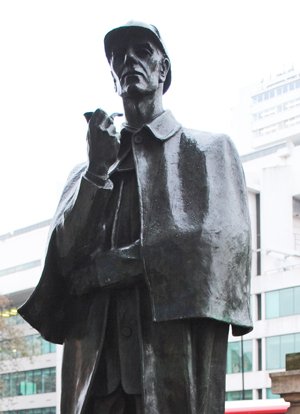
Nearby – just out the front of the Baker Street tube station – stands a statue of Holmes, commissioned by the Sherlock Holmes Society in 1999 and sculpted by John Doubleday (see picture).

Holmes has numerous associations with locations and buildings in London and while there’s far too many to mention here, there are a couple of addresses worth noting. Among them is:

• the Criterion Restaurant at 224 Piccadilly, site of Holmes’ and Watson’s first meeting on New Year’s Day, 1881 (there’s a commemorative wall plaque inside);

• the former site of Scotland Yard, headquarters of the metropolitan police, in the Westminster street now called Great Scotland Yard;

• the Sherlock Holmes pub, just off Northumberland Avenue near Craven Avenue – formerly known as the Northumberland Arms, it featured in the book The Hound of the Baskervilles and now contains a large collection of Sherlock Holmes memorabilia;

• the historic restaurant Simpson’s-in-the-Strand at 100 Strand, where Holmes and Watson dined;

• and, The Royal Opera House in Covent Garden – one of Holmes’ favorite ways to pass the time.

Holmes’ contribution to the art of detection has rippled across the globe and following the first recounting of his exploits in the 1887 book A Study in Scarlet, his deeds have provided the inspiration for countless books, films, and TV series.

LondonLife – 200th anniversary of Mexican independence marked in Westminster

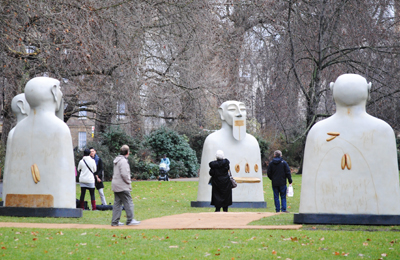
Curious onlookers examine a series of giant sculptures in Victoria Tower Gardens, next to the Houses of Parliament in Westminster. The work of Mexican artist Rivelino, ‘Nuestros Silencios’ (Our Silences), will be on display until 11th February. The 10 giant bronze busts each weigh over a ton and are being displayed in London as part of a European tour celebrating the bicentenary of Mexican independence and the centenary of the Mexican Revolution.

Around London – City’s history goes online; London’s oldest structure discovered?; and, my, how prices have changed…

• Four hundred years of London’s history is being put online as part of a new project on the City of Westminster’s website. The council is publishing a new picture depicting a different historical event from the city’s tumultuous history every day throughout 2011 under its A date with history project. The images, taken from the council’s archives, include photographs, engravings and sketchings. They include a black and white photo of queues of people waiting on Vauxhall Bridge to pay their final respects to King George V lying in state at Westminster Hall after his death on 20th January, 1936, another photograph showing the King and Queen with PM Winston Churchill inspecting damage to Buckingham Palace’s swimming pool following a raid during the Blitz in September, 1940, a hand-colored print depicting the execution of King Charles I on 30th January, 1649, and an engraving showing a comet passing by the spire of St Martin in the Field in 1744. It is the first time the images have been made freely available online. To see the images, head to www.westminster.gov.uk/archives/day-by-day.

What could be London’s oldest structure has been unearthed on the Thames foreshore. Six timber piles up to 0.3 metres in diameter have been discovered only metres from the MI6 headquarters in Vauxhall, part of what archaeologists believe is part of a prehistoric structure which stood on the river bank more than 6,000 years ago during the Mesolithic period when the river was lower. The find, made by a Thames Discovery Programme team, is only 600 metres away from a Bronze Age timber bridge or jetty dating from 1,500 BC which was discovered in 1993. The piles may be able to be seen from Vauxhall bridge during low tides between 10.25am on 22nd January and 11.15am on 23rd January.

Homes in London were purchased for an average price of £14,000 back in 1910, according to land tax valuations documents released online this week. Ancestry.co.uk has placed the London, England Land Tax Valuations 1910 – compiled as part of David Lloyd George’s 1910 Finance Act, known as the Domesday Survey – online to help people discover more about the financial situations of their ancestors. The documents put the value of the Bank of England at £110,000, the Old Bailey at £6,600, and Mansion House at a more impressive £992,000. The average value of property on Fleet Street was £25,000 (compared with £1.2 million today) while in Cannon Street, the average value was £20,000 (£2.2 million) and in Chancery Lane, the average value was just £11,000 (£1.1 million).

Curious London memorials – 2. The Albert Memorial

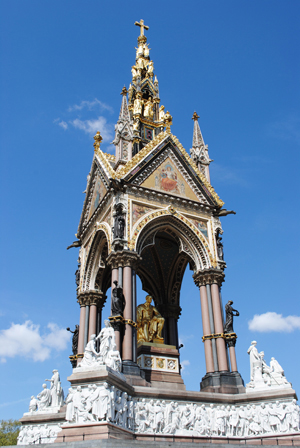
No list of London’s memorials could ever be complete without mentioning the extravagant Albert Memorial in Kensington Gardens.

Completed in 1876 at a cost of £120,000, the monument – officially known as the Prince Consort National Memorial – was commissioned by the Queen after Prince Albert died of typhoid in 1861. Queen Victoria, devastated at his loss and wanting a public memorial for Albert, invited seven leading architects to submit designs. In the end she chose the designs of Sir Gilbert Scott which featured an ornate canopy and spire standing to a height of 176 feet (54 metres) over a larger-than-life gilded bronze figure of Prince Albert sitting in regal splendour.

The resulting memorial – described “visual feast” – is an exemplar monument of the Victorian era’s Gothic Revival style. It highlights Albert’s role as a patron of the arts. Around the base of the podium is a frieze containing images of sculptors, composers, painters, architects and poets while at the four corners of the canopy are four clusters of statuetry relating to agriculture, commerce, engineering and manufacturing.

Further out, on the corners of the base, stand another four groups of statues – these relate to the continents of Europe, Asia, America and Africa. The canopy itself features mosaics and statues depicting historical figures associated with the arts as well as statues depicting the artistic and scientific disciplines, and angels and virtues.

The statue of Albert, sculpted by John Henry Foley, gazes benevolently towards Royal Albert Hall – another monument dedicated to the Prince Consort – and holds in its hand a catalogue of the Great Exhibition of 1851 (Albert was a key player in the exhibition’s organisation).

The monument, which was apparently used as a landmark by German bombers and Zeppelin pilots in World War I, underwent an extensive restoration in the 1990s which involved dismantling its entire upper half and then reassembling it.

While entry to the memorial is free, there are paid for tours available for those keen to find out more about the monument. For more information about the tours, see www.royalparks.org.uk/parks/kensington_gardens/tours/index.cfm.

WHERE: Kensington Gardens (nearest tube station is High Street Kensington or South Kensington); WHEN: Accessible when the park is open (6am to dusk) but it can be seen from Kensington Gore; COST: Entry is free (there are paid tours, see above); WEBSITE: Royal Parks has a page on its website, www.royalparks.org.uk/parks/kensington_gardens/tours/index.cfm.

Where’s London’s oldest…church?

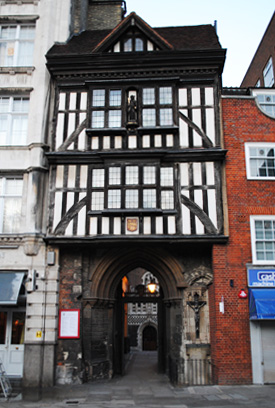
Like many of London’s oldest questions, this depends on what you mean – the oldest site of worship, the oldest continuous site of worship, or the oldest building are but a few possibilities. For our purposes, it’s generally accepted that London’s oldest surviving parish church is St Bartholomew the Great in West Smithfield.

This atmospheric church is now only half the size of what it once was but that part which remains – the original quire, altar, side aisles and lady chapel – was founded in 1123 AD as the priory church for a community of Augustinian Canons.

The church owes its origins to Rahere, a favored courtier of King Henry I, who after the death of King Henry’s wife Queen Matilda and then heir, Prince William, along with some other family members, renounced his way of life and decided to make a pilgrimage to Rome.

In Rome, he sickened, and fearful for his life, vowed to found a hospital for the poor on his return to London. Subsequently recovering, he was about to head home when a vision of St Bartholomew appeared to him and told him that he had helped him to recover and now desired him to found a church in Smithfield.

On his return to London, Rahere did just that – founding the priory with its church and a hospital for the poor. He died 1145. Amazingly, his tomb still lies within the church, on the left hand side of the altar.

The priory grew in importance with income coming not only from offerings and rents but from tolls at St Bartholomew’s Fair which was held on grounds to the north of the the church (as an interesting aside, it’s also known that the church had a low wall built in front of its western facade to separate it from Smithfield. Known as the Cheyne, this could be closed with a chain on market days to stop cattle wandering inside).

The church’s current configuration came about in the Great Dissolution – the priory was dissolved in 1539 and the nave of the church was pulled down, leaving the quire, altar and lady chapel. The church was briefly used by some Dominican friars but since the reign of Queen Elizabeth I has fulfilled the role of parish church. A concerted restoration effort began in the mid-19th century.

Livery companies associated with the church include The Butchers’ Company which still hold a special service here in September prior to electing a new Master. These days, St Bartholomew the Great is a welcome refuge from the hustle and bustle of the City and still gives a strong sense of the life it has known.

WHERE: Off Little Britain, West Smithfield (nearest tube station is Barbican); WHEN: 8.30am to 5pm Monday to Friday (until 14th February), 10.30am to 4pm Saturday, 8.30am to 8pm Sunday (except for services) ; COST: £4 an adult/£3.50 concession/£10 a family; WEBSITE: www.greatstbarts.com

PICTURE: Gatehouse leading into St Bartholomew the Great

Lost London – Nonsuch Palace

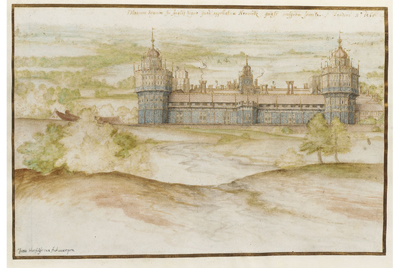
Built as a symbol of the triumphal reign of the Tudor dynasty (not to mention as a response to the French King Francis I’s palace Château de Chambord), Nonsuch Palace near Ewell in Surrey, now part of greater London, was the last palace constructed by King Henry VIII.

Construction on the palace started in 1538, the 30th year of Henry’s reign and only six months after the birth of Henry’s son and heir, later King Edward VI. The medieval village of Cuddington was demolished to make way for the new premises.

The multi-storied building was designed around an inner and an outer courtyard, each entered through a fortified gatehouse, with the royal apartments located in the latter. While plain on the outside, the inner courtyard interior was decorated with stucco reliefs depicting, among other things, Roman emperors, gods and goddesses and Henry VIII with his son Edward. To cap it off, there were two great octagonal towers built at either end.

While the bulk of of the work had been completed when Henry died in 1547, it is believed that the palace may still have been unfinished. In any case, it only remained a royal property for a short time before Queen Mary I sold it to Henry Fitzalan, the Earl of Arundel. It passed back into royal hands when the earl’s son-in-law, John Lumley, was forced to sell it back to Queen Elizabeth I to settle a debt. The queen was said to have stayed frequently at the palace.

King James I granted the palace to his wife, Queen Anne of Denmark, and it was also used by his son Henry, Prince of Wales. King Charles I also granted the palace to his wife, Queen Henrietta Maria, before it was sold off by Parliamentary commissioners after the Civil War. When King Charles II came to the throne, the palace was once again given to Henrietta Maria and then, when she died in 1669, to Barbara Villers, Countess of Castlemaine, a mistress of the king.

The building was demolished in 1682 with the materials and sale of the land used to pay off the countess’ gambling debts. While some parts of the building were carted off to be incorporated into others, no trace of the building remains above the ground but its former site, on the west side of what is now Nonsuch Park in Cheam, is marked by three granite bollards. A separate banqueting house and extensive gardens were also built near the site.

The building, which was only depicted a few works, can be confused with Nonsuch Mansion House, the oldest parts of which date from the 18th century, which still stands on the east side of the park and was probably built on the site of a former keeper’s lodge.

There are exhibitions on the palace in the Honeywood Museum (the heritage centre for the London Borough of Sutton) in Carshalton and in the Tudor house known as Whitehall in Cheam. The Epson and Ewell History Explorer website also have a trail you can follow which encompasses the former site of the palace.

PICTURE: Nonsuch Palace in an engraving by Joris Hoefnagel. Source: Wikipedia.

Around London – Dulwich celebrates 200 years, and Tube life captured on lens…

The Dulwich Picture Gallery  in south London is celebrating its bicentenary this year and to celebrate it’s holding a day of celebrations on Sunday (9th January). The gallery was founded in 1811 when art dealer Sir Francis Bourgeois bequeathed his collection of old masters for the “inspection of the public”. Interestingly, Sir Francis and his colleague Noel Desenfans had assembled the collection at the behest of the Polish King, Stanislaus Augustus, but when Poland was annexed by Russia and the king forced into exile, the two dealers were left with the goods. Sunday’s programme of events includes music, falconry displays and a family costume workshop as well as fireworks. For more information, see www.dulwichpicturegallery.org.uk.

Artist Belinda Dawley had captured life on the Underground with a series of photographs of people riding the escalators. Called, appropriately enough, Escalators, the work features portraits of travellers on 14 different escalators. To see the image, head to www.belindalawley.com.

Curious London memorials – 1. Watt’s Memorial in Postman’s Park

To kick off the year, Exploring London is taking a look at 10 of the more unusual memorials in London. First up is the Watts Memorial in Postman’s Park.

Located between St Martin’s le Grand and King Edward Street, just off London Wall next to St Botolph-without-Aldersgate, the park is actually located in what was the former churchyard of St Botolph, Aldersgate, St Leonards, Foster Lane, and the graveyard of Christchurch, Newgate Street. It was apparently named for the fact that the southern boundary once adjoined the General Post Office and its popularity with postal workers.

The G.F. Watts Memorial To Heroic Self Sacrifice was first unveiled in 1900. It had been conceived by the Victorian artist George Frederic Watts initially to mark Queen Victoria’s Jubilee in 1887 but wasn’t constructed until some time later.

The memorial features a series of ceramic ‘tablets’ embedded in the wall which record the names and deeds of those who died trying to save others. According to the memorial, “Watts believed that these ‘everyday heroes’ provided models of exemplary character and behaviour”. The memorial also quotes Watts as saying that “the material prosperity of a nation is not an abiding possession; the deeds of its people are”.

Watts, a prominent artist of the Victorian period – so much so that he was apparently once dubbed ‘Britain’s Michelangelo’, put up 13 tablets but after his death in 1904 his wife Mary added a further 34 after his death.

The plaques celebrate those who gave their own lives in rescuing people from house and factory fires, runaway trains, sinking ships and drowning. Not all were successful and while some of the plaques recall the heroic feats of police or firemen, others who died making the ultimate sacrifice were factory workers, ballet dancers, children or in the case of Alice Ayers, the daughter of a bricklayer’s labourer, who saved three children from a house fire (her story is featured in the recent film Closer).

Most of the tablets date from the late 1800s and early 1900s and until recently the most recently dated from 1931. In 2009, however, a new memorial was added – that of Leigh Pitt, a 30-year-old reprographic operator, who died on 7th June, 2007 after saving a boy from drowning in a canal at Thamesmead in the city’s south-east.

A moving tribute to those who gave all they had to save the life of others.

WHERE: Postmans Park, between King Edward Street and St Martin’s le Grand (nearest tube station is St Paul’s or Barbican); WHEN: The park, managed by the Corporation of London, is open 7am to 8pm or dusk (whichever is earlier) ; COST: Entry is free; WEBSITE: The Watts Gallery in Surrey has some information about the park on its website, www.wattsgallery.org.uk/exhib_postmanspark.html.

Let me know if you know of a curious memorial you think should be mentioned. Just leave your comment below or send an email to exploringlondon@gmail.com.

Around London – New Year’s Eve fireworks; New Year’s Day Parade; and remembering the Blitz…

A British pyrotechnic company, Kimbolton Fireworks, will be used for the first time in the creation of the Mayor of London’s fireworks display at the London Eye on New Year’s Eve. And in another first, the firework display will be accompanied by music. The mayor’s office have warned that viewing areas for the fireworks fill up early (and will be closed when full) and have suggested that families with young children may consider attending a fireworks display closer to home. For more information, including a detailed viewing area plan, see www.london.gov.uk/get-involved/festivals/newyearseve/at-fireworks.

London’s New Year’s Day parade celebrates it’s 25th anniversary when it kicks off at 11.45am on New Year’s Day. The parade route starts outside the Ritz Hotel in Piccadilly and runs down Lower Regent Street and along Pall Mall and Cockspur Street into Trafalgar Square before heading down Whitehall and into Parliament Square where it concludes at 3pm. The parade will involve some 10,000 people representing 20 different countries. More than half a million people are expected to line the route. For more information, see www.londonparade.co.uk.

Firefighters have laid wreaths at the Firefighters’ Memorial outside St Paul’s Cathedral in commemoration of the 70th anniversary of one of the worst nights of the Blitz. More than 160 people were killed on the night of 29th December, 1940, in what became known as the ‘Second Great Fire of London’. While large parts of the city were destroyed in the German attack, St Paul’s was spared a similar fate thanks to the actions of specialist firefighters assigned to the building. The night was immortalised by Daily Mail photographer Herbert Mason in what is now an iconic photograph of the Blitz showing the great dome of St Paul’s wreathed in smoke.

LondonLife – Jelly babies at Marble Arch

The giant jelly baby family, created out of resin by Italian artist Mauro Perucchetti, stand in recent snow at Marble Arch. The family, the largest of which stands 10 foot (three metres) tall, is on display as part of Westminster Council’s City of Sculpture initiative which seeks to highlight Westminster’s cultural diversity in the run-up to the Olympics.

Merry Christmas from Exploring London!