This Week in London – “Forgotten” stories from royal palaces; and, St Patrick’s Day celebrations…

A scene from the Untold Lives exhibition at Kensington Palace. PICTURE: Courtesy of Historic Royal Palaces.

• The “forgotten” stories of those who worked behind the scenes at London’s royal palaces are the subject of a new exhibition at Kensington Palace. Untold Lives: A Palace at Work shines a spotlight on those working in various roles at the palace between 1660 and 1830 – everyone from pages and cooks to wetnurses and seamstresses. Among the items on display is an apron worn by Queen Charlotte’s Wardrobe Maid, Ann Elizabeth Thielcke, a newly conserved portrait depicting a young Black attendant standing by King William III and holding his armour, and a specially commissioned photographic piece by Peter Braithwaite which reimagines figures from the Kensington Palace’s Kings Staircase. Among those whose stories are featured is the “Rat-Killer”, who wore a special rat-embroidered uniform, the Groom of the Stool, who was responsible for looking after the monarch on the toilet, and the Keeper of Ice and Snow, whose job was to cut ice so those at the palace could enjoy cold drinks and iced desserts all year round. The exhibition also explores the unexpected origins of some of those who served at the palaces, such as Abdullah, a wild cat keeper from India, and Mehmet von Könsigstreu, Keeper of the Privy Purse for King George I.. The exhibition, entry to which is included in general admission to the palace, can be seen until 27th October. For more, see https://www.hrp.org.uk/kensington-palace/.

• St Patrick’s Day is being celebrated this Sunday with the annual parade and a free, family-friendly afternoon of entertainment in Trafalgar Square. The procession, which sets off from Hyde Park Corner at noon and winds its way through the city to Whitehall, will include Irish marching bands, dance troupes and pageantry. From 1pm to 6pm, Trafalgar Square will host family concerts, children’s films and youth performances, as well community choirs, schools and dancing with Anna Haugh, International Chef of the Year 2019, running food demos alongside the main stage and children’s workshops. Entry is free. For more, see www.london.gov.uk/events/st-patricks-day-2024.

Send all items to exploringlondon@gmail.com
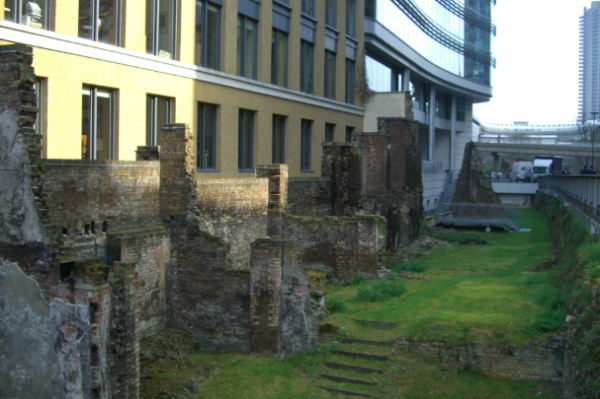
10 atmospheric ruins in London – 7. London Wall, Noble Street…

There’s many remnants of the Roman and later medieval wall which once surrounded the City of London – the towering section at Tower Hill near the Tower of London no doubt the most famous.

PICTURE: Esther Dyson (licensed under CC BY-NC 2.0)

But there are several other stretches of the stone and brick wall left which evoke a sense of the structure it once was and the defensive role it played in protecting Londoners – among them is a substantial section of the wall located in Noble Street on the city’s western side.

The 80 metre long section of Roman and later medieval remains includes two internal turrets on what was the west side of the Roman Cripplegate fort (built between 120 and 150 AD) as well as a substantial bastion located at the southern end of the site.

The highest fragment of the Roman wall can be seen opposite Oat Lane, near the southern end of the site, while the highest section of the wall – which stands some 4.5 metres high and is mostly medieval – can be seen at the northern end of the site.

As well as reflecting the City’s Roman and medieval history, this section of wall also evokes a sense of the horrors of the Blitz.

Projecting eastward on the inside of the wall are party walls from World War II bomb-damaged and later demolished homes which once fronted onto Noble Street.

WHERE: Noble Street, London (nearest Tube stations are Barbican and Bank; WHEN: Anytime; COST: Free.

LondonLife – Bamboo forest…

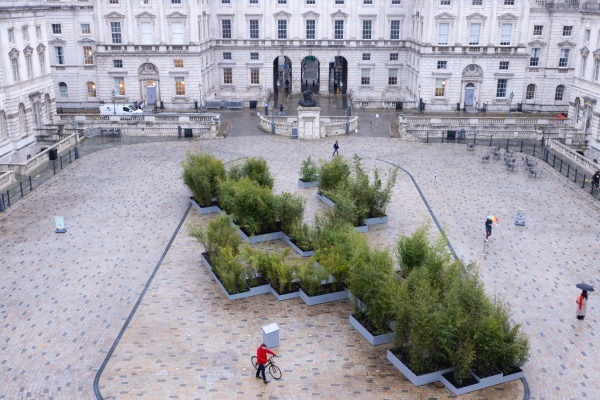
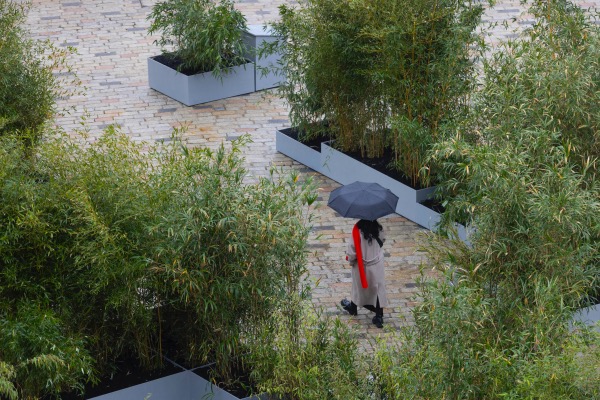
Hong Kong-based artist Zheng Bo’s new artwork, ‘Bamboo as Method’, situated in Somerset House’s courtyard. PICTURE:: David Parry/PA Wire

Located in the Edmond J Saffra courtyard at Somerset House is a forest of more than 300 bamboo plants. An art installation by Hong Kong-based artist Zheng Bo, Bamboo as Method invites visitors to take a moment out of their busy lives, immerse themselves in the garden and spend some time drawing. The installation features alcoves where visitors are encouraged to sketch some of the 10 different species of bamboo in the forest. They can also hear directly from the artist by scanning a QR code at the site. The artworks’s title pays homage to the late 15th century philosopher, Wang Yangming, who pursued enlightenment through the practice of gewu zhizhi – the acquisition of knowledge through the investigation of the nature of things. There’s an events programme accompanying the installation which is free to enter until 28th April. For more, see https://www.somersethouse.org.uk/whats-on/zheng-bo-bamboo-method.

PICTURE: David Parry/PA Wire

A Moment in London’s History – Catherine Murphy’s execution…

It’s 235 years ago this month that Catherine Murphy became the last woman in England to be executed by being burnt at the stake.

Murphy and her husband Hugh had both been convicted of “coining” (producing counterfeit coins, then seen as a matter of high treason) at the Old Bailey and sentenced to death on 18th September, 1788.

The following year – on 18th March, 1789 – they and seven other men were executed at Newgate Prison.

All eight of the men were executed by hanging but Murphy was, as the law then stipulated, made to stand on a foot high platform in front of a stake to which she was fastened.

It is believed Murphy, who was reportedly dressed in a striped gown with a black ribbon around her cap, was strangled to death before she was burned. A noose had been placed around her neck and the platform on which she was standing removed a half-an-hour before the faggots were lit about her, leaving her to hang (this had become a somewhat standard practice since the 1650s).

Execution by burning – which was increasingly attracting public opprobrium, not because of its barbarity but because of its impact on local residents offended by the smell and smoke which accompanied such a method of execution – was officially abolished the following year when the Treason Act was passed.

This was apparently on the initiative of Sir Benjamin Hammett, a former sheriff of London and now MP.

This Week in London – Underground shelters in wartime – then and now; new Ravenmaster at the Tower; and, ‘La Ghirlandata’ back at the Guildhall Art Gallery…

• A new photographic exhibition exploring how Underground stations and metro systems provide shelter to citizens during periods of war, both now and in the past, opened at the London Transport Museum in Covent Garden last week. Echoes of the Blitz: Underground shelters in Ukraine and London features 70 images, including historical pictures from the museum’s collection as well as 38 contemporary photographs shot by six renowned, mainly Ukrainian, documentary photographers. The latter include photography showing ordinary Ukrainian citizens sleeping, waiting, cooking, washing clothes, caring for their pets and creating temporary make-shift homes in metro stations of Kyiv and and Kharkiv show alongside black and white archive images of Londoners taking refuge in Tube stations during World War II. The exhibition, which is being run in partnership with Berlin-based journalistic network n-ost, can be seen until spring next year. Admission charge applies. For more, see www.ltmuseum.co.uk.

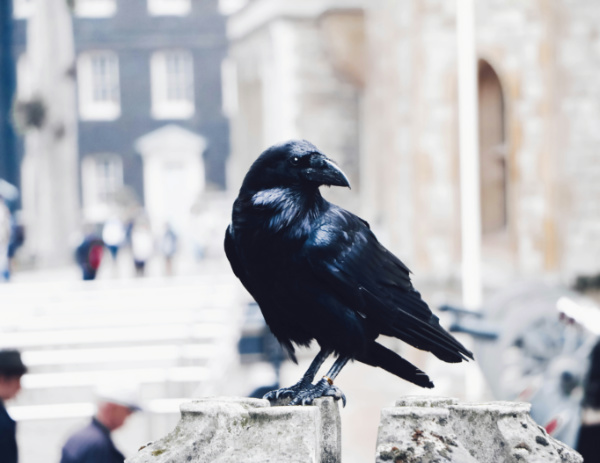
A raven at the Tower of London. PICTURE: Kasturi Roy/Unsplash

• A new Ravenmaster has been appointed at the Tower of London. Yeoman Warder Michael ‘Barney’ Chandler took up the role at the start of this month, 15 years after he first became a Yeoman Warder at the Tower. The Ravenmaster oversees a team of four responsible for the care of the Tower’s seven ravens which legend says must remain at the Tower to ensure its protection. The legend apparently goes back to at least the reign of King Charles II – when the King’s astronomer John Flamsteed complained that the resident ravens were impeding his work at the Tower and requested their removal, the King was told that if the ravens left the Tower then the Kingdom would fall (and so they remained). While the Yeoman Warders have longed cared for the ravens, the post of Ravenmaster was only created in the past 50 years and was first held by Yeoman Warder Jack Wilmington. Yeoman Warder Chandler, who became the 387th Yeoman Warder at the Tower when he was appointed in March, 2009, is only the sixth person to hold the office. For more, see www.hrp.org.uk/tower-of-london/.

• One of the most popular paintings at the Guildhall Art Gallery is being reinstalled to mark International Women’s Day on Friday. Dante Gabriel Rossetti’s La Ghirlandata has been on loan – first to the Tate Britain and then to the Delaware Art Museum in the US – but is now being returned. The painting dates from 1873 and depicts a ‘garlanded woman’ playing an arpanetta and looking directly at the viewer. The muse for the woman is said to have been the actor and model, Alexa Wilding, while the two ‘angels’ in the top corners were posed by William and Jane Morris’ youngest daughter, May Morris. The City of London Corporation acquired the oil on canvas work in 1927. On Saturday, free family activities will be held at the gallery to mark the work’s return. For more, see www.thecityofldn.com/la-ghirlandata.

Send items to exploringlondon@gmail.com.

10 atmospheric ruins in London – 6. Tudor and medieval remains at Eltham Palace…

Once a medieval royal palace, Eltham Palace in London’s east was transformed into a 1930s house which incorporates the medieval great hall.

Tudor ruins in the garden of Eltham Palace (with the home behind). PICTURE: Peter Gasston (licensed under CC BY-NC-ND 2.0)

But there are also some other remains of the former medieval palace on the site – including the footings of the palace’s west range incorporating royal apartments used in the Tudor era.

These included separate apartments for the king and queen as well as a gallery where the king could walk in inclement weather.

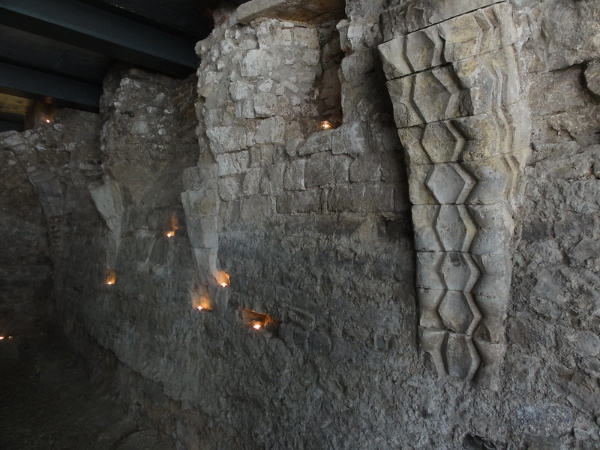
The ruins feature diamond-patterned brickwork (pictured), part of the west range which was built during the reign of Queen Elizabeth I in the 1580s.

There are also the remains of a tower of yellow brick, which possibly dates from the 14th century when, prior to the site being a royal palace, it was rebuilt as a manor house by Anthony Bek, Bishop of Durham (it was Bek who gave the manor to the future Edward II in 1305).

These days the ruins lie within the home’s magnificent gardens, recreated to show how they might hav. Alongside the remains of the west range (and the medieval great hall which dates from the reign of King Edward IV and is largely intact), are the remains of a late 15th century bridge over a medieval moat, at the south end of which are the remains of a gatehouse.

There’s also an oak pedestrian bridge, supported by medieval brick and foundations which once formed part of the main southern entrance to the palace.

WHERE: Eltham Palace, Court Yard, Eltham, Greenwich (nearest train station is Mottingham); WHEN: 10am to 4pm Wednesday to Sunday; COST (advance online tickets): £14.50 adults/£8.60 children/£12.70 concessions/£37.60 family (can include a donation/English Heritage members free); WEBSITE: www.english-heritage.org.uk/visit/places/eltham-palace-and-gardens/.

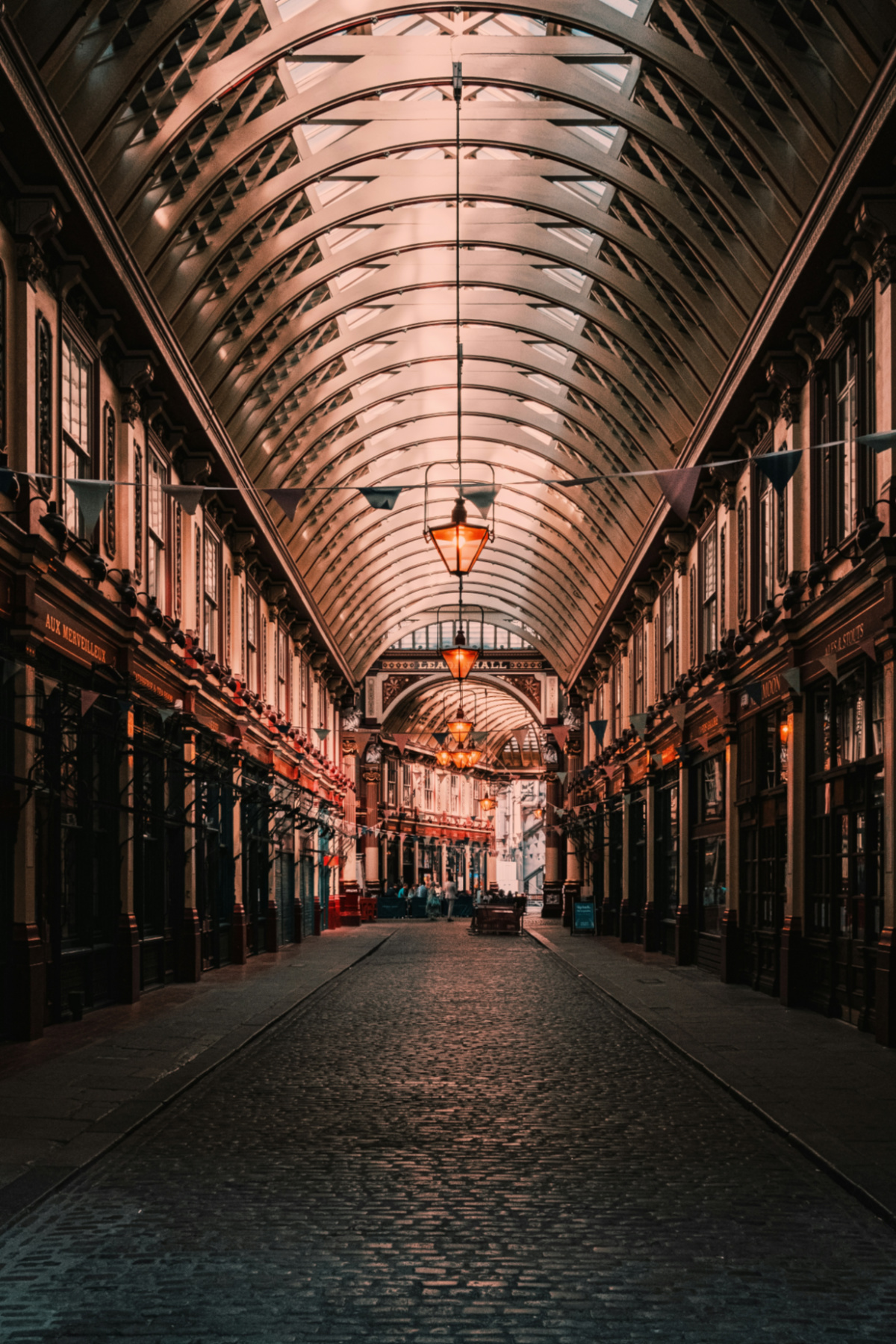
LondonLife – Leadenhall beauty…

PICTURE: Samuel Regan-Asante/Unsplash

Leadenhall Market in the City of London.

Treasures of London – Long John Silver Figurehead Collection…

PICTURE: David McDonald45 (licensed under CC BY-ND 2.0)

Said to be the largest collection of Merchant Navy ship figureheads in the world, the figurehead collection was that of Sydney Cumbers, nicknamed “Long John Silver” due to the eye-patch he wore after a childhood accident.

A successful businessman, Cumbers built up a significant collection of more than 100 figureheads – carved wooden figures which decorated the prows of sailing ships, which he and his wife – The Mate – kept along with a larger collection of maritime memorabilia at their residence in Kent nicknamed ‘The Look-Out’ (which features rooms named after parts of a ship).

In 1953, he donated the collection to the Cutty Sark a restoration of which had recently been completed so it could be opened to the public.

The figureheads, which are made from a variety of woods including oak and teak, date mostly from the 19th century. They depict a range of characters, some anonymous, and others taken from history and myth.

The latter include everyone from Sir Lancelot, the classical warrior Thermopylae and Hiawatha to Elizabeth Fry, Florence Nightingale and William Wilberforce. Others feature political figures such as Benjamin Disraeli, William Pitt and William Gladstone.

The collection is dedicated to the merchant seamen of Great Britain and the flotilla of small ships that rescued the British Expeditionary Force from Dunkirk in 1940.

WHERE: Long John Silver Figurehead Collection, Cutty Sark, King William Walk, Greenwich (nearest DLR is Cutty Sark Station); WHEN: 10am to 5pm daily (last entry 4:15pm); COST: £18 adults/£9 child (4-15)/£12 student/under 25s/Free for under fours; WEBSITE: www.rmg.co.uk/cutty-sark.

This Week in London – Women of the RNLI; ‘Tropical Modernism’ at the V&A; and, a new memorial to Sir Ernest Shackleton unveiled at Westminster Abbey…

National Maritime Museum in Greenwich. PICTURE: Keith Murray (licensed under CC BY-NC-ND 2.0)

• The role of women in the Royal National Lifeboat Institution is being celebrated in a new exhibition at the National Maritime Museum in Greenwich. Women of the RNLI, which marks the bicentenary of the organisation, features a series of 42 photographs depicting women volunteers and the lifeboat stations’ slipways where they work. The images by photographer Jack Lowe are part of his ongoing ‘Lifeboat Station Project’, an attempt to photograph all 238 operational RNLI lifeboat stations and their crews.. Lowe uses a 12×10 inch (30×25cm) Thornton-Pickard field camera from about 1905 and develops the photos using a process called ‘wet collodion’, a technique invented in the mid-19th century. The display also features oral histories from some of the sitters. The display can be seen from Saturday until 1st December. For more, see www.rmg.co.uk.

• A new exhibition exploring the architectural style of Tropical Modernism in West Africa and India opens at the V&A on Saturday. Tropical Modernism: Architecture and Independence centres on the work of British architects Jane Drew and Maxwell Fry who developed Tropical Modernism in the 1940s, working primarily in Ghana and India. The style, which valued function over ornamentation, became a symbol of a post-colonial future. The exhibition includes models, drawings, letters, photographs, and archival ephemera as it documents the key figures and moments of the Tropical Modernist movement. There is also a half hour film installation displayed on three screens. Runs until 22nd September. Admission charge applies. For more, see vam.ac.uk.

• A new memorial stone dedicated to Antarctic explorer Sir Ernest Shackleton has been unveiled at Westminster Abbey. The triangular-shaped memorial, which can be found on a wall in the south cloister, was unveiled at a service earlier this month attended by Princess Anne and members of Shackleton’s family. Located close to tributes to pioneering sailors Captain James Cook, Sir Francis Chichester and Sir Francis Drake, it was designed and made by sculptor Will Davies and its shape reflects Shackleton’s preference to be at the apex of a triangle in group photographs. The memorial incorporates stones including Connemara marble and Kilkenny limestone in reflection of Shackleton’s Irish heritage, and the names of his expedition ships, Nimrod and Endurance, are inscribed upon it, along with the lifeboat The James Caird, and his family motto, ‘FORTITUDINE VINCIMUS’ (‘By Endurance We Conquer’). For more, see www.westminster-abbey.org.

Send all items to exploringlondon@gmail.com.

10 atmospheric ruins in London – 5. All Hallows Staining…

Located in at the junction of Mark Lane and Dunster Court in the City of London, All Hallows Staining was a medieval church which was mostly demolished in the late 19th century.

All Hallows Staining church tower as seen in July, 2022. PICTURE: Courtesy of Google Maps

These days only the lonely tower remains (above ground at least) as testament to building that once stood there and the lives that were impacted by it.

All Hallows Staining was originally built in the late 12th century and while the origins of its name are somewhat shrouded in mystery, there are a couple of theories.

One says it takes its name from the fact it was built in stone when other churches at the time were wooden (“staining” meaning “stone”) while another says it takes it names from the fact it was built on land belonging to the Manor of Staines.

Princess Elizabeth (later Elizabeth I) is said to have presented the church with new bell ropes after she was released after two months in the Tower of London in 1554 during the reign of her half-sister Queen Mary I (paying tribute to the sound they provided while she was in the Tower).

The church survived the Great Fire of London in 1666 but collapsed just five years later, its foundations apparently weakened by too many graves in the adjoining churchyard.

It was rebuilt in 1674-75 but largely demolished in 1870 when the parish was combined with St Olave Hart Street (and the proceeds were used to fund construction of All Hallows, Bow, in the East End).

Just the tower, parts of which date from the 12th century, remained. The property was bought by the Worshipful Company of Clothworkers. Underneath the adjacent yard they installed the remains of the 12th century crypt of the hermitage chapel of St James in the Wall (later known as Lambe’s Chapel) following the demolition of the chapel in the 1870s.

During World War II, when St Olave Hart Street was badly damaged in the Blitz, a temporary prefabricated church was erected on the site of All Hallows Staining which used the tower as its chancel. It was known as St Olave Mark Lane.

The church was Grade I listed in 1950. In 1957, Clothworkers had a hall for St Olave Hart Street constructed on part of the site of the former church.

The tower is usually able to be seen across a small yard from Mark Lane.

LondonLife – Westminster traffic…

PICTURE: Sam Quek/Unsplash

London Explained – The Common Cryer and Sergeant-at-Arms…

One of three ceremonial officers appointed by the City of London’s Court of Aldermen, the office of Common Cryer and Sergeant-at-Arms, commonly known as the “Macebearer”, is believed to the oldest of them, established well before 1338.

The Macebearer (right) with the Swordbearer emerging from the Royal Courts of Justice in 2011. PICTURE:  Rodolph at English Wikipedia (licensed under CC BY SA 3.0)

The Common Cryer and Sergeant-at-Arms has the role of carrying the Great Mace of Government ahead of the Lord Mayor of London.

The post was originally held by one of the King’s Sergeant-at-Arms. In 1419, the title held by the mace bearer was referred to as the “Common Serjeant-at-Arms of the City”, otherwise known as the “Common Cryer”.

Records show he had a salary of 60 shillings a year, robes, fees from the alderman and sheriffs and a “sufficient horse” for the honour of the City.

By 1559 the current title was in use.

As well as bearing the ceremonial mace before the Lord Mayor, the Macebearer also opens proceedings at Common Hall, the electoral assembly at Guildhall, with the cry “Oyez, Oyez, Oyez”. The Macebearer also proclaims the orders at the monarch and Privy Council at appointed places within the City.

Along with the City Marshall and the Sword-Bearer, the Common Cryer and Sergeant-at-Arms is one of three Esquires based at Mansion House, the official residence of the Lord Mayor of London.

They run the Lord Mayor’s official residence and office, and accompany him on official occasions. They are usually senior military officers with diplomatic experience.

Major Peter Oweh was appointed to the post of Common Cryer and Sergeant-at-Arms in December, 2022.

This Week in London – John Singer Sargent at the Tate; vote for the Fourth Plinth occupants; and the Black figure celebrated in contemporary art at the National Portrait Gallery…

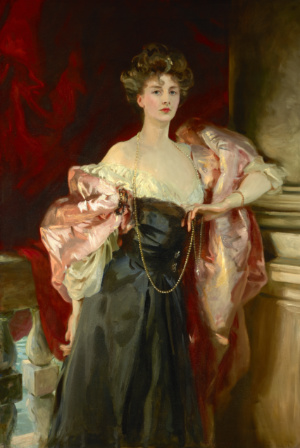
John Singer Sargent, Lady Helen Vincent, Viscountess d’Abernon, 1904 Birrmingham Museum of Art. Photo Sean Pathasema

• The work of portrait painter John Singer Sargent (1856-1925) is the subject of a new exhibition opening at Tate Britain today. Sargent and Fashion features some 60 paintings as well as a dozen period dresses and accessories with many of the former worn by his sitters and several reunited for the first time with the portraits in which they are shown. Highlights include Lady Helen Vincent, Viscountess d’ Abernon (1904), Mrs. Charles E. Inches (Louise Pomeroy) (1887), which will be juxtaposed with the red velvet evening dress illustrated, and, Charles Stewart, sixth Marquess of Londonderry at the Coronation of Edward VII (1904) which will be reunited with the regalia worn by the marquess. Also on show is Sargent’s iconic painting of socialite Virginie Amélie Gautreau, Madame X (1883-4), which caused a stir by depicting Mme Gautreau with one diamond strap falling from her shoulder, Mrs Montgomery Sears (1899) which is being shown alongside Mrs Sears’ own dresses and her photographs of Sargent at work, and his dramatic image, Ellen Terry as Lady Macbeth 1889 which is being shown alongside Terry’s dress and cloak. Runs until 7th July. Admission charge applies. For more, see www.tate.org.uk/whats-on/tate-britain/sargent-and-fashion.

• The public are being asked to vote on a shortlist of seven sculptural works to determine which of them will occupy Trafalgar Square’s Fourth Plinth in 2026 and 2028. The works include Ruth Ewan’s Believe in Discontent depicting a black cat, Chila Kumari Singh Burman’s The Smile You Send Returns to You featuring a colourful bus with a tiger atop it and Veronica Ryan’s Sweet Potatoes and Yams are Not the Same which features a sweet potato “island” with growing vine leaf sprouting out of it. Models of the short-listed works can be seen at The National Gallery (Room 1, entry is free) until 1st March. To vote, head to https://www.london.gov.uk/programmes-strategies/arts-and-culture/current-culture-projects/fourth-plinth-trafalgar-square/fourth-plinth-commissions

• A major exhibition exploring the Black figure opens at the National Portrait Gallery today. The Time is Always Now: Artists Reframe the Black Figure features 55 contemporary works, including sculpture, paintings and drawings, by some 22 African artists working in the US and UK. The works include Amy Sherald’s life-size greyscale portraits of African Americans, American figurative artist Nathaniel Mary Quinn’s fragmented portraits, Thomas J Price’s life-sized fictional female figure, As Sounds Turn to Noise (2023), Noah Davis’ depiction of Greenwood, Oklahoma, known as Black Wall Street (2008), Kimathi Donkor’s history painting Nanny of the Maroons’ Firth Act of Mercy (2012) and Lubaina Himid’s work Le Rodeur: The Exchange (2016) which responds to a case of blindness that affected a French slave ship in 1819. The display is curated by writer Ekow Eshun, former director of the Institute of Contemporary Arts. Runs until 19th May. Admission charge applies. For more. see www.npg.org.uk.

Send all items to exploringlondon@gmail.com
10 atmospheric ruins in London – 4. Spitalfields Charnel House…

Located under glass beneath a modern square just to the north-east of the line of the City of London’s walls are the ruins of a medieval building which once held human bones.

Charnel House detail. PICTURE: Ben Rimmer (licensed under CC BY-NC-ND 2.0)

Built on what had originally been a Roman burial ground, the medieval hospital known as St Mary Spital was constructed towards the end of the 12th century and a graveyard was located on the site for the burial of those who died there.

A small chapel was built on the site in about 1320, the crypt of which became a charnel house housing the bones of those remains disturbed when

The hospital, which had been run by Austin canons, was dissolved by King Henry VIII in 1539 and most of the bones removed. The crypt was later used as a house which was demolished around 1700 and later lost between the gardens of terraced houses.

The remains of the charnel house was discovered in the late 1990s during excavation works – complete with some 10,000 skeletons – and now lies under a glass floor in Bishop’s Square just to the west of Spitalfields Market (it can also be seen through a glass window in the basement level accessed via stairs in the square).

PICTURE: Matt Brown (licensed under CC BY 2.0)

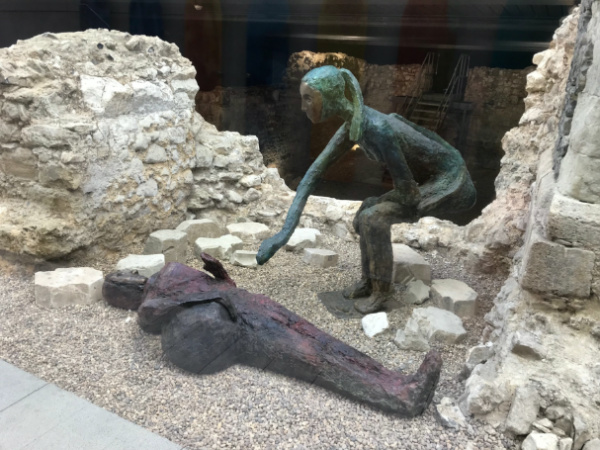
Two statues can be seen inside the ruins – a greenish figure crouching over a prone purple-red figure. Installed in 2014, they are the work of David Teager-Portman and are called Choosing the Losing Side and The Last Explorer.

Spitalfields Chapel and Charnel House, Bishops Square, London, Spitalfields (nearest Tube station is Liverpool Street; nearest Overground is Liverpool Street and Shoreditch High Street).

LondonLife – New Overground lines named to reflect London’s history…

Each of London’s six Overground lines are for the first time being given a new name and colour by which they can be identified.

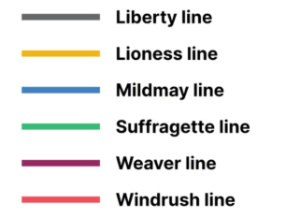
The Overground lines. GRAPHIC: Wiesenpinguin/Wikipedia (detail only)/Public Domain

The new names and colours – which include the Lioness line (yellow), Mildmay line (blue), Windrush line (red), Weaver line (maroon), Suffragette line (green) and Liberty line (Grey) – were chosen through engagement with customers, stakeholders, historians, industry experts and local communities, according to Transport for London.

Mayor of London, Sadiq Khan, described the move as a “hugely exciting moment, transforming how we think about London’s transport network”. 

“Giving each of the Overground lines distinct colours and identities will make it simpler and easier for passengers to get around. In re-imagining London’s tube map, we are also honouring and celebrating different parts of London’s unique local history and culture. 

Each of the new lines’ names reflects an aspect of the city’s culture and history. The Lioness line, which runs from Euston to Watford Junction through Wembly, honours the achievements and legacy of England women’s football team while the the Mildmay line, which runs from Stratford to Richmond/Clapham Junction through Dalston, honours a small charitable hospital in Shoreditch that played a pivotal role in the HIV/AIDS crisis in the 1980s and Windrush Line, which runs from Highbury & Islington to Clapham Junction/New Cross/Crystal Palace/West Croydon, honours the Windrush generation and runs through areas with strong ties to Caribbean communities today, such as Dalston Junction, Peckham Rye and West Croydon.

Meanwhile the The Weaver line, which runs from Liverpool Street to Cheshunt/Enfield Town/Chingford, runs through areasknown for their textile trade such as Liverpool Street, Spitalfields, Bethnal Green and Hackney, the Suffragette line, which runs from Gospel Oak to Barking Riverside, celebrates how the working-class movement in the East End fought for votes for woman and paved the way for women’s rights and ends at Barking, home of the longest surviving Suffragette Annie Huggett, who died at 103. The Liberty Line, which runs from Romford to Upminster, celebrates the freedom described as a “defining feature of London” and references the historical independence of the people of Havering, through which it runs.

For more on the new names and colours, see https://tfl.gov.uk/modes/london-overground/overground-line-naming?cid=naming-overground.

What’s in a name?…Basinghall Street…

Looking north up Basinghall Street from Gresham Street. The buildings on the left are part of the Guildhall complex. PICTURE: Google Maps

This City of London street, which sits on the eastern side of the Guildhall complex, is named for the wealthy Basing (or Bassing) family who had a hall here in the 13th century.

The street, which links Gresham Street in the south to Basinghall Avenue in the north, has been the site of numerous prominent buildings including the medieval hall of the Weaver’s Company (demolished in 1856, having replaced an earlier hall which burnt down in the Great Fire of London in 1666, the hall is now located in Gutter Lane), the Cooper’s Company (demolished in 1867, the hall is now located in Devonshire Square) and the Girdler’s Company (destroyed in the Blitz in 1940; the hall is now located in Basinghall Avenue).

It was also the location of the Sir Christopher Wren-designed Church of St Michael Bassishaw until 1899 after it was seriously damaged when the crypt was being cleared of human remains in line with the orders of City authorities. The parish with united with St Lawrence Jewry.

Famous denizens included the goldsmith, banker and civil engineer Sir Hugh Myddelton, most renowned for his design of the New River scheme to bring clean water to the City, who, according to The London Encyclopaedia, would sit in the doorway of his office and smoke his pipe while chatting with the likes of Sir Walter Raleigh.

The family also gave their name to the City of London’s Bassishaw Ward.

This Week in London – Billingsgate Market history explored; new landscapes at Dulwich; and, recovered gems on show…

• The history of Billingsgate Market in the City of London is being explored in am exhibition at the City of London Heritage Gallery. Billingsgate Market at the Heritage Gallery features items including the Liber Horn, a compilation of charters, statutes, and customs made by Andrew Horn, chamberlain of the City of London from 1320-1328, in 1311 which is illustrated by small images of fish showing their importance to Londoners, a late 17th century petition by the fishermen protesting the landing of vessels loaded with salt and oranges, 19th century volumes recording the collection of tolls and detailing the licensing of porters, and 20th century photographs of the market at work. Free to view, the display, located in the Guildhall Art Gallery, can be seen until 16th May. For more, see www.thecityofldn.com/billingsgateexhibition

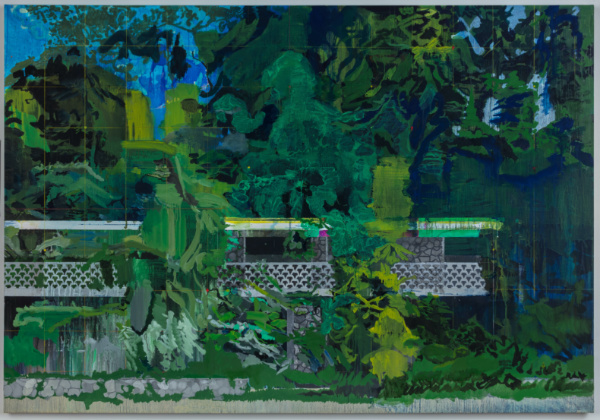
Hurvin Anderson, ‘Limestone Wall’ (2020) © Hurvin Anderson. Courtesy the artist and Thomas Dane Gallery. Photo: Richard Ivey

• A major new exhibition featuring new interpretations of landscape art has opened at the Dulwich Picture Gallery. Soulscapes features more than 30 contemporary works spanning painting, photography, film, tapestry and collage by artists such as Hurvin Anderson, Phoebe Boswell, Njideka Akunyili Crosby, Kimathi Donkor, Isaac Julien, Marcia Michael, Mónica de Miranda and Alberta Whittle. Highlights include Anderson’s Limestone Wall (2020), Akunyili’s Cassava Garden (2015) and Donkor’s Idyl series (2016-2020). Runs until 2nd June. Admission charge applies. For more, see www.dulwichpicturegallery.org.uk.

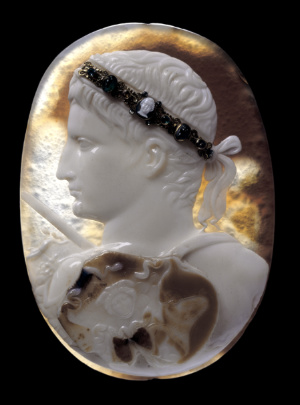
Blacas cameo depicting Augustus – Roman, AD 14–20 1867

• A selection of gems recovered after news that around 2,000 objects from the British Museum’s collections were missing, stolen or damaged go on show at the museum from today. Rediscovering gems explores the significance of classical gems – used as seals, worn as jewellery or collected as objects of beauty in the ancient world – and the impression they have left throughout history. The gems are displayed in a typical 18th century gem cabinet, along with a collector’s equipment, in reflection of the huge interest in classical gems during the period. The display can be seen in Room 3 until 15th June. Admission is free. For more, see britishmuseum.org/exhibitions/rediscovering-gems.

Send all items to exploringlondon@gmail.com
10 atmospheric ruins in London – 3. Scadbury Manor…

The manor ruins in Scadbury Park. PICTURE: Ethan Doyle White (licensed under CC BY-SA 4.0)

Located in what is now today known as Scadbury Park in Chislehurst in London’s south-east, Scadbury Manor originally dated from at least the 13th century.

Originally the home of the de Scathbury family, it was purchased by London merchant  Thomas Walsingham in 1424.

It was passed down through the family which had some rather famous members including Sir Francis Walsingham, who was principal secretary to Queen Elizabeth I (who it has been suggested visited the property), and another Thomas Walsingham who in the late 16th century was an MP and the patron of Sir Christopher Marlowe (he is known to have visited the estate just before his death in 1593).

In the 1730s, the moated manor passed into the hands of the Townshend family (the son of the Thomas Townshend who first inherited the property was also named Thomas and become 1st Viscount Sydney and is the person after whom the city of Sydney, Australia, was named).

The old manor house was demolished after passing to the Townshend in 1738, possibly due to falling into disrepair. It’s believed there may have had plans to rebuild but the site was left a ruin and the family moved into nearby Frognal House.

The estate passed through the family to Robert Marsham-Townshend, who in 1914 moved back to Scadbury from Frognal, taking over the farm bailiff’s house and extending it into a substantial family home. He also carried out excavations and repairs on the original manor.

During World War II – on 28th March, 1945 – the last V-1 flying bomb to cause damage landed on the Scadbury farmyard and demolished the medieval barn and surrounding buildings. The country house itself was eventually destroyed in a fire in 1976.

The estate – now 300 acres – was purchased by the London Borough of Bromley in 1983 and opened to the public as a nature reserve.

Some remains of the original manor are still present including the foundations of a brick detached kitchen, with the bases of two ovens, cellars and an undercroft. There are also the remains of a reconstructed manor house Hugh Marsham-Townshend built on the site of the original manor in the early 20th century using medieval timbers from nearby manor house.

The site of the manor house is not normally open to the public but can be seen from a nearby public footpath as well as on open days run by the Orpington and District Archaeological Society (ODAS).

Where: Scadbury Park, Old Perry Street, Chislehurst; WHEN: Opens at 7:30am on weekdays, 9am on weekends; closing times vary depending on the month; COST: Free; WEBSITE: https://www.scadbury-park.org.uk

Where’s London’s oldest…roundabout?

PICTURE: Matt Brown (licensed under CC BY 2.0)

London’s oldest roundabout is said to be located in Southwark at the intersection of Borough, Westminster Bridge, Waterloo, London and Blackfriars Roads.

St George’s Circus was built in 1771 (during the reign of King George III) and designed by Robert Mylne as a grand southern entrance to London with radiating roads leading to three bridges over the Thames: London Bridge, Westminster Bridge and Blackfriars Bridge.

Mylne also designed the obelisk which still stands in the centre of the circus. As well as showing the date on which it was erected, the obelisk also records distances to Palace Yard in Westminster, Fleet Street, and London Bridge. Gas lamps were placed at each corner to illuminate the intersection.

The now Grade II*-listed obelisk has a rather interesting history in itself. Having stood at the roundabout for more than a century, in about 1897 it was relocated to Geraldine Mary Harmsworth Park outside the Imperial War Museum on Lambeth Road to make way for a clocktower designed to mark Queen Victoria’s Diamond Jubilee.

The clocktower itself, however, was removed in the 1930s to help with traffic flow. It wasn’t until 1998 that the obelisk was moved back to its original site (now minus the oil lamps).

Interestingly, an Act of Parliament passed in 1812 specifies that all buildings on the intersection must be located 240 feet from the obelisk (the reason, apparently, for curved facades on some of the surrounding buildings).

This Week in London – Notre Dame de Paris celebrated at the Abbey; remembering “great escapes” of World War II; and, ‘Wildlife Photographer of the Year’…

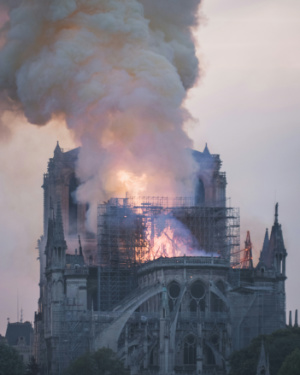
Notre Dame de Paris on fire in 2019. PICTURE: Nivenn Lanos/Unsplash

• An immersive exhibition on the cathedral of Notre Dame de Paris, currently being restored following a devastating 2019 fire, opened at Westminster Abbey this week. Notre Dame de Paris, The Augmented Exhibition tells the story of the Gothic masterpiece from the 12th century to today and features a digital recreation of the cathedral by digital heritage specialists, Histovery, in collaboration with Rebuilding Notre-Dame de Paris. The exhibition is being held in the 13th century chapter house of the abbey with visitors, thanks to digital technology, able to witness firsthand the lavish wedding of King Henri IV, the coronation of Napoleon Bonaparte, and the 19th century construction of Notre-Dame’s iconic spire of Viollet-le-Duc. Runs until 1st June. Admission charge applies. For more, head here. The exhibition is part of a season of events at the abbey celebrating the bonds between the UK and France.

• An new exhibition focused on the hundreds of thousands of people held captive during World War II has opened at the National Archives in Kew. Great Escapes: Remarkable Second World War Captives, tells the story of famous escape attempts such as the escape from Stalag Luft III known as “the Great Escape” (made famous in the film of the same name) and British officer Airey Neave’s escape from Colditz Castle dressed as a German soldiers well as stories of individuals seeking escape through art, music and finding love while being held. The exhibition is divided into three parts. The first explores the legal framework for the 1929 Geneva Convention governing prisoners and tells the story of MI9, a highly secret British Government agency established in 1939 to help military personnel evade and escape capture. Part two explores the stories from individual prisoners and internees under British, German, and Japanese authority during World War II while part three examines how prisoners were dealt with at the end of the war as well as how the experience of the conflict led to the Geneva Convention being rewritten in 1949. Runs until 21st July. Admission is free. For more, see www.nationalarchives.gov.uk/great-escapes/.

‘Ice Bed’ ©Nima Sarikhani, Wildlife Photographer of the Year People’s Choice Award winner.

• An image of a young polar bear drifting to sleep on a bed carved into an iceberg has won the Wildlife Photographer of the Year People’s Choice Award. Nima Sarikhani’s Ice Bed, and the four finalist ‘Highly Commended’ images were selected from a shortlist of 25 images chosen by the Natural History Museum and an international judging panel from almost 50,000 images entered in the 59th Wildlife Photographer of the Year competition. The other finalists include Tzahi Finkelstein’s The Happy Turtle – a meeting between Balkan pond turtle and a northern banded groundling dragonfly, Daniel Dencescu’s Starling Murmuration - which captured the moment a starling murmuration formed the shape of a bird, Mark Boyd’s Shared Parenting in which two lionesses groom a cub in Kenya’s Maasai Mara, and, Audun Rikardsen’s Aurora Jellies which shows two moon jellyfish illuminated by the aurora borealis in a fjord in Norway. The five images can be seen both online and in the accompanying exhibition at the Natural History Museum until 30th June. Admission charge applies. For more, see www.nhm.ac.uk/wpy/peoples-choice.

Send all items to exploringlondon@gmail.com.