Lost London – Church of St Stephen Coleman Street…

Among the buildings destroyed in the Blitz, St Stephen Coleman Street was one of the more than 50 City of London churches designed by the office of Sir Christopher Wren in the wake of the Great Fire of London of 1666.

The church was located on the corner of Coleman and Gresham Streets and replaced an earlier medieval building, the origins of which date back to at least the 13th century (the earliest mention occurs during the reign of King John) and which had also been known as St Stephen in the Jewry due to the number of Jewish people living in the vicinity.
St Stephen’s had apparently become a Puritan stronghold by the early 17th century when the vicars included John Davenport, who later went on to found a colony in Connecticut.

Five members of Parliament whom King Charles I attempted to arrest on 4th January, 1642, hid here as his troops searched for them. During the Commonwealth, the church instituted rules under which only those who were approved by a committee including the vicar and 13 parishioners – two of whom had apparently signed King Charles I’s death warrant, could receive Communion.

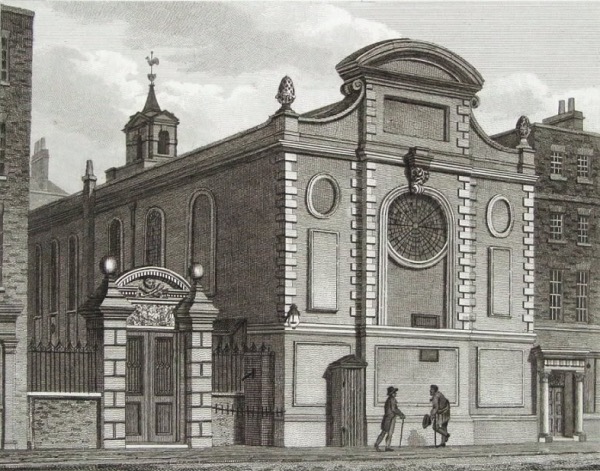
Following its destruction in the Great Fire of 1666, the church was rebuilt its former foundations – the new building incorporating some of the ruins of the former and featuring a bell lantern with a gilded weathervane on top – and was largely completed by 1677. In the early 1690s, additional funds gained through a coal tax provided for the construction of a burial vault and a gallery.

Notable vicars after the rebuild included Rev Josiah Pratt (1768-1844) who served for 21 years as secretary of the Church Missionary Society.

While the church suffered some minor damage during an air-raid in World War I, it was repaired. But it was finally destroyed during an air raid on 29th December, 1940, after which the church was not rebuilt but its parish joined with that of St Margaret Lothbury.

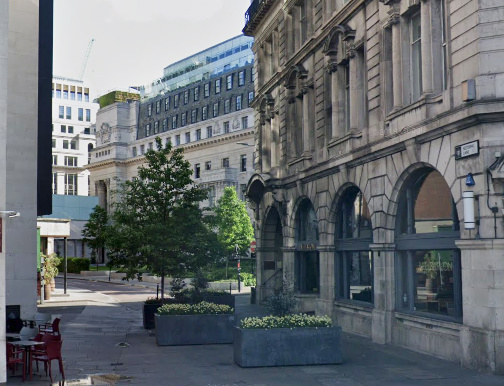
A City of London Corporation plaque at the intersection of Coleman Street and Kings Arms Yard marks the site of the former church.

PICTURE: An etching of St Stephen’s Coleman Street published in 1819.
This Week in London – VJ Day remembered; Steve McQueen; and, Windsor gardens…

• The National Army Museum in Chelsea is joining with the Royal Air Force Museum, the National Museum of the Royal Navy and the Commonwealth War Graves Commission to mark the 75th anniversary of VJ (Victory over Japan) Day, this Saturday, 15th August, with a series of free events including online talks. Among those taking part are World War II veteran Captain Sir Tom Moore, recently knighted by the Queen for his efforts in helping raise funds for the NHS during the coronavirus pandemic, author and explorer Levison Wood (who explores the story of his grandfather’s service in Burma), and Professor Tarak Barkawi, author of Soldiers of Empire: Indian and British Armies in World War II, as well as General Lord Richards, Grand President of the Royal Commonwealth Ex-Services League who’s involved in a conversation about the contribution of Commonwealth soldiers during the Far East campaign. For the full programme of events, head to www.nam.ac.uk/series/vj-day-75.

Steve McQueen is back at Tate Modern. The exhibition, which reopened last Friday following the reopening of all Tate galleries, spans 20 years of McQueen’s work and features 14 major pieces spanning film, photography and sculpture. The exhibition adds to the three visitor routes already in place at the Tate Modern and coincides with McQueen’s latest artwork Year 3, an epic portrait of London’s Year 3 pupils created through a partnership between Tate, Artangel and A New Direction which can be seen at Tate Britain until 31st January. Visitors must prebook. For more, head to tate.org.uk/visit.

Beyond London (a new regular feature in which we include sites around Greater London)
• The East Terrace Garden at Windsor Castle – commissioned by King George IV in the 1820s – has opened to weekend visitors for the first time in decades. Overlooked by the castle’s famous east facade, the formal garden features clipped domes of yew and beds of 3,500 rose bushes planted in a geometric pattern around a central fountain. It was originally designed by architect Sir Jeffry Wyatville between 1824 and 1826 on the site of an old bowling green made for Charles II in the 1670s. Plants, including 34 orange trees sent by the French King Charles X, were specially imported for the garden and statues were brought from the Privy Gardens at Hampton Court, including a set of four bronze figures by Hubert Le Sueur which  were made for Charles I in the 1630s and which remain in the garden today. Prince Albert is known to have taken a particular interest in the garden and the Queen, then Princess Elizabeth, and her sister Princess Margaret grew vegetables there during World War II. As well as the opening of the East Terrace Garden on weekends, visitors with young children on Thursdays and Fridays in August are being given special access to the Castle’s Moat Garden beneath the iconic Round Tower, thought to have dated from the period of King Edward III and believed to be the setting for Geoffrey Chaucer’s The Knight’s Tale, the first story in Canterbury Tales. Pre-bookings essential. For more, see www.rct.uk.

Send all items for inclusion to exploringlondon@gmail.com.

10 disease-related memorials in London…8. Former site of the Hospital for Tropical Diseases…

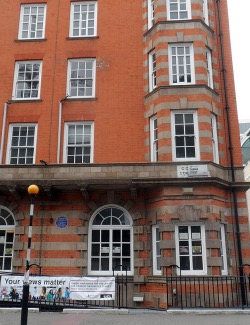
A blue plaque on a building in Euston marks one of the former sites of the  Hospital for Tropical Diseases – a short-lived episode in the life of a hospital which started life aboard a ship on the Thames.

The hospital, the idea for which originated with the Seamen’s Hospital Society and was funded by public subscription, was founded in 1821 aboard the former naval ship, the HMS Grampus for the relief of ill seamen with none less than King George IV himself as patron.

It was moved aboard the HMS Dreadnought in 1831 and then to the HMS Caledonia, renamed the Dreadnought, in 1857, before finally moving into a section of the Royal Greenwich Hospital in 1870 which in turn became known as the Dreadnought Hospital.

In 1919 the hospital moved to the Endsleigh Palace Hotel at the corner of Endsleigh Gardens and Gordon Street in Euston which was at the time being used as a hospital by the Red Cross. There it was joined by the School of Tropical Medicine which had been founded at the Albert Dock Seamen’s Hospital in 1899 (although this merged with the School of Hygiene in the 1920s and moved out).

It only remained there, however, until the start of World War II when it was temporarily relocated back at the Dreadnought Hospital where it remained for the war’s duration.

After the war – with the hotel damaged during then Blitz, the hospital relocated to 23 Devonshire Street in Marylebone before, in 1951 it became part of the National Health Service and moved into the then vacant St Pancras Hospital as part of the University College of London Hospital group.

It remained located there until 1998 when it moved to new purpose-built premises in Capper Street in Bloomsbury and then in 2004 made the move to its current location in the University College Hospital Tower in Euston Road. The hospital remains the only dedicated institution of its kind within the NHS.

The plaque on the Gordon Street property (the blue dot seen in the image above) was erected by the Seamen’s Hospital Society.

PICTURE: Right – Spudgun67 (licensed under CC BY-SA 4.0/image cropped)

LondonLife – Concept designs for proposed Smithfield redevelopment revealed…

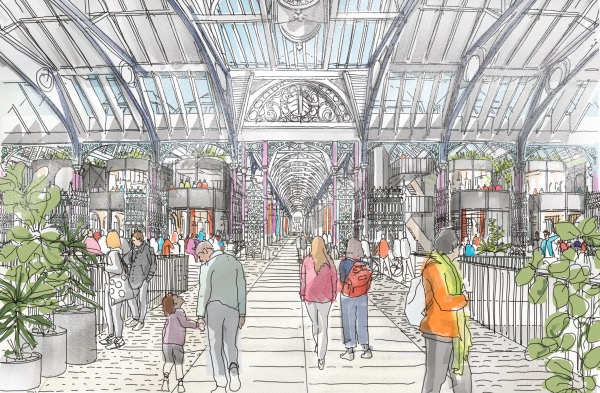
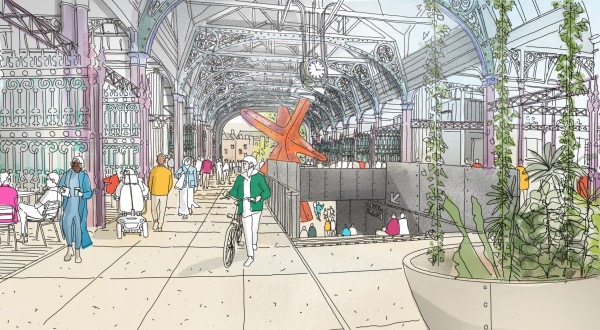
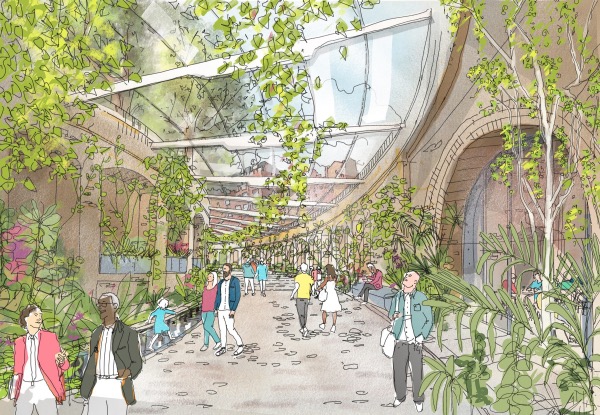
The City of London Corporation has unveiled early ideas for the redevelopment of the Smithfield Market following the proposed relocation of the meat market to Dagenham Dock along with Billingsgate and New Spitalfields. The work of architecture practice Studio Egret West, the new designs see the Grade II*-listed East and West Smithfield buildings and Grade II-listed Rotunda transformed for public and commercial use including removing some of the modern additions to the market buildings, such as loading bays and cold rooms, to reveal the elegance of the original Victorian structure and create four large, clear “halls” under the oversailing roof. While there’s been a meat market on the site since the 12th century, the Victorian-era markets buildings, featuring ornate iron frames, were built between 1866 and 1883. Members of the public are able to share their feedback on the initial concept drawings via the website, www.wholesalemarkets.co.uk/smithfield until 4th September.

This Week in London – V&A reopens; institution reopenings; and, ZSL London Zoo looks for volunteers…

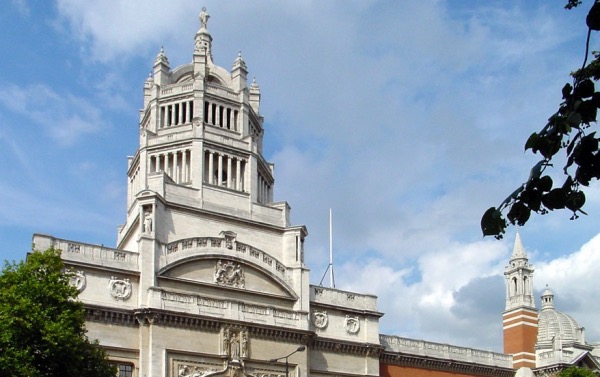
The V&A in South Kensington reopens its doors to visitors today in the first phase of a staged reopening strategy. All of the ground floor galleries are reopening including the Medieval & Renaissance Gallery, the Cast Courts, The Jameel Gallery of Islamic Art and Fashion Gallery, as well as the Europe 1600–1815 galleries on lower ground floor. The first and second floor collection galleries including The William and Judith Bollinger Jewellery Gallery, Theatre & Performance Galleries, and the Photography Centre as well as the museum’s Paintings, Tapestries and Silver Galleries are all scheduled to open on 27th August as well as the exhibition Kimono: Kyoto to Catwalk, which had closed just two weeks into its run.  For more, see www.vam.ac.uk. PICTURE: M.chohan (Public domain). 

Other recent and upcoming reopenings include: the Horniman Museum, the Foundling Museum, the National History Museum, The Queen’s House in Greenwich (Monday, 10th August) and the National Maritime Museum in Greenwich (exhibitions only; galleries coming later).

ZSL London Zoo is calling for volunteers to help assist visitors as they make their way around the zoo via three new one-way trails. The move, which follows a successful fundraising effort fronted by Sir David Attenborough, is aimed especially at people still furloughed and students forced to cancel gap year travel plans. Those interested in volunteering are asked to commit to a minimum of half a day each fortnight. For more, see  www.zsl.org/volunteering.

Send all items for inclusion to exploringlondon@gmail.com.

LondonLife – Listening to London…

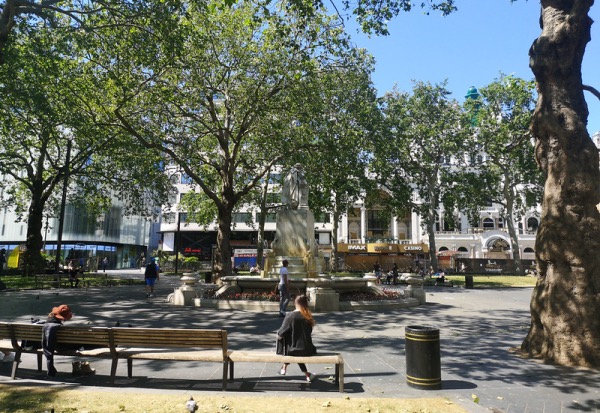
The first recorded soundscape of London’s busy streets was created in 1928 as part of a Daily Mail campaign calling for noise restrictions. Recordings were made at five sites – Whitechapel East, St George’s Hospital at Hyde Park Corner, Leicester Square, Cromwell Road and Beauchamp Place in South Kensington – in a collaborative project between the Mail and the Columbia Graphophone Company. Now, more than 90 years later, the sounds at the five original locations – or rather the lack of sounds during the coronavirus pandemic lockdown – have been captured again, this time as binaural recordings, a method of recording sound that uses two microphones to create a 3D stereo sound. It’s all part of the Museum of London’s ongoing ‘Collecting COVID’ project and was created in collaboration with String and Tins, an award-winning team of sound designers, composers, sound supervisors and mix engineers. Both the 1928 recordings (now digitised) and the modern recordings have been made available to listen to in their entirety for the first time on the Museum of London’s website. There are accompanying photographs by Damien Hewetson as well as historic imagery from the museum’s archive. PICTURE: A sparsely populated Leicester Square in an image taken in May this year during the coronavirus lockdown (ACME/licensed under CC BY-NC 2.0)

Exploring London’s 100 most popular posts of all time! – Numbers 66 and 65…

The next two entries in Exploring London’s 100 most popular posts countdown…

66. Lost London – The Mermaid Tavern…

65. 10 subterranean sites in London – 4. St Paul’s Cathedral Crypt…


This Week in London – Kensington Palace reopens with Diana’s ‘Travolta dress’; institution reopenings; the Luna Cinema at Greenwich; and, ‘British Surrealism’ online…

Kensington Palace has reopened its doors today after four months of lockdown and, to celebrate, the famous “Travolta dress” worn by Princess Diana is going on show for the first time. Designed by Victor Edelstein, the midnight blue velvet gown became the focus of world attention in 1985 when the Princess wore it to a White House Gala during which she danced with actor John Travolta. Historic Royal Palaces acquired the dress at auction in 2019. The palace will feature a new one-way route as part of coronavirus social distancing measures. For more, see www.hrp.org.uk/kensington-palace/.

Other reopenings this week include: the Imperial War Museum, Churchill War Rooms, Wellington Arch, the Ranger’s House in Greenwich and the Jewel Tower in Westminster (Saturday, 1st July); the Royal Observatory in Greenwich (Monday, 3rd August); and, the Natural History Museum in South Kensington (Wednesday, 5th August).

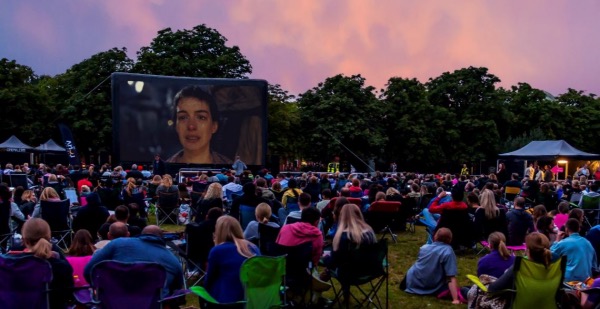
The Old Royal Naval College at Greenwich will host Luna Cinema’s open-air cinema from Tuesday 4th to Thursday, 6th August. Audiences will be able to sing and dance along to blockbuster hits RocketmanJudy and Dirty Dancing with the college as the backdrop. Meanwhile the Old Royal Naval College is launching new smartphone tours with the first, available for free on any smartphone using the Smartify app, a family tour aimed at those visiting with children aged five to 12 years. For more, see www.ornc.org.

The Dulwich Picture Gallery’s British Surrealism exhibition will be available for anyone to view online from Friday. The exhibition, which celebrates the British artists that contributed to the iconic surrealist movement, features more than 70 artworks from 42 artists, including Leonora Carrington, Francis Bacon, Henry Moore, Paul Nash, Ithell Colquhoun, and Conroy Maddox. For more, see www.dulwichpicturegallery.org.uk.

Send all items for inclusion to exploringlondon@gmail.com.

10 disease-related memorials in London…7. The Great Plague of 1665…

It is estimated to have killed as many as 100,000 Londoners yet, presumably at least partly due to there fact it was overshadowed by the Great Fire of the following year, there are no grand memorials to the victims of the Great Plague of 1665 in London.

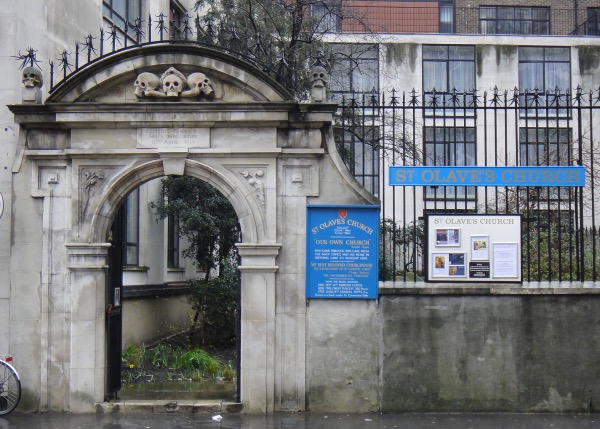
It does, however, get a brief mention on the board outside the church of St Olave Hart Street on the corner of Hart Street and Seething Lane. Recording a few facts about the church’s history from the burial register, it lists “1665 (The Great Plague) 365 names”. (It also lists Mother Goose as buried here in 1586 – but that’s for another time).

Victims of the plague were buried at numerous sites around London – including in the churchyard of St Giles-in-the-Fields and, as recently uncovered during construction of the Crossrail project, in the Bedlam burial ground (there’s a great interactive map of London’s reputed plague pit locations on Historic UK).

Yet, despite this, there remains a dearth of public memorials commemorating those who died.

PICTURE: The Seething Lane entrance of St Olave Hart Street with the blue board  and its mention of the Great Plague of 1665 (Dirk Ingo Franke (licensed under CC BY-SA 3.0))

LondonLife – Marking 72 years of the NHS…

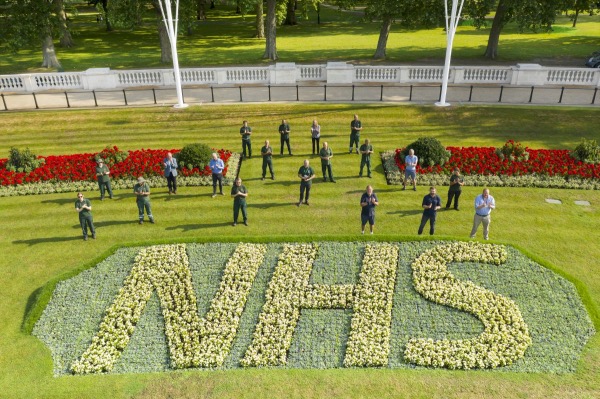
The Royal Parks have created two flowerbeds outside Buckingham Palace which spell out the letters ‘NHS’ in honour of the service’s 72nd birthday. The two 12 metre long flowerbeds, located in the Memorial Gardens – officially part of St James’s Park – contain some 45,000 flowers including scarlet geraniums, especially selected to match The Queen’s Guard at Buckingham Palace, as well as white begonias on a blue background of drought resistant succulents which, together replicate the colours of the NHS. The floral display – an appropriate tribute in this year of pandemic – can be seen until mid-September. PICTURES: Courtesy of The Royal Parks.

A Moment in London’s History…The Mayflower leaves London

This year marks 400 since the Mayflower set off from Plymouth in England’s south to Massachusetts in North America.

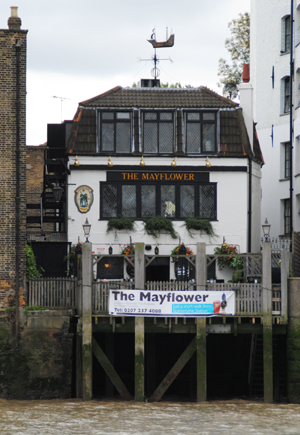
But what isn’t as well known is that the ship was hired in London and so it is from London – commonly believed to be from Rotherhithe on the south bank of the Thames – that the ship set off for Plymouth to pick up its passengers and supplies.

The Mayflower departed from London in mid July, 1620, and was already in Plymouth by the time another ship, the Speedwell, arrived from Delfshaven in the Netherlands in late July. The two ships would depart Plymouth for their journey across the Atlantic Ocean on 5th August (although the Speedwell proved less than seaworthy and so, after a couple of aborted attempts, the Mayflower eventually proceeded alone).

Rotherhithe was home to many of the 30 crew of the Mayflower including Captain Christopher Jones.

As a result, there’s numerous memorials to the voyage in the area, including, most famously, the pub, The Mayflower, which is said to overlook the site from where the ship sailed (pictured above). There’s also a statue  of Jones himself in the churchyard of St Mary the Virgin where he was buried in an unmarked grave – he died soon after returning from America.

A series of events, including the Mayflower 400 London Lectures, had been planned to commemorate the event this year but are currently suspended. We’ll keep you informed.

Treasures of London – Berlin Wall segment…

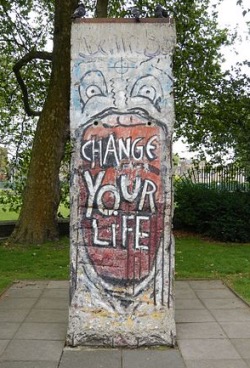
Located in Geraldine Mary Harmsworth Park in Kennington outside the Imperial War Museum, this segment of the Berlin Wall was taken from near the Brandenburg Gate in Berlin.

The concrete and steel wall is covered with graffiti, attributed to an artist ‘Indiano’, including an image of a giant mouth containing the words ‘Change your life’ (which may have come from a German poem).

The wall, which separated East and West Germany, was erected by East German forces in 1961 and finally fell in November, 1989. More than 80 people died attempting to cross the wall from East Germany before it was torn down.

This segment was acquired by the Imperial War Museum in January, 1991. It’s not the only part of the wall in London, among others is a fragment in Grosvenor Square.

PICTURE: K.ristof (licensed under CC BY SA 3.0)


This Week in London – Princess Beatrice’s bouquet; Technicolour Dickens; and, the Royal Parks’ ‘Summer of Kindness’…

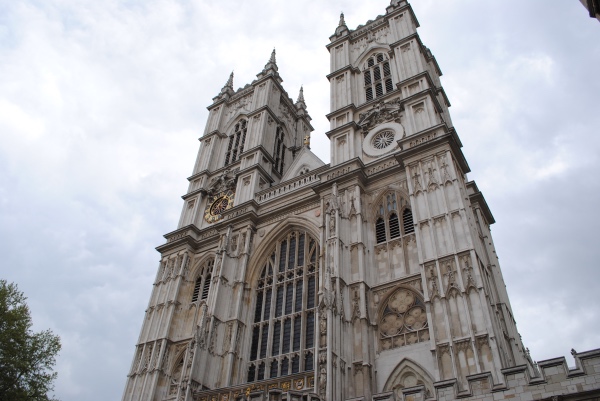
Princess Beatrice, who married Edoardo Mapelli Mozzi in a private ceremony in The Royal Chapel of All Saints at Windsor’s Royal Lodge last week, has sent the bouquet she carried during the wedding to rest on the Grave of the Unknown Warrior in Westminster Abbey. The tradition of royal brides sending their bouquets to rest on the grave was started by Queen Elizabeth, the Queen Mother, when she lay her bridal bouquet on the grave in memory of her brother Fergus who was killed in 1915 at the Battle of Loos during World War I. Brides including Queen Elizabeth II, the Duchess of Cambridge and Princess Beatrice’s sister, Princess Eugenie, have since continued the tradition. The grave commemorates the fallen of World War I and all those who have since died in international conflicts.

The Charles Dickens Museum in Bloomsbury reopens on Saturday, 25th July, with a new exhibition marking the 150th anniversary of the author’s death. Technicolour Dickens: The Living Image of Charles Dickens explores the power of the writer’s image and features paintings by the likes of William Powell Frith, Victorian-era photographs, ink drawings by “Automatons”, and letters from Dickens in which he explains what he really thought of sitting for portraits. The museum has also commissioned artist and photographer Oliver Clyde to create eight colourised portraits based on images taken from its collection. For more see www.dickensmuseum.com. Other reopenings this coming week include the Horniman Museum (Thursday, 30th July).

The Royal Parks are launching a ‘Summer of Kindness’ campaign to keep the parks clean after unprecedented levels of rubbish were left in the parks during the coronavirus lockdown. The Royal Parks, which played a key role in the physical and mental wellbeing of many people during the lockdown, report that some 258.4 tonnes of rubbish – the equivalent in weight of 20 new London buses or 74 elephants – were collected from London’s eight Royal Parks in June alone with staff having to spend more than 11,000 hours to clear up. And, with groups now able to gather, the littering has continued, prompting The Royal Parks to call for visitors to care for the parks by binning litter or taking it home. So, please, #BeKindToYourParks.

Send all items for inclusion to exploringlondon@gmail.com.

10 disease-related memorials in London…6. Human BSE (vCJD) memorial…

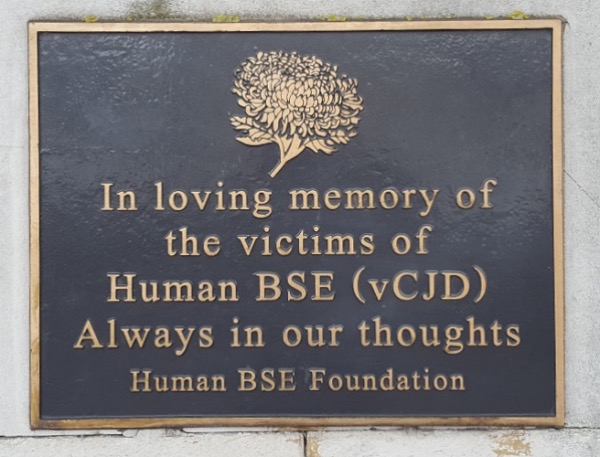
Located on the Albert Embankment outside St Thomas’ Hospital just to the south of Westminster Bridge, is a small plaque commemorating the victims of Human BSE (bovine spongiform encephalopathy), sometimes referred to as the human form of ‘Mad Cow Disease’.

The memorial, which was erected by the now defunct Human BSE Foundation, reads: “In loving memory of the victims of Human BSE (vCJD). Always in our thoughts.” There’s also an image of a chrysanthemum, a flower sometimes placed on graves to honour the dead.

It was reported in March, 2010, that since 1990, 168 people have died from Human BSE, also known as vCJD (variant Creutzfeldt–Jakob disease).

There has in recent years been a push to relocate the plaque from its position on the Albert Embankment to a more prominent place.

PICTURE: Cograng (licensed under CC BY-SA 4.0)

LondonLife – Skyline cranes…

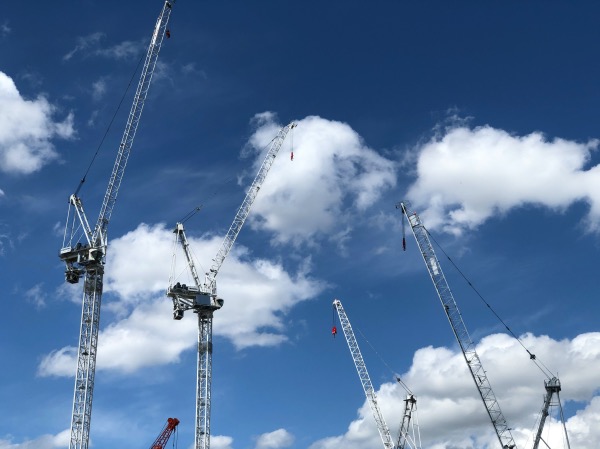
Cranes above Queen Elizabeth Olympic Park. PICTURE: Gabriel Kraus/Unsplash.

Exploring London’s 100 most popular posts of all time! – Numbers 68 and 67…

The next two entries in our countdown…

68. A Moment in London’s History – Peace Day Parade, 1919…

67. 10 (more) fictional character addresses in London – 2. 27a Wimpole Street…

This Week in London – London’s new embankment named; and, ‘Cutty Sark’ reopens…

• London’s first new River Thames embankment in 150 years has been named after Joseph Bazalgette, the Victorian civil engineer who revolutionised London’s sewer system. The ‘Bazalgette Embankment’ is located alongside Victoria Embankment, to the west of Blackfriars Bridge, and includes a new City Walkway as well as open space for recreation and leisure activities. Bazalgette’s sewer design led to cleaner water in the Thames and was also responsible for helping to eliminate cholera outbreaks in the city. The embankment is one of seven new embankments which will be opened as part of the Thames Tideway Tunnel project due for completion in 2024.

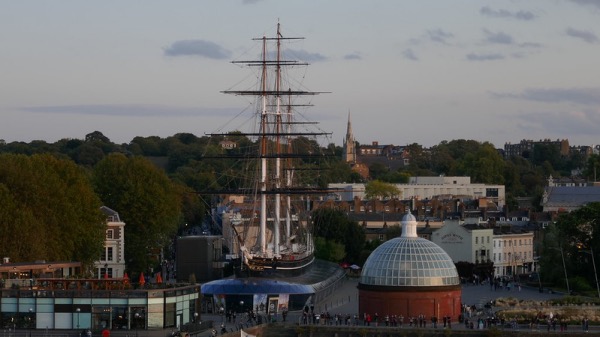
• Greenwich landmark, Cutty Sark, reopens to visitors on Monday, 20th July. Other reopened institutions include the Royal Academy of Arts, The Foundling MuseumThe Wallace Collection and Somerset House.

PICTURE: Christine McIntosh (licensed under CC BY-ND 2.0)

Send all items for inclusion to exploringlondon@gmail.com.

10 disease-related memorials in London…5. Sir Ronald Ross…

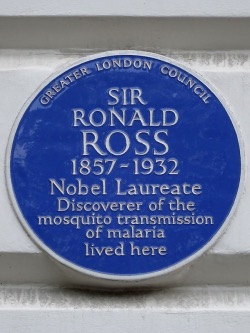
This English Heritage Blue Plaque marks the property in Cavendish Square, Westminster, where Sir Ronald Ross, a key figure in the battle against malaria, lived for a period.

The Indian-born Ross received the 1902 Nobel Prize for Physiology or Medicine for his efforts in discovering, while working for the Indian Medical Service in 1897, how malaria is transmitted by mosquitoes. The find opened the way for combatting the disease.

Having trained in London, Ross worked for the Indian Medical Service for 25 years before joining the faculty of Liverpool School of Tropical Medicine. He went on to hold the post of professor and chair in Tropical Sanitation at Liverpool University.

He held various other posts – including consultant physician to the War Office and consultant to the Ministry of Pensions – before, in 1926, he became director-in-chief of the Ross Institute and Hospital for Tropical Diseases, an institution established in Putney Heath and named after him.

He held this position until his death in 1932 and was buried in the Putney Vale Cemetery nearby.

The plaque on the property at 18 Cavendish Square, where Ross lived when establishing his institute, was installed in 1985 by the Greater London Council. Ross’ name, along with 23 others (including Edward Jenner) can also be seen on a frieze on the London School of Hygiene & Tropical Medicine, in honour of his contributions to public health.

While the impact of malaria has been dramatically curtailed around the world thanks to various interventions, the disease still kills hundreds of thousands. In 2018 alone, it was reported that 405,000 people, mostly young children in sub-Saharan Africa, died of malaria.

PICTURE: Spudgun67 (licensed under CC BY 2.0).

What’s in a name?…Seething Lane…

The name of this narrow throughfare in the City of London has nothing to do with anger. Rather the moniker comes from an old English word meaning ‘full of chaff’ – ‘sifethen’.

The reference relates to the presence of corn market which in medieval times was located nearby in Fenchurch street. The chaff apparently blew down from the market to the laneway. Hence ‘Sifethen’ or ‘Seething’ Lane.

The lane, which runs north-south from the junction of Hart St and Crutched Friars to Byward Street, is famous for being the former location of the Navy Office. Built here in the 1650s, it was where diarist Samuel Pepys worked when appointed Clerk of the Acts of the Navy.

Pepys, who later became Secretary of the Admiralty, was given a house in the lane. The church where he worshipped, St Olave, Hart Street, is still located at the north end of the lane.

Having survived the Great Fire of London in 1666, the Navy Office burnt down in 1673 and was rebuilt soon after to the designs or Sir Christopher Wren or Robert Hooke. It was eventually demolished in 1788 when the office moved to Somerset House.

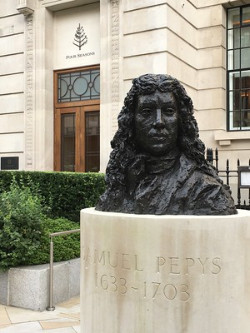
There’s a now a recently redeveloped garden where the Navy Office once stood in which can be found a bust of Pepys. The work of late British sculptor Karin Jonzen, it was first placed in an earlier garden on the site by the Pepys Society in 1983.

The garden, which is now part of the Trinity Square development, also features an English Heritage Blue Plaque commemorating the Navy Office and a series of scenes carved into stone by Alan Lamb depicting scenes from Pepys’ life and diaries.

All Hallows-by-the-Tower stands at the south end of the partly pedestrianised street.

PICTURE: Top – Google Maps (image lightened); Right – The bust of Samuel Pepys in the Seething Lane Gardens (Dave Bonta/licensed under CC BY-SA 2.0)


This Week in London – Tower of London lowers drawbridge; other openings include Westminster Abbey and The Queen’s Gallery…

The Tower of London will officially lower the drawbridge in a symbolic ceremony this Friday morning to announce its reopening after a 16 week closure, the longest since World War II. A new one-way route has been introduced to allow for social distancing and while the Yeoman Warders, known as Beefeaters, won’t be restarting their tour immediately, they will be able to answer visitor questions. The Crown Jewels exhibition will also be reopening. Online bookings are essential. For more, see www.hrp.org.uk/tower-of-london/.

• Westminster Abbey reopens its doors to visitors on Saturday after the longest closure since it did so to prepare for the coronation of Queen Elizabeth II in 1953. The abbey will initially be open to visitors on Saturdays and on Wednesday evenings, with a limited number of timed entry tickets available solely through advance booking online.

The Queen’s Gallery and the Royal Mews at Buckingham Palace as well as Royal Collection Trust shops reopened to the public this week. The Queen’s Gallery exhibition George IV: Art & Spectacle has been extended until 1st November while Japan: Courts and Culture, which had been originally due to open in June this year, is now expected to open in spring 2022. Tickets must be booked in advance at www.rct.uk/tickets.

• Other reopenings include Kew Gardens’ famous glasshouses (from last weekend) and the Painted Hall, King William Undercroft and interpretation gallery at Greenwich (from Monday 13th July).

Send all items for inclusion to exploringlondon@gmail.com.

PICTURE: Nick Fewings/Unsplash.