10 (lesser known) National Trust properties in London…3. 2 Willow Road…

Please note: Exploring London is aware that many sites have closed temporarily or considering doing so as a result of the COVID-19 outbreak. We’ll be continuing much of our coverage as usual – in the hope you can visit at a later time…

This modernist home in Hampstead was designed by Budapest-born architect Ernö Goldfinger in 1939 for his family.

Goldfinger, who had emigrated to London in the early 1930s, decided to build the property in what was at the time something of an artistic hotspot. But his plan to build three residences in Willow Road – his home was the largest in the middle of the block of three terraced homes – was a controversial project.

Those who voiced their opposition included James Bond author Ian Fleming (who named a now famous villain after Goldfinger) and Lord Brooke of Cunmor, Secretary of the Heath and Old Hampstead Protection Society (and later MP for Hampstead as well as a Home Secretary in the 1960s), who said the proposed project was “disastrously out of keeping” with the character of the neighbourhood.

But, with the support of other local residents, Goldfinger defended his design, stating that it would respect both the surroundings and tradition of Georgian building in London.

The three storey, Grade II* property – which is built to appear as a single building along with its two neighbours – features a facade dominated by the use of red brick but also revealing exposed concrete bearing columns and a continuous strap of picture windows on the first floor.

It features a famous central spiral staircase designed by Danish engineer Ove Arup while Goldfinger himself designed much of the furniture. The house also contains a significant collection of 20th century art by artists including Bridget Riley, Man Ray and Max Ernst.

Goldfinger lived at the property along with his wife, artist and heiress Ursula (nee Blackwell, of the Crosse & Blackwell fortune), until his death in 1987 (his wife, whose money funded the project, died after him).

During their residency, the home hosted exhibitions in support of left-wing causes including one held in 1942 for the  ‘Aid to Russia’ Fund of the National Council of Labour.

Number 2 Willow Road was acquired by the National Trust in 1992 (it was the first modernist building acquired by the Trust). Numbers 1 and 3 Willow Road remain private residences.

WHERE: 2 Willow Road, Hampstead (nearest Tube station is Hampstead/nearest Overground is Hampstead Heath); WHEN: Temporarily closed – check website for times when it reopens; COST: £8.50 an adult/£4.25 a child; WEBSITE: www.nationaltrust.org.uk/2-willow-road

PICTURE: Public Domain

LondonLife – Signs of the times…

As seen at Chancery Lane Underground station. PICTURE: duncan c (licensed under CC-BY-NC 2.0)

London Pub Signs – The Sun and 13 Cantons…

This unusually named Soho pub dates from the late 19th century although there is said to have been a pub here in the corner of Great Pulteney and Beak Streets since at least 1756.

The name relates to the fact that a significant Swiss population was once based in the area.

The pub was previously known as The Sun but that was destroyed by fire. When the rebuilt premises opened in 1882, ’13 Cantons’ was added to the name as a tribute to its many Swiss patrons (the Old Swiss Confederacy consisted of 13 cantons, although the number had grown past that in the early 19th century).

During the Sixties, Seventies and Eighties, the now Grade II-listed pub became associated with the film and television industry which had made Soho its home – among those said to have patronised it were directors like Alan Parker and Ridley Scott as well as actors like Oliver Reed, Peter O’Toole and, more recently, Jude Law, Ewan McGregor, Russell Crowe and Gemma Arterton.

The pub has also hosted DJ nights in the basement bar in the late Nineties – Carl Cox and the Dust Brothers (which became the Chemical Brothers) were among those who worked their magic here.

The pub, which has recently undergone a refurbishment, is now part of the Fullers Group. For more, see www.sunand13cantons.co.uk.

PICTURES: Jim Linwood (licensed under CC BY 2.0)

Exploring London’s 100 most popular posts of all time! – Numbers 88 and 87…

The next two in our countdown celebrating 10 years of Exploring London…

88. Lost London – Inigo Jones’ Grand Portico on Old St Paul’s Cathedral…

87. Lost London – Exeter/Essex House…

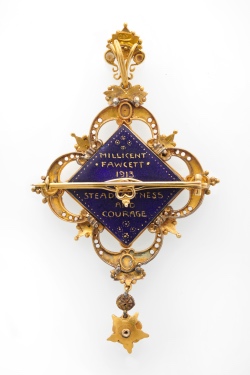
Treasures of London – Millicent Fawcett’s ‘Steadfastness and Courage’ brooch…

Going on permanent display at the Museum of London from today, Millicent Fawcett’s brooch is a unique symbol of the long struggle for the right of women to vote in parliamentary elections. 

The brooch given to Fawcett by members of the National Union of Women’s Suffrage Societies – which Fawcett was president of between 1907 and 1919.

Made of of gold and enamel, it features gems in the white, red and green colour scheme of the NUWSS. It also bears the message “steadfastness and courage” – a quote taken from a speech Fawcett made in 1913.

Fawcett often wore the brooch, usually as a pendant and it is featured on Gillian Wearing’s recently unveiled statue of her in Parliament Square.

The brooch, which can be seen in the People’s City Gallery, is on long-term loan from the Fawcett Society.

WHERE: People’s City Gallery, Museum of London, 150 London Wall (nearest Tube stations are Barbican Station, St Paul’s and Moorgate); WHEN: 10am to 6pm daily; COST: Free; WEBSITE: www.museumoflondon.org.uk.

PICTURE: © The Fawcett Society

This Week in London – Cecil Beaton and the ‘Bright Young Things’; ‘The Enchanted Interior’; and Andy Warhol at the Tate…

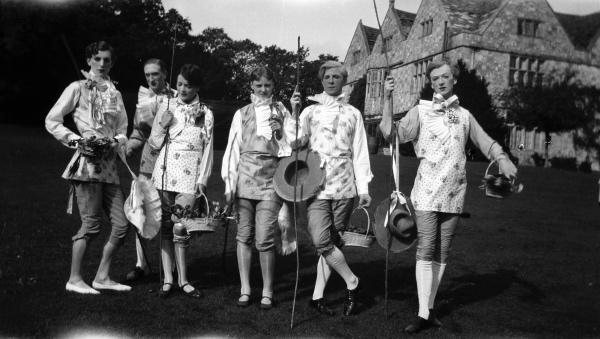
World famous British photographer Cecil Beaton’s portraits from the “golden age” of the 1920s and 1930s are being celebrated in a shiny new exhibition at the National Portrait Gallery. Cecil Beaton’s Bright Young Things features some 150 works, many rarely exhibited, which Beaton took in the 1920s and 1930s depicting the “extravagant world of the glamorous and stylish”. The subjects include the likes of artists Rex Whistler and Stephen Tennant, modernist poets Iris Tree and Nancy Cunard, the glamorous socialites Edwina Mountbatten and Diana Guinness (née Mitford), and actresses Tallulah Bankhead and Anna May Wong as well as less well-known figures like eccentric composer and aesthete Lord Berners, the artist and Irish patriot Hazel, Lady Lavery, and Lady Alexander, whose husband produced Oscar Wilde’s comedies and who became an early patron of Beaton’s. Beaton’s own life story and his relationship with the sitters is woven into the exhibition including through self-portraits and images of him  taken by contemporaries. Runs until 7th June. Admission charges apply. For more, see www.npg.org.uk. PICTURE:  The Bright Young Things at Wilsford by Cecil Beaton, 1927. © The Cecil Beaton Studio Archive.

The theme of female subjects depicted in ornate, enclosed interiors – one prevalent in 19th century British painting – is at the centre of a new exhibition opening at the Guildhall Art Gallery on Friday. The Enchanted Interior, being presented in partnership with Laing Art Gallery in Newcastle, showcases works in styles ranging from the high Victorian through to Art Nouveau, Aestheticism, Surrealism, and pieces by contemporary female artists which ‘speak back’ to the historic tradition. Artists whose work is represented include Edward Burne-Jones, Evelyn De Morgan, James Abbot McNeill Whistler, Emily Sandys, Jessica Woodman, Fiona Tan, John William Waterhouse and Clementina Hawarden. Admission charge applies. Runs until 14th June. For more, follow this link.

The works of iconic 20th century American artist Andy Warhol are being showcased in a new exhibition at Tate Modern. Andy Warhol, the first exhibition on the artist at the gallery in 20 years, features more than 100 works. Among them are key pieces from the pop period – Marilyn Diptych (1962), Elvis I and II (1963/1964) and Race Riot (1964) – as well as Screen Tests (1964–6), the floating Silver Clouds (1966) installation, and a recreation of the psychedelic multimedia environment of Exploding Plastic Inevitable (1966) originally produced for the Velvet Underground rock shows. Also included are later works like his 1975 Ladies and Gentlemen series and Sixty Last Suppers (1986). Runs until 6th September. Admission charge applies. For more, see www.tate.org.uk.

Send all items for inclusion to exploringlondon@gmail.com.

10 (lesser known) National Trust properties in London…2. Morden Hall Park…

Located on the banks of the River Wandle in Morden, south London, Morden Hall was built for the Garth family in the 18th century on the site of an earlier manor house.

The manor, which had once been held by the abbot of Westminster Abbey, had been in the Garth family since it was purchased by Richard Garth, a clerk and son of a successful lawyer, following the Dissolution in the 16th century. At the time, the newly built manor house, apparently known as Growtes, stood just to the south of where the hall now stands.

The now Grade II-listed hall was built for the family in between 1759 and 1765 and over the next century a number of tenants occupied it – it was used at once point as a school for young gentlemen.

In 1867, the Garth family sold the altered house and estate to a tobacco merchant, Gilliat Hatfeild (Gilliat’s father, Alexander Hatfeild, had, since 1834, leased two mills on the site to ground tobacco from plantations in Virginia into snuff). Gilliat created a park from the land surrounding the hall, planting trees and demolishing cottages.

His son, Gilliat Edward Hatfeild, took over the running of the estate on the death of his father in 1906. During World War I, the hall saw service as a convalescent home for the military and was later used by the Salvation as a home for women and children.

In 1941, Alexander’s grandson, Gilliat Edward Hatfield – who had closed the mills and snuff-making factory in the early 1920s – left the house and the core of the estate (the remainder was occupied by new housing and roads) to the National Trust. The hall itself has since been used as a restaurant and, following a 2015 renovation, is now a venue for weddings.

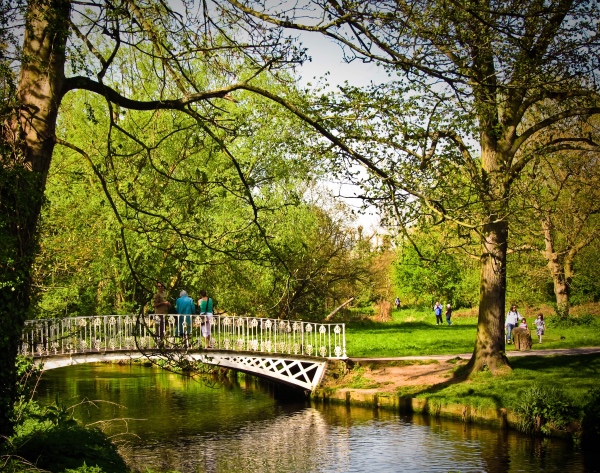
The 125 acres of grounds, which are open to the public, contain a variety of landscapes including the remains of a deer park, meadows and a wetland. The restored rose garden was first planted by Gilliat Edward Hatfeild in around 1921 in part of what had been his father’s deer park. It was laid out in two halves separated by a small stream with rose-covered bridges. The rose garden also features a massive Westfelton Yew which is believed to be hundreds of years old.

The snuff mills, which were built in 1750 and 1830, are still standing (the western mill contains an exhibition on the life of the Morden mill workers in the Victorian era) as are various workshops, the former stables and Morden Cottage, parts of which date from the 1750s and which was used by GE Hatfeild who preferred living there to the hall. Facilities in the park include the Potting Shed Café near the main entrance and a second-hand bookshop in the former stable yard.

WHERE: Morden Hall Park, Morden Hall Road, Morden (nearest train station is Stableyard); WHEN: The rose garden is open from 8am to 6pm daily (check the website for other times); COST: Free; WEBSITE: www.nationaltrust.org.uk/morden-hall-park.

PICTURES: Top – The White Bridge over the River Wandle at Modern Hall Park (Garry Knight/licensed under CC BY 2.0); Right – Morden Hall from the park (public domain)

LondonLife – A trip down memory lane…

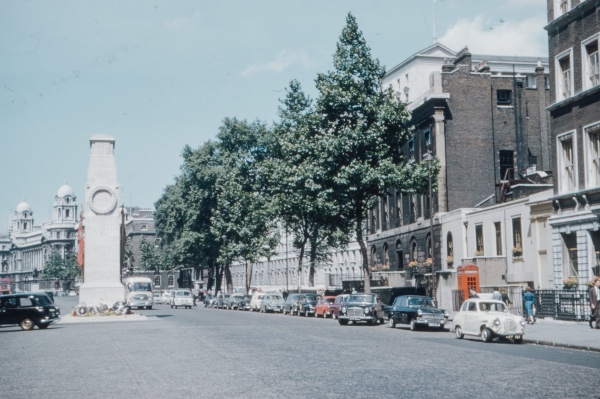
Images of London from the 1960s showing, top, a view of Whitehall ad the Cenotaph, and below, looking across the Thames to the Houses of Parliament. PICTURES: Annie Spratt/Unsplash

A Moment in London’s History…The escape of Ranulf Flambard…

There’s been about 40 successful escapes from the Tower of London over the centuries but the first recorded one was of Ranulf Flambard. 

Flambard, the bishop of Durham, was the chief minister of King Willam Rufus (William II) (and, among other things, oversaw the construction of the inner wall around the White Tower at the Tower of London, the first stone bridge in London and Westminster Hall).

When William died in 1100, William’s younger brother Henry became king. William’s rule had been increasingly harsh and characterised by corruption and when Henry assumed the throne, Flambard was made a scapegoat for the previous administration’s failings. He was arrested on 15th August, 1100, and imprisoned on charges of embezzlement in the White Tower.

Flambard managed to escape on 3rd February, 1101. The story goes that he had lulled his guards into getting drunk by bringing in a barrel of wine for them to drink and then climbed out of a window and down a rope, which he’d had smuggled into the tower in the wine. It’s also said that the man charged with his care, William de Mandeville, allowed the escape.

Flambard subsequently escaped England to Normandy where he incited Robert Curthose, Duke of Normandy (and elder brother of Henry), to attempt an invasion of England.

The invasion was unsuccessful but the warring brothers reconciled and Flambard was restored to royal favour. He regained his bishopric, although he never again served as chief minister.

PICTURE: Amy-Leigh Barnard/Unsplash

Lost London – The Sardinian Embassy Chapel…

A Roman Catholic located in Lincoln’s Inn Fields, the Sardinian Embassy Chapel went through several incarnations prior to its destruction in the early 20th century.

A Franciscan chapel was founded on the site in the mid-17th century – it was sacked during the Glorious Revolution – but by the early 18th century the chapel which stood here served the Embassy of the Kingdom of Sicily.

Because embassy chapels – of which this was apparently the oldest in London – were viewed as the sovereign territory of the state they belonged to, Catholic worship was permitted there (despite being illegal elsewhere in England) and English Catholics were among those who attended services (among those said to have done so was James Boswell).

Those English subjects who attended were on occasion harassed for doing so and the chapel itself was attacked several times over its existence including in the Gordon Riots of 1780 which left it significantly damaged (but following government compensation, it was restored and reopened in 1781).

In 1798, the Sardinian Ambassador closed the chapel but thanks to a generous Catholic purchaser, it – and the embassy itself – passed into the hands of Bishop John Douglass, vicar-apostolic of the London district.

Repaired, the chapel was reopened in 1799 (although it was no longer part of the Sardinian Embassy, it continued to be under the patronage of the King of Sardinia until the 1850s). In the mid-1850s, the name of the chapel was changed to the Church of St Anselm and St Cecilia.

The chapel building was demolished in 1909 due to the creation of the Kingsway. A new site for the church was created a little further north on Kingsway where it remains today.

Inside the church are some of the fittings from the Sardinian Embassy Chapel including a marble font, an organ dating from 1857, the coat-of-arms of the House of Savoy, a large painting of the ‘Deposition’ (Christ’s descent from the cross), and the Lady Altar. The plate from the Sardinian Embassy Chapel is now in the V&A.

PICTURE: Sardinia Street, on the corner with Kingsway. The name of the street commemorates the site of the Sardinian Embassy and chapel.

This Week on London – New Blue Plaques for women; Aubrey Beardsley at the Tate; and, the kimono scrutinised…

Two World War II spies, one of the 20th century’s greatest artists and and a leading figure in the British military’s women’s corps in World War I are among women being honoured with Blue Plaques this year. English Heritage unveiled plans this week for six female-focused plaques with the first to celebrate Dame Helen Gwynne-Vaughan (1879-1967), a botanist and leader of women in the armed forces during the ‘Great War’. Others will honour Christine Granville (1908-1952) – who served as Britain’s longest-serving female SOE agent in World War II, Noor Inayat Khan (1914-1944) – Britain’s first Muslim war heroine and the first female radio operator working in Nazi-occupied France, and ground-breaking 20th century sculptor Barbara Hepworth (1903-1975). Blue Plaques will also be unveiled at the former headquarters of the National Union of Women’s Suffrage Societies in Westminster and the Women’s Social and Political Union in Holborn. While only 14 per cent of the more than 950 Blue Plaques in London commemorate women, English Heritage’s ongoing ‘plaques for women’ campaign has seen a dramatic rise in the number of public nominations for women since it launched in 2016. This year will be only the second the organisation has unveiled as many as six plaques honouring women. For more, see www.english-heritage.org.uk/visit/blue-plaques/.

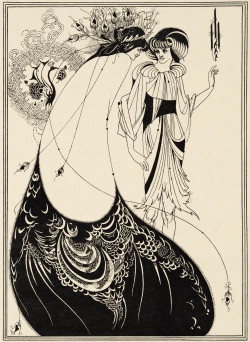
The brief career of controversial artist Aubrey Beardsley (1872-98) is the subject of a new exhibition which opened at Tate Britain this week. Aubrey Beardsley features some 200 works in the largest display of his original drawings in more than 50 years and the first exhibition of his work at the Tate since 1923. Highlights include key commissions that defined Beardsley’s career – a new edition of Sir Thomas Malory’s Le Morte d’Arthur (1893-4), Oscar Wilde’s play Salomé (1893) and Alexander Pope’s The Rape of the Lock (1896) – as well as bound editions and plates of the literary quarterly The Yellow Book, of which he was art director. There’s also a collection of Beardsley’s bold poster designs and his only oil painting. The exhibition runs until 25th May. Admission charge applies. For more, see www.tate.org.uk. PICTURE: Aubrey Beardsley (1872-1898) The Peacock Skirt – illustration for Oscar Wilde’s ‘Salome’ (1893), lineblock print on paper, Stephen Calloway Photo: © Tate

The first major UK exhibition on the kimono – described as the “ultimate symbol of Japan” – has opened at the V&A. Kimono: Kyoto to Catwalk examines the sartorial and social significance of the kimono spanning the period from the 1660s to today. Highlights include a kimono created by ‘Living National Treasure’ Kunihiko Moriguchi, an Alexander McQueen-designed dress worn by Björk on the cover of the album Homogenic, and original Star Wars costumes modelled on kimono by John Mollo and Trisha Biggar. There are also designs by Yves Saint Laurent, Rei Kawakubo and John Galliano. The exhibition features more than 315 works including kimonos but also paintings, prints, films and dress accessories. Can be seen in Gallery 39 and the North Court until 21st June. Admission charge applies. For more, see www.vam.ac.uk/kimono.

Send all items for inclusion to exploringlondon@gmail.com.

10 (lesser known) National Trust properties in London…1. Rainham Hall…

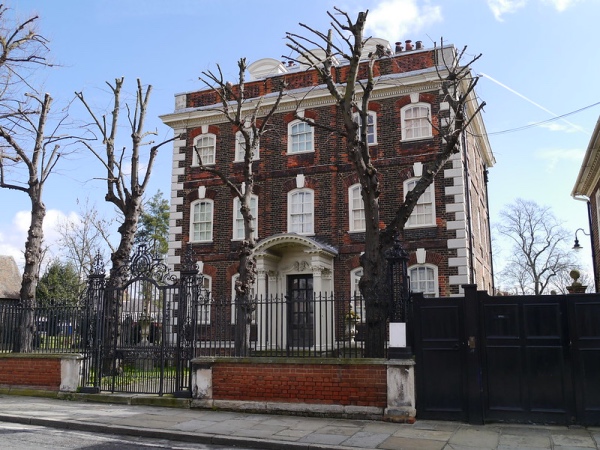
The National Trust is this year celebrating its 125th anniversary so we though we’d take a look at some of the lesser-known National Trust properties and gardens in London. First up, it’s Rainham Hall, one of the finest examples of an early 18th century merchant’s home in the UK.

Located at Rainham in the London Borough of Havering, the Queen Anne-style property was built in 1729 for sea merchant Captain John Harle. Harle came from a family South Shields that supplemented their farming income with shipping. He’d settled in London sometime after 1704 and in 1719 married a widow, Mary Tibbington (it’s speculated her name may have been the inspiration for his ship, the Mary).

Following his marriage, John went less to sea and handed command of the ship to a cousin while he managed the business in London becoming a frequent visitor to the Royal Exchange and coffee houses to gather information on shipping and make trading deals.

Harle moved to Rainham in 1728 and built the house the following year with a design more akin to a London townhouse than a country villa. After his wife died without any children in 1739, John remarried and his new wife, a widow named Sarah Gregory, gave birth to their only child – a son named John – in 1740.

Harle died in late 1742 and was buried in Rainham Church. Sarah died seven years later and their orphaned son John was cared for by family members – during this period the contents of the hall were auctioned and the building leased out.

The house remained in family ownership until 1895 when it was purchased by a clergyman and then, in 1917, by art historian and property developer Colonel Herbert Hall Mulliner who never resided at the property but conducted significant restoration works including in the garden.

During World War II, the property was requisitioned for use as a nursery for children so mothers could go out to work – it remained a nursery until 1954. It was during this period – in 1949 – that both the house and gardens, of which almost three acres remain – were given to the National Trust.

Now Grade II* listed, the property recently underwent a £2.5 million restoration project and opened to the public for the first time in 2015. Current displays includeThe Denney Edition: Celebrating an icon of 20th century style, which celebrates the life and work of Anthony Denney (1913-90), Vogue photographer, interior designer and all round style icon who lived at the hall between 1964 and 1969, during which he set about an extensive programme of interior refurbishment (only some of which still remains).

The property has appeared in films and TV productions including, most recently the 2019 BBC production of A Christmas Carol. A cafe now occupies the stables.

WHERE: Rainham Hall, The Broadway, Rainham, Havering (nearest train station is Rainham); WHEN: 10.30am-4.30pm, Wednesday to Sunday; COST: £9.50 adults; £4.75 children; £23.75 family (National Trust members and under fives free); WEBSITE: www.nationaltrust.org.uk/rainham-hall.

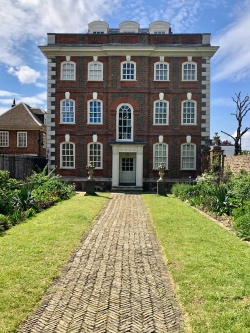
PICTURES: Rainham Hall from the front (shirokazan/licensed under CC BY 2.0)/Right – Rainham Hall from the rear (David Merrett/licensed under CC BY 2.0).

LondonLife – “Secret” door rediscovered in the Houses of Parliament…

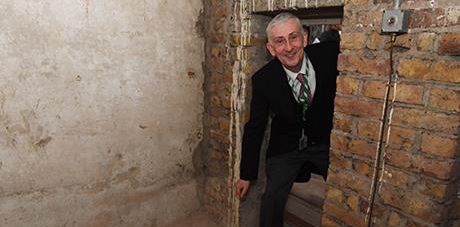
A forgotten door built for festivities surrounding the coronation of King Charles II in 1661 has been rediscovered in the Houses of Parliament. 

The door, hidden behind panelling in cloister formerly used as offices by the Parliamentary Labour Party, was originally constructed to allow guests at the coronation to make their way to his celebratory banquet in Westminster Hall.

It was subsequently used by the likes of Robert Walpole, often referred to as the first Prime Minister as well as architect-led rivals Charles James Fox and William Pitt the Younger, and diarist Samuel Pepys.

The door and passageway behind it survived the fire which destroyed much of the Palace of Westminster in 1834 but it was thought the passage had been filled in during restoration works after the Palace of Westminster was bombed in World War II.

Liz Hallam Smith, an historical consultant from the University of York who is working with the team undertaking the renovations, said they were trawling through “10,000 uncatalogued documents relating to the palace at the Historic England Archives in Swindon, when we found plans for the doorway in the cloister behind Westminster Hall”.

“As we looked at the paneling closely, we realised there was a tiny brass key-hole that no-one had really noticed before, believing it might just be an electricity cupboard,” she said. “Once a key was made for it, the paneling opened up like a door into this secret entrance.”

In the small room behind the door, the team discovered the original hinges for two wooden doors some three-and-a-half meters high that would have opened into Westminster Hall. They also found graffiti, scribbled in pencil by bricklayers who worked on the restoration of the palace in 1851 following the 1834 fire.

One section reads “This room was enclosed by Tom Porter who was very fond of Ould Ale” and another, “These masons were employed refacing these groines…[ie repairing the cloister] August 11th 1851 Real Democrats”, the latter a reference suggesting the men were part of the working class male suffrage Chartist movement.

Sir Lindsay Hoyle, the House of Commons Speaker, described the find as “part of our parliamentary history”: “To think that this walkway has been used by so many important people over the centuries is incredible.”

PICTURE: Sir Lindsay Hoyle and the door (UK Parliament/Jessica Taylor)


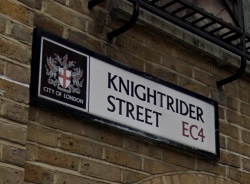
What’s in a name?…Knightrider Street…

No, the name of this City of London street, which runs between Godliman Street and Addle Hill just to the south of St Paul’s Cathedral, has nothing to do with the TV series of the 1980s starring David Hasselhoff (although there is a very tenuous connection – more on that in a moment).

In fact, according to the 16th century historian and antiquarian John Stow, the explanation for its name is believed to be quite simple – knights once rode along this street on their way to Smithfield where tournaments were held in the 12th century.

Much of the street was demolished in the 1860s to make way for Queen Victoria Street and many of the buildings which once graced it are along gone. These include the German Church, which dated from the mid 1660s, the law society known as Doctor’s Commons,  and the Church of St Mary Magdelen – which were all demolished in the 1860s.

Other famous premises include number five, which was the site of a house where Thomas Linacre founded the Royal College of Physicians. The street is still home to The Centre Page pub (apparently David Hasselhoff’s favourite pub).

PICTURE: Google Maps.

This Week in London – British surrealism; The Prince of Wales’ coronet; and, David Hockney’s drawings…

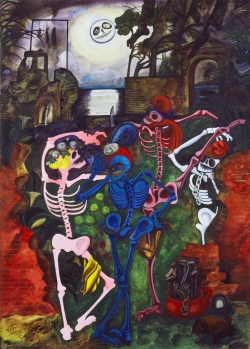
An exhibition which traces the history of surrealist art in Britain has opened at the Dulwich Picture Gallery. Featuring more than 70 works, British Surrealism marks the official centenary of surrealism – which dates from when founder André Breton began his experiments in surrealist writing in 1920 – and features paintings, sculpture, photography, etchings and prints. Among the 40 artists represented are Leonora Carrington, Edward Burra, Francis Bacon, Lucian Freud, Ithell Colquhoun, John Armstrong, Paul Nash and Reuben Mednikoff as well as lesser known but innovative artists like Marion Adnams, John Banting, Sam Haile, Conroy Maddox and Grace Pailthorpe. Highlights include Armstrong’s Heaviness of Sleep (1938), Burra’s Dancing Skeletons (1934), Adnams’ Aftermath (1946), Nash’s We Are Making a New World (1918), Colquhoun’s The Pine Family (1940), Pailthorpe’s Abstract with Eye and Breast (1938) and Bacon’s Figures in Garden (c1935). Also featured are works and books by some of the so-called ‘ancestors of surrealism’ including a notebook containing Coleridge’s 1806 draft of poem The Rime of the Ancient Mariner, and a playscript for Horace Walpole’s The Castle of Otranto (1859). Admission charge applies. Runs until 7th May. For more, see www.dulwichpicturegallery.org.uk. PICTURE: Edward Burra, Dancing Skeletons,1934, (1905-1976). Photo © Tate

The Prince of Wales’ investiture coronet has gone on show in the Jewel House at the Tower of London for the first time. Made of 24 carat Welsh gold and platinum and set with diamonds and emeralds with a purple velvet and ermine cap of estate, the coronet – which was designed by architect and goldsmith Louis Osman – features four crosses patee, four fleurs-de-lys and an orb engraved with the Prince of Wales’ insignia. The coronet was presented to Queen Elizabeth II by the Goldsmiths’ Company for the Prince of Wales’ investiture at Caernarfon Castle on 1st July, 1969. It’s being displayed alongside two other coronets made for previous Princes of Wales as well as the ceremonial rod used in the 1969 investiture which, designed by Welsh sculptor Sir William Goscombe John (1860-1952), is made of gold and is decorated with the Prince of Wales’ feathers and motto Ich Dien. For more, see www.hrp.org.uk/tower-of-london/.

The first major exhibition devoted to David Hockney’s drawings in more than 20 years opens at the National Portrait Gallery today. David Hockney: Drawing from Life features more than 150 works with a focus on self portraits and his depictions of a small group of sitters including muse Celia Birtwell, his mother, Laura Hockney, and friends, curator Gregory Evans and master printer Maurice Payne. Previously unseen works on show include working drawings for Hockney’s pivotal A Rake’s Progress etching suite (1961-63) – inspired by the identically named series of prints by William Hogarth, and sketchbooks from Hockney’s art school days in Bradford in the 1950s. Other highlights include a series of new portraits, coloured pencil drawings created in Paris in the early 1970s, composite Polaroid portraits from the 1980s, and a selection of drawings from the 1980s when the artist created a self-portrait every day over a period of two months. Runs until 28th June. Admission charge applies. For more, see www.npg.org.uk.

Send all items to exploringlondon@gmail.com.


10 (lesser known) monuments featuring animals in London – A recap…

Before we move on from our recent series on animal monuments, we pause for a recap…

10 (lesser known) monuments featuring animals in London – 1. Dick Whittington’s cat…

10 (lesser known) monuments featuring animals in London – 2. Tom Sayer’s dog, Lion…

10 (lesser known) monuments featuring animals in London – 3. Hodge…

10 (lesser known) monuments featuring animals in London – 4. Trump…

10 (lesser known) monuments featuring animals in London – 5. Jamrach’s Tiger…

10 (lesser known) monuments featuring animals in London – 6. Sam the cat…

10 (lesser known) monuments featuring animals in London – 7. Jim and Tycho…

10 (lesser known) monuments featuring animals in London – 8. The elephants of the Tower…

10 (lesser known) monuments featuring animals in London – 9. Old Tom…

10 (lesser known) monuments featuring animals in London – 10. Jacob the horse…

We kick off a new Wednesday series next week…

LondonLife – Street curvature…

A cyclist negotiates Regent Street in central London. PICTURE: Luke Stackpoole/Unsplash

Where’s London’s oldest…cheesemonger?

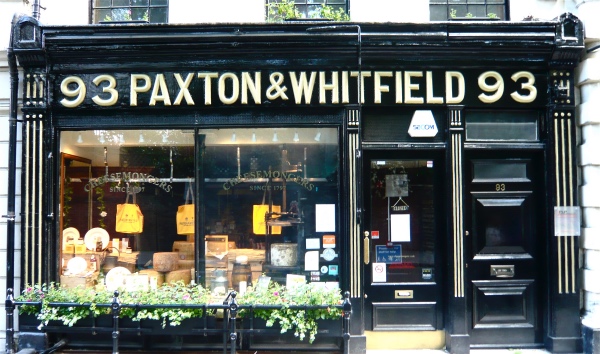
With origins dating back to a cheese stall established by Stephen Cullum in Aldwych in 1742, Paxton & Whitfield are generally said to be the oldest cheesemongers still operating in London (and one of the oldest in the UK).

Cullum’s business was successful enough that in the 1770s he opened a shop in Swallow Street. By 1790 his son Sam had taken over the business and took two new partners – Harry Paxton and Charles Whitfield.

In 1835 – with Swallow Street demolished to make way for the construction of Regent Street – Sam moved the business to new premises at 18 Jermyn Street (Sam died the following year).

In 1850, the business received the Royal Warrant of Queen Victoria and just three years later finally settled on the name Paxton and Whitfield which the company still bears to this day.

In 1896, the business moved to its current premises at 93 Jermyn Street and a flurry of Royal Warrants followed – that of King Edward VII in 1901, King George V in 1910, King George VI in 1936, Queen Elizabeth, the Queen Mother in 1972, Prince Charles in 1998 and Queen Elizabeth II in 2002.

The firm, meanwhile, has since passed through several hands but continued on at the same premises (albeit becoming, during the period between the two World Wars, an ordinary grocery shop due to the lack of supply of eggs, butter and cheese).

Business picked up after World War II and the company opened shops in Stratford-upon-Avon and Bath. In 2009 formed a partnership with Parisian cheese mongers, Androuet, and in 2014 it opened a new shop in Cale Street, Chelsea.

For more, see www.paxtonandwhitfield.co.uk.

PICTURE: Herry Lawford (licensed under CC BY 2.0)


This Week in London – Gold phone returns to Eltham Palace; Nicolaes Maes at the National; and, Léon Spilliaert at the Royal Academy…

A 1930s gold coloured telephone which once belonged to eccentric millionaire Virginia Courtauld has gone on show at Eltham Palace in London’s south-west. The recently donated phone, which was saved from a skip in the 1980s, is one of only two surviving Siemens Bakelite telephones of the original 19 which were installed at the palace in 1936 for Virginia and her husband Stephen (the other remaining phone, located in Stephen’s library, is plain black). The phones – which included five placed in bedrooms – were commissioned by Virginia and remained in the property even after the Courtaulds moved out in May, 1944, and passed the lease to the Army Educational Corps. Renamed the Royal Army Educational Corps, that organisation was relocating out of Eltham Palace in the 1980s when all of the original 1930s telephones were thrown away. This gold telephone was rescued from the rubbish by a passing member of the RAEC and was recently donated to English Heritage. Admission charge applies. For more, see www.english-heritage.org.uk/visit/places/eltham-palace-and-gardens/.

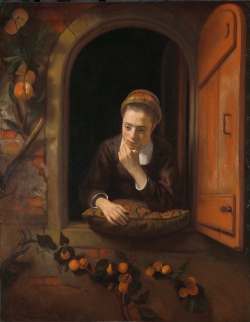
The first exhibition devoted exclusively to Dutch artist Nicolaes Maes – one of Rembrandt’s most important pupils – opens at the National Gallery on Saturday. Nicolaes Maes: Dutch Master of the Golden Age features more than 35 paintings and drawings by the Dordrecht-born artist including a selection of the intimate scenes of domestic daily life for which he is best known. Included are early history scenes, mostly on biblical subjects that Maes painted in the style of Rembrandt when he joined his studio in Amsterdam in about 1650, as well as lesser-known portraits he created from 1673 onward after he settled in Amsterdam. Admission is free. The display can be seen until 31st March. For more, see www.nationalgallery.org.uk. PICTURE: Nicolaes Maes, Girl at a Window (1653–5) © Rijksmuseum Amsterdam

The works of early 20th century Belgian artist Léon Spilliaert are the subject of a new exhibition at the Royal Academy of Arts opening on Sunday. Léon Spilliaert features some 80 works organised into four sections with highlights including Beech Trunks (1945), Young Woman on a Stool (1909), A Gust of Wind (1904), and Dike at night. Reflected lights (1908). Runs until 25th May. For more, see www.royalacademy.org.uk.

Send all items for inclusion to exploringlondon@gmail.com.

10 (lesser known) monuments featuring animals in London – 10. Jacob the horse…


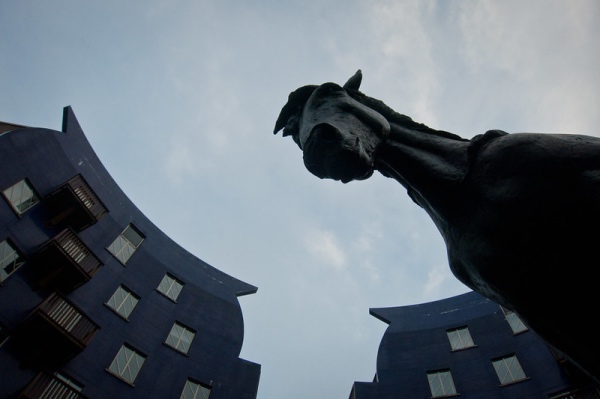
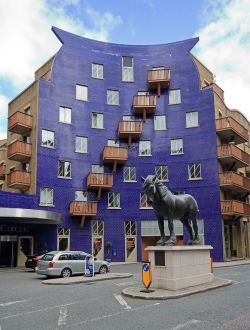
The statue of ‘Jacob’, a working dray horse, represents the horses who once worked at John Courage’s Anchor Brewhouse in Bermondsey near Tower Bridge.

The Courage horses – responsible for delivering beer from the brewery to pubs in London – were stabled beside the establishment, near where the monument now stands in Queen Elizabeth Street. Though the brewery buildings remain (and are now apartments), the stables do not.

Jacob, the statue, was installed by Jacobs Island Company and Farlane Properties in 1987 at the centre of the residential development known as ‘The Circle’ to commemorate the history of the site. The monument, which was delivered to the site by helicopter, is the work of artist Shirley Pace.

Jacob’s name apparently comes from Jacob’s Island which was formerly located in the area.

The area where the brewery stood was formerly part of the parish of Horsleydown – a moniker that is said by some to have derived from “horse-lie-down”, a description of working horses resting nearby on the south bank of the Thames before crossing London Bridge into the City of London.

PICTURES: Top – Nico Hogg (licensed under CC BY-NC 2.0); Right – Marc Pether-Longman (licensed under CC-BY-NC-ND 2.0)