This Week in London – The story of Henry VIII’s lost dagger; ‘Secret Maps’ at the British Library; and, ‘Connection and Identity’ at Greenwich…

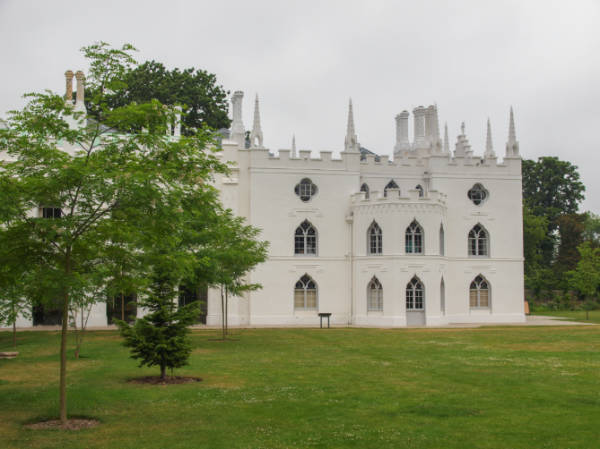
Strawberry Hill House. PICTURE: claudiodivizia/iStockphoto

• The disappearance of a jewelled Ottoman dagger which is believed to have once belonged to King Henry VIII has inspired a new exhibition at Strawberry Hill House, Horace Walpole’s former home in Twickenham in London’s west. Henry VIII’s Lost Dagger: From the Tudor Court to the Victorian Stage looks at the history of the 16th century dagger which, said to have been richly decorated with “a profusion of rubies and diamonds”, was once part of Horace Walpole’s collection. When the collection was sold in 1842, the dagger passed into ownership of the Shakespearean actor Charles John Kean who directed private theatricals for Queen Victoria at Windsor Castle. Kean (1811-1868) pioneered what critics dubbed “living museums” on the Victorian stage by using real artifacts, including the dagger, during performances. But after Kean’s death the dagger vanished without a trace. Dr Silvia Davoli, the principal curator at Strawberry Hill House, launched an investigation to find the dagger and instead found six almost identical daggers scattered around the globe. Two of these daggers – known as the Vienna and Welbeck Abbey examples – are featured in the exhibition alongside reproductions of 18th century materials which related to Walpole’s lost dagger from Yale University’s Lewis Walpole Library. The exhibition can be seen from Saturday until 16th February. Admission charge applies. For more, see www.strawberryhillhouse.org.uk.

The role maps have played in preserving secrets for the benefit of their creators from the 14th century to the present day is the subject of a new exhibition at the British Library. Secret Maps features more than 100 items ranging from hand-drawn naval charts given to Henry VIII to maps of cable networks used to intercept messages between the world wars; and the satellite tracking technology used by apps today. Among highlights are a map from 1596 attributed to Sir Walter Raleigh on an expedition in search of the mythical city of El Dorado in what is now Guyana in South America; a map produced in 1946 of British India (modern-day India, Pakistan and Bangladesh) with a ‘top secret’ report investigating the potential economic and military impact of partition for the proposed state of Pakistan; one of only two known existing copies of a secret map produced by Ordnance Survey during the General Strike of 1926 amid fears of a public uprising; and a 1927 Cable Map of the world which reveals a global network of censorship stations and was used by the British government to intercept messages sent via submarine and overland cables. Runs until 18th January (and accompanied by a programme of events). Admission charge applies. For more, see https://events.bl.uk/exhibitions/secretmaps.

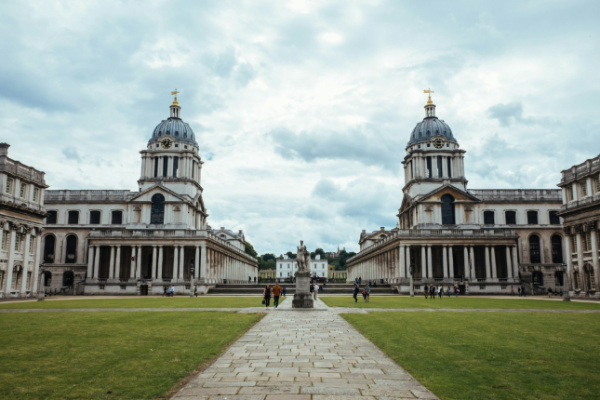
Staffordshire-based artist Peter Walker’s large scale interactive artworks, Connection and Identity, can be seen in the Painted Hall at the Old Royal Naval College in Greenwich from Friday. Identity features eight columns suspended within the hall which shift in colour and light while Connection showcases “a dramatic and modern reinterpretation of Michelangelo’s Creation of Adam“. The installation, which is located in the hall sometimes described as “Britain’s Sistine Chapel”, is accompanied by music specially composed by David Harper. Runs until 25th January. Admission charge applies. For more, see https://ornc.org/whats-on/connection-and-identity/.

Send all items for inclusion to exploringlondon@gmail.com.

This Week in London – New film tour at the Old Royal Naval College; beyond human design; the UK AIDS Memorial Quilt on display; and, the power of gardening…

PICTURE: Robert Bye/Unsplash

The Old Royal Naval College in Greenwich is celebrating at 100 years of film and TV at the site and mark the occasion, it’s launched a new film-related tour. The new tour – Wigs, Weddings, Powder and Palaces – looks at where productions such as BridgertonThe CrownPirates of the Caribbean and Les Misérables have been filmed and promises to explore some “closely guarded secrets of filmmaking” as well as letting those on the tour “step in the shoes and onto the set of stars”. The tour, which leaves from the Visitor Centre, also includes a fun and interactive 15-minute class of hand fan etiquette and its secret meanings inspired by the filming of Bridgerton. Charges apply. For bookings, head to https://ornc.org/whats-on/wigs-weddings-powder-and-palaces-film-tour/.

• A major exhibition exploring how design can help the planet thrive by shifting its focus beyond human needs has opened at the Design Museum. More Than Human – the first major exhibition from a growing movement of ‘more-than-human’ design, features more than 140 works by more than 50 artists, architects and designers. They include Japanese artist Shimabuku’s artworks created for octopuses, a new monumental seaweed installation by artist Julia Lohmann, a vast new tapestry that explores the perspectives of pollinators by Alexandra Daisy Ginsberg, and an eight metre long mural by MOTH (More Than Human Life Project) depicting the growing movement to award legal rights to waterways around the world. Runs until 5th October. Admission charges apply. For more, see https://designmuseum.org/exhibitions/more-than-human.

• The UK AIDS Memorial Quilt goes on display in the Tate Modern’s Turbine Hall today. Started around 1989, the work is made of 42 quilts and 23 individual panels which represent 384 people affected by HIV and AIDS. Volunteers from the UK AIDS Memorial Quilt Partnership will be present alongside the Tate’s staff to welcome visitors and on Saturday, at 11am and 2pm, the hall will host live readings of the names. Runs until 16th June. For more, see https://www.tate.org.uk/whats-on/tate-modern/uk-aids-memorial-quilt.

On Now: Unearthed: The Power of Gardening. This display at the British Library explores the “transformative, enriching and sometimes radical power” of gardening in the UK and the impact it’s had on the nation. Among the items on display is the only surviving illustrated collection of herbal remedies from Anglo-Saxon England (dating from around 1000–25), the first English gardening manual, Thomas Hill’s A Most Briefe and Pleasaunte Treatise (1563), the first mechanical lawnmower (1832), and gardening boots which once belonged to horticulturalist and designer Gertrude Jekyll (1843-1932). Runs until 10th August. Admission charge applies. For more, see https://events.bl.uk/exhibitions/unearthed-the-power-of-gardening.

Send all items for inclusion to exploringlondon@gmail.com
This Week in London – John Singer Sargent’s American portraits; Story Explorers at the British Library; and, narrative, humour and nostalgia at the Heath Robinson Museum…

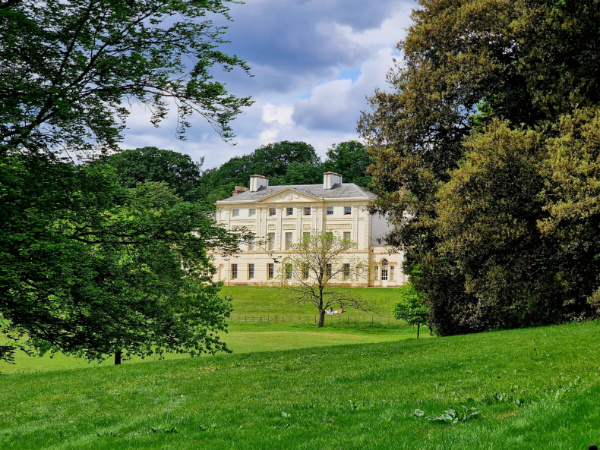
Kenwood House. PICTURE: Krisztina Anna Berecz/Unsplash

An exhibition marking the centenary of the death of painter John Singer Sargent
(1856-1925)
opens at Kenwood House tomorrow. Heiress: Sargent’s American Portraits focuses on a series of portraits of women who married into British and European aristocracy and who were once dismissively referred to as the “Dollar Princesses’. They include a war-time nurse, a helicopter pilot and the first sitting female MP. Among the works on show are Kenwood House’s portrait of Daisy Leiter, a Chicago heiress who married the Earl of Suffolk and Berkshire; a portrait of Edith, Lady Playfair, from the Museum of Fine Art, Boston; and a portrait of Mrs Joseph Chamberlain from the National Gallery of Art in Washington, DC. Runs until 5th October. Admission charge applies. For more, see https://www.english-heritage.org.uk/visit/whats-on/kenwood-heiress-exhibition-16-may–5-oct-2025/.

A new experiential space to help children and their families journey through the British Library’s collection opens tomorrow. Story Explorers takes children on a journey, directed by Daisy the library cat, through four distinct environments – a library, the far reaches of outer space, a jungle and the bottom of the ocean floor – and features sound recordings, artworks, prints and books from across the world. Among the objects they’ll encounter are Victorian record from the Library’s Sound Archive featuring animal sounds, one of the first photographs taken of the Moon, an Arabic astrological and astronomical handbook from the Middle Ages and one of the earliest printed Japanese works that captures the anatomy of a whale. The free space is open for children aged two to nine and their families until 18th January. Booking is essential. For more, see https://events.bl.uk/exhibitions/story-explorers.

Narrative, humour and nostalgia are explored into a new display at the Heath Robinson Museum in Pinner. Ways of seeing; Narrative-Humour-Nostalgia, which opens on Saturday, features painting, sculpture, video, soundscapes, and augmented reality to show how artists continue to use storytelling, satire, and memory to “provoke thought, entertain, and challenge perceptions”. Artists represented include Glenn Baxter, Sir Peter Blake, Chila Burman, Peter Coyte, Adam Dant, David van Eyssen, Nicky Hirst, Patrick Hughes, John Humphreys, Harland Miller, Heath Robinson, Richard Wilson, and Ronnie Wood. Runs until 19th July. Admission charge applies. For more, see https://www.heathrobinsonmuseum.org/whats-on/ways-of-seeing-narrative-humour-nostalgia/

Send all items for inclusion to exploringlondon@gmail.com
This Week in London – Gold bunnies at Hampton Court; St George’s Day at Trafalgar Square; and, ‘Food Season’ at the British Library…

Wishing all our readers a happy Easter!

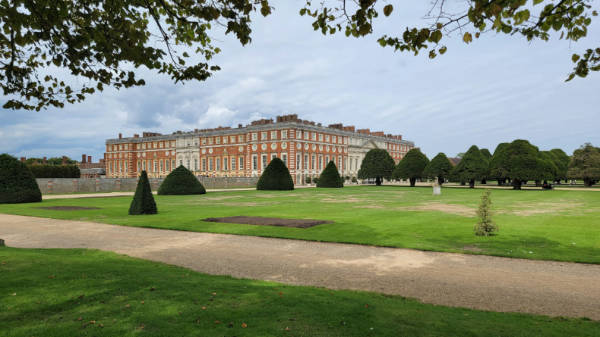
Hampton Court Palace. PICTURE:  Karen McKeogh/Unsplash

The Lindt GOLD BUNNY hunt has returned to Hampton Court Palace this Easter. People visiting the palace can seek out the gold bunnies hidden around the gardens – currently also the location of the Tulip Festival – and those children who believe they have found them all will be rewarded with a chocolate treat. Included in general admission. Runs until 21st April. For more, see https://www.hrp.org.uk/hampton-court-palace/

A free, family-friendly event celebrating England’s rich heritage through music, dance, and workshops will be held in Trafalgar Square on Monday to mark St George’s Day. The event, which runs from noon to 6pm, will be hosted by singer-songwriter Harleymoon Kemp and includes performances by The Nigel Grice Jazz Collective, the English Folk Dance and Song Society, singer-songwriter Matilda Garcia, South London-based dance company Bird and Gang, spoken word artist Palacio de Poetas, West End Kids, and harmony group Vocal Shack. St George and the famous Dragon will also be roaming the square and the event also features traditional Morris dancing from the Belles of London City, the chance to meet the Pearly Kings and Queens and a closing ceilidh led by Cut A Shine, a troupe of traditional musicians and dancers. There will also be a variety of food and beverage stalls. For more, see www.london.gov.uk/events/st-georges-day-2025

The British Library’s ‘Food Season’ – featuring a programme of live talks, panel discussions, workshops, and exclusive tastings – kicks off today. Now in its seventh year, events include a conversation with cookery icon Dame Prue Leith who will be talking about her life in food with journalist Jimi Famurewa, an expert panel discussion on the impact of weight-loss injections on our society, a contribution from cult food magazine Vittles looking at the point of a cookbook?, and a conversation between chef Nadiya Hussain and celebrated author Candice Brathwaite. There’s also an event celebrating the late Californian feminist food writer, MFK Fisher, with her daughter, Kennedy Golden, Alastair Harper from band Extradition Order (who will be performing as part of the event) and authors Rebecca May Johnson and Gurdeep Loyal. The final weekend (31st May to 1st June) will feature the ‘BIG WEEKEND’, a two day celebration of food through words, sounds, cultures, ideas and tastings. For tickets and the full programme of events, head to https://events.bl.uk/whats-on/food-season.

Send all items to exploringlondon@gmail.com.

This Week in London – Medieval women at the British Library; Renaissance drawings at The King’s Gallery; and, ‘Duo’ in the Painted Hall…

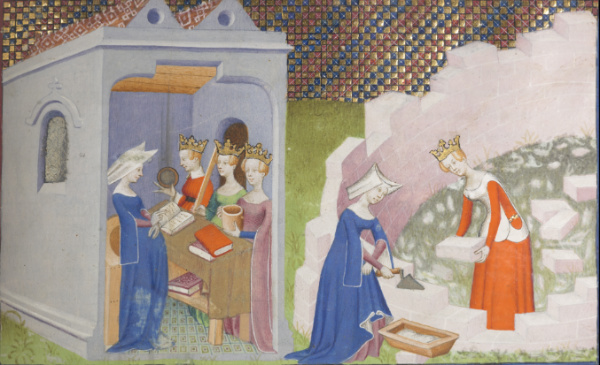
Christine de Pizan, The Book of the City of Ladies (Add Harley MS 4431, f. 290r). © British Library

The lives of medieval women are the subject of a new exhibition at the British Library. Medieval Women: In Their Own Words features more than 140 objects with highlights including a letter bearing the earliest known signature of Joan of Arc which has never before been displayed outside France, a manuscript made in the early 15th century under the personal supervision of Christine de Pizan – the first professional women author in Europe, a 12th   century ivory carving which belonged to Sybilla of Flanders, and, the oldest surviving Valentine’s Day letter, sent by Margery Brews in 1477. There’s also the book Behinat Olam Mantua, published between 1476 and 1480 by Estellina Conat who was the first recorded woman to print a book in Hebrew, the only surviving copy of the earliest known autobiography in English, The Book of Margery Kempe, which was probably written around 1438, a 15th century birthing girdle and the largest hoard of medieval gold coins ever discovered in Britain which was probably gathered as a result of Margaret of Anjou’s fundraising efforts in support of the Lancastrian side in the Wars of the Roses. The display is a multi-sensory experience which, as well as the objects on show, features scent installations, films, music and interactive digital technologies. The exhibition, which is accompanied by a programme of events, can be seen until 2nd March. Admission charge applies. For more, see www.bl.uk.

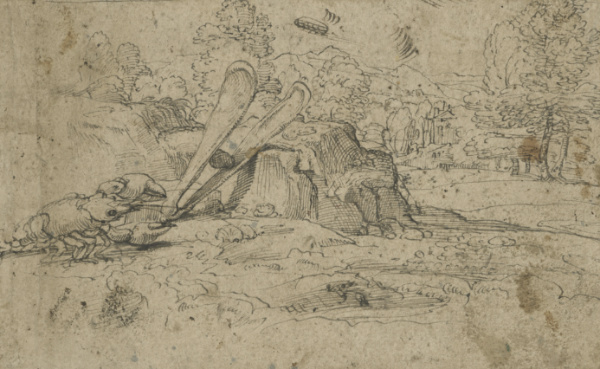
Annibale Carracci, ‘A landscape with a lobster’, c1590. © Royal Collection Enterprises Limited 2024 | Royal Collection Trust

An exhibition of the widest range of drawings from the Italian Renaissance ever to be shown in the UK opens at The King’s Gallery in Buckingham Palace on Friday. Drawing the Italian Renaissance features more than 160 works by more than 80 artists including Leonardo da Vinci, Michelangelo, Raphael and Titian. The works are all drawn from the Royal Collection and more than 30 are on display for the first time while a further 12 have never been shown in the UK. Highlights include Raphael’s The Three Graces in red chalk (c1517-18), Fra Angelico’s The bust of a cleric (c1447-50), a chalk study of an ostrich attributed to Titian (c1550), Leonardo da Vinci’s A costume study for a masque (c1517-18), Michelangelo’s The Virgin and Child with the young Baptist (c1532), and works by lesser-known artists such as Paolo Farinati’s 1590 study of three mythological figures under an arch. Admission charge applies. Can be seen until 9th March. For more, head to www.rct.uk/collection/exhibitions/drawing-the-italian-renaissance/the-kings-gallery-buckingham-palace

Melek Zeynep Bulut’s postponed installation Duo can be seen in the Painted Hall at the Old Royal Naval College in Greenwich – but only until Sunday. Presented in partnership with the London Design Festival, Duo is a suspended installation which explores the concepts of duality and interaction. Admission charge applies. For more, see https://ornc.org/whats-on/ldf/.

Send all items for inclusion to exploringlondon@gmail.com
This Week in London – Silk Road treasures; a new Lord Mayor of London; and, reassessing the UK’s early Emo scene…

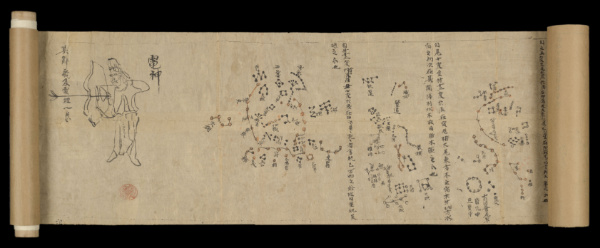
Dunhuang Star Chart 649 – 700 CE – Or.8210/S.3326 © British Library Board

The world’s earliest complete printed book with a date, the earliest known manuscript atlas of the night sky and the earliest surviving historical document in Tibetan are among treasures on show in a new exhibition at the British Library. A Silk Road Oasis: Life in Ancient Dunhuang features more than 50 manuscripts, printed documents and pictorial works including many which were sealed in the so-called ‘Library Cave’ in the Buddhist Mogao cave complex near the oasis town of Dunhuang in Gansu province, China, for almost 900 years before they were rediscovered in 1900. Highlights in the display include the Diamond Sutra (868 AD) – the world’s earliest complete printed book with a date, the Dunhuang star chart (649-700) – the earliest known manuscript atlas of the night sky (pictured), and the Old Tibetan Annals (641-761) – the earliest surviving historical document in Tibetan. On public display for the first time is a rubbing of the Stele of Sulaiman – a carved stone slab that was erected in the caves in 1348, a copy of the Diamond Sutra written in the scribe’s own blood (considered by Buddhists to be an act of powerful sincerity), and one of the most important and complete manuscripts among the Old Uyghur Manichaean texts, the Xuastuanift. There is also a 9th century manuscript fragment about the prophet Zoroaster or Zarathustra (believed to be nearly 400 years older than any other surviving Zoroastrian scripture) and the longest surviving manuscript text in the Old Turkic script, a Turkic omen text known as the Irk Bitig or Book of Omens (930 or 942). The exhibition, which explores Silk Road interactions through a case of characters including a scribe, merchant and Buddhist nun, runs until 23rd February and is accompanied by a programme of events. Admission charge applies. For more, see https://silkroad.seetickets.com/timeslots/filter/a-silk-road-oasis-life-in-ancient-dunhuang

Alderman Alastair King has been elected the 696th Lord Mayor of London. King, who succeeds Lord Mayor Professor Michael Mainelli, takes office on 8th November for a one year term with the annual Lord Mayor’s Show, which takes place the following day, his first public event. “It is a tremendous honour to be elected as the 696th Lord Mayor of the City of London,” the Lord Mayor-elect, whose role will see him serving as a global ambassador for the UK financial and professional services industry, said. “London remains the world’s leading financial centre, but global competition is fierce. We have the expertise and talent to thrive, yet we must do more to unlock growth, equip people to innovate, and harness the remarkable dynamic diversity that makes the City exceptional.”

An “unfiltered” look at the early Emo scene in the UK is the subject of a new exhibition at the Barbican Music Library. I’m Not Okay (An Emo Retrospective), a collaboration between the library and the Museum of Youth Culture (MOYC), features personal photos taken on early digital and phone cameras and focuses on the first-generation Emo scene (2004-2009), a time when bands such as My Chemical Romance, Fall Out Boy, and Finch were “hugely influential”.  Jamie Brett, creative director at the MOYC said the Emo scene “resonated deeply with teens who wanted to express their angst, doubts, insecurity, and sense of feeling and being different, and channelled their collective melancholy into a transatlantic subculture”. The exhibition, which is free to enter, can be seen until 15th January. For more, see www.cityoflondon.gov.uk/services/libraries/barbican-music-library.

Send all items for inclusion to exploringlondon@gmail.com.

This Week in London – Caravaggio’s last painting; Hampton Court’s Tulip Festival; and, ‘Beyond the Bassline’….

Caravaggio’s last painting – the 1610 work known as The Martyrdom of Saint Ursula – has gone on display in the UK for the first time in almost 20 years. The National Gallery is displaying the work – lent by the Intesa Sanpaolo Collection (Gallerie d’Italia – Naples) – alongside another late work by the Italian artist from the gallery own collection – Salome receives the Head of John the Baptist (about 1609–10). The Martyrdom of Saint Ursula, which features a self-portrait of the artist, was only reattributed to Caravaggio in 1980 following the discovery of an archival letter describing its commission. The letter – which is being displayed along with the painting – was sent from Naples, where Caravaggio created the work, to Genoa, where his patron, Marcantonio Doria, lived. Caravaggio died in Porto Ercole on 18th July, 1610, less than two months after finishing the work. He was attempting to return to Rome where he believed he would be pardoned for a 1606 murder at the time. Admission to the display is free. Runs until 21st July. For more, see www.nationalgallery.org.uk.

Tulips in the Netherlands. PICTURE: Giu Vicente/Unsplash

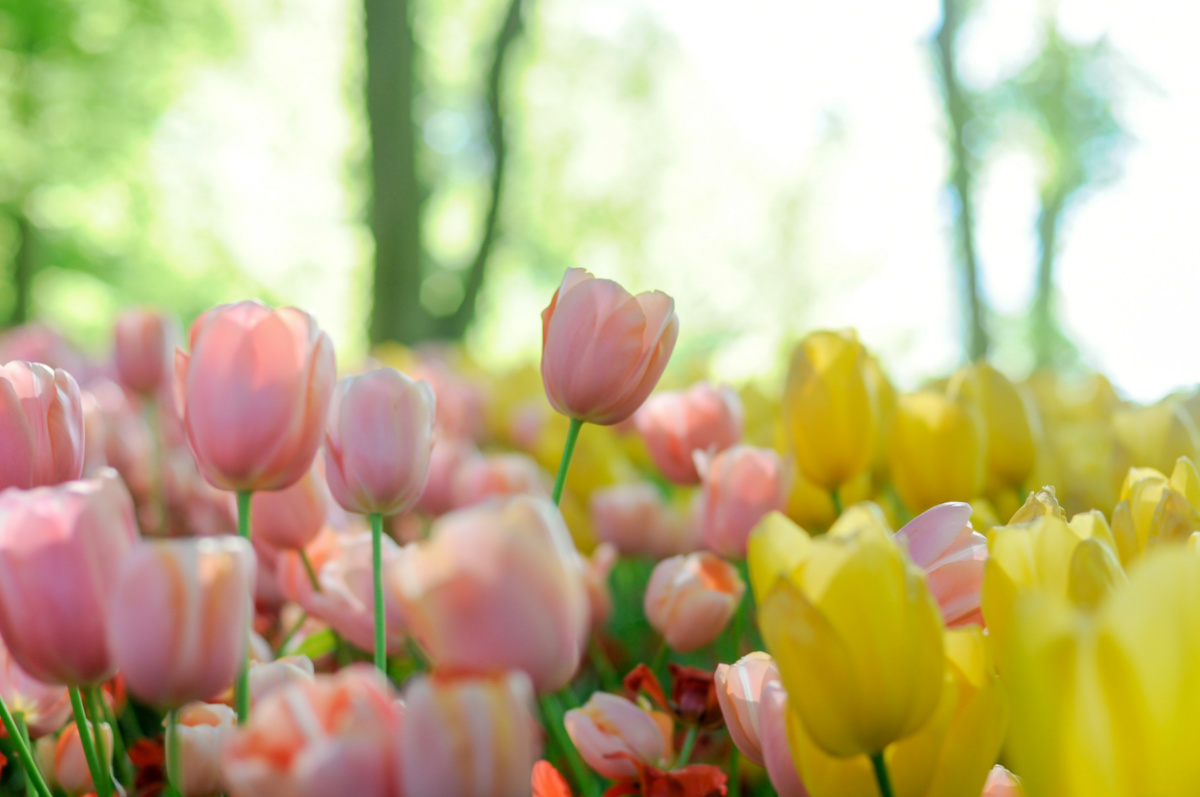
Hampton Court Palace’s Tulip Festival is on again. Displays include thousands of tulips spilling from a Victorian horse cart in the heart of the palace courtyards, giving the appearance of a Dutch flower seller’s cart, ‘floating’ bowls in the Great Fountain, free-style plantings in the kitchen gardens and more than 10,000 tulips in a display in Fountain Court. There are also daily ‘Tulip Talks’ sharing the history of the flower and Queen Mary II, who was responsible for introducing them to Hampton Court. Runs until 6th May (including in palace admission). For more, see www.hrp.org.uk/hampton-court-palace/whats-on/tulip-festival/.

Five hundred years of Black British music is being celebrated in a new exhibition at the British Library. Beyond the Bassline: 500 Years of Black British Music features soundscapes, artworks and films along with costumes, interactive displays, and of course, music. Highlights among the more than 200 exhibits include letters from 18th-century composer Ignatius Sancho, records by likes of Fela Kuti and Shirley Bassey, a nostalgic video archive of grime’s golden era captured on Risky Roadz DVD, and the equipment that Jamal Edwards used to start SB.TV, theYouTube channel dedicated to Black British music. The display concludes with a multi-screen film installation by South London-based musical movement and curatorial platform Touching Bass. Admission charge applies (with Pay What You Can days on the first Wednesday of each month). Runs until 26th August. For more, see https://beyondthebassline.seetickets.com/timeslots/filter/beyond-the-bassline.

Send all items to exploringlondon@gmail.com
This Week in London – Museum of London Docklands marks 20 years; story-telling and technology; and, marking Windrush at the V&A…

The 20th anniversary of the Museum of London Docklands will be marked on Saturday night with the Big Docklands Street Party celebrating the history, cultures and communities of the East End. . Two decades after Queen Elizabeth II opened the museum, the street party and museum late includes live performances headlined by Vanity Milan, star of Ru Paul’s Drag Race, street food, pop-up bars, talks and tours, workshops, film screenings, a makers market, pub quiz and after hours gallery access. The museum’s big day will also be marked with the ringing of the Bow Bells – tradition holds that to be a true Cockney one must be born within earshot of the Bow Bells. For tickets and further information, head to www.museumoflondon.org.uk/museum-london-docklands/whats-on/mold20

Digital Storytelling at the British Library. PICTURE © British Library

• A new exhibition showcasing how technology is transforming story-telling has opened at the British Library. Digital Storytelling features a range of digital stories including 80 Days, a four-time BAFTA nominated interactive adaptation of Jules Verne’s Around the World in Eighty Days, and the exclusive public preview of Windrush Tales, the world’s first interactive narrative game based on the experiences of Caribbean immigrants in post-war Britain as well as the popular auto fiction fitness app Zombies, Run! and Breathe, a ghost story that “follows the reader around”, reacting to users’ real-time location data. The display will also explore how writers and artists look into the lived realities behind the news with the inclusion of the likes of A Dictionary of the Revolution, which charts the evolution of political language in Egypt during the uprising in 2011, and c ya laterrrr, an intimate autobiographical hypertext account of the loss of author Dan Hett’s brother in the 2017 Manchester Arena terrorist attack. The exhibition, which runs until 15th October, is accompanied by a series of events. Admission charge applies. For more, see www.bl.uk/events/digital-storytelling.

Two portraits created three centuries apart and depicting two Jamaican gentlemen scholars – Vanley Burke and Francis Williams – are at the heart of a display at the V&A marking the 75th anniversary of the arrival of HMT Empire Windrush. The display features documentary photographs by Burke, the ‘Godfather of Black British photography’, and everyday things collected by him as well as historical artefacts and scientific images that shed new light on the museum’s enigmatic portrait of 18th-century Jamaican writer Francis William. The free display, which opens Monday, can be seen in Galleries 88a and 90. The occasion is also being marked by a series of events – for more, see vam.ac.uk/season/2023/windrush-75.

Send all items to exploringlondon@gmail.com
This Week in London – ‘Indo + Caribbean’; 19th century China explored; and, animals, art, science and sound at the British Library…

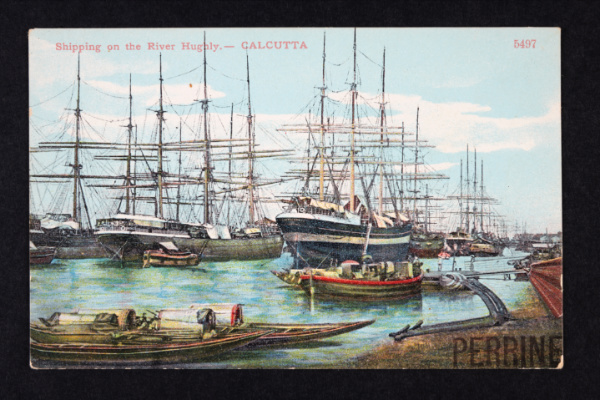
Postcard – Shipping on the River Hughly Calcutta, cira 1900. PICTURE: Courtesy of JF Manicom

A new exhibition examining the history of Indian indenture in the British Caribbean and Indo-Caribbean culture in London today opens at the Museum of London Docklands from tomorrow. Indo + Caribbean: The creation of a culture puts a spotlight on the 450,000 Indians who left India between 1838 and 1917 to work for periods of three to five years on Caribbean plantations in return for transport, a minimal wage and some basic provisions. Among the objects on show are letters from Caribbean planter Sir John Gladstone petitioning the government to provide workers from India as well as contracts, shipping company records, postcards, and papers from the Parliamentary Archives that give insights into the realities of life under indenture. Also on display are photos, jewellery, film and artwork which uncover personal stories and family memories from London’s Indo-Caribbean community. Admission to the exhibition in the London, Sugar and Slavery gallery is free. For more, see www.museumoflondon.org.uk.

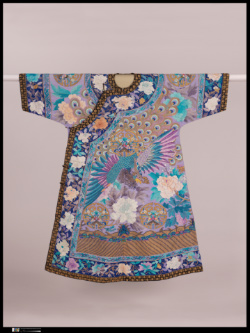
Empress Dowager Cixi’s robe, China, about 1880–1908. © The Metropolitan Museum of Art, New York.

The resilience and creativity of people in 19th century China is explored in a new exhibition at the British Museum which opens today. The Citi exhibition China’s hidden century examines the age of the Qing Dynasty, which ruled from 1796 to 1912, and focuses on a spectrum of different groups in society – from members of the court and military to artists and writers, farmers and city-dwellers as well as the globalised communities of merchants, scientists and diplomats, reformers and revolutionaries. Among the more than 300 objects on display are a water-proof straw cape made for a street worker, farmer or fisherman which is being publicly displayed for the first time, cloisonné vases given by the Last Emperor’s court to King George and Queen Mary for their coronation in 1911, and, a silk robe which belonged to the Empress Dowager Cixi, de facto ruler of China from 1861 to 1908 and a contemporary of Queen Victoria. Admission charge applies. Runs in the Sainsbury Exhibitions Gallery until 8th October. For more, see britishmuseum.org/exhibitions/chinas-hidden-century.

Animals: Art, Science, and Sound at the British Library

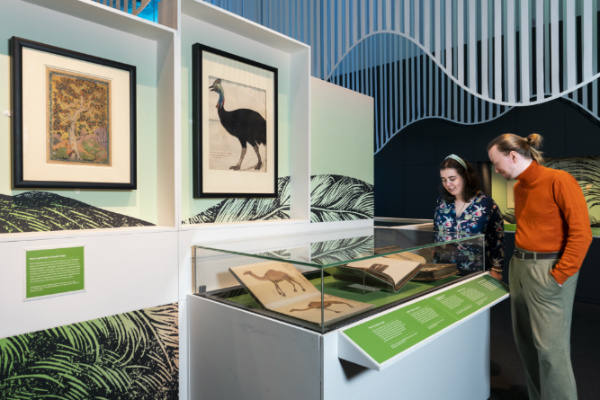
The intersection between science, art and sound and how that impacts our understanding of the natural world is explored in an exhibition at the British Library. Animals: Art, Science and Sound features 120 artworks, manuscripts, sound recordings and books, many of which are on display for the first time. They include the earliest known illustrated Arabic scientific work documenting the characteristics of animals alongside their medical uses (c1225), the earliest use of the word ‘shark’ in printed English (1569), Leonardo da Vinci’s notes (1500-08) on the impact of wind on a bird in flight, and one of the rarest ichthyology publications ever produced, The Fresh-Water Fishes of Great Britain (1828-38), which features hand-painted illustrations by Sarah Bowdich. Also present is the first commercially published recording of an animal from 1910 titled Actual Bird Record Made by a Captive Nightingale (No. I) by The Gramophone Company Limited and one of the earliest portable bat detectors – the Holgate Mk VI – used by amateur naturalist John Hooper during the 1960s-70s to capture some of the first sound recordings of British bats. The exhibition, which runs until 28th August and which carries an admission charge, is accompanied by two free displays at the library – Animal Rights: From the Margins to the Mainstream (runs to 9th July) and Microsculpture (runs to 20th November). For more, see www.bl.uk/events/animals.

Send all items to exploringlondon@gmail.com.

This Week in London – Coronations at Westminster Abbey; tulips at Hampton Court; St Bartholomew at The National Gallery; and, Food Season at the British Library…

A new exhibition exploring the 1,000-year history of coronations at Westminster Abbey has opened in the abbey’s medieval chapter house. The exhibition, which has opened ahead of the coronation of King Charles III on 6th May, draws on historic illustrations and archive photography to explore the elements of the coronation service including the oath-taking, anointing, investing and crowning and takes a closer look any some of key artefacts present in the ceremony including the Coronation Chair. The exhibition, which is free with admission to the abbey and which runs until the end of September, is part of a season of events celebrating the coronation including themed late evenings, family activities and special afternoon teas at the Cellarium Café. Meanwhile, the abbey has also announced that visitors will be able to view the ‘Coronation Theatre’ – the special area which will be built for the historic occasion, from the Abbey’s North and South Transepts – following the coronation. Tickets for the special viewing – which will include the chance to see key elements from the coronation service including the Coronation Chair still in position on the Cosmati Pavement – can be purchased for timed slots between 8th and 13th May. For more on the abbey’s events surrounding the coronation, see www.westminster-abbey.org/events.

Tulips at Hampton Court Palace in 2021. PICTURE: Derek Winterburn (licensed under CC BY-ND 2.0)

Hampton Court Palace bursts into colour from Friday with its annual Tulip Festival. More than 110,000 bulbs have been planted to creat dramatic displays in the formal gardens and cobbled courtyards, among them a selection of heirloom bulbs on display in the Lower Orangery Garden which presents visitors with the chance to see tulips as they would have looked during the time of King William III and Queen Mary II, soon after the flowers were first introduced to Britain. Thanks to a special relationship with Netherlands-based Hortus Bulborum, the bulbs on display include Sylvestris (1595) and Rubella Broken (1700) as well as the Orange King (1903) and Queen of the Night (1940). Other highlights of the festival include 3,000 wine-toned tulips, including the merlot variety, flowing down from the steps and parapet of the Wine Fountain, as well as a floral fantasy in the palace’s courtyards in which tulips such as Raspberry Ripple, Apricot Emperor and Purple Prince flow out of wheelbarrows, barrels and a horse cart, and a free-style tulip planting in the Kitchen Garden inspired by Van Gogh’s 1883 painting, Bulb Fields. Runs until 1st May. Admission charge applies. For more, see https://www.hrp.org.uk/hampton-court-palace/whats-on/tulip-festival/.

Bernardo Cavallino (1616 ‑ 1656?), Saint Bartholomew (about 1640-1645), oil on canvas H x W: 176 x 125.5 cm; The National Gallery, London. Bought with the support of the American Friends of the National Gallery, 2023
PICTURE: © The National Gallery, London

The recently acquired Bernardo Cavallino work, Saint Bartholomew has gone on show at The National Gallery. The painting, which dates from 1640-45 and which was last exhibited at The Metropolitan Museum of Art in New York in 1993, is being displayed alongside other 17th century works by artists such as Caravaggio, Artemisia and Orazio Gentileschi, Guercino, Reni and Ribera in the Hans and Julia Rausing Room (Room 32). The National Gallery has one other work by Cavallino – Christ driving the Traders from the Temple – but his depiction of Saint Bartholomew is considered one of his most splendid works. Admission is free. For more, see nationalgallery.org.uk.

Featuring everything from a celebration of African Caribbean takeaways to a “deep-dive” into the issues surrounding food production and access, Food Season kicks off at the British Library Monday. Highlights include a discussion of the sandwich by food writers Nigella Lawson, Jonathan Nunn and Rebecca May Johnson, a day-long celebration of African Caribbean cuisine featuring chefs and broadcasters Jimi Famurewa, Fatmata Binta and Andi Oliver, and, an exploration of the big challenges in food, land use and food production featuring author Henry Dimbleby alongside Dr Tara Garnett, Nick Saltmarsh, Abby Allen and Dimitri Houtart. Runs until 7th June. Admission charges apply. For the full programme, see www.bl.uk/events/food-season.

Send all items to exploringlondon@gmail.com

This Week in London – 10 years of Christmas at Kew; British and Chinese at the British Library; and, The Horror Show! at Somerset House…

Christmas returned to Kew this week with the launch of its 10th festive light trail. This year’s display features some past favourites as well as new light installations including Feathers by Pyrite Creative which features 16 floating UV feathers which sway in the breeze, LuminARTi’s Willow Hives which illuminate natural forms, and Illusion Hole by UxU Studio, a geometrically arranged pattern situated on the lake which presents visitors with an optical illusion in which water formed by light appears to flow into an unknown abyss. The popular Fire Garden has returned along with the Christmas Cathedral and a series of breath-taking projections dance across the surface of the Palm House and adjacent lake, set to a memorable soundtrack of much-loved Christmas classics. The display can be seen until 8th January. Admission charge applies. For more, see www.kew.org/christmas.

Frank Soo at the Victoria Ground, Stoke, 1933. PICTURE: The Sentinel & StokeonTrentLive

A free exhibition exploring British Chinese communities and culture opens at the British Library tomorrow. Chinese and British celebrates the lasting impact of Chinese communities in the UK and presents personal stories and artefacts. Highlights include a hand-drawn map of China by Shen Fuzong – the first recorded Chinese person to visit the UK in 1687, a detailed doll’s house model of a Chinese takeaway, Ling Shuhua’s 1953 autobiography, Ancient Melodies, which was dedicated to Virginia Woolf who offered advice on drafts of her memoir, a fan made of bamboo slats and paper from mulberry bark in Hangzhou and pair of hand-embroidered shoes belonging to Kathy Hall, a London-based practitioner of traditional Chinese opera. There’s also trench art produced by Chinese Labour Corps workers during World War I, cigarette cards featuring Frank Soo, the first player of Chinese origin to play in the English Football League, and Rosanna Lee’s 2022 film Parallel which follows a family during their weekly ritual of going out for dim sum at the Pearl Dragon restaurant in Southend-on-Sea. The exhibition can be seen until 23rd April. For more, see www.bl.uk.

On Now: The Horror Show!: A Twisted Tale of Modern Britain. This display at Somersert House, divided into three acts – ‘Monster’, ‘Ghost’ and ‘Witch’, explores how exploring how ideas rooted in horror have informed the last 50 years of creative rebellion, looking beyond horror as a genre and instead “taking it as a reaction and provocation to our most troubling times”. The display features more than 200 artworks and culturally significant objects including Chila Burman’s If There is No Struggle, There is no Progress – Uprising (1981), Derek Jarman’s last feature and magnum opus, Blue (1993), and a striking presentation of Turner Prize winning-artist Tai Shani’s The Neon Hieroglyph (2021). Admission charges apply. Runs until 19th February. For more, see somersethouse.org.uk. ​

Send all items to exploringlondon@gmail.com
This Week in London – London’s history of executions; myth-making around Alexander the Great; and, Édouard Manet’s ‘Eva Gonzalès’ examined…

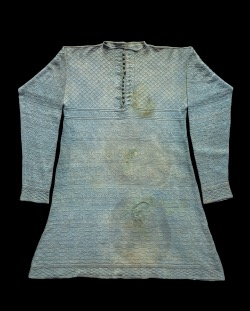
Charles I vest, Executions 2022 © Museum of London

• The history of public executions in London – spanning a period of some 700 years – is the subject of a landmark new exhibition at the Museum of London Docklands in West India Quay. Executions explores how capital punishment became embedded in the city’s landscape – from the first recorded public execution in 1196 to the last in 1868 – and looks at the rarely told and often tragic human stories behind them. Items on display include an intricately woven silk vest said to have been worn by King Charles I at his execution outside the Banqueting House (pictured), a 300-year-old bedsheet embroidered with a love note in human hair and personal items which once belonged to prison reformer Elizabeth Fry. Visitors can also stand in front of the Newgate Prison door, marking the last steps for prisoners heading to the scaffold, and see a dramatic recreation of the Tyburn “Triple Tree” gallows. Visitors will also learn about the 200 offences that became punishable by death and the spectacle and rituals of execution days as well as what led celebrity criminals to the gallows. Admission charge applies. Runs until 16th April next year. For more, see https://www.museumoflondon.org.uk/museum-london/whats-on/exhibitions/executions.

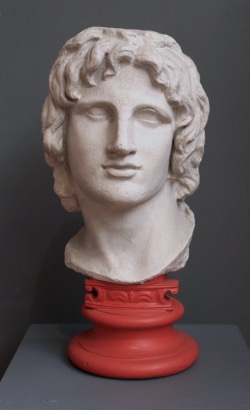
Marble head of Alexander © Museum of Classical Archaelogy

The first exhibition exploring the rich history of story-telling around one of the most famous figures of the ancient world – Alexander the Great – opens at the British Library tomorrow. Alexander the Great: The Making of a Myth features almost 140 exhibits from 25 countries including astrological clay tablets, ancient papyri and medieval manuscripts as well as comics, films and video games. It reveals how Alexander’s character has been adapted and appropriated by different cultures and religions, with conflicting interpretations. Runs until 19th February. Admission charge applies. A season of in-person and online events accompanies the exhibition. For more, see www.bl.uk/events/alexander-the-great-the-making-of-a-myth.

• Portraits of the Euro 2020 England men’s football squad and its manager, Gareth Southgate, will be shown at the City of London Corporation’s Guildhall Art Gallery from today. The free exhibition, This is England, features the most successful men’s national team – finalists in Euro 2020 – since the winners of the World Cup in 1966, from Harry Kane and Jude Bellingham to Bukayo Saka and Raheem Sterling. The paintings are the work of artist Matt Small and were commissioned by the FA and exhibited at the St George training ground during the Euro 2020 finals. The paintings can be seen until 19th February. For more, see www.cityoflondon.gov.uk/events/this-is-england.

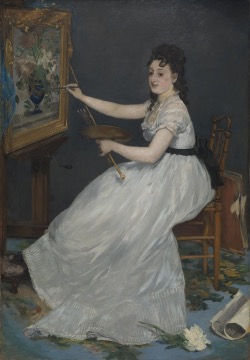
Edouard Manet, ‘Eva Gonzalès’, 1870

Édouard Manet’s 1870 portrait of Eva Gonzalès is the subject of a new exhibition at The National Gallery opening on Friday. The painting was considered by the early 20th century to be the most famous modern French painting in the UK and Ireland. The exhibition, the first in a new series of ‘Discover’ exhibitions to be staged in the Sunley Room with the aim of exploring well-known paintings in the collection through a contemporary lens, examines the lifelong artistic dialogue and the complexities of the friendship and mentorship between Manet and Gonzalès, his only formal pupil. It also looks at the broader context of female self portraits from the 18th to early 20th centuries, alongside portraits of women artists by male friends, husbands, and teachers The free exhibition includes works by Eva Gonzalès, Elisabeth Louise Vigée Le Brun, Edouard Manet, Berthe Morisot, Alfred Stevens and Laura Knight. Runs until 15th January. For more, see www.nationalgallery.org.uk/exhibitions/discover-manet-eva-gonzalès.

Send all items for inclusion to exploringlondon@gmail.com.

This Week in London – Ukraine’s culture on show; spotlight on the news; St George’s Day; and, London Transport’s posters at the Depot…

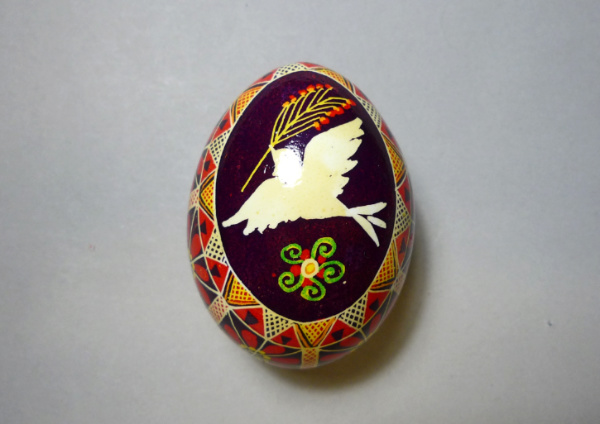
Easter egg, a dove of peace, Ukraine, 1970-1980. © The Trustees of the British Museum.

• A free display on the cultural heritage of Ukraine has opened at the British Museum. Located in the museum’s ‘Collecting the world’ gallery, Ukraine: Culture in crisis features objects drawn from the museum’s collection including a 5,500-year-old painted storage jar, hand-coloured lithographs of a man and a woman in Ukrainian dress dating from about 1813, and, an Easter egg decorated with the dove of peace (pictured) dating from between 1970 and 1980. There are also objects from the Greek colony of Olbia established on the Black Sea between 600 and 300 BC including a black glazed, fluted amphora from southern Italy dating from between 300 and 250BC. For more, head to www.britishmuseum.org. To learn more about the protection of cultural heritage in Ukraine visit icom-poland.mini.icom.museum/icom-poland-appeal-help-us-help-ukraine.

The earliest surviving printed news report in Britain of the 1513 Battle of Flodden and an original BBC radio script of the D-Day landings are among exhibits at the British Library’s first major exhibition putting a spotlight on the role news plays in our society. Other exhibits on show at Breaking the News, which opens on Friday, include smashed hard drives used by The Guardian to store Edward Snowden’s hard files. The display explores what makes an event news and the meaning of a free press as well as the ethics involved in making the news, news objectivity and how the way we encounter news has evolved over five centuries of news publication in Britain. Runs until 21st August. Admission charge applies. For more, head to www.bl.uk/events/breaking-the-news.

St George’s Day celebrations return to Trafalgar Square this Saturday. The free family event, which runs from noon until 6pm, will feature live music by the likes of string quartet Bowjangles, hoedown collective Cut A Shine, brass band Das Brass and folk headliner James Riley & the Rooftop Assembly. There will also be appearances from St George with his Dragon, Divine stilt walkers and the Pearly Kings and Queens as well as a range of food stalls. Other family-oriented activities including The Knights Training School, the Storytorium, a dragon Selfie station, face painting, upcycled arts and crafts, and a games area.

The art and poster stores at the London Transport Museum’s Depot in Acton Town will be open to the public this weekend. The Art of the Poster Open Days, which run from today until Sunday, will give the public the chance to view some of the more than 30,000 posters in the depot’s collection and hear from expert guides about how posters have characterised London and its transport over the past century. There will also be talks from artists, curators and historians and visitors have the chance to design their own posters in creative workshops as well as, on Saturday and Sunday, riding the London Transport Miniature Railway. Timed tickets must be booked in advance. Admission charges apply. For bookings, head to www.ltmuseum.co.uk/whats-on/depot/art-poster.

Send all items for inclusion to exploringlondon@gmail.com.

This Week in London – Beryl Gilroy at the British Library; Milligan statue acquired; and, ‘Play in the Pandemic’…

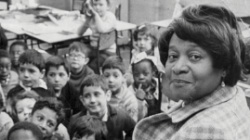
Beryl Gilroy © The Estate of Beryl Gilroy

The archive of writer, teacher and ethno-psychotherapist Beryl Gilroy has been acquired by the British Library. Highlights from the archive, which includes working drafts for published and unpublished novels, letters with publishers and literary agents and ‘born-digital’ material, is at the centre of the free Celebrating Beryl Gilroy display which opened in the Treasures Gallery earlier this month. Gilroy, who was born in Guyana (then British Guiana) and who immigrated to Britain in 1952, became the first black head teacher in London in 1969 and wrote a number of acclaimed children’s books to better reflect the lives of her pupils. Her works – which explore the lives of families, particularly of women and children, the impact of 20th century migration and societal change that came as a result – also included number of novels, a collection of poems, non-fiction writing and a 1976 memoir, Black Teacher. The free display can be seen until 26th June. For more, see www.bl.uk.

A controversial bronze statue of merchant and slave trader Robert Milligan which formerly stood on West India Quay outside the Museum of London Docklands is joining the museum’s collection. The statue was removed in June, 2020, following a petition signed by over 4,000 people called for it to be removed from public view. Its acquisition by the museum follows a public consultation conducted in partnership with the Tower Hamlets Council and landowners Canal & River Trust, which concluded that the statue should be housed in a museum where it can be fully contextualised. “Over the last 15 years, the museum has been working with academics, community leaders and activists to tell the story of London’s involvement in the transatlantic slave trade, and give voice to its legacy,” said a museum spokesman. “The West India Docks, championed by Milligan using wealth from the slave trade, are a visible reminder of how this history has shaped our city. It is right and important that we acknowledge this in the statue’s story. We will now take time to consult with the local community to decide how best to take this forward as part of our collection.” The statue will be held in storage whilst the museum consults further with local communities about how best to present it.

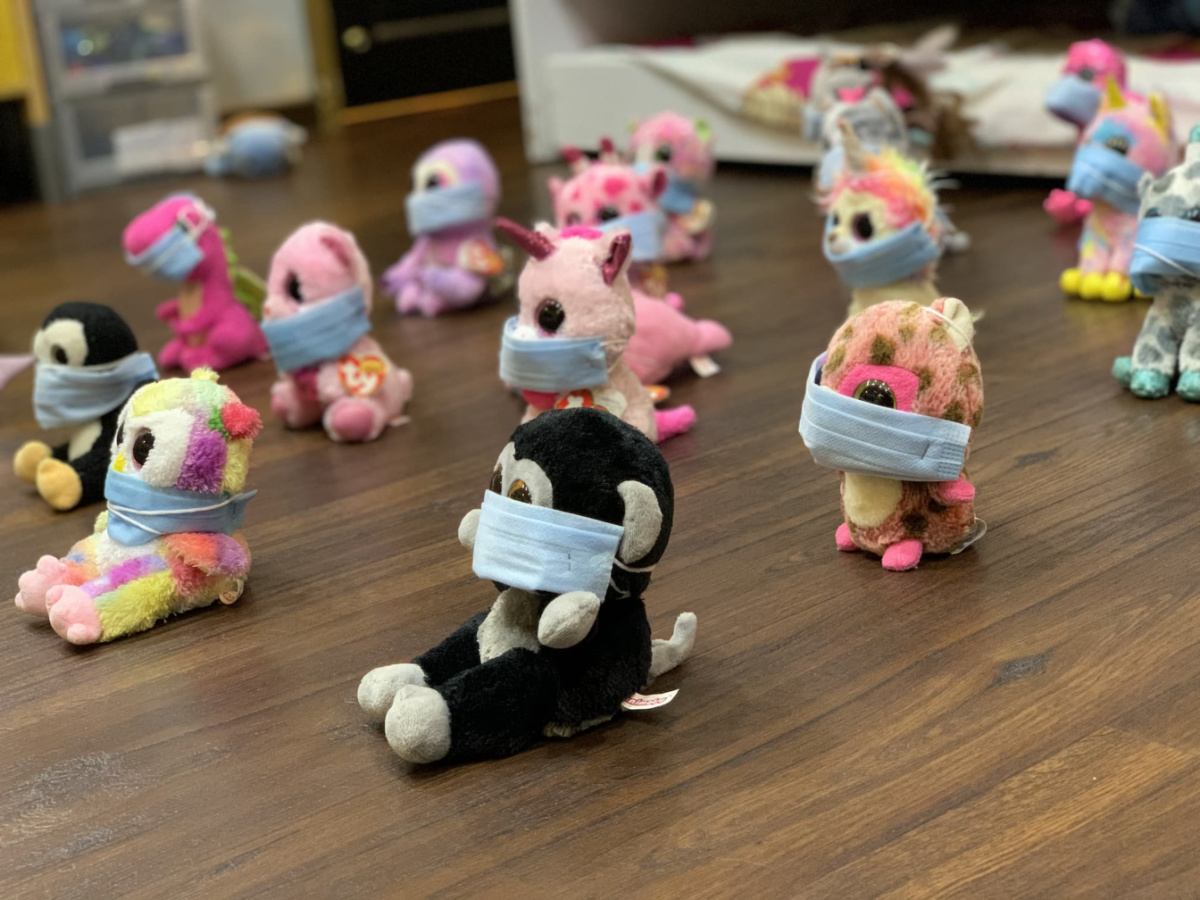
TY® Toy Collection with IV drips, masks and in hospital This eight-year-old child’s toy collection reflected many real-life pandemic experiences, such as wearing masks, getting vaccinated and hospital treatments.Submitted by Fei Victor Lim 2020-21, Singapore © The Play Observatory. PICTURE: Play In The Pandemic, curated by Young V&A, from 23 March 2022, playinthepandemic.play-observatory.com

• The impact of the global coronavirus pandemic on children’s play is the subject of an online exhibition launched by Young V&A and its partners UCL and the University of Sheffield this week. Play In The Pandemic features some of the 100 submissions sent in from around the globe in answer to a call-out from The Play Observatory research project for people to submit their experiences of play – everything from music videos to children’s artworks and films made by parents showing their children splashing in puddles – alongside objects from the Young V&A’s collection. The exhibition, which takes the form of an unfolding origami house, also features a series of activities – ranging from how to make your own origami house to creating dens and window boxes for people to get involved. Head to the Play Observatory website.

Send all items to exploringlondon@gmail.com.

This Week in London – Hampton Court’s astronomical clock after hours; Beethoven explored at the British Library; and, the Sherman Rangers Yeomanry at the National Army Museum…

Palace of Stardust at Hampton Court Palace. PICTURE: © Historic Royal Palaces

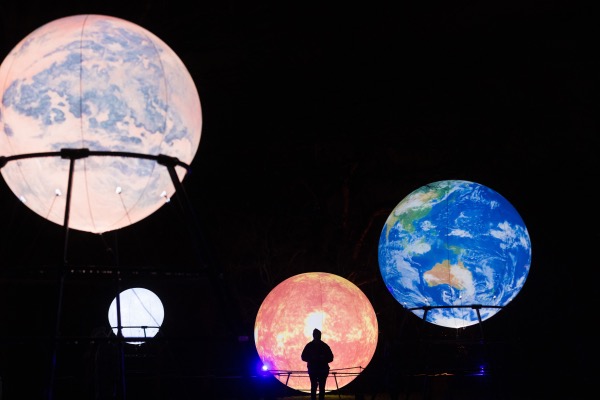
• An after-hours light trail featuring clocks, moons, planets and sundials has opened at Hampton Court Palace this week. Palace of Stardust takes people through the palace’s historic cobbled courtyards and gardens which have been filled with magical illuminations inspired by the palace’s famous astronomical clock installed at the command of King Henry VIII. Visitors to the display, designed and created by award-winning outdoor event producers Wild Rumpus, will uncover the mysterious meanings on the clock’s dial, attend a flickering moonlit ball in the East Front Gardens, hear the ancient royal trees as they whisper their secrets and peek into mysterious miniature shadow worlds before being transported to another planet in the deepest depths of the Wilderness, once home to King Charles II’s formal pleasure garden. Seasonal food and drink will also be available. Runs until 3rd January. Admission charge applies. For more, see www.hrp.org.uk/hampton-court-palace/whats- on/palace-of-stardust-at-hampton-court-palace.

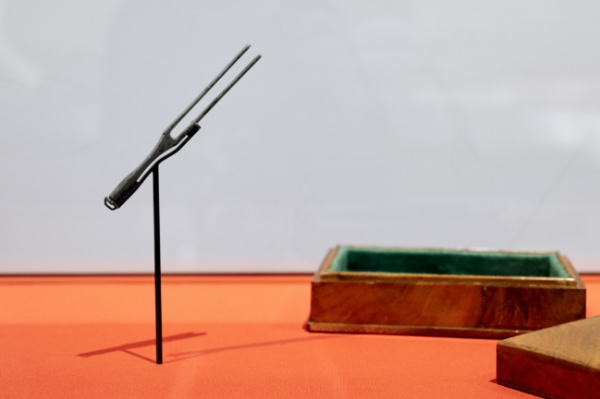
Beethoven’s tuning fork. PICTURE: © British Library Board, Add. MS 71148 A. Photography by Justine Trickett

One of the greatest composers of all time, Ludwig van Beethoven (1770-1827), is the subject of a new exhibition opening at the British Library. The display, which draws on the library’s world-famous collection, features manuscripts, archival documents, personal belongings and sound recordings with highlights including Beethoven’s own copy of his earliest published works which he composed at age 12 and 13, sketches for his Pastoral Symphony and late string quartets, a tuning fork which is thought to have belonged to him until 1803, and a pocket sketchbook the composer used to note down musical ideas when out walking, which dates from 1825. There is also a specially commissioned audio-visual incorporating bone conduction to present extracts from the composer’s music in an engaging and immersive way, in particular to those with hearing impairments. The exhibition runs until 24th April. Admission charge applies. For more, see www.bl.uk/events/beethoven. To coincide with the 250th anniversary of Beethoven’s birth, the library last year launched ‘Discovering Music: 19th century‘, a free online resource which explores key works of 19th-century classical music and the social, political and cultural contexts in which they were written.

The World War II story of the elite tank regiment, the Sherwood Rangers Yeomanry, is being told in a new exhibition which opens today at the National Army Museum in Chelsea. Based on broadcaster and historian James Holland’s book, Brothers in Arms, the exhibition spans the period from the D-Day landings on 6th June, 1944, to VE Day almost a year later and focuses on the stories of eight soldiers who served in the regiment as it explores the dangers and pressures they faced and the camaraderie and bonds that bound them together. The exhibition is being accompanied by a programme of events. This Saturday, the Museum is putting a spotlight on tanks with free talks, tours and tank challenges for the family – plus the chance to see a Sherman tank parked up at the Museum. Online booking is recommended. For more, see www.nam.ac.uk/whats-on/brothers-arms.

Send all items for inclusion to exploringlondon@gmail.com.

This Week in London – William Hogarth and the Europeans; Christmas in the post; and, Paul McCartney’s lyrics…

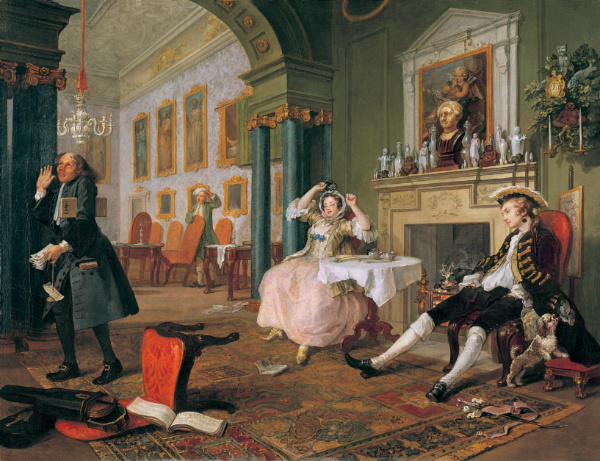
William Hogarth, ‘Marriage A-la-Mode: 2, The Tête à Tête’ (1743) 45 © The National Gallery, London.

• See the works of 18th century English artist William Hogarth alongside those of his European contemporaries in a new exhibition which opened at Tate Britain this week. Hogarth and Europe features more than 60 of Hogarth’s works and has some of his best-known paintings and prints – such as Marriage A-la-Mode (1743), The Gate of Calais (1748), Gin Lane (1751) and his celebrated series, A Rake’s Progress (1734) – shown alongside works by famed European artists including Jean-Siméon Chardin, Pietro Longhi, and Cornelis Troost. The display also includes Hogarth’s work, Miss Mary Edwards (1742) – it depicts the eccentric, wealthy patron who commissioned many of Hogarth’s best-known works and has not been seen in the UK for more than century. Admission charge applies. See www.tate.org.uk.

The first commercial Christmas card, created after civil servant Henry Cole commissioned artist​ John​ Callcott​ Horsley to design one for him in 1843, can once again been seen at The Postal Museum’s permanent display. That’s just one of the drawcards (pardon the pun), at the Postal Museum in the lead-up to Christmas with others including a new display, Letters to Santa, featuring Royal Mail cards sent by Father Christmas to children between 1963 and 2010 (from a recently donated collection), and the chance to ride on the Mail Rail which has undergone a Christmas makeover. The museum is also holding a series of ‘Festive Family Fun Days’ on selected dates in December. Admission charges apply. For more, head to www.postalmuseum.org.

Handwritten lyrics and photographs spanning the career of Paul McCartney feature in a new free Entrance Hall display at the British Library from tomorrow. Paul McCartney: The Lyrics features previously unseen materials from his personal archives as it reveals the process and people behind some of the most famous songs of all time, from some of his earliest compositions to his time with The Beatles, Wings and through to today. The display accompanies his new book, The Lyrics: 1956 to the Present. Can be seen until 13th March next year. For more, see www.bl.uk/events/paul-mccartney-the-lyrics.

Send all items for inclusion to exploringlondon@gmail.com.

This Week in London – Elizabeth I and Mary, Queen of Scots; Ellen and William Craft honoured; and, Kehinde Wiley’s ‘Portrait of Melissa Thompson’…

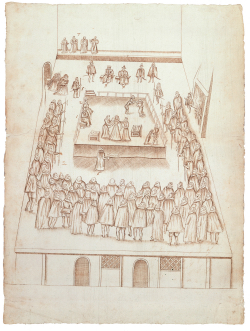
Ink and pencil drawing of the execution of Mary, Queen of Scots at Fotheringhay Castle, 8th February, 1587 © British Library (Additional MS 48027, f. 650r)

• The complex relationship between Queen Elizabeth I and Mary, Queen of Scots, is the subject of a new exhibition opening at the British Library in King’s Cross tomorrow. Highlights of Elizabeth and Mary: Royal Cousins, Rival Queens, the first major exhibition to consider both women together, include Queen Elizabeth I’s 1545 handwritten translation of her stepmother Katherine Parr’s Prayers and Meditations – a gift for her father King Henry VIII, a sonnet by Mary, Queen of Scots, which was handwritten the night before she was executed in 1587 (possibly the last thing she ever wrote), the ‘Penicuik Jewels’ which she is thought to have given away on the day of her death and Robert Beale’s eye-witness drawing depicting her entering the hall, disrobing, and placing her head on the block (pictured right). Other items on show include King Henry VIII’s Great Bible (dating from 1540, it was later inherited by Elizabeth I), Elizabeth I’s mother-of-pearl locket ring (c1575) containing miniature portraits of herself and her mother Anne Boleyn, and the warrant confining Mary, Queen of Scots, in Lochleven Castle in 1567. The exhibition is accompanied by a programme of events. Runs until 20th February. Admission charge applies. For more, see www.bl.uk/events/elizabeth-and-mary.

Nineteenth century African-American abolitionists Ellen and William Craft have been honoured with an English Heritage Blue Plaque at their former Hammersmith home. The Crafts escaped from enslavement in Georgia in the US in December, 1848, and fled to Britain, settling in a mid-Victorian house at 26 Cambridge Grove where they raised a family and campaigned for an end to slavery. The Crafts returned to the US following the end of the American Civil War and the emancipation of enslaved people and settled in Boston with three of their children. In 1873, they established the Woodville Cooperative Farm School in Bryan County, Georgia, for the children of those who had been emancipated. Ellen died in Georgia in 1891 and William in Charleston in 1900.

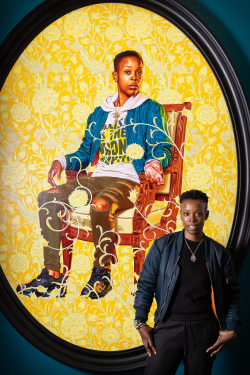
Melissa Thompson standing beside Kehinde Wiley’s Portrait of Melissa Thompson, 2020, now on display at the V&A © Victoria and Albert Museum

American artist Kehinde Wiley’s monumental Portrait of Melissa Thompson has gone on display in the V&A’s British Galleries, alongside William Morris’s Wild Tulip designs that inspired it. The massive oil painting, which was created as part of Wiley’s series The Yellow Wallpaper and was first exhibited at the William Morris Gallery in Walthamstow in 2020, was acquired earlier this year and is being displayed as part of a series of initiatives marking the 125th anniversary of William Morris’s death this October. The painting will be displayed in the William Morris Room (room 125) until 2024, after which it will move to its permanent home at V&A East Museum in 2025. Admission is free. For more, head to vam.ac.uk.

Send all items to exploringlondon@gmail.com.

This Week in London – Paddington’s story; pioneering neurologist JS Risien Russell honoured; and, Sir Quentin Blake’s gift…

Michael Bond with plush Paddington. PICTURE: © P & Co. Ltd 2021

A new family friendly exhibition celebrating Paddington Bear opens at the British Library tomorrow. The Story of a Bear features more than 50 books, documents, film clips and original artworks as it explores Michael Bond’s creation of the much loved children’s book character. Highlights include a first edition of Bond’s A Bear Called Paddington published in 1958, Barbara Ker Wilson’s original review of the book, photographs and memorabilia of Michael Bond on loan from his family as well as original illustrations of Paddington stories by artists including Peggy Fortnum, David McKee and RW Alley. There are also clips from the Paddington movies and sound recordings featuring Bond speaking about his creation. The exhibition is ticketed (booking in advance recommended). Admission charge applies. For more, see www.bl.uk/events/paddington-the-story-of-a-bear.

Pioneering neurologist James Samuel Risien Russell has been honoured with an English Heritage Blue Plaque at his former home and practice in Marylebone. Russell, born in 1863 in what was then British Guiana (now Guyana), was one of the UK’s first Black consultants and played a critical role in establishing the British school of neurology in the 1890s. His contribution in furthering our understanding of many conditions of the nervous system and mental health issues has only recently come to light thanks to new research by the Windrush Foundation. Dr Risien Russell lived and worked at 44 Wimpole Street from 1902 until his death in March, 1939. For more, see www.english-heritage.org.uk/visit/blue-plaques.

<iframe width="560" height="315" src="https://www.youtube.com/embed/XACNk26xulk" title="YouTube video player" frameborder="0" allow="accelerometer; autoplay; clipboard-write; encrypted-media; gyroscope; picture-in-picture" allowfullscreen></iframe>

• A display of images from Sir Quentin Blake have gone on show at the Foundling Museum in Bloomsbury to mark his gift of 24 drawings to the museum. Curated by children’s author and illustrator Lauren Child, Quentin Blake: Gifted features pictures form two series –  Children and Dogs and Children with Birds & Dogs – as well as a range of responses from writers including poetry collective 4 BROWN GIRLS WHO WRITE, children’s author and poet Michael Rosen and Scottish playwright, poet and novelist Jackie Kay. Admission charge applies. Runs until 26 September. For more, see https://foundlingmuseum.org.uk/events/quentin-blake-gifted/.

Send all items for inclusion to exploringlondon@gmail.com.

This Week in London – Buckingham Palace masterpieces; the Museum of London wants your dreams; theoretical physicist honoured; and, Khadija Saye’s self-portraits…

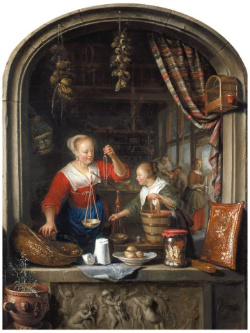
Gerrit Dou The Grocer’s Shop (1672) Royal Collection Trust/© Her Majesty Queen Elizabeth II

World renowned artworks from Buckingham Palace’s Picture Gallery go on show at the Queen’s Gallery from tomorrow. Masterpieces from Buckingham Palace features 65 works by the likes of Titian, Rembrandt, Rubens, Vermeer, Van Dyck and Canaletto and, unlike in the tours of the State Rooms, visitors to the Queen’s Gallery will face the chance to enjoy the works close-up. The paintings on show include Johannes Vermeer’s The Music Lesson (early 1660s), Sir Peter Paul Rubens Milkmaids with Cattle in a Landscape, (c1617–18), Rembrandt’s The Shipbuilder and his Wife (1633), Canaletto’s The Bacino di San Marco on Ascension Day (c1733–4), Titian’s Madonna and Child in a Landscape with Tobias and the Angel (c1537) and Gerrit Dou’s The Grocer’s Shop (1672). The exhibition runs until January 2022. Advance booking is essential and admission charge applies. For more, see www.rct.uk.

The Museum of London is seeking to record the dreams of Londoners during the coronavirus pandemic in a new project with the Museum of Dreams at Western University in Canada. Guardians of Sleep represents the first time dreams as raw encounters and personal testimonies will be collected by a museum. Londoners are being asked to register their interest to take part by 15th January with conversations with members of the Dreams network – an international team of trained scholars from the psychosocial community, slated to be held over Zoom in February. Contributions will be considered for acquisition by the Museum of London as part of its ‘Collecting COVID’ project. To volunteer to participate in the study, or to find out more details, members of the public should contact info@museumofdreams.org.

Abdus Salam, a Nobel Prize-winning theoretical physicist, has been honoured with a Blue Plaque at his former property in Putney. The red brick Edwardian house was the Pakistani scientist’s London base from 1957 until his death in 1996. It features a study where Salam would write while listening to long-playing records of Quranic verses and music by composers ranging from Strauss to Gilbert and Sullivan. Salam’s work on electroweak theory contributed to the discovery of the Higgs boson particle – the ‘God particle’ which gives everything mass, and he was also involved in improving the status of science in developing countries.The unveiling comes as English Heritage issues a call for the public to nominate more notable scientists from history for its Blue Plaque scheme in London with only around 15 per cent of the 950 plus blue plaques across the capital dedicated to scientists. For more, see www.english-heritage.org.uk/visit/blue-plaques/.

A self-portrait series by late Gambian-British artist Khadija Saye can be seen at the British Library’s entrance hall from today.  Khadija Saye: in this space we breathe features nine silk-screen prints and demonstrates Saye’s deep concern with “how trauma is embodied in the black experience” as well as her Gambian heritage and mixed-faith background. Saye, who died in 2017, photographed herself with cultural, religious and spiritual objects of significance both to her Christian mother and Muslim father and in African traditions of spirituality. The free display is on show until 2nd May. For more, see www.bl.uk.

Send all items for inclusion to exploringlondon@gmail.com.

This Week in London – Mary Wollstonecraft controversy; ‘Faint Signals’; National Gallery’s new digital partnership; and, have your say on City of London landmarks…

A controversial new statue commemorating feminist icon Mary Wollstonecraft was unveiled in Newington Green, near where Wollstonescraft lived and opened a girls’ school, in the city’s north this week. Designed by British artist Maggi Hambling, A Sculpture for Mary Wollstonecraft depicts a small nude female figure – described by those behind the campaign for the statue as “Everywoman, her own person, ready to confront the world” – rising out of other, intermingled, female forms below. Hambling said she wanted the sculpture to reflect Wollstonecraft’s spirit, rather than her likeness. The statue’s unveiling is the culmination of a 10 year campaign to see a statue for Wollstonecraft led by author Bee Rowlatt. The statue has already been the target of protestors who have reportedly used black tape, COVID masks, and a T-shirt to cover it up.

Images of Faint Signals on screen by Invisible Flock

A new work set in an imagined Yorkshire forest and looking at how natural sound has changed over the last 50 years has gone online this week. Commissioned by the British Library, Faint Signals is the work of Yorkshire-based interactive arts studio Invisible Flock and allows people to explore Yorkshire’s flora, fauna, and wildlife – both past and present. Launched to mark World Science Day on Tuesday, the work can be visited until 2nd January. Head here faintsignals.io.

‘Butterflies, Moths and Insects with Sprays of Common Hawthorn and Forget-Me-Not’ by Jan van Kessel the Elder (1626 – 1679), 1654, Oil on Wood  © The National Gallery, London 

The National Gallery has launched a new collaboration with camera maker Nikon to showcase the gallery’s works and “explore the synergies between photography and fine art”. In the first collaboration of its kind, the “digital content partnership” will see the gallery work with Nikon to produce a range of online content over the next year. This kicks off with an exploration of Jan van Kessel the Elder’s 1654 work, Butterflies, Moths and Insects with Sprays of Common Hawthorn and Forget-Me-Not, under the Picture of the Month series (the concept of ‘Picture of the Month’ dates back to 1942, when a single painting was returned to the gallery each month from the disused Welsh slate mine where the collection was kept for safety during World War II). The painting is explored in depth in a range of ways on the gallery’s website including through two short films. Further online films, talks and events are planned. For more on the Picture of the Month, head to the National Gallery website.

Londoners still have two weeks to have their say on what should happen to statues and other landmarks in the City of London which have links to slavery and historic racism. The City of London Corporation said it has received more than 800 responses since launching the consultative exercise in September in which it’s asking people to give their views on which landmarks – including statues, street and building names – they think are a problem, and what action they think should be taken. Among those monuments which have been mentioned to date are statues at Guildhall depicting former Lord Mayor William Beckford and MP and philanthropist Sir John Cass, both of whom profited from the slave trade. In September, the Sir John Cass’s Foundation Primary School in the City announced it was changing its name to The Aldgate School to break the link with its controversial founder. Head to  www.cityoflondon.gov.uk/historiclandmarksconsultation by 24th November to take part.

Send all items for inclusion to exploringlondon@gmail.com