• Portraits by four of the most celebrated figures in early art photography – Lewis Carroll, Julia Margaret Cameron, Oscar Rejlander and Clementine Hawarden – have gone on show in a new exhibition which opened at the National Portrait Gallery today. Victorian Giants: The Birth of Art Photography is the first exhibition in London to feature the work of Swede Rejlander since his death and includes the finest surviving print of his famous work Two Ways of Life (1856-57) which used his pioneering technique to combine several different negatives in creating a single final image. Also on show is an album of Rejlander’s photographs purchased by the gallery after it was prohibited from being sold outside of the UK in 2015 and works by Lewis Carroll depicting his famous muse Alice Liddell including lesser known photographs taken when she was a woman. Alfred, Lord Tennyson, Charles Darwin and actress Ellen Terry are among the subjects shown in the exhibition which runs until 20th May. Admission charge applies. For more, see www.npg.ork.uk/victoriangiants. PICTURE: Mountain Nymph, Sweet Liberty by Julia Margaret Cameron, 1866. © Wilson Centre for Photography
• A Francis Bacon portrait of Lucian Freud is being shown for the first time since 1965 in a new exhibition at Tate Britain celebrating human life in painted works. All Too Human: Bacon, Freud and a Century of Painting Life features around 100 works by artists including Walter Sickert, Stanley Spencer, Michael Andrews, Frank Auerbach, RB Kitaj, Leon Kossoff, Paula Rego, Jenny Saville, Lynette Yiadom-Boakye and others, as well as groups of major and rarely seen works by Freud and Bacon. Among the works by the latter are Freud’s Frank Auerbach (1975-76) and Sleeping by the Lion Carpet (1996) and Bacon’s Portrait of Isabel Rawsthorne (1966) and Study After Velazquez (1950). Runs until 27th August. Admission charge applies. For more, see www.tate.org.uk.
• The legacy of the world’s first slave revolution – the Haitian Revolution – is explored in an exhibition at The British Museum. A revolutionary legacy: Haiti and Toussaint Louverture charts how the revolution led to the abolition of slavery and the formation of Haiti as an independent republic in 1804 and features a selection of objects commemorating the man who emerged as the revolution’s foremost leader, Toussaint Louverture. Among them is a screenprint, specially acquired for this exhibition, showing Louverture in military uniform by the African American artist Jacob Lawrence. There’s also a Haitian Vodou boula drum dating from the early 1900s, a Haitian banknote commemorating the nation’s bicentenary in 2004, a Senegalese coin commemorating the abolition of slavery and the cover of CLR James’ account of the revolution, Black Jacobins, written in 1938 and reissued during the civil rights movement in 1963. Haitian-born poet Gina Ulysee will perform a specially commissioned work which responds to the display on 16th March. Part of The Asahi Shimbun Displays, it runs until 22nd April in Room 3. Free entry. For more, including associated events, see www.britishmuseum.org.
• A series of photographs recalling the removal of The National Gallery’s paintings to a disused slate mine in Snowdonia during World War II will go on show at the gallery on Monday. The 24 images document the dispersal of the paintings to Manod with five additional images by photographer Robin Friend showing the quarry as it looks today. There’s also a 30 minute film directed by Friend, Winged Bull in the Elephant Case, which follows the journey of a National Gallery painting that has taken human form as it tries to save its friends and get back to London (it can be seen on Saturday on BBC2 at 10pm). The free display – Manod: The Nation’s Treasure Caves – can be found in the Annenberg Court until 8th April. For more, see www.nationalgallery.org.uk.
Send all items for inclusion to exploringlondon@gmail.com.


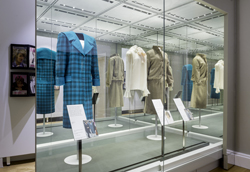
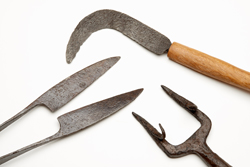


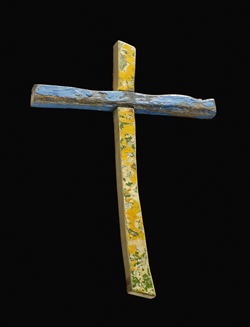
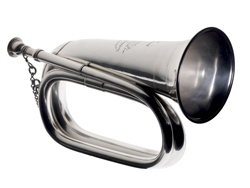 Marking the centenary of the battle, Jutland 1916: WWI’s Greatest Sea Battle explores the battle itself (which claimed the lives of more than 8,500 as the British Grand Fleet met the German High Seas Fleet in what neither side could claim as a decisive victory) as well as its lead-up, aftermath and the experience of those serving on British and German warships through paintings and newspaper clippings, photographs, ship models and plans, sailor-made craft work and medals. Among the objects on display is a 14 foot long shipbuilder’s model of the HMS Queen Mary, which, one of the largest battle cruisers involved,was destroyed with only 18 survivors of the 1,266 crew. Among the personal stories told in the exhibition, meanwhile, is that of boy bugler William Robert Walker, of Kennington, who served on the HMS Calliope and, severely wounded during the battle, was later visited by King George V
 .
.
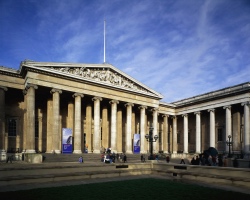
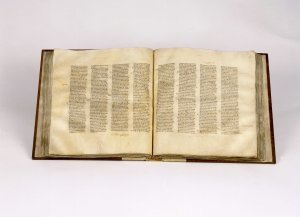 The first major exhibition to explore the history of Egypt after the pharaohs opens at the British Museum today. Egypt: Faith after the pharaohs spans 1,200 years of history – from 30 BC to 1171 AD – with 200 objects showing how Christian, Islamic and Jewish communities reinterpreted the pharaonic past of Egypt and interacted with each other. The exhibition opens with three significant examples of the Hebrew Bible, the Christian New Testament and the Islamic Qur’an – the texts include the New Testament part of the 4th century AD Codex Sinaiticus, the world’s oldest surviving Bible and the earliest complete copy of the New Testament, which is now part of the British Library’s collection. All three are juxtaposed with everyday stamps associated with each of the three religions in an illustration of the relationship between the institutional side of religion and its everyday practice, both key themes of the exhibition. Other exhibits include a pair of 6th-7th century door curtains featuring classical and Christian religious motifs, a 1st-2nd century statue of the Egyptian god Horus in Roman military costume, and a letter from the Roman Emperor Claudius (41-54 AD) concerning the cult of the divine emperor and the status of Jews in Alexandria. Admission charge applies. Runs until 7th February in Room 35. A programme of events accompanies the exhibition. For more, see