This Week in London – ‘Spies, Lies and Deception’ at IWM London; the printing of Shakespeare’s plays; and, Georgian illuminations at the Sir John Soane’s Museum…

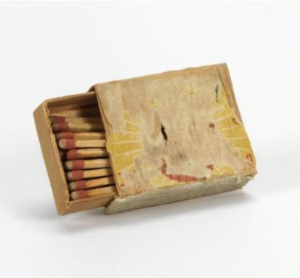
A box of matches containing one match specially adapted for writing
secret messages used during World War II.
© IWM (EPH 178)

A free exhibition exploring the “tricks, tools and elaborate plots that make up the secret world of spying and deception” has opened at IWM London. Spies, Lies and Deception features more than 150 objects including gadgets, official documents, art and newly digitised film and photography. Highlights include Operation Mincemeat mastermind Ewen Montagu’s private papers relating to the World War II plot – which fooled German High Command about the location of the next major Allied assault by planting a dead body with fake military documents off the Spanish coast – along with an oar from the submarine’s dinghy which deposited the body. There is also a box of matches with a match specially adapted for writing secret messages (pictured), footprint overshoes made by SOE (Special Operations Executive) in South-East Asia during World War II to disguise the wearer’s real footprints, and papier-mâché heads used to deceive snipers in World War I trenches. The exhibits also detail the work of the World War I Postal Censorships department – which examined letters sent to foreign locations including testing letters for invisible ink and tell the story of SOE operative Noor Inayat Khan – the first female wireless operator sent by SOE into Occupied France, she successfully transmitted messages to London for four months before being betrayed, captured and executed. There’s also a newly commissioned interview with Eliot Higgins, founder of Bellingcat, an international collective of researchers who used open source data to uncover the real identities of those responsible for the Salisbury Novichok poisonings in 2018, along with a photo album of double agent Kim Philby in Siberia after he escaped to the Soviet Union following his discovery in 1963. The free display can be seen until 14th April next year. For more, see iwm.org.uk/events/spies-lies-and-deception.

A exhibition looking at the history of printing William Shakespeare’s plays has opened at the Guildhall Library. Folio 400: Shakespeare in Print covers everything from the printing of the small ‘Quartos’ of the late 16th century to the reworking of the text in the 18th century and the rediscovery of original texts in the 19th century. Running in parallel is a display at the City of London Heritage Gallery at Guildhall Art Gallery which features the library’s copy of the First Folio, widely regarded as one of the finest and most complete. Entry is free. Runs until 30th January. For more, see www.cityoflondon.gov.uk/things-to-do/history-and-heritage/guildhall-library.

An exhibition centring on the spectacular light illuminations of the Georgian period has opened at Sir John Soane’s Museum. Georgian Illuminations celebrates the light shows of the period and the impressive and the elaborate temporary architectural structures created for them, often designed by leading architects and artists, including Sir John Soane. It features newly discovered linen transparencies, which were back-lit in Georgian windows as patriotic decoration during the Napoleonic Wars, as well as a contemporary work by light artist Nayan Kulkarni light artist which sees the facade of the museum at Lincoln’s Inn Fields illuminated each night from dusk until about 11pm. A series of events accompanies the exhibition. Runs until 7th January, 2024. Entry is free. For more, see www.soane.org/exhibitions/georgian-illuminations,

Send all items to exploringlondon@gmail.com for inclusion.
This Week in London – Korean pop culture at the V&A; of video games and conflict; and, William Kentridge at the RA…

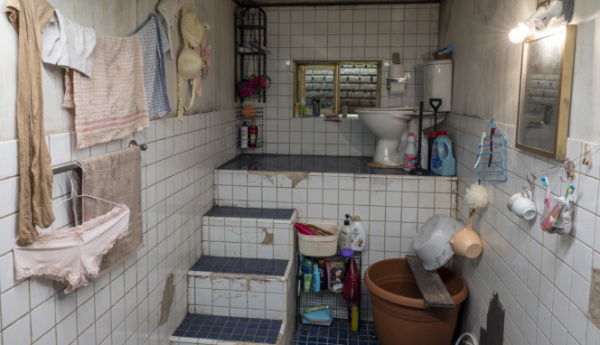
Installation image featuring re-creation of Parasite bathroom scene, at Hallyu! The Korean Wave at the V&A Ⓒ Victoria and Albert Museum, London

From K-Pop to Parasite, the popular culture of South Korea is being celebrated in a new exhibition which opened at the V&A last weekend. Hallyu! The Korean Wave features around 200 objects across four thematic sections focused on the phenomenon known as ‘hallyu’ (meaning ‘Korean Wave’) which rose to prominence in the late 1990s and rippled across Asia before reaching across the world. Highlights including outfits worn by K-Pope idols PSY, Vespa and ATEEZ, an immersive recreation of Parasite’s bathroom set and monumental artworks by the likes of Nam June Paik, Ham Kyungah and Gwon Osang. There’s also fashion designs by Tchai Kim, Miss Sohee and Minju Kim, and early examples of advertising and branding, including an original poster from the Seoul Olympics, and the first Korean branded cosmetic from the 1910s. The display can be seen until 25th June next year. Admission charge applies. For more, see www.vam.ac.uk/exhibitions/hallyu-the-korean-wave.

An exhibition which seeks to challenge perceptions about how video games interpret stories about war and conflict opens at the Imperial War Museum London on Friday. War Games: Real Conflicts | Virtual Worlds | Extreme Entertainment explores the relationship between video games and conflict through a series of 11 unique titles, including everything from Call of Duty: Modern Warfare to 2D artillery game Worms and a military training simulator, which, over the last 40 years, have reflected events from the First World War to the present. The display features immersive installations, never-before-displayed objects and perspectives from industry experts. There’s also a retro gaming zone and a programme of supporting events. Admission is free. Runs until 28th May next year. For more, see iwm.org.uk/events/war-games.

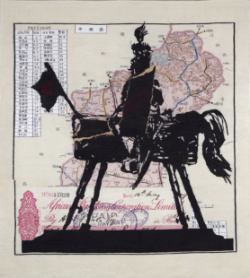
William Kentridge, ‘Colleoni’, 2021. Hand-woven mohair tapestry, 350 x 300 cm. Courtesy the artist © William Kentridge
 

The work of celebrated South African artist and Honorary Royal Academician William Kentridge has gone on show the Royal Academy. Spanning the artist’s 41 year career, William Kentridge brings together important works spanning from the 1980s through to the present day, including charcoal drawings, animated films, a mechanical theatre, sculptures, tapestries and performance pieces. Highlights include a selection of Kentridge’s early, rarely-seen drawings from the 1980s and 1990s including three triptychs displayed together for the first time and the most significant work from the period, The Conservationist’s Ball, (1985) as well as around 25 large charcoal drawings, made for the creative process of the eleven animated Drawings for Projection, and the installation Black Box / Chambre Noire, (2005), a mechanical theatre piece including puppets and projections, which interrogates the harrowing story of the massacre of the Herero people in Namibia, now considered the first genocide of the 20th century. The display in the Main Galleries can be seen until 11th December. Admission charge applies. For more, see roy.ac/kentridge.

Send all items for inclusion to exploringlondon@gmail.com

This Week in London – The Queen in wartime; Dippy returns; and, ‘Cancer Revolution’ at the Science Museum…

A new exhibition exploring the Queen’s role during wartime opens at IWM London in Lambeth tomorrow. Part of a suite of events at IWM venues celebrating the Queen Elizabeth II’s Platinum Jubilee, Crown and Conflict: Portraits of a Queen in Wartime features 18 images drawn from the museum’s image archive which chart the Queen’s experience of war – from growing up during World War II when she served in the Auxiliary Territorial Service to her role in carrying out important public duties involving the armed forces, including at the annual Service of Remembrance. Among newly digitised photographs included in the display are an image of the Queen dressed in overalls and cap while working on a vehicle during her time in the ATS, and another showing her with her father, King George VI, and mother, Queen Elizabeth, during a visit to airborne forces in 1944. IWM London is also launching a dedicated trail of historic objects spread across five gallery spaces which explores the Royal Family’s long-standing association with the British armed forces. Objects include a Princess Mary Gift Fund box which was sent to those serving at Christmas in 1914. Runs until 8th January. Admission charge applies. For more, see www.iwm.org.uk/events/queens-platinum-jubilee-iwm-london.

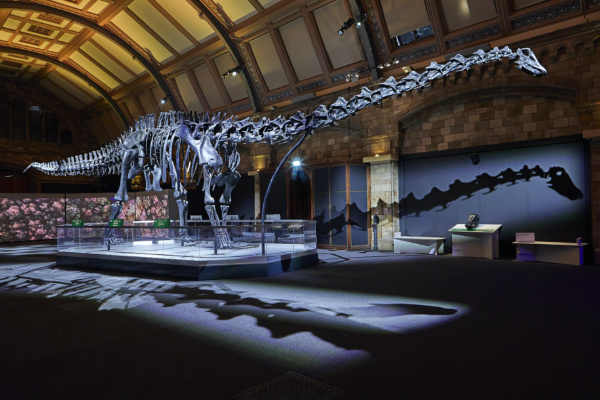
Dippy at the Natural History Museum. © Trustees of the Natural History Museum, London

• Dippy the dinosaur is back for a limited time at the Natural History Museum in South Kensington from tomorrow. A free, temporary exhibition – Dippy Returns: the nation’s favourite dinosaur – gives visitors the chance to get up close and personal with the 26 metre-long dinosaur which first went on display at the museum in 1905. The display comes at the end of a record-breaking tour of the UK in which Dippy was seen by more than two million people. Can be seen until 2nd January. To book tickets, head to www.nhm.ac.uk.

The first major exhibition to explore the history and future of cancer treatment and research opened at the Science Museum in South Kensington this week. Cancer Revolution: Science, innovation and hope features more than 100 objects including some never-before seen as well as information on cutting edge treatment and research, new artist commissions and installations, interactive exhibits and a breadth of personal stories. Runs until January, 2023. Admission is free but bookings required. For more, see www.sciencemuseum.org.uk/see-and-do/cancer-revolution-science-innovation-and-hope.

Send all items to exploringlondon@gmail.com for inclusion.
This Week in London – Culture, heritage and war at IWM; Sir Arthur Pearson honoured; and, Takis at the Tate Modern…

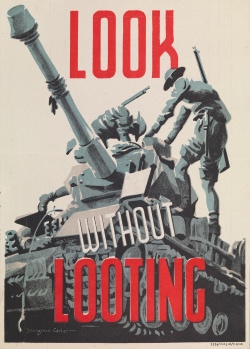
Exhibitions exploring why culture and heritage are attacked during times of war and how cultural treasures in British museums and galleries were protected during World War II open at London’s Imperial War Museum on Friday. What Remains – which highlights both historic and contemporary instances in which buildings, places, art and artefacts have been deliberately targeted during times of conflict as well as examples of resistance, protection and restoration, and, Art in Exile – which looks at the role UK cultural organisations have played in wartime, are both part of Culture Under Attack, a free season of events that explore how war threatens cultural heritage. Also launching as part of Culture Under Attack this week is Rebel Sounds, an immersive exhibition that reveals how music has been used to resist and rebel against war and oppression with examples from Nazi Germany in the 1930s, Northern Ireland in the 1970s, Serbia in the 1990s and present day Mali. All three displays run until 5th January. For more, see www.iwm.org.uk/seasons/culture-under-attack. PICTURE: British Army poster from 1943, created to educate and inform its soldiers of the importance of respecting property, including cultural heritage (© IWM)

• Sir Arthur Pearson, newspaper publisher and founder of St Dunstan’s (Blind Veterans UK), has been remembered with an English Heritage Blue Plaque. The plaque was unveiled at his now Grade II*-listed home on Portland Place in Marylebone last week, the place where he lived with his wife and some of the blinded servicemen supported by St Dunstan’s in the later years of World War I and those following. Pearson had made a fortune as a press magnate, founding the Daily Express in 1900 and later purchasing The Evening Standard but his attention turned to campaigning for the blind after he was told he would lose his sight in 1913. For more on English Heritage Blue Plaques, see www.english-heritage.org.uk/visit/blue-plaques/.

The largest ever exhibition of the work of pioneering Greek artist Takis (Panayiotis Vassilakis) has opened at the Tate Modern this week. Takis features more than 70 works by the self-taught artist – renowned as a “sculptor of magnetism, light and sound” –  including a rarely-seen Magnetic Fields installation, a series of musical devices generating resonant and random sounds, and forests of his antenna-like Signals. Can be seen until 27th October. Admission charge applies. For more, see www.tate.org.uk.

Send all items for inclusion to exploringlondon@gmail.com.

This Week in London – ‘Picturing Forgotten London’; 1968 recalled; and, a posthumous VC newly on display…

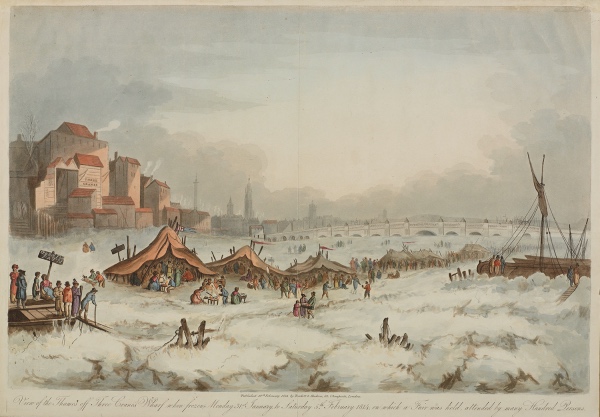
From coaching inns to horse markets, riverside mansions to gin palaces – the ‘lost’ buildings of London form the focus of a new exhibition which opens at the City of London Corporation’s London Metropolitan Archives in Clerkenwell on Monday. Picturing Forgotten London features drawings, engravings, photographs, maps, films and contemporary recollections displayed under themes including entertainment, food, commerce and trade, and transport. Through the exhibition, visitors will discover frost fairs (pictured), ‘open-shout’ trading floors, pleasure gardens, almshouses, cabmen’s shelters, dockyards, farms and a 1960s supermarket. Among the highlights are a look at the notorious Westminster neighbourhood known as Devil’s Acre and images of such lost landmarks as Euston Arch and Crystal Palace as well as Geoffrey Fletcher’s observational drawings of 60s and 70s London and a large scale reproduction of an 1867 illustrated map of public buildings, theatres, music halls and other landmarks known as The Strangers Guide. Admission is free. Runs until 31st October. For more, follow this link. PICTURE: Courtesy of the City of London Corporation’s London Metropolitan Archives.

Marking 50 years since a series of significant protests took place around the world, a new display at Tate Britain in Millbank shows how artists responded to what it calls a “watershed moment in political and social history”. London: 1968 features a series of iconic agin-prop posters by the Camden Poster Workshop who moved their studio into the London School of Economics during the student occupation in October. They provide a visual record of some of the key issues of the time including industrial strikes, the Vietnam War, and civil rights movements in Ireland, America and South Africa. There’s also a Patricia Holland film looking at the occupation of the Hornsey School of Art and work by radical artists such as Barry Flanagan, Richard Long, Joseph Beuys and Mario Merz who all participated in a landmark exhibition at London’s ICA in 1969. The display, which is free to see, coincides with another free display at Tate Modern – 1968: Protest and the Photobook – which brings together politically engaged photobooks made during this period. London: 1968 runs until 31st October. For more, see www.tate.org.uk.

A posthumous Victoria Cross awarded to Corporal Bryan Budd for bravery in Afghanistan has gone on display at the Imperial War Museum London in Lambeth. Corporal Budd, who served in the 3rd Battalion, The Parachute Regiment, was awarded the VC on 14th December, 2006, for two separate acts of gallantry in Helmand Province – the first in an incident on 27th July that year when he initiated a daring attack on the enemy in order to evacuate a wounded comrade, and the second, on 20th August, when he led a surprise attack on a Taliban position, killing several enemy but sustaining wounds from which he died. The VC, which was purchased by Lord Ashcroft, is the most recent now in his collection – prior to its acquisition the most recent he had was awarded to Sergeant Ian McKay in October, 1982, for gallantry during the Falklands War. For more, see www.iwm.org.uk.

Send all items for inclusion to exploringlondon@gmail.com.