Once a significant estate on the northern outskirts of London, the palace of the Bishops of Ely was used for some 500 years as their London residence.
King Edward I
What’s in a name?…Stockwell…
This district in the Borough of Lambeth in south London was formerly a rural manor located on the southern edge of London.
The name, variants of which date back to at least the late 12th century, is said to relate to the Old English words for a tree trunk – ‘stoc’ – and a well or spring, ‘wella’, and has been interpreted as meaning the well or spring by a tree stump, tree truck or perhaps a wood (there was apparently a Stockwell Wood which has long since disappeared).
The manor of Stockwell was formed at the end of the 13th century when King Edward I acquired the manor of South Lambeth and divided it into two, creating the manors of Stockwell and Vauxhall (the manor house itself, parts of which survived until the 19th century, stood on the north side of Stockwell Road).
The area become known for its market gardens and was transformed into an urban landscape until the mid-19th century. Remnants of the 19th century housing stock can still be found in areas including the Stockwell Park Conservation Area in the west of the district.
The area around Stockwell Tube station, which first opened in 1890 and has since been rebuilt a couple times, was heavily bombed during World War II and rebuilt following the war. New developments included a number of social housing estates.
Today, Stockwell and nearby South Lambeth host the district known as Little Portugal which, centred on South Lambeth Road, is home to one of the UK’s largest Portuguese communities. The area is also home to several other immigrant communities.
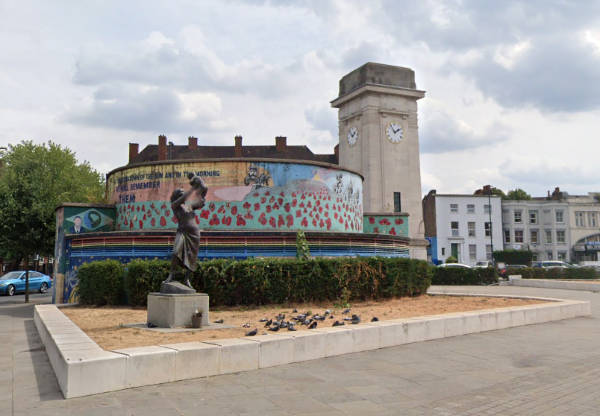
Local landmarks include the oldest surviving building in the area – St Andrew’s Church, Stockwell Green (built in 1767), the Stockwell Congregational Church (1798) and the Stockwell War Memorial.
The latter – a white stone tower – is located on a site first laid out in the 1920s and features a mural on an adjoining ventilation shelter commemorating French Resistance fighter Violette Szabo (there’s a Blue Plaque on her former home in Burnley Road) and other Stockwell residents who died in war. There is also the ‘Bronze Woman’ statue which was unveiled in 2008 as a tribute to Black Caribbean women.
Residents of Stockwell have included artist Arthur Rackham and pioneering theatre director Joan Littlewood as well as musician David Bowie (born in Stansfield Road), actors Joanna Lumley (who still lives there) and Roger Moore (born in Aldebert Terrace).
Tragically, Stockwell Tube station was where Brazilian man Jean Charles de Menezes was fatally shot by police on 22nd July, 2005, after being misidentified as one of four suicide bombers who were on the run after their devices had failed to detonate the previous day (the attempts had come just two weeks after the 7th July bombings in which more than 50 people had been killed).
Treasures of London – The Medieval Palace at the Tower of London…
Located in one of the oldest parts of the city’s iconic fortress, the medieval palace has undergone a revamp with a restoration of the sumptuous and extravagant decorative scheme that was in place in the 13th century.
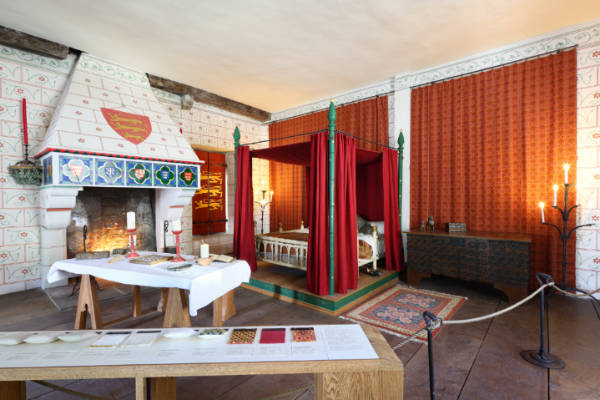
The medieval palace is found within the St Thomas’s Tower, the Wakefield Tower and the Lanthorn Tower on the southern side of the Tower and was built on the orders of successive monarchs, King Henry III and his son King Edward I. They were used as a domestic and diplomatic space periodically by the kings and their queens, Eleanor of Provence and Eleanor of Castile.
The medieval palace today includes a recreation of Edward I’s vibrant bedchamber in the St Thomas’s Tower (which once directly fronted the River Thames and sits above the water gate later known as Traitor’s Gate) and an exploration of the influence Eleanor of Castile had on the decoration.
The Wakefield Tower, meanwhile, was built by King Henry III as royal lodgings between 1220 and 1240. It originally sat at the river’s edge and could be accessed from the river by private stairs.
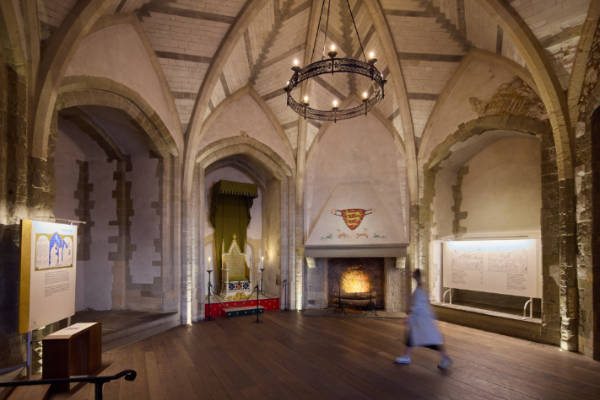
Believed to have been used as an audience chamber, it contains a recreation of a throne and canopy based on 13th century examples which are decorated with a Plantagenet lion – the symbol of the royal family. The vaulted ceiling is 19th century.
The third of the towers – the Lanthorn Tower – was built as lodgings for King Henry III’s Queen but is now a 19th century reconstruction after the original tower was gutted by fire.
It contains a display and among the new objects is a stone, on loan from the Jewish Museum London, which came from a Jewish mikveh or ritual bath, dating to about 1200 and discovered in London in 2001 within the home of the medieval Crespin family. It’s part of a new effort to explore the story of London’s medieval Jewish community, the taxation of which helped to pay for the construction of St Thomas’s Tower in the 1270s.
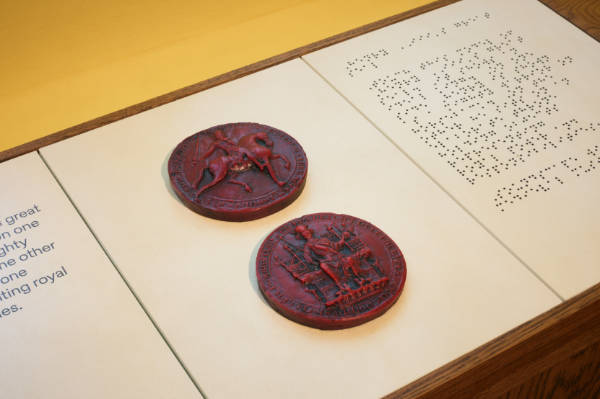
Other new objects on show in the Lanthorn Tower include a 13th century seal matrix from a 13th century Italian knight and a gold and enamel 13th century pyx – a small round container used to hold communion wafers made in the French city of Limoges (both on loan from the British Museum) as well as a child’s toy knight made of lead that dates from c1300, lent by London Museum and a perfectly preserved wicker fish trap which was excavated from the Tower moat, containing bones likely dating from the 15th or 16th century and illustrating the moat’s role as a fishery.
The medieval palace also includes a small private chapel which is where it’s believed King Henry VI died in 1471.
Among other stories now told in the display is that of less well-known Tower residents such as King Edward I’s laundress Matilda de Wautham, and John de Navesby the keeper of the white bear which was held in the menagerie at the Tower.
WHERE: The Medieval Palace, The Tower of London (nearest Tube Station is Tower Hill); WHEN: 9am to 5:30pm daily (last entry 3:30pm); COST: £35.80 adults; £28.50 concession; £17.90 children (free for Historic Royal Palaces members and £1 tickets are available for those in receipt of certain means-tested financial benefits); WEBSITE: www.hrp.org.uk/tower-of-london/
A Moment in London’s History – The taking of the Stone of Scone…
A rectangular block of pale yellow sandstone decorated with a Latin cross, the Stone of Scone, also known as the Stone of Destiny, long featured in the crowning of Scottish kings. But in 1296, it was seized by King Edward I as a trophy of war.
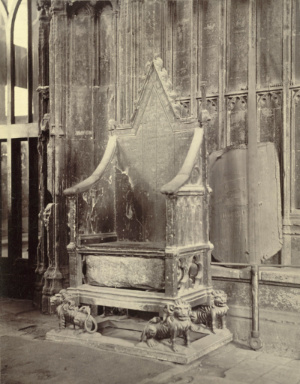
He brought it back to England (or did he? – it has been suggested the stone captured by Edward was a substitute and the real one was buried or otherwise hidden). In London, it was placed under a wooden chair known as the Coronation Chair or King Edward’s Chair on which most English and later British sovereigns were crowned.
On Christmas Day, 1950, four Scottish nationalist students – Ian Hamilton, Kay Matheson, Gavin Vernon and Alan Stuart – decided to liberate the 152 kilogram stone and return it to Scotland.
The stone broke in two when it was dropped while it was being removed (it was later repaired by a stone mason). The group headed north and, after burying the greater part of it briefly in a field to hide it, the stone was – on 11th April, 1951 – eventually left on the altar of Arbroath Abbey in Scotland.
No charges were ever laid against the students.
It was brought back to the abbey and used in the coronation of Queen Elizabeth II in 1953.
The stone was eventually returned to Scotland in 1996 on the proviso it could be temporarily relocated back to London for coronations and now sits in Edinburgh Castle. It was taken to London temporarily in 2023 for the coronation of King Charles III but has since been returned.
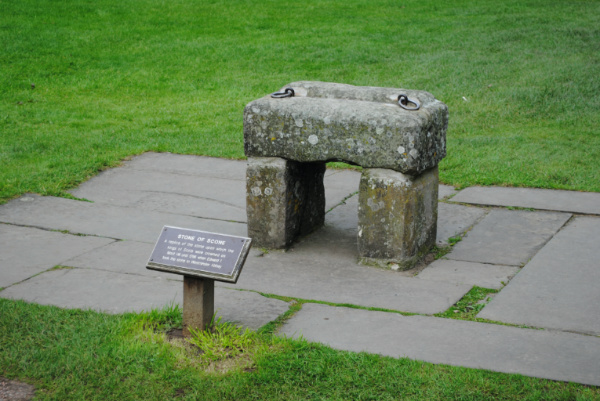
There is a replica of the stone at Scone Castle in Scotland.
10 towers with a history in London – 1. The Bloody Tower…

Carrying rather a gruesome name, this rectangular-shaped tower sits over a gate leading from outer ward into the inner ward in the Tower of London.
The tower, which once controlled the watergate before the outer walls were constructed, was originally known as the Garden Tower due to its location adjoining the Tower Lieutenant’s Garden.
To see the rest of this post (and all of our coverage), subscribe for just £3 a month. This small contribution – less than the cost of a cup of coffee – will help us continue and grow our coverage. We appreciate your support!
Where’s London’s oldest…chair?
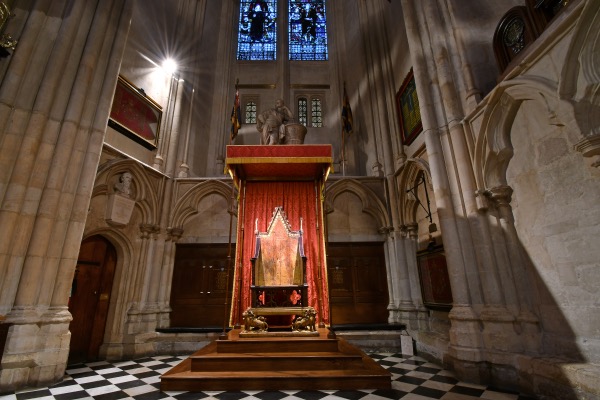
The coronation of King Charles III is taking place in Westminster Abbey on 6th June and in preparation for that, the Coronation Chair is getting a makeover.
The six foot tall chair, which was made around 1300, is commonly referred to as the oldest piece of furniture in the UK which is still used for its original purpose and which is by a known maker.
The chair was constructed on the orders of King Edward I in 1300-1301 specifically to hold the Scone of Stone which he had brought south from Scotland several years before and which he had given into the care of the Abbot of Westminster.
Made of oak and painted by one Master Walter, the chair was decorated with patterns of birds, foliage and animals on a gilt background. On the seat back was painted the figure of a king, possibly King Edward I, with his feet resting on a lion. The chair, which would have had the appearance of being made of gold, would have also been decorated with coloured glass.
The space for the stone below the seat was originally fully enclosed and it’s believed the chair originally contained no seat with the King sitting on a cushion placed directly on the Stone of Scone.
The chair now rests on four gilt lions which were added in the 16th century (although those currently there are replacements made in 1727).
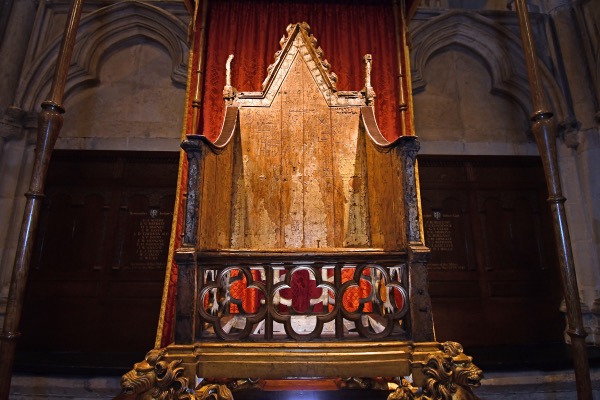
While there is some debate over whether King Edward II was sitting in the chair when he was crowned in 1308, that has certainly been the case from the 1399 when King Henry IV was crowned while sitting on it. Twenty-six subsequent monarchs including everyone from King Henry VIII to Queen Elizabeth II followed suit (Oliver Cromwell, meanwhile, had the chair removed to Westminster Hall when installed there as Lord Protector).
The chair has been graffitied in earlier centuries thanks mostly to Westminster schoolboys and visitors. Among the most legible graffiti scrawled upon it is “P Abbott slept in this chair 5-6 July 1800”. It also suffered minor damage in a bomb attack in 1914 thought to have been carried out by Suffragettes (it didn’t suffer any damage in World War II thanks to its being removed to Gloucester Cathedral).
The Stone of Scone, which had been taken briefly back to Scotland by Scottish Nationalists in 1950, was formally returned to Scotland in 1996 where it can now be seen at Edinburgh Castle. It is being returned to London for the coronation.
The chair, which for centuries had been kept in the Chapel of St Edward the Confessor, was moved to the abbey’s ambulatory in 1998 and then again moved again in 2010, this time to a specially-built enclosure in St George’s Chapel, located at the west end of the nave, so it could undergo conservation work. The two year conservation program was completed in 2013.
The chair is currently undergoing cleaning and work to stabilise what’s left of the gilding ahead of the coronation.
Treasures of London – Traitor’s Gate…
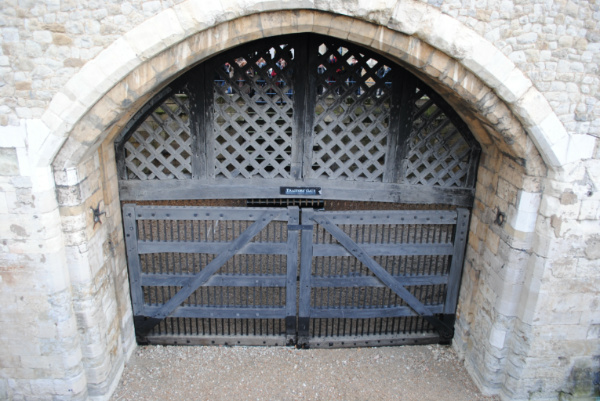
Built by King Edward I in the 13th century as a water gate to provide access from the Tower of London to the River Thames, the name ‘Traitor’s Gate’ came to be applied to this portal in Tudor times in relation to those accused of treason who were brought into the tower under its arch.
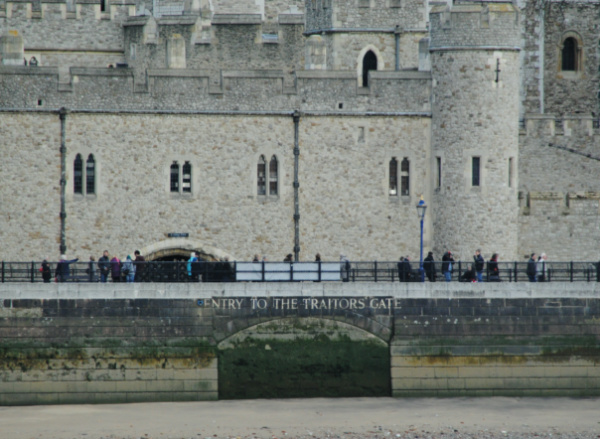
The double gateway is part of St Thomas’s Tower, which was designed by a Master James of St George, and behind it is a pool which was used to feed water to a cistern on the roof of the White Tower. While the gate was originally built to give access directly to the river, Traitor’s Gate now sits behind a wharf which runs along the river bank (and where can be seen the bricked up entrance says ‘Entry to the Traitor’s Gate’ – this was bricked up in the 19th century when embankment works were carried out)
Sir Thomas More, Sir Walter Raleigh and even the future Queen Elizabeth I (when a princess) were among those who were brought in by barge through the Traitor’s Gate (their journey would have led them under London Bridge where the heads of executed prisoners were on display). Whether Henry VIII’s disgraced Queen Anne Boleyn entered the tower through the gate remains a matter of some dispute.
Lost London – St Giles hospital for lepers…
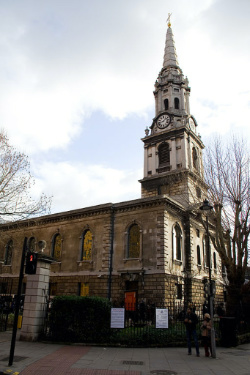
Partly located on a site now occupied by the church of St Giles-in-the-Fields in central London was a leprosy hospital founded by Queen Matilda, wife of King Henry I, in 1101.
The site was located outside the City walls making it ideal for such an establishment (given lepers had to isolate from the rest of the population) and the hospital, one of the first such establishments in England, was dedicated to St Giles, the patron saint of outcasts.
 As well as an oratory or chapel, the hospital, initially founded on eight acres of farmland, is believed to have included houses for lepers, a master’s house, and quarters for a chaplain, clerk and servant. A chapter house was added in the early 14th century.
The hospital was under the care of the crown and in 1299, King Edward I ordered that the hospital be run by and its revenues given to the military Order of St Lazarus of Jerusalem (also known as the Leper Brothers of Jerusalem or Lazarists).
By the 15th century leprosy (now known as Hansen’s disease) was on the decline in England but this hospital continued to be used for lepers until at least 1500 after which it is recorded that it had opened it doors to the poor who needed care.
In 1539, the hospital was closed under King Henry VIII’s Dissolution of the monasteries. While the chapel remained in use as a parish church (it was at this time that “in-the-fields” was added to the church’s name), the hospital’s other buildings were given by King Henry VIII to John Dudley, Lord Lisle (and later Duke of Northumberland and Protector of Edward VI, the king’s eventual heir).
The church, meanwhile, had fallen into a poor state of repair by the early 1600s and was demolished. Construction of a Gothic replacement started in 1623 in a project largely funded by Alice, Duchess Dudley, daughter-in-law of Queen Elizabeth I’s favourite Robert Dudley. The new church was consecrated by William Laud, Bishop of London in 1631. The current building dates from 1733 (but more about that at another time).
PICTURE: The church of St Giles-in-the-Fields as it appears now. (Prioryman/licensed under CC BY-SA 2.0)
Lost London – St Stephen’s Chapel…
The chapel, which served as the House of Commons from the mid-16th century until it was destroyed in the fire at the Palace of Westminster in 1834, was first recorded as part of the palace in the reign of King John (1199-1216).
It was rebuilt in the late 13th century, on the orders of King Edward I. The king, apparently impressed by the Sainte Chapelle, built as a royal chapel by King Louis IX in Paris, ordered the chapel rebuilt to rival it.
The two storey, richly decorated stone chapel featured two levels, the upper floor for use of the Royal Family (it could only be entered from the Royal Apartments), the lower for courtiers and the Royal Household – was largely complete by 1348.
The then 15-year-old King Richard II married Anne of Bohemia in the chapel in 1382 and the ill-fated Richard, Duke of York (the younger of the two so-called Princes in the Tower) married Anne Mowbray here while still young children. Richard’s father, King Edward IV, had laid in state here for eight days after his death in 1483. Thomas Cranmer was consecrated as Archbishop of Canterbury here in 1533.
The Palace of Westminster was no longer used as a royal residence following the death of King Henry VIII in and in 1547 it was deconsecrated under the Abolition of Chantries Act instituted by King Henry’s son, King Edward VI, after which it was used as a debating chamber for the House of Commons (which had hitherto been meeting in xxx).
During the Commonwealth, Oliver Cromwell had the chapel’s crypt white-washed and, so the story goes, used it for stabling his horses.
The chapel’s architecture was amended several times over the ensuing centuries to better accomodate MPs – it included the addition of extra seats and among the architects who worked on it was Sir Christopher Wren – before the fire of 1834 while completely destroyed the main chapel, leaving just the crypt below and adjoining cloisters.
The crypt, now known as the Chapel of St Mary Undercroft, was subsequently restored to its original use as a place of worship (it had been used for various purposes over its life). Interestingly, women’s suffragist Emily Davison had spent the night in a broom cupboard in the crypt in 1911 so, as woman banned from the premises, she could address the House of Commons the next day.
The site of the chapel is now covered by St Stephen’s Hall and its porch, constructed as part of the rebuild after the fire.
To see modern revisualisations of what the chapel may once have looked like, head to www.virtualststephens.org.uk.
Lost London – Domus Conversorum…

Located in Chancery Lane, this “House for Converts” – for Jews who converted to Christianity – was founded in 1232 by King Henry III.
The buildings, which included a chapel as well as living quarters, provided a communal home for residents – needed because when they converted, they forfeited all their possessions to the king.
Chaplains were employed to teach the new converts and a warden appointed to manage their day-to-day living.
The Royal Treasury bore the expenses of the institution which included paying its residents a small income (although the annual grant from treasury apparently wasn’t always forthcoming leaving the residents destitute) and it was supplemented with a poll tax called the “chevage” levied on all Jews over the age of 12.
In 1290, King Edward I expelled the Jews from England. Residence here was officially the only way Jewish people could remain and some 80 residents apparently did so.
It’s said that apart from these original 80 residents (the last of whom – said to be a woman called Claricia of Exeter – died in 1356), only some 50 further converts were admitted between 1331 and 1608.
By the early 17th century, records of the buildings’ use as a house for Jewish converts had come to an end. The main residential building was destroyed in 1717 to make room for a new house for the Master of the Rolls – the chapel was at this stage being used as a storehouse for the rolls of Chancery.
Subsequently known as the ‘Rolls Chapel’, it was eventually largely demolished to make way for an extension to the Public Records Office which had been built on the site in 1851.
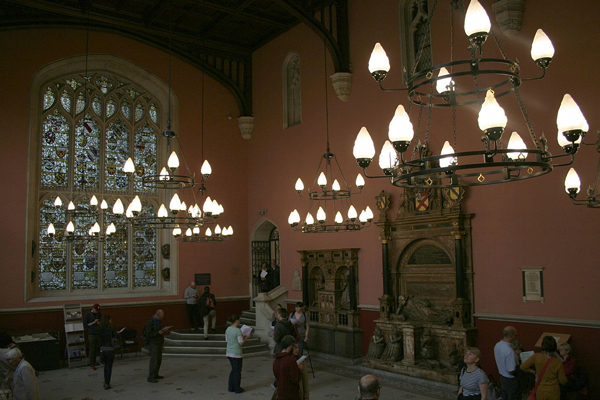
But some monuments from it are preserved in part of the former PRO known as the ‘Weston Room’ (pictured below).
In the late 1990s, the PRO moved out to Kew where it formed part of the National Archives. The building was acquired by King’s College London in 2000 and is now the Maughan Library.
PICTURES: Top – The Maughan Library (FormerBBC; licensed under CC BY-SA 4.0); Below – The Weston Room in what is now the Maughan Library (Cmglee; licensed under CC BY-SA 3.0)
What’s in a name?…St Katharine Docks…
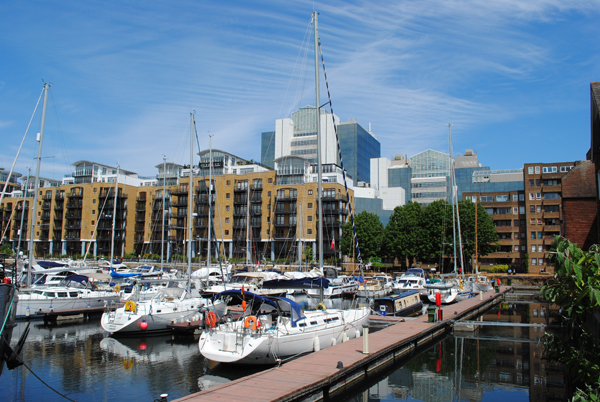 The name for this dock, located just to the east of Tower Bridge, comes from a 12th century established to help the poor known as St Katharine’s Hospital which was once located in the vicinity.
The hospital, which was named at St Katharine – whom tradition holds was martyred in the 4th century by the Roman Emperor Maxentius – was founded by Matilda, the wife of King Stephen, in 1147, for the maintenance of 13 poor people.
It was supported by various English queens over the ensuing centuries, including Eleanor, beloved wife of King Edward I, who granted it a new charter in 1273, and Queen Philippa, wife of King Edward III, who drew up new regulations for the running of the hospital in 1351.
Having survived an attempt to have the hospital abolished by Puritans in the 17th century and an attempt to burn it down during the late 18th century Gordon Riots, in the early 19th century demand for new docks brought about the old hospital’s final demolition.
In 1825, the hospital relocated to Regent’s Park. Now known as the Royal Foundation of St Katharine, it is currently located in Limehouse, having moved there in 1948 (we’ll take a more in depth look at the history of St Katharine’s Hospital in an upcoming post).
The docks, meanwhile, was opened in 1828 following the removal of more than 1,200 homes and a brewery as well as the old hospital – works carried out despite a public outcry and, apparently, no compensation. Designed by Thomas Telford (of the Iron Bridge fame – this was apparently his only London project), the docks occupy a 23 acre site and featured a central basin opening to two docks lined with brick warehouses.
The docks were closed in 1968 and in the years since, the warehouses have been converted into shops, eateries, offices and residences while the waters are now used as a marina for luxury yachts.
A Moment in London’s History – The execution of William Wallace…

This year marks the 710th anniversary of the execution of Scottish rebel William Wallace in Smithfield so we thought we’d take a quick look at the circumstances of that event – made famous in recent times through the movie Braveheart.
 For some eight years, Wallace had been a thorn in the side of the King Edward I, promoting active resistance to his rule in Scotland after Edward forced the abdication and usurption of the crown of John Balliol.
Following a crushing defeat at the Battle of Falkirk on 22nd July, 1298, however, Wallace went to France where he attempted to gain French support for rebellion in Scotland but the effort proved ultimately futile and Wallace, back in Britain but refusing to submit to English rule, remained on the run.
At least until he was captured on 5th August, 1305, by Sir John Monteith, who had been made Sheriff of Dumbarton by King Edward I, at Robroyston near Glasgow.
Taken to Carlisle, he was bound hand and foot before being taken south to London in chains.
Wallace’s trial took place on 23rd August that year at Westminster Hall and, despite his protestations that he couldn’t be guilty of treason having never sworn loyalty to the English Crown, a guilty verdict was handed down along with the sentence of a traitor’s death – being hung, drawn and quartered.
Taken to the Tower of London, Wallace was stripped naked and then strapped to a wooden hurdle which was dragged by two horses through the streets via Aldgate to The Elms at Smithfield where he was hanged on a gallows.
Cut down while yet living, he was disembowelled and castrated and his entrails burnt. Wallace was then decapitated and his body cut into quarters which were sent to Berwick, Newcastle, Stirling and Perth as a warning against treason. His tarred head, meanwhile, was put on a pike and set above London Bridge.
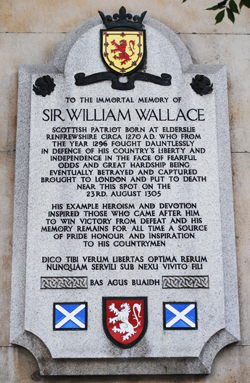
A memorial to Wallace can now be found on the wall of St Bartholomew’s Hospital at West Smithfield (pictured – for more on that, see our earlier post here).
10 sites from London at the time of the Magna Carta – 6. St Helen’s Bishopsgate…
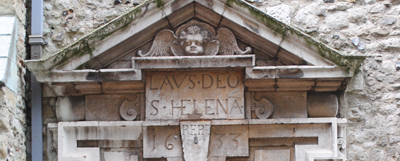
This church in the shadow of 30 St Mary Axe (aka The Gherkin) is all that remains of a Benedictine nunnery that was founded here during the reign of King John in 1210.
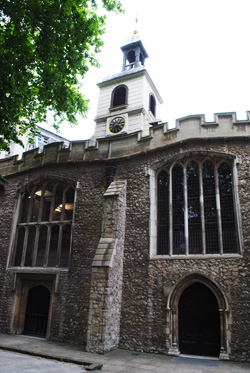 Established by one “William, son of William the goldsmith” after he was granted the right by the Dean and Chapter of St Paul’s Cathedral, the priory was built to the north of a previously existing church with a new church for the nuns to use built right alongside the existing structure (thus accounting for the rarely seen side-by-side naves of the current building).
While the new church was built longer than the existing church, the latter was then lengthened to give them both the same length. A line of arches and a screen separated the nun’s choir and the parish church.
The church which stands today has been much altered over the centuries and what we now see there largely dates from the 14th and 15th centuries (although the bell turret which sits over the west front is an 18th century addition).
One of the priory’s claims to fame in medieval times was that it apparently was once home to a piece of the True Cross, presented by King Edward I in 1285.
The nunnery was dissolved in 1538 during the Great Dissolution of King Henry VIII and the buildings, excepting the church, sold off to the Leathersellers’ Company (all were eventually demolished by the 18th century). The screen separating the nun’s choir and the parish church, meanwhile, was removed, leaving the main body of the church as it can be seen today.
The now Grade I-listed church, which was William Shakespeare’s parish church when he lived in the area in the 1590s, survived both the Great Fire of London and the Blitz but was severely damaged by two IRA bombs in the early 1990s leading to some major – and controversial – works under the direction of architect Quinlan Terry.
Inside the church today is a somewhat spectacular collection of pre-Great Fire monuments including the 1579 tomb of Sir Thomas Gresham, founder of the Royal Exchange, the 1636 tomb of judge, MP and Chancellor of the Exchequer, Sir Julius Caesar Adelmare, and the 1476 tomb of merchant, diplomat, City of London alderman and MP, Sir John Crosby.
It was also once the site of the grave of 17th century scientist Sir Robert Hooke but these were apparently removed from the church crypt in the 19th century when repairs to the floor of the nave were being made and placed in an unmarked common grave. Their location apparently remains unknown.
WHERE: St Helen’s Bishopsgate, Great St Helens (nearest Tube stations are Aldgate, Bank and Liverpool Street); WHEN: 9.30am to 12.30pm weekdays daily (also usually open Monday, Wednesday and Friday afternoons but visitors are advised to telephone first); COST: Free; WEBSITE: www.st-helens.org.uk.
Celebrating the Magna Carta’s 800th anniversary!…
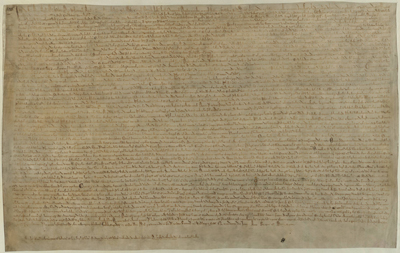
We interrupt our regular programming today to mark a truly historic milestone – 800 years since King John set his seal to the Magna Carta (Great Charter) in a field at Runnymede to the west of London.
So, where can you see a copy in London?
The British Library actually holds two of the four surviving documents from 1215 (one is pictured above) – the other two are held by Lincoln and Salisbury Cathedrals.
One of the copies in the British Library was damaged in an 18th century fire; the other was found in a tailor’s shop in London in the 17th century – made of sheepskin, it was apparently about to be taken apart to line collars.
The library’s current Magna Carta exhibition, Magna Carta: Law, Liberty, Legacy, features the two documents (along with Jefferson’s handwritten copy of the Declaration of Independence and one of the original copies of the US Bill of Rights). For more about the exhibition, see www.bl.uk/events/magna-carta–law-liberty-legacy (runs until 1st September – for more see our earlier post here).
Meanwhile, the City of London Corporation also possesses a copy of the Magna Carta – although a later one that that issued in 1215.
Issued by King Edward I in 1297, this was the one which saw the document’s clauses, somewhat changed from 1215, written into the statutes for the first time.
Stored at the Guildhall Art Gallery, it is too delicate to be on permanent display but is currently on display in the City of London Heritage Gallery until 1st October (for more follow this link).
You can read more about the Magna Carta and its London connections in our Wednesday series, 10 sites from London at the time of the Magna Carta.
PICTURE: British Library.
10 sites from London at the time of the Magna Carta – 1. The Tower…
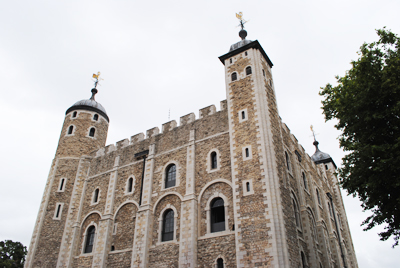
This week we’re starting a new series in honour of the 800th anniversary of the signing of the Magna Carta in which we look back at the London of 1215. First up we take a look at the Tower of London which was a smaller version of the complex of buildings which today exists on the site.
By 1215, the Tower of London – the fortress first constructed on the orders of William the Conqueror – had already existed for more than 100 years, nestled into a corner of the city’s walls which had existed since Roman times.
Then, as now, the White Tower – initially itself known as the Tower of London, it was later dubbed the White Tower thanks to the whitewash used to cover the Kentish limestone to protect it from the weather (and for its visual impact) – stood at the heart of the complex. Unlike today’s building, it lacked the large windows which date from the early 18th century, and while the towers were believed to be capped with cones, the present cupolas date from the reign of King Henry VIII.
While it had long been surrounded by a palisade and ditch, in 1189, King Richard I’s chancellor William Longchamp, the Bishop of Ely, had begun to extend the castle’s defences while the king was on crusade (in fact, the first siege of the Tower took place in 1191 when the then Prince John did so in opposition to Longchamp’s regime – it only lasted three days before Longchamp surrendered).
This extension, which was completed by King John following his accession to the throne in 1199, saw the size of the bailey around the White Tower doubled and a new curtain wall and towers – including the Bell Tower – built around its outer perimeter with a ditch below (the ruins of the Wardrobe Tower, just to the east of the White Tower show where the original Roman-era wall ran).
But it wasn’t until the reign of King John’s son, King Henry III, that the royal palace which now stands on the river side of the White Tower was constructed. Until that point – and at the time of the signing of the Magna Carta – the royal apartments remained within the White Tower itself, located on the upper floor.
Like those of the garrison commander known as the constable (located on the entrance level), the king’s apartments would have consisted of a hall and a large chamber, which may have been divided into smaller chambers with wooden partitions as well as a chapel (on the upper level this was the still existing Chapel of St John the Evangelist, although it would have then been more more richly decorated). Unlike the lower levels, the king’s level was of double height with a gallery (this level now has its own full floor).
The royal apartments had a variety of uses – as well as a residence and refuge for the king, they were also at times a place to keep high profile prisoners such as the Bishop of Durham, Ranulf Flambard, who was imprisoned on the orders of King Henry I (and who escaped from an upper window on a rope which had been smuggled in to him and fled to Normandy).
It is also worth noting that while King John apparently kept exotic animals at the Tower, it is his son, King Henry III who is usually credited with founding the Royal Menagerie there.
And it was his son, King Edward I, who expanded the Tower to its current size of about 18 acres by rebuilding the western section of the inner ward and adding the outer ward.
WHERE: Tower of London (nearest Tube station Tower Hill); WHEN: 9am to 5.30pm, Tuesday to Saturday, 10am to 5.30pm Sunday to Monday; COST: £24.50 adults; £11 children under 15; £18.70 concessions; £60.70 for a family (discounts for online purchases/memberships); WEBSITE: www.hrp.org.uk/toweroflondon/.
A Moment in London’s History – De Montfort’s Parliament is convened in London…
It was in 1265, 750 years ago this month, that a parliament convened by English rebel leader Simon de Montfort, took place in Westminster Hall (exterior pictured below).
The French-born De Montfort, who led a group of rebel barons, was riding high after defeating King Henry III at the Battle of Lewes on 14th May, 1264. While he ruled in the king’s name through a council – having captured both the king and his son Prince Edward, the monarch was no more than a figurehead. De Montfort was effectively the man in charge. 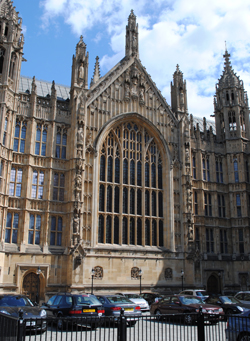
In a bid to solidify his hold on the country, he summoned not only the barons and clergy but knights representing counties to a parliament along with – for the first time – representatives from major towns and boroughs like York, Lincoln and the Cinque Ports (the representatives were known as burgesses).
It’s this latter move which led this three month-long parliament to be described as the first English parliament and which has led de Montfort to be described by some as the founder of the House of Commons.
Presided over by King Henry III, the parliament was held in Westminster Hall in London – a city loyal to de Montfort’s cause. It dealt with a range of political matters including the enforcement of a series of government reforms known as the Provisions of Westminster which had been aimed at strengthening baronial rights and the role of courts.
Prince Edward (later King Edward I) managed to escape from de Montfort’s clutches later in 1265 and led forces against de Montfort. The rebel leader was killed at the Battle of Evesham on 4th August, 1265.
The UK Parliament is marking the 750th anniversary of De Montfort’s Parliament with a series of events (along with the 800th anniversary of the sealing of the Magna Carta) – check out www.parliament.uk/2015 for more.
What’s in a name?…Chancery Lane
This central London street, which runs between Fleet Street and High Holborn, has long been associated with the law and government, and still is so today with the Royal Courts of Justice standing close to its southern end and Lincoln’s Inn – one of the four Inns of Court – located on the lane’s western side.
Its name is a corruption of the original Chancellor Lane – a moniker which apparently dates back to at least the 14th century – and which referred to the buildings where the official documents of the Lord Chancellor’s Office, known as the Rolls of the Court of Chancellory (Chancery), were stored.
The street was apparently first known as New Street and later as Converts Lane; the latter in reference to the House of Converts (Domus Conversorum) King Henry III founded here in the 1272 for the conversion of Jews to Christianity.
When King Edward I expelled all the Jews from the kingdom in 1290, the ‘house’ continued in use as such for foreign-born Jews, albeit with very small numbers of residents until the early 17th century.
In the meantime, in 1377 King Edward III gave orders that the complex of buildings used by the Domus Conversorum also be given over to the Master of the Rolls for the storage of chancellory documents and it was this move which led to the lane gaining its new name.
The buildings – which included a chapel which had become known as the Chapel of the Master of the Rolls or the simply the Rolls Chapel which had been rebuilt several times including to the designs of 17th century architect Inigo Jones – were finally demolished around the turn of the 20th century and subsumed into the Public Records Office complex on Chancery Lane (this was formerly housed in what is now the Maughan Library of King’s College London).
The lane these days is also home to such august institutions as The Law Society and the London Silver Vaults. It also lends its name to an Underground Station located to the east of the lane entrance in High Holborn.
Lost London – The Steelyard…
The Thames-side property known as the Steelyard – the phrase comes from the Dutch-German word Stahlhof and relates either to a steel beam used for weighing goods or a courtyard where the goods were sold – was the main trading base of the Hanseatic League in London from the 13th century onward.
Located near where Walbrook flows out of the Thames on the north bank (the site is now at least partly covered by Cannon Street Station), the walled compound – which at some point housed as many as 400 people – was in some senses a mini city within a city complete with a hall, warehouses, a weighing house and counting houses as well as residences and a chapel.
While the community – which represented an alliance of towns and cities in northern Europe – was mentioned as far back as the late 1200s, it wasn’t until 1303 that King Edward I formerly confirmed the tax and customs concessions of the merchants (at some point, in return for privileges they were given, the group was charged with keeping up the maintenance of Bishopsgate).
The power of the trading post had grown substantially by the 15th century and the concessions the group had been granted meant there was inevitably considerable friction with English merchants. There was also some official friction and one example of it was when the Steelyard was closed temporarily in the 15th century when the Hanse cities were at war with England.
In 1598 Queen Elizabeth I took away the Steelyard’s trading privileges (after which the compound was apparently looted). It was subsequently allowed to reopen by King James I but never regained the prominence it had previously had.
Much of the compound was destroyed in the Great Fire of London but nonetheless, the Steelyard was rebuilt and continued to provide links between German cities and the English until the mid 1800s when the land was sold off and, in 1866, Cannon Street Station built on the site.
A couple of surviving objects from the Steelyard include a series of at least eight portraits of Hanse merchants painted by Hans Holbein the Younger and a stone model of the Hanseatic Arms which were placed over the gate into the compound can be seen at the Museum of London.
London Pub Signs – The Minories…
 Located close to Tower Hill in the eastern part of the City, this pub – and indeed the street in which it sits (at number 64-73) – takes its name from a former nunnery that was once located here.
Known as the Minoresses, the nuns – who belonged to the Order of St Clare (also known as the Poor Clares) – lived in a nunnery here. The institution was founded by in 1293 by Edmund, the brother to King Edward I (reigned 1272-1307), and the earl of Lancaster, Leicester, and Derby, to house nuns who had been brought to England from Spain by the earl’s wife, Blanche of Artois, the widow of King Henry I of Navarre.
As with the case of the Black Friars, the name came to be used to refer to the district in which the now long-gone nunnery once stood (it was dissolved in the Great Dissolution and later used as a residence by the likes of Henry, Duke of Suffolk and father of Lady Jane Grey) and lives on in the name of the street and the pub.
The pub, which has undergone a paint job since our picture was taken, is located under a railway bridge (and may have once been part of the former Minories Railway Station which closed in 1873. For more, see www.minories-london.co.uk.
10 (more) curious London memorials…3. William Wallace Memorial…
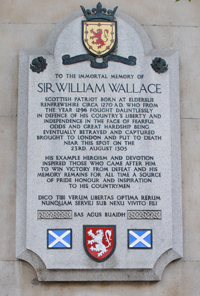 He was captured in Scotland but it was actually at Smithfield in London that the Scottish leader, Sir William Wallace, was put to death on 23rd August, 1305.
Erected in 1956 by “Scots and friends at home and abroad”, a plaque located on the wall of St Bartholomew’s Hospital overlooking the former execution ground commemorates the “Scottish patriot” Wallace, saying that from the year 1296 “fought dauntlessly in defence of his country’s liberty and independence in the face of fearful odds and great hardship”. It goes on to note that he was “eventually betrayed”, captured and executed “near this spot”.
Elsewhere the memorial reads: “His example, heroism and devotion inspired those who came after him to win victory from defeat and his memory remains for all time a source of pride, honour and inspiration to his countrymen”.
Having co-led the Scottish to victory against the army of King Edward I at the Battle of Stirling Bridge in 1297, Wallace was later knighted for his efforts and subsequently served as a Guardian of the Kingdom of Scotland.
Following his defeat at English hands in the Battle of Falkirk in 1298, he escaped and continued to evade capture until he was apprehended near Glasgow in August 1305. Brought to London where he was put on trial in Westminster Hall. Summarily found guilty of treason, he was stripped naked and dragged to Smithfield and it was there that he suffered the horrible death of being hung, drawn and quartered.
And while the 1995 movie, Braveheart, had Wallace crying out “Freedom” as he died, his last words are actually not recorded. His tarred head was subsequently displayed on a pike atop London Bridge while his limbs were sent to towns including Stirling in Scotland.
 Exploring London