Around London – Your Roman influences; celebrating the City; and, of Journeys and kinship…

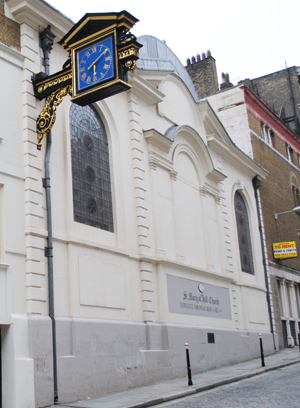
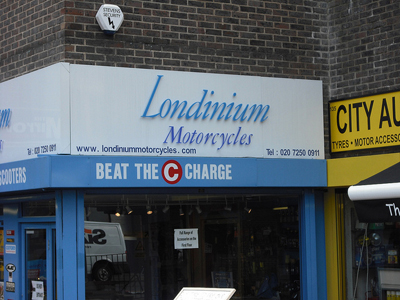
• The Museum of London is calling on Londoners to submit images showing “Roman influences in London today” as part of its forthcoming Our Londinium 2012 exhibition, a revamping of the museum’s Roman gallery. In what is the largest update made to the museum’s Roman gallery since it opened in 1994, the  reworked gallery looks at parallels between Roman London and the city today and features important Roman artifacts such as a bust of the Emperor Hadrian found on the Thames foreshore (part of the British Museum’s collection, this will be displayed for six months before being replaced by a replica) alongside modern objects such as the V for Vendetta masks worn by protestors in the Occupy movement. The exhibition is being co-curated by young people from Junction, the Museum of London’s youth panel, and they’re calling on people to submit their images showing how the city’s Roman past still resonates even today (see example pictured). For details on how to submit images via email of Flickr, head to www.museumoflondon.org.uk/ol2012map.

Secrets will be revealed, we’re promised, as part of the City of London’s Celebrate the City: four days in the Square Mile event to be held from 21st to 24th June. Events held in the City our the four days, many of which will be free, include a musical extravaganza to launch the event in Guildhall Yard as well as exhibitions, walks and talks, a chance to explore buildings like Livery Company Halls, the Bank of England and the Mansion House, family entertainment at the Cheapside Fayre and music and activities at sites across the Square Mile including the Barbican Centre, Museum of London and churches. We’ll have more to come on this. For now, head to www.visitthecity.co.uk/culture2012 for more information.

• Architectural historian and former director of the Sir John Soane Museum, Sir John Summerson, has been honored with an English Heritage blue plaque at his former home  London’s north-west. Sir John (1904-1992) lived at the property at 1 Eton Villas in Chalk Farm for more than 40 years. He was the director of the Sir John Soane Museum from 1945 to 1984. For more, see www.english-heritage.org.uk/discover/blue-plaques/.

• Architecture students are being invited to submit designs for a new stone seating area on the City thoroughfare of Cheapside. The winning student will work with trainee masons from the Cathedral Works Organisation and The Mason’s Company with the new seating area unveiled in October. For an application pack and full brief, see For an application pack and full brief, please contact Melanie Charalambous, Department of the Built Environment, City of London Corporation, PO Box 270, Guildhall, London, EC2P 2EJ or call 020 7332 3155 or email stonebench@cityoflondon.gov.uk.

• Now On: Journeys and kinship. This display at the Museum of London Docklands showcases the creative output of a community collaboration project which involved a group of young Londoners working with visual artist Jean Joseph, Caribbean Calypso musician Alexander D Great and Yvonne Wilson from training organisation Equi-Vision. The centrepiece of the exhibition – which explores themes highlighted in the museum’s permanent gallery, London, Sugar and Slavery, on the city’s involvement in the trans-Atlantic slave trade  – is an artwork by Joseph entitled Sales Over Centuries, 2010, which features plaster face casts of 42 people from the African diaspora who were born in or currently live in London. In response to it, the young Londoners have created their own works including face casts, music, film and photography. Runs until 4th November. Entry is free. For more, see www.museumoflondon.org.uk/Docklands/.
LondonLife Special – The Lord Mayor’s Show…

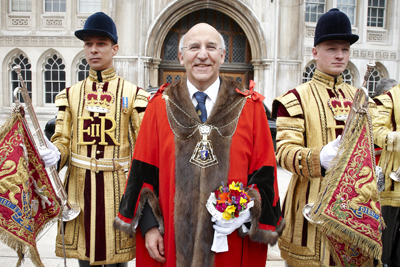
Last Saturday was the Lord Mayor’s Show, the annual three mile long procession through the streets of the City of London celebrating the arrival of the new Lord Mayor – in this case David Wootton, the City’s 684th Lord Mayor…

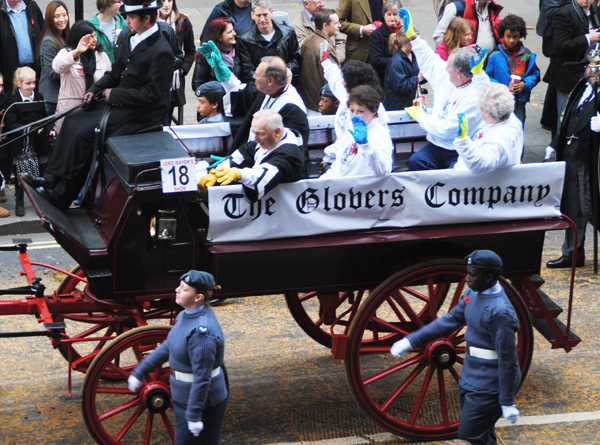
The Show always features entries by livery companies, some of which have ancient roots such as the Worshipful Company of Glovers (pictured above), first formed in 1349…

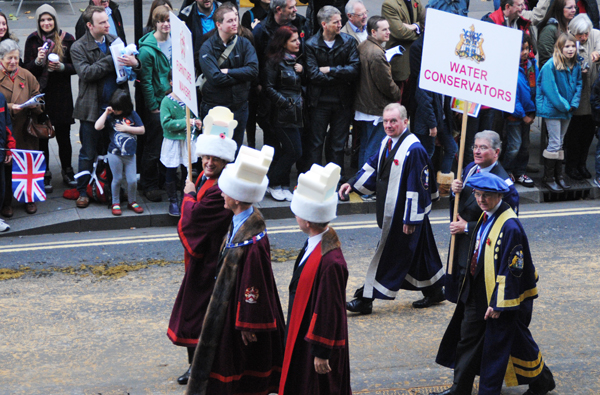
…and some which don’t, such as the Worshipful Company of Furniture Makers and the Worshipful Company of Water Conservators (representatives of which are pictured above), two of the so-called “modern livery companies”.

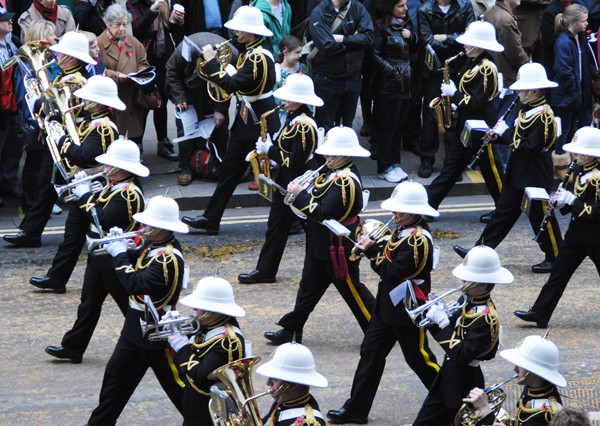
From our vantage point above Cheapside, we saw massed bands aplenty (seen above is the Royal British Legion Band & Corps of Drums from Romford)…

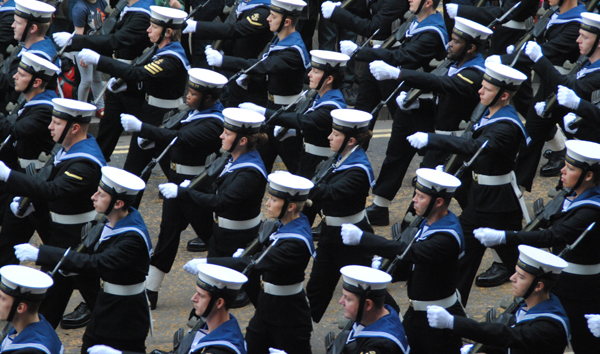
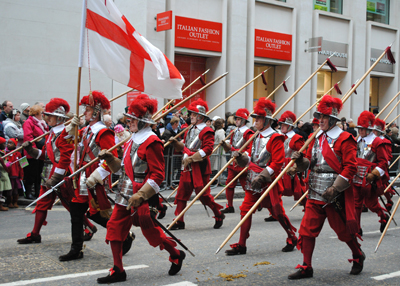
          …marching naval, army and airforce personnel…

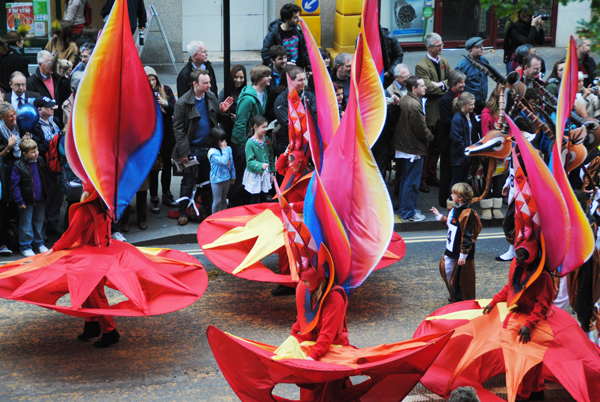
         …as well as lots of color…

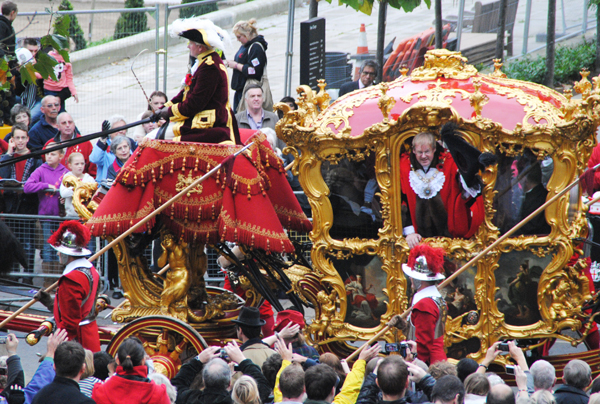
…before the arrival of Lord Mayor David Wootton in the 18th century State Coach drawn by six shire horses. The Lord Mayor proceded onto St Paul’s Cathedral where he was blessed before moving onto the Royal Courts of Justice where he swore allegiance to the Sovereign (and then returning to Mansion House via Queen Victoria Street). Late in the afternoon, he presided over a stunning fireworks display on the Thames. For more information about this annual event, see www.lordmayorshow.org.

Around London – The Lord Mayor’s Show goes on; London 2012 Festival launched; dowry tradition lives on; and, Leonardo da Vinci at the National Gallery…

On Saturday the annual Lord Mayor’s Show will crawl its way across London’s Square Mile in a three mile long procession that will involve 123 floats and 6,200 people. The show (a scene from last year’s procession is pictured) is held each year as the first public outing of the newly elected Lord Mayor – this year it’s David Wootton, the City of London’s 684th Lord Mayor, who officially takes up his new office tomorrow (11th November). Organisers have said the procession will follow its usual route despite the protestors currently encamped outside St Paul’s. Leaving Mansion House, the official residence of the Lord Mayor, at 11am, it will make its way down Cheapside to St Paul’s Cathedral, where the new Lord Mayor will be blessed, before heading onto the Royal Courts of Justice, where the Lord Mayor swears an oath of allegiance to Queen Elizabeth II, and then returning to Mansion House. The the procession, the origins of which date back to 1215, will feature representatives of livery companies, educational and youth organisations, military units and other London-associated organisations and charities like St Bart’s Hospital. There will be a fireworks display at 5pm on the Thames between Blackfriars and Waterloo. For more information, see www.lordmayorshow.org.

• Organisers have unveiled plans for the London 2012 Festival, a 12 week nationwide cultural celebration of music, theatre, dance, art, literature, film and fashion held around next year’s Games. We’ll be providing more details in upcoming weeks and months but among the highlights in London will be a British Museum exhibition on the importance of Shakespeare as well as “pop-up” performances by actor Mark Rylance – both held as part of the World Shakespeare Festival, a musical tribute to the history of jazz at the Barbican by the London Symphony Orchestra and Jazz at the Lincoln Center Orchestra, an exhibition of the work of artist Damien Hirst at the Tate Modern and another on Yoko Ono at the Serpentine Gallery, and ‘Poetry Parnassus’ at the Southbank Centre – the largest poetry festival ever staged in the UK. The festival is the finale of the “Cultural Olympiad” – launched in 2008, it has featured a program of events inspired by the 2012 Olympics – and will see more than 10 million free events being held across the country. For more details, see www.london2012.com.

In a tradition which dates back to the late 1800s, three “poor, honest (and) young” women have been awarded a dowry by the City of London Corporation. Susan Renner-Eggleston, Elizabeth Skilton, and Jenny Furber have each received around £100 under the terms of a bequest Italian-born Pasquale Favale made to the City in 1882. Inspired by the happiness he found is his marriage to his London-born wife Eliza, Favale bequeathed 18,000 Lira to the City in 1882 and stipulated that each year a portion of the money was to be given to “three poor, honest, young women, natives of the City of London, aged 16 to 25 who had recently been or were about to be married”. To be eligible the women must have been born in the City of London or currently reside there.

• On Now: Leonardo da Vinci: Painter at the Court of Milan. Billed as the year’s blockbuster art event in London, this exhibition at the National Gallery focuses on Da Vinci’s time as a court painter in Milan in the 1480s-90s and features 60 paintings and drawings. Thanks to a collaboration between the National Gallery and the Louvre, they include two versions of the Virgin of the Rocks (it is the first time the two versions are being shown together). Other paintings include Portrait of a Musician, Saint Jerome, The Lady with an Ermine (an image of Cecilia Gallerani, mistress of Milan’s ruler at the time – Ludovico Maria Sforza, ‘Il Moro’) and Belle Ferronniere as well as a copy of Da Vinci’s painting, The Last Supper, by his pupil Giamopietrino. Runs until 5th February and an admission charge applies. For more, see www.nationalgallery.org.uk.

LondonLife – Knollys Rose Ceremony

A London tradition which has its origins in the fourteenth century, the Knollys Rose Ceremony surrounds the presentation of a single red rose to the Lord Mayor of London at Mansion House.

The ceremony, which was held in the City yesterday, relates to a judgement of 1381 in which the fine was the annual payment of a single red rose.

The fine was levied after Lady Constance Knollys, the wife of prominent citizen Sir Robert Knollys, bought a property opposite her own in Seething Lane and then added a footbridge linking the two without first gaining planning permission (it’s suggested that she bought the property which had previously been used as a threshing ground because she was annoyed with the constant chaff in the air).

Following discovery of her breach, it was agreed that she would pay the annual ‘peppercorn rent’ of a single red rose from the new property’s garden to the Lord Mayor.

Lady Constance’s footbridge is long gone but the tradition of paying the annual rent was revived last century and is now presided over by the Company of Watermen and Lightermen of the River Thames.

The ceremony starts at the church of All Hallows by the Tower and then involves a procession to Seething Lane Gardens (a modern garden close to where the original may have been; the gardens were once the site of the Navy Office) where the Master of the Company of Watermen and Lightermen snips off a rose before heading on to Mansion House where it is presented to the Lord Mayor on a velvet altar cushion from All Hallows.

The ceremony usually takes place on the second Monday in June.

Around London – City’s history goes online; London’s oldest structure discovered?; and, my, how prices have changed…

• Four hundred years of London’s history is being put online as part of a new project on the City of Westminster’s website. The council is publishing a new picture depicting a different historical event from the city’s tumultuous history every day throughout 2011 under its A date with history project. The images, taken from the council’s archives, include photographs, engravings and sketchings. They include a black and white photo of queues of people waiting on Vauxhall Bridge to pay their final respects to King George V lying in state at Westminster Hall after his death on 20th January, 1936, another photograph showing the King and Queen with PM Winston Churchill inspecting damage to Buckingham Palace’s swimming pool following a raid during the Blitz in September, 1940, a hand-colored print depicting the execution of King Charles I on 30th January, 1649, and an engraving showing a comet passing by the spire of St Martin in the Field in 1744. It is the first time the images have been made freely available online. To see the images, head to www.westminster.gov.uk/archives/day-by-day.

What could be London’s oldest structure has been unearthed on the Thames foreshore. Six timber piles up to 0.3 metres in diameter have been discovered only metres from the MI6 headquarters in Vauxhall, part of what archaeologists believe is part of a prehistoric structure which stood on the river bank more than 6,000 years ago during the Mesolithic period when the river was lower. The find, made by a Thames Discovery Programme team, is only 600 metres away from a Bronze Age timber bridge or jetty dating from 1,500 BC which was discovered in 1993. The piles may be able to be seen from Vauxhall bridge during low tides between 10.25am on 22nd January and 11.15am on 23rd January.

Homes in London were purchased for an average price of £14,000 back in 1910, according to land tax valuations documents released online this week. Ancestry.co.uk has placed the London, England Land Tax Valuations 1910 – compiled as part of David Lloyd George’s 1910 Finance Act, known as the Domesday Survey – online to help people discover more about the financial situations of their ancestors. The documents put the value of the Bank of England at £110,000, the Old Bailey at £6,600, and Mansion House at a more impressive £992,000. The average value of property on Fleet Street was £25,000 (compared with £1.2 million today) while in Cannon Street, the average value was £20,000 (£2.2 million) and in Chancery Lane, the average value was just £11,000 (£1.1 million).

Around London – Lord Mayor’s Show tomorrow; Book of the Dead at British Museum; and Evolving English at the British Library

The Lord Mayor’s Show is tomorrow. The world’s oldest civic procession, it’s been held for 795 years (the last time it was interrupted was due to the Duke of Wellington’s funeral) and commemorates the day when the newly elected Mayor had to make the journey from the City to Westminster to declare his allegiance to the monarch. This year’s Lord Mayor of the City of London – the City’s 683rd – is Alderman Michael Bear (not to be confused with the Mayor of London Boris Johnson). The procession kicks off at 11am and travels from Mansion House to St Paul’s Cathedral, where the Lord Mayor, who formally took office yesterday in a silent ceremony held at Guildhall, is blessed. The procession then moves on to the Royal Courts of Justice where the Lord Mayor swears an oath of allegiance before returning to Mansion House via Victoria Embankment. This year the procession will involve from than 6,000 people from livery companies, military units, marching bands, local schools and businesses and community groups as well as 200 vehicles, 21 carriages – including, of course, the Lord Mayor’s State Coach – and 71 floats. Don’t forget to hang around for the fireworks. For more about the event – where to stand and what you’ll be seeing, see www.lordmayorsshow.org.

PICTURE: Alderman Michael Bear on the occasion of his election as the 683rd Lord Mayor of London. Courtesy Lord Mayor’s Show.

•  Now On: The British Museum exhibition, Journey through the afterlife: ancient Egyptian Book of the Dead, was launched last week. The exhibition centres on the museum’s collection of Book of the Dead papyri, many of which have never before been put on display to the public. They include the Greenfield Papyrus, which at 37 metres long is the longest Book of the Dead in the world and has never been displayed in its entirity before. The display also features famous paintings from the papyri of Ani and Hunefer and an array of painted coffins, gilded masks, amulets, jewellery, tomb figurines and mummy trappings. Runs until 6th March. For more information, including admission prices, see www.britishmuseum.org.

• Now On: A new exhibition exploring the development of the English language opens today at the British Library. Evolving English: One Language, Many Voices looks at how the language has evolved from Anglo-Saxon runes to modern day rap and where it’s headed next. Highlights of the exhibition include the first book printed in English, Recuyell of the Historyes of Troye (printed by William Caxton), a 1611 King James Bible, Poor Letter H – a pamphlet dating from 1854 explaining why pronouncing your h’s correctly is important to climbing the social ladder, and the earliest surviving copy of Beowulf. On until April 3rd. Admission is free. For more information, see www.bl.uk.

Wren’s London – 6. St Stephen Walbrook, St Mary-le-Bow, and St Mary-at-Hill

Sir Christopher Wren was responsible for designing more than 50 churches in the City of London after the Great Fire of 1666. We’ve already touched on a couple in this series – St Paul’s, of course, and St Bride’s in Fleet Street – and while we won’t be looking at all of rest in detail, here are three stars that have survived…

• St Stephen Walbrook, which is the parish church of the Lord Mayor and was that of Wren himself, is a little gem of a church and is generally thought to be the finest of Wren’s city churches from an architectural perspective. Tucked away behind Mansion House in Walbrook, the church as we know it was built between 1672-79 (although there may have been a Christian church on the site as early as 700 AD) and features a beautiful coffered dome (a sign of what was to come when Wren built St Paul’s). These days the chairs are arranged around white altar stone by sculptor Henry Moore which has been placed under the centre of the dome. Other features worth noting are Wren’s original altar screen and a glass-encased telephone which was the first dedicated help-line in London for the suicidal established by the charity Samaritans. These days the church is home to the London Internet Church. For more information, see http://ststephenwalbrook.net.

• St Mary-le-Bow, which is named for the bow-shaped arches in the Norman-era crypt, was rebuilt by Wren in 1670-80 after the Great Fire. In keeping with the church’s name, he designed a steeple with arches resembling the ‘bows’ below. While the church, located in Cheapside, was badly damaged when bombed in World War II, the steeple – topped by an original 1674 weathervane shaped like a dragon – remained standing along with the outer walls. The church was restored in the mid-Twentieth century and the bells, destroyed in a German air raid, rehung. It’s said that only those born within the sound of St Mary’s bells can be said to be true Cockneys (the Bow bells were also those Dick Whittington apparently heard when leaving London, leading him to turn around and embrace fame and fortune). For more information, see www.stmarylebow.co.uk.

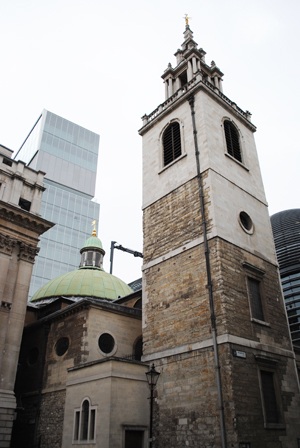
• St Mary-at-Hill, which has served the parish of Billingsgate for almost 1,000 years, was one of the first to be rebuilt after the Great Fire. Both Wren and his assistant Robert Hooke were believed to have been involved in building the church, which was completed in 1677 and lies in Lovat Lane, just off Eastcheap. It was designed as a Greek cross with a dome at its centre  – Wren later put forward a similar design for for St Paul’s which was rejected. Overhauled in the late 1700s and a couple of times in the 1800s, it survived World War II only to be damaged extensively by fire in 1988 after which it was restored. The church’s connection to Billingsgate – the site of London’s former fish market lies just down the road – means that the fish harvest is still celebrated here every October. For more information, see www.stmary-at-hill.org.