
• The 25.2 metre long skeleton of a blue whale named Hope along with that of an American mastodon, a meteorite which is one of the oldest specimens in Earth, a taxidermal display of a giraffe and giant coral are among items on display in the Natural History Museum’s newly transformed Hintze Hall from tomorrow. Selected from the museum’s more than 80 million specimens, the sometimes historic items are at the heart of 10 new displays which go on show in the ground floor alcoves known as ‘wonder bays’ as part of what is being described as a “once-in-a-generation” transformation of the 136-year-old museum. The 10 ‘wonder bays’ include five on the eastern side of the building focused on the origins and evolution of life on earth while those on the western side show the diversity of life on earth today. Elsewhere in the museum, hundreds of new specimens have been introduced including those in two new displays on the first floor balconies: the ‘Rocks and Minerals Balcony’ on the east side which features almost 300 rocks, ores and minerals and the ‘Birds Balcony’ on the west side which features more than 70 birds from as far afield as New Zealand and the Falkland Islands. To coincide with the new displays is the launch of a new summer exhibition – Whales – which features more than 100 specimens showing the diversity of whales, dolphins and porpoises. Featuring species ranging from the double-decker bus sized sperm whale – the largest toothed predator on Earth – to the 1.5 metre long harbour porpoise – one of the smallest cetaceans, the exhibition’s highlights include skulls revealing how whales sense and their eating habits, organs showing how they breathe and digest food and flippers which reveal swimming styles. For more on the exhibition and the transformation of the South Kensington museum, see www.nhm.ac.uk. PICTURE: Blue whale in Hintze Hall © The Trustees of the Natural History Museum, London.
• The mysterious fate of Sir John Franklin and his 128 man crew – last seen in Baffin Bay in July, 1845, as they sailed in search of the North-West Passage – is the subject of a new landmark exhibition opening at the National Maritime Museum in Greenwich tomorrow. Death In The Ice: The Shocking Story of Franklin’s Final Expedition tells the story of the disappearance of the HMS Erebus and HMS Terror and the largely unsuccessful expeditions which were launched in the following 30 years to find them as well as the more recent work of forensic anthropologist, Dr Owen Beattie, and the 1845–48 Franklin Expedition Forensic Anthropology Project (FEFAP), and the eventual discovery of the remains of the HMS Erebus in 2014 and the HMS Terror in 2016. At the heart of the exhibition are objects found by Parks Canada’s archaeological teams including personal items, clothing and ship components with those from the Erebus, including the ship’s bell, being shown for the very first time since their discovery and some items found in earlier searches. Along with an examination of the Victorians fascination with the fate of the men, the exhibition will also show the significant role the Inuit played in learning their fate as well as in relation to recording the European exploration of the Arctic more generally and includes numerous Inuit objects, some of which incorporate materials of European origins traded from explorers or retrieved from abandoned ships. Developed by the Canadian Museum of History in partnership with Parks Canada and the National Maritime Museum and in collaboration with the Government of Nunavut and the Inuit Heritage Trust, the exhibition runs until 7th January. Admission charge applies. For more see www.rmg.co.uk/franklin.
• Fifty drawings from Britain’s finest collections by artists including Leonardo da Vinci, Albrecht Durer, Peter Paul Rubens and Rembrandt van Rijn and eight portraits by Hans Holbein the Younger from the Royal Collection have gone on show at the National Portrait Gallery. The Encounter: Drawings from Leonardo to Rembrandt includes many rarely seen works with all those on show chosen because they captured an apparent moment of connection between the artist and a sitter. While some of those pictured in the portraits can be identified – such as the emperor’s chaplain or the king’s clerk, many are simply faces seen in the street, such as those of a nurse or a shoemaker or an artist’s friend or student. The display also includes the types of tools and media used to create the artworks and shows how the artists moved away from using medieval pattern books to studying figures and faces from life. Runs until 22nd October. Admission charge applies. For more, see www.npg.org.uk/encounter.
Send all items for inclusion to exploringlondon@gmail.com.

 conservationist and influential figure in the Arts and Crafts movement” as well as being the father of world famous writer Rudyard Kipling – opens at the V&A in South Kensington on Saturday. The exhibition is the first exploring the life and work of Kipling (1837-1911) who campaigned for the preservation of Indian crafts as well as being a craftsman himself (his terracotta panels can still be seen on the exterior of the V&A) and an illustrator of his son’s books. Lockwood Kipling: Arts and Crafts in the Punjab and London features paintings of the Indian section of the 1851 Great Exhibition as well as objects which were on display (the exhibition was visited by Kipling while a teenager), Kipling’s sketches of Indian craftspeople observed during his many years living in India as well as objects he selected for the V&A while there, designs and illustrations for books, and furniture he helped his former student architect Bhai Ram Singh design for royal residences Bagshot Park and Osborne. The free exhibition, a collaboration between the V&A and the Bard Graduate Centre in New York, runs until 2nd April (it will be on display at the Bard Graduate Center, New York, from 15th September this year). For more, see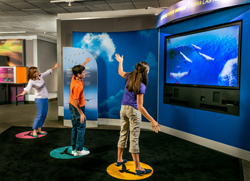
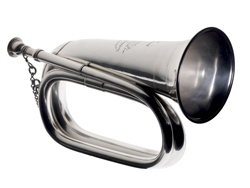 Marking the centenary of the battle, Jutland 1916: WWI’s Greatest Sea Battle explores the battle itself (which claimed the lives of more than 8,500 as the British Grand Fleet met the German High Seas Fleet in what neither side could claim as a decisive victory) as well as its lead-up, aftermath and the experience of those serving on British and German warships through paintings and newspaper clippings, photographs, ship models and plans, sailor-made craft work and medals. Among the objects on display is a 14 foot long shipbuilder’s model of the HMS Queen Mary, which, one of the largest battle cruisers involved,was destroyed with only 18 survivors of the 1,266 crew. Among the personal stories told in the exhibition, meanwhile, is that of boy bugler William Robert Walker, of Kennington, who served on the HMS Calliope and, severely wounded during the battle, was later visited by King George V
 • The largest exhibition ever mounted about the life of 17th century diarist Samuel Pepys opens at the National Maritime Museum in Greenwich tomorrow. Samuel Pepys: Plague, Fire, Revolution features more than 200 paintings and objects brought together from museums, galleries and private collections which explore the life of the famous diarist (depicted here in a bust outside the Guildhall Art Gallery) against the backdrop of the tumultuous events of Stuart London, from the execution London of King Charles I in 1649 through the Great Fire of London and the Glorious Revolution on 1688. Objects on show include the famous painting, Portrait of Charles II in Coronation Robes, objects connected to Pepys’ mistresses including one of his love letters to Louise de Kéroualle (aka ‘Fubbs’ or ‘chubby’) and other personal items such as a lute owned by Pepys. The exhibition is accompanied by a series of events including Pepys Show Late: Party like it’s 1669 (26th November) and a series of walks and talks. Admission charge applies. The exhibition runs until 28th March. For more, see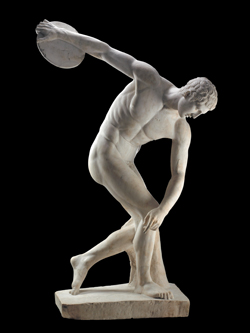




 Exploring London