This Week in London – Wildlife Photographer of the Year exhibition; 20th century conflicts; Jennie Baptiste at Somerset House; and Nigerian Modernism…

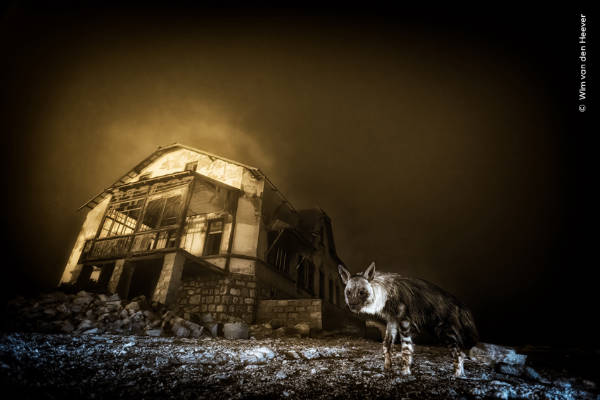
Wim van den Heever’s winning entry, Ghost Town Visitor.

An exhibition of entries into the annual Wildlife Photographer of the Year competition opens tomorrow at the National History Museum in South Kensington. The exhibition features 100 images selected from a record-breaking 60,636 entries and follows from this week’s announcement of the winners at a ceremony held at the museum earlier this week. The display includes the winning image – ‘Ghost Town Visitor’ which, captured by South African wildlife photographer Wim van den Heever depicts a brown hyena near the ruins of a long-abandoned diamond mining town in Kolmanskop, Namibia – as well as the winner of the Young Wildlife Photographer of the Year 2025 – 17-year-old Italian Andrea Dominizi’s After the Destruction which spotlights a longhorn beetle in the Lepini Mountains of central Italy, an area once logged for old beech trees, with a background of abandoned machinery. Other images on show include the winner of the Impact Award – Brazilian photographer, Fernando Faciole’s Orphan of the Road depicting an orphaned giant anteater pup following its caregiver after an evening feed at a rehabilitation centre – as well as category winners. The exhibition can be seen until 12th July next year. Admission charge applies. For more, head here.

Three 20th century conflicts which broke out in Malaya, Kenya and Cyprus after World War II are the subject of a new exhibition at the Imperial War Museum in Lambeth. Emergency Exits: The Fight for Independence in Malaya, Kenya and Cyprus looks at how these three conflicts, known as “emergencies” to the British Government, shaped and continues to shape Britain, its former territories and the wider world today. The display includes more than 70 objects such as propaganda posters, flags and artworks as well as oral histories and personal belongings which belonged to those impacted by them. As well as telling the stories of the three conflicts, Emergency Exits also explores Operation Legacy, the British Government’s attempt to prevent publication of sensitive documents related to the conflicts which included evidence of human rights abuses. The free exhibition, which opens on Friday, runs until 26th March. For more, see iwm.org.uk/events/emergency-exits-the-fight-for-independence-in-malaya-kenya-and-cyprus.

The first major solo exhibition focusing on the work of pioneering Black British photographer Jennie Baptiste opens in the Terrace Rooms at Somerset House on Friday. Jennie Baptiste: Rhythm & Roots, which is a highlights of Somerset House’s 25th birthday programme, charts how Baptiste used her lens to capture youth culture, music, fashion, and urban life within the Black British diaspora in London in the past few decades. The exhibition can be entered under a “pay what you can” model. Runs until 4th January. For more, see www.somersethouse.org.uk/whats-on/jennie-baptiste-rhythm-and-roots.
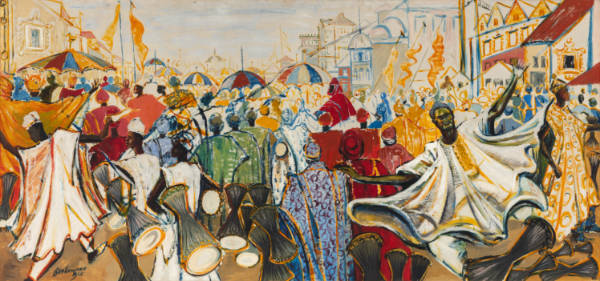
Ben Enwonwu, ‘The Durbar of Eid-ul-Fitr, Kano’, Nigeria 1955. © Ben Enwonwu Foundation. Private Collection

On Now: Nigerian Modernism. The Tate Modern is hosting the first UK exhibition to trace the development of modern art in Nigeria with more than 250 works by more than 50 artists on display. The exhibition, which spans the period from the 1940s to today, features works by globally celebrated artists of the 1940s, Ben Enwonwu and Ladi Kwali, as well as works by The Zaria Arts Society members Uche Okeke, Demas Nwoko, Yusuf Grillo, Bruce Onobrakpeya, and Jimo Akolo, Nsukka Art School members including Obiora Udechukwu, Tayo Adenaike and Ndidi Dike, and concludes with a spotlight on the work of Uzo Egonu. The display can be seen until 10th May. Admission charge applies. For more, see www.tate.org.uk/whats-on/tate-modern/nigerian-modernism.

Send all items for inclusion to exploringlondon@gmail.com.
This Week in London – Wildlife Photographer of the Year is coming; ‘Vanishing Africa’; and, ‘Black Chiswick Though History’…

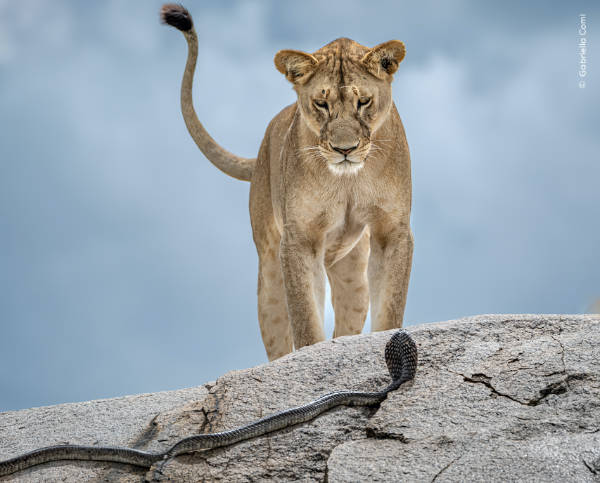
‘Wake-up Call’ by Gabriella Comi, Italy, (Highly Commended, Behaviour: Mammals). PICTURE: Courtesy of the Wildlife Photographer of the Year, Natural History Museum

Depicting a dramatic stand-off between a lion and a cobra in the Serengeti National Park in Tanzania, Gabriella Comi’s impressive image is among the 60,636 entries, from across 113 countries and territories, received in the Natural History Museum’s 61st annual Wildlife Photographer of the Year competition. The competition’s category winners and the prestigious ‘Grand Title’ and ‘Young Grand Title’ awards will be announced on 14th October, 2025, after which, from 17th October, 100 of the images will go on show at the museum in South Kensington. Other images revealed this week include Amit Eshel’s portrait of an inquisitive pack of Arctic wolves and photographs of flamingoes, coyotes and red deer by emerging young photographers as young as nine-years-old. For more, see https://bit.ly/WPY61Exhibition.

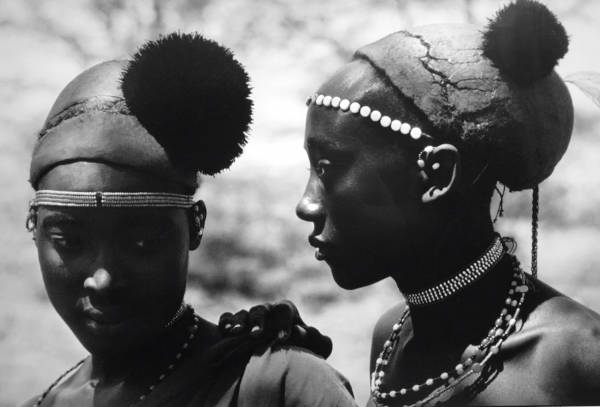
One of the images in ‘Vanishing Africa’. PICTURE: © Mirella Ricciardi

The Science Museum has launched a new online exhibition, Vanishing Africa, which features images by Kenyan-born photographer Mirella Ricciardi and reveal how much climate change is changing the continent. Taken in East Africa over two years in the 1960s, the photographs are a visual record of the Indigenous peoples of the region, including the Maasai, Samburu, Turkana, Orma, Pokot and Rendille people, and “capture a land of untamed wilderness, diverse wildlife, and Indigenous communities attuned to nature”, an East Africa which many no longer recognise. The exhibition has been published to celebrate the ‘UK/Africa Season of Culture’ and launches ahead of the international climate summit, COP30. To view it, head to www.sciencemuseum.org.uk/objects-and-stories/vanishing-africa-through-mirella-ricciardis-lens.

On Now: Black Chiswick Through History. This project, launched in 2011, looks at how the history of Chiswick House is connected to Black history and people of colour. This year’s installation explores the life of 18th-century Chiswick House resident James Cumberlidge – one of the few people of African heritage in Britain whose likeness was captured and preserved for posterity – and traces his journey from  page boy at Chiswick House to trumpeter in the Royal Court of King George III. There’s also a painting dating from the 1870s which depicts Queen Victoria attending a fashionable garden party right here at Chiswick House in July, 1875. Runs until 28th September. Admission charge applies. For more, see https://chiswickhouseandgardens.org.uk/event/visit-chiswick-house/.

Send all items for inclusion to exploringlondon@gmail.com.
This Week in London – “Our Story with Sir David Attenborough”; the Royal Academy’s 257th Summer Exhibition; and, an appeal for restoring three Underground carriages…

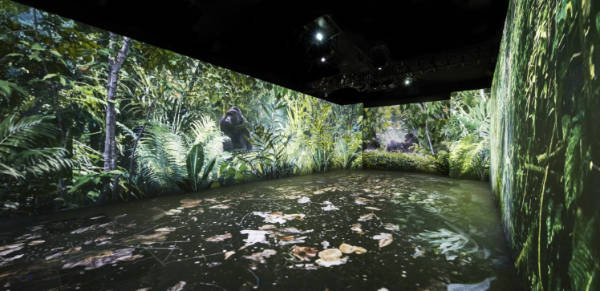
Our Story with David Attenborough. PICTURE: © Trustees of the Natural History Museum

Our Story with David Attenborough – the first ever immersive experience at the Natural History Museum – opens its doors today. Created by Open Planet Studios, the 50 minute experience in the Jerwood Gallery features animations, projections, real-world footage and full 360 degree immersion as Sir David draws on his life of exploration to tell the story of humanity and the planet on which we live. The experience is taking bookings until 18th January, 2026. Admission charge applies. For more, see www.nhm.ac.uk/visit/exhibitions/our-story-with-david-attenborough.

The Royal Academy’s 257th Summer Exhibition opened this week. Co-ordinated by internationally acclaimed architect and Royal Academician Farshid Moussavi in conjunction with the Summer Exhibition Committee, this year’s display of art and architecture explores the theme of ‘Dialogues’. Among the works on show is a six metre high installation of ostrich feathers and steel chain by British artist Alice Channer, a 4.5 metre high and seven metre wide wall made from deconstructed matchboxes by Brazilian artist Antonio Tarsis, and installation of textile carcasses by Argentine-American artist Tamara Kostianovsky. Meanwhile, the Annenberg Courtyard hosts a large scale installation by Royal Academician Ryan Gander which features five three metre diameter inflatable balls inscribed with absurd questions developed with children in a representation of the “inquisitiveness of children who ask what grown-up minds often dismiss as nonsensical or illogical”. Runs until 17th August. Admission charge applies. For more, see royalacademy.org.uk.

The London Transport Museum has launched an appeal for £30,000 to help complete the restoration of three 1930s Q stock Underground carriages. The funds will be used to re-upholster the seats of two of the Underground cars in moquette – the durable, woollen seating material used in upholstery on public transport all over the world. Q stock trains first entered service on the District line in November, 1938, and were retired from service in 1971. The restoration of the three carriages – which aims to restore them to operational condition – has mainly been carried out at the London Transport Museum Depot in Acton, west London. Donations can be made on London Transport Museum’s website: www.ltmuseum.co.uk/make-donation?campaign=qstock

Send all items for inclusion to exploringlondon@gmail.com.
This Week in London – Mudlarking finds celebrated; MI5 reveals its secrets; and, fixing the broken planet at the Natural History Museum…

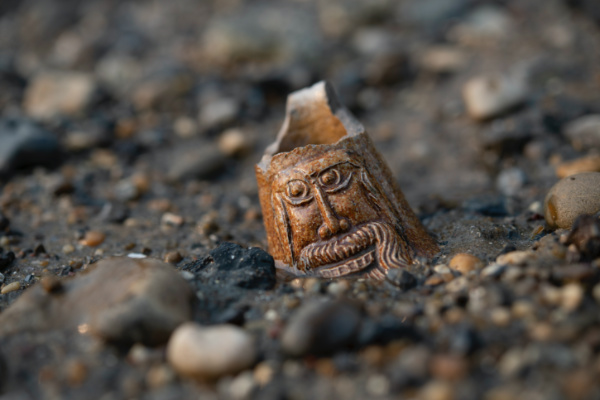
The neck from a stoneware bottle with a bearded face known as a Bartmann bottle 1500s – 1600s. The bearded face decorating the neck lies half-buried on the foreshore. PICTURE:
© Alessio Checconi /London Museum.
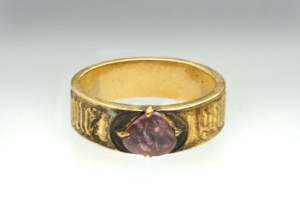
Gold finger ring, late medieval, mid 15th century, with pink ‘spinel’ stone. The engraved band includes an inscription ‘pour amor say donne’- For Love I am Given. © London Museum

The first major exhibition on mudlarking opens at the Museum of London Docklands tomorrow. Secrets of the Thames: Mudlarking London’s lost treasures features some of the fascinating finds made along the Thames foreshore – from a Tudor head-dress and a medieval gold ring to an an elaborately decorated Viking era dagger and a pair of 18th century false teeth. While mudlarking was historically an activity of the poor, often children, during the 19th century, it has evolved into a popular hobby for some (albeir permits are required) and in recent years led to some spectacular finds. Others among the more than 350 objects on show include a 16th century ivory sundial, the nationally significant Iron Age Battersea Shield, a pair of medieval spectacles, 16th century wig curlers, and a Roman badge decorated with a phallus. The exhibition also features the installation, The Moon by artist Luke Jerram, which highlights the role the moon and tides play in creating the unique conditions for mudlarks to explore the river’s banks. Admission charge applies. Runs until 1st March next year. For more, see www.londonmuseum.org.uk/whats-on/secrets-thames/.

The hidden world of MI5 is being revealed in a new exhibition opening at the National Archives in Kew on Saturday. MI5: Official Secrets features original case files, photographs and papers alongside equipment used by spies and spy-catchers during the organisation’s 115 year history. Among the items on show are first-hand account of Kim Philby’s confession in 1963, papers related to the past activities of Cambridge spy Anthony Blunt, M15’s first camera – a pocket-sized ‘Ensignette’ made by Houghton Ltd from 1910, evidence that led to German spy Josef Jakobs being the last person executed at the Tower of London, and, advanced radio equipment found buried in the garden of Soviet spies Helen and Peter Kroger in the 1960s. The exhibition also features video insights from former MI5 directors general, intelligence experts including Professor Christopher Andrew – author of MI5’s official history, and Baroness May, former Prime Minister and one of Britain’s longest serving Home Secretaries. The exhibition is free to visit and runs until 28th September. For more, see https://www.nationalarchives.gov.uk/mi5-official-secrets/.

The first new permanent gallery at the Natural History Museum – Fixing Our Broken Planet – opens today. The new gallery brings together pioneering research from the museum’s scientists with advice from environmentalists and young changemakers on how to better care for the planet and its future and aims to be a “definitive destination for those looking to explore the threats to our natural world whilst discovering where solutions can be found”. Visitors will come face-to-face with more than 250 specimens including a Sumatran rhinoceros, parasitic worms and whale’s earwax; each telling an important story about our fragile relationship with the natural world and will also see research showing how fungi is used to fertilise crops, how bacteria can be harnessed to extract copper from mine waste, how bison are helping to engineer forests in the UK to store more carbon and how vital DNA analysis on mosquitos is being used to fight mosquito-borne diseases, such as malaria. The new display is located in the restored original 1881 Waterhouse building. The gallery is free to visit. For more, see www.nhm.ac.uk.

• Send all items to exploringlondon@gmail.com

LondonLife – Fern stands sentinel…

PICTURE: Sung Jin Cho/Unsplash

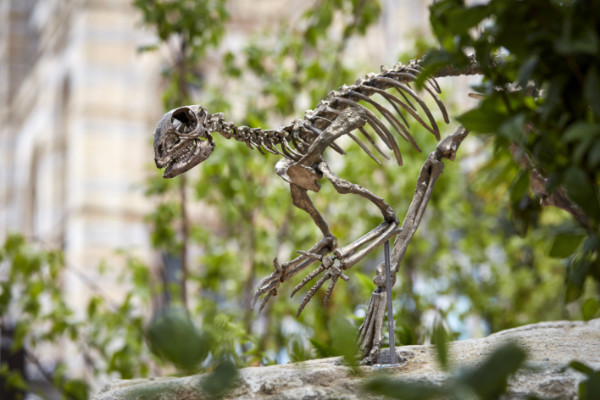
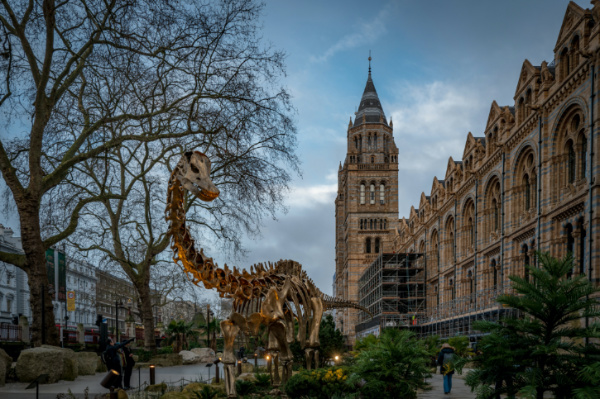
Fern the diplodicus stands in the Jurassic Garden outside the Natural History Museum in South Kensington.

This Week in London – Natural History Museum scientists name new species; Ketna Patel at the Heath Robinson Museum; and, David Hoffman’s images of the East End…

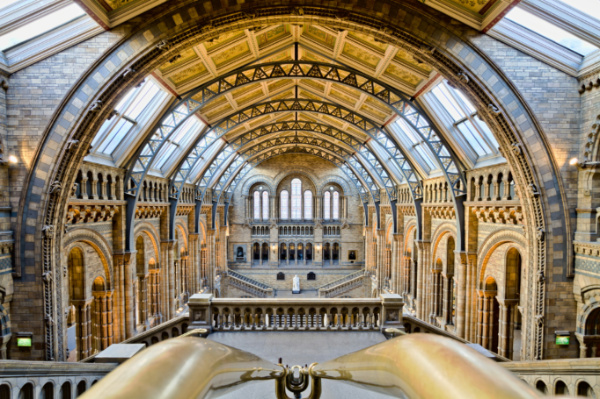
Interior of the Natural History Museum in South Kensington. PICTURE: Michael D Beckwith/Unsplash

A snake named after actor Leonardo DiCaprio, fossilised dung named after the author of Winnie the Pooh and a piranha named after Sauron, the evil Lord of the Rings figure, are among 190 new species named by London’s Natural History Museum scientists in 2024. The Anguiculus dicaprioi, or DiCaprio’s Himalayan snake, was named after DiCaprio while Alococopros milnei is a fossilised dung named after AA Milne in recognition of Winnie the Pooh (get it?) and a vegetarian piranha, or pacu, was named Myloplus sauron due to its resemblance to JRR Tolkien’s Eye of Sauron. Other newly named species included a new dinosaur from the Isle of Wight, now known as Comptonatus chasei, which was named for fossil hunter, Nick Chase, and a new species of pterosaur which was named Ceoptera evansae. For more on the museum, see www.nhm.ac.uk.

The work of British-Indian artist Ketna Patel is the subject of a new exhibition at the Heath Robinson Museum. REMIXOLOGY: The Art of Cultural Storytelling by Ketna Patel invites audiences to
“reflect on how identity is shaped – by ourselves and by society” and celebrates what is described as her “signature approach” to her work which involves remixing diverse cultural influences into something new. The display can be seen at the Pinner museum until 8th February. Museum admission charge applies. For more, see www.heathrobinsonmuseum.org.

Now on: Endurance & Joy in the East End: The photography of David Hoffman. This exhibition, hosted by the Museum of the Home, features the work of one of the leading “photographers of protest” in the UK and spans a 10 year period starting in 1973 when Hoffman lived in a squat in Fieldgate Mansions and documented issues seen in Whitechapel including homelessness, racism and the rise of protest. Running until 30th March, it can be seen in the Undercroft at 136 Kingsland Road. For more, see www.museumofthehome.org.uk/whats-on/exhibitions-and-installations/endurance-and-joy-david-hoffman/

Send all items for inclusion to exploringlondon@gmail.com.
This Week in London – Christmas at Kew; Picasso’s prints; and, the T rex dons its Christmas jumper…

World premiere installations Ombre by TILT – which takes the “form of a series of giant plants in bloom springing up from the landscape in a spectrum of vibrant shades” – and Threshold by Studio Vertigo – an “illuminated helix-like shape, bathed in golden yellow light to evoke the warmth and joy of the festive season” are at the centre of this year’s Christmas light trail at Kew Gardens. Other highlights at this year’s festive showing include Camellia Walk, which has been transformed into a snowy lane which showcases the spectacular tree canopy and evoking a wintery wonderland, Fish are Jumping by Dutch artists TOER and Mist Arches by Culture Creative which create “an atmospheric ambience across Kew’s Lake Crossing”. Annual favourites such as the light show on the Temperate House, the Fire Garden and Christmas Cathedral have also returned along with the Palm House finale. The trail can be visited on selected dates until 5th January. Admission charge applies. For more, see
www.kew.org/christmas.

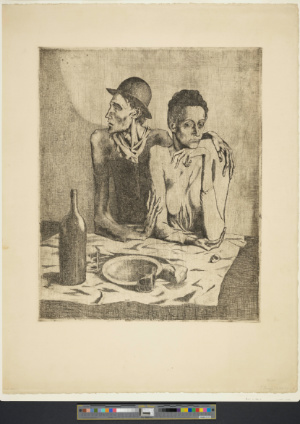
The frugal meal, 1904 © Succession Picasso/DACS, London 2024

Around 100 prints by Pablo Picasso – including some from his 347 Suite which have never been displayed before – are on show in a new exhibition at the British Museum. Picasso: Printmaker charts the artist’s engagement with printmaking (he produced around 2,400 in total) and centres on some of the more than 500 now in the British Museum’s collection (the largest in the UK). Highlights include his first professional print – The Frugal Meal (1904 – pictured) – as well as prints from the Vollard Suite (1930-1937) such as the aquatint Faun Uncovering a Woman (1936), and, the 347 Suite‘s Tree in the Storm, with Flight Towards a Church (1968). The exhibition can be seen in Room 90 until 30th March. Admission charges apply. For more, see www.britishmuseum.org/picasso.

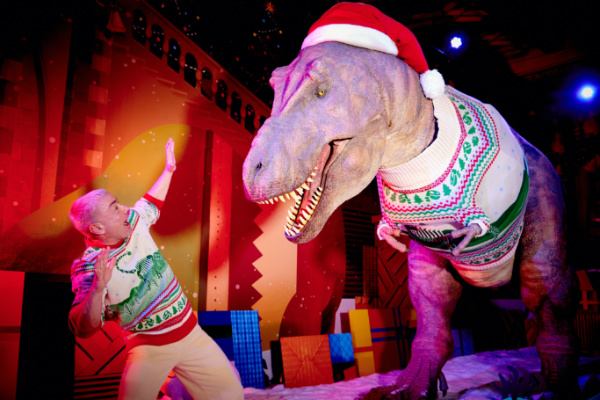
The T rex’s new Christmas jumper has been unveiled at the Natural History Museum. This year’s design – which can be seen modelled by the T rex – features festive colours of red, blue, green and white and an image of the museum’s latest prehistoric resident, Fern the Diplodocus, who took up residence in the redesigned gardens earlier this year. The jumper can be seen in the Dinosaur’s Gallery until January. Human-sizxed versions can be bought in the museum shop (www.nhmshop.co.uk). For more, see nhm.ac.uk.

The Natural History Museum unveils its 2024 Christmas jumper on its famous animatronic T rex in annual festive display. PICTURE: © Trustees of the Natural History Museu

Send all items to exploringlondon@gmail.com.

London Explained – Albertopolis…

An aerial view of the area known as Albertopolis. PICTURE: Andreas Praefcke/Public Domain

A nickname, connected to Prince Albert (beloved husband of Queen Victoria), which was given to an area of South Kensington centred on Exhibition Road which is packed with various cultural and educational institutions.

The land, which had been the Kensington Gore Estate, was purchased by the Royal Commission for the Exhibition of 1851 on the suggestion of Prince Albert using the profits made from the Great Exhibition which had been held just to the north in Hyde Park. His vision was for arts and science quarter which included schools, colleges and libraries as well as museums, exhibition rooms and spaces for events.

Among the buildings subsequently constructed upon it were those bearing Prince Albert’s name including Royal Albert Hall and the Victoria and Albert Museum along with the huge Albert Memorial.

Other institutions on the land include the Natural History Museum, Imperial College London, the Royal College of Music, the Royal College of Art, the Science Museum, the Royal Geographical Society and the since removed Royal Horticultural Society Gardens.

The area gained its nickname in the 1850s due to the Prince’s role in the Great Exhibition and its subsequent purchase and was seen to both celebrate, but also by some, to satirise him. It fell out of use after the Prince’s death in 1861 but was subsequently revived in the 1960s and since to bring attention to buildings in the area threatened with demolition.

A pedestrian subway under Exhibition Road runs north from South Kensington Station and gives access to the museums (when it was built in 1885, a toll of one penny was charged to use it).

This Week in London – Dick Whittington explored at the Guildhall Library; Francis Bacon’s portraits; and, the 60th Photographer of the Year competition…

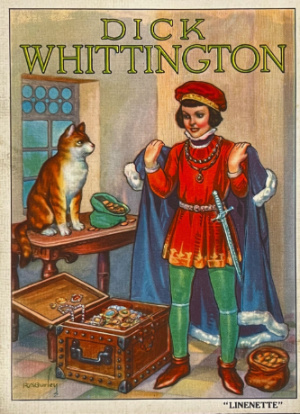
PICTURE: Courtesy of the City of London Corporation

A new exhibition exploring the life of one of the City of London’s most famous Lord Mayors has opened at the City of London’s Guildhall Library. Marking the library’s 600th anniversary, Whittington, the Man, the Myth and the Cat uses chapbooks (small printed booklets used for street literature in early modern Europe), children’s books, and works relating to pantomimes, to investigate Whittington’s story (including the question of whether or not he owned a cat). The exhibition details Whittington’s “rags to riches” tale and the many myths that later grew up around him, revealing information about his many loans to to kings (Richard II, Henry IV and Henry V), how he was three times Lord Mayor of London (1397, 1406 and 1419) and how he paid for the building of public lavatories at St Martin Vintry and a refuge for unmarried mothers at St Thomas’ Hospital as well as the rebuilding of Newgate Prison, and the establishment of the first library at Guildhall. Addressing the myth of the Whittington’s cat, it explains how it may have come about as a result of a play on words – ‘cat’ (or cattes) being a word used to describe a fleet of boats used for importing and exporting which was a mistranslation of the French word, ‘achat’, for trade. The exhibition, which runs until April next year, is free to visit. For more, see www.cityoflondon.gov.uk/services/libraries/guildhall-library.

The first exhibition in almost 20 years to focus on Francis Bacon’s portraits opened at the National Portrait Gallery, off Trafalgar Square, this week. Francis Bacon: Human Presence charts the artist’s career through 50 of his works arranged in five sections – ‘Portraits Emerge’, ‘Beyond Appearance’, ‘Painting from the Masters’, ‘Self Portraits’, and ‘Friends and Lovers’. Works on show include self-portraits as well as Head VI (1949), Study for a Pope I (1961), Three Studies for a Portrait of Isabel Rawsthorne (1965) and Portrait of a Man Walking Down Steps (1972). The exhibition also includes photographic portraits and film of Bacon by some of the century’s leading photographers, including Cecil Beaton, Arnold Newman, and Bill Brandt. Can be seen until 19th January. Admission charge applies. For more, see www.npg.org.uk.

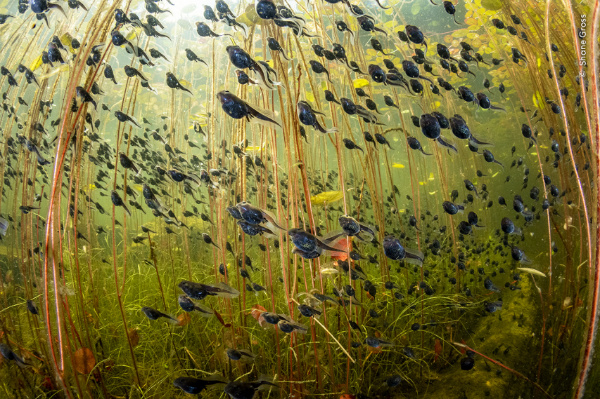
‘The Swarm of Life’ by Shane Gross, Canada, winner of the 60th Wildlife Photographer of the Year competition.

A Canadian marine conservation photojournalist, Shane Gross, has won this year’s Wildlife Photographer of the Year competition for an image capturing the magical underwater world of western toad tadpoles. The Swarm of Life is among 100 prize-winning images which are going on show at the Natural History Museum in South Kensington from tomorrow as it celebrates the 60th year of its Photographer of the Year competition. This year’s contest attracted a record-breaking 59,228 entries from 117 countries and territories. Among the other images on display are German Alexis Tinker-Tsavalas’ Life Under Dead Wood  depicting the fruiting bodies of slime mould with a tiny springtail (Tinker-Tsavalas won Young Wildlife Photographer of the Year). Wildlife Photographer of the Year is developed and produced by the Natural History Museum, London. The exhibition runs until 29th June. Admission charge applies. For more, see www.nhm.ac.uk/wpy.

Send all items for inclusion to exploringlondon@gmail.com

This week in London – Re-live the ‘Golden Age of Piracy’; getting below the surface of the Thames; a look inside East London houses through time; and, a new public garden in the City…

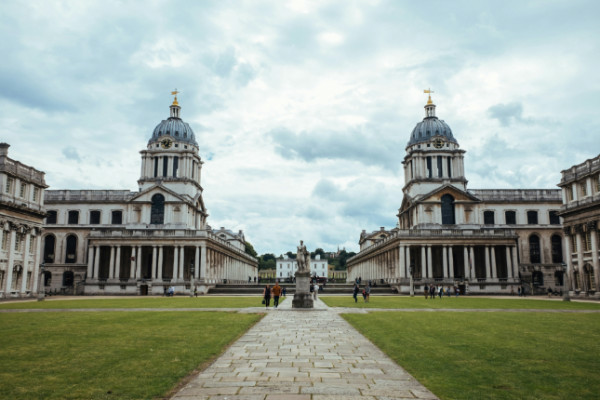
The Old Royal Naval College in Greenwich. PICTURE: Robert Bye/Unsplash

• ‘The Golden Age of Piracy’ will come to life in a living history weekend this Saturday and Sunday at the Old Royal Naval College in Greenwich. With the focus on the period between 1650 and 1720 (when more than 5,000 pirates were said to have been active), visitors will learn how to separate pirate fact from fiction, enjoy songs of the sea, witness sword and cutlass fights, and hear the tale of a real 18th-century mutiny. Each day culminates with a demonstration of the firepower of pirates and marines in the arena on the lawns overlooking the River Thames. There’s also the opportunity to wander through the pirate encampment and learn about the clothes and weapons of the period, listen to some love music and sample food from the Taste of History period kitchen. Runs from 11am to 4pm on Saturday and Sunday. Admission charge applies. For more, see https://ornc.org/whats-on/golden-age-of-piracy/.

The world of sound below the surface of the River Thames is the subject of a new contemporary art installation at the Natural History Museum which opens tomorrow. The River, composed by Norwegian sound artist Jana Winderen in collaboration with spatial audio expert Tony Myatt, uses underwater audio recordings to immerse visitors in a 360 degree audio composition which spans the river from the source by Kemble through central London and on to the sprawling estuary leading into the North Sea. The River is free to visit. Bookings, to ensure entry, can be made at https://www.nhm.ac.uk/visit.html.

One of the new rooms at the Museum of the Home – a Jewish tenement flat from 1913. PICTURE: Courtesy of the Museum of the Home.

Seven new and reimagined period rooms reflecting the stories of our East London community, past, present and future, have been unveiled at the Museum of the Home in Shoreditch. Thanks to the Real Rooms project, the expanded ‘Rooms Through Time: 1878-2049’ now includes a Jewish tenement flat from 1913, an Irish couple’s house in the 1950s, LGBTQ+ renters sharing an ex-council home in the 2005, a British-Vietnamese home in 2024, and the Innovo Room of the Future, which explores real homes amid challenges such as the climate crisis and technological advances. The scope of the existing 1870s Parlour and Front Room in 1976 have also both been expanded. Entry to the permanent display is free. For more, see https://www.museumofthehome.org.uk.

A new public garden has been opened at the intersection of Cheapside and New Change in the City of London. Formerly known as the Sunken Garden, the area has undergone a transformation and now features benches created from 150-year-old-plus granite stones salvaged from the Thames River Wall and recycled timber from fallen London Plane trees. There’s also new permeable paving which lets rain drain freely into the ground and stores it for trees to use later, reducing pressure on the sewer system while new plant species have been selected with local wildlife in mind.

Send all items for inclusion to exploringlondon@gmail.com.
LondonLife – ‘Fern the Diplodicus’ takes up new post at the Natural History Museum…

‘Fern the Diplodicus’ has been unveiled at the Natural History Museum this morning, the latest addition to its transformed gardens which open to public on Thursday.

The cast of Fern the Diplodocus arrives at the Natural History Museum. PICTURE: © The Trustees of the Natural History Museum, London

The bronze cast of the museum’s moved loved figure takes pride of place in the new Evolution Garden, which, along with the Nature Discovery Garden, sit within five acres of green space surrounding the South Kensington museum.

The Evolution Garden provides the opportunity to explore the 2.7 billion history of the planet and, as well as Fern, features a canyon clad in ancient Scottish stone, and a second dinosaur, Hypsiophodon.

The cast of Hypsiophodon in the garden. PICTURE: © The Trustees of the Natural History Museum, London

The Nature Discovery Garden showcases different wildlife habitats in the UK’s urban spaces – complete with the frogs, newts, dragonflies and mandarin ducks that are already living there – and features a nw Nature Activity Centre which combines scientific facilities with a hub for school workshops and family activities.

For more, see www.nhm.ac.uk/visit/galleries-and-museum-map/our-gardens.html

This Week in London – RNLI’s first HQ commemorated; “weird and wonderful” birds; and, Princess Diana in photographs…

The City of London has unveiled a new blue plaque commemorating the Royal National Lifeboat Institution which is this year marking its 200th anniversary. The plaque is on the Furniture Makers’ Hall in Austin Friars which is where the organisation has its first headquarters from 1824 to 1826. The plaque was unveiled by the Lord Mayor of London, Professor Michael Mainelli. The RNLI, which today operates 238 lifeboat stations in the UK and Ireland including four on the River Thames, was founded by Sir William Hillary in the City of London Tavern in Bishopsgate on 4th March, 1824, and early meetings were held at various addresses until it moved into 12 Austin Friars. Meanwhile, ‘Ian Visits’ reports that a new plaque has also been installed at Limehouse Basin to commemorate Lifbåt 416 which was built there by Forrestt & Son’s boatyard in 1868 and sent as a gift to the King of Sweden, Karl XV. The Lifbåt 416, which has been restored, returned to Limehouse Basin this week after attending RNLI commemorations in Poole, Dorset (where it was the oldest lifeboat to take part in a mile-long flotilla).

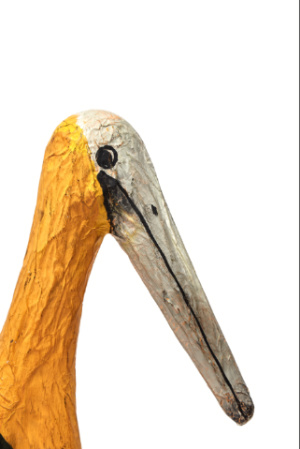
Hargila army papier-mache headdress close up. PICTURE: Courtesy of Natural History Museum

The “weird and wonderful” ways birds have adapted to survive are celebrated in a new exhibition at the Natural History Museum. Birds: Brilliant and Bizarre, which opens at the South Kensington institution on Friday, has been created in partnership with the Royal Society for the Protection of Birds and features installations and hands-on exhibits which allow visitors to feel how fast a hummingbird’s heart beats when in flight, smell the strange oil one bird uses to protect its eggs and listen to the sound of a dawn chorus of birds in the year 2050. Objects on show include the ‘Wonderchicken’ – the oldest known fossil of a modern bird, a replica of a stork that flew across the world from the African continent with a spear lodged in its neck, and a headdress of the ‘Hargila army’ (pictured), a group of women in the Indian state of Assam who work to protect one of the world’s rarest storks. Admission charge applies. Runs until 5th January. For more, see www.nhm.ac.uk/visit/exhibitions/birds-brilliant-bizarre.html.

A walk-through photographic exhibition featuring some of the most iconic photos of Princess Diana opens on Saturday. Princess Diana: Accredited Access features 75 life-sized photographs by her official royal photographer, Anwar Hussein, and his two sons – Samir and Zak – which include behind the scenes access. The exhibition at the Dockside Vaults, St Katharine Docks, runs until 2nd September. Admission charge applies. For more, see www.princessdianaexhibit.com.

Send all items to exploringlondon@gmail.com.

This Week in London – Notre Dame de Paris celebrated at the Abbey; remembering “great escapes” of World War II; and, ‘Wildlife Photographer of the Year’…

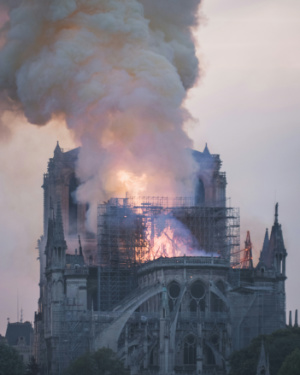
Notre Dame de Paris on fire in 2019. PICTURE: Nivenn Lanos/Unsplash

An immersive exhibition on the cathedral of Notre Dame de Paris, currently being restored following a devastating 2019 fire, opened at Westminster Abbey this week. Notre Dame de Paris, The Augmented Exhibition tells the story of the Gothic masterpiece from the 12th century to today and features a digital recreation of the cathedral by digital heritage specialists, Histovery, in collaboration with Rebuilding Notre-Dame de Paris. The exhibition is being held in the 13th century chapter house of the abbey with visitors, thanks to digital technology, able to witness firsthand the lavish wedding of King Henri IV, the coronation of Napoleon Bonaparte, and the 19th century construction of Notre-Dame’s iconic spire of Viollet-le-Duc. Runs until 1st June. Admission charge applies. For more, head here. The exhibition is part of a season of events at the abbey celebrating the bonds between the UK and France.

An new exhibition focused on the hundreds of thousands of people held captive during World War II has opened at the National Archives in Kew. Great Escapes: Remarkable Second World War Captives, tells the story of famous escape attempts such as the escape from Stalag Luft III known as “the Great Escape” (made famous in the film of the same name) and British officer Airey Neave’s escape from Colditz Castle dressed as a German soldiers well as stories of individuals seeking escape through art, music and finding love while being held. The exhibition is divided into three parts. The first explores the legal framework for the 1929 Geneva Convention governing prisoners and tells the story of MI9, a highly secret British Government agency established in 1939 to help military personnel evade and escape capture. Part two explores the stories from individual prisoners and internees under British, German, and Japanese authority during World War II while part three examines how prisoners were dealt with at the end of the war as well as how the experience of the conflict led to the Geneva Convention being rewritten in 1949. Runs until 21st July. Admission is free. For more, see www.nationalarchives.gov.uk/great-escapes/.

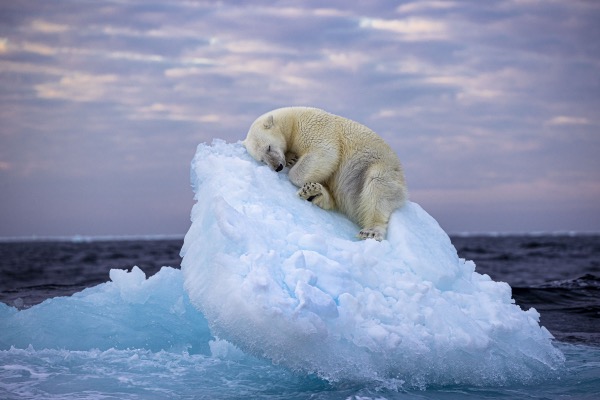
‘Ice Bed’ ©Nima Sarikhani, Wildlife Photographer of the Year People’s Choice Award winner.

An image of a young polar bear drifting to sleep on a bed carved into an iceberg has won the Wildlife Photographer of the Year People’s Choice Award. Nima Sarikhani’s Ice Bed, and the four finalist ‘Highly Commended’ images were selected from a shortlist of 25 images chosen by the Natural History Museum and an international judging panel from almost 50,000 images entered in the 59th Wildlife Photographer of the Year competition. The other finalists include Tzahi Finkelstein’s The Happy Turtle – a meeting between Balkan pond turtle and a northern banded groundling dragonfly, Daniel Dencescu’s Starling Murmuration - which captured the moment a starling murmuration formed the shape of a bird, Mark Boyd’s Shared Parenting in which two lionesses groom a cub in Kenya’s Maasai Mara, and, Audun Rikardsen’s Aurora Jellies which shows two moon jellyfish illuminated by the aurora borealis in a fjord in Norway. The five images can be seen both online and in the accompanying exhibition at the Natural History Museum until 30th June. Admission charge applies. For more, see www.nhm.ac.uk/wpy/peoples-choice.

Send all items to exploringlondon@gmail.com.

This Week in London – London Design Biennale; canal wildlife; a suffragette princess honoured; and, the ‘Polar Silk Road’ explored…

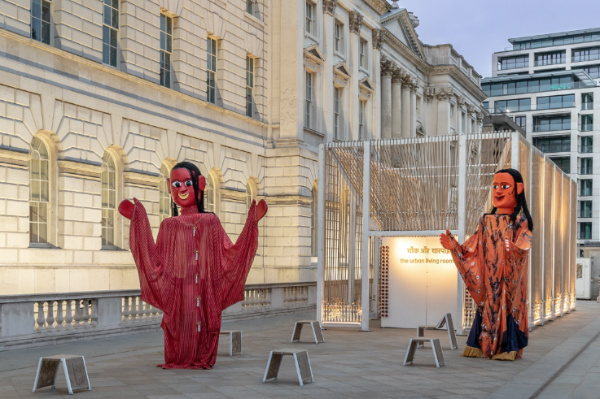
The Indian Pavilion at the London Design Biennale. PICTURE: Courtesy of London Design Biennale.

• The almost month-long London Design Biennale kicks off at Somerset House today under the theme of ‘The Global Game: Remapping Collaborations’. The fourth edition of the biennale is artistically directed by the Nieuwe Instituut – the Dutch national museum and institute for architecture, design and digital culture – and takes over the entirety of Somerset House. Among the exhibits is the India pavilion (pictured above) featuring a multi-sensory evocation of the essence of a contemporary Indian city chowk – an open market at the junction of streets – through the visual metaphor of a charpai – a traditional woven daybed, Malta’s large-scale ‘village-square’ installation that merges traditional city planning with the Phoenician-Maltese tradition of fabric production and dyeing of the multiple colours of Phoenician purple, the Ukrainian Pavilion which features am interior construction symbolising the country’s industrial, natural resource, and creative richness and a series of external projects which tell stories about new design collaborations in times of crisis for Ukraine and the vital role of design in creating new progressive connections. There’s also the chance to see the Ai-Da Robot, the world’s first humanoid robot artist, which will make history by showing her unique ability to design objects. Running alongside is the EUREKA exhibition which will share design-led innovation from leading research centres. Runs until 25th June. Admission charge applies. For more, see www.somersethouse.org.uk/whats-on/london-design-biennale-eureka-2023.

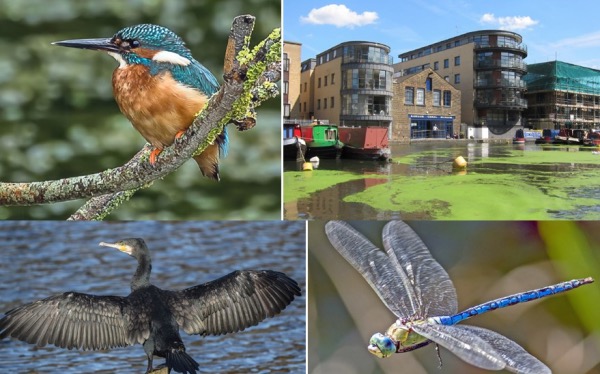
London canal wildlife. PICTURES: Courtesy of the London Canal Museum

A new exhibition highlighting the flora and fauna of London’s canals has opened at the London Canal Museum in King’s Cross. Many of the canals were derelict by the end of the 20th century but have received a new lease of life in recent times as leisure destinations. These days, they provide a “highway” for fauna including birds, fish and mammals to move in and out of the capital, some of which is showcased in this new display. Entry with general admission and for an extra fee, guided narrowboat trips along The Regent’s Canal are available on selected days. For more, see www.canalmuseum.org.uk.

Princess Sophia Duleep Singh, a suffragette, daughter of the last Maharajah of the Punjab, and god-daughter to Queen Victoria, has been commemorated with an English Heritage Blue Plaque. The plaque marks Faraday House in Hampton Court, granted to the princess and her sisters as a grace and favour apartment by Queen Victoria. Also known as ‘Apartment 41’, the property – which was named after scientist Michael Faraday – was home to Princess Sophia for more than 40 years and her base when she was campaigning for women’s suffrage. For more, see www.english-heritage.org.uk/visit/blue-plaques/.

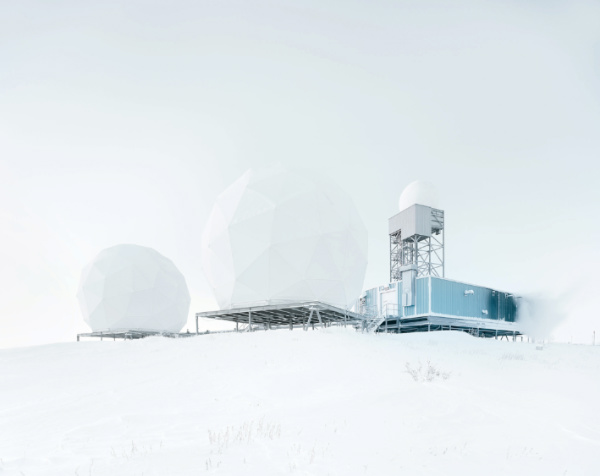
North Warning System III, Tuktoyaktuk, Northwest Territories, Canada, 2020. PICTURE: © Gregor Sailer

• The ‘Polar Silk Road’ – a channel opened up thanks to melting Arctic Sea ice – is the subject of a new exhibition at the Natural History Museum. Gregor Sailer: The Polar Silk Road features 67 photographs taken by acclaimed Austrian artist and photographer Gregor Sailer showcasing manmade structures – from isolated research centres to Icelandic geothermal power stations – captured across four countries in the Arctic circle. There’s also a short film discussing the impacts of the climate crisis. The exhibition is free to visit. For more, see www.nhm.ac.uk/visit/exhibitions/the-polar-silk-road.html.

Send all items for inclusion to exploringlondon@gmail.com.
LondonLife – Celebrating wildlife at the Natural History Museum…

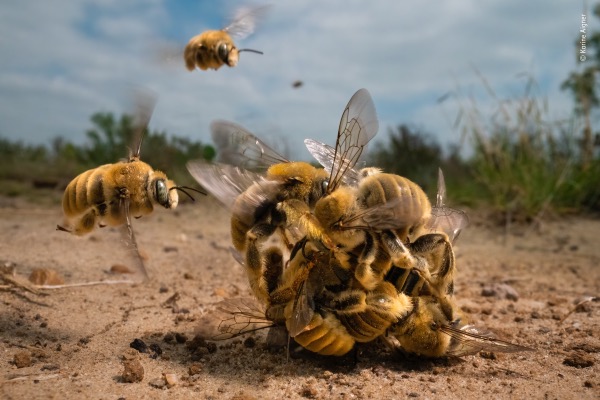
‘The Big Buzz’ by Karine Aigner, USA, winner of Wildlife Photographer of the Year.

An up-close image of a buzzing ball of cactus bees over the hot sand at a Texas ranch has won American photographer Karine Aigner the honour of Wildlife Photographer of the Year. The image depicts male bees as they compete for the attention of the single female bee at the centre of the ball. Aigner is the fifth woman to win the Grand Title award in the 58 year history of the competition, which is run by the Natural History Museum. Her image is being shown along with that of 16-year-old Thai Katanyou Wuttichaitanakorn – who won Young Wildlife Photographer of the Year for an up-close image of a whale’s baleen – as well as those of category winners in this year’s contest in a redesigned exhibition at the museum in South Kensington.  Alongside the photographs, the display features short videos, quotes from jury members and photographers and insights from museum scientists on how human actions continue to shape the natural world. The exhibition can be seen until 2nd July. Admission charge applies. For more, see www.nhm.ac.uk/visit/exhibitions/wildlife-photographer-of-the-year . The 59th annual competition is now open for entries. For more on how to enter, see www.nhm.ac.uk/wpy/competition.

‘The Beauty of Baleen’ by Katanyou Wuttichaitanakorn, Thailand, winner of Young Wildlife Photographer of the Year.

10 unusual parks or gardens in London…7. Natural History Museum’s Wildlife Garden…

A scene from the Wildlife Garden. PICTURE: Kotomi_ (licensed under CC BY-NC 2.0)

Opened in July, 1995, this garden in the grounds of the Natural History Museum in South Kensington has been found to be home to more than 3,300 species.

A scene from the Wildlife Garden. PICTURE: Kotomi_ (licensed under CC BY-NC 2.0)

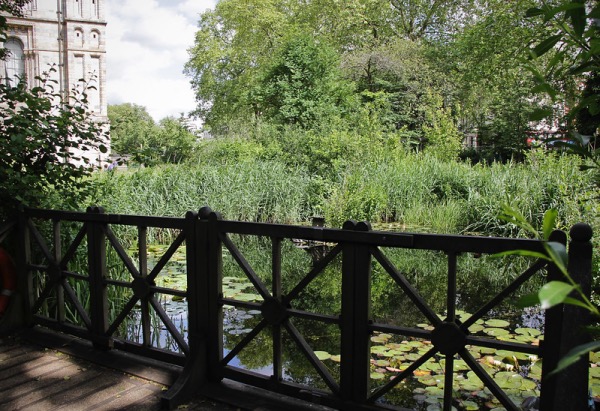
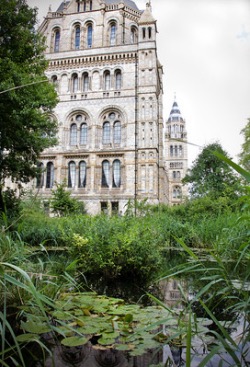
The garden, located on the corner of Cromwell Road and Queen’s Gate, and covering a single acre, was envisaged as a “place to put habitat creation and wildlife conservation into practice”, according to the museum’s website, where visitors can learn about wildlife in the UK and where naturalists, students and museum scientists carry out research.

It features a variety of habitats –  everything from woodland, grassland, scrub, heath, fen, aquatic, reedbed, and hedgerow as well as urban environments – and among the species living there have been hedgehogs, common frogs, ladybirds (Rhyzobius forestieri) and Greyface Dartmoor sheep which are brought in to graze in the autumn.

‘Bioblitzes’ are held during the year by experts and amateurs which involve recording as many species of plants, animals and fungi as possible within a day.

Under the museum’s Urban Nature Project, all five acres of the grounds are being transformed into a fully accessible green space that promotes urban wildlife research, conservation and awareness and according to the museum, the Wildlife Garden will have an integral role to play in that with its overall size doubled (check before visiting to ensure it’s not closed for the renovation work). The new gardens will open next summer.

WHERE: Wildlife Garden, Natural History Museum, Cromwell Road, South Kensington (nearest Tube stations are South Kensington and Gloucester Road); WHEN: 11am to 5pm daily until 31st October (closed during wet weather); COST: Free; WEBSITE: www.nhm.ac.uk/visit/galleries-and-museum-map/wildlife-garden.html

This Week in London – Natural History Museum unveils a new ‘Urban Nature Project’; BBC at 100; and, UK sculpture goes online…

The Natural History Museum’s five acre site in South Kensington will be transformed into a free-to-visit green space under a new project. The Urban Nature Project will feature new outdoor galleries telling the story of life on Earth from 540 million years ago to the present day as it follows an immersive timeline of plants, trees, reptiles, birds and mammals. Children will come face-to-face with a giant bronze diplodocus surrounded by plants from the Jurassic period. The garden will also be home to scientific sensors gathering environmental DNA and acoustic data, to monitor, understand and protect urban nature. You can find out more and donate at www.nhm.ac.uk/support-us/urban-nature-project/donate.html.

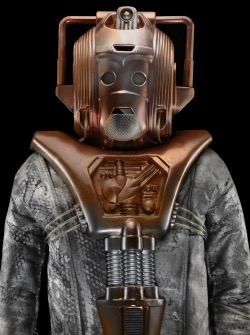
Cyberman costume as used in the T.V. series ‘Dr Who’ made by the BBC, London, c1988

• A new display exploring how the BBC developed and popularised new media has opened at the Science Museum in South Kensington. BBC at 100 features five iconic items from broadcast history that have influenced how we interact wth modern media platforms. They include a six foot tall 1988 Cyberman costume from Doctor Who, a World War II “Midget” Portable Disc Recorder developed to bring listeners close to the reality of conflict, and the BBC microcomputer developed during the Computer Literacy Project in the 1980s. The display, which is part of the Science Museum Group’s  Broadcast 100  activities marking the 100th anniversary of the BBC and the 40th anniversary of Channel 4, to free to visit. For more, see www.sciencemuseum.org.uk/see-and-do/bbc-100.

More than 36,000 sculptures on public display across the UK can be seen online. Art UK has photographed and digitised more than 13,500 outdoor sculptures as well as almost every sculpture inside public collections from the last 1,000 years. The project, which was funded with a £2.8million Heritage Fund grant and involved more than 500 photography and data volunteers, can be accessed at Art UK website

Send all items for inclusion to exploringlondon@gmail.com.
This Week in London – The Queen in wartime; Dippy returns; and, ‘Cancer Revolution’ at the Science Museum…

A new exhibition exploring the Queen’s role during wartime opens at IWM London in Lambeth tomorrow. Part of a suite of events at IWM venues celebrating the Queen Elizabeth II’s Platinum Jubilee, Crown and Conflict: Portraits of a Queen in Wartime features 18 images drawn from the museum’s image archive which chart the Queen’s experience of war – from growing up during World War II when she served in the Auxiliary Territorial Service to her role in carrying out important public duties involving the armed forces, including at the annual Service of Remembrance. Among newly digitised photographs included in the display are an image of the Queen dressed in overalls and cap while working on a vehicle during her time in the ATS, and another showing her with her father, King George VI, and mother, Queen Elizabeth, during a visit to airborne forces in 1944. IWM London is also launching a dedicated trail of historic objects spread across five gallery spaces which explores the Royal Family’s long-standing association with the British armed forces. Objects include a Princess Mary Gift Fund box which was sent to those serving at Christmas in 1914. Runs until 8th January. Admission charge applies. For more, see www.iwm.org.uk/events/queens-platinum-jubilee-iwm-london.

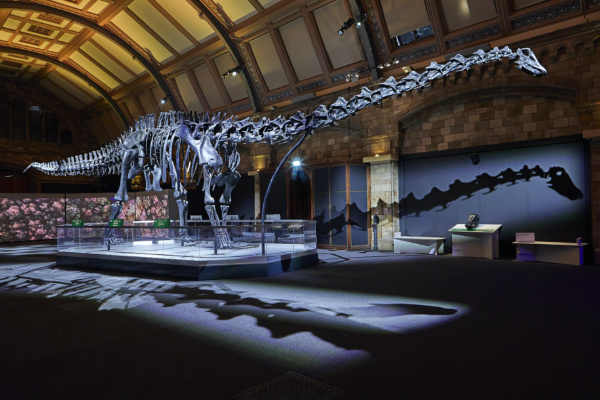
Dippy at the Natural History Museum. © Trustees of the Natural History Museum, London

• Dippy the dinosaur is back for a limited time at the Natural History Museum in South Kensington from tomorrow. A free, temporary exhibition – Dippy Returns: the nation’s favourite dinosaur – gives visitors the chance to get up close and personal with the 26 metre-long dinosaur which first went on display at the museum in 1905. The display comes at the end of a record-breaking tour of the UK in which Dippy was seen by more than two million people. Can be seen until 2nd January. To book tickets, head to www.nhm.ac.uk.

The first major exhibition to explore the history and future of cancer treatment and research opened at the Science Museum in South Kensington this week. Cancer Revolution: Science, innovation and hope features more than 100 objects including some never-before seen as well as information on cutting edge treatment and research, new artist commissions and installations, interactive exhibits and a breadth of personal stories. Runs until January, 2023. Admission is free but bookings required. For more, see www.sciencemuseum.org.uk/see-and-do/cancer-revolution-science-innovation-and-hope.

Send all items to exploringlondon@gmail.com for inclusion.

This Week in London – The extraordinary story of George King; Guildhall statues survive (with explanations); and, Wildlife Photographer of the Year…

The extraordinary story of 18th century foundling and sailor George King, who fought in the Battle of Trafalgar, is the subject of a new exhibition opening at the Foundling Museum in Bloomsbury tomorrow. Fighting Talk: One Boy’s Journey from Abandonment to Trafalgar features King’s hand-written account of his life, a fragment of the flag from Nelson’s coffin, letters between the Foundling Hospital’s matron and Lady Emma Hamilton (annotated by Nelson himself) and two rare Naval General Service Medals, of which only 221 were awarded retrospectively when the medal was first issued in 1849, belonging to King and the foundling William South, who served aboard HMS Victory. There is also a display of works by contemporary artist and photographer Ingrid Pollard – Ship’s Tack – which reflects on the Foundling Hospital’s connections with Empire, trade and the Navy and which includes newly commissioned work responding directly to George’s autobiography. Runs until 27th February. Admission charge applies. For more, see www.foundlingmuseum.org.uk.

Two Guildhall statues portraying figures with links to the slave trade will be retained but have information added detailing those links. The City of London Corporation’s Court of Common Council voted last week to keep the statues of William Beckford and Sir John Cass which will have plaques or notices placed alongside them containing contextual information about the two men’s links to slavery. William Beckford was an 18th century slave owner and two-time Lord Mayor of London, while Cass – an MP and philanthropist – was a key figure in the Royal African Company, which traded in slaves in the 17th and 18th centuries. Sir John Cass’s Foundation Primary School in the City and the nearby Cass Business School have already changed their names to remove the association with their founder and his links to slavery.

•  French underwater photographer and biologist Laurent Ballesta has won the Natural History Museum’s Wildlife Photographer of the Year for an image showing camouflage groupers exiting their milky cloud of eggs and sperm in Fakarava, French Polynesia. The image was selected out of 50,000 entries from 95 countries and is being displayed with 100 images in an exhibition opening at the museum on Friday. Meanwhile 10-year old Vidyun R Hebbar, who lives in Bengaluru, India, was awarded the Young Wildlife Photographer of the Year 2021 for his colourful image, Dome home, showing a tent spider as a tuk-tuk passes by. The exhibition can be seen until 5th June next year. Admission charge applies. For more, see www.nhm.ac.uk/visit/exhibitions/wildlife-photographer-of-the-year.

Send all items for inclusion to exploringlondon@gmail.com.
This Week in London – NHM’s Our Broken Planet’s finale; West End LIVE at Trafalgar Square; and, Helen Frankenthaler at Dulwich…

Juvenile European bison © The Trustees of The Natural History Museum, London

The third and final part of the free exhibition, Our Broken Planet: How We Got Here and Ways to Fix It, has opened at the Natural History Museum. Following on from sections exploring the food we eat and the products we use, the third phase of the display explores the energy humans consume and how we can we create a greener, cleaner future. Specimens in the display include a juvenile European bison, illustrating an experimental rewilding project in Kent which is investigating if bison feeding habits will improve the forest’s biodiversity and store more carbon in the soil, blue-green algae collected during Captain Scott’s famed RRS Discovery expedition which is being used in the study of climate change, and the recently extinct Chinese paddlefish, a casualty of the global boom in hydroelectric dams. Entry to the South Kensington museum is free but visitors are encouraged to book a time ticket in advance to ensure entry. For more, see www.nhm.ac.uk/visit/our-broken-planet.html.

The West End comes to Trafalgar Square this weekend with a line-up of free performances from top shows taking to the stage. Forming part of Westminster City Council’s Inside Out Festival and the Society of London Theatre’s #BackOnStage campaign, the West End LIVE event will feature the first ever West End LIVE appearances from award-winning musicals Hamilton and The Book Of Mormon, as well as an exciting roster of new shows including The Prince Of Egypt, Dear Evan Hansen, Cinderella, Back To The Future: The Musical and Pretty Woman. More than 30 acts will be involved in the free and unticketed event. For the full programme, see www.westendlive.co.uk.

The first major UK exhibition of woodcuts by the leading abstract expressionist, Helen Frankenthaler, opened at the Dulwich Picture Gallery this week. Helen Frankenthaler: Radical Beauty brings together more than 30 works on loan from the Helen Frankenthaler Foundation which span the artist’s career from her first ever woodcut in 1973 to her last work published in 2009. Works include including Madame Butterfly (2000), East and Beyond (1973), Cameo (1980) and Freefall (1993). The display can be seen until 18th April. Admission charge applies. For more, see www.dulwichpicturegallery.org.uk.

Send all items to exploringlondon@gmail.com.