This Week in London – London’s architectural festival; Tower Bridge celebrates its 120th with gifts; and, unseen Nicholsons at Dulwich – plus late addition: this year’s Keats Festival…

The month long London Festival of Architecture kicked off this week with the first of more than 200 activities taking place right across the capital. Now in its 10th year, the festival features talks, exhibitions, film screenings, cycle rides, open studios and the chance to explore the city with experts at hand. Headline events include a gathering of international architects at Balfron Tower where they will come up with new ideas for the surrounding area of Poplar as they explore the influence of emigre architecture on London, a talk by Will Self on architecture, and an exploration of ‘The Death and Life of Great London High Streets’ with experts guided people around newly completed projects. Other highlights include the House of Muses, an architectural installation at the Museum of London, the rare chance to see a late 16th century model of country house Tyringham Hall in Buckinghamshire which was commissioned by Sir John Soane (and will be on display at the Sir John Soane Museum), and the art installation, The Pungent Subway which will see a 55-year-old subway in Elephant and Castle transformed by sweet-smelling herbs and flowers as well as GUN Architects Rainforest in Bedford Square. For a full programme of events, many of which are free, check out details on the website, www.londonfestivalofarchitecture.org.

London icon Tower Bridge celebrates its 120th anniversary this year and to mark the event, the Tower Bridge and its events partner Seasoned Events are giving away free tickets to special sunset event. To take place on its high-level walkway on 30th June, the night, which runs from 7pm to 9.30pm, will feature Victorian-themed entertainment in commemoration of the age in which the great structure was constructed. For your chance to win tickets, look out for special competition posts by Tower Bridge on Facebook (www.facebook.com/towerbridge) and Twitter (@TowerBridge) from 9th June and share them on social media by 19th June. As many as 120 lucky winners will be selected at random and notified by 5pm on 20th June. Each ticket includes entry for two and a drink token (and obviously you must be in London and available to attend on 30th June). Good luck! For those who don’t win, there is a consolation prize – entry to the Tower Bridge Exhibition is being dropped to just £1.20 (120 pence) on 30th June when buying tickets at the door. The exhibition will that day also be playing host to a range of ‘Victorian visitors’ – from policeman and tourists to engineers. For more, see www.towerbridge.org.uk.

• Featuring previously unexhibited or rarely seen works by important 20th century painters Ben and Winifred Nicholson, a new exhibition opened at the Dulwich Picture Gallery in south London yesterday. Art and Life: Ben Nicholson, Winifred Nicholson, Christopher Wood, Alfred Wallis, William Staite Murray, 1920-1931 features more than 80 words with 16 being displayed for the first time including Ben Nicholson’s 1926-27 (still life) and Winifred Nicholson’s Flowers in a Glass Jar. The display is a rare opportunity to see works by the Nicholson’s different views of the same landscapes, seascapes, still-lives and portraits and has the works grouped by locations where they painted including London, Lugarno in Switzerland, Cumberland and Cornwall. Alongside works by the Nicholsons, the display also features the art of their fellow artists and friends including Christopher Wood, the self-taught marine painter Alfred Wallis, and potter William Staite Murray, and the exhibition is curated by the Nicholson’s grandson, art historian Jovan Nicholson. Runs until 21st September. Admission charge applies. For more see www.dulwichpicturegallery.org.uk.

Late addition: The annual Keats Festival kicks off at Keats House in Hampstead on Saturday, 7th June, with highlights including guided tours of the house, plenty of poetry readings and workshops, musical performances, a screen-writing workshop and a family day on 15th June. Other events at the Keats Grove house where the poet lived between 1818 and 1820 include an afternoon tea “in the company of Keats” and an offsite event held at UCL’s Bloomsbury campus next Friday – One Day in the City: A Celebration of London and Literature – which will feature performance poetry, a seminar on Keats and a contemporary retelling of The Canterbury Tales. Many events are free but many require pre-booking. For more information, check out www.cityoflondon.gov.uk/things-to-do/attractions-around-london/keats-house/Pages/Keats-Festival.aspx.

Send all items of interest for inclusion to exploringlondon@gmail.com.
10 sites from Shakespearean London – 2. Southwark Cathedral…

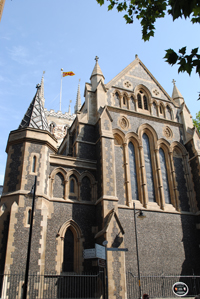
Southwark-Cathedral1

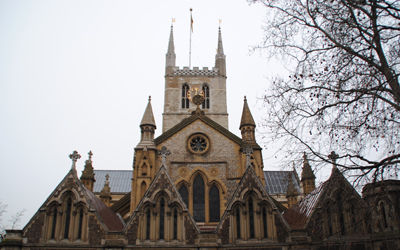
Located close to the Bankside theatres where William Shakespeare’s plays would have been performed, Southwark Cathedral – known then as St Saviour’s Church – has plenty of connections to the Elizabethan theatre world.

Southwark-Cathedral2Not only was the Bard’s youngest brother, the actor Edmund, buried here in 1607 (the grave is unmarked but there’s a commemorative stone in the floor of the choir), the playwrights John Fletcher and Philip Massinger and theatre owner Phillip Henslowe were also buried here. And like them, another theatre owner (and Henslowe’s son-in-law), Edward Alleyne, also held positions at the church.

The cathedral has several memorials to Shakespeare. These include a memorial window in the south aisle – unveiled in April 1954 on the anniversary of Shakespeare’s death, it depicts characters from some of his works and was designed by Christopher Webb to replace an earlier window which had been destroyed during World War II. Below it is an alabaster reclining figure of the playwright set against a relief of Southwark as it appeared during the 17th century. Carved by Henry McCarthy, it was unveiled in 1912.

The history of the church is believed to go back to at least Saxon times. Between 1106 and 1538, it served as the church of the Augustinian Southwark Priory and was dedicated to St Mary Overie. Following the Dissolution in the mid 16th century was re-dedicated as the parish church of St Saviour’s. It only became a cathedral in 1905 with the creation of the Diocese of Southwark. While some scant parts of the building date back to the 12th century  (the church was rebuilt after a fire in the 13th century), much of it has been altered.

 For more on Elizabethan England, check out Ian Mortimer’s recent book The Time Traveller’s Guide to Elizabethan England.

LondonLife – Solitary vigil…

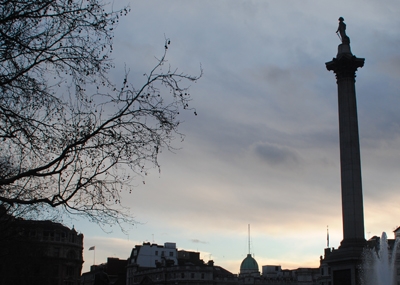
Nelson's-Column
Nelson stands atop his column in Trafalgar Square, watching as a city falls into slumber…

PICTURE: David Adams


What’s in a name?…Maida Vale

This district in west London – located to the south-west of St Johns Wood – takes its name from the Italian town of Maida in Calabria where, in 1806, the British won a victory over Napoleon.

Led by Sir John Stuart (later Count of Maida), about 5,000 British troops defeated a larger number of French in a battle in what was a much-needed boost to the British after the defeat at Austerlitz in December the previous year.

Regent's-Canal-looking-toward-Little-VeniceThere was apparently a pub located in the area named, in the wake of the victory, ‘The Hero of Maida’ in reference to Stuart and his role in the battle. The pub has since gone but its name lives on in the street and the district which still carries it.

Landmarks in Maida Vale include the basin – complete with houseboats and the puppet theatre barge – known as Little Venice (some say this name was coined by poet Robert Browning; others attribute it to Lord Byron) where Regent’s Canal meets with the Paddington arm of the Grand Junction Canal (pictured is Regent’s Canal looking toward Little Venice).

Maida Vale is also home to the BBC Maida Vale Studios (on Delaware Road) while notable residents have included computer science pioneer Alan Turing who was born at 2 Warrington Crescent in 1912 and David Ben-Gurion, first Prime Minister of Israel, who lived at 75 Warrington Crescent.

The area to the south-west is unofficially known as Maida Hill and this was apparently initially the name used for the entire area until the more romantic Maida Vale came into usage in the mid 19th century. Maida Vale also gives its name to a Tube station – it opened in 1915.

Treasures of London – ‘Naval Officers of World War I’…

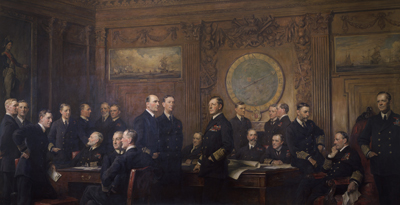
NPG_818_1271_NavalOfficersoHidden away in storage for decades, this sizeable portrait of 22 senior navy figures of World War I has recently gone on public display at the National Portrait Gallery as part of the institution’s commemoration of the centenary of the outbreak of the Great War. The work of Sir Arthur Stockdale Cope, Naval Officers of World War I was painted in 1921 and had been in storage due to its “delicate condition”. Using £20,000 raised through a public appeal last year, the painting and its frame have recently gone five months of restoration work which has seen it restored to health. The painting was one of three commissioned by financier and public servant Sir Abraham Bailey in the aftermath of the war – both of the other two paintings, Sir James Guthrie’s Statesmen of World War I and John Singer Sargent’s General Officers of World War I are continuously on display in Room 30. Among those depicted in Cope’s work are Admirals Jellicoe and Beatty and Rear-Admiral Hood. The work, which measures more than five metres across, can be seen in Room 32 of the National Portrait Gallery, just off Trafalgar Square. Admission is free. For more, see www.npg.org.uk. PICTURE: © National Portrait Gallery, London

This Week in London – Norman Shaw’s drawings on display; Tower Bridge art; and, German medals from World War I…

Drawings by the renowned Victorian-era British architect Norman Shaw (1831-1912) are the subject of a new display at the Royal Academy of Arts. Shaw’s building works included New Scotland Yard on Embankment and renovations and additions to the likes of Burlington House, home of the RA. The display Dream, Draw, Work will explore the materials, draughtsmanship and design practices of Shaw and his staff and many of the works in the display bear the marks of extensive handling. As well as the drawings, photographs of Shaw’s London buildings will be displayed in the Royal Academy’s Architecture Space. Opens in the Tennant Gallery tomorrow and runs until October 26. Entry is free. For more, see www.royalacademy.org.uk.

An exhibition of artworks depicting Tower Bridge over its 120 year history opens at the Guildhall Art Gallery on Saturday. Tower Bridge: A Celebration of 120 Years includes paintings from the gallery’s permanent collection, contemporary interpretations and archive material. For more, follow this link.

On Now: The other side of the medal: how Germany saw the First World War. This free display in Room 69a of the British Museum focuses on medals made by artists who lived and worked in Germany from 1914-1919. While smaller struck ‘medalets’ were mass produced, the larger cast medals – such as those featured in this display – were produced in smaller numbers and mostly cast in iron because bronze was required for shell casings. While some of the medals, unusually modernist in style, were used to influence opinion against Germany’s enemies, others provided what the museum describes as a “more universal criticism about the futility of war and waste of human life”. Among the motifs used was that of Death who can be seen killing soldiers and attacking ships or giant Zeppelin airships. The medals were not officially produced or sanctioned and attracted their fair share of controversy (one depicts the passenger ship Lusitania, sunk by a German U-boat in 1915, as laden with armaments). The display can be seen until 23rd November. For more, see www.britishmuseum.org.

Send all items of interest for inclusion to exploringlondon@gmail.com.
 

Lost London – The Steelyard…

The Thames-side property known as the Steelyard – the phrase comes from the Dutch-German word Stahlhof and relates either to a steel beam used for weighing goods or a courtyard where the goods were sold – was the main trading base of the Hanseatic League in London from the 13th century onward.

Located near where Walbrook flows out of the Thames on the north bank (the site is now at least partly covered by Cannon Street Station), the walled compound – which at some point housed as many as 400 people – was in some senses a mini city within a city complete with a hall, warehouses, a weighing house and counting houses as well as residences and a chapel.

While the community – which represented an alliance of towns and cities in northern Europe – was mentioned as far back as the late 1200s, it wasn’t until 1303 that King Edward I formerly confirmed the tax and customs concessions of the merchants (at some point, in return for privileges they were given, the group was charged with keeping up the maintenance of Bishopsgate).

The power of the trading post had grown substantially by the 15th century and the concessions the group had been granted meant there was inevitably considerable friction with English merchants. There was also some official friction and one example of it was when the Steelyard was closed temporarily in the 15th century when the Hanse cities were at war with England.

In 1598 Queen Elizabeth I took away the Steelyard’s trading privileges (after which the compound was apparently looted). It was subsequently allowed to reopen by King James I but never regained the prominence it had previously had.

Much of the compound was destroyed in the Great Fire of London but nonetheless, the Steelyard was rebuilt and continued to provide links between German cities and the English until the mid 1800s when the land was sold off and, in 1866, Cannon Street Station built on the site.

A couple of surviving objects from the Steelyard include a series of at least eight portraits of Hanse merchants painted by Hans Holbein the Younger and a stone model of the Hanseatic Arms which were placed over the gate into the compound can be seen at the Museum of London.

This Week in London – Woolly mammoths star at the NHM; the Ceremony of the Constable’s Dues; mummies at the British Museum; and, Rupert Potter’s photographs…

The most complete woolly mammoth ever found is the star attraction at a new exhibition opening at the Natural History Museum tomorrow. Lyuba – a one month old mammoth – was found by a reindeer herder in Siberia in 2007 and was named after the reindeer herder’s wife. Thought to be 42,000-years-old, the young mammoth was thought to be healthy when it died and still has remnants of its mother’s milk in its stomach. It is the first time the mammoth – normally housed at the Shemanovsky Museum-Exhibition Complex in Salekhard, Russia, is being shown in Western Europe. Mammoths: Ice Age Giants will also feature life-sized models and skeletons of mammoths. Runs until 7th September. Admission charge applies. For more, see www.nhm.ac.uk.

The German naval ship FGS Niedersachsen will take part in the Ceremony of the Constable’s Dues at the Tower of London tomorrow, having saluted the Tower with a gun salute yesterday – the first time a gun salute has taken place in honour of the ceremony in 40 years. The ceremony dates back to the 24th century and while past offerings have included barrels of rum, oysters, cockles and mussels, this year the Tower’s constable, General the Lord Dannatt, will be presented with a barrel of wine. The ceremony will see the ship’s Commander Kurt Leonards led his crew to the Tower’s West Gate where they will be challenged by the axe wielding Yeoman Gaoler before marching on to Tower Green to “present the dues” or deliver the wine, to the Constable. The ceremony takes place at noon. For more on the Tower, see www.hrp.org.uk/TowerOfLondon/.

A new exhibition about ancient lives in Egypt and Sudan has kicks off at the British Museum today. Ancient lives, new discoveries will reveal new research about one of the museum’s most popular collections – that of ancient Egyptian and Sudanese mummies – and uses state-of-the-art technology to take you inside the mummy cases and bring you face-to-face with eight people who lived in the Nile Valley thousands of years ago. The selected mummies come from a period spanning 4,000 years, from the Predynastic period to the Christian era, and come from sites in both Egypt and Sudan. They include an adult male from Thebes mummified about 600 BC and a female singer called Tamut who lived in Thebes around 900 BC. The museum received its first mummy in 1756 and hasn’t unwrapped any of them relying on increasingly advanced technologies to see inside. The exhibition runs until 30th November. Admission charge applies. For more, see www.britishmuseum.org.

On Now – The World of Rupert Potter: Photographs of Beatrix, Millais and Friends. The amateur photography of Rupert Potter, father of children’s author Beatrix Potter, is on show in his exhibition at the National Portrait Gallery. The display features selected works from the gallery’s extensive collection of his works including two new acquisitions which show Beatrix Potter on holidays both before and after her publishing success. Other photos depict the sitters and paintings of artist Sir John Everett Millais, who was a friend of Rupert Potter’s. The free exhibition runs until 16th November in Room 28. For more, see www.npg.org.uk.

Send all items of interest for inclusion to exploringlondon@gmail.com.

10 sites from Shakespearean London – 1. The Globe…

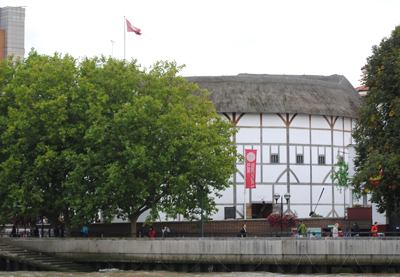
The-GlobeMention William Shakespeare and London in the same breath and everyone immediately thinks of one building – the reconstructed Globe on Bankside. So we thought that to kick off our new series – being run in honour of the 450th anniversary of the playwright’s birth – we’d take a look at history of the iconic structure.

The-Globe2The original Globe Theatre, located a few hundred metres to the south, opened in 1599 as a home for the actors’ company known as the Lord Chamberlain’s Men (later renamed the King’s Men on the accession of King James I in 1603), of which Shakespeare was a member. Founded by James Burbage, this merry band was originally was housed at London’s first purpose-built playhouse Shoreditch before lease disputes led them to establish a new theatre in Southwark, close to the then existing theatre, The Rose.

Up and running by 1599 (Shakespeare was among four actors who bought a share in the property to help fund the new building which used timbers from the former Shoreditch theatre), the new theatre was used for 14 years until, during a performance of Henry VIII in 1613, wadding from a stage cannon ignited and the theatre burned to the ground. Rebuilt with a tiled roof, it remained the home of the company until it was closed down by the Puritan government in 1642 and demolished two years later.

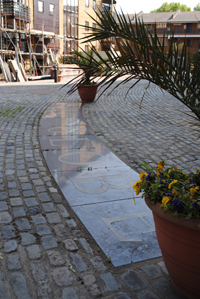
You can see the original site of The Globe just in nearby Park Street. The shape of the structure is marked by a dark line embedded in the pavement (pictured).

The reconstructed building which stands proudly by the water today was the vision of the late American actor, director and producer, Sam Wanamaker. He founded the Shakespeare Globe Trust which, with the on-site assistance of Queen Elizabeth II, opened the theatre at its current site in 1997 (sadly, Wanamaker had died three-and-a-half-years previously).

The building’s design was drawn from sifting through what little historical evidence could be found including the findings of an archaeological dig at the original site, descriptions contained in Shakespeare’s plays (including the line from Henry V – “Or may we cram within this wooden ‘O’), and printed panoramas from the time, although it should be noted that much – particularly the design of the stage – is speculative.

Meanwhile the techniques used in the construction of the theatre were the subject of years of research and were in accord with those of the early 17th century  and included using oak laths and staves to support lime plaster and then covering the walls in white lime wash while the roof was made of water reed thatch.

One of the best ways to see the theatre and make the most of the atmosphere is to see a play from a standing position in the pit!

WHERE: Globe Theatre Exhibition & Tour, Shakespeare’s Globe, 21 New Globe Walk (nearest Tube stations are Southwark and London Bridge); WHEN: Exhibition is open 9am to 5.30pm daily – tours run at various times, see website for details; COST: Exhibition and tour cost is £13.50 adults/£12 seniors/£11 students/£8 children (5-15 with children under five free)/£36 family of four; WEBSITE: www.shakespearesglobe.com.

London Pub Signs – The Anchor…

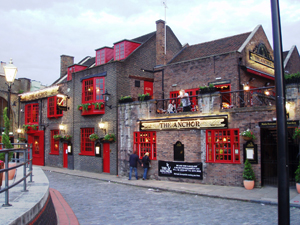
While the first official records of this Bankside pub only date from 1822, the pub’s history goes back much further. Like many pubs in London, nailing down its exact origins is tough but the story goes that it was named The Anchor by seventeenth century merchant Josiah Child.

The-AnchorChild owned the brewhouse which had been established in 1616 by James Monger at a site known as Dead Man’s Place (close to where the original Globe Theatre had stood before burning down in 1613) and was also a merchant who supplied the navy with everything from masts and spars to stores and beer. Hence the name The Anchor.

It’s speculated that William Shakespeare himself might have had a drink here and it’s believed to be from this pub – “a little alehouse on Bankside” – that diarist Samuel Pepys witnessed the destructive power of the Great Fire of London in 1666.

Dr Samuel Johnson – apparently a close friend of later brewery owners, Henry and Hester Thrale – was among regular drinkers. Other patrons, according to the pub’s website, included the artist Joshua Reynolds, Irish poet Oliver Goldsmith, actor David Garrick and Irish statesmen Edmund Burke.

The pub was apparently rebuilt a couple of times after being destroyed by fire. The brewery, meanwhile, rose to become one of the largest in the world before it was finally demolished in 1981 leaving the pub, the brewery tap, still standing.

Refurbished in recent years, the pub today contains a room dedicated to The Clink prison, the Bishop of Winchester’s lock-up which was located in nearby Clink Street.

The waterside pub at 34 Park Street is now part of the Taylor Walker chain. You can find out more about it here.

PICTURE: Ewan Munro/Flickr

Where is it?…#81…And the answer is…

Where-is-it--#81

Can you identify where in London this picture was taken and what it’s of ? If you think you can, leave a comment below. We’ll reveal the answer next week. Good luck!

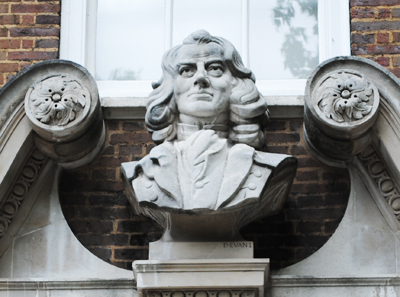
Well done to David Harry – this is indeed on the front of the Foundling Museum in Bloomsbury and is a bust of the Foundling Hospital’s founder Thomas Coram. For more Coram, see our previous Famous Londoners post.

This Week in London – London’s World War I transport in focus; Museums at Night; and, Tony Hancock remembered…

Opening tomorrow, a major exhibition at the London Transport Museum will take an in-depth look at the role transport played in London during World War I – from how London bus drivers took their vehicles to the front lines to the advance of women into the transport workforce for the first time and, of course, how Londoners fared under the deadly aerial attack of the Luftwaffe. Key among the objects on display as part of Goodbye Piccadilly at the Covent Garden site will be ‘Ole’ Bill’ – a 1911 bus on loan from the Imperial War Museum which was requisitioned for the front and, taking its name from Bruce Bairsfather’s popular cartoon character, featured regularly in Armistice Day parades until the 1960s. Other highlights include World War I recruitment posters, a 1914 female bus conductor’s uniform and a newly acquired piece of ‘trench art’ – a decorated Daimler bus steering wheel. Runs until 8th March. Admission charge applies. For more, see www.ltmuseum.co.uk.

The annual Museums at Night event kicks off tonight and runs until Saturday night. Among the premises participating this year is the Hunterian Museum at the Royal College of Surgeons in Lincoln’s Inn Fields which is showing a selection of rarely seen materials from its archives, the Banqueting House in Whitehall, Keat’s House in Hampstead and the Petrie Museum of Egyptian Archaeology at University College London which is running a murder mystery event Friday night. Some events are ticketed and some have an admission charge so check out the website before you go. For more, see www.culture24.org.uk/places-to-go/museums-at-night.

The late comedian Tony Hancock was honoured with an English Heritage Blue Plaque at his former home in South Kensington on Monday on what would have been his 90th birthday. Hancock, famous for Hancock’s Half Hour on radio and TV, lived on the fourth floor of a Grade II-listed building at 20 Queen’s Gate Place with his wife Cicely Romanis between 1952 and 1958. It was the longest time he lived at any property in London and coincided with the most creative and successful period of his career with the show first board cast on BBC radio in 1954 and also appearing on TV from 1956 onwards. Hancock died in 1968. For more, see www.english-heritage.org.uk/discover/blue-plaques/.

Send all items of interest for inclusion to exploringlondon@gmail.com.

LondonLife – The Tudor Pull…

Tudor-Pull

Crowds lined the banks of The Thames last weekend as Her Majesty’s Watermen rowed from Hampton Court Palace to the Tower of London in the annual “Tudor Pull”.  The palace-to-palace rowing event on Sunday kicked off around 10am with a ceremony at Hampton Court during which the ‘Stela’ – an ancient piece of medieval water pipe made from a hollowed-out tree trunk which symbolises the power of The Thames – is passed to the watermen who then took it up river to the Tower in the royal barge Gloriana. The barge, which was accompanied by a fleet of other traditional rowing craft, stopped at several locations along the journey, before it arrived at the Tower in Sunday afternoon where the ‘Stela’ was presented to the Governor. The event is also said to commemorate the sinking in 1256 of Queen Eleanor’s royal barge under old London Bridge. For more on the Historic Royal Palaces in London, head to www.hrp.org.uk.

PICTURE: Courtesy of Historic Royal Palaces.

Our new special series will kick off next week!

Famous Londoners – Dido Elizabeth Belle…

Having had an extended May Bank Holiday, Exploring London returns with our usual coverage this week…

The subject of the new film Belle, the life of Georgian-era Dido Elizabeth Belle was nothing short of extraordinary.

Belle2Born in 1761, Belle was the illegitimate daughter of Admiral Sir John Lindsay and Maria Belle, an African woman who had apparently been captured from a Spanish ship when Havana was captured from the Spanish in 1762 (Lindsay had captained a ship in the fight).

Baptised at St George’s Church, Bloomsbury, in 1766, Lindsay subsequently sent Dido to live with his uncle William Murray, the Earl of Mansfield – Lord Chief Justice of England and Wales. Initially residing at the family house in Bloomsbury Square and later at Kenwood House in Hampstead, she was raised alongside her orphaned cousin Lady Elizabeth Murray who was also in the earl’s care.

She spent some 30 years living at the property and while her status remains something of a mystery, it is thought she was treated more as a companion to Lady Murray than a servant – indeed her familiarity with Lady Murray did prove somewhat shocking to some. Her presence in the house also led to some criticism of Lord Mansfield’s judgements in cases related to slavery.

Following the Earl of Mansfield’s death in 1793, Belle – who has acted as his secretary later in his life – was awarded £500 outright and a £100 annuity and had her freedom confirmed in Mansfield’s will. In December that year she married a Frenchman and gentleman’s steward (possibly at Kenwood House), John Davinier, at St George’s Hanover Square, London. The couple are believed to have had at least three sons and lived in Pimlico before Belle’s death in 1804. She was buried in St George’s Fields and her remains were later moved when the area was redeveloped in the mid-20th century.

A turbaned Belle is famously depicted in a portrait with Lady Murray which now hangs in Scone Palace at Perth in Scotland (property of the current Earl of Mansfield). The portrait was formerly attributed to Johann Zoffany but it’s now generally accepted it was not created by him.

Belle, which stars Gugu Mbatha-Raw as Belle, opens in the UK next month.

Treasures of London – Apollo 10 command module…

Apollo-10-Command-Module,-c.Science-Museum-and-the-National-Air-and-Space-Museum,-Smithsonian-InstitutionLondon isn’t particularly known for its association with the space program – at least, not that we know of – but the Science Museum in South Kensington gives you the chance to get up close and personal with a piece of NASA’s history.

Located in the Making the Modern World gallery is the Apollo 10 command module, on long-term loan from the Smithsonian in the US. Launched in May, 1969, it carried three astronauts – Tom Stafford, John Young and Gene Cernan – around the moon in what was a dress rehearsal for the Apollo 11 moon landing which followed in July that year.

Stafford and Cernan descended in the accompanying lunar module to within 14 kilometres of the moon’s surface before rejoining the command module. The command module had the call sign ‘Charlie Brown’ (named for the character created by Charles M Schulz) while the lunar module was ‘Snoopy’.

The command module travelled some 500,000 miles during its eight day mission and reached a speed in excess of 24,790 mph on its return to earth, faster than any crewed vehicle since. The module splashed down in the Pacific Ocean on 26th May and the crew were recovered by the USS Princeton.

WHERE: Science Museum, Exhibition Road, South Kensington (nearest Tube station South Kensington);  WHEN: 10am to 6pm daily (7pm during school holidays); COST: free; WEBSITE: www.sciencemuseum.org.uk.

PICTURE: © Science Museum and the National Air and Space Museum, Smithsonian Institution 

This Week in London – UK’s largest ever exhibition on comics; wedding dresses at the V&A; ‘La Dolce Vita’ at the Estorick; and, architecture and the Italian renaissance…

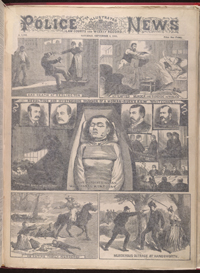
Jack-the-Ripper,-Illustrated-Police-News,-1888-(c)-British-Library-BoardThe UK’s largest ever exhibition on comics opens at the British Library tomorrow. Comics Unmasked: Art and Anarchy in the UK examines the history of the comic book in the UK – from 19th century illustrated reports of Jack the Ripper to 1970s titles like 2000AD and Action and more recent works – and examines how they have been used to explore confronting subjects like violence, sexuality and drugs. Among the highlights is a specially commissioned work by Tank Girl and Gorillaz co-creator Jamie Hewlett and works by the likes of Neil Gaiman (Sandman), Alan Moore (Watchmen, V for Vendetta), Grant Morrison (Batman: Arkham Asylum) and Posy Simmonds (Tamara Drewe). Admission charge applies (and due to the graphic nature of some exhibits, the Library has issued a parental guidance warning for under 16s). Runs until 19th August. For more, see www.bl.uk/whatson/exhibitions/comics-unmasked/index.html. PICTURE: Jack the Ripper’s victims, Illustrated Police News, 1888 © British Library Board.

The history of the white wedding dress goes under scrutiny at the V&A with its Wedding Dresses 1775-2014 exhibition opening on Saturday. The display includes more than 80 extravagant outfits from the museum’s collection – they include the Anna Valentine embroidered silk coat worn by The Duchess of Cornwall for the blessing of her marriage to The Prince of Wales in 2005, a purple Vivienne Westwood dress chosen by Dita von Teese for her wedding in 2005 and Dior outfits worn by Gwen Stefani and Gavin Rossdale on their wedding day in 2000. Some of the earliest examples in the chronological display including a silk satin court dress from 1775 and a ‘polonaise’ style brocade gown with straw bergere hat dating from 1780 lent by Chertsey Museum. The exhibition will also explore the growth of the wedding industry and the increasing media focus on wedding fashions. Admission charge applies. Runs until 15th March. For more, see www.vam.ac.uk.

The golden era of Italian film during the 1950s and 1960s and the birth of celebrity culture – did you know the term paparazzi was coined in the 1960 Federico Fellini film La Dolce Vita? – are the subject of a new exhibition which opened at The Estorick Collection this week. The Years of La Dolce Vita features 80 photographs from the period depicting Italian movie stars and the Hollywood “royalty” like John Wayne, Charlton Heston, Lauren Bacall and Liz Taylor who were working in Italy at the time. Juxtaposed against Marcello Geppetti’s images of this “real-life dolce vita” are behind-the-scenes shots from the set of La Dolce Vita taken by cameraman Arturo Zavattini. Runs until 29th June. Admission charge applies. For more, see www.estorickcollection.com.

The first British exhibition to explore the role of architecture in the Italian Renaissance opened at the National Gallery this week. Building the Picture: Architecture in Italian Renaissance Painting looks at the works of Italian masters such as Duccio, Botticelli and Crivelli with highlights including Sebastiano del Piombo’s The Judgment of Solomon – on display in London for the first time in 30 years – and Andrea del Verrochio’s The Ruskin Madonna. Five short films also form part of the display. Entry to the exhibition in the Sunley Room is free. Runs until September 21. For more information, see www.nationalgallery.org.uk.

Send all items of interest for inclusion to exploringlondon@gmail.com.

10 significant sites from Georgian London – 10. Wesley’s Chapel…

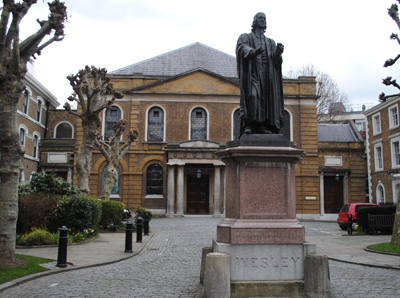
Wesley's-ChapelIt’s a church with a difference for the final entry in our Georgian series. Known as the “Cathedral of Methodism”, the Grade I-listed chapel on City Road in the Borough of Islington was first opened in 1778 just over the road from Bunhill Fields graveyard and remains in use today.

Methodism’s founder, John Wesley, had already established a London base in a former cannon foundry close by known as the Foundery when the fact the lease was expiring and plans for residential development of the area led him to look elsewhere for a headquarters for the Methodism movement (which he still then considered part of the Anglican Church).

Wesley's-graveWesley approached the City of London for a new site and, following a massive fundraising effort, in April, 1777, the building’s foundation stone was laid. The architect for the new building was George Dance the Younger, then surveyor to the City of London, and the builder, a local preacher named Samuel Tooth.

The new chapel – which Wesley described as “perfectly neat, but not fine” – was opened on All Saints Day, 1778 – apparently Wesley spent the first 15 minutes of his sermon railing against the elaborate hats worn by female congregants.

The chapel last underwent a major restoration in the 1970s after it was found to be unsound and was reopened in 1978 in the presence of Queen Elizabeth II and the Duke of Edinburgh exactly 200 years after Wesley first opened it.

Inside the chapel – which features seats upon a gallery as well as the ground floor – features a ceiling said to have been the widest unsupported ceiling in England at the time it was built (the present one is a replica; the original had been damaged by fire in 1879).

The original pillars used in the chapel to support the gallery were ship’s masts from the naval dockyard at Deptford given as a gift from King George III – these were replaced during the centenary commemoration of Wesley’s death with pillars of French jasper in 1891 but a couple of originals can still be seen in the vestibule.

Memorials inside the chapel include those to John and Charles Wesley and early Methodists John Fletcher and Thomas Coke.

Next to the chapel is the house Wesley lived in during the last 11 years of his life (this can be visited – and we’ll cover it in more detail in a later post) and underneath it in the crypt is the Museum of Methodism – well worth a visit in its own right.

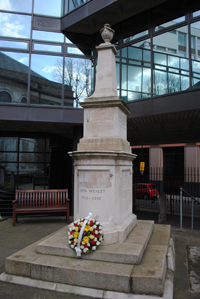
Wesley’s tomb (pictured) is located behind the east end of the church (accessed through the chapel) and outside the entrance to the chapel is a statue of Wesley. The grave of Susanna Wesley, mother of the Wesleys, can be found across the road in Bunhill Fields.

WHERE: Wesley’s Chapel, 49 City Road (nearest Tube station Old Street and Moorgate);  WHEN: 10am to 4pm Monday to Saturday (services Sunday – check website for details); COST: free but donations welcome; WEBSITE: www.wesleyschapel.org.uk.

LondonLife – Celebrate Shakespeare with a cake…

Jane-Asher

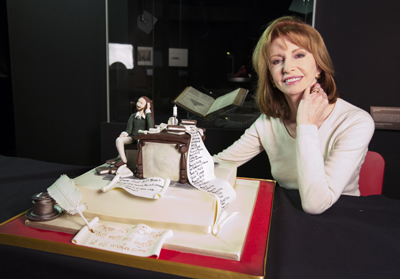
Time is running out for your entry into Cakespeare – the V&A’s competition to find the best Shakespeare-themed cake as part of the institution’s celebration of the 450th anniversary of William Shakespeare’s birth. The competition, which closes on 4th May, was launched earlier this month with an almost 15 kilogram cake created by Jane Asher Party Cakes (actress Jane Asher and the cake are pictured). A fruitcake, it features the playwright at work with a writing table and feature quill made from icing while a scroll lists the 36 plays in Shakespeare’s First Folio (which is on show in the V&A’s Theatre and Performance Galleries). To enter the competition, design, bake and decorate your cake celebrating Shakespeare and then upload an image of it to social media, tagged #Cakespeare. Oh, and the winner – selected by Asher and Geoff Marsh, director or the V&A’s department of theatre and performance – will receive a weekend for two in Stratford-upon-Avon complete with tickets to see the Royal Shakespeare Company. The V&A’s Shakespeare Festival runs until 4th May. For more, see www.vam.ac.uk. So enjoy your Shakespeare – and your cake…might be a way to take your mind off London’s transport woes! PICTURE: Victoria and Albert Museum, London.

What’s in a name?…Seven Dials…

Seven-Dials---bigStanding at the junction of seven streets in London’s West End is a pillar topped with six – that’s right, six – sundials, giving the intersection and the surrounding area its name.

The layout of the area was originally designed by Thomas Neale, an MP and entrepreneur, in the early 1690s – it was part of the rebuilding of London after the Great Fire of 1666 – and initially had the pillar standing at the centre of six streets before it was later increased to seven. The streets which radiate out from the hub include Earlham, Mercer and Monmouth Streets and Shorts Gardens.

Seven-dialsWhile Neale, who designed the street layout to maximise street frontages and thus his return, had hoped the area would attract the well-to-do, it was not be and by the 19th century the area had become one of the cities most notorious slums, considered part of the infamous rookery of St Giles.

That has since changed and today the area is at the heart of a bustling commercial district, the streets which run off it housing stylish shops and offices.

The pillar itself apparently never had seven faces – there is the suggestion that the column itself was the seventh – and while the original column was removed in 1773, apparently by city authorities keen to rid the area of undesirables, it was replaced with a replica column in the late 1980s and unveiled by Queen Beatrix of The Netherlands to commemorate the tercentenary of the reign of King William III and Queen Mary II in June, 1989.

The original column, meanwhile, was apparently first acquired by an architect, James Paine, who kept it at his house in Surrey, before, in 1820, being taken to Weybridge where, in 1820, the column was re-erected as a memorial to Princess Frederica, Duchess of York (who had lived there). The dial-stone, meanwhile, was used as a mounting block before eventually being placed outside the Weybridge Library.

Where is it? #80…And the answer is…

Where-it-it--#80

Can you identify where in London this picture was taken and what it’s of ? If you think you can, leave a comment below. We’ll reveal the answer next week. Good luck!

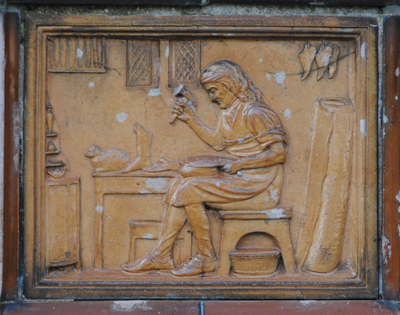
Apologies for the delay in getting the answer up. But the answer is that this can be found on a monument outside an entrance to the Royal Park of Bushy Park located in Hampton Wick, in London’s west. The monument is erected to the memory of a Hampton Wick shoemaker, Timothy Bennet, who led a campaign to establish a public right of way through the park which in 1752 had been enclosed by Lord Halifax. Bennet, whose business had been adversely affected by the enclosure, won his bid to have the footpath created (he died two years later) and Cobbler’s Walk still exists, running from Sandy Lane in Hampton Wick through the park to High Street in Hampton Hill. Thanks Timothy Bennet!