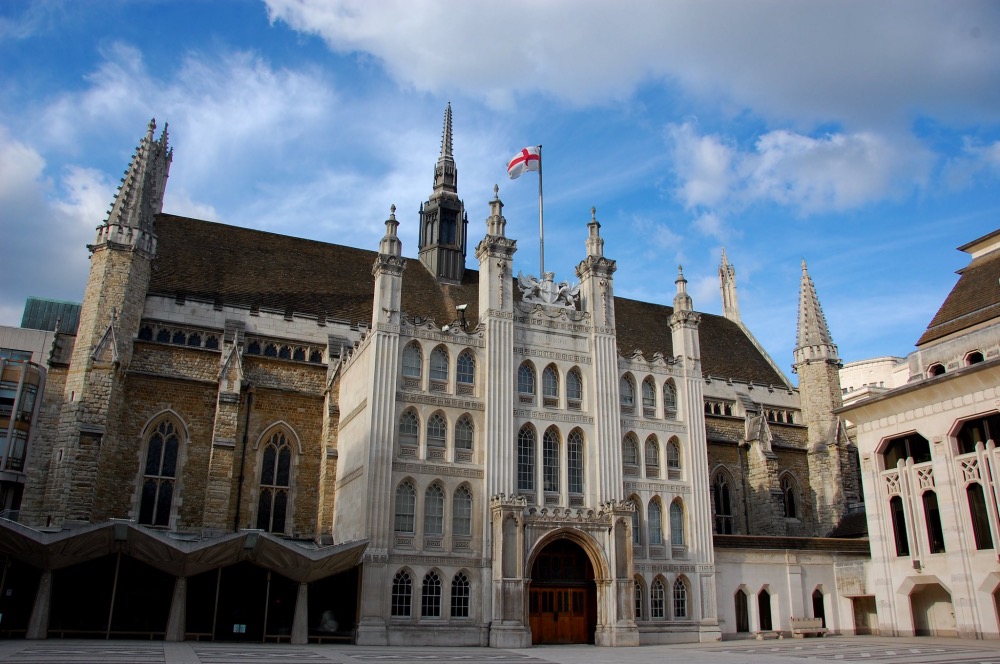
The Guildhall was an important building in Thomas Becket’s London but the earliest parts of the current building date from the early 15th century. PICTURE: stephenarcher (licensed under CC BY-NC 2.0)
This week we look at a location representative of Becket’s brief time working for a former City of London Sheriff and banker, Osbert Huitdeniers (“Eightpence”).
About a year after his return from Paris (possibly around his 22nd birthday in late 1142), Becket – driven apparently by a downturn in the family fortunes – started work as a clerk in the household of Huitdeniers.
A relative of the Becket family, Osbert was a man of some significance – apparently holding a knight’s fee in Kent – and was known at the royal court. He had held the post of sheriff of London from 1139 to 1141 (and may have also been a justiciar at different times).
We’ve been unable to determine where Huitdeniers’ home or business was located, hence why we’ve included Guildhall which certainly would have been known to him as sheriff – and indeed to Becket who grew up nearby, though not in its current form.
Becket’s job would have involved keeping Huitdeniers accounts and during the few years he served the banker, it’s believed he gained some invaluable skills that would prove helpful later in life.
• As the inauguration of US President Joe Biden took place in the US this week, the Museum of London announced it had taken possession of the larger-than-life ‘Trump Baby’ balloon. The blimp first appeared at protests in July, 2018, during then-US President Donald Trump’s first visit to the city, and has since followed the President around the world. The museum said it will now form part of its protest collection which also includes objects relating to the Suffrage movement, banners, flags, and tents that belonged to Houses of Parliament protestor Brian Haw and placards used recently by protestors against public spending cuts. Sharon Ament, director of the museum, said: “From the Suffragettes of the early twentieth century to the anti-austerity marches, free speech and Black Lives Matter most recently – the capital has always been the place to have your say. By collecting the baby blimp we can mark the wave of feeling that washed over the city that day and capture a particular moment of resistance – a feeling still relevant today as we live through these exceptionally challenging times – that ultimately shows Londoners banding together in the face of extreme adversity.” The Trump Baby team added that it was their hope the blimp “will stand as a reminder of when London stood against Trump – but will prompt those who see it to examine how they can continue the fight against the politics of hate”. “Most of all we hope the Trump Baby serves as a reminder of the politics of resistance that took place during Trump’s time in office.”
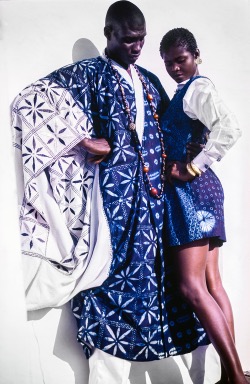
• The V&A is seeking to contact people who have worn fashions designed by the likes of Shade Thomas-Fahm, Chris Seydou, Kofi Ansah, and Alphadi – a group who, along with their peers, represent the first generation of African designers to gain international attention. The call out comes as the South Kensington museum announces plans to hold an exhibition, supported by GRoW @ Annenberg, which aims to celebrate the creativity, ingenuity and global impact of contemporary African fashions in June. The display will feature more than 250 objects, drawn from the personal archives of African fashion creatives, alongside textiles and photographs from the V&A’s collection (many of which are being displayed for the first time). Alongside the objects, the museum is seeking a range of items – and the stories that go with them – from the public. They include Chris Seydou’s 1980s experimental garments in bògòlanfini, 20th century kente, bògòlanfini, khanga and commemorative cloths from the independence and liberation years in Africa, and family portraits and home movies showing African and African diasporic fashion trends. Members of the public with objects that fit the above description are asked to get in touch by email at africafashion@vam.ac.uk, and to share their pictures and memories on social media, using the hashtag #AfricaFashion. For the full list of sought after items, head to www.vam.ac.uk/blog/news/va-africa-fashion-call-out.
Send all items for inclusion to exploringlondon@gmail.com.
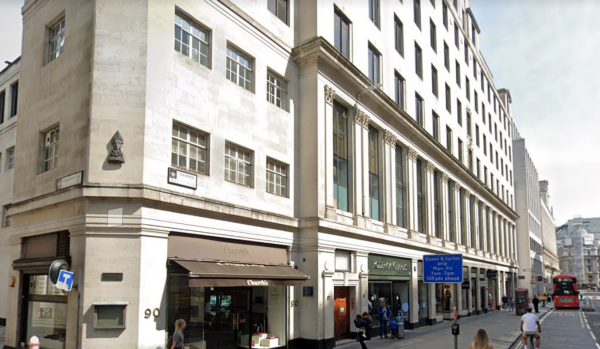
Looking east down Cheapside from the corner of Ironmonger’s Line (with the bust of St Thomas Becket visible in the left). PICTURE: Google Maps.
The 29thDecember, 2020, marked 850 years since the dramatic murder of then Archbishop of Canterbury, Thomas Becket, in Canterbury Cathedral.
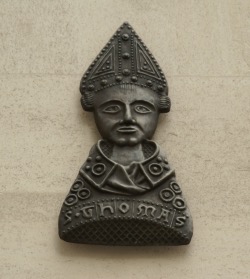
Metallic bust of St Thomas Becket on the wall at 90 Cheapside.PICTURE: Caroline (licensed under CC BY-NC-ND 2.0)
While many of the commemorations have been postponed due to the coronavirus pandemic, we’ve decided to push ahead with our series in commemoration of the martyred saint’s connections with London.
First up, it’s the famous City of London street of Cheapside – one of the main commercial streets in the medieval city – which was where, on 21st December, in what is generally believed to be the year 1120, he was born.
Becket was the son of Norman parents – his father, Gilbert, was a mercer (and served as a City sheriff) and his mother was named Matilda. He is believed to have had at least three sisters.
The location of what was a large residence – and the fact the family owned other property in the area – indicated they were relatively prosperous.
The property was next door to the church of St Mary Colechurch – lost in the Great Fire of London and not rebuilt – which was where St Thomas was baptised, apparently on the evening of his birth suggesting he may have initially been sickly. He was named after the Biblical St Thomas.
The site – which was later occupied by a hospital run by the Order of St Thomas of Acre – is marked with a small metallic bust of St Thomas attached to a wall on 90 Cheapside (on the corner with Ironmongers Lane) as well as a City of London blue plaque.
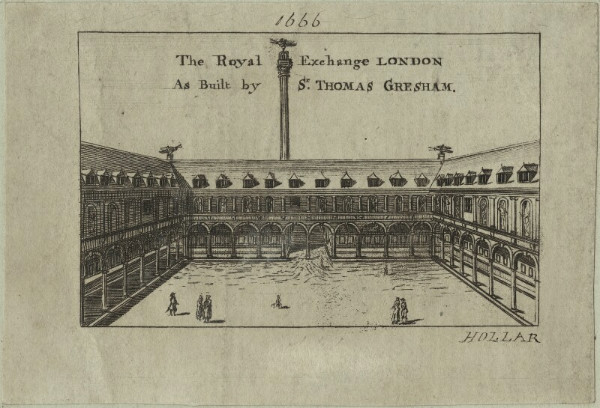
This month marks the 450th anniversary of the opening of London’s Royal Exchange, a complex created to act as a commercial centre in the City of London.
The exchange was built on the orders – and with the funds – of the merchant Sir Thomas Gresham at a site on the junction of Cornhill and Threadneedle streets which was – and still is – jointly owned by the City of London Corporation and the Worshipful Company of Mercers.
Drawing inspiration from the Antwerp Bourse, credited as the oldest financial exchange in the world (and where Sir Thomas had served as an agent of the crown), the Royal Exchange was built in ranges around a central courtyard and designed by an architect from Antwerp.
It was officially opened by Queen Elizabeth I on 23rd January, 1571. The Queen, who was lodging in Somerset House at the time, reportedly took a detailed look at the premises – which had apparently been completed a few years earlier.
At the close of her visit, she awarded the exchange the use of the word ‘Royal’ in its title (an honour announced by a herald and with the sound of a trumpet). She also granted it a license to sell alcohol and other luxury goods.
Earlier in the day, the Queen had dined at Sir Thomas’ own house in Bishopsgate. She was later to return to Somerset House.
Gresham’s original building – to which two floors of retail had been added in 1660, creating what is said to have been England’s first shopping mall – was sadly destroyed in the Great Fire of London in 1666.
It was replaced by a second complex, this time designed by Edward Jarman, in 1669, but this too succumbed to fire, this time on 10th January, 1838. The building which now stands on the site – and is now an upmarket retail centre – was designed by Sir William Tite and was opened by another Queen, Victoria, in 1844.
Gresham’s contribution is remembered by the building’s weathervane which features a golden grasshopper – an insect featured on Sir Thomas’ crest.
This tradition is actually one which is no longer observed – but we thought it worth a mention to finish this short series.
The creation of temporary of ‘boy bishops’ was relatively widespread at greater churches in Middle Ages (and several other churches in London also observed the tradition apparently including Westminster Abbey).
At St Paul’s, it involved one of the choir boys being elected to be the ‘boy bishop’, usually on 6th December, for a role that would run through until Holy Innocents Day on 28th December.
Dressed in child-sized bishop’s robes, the ‘boy bishop’ performed various ceremonial duties throughout the season, culminating with them delivering a sermon and leading a procession through the city.
The tradition apparently became more raucous as time went on, so much so that eventually it was abolished during the Reformation by King Henry VIII, revived by his successor Queen Mary I, and then abolished again by Queen Elizabeth I.
Since then, the idea of a ‘boy bishop’ or ‘youth bishop’ has been revived in a somewhat updated form in certain cathedrals including those in Salisbury and Hereford.
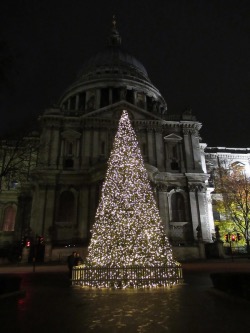
Christmas tree outside St Paul’s Cathedral. PICTURE: Alex Liivet (licensed under CC BY 2.0)
In what has been, and continues to be, such a hard year for so many, we at Exploring London hope you’re still able to celebrate Christmas in some form this year…
Meantime, here’s the next four in our countdown of the 100 most popular posts of all time…
London’s back under restrictions meaning doors to many of the city’s institutions are once again closed. So, for the moment, here’s the next two in our countdown…
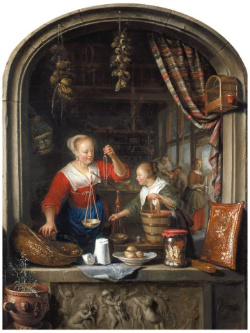
• World renowned artworks from Buckingham Palace’s Picture Gallery go on show at the Queen’s Gallery from tomorrow. Masterpieces from Buckingham Palace features 65 works by the likes of Titian, Rembrandt, Rubens, Vermeer, Van Dyck and Canaletto and, unlike in the tours of the State Rooms, visitors to the Queen’s Gallery will face the chance to enjoy the works close-up. The paintings on show include Johannes Vermeer’s The Music Lesson (early 1660s), Sir Peter Paul Rubens Milkmaids with Cattle in a Landscape, (c1617–18), Rembrandt’s The Shipbuilder and his Wife (1633), Canaletto’s The Bacino di San Marco on Ascension Day (c1733–4), Titian’s Madonna and Child in a Landscape with Tobias and the Angel (c1537) and Gerrit Dou’s The Grocer’s Shop (1672). The exhibition runs until January 2022. Advance booking is essential and admission charge applies. For more, seewww.rct.uk.
• The Museum of London is seeking to record the dreams of Londoners during the coronavirus pandemic in a new project with the Museum of Dreams at Western University in Canada.Guardians of Sleep represents the first time dreams as raw encounters and personal testimonies will be collected by a museum. Londoners are being asked to register their interest to take part by 15th January with conversations with members of the Dreams network – an international team of trained scholars from the psychosocial community, slated to be held over Zoom in February. Contributions will be considered for acquisition by the Museum of London as part of its ‘Collecting COVID’ project. To volunteer to participate in the study, or to find out more details, members of the public should contact info@museumofdreams.org.
• Abdus Salam, a Nobel Prize-winning theoretical physicist, has been honoured with a Blue Plaque at his former property in Putney. The red brick Edwardian house was the Pakistani scientist’s London base from 1957 until his death in 1996. It features a study where Salam would write while listening to long-playing records of Quranic verses and music by composers ranging from Strauss to Gilbert and Sullivan. Salam’s work on electroweak theory contributed to the discovery of the Higgs boson particle – the ‘God particle’ which gives everything mass, and he was also involved in improving the status of science in developing countries.The unveiling comes as English Heritage issues a call for the public to nominate more notable scientists from history for its Blue Plaque scheme in London with only around 15 per cent of the 950 plus blue plaques across the capital dedicated to scientists. For more, see www.english-heritage.org.uk/visit/blue-plaques/.
• A self-portrait series by late Gambian-British artist Khadija Saye can be seen at the British Library’s entrance hall from today.Khadija Saye: in this space we breathe features nine silk-screen prints and demonstrates Saye’s deep concern with “how trauma is embodied in the black experience” as well as her Gambian heritage and mixed-faith background. Saye, who died in 2017, photographed herself with cultural, religious and spiritual objects of significance both to her Christian mother and Muslim father and in African traditions of spirituality. The free display is on show until 2nd May. For more, see www.bl.uk.
Send all items for inclusion to exploringlondon@gmail.com.
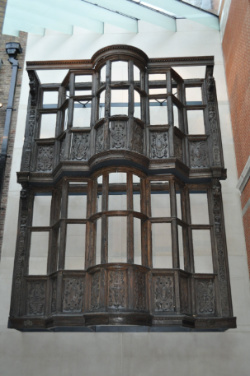
OK, so our last entry in this series isn’t a house, just a facade. But it is a significant and rare example of part of a pre-Great Fire timber-framed house in London which has been relocated.
PICTURE: tx K.B. Thommpson (licensed under CC BY 3.0)
The intricately detailed wooden facade, which can now be found in the V&A in South Kensington, was originally part of a three-and-half storey mansion which stood on the west side of Bishopsgate Without (that is, just outside the City of London’s walls).
It was built by Sir Paul Pindar, a wealthy merchant and diplomat who was knighted by King James I in 1620 (we’ll be featuring more of his story in an upcoming ‘Famous Londoners’ article).
He had purchased several properties in the street in 1597 and then incorporated these properties into a single mansion which also included a new section (of which the striking facade survives).
The house, which Shakespeare himself may well have walked past, was unusually large and sufficiently opulent that it served as the residence of Pietro Contarini, the Venetian ambassador, in 1617–18.
By 1660, it had been divided into smaller dwellings and, having survived the Great Fire of London, subsequently became a residence for the indigent. The front rooms on the ground floor, meanwhile, were turned into a tavern named the Sir Paul Pindar’s Head.
By the late 19th century, however, the nearby Liverpool Street Railway Station needed more room for expansion and, as a result, in 1890 the property was demolished to make space.
Part of the facade, however, was carefully dismantled (albeit some large sections, like the projecting carved window frames, were kept intact) and subsequently moved to the V&A where it was reassembled using carpenters’ marks on the wood.
The restored frontage (without the original glass and leading which was replaced in 1890) initially stood near the front of the museum but in the Noughties was delicately moved to where it now stands in the Medieval and Renaissance Galleries.
While the museum is currently closed as a result of coronavirus restrictions, we publish these details for when you can visit.Timed tickets can be booked for future dates here.
WHERE: Victoria and Albert Museum, Cromwell Road (nearest Tube stations are South Kensington and Gloucester Road); WHEN: Special – see above; COST: Free; WEBSITE: www.vam.ac.uk
• A controversial new statue commemorating feminist icon Mary Wollstonecraft was unveiled in Newington Green, near where Wollstonescraft lived and opened a girls’ school, in the city’s north this week. Designed by British artist Maggi Hambling, A Sculpture for Mary Wollstonecraft depicts a small nude female figure – described by those behind the campaign for the statue as “Everywoman, her own person, ready to confront the world” – rising out of other, intermingled, female forms below. Hambling said she wanted the sculpture to reflect Wollstonecraft’s spirit, rather than her likeness. The statue’s unveiling is the culmination of a 10 year campaign to see a statue for Wollstonecraft led by author Bee Rowlatt. The statue has already been the target of protestors who have reportedly used black tape, COVID masks, and a T-shirt to cover it up.
Images of Faint Signals on screen by Invisible Flock
• A new work set in an imagined Yorkshire forest and looking at how natural sound has changed over the last 50 years has gone online this week. Commissioned by the British Library, Faint Signals is the work of Yorkshire-based interactive arts studio Invisible Flock and allows people to explore Yorkshire’s flora, fauna, and wildlife – both past and present. Launched to mark World Science Day on Tuesday, the work can be visited until 2nd January. Head here faintsignals.io.
• The National Gallery has launched a new collaboration with camera maker Nikon to showcase the gallery’s works and “explore the synergies between photography and fine art”. In the first collaboration of its kind, the “digital content partnership” will see the gallery work with Nikon to produce a range of online content over the next year. This kicks off with an exploration of Jan van Kessel the Elder’s 1654 work, Butterflies, Moths and Insects with Sprays of Common Hawthorn and Forget-Me-Not, under the Picture of the Month series (the concept of ‘Picture of the Month’ dates back to 1942, when a single painting was returned to the gallery each month from the disused Welsh slate mine where the collection was kept for safety during World War II). The painting is explored in depth in a range of ways on the gallery’s website including through two short films. Further online films, talks and events are planned. For more on the Picture of the Month, head to the National Gallery website.
• Londoners still have two weeks to have their say on what should happen to statues and other landmarks in the City of London which have links to slavery and historic racism. The City of London Corporation said it has received more than 800 responses since launching the consultative exercise in September in which it’s asking people to give their views on which landmarks – including statues, street and building names – they think are a problem, and what action they think should be taken. Among those monuments which have been mentioned to date are statues at Guildhall depicting former Lord Mayor William Beckford and MP and philanthropist Sir John Cass, both of whom profited from the slave trade. In September, the Sir John Cass’s Foundation Primary School in the City announced it was changing its name to The Aldgate School to break the link with its controversial founder. Head to www.cityoflondon.gov.uk/historiclandmarksconsultation by 24th November to take part.
Send all items for inclusion to exploringlondon@gmail.com
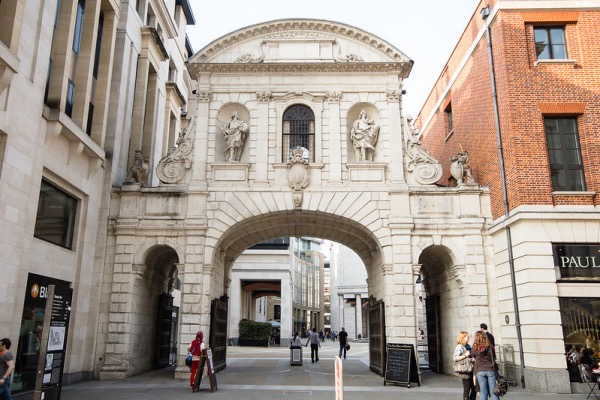
This ornate Baroque archway only stands with walking distance from where it originally stood marking the entrance to the City of London. But it came to this position by a somewhat roundabout route.
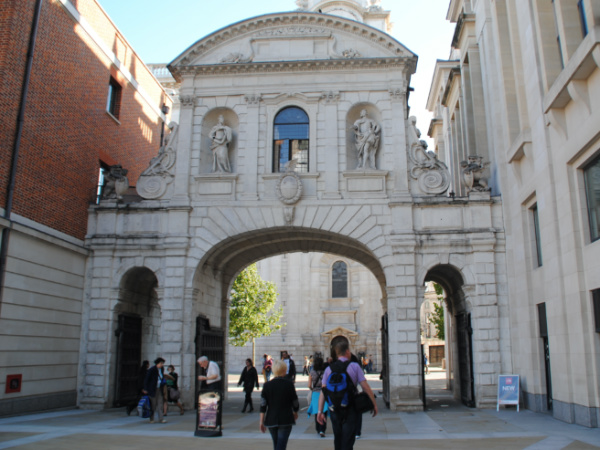
Temple Bar – with statues of Queen Anne and King James I (looking towards St Paul’s Cathedral) PICTURE: David Adams.
The gate was originally constructed at the junction where Fleet Street becomes the Strand, it marked the boundary between the City of London and Westminster.
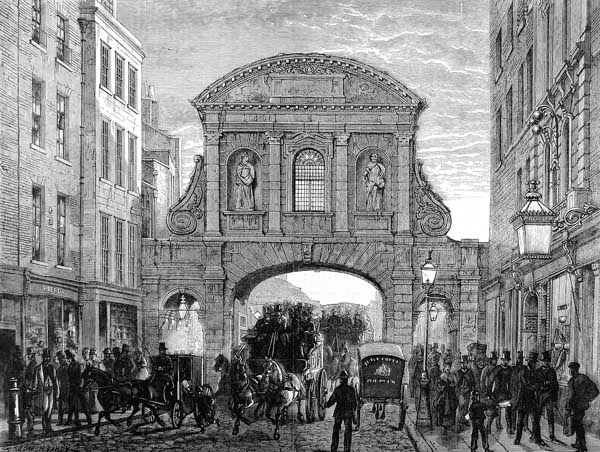
While the first gate on the site dates back to the 14th century (prior to that the boundary was apparently marked with a chain two posts), the gate we see today dates from 1672 when, despite having survived the Great Fire of London, the previous gate – a crumbing wooden structure – was demolished and this upmarket replacement built to the design of none other than Sir Christopher Wren (earlier designs for the gate created by Inigo Jones were never acted upon).
An artist’s impression of the Temple Bar in 1870 from Illustrated London News.
Made of Portland stone, the new structure featured figures of King Charles I and King Charles II on the west side and King James I and Queen Anne of Denmark on the east (it’s said that a third of the total £1,500 cost was spent on the statuary alone).
Shortly after its construction, it became a location for the display of the remains of traitors (usually heads), the first of which were the body parts of Rye House plotter Sir Thomas Armstrong and the last of which was the head of Jacobite Francis Towneley in 1746 (there’s also a story that such was the interest when the heads of the Rye House plotters – who had planned to assassinate King Charles II and crown his brother, the future King James II, in his place – were displayed, telescopes were rented out so people could get a closer look).
Temple Bar with statues of King Charles I and King Charles II (looking into Paternoster Square). PICTURE: Eric Heupel (licensed under CC BY-NC-ND 2.0)
Among the luminaries who passed under the central arch were Anne Boleyn (the day before her coronation) and Queen Elizabeth I. The Queen did so most famously on her way to give thanks in St Paul’s Cathedral for the English victory over the Spanish Armada and since then, whenever a Sovereign has wanted to enter the City past Temple Bar, there’s been a short ceremony in which the Sovereign asks permission of the Lord Mayor of London to enter. Granting this, the Mayor then offers the Sword of State as a demonstration of loyalty and this is subsequently carried before the Sovereign as they proceed through the City as a sign of the Lord Mayor’s protection.
The Temple Bar stood in its original location until 1878 when, to help traffic flow, it was carefully removed brick-by-brick over a period of 11 days (the City of London Corporation well aware of its historical significance) . It was initially intended that the gateway would be rebuilt somewhere else in the city, but time passed and no suitable site was found.
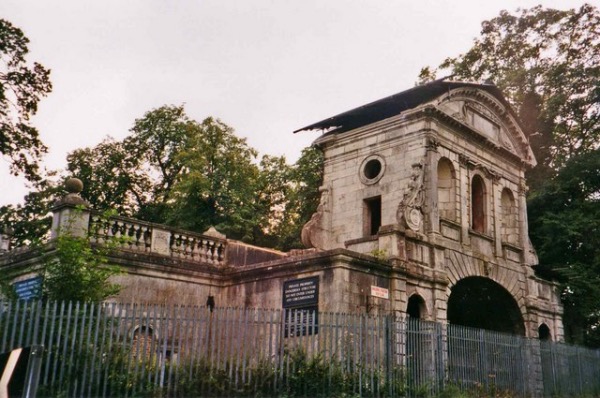
Instead, the gate lay in pieces in a yard in Farringdon Road before, in the mid 1880s, Sir Henry Bruce Meux had all 2,500 stones transported via trolleys pulled by horses to his estate at Theobalds Park in Hertfordshire and re-erected there as a gateway (the Lady Meux apparently used the small upper room for entertaining – among those said to have dined here was King Edward VII and Winston Churchill).
Temple Bar at Theobolds Park. PICTURE: Christine Matthews (licensed under CC BY-SA 2.0)
In 1976, the Temple Bar Trust was formed to have the archway returned to London – they eventually succeeded 30 years later in 2004 when it was re-erected on its current site between St Paul’s and Paternoster Square at a cost of some £3 million.
The original site of the Temple Bar is now marked with a Victorian era memorial – erected in 1888 – which features statues of Queen Victoria and Edward, the Prince of Wales.
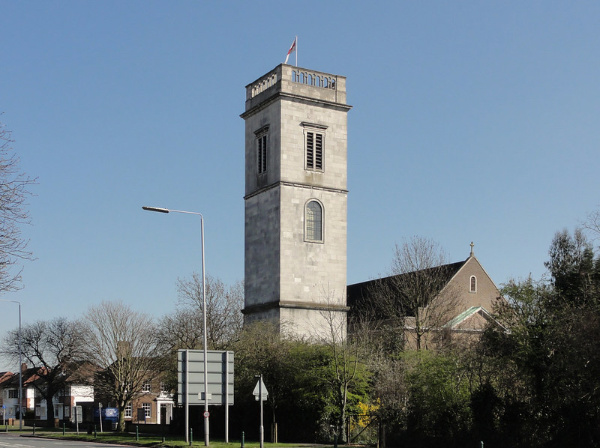
Of medieval origins,the Church of St Antholin, which stood on the corner of Sise Lane and Budge Row, had been a fixture in the City of London for hundreds of years before it was destroyed in the Great Fire of 1666.
Rebuilt to the designs of Sir Christopher Wren, it survived until 1874 when it was finally demolished to make way for Queen Victoria Street.
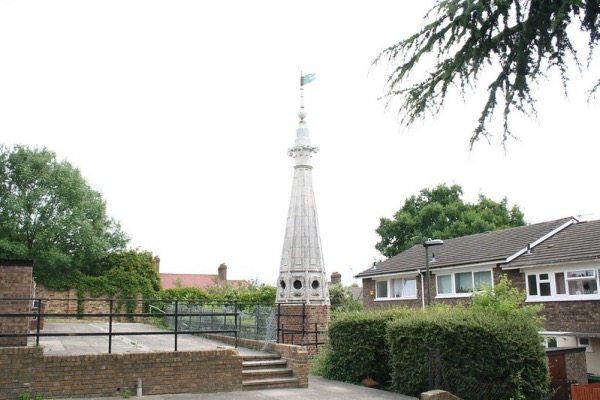
But, while the building itself was destroyed (and we’ll take a more in-depth look at its history in an upcoming article), a section of Wren’s church does still survive – the upper part of his octagonal spire (apparently the only one he had built of stone).
This was replaced at some stage in the 19th century – it has been suggested this took place in 1829 after the spire was damaged by lightning although other dates prior to the church’s demolition have also been named as possibilities.
Whenever its removal took place, the spire was subsequently sold to one of the churchwardens, an innovative printing works proprietor named Robert Harrild, for just £5. He had it re-erected on his property, Round Hill House, in Sydenham.
Now Grade II-listed, the spire, features a distinctive weathervane (variously described as a wolf’s head or a dragon’s head). Mounted on a brick plinth, it still stands at the location, now part of a more modern housing estate, just off Round Hill in Sydenham.
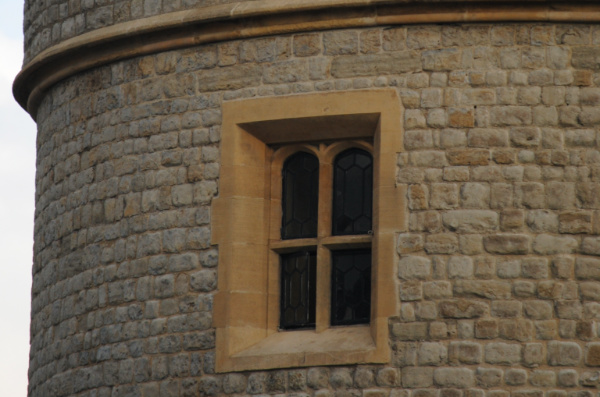
PICTURED: Not the Tower Royal, but a window from the Tower of London.
Dating possibly from as far back as the early medieval period, this royal lodging once stood in the City of London.
The building, which has been described variously as a palace as well as a strongly defended tower house, was located in the parish of St Michael Paternoster and gave its name – Tower Royall – to the street in which it was located (now long gone).
It has been suggested the property could date from as far back as the reign of King Henry I in the early 12th century and it has also been said that King Stephen is said to have lodged there later that same century (although some put the origins a bit later, possibly in the reign of King Edward I, who ruled from 1272 to 1307).
It was apparently in the possession of King Edward III in 1320 – he is said to have granted it to his wife, Queen Phillippa, who enlarged it and established her wardrobe there (hence it was sometimes referred to as the ‘Queen’s Wardrobe’).
On Queen Phillippa’s death, the king is said to have granted it to the Dean and Canons of Westminster but by 1371 it was apparently back in royal hands – Joan of Kent, the mother of the future King Richard II was living there at that time (Richard when king, apparently rode there to tell her of the suppression of the Peasant’s Revolt in 1381).
It is said to have been given to the Duke of Norfolk by his friend, King Richard III, in the 15th century, but, according to 16th century historian John Stow, by 1598 it had fallen into disrepair and was used for stabling the king’s horses.
The premises – believed to be located close to what is now Cannon Street, not far from Mansion House Tube Station – was among the buildings destroyed in the Great Fire of 1666. It was not rebuilt.
One of the lost churches of the City of London, All Hallows Lombard Street once stood on the corner of this famous City street and Ball Alley.
Dating from medieval times, the church was badly damaged in the Great Fire of London and, while the parishioners initially tried their own repairs, it was subsequently rebuilt by the office of Sir Christopher Wren and completed by 1679.
The result was apparently a rather plan building but it did feature a three storey tower (in fact, so hemmed in by other buildings did it become that some called it the “invisible church”). The church also featured a porch which had come from the dissolved Priory of St John in Clerkenwell and had, from what we can gather, been part of the previous building.
Among those who preached in the rebuilt church was John Wesley in 1789 (he apparently forgot his notes and, after some heckling from the congregation, it’s said he never used notes again).
The parish of St Dionis Backchurch was merged with All Hallows when the latter was demolished in 1878 (All Hallows has already been merged with St Benet Gracechurch when that church was demolished in 1868 and St Leonard Eastcheap in 1876). Bells from St Dionis Backchurch were brought to All Hallows following the merger.
The declining residential population in the City saw the consolidation of churches and following World War I, All Hallows Lombard Street was listed for demolition. There was considerable opposition to the decision but structural defects were found in the building’s fabric and demolition eventually took place in 1937.
But there was to be a second life of sorts for the church. The square, stone tower, including the porch and fittings from the church such as the pulpit, pews, organ and stunning carved altarpiece, were all used in the construction of a new church, All Hallows Twickenham in Chertsey Road.
Designed by architect Robert Atkinson, it was one of a couple of new churches built with proceeds from the sale of the land on which All Hallows Lombard Street had stood.
Replacing an earlier chapel, the new Twickenham church was consecrated on 9th November, 1940 by the Bishop of London, Geoffrey Fisher (apparently with the sound of anti-aircraft fire in the background).
The 32 metre high tower houses a peal of 10 bells, including some of those from St Dionis Backchurch, as well as an oak framed gate decorated with memento mori carvings – including skulls and crossbones – which came from All Hallows Lombard Street.
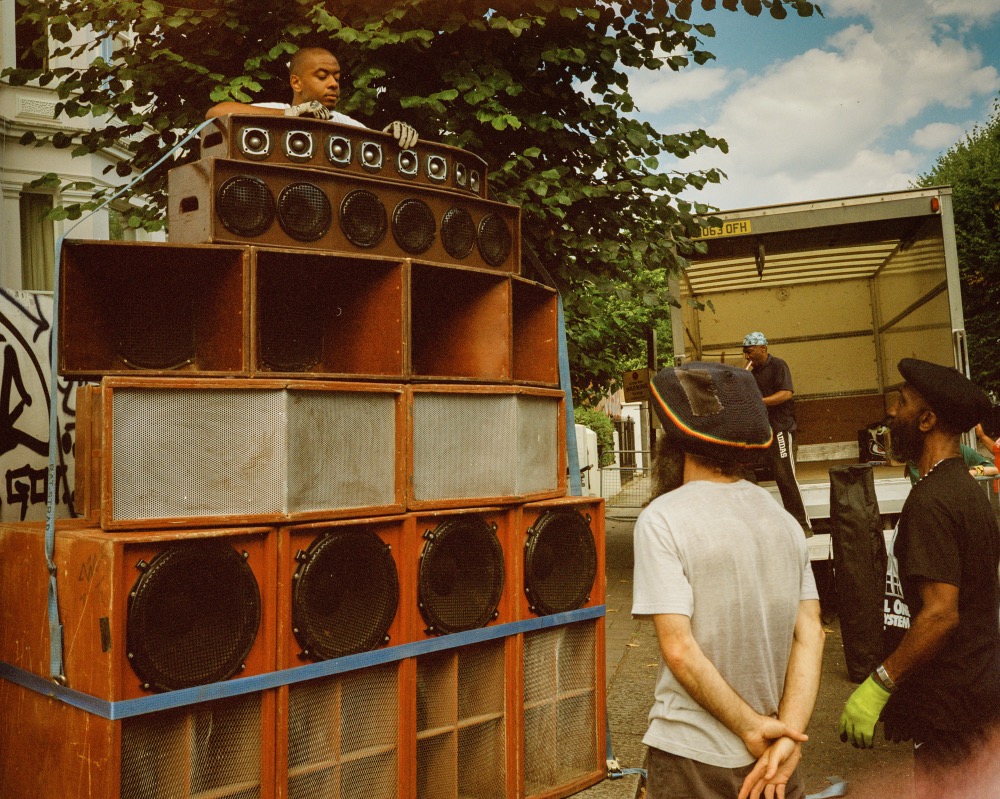
• Dub music and the impact it’s had on London’s identity and people is the subject of a new, long delayed, exhibition which opened at the Museum of London late last week. Dub London: Bassline of a City, which had been postponed due to the coronavirus pandemic, charts how, from its roots in Jamaican reggae, dub music went on to influence multiple genres and played a key role in the development of punk bands like The Clash. The display includes the iconic speaker stack belonging to Channel One Sound System that has appeared yearly at Notting Hill Carnival since 1983 (pictured above) and a specially created bespoke record shop with a selection of 150 vinyl records chosen by 15 London based independent record shops which can be listened to. Runs until 31st January. Admission is free but must be booked in advance (and bring your own headphones). For more, see www.museumoflondon.org.uk/museum-london/whats-on/exhibitions/dub-london.
• The concept of sin is at the heart of a new free exhibition at The National Gallery. Sin brings together 14 works dating from the 16th century to now by artists ranging from Jan Brueghel the Elder and William Hogarth to Andy Warhol and Ron Mueck. Among the paintings on show are Lucas Cranach the Elder’s Adam and Eve (1526), Hogarth’s The Tête à Tête and Marriage A-la-Mode, Diego Velázquez’s Immaculate Conception, William Holman Hunt’s The Scapegoat (1854-55), and Ron Mueck’s sculpture Youth (2009). The display can be seen in Room 1. For more, see nationalgallery.org.uk.
• The science of the coronavirus is explored in a special night event at the Science Museum next Wednesday, 14th October. Staff from the Francis Crick Institute will be joining with those from the Science Museum in exploring how the immune system remembers and evolves and how the Crick was turned from a biomedical research centre into a COVID-19 testing facility. Visitors can also hear from NHS transplant surgeon Pankaj Chandak who has been using 3D printing tech to make life-saving PPE for frontline staff while the Leonard Cheshire charity shows how assistive eyegaze technology has played a vital role in helping to keep people with access needs connected. There will also be a chance to make a facemask as part of the museum’s #MaskSelfie campaign and the opportunity to explore the museum’s new Medicine: The Wellcome Galleries. Admission charge applies and pre-booking is essential. Head to sciencemuseum.org.uk/see-and-do/lates.
Send all items for inclusion to exploringlondon@gmail.com.
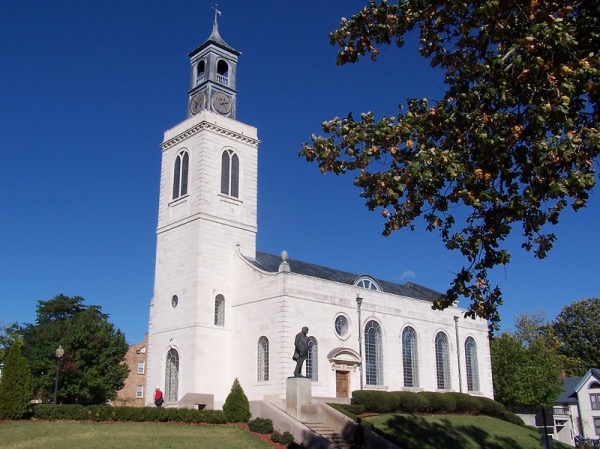
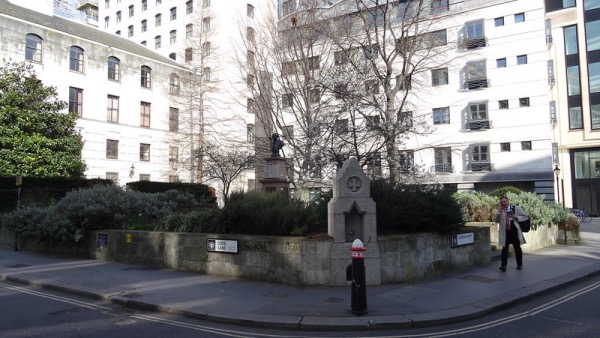
This church – not to be confused with the similarly named but still existing St Mary Aldermary – once stood at the corner of Love Lane and Aldermanbury in the City of London.
St Mary Aldermanbury, now part of the National Churchill Museum on the campus of Westminster College, Fulton, Missouri, in the US. PICTURE: J. Stephen Conn (licensed under CC BY-NC 2.0)
Founded in the 11th or early 12th century, the church – the name of which apparently relates to an endowment it received from an Alderman Bury, was destroyed in the Great Fire of London in 1666 and rebuilt by Sir Christopher Wren in a simple form with no spire.
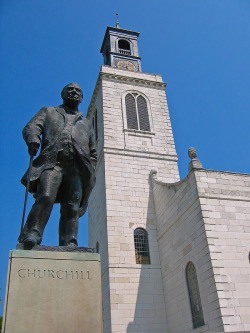
It was gutted during the Blitz – one of 13 Wren churches hit on the night of 13th December, 1940 – and the ruins were not rebuilt. Instead, in the 1960s (and this is where we get to the relocation part) a plan was put into action to relocate the church so it could form part of a memorial to Winston Churchill in the grounds of Westminster College in Fulton, Missouri.
It was only after four years of planning and fundraising (the project apparently cost some $US1.5 million with the money raised from donors including actor Richard Burton) that the relocation process finally began in 1965.
It started with workers in London cleaning, removing and labelling each of the church’s 7,000 stones so they could be reconstructed correctly on the other side of the Atlantic.
They were shipped free-of-charge – the US Shipping Board moved them as ship’s ballast – and then taken by rail to Fulton.
By the time the stones reached Fulton they had been jumbled. And so began the painstaking process of reassembling what was described as the “biggest jigsaw puzzle in the history of architecture” (with the stones spread over an acre, it apparently took a day just to find the first two stones).
While the first shovel on the project had been turned by former US President Harry S Truman on 19th April, 1964 (his connection to the project will become clear), the foundation stone was laid in October, 1966, 300 years after the Great Fire of London.
The shell of the church was completed by May, 1967. Two more years of work saw the church’s interior recreated with English woodcarvers, working from pre-war photographs, to make the pulpit, baptismal font, and balcony (new glass was also manufactured and five new bronze bells cast for the tower). The finished church, which was rededicated in May, 1969, was almost an exact replica of the original but apparently for a new organ gallery and a tower window.
Why Fulton for a tribute to Churchill? The connection between Churchill and Westminster College went back to the post war period – it was in the college’s historic gymnasium building that, thanks to a connection the institution had with President Truman, Churchill was to give one of his most famous speeches – the 1946 speech known as ‘Sinews of Peace’ in which he first put forward the concept of an “Iron Curtain” descending between Eastern and Western Europe.
The church is now one part of the National Churchill Museum, which also includes a museum building and the ‘Breakthrough’ sculpture made from eight sections of the Berlin Wall. It was selected for the memorial – planned to mark the 20th anniversary of Churchill’s speech – thanks to its destruction in the Blitz, commemorating in particular the inspiring role Churchill had played in ensuring the British people remained stalwart despite the air raids.
Meanwhile, back in London the site of the church has been turned into a garden. It contains a memorial to John Heminges and Henry Condell, two Shakespearean actors who published the first folio of the Bard’s works and were buried in the former church. The footings upon which the church once stood can still be seen in the garden and have been Grade II-listed since 1972.
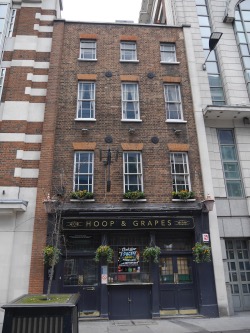
This historic pub in Farringdon bears a common enough name (and it’s not to be confused with the Hoop and Grapes located in Aldgate which we’ll look at in an upcoming post).
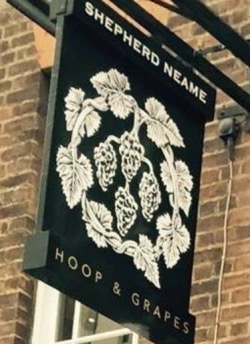
The hoop in the name refers to the metal bands binding together barrels staves and the grapes are obviously a reference to wine. But the ‘hoop’ could be a corruption of hops with the sign possibly once featuring a garland of hops and a bunch of grapes.
The pub, the current sign of which depicts grapes wrapped around a hoop (pictured below), is located in a four storey building first constructed for a vintner in about 1720 as a terraced house and converted to a pub more than a century later in the early 1830s.
Located on ground which one formed part of the St Bride’s Burial Ground, the brick vaults underneath are said to pre-date the rest of the building, having been built as warehouse vaults in the 17th century.
Its location on 80 Farringdon Street means it stood near the Fleet River (now covered) and close by to the former Fleet Prison (largely used as a debtor’s prison before its demolition in 1864).
As a result, it has been claimed that it was one of a number of pubs which hosted so-called ‘Fleet Marriages’, secret ceremonies performed by dodgy clergymen – for a fee – and without an official marriage license. But, as has been pointed out to us, the timing of the passing of the Marriage Act in 1753 outlawing such activities – and this only becoming a pub, according to its Historic England listing, much later – does make this seem unlikely (we’d welcome any further information on this claim).
The location also meant it was popular with printers who worked in nearby Fleet Street (in fact, it was apparently given a special licence to serve such customers at night or in the early morning).
The pub was scheduled for demolition in the early 1990s but saved with a Grade II-listing in 1991.
A rare survivor from an earlier time among the street’s more modern buildings, it is now part of the Shepherd Neame chain and it’s during renovations held after this purchase that burials were uncovered (the remains were moved into the British Museum). This has apparently led to rumours that the pub is haunted.
Sorry for the confusion – We’ve corrected references to grapes in the second paragraph (and amended our comments on the current sign). And we’ve also clarified comments that the pub was used for Fleet Marriages given the timing discrepancy.



 Exploring London