This Week in London – Talking Shakespeare; Dickens’ letter in support of ‘fallen women’; and, wallpaper at the Geffrye…

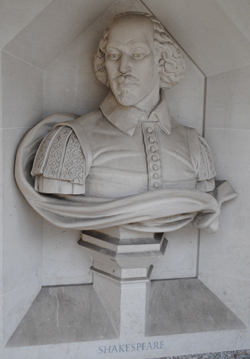
William-Shakespeare6• Guildhall is hosting an “open mic” Shakespeare day this Tuesday as part of commemorations marking the 400th anniversary of his death. Speeches, Soliloquies and Songs from Shakespeare will be opened with recitals from actors Simon Russell Beale and John Heffernan before members of the public will have their chance to recite their favourite piece from Shakespeare. Participants are invited to sign up by emailing ghlevents@cityoflondon.gov.uk or calling 020 7332 1868. The event will run between 10am to 12pm and 1.30pm to 3.30pm at the Basinghall Suite in the Guildhall Art Gallery. For more, see www.cityoflondon.gov.uk/things-to-do/visit-the-city/attractions/guildhall-galleries/Pages/guildhall-art-gallery.aspx.

A letter written by author Charles Dickens to the governors of the Foundling Hospital has gone on display at the Foundling Museum in Bloomsbury. The letter was written to the governors in support of an application for a new matron and touches on Dickens’ belief that the downward path of a ‘fallen woman’ wasn’t irreversible and inevitable but that reform was possible. Tempted to Virtue: Dickens and the Fallen Woman can be seen until 22nd May. In a related event, Lynda Nead, curator of the recent exhibition, The Fallen Woman, will join Jenny Earle, programme director at the Prison Reform Trust, in discussing the hidden stories of vulnerable women in the 19th century and today on 21st May. This event is free but booking is essential. For more, see www.foundlingmuseum.org.uk.

An exhibition celebrating how wallpaper is made is running at the Geffrye Museum in Shoreditch as part of London Craft Week. The Craft of Wallpaper demonstrates the variety of processes being used to make wallpaper in today’s world and features papers by some of the UK’s most innovative makers including Claire Coles, Elise Menghini, Helen Morley, Identity Paper, Juliet Chadwick, Linda Florence, Erica Wakerly, Fromental, CUSTHOM, Tracey Kendall and Graham & Brown who are showcasing six of their most successful wallpaper designs: from its first design in 1946, Original, to the 2016 Wallpaper of the Year, Marble. You’ll have to be quick – only runs until Sunday. For more, see www.londoncraftweek.com.

Send all items for inclusion to exploringlondon@gmail.com.
10 iconic London film locations…10. A bridge, a park, and a round church…

OK, we’ve reached the last in our series of London film locations so this week we’re taking a quick look at three more…

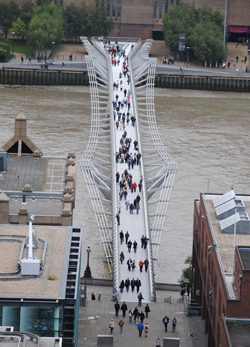
Millennium-FootbridgeThe Millennium Bridge. Initially nicknamed the “wobbly bridge” due to its propensity to move underfoot, this footbridge over the River Thames first opened in June, 2000, for only couple of days before it was closed for almost two years so its movement could be fixed and eventually reopened again in 2002. But despite its young age, the bridge has appeared not just in a Harry Potter film – 2009’s Harry Potter and the Half-Blood Prince – where it gets destroyed but also in the break-out 2014 Marvel film, Guardians of the Galaxy in which it plays the role of a bridge in the city of Xandar (embedded in the rest if the CGI-created city). Among other London locations featured in that film is the modern Lloyd’s Building in Lime Street (again, it makes part of Xandar).

The Regent’s Park. The 2010 film The King’s Speech features numerous London locations – among them is the Avenue Garden in the south-east corner of the park where speech therapist Lionel Logue (played by Geoffrey Rush) takes a stroll with Bertie, the future King George VI (played by Colin Firth), which turns a little uncomfortable. Other locations include 33 Portland Place (which plays the role of the Duke and Duchess’ Piccadilly home as well as that of the interior of Logue’s consulting rooms in the famous Harley Street), and the Draper’s Hall in the City, the interior of which plays the role of St James’s Palace.

The Temple Church. This famous – and beautiful – City of London church made its starring performance in the Tom Hanks movie of 2006, The Da Vinci Code. The church enters the movie when symbology professor Robert Langton (played by Hanks) and cryptologist Sophie Neveu (played by Audrey Tautou) come here in search for a knight’s tomb. Other London locations featured in the film (alongside those in France and Scotland), include Westminster Abbey (although the interiors were actually shot at Lincoln Cathedral). For more on the history of the church, see our earlier post here or on the tomb effigies, see our post here.

Our next special series kicks of next Wednesday.

Lost London – The Three Tuns, Guildhall Yard…

Guildhall-Yard

A medieval tavern, The Three Tuns once stood in Guildhall Yard in the City (picture above).

The tavern, which was located by Guildhall Gate, is noted for having served as lodgings for the Royalist military commander General George Monck when he arrived in the city in early 1660 in the lead-up to the Restoration of the monarchy later that year. It was also, according to poet Robert Herrick, a haunt of playwright Ben Jonson.

The Three Tuns – meaning three great wine casks – was incidentally a popular name for taverns and there were several others in London which bore the same name including, in the 17th century, one in Ludgate Hill, another in Cheapside and another in Gracechurch Street.

The Museum of London has a trade token, which was worth half a penny, and was issued by the tavern’s proprietor, Thomas Ailay, in the mid-17th century for use at the business.

10 iconic London film locations…9. A chapel of many faces…

There’s an ancient church in London which has taken on the role of various other cathedrals and churches in many recent historic films, most notably in the 1998 film Shakespeare in Love (a fitting reference this week, given the 400th anniversary of the Bard’s death last weekend).

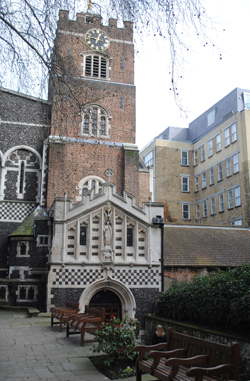
St-BartsBut the church – location of the scene in the film in which Shakespeare’s begs forgiveness after the death of Kit Marlowe – has also been seen in everything from the 1991 Kevin Costner-vehicle, Robin Hood: Prince of Thieves (where it represented the interior of Nottingham Cathedral) to Guy Ritchie’s 2009 film Sherlock Holmes (where it represented St Paul’s Cathedral, location of a ritual sacrifice being conducted by the evil Lord Blackwood).

It has also appeared in the 1996 Victorian-era drama Jude, 2006’s Amazing Grace – the story of William Wilberforce’s effort to combat the slave trade, 2007’s Elizabeth: The Golden Age (where it hosts the execution of Mary, Queen of Scots), 2008’s The Other Boleyn Girl, and the 2012 fantasy epic, Snow White and the Huntsman.

Oh, and the church? The priory church of St Bartholomew The Great (St Bart’s) located in West Smithfield, which has a history dating back 900 years (for more on the history of the church, see our earlier post here).

But the church hasn’t just been seen in films of the historic genre – it’s also played roles in more contemporary movies as well, from 1994’s Four Weddings and Funeral (St Julian’s where a wedding doesn’t take place) to 1999’s The End of the Affair and, more recently, the 2014 film Muppets: Most Wanted.

It’s doubtful there’s a church interior in London that’s been in so many movies in recent times. For more on the church itself, see www.greatstbarts.com.

LondonLife – Hang on a minute! City gardens turned upside down…

The-City-Garden

A showcase of flora inspired by the gardens of the City of London, The City Garden features fresh flowers which, entwined with copper wire, hang from the ceiling of the newly opened gallery and exhibition space known as The City Centre. The work of East London-based artist Rebecca Louise Law, the display is the first public art installation at the premises – located next to the Guildhall at 80 Basinghall Street, it’s being managed by New London Architecture on behalf of the City of London Corporation – and the flowers can be seen there as they dry out until 25th September. The exhibition also features two films on the City of London’s gardens as well as a map of those that inspired the artwork (this is also available in an app which details some of the history, horticulture and design of some of the Square Mile’s most iconic gardens). For more, see www.thecitycentre.londonPICTURE: Courtesy of The City Centre.

London Pub Signs – The Punch Tavern…

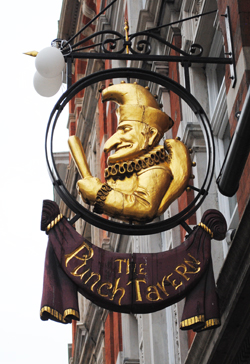
This Fleet Street institution was originally known as The Crown & Sugarloaf, but took on the name Punch thanks to its connection with the famous satirical magazine (and not, despite the sign, the notorious thug, Mr Punch).

The-Punch-TavernThe now defunct Punch magazine – its name apparently comes from a comment at the first meeting of staff that a magazine should be like a good punch mixture – was apparently founded in 1841 at the Edinburgh Castle Tavern in the Strand, just up the road.

Following its launch, the staff apparently began to meet at The Crown & Sugarloaf and it was this fact which apparently led the to the name change.

While there has apparently been a pub here since the 17th century, in 1890s, the property at 99 Fleet Street was rebuilt and the pub, under the guidance of architects Saville and Martin, was transformed into a gin palace.

Now located in a Grade II listed building, the pub has retained much of its original Victorian character – with etched mirrors, a marble bar, dark oak panelling, banquette seating and a series of original Punch and Judy paintings dating from 1897.

The pub is now owned by Punch Taverns – the company took its name from this famous pub.

Incidentally, the name The Crown & Sugarloaf lives on just around the corner in Bride Lane – this small pub, which has a rather complicated history but is now part of the Samuel Smith chain, was once connected to the Punch Tavern.

For more, see www.punchtavern.com.

This Week in London – Beacons to mark Queen Elizabeth II’s 90th; 4,000 years of Sicilian history; underwear’s history exposed; a Shakespearean banknote remembered…

• Queen Elizabeth II’s 90th birthday is being marked in various ways across the capital today. Along with street parties, gun salutes in Hyde Park and at the Tower of London, beacons will be lit in numerous locations across the city (as well as around the country and even internationally) tonight. Further celebrations will be held across May and June.

Sicily

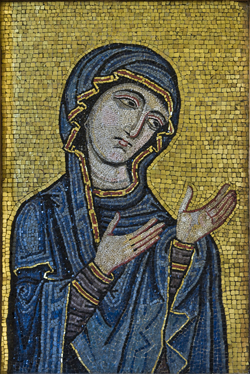
More than 4,000 years of Sicily’s history is being explored in a new exhibition opening at the British Museum in Bloomsbury today. Sicily: culture and conquest features more than 200 objects and focuses on two major eras: the arrival of the Greeks in the latter half of the 7th century BC and their subsequent encounters with earlier settlers and the Phoenicians; and, the period under Norman rule between 1100 and 1250 AD. Highlights include a spectacularly well preserved terracotta altar from about 500 BC, a terracotta sculpture of a Greek Gorgon, an iconic marble sculpture of a warrior from ancient Akragas, a bronze battering ram used by the Romans to sink enemy ships, a 12th century Byzantine-style mosaic and marble, and wooden Islamic-influenced architectural decorations along with ceremonial glassware and ivory, gold pendants and intricate enamel mosaics and cameos from the Norman period. The exhibition, being run in conjunction with Regione Siciliana, Assessorato dei Beni Culturati e dell’Identita Siciliana, runs in Room 35 until 14th August. Admission charges apply and a programme of events accompanies the exhibition. For more, see www.britishmuseum.org/sicily.

• The largest ever museum exhibition of underwear has opened at the V&A in South Kensington. Undressed: A Brief History of Underwear charts the history of underwear from the 18th century to today and features some of the more than 60 individual pieces of mostly contemporary underwear the museum recently acquired for its permanent collection as well as loaned objects. Among the objects on display are an “austerity corset” dating from 1917-18 which has been made from woven paper twine, a man’s waist belt used on the wearer’s wedding day which dates from 1842, a late 19th century corset designed for cycling as well as a rare surviving example of a 1978 panty thong designed by Rudi Gernreich (credited with giving the thong its name) and numerous contemporary pieces – everything from a butt lifter and waist trainer for women to a pair of EnlargetIt briefs designed by aussieBum to add volume to a man’s crotch and a mastectomy bra and prosthesis. The exhibition can be seen until 12th March next year. For more, see www.vam.ac.uk/undressed.

Banknote designer Harry Norman Eccleston’s Shakespearean-related design for the now out of circulation £20 banknote is the subject of an exhibition at the Bank of England Museum in the City. Held as part of commemorations marking 400 years since the Bard’s death, Eccleston’s Shakespeare explores the design elements used in the note, first issued in July, 1970, from his rendering of William Kent’s statue of Shakespeare to his drawing of the balcony scene of Romeo and Juliet. Entry is free. For more, see www.bankofengland.co.uk.

Send all items for inclusion t0 exploringlondon@gmail.com.

LondonLife – The ‘Walkie-Talkie’…

Walkie-Talkie-building

Designed by Rafael Viñoly, this £200 million commercial building at 20 Fenchurch Street was completed in 2014 with its ‘sky garden’ opening on the top levels last year. The nickname of the controversial 37 storey building – which has attracted its fair share of opprobrium for all manner of reasons, not least the way it reflected the sun’s rays and wind onto those below as well as its place in the City’s skyline – comes from its rather distinctive shape. PICTURE: Marcela Andrade/Unsplash.

This Week in London – The Venetian Renaissance on show; Art at the Bridge; and, Martin Parr’s London…

Giorgione A survey of some 50 works from the Venetian Renaissance will go on show at the Royal Academy of Arts in Piccadilly on Saturday. In the Age of Giorgione features works from the first decade of the 16th century by artists including Giorgione, Titian, Giovanni Bellini, Sebastian del Piombo and Lorenzo Lotto as well as those of lesser known painters like Giovanni Mariani. Highlights include Giorgione’s paintings Portrait of a Man – only one of two known painting bearing a contemporary inscription identifying the artist (from The San Diego Museum of Art) and Il Tramonto (The Sunset) (from London’s National Gallery) as well as Titian’s works Christ and the Adultress (Glasgow Museums), and Jacopo Pesaro being Presenting By Pope Alexander VI to Saint Peter (Koninklijk Museum voor Schone Kunsten, Antwerp). The exhibition will be divided into four sections. Runs until 5th June. Admission charge applies. For more, see Cwww.royalacademy.org.uk. PICTURE: Attributed to Giorgione, Portrait of a Young Man, c. 1505.

Art at the Bridge returned to Tower Bridge this week with an all-female exhibition launched on International Women’s Day. Building Bridges: The Female Perspective, which is being run in collaboration with the Southwark Arts Forum and represents the 7th ‘edition’ of Art at the Bridge, features the work of 15 artists in a variety of media. They include Charlotte Timms, a mixed media artist who takes her inspiration from living on an historic barge on the Thames, print artist Donna Leighton whose work The New Baby is a commentary on the bridges a mother must build with a new baby, and photographer Pauline Etim-Ubah who explores the career of civil engineering through a series of images. Exhibition runs until 31st July. Included in normal bridge admission price. For more, see www.towerbridge.org.uk.

Gain new insights into life inside the City of London Corporation in photographs taken by Martin Parr, the City of London’s photographer-in-residence. Opening at the Guildhall Art Gallery last week, Unseen City: Photos by Martin Parr provides insight into the City of London Corporation’s private ceremonies, ancient and modern traditions, processions, banquets and other public occasions as well as more informal times. Twenty of the works on show will be acquired for the gallery’s permanent collection following the closure of the exhibition on 31st July. Admission charge applies. For more, see www.cityoflondon.gov.uk/things-to-do/visit-the-city/attractions/guildhall-galleries/Pages/guildhall-art-gallery.aspx.

Send all items for inclusion to exploringlondon@gmail.com.
This Week in London – Botticelli at the V&A; Shakespeare recalled in free sound and light show; and, ‘punk’ captured on film…

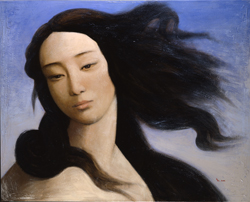
VenusA major new exhibition opening at the V&A this Saturday will feature more than 150 works from around the world in a display exploring how artists and designers have responded to the artistic legacy of Botticelli. Italian artist Sandro Botticelli (1445-1510) was largely forgotten for more than 300 years after his death but is now widely recognised as one of the greatest artists of all time. Botticelli Reimagined features painting, fashion, film, drawing, photography, tapestry, sculpture and print with works by Dante Gabriel Rossetti, Edward Burne-Jones, William Morris, René Magritte, Elsa Schiaparelli, Andy Warhol and Cindy Sherman. The exhibition is divided into three sections: ‘Global, Modern, Contemporary’, ‘Rediscovery’, and ‘Botticelli in his own Time’. Runs until 3rd July. Admission charge applies. For more, see www.vam.ac.uk/Botticelli. PICTURE: Venus, after Botticelli by Yin Xin (2008). Private collection, courtesy Duhamel Fine Art, Paris. (Name of artist corrected)

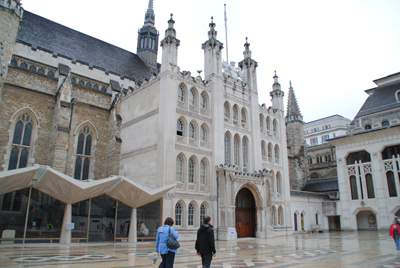
The historic facade of Guildhall in the City of London will become a canvas for a free son et lumiére show on Friday and Saturday nights to mark the 400th anniversary of the death of William Shakespeare. The display, which runs on a 20 minute loop between 6.45pm and 8.45pm, will feature period images and music from the City’s extensive archives and use 3D projection mapping techniques to transform the Dance Porch of the 15th century building. The Guildhall Art Gallery will be open from 6pm to 9pm and, as well as allowing people to view a property deed for a house in Blackfriars which was signed by the Bard, will feature a pop-up bar with a Shakespeare-themed cocktail. For more on this and other events, see www.cityoflondon.gov.uk/shakespeare400.

The 40th anniversary of punk is the subject of a new photographic exhibition drawn from the archives of world renowned music photographer and rockarchive.com founder Jill Furmanovsky which opened at the City of London Corporation’s Barbican Music Library this week. Chunk of Punk, which runs until 28th April, features many of Furmanovsky’s well-known punk-related images as well as hitherto unseen pictures with The Ramones, Buzzcocks, The Clash, The Sex Pistols, Blondie, The Undertones, Siouxsie and the Banshees, Blondie and Iggy Pop among the bands featured. The exhibition forms part of Punk.London: 40 Years of Subversive Culture. For more, see www.cityoflondon.gov.uk.

Send all items for inclusion to exploringlondon@gmail.com.
A Moment in London’s History – Sir Walter Raleigh leaves the Tower…

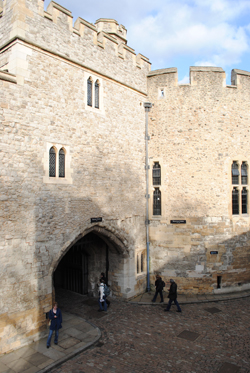
Bloody-TowerIt was in February, 1616 – 400 years ago this year – that the adventurer and courtier Sir Walter Raleigh (Ralegh) was released from the Tower of London where he had spent the last 13 years of his life. Sadly, his freedom was to be short-lived.

Raleigh had been imprisoned in 1603 by King James I – not his biggest fan – after being accused of plotting against the king and subsequently sentenced to death for treason (a sentence which was then commuted to life imprisonment).

The Tower, where he’d been imprisoned a couple of times before – most notably by Queen Elizabeth I for secretly marrying Bessy Throckmorton, one of her maids-of-honour, was to be his home for the next 13 years.

It was in Bloody Tower (in left of picture) that his rather luxurious ‘cell’ was located. Originally known as the Garden Tower, it was renamed for the tradition that the two ‘Princes in the Tower’, King Edward V and his brother Richard, had been murdered here in 1483.

The tower’s top floor was added specifically to provide more room for his family in 1605-06 (and Raleigh’s son Carew was conceived and born while he was imprisoned here). It was also during this time of imprisonment that he wrote his History of the World (published in 1614).

Raleigh was released in 1616 to lead an expedition to the New World – he’d previously been on a couple of expeditions there including one with his half-brother Sir Humphrey Gilbert aimed at finding the Northwest Passage (but which deteriorated into privateering and led to his brief imprisonment following his return to England), and one aimed at finding the legendary ‘golden land’ of El Dorado (which he failed to do). It was again with the purpose of finding gold that he now returned to the Orinoco River region of South America.

Failure, however, was once more the outcome, and on Raleigh’s return to England, the death sentence issued on 1603 was reimposed (for his failure but also for attacking the Spanish in defiance of the king’s instructions to specifically not do so, although the blame was not all his). He would be executed in Old Palace Yard at Westminster on 29th October, 1618.

This Week in London – Charlotte Bronte celebrated; A Right Royal Buzz; iconic London etching revisited; and, Delacroix at the National Gallery…

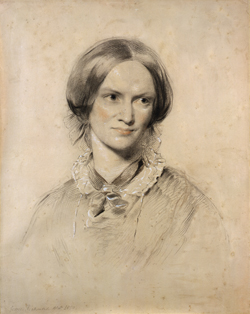
Charlotte-BrontePaintings and drawings by Charlotte Bronte, the first of famous “little books” she ever made, and a pair of her ankle boots worn will go on show at the National Portrait Gallery on Monday. Celebrating Charlotte Bronte 1816-1855 is being held to mark the 200th anniversary of the author’s birth and features 26 items loaned from the Bronte Parsonage Museum in Haworth. As well as portraits from the gallery’s collection (including the only painted portrait of Charlotte), the display will also feature first editions of her novel Jane Eyre and Elizabeth Gaskell’s biography, Life of Charlotte Bronte, as well as chalk drawings George Richmond made of both women. The exhibition, which is free to enter, is in Room 24 and runs until 14th August. For more, see www.npg.org.uk. PICTURE: National Portrait Gallery, London.

Find out what the buzz is all about in London this week when The Royal Park’s A Right Royal Buzz exhibition is held across three venues – Duck Island Cottage in St James’s Park, The National Gallery and the Mall Galleries. The community arts project features art created in a series of workshops under the guidance of artist Alex Hirtzel – all in a bid to teach the public about the importance of pollination. The installations a blacked out box in the Mall Galleries where you can discover how bees see, a room of 3D flowers at the National Gallery inspired by Van Gogh’s Sunflowers and Jan Van Huysum’s Flowers in a Terracotta Vase, and a four foot high beehive and bug hotel made of ceramic tiles on Duck Island in St James’s Park. For more on the project – which can only be seen until 20th February – see www.royalparks.org.uk/arightroyalbuzz.

• A recreation of Claes Jansz Visscher’s iconic 1616 engraving of London goes on show in the Guildhall Art Gallery from Saturday as part of commemorations of the 400th anniversary of William Shakespeare’s death. Artist Robin Reynolds has recreated the work and depicts London, reaching from Whitehall to St Katharine’s Dock, on four large plates. In recognition of the Shakespearean commemoration, the new drawing also features references to the Bard’s 37 plays, three major poetic works and sonnets. Visscher Redrawn: 1616-2016 can be seen until 20th November and is part of a full program of events being held as part of the commemoration (including the Shakespeare Son et Lumiére show in Guildhall Yard on 4th and 5th March). For more, see www.cityoflondon.gov.uk/visscher and www.cityoflondon.gov.uk/shakespeare400.

The first major presentation of the art of Eugene Delacroix to be held in the UK in more than 50 years has opened at the National Gallery’s Sainsbury Wing. Delacroix and the Rise of Modern Art celebrates the career and legacy of the artist, arguably the most famous and controversial French painter of the late 19th century and one of the first “modern masters” yet whose name today is overshadowed by those of many of his contemporaries. The display features more than 60 works borrowed from 30 public and private collections around the world with highlights including Delacroix’s Self Portrait (about 1837), The Convulsionists of Tangiers (1838), and Bathers (1854) as well as works by other artists which pay tribute to the impact he had: among them, Bazille’s La Toilette, Van Gogh’s Pieta and Cezanne’s Battle of Love. Organised by the National Gallery in conjunction with the Minneapolis Institute of Art, the exhibition runs until 22nd May. Admission charge applies. For more, see www.nationalgallery.org.uk.

Send all items for inclusion to exploringlondon@gmail.com.

10 iconic London film locations…1. Mary Poppins and feeding the birds at St Paul’s Cathedral…

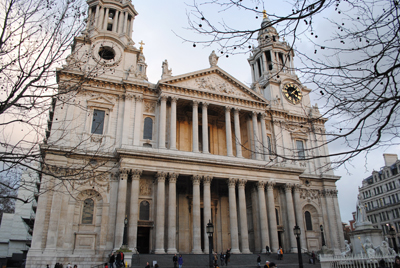
St-Paul's-CathedralThe scene in which Mary Poppins (played by Julie Andrews) sings to the two Banks children about the old woman who feeds the birds outside St Paul’s Cathedral as they go to bed remains one of the most poignant of the iconic Disney film.

Of course, it wasn’t actually filmed at the cathedral – rather it was filmed on a set at Walt Disney’s studios in Burbank, Los Angeles – but the scene remains powerful for its imagery and music nonetheless.

The scene itself shows Mary holding up a snow globe with St Paul’s Cathedral inside as she sings. The audience is taken into the globe where we see the “little old bird woman” (the last role ever played by Oscar winning actress Jane Darwell) feeding the birds on steps outside the cathedral’s west front.

The rather melancholy song, written by brothers Richard and Robert Sherman, talks about how the little old bird woman came to the steps of St Paul’s every day and there called for people to buy her bags of crumbs (priced at tuppence a bag) to feed the pigeons (a practice now frowned upon!).

“All around the cathedral the saints and apostles
Look down as she sells her wares,
Although you can’t see it, you know they are smiling,
Each time someone shows that he cares.”

In the film, the children actually meet the old bird woman the following day but their father discourages them from feeding the birds (although the book recounts things a little differently).

The scene was apparently one of few Mary Poppins author PL Travers – whose first Mary Poppins book was published in 1934 – didn’t object to when making the film (the story of the somewhat acrimonious relationship between Travers and the film-makers is shown in the recent film Saving Mr Banks), which was released on 27th August, 1964. It is also said to have been Walt Disney’s favourite song from the movie.

Of course, St Paul’s is only one of a number of London locations mentioned in the live action/animated film – the Bank of England is another (and to see more about the fictional home of the Banks family, see our earlier post here).

Of course, Mary Poppins is just one of numerous films in which St Paul’s is featured – among the other films which depict the building or its interior include 1962’s Lawrence of Arabia, 1994’s The Madness of King George, 2004’s Harry Potter and the Prisoner of Azkaban and 2009’s Sherlock Holmes.

This Week In London – Artists and gardens at the RA; London tattoos; and, out of this world photos at the Natural History Museum…

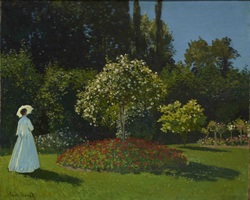
Monet A major exhibition looking at the role of gardens in the paintings of Claude Monet and his contemporaries opens at the Royal Academy of Arts in Piccadilly on Saturday. Painting the Modern Garden: Monet to Matisse spans the period from the 1860s to the 1920s and includes more than 120 Impressionist, Post-Impressionist and Avant-Garde works including 35 by Monet as well as “rarely seen” masterpieces by Paul Klee, Emil Nolde, Gustav Klimt and Wassily Kandinsky. Highlights include Monet’s Agapanthus Triptych (1916-1919) as well as his Water Lilies (1904) and Lady in the Garden (1867), Auguste Renoir’s Monet Painting in His Garden at Argenteuil (1873) , Kandinsky’s Murnau The Garden II (1910) and Pierre Bonnard’s Resting in the Garden (1914). The exhibition, which has previously been at The Cleveland Museum of Art in Ohio, runs until 20th April. Admission charge applies. For more, see www.royalacademy.org.uk. PICTURE: Claude Monet, Lady in the Garden, 1867;  © The State Hermitage Museum/Vladimir Terebenin.

The world of professional tattooing is the subject of a new display at the Museum of London. Tattoo London, which opens at the City-based museum tomorrow, looks at the history of tattooing in the capital – which dates back to a time before Captain Cook – as well as life inside four contemporary tattoo studios. Also on display will be newly commissioned artworks by tattooists from the studios – Lal Hardy at New Wave, Alex Binnie at Into You, Claudia de Sabe at Seven Doors, and Mo Coppoletta at The Family Business. A series of events are being held in conjunction with the display which runs until 8th May. Entry is free. For more, see www.museumoflondon.org.uk.

A new photographic exhibition exploring the solar system has opened at the Natural History Museum. Otherworlds: Visions of our Solar System features 77 composite images pieced together from date collected on NASA and ESA missions by artist, curator and writer Michael Benson. Highlights include A Plutonian haze – a colourised image of Pluto created from data captured during New Horizon’s flyby of the dwarf planet in July last year, Enceladus vents waters into space – captured in 2009 by NASA’s Cassini mission it shows Saturn’s sixth largest moon Enceladus spraying water into space, and, A Warming Comet – a picture of the twin-lobed comet 67P/Churyumov-Gerasimenko venting gas and dust captured by ESA’s Rosetta probe in July last year. The exhibition can be seen until 15th May at the South Kensington museum. Admission charge applies. For more, see www.nhm.ac.uk/otherworlds.

Send all items for inclusion to exploringlondon@gmail.com.
This Week in London – London illuminated; commemorating Shakespeare’s death; and, of bees and pollination…

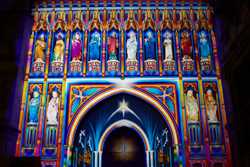
Westminster-Abbey-west-front The biggest ever light festival to hit London opens tonight. Lumber London, produced by Artichoke with the support of the Mayor of London and visitlondon.com, will see a host of international artists transform a series of iconic buildings and locations in four areas across the city – Piccadilly, Regent Street and St James’s, Trafalgar Square and Westminster, Mayfair and King’s Cross. The 30 installations include French collective TILT’s Garden of Light featuring giant illuminated plants in Leicester Square, Patrice Warrener’s The Light of the Spirit which envelopes the west front of Westminster Abbey in colour and light, Deepa Mann-Kler’s Neon Dogs – a collection of 12 neon dogs inspired by the balloon dogs seen at children’s parties, this sits near Trafalgar Square, and, Pipette, a colourful installation by Miriam Gleeman (of The Cross Kings) and Tom Sloan (of Tom Sloan Design) which sits in the pedestrian subway, the King’s Cross Tunnel. Other highlights include Julian Opie’s work Shaida Walking, 2015 which will be permanently located in Broadwick Street, Soho, and Janet Echelon’s enormous net sculpture 1.8 London which is strung between buildings at Oxford Circus. The festival runs from 6.30pm to 10.30pm over the next four nights. You can download a free map on the installations or use the free London Official City Guide app to locate them. For more information – including the full programme – see www.visitlondon.com/lumiere.

A property deed signed by playwright William Shakespeare and one of the most complete first folios of his works have gone on show in the London Heritage Gallery at the Guildhall Art Gallery. Alongside the two documents which dates from 1613 and 1623, the Shakespeare and London exhibition marks the 400th anniversary of Shakespeare’s death – to be commemorated on 23rd April this year – will also display other documents related to the story of London’s playhouses. The property deed – which relates to a property in Blackfriars – is only one of six surviving documents to bear the playwrights authenticated signature while the first folio is one of five of the most complete copies in existence and is apparently usually only brought out for consultation by Shakespearean scholars and actors. The exhibition runs until 31st March. Admission is free. For more on it and other events being run to commemorate the Bard’s death, see www.cityoflondon.gov.uk/shakespeare400. For more on other events this year, check out www.shakespeare400.org.

• See your art featured in an upcoming exhibition on the importance of bees and pollination by attending a drop-in workshop at Victoria Tower Gardens next to the Houses of Parliament next week. The workshop, which will be held from 10am to 2pm on 20th January, will see participants create their own 3D flowers based on famous paintings by Vincent Van Gogh and Jan Van Huysum currently in The National Gallery’s collection – all as part of a focus looking at what plants bees are attracted to. The art created in the workshop will be seen in an exhibition A Right Royal Buzz which is the result of a collaboration between The Royal Parks, The National Gallery and Mall Galleries and will be seen across all three venues (Victoria Tower Gardens representing the Royal Parks) from 17th t0 20th February. For more, head to this link.

Send all items for inclusion to exploringlondon@gmail.com.
10 London ‘battlefields’ – 10. The Battle of London…

The final in our series looking at London ‘battlefields’, this week we take a look at the so-called Battle of London, the air war fought over London during World War II which, along with the bombing of other British cities, is best known by the phrase The Blitz (it forms part of the greater Battle of Britain).

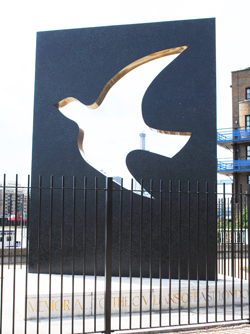
Blitz-memorialTaking place from the afternoon of 7th September, 1940, until May, 1941, the Blitz saw London sustain repeated attacks from the German Luftwaffe, most notably between 7th September and mid November when the city was bombed on every night bar one.

The night of 7th September, the first night of the Blitz (a short form of ‘Blitzkrieg’ – German for ‘lightning war’), was among the worst – with more than 450 killed and 1,300 injured as wave after wave of bombers attacked the city. Another 412 were killed the following night.

One of the most notorious raids took place on 29th December when  incendiary bombs dropped on the City of London starting what has been called the Second Great Fire of London. Around a third of the city was destroyed, including more than 30 guild halls and 19 churches, 16 which had been rebuilt by Sir Christopher Wren in the aftermath of the Great Fire of London in 1666.

The city was only attacked sporadically in the early months of 1941 but the night of the last major raid of the Blitz – that of 10th May, a night subsequently known as The Longest Night – saw the highest casualties of any night with almost 1,500 people reportedly killed.

The Blitz killed almost 30,000 civilian in London, and destroyed more than a million homes with the worst hit districts poorer areas like the East End.

The battle wasn’t one-sided – the RAF fought the Luftwaffe in the skies and did have some wins – on 15th September (a day known as Battle of Britain Day), for example, they shot down some 60 aircraft attacking London for the loss of less than 30 British fighters.

It was this victory which led the Germans to reduce the number of daylight attacks in favour of night-time raids which, until the launch of the RAF’s night-time fighters in 1941, meant they met little effective resistance. This included that of ground defences – throughout December, 1940, it’s said that anti-aircraft fire only brought down 10 enemy planes.

Yet, the Blitz did not lead to a German victory. For the Nazi regime, the purpose of the constant bombing of London (and other cities) was aimed at sapping the morale of its residents to the extent that they would eventually be forced to beg for peace. But the plan failed and Londoners, digging deep, proved their mettle in the face of fear.

Hundreds of thousands of people were involved in  Civil Defence working in a range of jobs – everything from air raid shelter wardens to rescue and demolition teams – and worked alongside firefighters whose numbers were supplemented by an auxiliary service. Naturally all suffered a high level of casualties.

As the weeks passed, the carnage mounted in terms of the loss of and damage to life, destruction of property and psychological toll. And yet the Londoners – sheltering Underground, most famously in the tunnels of the Tube – survived and, as had been the case after the first Great Fire of London, the ruined city was eventually rebuilt.

There are numerous Blitz-related memorials in London, many related to specific bombings. But among the most prominent are the National Firefighters Memorial, located opposite St Paul’s Cathedral, which pays tribute to the firefighters who lost their lives in the war (as well as in peacetime), and a riverside memorial in Wapping honouring civilians of East London killed in the Blitz.

Top posts of 2015 – The ‘lost’ chapel of St Thomas; and, inside King Henry V’s chantry chapel…

2016 is fast approaching and to celebrate, we’re looking back at the 10 most popular posts we published in 2015. Today, we present our most popular and second most popular articles posted this year…

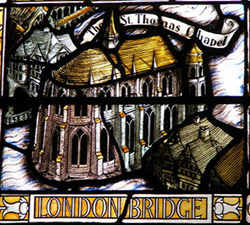
London-Bridge-chapel2. Our second most popular article, posted in August, was another in our Lost London series and this time looked at a long-lost feature of Old London Bridge – Lost London – Chapel of St Thomas á Becket.

1. And we are finally there – the most popular of our posts published this year was run in conjunction with the 600th anniversary of the Battle of Agincourt. Part of our LondonLife series, it took a look inside King Henry V’s rarely opened chantry chapel in Westminster Abbey – LondonLife – A rare glimpse inside King Henry V’s chantry chapel.

Top posts of 2015 – The site of Queen Boudicca’s defeat?; and, just what was The Great Conduit?…

2016 is fast approaching and to celebrate, we’re looking back at the 10 most popular posts we published in 2015. Today, we look at numbers four and three…

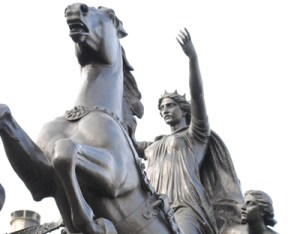
boudicca4. Number four is another in our current series on London battlefields – this time looking at the site where Queen Boudicca is believed to have been defeated by the Romans – 10 London ‘battlefields’ – 1. Queen Boudicca takes on the Romans
3. Our second top 10 entrant from the Lost London series, this post, published back in September, looked at the history of the Great Conduit – Lost London – The Great Conduit

The countdown finishes tomorrow with a look at the most and second most popular articles were posted in 2015…

Top posts of 2015 – A lost ‘castle’; Jack Cade and London; and, a garden in Seething Lane…

2016 is fast approaching and to celebrate, we’re looking back at the 10 most popular posts we published in 2015. Today, we look at numbers seven, six and five…

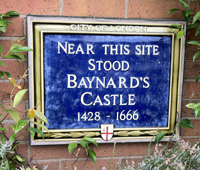
Baynard's-Castle7. At number seven is a post we published in February as part of our ongoing Lost London series. In it we looked at the later history of the fortification known as Baynard’s Castle – Lost London – Baynard’s Castle (part 2)
6. Another in our series on London’s ‘battlefields’ – this one, published in November looks at the role the city played in Jack Cade’s rebellion during King Henry VI’s reign – 10 London ‘battlefields’ – 4. Jack Cade’s rebellion

5. Our fifth most popular post of 2015 was another in our series on gardens – 10 small, ‘secret’ and historic gardens in central London…5. Seething Lane Garden

We’ll look at numbers four and three tomorrow…

Top posts of 2015 – A garden gem; London and the Peasant’s Revolt; and, the Duke of Wellington’s cloak…

Goldsmiths12016 is fast approaching and to celebrate, we’re looking back at the 10 most popular posts we published in 2015. 

10. Our 10th most popular post was published in July came from our special series on “10 small, ‘secret’ and historic gardens in central London” and looks at the origins of The Goldsmith’s Garden – 10 small, ‘secret’ and historic gardens in central London…1. Goldsmiths’ Garden…

9. Published in November, our ninth most popular post was from our current special series on London ‘battlefields’ and looks at the role the city played in the 14th century Peasant’s Revolt – 10 London ‘battlefields’ – 3. London sacked in the Peasant’s Revolt…

8. At number eight is a post from our long-running Treasures of London series, which, in the year of the 200th anniversary of the Battle of Waterloo, looks at a recent acquisition by the National Army Museum – Wellington’s cloak – Treasures of London – Duke of Wellington’s cloak…

We’ll look at numbers seven through five tomorrow…