This Week in London – Art deco at the London Transport Museum; art storage during WWII commemorated; and, William Dobson’s self-portrait…

An exhibition exploring the influence of the art deco movement on graphic poster design in on now at the London Transport Museum in Covent Garden. Art deco: the golden age of poster design features more than a hundred original 1920s and 1930s transport posters and poster artworks alongside photography, short films, ceramics and other objects to mark the centenary of the 1925 Paris exhibition where art deco originated. In the UK, Frank Pick, then-chief executive of London Transport, was the individual most responsible for advancing this form of graphic style, master-minding the publicity for the Underground and LT from 1908 onwards. A number of the posters in the exhibition in the Global Poster Gallery have never been put on public display before. Admission charge applies. For more, see www.ltmuseum.co.uk/whats-on/art-deco.
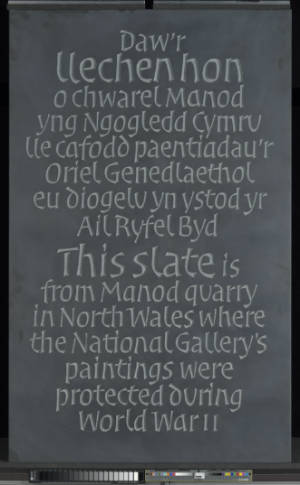
Jeremy Deller, designed and carved by John Neilson ‘Manod Slate Tablet’, 2025 © Jeremy Deller / John Neilson
Photo: The National Gallery, London

An inscribed stone tablet commemorating the Welsh quarry where The National Gallery’s art was protected during World War II has been put on permanent display in the gallery. The tablet, made from slate taken from the Manod quarry in Eryri (Snowdonia), was conceived by the artist Jeremy Deller and designed and carved by letter-carver John Neilson. The work, which was commissioned by Mostyn, an art gallery in Llandudno and supported by CELF – the national contemporary art gallery for Wales, can be seen in the Portico Vestibule, close to Boris Anrep’s floor mosaic of Sir Winston Churchill depicted in war time. The Manod slate mine in north Wales was chosen to store the art after an earlier proposal to evacuate the works to Canada was vetoed over fears of U-boat attacks. At the mine, explosives were used to enlarge the entrance to allow access for the the largest paintings and several small brick ‘bungalows’ were built within the caverns to protect the paintings from variations in humidity and temperature. What was known as an ‘elephant’ case was constructed to transport the paintings on trucks from London and, by the summer of 1941, the entire collection had moved to its new subterranean home, where it was to remain for four years, returning to London only after the end of the war in 1945. For more see www.nationalgallery.org.uk/.
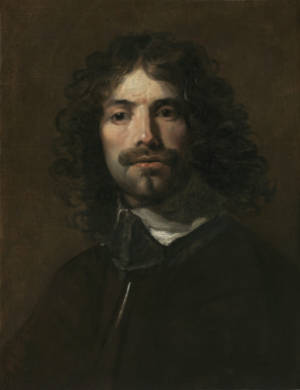
William Dobson, ‘Self-Portrait’, c1635-40. Image courtesy of Tate and the National Portrait Gallery

A self-portrait by William Dobson, widely considered to be the first great painter born in Britain, has gone on display at Tate Britain alongside a Dobson’s portrait of his wife. Dobson’s painting, which was acquired by the Tate and the National Portrait Gallery, was made between 1635 and 1640 and is said to be a “groundbreaking example of English self-portraiture”. His Portrait of the Artist’s Wife (c1635-40), which joined Tate’s collection in 1992, depicts Dobson’s second wife Judith and would have been conceived around the time of their marriage in December, 1637. Dobson rose to the role of King Charles I’s official painter before his career was cut tragically short when he died at the age of 35. For more, see tate.org.uk/visit/tate-britain.

• Send items for inclusion to exploringlondon@gmail.com.
This Week in London – Millet at The National Gallery; exploring Great Ormond Street Hospital’s new children’s cancer centre; and, a Banksy at the London Transport Museum…

The first UK exhibition in almost 50 years dedicated to the works of 19th century French artist Jean-François Millet (1814-1875) opens at The National Gallery today. Millet: Life on the Land, which coincides with the 150th anniversary of his death, features around 13 drawings and paintings from British public collections including The National Gallery’s The Winnower (about 1847‒8) as well as L’Angelus (1857‒9) from the Musée d’Orsay, Paris. The exhibition can be seen in Room 1 until 19th October. Admission is free. For more, see www.nationalgallery.org.uk/exhibitions/millet-life-on-the-land.

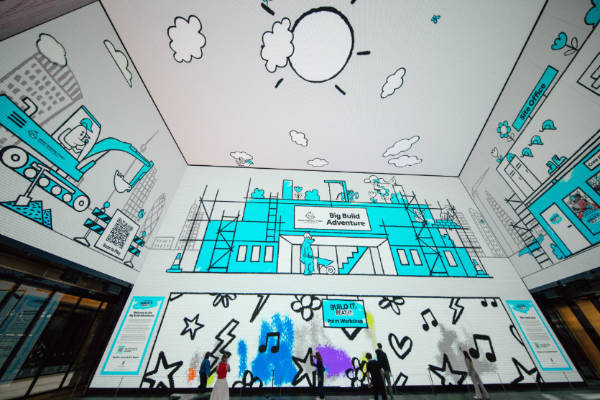
The Big Build Adventure at Outernet London.

An immersive digital experience which brings to life the Great Ormond Street Hospital’s new Children’s Cancer Centre opened at Outernet London off Tottenham Court Road this week. The Big Build Adventure, a partnership between the Great Ormond Street Hospital Charity and Outernet London, features a giant virtual paint wall, building themed games, a construction site selfie station and the chance to symbolically buy a brick to help build the centre. The free experience can be experienced until 31st August. Admission is free. For more, see www.outernet.com/news/great-ormond-street-hospital-charity-and-outernet-studios-launch-the-big-build-adventure.

An artwork by Banksy – depicting a rat hanging from the arm of a clock – has gone on show at the London Transport Museum in Covent Garden. The artwork first appeared on the door of a Transport for London signal controller cabinet in Croydon in October, 2019, which was located in front of the artist’s pop-up showroom installation, Gross Domestic Product. The work, which was preserved by the museum, has been mounted onto an identical cabinet body to provide context for its original appearance. Admission charge applies. For more, see www.ltmuseum.co.uk.

Send all items for inclusion to exploringlondon@gmail.com

This Week in London – London’s transport history captured; Sir Quentin Blake’s foundling portraits; and, the history of prison healthcare…

Some of London’s iconic red buses (not one of the images in the exhibition). PICTURE: Dele Oke/Unsplash

A new photographic display featuring a mix of historical and newly commissioned images has gone on show at the London Transport Museum. The exhibition – Then and now: London’s transport in photographs – marks the 25th anniversary of Transport for London and more than 160 years of transport history within the capital and features 40 photographs exploring how public transport in London has evolved amid social change. As well as historical images drawn from the collection, the display features images taken by photographer and train driver, Anne Maningas. Runs until spring, 2026. Admission charge applies. For more, see www.ltmuseum.co.uk/visit/museum-guide/then-and-now-londons-transport-photographs.

A display of portraits by acclaimed artist Sir Quentin Blake has gone on show at the Foundling Museum in Bloomsbury. The Foundling Portraits: Quentin Blake features a series of 10 Stabilo watercolour pencil on paper artworks which depict imaginary children created by Blake during a period of self-isolation during the COVID-19 pandemic. The images are among a collection of 45 which were gifted to the museum by Sir Quentin. Admission charge applies. For more, see https://foundlingmuseum.org.uk/event/the-foundling-portraits-quentin-blake/.

On Now: Prison Nursing Unlocked – A History of Care and Justice. This exhibition at the Royal College of Nursing Library and Museum in Cavendish Square looks at the role of health care in prisons, from the work of early reformers like Elizabeth Fry to the role nurses play today. Co-created with Royal College of Nursing members, it tells the story of the suffragettes who were force-fed in Holloway Prison, the formation of secure hospitals like Broadmoor, and features artwork created by prisoners and nurses at HM Prison Eastwood Park and HM Prison Warren Hill. Runs until 19th December. For more (and a link to the exhibition online), see www.rcn.org.uk/news-and-events/news/prison-nursing-unlocked-exhibition.

Send all items to exploringlondon@gmail.com

London Explained – London Theatreland…

Said to be the largest theatre district in the world, London’s Theatreland is located in the West End (and some say synonymous with it) and features some 40 playhouses.

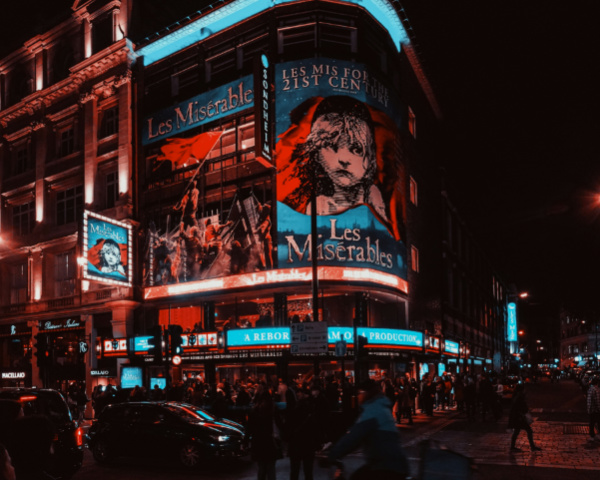
The lights of Theatreland – pictured is the production of Les Miserables at the Sondheim Theatre. PICTURE: Samuel Regan-Asante/Unsplash

The theatres are primarily located in Covent Garden, around Leicester Square and Piccadilly Circus and in Soho. The street most associated with today’s Theatreland is perhaps Shaftsbury Avenue.

Many of the privately owned theatres date from the Victorian or Edwardian period and are protected against inappropriate development (although this means they also sometimes lack more modern amenities)

Among the theatres in the district is the Theatre Royal, Drury Lane (the oldest theatre in London, it opened in 1663) as well as the Savoy Theatre (which in 1881 became the first to be lit by electricity), the London Palladium in Soho (which has hosted the Royal Variety Performance 43 times), and the Lyceum Theatre (where Bram Stoker was once manager).

The longest-running production in the world – Agatha Christie’s play The Mousetrap – has been running at St Martin’s Theatre since 1952 (though it was interrupted during the COVID-19 pandemic). The longest-running musical in the West End – Les Miserables – has been running since 1985 (first at the Palace Theatre and now at the Sondheim Theatre (formerly Queens Theatre)).

This Week in London – Portraits from ‘The Face’; jazz and classical music at the London Transport Museum; and, Ralph Steadman at the Heath Robinson Museum…

Iconic portraits which featured in the trail-blazing magazine, The Face, have gone on show from today at the National Portrait Gallery off Trafalgar Square. The Face Magazine: Culture Shift features more than 200 prints by more than 80 photographers including Sheila Rock, Stéphane Sednaoui, David LaChappelle, Corinne Day, Elaine Constantine, Juergen Teller and Sølve Sundsbø. The display explores how the cult magazine, which ran from 1980 to 2004 before being relaunched in 2019, impacted culture in the Eighties, Nineties and Noughties and in particular how it shaped the tastes of Britain’s youth. Runs until 18th May. Admission charges apply. For more, see www.npg.org.uk.

Visitors to the London Transport Museum are being treated to live performances from some of London’s most promising classical and jazz musicians under a new initiative which kicked off earlier this month. The young musicians, from the Guildhall School of Music and Drama, Royal Academy of Music, Royal College of Music, or Trinity Laban, are performing in a programme designed to equip them with real-world performance experience. The music is being performed over various dates until 24th October. For more details, see www.ltmuseum.co.uk/whats-on/music-museum.

A new exhibition celebrating the work of illustrator Ralph Steadman has opened at the Heath Robinson Museum in Pinner. Ralph Steadman: INKling spans the 70 years of Steadman’s career and covers his literary illustrations, including Steadman’s interpretations of Alice in WonderlandAnimal Farm, and Treasure Island, his illustrations for children’s books such as From Fly Away Peter (1963) and The Ralphabet (2023), and the “Gonzo art” he created in collaboration with Hunter S Thompson. Runs until 10th May. Admission charges apply. For more, see www.heathrobinsonmuseum.org/#whatson.

Send all items to exploringlondon@gmail.com.

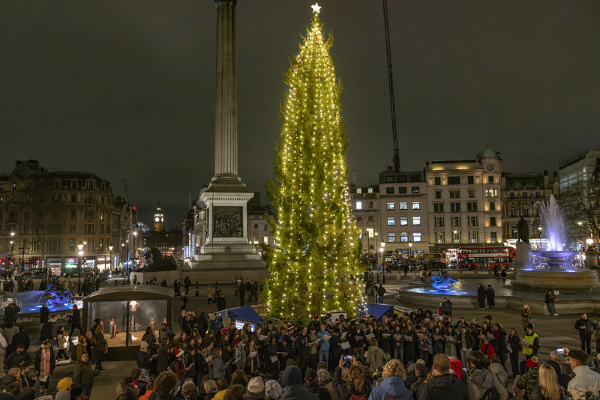
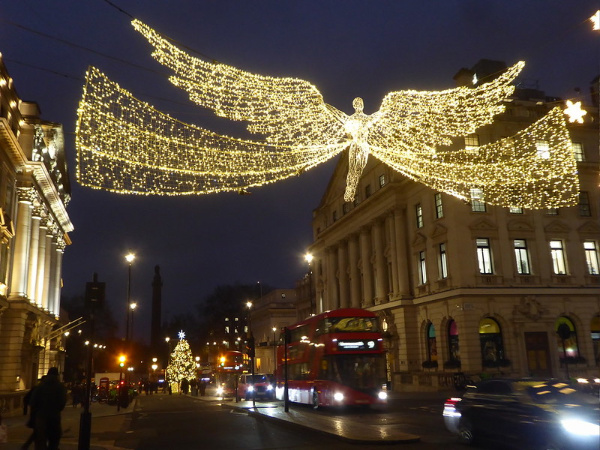
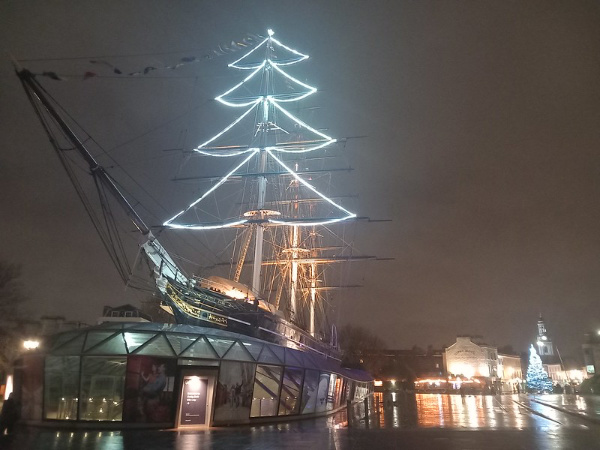
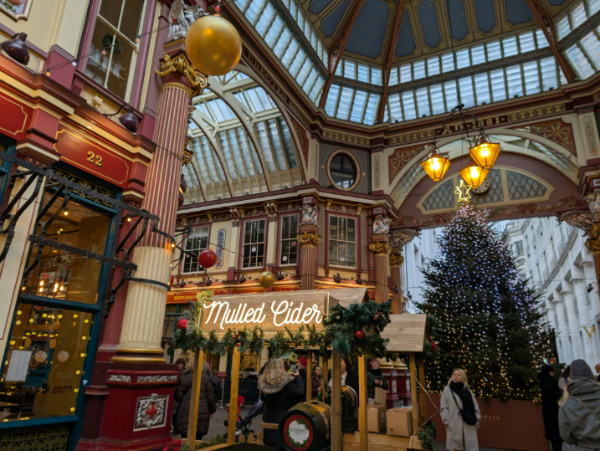
LondonLife – London, wrapped for Christmas …

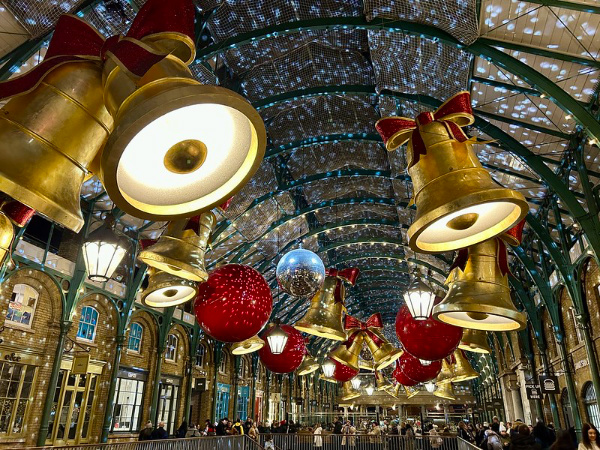
Christmas bells in Covent Garden. PICTURE: Paul Arps (licensed under CC BY 2.0)
Carolling in Trafalgar Square. PICTURE: steve_w (licensed under CC BY-NC-ND 2.0)
Lights in Regent Street Saint James’s. PICTURE: JuliaC2006 (licensed under CC BY 2.0)
Cutty Sark Christmas tree. PICTURE: sarflondondunc (licensed under CC BY-NC-ND 2.0)
Leadenhall Market. PICTURE: Artem Manchenkov/Unsplash

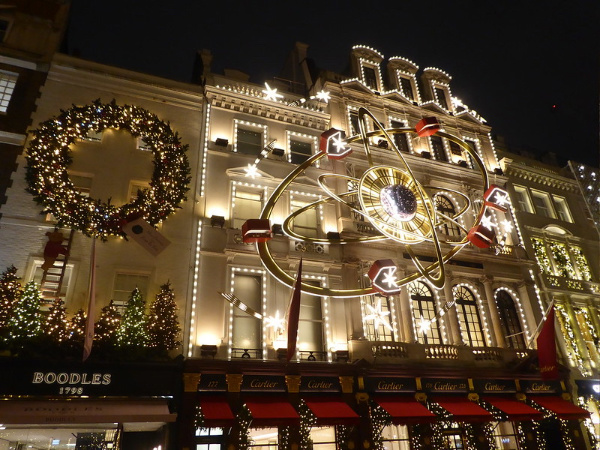
Cartier with a cosmic display in New Bond Street. PICTURE: JuliaC2006 (licensed under CC BY 2.0)

This Week in London – One of the world’s most valuable watches at Science Museum; medieval silk bag (with a story) goes on show at Westminster Abbey; and, new electric bus display at London Transport Museum…

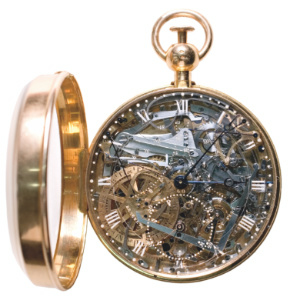
The ‘Marie Antoinette’ perpetuelle, Breguet, No 160, Paris, 1783-1820
© The Museum for Islamic Art, Jerusalem

One of the world’s most valuable watches – the No 160 watch which Abraham-Louis Breguet designed for Marie Antoinette but which wasn’t completed until the 1820s, well after her death – is the star of the show at the Science Museum’s new exhibition Versailles: Science and Splendour. Opening today, the exhibition, created in partnership with the Palace of Versailles, takes visitors on “a 120-year journey through the evolution of science at Versailles” and explores how Louis XIV, Louis XV and Louis XVI encouraged the pursuit of scientific knowledge and harnessed that knowledge as a tool of power. More than 100 objects are on display and, along with Breguet’s watch, they include Louis XV’s rhinoceros, a detailed map of the moon by Jean-Dominique Cassini, and Claude-Siméon Passemant’s Clock of the Creation of the World (1754). The watch, meanwhile, has its own fascinating history, including two decades in which its whereabouts were unknown after it was stolen in 1983 (in fact, its display in this exhibition marks the first time the timepiece has travelled abroad since its safe return to the LA Mayer Museum for Islamic Art in 2008). Runs until 21st April. Admission charge applies. For more, see sciencemuseum.org.uk/see-and-do/versailles.

• A medieval silk seal bag, which dates from the reign of King Henry III, has gone on public display for the first time in the Queen’s Diamond Jubilee Galleries at Westminster Abbey. The display follows the discovery by scholars that the bag’s material is a perfect match to the silk cloth used to wrap the remains of the Emperor Charlemagne when he was buried in Germany’s Aachen Cathedral (Charlemagne, seen as the first Holy Roman Emperor, died in 814 but was re-buried in the karlsschrein (Charles’s shrine) at Aachen in 1215). The bag at the abbey contains a wax seal, the Great Seal of King Henry III, which was attached to an inventory of the jewels and precious items on Edward the Confessor’s shrine located in the heart of the abbey. It was drawn up in 1267 when Henry III was in financial difficulties and forced to pawn items from the shrine to Italian merchants to raise funds (it is believed the items were all returned within 18 months). The silk used for Charlemagne’s shroud is believed to have been spun in the 12th century in Spain or the eastern Mediterranean and, while the small piece at the Abbey originates from a separate silk, it is understood that it would have been produced by the same weavers on the same loom. The bag can been seen until Easter next year. Admission charge applies. For more, see www.westminster-abbey.org/visit-us/plan-your-visit/the-queens-diamond-jubilee-galleries/.

A new interactive electric bus display has opened at the London Transport Museum in Covent Garden. The Wrightbus Electroliner display – which has been provided by Transport UK London Bus – is based on an electric vehicle bus type which has been part of the fleet of buses operating in London since 2023. The new display features the front of the bus and includes an interactive driver cab and passenger space. Admission charge applies. For more, see www.ltmuseum.co.uk.

Send all items for inclusion to exploringlondon@gmail.com.
LondonLife – Farewell to the Clouds…

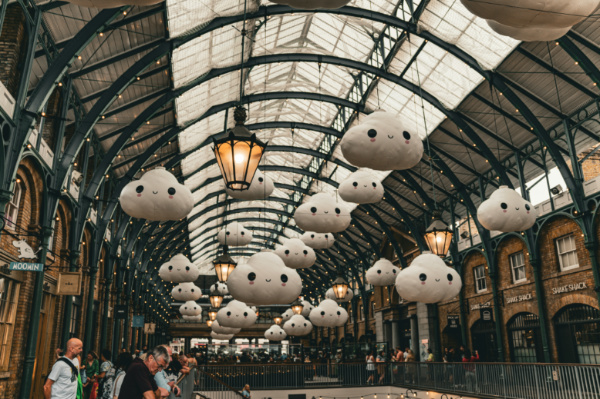
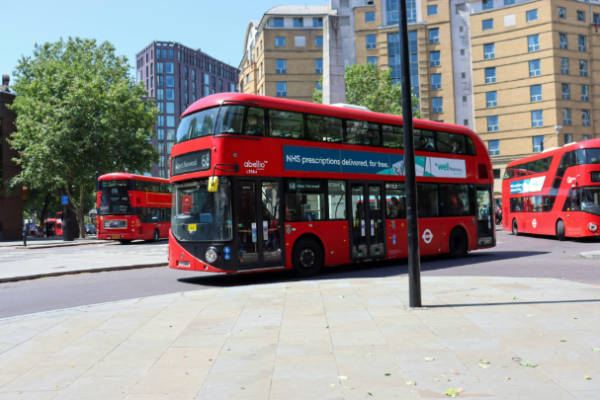
PICTURE: Clovis Wood Photography/Unsplash

The ‘Little Cloud World’ installation by Samuel Borkson and Arturo Sandoval III – aka FriendsWithYou, which has been in Covent Garden’s Market Building since the start of August, ends today. Launched in partnership with charity CALM (Campaign Against Living Miserably), the 40 inflatable clouds were about spreading a message of “spreading kindness, positivity and helping others”. For more, see www.coventgarden.london/experience/things-to-do/little-cloud-world/.

Treasures of London – Russell Street gas lamps…

One of the lamp-posts in Russell Street, Covent Garden, in 2012. PICTURE: Google Maps

Recently listed as Grade II, these four gas lamps on Russell Street in Westminster were among a series of lamps installed around Covent Garden to mark the beginning of King George V’s reign.

While the columns of the lamps date from 1910, three of the lanterns – described as an ‘Upright Rochester lantern’ and manufactured by William Sugg and Company Limited – are replacements believed to have been installed around 1930. The fourth was installed following a campaign to save Covent Garden from redevelopment in the 1970s.

The newly listed lamp-posts – the first Westminster lamps to be listed in 40 years – are located outside numbers 4-6, 24, 29, and 34-43.

There are currently about 1,300 working gas lamps in London, around 270 of which are in Westminster (and about half of which are listed).

This Week in London – Underground shelters in wartime – then and now; new Ravenmaster at the Tower; and, ‘La Ghirlandata’ back at the Guildhall Art Gallery…

A new photographic exhibition exploring how Underground stations and metro systems provide shelter to citizens during periods of war, both now and in the past, opened at the London Transport Museum in Covent Garden last week. Echoes of the Blitz: Underground shelters in Ukraine and London features 70 images, including historical pictures from the museum’s collection as well as 38 contemporary photographs shot by six renowned, mainly Ukrainian, documentary photographers. The latter include photography showing ordinary Ukrainian citizens sleeping, waiting, cooking, washing clothes, caring for their pets and creating temporary make-shift homes in metro stations of Kyiv and and Kharkiv show alongside black and white archive images of Londoners taking refuge in Tube stations during World War II. The exhibition, which is being run in partnership with Berlin-based journalistic network n-ost, can be seen until spring next year. Admission charge applies. For more, see www.ltmuseum.co.uk.

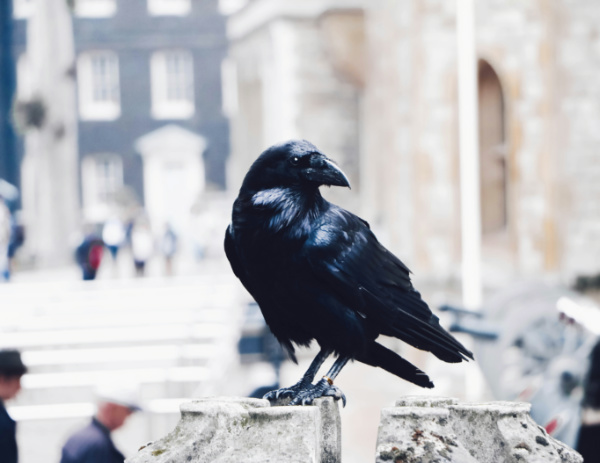
A raven at the Tower of London. PICTURE: Kasturi Roy/Unsplash

A new Ravenmaster has been appointed at the Tower of London. Yeoman Warder Michael ‘Barney’ Chandler took up the role at the start of this month, 15 years after he first became a Yeoman Warder at the Tower. The Ravenmaster oversees a team of four responsible for the care of the Tower’s seven ravens which legend says must remain at the Tower to ensure its protection. The legend apparently goes back to at least the reign of King Charles II – when the King’s astronomer John Flamsteed complained that the resident ravens were impeding his work at the Tower and requested their removal, the King was told that if the ravens left the Tower then the Kingdom would fall (and so they remained). While the Yeoman Warders have longed cared for the ravens, the post of Ravenmaster was only created in the past 50 years and was first held by Yeoman Warder Jack Wilmington. Yeoman Warder Chandler, who became the 387th Yeoman Warder at the Tower when he was appointed in March, 2009, is only the sixth person to hold the office. For more, see www.hrp.org.uk/tower-of-london/.

One of the most popular paintings at the Guildhall Art Gallery is being reinstalled to mark International Women’s Day on Friday. Dante Gabriel Rossetti’s La Ghirlandata has been on loan – first to the Tate Britain and then to the Delaware Art Museum in the US – but is now being returned. The painting dates from 1873 and depicts a ‘garlanded woman’ playing an arpanetta and looking directly at the viewer. The muse for the woman is said to have been the actor and model, Alexa Wilding, while the two ‘angels’ in the top corners were posed by William and Jane Morris’ youngest daughter, May Morris. The City of London Corporation acquired the oil on canvas work in 1927. On Saturday, free family activities will be held at the gallery to mark the work’s return. For more, see www.thecityofldn.com/la-ghirlandata.

Send items to exploringlondon@gmail.com.

This Week in London – London’s transport posters on show; a musical exploration at the Science Museum; and, ‘Petrichor’ at Kew…

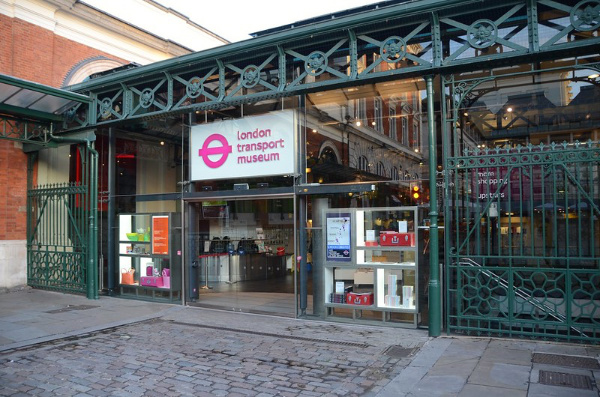
London Transport Museum in Covent Garden. PICTURE: Marcus Meissner (licensed under CC BY 2.0)

The first permanent gallery dedicated to the history of poster art and design at the London Transport Museum in Covent Garden opens tomorrow. The new Global Poster Gallery, sponsored by Global, the Media & Entertainment Group, showcases the museum’s collection of 20th century graphic art and design – one of the world’s largest. The new gallery, which is set over two floors, launches with the exhibition, How to Make a Poster, and an accompanying programme of events. The exhibition visually explores the process of creating posters from the pre-digital age from 1900 and features more than 110 poster artworks and posters including the Underground’s very first pictorial poster titled No need to ask a p’liceman by John Hassall, dating from 1908. Admission charge applies. The exhibition runs until 2025. For more, see www.ltmuseum.co.uk.

A new interactive exhibition exploring the mysterious hold music can have over us opens at the Science Museum today. Turn It Up: The power of music features historic music players, inventions and unusual instruments. Among the inventions on show are the MiMU gloves invented by Imogen Heap and used by Ariana Grande and Kris Halpin which use gestures to control electronic music-making software, and a virtual instrument called Headspace, created by professional trumpeter Clarence Adoo and inventor Rolf Gelhar after Adoo was paralysed from the shoulders down in a car accident while among the unusual instruments are the pyrophone organ powered by flames to the Anarchestra satellite dish which can be played in multiple new ways to make music. The exhibition can be seen until 6th May at the South Kensington premises. Admission charges apply. For more, see www.sciencemuseum.org.uk.

The work of acclaimed contemporary artist Mat Collishaw goes on show tomorrow at Kew Garden’s Shirley Sherwood Gallery of Botanical Art on Saturday. Highlights of the exhibition – Petrichor – include the UK premieres of Alluvion, a series of six new AI artworks inspired by Dutch Old Masters, and the large-scale projected work Even to the End. Other works include Heterosis – a collection of dynamic NFT’s which combine genetic algorithms with blockchain technology to facilitate the hybridisation of mutable digital flowers, The Centrifugal Soul – a zoetrope which creates a stunning illusion of motion, and Albion – a large-scale piece in the form of an intricate 19th-century ‘Pepper’s Ghost’ illusion which depicts the Major Oak in Sherwood Forest. Runs until 7th April. Admission charge applies. For more, see www.kew.org.

Send all items for inclusion to exploringlondon@gmail.com.
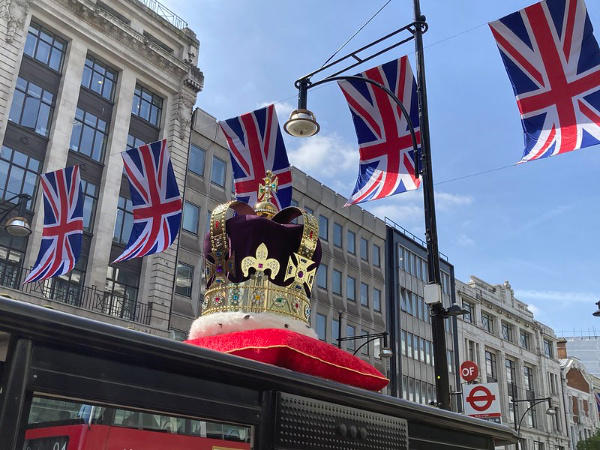
LondonLife Special – (More) coronation preparations…

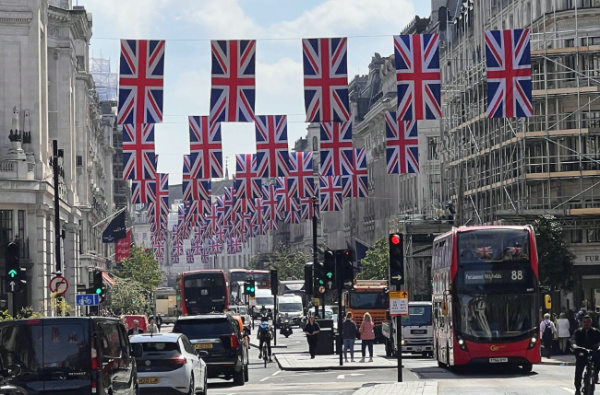
Flags are flying in Regent Street. PICTURE: Miltof (licensed under CC BY 2.0/picture cropped)
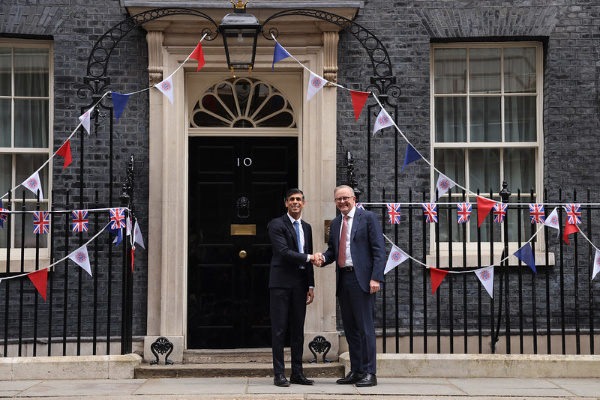
Dignataries are arriving in London ahead of the coronation – here British Prime Minister Rishi Sunak meets Australian Prime Minister Anthony Albanese outside 10 Downing Street. PICTURE: Alice Hodgson / No 10 Downing Street (licensed under CC BY-NC-ND 2.0)

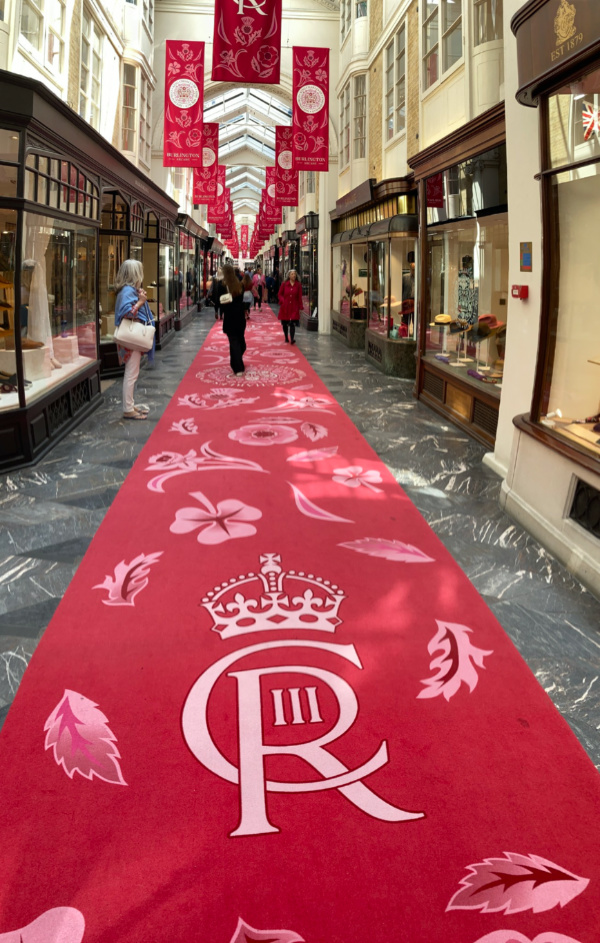
The Burlington Arcade rolls out the red carpet with the new King’s cipher. PICTURE: Matt Brown (licensed under CC BY 2.0)

A crown atop a bus stop in Oxford Street, central London. PICTURE: Matt Brown (licensed under CC BY 2.0)
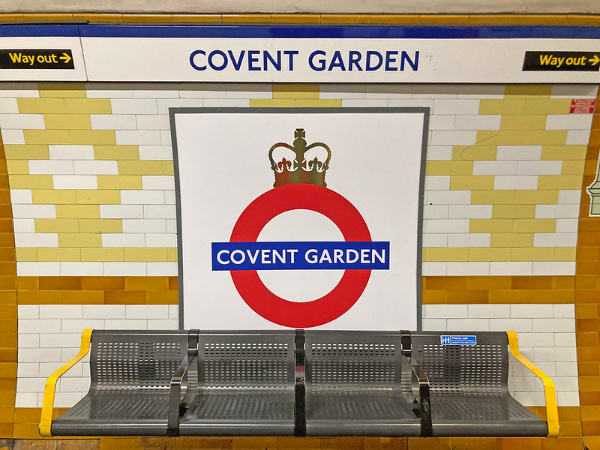
A London Underground roundel changed into a “crowndel” ahead of the coronation. PICTURE: diamond geezer (licensed under CC BY-NC-ND 2.0).

LondonLife – Christmas lights in the West End (part II)…

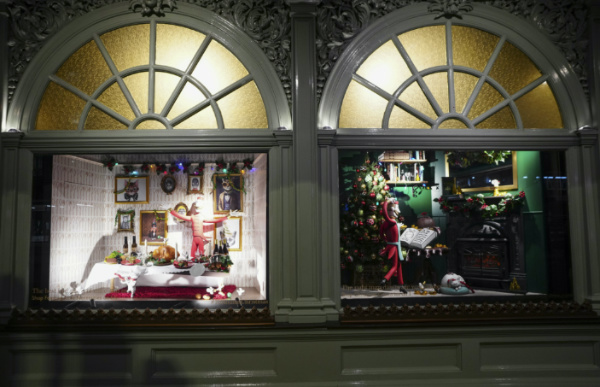
Christmas windows at Fortnum & Mason on Piccadilly. ALL PICTURES: Jed Leicester/PinP
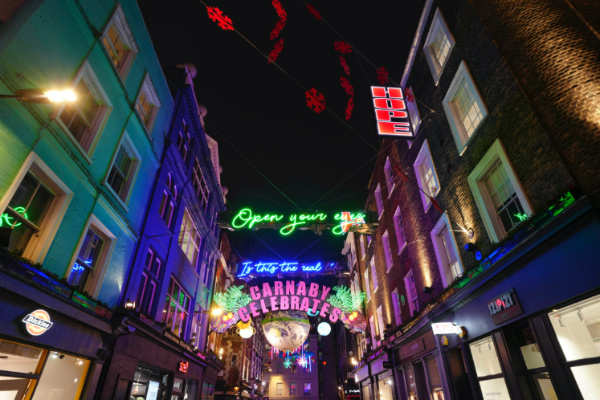
Carnaby Street lights.
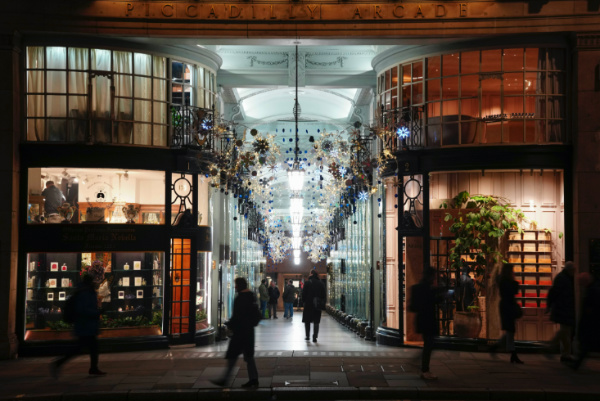
Piccadilly Arcade decorated for Christmas.
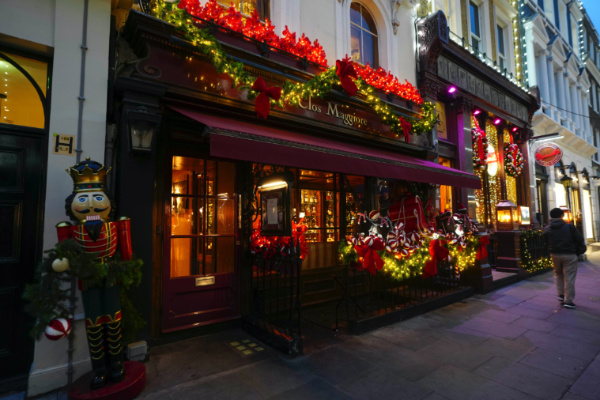
Clos Maggiore shopfront in Covent Garden
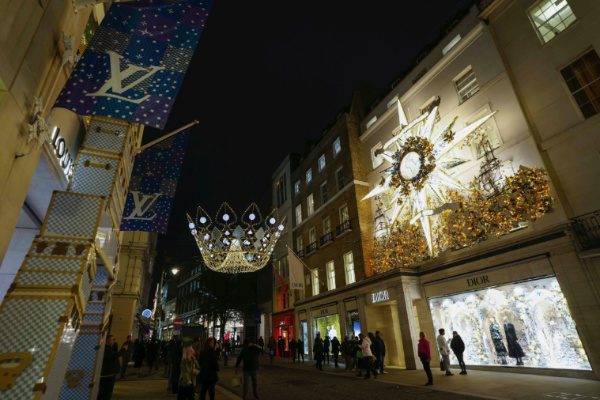
New Bond Street.

LondonLife – Christmas lights in the West End…

Christmas is looming so here’s our first look at some of London’s Christmas light displays…

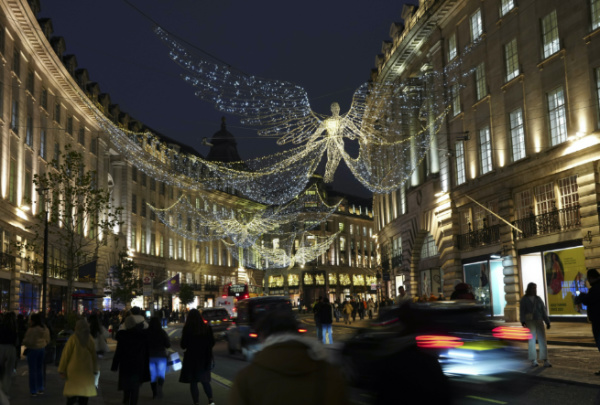
Christmas lights in Regent Street. ALL PICTURES: Jed Leicester/PinP
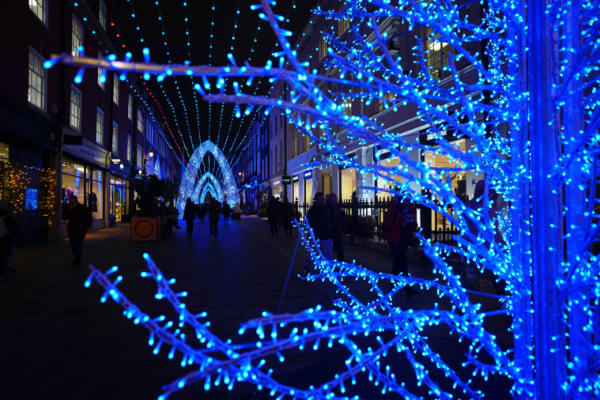
Christmas lights in South Moulton Street, Mayfair…
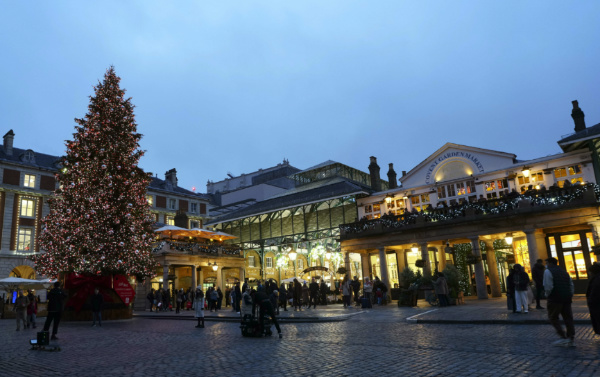
Christmas tree and lights at Covent Garden.
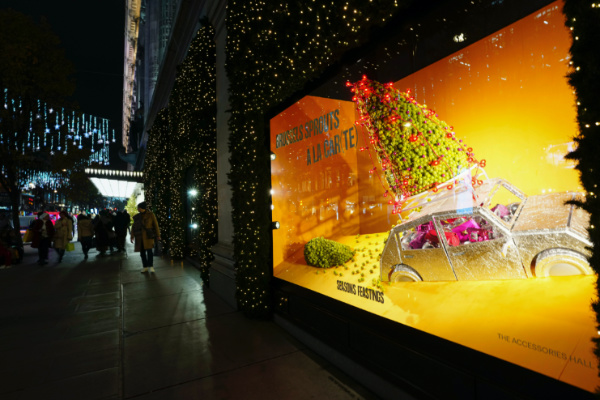
One of the Selfridges Christmas windows on Oxford Street.
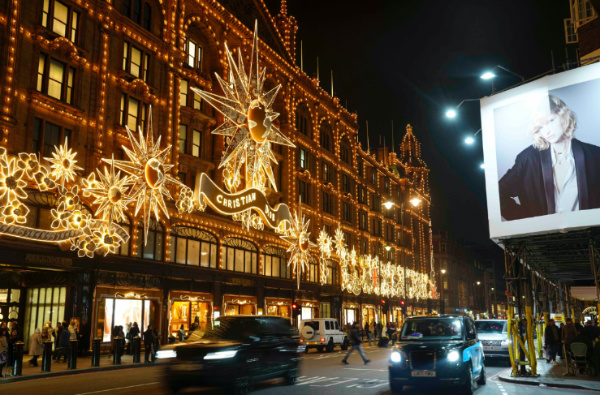
Harrods Brompton Road frontage decorated for Christmas.

This Week in London – Stonehenge at the British Museum, and, Caribbean transport workers focus of new Transport Museum display…

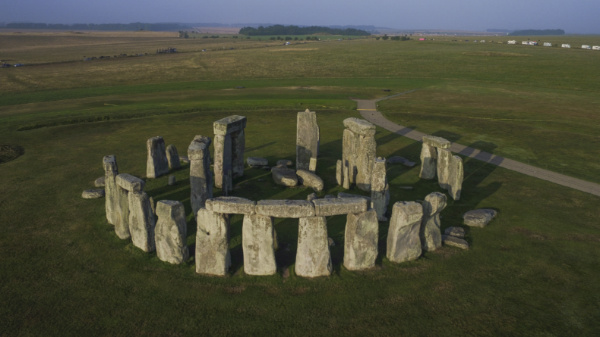
Stonehenge © English Heritage
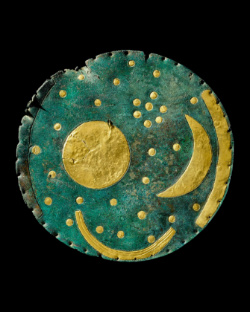
Nebra Sky Disc, Germany, about 1600 BC. PICTURE: Courtesy of the State Office for Heritage Management and Archaeology Saxony – Anhalt, Juraj Lipták.

The UK’s first major exhibition on the story of Stonehenge opens at the British Museum today. The World of Stonehenge features more than 430 objects gathered from across Europe including Bronze Age grave goods unearthed near Stonehenge in the grave of a man known as the Amesbury Archer, the Nebra Sky Disc – the oldest surviving representation of the cosmos anywhere in the world, and the 4,000-year-old wooden monument, called Seahenge, that was discovered in 1998 on a Norfolk beach (and is being loaned for the exhibition for the first time). Admission charge applies. The exhibition can be seen in the Sainsbury Exhibitions Gallery until 17th July. For more, see www.britishmuseum.org/exhibitions/world-stonehenge

The contribution people of Caribbean heritage have made to London’s transport history is the subject of a new exhibition at the London Transport Museum in Covent Garden. Legacies: London Transport’s Caribbean Workforce features personal oral histories from past and present generations of people of Caribbean descent along with newly commissioned and re-edited films, archive photography, historic advertising posters, and objects such as a Syllabus of Training for Cooks manual from staff canteens. The exhibition is expected to run until summer 2024. Included in general admission. For more, see www.ltmuseum.co.uk/legacies.

Send all items for inclusion to exploringlondon@gmail.com

Famous Londoners – Thomas Arne..

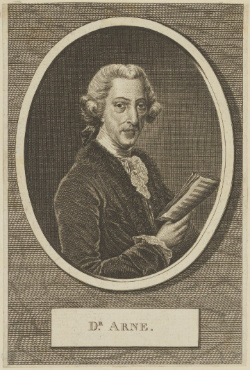
Eighteenth century English composer Thomas Arne, considered one of British greatest theatrical composers and most well known for creating the music for his patriotic song Rule Britannia, spent most of his life in London.

Thomas Augustine Arne after Robert Dunkarton line engraving, circa 1775-1800 (NPG D13867) PICTURE: © National Portrait Gallery, London

The son of an upholster, Arne, whose middle name was Augustine, was born in Covent Garden in 1710 and baptised in St Paul’s, Covent Garden. Arne was educated at Eton College where, such was his passion for music, he is said to have secretly practised with a spinet, a smaller type of harpsichord, in his room at night, muffling the strings to keep from being discovered.

He became a violin student of composer Michael Festing and, such was his love of music, that he is said to have disguised himself in the livery of servant to attend the opera.

Following his father’s wishes, Arne worked briefly as a solicitor after leaving school but was subsequently permitted to leave the law and pursue a life in music (there were other family connections to music and performance – his father had actually been involved in financing some operas and both his sister Susannah Maria and brother Richard would go on to have careers in the theatre and music worlds).

Over the more than 40 years between 1733 and 1776, Arne wrote music for about 80 stage works which included everything from plays and masques to pantomimes and operas.

His big break came when he became house composer at Drury Lane Theatre, writing music for various plays and pantomimes and involving both his brother and his sister in the performances (his residences at this time are said to have included properties in Great Queen Street and Lincoln’s Inn Fields).

Arne was already a star when, on 15th March, 1737, he married the singer Cecilia Young (he may have already had a son prior to this).

In 1738, he – along with others including George Frideric Handel – founded the Society of Musicians (which would become the Royal Society of Music). Arne also received the patronage of Frederick, the Prince of Wales – in fact, it was at the prince’s country house, Cliveden, that he debuted Rule, Britannia, during a performances of his Masque of Alfred in 1740.

Arne and his wife spent two years in Dublin in the early 1740s and on his return to London in 1744, he was again composing music for Drury Lane. He also composed music for performances at Vauxhall Gardens.

PICTURE: Spudgun67 (licensed under CC BY-SA 4.0)

Arne left Drury Lane for the Covent Garden Theatre in 1750 after he had begun to fall out of favour with theatre manager David Garrick who was increasingly turning to other composers.

In 1755, while again in Dublin, he separated from Cecilia, alleging she was mentally ill, and began a relationship with one of his students, Charlotte Brent. Brent would perform in several of his works including in Thomas and Sally (the first English opera to be completely sung) and Artaxerxes (which became one of the most successfully and influential English operas of the era). Brent would eventually go on to eventually marry a violinist in 1766.

His career took a downturn in the mid 1760s but in 1769, Garrick appointed Arne musical director for the Shakespeare festival at Stratford upon Avon. Arne composed several pieces for the event including An Ode upon Dedicating a Building to Shakespeare, the success of which put him back into favour with the London theatres.

In late 1777, Arne was reconciled with his wife (their son, Michael, went on to become a composer). But his health deteriorated soon after and Arne died on 5th March, 1778, at a house in Bow Street, Covent Garden. He was buried in the churchyard of St Paul’s, Covent Garden.

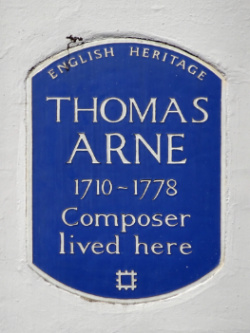
An English Heritage Blue Plaque was erected at the site of his former home at 31 King Street, Covent Garden, in 1988 (pictured above).

London Explained – The West End…

Piccadilly Circus lies at the heart of London’s West End. PICTURE: Sheep purple (licensed under CC BY 2.0)

This term is used to describe what was traditionally the western end of London as it developed beyond the City of London boundaries and has since became a word synonymous with the city’s theatre district.

The term’s origins are lost to history although it’s said it first started being used in earnest to describe fashionable areas to the west of Charing Cross in the late 17th or early 18th centuries. The term as it’s used today covers an area which contains the commercial and entertainment heart of London.

While the eastern boundary of the West End can be easily defined as where the City of London ends (Temple Bar on the Strand marks the City of London’s boundaries), thanks to its not being a formally designated geographic area, exactly where the West End finishes is a matter of considerable debate.

While the some see the West End only including Theatreland itself – an area stretching from Aldwych across to Piccadilly Circus and north from Trafalgar Square to Oxford Circus, others have adapted a broader definition which sees include not only Aldwych, Soho and Covent Garden but also Mayfair, Fitzrovia and Marylebone with Oxford Circus at the centre (some even go further and include districts such as Bloomsbury and Knightsbridge in their definition of the West End).

LondonLife – The Bow Street Police Museum opens its doors…

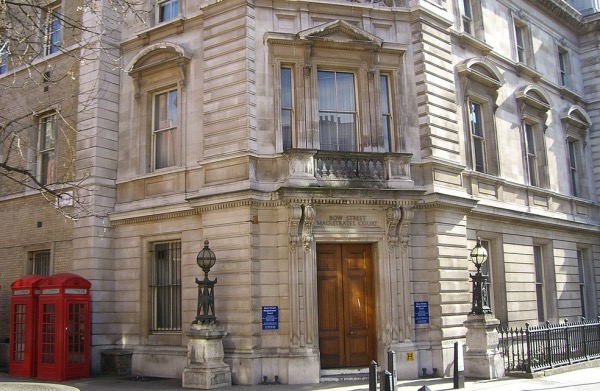
The Bow Street Magistrates’ Court in 2006, the year of its closure. PICTURE: Edward (public domain)

The Bow Street Police Museum, located on the site of the 1881 Bow Street Magistrates’ Court and Police Station, has opened its doors in Covent Garden. The museum tells the story of the early Bow Street Runners, the first official law enforcement service in the city, and the Metropolitan Police officers who came after. Visitors can explore the former cells and hear the stories of those who once worked in the building. The connections between Bow Street and the constabulary dates back to 1740 when Thomas de Veil opened a Magistrates’ Court in his family home at number four Bow Street in the 18th century and continued until the closure of the Bow Street Magistrates’ Court in 2006. Among the famous faces who passed through Bow Street’s police station and court over that time were Oscar Wilde, Suffragettes Sylvia Pankhurst, Christabel Pankhurst and Mrs Drummond, and the Kray twins. For more, head to https://bowstreetpolicemuseum.org.uk.

This Week in London – Well-being at Kew; Poussin wins credit for ‘The Triumph of Silenus’; and, Euston explored…

Kew Gardens have unveiled a new programme of well-being events with the aim of encouraging people to enjoy the outdoors after the COVID-19 lockdown. The events, all of which will be COVID-19 safe and follow government guidelines, including everything from forest bathing sessions in the Arboretum inspired by the Japanese art of Shinrin-yokuto, a rare chance to cycle through the gardens on an evening bike ride, pilates in the Nash Conservatory and yoga sessions in the Temperate House. Check the Kew website for dates and times and admission charges.

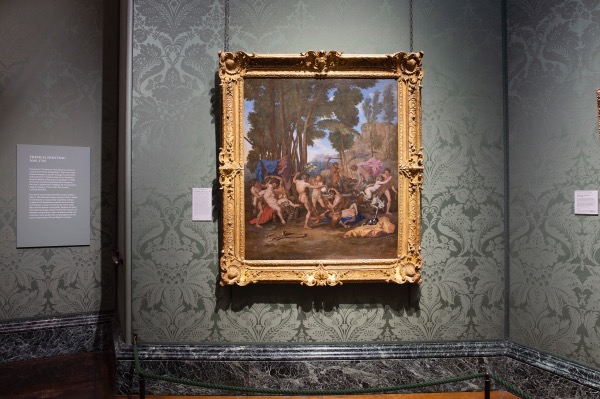
The Triumph of Silenus hanging in Room 29 at The National Gallery. PICTURE: © The National Gallery

• The creator of The Triumph of Silenus (c1637), which was one of the first paintings to enter the collection of The National Gallery when it did so in 1824, has been confirmed as 17th century French painter Nicolas Poussin. The painting had long been plagued by questions of authenticity but following recent conservation work and in-depth technical analysis, it has been confirmed as a work of Poussin. The confirmation means the gallery holds 14 works by Poussin, making it one of the world’s leading collections of paintings by him. Later this year, the picture will feature in a new exhibition, Poussin and the Dance.

• People will have the chance to see parts of Euston Station usually not accessible to the public on a new virtual tour announced by the London Transport Museum. The tour is part of the next season of ‘Hidden London’ virtual events with new dates also to be announced for tours of King William Street, Brompton Road, Holborn (Kingsway) and Aldwych. Meanwhile, the museum will recommence its ‘Secrets of Central London’ walking tour in the West End on 17th May. Charges apply. For more on the virtual tours and dates, head to www.ltmuseum.co.uk/hidden-london/virtual-tours.

Send all items for inclusion to exploringlondon@gmail.com.
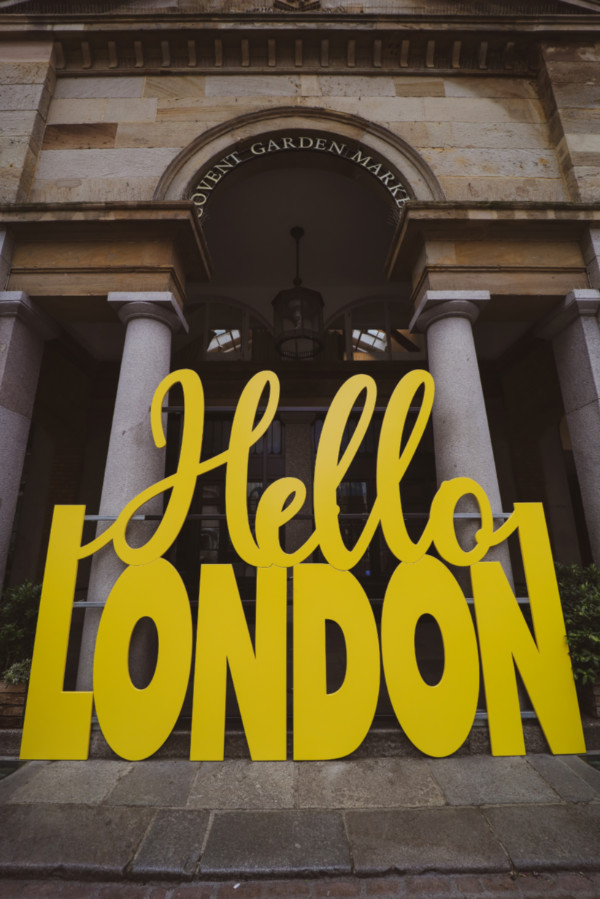
LondonLife – Covent Garden says hello…

PICTURE: Kevin Grieve/Unsplash