This Week in London – Guildhall Library marks 600 years; the David Bowie Centre opens; the Chelsea History Festival; and returning to the Blitz Club…

Guildhall Library is celebrating its 600th anniversary with a new exhibition. The display, which can be seen for free at the library, looks at the founding of the original library in 1425, what a medieval library would have looked like and what books it would have included as well as links with the library as it is today. Runs until 30th December. For more, see www.cityoflondon.gov.uk/things-to-do/history-and-heritage/guildhall-library/information-and-enquiries/visit-guildhall-library.
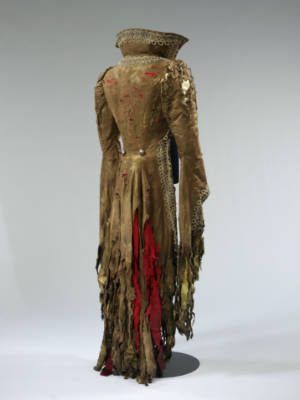
Frockcoat designed by Alexander McQueen and David Bowie for his 50th Birthday Concert, 1997. Image courtesy of the V&A

David Bowie’s final, unrealised musical projects – The Spectator, an unseen Ziggy Stardust guitar, and Bowie’s costume designs are just some of the treasures housed in the new David Bowie Centre which opened to the public this month. Located at the V&A East Storehouse in Queen Elizabeth Olympic Park, the new home for David Bowie’s archive features nine displays show-casing more than 200 items which also include handwritten lyrics, photography, costumes and sketches. As well as seeing the displays, visitors can book one-on-one time with some of the 90,000-plus objects in the archive through the ‘Order an Object’ service. More than 500 items were requested in the first week of the service going live with a frockcoat designed by Alexander McQueen and David Bowie for his 50th birthday concert in 1997 the most frequently requested item. Entry to the archive is free, but ticketed. For more, including bookings, see www.vam.ac.uk/exhibitions/david-bowie-centre.

The annual Chelsea History Festival kicked off yesterday with more than 80 events taking place until Sunday. Events include tours of the Royal Hospital Chelsea, and the chance to visit the Soane Stable Yard, the free exhibition Lost and Found in Hong Kong: The Unsung Chinese Heroes at D-Day at the hospital, walking tours including ‘Rock ‘n’ Roll Chelsea’ and ‘1960s Chelsea’, and a medicinal trees tour at the Chelsea Physic Garden. For the full programme head here.

A major exhibition on the Blitz club – which helped shape London’s culture not only in the mid-1980s but in the decades that followed – has opened at the Design Museum in Kensington High Street. Located in a Covent Garden side street, the club is credited with having “transformed 1980s London style”, generating a creative scene that had an enormous impact on popular culture in the following decade. Blitz: The Club that Shaped the 80s features more than 250 items including clothing and accessories, design sketches, musical instruments, flyers, magazines, furniture, artworks, photography, vinyl records and rare film footage. Runs until 29th March. Admission charge applies. For more, see https://designmuseum.org/exhibitions/blitz-the-club-that-shaped-the-80s.

Send all items to exploringlondon@gmail.com.
This week in London – Re-live the ‘Golden Age of Piracy’; getting below the surface of the Thames; a look inside East London houses through time; and, a new public garden in the City…

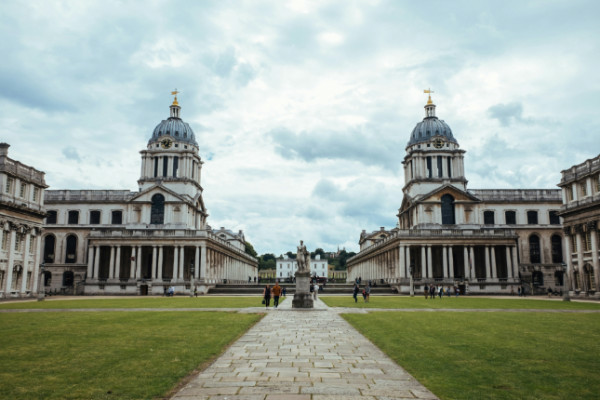
The Old Royal Naval College in Greenwich. PICTURE: Robert Bye/Unsplash

• ‘The Golden Age of Piracy’ will come to life in a living history weekend this Saturday and Sunday at the Old Royal Naval College in Greenwich. With the focus on the period between 1650 and 1720 (when more than 5,000 pirates were said to have been active), visitors will learn how to separate pirate fact from fiction, enjoy songs of the sea, witness sword and cutlass fights, and hear the tale of a real 18th-century mutiny. Each day culminates with a demonstration of the firepower of pirates and marines in the arena on the lawns overlooking the River Thames. There’s also the opportunity to wander through the pirate encampment and learn about the clothes and weapons of the period, listen to some love music and sample food from the Taste of History period kitchen. Runs from 11am to 4pm on Saturday and Sunday. Admission charge applies. For more, see https://ornc.org/whats-on/golden-age-of-piracy/.

The world of sound below the surface of the River Thames is the subject of a new contemporary art installation at the Natural History Museum which opens tomorrow. The River, composed by Norwegian sound artist Jana Winderen in collaboration with spatial audio expert Tony Myatt, uses underwater audio recordings to immerse visitors in a 360 degree audio composition which spans the river from the source by Kemble through central London and on to the sprawling estuary leading into the North Sea. The River is free to visit. Bookings, to ensure entry, can be made at https://www.nhm.ac.uk/visit.html.

One of the new rooms at the Museum of the Home – a Jewish tenement flat from 1913. PICTURE: Courtesy of the Museum of the Home.

Seven new and reimagined period rooms reflecting the stories of our East London community, past, present and future, have been unveiled at the Museum of the Home in Shoreditch. Thanks to the Real Rooms project, the expanded ‘Rooms Through Time: 1878-2049’ now includes a Jewish tenement flat from 1913, an Irish couple’s house in the 1950s, LGBTQ+ renters sharing an ex-council home in the 2005, a British-Vietnamese home in 2024, and the Innovo Room of the Future, which explores real homes amid challenges such as the climate crisis and technological advances. The scope of the existing 1870s Parlour and Front Room in 1976 have also both been expanded. Entry to the permanent display is free. For more, see https://www.museumofthehome.org.uk.

A new public garden has been opened at the intersection of Cheapside and New Change in the City of London. Formerly known as the Sunken Garden, the area has undergone a transformation and now features benches created from 150-year-old-plus granite stones salvaged from the Thames River Wall and recycled timber from fallen London Plane trees. There’s also new permeable paving which lets rain drain freely into the ground and stores it for trees to use later, reducing pressure on the sewer system while new plant species have been selected with local wildlife in mind.

Send all items for inclusion to exploringlondon@gmail.com.
This Week in London – Matchgirls strike commemorated and the Queen’s coronation at Windsor…

The famous matchgirls’ strike at the Bryant and May matchworks in the East End has been commemorated with an English Heritage Blue Plaque. The event, widely recognised as a spur to the New Unionism movement, saw about 1,400 of the predominantly young female workforce walk out in protest at the dismissal of a number of their co-workers in early July, 1888. While some of the details remain unclear, it is thought that the women were probably sacked for giving information to reporters, refusing to sign a statement refuting poor working conditions, or on trumped-up charges of trouble making. The women – whose poor working conditions, including low pay, the imposition of fines and deductions by the company and the dangers of ‘phossy jaw’, were catalogued by journalist Annie Besant – won a famous victory after a three week strike in which almost all their demands were met. Bryant and May also recognised the Union of Women Match Makers which, by the end of 1888, had become the Matchmakers’ Union and admitted both men and women. For more on English Heritage Blue Plaques, see www.english-heritage.org.uk/visit/blue-plaques/.

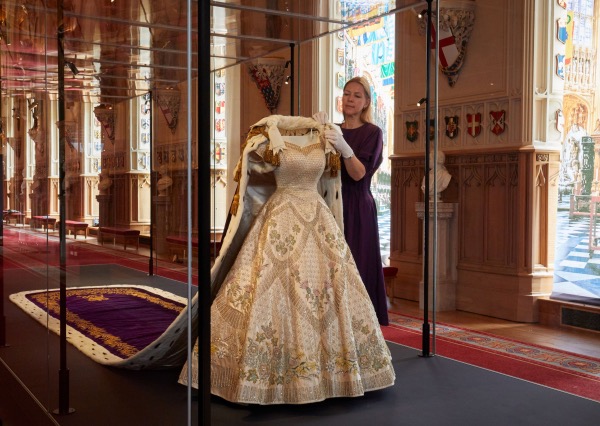
Curator Caroline de Guitaut puts the finishing touches to the display of the Queen’s Coronation Dress and Robe of Estate in St George’s Hall, Windsor Castle. PICTURE: Royal Collection Trust/All Rights Reserved.

Queen Elizabeth II’s coronation is the subject of a new exhibition opening at Windsor Castle today. Platinum Jubilee: The Queen’s Coronation, which focuses on the coronation which took place at Westminster Abbey on 2nd June, 1953, features portraiture, photographs and dress and jewellery worn by the Queen including the Sir Norman Hartnell-designed Coronation Dress, Robe of Estate and the Coronation Necklace and Earrings which were originally made for Queen Victoria in 1858. Also on display are brooches representing the emblems of some Commonwealth countries including a Canadian Maple-leaf Brooch worn by then Princess Elizabeth on her first visit to Canada in 1951, a Flame-Lily Brooch, the emblem of Zimbabwe, which was pinned to the Queen’s mourning clothes when she returned from Kenya after the death of her father in 1952, and the New Zealand Silver Fern Brooch, the Australian Wattle Brooch, and the Sri Lanka Brooch. There’s also a 2.5-metre-tall portrait of the Queen by Sir Herbert James Gunn which was commissioned to commemorate the coronation and a three-quarter length photographic portrait of the Queen taken by Cecil Beaton. Included in general admission. Runs until 26th September. Running in conjunction id a digital event – Royal Jewels: A Platinum Jubilee Celebration – which will be held at 7pm on 28th July in which Caroline de Guitaut, deputy surveyor of The Queen’s Works of Art and curator of the Platinum Jubilee display, with join Carol Woolton, former jewellery editor of Vogue in discussing items of The Queen’s jewellery on display at Windsor Castle and Buckingham Palace this summer. Tickets can be booked at www.rct.uk.

Send all items to exploringlondon@gmail.com

A Moment in London’s History – The opening of the Bethnal Green Museum…

This month marks 150 years since the opening of the Bethnal Green Museum, the first public museum located in London’s east.

The museum had at its core a pre-fabricated building which had earlier been erected as part of the first phase of the South Kensington Museum. It was brought to the Bethnal Green site and encased in a red brick exterior designed by James Wild.

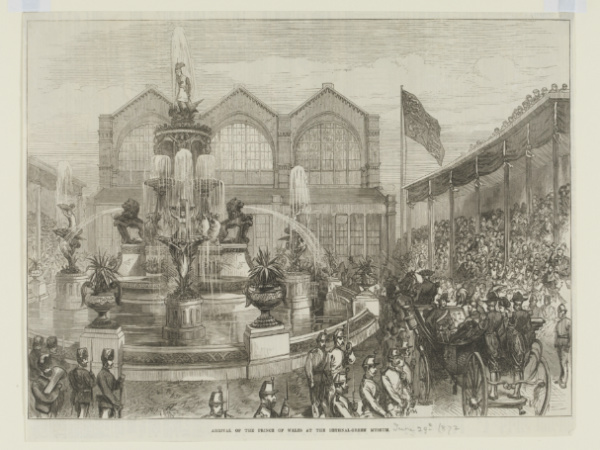
Black and white print of the Prince and Princess of Wales arriving at the official opening of the Bethnal Green Museum (now Young V&A) on 24th June, 1872. Originally printed in the London Illustrated News. PICTURE: Courtesy of Young V&A

Formally known as the East London Museum of Science and Art, it was opened on 24th June, 1872, by the Prince of Wales, later King Edward VII, amid considerable pomp and great crowds.

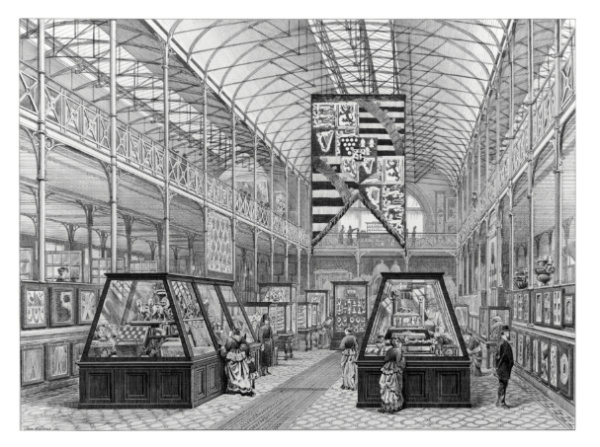
The museum, a branch of what became the Victoria & Albert Museum in South Kensington, was built to house and display many of the collections which had been exhibited at the Great Exhibition of 1851. Among the art collections on show was that of Sir Richard Wallace (now housed in the Wallace Museum).

An interior view of the Bethnal Green Museum (now Young V&A). PICTURE: Courtesy of Young V&A.

After World War II, the museum was remodelled as an art museum and included a children’s section. Then, in 1974, the museum became the Museum of Childhood with displays focusing on everything from toys and dolls houses to children’s dress and books.

It underwent an extensive renovation in the mid 2000s and reopened in December, 2006, as the Victoria & Albert Museum of Childhood.

The now Grade II*-listed museum, located on Cambridge Heath Road, is currently undergoing a £13 million redevelopment and will reopen in mid-2023 as Young V&A, a new museum dedicated to 0 to 14-year-olds, their families and carers.

The V&A marked a year to the opening of the new museum with the launch of a year-long Reinvent Festival, “celebrating 150 years with 150 waysto be creative”. For more, see www.vam.ac.uk/blog/museum-life/young-va-reinvent-festival-reinventing-a-museum-for-the-young.

Lost London – Columbia Market…

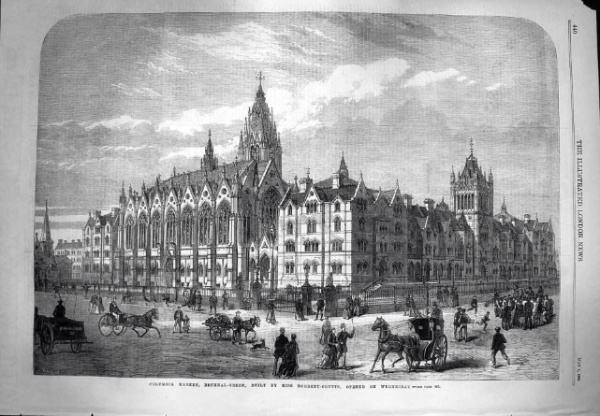
An image of the market in The Illustrated London News.

No, this is not the Columbia Road flower market we know today. This was a short-lived vast gothic market place built in the Bethnal Green in the mid-19th century to serve the East End.

The project was financed by philanthropist (and for a time Britain’s richest woman) Angela Burdett-Coutts and represented an attempt to get the costermongers off the streets.

The building, designed by Henry Darbyshire, was built in 1869, constructed of yellow brick with Portland stone cornices and a green slate roof.

It consisted of four blocks of buildings with arcades built around a central quadrangle which was open to the sky and featured some 400 stalls located under cover. There were also a series of shops with residences located above and a clock-tower which sounded every quarter hour.

The market, which sold fresh produce, was run by Burdett-Coutts’ secretary and future husband (they married in 1881) William Burdett-Coutts who built connections with a fishing fleet to supply its vendors.

He had planned a rail link with Bishopsgate to serve the market but that never happed and competition from Billingsgate and other markets – and the fact the costermongers preferred the streets – eventually saw it go out of business. It closed only a relatively few years later in 1886.

Taken over for a short time by the City of London Corporation, it was returned to the Baroness in 1874, briefly reopened 10 years later, then, according to The London Encyclopaedia, let out as workshops before finally being demolished in 1958.

A few remnants, including some rather grand iron railings and lion statues, remain.

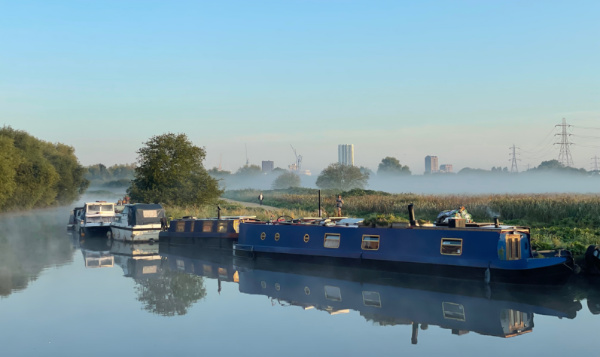
LondonLife – Foggy morning on the Lea, East London…

PICTURE: Dan Poulton/Unsplash

This Week in London – Royal gowns; first ‘blossom garden’; and, the brightest colours ever created…

A view of the Royal Style in the Making exhibition. PICTURE © Historic Royal Palaces.

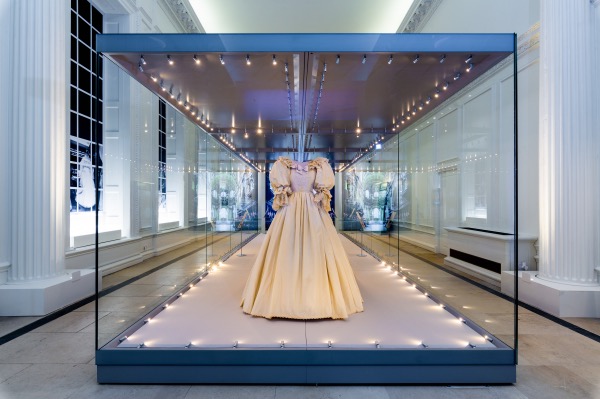
A stunning wedding dress worn by Diana, the Princess of Wales – including its 25 foot long sequin encrusted train – and a rare surviving ‘toile’ – a working pattern – of the 1937 coronation gown of Queen Elizabeth, The Queen Mother, are among star items on display in a new exhibition in Kensington Palace’s Orangery. Royal Style in the Making features some never-before-seen items from the archives of some of the most celebrated royal couturiers of the 20th century as well as original sketches, fabric swatches and unseen photographs from the Royal Ceremonial Dress Collection, a treasure trove of more than 10,000 items of dress and design history cared for by Historic Royal Palaces. Admission charge applies. The display can be seen until 2nd January. For more, see www.hrp.org.uk.

• The first in a series of ‘blossom gardens’ has been opened by the National Trust in Queen Elizabeth Olympic Park in London’s east. The garden features 33 trees including cherry, plum, hawthorn and crab apple which represent the city’s 32 boroughs and the City of London itself. The garden, which was opened last month by the Mayor of London, Sadiq Khan, will be followed by further gardens planted over the next five years across England, Wales and Northern Ireland.

The brightest colours ever created are dazzling eyes at Kew Gardens. Naturally Brilliant Colour, an exhibition in the Shirley Sherwood Gallery of Botanical Art, explores the origins of colour and vision and showcases how botanical artists have depicted the brightest and most intense colours found in nature. Works by Robert John Thornton (1768-1837) and contemporary artist Julia Trickey are on show as well as the world’s first botanical artwork to accurately reproduce natural structural colour (it features flakes of ‘Pure Structural Colour’ which artificially replicates how microscopic structures within the surface layers of plants and animals reflect sunlight in a specific way to generate bright colours). Runs until 26th September. Admission charge applies. For more, see www.kew.org.

Send all items for inclusion to exploringlondon@gmail.com.
London Explained – ‘Cockney’…

The bell tower of St Mary-le-Bow. PICTURE: lonpicman (licensed under CC BY-SA 3.0))

A new regular section in which we explain some of the city’s language. First up, we’re taking a quick look at the word ‘Cockney’.

The word, which has been used as far back as the Middle Ages to describe a ‘cock’s egg’ or weird egg, was apparently once used to refer to “weak” urbanite men (as opposed to the tougher men of the country).

But in more recent times, it was used to refer to someone born within hearing distance of the ‘Bow bells’ – the bells of the church of St Mary-le-Bow in the City.

This meant it came to be particularly associated with people from the city’s East End (although the bells can apparently be heard for at least a couple of miles in any direction – legend has Dick Whittington apparently hearing them calling to him more than four miles away in Highgate).

As well as referring to the people, the word is also used for the distinctive dialect, known as Cockney Rhyming slang, of those who lived in the area.

Interestingly, thanks to World War II preparations, the bells of St Mary-le-Bow were silent from 13th June, 1940, and, following their destruction in an air-raid the following year, were not replaced until 1961. This has led some to conclude that because no bells were rung during this 21 year period, no Cockneys were born then.

Famous Londoners – Dr Thomas Barnardo…

Famed as the founder of homes for disadvantaged children, Dr Thomas Barnardo’s impact is still making a difference to the lives of children today.

Barnardo was born in Dublin, Ireland, on 4th July, 1845, the son of a furrier, John Michealis Barnardo, who had emigrated from Hamburg, and his second wife Abigail, an Englishwoman who was a member of the Plymouth Brethren.

Largely brought up by a half-sister due to his mother’s ill-health, he was educated in Dublin before, at the age of 14, becoming apprenticed to a wine merchant.

Barnardo had a life-changing experience of faith in 1862, was baptised and eventually, working with a local mission, started preaching and visiting people.

Inspired by Hudson Taylor’s reports of the work of the China Inland Mission, Barnardo – against his father’s wishes – left for London in 1866 with the intention of joining the mission’s work.

In London, while he waited for the mission’s leaders to consider his candidacy, Barnardo enrolled to study at the London Hospital (studies he would never complete, despite taking the title of ‘Dr’).

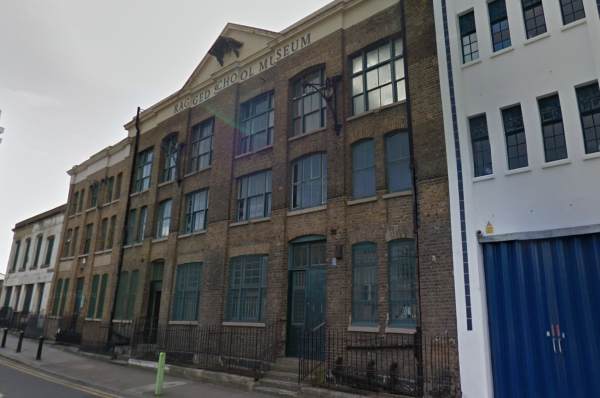
But faced with the poverty he encountered on arriving in London – poverty which had been exacerbated by a recent cholera outbreak in the East End in which 3,000 had died, he put aside his intentions and instead, in 1867, founded a “ragged school” in two cottages in Hope Place Stepney – the East End Juvenile Mission.

After one of the school’s pupils – Jim Jarvis – showed him some of the ‘lays’ where some of the children were passing their nights, he set about fundraising (donors include Lord Shaftesbury) and in 1870, opened a home for boys.

Two years later, in 1672, Barnardo, who was an adovcate for the temperance movement, bought a notorious pub – the Edinburgh Castle in Limehouse – and transformed it into the British Working Men’s Coffee Palace. He would later open another coffee house in Mile End Road.

Barnardo married Sara Louise Elmslie, known as ‘Syrie’, in June, 1873, who shared her husband’s interests in evangelism and social work.

As a wedding present they were given a 60 acre site in Barkingside and it was on this land that they made a home at Mossford Lodge. It was also on that property where they, after an initial less-than-successful experiment with dormitory-style accommodation, opened a home for girls based on a village model.

This grew over the following years so that by 1900 the “garden village” had 65 cottages, a school, a hospital and a church, and provided a home – and training – to some 1,500 girls.

The family, meanwhile, later left the property for a home in Bow Street, Hackney. In 1879, they moved to The Cedars in Banbury Road, Hackney and later lived in Buckhurst Hill, Essex, and Surbiton.

More homes and schools followed the first – Barnardo had adopted an “ever open door” policy after the death of a boy who had been turned away for lack of room – and by his death in 1905, it was said that his institutions cared for more than 8,500 children in 96 locations across the country.

The “ragged school” in Mile End, now a museum. PICTURE: Google Maps.
Barnardo’s efforts were not without controversy – he introduced a scheme whereby poor children were sent overseas to live, primarily to Canada as well as Australia, New Zealand and South Africa – a practice which went on until the 1970s and for which then-Prime Minister Gordon Brown issued a public apology in 2010.

Barnardo and his wife had seven children, of whom only four survived. One of the children – Marjorie – had Down syndrome and it’s said that she strongly influenced his care for disabled children.

Barnardo died of a heart attack at his home – St Leonard’s Lodge in Surbiton – on 19th September, 1905. He was buried on the property at Barkingside which is now where the head office of Barnardo’s, the charity he founded, is located. His tomb features a memorial by Sir George Frampton.

At the time of his death, Barnardos was caring for more than 8,500 children in 96 homes. It’s said that from 1867 until his death, the charity had taken in almost 60,000 children, most them trained and placed out in life.

Interestingly, one of Barnardo’s daughters – Gwendolyn Maud Syrie – first married wealthy businessman Henry Wellcome and, then to the writer Somerset Maugham.

There are two English Heritage Blue Plaques commemorating Barnardo in London – one at a property in Bow Road, Hackney, where the Barnardos lived between 1875 and 1879 and another in Stepney commemorating where he began his work in 1866.

A Moment in London’s History…First air raid of the London Blitz…

It was on 7th September, 1940, that the German bombers raided London in what was to be the first of 57 consecutive nights of bombings and the start of the air attacks on the city known as the Blitz (short for ‘Blitzkrieg’ meaning ‘lightning war’ in German).

Almost 350 German bombers, escorted by more than 600 Messerschmitt fighters, were involved in the raid on what became known as “Black Saturday”.

This first wave of bombing, which ended just after 6pm on what had been a hot day, largely targeted London’s docks in attempt to destroy the city’s infrastructure and industrial sites including the munitions factories of the Woolwich Arsenal, gasworks at Beckton, West Ham power station and oil storage tanks at Thameshaven.

A second wave, which lasted eight hours and involved another 400 bombers, arrived from 8pm striking Millwall, commercial docks at Tilbury and Thameshaven, and the heavily populated slums of the East End in localities including Silvertown, Canning Town, East Ham, Poplar, Stratford, Wapping, and Whitechapel.

Hundreds of tons of bombs were dropped in the raids during which some 448 of London’s civilians were killed and 1,600 injured. Some of the fires started in the bombing burned for five days with the flames visible for miles.

While the attack was the first day of the Blitz, it was actually the 60th day of the Battle of Britain in which the German Luftwaffe had targeted air fields, oil installations and other war-related infrastructure.

While Nazi Reichsmarschall Hermann Göring had gone on radio on the day of the raid, describing it as an “historic hour, in which for the first time the German Luftwaffe has struck at the heart of the enemy”, the strategy shift – to target London instead of the air defence-related installations – proved to be what Hugh Dowding, chief of Fighter Command described as a “mistake”, giving the defences time to rebuild.

But at the time, the attack on London was believed at the time to herald the start of a full invasion. It’s known that as the Luftwaffe attacked the East End, the military chiefs of staff were meeting in Whitehall – at 8pm that night, just as the second wave of planes was starting to bomb the city, they issued the code word ‘Cromwell’ which indicated that invasion was imminent and defending troops need to prepare.

The planned invasion – Operation Sea Lion – never eventuated but the Blitz was to continue until May the following year.

PICTURE: The London docks ablaze during the Blitz on 7th September, 1940. Palls of smoke rise in the docks beyond the Tower of London with the Surrey Docks to the right of the bridge and the West India Docks on the Isle of Dogs in the distance. PICTURE: © Port of London Authority Collection / Museum of London. For more on the ‘Docklands at War’, head to www.museumoflondon.org.uk/museum-london-docklands/permanent-galleries/docklands-war.

LondonLife – Skyline cranes…

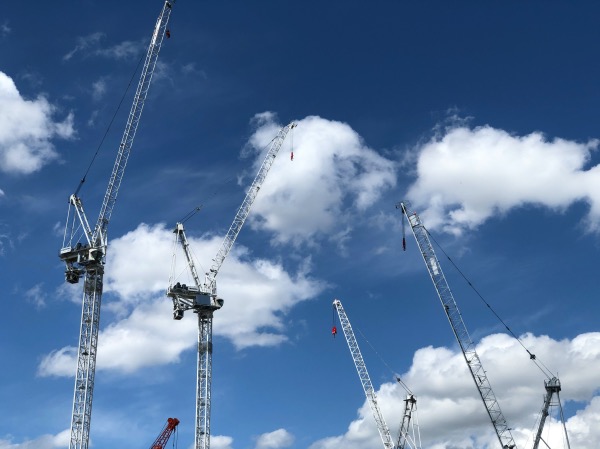
Cranes above Queen Elizabeth Olympic Park. PICTURE: Gabriel Kraus/Unsplash.

What’s in a name?…Mile End


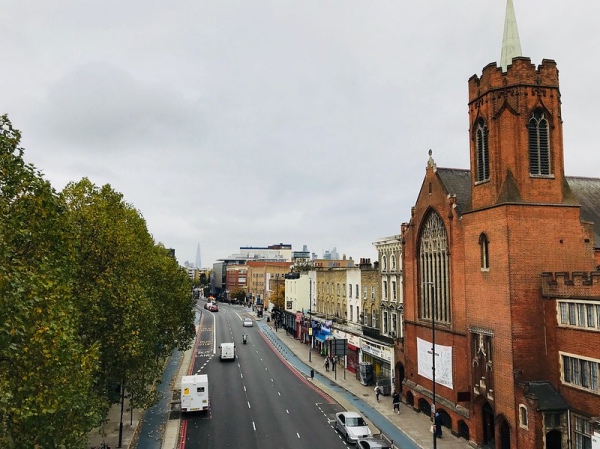
This east London district was recorded as far back as the 13th century when it was a rural area. The name comes from the obvious – it was located on the old London to Colchester Road about a mile east of Aldgate.

Its location so close to London – and the fact it was common land – meant Mile End was favoured as a recreational space by Londoners eager to escape the confines of the city.

It was here in 1381 that Jack Straw camped with the men from Essex during the Peasant’s Revolt and it was here that, even as Was Tyler and his men murdered Simon of Sudbury in the Tower of London, King Richard II famously met with the leaders of the revolt.

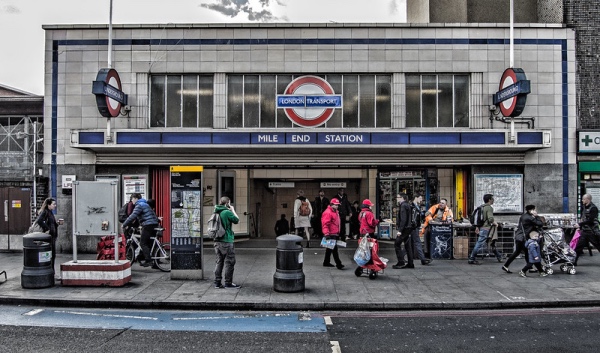
The area, which became known as Mile End Old Town (an unconnected area to the west was known as Mile End New Town), was gradually developed from the 16th century and attracted working class housing and, thanks to its affordability, a relatively high number of immigrants. The Mile End Tube station opened in 1902.

The area suffered in the Blitz during World War II and the first V-1 flying bomb to hit the city landed next to the Grove Road railway bridge on 13th June, 1944, killing eight civilians and injuring 30.

Famous figures connected to Mile End include explorer Captain James Cook, who lived in a now demolished house on Mile End Road between 1764-76.

Landmarks include the Trinity Almshouses (built in 1695, they’re the last survivors of several almshouses built in the area) and the Frederick Arthur Walters-designed Guardian Angels Roman Catholic Church which was built 1903 by Henry Fitzalan-Howard, 15th Duke of Norfolk, as a memorial to his youngest sister, Lady Margaret Howard.

The People’s Palace – a five acre entertainment and educational facility which included a library, swimming pool, gym and winter garden – was completed in 1892 on Mile End Road. Destroyed by fire in 1931, it was rebuilt but finally closed in 1954.

The two halves of the 79 acre linear Mile End Park, which bisected by Mile End Road, is joined by The Green Bridge over the road.

PICTURES: Top – Mile End Road featuring The Guardian Angels Catholic Church on the right and Mile End Park on the left (Matt Brown /licensed under CC BY 2.0); Below – Mile End Tube Station (Chris Jones/licensed under CC BY-NC 2.0)

LondonLife – Misty day at St Katharine Docks…

PICTURE: Robert Bye/Unsplash

This Week in London – ‘Old Flo’ on show; Peter Pan in the Docklands; and hurry to see Winnie-the-Pooh…

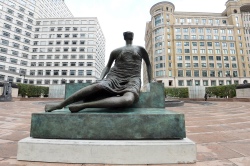
A new exhibition charting the history of Henry Moore’s sculpture, Draped Seated Woman (known affectionately as Old Flo), has opened at Canary Wharf. Indomitable Spirit features traces the creation of the 2.5 metre high bronze sculpture in 1957-58, its placement in 1962 on the Stafford Estate in Stepney, and, in 1997, its removal to the Yorkshire Sculpture Park where it has spent the last 20 years before returning to the East End – this time Cabot Square – last year.  It also explores the artist’s life, career and legacy and the reasons as to why Old Flo – part of an edition of six sculptures – became such an important feature in the East End. The exhibition can be seen in the lobby of One Canada Square until 6th April. Admission is free. For more, see www.canarywharf.com. PICTURE: Henry Moore’s ‘Draped Seated Woman’, Canary Wharf.

The first of two Peter Pan-themed weekends kicks off at the Museum of London Docklands this Saturday. Adventures in Peter Pan’s Neverland features a series of interactive events film screenings and performances across the weekend with professional character actors leading workshops and re-enacting short scenes from the story. There will also be “sightings” of Captain Hook’s pirates and other characters and two screenings of the classic animated film Peter Pan each day. Money will be raised for Great Ormond Street Hospital Children’s Charity through donations on ticket sales and other fundraising activities during the event. Runs from 10.45am to 4pm this Saturday and Sunday and again on 3rd and 4th March. Tickets start at £4. For more, see www.museumoflondon.org.uk.

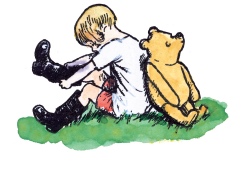
On Now: Winner-the-Pooh: Exploring a Classic. This exhibition at the V&A, which is closing on 8th April, features original drawings by EH Shepard – on show in the UK for the first time – created to illustrate AA Milne’s classic tale and, as well as examining Milne’s story-telling techniques and Shepard’s illustrative style, takes a look at the real people, relationships and inspirations behind the bear’s creation. Around 230 objects are featured in the display and as well as original manuscripts, illustrations, proofs and early editions, they include letters, photographs, cartoons, ceramics, fashion and video and audio clips, with the latter including a 1929 recording of Milne reading Winnie-the-Pooh). Other highlights include Milne’s Winnie-the-Pooh manuscript and pages from the manuscript of House at Pooh Corner as well as Shepard’s first character portraits of Winnie and Christopher Robin nursery tea set which was presented to then-Princess Elizabeth in 1928. Admission charge applies. For more see, www.vam.ac.uk/winniethepooh. PICTURE: Line block print, hand coloured by E.H. Shepard, 1970, © Egmont, reproduced with permission from the Shepard Trust

Send all items for inclusion to exploringlondon@gmail.com.

LondonLife – London’s DLR celebrates 30 years…

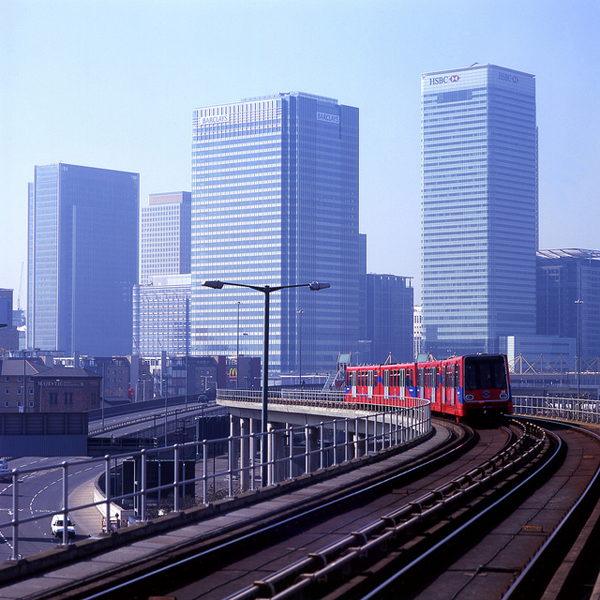
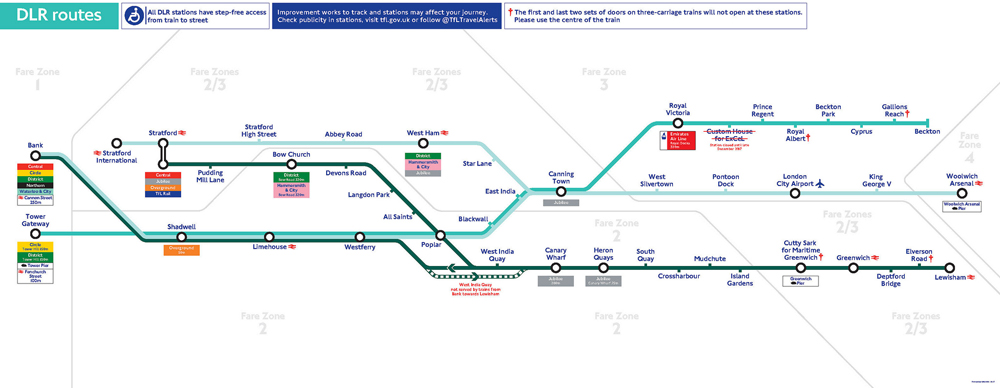
London’s Docklands Light Railway – the DLR as it’s better known – is celebrating 30 years of operation. The railway was officially opened by Queen Elizabeth II in the summer of 1987 and then had just 11 single carriage trains serving 15 stations. Extended six times since and now including some 38 kilometres of track, it now serves 45 stations using mainly three carriage trains. Carrying some 6.7 million passengers in its first year, it now carries a massive 122 million people annually. To mark the occasion, Transport for London has released a Destination DLR travel guide featuring 30 attractions across east and south-east London all easily reached by the DLR, ranging from the National Maritime Museum at Greenwich and the Tower of London to Queen Elizabeth Olympic Park and Wilton’s Music Hall. Transport for London have also released a new diagram of the DLR system (pictured below). PICTURES: Transport for London.

What’s in a name?…St Katharine Docks…

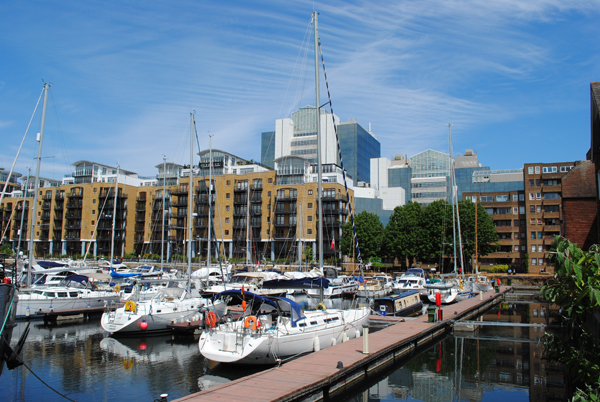
st-katharine-docksThe name for this dock, located just to the east of Tower Bridge, comes from a 12th century established to help the poor known as St Katharine’s Hospital which was once located in the vicinity.

The hospital, which was named at St Katharine – whom tradition holds was martyred in the 4th century by the Roman Emperor Maxentius – was founded by Matilda, the wife of King Stephen, in 1147, for the maintenance of 13 poor people.

It was supported by various English queens over the ensuing centuries, including Eleanor, beloved wife of King Edward I, who granted it a new charter in 1273, and Queen Philippa, wife of King Edward III, who drew up new regulations for the running of the hospital in 1351.

Having survived an attempt to have the hospital abolished by Puritans in the 17th century and an attempt to burn it down during the late 18th century Gordon Riots, in the early 19th century demand for new docks brought about the old hospital’s final demolition.

In 1825, the hospital relocated to Regent’s Park. Now known as the Royal Foundation of St Katharine, it is currently located in Limehouse, having moved there in 1948 (we’ll take a more in depth look at the history of St Katharine’s Hospital in an upcoming post).

The docks, meanwhile, was opened in 1828 following the removal of more than 1,200 homes and a brewery as well as the old hospital – works carried out despite a public outcry and, apparently, no compensation. Designed by Thomas Telford (of the Iron Bridge fame – this was apparently his only London project), the docks occupy a 23 acre site and featured a central basin opening to two docks lined with brick warehouses.

The docks were closed in 1968 and in the years since, the warehouses have been converted into shops, eateries, offices and residences while the waters are now used as a marina for luxury yachts.

LondonLife – Christmas illuminated…

London is illuminated for Christmas. Here’s some of what photographers on Flickr have captured this year…
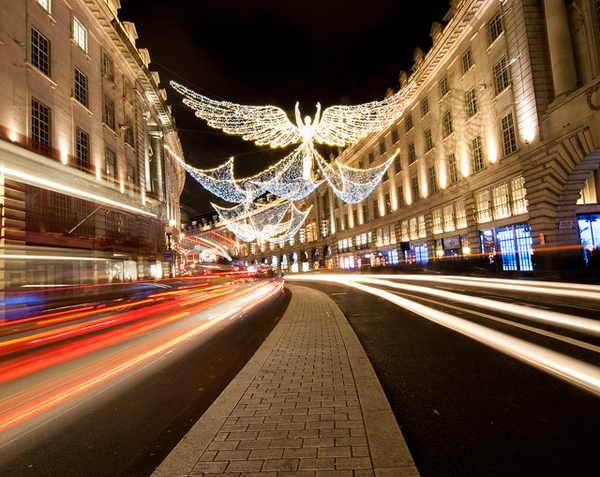
regent-street

Christmas in Regent Street. PICTURE: Michael Reilly/Flickr/CC BY 2.0

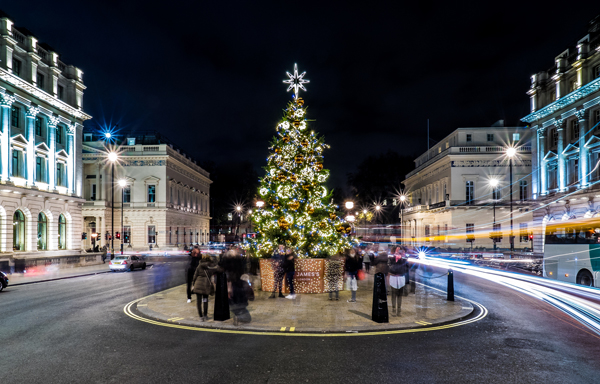
west-end

Christmas tree in Waterloo Place. PICTURE: William Warby/Flickr/CC BY 2.0

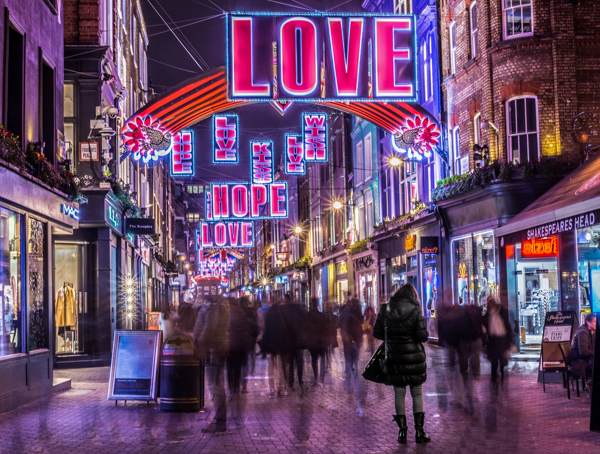
carnaby-street

Carnaby Street. decorations PICTURE: Roger/Flickr/CC BY-SA 2.0

oxford-street

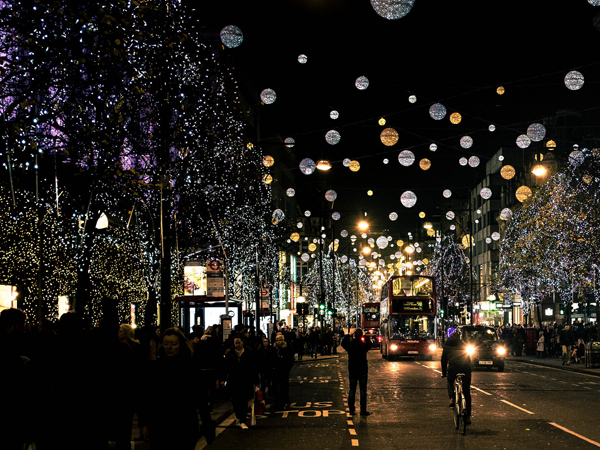
Oxford Street under lights. PICTURE: Paolo Braiuca/Flickr/CC BY 2.0  (image cropped).

st-katharines

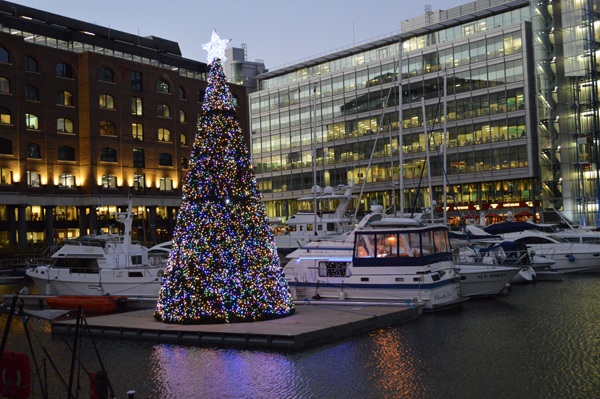
A floating Christmas tree at St Katharine Docks. PICTURE: Matt Brown/Flickr/CC BY-SA 2.0

Treasures of London – Lighthouse at Trinity Buoy Wharf…

trinity-buoy-wharf-lighthouse

September is the month of ‘Totally Thames’, London’s celebration of its mighty river, so we thought it only fitting that we look at one of the city’s riverside treasures.

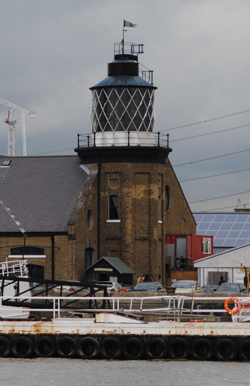
Located to the east of the City at Trinity Buoy Wharf on the north bank of the Thames can be found London’s only lighthouse (pictured left). No longer operational, it was built between 1864-66 for what became known as the Corporation of Trinity House, an association of shipmen and mariners.

trinity-wharf-lighthouseGranted its charter by King Henry VIII in 1514, in 1573 it was given the authority to erect and maintain beacons, mark and signs to help sea navigation. It’s since been the provider of buoys, lighthouses and lightships and, while headquartered at Trinity House in the City of London, established Trinity Bouy Wharf, located at the confluence of the Bow and Thames Rivers, as its Thames-side workshop in 1803.

The wharf was originally used to make and store wooden buoys and sea marks and as a mooring site for the Trinity House yacht which laid and collected buoys.

The lighthouse is the second on the site – the first was built in 1854 by the then chief engineer of Trinity House James Walker. The second, existing, lighthouse was built James Douglass – Walker’s successor – and as an “experimental lighthouse” was used for testing equipment and training lighthouse keepers.

The wharf, meanwhile, continued to be used until 1988 when it was purchased by the London Docklands Development Corporation and the site is now leased to Urban Space Management who have developed it as a centre for art and cultural activities. The area around the wharf also now features two prototype “cities” made out of shipping containers.

This Week in London – Kew Gardens celebrates its herbaceous borders; the global ‘War on Terror’ at the IWM; Bobby Moore honoured; exposing the camera; and, 60 years of fanzines…

The first of three weekends celebrating the creation of the world’s longest double herbaceous borders – known as the Great Broad Walk Borders – will be held at Kew Gardens this weekend. Made up of 30,000 plants, the borders run along 320 metres of the Broad Walk which was originally landscaped in the 1840s by William Nesfield to provide a more dramatic approach to the newly constructed Palm House (completed in 1848). The spirit of the formal colourful beds he created along either side of the walk have been recreated using a range of plants. To celebrate, Kew are holding three themed weekends, the first of which, carrying a history and gardens theme, is this Saturday and Sunday. As well as talks and drop-in events, there will be a range of family-related activities as well as craft workshops, tours, and shopping. Further weekends will be held on 13th and 14th August (around the theme of the excellence of horticulture at Kew) and the bank holiday weekend of 27th to 29th August (around the theme of a celebration of beauty). For more, head to www.kew.org.

A new exhibition centring on the experiences of UK citizens and residents suspected but never convicted of terrorism-related activities and the role of the British Government in the ‘Global War on Terror’ opens at the Imperial War Museum in Lambeth today. Edmund Clark: War on Terror, Clark’s first major solo show in the UK, looks at the measures taken by states to protect their citizens from the threat of international terrorism and their far-reaching effects, exploring issues like security, secrecy, legality and ethics. Among the photographs, films and documents on display are highlights from five series of Clark’s work including Negative Publicity: Artefacts of Extraordinary Rendition, created in collaboration with counter-terrorism investigator Crofton Black, and other works including the film Section 4 Part 20: One Day on a Saturday, photographs and images from the series Guantanamo: If the Light Goes Out and Letter to Omar as well as the first major display of the work Control Order House. Runs until 28th August, 2017. Admission is free. For more, see www.iwm.org.uk/exhibitions/iwm-london/edmund-clark-war-of-terror.

The only English football captain to win a World Cup, Bobby Moore, has become the first footballer to be honoured with an English Heritage blue plaque. The plaque was unveiled at the footballer’s childhood home at 43 Waverley Gardens in Barking, East London, this week. Moore is best remembered for leading England to a 4-2 win over West Germany in the 1966 World Cup. For more, see www.english-heritage.org.uk/visit/blue-plaques/.

The camera is the subject of a new photography display which opened at the V&A in South Kensington last weekend. The Camera Exposed features more than 120 photographs, including works by more than 57 known artists as well as unknown amateurs. Each work features at least one camera and include formal portraits, casual snapshots, still-lifes, and cityscapes. Among the images are pictures of photographers such as Bill Brandt, Paul Strand and Weegee with their cameras along with self-portraits by Eve Arnold, Lee Friedlander and André Kertész in which the camera appears as a reflection or shadow. The display includes several new acquisitions including a Christmas card by portrait photographer Philippe Halsman, an image of photojournalist W Eugene Smith testing cameras and a self-portrait, taken by French photojournalist Pierre Jahan using a mirror. Runs in gallery 38A until 5th March. Free admission. For more, see www.vam.ac.uk/exhibitions/the-camera-exposed.

Sixty years of fanzines – from the development of zine-making back in the 1940s through to today’s – go on show at the Barbican Music Library in the City on Monday. FANZINES: a Cut-and-Paste Revolution features zines including VAGUE, Sniffing’ Glue, Bam Balam, Fatal Visions, Hysteria and Third Foundation among others. The exhibition, which runs until 31st August, is being held in conjunction with this year’s PUNK LONDON festival. For more, see www.cityoflondon.gov.uk/services/libraries-and-archives/our-libraries/Pages/Barbican-Music-Library.aspx.

Send all items for inclusion to exploringlondon@gmail.com.

LondonLife – Spying a new view of London in a 40 second rush…

TOP-OF-SLIDE-MOCK-UP
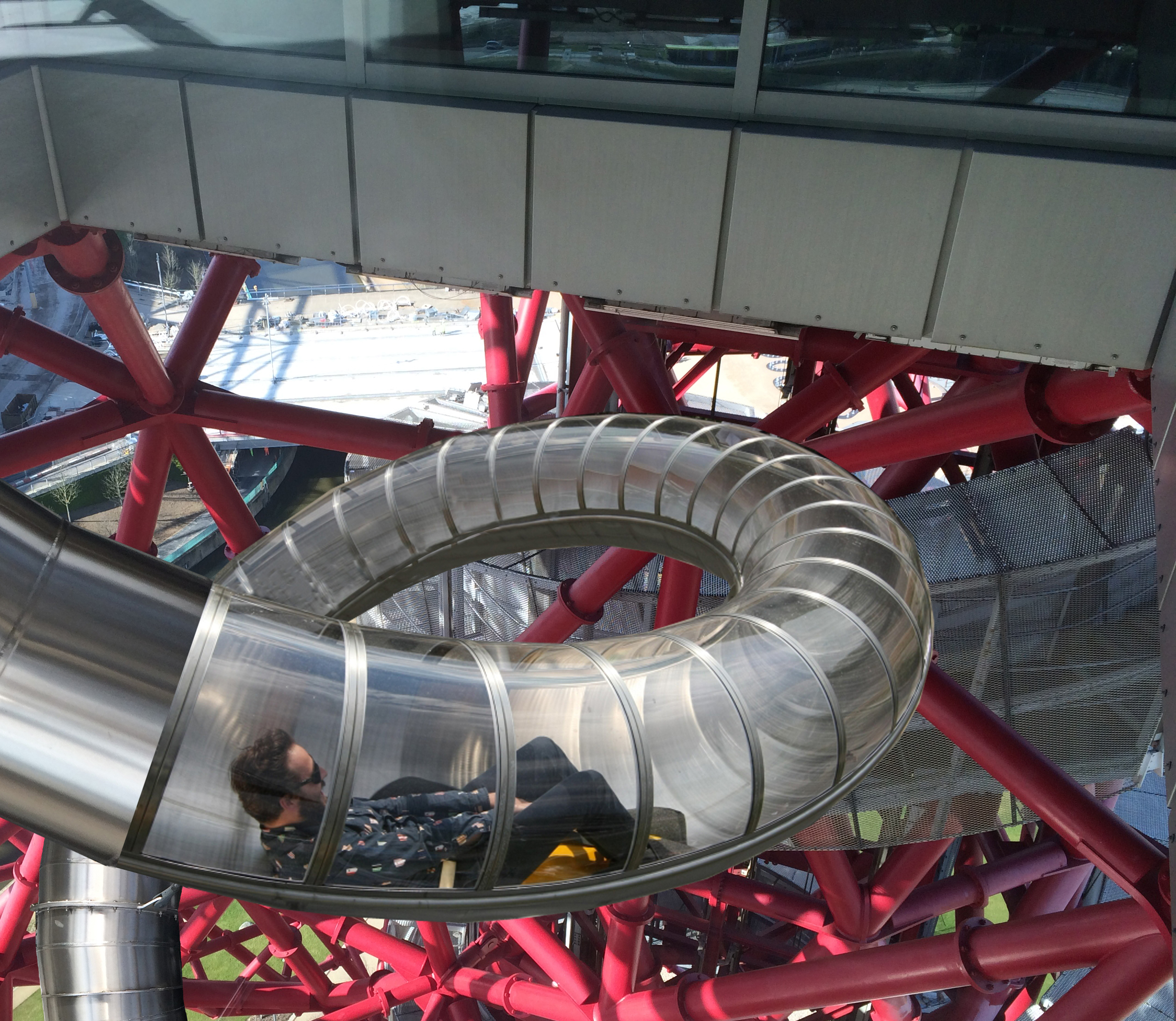
The world’s longest and tallest tunnel slide opened at the ArcelorMittal Orbit sculpture in Queen Elizabeth Olympic Park – the UK’s tallest public artwork – in London’s east last week.
Standing 178 metres high, the slide wraps around the sculpture 12 times as it descends toward earth, providing a 40 second ride of speeds up to 15 kph through a series of twists and turns including a tight corkscrew section known as the ‘bettfeder’ (named after the German word for ‘bedspring’). The slide, which was designed by Belgian artist Carsten Höller at the invitation of Sir Anish Kapoor, designer of the ArcelorMittal Orbit (constructed for the 2012 Olympic Games), is open until 30th December. For more on the Slide and to book, see http://arcelormittalorbit.com/whats-on/the-slide/. PICTURES: Supplied.

Copy-of-Slide-CGI-3