Dame Sarah Mullally, Bishop of London since 2018, was named as the 106th Archbishop of Canterbury in October so we thought it a good time to explore some of the grand palaces which served as bishop’s palaces, some of them still standing and others not.
And what more appropriate place to start than Lambeth Palace, the official Thames-side residence of the Archbishop of Canterbury.
Subscribe for just £3 a month to access all of Exploring London’s content…
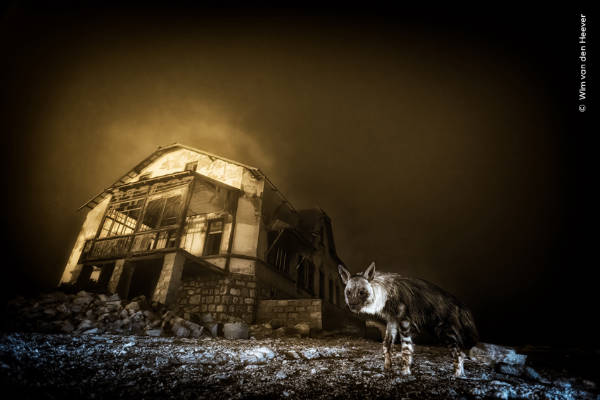
Wim van den Heever’s winning entry, Ghost Town Visitor.
• An exhibition of entries into the annual Wildlife Photographer of the Year competition opens tomorrow at the National History Museum in South Kensington. The exhibition features 100 images selected from a record-breaking 60,636 entries and follows from this week’s announcement of the winners at a ceremony held at the museum earlier this week. The display includes the winning image – ‘Ghost Town Visitor’ which, captured by South African wildlife photographer Wim van den Heever depicts a brown hyena near the ruins of a long-abandoned diamond mining town in Kolmanskop, Namibia – as well as the winner of the Young Wildlife Photographer of the Year 2025 – 17-year-old Italian Andrea Dominizi’s After the Destruction which spotlights a longhorn beetle in the Lepini Mountains of central Italy, an area once logged for old beech trees, with a background of abandoned machinery. Other images on show include the winner of the Impact Award – Brazilian photographer, Fernando Faciole’s Orphan of the Road depicting an orphaned giant anteater pup following its caregiver after an evening feed at a rehabilitation centre – as well as category winners. The exhibition can be seen until 12th July next year. Admission charge applies. For more, head here.
• Three 20th century conflicts which broke out in Malaya, Kenya and Cyprus after World War II are the subject of a new exhibition at the Imperial War Museum in Lambeth.Emergency Exits: The Fight for Independence in Malaya, Kenya and Cyprus looks at how these three conflicts, known as “emergencies” to the British Government, shaped and continues to shape Britain, its former territories and the wider world today. The display includes more than 70 objects such as propaganda posters, flags and artworks as well as oral histories and personal belongings which belonged to those impacted by them. As well as telling the stories of the three conflicts, Emergency Exits also explores Operation Legacy, the British Government’s attempt to prevent publication of sensitive documents related to the conflicts which included evidence of human rights abuses. The free exhibition, which opens on Friday, runs until 26th March. For more, see iwm.org.uk/events/emergency-exits-the-fight-for-independence-in-malaya-kenya-and-cyprus.
• The first major solo exhibition focusing on the work of pioneering Black British photographer Jennie Baptiste opens in the Terrace Rooms at Somerset House on Friday.Jennie Baptiste: Rhythm & Roots, which is a highlights of Somerset House’s 25th birthday programme, charts how Baptiste used her lens to capture youth culture, music, fashion, and urban life within the Black British diaspora in London in the past few decades. The exhibition can be entered under a “pay what you can” model. Runs until 4th January. For more, see www.somersethouse.org.uk/whats-on/jennie-baptiste-rhythm-and-roots.
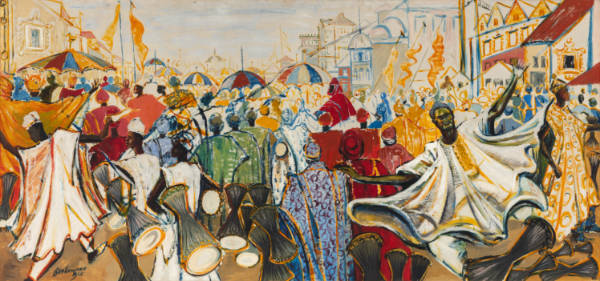
• On Now: Nigerian Modernism. The Tate Modern is hosting the first UK exhibition to trace the development of modern art in Nigeria with more than 250 works by more than 50 artists on display. The exhibition, which spans the period from the 1940s to today, features works by globally celebrated artists of the 1940s, Ben Enwonwu and Ladi Kwali, as well as works by The Zaria Arts Society members Uche Okeke, Demas Nwoko, Yusuf Grillo, Bruce Onobrakpeya, and Jimo Akolo, Nsukka Art School members including Obiora Udechukwu, Tayo Adenaike and Ndidi Dike, and concludes with a spotlight on the work of Uzo Egonu. The display can be seen until 10th May. Admission charge applies. For more, see www.tate.org.uk/whats-on/tate-modern/nigerian-modernism.
Send all items for inclusion to exploringlondon@gmail.com.
This district in the Borough of Lambeth in south London was formerly a rural manor located on the southern edge of London.
The name, variants of which date back to at least the late 12th century, is said to relate to the Old English words for a tree trunk – ‘stoc’ – and a well or spring, ‘wella’, and has been interpreted as meaning the well or spring by a tree stump, tree truck or perhaps a wood (there was apparently a Stockwell Wood which has long since disappeared).
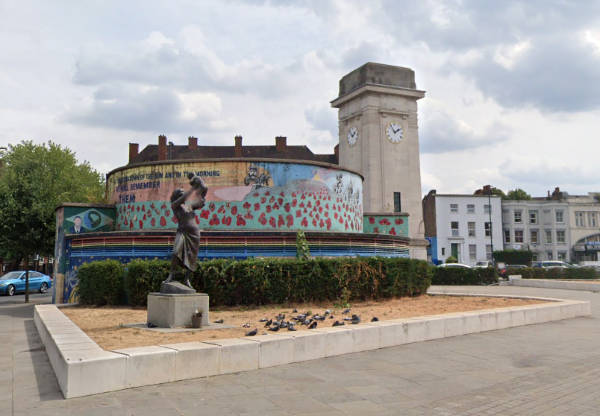
The War Memorial and mural painted on a ventiliation house in Stockwell. PICTURE: Courtesy of Google Maps
The manor of Stockwell was formed at the end of the 13th century when King Edward I acquired the manor of South Lambeth and divided it into two, creating the manors of Stockwell and Vauxhall (the manor house itself, parts of which survived until the 19th century, stood on the north side of Stockwell Road).
The area become known for its market gardens and was transformed into an urban landscape until the mid-19th century. Remnants of the 19th century housing stock can still be found in areas including the Stockwell Park Conservation Area in the west of the district.
The area around Stockwell Tube station, which first opened in 1890 and has since been rebuilt a couple times, was heavily bombed during World War II and rebuilt following the war. New developments included a number of social housing estates.
Today, Stockwell and nearby South Lambeth host the district known as Little Portugal which, centred on South Lambeth Road, is home to one of the UK’s largest Portuguese communities. The area is also home to several other immigrant communities.
Local landmarks include the oldest surviving building in the area – St Andrew’s Church, Stockwell Green (built in 1767), the Stockwell Congregational Church (1798) and the Stockwell War Memorial.
The latter – a white stone tower – is located on a site first laid out in the 1920s and features a mural on an adjoining ventilation shelter commemorating French Resistance fighter Violette Szabo (there’s a Blue Plaque on her former home in Burnley Road) and other Stockwell residents who died in war. There is also the ‘Bronze Woman’ statue which was unveiled in 2008 as a tribute to Black Caribbean women.
Residents of Stockwell have included artist Arthur Rackham and pioneering theatre director Joan Littlewood as well as musician David Bowie (born in Stansfield Road), actors Joanna Lumley (who still lives there) and Roger Moore (born in Aldebert Terrace).
Tragically, Stockwell Tube station was where Brazilian man Jean Charles de Menezes was fatally shot by police on 22nd July, 2005, after being misidentified as one of four suicide bombers who were on the run after their devices had failed to detonate the previous day (the attempts had come just two weeks after the 7th July bombings in which more than 50 people had been killed).
• One of only two surviving choirbooks from the reign of King Henry VIII is on display in a new exhibition at the Lambeth Palace Library.Sing Joyfully: Exploring Music in Lambeth Palace Library displays the ‘Arundel’ or ‘Lambeth’ Choirbook (Arundel, Sussex, c. 1525) – this year marking its 500th birthday – along with other items from the library’s collection such as two leaves of a 14th century polyphony recently discovered in the binding of an early printed book. The exhibition, which is free, can be seen until 6th November. For more, see www.lambethpalacelibrary.info/sing-joyfully/.
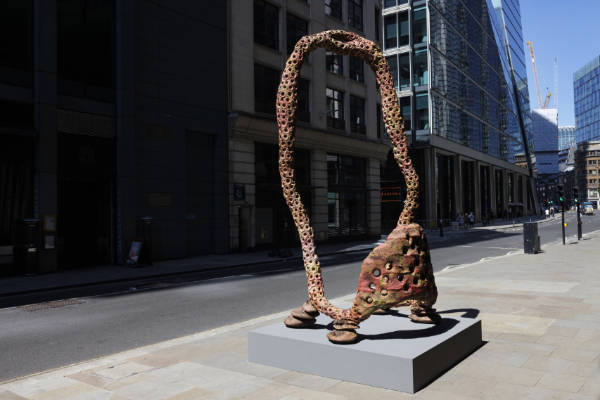
• On Now: Sculpture in the City. The 14th edition of the annual sculpture exhibition in the City of London features 11 pieces including three new works as well as six works which have been retained from previous iterations of the exhibition and two permanent acquisitions. The new works include: Ai Weiwei’s Roots: Palace, a cast-iron tree root sculpture located outside St Botolph without Bishopsgate which, as part of a series created in collaboration with Brazilian artists and communities, explores the concept of unrootedness; Jane and Louise Wilson’s Dendrophiles which, located beneath the escalators of The Leadenhall Building, combines ink drawings based on images of DNA with 3D scans of ancient oak wooden samples; and, Andrew Sabin’s Looping Loop which, located outside 70 St Mary Axe, which forms a continuous loop creating what’s described as a “lively, pulsating sensation”. Runs until April. For more – including a map of the locations – see https://www.sculptureinthecity.org.uk/.
• Rare, behind the scenes images of US band Blondie have gone on show at the Barbican Music Library from today. Taken by photographer Martyn Goddard during the group’s breakthrough year of 1978, the 50 images show the band in concert, backstage, in the studio and during photo shoots. The display of photographs is complemented by poster prints, album covers, tour and concert memorabilia, period cameras, and photographic equipment. There are also items lent by Alan Edwards, who has handled Blondie’s publicity since 1978, from his private collection. Blondie in Camera 1978 runs until 5th January. Admission is free. For more see, www.cityoflondon.gov.uk/services/libraries/barbican-music-library.
Send all items for inclusion to exploringlondon@gmail.com.
While no official death toll was announced at the time, it’s now believed that 104 people died in the bombing. Forty-eight bodies were recovered and buried in Streatham Cemetery while the remainder still lie under the park.
The majority of those killed were women and children with the youngest just three-months-old. The oldest known victim was 75.
While Lambeth’s civilian dead are commemorated in a memorial at Lambeth Cemetery dedicated in 1952, in early 2000s the Friends of Kennington Park raised funds for a permanent memorial to those killed in the tragedy in the park.
The memorial, which was designed by Richard Kindersley and is located in the South Field close to the Tinworth Fountain Gate, is an upright stab of Caithness stone brought from Scotland standing 2.6 metres tall.
It is inscribed with a quote from poet Maya Angelou – “History despite its wrenching pain cannot be unlived but if faced with courage need not be lived again.”
While another inscription around the edge of the stone commemorates the more than “50 men, women and children” who died during the bombing, a nearby interpretation board puts the toll at more than 100.
WHERE: Kennington Park, inside the Tinworth Fountain Gate, Kennington Park Road, Lambeth (nearest Tube station is Oval); WHEN: Usually 7.30am until 15 minutes before sunset; COST: Free; WEBSITE: www.lambeth.gov.uk/parks/kennington-park
• A first-of-its-kind exhibition at the Imperial War Museum in Lambeth aims to shed light on sexual violence in conflicts.Unsilenced: Sexual Violence in Conflict features case studies which span the period from the World War I to today and examines how and why sexual violence is perpetrated, its impact on victims and survivors and the pursuit of justice and reconciliation. The exhibition features some 162 objects, including never-before-seen items, as well as testimonies and interviews with experts such as Christina Lamb, journalist and author of Our Bodies, Their Battlefield: What War Does to Women, and Sarah Sands, journalist and former chair of the G7 Gender Equality Advisory Council. The display also highlights the ongoing work of four NGOs working in the field of sexual violence: Women for Women International, All Survivors Project, Free Yezidi Foundation and Waging Peace. The free display opens on Friday and runs until 2nd November. For more, see www.iwm.org.uk/events/unsilenced-sexual-violence-in-conflict.
• The origins of three of the world’s major religions – Hinduism, Buddhism and Jainism – and their practice today are explored through a new exhibition of sacred art at the British Museum.Ancient India: living traditions features more than 180 objects including sculptures, paintings, drawings, and manuscripts. Among the objects on show is a statue of the elephant-headed god Ganesh made of in Java from volcanic stone, dating from about AD 1000–1200, while among the stories told in the display are how depictions of Buddha have changed over time while those of Hindu goddess Lakshmi have remained relatively unchanged. Runs until 19th October in The Sainsbury Exhibitions Gallery. For more, see www.britishmuseum.org.
• The circus and street performance are coming to Hampton Court Palace this weekend for a three day family-friendly festival featuring live music, acrobatics and physical theatre. Featuring performers from Cirque Bijou, the Big Bahooey will, as well as breathtaking stunts, slapstick comedy and interactive performances, feature hands-on workshops where you can learn skills such as juggling, wire walking or spinning plates. Entrance is included in palace admission. Runs from 24th to 26th May. For more, see www.hrp.org.uk/hampton-court-palace/whats-on/the-big-bahooey/.
Send all items for inclusion to exploringlondon@gmail.com
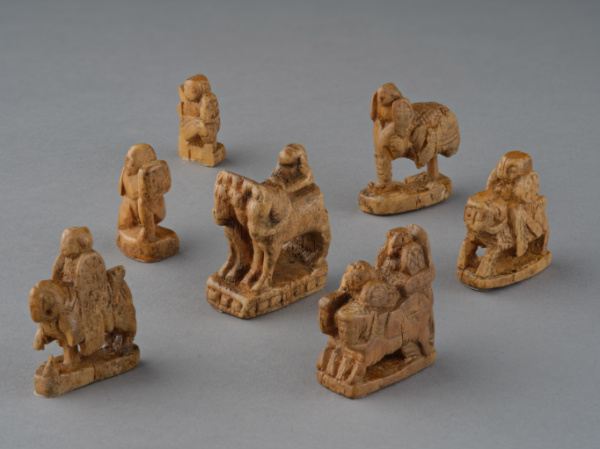
• The popular concept of the ‘Silk Road’ as a simple history of trade between East and West is challenged in a new exhibition which opens at the British Museum today.Silk Roads, which spans the period from about 500 AD to 1,000 AD, explores the overlapping networks which linked communities ranging from the UK to Japan and Scandinavia to Madagascar through a display organised into five geographic zones. The exhibition features more than 300 objects which include the oldest group of chess pieces ever found (pictured), a six metre long wall painting from the ‘Hall of the Ambassadors’ in what is now Samarkand in Uzbekistan, a glass drinking horn from Italy dating from between 550 and 600 AD, and, a map of the world from al-Idrisi’s Nuzhat al-mushtaq fi ikh0raq al-afaq (Pleasure of He who Longs to Cross the Horizons) from a 1533 manuscript which drew on a 1154 original. Visitors will also encounter the stories of people whose stories intertwined with the Silk Roads including Willibald, a balsam smuggler from England, and a legendary Chinese princess her shared the secrets of silk farming with her new kingdom. The display in the Sainsbury Exhibitions Gallery can be seen until 23rd February. Admission charge applies. For more, see britishmuseum.org/silkroads.
• The psychological dimensions of war are explored in a major new temporary exhibition at the Imperial War Museum in Lambeth.War and the Mind features more 150 objects spanning the period from World War I through to the War in Afghanistan. Among them are a letter from Winnie the Pooh author AA Milne which speaks of how dedicated pacifists have changed their mind in the face of direct threat, amphetamine tablets issued to Allied soldiers to help them overcome the psychological effects of fatigue, a newly-acquired mitten belonging to the baby son of an Avro Lancaster bomber rear gunner who carried it for comfort while carrying out operations during the World War II, and a Protect and Survive booklet issued in the UK in 1980 as part of the government’s response to the fear of nuclear weapons during the Cold War. The exhibition, which opens on Friday, is free to visit. For more, see iwm.org.uk/events/war-and-the-mind.
• The artwork of painter, illustrator and caricaturist Sidney Sime is the subject of a new exhibition at the Heath Robinson Museum in Pinner. Sime, who was born in Manchester in 1865, trained at the Liverpool school of art before heading to London where he worked for magazines including Pick-Me-Up, drawing theatrical caricatures and other humorous drawings. He later struck up a friendship with Lord Dunsany and illustrated his first book, The Gods of Pegana, in a collaboration which continued until the 1930s. He also formed friendships with Lord Howard de Walden and composer Joseph Holbrooke, making set and costume designs for their theatrical and operatic productions. After World War I, Sime made a number of large oil paintings, many of which are shown in the display. The Art of Sidney H Sime, Master of Fantasy, which opens on Saturday, can be seen until 5th January. For more, see www.heathrobinsonmuseum.org/whats-on/sidney-sime-artist-and-philosopher/.
Send all items for inclusion to exploringlondon@gmail.com.
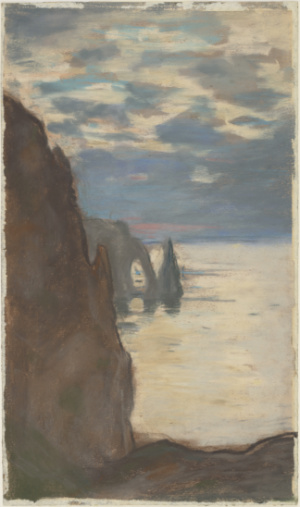
Claude Monet, ‘Cliffs at Etretat: The Needle Rock and Porte d’Aval’, c 1885. National Galleries of Scotland.
• A new exhibition exploring how Impressionist and Post-Impressionist artists in late 19th-century France radically transformed the status of works on paper opens at the Royal Academy on Friday. Impressionists on Paper: Degas to Toulouse-Lautrec features around 80 works on paper by artists including Mary Cassatt, Paul Cézanne, Edgar Degas, Paul Gauguin, Eva Gonzalès, Claude Monet, Berthe Morisot, Odilon Redon, Pierre-Auguste Renoir, Georges Seurat, Henri de Toulouse-Lautrec and Vincent van Gogh. Among the highlights are Degas’ Woman at a Window (1870-71), van Gogh’s The Fortifications of Paris with Houses (1887), Monet’s Cliffs at Etretat: The Needle Rock and Porte d’Aval (c1885) and Toulouse-Lautrec’s images of the urban underworld of Montmartre. The display can be seen in The Gabrielle Jungels-Winkler Galleries until 10th March. Admission charges apply. For more, see royalacademy.org.uk.
• English Heritage have unveiled their final Blue Plaque for 2023 and it celebrates two of the most influential painters of the early-to-mid 20th century, Vanessa Bell and Duncan Grant. The plaque was unveiled at number 46 Gordon Square in Bloomsbury, from where the Bloomsbury Group – of which Bell and Grant were leading members – drew its name. Bell first lived at number 46 with her siblings, including Virginia Stephen (later Woolf), and, in 1914, Grant moved in with Vanessa and her husband, Clive Bell. Paintings the pair made at number 46 include Grant’s Interior at Gordon Square (c1915) and Bell’s Apples: 46 Gordon Square (c1909-10), a still-recognisable view from the drawing-room balcony to the square. For more on the English Heritage Blue Plaques scheme, head to www.english-heritage.org.uk/visit/blue-plaques/.
• The history of Burnham Beeches has been brought to life with a new augmented reality app. The app allows users to superimpose periods of Burnham Beeches’ history – from the Iron Age, Middle Ages and World War II – over what they see when visiting the site and incorporates sounds from selected era as well. It can be accessed via a QR code which is being published on signs at Burnham Beeches. Burnham Beeches, located near the village of Burnham in Buckinghamshire, was acquired by the City of London in 1880 when the area was threatened by development and is managed as a free open space. For more, head here.
• The work of 30 young artists celebrating African community and culture is being showcased on billboards across the city in conjunction with Tate Modern’s current exhibition, A World in Common. The photographs have been selected following a call from the Tate Collective for 16-to-25-year-olds to submit images responding to the exhibition. More than 100 entries were submitted by young people based across the UK and beyond and Londoners will be able to view the 30 shortlisted works on billboards in Haringey, Lambeth, Southwark and Tower Hamlets over the next two weeks.
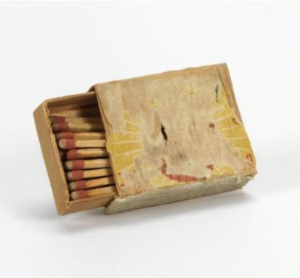
• A free exhibition exploring the “tricks, tools and elaborate plots that make up the secret world of spying and deception” has opened at IWM London. Spies, Lies and Deception features more than 150 objects including gadgets, official documents, art and newly digitised film and photography. Highlights include Operation Mincemeat mastermind Ewen Montagu’s private papers relating to the World War II plot – which fooled German High Command about the location of the next major Allied assault by planting a dead body with fake military documents off the Spanish coast – along with an oar from the submarine’s dinghy which deposited the body. There is also a box of matches with a match specially adapted for writing secret messages (pictured), footprint overshoes made by SOE (Special Operations Executive) in South-East Asia during World War II to disguise the wearer’s real footprints, and papier-mâché heads used to deceive snipers in World War I trenches. The exhibits also detail the work of the World War I Postal Censorships department – which examined letters sent to foreign locations including testing letters for invisible ink and tell the story of SOE operative Noor Inayat Khan – the first female wireless operator sent by SOE into Occupied France, she successfully transmitted messages to London for four months before being betrayed, captured and executed. There’s also a newly commissioned interview with Eliot Higgins, founder of Bellingcat, an international collective of researchers who used open source data to uncover the real identities of those responsible for the Salisbury Novichok poisonings in 2018, along with a photo album of double agent Kim Philby in Siberia after he escaped to the Soviet Union following his discovery in 1963. The free display can be seen until 14th April next year. For more, see iwm.org.uk/events/spies-lies-and-deception.
• A exhibition looking at the history of printing William Shakespeare’s plays has opened at the Guildhall Library. Folio 400: Shakespeare in Print covers everything from the printing of the small ‘Quartos’ of the late 16th century to the reworking of the text in the 18th century and the rediscovery of original texts in the 19th century. Running in parallel is a display at the City of London Heritage Gallery at Guildhall Art Gallery which features the library’s copy of the First Folio, widely regarded as one of the finest and most complete. Entry is free. Runs until 30th January. For more, see www.cityoflondon.gov.uk/things-to-do/history-and-heritage/guildhall-library.
• An exhibition centring on the spectacular light illuminations of the Georgian period has opened at Sir John Soane’s Museum. Georgian Illuminations celebrates the light shows of the period and the impressive and the elaborate temporary architectural structures created for them, often designed by leading architects and artists, including Sir John Soane. It featuresnewly discovered linen transparencies, which were back-lit in Georgian windows as patriotic decoration during the Napoleonic Wars, as well as a contemporary work by light artist Nayan Kulkarni light artist which sees the facade of the museum at Lincoln’s Inn Fields illuminated each night from dusk until about 11pm. A series of events accompanies the exhibition. Runs until 7th January, 2024. Entry is free. For more, see www.soane.org/exhibitions/georgian-illuminations,
Send all items to exploringlondon@gmail.com for inclusion.
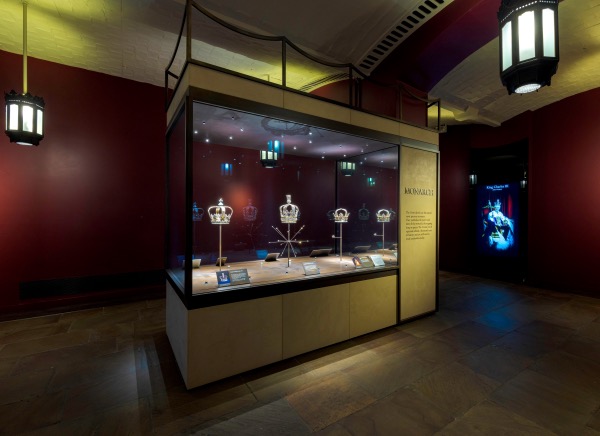
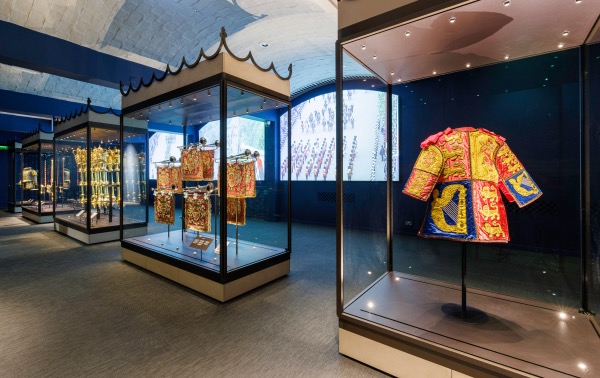
• A new display of the Crown Jewels opens in the Tower of London’s Jewel House tomorrow – the first major change to the display in more than a decade. Opening just weeks after the coronation regalia was used in the coronation of King Charles III and Queen Camilla at Westminster Abbey, the re-presentation of the jewels comes about thanks to a partnership between Historic Royal Palaces and royal jewellers Garrard and is the culmination of a four year project aimed at delving deeper into the history of the collection and coronations. The display, which features images from the recent coronation, starts with a celebration of the timelessness of monarchy featuring the State Crown frames worn by King George I, King George IV and Queen Victoria. It explains how historic jewels including the Black Prince’s Ruby have passed from crown to crown and explores the origins of the current jewels, starting with the destruction of the medieval coronation regalia in 1649. The story of gems including the Koh-i-Noor and Cullinan Diamond will also be explored while at the heart of the display is a room dedicated to the spectacle of the Coronation Procession. It ends with the Treasury containing more than 100 objects including the St Edward’s Crown of 1661, the Sovereign’s Sceptre with Cross and the Sovereign’s Orb. As an added spectacle, for nine nights in November, the Tower will also host a touring light and sound show, Crown and Coronation, which, created in partnership with Luxmuralis Artist Collaboration, will feature imagery and footage of monarchs and coronations past, along with images of the regalia. Images will be projected on buildings of the Inner Ward including the White Tower. The light and sound show, which will run at the Tower from 17th to 25th November, will tour the UK in 2024. Entry is included in general admission. For more, see www.hrp.org.uk/tower-of-london/whats-on/the-crown-jewels/.
• The almost 30-year conflict in Northern Ireland known as The Troubles is the subject of a new exhibition at the Imperial War Museum.Northern Ireland: Living with the Troubles, which opens tomorrow, features familiar objects including rubber bullets, propaganda posters and a Good Friday Agreement booklet as well as rarer items such as a screen-printed handkerchief made by UVF paramilitaries in the Long Kesh internment camp. There will also be the chance to hear first-hand testimonies including from republican and loyalist paramilitaries as well as British soldiers, local police and ordinary civilians, and the opportunity to see archival photography depicting hunger strike riots, army checkpoints and bomb wreckage. Admission is free. Runs until 7th January. For more, see www.iwm.org.uk/visits/iwm-london.
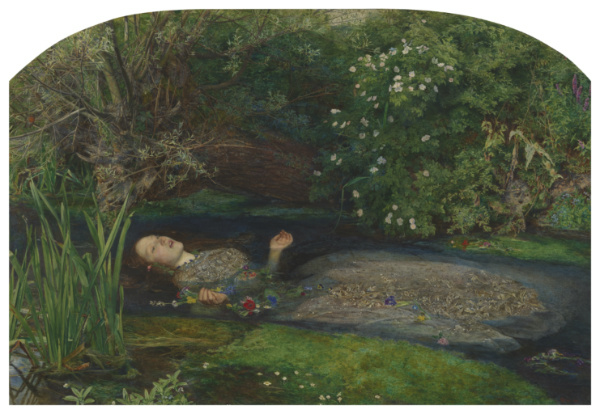
Sir John Everett Millais, Ophelia, 1851-2, Oil paint on canvas; Support: 762 × 1118 mm, frame: 1105 × 1458 × 145 mm PICTURE: Tate (Seraphina Neville)
•Tate Britain has completed a complete rehang of its free collection displays – the first for 10 years. Visitors can see more than 800 works by 350 artists including iconic treasures such as John Everett Millais’ Ophelia (pictured above), William Hogarth’s The Painter and his Pug, David Hockney’s A Bigger Splash, Barbara Hepworth’s Pelago and Chris Ofili’s No Woman, No Cry. The collection also includes more than 100 works by JMW Turner, rooms devoted to such luminaries as William Blake, John Constable, the Pre-Raphaelites and Henry Moore, and a series of changing solo displays exploring other ground-breaking artists such as Annie Swynnerton, Richard Hamilton, Aubrey Williams and Zineb Sedira. Some 70 of the works in the collection – ranging from Tudor portraits to contemporary installations – which have been acquired in the last five years alone. For more, see www.tate.org.uk.
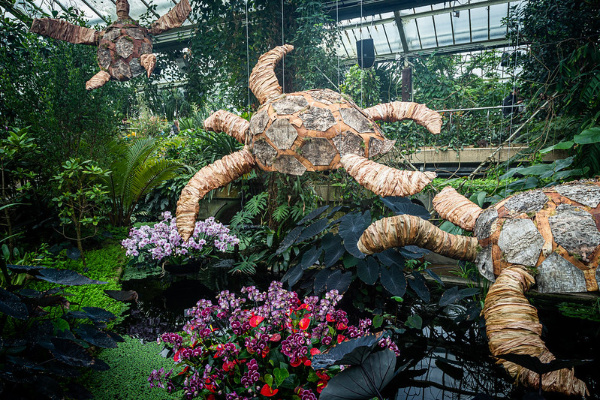
Part of the orchids display at Kew Gardens in February, 2022. PICTURE: Adrian Scottow (licensed under CC BY-SA 2.0)
• Kew Garden’s iconic Orchid Festival returns to the Princess of Wales Conservatory this Saturday. This year’s display takes its inspiration from the biodiversity of Cameroon – the first time it has celebrated the flora of an African nation. Highlights include giraffe sculptures and a troop of gorillas as well as arrangements featuring lions and hippos. The festival also includes ‘Orchids After Hours’ with music, food and drink. Runs until 5th March. Admission charge applies. For more, see www.kew.org.
• English Heritage Blue Plaques honouring anti-racist activist Claudia Jones, suffragette Emily Wilding Davison and Ada Salter, the first female mayor of a London borough, will be among those unveiled in London this year. English Heritage announced this year’s plaques will also honour 20th century violinistYehudi Menuhin, Princess Sophia Duleep Singh – a god-daughter of Queen Victoria and also a suffragette, and Marie Spartali Stillman, a Pre-Raphaelite model who appeared in paintings by the likes of Dante Gabriel Rossetti and Edward Burne-Jones. For more on the Blue Plaques scheme, see www.english-heritage.org.uk/visit/blue-plaques/.
• Images of Ukraine during its conflict with Russia go on show at the Imperial War Museum in Lambeth on Friday.Ukraine: Photographs from the Frontline features images taken by renowned photojournalist Anastasia Taylor-Lind which were taken during her time in Ukraine between 2014 and June, 2022. The exhibition is presented in three sections – the first focusing on the 2014 protests in Kyiv, the second on the ongoing conflict in eastern Ukraine and the third on Russia’s invasion in February last year. Runs until 8th May. Admission is free. For more, see www.iwm.org.uk/events/iwm-london-ukraine-exhibition.
Send items for inclusion to exploringlondon@gmail.com.
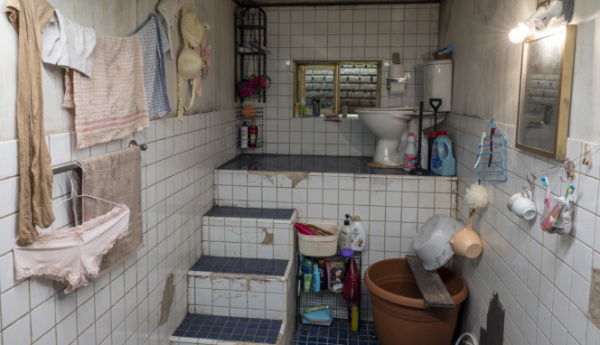
Installation image featuring re-creation of Parasite bathroom scene, at Hallyu! The Korean Wave at the V&A Ⓒ Victoria and Albert Museum, London
• From K-Pop to Parasite, the popular culture of South Korea is being celebrated in a new exhibition which opened at the V&A last weekend.Hallyu! The Korean Wave features around 200 objects across four thematic sections focused on the phenomenon known as ‘hallyu’ (meaning ‘Korean Wave’) which rose to prominence in the late 1990s and rippled across Asia before reaching across the world. Highlights including outfits worn by K-Pope idols PSY, Vespa and ATEEZ, an immersive recreation of Parasite’s bathroom set and monumental artworks by the likes of Nam June Paik, Ham Kyungah and Gwon Osang. There’s also fashion designs by Tchai Kim, Miss Sohee and Minju Kim, and early examples of advertising and branding, including an original poster from the Seoul Olympics, and the first Korean branded cosmetic from the 1910s. The display can be seen until 25th June next year. Admission charge applies. For more, see www.vam.ac.uk/exhibitions/hallyu-the-korean-wave.
• An exhibition which seeks to challenge perceptions about how video games interpret stories about war and conflict opens at the Imperial War Museum London on Friday.War Games: Real Conflicts | Virtual Worlds | Extreme Entertainment explores the relationship between video games and conflict through a series of 11 unique titles, including everything from Call of Duty: Modern Warfare to 2D artillery game Worms and a military training simulator, which, over the last 40 years, have reflected events from the First World War to the present. The display features immersive installations, never-before-displayed objects and perspectives from industry experts. There’s also a retro gaming zone and a programme of supporting events. Admission is free. Runs until 28th May next year. For more, see iwm.org.uk/events/war-games.
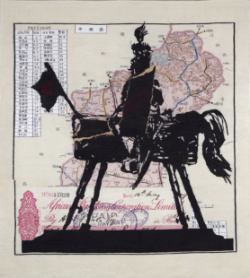
• The work of celebrated South African artist and Honorary Royal Academician William Kentridge has gone on show the Royal Academy. Spanning the artist’s 41 year career, William Kentridge brings together important works spanning from the 1980s through to the present day, including charcoal drawings, animated films, a mechanical theatre, sculptures, tapestries and performance pieces. Highlights include a selection of Kentridge’s early, rarely-seen drawings from the 1980s and 1990s including three triptychs displayed together for the first time and the most significant work from the period, The Conservationist’s Ball, (1985) as well as around 25 large charcoal drawings, made for the creative process of the eleven animated Drawings for Projection, and the installation Black Box / Chambre Noire, (2005), a mechanical theatre piece including puppets and projections, which interrogates the harrowing story of the massacre of the Herero people in Namibia, now considered the first genocide of the 20th century. The display in the Main Galleries can be seen until 11th December. Admission charge applies. For more, see roy.ac/kentridge.
Send all items for inclusion to exploringlondon@gmail.com
• A series of free art trails featuring globe sculptures that aim to increase understanding of the Transatlantic slave trade and its impacts have gone on show in several parts of central London. A national art project which spans seven UK cities,The World Reimagined is designed to bring to life the reality and impact of the slave trade in a bid to help make racial justice a reality. Among the artists involved in London are the project’s founding artist British-Nigerian Yinka Shonibare (who also chose the form of the sculptures), Nicola Green and Winston Branch and each has created a work responding to themes ranging from ‘Mother Africa’ and ‘The Reality of Being Enslaved’ to ‘Still We Rise’ and ‘Expanding Soul’. There are four trails in London, including in the City in London, Camden-Westminster, Hackney-Newham and Southwark-Lambeth. More than 100 artists are involved in the project overall. For more including details on where to find the trails, see www.theworldreimagined.org.
• Dadabhai Naoroji, an Indian Nationalist and the first Indian to win a popular election to Parliament in the UK, has been honoured with an English Heritage Blue Plaque at his former home in Penge. Known as the “grand old man of India” and described in his Times obituary as “the father of Indian Nationalism” following his death in 1917, Naoroji made seven trips to England and spent over three decades of his life in London, including at the red-bricked semi-detached house in Penge, south London, that was his home around the turn of the twentieth century and where the plaque is located. The plaque was unveiled last week ahead of the 75th anniversary celebrations of India’s independence. For more, see www.english-heritage.org.uk/visit/blue-plaques/.
Send all items for inclusion to exploringlondon@gmail.com
• A new exhibition exploring the Queen’s role during wartime opens at IWM London in Lambeth tomorrow. Part of a suite of events at IWM venues celebrating the Queen Elizabeth II’s Platinum Jubilee, Crown and Conflict: Portraits of a Queen in Wartime features 18 images drawn from the museum’s image archive which chart the Queen’s experience of war – from growing up during World War II when she served in the Auxiliary Territorial Service to her role in carrying out important public duties involving the armed forces, including at the annual Service of Remembrance. Among newly digitised photographs included in the display are an image of the Queen dressed in overalls and cap while working on a vehicle during her time in the ATS, and another showing her with her father, King George VI, and mother, Queen Elizabeth, during a visit to airborne forces in 1944. IWM London is also launching a dedicated trail of historic objects spread across five gallery spaces which explores the Royal Family’s long-standing association with the British armed forces. Objects include a Princess Mary Gift Fund box which was sent to those serving at Christmas in 1914. Runs until 8th January. Admission charge applies. For more, see www.iwm.org.uk/events/queens-platinum-jubilee-iwm-london.
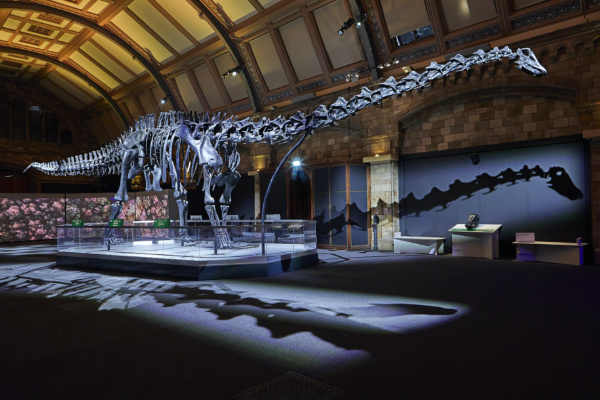
• Dippy the dinosaur is back for a limited time at the Natural History Museum in South Kensington from tomorrow. A free, temporary exhibition – Dippy Returns: the nation’s favourite dinosaur – gives visitors the chance to get up close and personal with the 26 metre-long dinosaur which first went on display at the museum in 1905. The display comes at the end of a record-breaking tour of the UK in which Dippy was seen by more than two million people. Can be seen until 2nd January. To book tickets, head to www.nhm.ac.uk.
• The first major exhibition to explore the history and future of cancer treatment and research opened at the Science Museum in South Kensington this week. Cancer Revolution: Science, innovation and hope features more than 100 objects including some never-before seen as well as information on cutting edge treatment and research, new artist commissions and installations, interactive exhibits and a breadth of personal stories. Runs until January, 2023. Admission is free but bookings required. For more, see www.sciencemuseum.org.uk/see-and-do/cancer-revolution-science-innovation-and-hope.
Send all items to exploringlondon@gmail.com for inclusion.
• A photograph of the Milky Way taken from the Cave of the Wild Horses in the southern Utah desert has won the Insight Investment Astronomy Photographer of the Year: People’s Choice Awards 2020. The stunning image by Bryony Richards was captured in the cave after a long hike through the desert. It was selected from 25 images short-listed by the Royal Observatory Greenwich. ‘Reflection of the Stars’ by Linh Nguyen won second place award and Qiqige (Nina) Zhao won third for ‘Anniversary of Apollo 11 Mission’. Meanwhile, the deadline for the Astronomy Photographer of the Year 13 competition run by the Royal Observatory Greenwich in association with BBC Sky at Night Magazine is looming – photographers need to have submitted their images by 12pm on 5th March. The overall winner of the competition will take home a top prize of £10,000 and see their image in the accompanying exhibition, which is scheduled to open at the National Maritime Museum on 18th September. For more details, see www.rmg.co.uk/astrocomp.
• The Mayor of Lambeth’s homemade ceremonial chain has been acquired by the Museum of London as part of its ‘Collecting COVID’ initiative. The chain was made by the mayor, Councillor Philip Normal, for the virtual ceremony in which he was created mayor on 22nd April, 2020, during the first national lockdown. Made of card and plaited t-shirt fabric, it features Lambeth’s coat of arms painted within a fluorescent pink oval with the words ‘Spectemur Agendo’ meaning, ‘Let us be judged by our acts’. For more on ‘Collecting COVID’, see www.museumoflondon.org.uk.
• An oil painting of Sir John Maitland by an unknown Anglo-Dutch artist, part of the art collection at Ham House in London’s south-west, is among artworks which are to undergo restoration thanks to a £3 million gift to the National Trust from American charity, the Royal Oak Foundation. The gift will support the Trust’s conservation work for the next five years mainly based at its specialist conservation studio in Knole, Kent. It was made in honour of the 125th anniversary of the National Trust, which cares for more than 200 historic properties containing more than a million objects – everything from artworks to furniture, textiles and ceramics. The painting of Sir John came to public attention in 2017 when X-ray analysis revealed what is believed to be an unfinished portrait of Mary, Queen of Scots, hidden underneath it. For more, see www.nationaltrust.org.uk.
• Looking further afield and a keepsake box containing mementos associated with Charles Darwin – including shells gathered on his famous voyage in the HMS Beagle – have been donated to English Heritage. The charity announced the gift this week to mark the 150th anniversary of the 1871 publication of his book, The Descent of Man and Selection in Relation to Sex. The red leather box and its contents will go on display at Down House in Kent later this year following conservation work. Charles and Emma Darwin initially gave the box to their eldest daughter Annie but, following her death at the age of 10 in 1851, it passed to her sister Henrietta, known as “Etty”. Among the souvenirs placed in it were locks of hair belonging to different members of the Darwin family (including Emma and Henrietta), a silk handkerchief embroidered with Charles’ initials CD, and the shells which his daughters later carefully labelled using scrap paper from the naturalist’s draft manuscripts. English Heritage is appealing for donations for the care and display of the box. To support the work, head to www.english-heritage.org.uk/support-us/.
Send all items for inclusion to exploringlondon@gmail.com.
A waterway said to have been cut by the Viking Canute (also spelled Cnut) in the 11th century, the canal, according to the story, was constructed so his fleet of ships – blocked by London Bridge – could get upstream.
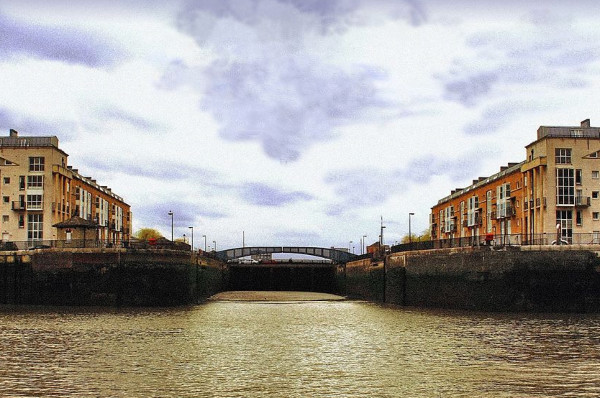
The entrance to Greenland Dock from The Thames in 2012 – one of the many places posited as the location where Canute’s Canal started. PICTURE: Public Domain
The story goes that in May, 1016, the Dane Canute (and future King of England), led an army of invasion into England to reclaim the throne his father, Sweyn Forkbeard, had first won three years earlier.
Canute needed to get his ships upriver of London Bridge to besiege the city which was held by the Saxons under Edmund Ironside (made king in April after his father Athelred’s death) but was blocked by the fortified, although then wooden, London Bridge.
So Canute gave orders for the digging of a trench or canal across some part of Southwark so his ships could pass into the river to the west of the bridge and he could encircle the city.
The canal – also known as ‘Canute’s Trench’ – was duly dug and the city was besieged – although the Vikings lifted the siege without taking the city (which does seems like a lot of work for not much result in the end) and the war was eventually decided elsewhere.
Various routes of the canal have been posited as possibilities – including the suggestion that there was an entry at Rotherhithe (Greenland Dock has been sited as one location) and exit somewhere near Lambeth or further south at Vauxhall (and one possibility is that Canute, rather than digging a long canal, simply cut through the bank holding back the Thames on either side of London Bridge and flooded the lands behind).
Various waterways have also been identified with it including the River Neckinger, parts of which survive, and the now lost stream known as the Tigris.
Whether the canal actually existed – and what form it took – remains a matter of some debate (although the low-lying, marshy land of Southwark at the time surely would have helped with any such project). But whether lost or simply mythical, the truth of ‘Canute’s Canal’ remains something of a mystery. For the moment at least.
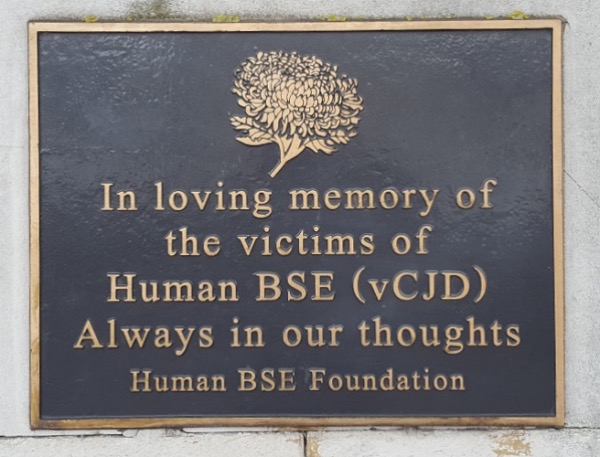
Located on the Albert Embankment outside St Thomas’ Hospital just to the south of Westminster Bridge, is a small plaque commemorating the victims of Human BSE (bovine spongiform encephalopathy), sometimes referred to as the human form of ‘Mad Cow Disease’.
The memorial, which was erected by the now defunct Human BSE Foundation, reads: “In loving memory of the victims of Human BSE (vCJD). Always in our thoughts.” There’s also an image of a chrysanthemum, a flower sometimes placed on graves to honour the dead.
It was reported in March, 2010, that since 1990, 168 people have died from Human BSE, also known as vCJD (variant Creutzfeldt–Jakob disease).

 Exploring London