Old Masters have been removed from the Picture Gallery at Buckingham Palace for the first time in almost 45 years to allow for essential maintenance works. The works, which include paintings by Titian, Rembrandt, Vermeer, Van Dyck and Canaletto, will be featured in a landmark new exhibition – Masterpieces from Buckingham Palace – which, featuring some 65 artworks in total, opens in the palace’s Queen’s Gallery on 4th December. They have been removed from the Picture Gallery – one of the palace’s State Room where Old Master paintings have hung since the reign of King George IV in the 1820s – over a period of four weeks to allow for building improvements which will include the replacement of electrics and pipework – some of which has not been updated since the 1940s – as well as the gallery’s roof. The refurbishment is part of a £370 million, 10 year refit programme being carried out at the palace due for completion in 2027.
Areas of London
This Week in London – Female pirates at Wapping; historic Zoom backgrounds; and, new virtual tours of London’s hidden Underground…
• As controversy continues to swirl around the statue dedicated to Mary Wollstonecraft in Newington Green, another statue was unveiled in London this week – this time depicting two women pirates which some accounts say were lovers. The statue of Mary Read and Anne Bonny was unveiled at Execution Dock on the north bank of the Thames at Wapping – a site where pirates and smugglers were put to death for more than 400 years. Commissioned by audiobook company Audible to mark the release of a podcast, Hell Cats, a dramatic interpretation of the two women’s lives, the statue of Read and Bonny is the work of artist Amanda Cotton. Early next year it will be relocated to Burgh Island off the south Devon coast.
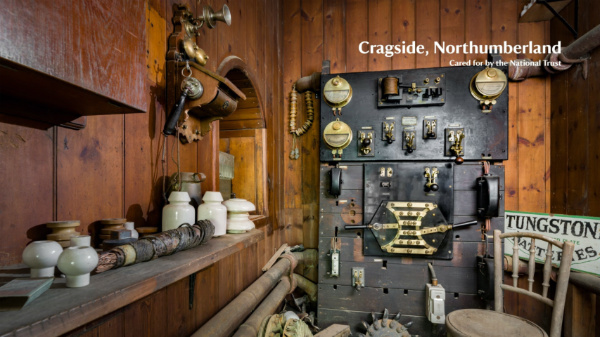
• The National Trust has released a series of six free downloadable backdrops – featuring some of the star interiors from its properties – for use in virtual meetings. The backdrops on offer include Vita Sackville-West’s writing room in the tower at Sissinghurst Castle in Kent, Agatha Christie’s library at Greenway, and the ‘Office of the Caretaker of the Electric Light’ at Cragside (pictured above). Different backgrounds will come online in coming weeks. Head to www.nationaltrust.org.uk/features/virtual-backgrounds-for-zoom.
• The London Transport Museum has unveiled three new virtual tours taking in the Holborn (Kingsway) area, Brompton Road station and King William Street station. The tours, part of the museum’s Hidden London programme, provide access to areas not usually open to the public as well as to historic archival material and footage from the museum’s collection and are led by expert guides on Zoom. Admission charges apply. For more, including dates, see www.ltmuseum.co.uk/hidden-london/virtual-tours.
Send all items for inclusion to exploringlondon@gmail.com
10 London buildings that were relocated…9. St Andrew’s Church…
Formerly a noted church in London’s West End, St Andrew’s Church now has a new life in Kingsbury.
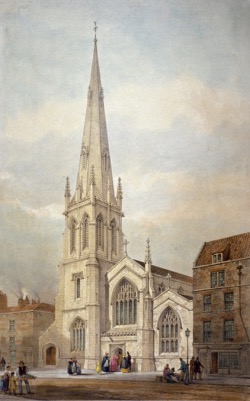
The church’s origins go back to its construction in Wells Street, Marylebone, in the mid-19th century. Designed by Samuel Daukes, the church, the construction of which began in 1845, was completed in February, 1847.
St Andrew’s soon become one of the city’s most fashionable churches (Prime Minister, William Gladstone, was an occasional worshipper).
Rev Benjamin Webb was vicar between 1862-85 – a time when the church was known for its High Anglican services, and it was during his tenure that the church’s rather splendid interior fittings were added.
These included a reredos (featuring five sculptures by James Redfern) designed by GE Street, a high altar by Augustus Pugin, a brass reading desk by William Butterfield and a litany desk by William Burges (now in the V&A).
By the start of the 20th century, the area around the church was being transformed as residences gave way to commercial property and warehouses. The congregation dwindled and eventually the church was declared redundant, its doors closing on Easter Sunday, 1931.
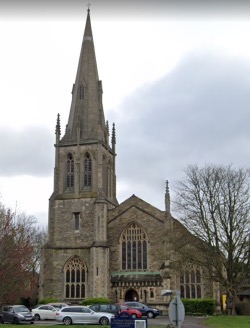
PICTURE: Google Maps
The church was set to be demolished but there was an outcry and eventually a proposal to relocate it to Kingsbury, in London’s north-west, where there was a congregation urgently needing a new building.
The church was carefully dismantled – each stone labelled and numbered – and then transported 10 miles to Kingsbury where it reconstructed in Old Church Lane.
The rebuild – described at the time as putting together “the biggest jigsaw in the world” (yes, it’s a somewhat overused phrase when it comes to building relocations) – took three years and involved making as few changes to the former structure as possible.
The building was finally reconsecrated on 13th October, 1934, by Arthur Foley Winnington Ingram, the Bishop of London. St Andrew’s Kingsbury remains in use as a church today.
LondonLife – Signs of the times (III)…

Spotted in Old Compton Street, Soho. PICTURE: Kevin Grieve/Unsplash
Exploring London’s 100 most popular posts of all time! – Numbers 42 and 41…
The next two in our 10th bithday countdown…
This Week in London – Mary Wollstonecraft controversy; ‘Faint Signals’; National Gallery’s new digital partnership; and, have your say on City of London landmarks…
• A controversial new statue commemorating feminist icon Mary Wollstonecraft was unveiled in Newington Green, near where Wollstonescraft lived and opened a girls’ school, in the city’s north this week. Designed by British artist Maggi Hambling, A Sculpture for Mary Wollstonecraft depicts a small nude female figure – described by those behind the campaign for the statue as “Everywoman, her own person, ready to confront the world” – rising out of other, intermingled, female forms below. Hambling said she wanted the sculpture to reflect Wollstonecraft’s spirit, rather than her likeness. The statue’s unveiling is the culmination of a 10 year campaign to see a statue for Wollstonecraft led by author Bee Rowlatt. The statue has already been the target of protestors who have reportedly used black tape, COVID masks, and a T-shirt to cover it up.

• A new work set in an imagined Yorkshire forest and looking at how natural sound has changed over the last 50 years has gone online this week. Commissioned by the British Library, Faint Signals is the work of Yorkshire-based interactive arts studio Invisible Flock and allows people to explore Yorkshire’s flora, fauna, and wildlife – both past and present. Launched to mark World Science Day on Tuesday, the work can be visited until 2nd January. Head here faintsignals.io.

• The National Gallery has launched a new collaboration with camera maker Nikon to showcase the gallery’s works and “explore the synergies between photography and fine art”. In the first collaboration of its kind, the “digital content partnership” will see the gallery work with Nikon to produce a range of online content over the next year. This kicks off with an exploration of Jan van Kessel the Elder’s 1654 work, Butterflies, Moths and Insects with Sprays of Common Hawthorn and Forget-Me-Not, under the Picture of the Month series (the concept of ‘Picture of the Month’ dates back to 1942, when a single painting was returned to the gallery each month from the disused Welsh slate mine where the collection was kept for safety during World War II). The painting is explored in depth in a range of ways on the gallery’s website including through two short films. Further online films, talks and events are planned. For more on the Picture of the Month, head to the National Gallery website.
• Londoners still have two weeks to have their say on what should happen to statues and other landmarks in the City of London which have links to slavery and historic racism. The City of London Corporation said it has received more than 800 responses since launching the consultative exercise in September in which it’s asking people to give their views on which landmarks – including statues, street and building names – they think are a problem, and what action they think should be taken. Among those monuments which have been mentioned to date are statues at Guildhall depicting former Lord Mayor William Beckford and MP and philanthropist Sir John Cass, both of whom profited from the slave trade. In September, the Sir John Cass’s Foundation Primary School in the City announced it was changing its name to The Aldgate School to break the link with its controversial founder. Head to www.cityoflondon.gov.uk/historiclandmarksconsultation by 24th November to take part.
Send all items for inclusion to exploringlondon@gmail.com
10 London buildings that were relocated…8. Temple Bar…
This ornate Baroque archway only stands with walking distance from where it originally stood marking the entrance to the City of London. But it came to this position by a somewhat roundabout route.
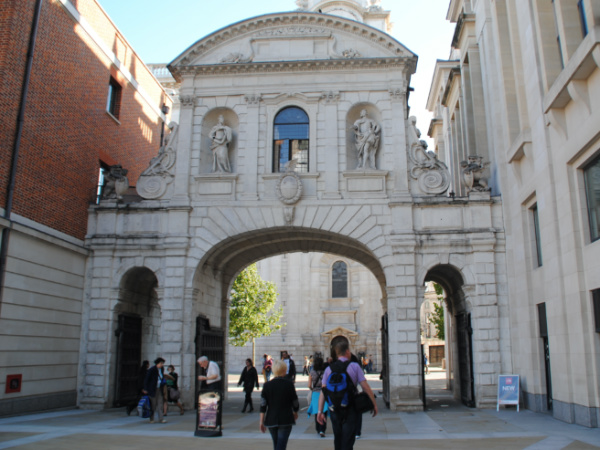
The gate was originally constructed at the junction where Fleet Street becomes the Strand, it marked the boundary between the City of London and Westminster.
While the first gate on the site dates back to the 14th century (prior to that the boundary was apparently marked with a chain two posts), the gate we see today dates from 1672 when, despite having survived the Great Fire of London, the previous gate – a crumbing wooden structure – was demolished and this upmarket replacement built to the design of none other than Sir Christopher Wren (earlier designs for the gate created by Inigo Jones were never acted upon).
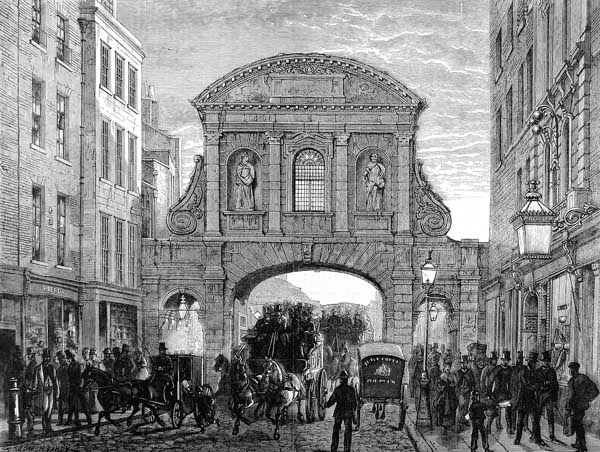
Made of Portland stone, the new structure featured figures of King Charles I and King Charles II on the west side and King James I and Queen Anne of Denmark on the east (it’s said that a third of the total £1,500 cost was spent on the statuary alone).
Shortly after its construction, it became a location for the display of the remains of traitors (usually heads), the first of which were the body parts of Rye House plotter Sir Thomas Armstrong and the last of which was the head of Jacobite Francis Towneley in 1746 (there’s also a story that such was the interest when the heads of the Rye House plotters – who had planned to assassinate King Charles II and crown his brother, the future King James II, in his place – were displayed, telescopes were rented out so people could get a closer look).
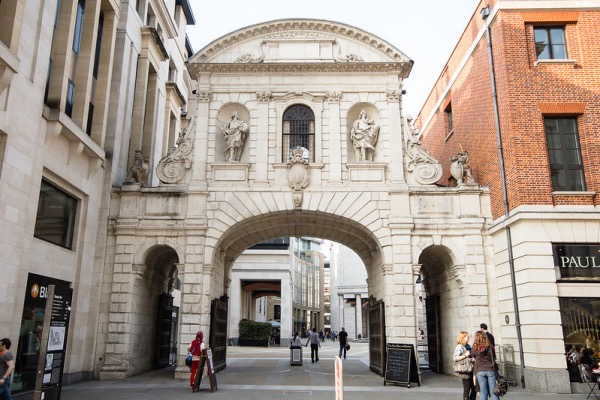
Among the luminaries who passed under the central arch were Anne Boleyn (the day before her coronation) and Queen Elizabeth I. The Queen did so most famously on her way to give thanks in St Paul’s Cathedral for the English victory over the Spanish Armada and since then, whenever a Sovereign has wanted to enter the City past Temple Bar, there’s been a short ceremony in which the Sovereign asks permission of the Lord Mayor of London to enter. Granting this, the Mayor then offers the Sword of State as a demonstration of loyalty and this is subsequently carried before the Sovereign as they proceed through the City as a sign of the Lord Mayor’s protection.
The Temple Bar stood in its original location until 1878 when, to help traffic flow, it was carefully removed brick-by-brick over a period of 11 days (the City of London Corporation well aware of its historical significance) . It was initially intended that the gateway would be rebuilt somewhere else in the city, but time passed and no suitable site was found.
Instead, the gate lay in pieces in a yard in Farringdon Road before, in the mid 1880s, Sir Henry Bruce Meux had all 2,500 stones transported via trolleys pulled by horses to his estate at Theobalds Park in Hertfordshire and re-erected there as a gateway (the Lady Meux apparently used the small upper room for entertaining – among those said to have dined here was King Edward VII and Winston Churchill).
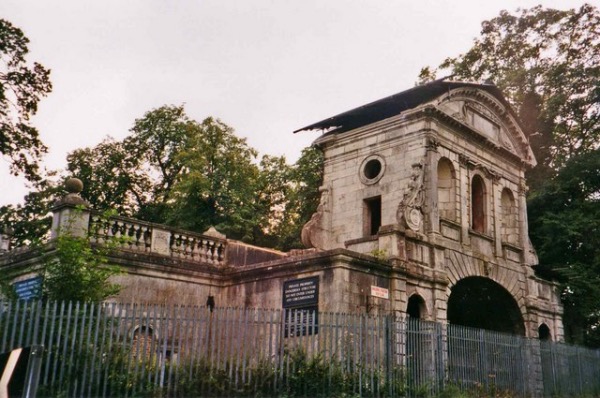
In 1976, the Temple Bar Trust was formed to have the archway returned to London – they eventually succeeded 30 years later in 2004 when it was re-erected on its current site between St Paul’s and Paternoster Square at a cost of some £3 million.
The original site of the Temple Bar is now marked with a Victorian era memorial – erected in 1888 – which features statues of Queen Victoria and Edward, the Prince of Wales.
Treasures of London – Chiswick House Conservatory…
While the lockdown means buildings are now closed, we continue with our regular series for visits at a later time…

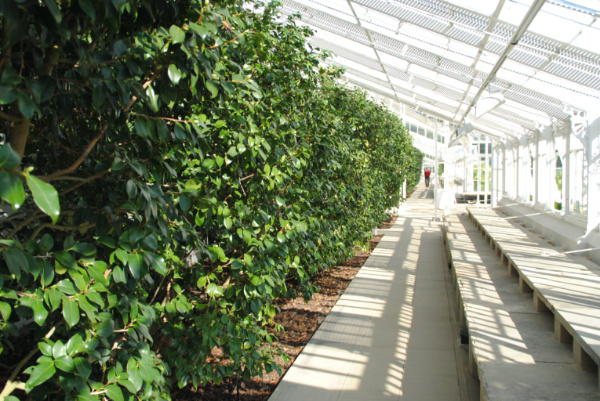
This 300 foot long, now Grade I-listed, conservatory was constructed on the orders of the 6th Duke of Devonshire in the grounds of the neo-Palladian Chiswick House to the west of London and completed in 1813.
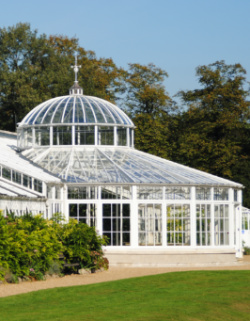
Then one of the largest of its kind in the world, the conservatory was designed by Samuel Ware (he also designed the Burlington Arcade in Piccadilly) and while its east and west ranges are of a conventional design, its centre features an unusual domed roof.
The conservatory, which was built on land which the duke had acquired by buying a neighbouring estate, is seen as a forerunner to Decimus Burton’s famous building at Kew Gardens as well as Joseph Paxton’s conservatory at Chatsworth and even the Crystal Palace itself.
In 1828, the Duke filled it with his exotic collection of camellias. The glasshouse now stands at the heart of Chiswick House’s annual Camellia Festival.
The collection of camellias is, of course, a treasure in its own right. It was first created by the 6th Duke and his gardener, William Lindsay, with plants acquired from Alfred Chandler’s nursery in Vauxhall.
The collection includes 33 different varieties, including some of the earliest introduced to the UK, and one of the rarest plants in the world – a deep pink camellia japonica known as ‘Middlemist’s Red’ which was originally brought to Britain from China in 1804 by Shepherds Bush nurseryman John Middlemist, and apparently presented by one of his descendants to Chiswick sometime after 1823.
For more, see www.chiswickhouseandgardens.org.uk.
10 London buildings that were relocated…7. St Luke’s, Euston Road…
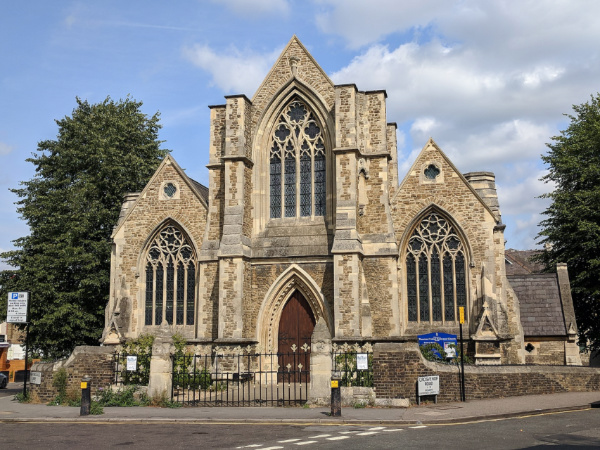
St Luke’s briefly stood on Euston Road before, thanks to the growing demands of the railways, it was demolished and subsequently rebuilt, brick-by-brick in Wanstead.
Designed by John Johnson (one of the architects of St Paul’s Church, Camden Square), this church was erected on the corner of Euston and Midland Roads between 1856 and 1861. It replaced a temporary iron church which had been erected on the site in the early 1850s.
But the construction in the mid-1860s of St Pancras railway station by the Midland Railway – and the compulsory acquisition of the land – meant the church had to be removed.
While the congregation, compensated with some £12,500 by the railway company, relocated to Kentish Town, the church building itself was sold to another congregation for £500.
Demolished, it was subsequently transported to Wanstead where it was it was rebuilt in 1866-67, with some alterations by Johnson who oversaw the process.
Now the Wanstead United Reformed Church (it changed denominations), it was designated a Grade II-listed building in 2009, partly due to it being one of few examples of a church which has been moved and substantially reconstructed to its original form by the original architect.
LondonLife – New Blue Plaque for sculptors…
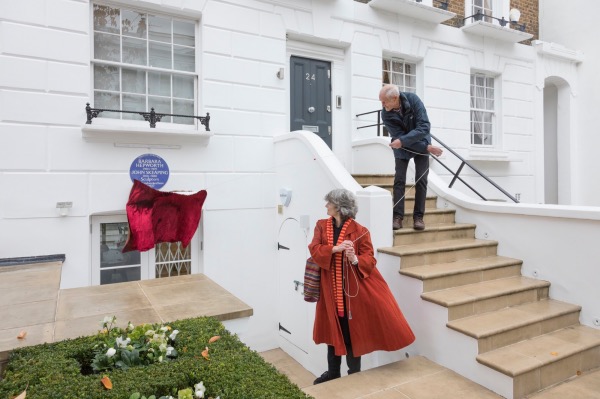
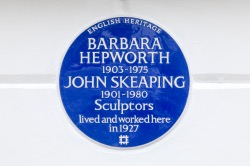
Twentieth century sculptors Barbara Hepworth (1903-1975) and John Skeaping (1901-1980) have been recognised with an English Heritage Blue Plaque at their former home in St John’s Wood. The couple lived in the basement flat at 24 St Ann’s Terrace for less than a year in 1927 but during that time held a joint exhibition (Hepworth’s first ever) in the studio, located in a former billiards room at the rear of the house. The room was also where Hepworth created one of her earliest Mother and Child sculptures as well as works including Doves and Seated Figure. Present at the unveiling last Friday were Sophie Bowness, Barbara Hepworth’s grand-daughter, and Nicholas Skeaping, John Skeaping’s son. For more, on English Heritage Blue Plaques, head to www.english-heritage.org.uk/visit/blue-plaques/.
What’s in a name?…Maiden Lane

The origins of this narrow Covent Garden street – which runs between Southampton and Bedford Streets – go back centuries and there’s a couple of possible explanations for its name.
One is that it was named for the statue of the Virgin Mary which once stood in the thoroughfare. The other is that its name is actually a corruption of ‘Midden Lane’ which refers to the garbage heaps or ‘middens’ once located here. It’s the second which, given its location on what was a garden, seems more likely.
The one-way street, which was apparently built on the route of a more ancient track, is famous for being the site of the house in which painter JMW Turner was born in 1775 as well as the location of the White Wig inn, noted as the establishment Voltaire lodged in when exiled from Paris in 1727-28.
Maiden Lane is also the location of the famous restaurant Rules, and of the Grade II-listed Corpus Christi Roman Catholic Church (this wasn’t built until the 1870s so doesn’t appear to be connected to the earlier story of the statue).
The lane was apparently a cul-de-sac at the Southampton Street end (a footpath ran through to the street) until 1857 when it was extended to join up with the street. The story goes that this was done so that Queen Victoria’s carriage didn’t have to turn around after leaving her at the Adelphi Theatre on The Strand.
This Week in London – JMW Turner’s world at the Tate; ‘Unknown Warrior’ centenary marked at National Army Museum; and, model making from the ‘age of railways’…
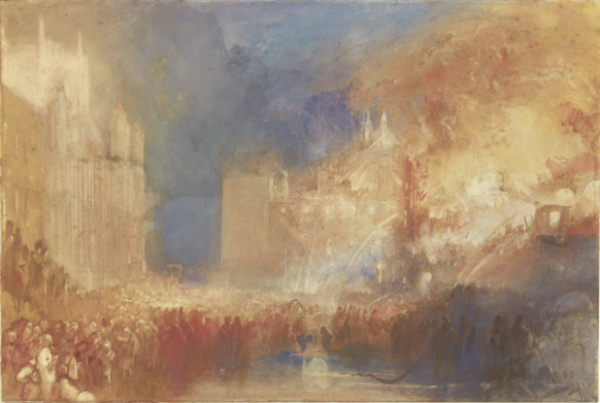
• A landmark exhibition on the work – and times – of JMW Turner opens at the Tate Modern in Millbank today. Turner’s Modern World features some 160 works and attempts to show how the landscape painter found “new ways to capture the momentous events of his day, from technology’s impact on the natural world to the dizzying effects of modernisation on society”. Highlights include war paintings such as The Battle of Trafalgar (1806-8) and Field of Waterloo (1818), works capturing political events like The Burning of the Houses of Lords and Commons (1835) and maritime disasters like A Disaster at Sea (1835) and Wreck of a Transport Ship (c1801), as well as works related to the industrial advances taking place such as Snow Storm (1842), The Fighting ‘Téméraire’ (1839), and Rain, Steam and Speed (1844). Admission charge applies. Runs until 7th March (online booking required). For more, see www.tate.org.uk.
• An exhibition at the National Army Museum in Chelsea marks the 100th anniversary of the Unknown Warrior being laid to rest in Westminster Abbey. Using objects, paintings, photography and personal testimony, Buried Among Kings: The Story of the Unknown Warrior tells the story of the creation of this symbolic memorial dedicated to the hundreds of thousands of British servicemen who died during World War I. Highlights include a union flag on loan from the Railton family (it was Chaplain David Railton who conceived the original idea for an Unknown Warrior following an encounter in 1916 with a wooden cross on the Western Front which was inscribed ‘An Unknown British Soldier’), a Bible carried by Chaplain George Kendall during the selection of the Unknown Warrior, a fragment of the original wooden Cenotaph erected in 1919-1920, and Frank O Salisbury’s large scale painting, The Passing of the Unknown Warrior, which depicts the procession of the Unknown Warrior from Victoria Station to Westminster Abbey. In connection with the exhibition, Victoria Station is hosting a pop-up display between 9th and 16th November on the journey of the Unknown Warrior from the Western Front to Westminster Abbey (the coffin actually arrived in London on 10th November, 1920). Admission charge applies (at Chelsea). Runs until 14th February (online booking required). For more, see www.nam.ac.uk.
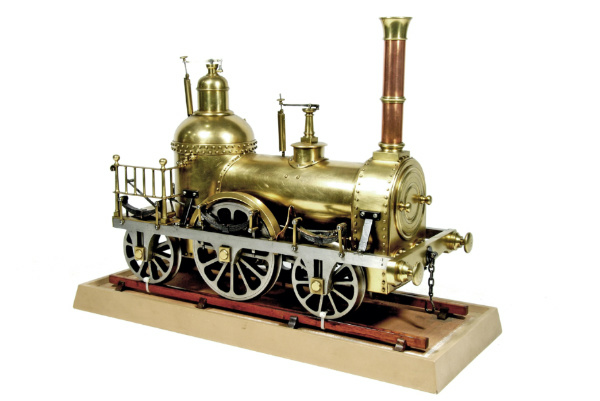
• Model making in the “age of the railways” is the subject of a free exhibition now on at the Science Museum in South Kensington. Brass, Steel and Fire features intricate models from the Science Museum Group Collection as well as stunning miniature locomotives and a display of almost 200 tools used by model-maker Keith Dodgson. Highlights include ‘Salamanca’, the world’s oldest model locomotive (on loan from Leeds Museums and Galleries), a model of ‘Fire King’ – made in the 1840s by apprentice Josiah Evans who used his experience to later build full size locomotives, and the world’s oldest working model steam engine, the Etherley winding engine model. The exhibition is free and runs until 3rd May. Online booking required. For more, see sciencemuseum.org.uk/see-and-do/brass-steel-and-fire.
Send all items for inclusion to exploringlondon@gmail.com
10 London buildings that were relocated…6. The spire of St Antholin…
Of medieval origins,the Church of St Antholin, which stood on the corner of Sise Lane and Budge Row, had been a fixture in the City of London for hundreds of years before it was destroyed in the Great Fire of 1666.
Rebuilt to the designs of Sir Christopher Wren, it survived until 1874 when it was finally demolished to make way for Queen Victoria Street.
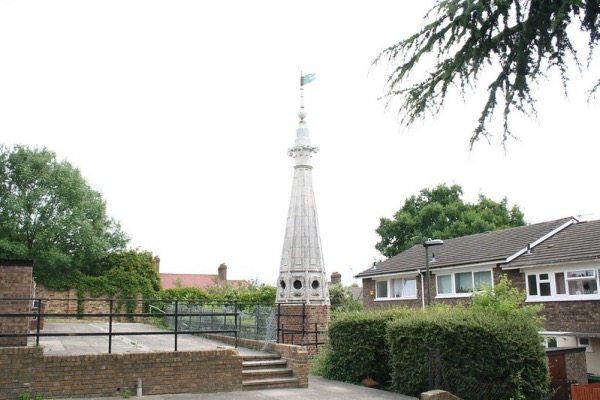
But, while the building itself was destroyed (and we’ll take a more in-depth look at its history in an upcoming article), a section of Wren’s church does still survive – the upper part of his octagonal spire (apparently the only one he had built of stone).
This was replaced at some stage in the 19th century – it has been suggested this took place in 1829 after the spire was damaged by lightning although other dates prior to the church’s demolition have also been named as possibilities.
Whenever its removal took place, the spire was subsequently sold to one of the churchwardens, an innovative printing works proprietor named Robert Harrild, for just £5. He had it re-erected on his property, Round Hill House, in Sydenham.
Now Grade II-listed, the spire, features a distinctive weathervane (variously described as a wolf’s head or a dragon’s head). Mounted on a brick plinth, it still stands at the location, now part of a more modern housing estate, just off Round Hill in Sydenham.
Where’s London’s oldest…(still-in-use) bridge?
There’s several candidates for the title (and, of course, it depends on what exactly we mean). So here we go…
First up is the Clattern Bridge, which crosses the River Hogsmill (a small river which runs into the Thames), in Kingston upon Thames in the city’s south-west.
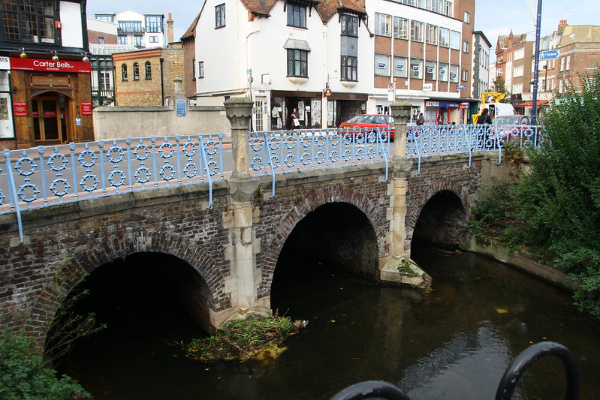
The earliest known reference to this three-arched bridge dates back to 1293 and the medieval name, ‘Clateryngbrugge’, is thought to refer to the sound horses’ hooves made as they clattered across.
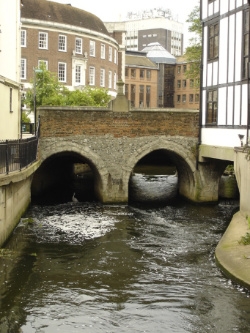 While the bridge (pictured above and right), which had replaced an earlier wooden Saxon bridge, was altered in the 18th and 19th centuries, its Historic England Grade I listing notes that it remains a “good example of a medieval multi-span bridge which survives well” and includes some “impressive medieval masonry”.
Second is another Grade I-listed bridge that doesn’t even cross a river but rather a moat at Eltham Palace in the city’s south-east.
The stone north bridge, now the main entrance to the palace, is described by English Heritage as “London’s oldest working bridge” – although it’s not as old as the Clattern Bridge.
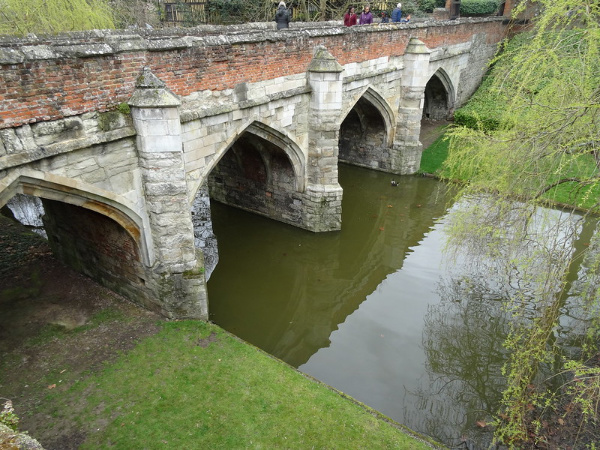
It was constructed in 1390 on the orders of King Richard II, replacing an earlier wooden bridge (it was apparently Geoffrey Chaucer – yes, that Geoffrey Chaucer – who supervised the building works as part of his job as Clerk of the Works to Eltham Palace).
The bridge features four arches, pointed cutwaters with chamfered tops on the outside and a red brick parapet on top.
Thirdly, is the Richmond Bridge which, although not in the same (medieval) league as the previous two, is the oldest bridge crossing the Thames.
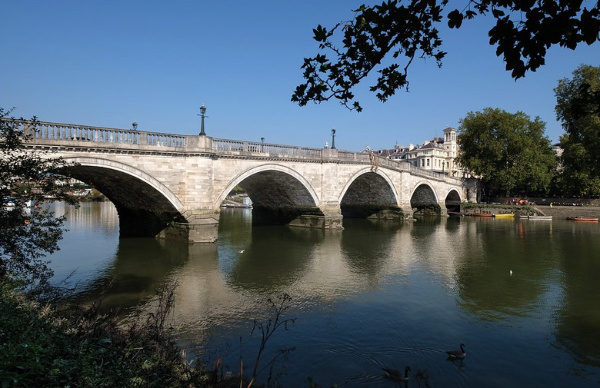
The now Grade I-listed structure was built between 1774 and 1777 as a replacement for a ferry crossing and while it was slightly altered in 1939-40, it remains substantially original.
PICTURE: Top – Clattern Bridge (Maureen Barlin/licensed under CC BY-NC-ND 2.0); Right – Julian Walker (licensed under CC BY-NC-ND 2.0); Middle – The bridge at Eltham Palace (John K Thorne/Public domain); Bottom – Richmond Bridge (Marc Barrot/licensed under CC BY-NC-ND 2.0)
Lost London – The Tower Royal…
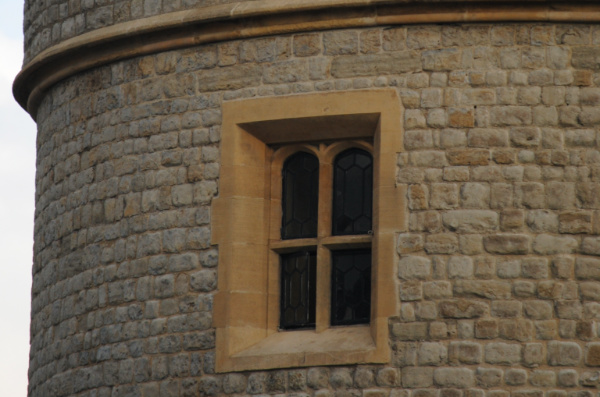
Dating possibly from as far back as the early medieval period, this royal lodging once stood in the City of London.
The building, which has been described variously as a palace as well as a strongly defended tower house, was located in the parish of St Michael Paternoster and gave its name – Tower Royall – to the street in which it was located (now long gone).
It has been suggested the property could date from as far back as the reign of King Henry I in the early 12th century and it has also been said that King Stephen is said to have lodged there later that same century (although some put the origins a bit later, possibly in the reign of King Edward I, who ruled from 1272 to 1307).
It was apparently in the possession of King Edward III in 1320 – he is said to have granted it to his wife, Queen Phillippa, who enlarged it and established her wardrobe there (hence it was sometimes referred to as the ‘Queen’s Wardrobe’).
On Queen Phillippa’s death, the king is said to have granted it to the Dean and Canons of Westminster but by 1371 it was apparently back in royal hands – Joan of Kent, the mother of the future King Richard II was living there at that time (Richard when king, apparently rode there to tell her of the suppression of the Peasant’s Revolt in 1381).
It is said to have been given to the Duke of Norfolk by his friend, King Richard III, in the 15th century, but, according to 16th century historian John Stow, by 1598 it had fallen into disrepair and was used for stabling the king’s horses.
The premises – believed to be located close to what is now Cannon Street, not far from Mansion House Tube Station – was among the buildings destroyed in the Great Fire of 1666. It was not rebuilt.
This Week in London – The ‘Fight for Women’s Rights’ at the British Library; ghosts at Hampton Court Palace; and, Arctic culture at the British Museum…

• The history of the women’s rights movement and the work of contemporary feminist activists is the subject of a new exhibition opening at the British Library tomorrow. Unfinished Business: The Fight for Women’s Rights, the opening of which was delayed due to the coronavirus pandemic, features everything from personal diaries and banners to subversive literature, film, music and art. Highlights include protest poems written by Sylvia Pankhurst on toilet paper in Holloway Prison following her imprisonment for seditious activity in January 1921, a first edition of Jane Austen’s debut novel, Sense and Sensibility, published anonymously ‘By a Lady’ in 1811, and, football boots belonging to Hope Powell, a veteran player who became the first woman to manage England Women in 1998. There’s also records of surveillance carried out on Sophia Duleep Singh, one of Queen Victoria’s god-daughters and a supporter of campaigns for women’s suffrage, and a piece of fence wire cut by writer Angela Carter’s friends and sent to her as a present from RAF Greenham Common in Berkshire where they were protesting against nuclear missiles. Runs until 21st February next year. Admission charge applies. For more, see www.bl.uk.
• Like a good ghost story? Hampton Court Palace is launched a new self-guided ‘Creepy Stories and Ghostly Encounters’ trail on Saturday. The trail takes in sites including those where the ‘Grey Lady’ – said to be the ghost of Tudor nursemaid – has appeared since Victorian times, the locations said to be haunted by two of King Henry VIII’s queens – Jane Seymour and Catherine Howard, and the site where a spectral figure was captured on film slamming shut a door in 2003. The palace is also unveiling a new display of carved pumpkins in the Royal Kitchen Garden. Entry charge applies. For more, see www.hrp.org.uk/hampton-court-palace/.
• The first major exhibition on the history of the Arctic and its Indigenous people, through the lens of climate change and weather, has opened at the British Museum. The Citi exhibition, Arctic: culture and climate, reveals how Arctic people have adapted to climate variability in the past and are facing today’s weather challenges. It features everything from rare archaeological finds, unique tools and clothing as well as artworks and contemporary photography with highlights including an eight-piece Igloolik winter costume made of caribou fur and an Inughuit (Greenlandic) sled made from narwhal and caribou bone and pieces of driftwood which was traded to Sir John Ross on his 1818 expedition as well as artworks commissioned specifically for the exhibition. These include an Arctic monument of stacked stones, known as an Inuksuk – used to mark productive harvesting locations or to assist in navigation – which was built by Piita Irniq, from the Kivalliq Region of Nunavut, Canada. Can be seen in the Sainsbury Exhibitions Gallery until 21st February. Admission charge applies. For more, see www.britishmuseum.org.
Send all items for inclusion to exploringlondon@gmail.com.
10 London buildings that were relocated…5. The Wellington Clock Tower…
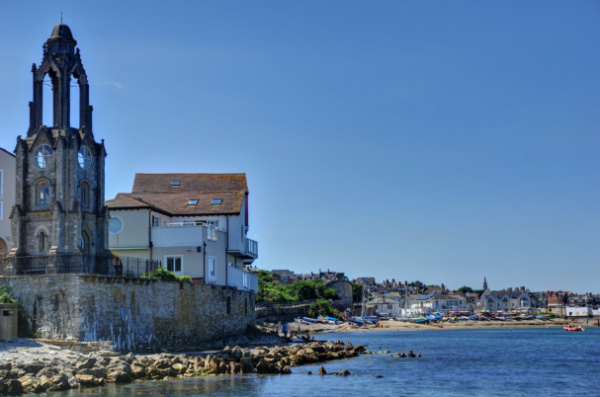
Now situated on the seafront of the town of Swanage in Dorset, the Wellington Clock Tower was originally located at the southern end of London Bridge.
The tower was erected in 1854 as a memorial to the Duke of Wellington, Arthur Wellesley, who had died two years earlier.
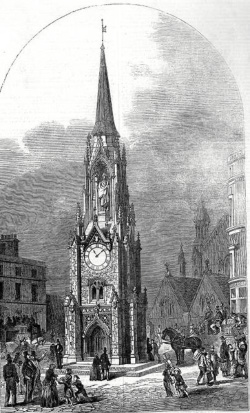
Tower depicted in the London Illustrated
News in June, 1854
Its construction was funded through public subscription and contributions of railway companies with the support of the Commissioners for Lighting the West Division of Southwark. It was designed in the Perpendicular Gothic style by Arthur Ashpitel and, after the foundation stone was laid on 17th June, 1854, took six months to build.
The three level structure, which was topped with a tall spire, housed a clock with four faces. The clock was made by Bennett of Blackheath for the 1851 Great Exhibition but the constant rumbling of the carts passing its new location apparently meant the mechanism never kept good time.
There was also small telegraph office in the ground floor room of the tower. A statue of Wellington was intended to be placed within the open top level but funds apparently ran out before it could be commissioned and it never appeared (Wellington’s declining popularity at the time may have also been a factor).
The location of this rather splendid structure meant, however, that it was soon overshadowed by construction of nearby raised railway lines. When the Metropolitan Police condemned the tower as an obstruction to traffic, it was the final straw and having spent little more than a decade in position, the decision was made to demolish the tower.
It was taken down in 1867 but rather than simply being scrapped, Swanage-based contractor George Burt had the building shipped in pieces – they apparently served as ballast during the journey – to his hometown in Dorset where he presented it as a gift to fellow contractor Thomas Docwra. Docwra had the tower reconstructed in a seafront location on the grounds of his property, The Grove, at Peveril Point.
The rebuilt tower lacked the original clock – its faces were replaced with round windows – and in 1904 the spire was also removed and replaced with a small cupola (there’s been various reasons suggested for this, including that the spire was damaged in a storm or because it was felt to be sacrilegious by the religious family which then owned the property).
The tower, which was granted a Grade II heritage listing in 1952, can still be seen on the Swanage waterfront today.
LondonLife – Not such a lonely bear…
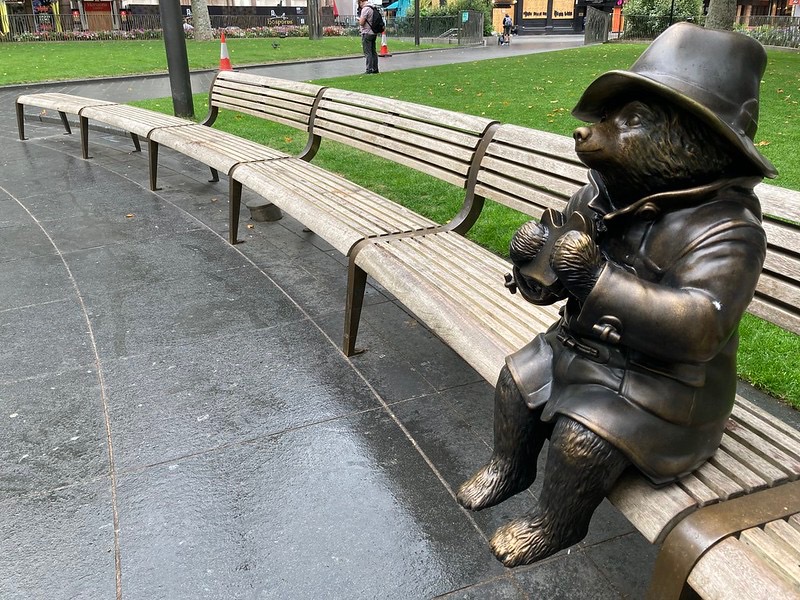
Paddington Bear may look lonely seated on a park bench but he is actually among a host of new statues which were placed in Leicester Square earlier this year. Others include Mr Bean, Mary Poppins, Laurel and Hardy, and Harry Potter and now comes news that Paddington will have more company from spring next year. A 10th statue – depicting the “King of Bollywood”, Shah Rukh Khan, and his co-star Kajol – will be placed in the famous square in what will be the first ever Bollywood statue erected in the UK. The new statue will recreate a scene from the award-winning rom-com, Diwale Dulhania Le Jayenge. PICTURE: Matt Brown (licensed under CC BY 2.0).
Treasures of London – The Diana Fountain…
No, it’s not a memorial to that Diana, but a bronze statue depicting a mythological figure which forms the centrepiece of the Great Basin in Bushy Park.
Commissioned by King Charles I for his wife Queen Henrietta Maria, the statue (and other statuary on the monument) was the work of sculptor Hubert Le Sueur (he was also the sculptor of the famous equestrian statue of King Charles I which sits at the top of Whitehall).
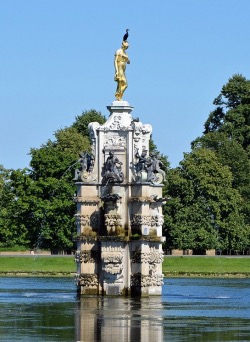
While the 2.38 metre tall bronze statue, which weighs some 924 kilograms, is commonly referred to as Diana – the Roman goddess of hunting, she has none of the usual attributes of Diana, such as a bow, and is believed by some to actually represent Arethusa, a nereid or sea nymph from Greek mythology.
The statue is set on a marble and stone fountain carved with depictions of shells and sea life, and is surrounded, at a lower level, by groups of bronze statues -depicting boys holding fish or dolphins and water nymphs or mermaids astride sea monsters – through which water is discharged into four bronze basins.
The bronze figures were originally commissioned for a fountain, designed by Inigo Jones and built in the 1630s, in the Queen’s garden at Somerset House. Oliver Cromwell had the statues moved to the Hampton Court Palace’s Privy Garden in 1656 where they were incorporated into a fountain designed by Edward Pearce the Younger in 1689-90.
In 1713 the ensemble was moved again, this time to onto a new purpose-built podium in the middle of the Great Basin, located at the end of Bushy Park’s Chestnut Avenue, a grand avenue of trees designed by Sir Christopher Wren. While most of the statuary is believed to be from the original fountain designed by Inigo Jones, it’s thought some of the statues of the boys were recast for the new fountain.
The Grade I-listed monument was restored in 2009 and and during this process a stone which uncovered on its base which had a crown and the date AR 1712 (AR for ‘Anne Regis’) which would have been added when the statue and fountain were installed in the basin.
WHERE: The park lies north of Hampton Court Palace, just west of Kingston and Hampton Wick and south of Teddington (nearest train station is Hampton Wick or Hampton Court). WHEN: 24 hours except in September and November when it’s open between 8am and dusk; COST: Free; WEBSITE: www.royalparks.org.uk/parks/bushy-park
PICTURE: The Diana Fountain. PICTURE: It’s No Game (licensed under CC BY 2.0)
This Week in London – King’s maps go online; life at Tower Bridge; Wildlife Photographer of the Year; and, the Gruffalo at Kew…
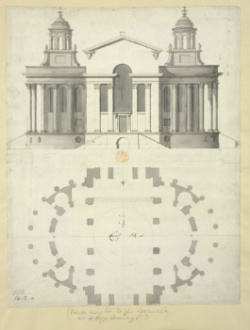
• Treasures including a hand-drawn map of New York City presented to the future King James II in 1664, Nicholas Hawksmoor’s architectural drawings for Castle Howard and some London churches, and Italian Jesuit Matteo Ripa’s massive 1719 Kangxi Map of China are among thousands of maps and views The British Library have placed online. The library is now nearing the end of the project to put 40,000 early maps and views online and most can now be accessed via the library’s Flickr Commons collection website. The documents are all part of the Topographical Collection of King George III, itself a distinct segment of the King’s Library which was donated to the Nation by King George IV in 1823. Other highlights to go online include Italian artist Bernardo Bellotto’s drawings of the town of Lucca, dating from about 1742, James Cook’s 1763 large manuscript map of the islands of St Pierre and Miquelon, and watercolours by noted 18th century artists including Paul Sandby and Samuel Hieronymus Grimm. PICTURED: Nicholas Hawksmoor, [An elevation and plan for St George, Bloomsbury]. London, between 1712 and 1730. Maps K.Top 23.16.2.a.
• A new exhibition celebrating the lives of those who work behind the scenes at Tower Bridge and the visitors who walk its floors opens in the iconic bridge’s Engine Rooms on Friday. Lives of a Landmark features images commissioned in 2019 to commemorate the 125th anniversary of the bridge. Photographer Lucy Hunter spent several months at the bridge, recording daily life there and this display is the result. Admission charge applies. For more, head here.
• Winning images from The Natural History Museum’s Wildlife Photographer of the Year – including Sergey Gorshkov’s Grand Title winner, a rare glimpse of Siberian tigress – go on show at the South Kensington-based museum from Friday. The exhibition features the 100 images, selected from more than 49,000 entries, that were short-listed for the 56th annual competition, the results of which were announced in a virtual ceremony earlier this week. Runs until 6th June. Admission charge applies. For more, head to www.nhm.ac.uk/visit/exhibitions/wildlife-photographer-of-the-year.html.
• The Gruffalo is the subject of a new “curated journey” taking place over the half-term break in Kew Gardens’ Arboretum. Visitors are encouraged to play the role of the “little brown mouse” and follow a trail to track down the Gruffalo, along the way encountering some of the other characters from Julia Donaldson’s famous book including Fox, Owl and Snake. Admission charge applies. For more, see www.kew.org.
Send all items for inclusion to exploringlondon@gmail.com.
 Exploring London