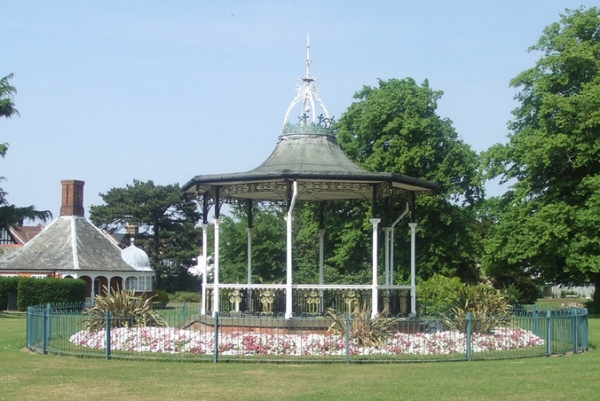
10 sites from Victoria and Albert’s London – 5. West End theatres…

Queen Victoria and Prince Albert both had an abiding love of performance and were avid theatre-goers (the Queen first attended the theatre as monarch to watch The Siege of Rochelle and Simpson & Co at the Drury Lane Theatre just a few months after ascending the throne in 1837).

Until Prince Albert’s death in 1861, they were regularly seen at various theatres with the Queen attending both ‘in state’ (that is, formally as monarch with all the pomp and ceremony that entails) as well as in private (despite Prince Albert’s concerns over her security). The royal couple’s visits to the theatre generally took place from February to June when the Queen was principally in residence at Buckingham Palace.

As well as the Drury Lane Theatre (more formally, the Theatre Royal Drury Lane – pictured above in 2018), other theatres they attended include the Theatre Royal Haymarket and the Covent Garden Theatre, now the Royal Opera House.

They also attended the now demolished Princess’s Theatre in Oxford Street, most notably to see Charles Kean’s production of The Corsican Brothers in February, 1852. Keen not only directed but played both brothers mentioned in the title. So enamoured was the Queen of it, that she would see it four times.

The royal couple were such great admirers of Kean that they even had him stage private theatrical performances at Windsor Castle and when he died, Queen Victoria sent a letter of condolence to his wife.

PICTURE: Marco Verch (licensed under CC BY 2.0)


LondonLife – A new occupant heading for Number 10…

News today that Boris Johnson will be the next Prime Minister of the UK. Johnson, who will take over from Theresa May – only the second woman to hold the office – as PM tomorrow after winning the Conservative Party vote over Foreign Secretary Jeremy Hunt, will be the 14th Prime Minister to serve in the office during the reign of Queen Elizabeth II. PICTURE: US State Department

A Moment in London’s History – Samuel Pepys writes the last entry in his diary…

This year marks 350 years since London’s now famous diarist, Samuel Pepys, wrote the final entry in what was his private diary.

The final entry was written on 31st May, 1669, and mentions a liaison with one Betty Mitchell, a trip on the Thames to Whitehall where he met with the Duke of York, and an outing with his wife Elizabeth and friends to the The World’s End, a drinking house at the western end of Hyde Park in Knightsbridge.

Pepys had started writing the diary on 1st January, 1660, at the age of just 26, and over the next nine years, its more than a million words covered some of the critical events including the coronation of King Charles II, the Great Plague of 1665 and The Great Fire of 1666.

Many believe that the diary was never intended for a mass readership (although some scholars disagree with this opinion), but, if that was the case, Pepys did take some precautions just in case, using codes for the mistresses he met, for example.

He stopped writing the diary because he assumed he was going blind – he asks in the final sentence for God to help him “prepare all the discomforts that will accompany my being blind”.

You can read Pepys’ final entry and the the complete diary of Pepys online at www.pepysdiary.com.

PICTURE: Samuel Pepys by John Hayls, 1666 © National Portrait Gallery, London (licensed under CC BY-NC-ND 3.0)

Lost London – The Bryant & May Testimonial Fountain…

Located outside Bow railway station in East London (and not far from the Bryant & May match factory), the Bryant & May Testimonial Fountain was built to celebrate the success of a campaign against the imposition of a tax on matches which had been proposed in 1871.

The proposed tax of half a pence per 100 matches, which had even attracted the attention of Queen Victoria who questioned its wisdom, sparked a march on Parliament by several thousand match-makers which led to clashes with police and allegations of brutality.

The Gothic fountain which featured a steeple topped by a cross and access to water on several side was erected by public subscription in 1872 and formally unveiled in October of that year.

The fountain was demolished in the early 1950s when the road was widened (the factory meanwhile closed down in 1979 when the work was moved to Liverpool). A plaque commemorating the former fountain is located close to the site near the former Poplar Town Hall.

PICTURE: A print of the Bryant & May Testimonial Fountain, printed by James Akerman (1872-1880) © The Trustees of the British Museum (licensed under CC BY-NC-SA 4.0/image cropped)

This Week in London – Exploring the Moon; celebrating London’s green spaces; and, Finnish artist Helene Schjerfbeck at the RA…

Lunar samples collected during the Apollo 11 mission and objects that travelled to the Moon with the astronauts including Edwin “Buzz” Aldrin’s “Snoopy Cap” and the famous Hasselblad camera equipment are among items on display as part of a new major exhibition which opens at the National Maritime Museum in Greenwich on Friday. Celebrating the 50th anniversary of the 1969 Moon landing, The Moon explores Earth’s relationship with the Moon over time and across civilisations. Other items among the more than 180 objects from public and private collections on show include a rare lunar meteorite from the Natural History Museum’s collection (pictured), a Mesopotamian tablet from 172 BC and a series of contemporary and historical artworks including paintings by JMW Turner and John Constable. There’s also a new version of Christian Stangl’s film Lunar in which animated photographs from Apollo missions allow visitors to experience the Moon landings through the eyes of the astronauts. The Moon can be visited until 5th January. Admission charges apply. For more, see www.rmg.co.uk/moon50. PICTURE: Lunar meteorite Found in the Sahara Desert, North West Africa, 2017 © The Trustees of the Natural History Museum, London.

London’s inaugural and free week long National Park City Festival kicks off on Saturday to celebrate the city’s green spaces, wildlife and waterways. Opening the festival – which is an initiative of the Mayor of London and National Park City Foundation as well as other partners – this weekend is a free cultural programme, run in partnership with the National Theatre, on its outdoor river stage on South Bank which features dance, theatre and music. Other highlights among the more than 300 events being held during the nine day event include the ‘National Park City Rooftops’ initiative – which sees people given free access to some of the city’s most beautiful garden rooftops and natural spaces including Crossrail Place in Canary Wharf, Barbican Conservatory and Ham Yard Hotel in Soho, the ‘National Park City Forest’ initiative which sees a unique audio installation, Living Symphonies, installed in Epping Forest, the ‘National Park City Wildlife’ – a photography competition and exhibition held in partnership with the London Wildlife Trust, and the multi-site ‘National Park City Splash’ initiative in which everybody can try their hand at activities like paddle boarding and open water swimming. The week runs to 28th July. For the complete programme of events, head to https://nationalparkcity.london.gov.uk.

The work of Finnish artist Helene Schjerfbeck (1862 – 1946) is being celebrated at the Royal Academy of Arts. Opening on Saturday, the first solo UK exhibition of Schjerfbeck’s works features some 65 portraits, landscapes and still lifes, and follows the development of the artist’s work from a naturalistic style, inspired by French Salon painters in the early 1880s, to what the RA describes as “a radically abstracted and modern approach from the turn of the 20th century onwards”. The exhibition is being shown in five sections with highlights including Two Profiles (1881) – the earliest work on display, The Convalescent (1888), My Mother (two paintings – one from 1902 and another from 1909), a series of self-portraits and later works like Måns Schjerfbeck (The Motorist) (1933) and Three Pears on a Plate (1945). Runs until 27th October in The Gabrielle Jungels-Winkler Galleries. Admission charge applies. For more, see www.royalacademy.org.uk.

Send all items for inclusion to exploring london@gmail.com.

LondonLife – Living colour…

Close-up of the facade of Mizuho House, London branch of the Japanese investment bank Mizuho, in the Old Bailey London. PICTURE: Valdemars  Magone/Unsplash

London pub signs – The Sugar Loaf…

The name of this City of London establishment relates directly to the trade that once existed in nearby environs – namely in sugar.

Located at 65 Cannon Street, the area to the south of the pub was once a centre of the city’s sugar refinement industry.

There were several small sugar refineries there – where raw sugar was taken and transformed into cone-shaped sugar loaves – but these were apparently destroyed when Southwark Bridge was built in the early 19th century.

The now Grade II-listed pub is said to date from the 1830s. More recently, it was part of the Charrington group before becoming one of the O’Neill’s Irish-themed pubs in the late 1990s. It became part of the Nicholson’s group a few years ago.

For more, see www.nicholsonspubs.co.uk/restaurants/london/thesugarloafcannonstreet.

PICTURE: Ewan Munro (licensed under CC BY-SA 2.0)

Famous Londoners – Winnie the Bear…

Once one of the most famous residents of ZSL London Zoo, Winnie the Bear was brought to the city by a Canadian soldier – Lt Harry Colebourn – during World War I.

Colebourn, a member of the 34th Fort Garry Horse Regiment of Manitoba and the Canadian Army Veterinary Corps, had purchased the black bear cub at White River, Ontario, for $20, on 24th August, 1914, from a hunter who had killed the cub’s mother.

Colebourn, who named the bear Winnie after his hometown of Winnipeg, subsequently took the bear with him to England where his regiment, the Second Canadian Infantry Brigade, was training on Salisbury Plain ahead of their deployment to France.

The female bear became the mascot’s regiment but when the regiment left for France in December, 1914, she was left at the London Zoo in Regent’s Park for safekeeping.

Colebourn was a frequent visitor during leave from the front – he had initially intended to take Winnie back to Canada at the end of the war. But when the war ended in 1918, Colebourn instead donated the bear to the zoo in appreciation of the care staff had given her.

Among those who came to see the bear at the zoo were writer AA Milne and his son Christopher Robin – Milne subsequently named his famous fictional creation Winnie-the-Pooh after the bear.

Winnie the bear died at the zoo on 12th May, 1934.

There’s a statue of Lt Colebourn and Winnie at the zoo (pictured). The work of Bill Epp, it was presented to the zoo by the people of Manitoba, Canada, on 19th July, 1995. It’s a copy of an original Epp work which was unveiled in Assiniboine Park Zoo, in Winnipeg, Manitoba, on 6th August, 1992.

PICTURE: Chris Sampson (CC BY 2.0)

This Week in London – Culture, heritage and war at IWM; Sir Arthur Pearson honoured; and, Takis at the Tate Modern…

Exhibitions exploring why culture and heritage are attacked during times of war and how cultural treasures in British museums and galleries were protected during World War II open at London’s Imperial War Museum on Friday. What Remains – which highlights both historic and contemporary instances in which buildings, places, art and artefacts have been deliberately targeted during times of conflict as well as examples of resistance, protection and restoration, and, Art in Exile – which looks at the role UK cultural organisations have played in wartime, are both part of Culture Under Attack, a free season of events that explore how war threatens cultural heritage. Also launching as part of Culture Under Attack this week is Rebel Sounds, an immersive exhibition that reveals how music has been used to resist and rebel against war and oppression with examples from Nazi Germany in the 1930s, Northern Ireland in the 1970s, Serbia in the 1990s and present day Mali. All three displays run until 5th January. For more, see www.iwm.org.uk/seasons/culture-under-attack. PICTURE: British Army poster from 1943, created to educate and inform its soldiers of the importance of respecting property, including cultural heritage (© IWM)

• Sir Arthur Pearson, newspaper publisher and founder of St Dunstan’s (Blind Veterans UK), has been remembered with an English Heritage Blue Plaque. The plaque was unveiled at his now Grade II*-listed home on Portland Place in Marylebone last week, the place where he lived with his wife and some of the blinded servicemen supported by St Dunstan’s in the later years of World War I and those following. Pearson had made a fortune as a press magnate, founding the Daily Express in 1900 and later purchasing The Evening Standard but his attention turned to campaigning for the blind after he was told he would lose his sight in 1913. For more on English Heritage Blue Plaques, see www.english-heritage.org.uk/visit/blue-plaques/.

The largest ever exhibition of the work of pioneering Greek artist Takis (Panayiotis Vassilakis) has opened at the Tate Modern this week. Takis features more than 70 works by the self-taught artist – renowned as a “sculptor of magnetism, light and sound” –  including a rarely-seen Magnetic Fields installation, a series of musical devices generating resonant and random sounds, and forests of his antenna-like Signals. Can be seen until 27th October. Admission charge applies. For more, see www.tate.org.uk.

Send all items for inclusion to exploringlondon@gmail.com.

LondonLife – Angles on an iconic bridge…

Tower Bridge marked its 125th birthday last weekend so to celebrate, here’s some different angles on London’s most photographed bridge. The Victorian Gothic bascule and suspension bridge, which spans the Thames just to the east of London Bridge (with which it’s not to be confused), took eight years to build and was officially opened on 30th June, 1894, by the then Prince and Princess of Wales (later King Edward VII and Queen Alexandra). For more on the celebrations taking place at the bridge over the coming weeks and months, see www.towerbridge.org.uk/125/.


This Week in London – Tower Bridge turns 125; Cindy Sherman at the National Portrait Gallery; and, Félix Vallotton at the RA…

•  Tower Bridge marks its 125th anniversary on Sunday and in honour of the event, there will be celebrations inside and outside the bridge right across the weekend. Entry to the bridge will be priced at just £1.25 and visitors will also receive a one-off souvenir bookmark as well as £5 off the official Tower Bridge book. Tickets cannot be booked in advance. Among the activities is a new photographic exhibition on the high-level walkways showcasing rare archival images and new photographs while costumed performers depicting historic figures – including the bridge’s first and only Indian engineer, divers who dug the foundations and the bridge’s first female employees – will be re-enacting scenes which (might have) happened during construction. Visitors can also join in the bridge architect Sir Horace Jones’ 200th “big birthday bash” in the Engine Rooms and view a new installation on the piers imagining some of the alternative river crossings that could have been built in place of the bridge. Special events will be continuing until the end of the year. For more, see www.towerbridge.org.uk/125/. PICTURE: Paul Varzar/Unsplash

Contemporary artist Cindy Sherman’s ground-breaking series, Untitled Film Stills (1977-80) has gone on public display for the first time in the UK in a major new retrospective of the artist’s work. Hosted at the National Portrait Gallery, Cindy Sherman explores the development of the artist’s work from the mid-1970s to the present day and includes all 70 images from the Untitled Film Still series as well all five of Sherman’s Cover Girl series, completed while she was a student in 1976 and being displayed together for the first time. There will also be a range of source material from the artist’s studio to give insights into her working processes. Runs until 15th September. Admission charge applies. For more, see www.npg.org.uk.

The work of Swiss artist Félix Vallotton (1865–1925) is being exhibited in a dedicated display for the first time in the UK since 1976. Opening in the The Jillian and Arthur M Sackler Wing of Galleries at the Royal Academy of Arts on Sunday, Félix Vallotton: Painter of Disquiet features about 100 works from public and private collections across Europe and the US and is organised in three sections spanning his career. Highlights include Self-portrait at the Age of Twenty (1885), The Sick Girl (1892), The Visit (1899), Gabrielle Vallotton (1905), Nude Holding her Gown (1904),  This is War! (1916), Red Peppers (1915), and Sandbanks on the Loire (1923). On show until 29th September after which the exhibition will travel to The Metropolitan Museum of Art in New York City. Admission charge applies. For more, see www.royalacademy.org.uk.

Send all items for inclusion to exploringlondon@gmail.com.
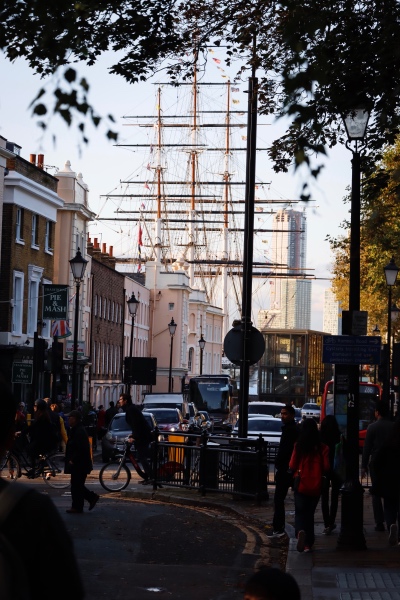
10 sites from Victoria and Albert’s London – 2. Buckingham Palace…

You may have noticed that last week we kicked off a new Wednesday series on 10 (more) London garden squares, only having kicked off a new series on 10 sites from Victoria and Albert’s London the week before. To clarify, we are currently running the Victoria and Albert series, the garden squares entry snuck in by accident (but we’ll be returning to the garden squares down the track)! Apologies for any confusion...


Queen Victoria, the first British monarch to use Buckingham Palace as an official residence, moved her household into the palace just three weeks after ascending to the throne on 20th June, 1837.

The palace, which had been empty for seven years following the death of her uncle King George IV, had been undergoing a grand repurposing under architect John Nash, transforming it from a house into a palace.

Originally built in 1703 as a London residence for John Sheffield, the 3rd Earl of Mulgrave, in 1761 the property had been purchased by King George III as a family home for his wife Queen Charlotte (14 of the couple’s 15 children were born here).

Remodelling of the property began the following year and had been continued by King George IV following his accession to the throne in 1820. As a result of the ongoing work, George IV never lived in the palace nor did his successor, King William IV, who preferred Clarence House.

The building works still weren’t finished when Victoria moved in. Her ministers had advised her to remain at Kensington Palace, her childhood home, until the works were finished but Victoria wasn’t having any of that – the move would help her escape the overbearing care of her mother Victoria, Duchess of Kent, the ambitious Sir John Conroy, and the so-called (and stifling) ‘Kensington System’ of rules under which she’d been brought up.

When Victoria married Albert (see the previous entry) on 10th February, 1840, the newly weds made the palace their London home. It was here that, over the next 17 years, Victoria would give birth to eight of their nine children (starting with Victoria ‘Vicky’, in 1840), and where the couple would work, controversially at side-by-side desks.

The couple’s growing family was soon stretching the palace accommodations and following a request from Queen Victoria, in 1846 some £20,000 was granted by Parliament on 13th August to complete and extend the grand property with an additional £50,000 for the works raised from the sale of the Royal Pavilion to the Brighton Corporation.

Under the direction of architect Edward Blore and builder Thomas Cubitt, the East Wing was added at the front of the palace, enclosing what had previously been a horseshoe-shaped courtyard and creating the famous central balcony where the Royal Family now gather on special occasions. Queen Victoria made the first public appearance on the balcony in 1851 during the Great Exhibition (pictured above are members of the Royal Family at the wedding of Prince William and Kate Middleton).

A new ballroom – designed by Nash’s student James Pennethorne – was added to the State Rooms shortly after. This was inaugurated in May, 1856, with a ball held there the following month to mark the end of the Crimean War.

The ball was one of several held at the palace during those years along with official royal ceremonies and other entertainments including musical performances by the likes of Felix Mendelssohn and Johann Strauss II.

A new exhibition, Queen Victoria’s Palace, opens at Buckingham Palace next month. 

WHERE: State Rooms, Buckingham Palace (nearest Tube stations are Victoria, Green Park and Hyde Park Corner); WHEN: 20th July to 29th September (opening at 9am, closing times vary – see website for details); COST: £25 an adult/£14 a child (under 17s/under fives free)/£22.80 concession/£64 family; WEBSITE: www.royalcollection.org.uk/visit/buckinghampalace.

PICTURES: Top – Diliff (licensed under CC BY-SA 1.0); Lower – David Adams.

What’s in a name?…Cockfosters…


No more than the name of a Tube terminus (the north-east end of the Piccadilly Line) to many Londoners, Cockfosters has an interesting origin story.

The area in north London, which lies partly in the London Borough of Enfield and partly in the London Borough of Barnet, owes its name to its location on the edge of what was the royal forest of Enfield Chase.

In the 15th century, the forest was protected by foresters housed in three lodges – one of which was located where the West Lodge Park hotel, built in 1838, now stands.

(An interesting side note is that after the foresters stopped using the original lodge, it became, at one stage, the home of King Charles II’s Secretary of State, Henry Coventry. Diarist John Evelyn is among those who visited him.)

The ‘fosters’ part of the name is apparently derived from an Elizabethan-era variant of the word forester while ‘cock’ is a old word for leader or chief. Cockfosters, then, literally means the home of the chief or head forester.

The modernist Tube station, designed by Charles Holden and opened in 1933, is a key landmark as is the stately, Grade II-listed property Trent Park which is located on a remnant of Enfield Chase.

Other notable buildings include Christ Church Cockfosters, founded in 1839, and The Cock Inn, which opened in Chalk Lane in 1798.

PICTURED: Top – Trent Park House (© Christine Matthews/licensed under CC BY-SA 2.0; below – Cockfosters Tube Station (Steve Cadman/licensed under CC BY-SA 2.0).

This Week in London – British printmaking; the Taste of London; and, Dickens abroad…

British printmaking between World War I and II is under the spotlight in a new exhibition which opened at Dulwich Picture Gallery this week. Cutting Edge: Modernist British Printmaking, which marks 90 years since the inaugural exhibition on British linocuts was held at the Redfern Gallery, features 120 prints, drawings and posters and spotlights the work of artists of the Grosvenor School including those of teacher Claude Flight and nine of his leading students – Cyril Power, Sybil Andrews, Lill Tschudi, William Greengrass and Leonard Beaumont among them. A number of the works are being displayed publicly for the first tome and several international loans – including prints by the Australian students Dorrit Black, Ethel Spowers and Eveline Syme – are making their debut as part of a major UK showing. The display can be seen until 8th September. Admission charge applies. For more, see www.dulwichpicturegallery.org.uk. PICTURE: Claude Flight, Speed, 1922, © The Estate of Claude Flight. All Rights Reserved, [2019] / Bridgeman Images/ photo Photo © Elijah Taylor (Brick City Projects)

Food festival, the Taste of London, is on again in The Regent’s Park across this weekend. Opened last night, the festival features the chance to sample food from London’s best restaurants as well as learn from world-class chefs, and visit gourmet food and artisan producer markets. For more, including tickets, see https://london.tastefestivals.com.

On Now: Global Dickens: For Every Nation Upon Earth. This exhibition at the Charles Dickens Museum in Bloomsbury paints a global picture of one of London’s favourite sons, starting with his trips to Europe and North America and going on to consider how his influence spread across the world. On display is his leather travelling bag, a Manga edition of A Christmas Carol,  and a copy of David Copperfield that went to the Antarctic on the 1910 Scott expedition. Can be seen until 3rd November. Included in admission charge. For more, see www.dickensmuseum.com.

Send all items for inclusion to exploringlondon@gmail.com.
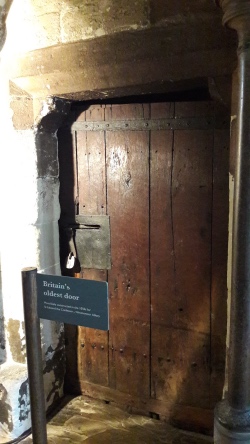
LondonLife – Dulwich unveils ‘The Colour Palace’…

The “second edition” pavilion at the Dulwich Picture Gallery, ‘The Colour Palace’ was unveiled earlier this month at the south London institution. Created in a partnership between the gallery and the London Festival of Architecture, the ‘palace’ – designed by Pricegore architects and Yinka Ilori – is a 10 metre high cube featuring a bold geometric pattern which was inspired by the “buzz of fabric markets in Lagos” and the “symmetry, curves and right angles” of Sir John Soane’s now Grade II*-listed gallery building. The temporary palace, which unites the themes of ‘boundaries’ and ‘innovation’, is being used as a public space for a range of creative activities – everything from neon life drawing, supper clubs, storytelling and yoga. For the programme of events, see www.dulwichpicturegallery.org.uk. PICTURES:  Adam Scott/Dulwich Picture Gallery.

Where’s London’s oldest….chophouse?

London’s oldest chophouse, Simpson’s, can be found in the City of London, just off Cornhill, and dates from the mid-18th century.

Thomas Simpson had opened his first ‘Fish Ordinary Restaurant’ in Bell Alley, Billingsgate, in 1723, catering to a clientele made up largely of those working at the Billingsgate (Fish) Market.

When that was demolished, he retired briefly before purchasing the Queen’s Arms in Bird in Hand Court off Cheapside.

Located in Ball Court Alley, Simpson opened the current establishment in 1757 (although the Grade II-listed building itself dates from the late 1600s or possibly early 1700s). It was a gift from his father.

Customs at the restaurant included having meals were presided over a chairman who would ensure lunch started promptly as one (their job also included introducing notable guests and measuring the cheese – a task related to a tradition of placing bets on the height, weight and girth of the cheese).

Seating is arranged in stalls and the layout is apparently consistent with that of the 19th century (although some things, thankfully, have changed – ladies were finally admitted in 1916).

For more, see www.simpsonstavern.co.uk.

PICTURES: Elisa.rolle (licensed under CC BY-SA 4.0)

This Week in London – Self-driving vehicles; Sir Thomas Gresham explored; and, Spanish artist Bartolomé Bermejo…

Self-driving vehicles of all descriptions are under scrutiny in a new exhibition which opened at the Science Museum in South Kensington this week. Driverless: Who is in control? looks at the rise of self-driving cars alongside autonomous flying drones and underwater vehicles like the Natural Environment Research Council’s Autosub Long Range fleet (which includes the delightfully named Boaty McBoatface). There are three specific zones in the display – Land, Air and Water, with each section exploring the different technology solutions already available, the motivations of their developers, and their potential to transform a range of activities and industries. Among highlights are a 1960 Citroen DS19 which was modified in an early experiment in self-driving, autonomous flying drones being developed to clear minefields by the Mine Kafon project and prototype vessels designed to monitor ocean plankton and map the sea floor. The free display can be seen until October next year. For more, see www.sciencemuseum.ac.uk. PICTURE: Autosub Long Range (ALR) Boaty McBoatface © National Oceanography Centre (NOC).

Described as “one of the most over-looked 16th century merchants and financiers”, Sir Thomas Gresham is the subject of a new exhibition at the Guildhall LibrarySir Thomas Gresham (1519-1579): Tudor, Trader, Shipper, Spy, which marks the quincentenary of his birth and coincides with the release of a major new biography by Tudor historian Dr John Guy – Gresham’s Law: The Life And World Of Elizabeth I’s Banker. Gresham was a financial advisor to four Tudor monarchs, founder of the Royal Exchange, and, through a bequest left after his death, the founder of Gresham College. The free exhibition can be seen until mid-September. For more, head here.

Selected works of Spanish artist Bartolomé Bermejo (c1440–c1501) have gone on show at The National Gallery as part of its Spanish season. Bartolomé Bermejo, commonly known as Bermejo (which means ‘reddish’ in Spanish), was likely a converso (a Jew who converted to Christianity) and led an itinerant life, partnering with local artists to access painters’ guilds and obtain religious commissions as he visited cities in Aragon including Tous, Valencia, Daroca, Zaragoza, and Barcelona. The display includes six works never before seen outside of Spain including the masterpieces Triptych of the Virgin of Montserrat (probably 1470–75), and the recently restored Desplà Pietà (1490), as well as four panels depicting scenes from Christ the Redeemer – Descent of Christ into Limbo, Resurrection, Christ entering Paradise and Ascension. At the centre of exhibition is the National Gallery’s Saint Michael Triumphant over the Devil with the Donor Antoni Joan (1468) which is being displayed for the first time since a year long conservation. The free display can be seen in Room 1 until 29th September. For more, see www.nationalgallery.org.uk.

Send all items for inclusion to exploringlondon@gmail.com.
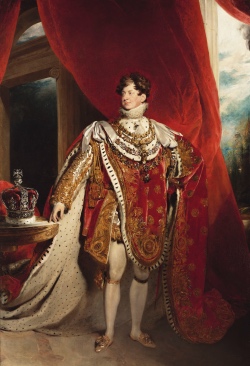
10 sites from Victoria and Albert’s London – 1. Chapel Royal, St James’s Palace…

This year marks the 200th anniversary of the births of both Queen Victoria (24th May) and Prince Albert (26th August) and, in celebration, we’re running a special series on London locations that played a key role in their joint lives.

First up is the Chapel Royal at St James’s Palace where the royal couple were married on 10th February, 1840. It was the first marriage of a reigning queen since Queen Mary I in 1554.

The chapel, which hosted the christening of Prince George in 2013 and Prince Louis in 2018, was built in about 1540 and substantially altered since, including under the eye of Sir Robert Smirke in 1837.  It was built on a north-south axis rather than the more usual east-west (a sizeable window on its northern wall can be seen to the right of the palace’s main gatehouse – see picture).

The chapel, which features a richly decorate ceiling said to have been painted by Holbein, has been used regularly by the Chapel Royal – a department of Royal Household – since 1702.

At the wedding, the Queen wore a white satin gown with a deep flounce of handmade Honiton lace, designed by William Dyce, which featured a long veil and an 18 foot long train (she had 12 train bearers). Her jewellery included a sapphire broach given to her by Albert and she wore a headress of orange blossoms. Victoria’s dress is said by some to have popularised the idea of the white wedding dress among the English (although there is apparently some debate over this).

Among those in attendance was Victoria’s mother, the Dowager Duchess of Kent and Strathearn, Albert’s father and brother, the Duke and Prince of Saxe-Coburg and Gotha respectively, and various other royals including Queen Adelaide, the widow of King William IV, as well as the Prime Minister, Lord Melbourne (who, in fact, carried the Sword of State). Given the fact Victoria’s father was dead, it was her uncle, the Duke of Sussex, who walked her up the aisle.

It was a big affair in the city – people lined the roads between Buckingham and St James’s palaces and some reportedly even climbed trees for a better view. Victoria wrote in her diary that she’d never seen such crowds “and they cheered most enthusiastically”.

The wedding breakfast, which featured a 300lb cake which was nine foot in circumference, was held at Buckingham Palace after which the newly weds headed off to Windsor for a two day honeymoon.

Famously, before the wedding, the Archbishop of Canterbury had apparently asked Victoria whether, given she was Queen, she wanted to remove the word “obey” from her wedding vows. Victoria had refused.

There are limited opportunities for the public to attend services in the Chapel Royal at certain times of the year.

PICTURE: Johan Bilien (licensed under CC BY-SA 2.0)

LondonLife – Trooping the Colour marks the Queen’s birthday…

The Queen’s birthday was marked on Saturday with the annual Trooping the Colour in central London. More than 400 soldiers, close to 300 horses and 400 musicians took part in the event, believed to have first been performed during the reign of King Charles II. As well as Queen Elizabeth II, other members of the Royal Family in attendance included Camilla, Duchess of Cornwall, Kate, Duchess of Cambridge, Meghan, Duchess of Sussex, and Prince Harry, Duke of Sussex (see image below). ALL PICTURES: US Department of Defence photo by US Navy Petty Officer 1st Class Dominique A Pineiro (Via Flickr account of the Chairman of the Joint Chiefs of Staff/licensed under CC BY 2.0).


This Week in London – Leonardo’s notebooks; London’s “lost” rivers; Africa celebrated; and, Natalia Goncharova…

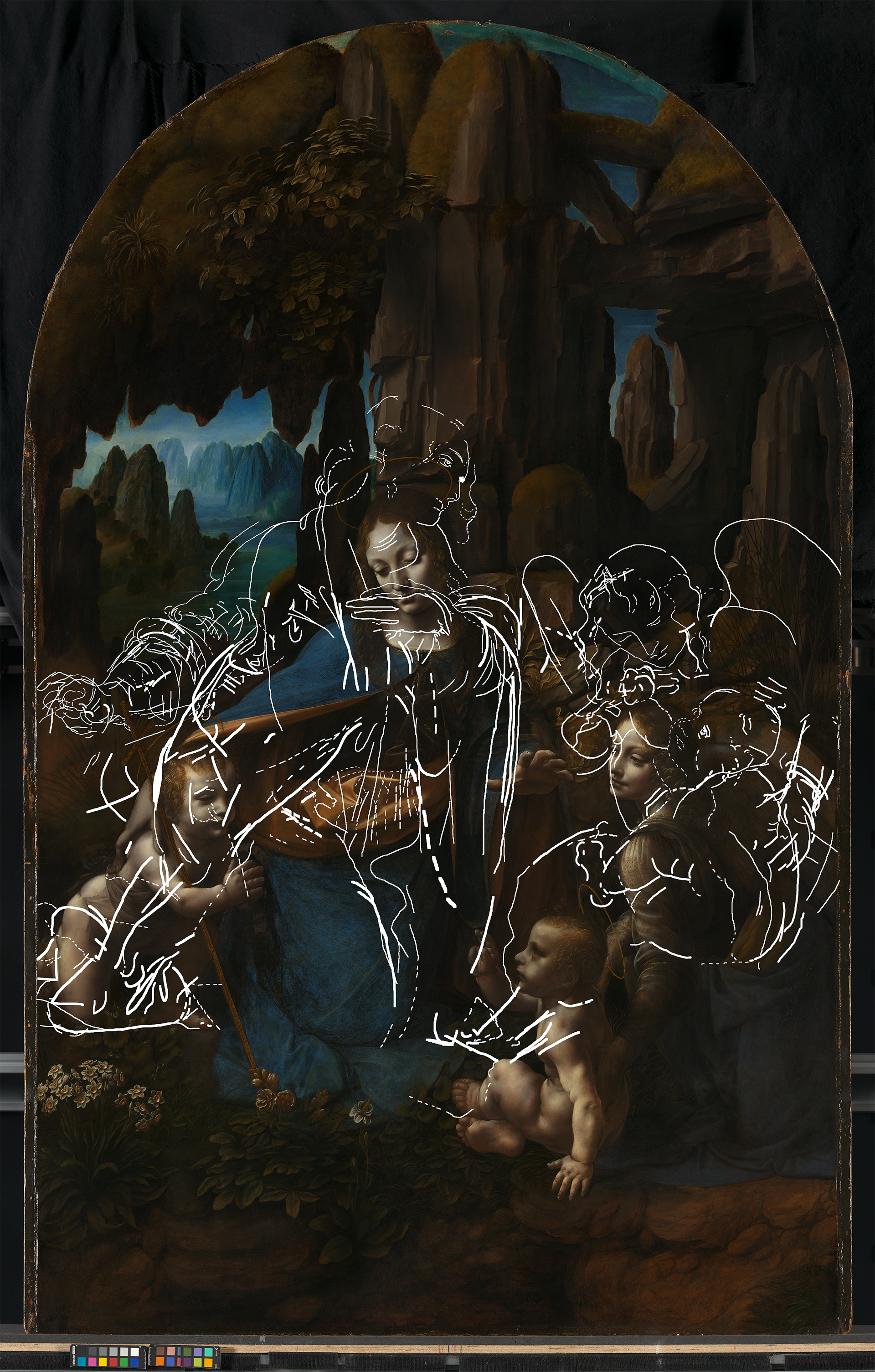
Three of Leonardo da Vinci’s notebooks are being displayed together in the UK for the first time as part of a new exhibition at the British Library marking 500 years since the artist’s death. Leonardo da Vinci: A Mind in Motion, which opens Friday and is being held in partnership with Automobili Pininfarina, will feature a selection of notes and drawings from the Codex Arundel, owned by the British Library, the Codex Forster, owned by the V&A, and the Codex Leicester, owned by US billionaire Bill Gates (and being displayed in the UK for the first time since Gates purchased it in 1994). They reveal Da Vinci’s close observations of natural phenomena and how these explorations of nature and motion directly informed his work as an inventor and artist. The exhibition, which runs to the 8th September, is being accompanied by a series of events and until Sunday, Automobili Pininfarina will be exhibiting a 1,900 hp, zero-emissions Battista hypercar on the British Library Piazza. Admission charge applies. For more, see www.bl.uk/events/leonardo-da-vinci-a-mind-in-motion. PICTURE: Part of the exhibition/courtesy British Library.

The mysteries of London’s hidden rivers are revealed in an exhibition at the Museum of London Docklands. Secret Rivers brings together art and archaeology along with photography, film, and mudlarking finds to show how the city has been shaped by the Thames and its tributaries – and how they in turn have been shaped by Londoners. It explores how rivers including the Effra, Fleet, Neckinger, Lea, Tyburn, Walbrook, Wandle and Westbourne have all been “exploited for transport and industry, enjoyed and revered, and have influenced artists and writers”. Among items on display are rare surviving fragments of the 13th century Blackfriars Monastery which were used to line a well, a medieval fish trap, and drawings and prints depicting rivers – including James Lawson Stewart’s watercolour Jacob’s Island (1887) which depicts an artificial island located in the Neckinger at Bermondsey. The free exhibition runs until 27th October. A series of talks is accompanying the display. For more, see www.museumoflondon.org.uk/museum-london-docklands.

All things African will be celebrated at the Open the Gate Festival in Shoreditch this weekend. The festival, one of a number of monthly key partner events being held in conjunction with the city’s new Africa in London festival – a summer long celebration of African culture and creativity, will be held at Rich Mix on Saturday and features live music, an African Market, family workshops and African street food. For more on the event and the Africa in London initiative, head to www.london.gov.uk/AfricaLDN.

The UK’s first ever retrospective of Russian avant-garde artist Natalia Goncharova has opened in the Tate Modern’s Eyal Ofer Galleries this week. The exhibition brings together more than 160 international loans – including from Russia’s State Tretyakov Gallery, home of the largest collection of Goncharova works in the world – and features, at its heart, a room designed to evoke Goncharova’s remarkable 1913 retrospective at the Mikhailova Art Salon in Moscow which featured more than 800 works. Highlights of this show include Peasants Gathering Apples (1911), the monumental seven-part work The Harvest (1911) and nude paintings which led to her trial for obscenity as well as the four panel religious work Evangelists (1911), examples of her forays into fashion and interior design including Spring (1928) and Bathers (1922), a reunion of her ground-breaking works Linen, Loom + Woman (The Weaver) and The Forest (1911), and her collaborations with Ballets Russes including her costume designs for Le Coq d’or (The Golden Cockerel) and Les Noces (The Wedding) – performed on London stages in the 1920s and 1930s. Runs until 8th September. Admission charge applies. For more, see www.tate.org.uk.

Send all items for inclusion to exploringlondon@gmail.com.