LondonLife – Spying a new view of London in a 40 second rush…

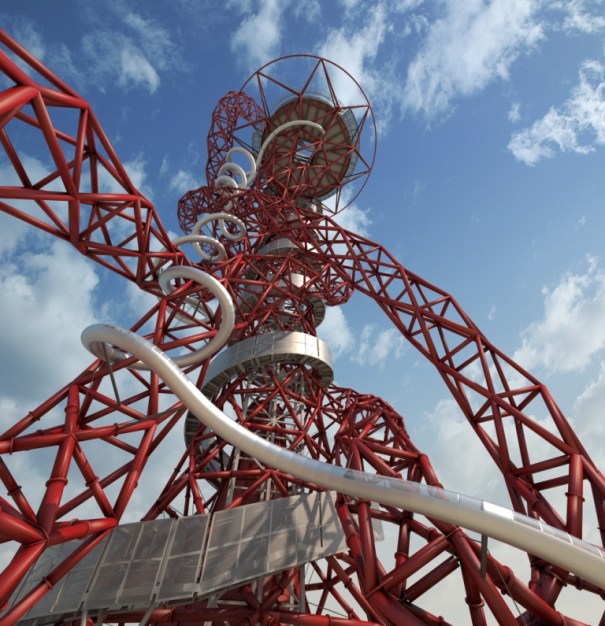
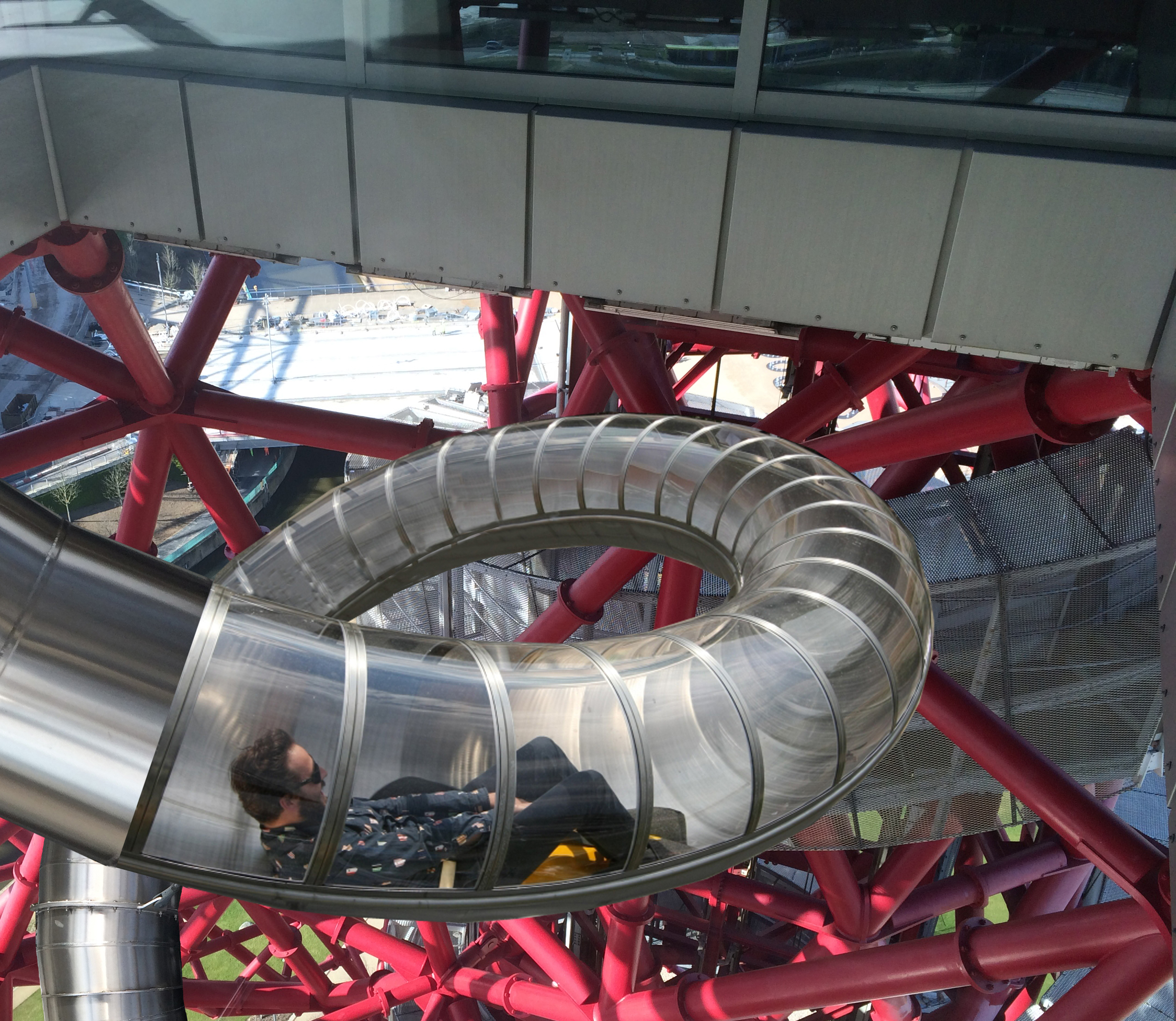
TOP-OF-SLIDE-MOCK-UP
The world’s longest and tallest tunnel slide opened at the ArcelorMittal Orbit sculpture in Queen Elizabeth Olympic Park – the UK’s tallest public artwork – in London’s east last week.
Standing 178 metres high, the slide wraps around the sculpture 12 times as it descends toward earth, providing a 40 second ride of speeds up to 15 kph through a series of twists and turns including a tight corkscrew section known as the ‘bettfeder’ (named after the German word for ‘bedspring’). The slide, which was designed by Belgian artist Carsten Höller at the invitation of Sir Anish Kapoor, designer of the ArcelorMittal Orbit (constructed for the 2012 Olympic Games), is open until 30th December. For more on the Slide and to book, see http://arcelormittalorbit.com/whats-on/the-slide/. PICTURES: Supplied.

Copy-of-Slide-CGI-3

Famous Londoners – Sir Joseph Paxton…

Sir Joseph Paxton was one of the pre-eminent landscape gardeners and architects of the Victorian age, although his name is remembered today in great part because of his role in creating one of the most famous buildings of the era – London’s Crystal Palace.

Joseph Paxton ILNThe palace opened 165 years ago this year – it was built for the 1851 Great Exhibition in Hyde Park. But before we get to that, we have to go back a few years to the origins of its designer.

Paxton was born to a large Bedfordshire farming family on 3rd August, 1803 (although the year has been a matter of dispute at times, apparently because, wanting to appear older than he was, early on in his career he claimed that he had been born in 1801).

He attended school locally before venturing into the gardening profession (a number of other family members were already involved in gardening), taking on a number of gardening-related jobs before his first break came in 1823 when he was admitted by the Horticultural Society of London to work as a student gardener in the experimental gardens of Chiswick House in London’s west – then leased by the society from the Duke of Devonshire.

His work was soon noticed and, in 1826, the duke, with whom Paxton would come to have a close friendship, was apparently so enamoured that he appointed him to the position of head gardener at Chatsworth House, his family pile in Derbyshire.

It was something of a dream job for the then still young Paxton, who, over the ensuing years would be responsible for designing gardens as well as fountains (including the Emperor Fountain, named after Emperor Nicholas I of Russia), an arboretum, a model village, a conservatory of unprecedented size – known as the Great Conservatory, and a lily house, the latter featuring a design based on the leaves of the giant Victoria amazonica water lily.

Paxton’s ties to Chatsworth were strengthened further when he married the niece of Chatsworth’s housekeeper, Sarah Bown, in 1827. They would have eight children, six of whom survived.

Chatsworth became the most famous garden in England under Paxton’s watch but for many, it is his instrumental role in the Great Exhibition pavilion which stands out as his greatest achievement.

His involvement was really that of an opportunist – all of the original 245 plans for the main exhibition hall had been rejected when Paxton, on hearing of this while in London on business with regard for his role as a director of the Midland Railway, delivered his own design.

Inspired very much by the lily house he had designed (and which had yet to be completed) at Chatsworth, the design was innovative for a number of reasons, including its modular and prefabricated nature and the copious amounts of glass it used (only possible due to recent technological developments concerning the use of iron and glass).

Following its acceptance (this despite the fact it apparently breached the design competition’s rules), it took some 2,000 men eight months to build the 500 metre long building which, despite some criticism, was such a success at the Great Exhibition that in October of 1851 – some five months after its opening – Paxton was knighted by Queen Victoria. (For more on the Crystal Palace, see our earlier entry here).

Following the Great Exhibition, the building, with Paxton’s aid, was relocated to Sydenham in south London after the exhibition where it remained until it burned down in 1936.

Paxton, meanwhile, returned to his post as head gardener at Chatsworth (a role he fulfilled until 1858), but he is also credited with numerous other projects including the design of public parks in places as far afield as Liverpool and Glasgow, and the design of the London Road Cemetery in Coventry.

He was also involved in the commission charged with improving the Royal Botanic Gardens at Kew and designed numerous residences, the most famous being Mentmore Towers which he designed for Baron Mayer de Rothschild (among his other contributions to the world of design was a plan for an ‘atmospheric railway in London’ which was never built – for more on that, see our previous post here).

Paxton, who also acted as a Liberal MP for Coventry for the last 11 years of his life and was for many years involving in publishing various gardening-related magazines, general newspapers and writing a couple of books, became wealthy by speculating on the growing railway industry.

He died on 8th June, 1865, at his home, Rockhills, in Sydenham and was buried in St Peter’s Churchyard at Edensor on the Chatsworth Estate. His wife Sarah continued to live at Chatsworth until her death in 1871.

PICTURE: Via Wikimedia Commons.
This Week in London – Westminster Abbey open overnight for Somme vigil; ‘Painters’ Paintings’; and, the East End Canal Festival…

Westminster Abbey is to remain open all night next Thursday (30th June) for a vigil in commemoration of the 100th anniversary of the Battle of the Somme. It’s the first time the abbey has been open for an all-night vigil since the Cuban missile crisis more than 50 years ago. The vigil around the Grave of the Unknown Warrior will be mounted from 8.45pm next Thursday, 30th June, through to 7.30am on Friday, 1st July (last entry to the abbey is at 7.15am). The public are invited to attend the vigil following an evening service at 8pm on Thursday which will be attended by Queen Elizabeth II and broadcast live on BBC Two. The vigil, which will end with the firing of World War I guns in Parliament Square by The King’s Troop Royal Horse Artillery, will see a series of 15 minute watches kept by service personnel and community groups representing those involved in the battle and there will also be readings from contemporary accounts. No tickets are required and entry, which is free, is via the abbey’s visitor entrance at the North Door. For more, see www.westminster-abbey.org.

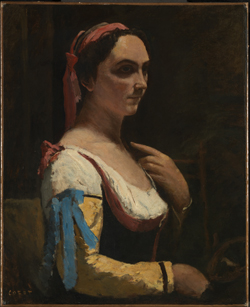
CorotEver wondered what attracts artists to collect particular paintings? Answers abound at a new summer exhibition opening at The National Gallery today. Painters’ Paintings’: From Freud to Van Dyck features a series of ‘case studies’, each of which is devoted to works gathered by a particular ‘painter-collector’ including Lucien Freud, Henri Matisse, Hillaire-Germain-Edgar Degas, Frederic, Lord Leighton, Sir Thomas Lawrence, Sir Joshua Reynolds and Sir Anthony van Dyck. The display was inspired by Jean-Baptiste-Camille Corot’s work Italian Woman which was left to the nation by Lucien Freud following his death in 2011. “It made us start considering questions such as which paintings do artists choose to hang on their own walls,” explains Anne Robbins, curator of the exhibition. “How do the works of art they have in their homes and studios influence their personal creative journeys? What can we learn about painters from their collection of paintings? Painters’ Paintings’: From Freud to Van Dyck is the result.” The exhibition features works from the gallery’s own collection as well as loans from public and private collections. Admission charges apply. Runs until 4th September. For more, see www.nationalgallery.org.uk. PICTURE: Jean-Baptiste-Camille Corot’s Italian Woman, or Woman with Yellow Sleeve (L’Italienne) about 1870/© The National Gallery, London.

The East End Canal Festival takes place at the Art Pavilion, Mile End Park this Sunday. The programme, being run by the Friends of Regent’s Canal, includes boat trips as well as guided canal history walks and a range of performances, films, stalls, exhibitions featuring historic photos and locally made artworks, children’s activities and food. The festivities at the Clinton Road site are free. For more, see http://friendsofregentscanal.org/events/eecf.html.

Send all items for inclusion to exploringlondon@gmail.com.

10 notable blue plaques of London – 6. A blue plaque for a deadly bomb…

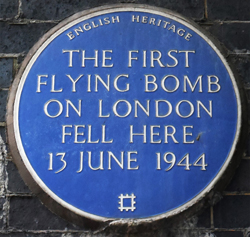
V1-flying-bombNot all of the plaques in the English Heritage blue plaques scheme commemorate people, some also commemorate places and events – the saddest of which is no doubt the landing of the first deadly V1 flying bomb on London during World War II.

Located in Bow in the East End is a plaque commemorating the site where the first flying bomb fell on London on 13th June, 1944, a week after D-Day and several months since the last bombs had fallen on London in what was known as the “mini-blitz”.

Carrying some 850 kilograms of high explosive, the unmanned, fast-moving bomb dived to the ground at about 4.25am on the morning of the 13th, badly damaging the railway bridge and track, destroying houses and, sadly, killing six people.

It was to be the start of a new bombing offensive which would eventually see around 2,500 of the V1 flying bombs reach London between June, 1944, and March, 1945.

They were responsible for killing more than 6,000 people and injuring almost 18,000 and were followed by the even more advanced V2 long range rockets – the world’s first ballistic missiles – in September, 1944. These were responsible for another 2,754 deaths in London before the war’s end.

The current plaque on the railway bridge in Grove Road was erected in 1998 by English Heritage and replaced one which was erected by the Greater London Council in 1985 and subsequently stolen.

PICTURE: Spudgun67/CC BY-SA 4.0

LondonLife – The Hive arrives at Kew…

The-Hive1

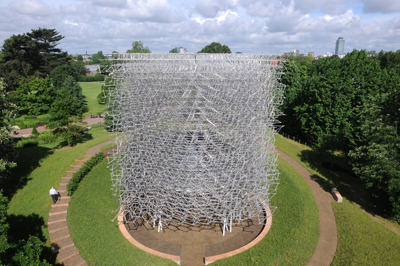
An award-winning art installation exploring the world of the British bee has been installed at Kew Gardens in west London. Designed by artist Wolfgang Buttress and created by BDP, Simmonds Studio and Stage One, the Hive was the centrepiece of the UK Pavilion at the 2015 Milan Expo and has become the first British pavilion to be brought home and reused. The 17 metre-high, 40 tonne installation, which has been set in a flower meadow, twists into the sky suggesting the shape of a swarm of bees. Inside, thousands of flickering LED lights create a sense of what life is like inside a beehive while a soundtrack inspired by the deep humming of the bees fills the air. Both sound and light inside the hive will change in intensity as energy levels in a real beehive located elsewhere in the gardens changes, providing a unique insight into life inside a bee colony. Between 2nd July and 30th October, the installation is being accompanied by a ‘Pollination Trail’ across the gardens which explores the relationship between bees and plants and a series of specially trained ‘hive explainers’ will also be on hand inside The Hive. The gardens are also hosting a series of special talks, films, workshops and ‘lates’ as well as special, family-oriented events. For more see, www.kew.org. PICTURES: Jeff Eden, RBG Kew.

The-Hive2

What’s in a name?…St Mary Overie…

The-Legend-of-St-Mary-Overie

Now the name of a dock on Bankside (pictured below), St Mary Overie (also spelt as Overy) also forms part of the formal name of Southwark Cathedral, more properly known as The Cathedral and Collegiate Church of St Saviour and St Mary Overie.

St-Mary-OverieThe simple version of the name’s origins is that it simply means St Mary “over the river” (that is, St Mary on the south side of the Thames) which was used in relation to a priory founded there in the Norman era by two knights (it’s to this foundation that what is now Southwark Cathedral owes its origins, something we’ll take a more detailed look at the nunnery in an upcoming Lost London post).

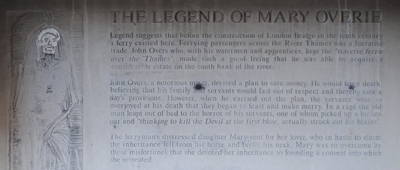
But there’s also another, more romantic version, of the name’s origins. That story, as it’s told on a plaque located at the dock (pictured above), goes back to before the Norman founding of priory, back to the days when, before the building of London Bridge, a ferry ran between the two banks of the River Thames.

The man responsible for the ferry was John Overs, a “notorious miser”, who decided to save money by feigning his death and thus plunging his household into mourning, saving that day’s provisions. As one may imagine, however, Overs was not a popular man and his servants, instead of fasting in their mourning, held a feast in celebration of his death.

In rage, the old master leapt out of his bed and a servant, terrified and imaging some sort of demonic manifestation, struck him fatally with an oar on the head.

Overs’ daughter, Mary, sent for her lover so that he may come and together with her claim her father’s inheritance but such was his haste, he fell from his horse and broke his neck. So overcome was Mary by her misfortunes that she founded a convent into which she subsequently retired (this was subsequently ‘refounded’ by the two Norman knights).

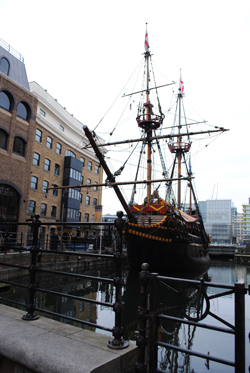
The dock, meanwhile, is today the berthing place of the Golden Hinde II, a sea-worthy replica of the flagship in which Elizabethan explorer Sir Francis Drake circumnavigated the globe (for more on the ship, see our earlier post here).

Lost London – Exeter/Essex House…

Located on the south side of the Strand, the then-named Exeter House was built in the 1300s as the London palace of the Bishops of Exeter on land which had previously been occupied by the Knights Templar.

The-DevereuxIt was Bishop Walter Stapledon who had the palace constructed – as well as being Bishop of Exeter, he was Lord High Treasurer to the unpopular King Edward II, a role which eventually led to him being dragged from his horse in the City of London and murdered.

King Henry VIII gave the property to his Secretary of State, William, Lord Paget, and, in the late 16th century, it came into the hands of Robert Dudley, the 1st Earl of Leicester. He rebuilt it and renamed it Leicester House which it remained until, following his death in 1588, it was inherited by his stepson, Robert Devereux, the 2nd Earl of Essex and a favourite of Queen Elizabeth I, and renamed Essex House.

The house was rather large and in 1590 was reported as having as many as 42 bedrooms as well as a picture gallery, a banqueting suite and chapel.

Devereux ended up beheaded for treason on Tower Hill in 1601 but his son, also Robert Devereux, became a distinguished general for the Parliamentarians during the Civil War. He received a delegation from the House of Commons at the property to offer their congratulations after the Battle of Newbury in 1643 and was laid out in state there in 1646 (insatiable diarist Samuel Pepys, then a 13-year-old boy, was among those who saw the body).

After the Civil War, the family’s debts resulted into the property passing into the hands of other families. The main part of the house was eventually demolished in the 1670s and part of the property sold to developer Nicholas Barbon. He built Essex Street, which still stands in the area, was built on the site.

The remaining part of the house, meanwhile, was used to house the Cotton Library before, in 1777, it too was demolished.

The mansion’s chapel, meanwhile, became a dissenters meeting house, known as the Essex Street Chapel, which became the birthplace of Unitarianism in England. The denomination’s headquarters, named Essex Hall, still stands on the site.

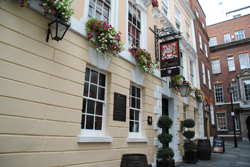
The pub The Devereux (pictured above), named for Robert Devereux, is among the buildings which now stand on the site (for more on the pub, see our earlier post here).

This Week in London – Engineering feats explained; Tate Modern reopens; app for blue plaques; and, the RA’s summer exhibition…

Sydney_Opera_House_under_construction_6_April_1966__Robert_Baudin_for_Hornibrook_Ltd._Courtesy_Australian_Air_PhotosThe stories behind some of the world’s most iconic buildings – from the Sydney Opera House to the Centre Pompidou in Paris – and engineering projects like London’s Crossrail will be exposed in a new exhibition at the V&A on the work of Ove Arup – arguably the most influential engineer of the 20th century. Engineering the World: Ove Arup and the Philosophy of Total Design, which is being staged on conjunction with the global engineering and design company he founded – Arup, surveys the life, work and legacy of Arup (1895-1988) and features more than 150 previously unseen prototypes, models, films, drawings and photographs as well as new immersive digital displays featuring animations, simulations and virtual reality. As well as presenting information relating to a selection of Arup’s most ground-breaking projects – including collaborations with architects such as Richard Rogers and Norman Foster, the display, which is divided into several distinct sections arranged chronologically, also explores the pioneering work of Arup today on projects like Crossrail, technologies for acoustics studies like SoundLab and SolarLeaf – an experimental bio-reactive facade system that uses micro algae to generate renewable energy. The first major exhibition led by the V&A’s new Design, Architecture and Digital Department, Engineering the World runs at the South Kensington museum until 6th November. Admission charges apply. For more, see www.vam.ac.uk/EngineeringSeason. PICTURE (above): Sydney Opera House under construction, 1966; © Robert Baudin for Hornibrook Ltd. Courtesy Australian Air Photos.

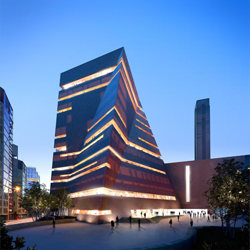
New-Tate-ModernThe new Tate Modern opens its doors to the public tomorrow following a £260 million renovation and expansion. Designed by architects Herzog & de Meuron (who also designed the original conversion of the Battersea Power Station which opened in 2000), the new Switch House building increases the size of the Tate Modern by 60 per cent. As well as redisplaying the 800 works previously on show, the revamped Tate Modern – which still features the Turbine Hall at its centre – also offers a range of new experiences for visitors, from the  subterranean concrete ‘Tanks’ – the first permanent museum spaces dedicated to live art, and a panoramic public viewing terrace on level 10. The museum’s reopening will be celebrated by a free programme of live performances, new commissions and other special events and the museum will stay open until 10pm each evening this weekend when events will include a specially commissioned choral work being performed by more than 500 singers from community choirs around London at 5pm on Saturday. Entry to the Tate Modern on Bankside is free. For more, see www.tate.org.uk/visit/tate-modern. PICTURE: © Hayes Davidson and Herzog & de Meuron/Tate 

English Heritage blue plaques were unveiled to ballet dancer Dame Margot Fonteyn and choreographer Sir Frederick Ashton earlier this month. Dame Margot’s plaque was unveiled at her former flat at 118 Long Acre in Covent Garden (conveniently close to the nearby Royal Opera House where she performed) while Sir Frederick’s plaque was unveiled at his former property at 8 Marlborough Street in Chelsea. The pair’s 25 year relationship produced many of her most celebrated performances and his greatest ballets, including Daphnis and Chloe (1951), Sylvia (1952) and Ondine (1958). The unveiling coincided with the release of a new free Blue Plaques app which, as well as helping users to find blue plaques and uncover the stories of those they commemorate, is also intended to provide an expanding series of walking tours. The first, ‘Soho’s Creatives and Visionaries’, follows a route from Oxford Circus to Tottenham Court Road Station, taking in the property where Karl Marx began writing Das Kapital, the house where Canaletto lived and the attic rooms where John Logie Baird first demonstrated television in 1926. For more, see www.english-heritage.org.uk/visit/blue-plaques/.

The 248th ‘summer exhibition’ – featuring the work of 15 international artistic duos in a display curated by leading British sculptor Richard Wilson – opened at the Royal Academy of Arts this week. On display in the Piccadilly institution’s main galleries, the exhibition’s highlights include a new large scale, suspended kite sculpture by Heather and Ivan Morison, two hand-coloured prints from Jake and Dinos Chapman’s Human Rainbow II series, and, an atmospheric photographic installation from Jane and Louise Wilson’s seminal Chernobyl series. Turkish film-maker and artist Kutlug Ataman’s monumental multi-image video installation, THE PORTRAIT OF SAKIP SABANCI, featuring 10,000 LCD panels will also be displayed. Can be seen until 21st August. Admission charges apply. For more, see www.royalacademy.org.uk.

Send all items for inclusion to exploringlondon@gmail.com.

10 notable blue plaques of London – 5. Five Londoners with more than one blue plaque…

There’s quite a few whose London residence (or otherwise) is commemorated by more than one blue plaque. So, breaking away from our usual ‘one plaque’ format, here were listing five of those who have made the grade…

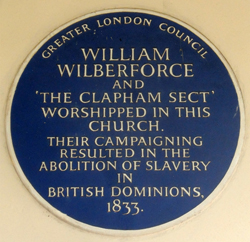
William-Wilberforce-blue-plaque1. William Wilberforce (1759-1833). The late 18th century and early 19th century politician and anti-slavery campaigner tops our list with three English Heritage blue plaques. The first is at 111 Brookwood Road in Battersea – the site of Brookwood House where Wilberforce resided during his anti-slavery campaign. The second is on Holy Trinity Church on Clapham Common, the church where Wilberforce and the Clapham Sect with whom he is associated worshipped. And the third is on a property at 44 Cadogan Place in Chelsea where Wilberforce died.

2. Dr Samuel Johnson (1709-1784). Like Wilberforce, the 18th century lexicographer Dr Johnson has three English Heritage blue plaques to his name. The first, on his famous Gough Square property in the City of London we’ve already mentioned (see our earlier post here), while the second is on a property at 8 Russell Street, Covent Garden, then occupied by bookseller Thomas Davies, which was where Dr Johnson famously first met James Boswell in 1763. The third time Dr Johnson’s name appears, more unusually, is on a plaque commemorating Essex Street – Dr Johnson is among a number of names listed on it for his role in establishing an “evening club” at the pub, the Essex Head, in the street in 1783.

3. Samuel Pepys (1633-1703): The 17th century diarist seems to pop-up everywhere in central London so it’s not surprising there are two plaques in the English Heritage blue plaques scheme dedicated to him (although both are located in the same street – one he apparently liked very much). The plaques are located at number 12 and number 14 Buckingham Street in Covent Garden and both mark the site of a Pepys residence.

4. Virginia Woolf (1882-1941): The writer, publisher and literary critic’s name appears on two properties – at 29 Fitzroy Square in Fitzrovia where Woolf lived between 1907-1911 and on Hogarth House at 34 Paradise Road in Richmond where she and Leonard Woolf lived between 1915-1924 (and also where they founded the Hogarth Press in 1917).

5. William Morris (1834-1896): The poet and artist has two English Heritage blue plaques to his credit – the first on 17 Red Lion Square in Holborn where Morris lived in a flat from 1856-1859 with Sir Edward C Burne-Jones, and the second on Red House in Bexleyheath where he and his wife Jane Burden lived from 1860-1865.

PICTURE: Spudgun67/Wikimedia/CC BY-SA 4.0 (image cropped)

10 notable blue plaques of London – 4. Oldest surviving blue plaque commemorating a woman…

Much has been made about the dearth of women featured on blue plaques in this 150th year of the scheme – according to English Heritage, only 13 per cent of the 900 odd blue plaques in London commemorate a woman.

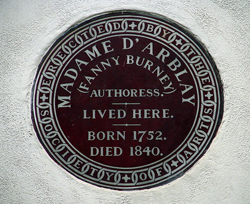
Fanny-Burney-plaqueAmong them are ballet dancer Margot Fonteyn, suffragette Sylvia Pankhurst, socialite Nancy Astor, and, in recent times, cookery writer Elizabeth David.

The oldest surviving blue plaque commemorating a woman, however, is that commemorating what is today a less well-known name, that of Fanny Burney.

Burney (1752-1840), who was known as Madame D’Arblay after she married, was a widely applauded novelist who was also noted for her diaries which record her involvement in the literary circles around Samuel Johnson and the Bluestocking Group.

The blue plaque commemorating her residence at 11 Bolton Street in Mayfair was erected in 1885 by the Society of Arts (which means that like others erected by the society, later the Royal Society of Arts, it’s brown not blue).

Burney, whose most profitable work, Camilla, was published in 1796 after she had spent five years as Second Keeper of the Robs to Queen Charlotte, lived in the house following the death of her husband, the Frenchman Alexandre D’Arblay.

She spent 10 years here – from 1818 until 1828 – and had apparently thought it would be her last residence but she went on to move into three further properties after this one.

PICTURE: Simon Harriyott/CC BY 2.0

LondonLife – Beetle-inspired moving installation at the V&A…

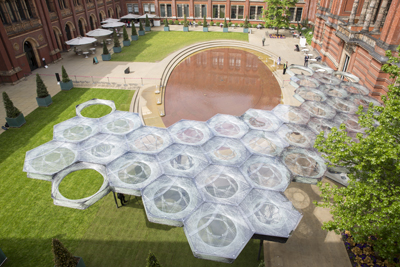
Elytra_Filament_Pavilion_at_the_VA_c_Victoria_and_Albert_Museum_London_5The result of four years of research, the Elytra Filament Pavilion is inspired by the fibrous forewing shells of flying beetles known as elytra. Featuring components which have been fabricated by a robot at the University of Stuttgart and then assembled on site in the V&A’s John Madejski Garden, the installation will grow and move in response to how visitors use the canopy thanks to anonymous data collected from sensors installed in the canopy fibres. On select dates – 17th and 18th June and 22nd September – visitors will be able to see new cells – each of which weighs about 45 kilograms and take an average of three hours to create – manufactured live by a Kuka robot. The installation is the work of experimental architect Achim Menges with Moritz Dorstelmann, structural engineer Jan Knippers and climate engineer Thomas Auer. The pavilion is one of the highlights of the V&A’s first ever ‘engineering season’ with the landmark exhibition – Engineering the World: Ove Arup and the Philosophy of Total Design opening on 18th June. Admission to see the installation, which can be seen at the South Kensington location until 6th November, is free. For more, see www.vam.ac.uk/EngineeringSeasonPICTURES: © Victoria and Albert Museum, London.Elytra_Filament_Pavilion_at_the_VA_c_Victoria_and_Albert_Museum_London_8

London Pub Signs – The Bricklayer’s Arms, Putney…

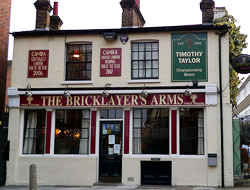
OK, so it doesn’t look like the most historic of pubs but the Bricklayer’s Arms in Putney does boast an interesting history (as well as a much accoladed menu ales).

The-Bricklayer's-ArmsThe Waterman Street pub is apparently the oldest in the south-western riverside district, dating back to 1826 when it was constructed on the site of a former coaching house and blacksmith’s forge.

Then named the Waterman’s Arms, thanks no doubt to its Thames proximity and the fact that, as a result, most of the clientele were freeman and lightermen working on the river, it changed its name to the Bricklayer’s Arms around the turn of the 20th century when, thanks to the extension of the District line railway, there was a sizeable amount of construction going on in the area.

It was briefly known as the Putney Brick before the current owners – actress Becky Newman and her husband John – took over the pub just over 10 years ago, during which time it has won a swag of awards including being named one of the top 10 English pubs by National Geographic and winning the CAMRA National Pub of the Year Award in 2007 and 2009.

For more on the pub (and the plans to extend it), check out www.bricklayers-arms.co.uk.

PICTURE: Ewan Munro-Flickr/CC BY-SA 2.0 (image has been cropped and brightened)

Treasures of London – Elfin Oak, Kensington Gardens…

Elfin-OakDelightfully carved out of a hollow oak tree, the Elfin Oak takes its name from the many colourful figures that adorn it.

The sculpture, which sits beside the Diana Princess of Wales Memorial Playground is the work of children’s book illustrator Ivor Innes.

He spent two years – 1928 to 1930 – carving “Little People” upon an ancient oak tree trunk that had been found in Richmond Park and relocated to Kensington Gardens (and in 1930, with his wife Elsie, published the children’s book, The Elfin Oak of Kensington Gardens).

The characters depicted include animals and fanciful creatures such as a gnome called Huckleberry, a series of elves including Grumples and Groodles and a witch named Wookey.

The hollow, incidentally, had been presented to The Royal Parks by Lady Fortescue in response to an appeal run to improve facilities in line with a scheme by George Lansbury (among other things, he also founded the Serpentine Lido).

Now a Grade II listed structure (and well protected by wire mesh), it has a few pop culture associations – among them, the fact that it appeared on the cover of Pink Floyd’s 1969 album, Ummagumma (the head of the band’s lead singer and guitarist David Gilmour can be seen projecting from the trunk).

Meanwhile, in 1996, Spike Milligan – long a fan of the oak – was the face of a successful campaign to raise funds for its restoration.

Announcing the Grade II listing in 1997, then Heritage Minister Tony Banks noted that the oak sat alongside the late Victorian fascination with Little People and complemented Sir George Frampton’s statue of Peter Pan (also located within the gardens).

“Together the two sculptures make Kensington Gardens very much the world capital of fairies, gnomes and elves,” he reportedly said.

PICTURE: Lonpicman/Wikimedia/CC BY-SA 3.0/

This Week in London – Architecture on show; designing London’s transport system; and, the Battle of the Somme commemorated…

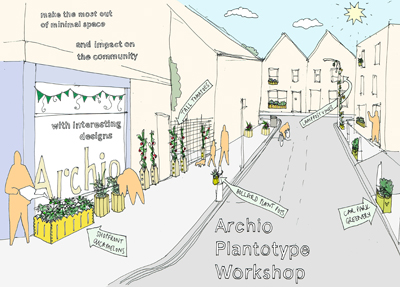
Archio-Plantotype-Workshop-1The London Festival of Architecture kicked off this week with more than 200 events planned for the capital across the month of June. Highlights include “open studios” in which 50 architectural practices across London open their doors to the public, a series of film showing at the BFI concerning the portrayal of the built environment in documentaries and hosted tours through some of London council estate’s green spaces and private gardens. The festival, which centres around three key themes – housing renewal and regeneration, creative workspaces and community engagement, also features a range of exhibitions, installations, talks and workshops including the Archio Plantotype Workshop on 25th June in which participants are asked to help design and build model prototype planters to grow compact and hybrid plants (pictured). For the full programme, check out www.londonfestivalofarchitecture.org.

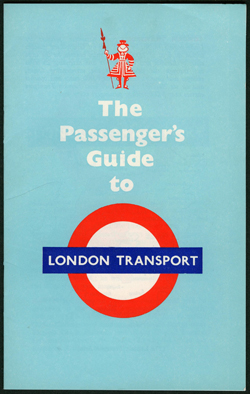
1997-14154-Booklet;-The-Passenger's-Guide-to-London-Transport,-issued-by-London-Transport,-March-1962The design of London’s transport system – from posters, maps and signage to the styling of trains and stations – is the subject of a new exhibition at the London Transport Museum in Covent Garden. Designology – Shaping London explores the role design has played in London’s public transportation systems, spanning the period from the system’s Victorian origins to today. Among the objects on display are an 1834 Shillibeer Woolwich Omnibus timetable, original architectural drawings by Charles Holden of Arnos Grove and Sudbury art deco stations, and a 1994 magnetic ticket hall station model. There are also case studies on key design features found across the transport network such as the New Johnston typeface and the design of Moquette fabric used on the Underground and buses. Visitors are also encouraged to design their own bus stop sign (and share it on social media with the hashtag #pimpmybusstop) and visit a pop-up design studio to find out more about contemporary design innovation. There’s an accompanying programme of events. Admission charges apply. For more, see www.ltmuseum.co.uk. PICTURE: The Passenger’s Guide to London Transport, issued by London Transport, March, 1962./The London Transport Museum.

The “worst day” in the history of the British Army – 1st July, 1916, when almost 60,000 died during the Battle of the Somme – is being commemorated in an exhibition marking the battle’s centenary in Guildhall Yard. Fields of Battle, Lands of Peace: Somme 1916, features a series of evocative photographs by Michael St Maur Sheil of the battlefields as they look today contrasted with images taken at the time. The outdoor exhibition is being accompanied by a display of Somme-related artefacts in the City of London Heritage Gallery at the Guildhall Art Gallery. Admission to the display is free. Runs until 5th July.

Send all items for inclusion to exploringlondon@gmail.com.

10 notable blue plaques of London – 3. The City of London’s only ‘blue plaque’ (and it’s not even blue)…

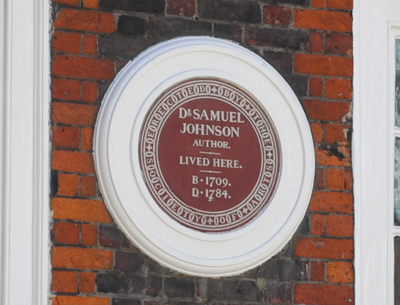
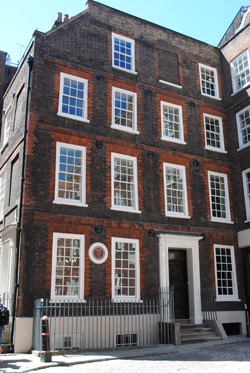
Samuel-Johnson-plaqueThere is only one official blue plaque in the square miles of the City of London – that which marks the property of lexicographer Dr Samuel Johnson in Gough Square (he always did like to stand out from the crowd) – and, like many of the plaques in the scheme, it’s not even blue.

Samuel-Johnson-plaque2The plaque was among the 35 erected in the first 35 years of the scheme – this one in 1876 – and was done so by the Society of Arts which then ran the scheme (later the Royal Society of Arts). In common with most of the first 35 plaques, it is brown in colour.

In 1879, just three years after this plaque was erected, the Society of Arts came to an agreement with the Corporation of the City of London that the corporation – the governing body of the square mile – would commemorate sites of historic significance within its boundaries and the agreement has stood ever since.

The hundreds of “blue plaques” since erected by the City of London Corporation are rectangular in nature and commemorate everything from structures like the long-gone historic gate of Aldgate (88 Aldgate High Street) to homes of the notable such as martyred Archbishop of Canterbury Thomas á Becket (86 Cheapside).

There’s a searchable database of all the City of London plaques which can be found here.

And, of course, Dr Johnson’s house, which he lived in from 1748-59 which compiling his famous A Dictionary of the English Language (the first comprehensive English language dictionary), is now a museum – for details of that, see our earlier post here.

LondonLife – A view down Constitutional Hill…

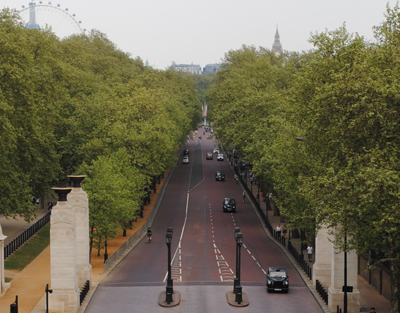
The-Mall

A view down Constitution Hill looking toward Whitehall, taken from the top of Wellington Arch at Hyde Park corner. To the left is Green Park and to the right, the grounds of Buckingham Palace. Constitutional Hill apparently has nothing to do with a document of any sort but takes its name from the fact that, considered to be a fine “constitutional” walk from St James’s Park to Hyde Park (King Charles II is rumoured to have been among those said to have taken their “constitutional” along this route while Queen Victoria survived a couple of assassination attempts on the road). The pillars at the near end are symbolic gates commemorating those who served Britain in World War I and II from the Indian subcontinent, Africa and the Caribbean (more on them in an upcoming post).

This Week in London – Exploring flight and space; ‘Horrible’ Tudors at Hampton Court; BioBlitz at Brompton Cemetery; and sleeping with the lions…

Spread-your-wings• A “ground-breaking” hands-on exhibition exploring the concept and future of flight and space travel opens at the National Maritime Museum in Greenwich this week. Above and Beyond, produced by Evergreen Exhibitions in association with Boeing (and created in collaboration with NASA), features more than 10 interactive displays, allowing visitors to learn to fly like a bird, take an elevator to space, enjoy a view of Earth from above or go on a marathon mission to Mars and see how your body would cope. Runs until 29th August. Admission charge applies. For more, see www.rmg.co.uk/see-do/exhibitions-events/above-and-beyond-exhibition.

Horrible Histories is bringing the world of the ‘Terrible Tudors’ to life at Hampton Court Palace this half-term break. The Birmingham Stage Company is offering the chance for visitors to dip into 100 years of Tudor history, spanning the reigns of the “horrible” Henries to that of the crowning of King James I in 1603. Get behind the dry facts and discover what the role of the Groom of the Stool was, which queen lost her wig as she was executed and decide whether to join in punishing the ‘whipping boy’ or the monarch and which side you’ll be on as the Spanish Armada set sail. The hour long performances will take place on the palace’s historic East Front Gardens (unreserved seating on the grass). Admission charge applies. Runs from today until 2nd June. For more see, www.hrp.org.uk/hampton-court-palace/.

The Royal Parks is hosting its first ever BioBlitz at Brompton Cemetery this Bank Holiday weekend. For 24 for hours from 5pm on Friday, people are invited to join in the hunt to track down as many species of plants, animals and fungi as possible with events including tree and nature walks, earthworm hunts, bee and wasp counts and lichen recording. There will also be a range of stalls for people to visit with representatives from a range of nature and wildlife organisations present. The BioBlitz is one of several projects linked to the £6.2 million National Lottery-funded facelift of the cemetery. For more, head to www.royalparks.org.uk/events/whats-on/bioblitz.

Sleep with the lions at ZSL London Zoo next to Regent’s Park from this week. The zoo new overnight experience at the Gir Lion Lodge, in which guests can stay in one of nine cabins at the heart of the new Land of the Lions exhibit, opened on Wednesday. Guests will also be taken on exclusive evening and morning tours in which they’ll find out more about how ZSL is working with local communities and rangers in India’s Gir Forest to protect these endangered cats. The private lodges will be available six nights a week until December with designated adults-only and family nights available. For more, see www.zsl.org/zsl-london-zoo/gir-lion-lodge. 

Send all items for inclusion to exploringlondon@gmail.com.

10 notable blue plaques of London – 2. The (now long gone) first Blue Plaque…

The concept of a scheme involving placing commemorative plaques on what was once the homes of notable people was first raised by MP William Ewart in 1863 in Parliament.

Byron-plaqueThree years later, in 1866, the idea was adopted by the then Society of Arts (later the Royal Society of Arts) and in 1867 it erected two blue plaques, the first being one commemorating the birthplace of Lord Byron at 24 Holles Street just south of Cavendish Square in Marylebone and the second being that erected to Emperor Napoleon III in King Street (see last week’s post).

But the Byron plaque had the honour of being the first and it remained on the property until it was demolished in 1889 and the plaque, presumably, lost.

It has, however, been replaced several times on subsequent buildings on the site – the latest incarnation, is a “green plaque” erected by Westminster City Council on what is now a John Lewis store and was unveiled on National Poetry Day in 2012 (it replaced a non-standard, rectangular-shaped plaque – pictured above – which was installed after the building was bombed during World War II).

The current plaque describes Lord Byron as “one of the greatest British poets” and quotes him: “Always laugh when you can. It is a cheap medicine.”

Byron is said to have been born at the property on 22nd January, 1788 and was baptised George Gordon Byron at the nearby St Marylebone Parish Church. Interestingly, English Heritage says that recent research has shown there is no clear evidence for which house in Holles Street Lord Byron actually lived in meaning none of the plaques may have actually marked the correct site.

During the first 35 years of the scheme’s existence it erected on some 35 plaques (there are now some 900 in existence, so the pace has quickened since).

Less than half of them now survive but among those that do are plaques to poet John Keats (erected in 1896 on Keats’ House in Hampstead), novelist William Makepeace Thackeray (erected in 1887 on 2 Palace Green in Kensington) and politician and author Edmund Burke (erected in 1876 on 37 Gerrard Street in Soho.

PICTURE:  Wikimedia

LondonLife – Richmond Weir and Lock…

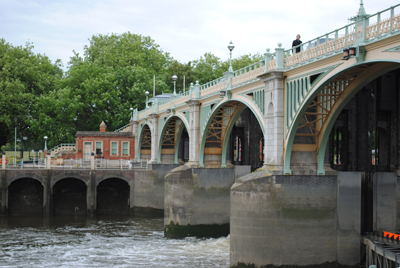
Richmond-Weir

Crossing the River Thames just downstream of Richmond and Twickenham Bridge, the Richmond weir and lock complex (actually it’s a half-lock and it also incorporates a footbridge) was built in the early 1890s to maintain a navigable depth of water upstream from Richmond. The Grade II*-listed structure, which is maintained by the Port of London Authority, was formally opened by the Duke of York (later King George V) on 19th May, 1894.

Lost London – The Nunnery of St Mary, Clerkenwell…

St-James-ClerkenwellThe Church of St James, which stands just to the north of Clerkenwell Green, is all that remains today of the medieval nunnery which once occupied a large swathe of land in the area. 

The Augustinian Nunnery of St Mary was founded in about 114o by Jorden de Briset, the lord of Clerkenwell Manor (he also founded the Hospitaller Priory of St John of Jerusalem which lay to the south – more on this here) on 14 acres of land to the east of the famous “Clerk’s Well” (more on the well, which was located close to, but within, the western border of the nunnery, in our earlier post here).

By 1160 a wall had been built around the precinct said to have been roughly bounded by Farringdon Lane, Clerkenwell Green (an open space between the two religious houses), St James’s Walk and a boundary to the south of, and parallel with, Bowling Green Lane to the north.

The church – where Briset and his wife were later buried and which doubled as a parish church – was built about the same time, along with an adjoining chapter-house – both of which were made of stone in contrast to the timber buildings which initially made up the rest of the complex.

A cloister and other stone buildings were erected to the north of the church later in the 12th and 13th centuries including a lodging for the prioress, a dormitory, refectory and kitchen for the nuns. Other buildings on the site included  a gatehouse, what was known as the “Nun’s Hall” – possibly a hall for guests – and an infirmary with its own chapel, the location of which is apparently something of a mystery.

Substantial renovation works were carried out in the late 15th and early 16th centuries and by the time of King Henry VIII’s dissolution, it had become one of the wealthiest monasteries in England (although it only ever housed about 20 canonesses).

One of the last nunneries to be suppressed, it was dissolved in 1539 with the nuns being pensioned off.

The site was initially granted to Thomas Howard, 3rd Duke of Norfolk, who held it only briefly being returning it to the king in a deal for another property and subsequently purchased by a succession of different owners.

Many of the buildings were converted for use as private mansions and outbuildings, among them Newcastle House and Challoner (later Cromwell due to the legend that Oliver Cromwell resided there) House which faced them across what had been the cloister courtyard.

The mansions were gradually redeveloped into smaller properties – it remained a popular residential area despite the building of a House of Detention to the immediate north – and in 1788-92, the parish church of St James was rebuilt to the designs of local architect James Carr, with the spire apparently modelled on St Martin-in-the-Fields (Carr also bought Newcastle House and pulled most of it down before redeveloping the area).

Church gardens, which are open to the public, now occupy some of the site of the former nunnery – in 1987, part of the medieval cloisters were excavated here.

For some insightful walks delving into the history of London, see Stephen Millar’s three books, London’s Hidden Walks: Volumes 1-3.