This Week in London – Christmas celebrations; photographic history on show; and, architects as artists…

Events celebrating Christmas continue to make our post this week. Sunday will see the annual ‘Blessing of the Crib’ – featuring a torch-lit procession on the steps of St Martin-in-the-Fields before the crib is blessed in Trafalgar Square – while on Monday carol singers will kick off their annual program of carolling in the square. More than 50 carol groups are taking part in the singing this year, which takes place from 4pm to 8pm on weeknights and 2pm to 6pm on weekends and runs until 23rd December.  For more on the blessing, see www.stmartin-in-the-fields.org and for more on the carolling in Trafalgar Square and other Christmas events in the city, see www.london.gov.uk/events.

A showcase of works from the Royal Photographic Society Collection has gone on show at the Science Museum’s Media Space. The images include some of the earliest known photographic pictures – dating from the 1820s, they are the work of pioneers like Roger Fenton, William Henry Fox Talbot and Julia Margaret Cameron – alongside contemporary works by the likes of influential modern figures such as Don McMullin, Terry O’Neill and Martin Parr. The exhibition also features artefacts from the history of the craft, such as Niepce’s heliographs, Fox Talbot’s experimental cameras and The Pencil of Nature – the first commercially published book to be illustrated by photographs. Masters of Light: Treasures from the Royal Photographic Society Collection, presented in collaboration with the Reiss-Engelhorn Museen in Mannheim, Germany, runs at the South Kensington institution until 1st March. Admission charge applies. For more, see www.sciencemuseum.org.uk/mastersoflight.

On Now: Architects as Artists. This exhibition, marking the 10th anniversary of the partnership between the V&A and RIBA, examines the relationship between architecture and art and features about 50 works from the collections of the V&A and RIBA. They include everything from a drawing by Raphael of the Pantheon in Rome to a lithograph by Cyril Power depicting staircase in Russell Square tube station and a volume of architectural fantasies by the Russian architect Iakov Chernikhov. Held in the V&A + RIBA Architecture Gallery Room at the V&A in South Kensington, it runs until 15th March. Admission is free. For more, see www.vam.ac.uk/architecture.

Send items to inclusion to exploringlondon@gmail.com.

This Week in London – Italian Cast Court reopens at V&A; Christmas Past at the Geffrye; and, last call for NYE celebrations…

Weston-Cast-CourtThe V&A’s spectacular Italian Cast Court will reopen on Saturday after the completion of the first phase in the museum’s programme of renovating its day-lit courts. The Italian court, which has been renamed the Weston Cast Court, features more than 60  19th century reproductions of Italian Renaissance monuments including a five metre high cast of Michelangelo’s David, a cast of the massive Gates of Paradise from Florence Cathedral, a plaster cast of a pulpit from Pisa Cathedral and a monumental cast of Jacopo della Quercia’s great arch from the Basilica of San Petronio in Bologna. The displays have been reconfigured with a new interpretation following extensive examination and preservation of the collection during the gallery’s renovation. The two cast courts at the South Kensington-based museum first opened in 1873. Entry is free. For more, see www.vam.ac.uk. PICTURE: © Victoria and Albert Museum.

The annual ‘Christmas Past’ exhibition – in which 11 period rooms have been decorated in period style for the Christmas season – opened at the Geffrye Museum in Shoreditch this week. Along with the chance to see how Christmas looked in bygone years, there’s a series of Christmas-themed events including “A Georgian Christmas” on 4th December, “festive food” in the cafe and Christmas gifts to stuff your stocking with.  Entry to the museum is free. Christmas Past runs until 4th January. For more, see www.geffrye-museum.org.uk.

We’ve mentioned it already but London’s public New Year’s Eve celebration – featuring its spectacular fireworks and lighting display – will this year be a ticketed event and the final tickets will be released during the first couple of weeks in December. A batch of new tickets will be released at noon each day from the 1st to 15th December. Those wishing to snag a ticket – and you can book up to four with a £10 administration fee payable for each – need to head to www.london.gov.uk/nye. Meanwhile the city is gearing up for Christmas and, in the wake of the Christmas lights getting turned on all across the metropolis, comes the annual lighting of the Christmas Tree in Trafalgar Square. The tree – a gift from the citizens of Oslo as a token of London’s support for them during World War II – takes place next Thursday (4th December) at 6pm (more on further Christmas events next week).

Send all items for inclusion to exploringlondon@gmail.com.
Apologies that the headline originally had a mis-spelling of the Geffrye Museum (auto-correct run amok!)

This Week in London – Science Museum’s new IT gallery; Hornchurch skatepark protected; NHM’s ice rink opens; and Emily Carr at Dulwich…

Queen Elizabeth II opened the new Information Age gallery at the Science Museum this week by sending her first tweet. Following a tour of the new gallery exploring the way technologies – including everything from the telegraph through to the world wide web – have transformed the way we communicate, the Queen tweeted: “It is a pleasure to open the Information Age exhibition today at the @ScienceMuseum and I hope people will enjoy visiting.  Elizabeth R.” The gallery in the South Kensington museum explores the growth of communications technologies through important events such as the sinking of the Titanic in the Atlantic in 1912, the first BBC broadcast in 1922, the TV broadcast of the 1953 coronation of Queen Elizabeth II and the creation of the first international link on the ARPANET network – the forerunner of the internet – by University College London in 1973. Entry to the new gallery is free. For more, see www.sciencemuseum.org.uk.

• In a European first (and only the second time it’s occurred around the world), an East London skatepark has been given heritage protection. Known as ‘the Rom’, the Hornchurch structure was purpose-built in 1978 by leading skatepark designers Adrian Rolt and G-Force. It has been listed as Grade II and is only the second skatepark to in the world to win such protection with the first being the ‘Bro Bowl’ in Tampa, Florida, added to the US National Register of Historic Places in October last year. Heritage Minister Ed Vaizey said the listing is testament to the park’s design. The listing was carried out on the advice of English Heritage.

The Natural History Museum’s ice rink opens today, the 10th year it’s been positioned outside the stunning South Kensington building. The 1,000 square metre rink has been decorated with 80,000 fairy lights and a 40 foot high Christmas tree, and this year has been joined by an interactive Lindt Christmas chalet where you’ll be able to sample complimentary truffles and join in activities. The rink is open to 4th January. For more, see www.nhmskating.com.

The works of pioneering Canadian artist Emily Carr are the focus of a new exhibition opening at the Dulwich Picture Gallery in London’s south on Saturday. From the Forest to the Sea: Emily Carr in British Columbia is the first major solo exhibition in Europe dedicated to the modernist artist who lived between 1871 and 1945. It features more than 140 works and indigenous artefacts as well as a recently discovered illustrated journal, Sister and I in Alaska, in which Carr documented her pivotal trip up and down the north-west coast of Canada in 1907. Highlights include Totem and Forest, (Untitled) Seascape and View in Victoria Harbour, one of a number of momentary records left behind in her trunk after her death. Runs until 8th March. Admission charge applies. See www.dulwichpicturegallery.org.uk for more.

Send items for inclusion to exploringlondon@gmail.com.
This Week in London – Dr Livingstone’s beetles; the Great River Race; Snowdon at the NPG; and Foundlings at War…

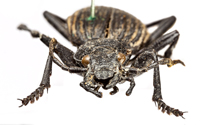
BeetleFrom Dr Livingstone, I presume? A recently unearthed collection of beetles gathered together by Dr David Livingstone during his Zambezi expedition of 1858-64 will go on display in its original box at the Natural History Museum in South Kensington on Friday night. The specimens were found among the museum’s 10 million beetles by beetle curator Max Barclay who stumbled on an unusual box received from a private collector. The collector was later found out to be amateur entomologist Edward Young Western (1837-1924) who apparently bought the specimens from a member of Livingstone’s expedition. The 20 beetles found inside the box are believed to the only surviving specimens known to have been collected by Livingstone. The specimens will be on show as part of Science Uncovered, a free annual after hours event – part of European Researcher’s Night – which will take place at the museum between 3pm and 10.30pm Friday night. Other highlights of the night include the chance to extract DNA from strawberries and bananas, create your own earthquake and chat live with NASA about chasing asteroids. For more, see www.nhm.ac.uk/scienceuncovered. PICTURE: Giant Predatory Ground Beetle, Termophilum alternatum © The Trustees of the Natural History Museum, London.

Totally Thames – the month long celebration of the great river – is going out with a bang this weekend with more than 300 crews expected to take part in the Great River Race. Running from Millwall to Ham in Surrey, the 21.6 mile long event attracts entries from across the globe. The first boats leave Millwall at 12.40pm. Head to the riverbank between Richmond and Ham at approximately 3.40pm to see the winners cross the line to a cannon broadside. For more on the Great River Race, see www.greatriverrace.co.uk. Other events on as part of Totally Thames this weekend include historic riverside walks – one focused on Brunel and another on London’s ports before the Great Fire of 1666 as well as exhibitions including Richmond’s River at Orleans Gallery House in Twickenham and your last chance to see Florentijn Hofman’s HippopoThames. For more on Totally Thames, see www.totallythames.org.

Some of Snowdon’s most iconic images will be on show as part of a new exhibition opening at the National Portrait Gallery near Trafalgar Square on Friday. Snowdon: A Life in View will feature studio portraits spanning a period from the 1950s to the 1990s alongside images from Private View, Snowdon’s 1965 examination of the British art world, created in collaboration with art critic John Russell and then director of Whitechapel Gallery, Bryan Robertson. More than 40 black-and-white portraits are included in the display including some works acquired by the gallery last year. To be held in Room 37 and 37a of the ground floor Lerner Contemporary Galleries until 21st June. Admission is free. For more, see www.npg.org.uk.

On Now: Foundlings at War: World War I. This display at the Foundling Museum in Bloomsbury reveals for the first time the stories of foundlings who fought as well as those of the mothers forced to leave their children at the hospital as a result of bereavement or abandonment of those serving abroad. A free digital ibook, The Foundlings at War: World War I, containing expanded background information was published to coincide with the opening of the display earlier this month and can be downloaded from iTunes. The exhibition is part of a major research project, Foundlings at War, supported by the Heritage Lottery Fund and is the first of several displays examining the institution’s historic links with the military. For more, see www.foundlingmuseum.co.uk.

Send all items for inclusion to exploringlondon@gmail.com.

Famous Londoners – Sir Edwin Lutyens…

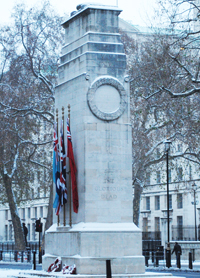
We’re looking at some of London’s World War I memorials so it’s only fitting we look at the life of acclaimed architect Sir Edwin Lutyens, the man credited with designing the Cenotaph – the UK’s national war memorial – in Whitehall (pictured below).

Lutyens was born in London at 16 Onslow Square, South Kensington, on 29th March, 1869, and – the ninth son and 10th of 13 children of soldier Captain Charles Lutyens and his wife Mary – was named for painter and sculptor Edwin Henry Landseer, a friend of his father’s. He grew up in London and Surrey and in 1885 commenced studying architecture at the South Kensington School of Art. In 1887, he left before completing the course, briefly joining the practice of Ernest George and Harold Peto before starting his own practice in 1889.

Cenotaph-in-LondonEarly commissions included country houses and it was during this period that he met with mentor and landscape gardener Gertrude Jekyll, a relationship which led him to design her home, Munstead Wood near Godalming in Surrey.

In 1897, Lutyens, known familiarly as ‘Ned’, married Emily Lytton – daughter of the late Viceroy of India and first earl of Lytton, Edward Buller-Lytton – and by 1908 the couple had five children. The family’s London addresses included 29 Bloomsbury Square (which also served as his office), 31 Bedford Square and 13 Mansfield Street, Marylebone, while his offices were located in numerous places including at 17 Queen Anne’s Gate.

Lutyens continued designing country houses – he eventually designed more than 35 major properties and altered and added many more – and among his commissions were Castle Drogo in Devon and the refurbishment of Northumberland’s spectacularly sited Lindisfarne Castle – both now National Trust properties. He was also involved in helping to plan and design Hampstead Garden Suburb in London, work which included designing two churches.

In 1912, Lutyens was invited to advise on the planning of the new Indian capital in New Delhi and his most important contribution was the design of the Viceroy’s House which combined elements of classical architecture with traditional Indian decoration. He was knighted in 1918 for his contributions in India and for his advice to the Imperial War Graves Commission.

It was his role in this latter effort which led to his becoming a national figure. He was involved in the creation of numerous monuments to commemorate the war dead, the best known of which are the Cenotaph in Whitehall – initially commissioned as a temporary structure (see our earlier post here) –  and the Memorial to the Missing of the Somme in Thiepval in northern France as well as the Australian War Memorial at Villers-Bretonneux and the Anglo-Boer War Memorial in Johannesburg.

He also designed more than 100 war cemeteries in France and Belgium and other war memorials – including overseas in places like Dublin – as well as London’s Tower Hill Memorial (see our earlier post here). Other London buildings he designed included the headquarters of Country Life magazine in Tavistock Street, Britannic House in Finsbury Square, the head office of the Midland Bank in Poultry and the Reuters and Press Association headquarters at 85 Fleet Street (now home to the Lutyens Restaurant, Bar and Private Rooms).

Lutyens was elected a fellow of the Royal Academy in 1920 (he was later president) and in 1924 was appointed a founding member of the Royal Fine Arts Commission. Even as he continued work in Delhi, he took on other commissions – such as the British Embassy in Washington, DC – and in 1924 he completed one of his most lauded – and smallest – designs: that of the one twelfth scale Queen Mary’s Dolls’ House which was shown at the 1924 British Empire Exhibition at Wembley and which can still be seen at Windsor Castle.

In 1929 Lutyens was commissioned to design a new Roman Catholic Cathedral for Liverpool but when he died on 1st January, 1944, this work was still unfinished with only the crypt completed thanks to the outbreak of World War II broke. Lutyens’ funeral was held in Westminster Abbey a few days later and his ashes were subsequently placed in the crypt of St Paul’s Cathedral.

For more information on Lutyens’ life and works, check out The Lutyens Trust, founded in 1984 to preserve and protect his legacy.

This Week in London – St Paul’s celebrates Shakespeare; Harvest Festival time; and, Horst at the V&A…

It’s Shakespeare month at St Paul’s Cathedral as the august London institution hosts a series of special addresses and music recitals in honour of the Bard’s 450th birthday. Kicking off this weekend, the events will see preachers considering Shakespeare’s life and work – particularly in relation to faith – in a weekly address at Sunday Evensong service while a series of voice and piano recitals will present various interpretations of his work through the music of some of Britain’s greatest composers. Shakespeare, the cathedral staff say, would have known the cathedral well – many printers, including his old Stratford friend Richard Field, were located in the Churchyard, and Shakespeare would have had to regularly journey past St Paul’s to have his plays registered at St John’s Gate. See www.stpauls.co.uk for a detailed programme of events.

The Kensington Gardens Allotment is hosting a free Harvest Festival this Sunday with activities including digging up potatoes and making ‘potato people’ as well as face painting, story telling and a mobile pet farm. Complementary hot and cold drinks will be provided (while stocks last, so don’t be late!). The day runs from 11am to 4pm. Meanwhile, Regent’s Park Allotment Gardens will host its own Harvest Festival on Sunday, 21st September. Along with live folk music, a children’s treasure hunt and the ‘guess the weight of the pumpkin’ competition, the day will also feature a specially-built pizza oven in which visitors will be invited to cook their own pizza. For more, see www.royalparks.org.uk.

The works of renowned 20th century photographer Horst P Horst (1906-1999) will feature in a new exhibition opening at the V&A in South Kensington this Saturday. Horst: Photographer of Style will feature 250 photographs alongside haute couture garments, magazines, film footage and other ephemera and explores Horst’s collaborations and friendships with the likes of Coco Chanel, Marlene Dietrich, Noel Coward and Salvador Dali. Highlights include previously unpublished prints and more than 90 Vogue covers taken by Horst. Runs until 4th January. Admission charge applies. For more, see www.vam.ac.uk/horst.


LondonLife – Hazy days of summer…


Hazy-days-of-summerLooking from Kensington Gardens to the Albert Memorial and Royal Albert Hall in South Kensington.


Treasures of London – The Wolsey Angels…

Wolsey-Angels


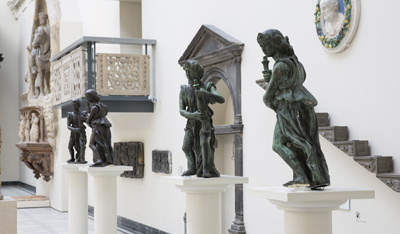
Four bronze angels, designed for the tomb of Cardinal Thomas Wolsey, have been temporarily reunited in the V&A’s Medieval & Renaissance galleries as the museum looks for funding to acquire them.

Once thought lost, the Wolsey Angels were commissioned in 1524 from Florentine sculptor Benedetto de Rovezzano for the tomb of Wolsey, chief advisor to King Henry VIII and one of the most powerful men in the kingdom. Each of the angels, which measure around a metre in height, was created between 1524 and 1529 – the period in which Wolsey was trying to have the pope annul Henry VIII’s marriage to Catherine of Aragon.

As is well-known, Wolsey failed to do so and died in 1530 in disgrace. Henry appropriated Wolsey’s assets including the tomb which the king apparently intended to use for himself. The work was slow, however, and when Henry died in 1547, it remained unfinished. His children – King Edward VI, Queen Mary I and Queen Elizabeth I – each said they would complete the tomb as a memorial to their father but didn’t and in 1565, Elizabeth moved parts of the tomb to Windsor.

During the English Civil War elements of the tomb were sold off to raise funds and only the black stone chest – now used to house the remains of Admiral Lord Nelson in the St Paul’s Cathedral crypt – were believed to have survived along with four large gilt-bronze candlesticks which were installed at St Bavo Cathedral in Ghent.

The angels passed out of sight until, in 1994, two of them appeared in a Sotheby’s sale. Acquired by a Parisian art dealer, they were later attributed to Benedetto. The remaining two angels were discovered at Harrowden Hall in Northamptonshire in 2008 – the hall is now owned by the Wellingborough Golf Club – and it was subsequently revealed that the other two had been stolen from the same site 20 years previously.

The V&A has embarked on a campaign – backed by Hilary Mantel, the Booker Prize winning author of Wolf Hall – to acquire the four angels, priced at £5 million. It has already been granted £2 from the National Heritage Memorial Fund and the Art Fund has pledged a further £500,000.

Mantel described the recovery of the angels as “one of those miracles that historians pray for; something that seems irrevocably lost has been there all the time”. “To claim the angels for the nation would connect us to one of the liveliest eras of our history and one of its most remarkable men.”

Donations can be made via the V&A’s website at www.vam.ac.uk/wolseyangels.

PICTURE: Wolsey Angels on display at the V&A/© Victoria and Albert Museum, London

This Week in London – ‘Disobedient objects’ at the V&A; war at the Westminster Abbey; and, ‘Stranger Than Fiction’ at the Science Museum…

The role of objects as tools of social change will be explored at a new exhibition opening at the V&A on Saturday. Disobedient Objects will feature everything from Chilean folk art textiles that document political violence and a graffiti-writing robot to defaced currency, giant inflatable cobblestones thrown during demonstrations in Barcelona and a video game about the making of mobile phones. Spanning the period from the 1970s to today, it aims to illustrate how political activism has driven creativity with most of the objects on display made by amateurs. Many of the exhibits have been loaned from activist groups around the world. The free exhibition runs at the South Kensington museum until 1st February. For more, see www.vam.ac.uk/disobedientobjects.

A new exhibition of three large scale works in oil by artist Hughie O’Donoghue has opened in the Westminster Abbey Chapter House. The three works featured in The Measure of All Things exhibition are a reflection on both world wars and influenced by his father’s service in the British Army, his own visits to battlefields and a photo album he found in France depicting a young woman’s holidays in the north of that country in 1903-04. The exhibition, part of the abbey’s efforts to mark the centenary of the start of World War I, is open until 30th November. Admittance with general abbey admission. For more, see www.westminster-abbey.org.

Reality and fiction come together in a new photographic exhibition which opened at the Science Museum in South Kensington this week. Stranger Than Fiction is the first major UK exhibition by Catalan artist Joan Fontcuberta and is a collaboration between the Science Museum and the National Media Museum in Bradford. The second show to be held in the Science Museum’s Media Space gallery, it features some of Fontcuberta’s best known works including photography, film, dioramas and scientific reports presented through six independent narratives which combine the real and imagined. Runs until 9th November after which it will move to the National Media Museum in Bradford. For more, see www.sciencemuseum.org.uk.

Send all items for inclusion to exploringlondon@gmail.com.
This Week in London – Virginia Woolf celebrated at NPG; the City of London Festival; and, a new gallery at the V&A…

The life of literary icon Virginia Woolf is being celebrated in a new exhibition which opens at the National Portrait Gallery today. Virginia Woolf: Art, Life and Vision explores her life as novelist, intellectual, campaigner and public figure and features more than 100 works including portraits of Woolf by Bloomsbury Group contemporaries like her sister Vanessa Bell, Duncan Grant and Roger Fry as well as photographs by Beresford, Ray Man and Beck and McGregor who photographed the intellectual for Vogue. The display also includes works depicting her friends, family and literary peers and archival materials such as extracts from her personal diaries, books printed by Hogarth Press which she founded with husband Leonard Woolf and letters including one written to her sister shortly before her suicide in 1941. Runs until 26th October. Admission charge applies. For more, see www.npg.org.uk.

The 52nd City of London Festival enters its final week today with numerous music, dance, spoken word and theatre events – many of them free – still on offer across the City. Events this week include a concert focusing on the history of the instrument known as the recorder and that of the office of Recorder of London (as St Sepulchre with Newgate tonight; tickets required), a showcase of musical talent from the Guildhall School of Music & Drama (at St Stephen Walbrook at 1.05pm next Tuesday; free), and, the Cart Marking Ceremony, in which vehicles process into Guildhall Yard where they are marked with a red hot iron by the Master Carmen and Lord Mayor (next Wednesday at 10.30am, free). For the full program of events, see www.colf.org. This year’s festival also features the placement of “street guitars” at 12 locations across the Square Mile where you can turn up and have a strum – for locations, see www.colf.org/streetguitars.

A new gallery of items you might find in your own home has opened at the V&A. Gallery 74 now features items collected as a result of the museum’s “rapid response collecting” approach which sees them acquiring new objects relating to contemporary events and movements in architecture and design. Among the objects on display are a soft toy from IKEA, a pair of jeans from Primark (acquired soon after the Rana Plaza factory building in Dhaka, Bangladesh, in which 1129 workers were killed – the factory made clothes for a number of western brands including Primark), and the world’s first 3D printed gun, the Liberator, which was designed by Texas law student Cody Wilson. Entry is free. For more, see www.vam.ac.uk.

Send all items of interest for inclusion to exploringlondon@gmail.com.

This Week in London – London’s garden squares open their gates; World War I comics; and, exploring the Science Museum’s garbage…

London Open Garden Squares Weekend will see more than 200 “hidden and little known” gardens swing their gates open to the public this Saturday and Sunday. Featuring 20 more gardens than last year’s event, the gardens range from classic London square parks to rooftop gardens, community allotments and ecology centres as well as gardens attached to restaurants and historic properties. They include Highbury Square – former home of the Arsenal Football Club, Barnsbury Wood – London’s smallest nature reserve, the Cordwainers community garden in Hackney, Garden Barge Square which will see a floating garden created on the decks of barges, the garden at the PM’s home of number 10 Downing Street, and The Roof Gardens, located above the former Derry & Toms department store in Kensington. One £12 ticket gains access to all gardens (excepting those with special conditions) while National Trust members are half-price and children under 12 go free. For more and a full programme of open gardens, head to www.opensquares.org.

Comics created during World War I are the focus of a new exhibition which opened at the Cartoon Museum in Bloomsbury this week. Never Again! World War I in Cartoon and Comic Art features works by British cartoonists Alfred Leete, Bruce Bairnsfather, William Heath Robinson and Donald McGill and includes more than 300 images ranging from political and joke cartoons taken from newspapers and periodicals and children’s comics to comic cigarette cards and publications produced in the trenches by serving soldiers. There are also some more recent works such as the 1980s comic strip Charley’s War and drawings from the Horrible Histories series. The exhibition runs until 19th October. Admission charge applies. For more, see www.cartoonmuseum.org.

Explore the world of garbage in this new exhibition opening at the Science Museum in South Kensington on Monday. The Rubbish Collection aims to use 30 days worth of the Science Museum’s waste to “expose the beauty, value and volume of what we call ‘rubbish'”. Visitors are able to take part by collecting, sorting and documenting the rubbish generated by the museum which will then be photographed by artist Joshua Sofaer before going on to be processed for recycling or to generate electricity. During a second phase of the exhibition, Sofaer will bring the rubbish back into the museum at different stages of processing. The exhibition is part of the museum’s Climate Changing programme. Runs until 14th September. For more, see www.sciencemuseum.org.uk.

This Week in London – Woolly mammoths star at the NHM; the Ceremony of the Constable’s Dues; mummies at the British Museum; and, Rupert Potter’s photographs…

The most complete woolly mammoth ever found is the star attraction at a new exhibition opening at the Natural History Museum tomorrow. Lyuba – a one month old mammoth – was found by a reindeer herder in Siberia in 2007 and was named after the reindeer herder’s wife. Thought to be 42,000-years-old, the young mammoth was thought to be healthy when it died and still has remnants of its mother’s milk in its stomach. It is the first time the mammoth – normally housed at the Shemanovsky Museum-Exhibition Complex in Salekhard, Russia, is being shown in Western Europe. Mammoths: Ice Age Giants will also feature life-sized models and skeletons of mammoths. Runs until 7th September. Admission charge applies. For more, see www.nhm.ac.uk.

The German naval ship FGS Niedersachsen will take part in the Ceremony of the Constable’s Dues at the Tower of London tomorrow, having saluted the Tower with a gun salute yesterday – the first time a gun salute has taken place in honour of the ceremony in 40 years. The ceremony dates back to the 24th century and while past offerings have included barrels of rum, oysters, cockles and mussels, this year the Tower’s constable, General the Lord Dannatt, will be presented with a barrel of wine. The ceremony will see the ship’s Commander Kurt Leonards led his crew to the Tower’s West Gate where they will be challenged by the axe wielding Yeoman Gaoler before marching on to Tower Green to “present the dues” or deliver the wine, to the Constable. The ceremony takes place at noon. For more on the Tower, see www.hrp.org.uk/TowerOfLondon/.

A new exhibition about ancient lives in Egypt and Sudan has kicks off at the British Museum today. Ancient lives, new discoveries will reveal new research about one of the museum’s most popular collections – that of ancient Egyptian and Sudanese mummies – and uses state-of-the-art technology to take you inside the mummy cases and bring you face-to-face with eight people who lived in the Nile Valley thousands of years ago. The selected mummies come from a period spanning 4,000 years, from the Predynastic period to the Christian era, and come from sites in both Egypt and Sudan. They include an adult male from Thebes mummified about 600 BC and a female singer called Tamut who lived in Thebes around 900 BC. The museum received its first mummy in 1756 and hasn’t unwrapped any of them relying on increasingly advanced technologies to see inside. The exhibition runs until 30th November. Admission charge applies. For more, see www.britishmuseum.org.

On Now – The World of Rupert Potter: Photographs of Beatrix, Millais and Friends. The amateur photography of Rupert Potter, father of children’s author Beatrix Potter, is on show in his exhibition at the National Portrait Gallery. The display features selected works from the gallery’s extensive collection of his works including two new acquisitions which show Beatrix Potter on holidays both before and after her publishing success. Other photos depict the sitters and paintings of artist Sir John Everett Millais, who was a friend of Rupert Potter’s. The free exhibition runs until 16th November in Room 28. For more, see www.npg.org.uk.

Send all items of interest for inclusion to exploringlondon@gmail.com.
This Week in London – London’s World War I transport in focus; Museums at Night; and, Tony Hancock remembered…

Opening tomorrow, a major exhibition at the London Transport Museum will take an in-depth look at the role transport played in London during World War I – from how London bus drivers took their vehicles to the front lines to the advance of women into the transport workforce for the first time and, of course, how Londoners fared under the deadly aerial attack of the Luftwaffe. Key among the objects on display as part of Goodbye Piccadilly at the Covent Garden site will be ‘Ole’ Bill’ – a 1911 bus on loan from the Imperial War Museum which was requisitioned for the front and, taking its name from Bruce Bairsfather’s popular cartoon character, featured regularly in Armistice Day parades until the 1960s. Other highlights include World War I recruitment posters, a 1914 female bus conductor’s uniform and a newly acquired piece of ‘trench art’ – a decorated Daimler bus steering wheel. Runs until 8th March. Admission charge applies. For more, see www.ltmuseum.co.uk.

The annual Museums at Night event kicks off tonight and runs until Saturday night. Among the premises participating this year is the Hunterian Museum at the Royal College of Surgeons in Lincoln’s Inn Fields which is showing a selection of rarely seen materials from its archives, the Banqueting House in Whitehall, Keat’s House in Hampstead and the Petrie Museum of Egyptian Archaeology at University College London which is running a murder mystery event Friday night. Some events are ticketed and some have an admission charge so check out the website before you go. For more, see www.culture24.org.uk/places-to-go/museums-at-night.

The late comedian Tony Hancock was honoured with an English Heritage Blue Plaque at his former home in South Kensington on Monday on what would have been his 90th birthday. Hancock, famous for Hancock’s Half Hour on radio and TV, lived on the fourth floor of a Grade II-listed building at 20 Queen’s Gate Place with his wife Cicely Romanis between 1952 and 1958. It was the longest time he lived at any property in London and coincided with the most creative and successful period of his career with the show first board cast on BBC radio in 1954 and also appearing on TV from 1956 onwards. Hancock died in 1968. For more, see www.english-heritage.org.uk/discover/blue-plaques/.

Send all items of interest for inclusion to exploringlondon@gmail.com.
Treasures of London – Apollo 10 command module…

Apollo-10-Command-Module,-c.Science-Museum-and-the-National-Air-and-Space-Museum,-Smithsonian-InstitutionLondon isn’t particularly known for its association with the space program – at least, not that we know of – but the Science Museum in South Kensington gives you the chance to get up close and personal with a piece of NASA’s history.

Located in the Making the Modern World gallery is the Apollo 10 command module, on long-term loan from the Smithsonian in the US. Launched in May, 1969, it carried three astronauts – Tom Stafford, John Young and Gene Cernan – around the moon in what was a dress rehearsal for the Apollo 11 moon landing which followed in July that year.

Stafford and Cernan descended in the accompanying lunar module to within 14 kilometres of the moon’s surface before rejoining the command module. The command module had the call sign ‘Charlie Brown’ (named for the character created by Charles M Schulz) while the lunar module was ‘Snoopy’.

The command module travelled some 500,000 miles during its eight day mission and reached a speed in excess of 24,790 mph on its return to earth, faster than any crewed vehicle since. The module splashed down in the Pacific Ocean on 26th May and the crew were recovered by the USS Princeton.

WHERE: Science Museum, Exhibition Road, South Kensington (nearest Tube station South Kensington);  WHEN: 10am to 6pm daily (7pm during school holidays); COST: free; WEBSITE: www.sciencemuseum.org.uk.

PICTURE: © Science Museum and the National Air and Space Museum, Smithsonian Institution 

This Week in London – UK’s largest ever exhibition on comics; wedding dresses at the V&A; ‘La Dolce Vita’ at the Estorick; and, architecture and the Italian renaissance…

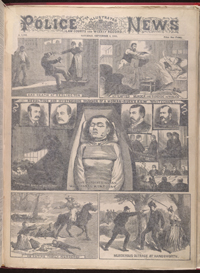
Jack-the-Ripper,-Illustrated-Police-News,-1888-(c)-British-Library-BoardThe UK’s largest ever exhibition on comics opens at the British Library tomorrow. Comics Unmasked: Art and Anarchy in the UK examines the history of the comic book in the UK – from 19th century illustrated reports of Jack the Ripper to 1970s titles like 2000AD and Action and more recent works – and examines how they have been used to explore confronting subjects like violence, sexuality and drugs. Among the highlights is a specially commissioned work by Tank Girl and Gorillaz co-creator Jamie Hewlett and works by the likes of Neil Gaiman (Sandman), Alan Moore (Watchmen, V for Vendetta), Grant Morrison (Batman: Arkham Asylum) and Posy Simmonds (Tamara Drewe). Admission charge applies (and due to the graphic nature of some exhibits, the Library has issued a parental guidance warning for under 16s). Runs until 19th August. For more, see www.bl.uk/whatson/exhibitions/comics-unmasked/index.html. PICTURE: Jack the Ripper’s victims, Illustrated Police News, 1888 © British Library Board.

The history of the white wedding dress goes under scrutiny at the V&A with its Wedding Dresses 1775-2014 exhibition opening on Saturday. The display includes more than 80 extravagant outfits from the museum’s collection – they include the Anna Valentine embroidered silk coat worn by The Duchess of Cornwall for the blessing of her marriage to The Prince of Wales in 2005, a purple Vivienne Westwood dress chosen by Dita von Teese for her wedding in 2005 and Dior outfits worn by Gwen Stefani and Gavin Rossdale on their wedding day in 2000. Some of the earliest examples in the chronological display including a silk satin court dress from 1775 and a ‘polonaise’ style brocade gown with straw bergere hat dating from 1780 lent by Chertsey Museum. The exhibition will also explore the growth of the wedding industry and the increasing media focus on wedding fashions. Admission charge applies. Runs until 15th March. For more, see www.vam.ac.uk.

The golden era of Italian film during the 1950s and 1960s and the birth of celebrity culture – did you know the term paparazzi was coined in the 1960 Federico Fellini film La Dolce Vita? – are the subject of a new exhibition which opened at The Estorick Collection this week. The Years of La Dolce Vita features 80 photographs from the period depicting Italian movie stars and the Hollywood “royalty” like John Wayne, Charlton Heston, Lauren Bacall and Liz Taylor who were working in Italy at the time. Juxtaposed against Marcello Geppetti’s images of this “real-life dolce vita” are behind-the-scenes shots from the set of La Dolce Vita taken by cameraman Arturo Zavattini. Runs until 29th June. Admission charge applies. For more, see www.estorickcollection.com.

The first British exhibition to explore the role of architecture in the Italian Renaissance opened at the National Gallery this week. Building the Picture: Architecture in Italian Renaissance Painting looks at the works of Italian masters such as Duccio, Botticelli and Crivelli with highlights including Sebastiano del Piombo’s The Judgment of Solomon – on display in London for the first time in 30 years – and Andrea del Verrochio’s The Ruskin Madonna. Five short films also form part of the display. Entry to the exhibition in the Sunley Room is free. Runs until September 21. For more information, see www.nationalgallery.org.uk.

Send all items of interest for inclusion to exploringlondon@gmail.com.
LondonLife – Celebrate Shakespeare with a cake…

Jane-Asher

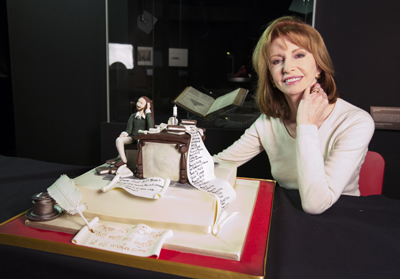
Time is running out for your entry into Cakespeare – the V&A’s competition to find the best Shakespeare-themed cake as part of the institution’s celebration of the 450th anniversary of William Shakespeare’s birth. The competition, which closes on 4th May, was launched earlier this month with an almost 15 kilogram cake created by Jane Asher Party Cakes (actress Jane Asher and the cake are pictured). A fruitcake, it features the playwright at work with a writing table and feature quill made from icing while a scroll lists the 36 plays in Shakespeare’s First Folio (which is on show in the V&A’s Theatre and Performance Galleries). To enter the competition, design, bake and decorate your cake celebrating Shakespeare and then upload an image of it to social media, tagged #Cakespeare. Oh, and the winner – selected by Asher and Geoff Marsh, director or the V&A’s department of theatre and performance – will receive a weekend for two in Stratford-upon-Avon complete with tickets to see the Royal Shakespeare Company. The V&A’s Shakespeare Festival runs until 4th May. For more, see www.vam.ac.uk. So enjoy your Shakespeare – and your cake…might be a way to take your mind off London’s transport woes! PICTURE: Victoria and Albert Museum, London.

This Week in London – Meet King George I this Easter; celebrating Shakespeare’s 450th; and feasting with St George in Trafalgar Square…

Historic Royal Palaces are offering you the chance to meet King George I and explore the world in which he lived at his former real-life home of  Hampton Court Palace this Easter weekend. A re-enactment marking the 300th anniversary of his accession will have the new Hanoverian king arrive by royal barge on the River Thames and will also include courtiers taking part in a “stately dance”, the King’s troupe of Hanoverian horses performing a “horse ballet” and a Georgian Army encampment with soldiers involved in firing displays. Visitors to the palace will also be able to see a new re-presentation of the Queen’s State Apartments which explores who the Hanoverians were, how they came to rule and their many and bitter family feuds. Runs from tomorrow (18th April) to 21st April. Admission charge applies. For more, see www.hrp.org.uk/HamptonCourtPalace/.

The 450th anniversary of Shakespeare’s birth is being celebrated with a week of events at the Guildhall Library next week. Kicking off on Tuesday, 22nd April, and running until Friday, 25th April, events include talks – with subjects including ‘Shakespeare’s London Theatreland’ and ‘Imaging Shakespeare’s Indoor Theatre’, and a six hour complete reading of Shakespeare’s sonnets with readers including actor Damian Lewis, author Alan Hollinghurst and Lord Mayor of City of London Fiona Woolf as well as Shakespeare-themed walks around the City and Southwark, and the free Shakespeare in Print exhibition at the Library. For more, see www.cityoflondon.gov.uk/things-to-do/visiting-the-city/archives-and-city-history/guildhall-library/Pages/default.aspx. Meanwhile, the V&A is also holding a Shakespeare Festival, kicking off next Monday and running until 4th May. Highlights of the festival include screenings of some of the best theatre productions of Shakespeare in the last 20 years, live performances by actors and musicians and a series of debates and talks including the “interactive lecture” Marchpane to Mutton – A Taste of Shakespeare’s Time by food historian and artists Tasha Marks. There’s also a competition – Cakespeare – in which the public are invited to design, bake and decorate a Shakespeare-themed cake and share an image of it on social media (#Cakespeare) by 4th May with the winner to receive a weekend for two to Stratford-upon-Avon and tickets to the Royal Shakespeare Company. The festival is being complemented by a display in the Theatre and Performance Galleries, Shakespeare: Greatest Living Playwright which features the First Folio as its centrepiece. Admission is free. See www.vam.ac.uk for more.

It might be two days ahead of the official saint’s day, but the Feast of St George will be celebrated in Trafalgar Square this Bank Holiday Monday with a banquet and guests including a five metre high interactive dragon. The festivities, hosted by Mayor of London Boris Johnson, will also include an English Farmers’ Market featuring 20 stalls, a kid’s marquee and traditional wooden garden games, harlequins on stilts, swing boats and circus lessons for children, a bandstand located in front of Nelson’s Column and a 12 foot tall Maypole. Runs from noon to 6pm. For more, see www.london.gov.uk/feast.

Send all items of interest for inclusion to exploringlondon@gmail.com. 
This Week in London – Queen Elizabeth Olympic Park opens fully this weekend; Shakespeare at the Guildhall Library; and, the V&A celebrates Italian fashion…

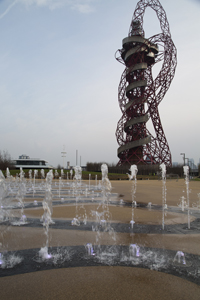
QEOP• The UK’s tallest sculpture, the ArcelorMittal Orbit, will be open to the public in Queen Elizabeth Olympic Park – described as the “biggest new park to open in Europe in 150 years” – in London’s east from this weekend. While the northern part of the 560 acre park, the Copper Box Arena, Lee Valley VeloPark and Aquatics Centre have been open to the public since July last year, from Saturday visitors will be able to visit the southern part of the park featuring the 114.5 metre high sculpture. Features in the southern part of the park include a new tree-lined promenade with giant globes, interactive water fountains, an adventure playground and four themed walking trails focusing on the 2012 Games, nature and biodiversity, education, and art and culture. Visitors who head to the top of ArcelorMittal Orbit will be able to view across 20 miles of London from a 76 or 80 metre high platform (admission charges apply – £15 adults/£7 children/£40 for a family of four – and, be warned, you may need to book) while at the base of the sculpture is a cafe and event space. The opening weekend will see a host of special events including a parade of children, an aerial acrobatic performance, choirs, bands, dancers, poets, circus performers and story tellers and ‘try out’ sports and fitness sessions. There’s more yet to come with the Lee Valley Hockey and Tennis Centre opening to the public in June and the Olympic Stadium reopening for the 2015 Rugby World Cup next year. For more on the park, see www.queenelizabetholympicpark.co.uk and for tickets to the ArcelorMittal Orbit, see http://arcelormittalorbit.com.

The printed works of William Shakespeare are the focus of a new exhibition which opened at the Guildhall Library in the city this week. Shakespeare in Print explores the library’s Shakespearean works and looks at how they were produced. Among the treasures on display will be a First Folio, the first collected edition of his plays, contemporary writers quartos and later editions of the Bard’s plays and poetry. This free exhibition is running until 29th May. The library will be hosting a series of Shakespeare-related events in the week of 22nd to 25th April to mark the 450th anniversary of his birth. For more, head here.

Italian fashion from 1945 until today is the subject of the V&A’s spring exhibition opening on Saturday. The Glamour of Italian Fashion 1945-2014 will feature 100 ensembles and accessories by leading Italian fashion houses including Dolce & Gabbana, Giorgio Armani, Gucci, Prada, Valentino and Versace as well as creations from the “next generation of talent” including Giambattista Valli and Fausto Puglisi and will also showcase the creativity of less well remembered figures such as Sorelle Fontana and Walter Albini. As well as charting the shifting international perception of Italian style, the display will also highlight techniques and materials used in the creation of Italian fashion with a digital map visualising the industry. Runs until 27th July. Admission charge applies. For more, see www.vam.ac.uk.

Send all items of interest for inclusion to exploringlondon@gmail.com.

This Week in London – William Kent at the V&A; new City Visitor Trail; and, Veronese at the National Gallery…

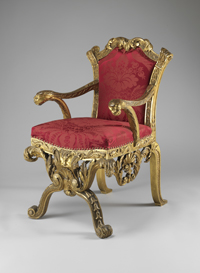
Armchair_for_Devonshire_House_ca._1733-40__Devonshire_Collection_Chatsworth._Reproduced_by_permission_of_Chatsworth_Settlement_Trustees._Photography_by_Bruce_WhiteThe life and work of William Kent, the leading architect and designer of early Georgian Britain, is the subject of a new exhibition opening at the V&A on Saturday. William Kent: Designing Georgian Britain covers the period 1709 to 1748 which coincides with the accession of the first Hanoverian King George I. the tercentenary of which is being celebrated this year. The display features more than 200 examples of Kent’s work – from architectural drawings for buildings such as the Treasury (1732-37) and Horse Guards (1745-59), to gilt furniture designed for Houghton Hall (1725-25) and Chiswick House (1745-38), landscape designs for Rousham (1738-41) and Stowe (c 1728-40 and c 1746-47) as well as paintings and illustrated books. The exhibition, the result of a collaboration between the Bard Graduate Center, New York City, and the V&A,  features newly commissioned documentary films and will have a section focusing on designs Kent created for the Hanovarian Royal family including those he produced for a Royal Barge for Frederick, the Prince of Wales (1732) and a library for Queen Caroline at St James’ Palace (1736-37). Runs until 13th July. Admission charge applies. See www.vam.ac.uk. PICTURE: Armchair for Devonshire House ca. 1733-40, © Devonshire Collection, Chatsworth. Reproduced by permission of Chatsworth Settlement Trustees.

A new City Visitor Trail has been unveiled by the City of London, taking visitors on a 90 minute self-guided tour of some of the City’s main attractions (or longer if you want to linger in some of the places on the itinerary). The trail – a map of which can be picked up from the City Information Centre – goes past iconic buildings such as St Paul’s Cathedral, Guildhall, Mansion House, Monument, the Tower of London and Tower Bridge as well as lesser-known sites. As well as the main route, there’s also five specially themed routes – ‘Law and literature’, ‘London stories, London people’, ‘Culture Vulture’, ‘Skyscrapers and culture’, and ‘Market mile’ – and a City Children’s Trail, provided in partnership with Open City, which features three self-guided routes aimed at kids. As well as the map, the City has released an app – the City Visitor Trail app – which provides a commentary at some of the city’s main attractions which can either by read or listened to as it’s read by people closely associated with the locations (available for both iPhone and Android). For more, follow this link.

The works of the 16th century Venetian artist known as Veronese (real name Paolo Caliari) are being celebrated in a new exhibition, Veronese: Magnificence in Renaissance Venice at the National Gallery. More than 50 of his works are featured in the display including two altarpieces never before seen outside Italy: The Martyrdom of Saint George (about 1565) from the church of San Giorgio in Braida, Verona, and The Mystic Marriage of Saint Catherine (1565-70) from the Gallerie dell’Accademia, Venice. Others include early works like The Supper at Emmaus (about 1565), the beautiful Portrait of a Gentleman (c 1555) and the artist’s last autograph work, the altarpiece for the high altar of San Pantalon in Venice (1587). Runs until 15th June. Admission charge applies. For more, see www.nationalgallery.org.uk.

Send all items of interest for inclusion to exploringlondon@gmail.com.

LondonLife – Brompton Road tube station sells for £53 million…

BromptonThe Brompton Road tube station, which closed in 1934 after being made redundant following the opening of other stations, sold for a reported £53 million over the weekend. The former Piccadilly Line station, located between South Kensington and Knightsbridge stations, opened in 1906 and was designed by architect Leslie Green for the Great Northern, Piccadilly and Brompton Railway. It was used as a command centre for anti-aircraft guns during World War II and the story goes was where Nazi Rudolf Hess was interrogated after being captured in 1941. Owned up until the sale by the Ministry of Defence, it was most recently used as a training centre for air cadets and naval reservists. It will reportedly be converted into residential flats.