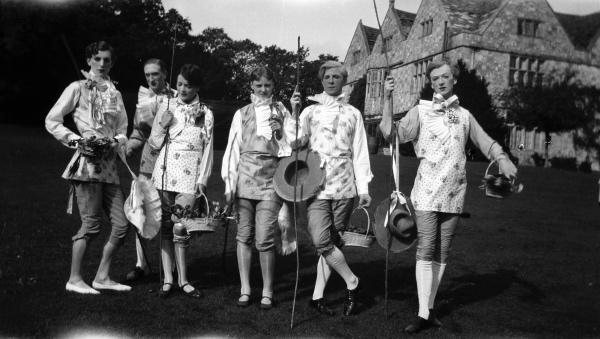
 • World famous British photographer Cecil Beaton’s portraits from the “golden age” of the 1920s and 1930s are being celebrated in a shiny new exhibition at the National Portrait Gallery. Cecil Beaton’s Bright Young Things features some 150 works, many rarely exhibited, which Beaton took in the 1920s and 1930s depicting the “extravagant world of the glamorous and stylish”. The subjects include the likes of artists Rex Whistler and Stephen Tennant, modernist poets Iris Tree and Nancy Cunard, the glamorous socialites Edwina Mountbatten and Diana Guinness (née Mitford), and actresses Tallulah Bankhead and Anna May Wong as well as less well-known figures like eccentric composer and aesthete Lord Berners, the artist and Irish patriot Hazel, Lady Lavery, and Lady Alexander, whose husband produced Oscar Wilde’s comedies and who became an early patron of Beaton’s. Beaton’s own life story and his relationship with the sitters is woven into the exhibition including through self-portraits and images of him taken by contemporaries. Runs until 7th June. Admission charges apply. For more, see www.npg.org.uk. PICTURE: The Bright Young Things at Wilsford by Cecil Beaton, 1927. © The Cecil Beaton Studio Archive.
• The theme of female subjects depicted in ornate, enclosed interiors – one prevalent in 19th century British painting – is at the centre of a new exhibition opening at the Guildhall Art Gallery on Friday. The Enchanted Interior, being presented in partnership with Laing Art Gallery in Newcastle, showcases works in styles ranging from the high Victorian through to Art Nouveau, Aestheticism, Surrealism, and pieces by contemporary female artists which ‘speak back’ to the historic tradition. Artists whose work is represented include Edward Burne-Jones, Evelyn De Morgan, James Abbot McNeill Whistler, Emily Sandys, Jessica Woodman, Fiona Tan, John William Waterhouse and Clementina Hawarden. Admission charge applies. Runs until 14th June. For more, follow this link.
• The works of iconic 20th century American artist Andy Warhol are being showcased in a new exhibition at Tate Modern. Andy Warhol, the first exhibition on the artist at the gallery in 20 years, features more than 100 works. Among them are key pieces from the pop period – Marilyn Diptych (1962), Elvis I and II (1963/1964) and Race Riot (1964) – as well as Screen Tests (1964–6), the floating Silver Clouds (1966) installation, and a recreation of the psychedelic multimedia environment of Exploding Plastic Inevitable (1966) originally produced for the Velvet Underground rock shows. Also included are later works like his 1975 Ladies and Gentlemen series and Sixty Last Suppers (1986). Runs until 6th September. Admission charge applies. For more, see www.tate.org.uk.
Send all items for inclusion to exploringlondon@gmail.com.
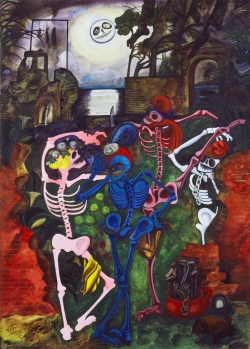
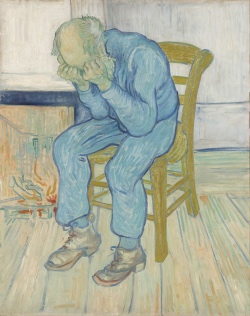 • The first exhibition to examine the work of Dutch artist Vincent van Gogh through his relationship with Britain has opened at Tate Britain this week. Van Gogh and Britain includes more than 40 works by the artist including L’Arlésienne (1890), Starry Night on the Rhone (1888), and Sunflowers (1888). The exhibition will also feature later works by Van Gogh including two he painted while in the Saint-Paul asylum – At Eternity’s Gate (1890 – pictured) and Prisoners Exercising (1890). The exhibition shows how Van Gogh, who lived in London between 1873 and 1876 working as a trainee art dealer, responded to works by artists like John Constable and John Everett Millais and his love of British writers like William Shakespeare, Christina Rossetti and, particularly, Charles Dickens (L’Arlésienne features one of Dickens’ favourite books in the foreground). The show runs until 11th August and is being accompanied by a series of talks and other events. Admission charge applies. For more, see