Where’s London’s oldest…church?

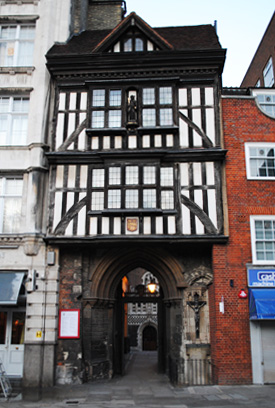
Like many of London’s oldest questions, this depends on what you mean – the oldest site of worship, the oldest continuous site of worship, or the oldest building are but a few possibilities. For our purposes, it’s generally accepted that London’s oldest surviving parish church is St Bartholomew the Great in West Smithfield.

This atmospheric church is now only half the size of what it once was but that part which remains – the original quire, altar, side aisles and lady chapel – was founded in 1123 AD as the priory church for a community of Augustinian Canons.

The church owes its origins to Rahere, a favored courtier of King Henry I, who after the death of King Henry’s wife Queen Matilda and then heir, Prince William, along with some other family members, renounced his way of life and decided to make a pilgrimage to Rome.

In Rome, he sickened, and fearful for his life, vowed to found a hospital for the poor on his return to London. Subsequently recovering, he was about to head home when a vision of St Bartholomew appeared to him and told him that he had helped him to recover and now desired him to found a church in Smithfield.

On his return to London, Rahere did just that – founding the priory with its church and a hospital for the poor. He died 1145. Amazingly, his tomb still lies within the church, on the left hand side of the altar.

The priory grew in importance with income coming not only from offerings and rents but from tolls at St Bartholomew’s Fair which was held on grounds to the north of the the church (as an interesting aside, it’s also known that the church had a low wall built in front of its western facade to separate it from Smithfield. Known as the Cheyne, this could be closed with a chain on market days to stop cattle wandering inside).

The church’s current configuration came about in the Great Dissolution – the priory was dissolved in 1539 and the nave of the church was pulled down, leaving the quire, altar and lady chapel. The church was briefly used by some Dominican friars but since the reign of Queen Elizabeth I has fulfilled the role of parish church. A concerted restoration effort began in the mid-19th century.

Livery companies associated with the church include The Butchers’ Company which still hold a special service here in September prior to electing a new Master. These days, St Bartholomew the Great is a welcome refuge from the hustle and bustle of the City and still gives a strong sense of the life it has known.

WHERE: Off Little Britain, West Smithfield (nearest tube station is Barbican); WHEN: 8.30am to 5pm Monday to Friday (until 14th February), 10.30am to 4pm Saturday, 8.30am to 8pm Sunday (except for services) ; COST: £4 an adult/£3.50 concession/£10 a family; WEBSITE: www.greatstbarts.com

PICTURE: Gatehouse leading into St Bartholomew the Great

Roman London – 5. Remains under St Bride’s

Our final entry in our short series on Roman London concerns the Roman remains found under St Bride’s Church in Fleet Street.

Following heavy bombing during World War II, much of the church was destroyed. But the bombing did reveal hitherto unknown secrets below the church.

As well as the remains of what were thought to be numerous plague and cholera victims (dating from 1665 and 1854 respectively), these included remains dating back to the 2nd century AD which featured the foundations of a somewhat mysterious Roman building and pavement, both of which were built outside the later Roman wall. There are also the remains of a ditch which is believed by some to be part of what was a quarry.

The remains can now be viewed in the church’s crypt along with those of the earlier churches. For more on St Brides, see our previous entry here.

WHERE: Fleet Street (nearest tube St Paul’s); WHEN: 8am to 6pm Monday to Friday, 11am to 3pm Saturday, 10am to 1pm and 5pm to 7.30pm Sunday; COST: Entry is free but guided tours are available on Tuesday afternoons at 3pm for £5 a person; WEBSITE: www.stbrides.com.

Roman London – 4. Timber from a Roman quay

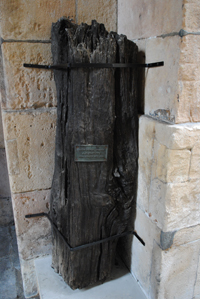
Hidden away in the porch of the church of St Magnus the Martyr on Lower Thames Street, next to London Bridge, is a timber beam which is believed to date from the city’s Roman era and which once formed part of the city’s wharves.

Found, according to a plaque upon the wood, in 1931 under Fish Street Hill, the wood dates from around 75 AD, shortly after the first attempt to create wharves along the riverbank in about 50 AD and about 10 years after Boudicca and her rebels torched the city.

The Roman port did become an important trading centre, continuing to expand during the following two centuries before decline set in during the 400s.

The first controlled excavation of a Roman quay took place in 1973 and have continued sporadically since.

WHERE: St Magnus the Martyr (nearest tube station is Monument); WHEN: Access to the site can be undertaken at any reasonable time; COST: Free.

Treasures of London – The Cosmati Pavement

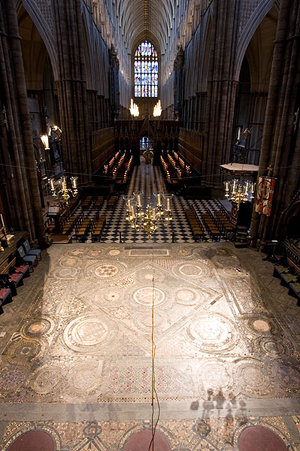
Hidden underneath carpet and a layer of grime for years, this unique medieval “carpet of stone” before the High Altar of Westminster Abbey can now be seen in all its glory, thanks to two years of restoration works.

Laid down in 1268 on the orders of King Henry III who, 23 years earlier had started rebuilding the abbey in the new Gothic style, it was created by a team of workmen from Rome headed by a man called Odoricus.

The decision to create the pavement was apparently taken after the Abbot of Westminster, Richard de Ware, visited the Pope, saw a newly made pavement in His Holiness’ summer residence, and thought it would be just the ticket for the abbey.

The pavement, described by one writer as a “prayer set in stone”, takes its name from ‘Cosmati’ work which describes the type of inlaid stone decoration used in its making (Cosmati work, in turn, was named after one of the families that specialised in it).

Made from rare marbles, gemstones and even glass (with some pieces recycled from earlier projects), the design is abstract. Unlike Roman and earlier medieval mosaic work which tended to feature stones cut into squares of equal sizes, it features stones of various colors and sizes cut into a range of different shapes which create a geometric pattern and is believed to symbolise the world, the universe and the end of both.

In this regard, the pavement also features three brass inscriptions, now damaged, which refer to the end of the world and suggest that at the time of its creation, there were 19,683 years left to go. The inscriptions, which also express the date of its making in a most unusual style, are a unique feature of the pavement and are not found on other Cosmati works.

The pavement has recently undergone a two year restoration program, now completed, which has removed the dirt and stains which had covered it – this was in part caused by the thick carpets which have covered it for the most of the 150 years.

WHERE: Westminster Abbey, Westminster (nearest Tube station is Westminster or St James’s Park); WHEN: Open to tourists everyday except Sunday  (times vary so check the website); COST: £15 an adult/£12 concessions/£6 schoolchildren (11-18 years), free for children aged under 11/£36 for a family (two adults, two children); WEBSITE: www.westminster-abbey.org

PICTURE: Copyright: Dean and Chapter of Westminster.

Wren’s London – 10. The Monument, The Temple Bar, and more churches…

So we come to the final in our series on Wren’s London. This week we take a quick look at some of Wren’s remaining London works (keep an eye out for our upcoming ‘daytripper’ on Oxford for some detail of his works there)…

• The Monument. Built between 1671-77 to commemorate the Great Fire of London, it was designed by Wren and Dr Robert Hooke. For further information, see our previous post.

The Temple Bar. Designed by Sir Christopher Wren in 1672 to replace a crumbling wooden predecessor, it’s only recently been returned to the City and now stands adjacent to St Paul’s. For further information, see our previous post.

Churches. We’ve only looked in depth at a few of the existing churches Wren designed in London. But here are some of the others among the more than 50 he designed that still stand:

St Benet Paul’s Wharf. Originally completed in 1685, it claims to be the only “undamaged and unaltered” Wren church in the city, having survived World War II intact. Now the Welsh church of the City of London. See www.stbenetwelshchurch.org.uk.

St James Garlickhythe. Built according to Wren’s design, it was completed in 1682 (the tower not until 1717). It is known as ‘Wren’s Lantern’ due to its light interior. See www.stjamesgarlickhythe.org.uk.

St Margaret Pattens. Built between 1684 and 1687 after the previous church was destroyed in the Great Fire, the church gets its unusual name of ‘pattens’ from wooden undershoes that were worn to elevate people out of the mud, and were sold nearby. See www.stmargaretpattens.org.

• St Margaret Lothbury. Completed in 1692, it now incorporates seven adjacent parishes thanks to losses in the Great Fire, World War II and building projects and is now officially known as the parish church of “St Margaret Lothbury and St Stephen Coleman St with St Christopher-le-Stocks, St Bartholomew-by-the-Exchange, St Olave Old Jewry, St Martin Pomeroy, St Mildred Poultry and St Mary Colechurch.” See www.stml.org.uk.

St Martin-within-Ludgate. Rebuilding was largely completed by 1680. The previous church on the site was where William Penn, founder of Pennsylvania, was married. See www.stmartin-within-ludgate.org.uk.

Others, some of which have been rebuilt since Wren’s day, include St Andrew-by-the-Wardrobe, St Andrew Holborn, St Anne and St Agnes (Now St Anne’s Lutheran Church), St Clement Eastcheap, St Lawrence Jewry, St Mary Abchurch, St Mary Aldermary, Mary-le-Bow, St Michael, Cornhill, St Michael Paternoster Royal, St Nicholas Cole Abbey (being redeveloped as a centre for religious education), St Peter upon Cornhill, and St Vedast alias Foster. (We’ll be featuring some in more detail in later entries).

What’s in a name?…Fleet Street

Renowned around the world for its associations with journalism (not to be mention, it’s desirability as a Monopoly property), the origins of Fleet Street’s name go back to a river which still runs through London today.

The River Fleet (the name Fleet is believed to come from a Saxon word, fleot, which means ‘flood’) these days actually runs under London, flowing from Hampstead Heath in the city’s north via sewers to spill into the Thames beneath Blackfriars Bridge.

A significant river in Roman times, by the medieval period the river had become polluted, thanks to the growth of industry along its banks. After the Great Fire of 1666, it was converted into the New Canal but this rather quickly fell out of use and sections of the river were covered for various urban projects from the 1730s onwards (the final sections, near the headwaters, were apparently covered in the 1870s).

Fleet Street, which takes its name from the river, has been known as such since medieval times and along its length, which runs east from where The Strand ends at Temple Bar to Ludgate Circus, is the location of a number of significant properties – from the Temple, formerly the property of the Knights Templar and now site of two Inns of Court, through to St Bride’s Church, St Dunstan-in-the-West and several old taverns, including Ye Olde Cheshire Cheese.

The street’s association with publishing goes back to the early 1500s when Wynkyn de Worde, apprentice to William Caxton, set up shop there and other printers and publishers followed. London’t first daily newspaper, The Daily Courant, was published there from 1702 and the street subsequently became home to many national newspapers (the press in the UK is still referred to as ‘Fleet Street’ although these days no newspapers are based there – the last media outlet, Reuters, moved out in 2005).

There have recently been suggestions that the river Fleet could once again be uncovered as part of a bid to revitalise London’s “lost” waterways.

Wren’s London – 6. St Stephen Walbrook, St Mary-le-Bow, and St Mary-at-Hill

Sir Christopher Wren was responsible for designing more than 50 churches in the City of London after the Great Fire of 1666. We’ve already touched on a couple in this series – St Paul’s, of course, and St Bride’s in Fleet Street – and while we won’t be looking at all of rest in detail, here are three stars that have survived…

• St Stephen Walbrook, which is the parish church of the Lord Mayor and was that of Wren himself, is a little gem of a church and is generally thought to be the finest of Wren’s city churches from an architectural perspective. Tucked away behind Mansion House in Walbrook, the church as we know it was built between 1672-79 (although there may have been a Christian church on the site as early as 700 AD) and features a beautiful coffered dome (a sign of what was to come when Wren built St Paul’s). These days the chairs are arranged around white altar stone by sculptor Henry Moore which has been placed under the centre of the dome. Other features worth noting are Wren’s original altar screen and a glass-encased telephone which was the first dedicated help-line in London for the suicidal established by the charity Samaritans. These days the church is home to the London Internet Church. For more information, see http://ststephenwalbrook.net.

• St Mary-le-Bow, which is named for the bow-shaped arches in the Norman-era crypt, was rebuilt by Wren in 1670-80 after the Great Fire. In keeping with the church’s name, he designed a steeple with arches resembling the ‘bows’ below. While the church, located in Cheapside, was badly damaged when bombed in World War II, the steeple – topped by an original 1674 weathervane shaped like a dragon – remained standing along with the outer walls. The church was restored in the mid-Twentieth century and the bells, destroyed in a German air raid, rehung. It’s said that only those born within the sound of St Mary’s bells can be said to be true Cockneys (the Bow bells were also those Dick Whittington apparently heard when leaving London, leading him to turn around and embrace fame and fortune). For more information, see www.stmarylebow.co.uk.

• St Mary-at-Hill, which has served the parish of Billingsgate for almost 1,000 years, was one of the first to be rebuilt after the Great Fire. Both Wren and his assistant Robert Hooke were believed to have been involved in building the church, which was completed in 1677 and lies in Lovat Lane, just off Eastcheap. It was designed as a Greek cross with a dome at its centre  – Wren later put forward a similar design for for St Paul’s which was rejected. Overhauled in the late 1700s and a couple of times in the 1800s, it survived World War II only to be damaged extensively by fire in 1988 after which it was restored. The church’s connection to Billingsgate – the site of London’s former fish market lies just down the road – means that the fish harvest is still celebrated here every October. For more information, see www.stmary-at-hill.org.

Famous Londoners – Samuel Pepys

A navy administrator and an MP who lived in London for much for the 17th century, it is for his remarkable diary – filled with reflections on great events and the intimate goings on of daily life – that Samuel Pepys is renowned around the world.

Born the son of a tailor in Salisbury Court, Fleet Street (the site is now marked with a plaque), on 23rd February, 1633, Pepys (pronounced ‘peeps’) attended St Paul’s School before moving on to Cambridge University. After graduation, he entered the household of one of his father’s cousins, Sir Edward Montagu, as a secretary around 1655 – the same year he married Elisabeth de St Michel.

Under the patronage of Sir Edward – after he became the Earl of Sandwich – Pepys was appointed Clerk of the Acts to the Navy Board – a task which saw him playing a key role in shaping the English fleet which fought (unsuccessfully) in the Second Anglo-Dutch War (1665-1667).

In 1673, he became Secretary to the Admiralty and the same year was elected an MP for Castle Rising in Norfolk (he later became an MP for Harwich). Pepys also served as president of the Royal Society from 1684-1686, and even visited Tangier where he was involved in the evacuation of the short-lived English colony there. He was imprisoned twice in later years – at least once on suspicion of supporting the Jacobites – but the charges were dropped and he retired at the age of 57 in 1690.

In 1701 he moved out to a house in Clapham and lived there until his death on 26th May, 1703 (his wife Elisabeth had died many years earlier in 1669 and they’d had no children). His extensive library – including his six volume diary – were bequeathed to Magdalene College at Cambridge.

Despite an illustrious public career, it is his diary for which Pepys is most celebrated. Covering the years from 1660 to 1669 (he only stopped writing for fear he would go blind), it records his reactions to such monumental events as Charles II’s coronation (he was present as a youth at the beheading of Charles I), the Great Plague of London in 1665 and the Great Fire of London the following year as well as intimate details from his personal life including how he spent his leisure time, his various illnesses and his sexual liaisons. Written originally in a form of shorthand, it was first published in 1825 – and only fully published in 1976 – and has since gone on to enthral and entertain millions around the world.

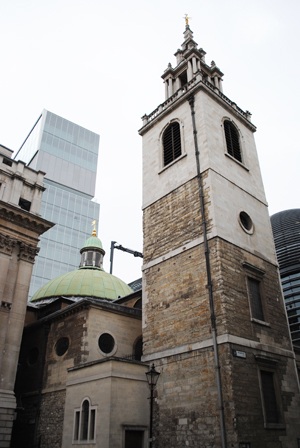
Among places in London which still hold a Pepys connection are St Bride’s Church (he was baptised there), All Hallows by the Tower (it was in the tower from which Pepys watched the Great Fire), St Olave’s on Seething Lane (pictured above) where Pepys and his wife are buried (he was living in Seething Lane when he started the diary and St Olave’s served as his parish church between 1660 and 1674). Further down Seething Lane, there is a bust of Pepys in the gardens which now cover the Navy Office where Pepys once lived and worked.

There is also an exhibition on Pepy’s in Prince Henry’s Room at 17 Fleet Street (the building dates from around 1610 and was a pub when Pepys was alive), although it is currently closed.  An online version of Pepys’ diary can be found at the website Pepys’ Diary. For more on Pepys’ life, we do recommend Claire Tomalin’s best-selling biography Samuel Pepys: The Unequalled Self.

Wren’s London – 2. St Bride’s

While St Paul’s Cathedral is certainly his best-known work, Sir Christopher Wren designed 50 other churches in London in the wake of the Great Fire of 1666. Rather than look at each individually, we’ll just highlight a couple with the first being the “wedding cake” church, St Bride’s.

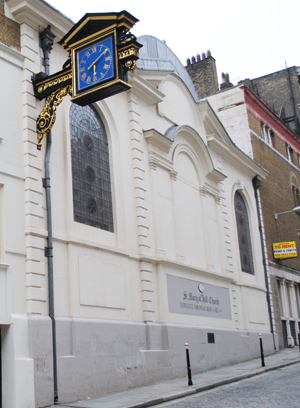
The site of St Bride’s has been home to at least eight churches, the first of which is believed to have been founded in the Dark Ages. Dedicated to the sixth century Irish nun St Bride – or St Bridget, the church – thanks to its location on Fleet Street – has had a long association with printers and later newspapers and journalists and, despite the fact most news organisations have long since departed the area, is still regarded as “the journalist’s church”.

The medieval St Bride’s was completely consumed in the Great Fire but a new church was opened in 1675 after works were carried out to Wren’s design (among his assistants on the job was Nicholas Hawksmoor who became a celebrated architect in his own right).

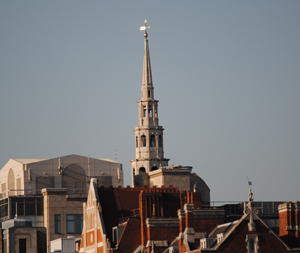
Despite the return of worshippers, however, the building remained unfinished and Wren was approached in the early 1680s about constructing the steeple. This was completed in 1703 and has become a London landmark with many believing its tiered design was the basis for the modern “wedding cake” design.

The steeple – at 226 feet or almost 70 metres, the tallest in London – was one of few things which survived after a firebomb destroyed much of the building during the Blitz in 1940. The church was subsequently restored according to Wren’s original designs (albeit with a shorter steeple than Wren’s original – eight feet or 2.4 metres were knocked off when it was struck by lightning in 1764.)

As well as its association with the printing industry and the press, these days St Bride’s is also notable for its US connections – the first American child of English descent, Virginia Dare, was the daughter of two former St Bride’s parishioners (there is a bust of Virgina above the font). The parents of Edward Winslow, three-time Governor of Plymouth in Massachusetts, were also married in St Bride’s.

The crypt contains remains dating back to Roman times.

WHERE: Fleet Street (nearest tube St Paul’s); WHEN: 8am to 6pm Monday to Friday, 11am to 3pm Saturday, 10am to 1pm and 5pm to 7.30pm Sunday; COST: Entry is free but guided tours are available on Tuesday afternoons at 3pm for £5 a person; WEBSITE: www.stbrides.com.

Wren’s London – 1. St Paul’s Cathedral

In a new special, we’re taking a look at some of the key sites London landmarks designed by renowned 17th century architect Sir Christopher Wren. To kick it off, we’re taking a look at the building for which he is most known, St Paul’s Cathedral.

Wren’s involvement with the current St Paul’s came after the Great Fire of London in 1666 left the old medieval cathedral in ruins (there is believed to have been four previous cathedrals built on the site with the first dating from around the early 600s). He had already been involved in repairing the old cathedral and had even submitted plans for a new domed cathedral on the site when the Great Fire swept through the city.

Wren had already been appointed Surveyor to the King’s Works when, in 1668, he was asked to submit plans for the a new cathedral. After his first few designs were rejected and abandoned, Wren’s plans, albeit substantially altered, were finally approved and the first stone laid in 1677.

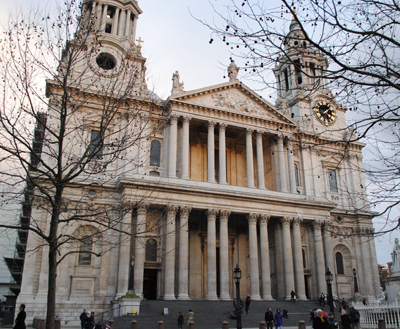
The design was ambitious and the church now features what is the second biggest dome in the world after that of St Peter’s in Rome as well as a monumental west-facing facade complete with two towers (the final form of the western facade wasn’t settled until 1707 and both of the towers were originally designed to hold clocks. In the end only the right tower did.)

Building took more than 30 years and it wasn’t until 1710 that the new cathedral was officially declared completed. Interior features include the Whispering Gallery (located 30 metres above the floor below the central dome, it gets its name from the fact that a person whispering into the wall can be heard across the dome by someone who puts their ear to the wall), choir stalls which feature the work of renowned woodcarver Grinling Gibbons, and poet/preacher John Donne’s memorial from 1631, the only pre-Great Fire monument to survive intact. There are spectacular views over London from the Stone Gallery or the highest point of public access, the Golden Gallery.

Since its opening, St Paul’s has hosted the burials of numerous of Britain’s luminaries – the tombs of Admiral Horatio Nelson and the Arthur Wellesley, the Duke of Wellington, are both in the crypt as are those of 18th century painter Sir Joshua Reynolds and Sir Alexander Fleming, the man who discovered penicillin along with a host of memorials. Others events hosted at the cathedral include Winston Churchill’s funeral and the wedding of Prince Charles and Lady Diana in 1981.

Wren, who died in 1723, was the first person to be interred in the crypt. His tomb bears an inscription in Latin which says: “Reader, if you seek a monument, look around you.”

WHERE: Ludgate Hill. Nearest tube is St Paul’s; WHEN: Monday to Saturdays, 8.30am to 4pm. COST: £12.50 adults/£11.50 seniors/£9.50 students/£4.50 children (aged 6-16)/£29.50 family; WEBSITE: www.stpauls.co.uk

10 sites in London you may not know about – 3. Temple Church

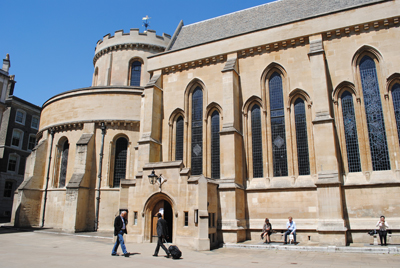
Located just outside the west end of the medieval city walls, the Temple Church is an anomaly in a city where, thanks to the Great Fire of 1666, few medieval churches remain.

First consecrated in 1185, the church – like all Templar churches – features a round nave – known as the Round Church – modelled on that of the Holy Sepulchre in Jerusalem. It adjoins a ‘Hall Church’ which features three bays dating from the 13th century.

While they have been moved several times, the Round Church contains a number of tomb effigies including those believed to be that of William Marshall, 1st Earl of Pembroke and one of the towering figures of the 12th and early 13th centuries.

It also features a series of faces around the outer wall (these were renewed and replaced in the 1820s), each of which shows a different and, at times, plain odd expression.

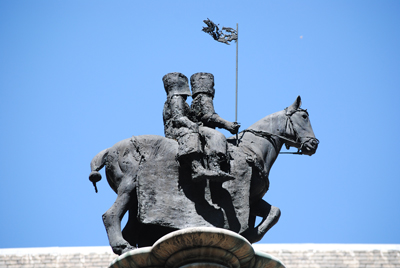
The church is located in the midst of what was once a large landholding – located between Fleet Street and the Thames – once owned by the Templar Knights which included quarters for the knights and serjeants. Following the disbanding of the order in early 1300s, the Temple Church passed into the hands of the Knights Hospitaller and then became the property of the Crown during the 16th century reformation.

In 1608, James I granted all the Templar’s land to the societies of the Inner and Middle Temple, two of London’s Inns of Court – the inns are still dedicated to housing those studying and practising law and it’s the inns which maintain the church today.

One of the most famous figures connected to the church is Richard Hooker, Master of the Temple between 1585-91, and author of Of The Laws of Ecclesiastical Polity, an important document in Anglican theological thought.

Christopher Wren also left his mark here – he refurbished the church’s interior in the 1670s although much of work was later removed – as did World War II – the roof of the Round Church was brought down during the Blitz.

Make sure you pop in for one of the free organ recitals which are held over lunchtimes each Wednesday.

WHERE: Off Fleet Street and down Inner Temple Lane (nearest tube station is Temple); WHEN: Check website for times; COST: £4 (free to under 18s and seniors); WEBSITE: www.templechurch.com