Famous Londoners – William Marshal (part I)…

We’ve decided to tell William Marshal’s fascinating story over two weeks – tune in next Monday for part II, the latter part of Marshal’s life, when the connections of Marshal to London are more fully spelt out …

A knight who served five English kings and rose to become a significant force in late 12th and early 13th century England, William Marshal was one of the towering figures of his time and seen by many as a paragon of what a knight could be.
Marshal – who died 800 years ago last May, was born in about 1147, the second son from the second marriage of a minor noble, John Marshal, during the 15 year conflict between King Stephen and his cousin, the Empress Matilda.

Marshal had ascended to become Marshal to the King in the court of King Henry I but during the subsequent conflict which erupted after the king’s death in 1135 had, like many, attempted to exploit the situation for his own benefit (he is said to have initially supported Stephen but was, however, among the Empress’ forces during a battle at Wherwall in 1141, during which he lost an eye and suffered significant injuries after the lead roof of a church melted onto him).

Late in King Stephen’s reign, he personally attracted the ire of the King upon himself by building a new fortified outpost, Newbury Castle, to the west of London, leading the king to marshal his forces against him. Marshal apparently begged for a truce ahead of the surrender of the castle and it was here that William enters the story, offered up as a hostage for his father.

But John Marshal decided, having handed over the boy, that he would not surrender and abandoned William to his fate. Stephen, angered at the deception, ordered the boy William to the gallows but, in what was a seminal moment in William’s childhood, the king relented and Marshal was spared – the story goes that it was William’s innocence which stayed the King’s hand.

King Stephen eventually won the day – although John Marshal escaped, leaving his son with the King. William was to remain a captive for more than a year – only after peace was agreed between King Stephen and Empress Matilda in 1153 was he to return to his family.

Little else is known of Marshal’s early childhood but in around 1160, at the age of about 13, he went to live in the household of William of Tancarville in Normandy – a distant relative – to acquire skill at arms in order to become a knight. He was knighted at the age of about 20 by Tancarville and was soon involved in fighting to protect Normandy’s borders but shortly after that, found his time under Tancarville’s patronage at an end (although the exact reasons why he was let go are unclear).

Rather than returning to his family in England, the penniless Marshal instead spent the next year or so travelling Europe on the tournament circuit to try and make some money and indeed had some success before he did eventually return to England and enter the house of his uncle, Earl Patrick of Salisbury. When Patrick and his men were called up to campaign with King Henry II in south-western France in early 1168, William was among his men.

In April, William was with the Earl serving as a guard for King Henry II’s wife, Eleanor of Aquitaine, when they were attacked. The Queen hastened to safety while Patrick and his men held back the attackers but during the fighting, the earl was killed while Marshal, despite his skill, was eventually run through the thigh was lance and taken prisoner.

Recovering from his wound, Queen Eleanor eventually paid a ransom for his release and he was subsequently offered a place in her retinue in what was to his first post in a long life of royal service. After just a couple of years in the Queen’s service, her husband, King Henry II, appointed William as tutor-in-arms to his son and heir, Henry “the Young King” who had already been crowned at Westminster Abbey despite his father still holding the reigns of power.

When Henry rebelled against his father in 1173, William remained among his men, and, after an uneasy peace between the Young King and King Henry II was restored, William was with the young Henry when he spent three years on the tournament circuit from 1176 to about 1179. The Young King and his men saw considerable success in tournaments before William branched out on his own, his skill with weaponry bringing him both fame and wealth in his own right to the degree that by the early 1180s, he was regarded as one of Europe’s greatest knights.

With thanks to Thomas Asbridge’s The Greatest Knight: The Remarkable Life of William Marshal, the Power Behind Five English Thrones

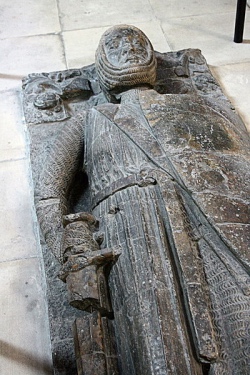
An effigy believed to be that of William Marshal in the Temple Church, London. PICTURE: Michael Wal  (licensed under CC BY-SA 2.0)
Treasures of London – King George III’s military maps…

King George III’s massive collection of military maps, views and prints forms a key part of the Royal Collection and to mark the 200th anniversary of the King’s death, more than 3,000 of which have been published online.

The publication of the selection from the more than 55,000 items in the collection marks the culmination of 10 years of research by Dr Yolande Hodson who has catalogued the contents of the collection which dates from the 16th to the 18th centuries and provides a contemporary account of theatres of war in Britain, Europe and America.

The collection includes everything from so-called “presentation maps” of sieges, battles and marches to rough sketches drawn in the field, depictions of uniforms and fortification plans.

Highlights include two-metre-wide maps of the American War of Independence (1775–83) which designed to hang on purpose-made mahogany stands in Buckingham House – among them is a map of the final British defeat at the Battle of Yorktown in 1781, the only known copy to survive outside the US.

There’s also a memorandum written by Scottish military engineer William Roy to the king in 1766 in which Roy proposes a national survey of Britain based on his map and survey experience during the Seven Years War (1756–63) – it’s regarded as the founding document of the Ordnance Survey.

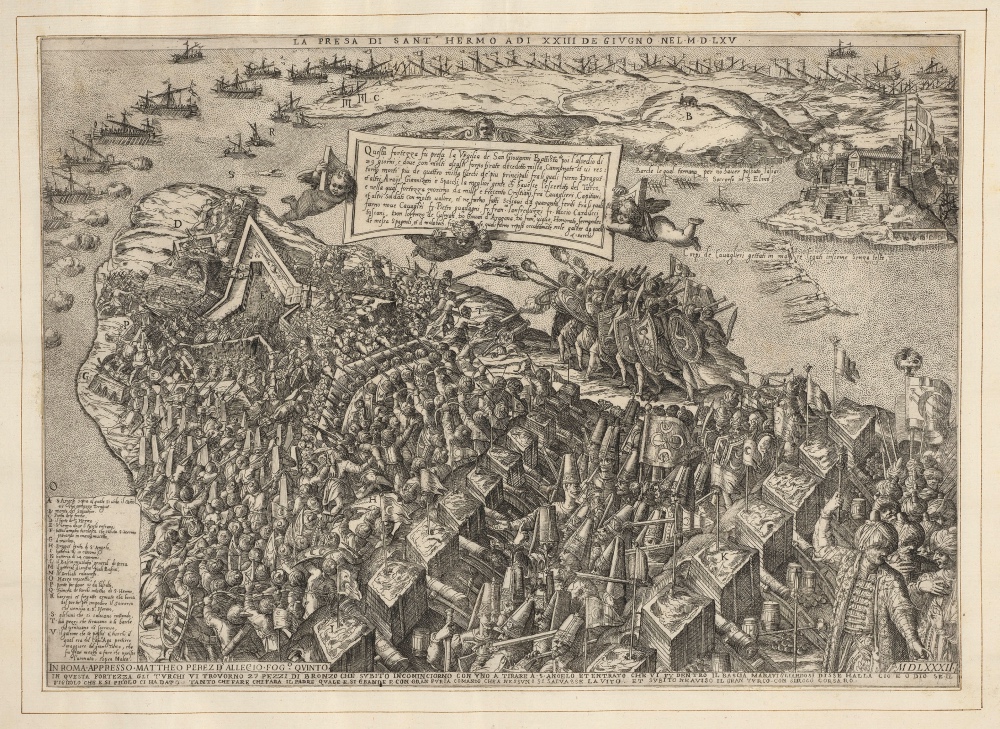
And there’s a rare engraving of the Siege of Malta (1565) showing how the Fort of St Elmo was overrun Turkish forces, resulting in the death of 1,300 Christian knights, captains and soldiers (pictured).

The collection can be found at militarymaps.rct.uk.

PICTURE: Matteo Perez d’Aleccio, A view of the Turkish assault on the Fort of St Elmo, Malta, on 23 June 1565. From the collection of Cassiano dal Pozzo. (Royal Collection Trust / © Her Majesty Queen Elizabeth II 2020)


This Week in London – Britain’s Baroque culture; a celebration of orchids and Indonesia; and, London’s “hidden” Underground…

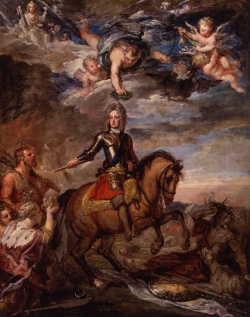
Britain’s Baroque culture – spanning the period from the Restoration of King Charles II to the death of Queen Anne in 1714 – is the subject of a new exhibition which opened this week at Tate Britain. British Baroque: Power and Illusion – the first major exhibition on the subject – shows how magnificence was used to express status and influence and features works by painters including Sir Peter Lely, Sir Godfrey Kneller, and Sir James Thornhill as well as designs, prints and wooden models of the works of architects like Sir Christopher Wren, Nicholas Hawksmoor and Sir John Vanbrugh. The importance of portraiture, the visual differences in Protestant and Catholic worship and the illusions contained in painted baroque interiors are all explored in the display along with how the subject of war was dealt with through heroic equestrian portraiture, panoramic battle scenes and accompanying propaganda. The exhibition, which is being accompanied by a programme of events, runs until 19th April. Admission charge applies. For more, see www.tate.org.uk. PICTURE: Godfrey Kneller, John Churchill, 1st Duke of Marlborough, c1706, National Portrait Gallery, London.

The 25th Kew Orchid Festival kicks off at Kew Gardens on Saturday in a celebration of the wildlife and culture of Indonesia. Located in the Princess of Wales Conservatory, the festival will take visitors on an immersive journey evoking the sights, smells and sounds of Indonesia though a series of orchid displays which include a life-sized animals such as orang-utans, a tiger and a rhinoceros, an archway made of hundreds of carnivorous pitcher plants and an erupting volcano. A programme of evening events featuring gamelan music and traditional dancers as well as cooking demonstrations by renowned author and chef Petty Elliott is also planned – these must be booked online in advance. Admission charge applies. Runs until 8th March. For more, see www.kew.org.

On Now: Hidden London: The Exhibition. This display at the London Transport Museum in Covent Garden takes visitors on an immersive journey to some of the secret places in the Tube network. Featuring rare archive photos, objects, vintage posters, secret diagrams and decorative tiles from disused stations, it uncovers stories such as how Churchill took shelter in the Railway Executive Committee’s bomb-proof headquarters deep underground at Down Street station at the height of the Blitz during World War II and how almost 2,000 members of staff, mostly women, worked in the Plessey aircraft underground factory located in two 2.5 mile-long tunnels on the eastern section of the Central line. The exhibition is being accompanied by a series of events including late openings and tours. Runs until next January. For more, see www.ltmuseum.co.uk/whats-on/exhibitions/hidden-london#.

Send all items for inclusion to exploringlondon@gmail.com

10 (lesser known) monuments featuring animals in London – 8. The elephants of the Tower…

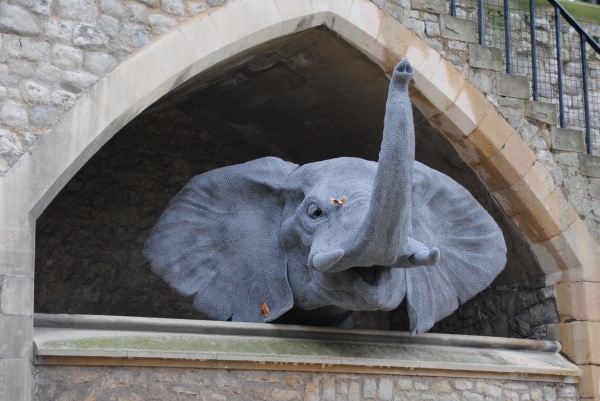
Sadly, we don’t know the name of this pachyderm – if it had one – but we do know that a couple of elephants lived in the Tower of London during the Middle Ages.

The first elephant to arrive was presented to King Henry III as a gift by King Louis IX of France.

The animal was apparently shipped across the Channel in 1255 and brought to the Tower of London by boat. A special 40 foot long wooden elephant house was built to accommodate it at the Tower.

It’s no surprise that such an exotic species attracted widespread interest. The medieval chronicler Matthew Paris was so intrigued he travelled from his monastery in St Albans to see it, noting that it was “the only elephant ever seen in England” (although it’s said that the Roman Emperor Claudius, when he arrived in Britain, came with elephants).

The elephant didn’t survive long – it died just two years after arriving in England and was buried in the Tower’s bailey. Its bones were apparently later dug up; it’s speculated this was so they could be made into receptacles for holy relics.

The elephant depicted could also represent one sent to King James I by the Spanish King in 1623 along with instructions that the poor creature should only drink wine between the months of September and April.

Made with galvanised wire, the sculpture of the elephant’s head – located in the courtyard between the Lantern and Salt Towers – is one of 13 representing some of the animal inhabitants of the Tower over the centuries. On display until 2021, ‘Royal Beasts’ is the work of artist Kendra Haste.

WHERE: Tower of London (nearest Tube station Tower Hill); WHEN: 9am to 4.30pm, Tuesday to Saturday, 10am to 4.30pm Sunday to Monday; COST: £24.70 adults; £11.70 children 5 to 15; £19.30 concessions (family tickets available; discounts for online purchases/memberships); WEBSITE: www.hrp.org.uk/toweroflondon/.

Lost London – The Holbein Gate…

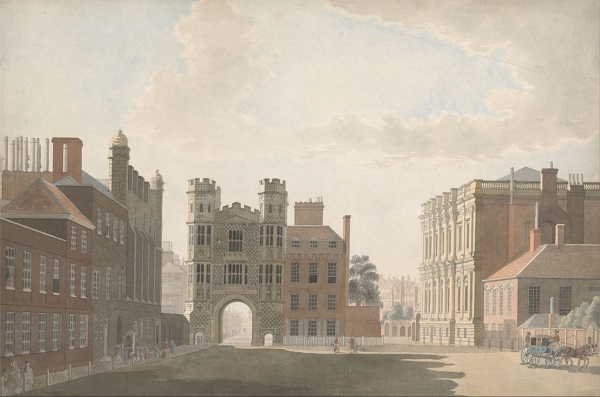
The most grand of the entrances to the now demolished Whitehall Palace, this monumental gateway – located in what is now Whitehall, at the south end of and on the other side of the road to the Banqueting House – was built in 1531-32 on the orders of King Henry VIII.

The name apparently comes from the tradition that the three story gate was designed by Hans Holbein but there is apparently some doubt that was the case.

The gate had rooms on the first and second floor with small flanking turrets to either side. It boasted a Royal Coat of Arms over the archway under the gate along with other royal emblems including the Tudor rose. There were also several busts set into roundels on the black and white chequerboard facade, possibly by Giovanni da Maiano.

King Henry VIII apparently used the chambers as a study and library (and later, it’s said, to store the wheelchairs he required late in life). Most famously, the upper room is also believed to have been the location where he secretly married Anne Boleyn on 25th January, 1533.

The upper floor was used as the Paper Office between 1672 until 1756 while the lower floor was used as lodgings with residents including the Ludovic Stewart, 2nd Duke of Lennox and Barbara Villiers, Lady Castlemaine, famed as one of the mistresses of King Charles II.

Remarkably, the building, along with the Banqueting House, survived the fire of January 1698 which destroyed most of the palace. Proposals were subsequently put forward to demolish the gate to allow better flow of traffic but these were fended off until August, 1759, when it was destroyed along with an adjacent house.

PICTURE: Whitehall Showing Holbein’s Gate and Banqueting Hall by Thomas Sandby, c1760 (now at the Yale Center for British Art)

London Pub Signs – The Sir John Oldcastle…

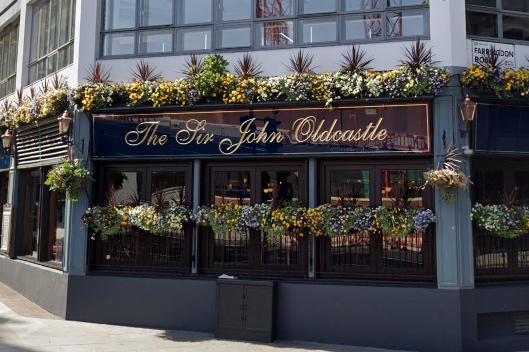
This Farringdon pub is named after a previous tavern which stood in what had been the grounds of Sir John Oldcastle’s nearby mansion and dated back at least to the mid 17th century. 

Sir John, thought to have been the model for the Shakespearean character Sir John Falstaff, was a leader of the Lollards in the late 14th and early 15th centuries.

A trusted friend of Henry, Prince of Wales (later King Henry V), he accompanied the Prince on a military expedition to France 1411 but on returning to England was accused of heresy for his Lollard beliefs and eventually prosecuted.

Imprisoned in the Tower of London, Oldcastle escaped and launched a rebellion against the King but after the rebellion was put down was forced to live in hiding until he was eventually, in 1417, captured and subsequently executed in London.

Housed in a modern building, the pub at 29-35 Farringdon Road, which has a wealth of historical information about the area adorning its walls, is part of the Wetherspoons chain. For more, see www.jdwetherspoon.com/pubs/all-pubs/england/london/the-sir-john-oldcastle-farringdon.

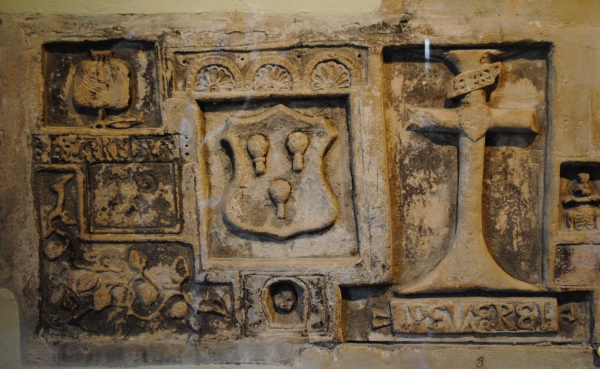
Treasures of London – “Graffito” in the Tower of London’s Beauchamp Tower…

Part of the inner defensive wall built around the White Tower during the reign of King Edward I, the Tower of London’s Beauchamp Tower was used to house prisoners at various times in its history (in fact, it’s name comes from one of them – Thomas Beauchamp, the Earl of Warwick, who was imprisoned here by King Richard II at the end of the 14th century). 

Carved into the walls of the tower’s chambers are a series of inscriptions, known as ‘graffito’ (known to you and I as graffiti), which were carved by some of the prisoners, mostly between the years 1532 and 1672.

The include an elaborate family memorial carved for John Dudley, eldest son of the Duke of Northumberland. He and his three brothers (including a young Robert Dudley, later the Earl of Leicester) were imprisoned by Queen Mary I for their father’s attempt to put Lady Jane Grey on the throne.

Interestingly there’s a simple inscription which just says ‘Jane’ nearby, one of a couple in the tower, although its not generally believed she carved this.

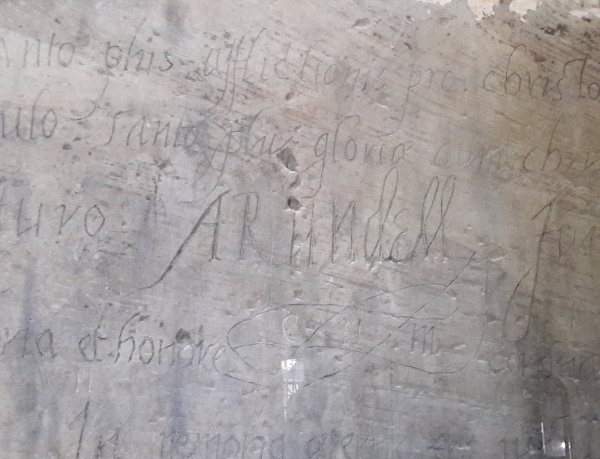
The name ‘Arundell’ is another of the inscriptions – it refers to Philip Howard, the Earl of Arundel, who was imprisoned here by Queen Elizabeth I for 10 years. Along with his name are the words “The more affliction we endure for Christ in this world, the more glory we shall get with Christ in the world to come”.

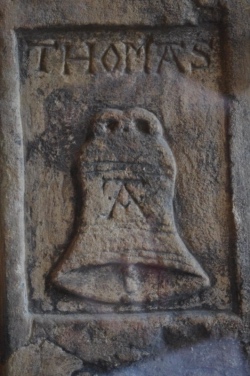
The name Thomas can be seen carved above a bell bearing the letter ‘A’. It’s believed to refer to Thomas Abel, chaplain to Katherine of Aragon, the ill-fated first wife of King Henry VIII. The king has Abel imprisoned here after he declared the King’s divorce of the Katherine unlawful.

The Beauchamp Tower isn’t the only location of graffiti in the Tower of London – in the Salt Tower, for example, can be found the image of a wounded foot, a Catholic symbol representing the sacrifice of Jesus Christ.

WHERE: Tower of London (nearest Tube station Tower Hill); WHEN: 9am to 4.30pm, Tuesday to Saturday, 10am to 4.30pm Sunday to Monday; COST: £24.70 adults; £11.70 children 5 to 15; £19.30 concessions (family tickets available; discounts for online purchases/memberships); WEBSITE: www.hrp.org.uk/toweroflondon/.

PICTURES:  Above – some of the graffiti seen on the Beauchamp Tower walls (David Adams); Middle – An ‘A’ carved on a bell with the word ‘Thomas’, said to refer to Thomas Abel, chaplain to Queen Katherine of Aragon (dvdbramhall – licensed under CC-BY-NC-ND 2.0); Below – The name Arundel (Pjposullivan1 – licensed under CC BY-SA 2.0/imaged cropped)

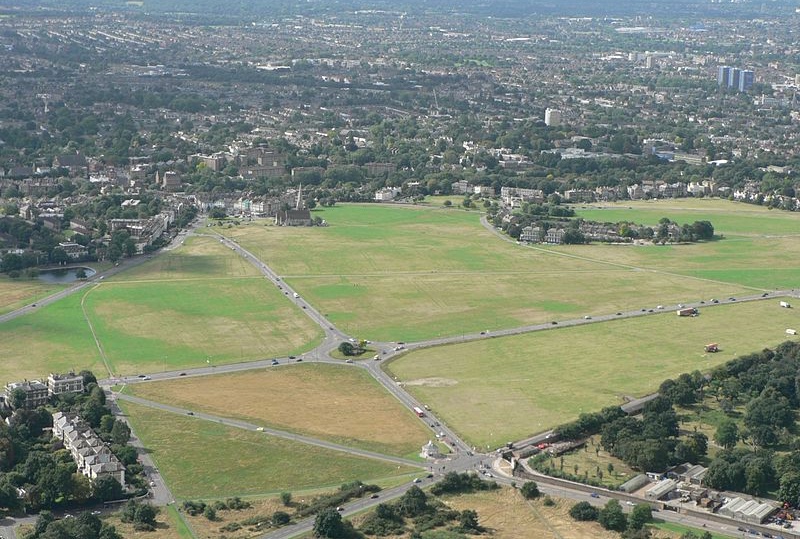
What’s in a name?…Blackheath…


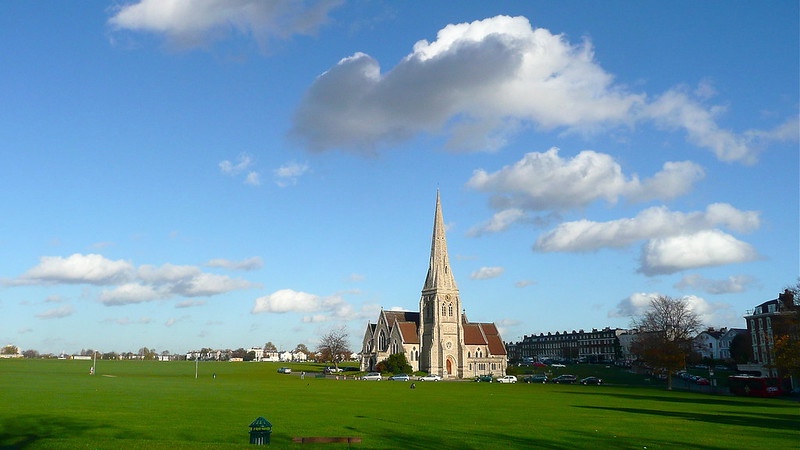
Lying just to the south of Greenwich Park, this famous common apparently derives its name from the colour of the soil (although some suggest it was the colour of the bracken or even the “bleakness” of the location).

On the route from Canterbury and Dover to London, the sometimes windswept locale has seen its share of historical events over the centuries. As well as hosting remains dating to both the Saxon and Roman eras, Blackheath was where the Danes set up camp in 1011-13 (it was during this time that they murdered the Archbishop of Canterbury, Alfege, probably on the site where St Alfege’s Church in Greenwich now stands).

It’s also where Wat Tyler assembled his peasant army during the Peasant’s Revolt of 1381, where Jack Cade and his followers camped in 1450 during the Kentish Rebellion, and where King Henry VII defeated Michael Joseph and his Cornish rebels in 1497.

As well as uprisings, the heath has also seen its share of more joyous events. King Henry IV apparently met Byzantine Emperor Manuel II Palaiologos here in 1400 before taking him back to Eltham Palace, King Henry V was welcomed by the Lord Mayor of London and aldermen here after his momentous victory at the Battle of Agincourt in 1415, and King Charles II was welcomed here on his return to London during the Restoration. Less happily, in 1540 King Henry VIII met Anne of Cleves here for the first time.

During the 18th century, both John Wesley and George Whitefield preached to crowds on Blackheath. Meanwhile, legend has it that King James I founded England’s first golf club here in 1600s (the club joined with the Eltham Golf Club in the 1920s).

The heath, which also had a notorious reputation for highwaymen prior to residential development of the area in the late 18th century, has also been the site of fairs since at least the late 17th century.

But it wasn’t until the early 1800s that the “village” of Blackheath really formed, attracting the moderately well-to-do. The area received a significant boost as a residential locale close to London when the railway opened in 1849.

Significant buildings include All Saints’ Church which dates from 1857 and the entertainment venue known as the Blackheath Halls, built in 1895. The Georgian mansion known as the Ranger’s House – which parks on to Greenwich Park – is just to the north.

Notable residents have included early 20th century mathematician and astrophysicist Sir Arthur Eddington, 19th century philosopher and political economist John Stuart Mill, seaside cartoonist Donald McGill and polar explorer Sir James Clark Ross. American writer Nathaniel Hawthorne lived at 4 Pond Road in 1856.

Correction: Wesley and Whitefield  preached in the 18th century, not the 19th as originally stated. Apologies for any confusion!

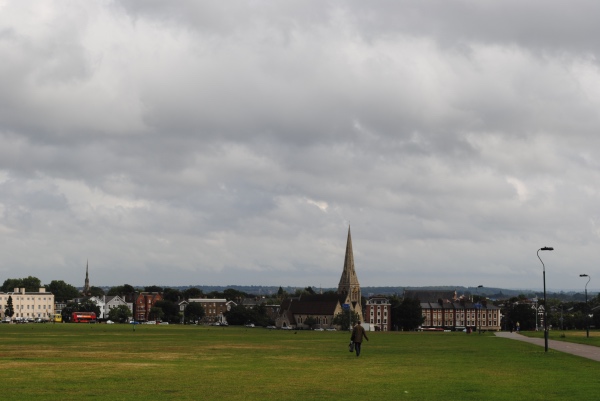
PICTURES: Top – Aerial view of Blackheath (foshie; licensed under CC BY 2.0; image cropped); Below – Looking towards All Saints (Herry Lawford; licensed under CC BY 2.0)

This (Year) in London – Five exhibitions you won’t want to miss in 2020…

It’s our first ‘This Week in London’ for 2020 so instead of our usual programming, we thought we’d briefly look at five key exhibitions that you won’t want to miss this year…

1. Thomas Becket at the British Museum. Marking the 850th anniversary of the murder of the medieval Archbishop of Canterbury on 29th December, 1170, the museum will host the first ever major exhibition on the life, death and legacy of the archbishop as part of a year-long programme of events which also includes performances, pageants, talks, film screenings and religious services. The exhibition will run from 15th October to 14th February, 2021. PICTURE: Alabaster sculpture, c 1450–1550, England. Here, Becket is shown kneeling at an altar, his eyes closed and his hands clasped in prayer, all the while four knights draw their swords behind him. To Becket’s right is the monk Edward Grim, whose arm was injured by one of the knight’s swords. © The Trustees of the British Museum.

2. Elizabeth and Mary at the British Library. This exhibition draws on original historic documents to  take a fresh look at what’s described as the “extraordinary and fascinating story of two powerful queens, both with a right to the English throne: Elizabeth I and Mary, Queen of Scots”. Letters and other 16th century documents will show how their struggle for supremacy in the isles played out. Runs from 23rd October to 21st February, 2021.

3. Tudors to Windsors at the National Maritime Museum. This major exhibition promises to give visitors “the opportunity to come face-to-face with the kings, queens and their heirs who have shaped British history and were so central to Greenwich”.  Including more than 150 works covering five royal dynasties, it will consider the development of royal portraiture over a period spanning 500 years and how they were impacted by the personalities of individual monarchs as well as wider historical changes. Will be held from April.

4. Gold and Glory: Henry VIII and the French King at Hampton Court Palace. Marking the 500th anniversary of the Field of Cloth of Gold – King Henry VIII’s landmark meeting with his great rival, the French King François I, the exhibition will feature a treasure trove of precious objects from the English and French courts as well as a never-before-seen tapestry, manufactured in the 1520s, which depicts a bout of wrestling at the meeting presided over by François and which also shows a black trumpeter among the many musicians depicted. Opens on 10th April. The palace will also play host this year to Henry VIII vs François I: The Rematch, a nine day festival of jousting, wrestling and foot combat complete with feasting, drinking and courtly entertainment. Runs from 23rd to 31st May.

5. Faces of a Queen: The Armada Portraits of Elizabeth I at the Queen’s House in Greenwich. This display brings together, for the first time, the three surviving versions of the iconic ‘Armada Portrait’ of Elizabeth I. The portrait commemorates the Spanish Armada’s failed attempt to invade England and the display will include the Royal Museums Greenwich’s own version of the painting along with that from the National Portrait Gallery and that which normally hangs in Woburn Abbey. Runs from 13th February to 31st August.

We’ll feature more details in stories throughout the coming year. But, of course, this is just a sample of what’s coming up this year – keep an eye on Exploring London for more…

Exploring London marks 10 years!

Did you know that 2020 marks 10 years since Exploring London first began…well…exploring London?

We’ll be celebrating our anniversary across the year in a number of ways including counting down our 100 most read stories ever…

So let’s kick off the countdown with numbers 100 and 99…

100. LondonLife – A new crown for King Henry VIII…

99. 10 sites of significance in Jane Austen’s London…1. 10 Henrietta Street, Covent Garden…

PICTURE: Adi Goldstein/Unsplash

What’s in a name?…St Martin’s-le-Grand…

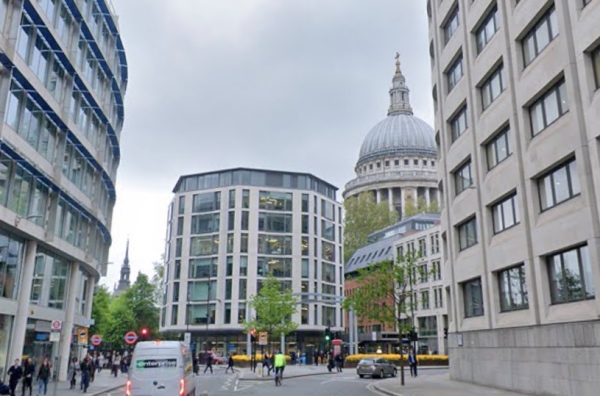
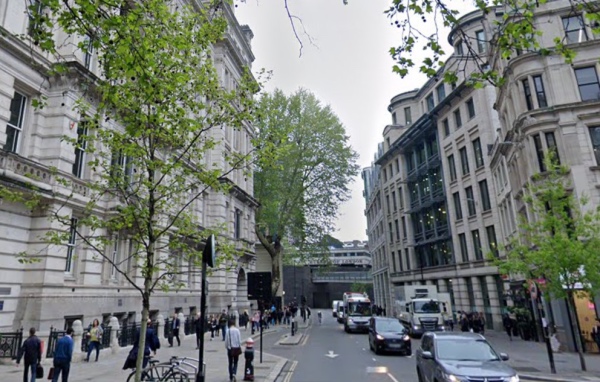
This City of London street is named for a church which once stood to the east of the thoroughfare.

The church was founded as part of a monastery the 11th century by brothers Ingelric and Girard – the former was apparently a man of some influence in the courts of King Edward the Confessor and King William the Conqueror (although there is apparently a tradition that the church was founded earlier, by the Saxon King Wihtred of Kent, in the 7th or 8th century).

The collegiate church, which had the job of sounding the curfew bell in the evenings to announce the closing of the city gates during the reign of King Edward I (the right later moved to another church), gave special rights to the precinct in which it stood including that of sanctuary for certain types of criminals. Indeed, by the 14th century, it was the largest area of sanctuary in England.

This was particularly useful for those making what was supposed to be their final journey from Newgate to their execution at Tower Hill – the precinct lay along the route and, yes, some were said to have escaped into the district as they passed by. But perhaps the most famous said to have sought sanctuary in the precinct were Miles Forrest, one of those accused of murdering the so called “Princes in the Tower” – King Edward V and his brother Richard, Duke of York.

The institution was dissolved during the reign of King Henry VIII and demolished in the mid-16th century but the name lived on in the precinct where it once stood – during the Elizabethan era it was apparently famous for its lace.

The site of the church was later the site of the General Post Office, built in 1829, which was eventually demolished in 1911 and replaced by a premises located to the west.

The street, which becomes Aldersgate Street in the north and runs into Cheapside in the south, was also once home to the The Bull and Mouth Inn, destroyed in the Great Fire of 1666, and a French Protestant Church. The latter was built in 1842 but demolished in 1888 to make way for more Post Office buildings.

PICTURES: Looking south (top) and north (below) from St Martin-le-Grand (Google Maps).

LondonLife – Skeletons in the Tower…

The remains of an adult female and a young child have been discovered beneath the floor of one of the entrances to the Chapel of St Peter ad Vincula in the Tower of London. Discovered as part of early investigations aimed at enabling better disabled access to the chapel, the two skeletons – the first complete skeletons found at the Tower since the 1970s – were found lying face up with their feet facing east, typical of a Christian burial. The adult, believed to be aged 35 to 45, is believed to have been buried within a coffin (coffin nails were present) while the child, believed to be aged about seven, was simply wrapped in a blanket – typical of later medieval and early Tudor burials – and due to that and further materials and artefacts uncovers, it is believed the two people were laid to rest between 1450 and 1550, a period between the Wars of the Roses and the reign of King Edward VI. The remains were reinterred in the chapel in a special ceremony conducted by the Tower of London’s chaplain, Rev Canon Roger Hall. The Chapel Royal was completed in 1520 and is perhaps most famed for being the burial place of two of King Henry VIII’s wives, Anne Boleyn and Catherine Howard. The discovery was explored in the the final episode of Inside the Tower of London which aired on Channel 5 in October.

Lost London – St Stephen’s Chapel…

The chapel, which served as the House of Commons from the mid-16th century until it was destroyed in the fire at the Palace of Westminster in 1834, was first recorded as part of the palace in the reign of King John (1199-1216).

It was rebuilt  in the late 13th century, on the orders of King Edward I. The king, apparently impressed by the Sainte Chapelle, built as a royal chapel by King Louis IX in Paris, ordered the chapel rebuilt to rival it.

The two storey, richly decorated stone chapel featured two levels, the upper floor for use of the Royal Family (it could only be entered from the Royal Apartments), the lower for courtiers and the Royal Household – was largely complete by 1348.

The then 15-year-old King Richard II married Anne of Bohemia in the chapel in 1382 and the ill-fated Richard, Duke of York (the younger of the two so-called Princes in the Tower) married Anne Mowbray here while still young children. Richard’s father, King Edward IV, had laid in state here for eight days after his death in 1483. Thomas Cranmer was consecrated as Archbishop of Canterbury here in 1533.

The Palace of Westminster was no longer used as a royal residence following the death of King Henry VIII in   and in 1547 it was deconsecrated under the Abolition of Chantries Act instituted by King Henry’s son, King Edward VI, after which it was used as a debating chamber for the House of Commons (which had hitherto been meeting in xxx).

During the Commonwealth, Oliver Cromwell had the chapel’s crypt white-washed and, so the story goes, used it for stabling his horses.

The chapel’s architecture was amended several times over the ensuing centuries to better accomodate MPs – it included the addition of extra seats and among the architects who worked on it was Sir Christopher Wren – before the fire of 1834 while completely destroyed the main chapel, leaving just the crypt below and adjoining cloisters.

The crypt, now known as the Chapel of St Mary Undercroft, was subsequently restored to its original use as a place of worship (it had been used for various purposes over its life). Interestingly, women’s suffragist Emily Davison had spent the night in a broom cupboard in the crypt in 1911 so, as woman banned from the premises, she could address the House of Commons the next day.

The site of the chapel is now covered by St Stephen’s Hall and its porch, constructed as part of the rebuild after the fire.

To see modern revisualisations of what the chapel may once have looked like, head to www.virtualststephens.org.uk.


Where’s London’s oldest…door?

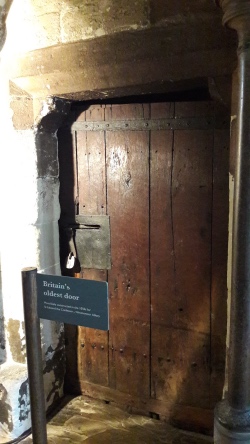
Yes, London has an officially dated oldest door. In fact, it’s the oldest door in Britain.

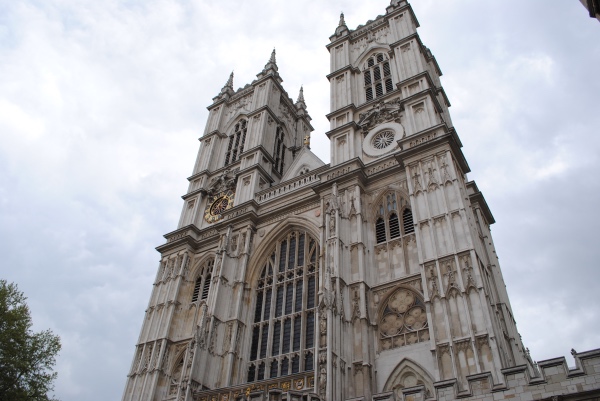
The door is located in Westminster Abbey and is believed to date from the time of King Edward the Confessor, who founded the abbey which was inaugurated in 1065.

Made of five vertical oak planks – all cut from the same tree, most likely felled on abbey lands, possibly in Essex – and held in place by three horizontal iron straps, it opens from the Abbey Cloisters into the octagonal Chapter House’s outer vestibule. In 2005 it was dated, using ring-patterns in the wood, to around 1050.

The door now stands six-and-a-half feet high and four foot wide but it has been cut down. It’s believed the original door was nine foot high and slightly wider.

It’s thought to be probable that both faces were originally covered with animal hide (the iron straps are, unusually recessed into the wood on both sides to enable this, and were covered with decorative iron straps and hinges – only one of decorative straps remains today).

The door may have originally served as the door to the chapter house built for Edward the Confessor’s abbey. It is believed to have been moved into its current location in about 1250 when King Henry III’s Chapter House was built as part of extravagant reconstruction of the abbey.

WHERE: Westminster Abbey (nearest Tube stations are Westminster and St James’s Park); WHEN: Times vary – see the website for details; COST: £23 adults/£20 concession/£10 children (discounts for buying online; family rates available); WEBSITE: www.westminster-abbey.org

PICTURE: Pjposullivan1 (licensed under CC- BY-SA 2.0)

This Week in London – King George IV on display; The Clash’s ‘London Calling’ hits 40; and, Skate at Somerset House…

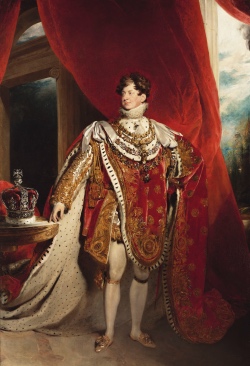
• King George IV’s public image and his taste for the theatrical and exotic as well as his passion for collecting are all the subject of a new exhibition opening at The Queen’s Gallery, Buckingham Palace, on Friday. Set against the tumultuous backdrop of his times (which included the French Revolution and Napoleonic Wars as well as a period of unprecedented global exploration), George IV: Art & Spectacle shows the contrasts of his character – on the one hand “a recklessly profligate showman” and, on the other, a “connoisseur with intellectual interests whose endless acquisitions made him one of the most important figures in the formation of the Royal Collection”. The display features artworks including Rembrandt’s The Shipbuilder and his Wife (1633) – at 5,000 guineas it was the most expensive artwork he ever purchased (pictured), as well as works by the likes of Jan Steen, Aelbert Cuyp and David Teniers. There’s also portraits the King commissioned from Sir Thomas Gainsborough,  a Louis XVI service created by Sevres (1783-92) and the great Shield of Achilles (1821) – designed by John Flaxman, it was on display at his Coronation banquet. Other items include diplomatic gifts sent to the King – such as a red and yellow feather cape (‘ahu’ula) from King Kamehameha II and Queen Kamamalu of the Sandwich Islands (now Hawaii) and a Maori club brought from Hawaii by Captain Cook’s ship Resolution – and a copy of Emma sent to him by Jane Austen’s publisher. Runs until 4th May. Admission charge applies. For more, head to www.rct.uk/visit/the-queens-gallery-buckingham-palace. PICTURE: Sir Thomas Lawrence, George IV (1762-1830), 1821 (Royal Collection Trust/© Her Majesty Queen Elizabeth II 2019)

A new exhibition commemorating the release of The Clash’s third album, London Calling, 40 years ago opens at Museum of London tomorrow.  The display features items from the group’s personal archive such as Paul Simonon’s broken Fender Precision Bass, which Simonon smashed while on stage in New York City on 21st September, 1979, a handwritten album sequence by Mick Jones showing the final order for the four sides of the double album London Calling, one of Joe Strummer’s notebooks from 1979 and the typewriter he used to document his ideas, lyrics and other writing, and Topper Headon’s drumsticks. To coincide with the opening, Sony Music is releasing the London Calling Scrapbook, a hardback companion to the display which comes with the album, on CD. The free display can be seen until next spring. For more, see www.museumoflondon.org.uk.

Skate at Somerset House with Fortnum & Mason is celebrating its 20th anniversary this year. The ice-skating rink, which opened this week, is being accompanied by the major exhibition 24/7 exploring the non-stop nature of modern life, as well as a programme of events including Somerset’s first skating ‘all-nighter’ on 7th December and special ‘Skate Lates’. There’s also Fortnum’s Christmas Arcade which, along with dining venue Fortnum’s Lodge has been created in Somerset House’s West Wing, as well as the rinkside Skate Lounge – home to the Bailey’s Treat Bar, and the Museum of Architecture’s Gingerbread City, now in its fourth year. Until 12th January. Admission charges apply. Head here for more.

Send all items for inclusion to exploringlondon@gmail.com.

10 (more) historic London garden squares…8. Salisbury Square…

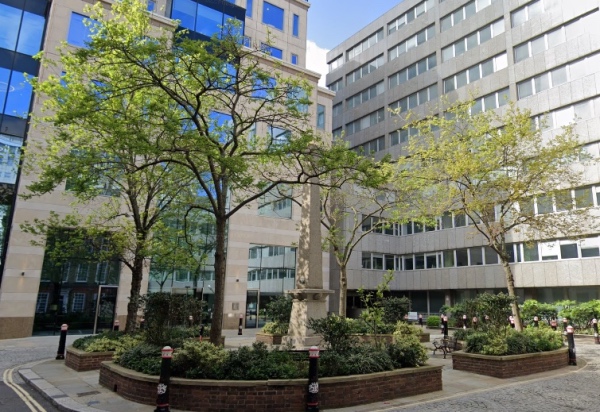
This City of London square sits on the part of the site of what had been Salisbury House, the town house of the bishops of Salisbury.

The house, which later became known as Dorset House, burned down in the Great Fire of London of 1666 and the square, now at the southern end of Salisbury Court, developed in its aftermath.

Lying just to the south of Fleet Street, the square was once home to the Salisbury Court Theatre in the mid-17th century and John Dryden lived here from 1673 to 1682, a period during which he wrote works including Amboyna (1673), All for Love (1678) and The Spanish Fryar (1681). It was also a popular place for actors to reside given its proximity to the Dorset Garden Theatre which was also built on part of the site of Salisbury House.

There was an alehouse here when King George I acceded to the throne – known as a locale frequented by his supporters, it was famous for an incident in 1716 in which it was stormed by a Jacobite mob during which the landlord shot a weaver (he was acquitted but five rioters were hanged at the end of the court.

Samuel Richardson ran a printing shop lived here from 1723 – Pamela was among the works he wrote here. He later pulled down some old residences to expand his printing operations (and it was in his house that Dr Samuel Johnson and William Hogarth first met).

In 1863, all the houses on the south side were replaced by the Salisbury Hotel and this was replaced in  the 1960s by Salisbury Square House when the square was remodelled and the central area laid out. Only number one remains of the early 18th century houses which once stood here.

The now largely paved square features garden boxes in the middle along with an obelisk commemorating Robert Waithman, Lord Mayor of London between 1823-24. It had apparently originally been erected in Farringdon Street but was moved here in the 1970s.

PICTURE: Google Maps.


LondonLife – Westminster Abbey marks 750th anniversary of Henry III’s rebuild; new mental health awareness tour at National Gallery; and, Rembrandt at Kenwood…

Two 13th century manuscripts from Westminster Abbey’s collection have this month gone on show in the Queen’s Diamond Jubilee Galleries at the abbey to mark the 750th anniversary of King Henry III’s rebuilding of the church originally constructed on the orders of Edward the Confessor. Believed to have never before been displayed to the public, the manuscripts – which feature ink script on vellum and have wax seals on silk cords attached – include a royal charter dated 1246 in which King Henry III announces his intention to be buried alongside Edward the Confessor in Westminster Abbey and an inventory of Edward the Confessor’s Shrine dating from 1267 which shows how much gold, precious stones and jewels were taken from it and pawned to provide the king with much-needed money. The documents can only be seen until 28th October. Admission charge applies. For more, www.westminster-abbey.org/visit-us/plan-your-visit/the-queens-diamond-jubilee-galleries. The display is one of number of special events taking place to mark the anniversary of the third consecration of the abbey church which took place in the presence of King Henry III on 13th October, 1269. While Queen Elizabeth II and the Duchess of Cornwall attended a special service to mark the occasion on Tuesday, other events aimed at the public include a special family day next Wednesday (23rd October) featuring medieval re-enactors in the cloisters, the chance to meet some of the abbey staff and to take part in a family-friendly Eucharist as well as a late opening for amateur photographers to take photographs inside the abbey (23rd October), and special family tours of the abbey (22nd and 24th October). Meanwhile, this Saturday, the abbey will host the National Pilgrimage to the Shrine of St Edward the Confessor. For more on other events at the abbey, head to www.westminster-abbey.org/events.

The National Gallery launched its first mental health awareness tour to mark World Mental Health Day last week. The tour, which is available as a smartphone app, aims to improve understanding of mental health among gallery visitors with an alternative perspective on the collection which draws on young people’s experiences of mental health – gleaned through workshops with 16 to 25-year-olds – and connects visitors with the gallery’s paintings to challenge common myths about mental health. The tour includes a focus on paintings by Van Gogh, Cima, Crivelli and Joseph Wright of Derby as well as the gallery’s architecture and figures from its portico entrance mosaic flooring such as Virginia Woolf and Winston Churchill. The tour – co-created by researchers from King’s College London, the McPin Foundation, a group of young people affected by mental health issues and members of the Gallery’s Young Producers programme and funded by Medical Research Council and the British Academy – is available free to visitors for six months. For more, see nationalgallery.org.uk.

Kenwood House in Hampstead is hosting a special display commemorating 350 years since Rembrandt’s death on 4th October, 1669. The exhibition – Rembrandt #nofilter – centres on the artist’s Self-portrait with Two Circles which has been taken from its usual place in the former dining room and represented in the dining room lobby alongside a digital photo mosaic of the painting made of “selfies” taken by visitors to Kenwood. Entry is free Runs until 12th January. For more, see www.english-heritage.org.uk/visit/places/kenwood/.

Send all items for inclusion to exploringlondon@gmail.com.

10 (more) historic London garden squares…5. Brunswick Square…

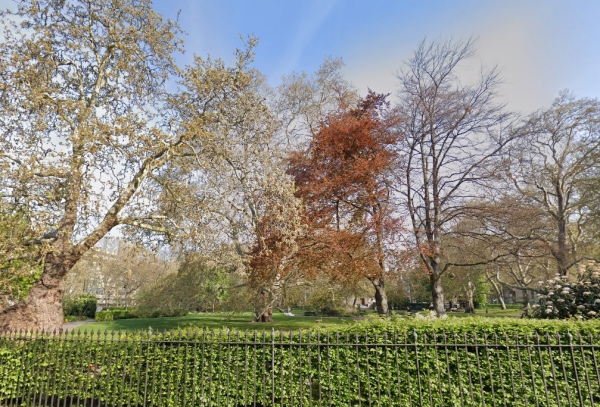
This Bloomsbury square is another that’s one of a pair – in this case with Mecklenburgh Square which stands on the other side of the site of the now-demolished Foundling Hospital (across what’s now known as Coram’s Fields).

The three acre square was planned by Samuel Pepys Cockerell, who was appointed to develop the estate around the hospital with the intention of maintaining some open space around the hospital while allowing spare land to be leased for housing (and so raise some much needed funds for the hospital).

The square was over the period 1795-1802 while the gardens in the square’s middle were laid out in in the late 1790s (initially for use by residents only, they’re now open to the public).

The name comes from Caroline of Brunswick, wife of the then Prince Regent (later King George IV).

The square, which is Grade II-listed along with Coram’s Fields and Mecklenburgh Square, was a respectable if not highly fashionable residential location.

Famous residents have included numerous members of the Bloomsbury Group such as siblings Virginia (later Woolf) and Adrian Stephen, economist John Maynard Keynes and Leonard Woolf – all of whom lived in the same property (Virginia and Leonard moved out of the square when they married in 1912) as well as EM Forster. Writer JM Barrie, creator of Peter Pan, also lived for a time in a house overlooking the square.

Jane Austen refers to the square in Emma in which her sister Isabella praises it as “very superior to most others” and “very airy”.

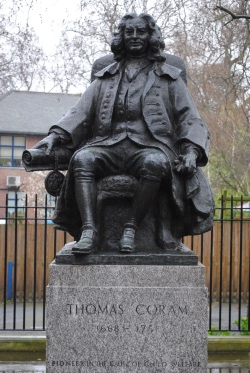
All of the original buildings around the square have since been demolished and replaced – among them number is 40 which was built for the Thomas Coram Foundation for Children in the 1920s and now houses the Foundling Museum (there’s a statue of the hospital’s founder Thomas Coram outside by William MacMillan – pictured right).

The north side of the square is home to the UCL School of Pharmacy, the west side features tiered apartments which form part of the Grade II-listed Brunswick Centre development, which dates from the late 1960s and early 1970s, while on the south side is the university residence known as International Hall.

The gardens were extensively renovated in 2002-03 by Camden Council; works which included restoration of railings apparently taken for munitions during World War II. Its trees include a London plane tree, said to be the second oldest in London, which in 2009 was declared one of the Great Trees of Britain.

On one of the garden’s railings, close to the statue of Captain Coram, is a tiny bronze sculpture of a mitten by artist Tracey Emin, a fitting symbol of the childhoods connected with the Foundling Hospital.

PICTURES: Top – Looking across Brunswick Square Gardens (Google Maps); Right – Thomas Coram (David Adams).

A Moment in London’s History – The opening of Tower Bridge…

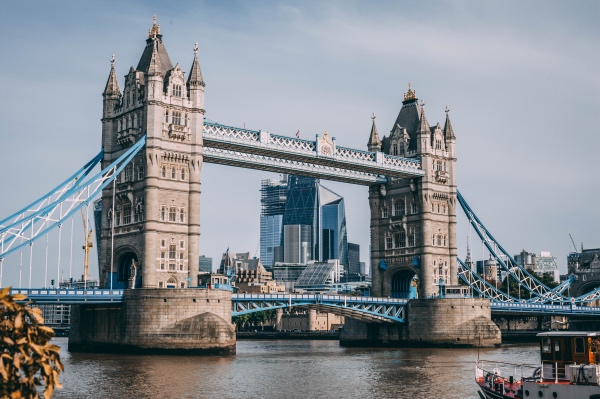
This year marks 125 years since the opening of Tower Bridge.

The bridge, which took eight years to build and was designed by City of London architect Sir Horace Jones in collaboration with engineer Sir John Wolfe Barry, was officially opened on 30th June, 1894, by the Prince and Princess of Wales (the future King Edward VII and Queen Alexandra).

Others among the tens of thousands who turned out to mark the historic event were the Duke of York (later King George V), Lord Mayor of London Sir George Robert Tyler and members of the Bridge House Estates Committee.

A procession of carriages carrying members of the royal family had set out from Marlborough House that morning, stopping at Mansion House on its way to the bridge.

Once there, it drove back and forth across before official proceedings took place in which the Prince of Wales pulled a lever to set in motion the steam-driven machinery which raised the two enormous bascules and allowed a huge flotilla of craft of all shapes and sizes to pass under it.

The event was also marked with a gun salute fired from the Tower of London.

Plaques commemorating the opening can be found at either end of the bridge. The event was also captured in a famous painting by artist William Lionel Wyllie who had attended with his wife. The painting is now held at the Guildhall Art Gallery.

Tower Bridge has been running a series of special events to mark the anniversary this year. For more, see www.towerbridge.org.uk.

Tower Bridge today. PICTURE: Charles Postiaux/Unsplash


10 (more) historic London garden squares…2. Golden Square…


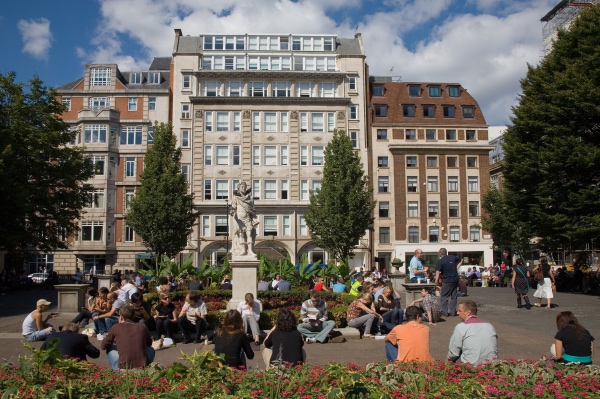
This Soho square was laid out in the late 17th century, possibly by Sir Christopher Wren, and by the early 1700s most of the buildings surrounding the square were complete.

The name of the square is said to be a corruption of ‘gelding’ – the area, once apparently known as Gelding Close, was previously used for the grazing of geldings (there’s also a story that the gelding was featured on a nearby inn sign which locals objected to, renaming it ‘golden’).

It was, at first, the place to be among the well-to-do – among early residents were Barbara Villiers, the Duchess of Cleveland and mistress of King Charles II, James Bridges, who became the 1st Duke of Chandos, and Henry St John, 1st Viscount Bolingbroke, a favourite of Queen Anne.

By the mid 18th century, however, the trendy crowd had moved to developments further west and the square subsequently became noted for the high number of foreign delegations which made their base here, including those of Bavaria, Russia, Genoa and Portugal, as well as foreign artists including Swiss painter Angelica Kauffmann – the first female member of the Royal Academy, and Anglo-Irish painter (and later Royal Academy president) Martin Archer Shee.

Other famous residents have included dancer Elizabeth Gamberini, singer Caterina Gabrielli and Scottish anatomist John Hunter (his former home is one of two marked with English Heritage Blue Plaques in the square). Thomas Jefferson, later a US president, stayed in Golden Square during March and April, 1786, in his only visit to London.

A couple of houses in the square – then occupied by the Bavarian minister Count Haslang – were attacked during the anti-Catholic Gordon Riots. These properties were bought by James Talbot, the Roman Catholic Bishop for London, in 1788, so the Roman Catholic Church in Warwick Street could be build in the gardens behind.

The square had deteriorated somewhat by the time Charles Dickens placed it in his late 1830s story Nicholas Nickleby as the home of Ralph Nickleby, and it become the location of numerous boarding houses and small hotels as well as various professionals.

By 1900 the square had become closely connected with the wool trade with as many as 70 firms connected with it located here. Several such firms are apparently still located here but the square is better known these days for companies associated with the movie business.

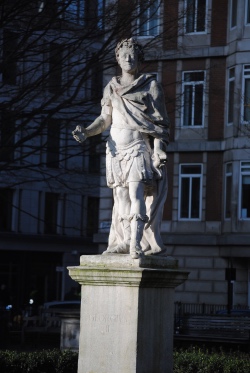
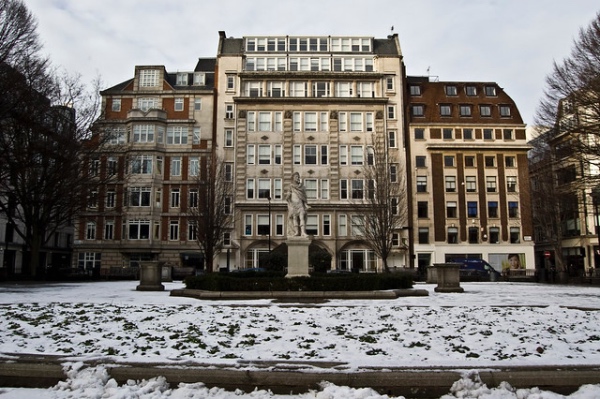
The middle of the square was dug up for an air raid shelter in World War II but it was paved afterwards and the statue of King George II, attributed to John Van Nost and erected here in 1753 as part of beautification project (it has been suggested the statue actually represents King Charles II but that remains a matter of conjecture), returned to its place in the middle.

None of the original houses now remain but there are a number of residences which still have at least elements dating from late 18th century rebuilds including numbers 11, 21, 23 and 24.

PICTURE: Top – David Iliff (licensed under CC BY-SA 3.0); Right – David Adams; Below – RozSheffield (licensed under CC BY-NC-ND 2.0)