Treasures of London – The Yeomen Warders…

Commonly known as Beefeaters (more on that in a moment), the Yeoman Warders have long been a presence at the Tower of London.

The Yeomen Warders, more properly known as the ‘Yeomen Warders of Her Majesty’s Royal Palace and Fortress the Tower of London, and Members of the Queen’s Body Guard of the Yeoman Guard Extraordinary’, are a distinct detachment of the Yeomen of the Guard.

With a history stretching back to at least the reign of King Edward IV (1461-83), they have formed the Royal Bodyguard since at least 1509.

The Warders are nicknamed ‘Beefeaters’, it is thought, due to the fact their privileged position meant they could eat as much beef as they liked from the King’s table.

These days, Yeoman Warders, most of whom live in the Tower with their families (part of their job has always been to guard the Tower at night), must have served in the armed forces for at least 22 years, have reached the rank of warrant officer, and been awarded the Long Service and Good Conduct Medal (the current warders have served in Northern Ireland, during the Falklands War, in Bosnia, in the first and second Gulf conflicts and in Afghanistan).

There are usually around 40 Yeoman Warders at any one time under the command of four Yeoman Serjeants and a Chief Yeoman Warder (currently Alan Kingshott). They wear age dark blue and red undress uniform for everyday duties but also have a state dress uniform featuring the familiar heavy red coat (pictured above).

The first female to be appointed to the role of Yeoman Warder was Moira Cameron in 2007. The most recent person to join the Yeoman Warders is Gary Burridge who did so in August following 32 years in the Royal Navy.

One of the Yeoman Warders – currently Chris Skaife – serves in the role of Ravenmaster of the Tower of London and has the responsibility of caring for the tower’s famous ravens (important because, so they story goes, should the ravens ever leave the tower, the White Tower will fall and disaster will befall the kingdom). Other specialist roles include that of Yeoman Clerk.

Upon joining the Yeoman Warders, the new warders take an oath of allegiance (believed to date back to 1337) after which they drink a toast of port served in an 18th century pewter bowl.

Tradition holds that the Chief Yeoman Warder toasts all new recruits with the words “May you never die a Yeoman Warder”. The origins of this apparently lie in the fact that the positions of Yeoman Warder were in the past purchased from the Constable of the Tower for 250 guineas with most of the money returned to the warder when they retired and the Constable keeping the rest. But if the Yeoman Warder died in office, the Constable would keep all the money – hence the toast. The practice was apparently abolished by the Duke of Wellington in 1826.

Yeoman Warders, as well as participating in ceremonial duties like the daily Ceremony of the Keys and the annual Ceremony of the Constable’s Dues, they also take tours of the Tower of London.

WHERE: Tower of London (nearest Tube is Tower Hill); WHEN: 9am to 4.30pm Tuesday to Saturday/10am to 4.30pm Sunday to Monday; COST: £21.50 adult/£9.70 child (Historic Royal Palaces members free); WEBSITE: www.hrp.org.uk/tower-of-london/

PICTURE: Yeoman Warders at the Ceremony of the Constable’s Dues, 2014 (Peter Rowley/Flickr/CC BY 2.0)

10 subterranean sites in London – 3. The Banqueting House undercroft…

Located beneath the Banqueting House – a remnant of the Palace of Whitehall, the undercroft was originally designed by Inigo Jones (who designed the building as a whole) as a private drinking den for King James I.

French landscaper and architect Isaac de Caus was commissioned to decorate one end of the vaulted undercroft as a shell grotto where the king could relax with his friends. In 1623, it received a dedication from Ben Jonson:

“Since Bacchus, thou art father
Of wines, to thee the rather
We dedicate this Cellar
Where now, thou art made Dweller.”

Following the Restoration, during the reign of King Charles II, the basement was used to hold lotteries – John Evelyn describes one such event taking place in 1664 in his famed diary, although soon after this was moved into a purpose-built facility nearby.

The undercroft was subsequently used for storage including during the reign of King James II when it was apparently used to store furnishings from the Privy and Council Chambers of Whitehall Palace while they were being rebuilt.

From the late 1890s until the 1960s, it became part of the museum of the Royal United Services Institute (which also used the hall upstairs) but following a restoration in 1992, is now open to the public and also used for special events at the building.

WHERE: Undercroft, Banqueting House, Whitehall (nearest Tube is Westminster or Charing Cross); WHEN: 10am to 5pm daily (check if there is a private function); COST: £5.50 adults (16+)/children under 16 free/Historic Royal Palaces members free; WEBSITE: www.hrp.org.uk/banqueting-house/

PICTURE: alh1/Licensed under CC BY-NC-ND 2.0

Famous Londoners – Henry Jermyn…

Seventeenth century politician, diplomat and royal courtier, Henry Jermyn’s influence can still be seen in London’s West End today.

Jermyn was born as the fourth, but second surviving, son of courtier Sir Thomas Jermyn, of Rushbrook, Suffolk, and his wife Catherine, in early 1605. He was baptised soon after at St Margaret’s Lothbury in London in late March of that year.

Having already been among several diplomatic missions, he entered the political world at about the age of 20 in 1625, when he was elected member for Bodmin in Cornwall – the first of several seats he (and his brother Thomas) would hold around the country.

He joined the household of Queen Henrietta Maria, wife of King Charles I, in 1627, becoming her vice-chamberlain in 1628, and Master of the Horse to the Queen in 1639 (although he apparently spent a couple of years in exile in France during this period when he refused to obey the King and marry another courtier).

An ardent royalist, in 1641, he participated in a plot against Parliament and was forced to flee to France. In 1642, he joined the Queen in The Hague and returned to England with her in 1643 as the Civil War raged.

His loyalty was rewarded on 6th September that year when he was raised to the peerage as Baron Jermyn of St Edmundsbury (he was apparently wounded just 10 days later at the Battle of Aldbourne Chase). He was made the Queen’s Lord Chamberlain in early 1644 and in April that year accompanied the Queen to France where he helped her raise money for the Royalist cause.

He was made Governor of Jersey in 1645 (a post in which he succeeded his father), although it was a role he apparently had little interest in, at one point proposing selling the island to France.

In 1649, it was apparently Jermyn who had to give the Queen the news of King Charles I’s execution. Her closest advisor, it was subsequently falsely rumoured that he had secretly married the Queen – some even went so far to suggest he had fathered her children.

Jermyn became a member of King Charles II’s Privy Council in 1652 and, in 1659, just before the Restoration, he was created the Earl of St Albans. Created ambassador to France in 1661, he would go on to play a key role in helping King Charles II negotiate the secret 1670 Treaty of Dover with the French King Louis XIV.

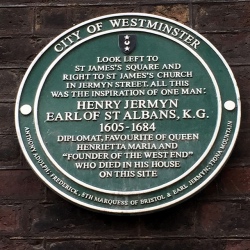
In the early 1660s he was rewarded with land grants including land located to the north of St James’s Palace in London. He encouraged the development of the area, centred on St James’s Square and surrounding streets including Jermyn Street – such was his impact on the area that he became known as the “Father of the West End”.

He returned to France with Queen Henrietta Maria in 1665 and was present when the Queen died on 31st August, 1669, at Colombe in France. He subsequently returned to England and served as Lord Chamberlain to King Charles II between 1672-74 as well as, in 1672, being invested as a Knight of the Garter.

Jermyn, who never married, was generally said to have been a prolific gambler (and, some said, a glutton) and while he attempted to retire more than once to Rushbrook, the lure of London’s gaming tables proved too strong.

He died in his house in St James’s Square on 2nd January, 1684, and was buried at Rushbrook. While his earldom became extinct, his barony passed to his nephew Thomas Jermyn.

PICTURE: A City of Westminster Green Plaque located at the site of Henry Jermyn’s former home in St James’s Square.  (Simon Harriyott/licenced under CC BY 2.0

Lost London – The Chelsea Bun House…

Still a favourite at tea rooms across the world, the Chelsea bun – a squarish, sticky spiced fruit bun – owes its origins to Richard Hand’s establishment in what was Jew’s Road and is now Pimlico Road in what is now Pimlico, on the border with Chelsea.

The single storey premises opened early in the 18th century and in the interior Mr Hand, apparently known as “Captain Bun”, kept a curious collection of clocks, models, paintings, statues and other curiosities.

The bun house, known variously as the Old Chelsea Bun House and the Original Chelsea Bun House, was a huge hit, attracting a clientele which included royalty – King George II and Queen Caroline visited with their daughters as did King George III and Queen Charlotte – and also, famously, the political figure and Jonathan Swift, who bought a stale one for a penny in 1711 and recorded that he didn’t like it.

The tradition of eating a hot cross bun on Good Friday lead to huge crowds at the bun house on that day in particular – said to number more than 50,000 some years – and such were that crowds that in 1793, Mrs Hand, following complaints from her neighbours, declared in a public notice that she would only be selling Chelsea buns, and not cross buns, on Good Friday that year.

The house did, however, return to selling hot cross buns on Good Friday – it is said to have sold an enormous 24,000 on Good Friday in 1839 (some sources have out the figure as high as 240,000 but that may have been a misprint).

Despite the success of Good Fridays, according to The London Encyclopaedia, the closure of the nearby Ranelagh Pleasure Gardens in 1804 had impacted the business.

In 1839, following the death of the Hands’ two sons and with no further family member to take over the business, it was closed and the bakery reverted to the Crown. The building was subsequently demolished.

PICTURE: Chelsea buns today. Duncan Hull under licence CC BY 2.0.

Treasures of London – Queen Elizabeth’s Oak, Greenwich Park…

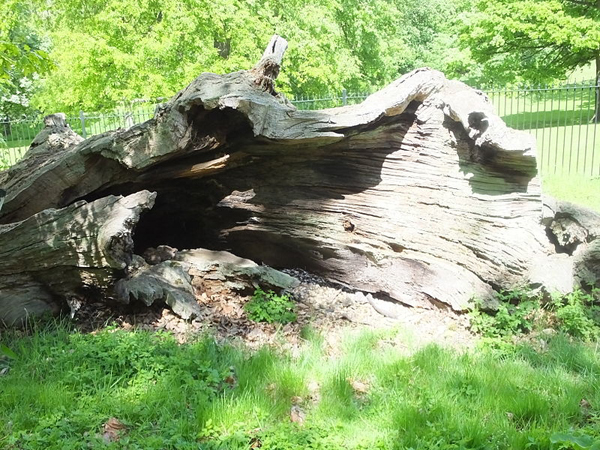
Only the remains of this once mighty tree can now be seen in Greenwich Park. Thought to have been planted in the 12th century, the tree died in the late 1800s but, thanks to the support of the ivy that clung to it, remained standing until it finally collapsed in June, 1991. 

The tree, located to the east of the Royal Observatory, has several links to the Tudors – tradition says King Henry VIII danced around it with Anne Boleyn while their daughter, Queen Elizabeth I, is said to have picnicked beneath its leafy canopy. The proximity of Greenwich Palace may explain the connection.

There was apparently in Victorian times, a large seat placed around the tree and there has been a suggestion that the hollow truck was big enough to make a small prison where people who misbehaved in the park were locked up.

Planted alongside is another English Oak – it was officially dug into the soil on 3rd December, 1992, by Prince Philip, the Duke of Edinburgh, to mark 40 years of the reign of Queen Elizabeth II.

WHERE: Queen Elizabeth’s Oak, Greenwich Park (nearest DLR is Cutty Sark Station and Greenwich Station); WHEN: 6am to 7pm (6pm from end of British Summer Time) daily; COST: free; WEBSITE: www.royalparks.org.uk/parks/greenwich-park

PICTURE: Clem Rutter, Rochester, Kent/www.clemrutter.net/CC BY-SA 3.0


LondonLife – Looking toward The Orangery, Kensington Palace…

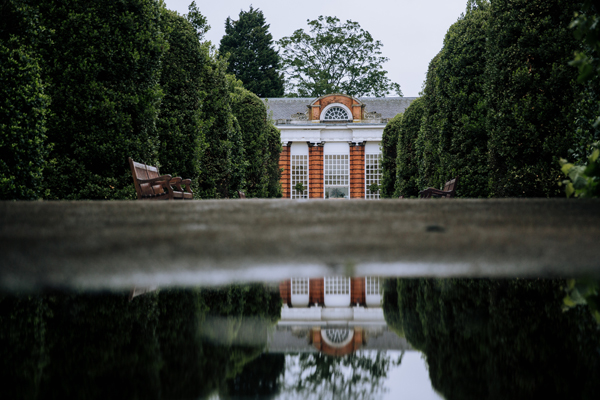
Now an elegant place to have lunch or afternoon tea, The Orangery was originally built in 1704-05. Its construction came at the behest of Queen Anne – the younger sister of Queen Mary II, she had ascended to the throne after the death of Mary’s husband King William III in 1702 following a fall from a horse (Mary had died of smallpox at Kensington Palace in 1694). Queen Anne used the building for parties in summer and in winter, thanks to underfloor heating, as a conservatory for plants (two engines were later fitted to the building to lift the orange trees kept there in colder months). The building’s architect is thought to have been the renowned Nicholas Hawksmoor, clerk of works for Kensington Palace, but it was extensively modified by Sir John Vanbrugh. The building also contains carvings by Grinling Gibbons. For more, see www.orangerykensingtonpalace.co.ukPICTURE: Vapor Kopeny/Unsplash

10 sites of significance in Jane Austen’s London…6. Carlton House…

It’s perhaps the most famous of the visits that Jane Austen made during her London stays and while the property no longer exists, we thought it was worth mentioning. 

But first, let’s explain. The Prince Regent (later King George IV) was an admirer of Jane’s novels, so much so that when he was aware of the author’s presence in London, he issued – via his librarian and chaplain Rev James Stanier Clarke – an invitation for her to visit the library and tour his palatial London property, Carlton House.

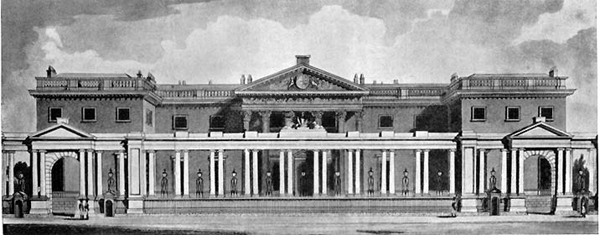
The grand, lavishly decorated property, created from an existing property between 1783 and 1812 by the architect Henry Holland, was among the grandest in London at the time. Facing on to the south side of Pall Mall, the building sat across what is now Waterloo Place while its gardens abutted St James’s Park.

Jane visited on 13th November, 1815, and in the company of Rev Clarke toured the library. During her visit, it was suggested she could dedicate her next novel to the Prince Regent, an idea which didn’t sit that well with Jane who was a supporter of his estranged wife, Princess Caroline.

After her initial equivocation, her publisher John Murray apparently managed to prevail upon Jane to do so and she eventually capitulated, dedicating her novel Emma to him (a special copy of the novel was sent to the Prince at Carlton House).

Carlton House, meanwhile, didn’t last for much longer. King George IV, on his accession to the throne, decided to create a property more fitting for a king and ordered works to be carried out on Buckingham House so it could be his main London residence (as Buckingham Palace).

Carlton House, despite the exorbitant sums the Prince had spent transforming it, was demolished in 1825 and the John Nash-designed Carlton House Terrace built upon the site. Columns from the Carlton House were reused in creating the portico of the National Gallery on Trafalgar Square.

PICTURE: Carlton House (via Wikipedia).

LondonLife – Remains of Greenwich Palace unearthed…


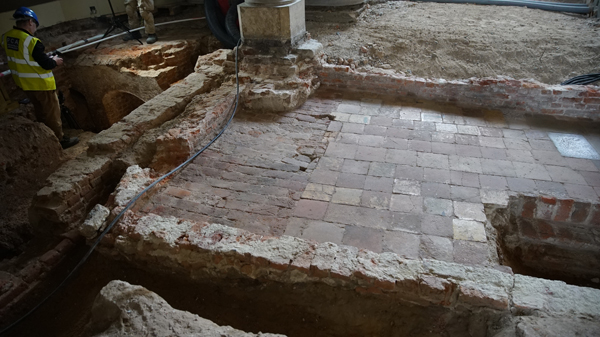
The remains of two rooms, which once formed part of the splendid Greenwich Palace – birthplace of King Henry VIII and his daughters Queen Mary I and Queen Elizabeth I, were discovered during works being undertaken ahead of the construction of a new visitor centre under the Old Royal Naval College’s famed Painted Hall, it was revealed last week.

The rooms, set well back from the river Thames, are believed to have formed part of the service range, believed to be the location of kitchens, a bakehouse, brewhouse and laundry.

As well as the discovery of a lead-glazed tiled floor, one of the rooms, which was clearly subterranean, featured a series of unusual niches where archaeologists believe may have been ‘bee boles’ – where ‘skeps’  (hive baskets) were stored during winter when the bee colonies were hibernating and where, when the bees were outside during summer, food and drink may have been stored to keep cool.

Discussions are reportedly now underway over the possibility of displaying the Tudor finds in situ. Duncan Wilson, chief executive of Historic England, hailed the find as “remarkable”.

“To find a trace of Greenwich Palace, arguably the most important of all the Tudor palaces, is hugely exciting,” he said. “The unusual and enigmatic nature of the structure has given us something to scratch our heads over and research, but it does seem to shine a light on a very poorly known function of the gardens and the royal bees. The most exciting aspect is that the Old Royal Naval College is able and willing to incorporate this into the new visitor centre, so everyone can see a small part of the palace, for the first time in hundreds of years.”

Greenwich Palace was built by King Henry V’s brother, Humphrey, Duke of Gloucester, in 1426 and rebuilt by King Henry VII between about 1500 and 1506.

Substantially demolished at the end of the 17th century (and with plans to build a new Stuart palace on the site never realised), it was replaced with the Greenwich Hospital which became the Royal Naval College designed by Sir Christopher Wren and Nicholas Hawksmoor between 1692 and 1728.

The Painted Hall, located in the Old Royal Naval College, is currently undergoing an 18 month transformation which includes the creation of a new visitor centre, Sackler Gallery and café. Visitors to the hall currently have the unique opportunity to get up close to the famous ceiling of the hall, described as the “Sistine Chapel of the UK”, on special tours. Visit www.ornc.org/painted-hall-ceiling-tours-tickets for more.

PICTURES: © Old Royal Naval College

10 sites of significance in Jane Austen’s London…2. 23 Hans Place (and 64 Sloane Street), Belgravia…

Another of the places Jane Austen stayed when visiting London, the terraced house at 23 Hans Place was the address her brother Henry moved to from his flat in Covent Garden (see last week’s entry)

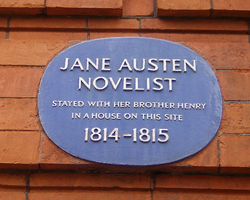
Jane stayed at the premises for almost two years over 1814 and 1815 (it was her last known visit to London). Austen, who stayed in a bedchamber at the front of the house on the top floor (a plaque commemorating Jane’s occupancy is located on the building), described the home as “delightful” and expressed her love of the garden.

The house has been considerably altered since although the original property still is said to lie underneath the brick skin now upon it.

It was while Jane was staying there that she was invited by the Prince Regent (later King George IV) – a fan of her writing – to Carlton House on 13th November, 1815, where she was permitted to dedicate one of her future works to him (Emma was duly dedicated the following year).

Henry, meanwhile, lived here until 1816 – the complete collapse of the bank in which he was partner had come in March of that year after which Henry was declared bankrupt. Following the financial disaster, he took up a post as curate at Chawton in Hampshire where the family were based.

While we’re in the area, we should also mention another property around the corner – 64 Sloane Street. It was here that Henry lived before moving to Covent Garden and here that, in April and May 1813, Jane stayed with Henry as his wife Eliza was dying (she passed away on 25th April).

Henry and Eliza had moved into the the Sloane Street property in 1809 (from Brompton) and Jane had visited several times (among the books she worked on while there was Sense and Sensibility).

Both properties were part of the Hans Town development which dated from the late 1770s.

PICTURE: Gwynhafyr/CC BY-NC 2.0


A Moment in London’s History – The premiere of Handel’s ‘Water Music’…

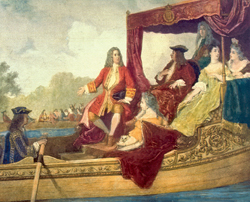
This month marks 300 years since composer George Frideric Handel premiered his composition (and one of the most famous pieces of classical music in the world) Water Music – and it was in a rather fitting setting.

The first performance of the composition – which was deliberately created for
playing outdoors (and carrying across water) – took place at about 8pm on 17th July, 1717, aboard a City of London barge in the River Thames.

Some 50 musicians played the piece – using everything from flutes and recorders to trumpets, horns, violins and basses – with Handel himself fulfilling the role of conductor.

The barge was part of a rather grand flotilla which made its way up the river from the Palace of Whitehall to Chelsea, at the centre of which was a royal barge upon which King George I and members of the nobility, including various duchesses, rode.

Numerous other Londoners also turned out to hear the performance aboard all manner of watercraft and the king was apparently so impressed with what he heard that he requested several encores both on the trip to Chelsea and on the return journey.

The story goes that the somewhat unpopular king had apparently requested the concert on the river to upstage his son, the Prince of Wales (and future King George II), who was stealing the limelight by throwing lavish parties (the king and his son were famously at odds and it was therefore no shock when the prince didn’t attend the performance).

There’s another story, meanwhile, that suggested Handel composed the piece to regain the favour of the King which he had apparently lost when, seeking to capitalise on his growing fame, he left his employment as conductor at the court of the then Elector of Hanover (a position George held before he was king) and moved from Germany to London during the reign of Queen Anne (although some claim the future king knew he would one day follow Handel to London and actually approved of his decision to move there).

Water Music, meanwhile, has since become part of popular culture – it’s generally said that most people will recognise at least one part of it – but interestingly, no-one is said to be exactly sure how the music, which is generally broken into three separate suites, should be performed, given that the original score has been lost.

PICTURE: Edouard Hamman’s painting showing Handel (on the left) with King George I aboard a barge on 17th July, 1717. Via Wikipedia


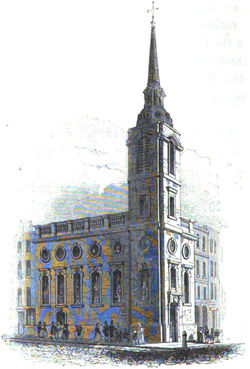
Lost London – St Benet Gracechurch…

Located in Gracechurch Street in the City of London, this church was first recorded in the late 12th century (although there had apparently been a church here for some time earlier) and was named for St Benedict of Nursia, the founder of Western monasticism (St Benet is apparently a short form of that name).

The church, which stood on the intersection with Fenchurch Street and is among a number of London churches dedicated to that particular saint, is sometimes called St Benet Grass Church – that name apparently relates to a nearby haymarket (see our earlier post on Gracechurch Street).

Records apparently show that during the reign of the Catholic Queen Mary I, Biblical texts which had been added to the interior walls during the earlier reign of her brother, the Protestant King Edward VI, were removed.

The church was repaired in the early 17th century but subsequently destroyed in the Great Fire of London. It was among 51 churches rebuilt in the aftermath to the designs of the office of Sir Christopher Wren.

It continued on until 1864 when the parish was united with All Hallows, Lombard Street, which was later among a number of churches united with St Edmund the King and Martyr in Lombard Street.

The church building – its spire had come in for some criticism – was demolished just a couple of years later in 1867-68 (its removal helped to widen Fenchurch Street) and the site apparently sold for £24,000.

The pulpit is now in St Olave, Hart Street, and the plate was split between St Benet in Mile End Road – which was built with the proceeds of the sale of the church land – and St Paul’s Shadwell. (St Benet Gracechurch was apparently only one of two of Wren’s churches never to have an organ).

There’s a plaque marking the location of the church at 60 Gracechurch Street. The narrow street St Benet’s Place also references the former church.

PICTURE: St Benet Gracechurch in the 1820s from The Churches of London by George Godwin (1839)/Via Wikipedia.


10 of the most memorable (and historic) views of London – 10. View of Maritime Greenwich…

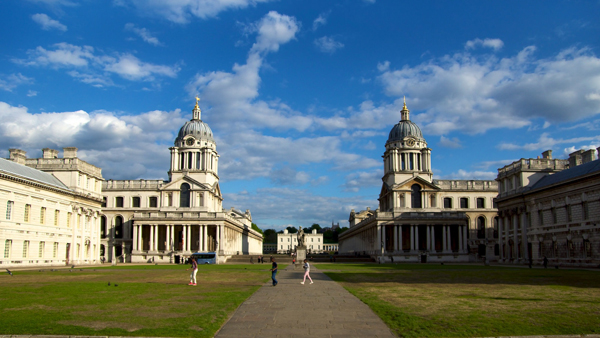
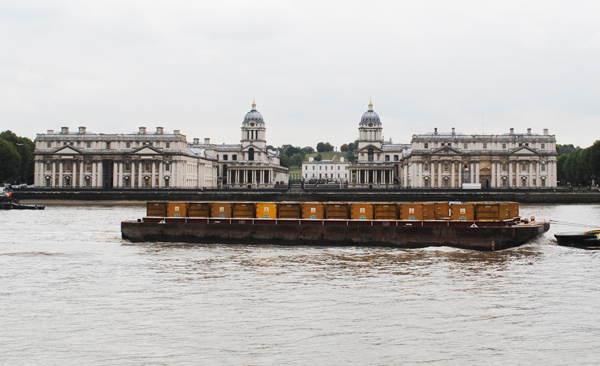
For the final in our series of memorable (and historic) views of London, we’re returning to Greenwich, except this time we’re looking across the River Thames from the southern end of the Isle of Dogs at some of the historic buildings of maritime Greenwich.

The splendid view from Island Gardens on the north bank of the Thames today reveals Sir Christopher Wren’s Old Royal Naval College, the Queen’s House and beyond that the Royal Observatory in Greenwich Park. But it wasn’t always so.

Prior to its demolition by King Charles II in 1660, this was the site of a royal palace known Greenwich Palace or the Palace of Placentia which had occupied the site since the mid-15th century (and was rebuilt by King Henry VII in the late 15th/early 16th centuries).

Charles decided to demolish it to build a new palace on the site but only a section of it was ever completed and it was never used as a royal palace. In the late 17th century, Greenwich Hospital – incorporating what was built of Charles’ palace – was constructed on the site as a home for retired sailors from the Royal Navy. From 1869, it was used as the Royal Naval College and now houses a range of organisations (see our previous post here for more).

The Queen’s House, which lies at the centre of the view, was designed by Inigo Jones and started on the orders of Anne of Denmark, wife of King James I. But it remained unfinished when Queen Anne died in 1614 and it was Henrietta Maria, wife of King Charles I, who completed it. The house these days serves as a gallery (for more, see our earlier post here).

Behind the Queen’s House can be seen the Royal Observatory, home of Greenwich Mean Time and the Prime Meridian (see our previous post here) – as well as, of course, the (previously aforementioned) statue of General Wolfe. Also in the modern view from Island Gardens is the Cutty Sark and the National Maritime Museum.

It’s believed that the view from where Island Gardens now stands is that replicated in Canaletto’s painting, Greenwich Hospital from the North Bank of the Thames (although, oddly, whether Canaletto ever actually visited the site is apparently a matter of some dispute).

Greenwich Park and the buildings on the other side of the river can be accessed from the park Island Gardens by the Greenwich Foot Tunnel.

WHERE: Island Gardens on the north bank of the River Thames (nearest DLR is Island Gardens); WHEN: Anytime; COST: Free; WEBSITE: (For Greenwich Park across the river – www.royalparks.gov.uk/Greenwich-Park.aspx).

PICTURE:Top –  Paul Hudson/Flickr/CC BY 2.0; Below – David Adams

This Week in London – Remarkable Georgian princesses; John Singer Sargent’s watercolours; and the RA’s 249th Summer Exhibition…

The lives of three German princesses whose marriages into the British royal family during the Georgian era placed them right at the heart of progressive thinking in 18th century Britain are the subject of a new exhibition which opens at Kensington Palace today. Enlightened Princesses: Caroline, Augusta, Charlotte and the Shaping of the Modern World looks at how these three women – committed patrons of the arts and sciences – “broke the mould” in terms of their contributions to society, through everything from advocating for the latest scientific and medical advances to supporting the work of charities, changing forever the role women played in the British royal family. Caroline and Charlotte became queens consort to King George I and King George III respectively while Princess Augusta was at various times Princess of Wales, Regent and Princess Dowager (as mother to King George III) and between them, they had more than 30 children. But alongside their busy family lives, they also were at the centre of glittering courts where the likes of writers Alexander Pope and Jonathan Swift, scientist Isaac Newton and composer George Frideric Handel as well as successive Prime Ministers and international statesmen were welcomed. The display features almost 200 objects owned by the princesses, such as Charlotte’s hand-embroidered needlework pocketbook, pastels painted by their children and artworks and fine ceramics commissioned by some of the greatest artists and craftsmen of their day. The exhibition, which has previously been at the Yale Center for British Art, runs until 12th November. Admission charge applies. For more, see www.hrp.org.uk/kensington-palace/.

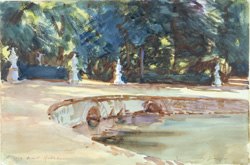
The UK’s first major exhibition featuring the watercolours of Anglo-American artist John Singer Sargent in almost 100 years has opened at the Dulwich Picture Gallery in south London. Sargent: The Watercolours features almost 80 works produced between 1900 and 1918, what was arguably his greatest period of watercolour production. Sargent mastered the art during expeditions in southern Europe and the Middle East and the show features landscapes, architecture and figurative scenes, drawing attention to the most radical aspects of his work – his use of close-up, his unusual use of perspective and the dynamic poses of his figures. The works include The Church of Santa Maria della Salute in Venice (c1904-1909), the mountain landscape Bed of a Torrent (1904), and figure study The lady with the umbrella (1911). The exhibition runs until 8th October. Admission charge applies. For more, see www.dulwichpicturegallery.org.uk. PICTURE: John Singer Sargent – Pool in the Garden of La Granja, c. 1903, Private Collection

The 249th Summer Exhibition has opened at the Royal Academy with Mark Wallinger, Yinka Shonibare and Antony Gormley among those with works on show. About 1,200 works are featured in the display with highlights including Shonibare’s Wind Sculpture VI, a new large scale work from Gilbert & George’s ‘Beard Speak’ series and, for the first time, a focus on construction coordination drawings, showing the full complexity of a building, in the Architecture Gallery. Runs until 20th August. Admission charge applies. For more, see www.royalacademy.org.uk.

Send all items for inclusion to exploringlondon@gmail.com.

Treasures of London – Richard Coeur de Lion…


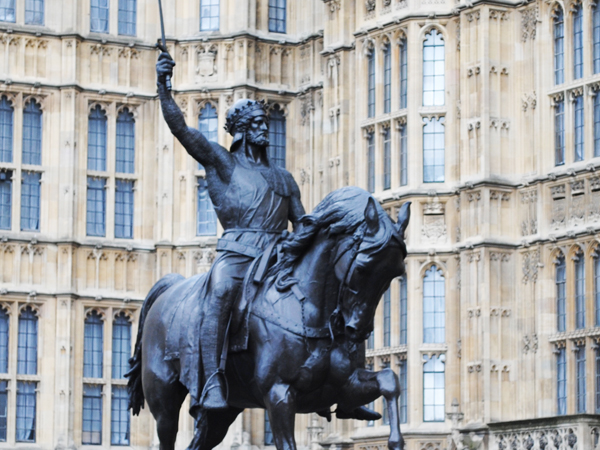
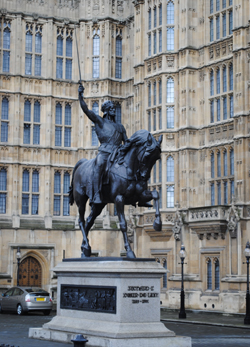
Located in Old Palace Yard outside the Palace of Westminster, this Grade II-listed equestrian statue of 12th century crusader-monarch King Richard I, known as the “Lionheart” or Coeur de Lion, is the work of 19th century sculptor Baron Carlo Marochetti. 

The nine metre high statue was originally exhibited as a clay work at the Great Exhibition of 1851 – it was located outside the west entrance of the Crystal Palace – and, despite the tail falling off soon after it was display, it was well enough received by the crowds attending the exhibition (as well as the critics) that a public subscription was raised to cast the statue in bronze. Queen Victoria and Prince Albert were among those who subscribed.

It was initially proposed that the statue be placed on the site of the Crystal Palace as a memorial to the exhibition (along with a statue of Prince Albert), but this plan was put aside and, after numerous other sites were considered, the current location was settled on.

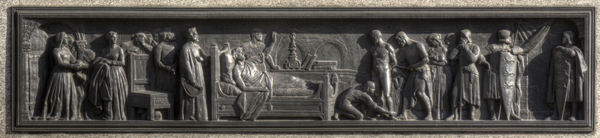
The statue was erected on the site, facing south, in 1860, although it wasn’t completed with the addition of two bronze bas relief panels until 1867. These depict Richard on his death bed pardoning Bertran de Born, the archer whose arrow caused his death, and Richard fighting Saracens at Ascalon during his crusade in the Holy Land. Two other proposed panels were never made.

The statue was peppered with shrapnel when a bomb landed only a few metres away in 1940 during the Blitz, leaving Richard’s sword bent and damaging the tail and granite pedestal. The sword was fixed soon after. Further conservation works were carried out in 2009.

Italian-born Marochetti had worked in Paris as a sculptor before following King Louis-Philippe to London after the revolution of 1848 and largely remained in the city until his death in 1867. He was created a baron by the King of Sardinia.

His statue of Richard is one of few artworks created by non-British artists in the Parliamentary estate and while Marochetti had plans to create another equestrian statue, this one of Edward, the Black Prince, to face his statue of Richard across the entrance to the House of Lords, it never eventuated. Plans to install the second statue are, however, once more being talked about.

PICTURES: Above – The statue in Old Palace Yard (David Adams); Below – Detail of the panel depicting the death of the king (Prioryman/CC BY-SA 4.0)

10 of the most memorable (and historic) views of London – 6. View from Parliament Hill…

Once apparently known as Traitor’s Hill, Parliament Hill in Hampstead Heath offers stunning views of the City of London and surrounds.

The summit of the hill, the view from which is protected, features a plaque, donated by the Heath and Hampstead Society and installed in 2016, which identifies various London landmarks visible from the site (it updated a similar plaque installed in 1984). Among the landmarks visible from the hill, which lies some six miles from the City in the south-east of the heath, are The Gherkin (St Mary Axe), St Paul’s Cathedral, The London Eye and the Houses of Parliament.

The hill’s name is somewhat shrouded in mystery. According to one story, it relates to the fact it was defended during the English Civil War by troops loyal to Parliament (hence first Traitor’s, then Parliament, Hill). Another named-related story, generally deemed to be somewhat dubious, has it as the site where Guy Fawkes and co-conspirator Robert Catesby planned to watch the destruction of Parliament in the Gunpowder Plot of 1605.

Once part of a manor granted by King Henry I to a local baron, the hill was added to the public open space of Hampstead Heath in the late 1880s although manorial rights to the land persisted until the mid-20th century. The City of London Corporation has managed the hill since 1989.

Parliament Hill, these days a popular place for kite flying, is also the site of a short white pillar known as the ‘Stone of Free Speech’, once believed to have been a focal point for religious and political meetings (although its origins, like the hill’s name, are somewhat sketchy).

WHERE: Parliament Hill, Hampstead Heath (nearest Tube station is Hampstead/nearest Overground stations are Gospel Oak and Hampstead Heath); WHEN: Always; COST: Free; WEBSITE: www.cityoflondon.gov.uk/things-to-do/green-spaces/hampstead-heath/visitor-information/Pages/Parliament-Hill-Viewpoint.aspx.

Lost London – The King’s Bench Prison (part 1)…

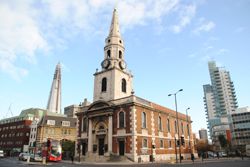
This prison dates from the time of King Richard II (1377-99) and stood off Borough High Street (just to the north of the Church of St George the Martyr) in Southwark until the mid 18th century when it moved to a new premises.

The prison, originally based in two houses apparently known as the Crane and the Angel (Angel Place bears witness to the latter), was first used for those convicted at the travelling court of the King’s Bench.
The prison was burned several times during periods of unrest and was upgraded during the reign of King Henry VIII. Among those imprisoned here were the reformer and martyr John Bradford who was held here before being burned at the stake in 1555 during the reign of Queen Mary (when it would have been known as the Queen’s Bench).

By the 1600s, it had become a debtors’ prison and in the mid-17th century – during the Commonwealth it was known as the ‘Upper Bench’ –  it reportedly held around 400 inmates who carried a collective debt of £900,000.

As with other prisons, the comfort of prisoners depended very much on their financial circumstances – those with money were able to live quite well. Those imprisoned here during this period included the dramatist Thomas Dekker and the King of Corsica, imprisoned in 1752 for debt (he died only four years later).

A Parliamentary inquiry in the 1750s revealed a host of problems with the prison including overcrowding, the practice of extortion by prison officers, promiscuity and drunkenness among prisoners and other irregularities, all of which led, in 1758, to the prison being closed (and later demolished) and moving to a new premises in St George’s Fields, Southwark (we’ll deal more with that facility in an upcoming post).

PICTURE: St George the Martyr on Borough High Street near where the first King’s Bench stood.

This Week in London – New insights into Canaletto’s Venice; a rare Shakespearean opportunity; and, a Green Plaque for William Henry Hudson…

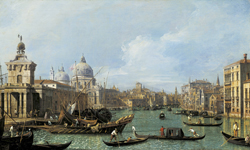
Methods employed by world renowned 18th century Venetian painter Canaletto in creating his evocative images of the city where he lived are the subject of a new exhibition which opens at The Queen’s Gallery in Buckingham Palace tomorrow. Canaletto & the Art of Venice showcases the findings of recent research in an exhibition which focuses on the Royal Collection’s remarkable group of paintings, drawings and prints by the artist – a collection obtained by King George III in 1762 from dealer (and the then-British Consult in Venice) Joseph Smith. Royal Collection Trust conservators used infrared technology to uncover previously hidden marks on drawings, providing new insights into Canaletto’s artistic techniques and casting doubt on a long held theory that he used a camera obscure to achieve topographical accuracy in his work. The exhibition, which features more than 200 paintings, drawings and prints, displays his work alongside that of contemporary artists Sebastiano, Marco Ricci, Rosalba Carriera, Francesco Zuccarelli, Giovanni Battista Piazzetta and Pietro Longhi. Runs until 12th November. Admission charge applies. For more, see www.royalcollection.org.uk. PICTURE: Canaletto, The Grand Canal looking East from Campo San Vio towards the Bacino, c.1727-8, from a set of 12 paintings of the Grand Canal. Royal Collection Trust/© Her Majesty Queen Elizabeth II 2017

• A rare ‘First Folio’ of William Shakespeare’s work – widely regarded as one of the most perfect copies in existence – will be available for viewing before an outdoor performance of Twelfth Night next month. Five actors from acting company The Three Inch Fools will perform the comedy in the St Mary Aldermanbury’s Garden on 1st June at 7pm, the same garden where Henry Condell and John Heminges, two of the Bard’s co-partners at the Globe Theatre and the men behind the production of the First Folio in 1623, were buried. Those attending the performance will be given the chance to view the folio in the nearby Guildhall Library before the performance. Tickets to this one night only opportunity can be purchased from Eventbrite.

Author and naturalist William Henry Hudson, whose work so inspired author Ernest Hemingway that his name was referenced in Hemingway’s first novel The Sun Also Rises, has been commemorated with a City of Westminster Green Plaque in Leinster Square, Bayswater. Born the son of British parents in Argentina, Hudson came to Westminster after leaving South America in 1874. An early support of the Royal Society for the Protection of Birds, his books on the English countryside became famous and helped foster the back to nature movement of the 1920s and 1930s.

Send all items for inclusion to exploringlondon@gmail.com.

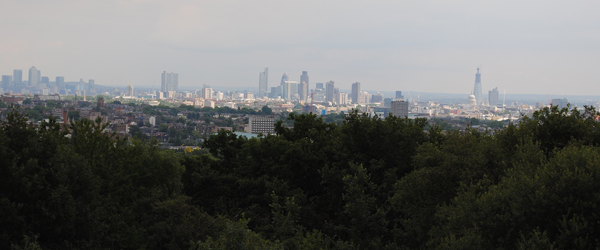
10 of the most memorable (and historic) views of London – 4. View from King Henry’s Mound, Richmond Park…

Tradition holds that the spot where this officially protected view originates from – the prehistoric barrow known as King Henry’s Mound – was where King Henry VIII stood on 19th May, 1536, to watch for a rocket fired from the Tower of London.

The signal was to indicate that his former wife, Anne Boleyn, had been beheaded for treason and hence that he was now free to marry Jane Seymour.

Sadly, the story is seen as unlikely – the king was apparently in Wiltshire at the time.

But it adds a nice nostalgia to this tree-framed view which looks across Richmond Park and areas south of the River Thames to the great dome of St Paul’s Cathedral.

The mound, which also offers views west over the Thames Valley towards Windsor, is believed to cover a burial chamber from the Bronze Age (it would have stood more prominently over the Thames Valley in those days) and was later used as a viewing position for hunting deer and falconry.

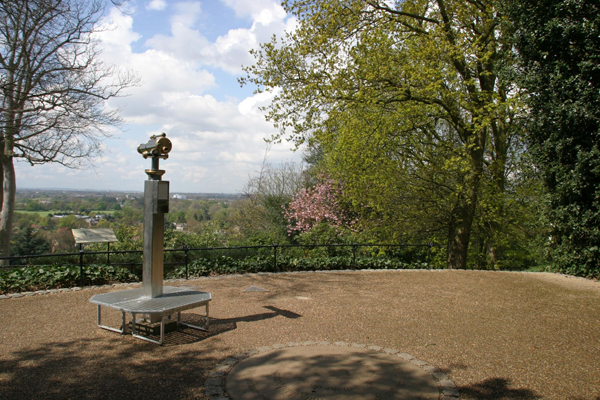
A permanent public telescope has been set up on the mound which since the 19th century has sat in Pembroke Lodge Garden (named for the Countess of Pembroke who lived in a cottage here between about 1788 and 1831).

The historic view made headlines last year over calls for London’s Mayor to step in and halt building work amid concerns that the 42-storey Manhattan Loft Gardens tower in Stratford, east London, could be seen in the view behind the cathedral dome.

WHERE: King Henry’s Mound, Richmond Park (nearest Tube station is Richmond); WHEN: 24 hour pedestrian access except during the deer cull in November and February; COST: Free entry; WEBSITE: www.royalparks.org.uk/parks/richmond-park

PICTURE: Royal Parks

This Week in London – Queen Margaret arrives at the Tower; 500 years of working Londoners; butlers explored at Apsley House; and, marking the Russian Revolution centenary…

The Tower of London’s dry moat will be transformed into a 15th century medieval court gathered to welcome a new Queen, Margaret of Anjou, for the May bank holiday this long weekend. The world of 1445 is being reimagined in a series of festivities – under the banner of Go Medieval at the Tower – which will include sword-fighting knights, hands-on experiences for kids such as the chance to fire a real crossbow, the “scents, sights and sounds” of a medieval encampment, and the chance to witness trades such as armoury and coin-striking. As well as, of course, opportunities to meet King Henry VI and his 15-year-old queen, Margaret who, upon her coronation, was honoured with a lavish pageant from Westminster Abbey to the Tower in which she received extravagant gifts including a lion. Runs from 10am to 5pm from Saturday to Monday. Admission charge applies. For more, see www.hrp.org.uk/tower-of-london/. PICTURE: © Historic Royal Palaces.

Working Londoners from the past 500 years are the subject of an open air exhibition opening in Guildhall Yard on Saturday. Londoners: Portraits of a Working City, 1447 to 1980 features a range of photographs, prints and drawings – many displayed for the first time – from the London Metropolitan Archives. The exhibition – which includes images of Jack Black of Battersea, Queen Victoria’s rat-catcher, and Charles Rouse, believed to be the last nightwatchman in 19th century London as well as pictures of Savoy Hotel page boys, a brick dust seller, a farrier in 1980s Deptford and a 15th century Lord Mayor – complements The Londoners exhibition currently running at the LMA in Clerkenwell which features 50 portraits not included in the Guildhall display. The free outdoor exhibition can be seen into 23rd May – for more, see www.cityoflondon.gov.uk/thelondoners. The Clerkenwell display can be seen until 5th July – for more, follow this link.

The life of the butler will be up for examination at Apsley House, home of the Duke of Wellington, this long weekend in an event which will also see the duke’s Prussian Dinner Service laid out in all its glory. Butlers and Banquets will feature talks about the history of the service – commissioned by King Frederick William III of Prussia and presented as a gift to the 1st Duke of Wellington after his victory over Napoleon at the Battle of Waterloo in 1815 – with younger visitors also having the chance to meet the butler of the house and find out what running a grand home like Apsley House was like as well as learning skills such as how to lay a table. Runs between 11am and 4pm from Saturday to Monday. Admission charge applies. For more, see www.english-heritage.org.uk/apsley.

A new exhibition marking the 100th anniversary of the Russian Revolution opens at the British Library in King’s Cross on Friday. Russian Revolution: Hope, Tragedy, Myths tells how the revolution unfolded during the reign of the last tsar, exploring the growth of the revolutionary movements with a special focus on key figures such as Tsar Nicholas II and revolutionary leaders such as Vladimir Lenin. Among the items on display is a letter Lenin wrote in April, 1902, applying to become a reader at the British Museum Library which he signed with his pseudonym, Jacob Richter, to evade the tsarist police. Other items on display include a souvenir album of the Tsar’s coronation and wallpaper hand-painted by women factory workers propaganda along with posters, letters, photographs, banners, weapons, uniform items, recordings and films. Runs until 29th August. Admission charge applies. For more, follow this link.

Send all items for inclusion to exploringlondon@gmail.com.

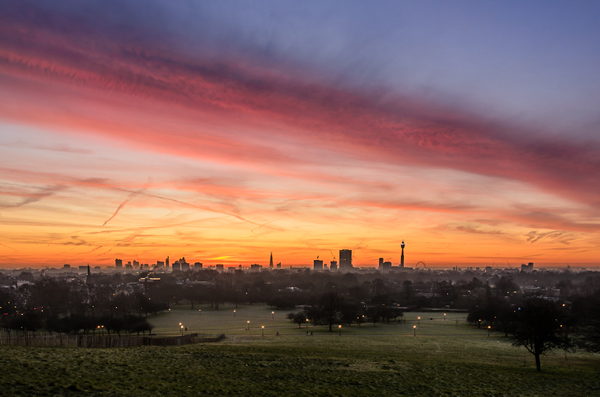
10 of the most memorable (and historic) views of London – 2. The city skyline from Primrose Hill…

Standing some 200 feet above sea level (almost 63 metres), this rounded grassy hill, just to the north of The Regent’s Park proper, has long held a fascination for Londoners partly, at least, for the panoramic views it offers of the city skyline. 

Once part of a hunting ground used by King Henry VIII, the hill – which has also been known as Battle and Greenberry Hill – was purchased in 1841 from Eton College to provide more public space for Londoners.

It has served as the site of a famous unsolved murder (that of magistrate Sir Edmund Berry Godfrey whose mysterious death, exploited by anti-Catholic plotter Titus Oates, caused considerable uproar) as well as duels, prize fights, mass gatherings and mystic happenings.

The latter have included it being the location where Edward Williams (Iolo Morganwg) first organised a gathering of druids, known as a Gorsedd of Bards, in 1792, as well as it being the subject of a prophecy by 16th century ‘soothsayer’ Mother Shipton warning that the streets would “run with blood” if the hill should become surrounded by urban sprawl.

Around the summit of the hill stands a York Stone edging feature bearing an inscription from poet William Blake – “I have conversed with the spiritual sun. I saw him on Primrose Hill” – while standing on the slope below is the famous Shakespeare’s Tree which was originally planted in 1864 to mark the 300th anniversary of the Bard’s birth (but was replaced in 1964).

The view over London is one of a number of protected views in the city (meaning you can’t build anything block it) and the trees below the summit are kept deliberately low so as not to impede sightlines.

The nearby residential district known as Primrose Hill is noted for being home to numerous famous figures including the likes of Jude Law, Kate Moss and the Gallagher brothers. It is also where the aliens in HG Well’s book, War of the Worlds, intended making their headquarters.

WHERE: Primrose Hill, The Regent’s Park (nearest tube stations are Chalk Farm, Swiss Cottage, St John’s Wood and Mornington Crescent); WHEN: Usually always; COST: free; WEBSITE: www.royalparks.org.uk/parks/the-regents-park/things-to-see-and-do/primrose-hill.

PICTURE: Mike Rolls/Flickr/CC BY-SA 2.0 (taken in 2012).