LondonLife – Mary and infant Jesus back on display in St Paul’s…

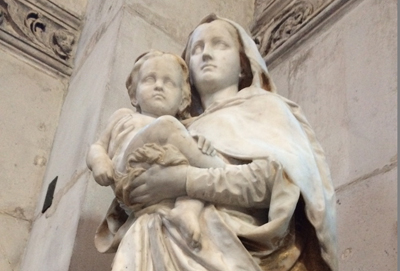
The-Madonna-and-ChildThis Victorian-era marble statue of the Virgin and Child has gone back on show in St Paul’s Cathedral more than 70 years after it taken down following bombing during World War II. Part of an ornate high altar and reredos installed at the cathedral’s east end in 1888, the statue – the work of Thomas Garner – was put into storage after that part of the cathedral took a direct hit during the Blitz of 1940 and what remained of the altar was dismantled (the statue and a crucifix were the only parts retained by the cathedral). It can now be seen in the Chapel of St Erkenwald and St Ethelburga (also known as the Middlesex Chapel) in the north transept. For more, see www.stpauls.co.uk. PICTURE: The Chapter of St Paul’s Cathedral.


LondonLife – The Duke of York has a facelift…

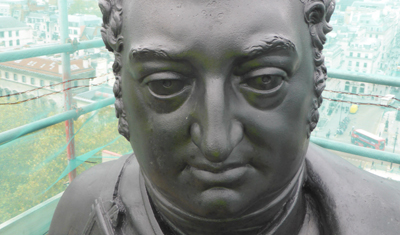
Duke-of-YorkA monument commemorating Prince Frederick, the Duke of York and Albany and commander-in-chief of the British Army during the French Revolutionary wars – the Duke of York Column in St James’s Park – has had a makeover. The monument, which was erected in 1834, is the tallest in the Royal Parks. It features a 124 foot tall column of pink and grey Aberdeen granite designed by Benjamin Wyatt and is topped by a 14 foot tall bronze statue of the duke (thought to be the ‘Grand Old Duke of York’ referred to in the nursery rhyme), designed by Sir Richard Westmacott. The column has been cleaned while the statue, which had developed a green pigment thanks to the oxidation process which also gives the Statue of Liberty its green patina, has been repatinated, rewaxed and buffed. The monument, which cost £100,000 to refurbish, originally cost £15,760 and was funded with a day’s pay from every serving soldier. For more on St James’s Park, check out www.royalparks.org.uk/parks/st-jamess-park. PICTURE: Courtesy of Royal Parks.

LondonLife – Prince Albert keeps his lonely vigil…

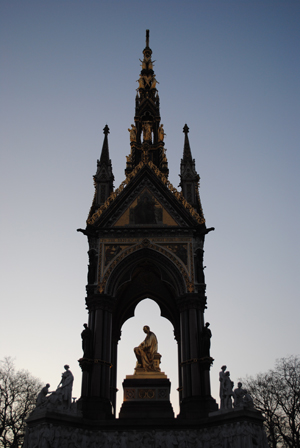
Albert-Memorial2


The Albert Memorial, South Kensington. For its history, see our earlier post here.

LondonLife – Sir David Wilkie’s ‘A Young Woman Kneeling at a Prayer Desk’ rediscovered…

A-Young-WomanThought to be lost for more than 140 years, a painting by Scottish artist Sir David Wilkie went on display at the National Gallery off Trafalgar Square last month. A Young Woman Kneeling at a Prayer Desk was discovered in the US having previously been last heard of in 1872 when it was sold by a relative of the 1st Earl of Mulgrave, Henry Phipps, whose daughter, Lady Augusta Phipps, was thought to be the subject of the painting which dates from 1813 (she died that year at the age of just 12). While the work was known to exist thanks to it having featured in an oil sketch the artist had sent to his brother – an army officer in India, it was only recently rediscovered when spotted by London-based art dealer Ben Elwes in a catalogue advertising its sale in New York. The National Gallery says it was only able to purchase the painting thanks to late Birmingham art teacher Marcia Lay, who left a bequest to the gallery. The painting is displayed alongside masterpieces by the likes of Turner, Constable, Gainsborough and Reynolds in Room 34. For more, see www.nationalgallery.org.uk. PICTURE: David Wilkie, A Young Woman Kneeling at a Prayer Desk, 1813, © National Gallery, London.

LondonLife – Oliver Cromwell’s coffin plate goes to auction…

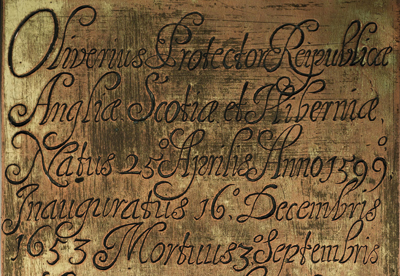
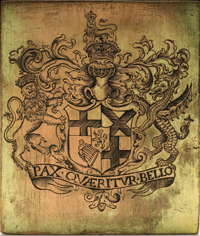
Coffin-Plate-(i)The copper gilt plate found on former Lord Protector Oliver Cromwell’s breast when his body was exhumed will be put up to auction in London later today. Sotheby’s says that according to contemporary reports, the plate was found in a leaden canister lying on Cromwell’s chest when the coffin – interred in Coffin-Plate-(ii)the Henry VII Chapel in Westminster Abbey – was opened by James Norfolke, Serjeant of the House of Commons, on the orders of parliament on 26th January, 1661 – just two years from Cromwell was buried. Norfolke apparently took the plate which was subsequently handed down through his family. It was not the only relic associated with Cromwell to survive – while Cromwell’s body, along with that of regicides Henry Ireton and John Bradshaw, was hanged at Tyburn and then apparently buried in an unmarked grave pit, his head was placed on a spike above Westminster Hall and remained there for more than 20 years until it blew down in a gale and was taken by a guard. It apparently subsequently passed through numerous private hands before, in 1960, it was interred in a secret location in the chapel of Sidney Sussex College in Cambridge. Meanwhile, the plate – which bears the arms of the Protectorate on one side and an inscription in Latin with the dates of Cromwell’s birth, inauguration as Lord Protector and death on the other – is listed with an estimated price of between £8,000 and £12,000. For more on the item, see www.sothebys.com/en/auctions/ecatalogue/2014/english-literature-history-childrens-books-illustrations-l14408/lot.3.html.

LondonLife – Thames life…


Thameslife


LondonLife – Farewell to the poppies…

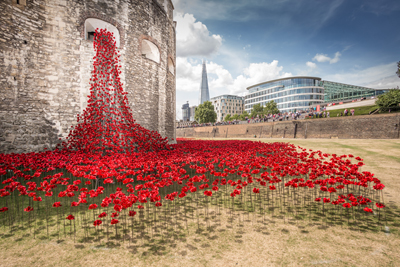
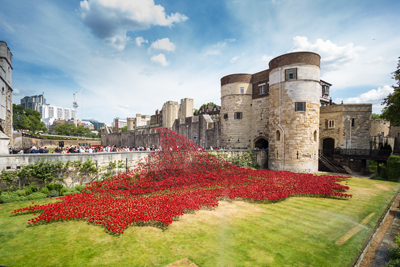
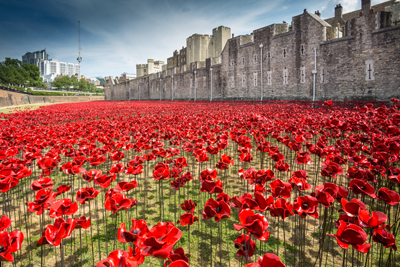
Poppies4The Tower of London is bidding farewell to the sea of poppies that has filled its dry moat while two major features of the instalment – created to mark the centenary of World War I – prepare to head off on tour. Known as Weeping Window (shown above) and Wave (shown immediately below) – the two features of the Blood Swept Lands and Seas of Red installation will both tour various locations across the UK for the next few years before going on permanent display at the Imperial War Museum in London and Manchester. So, we thought we’d take a look back at what has proved to be one of the most popular and moving memorials to appear in the capital in recent years. Created by ceramic artist Paul Cummins (with setting by stage designer Tom Piper), the project saw as many as 888,246 ceramic poppies –  representing all British and Colonial fatalities during the war – planted by volunteers in the moat. The last one was planted on Armistice Day  – 11th November – last week before the process of removal began. PICTURES: ©Richard Lea-Hair and Historic Royal Palaces. 

Poppies5

Poppies2

Poppies1

Poppies6

LondonLife – Rotherhithe from the Thames…


Wapping


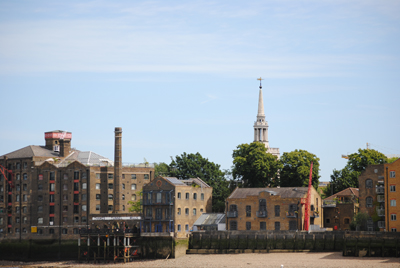
Pictured is the south bank of the Thames showing the buildings of the former Thames Tunnel Mills (now converted to residences). The tower of the Church of St Mary the Virgin is in the background – the church dates from 1716 and was designed by John James, an associate of Sir Christopher Wren.

LondonLife – Flying the flags on the London County Hall…


County-Hall


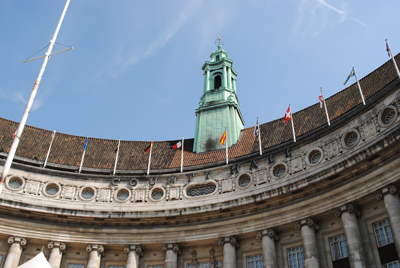
Located on the South Bank of the Thames opposite Whitehall is the former vast  headquarters of the London County Council and later, the Greater London Council. The Grade II* listed building, first opened in 1922, these days houses everything from the London Sea Life Aquarium, the London Dungeon and the visitor centre for the London Eye as well as hotels, restaurants and even flats.

LondonLife – Long unseen ‘map room’ to be opened at Eltham Palace…

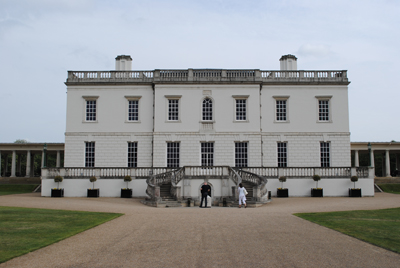
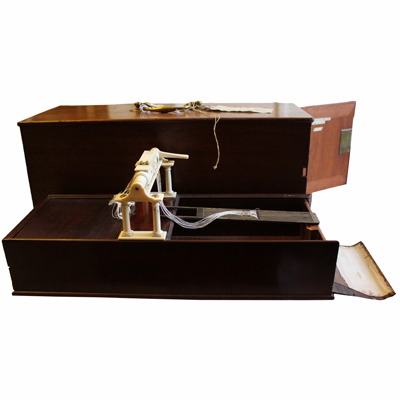
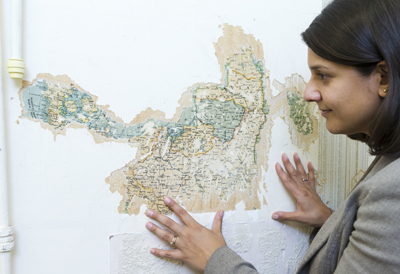
Eltham-PalaceAnnie Kemkaran-Smith, curator at Greenwich’s art deco masterpiece Eltham Palace, examines the 1930s ‘map room’, one of five new rooms to be opened at the palace this spring following a major renovation by English Heritage. Alongside the map room – to be opened for the first time in a decade following a renovation for which English Heritage has launched a £25,000 appeal – other rooms include the luxury wartime bunker, a basement billiards room, a walk-in wardrobe and two new bedrooms. The project, work on which started earlier this month, also includes restoration of the gardens, the creation of a new visitor centre, shop and cafe in former glasshouses. The former childhood home of King Henry VIII, Eltham Palace was transformed in the 1930s by art collectors and philanthropists Stephen and Virginia Courtauld and features an interior now boasting a mix of art deco, ocean-liner styles and Swedish design with then cutting-edge features such as under-floor heating, multi-room sound systems and a centralised vacuum system. The palace will remain open to the public on Sundays over winter with the new rooms to be opened in April. For more, see www.english-heritage.org.uk/daysout/properties/eltham-palace-and-gardens/.

LondonLife – Another perspective on a London icon…

Clock-tower


The Clock Tower of the Houses of Parliament, home to Big Ben. For more on it, see our earlier posts on the Palace of Westminster, the Clock Tower and Big Ben PICTURE: Tony Kerrigan.

LondonLife – Sheep in the City…

Sheep

A small flock of sheep made their way across London Bridge this week as the Freemen of the City of London exercised their ancient prerogative to drive sheep over the span. A reported 600 Freemen from the City’s 110 livery companies took part in the annual drive along with a score of sheep – all in an effort to raise for the Lord Mayor’s Appeal. There’s a permanent reminder of the tradition of driving sheep in the heart of the City in Paternoster Square near St Paul’s Cathedral where Dame Elisabeth Frink’s bronze sculpture of Shepherd and Sheep can be found (pictured above).

LondonLife – Admiral Arthur Phillip honoured in Westminster Abbey…

Admiral-Arthur-PhillipA memorial to Admiral Arthur Phillip, described as the “father of modern Australia”, was unveiled in Westminster Abbey back in July. Admiral Phillip (1738-1814) commanded the ‘First Fleet’ which left the UK in 1787, transporting convicts and military to the new colony Phillip founded as New South Wales. Prince Phillip, the Duke of Edinburgh, attended the memorial’s dedication service on 9th July which was conducted by the Dean of Westminster, Dr John Hall, who credited Admiral Phillip – a “modest, yet world-class seaman, linguist and patriot”- with laying the foundations “on which was developed the Commonwealth of Australia”. Among other dignitaries who attended was Dame Marie Bashir, the Governor of the Australian state of New South Wales, who described Admiral Phillip as “enlightened, far-sighted and indeed humane” and paid tribute to his attempts to actively foster harmonious relations with the Aboriginal people. Carved from Sydney sandstone, the memorial is set in the floor of the nave of the minster close to memorials of David Livingstone, Thomas Cochrane and Isaac Newton. The memorial stone is among a number of projects around Britain instigated by the Britain-Australia Society to mark the bicentenary year of Admiral Phillip’s death. For more on the abbey, see www.westminster-abbey.org. PICTURE: Andrew Dunsmore/Westminster Abbey.

LondonLife – Amy Winehouse remembered at Camden…

Amy-Winehouse

Singer Amy Winehouse was remembered with the unveiling of a life-size bronze statue at the Stables Market in Camden this week. The work of London-based artist and designer Scott Eaton, the statue – seen here in the studio – was commissioned by her father Mitch Winehouse. Located in the north London district where Winehouse lived until her death in 2011, the statue was unveiled on what would have been her 31st birthday. For more of Eaton’s work, see www.scott-eaton.com. PICTURE: Courtesy of Scott Eaton.

LondonLife – HippopoThames…

Hippo1

A 21 metre long wooden hippopotamus, HippopoThames, has been spotted in the River Thames off the new quarter of Nine Elms near Battersea in the city’s west. The semi-immersed sculpture, by Dutch artist Florentijn Hofman (famed for his huge yellow Rubber Duck), is part of the month long celebration of London’s river known as Totally Thames and can be seen at the site until 28th September. The sculpture was inspired by the history of the Thames – in particular, the hippos which once inhabited it (in fact, there’s a talk on the subject of the hippos at the Doodle Bar in Battersea tonight – admission charge applies, see www.totallythames.org/events/info/thames-natural-history). Hippopo is moored off Riverside Gardens, Nine Elms Lane, SW8 2DU. For foreshore access times, see www.totallythames.org/events/info/florentijn-hofman. PICTURES: Steve Stills.

Hippo2

LondonLife – Hazy days of summer…


Hazy-days-of-summerLooking from Kensington Gardens to the Albert Memorial and Royal Albert Hall in South Kensington.


LondonLife – Isaac Newton comes to life…

Isaac-Newton

Eduardo Paolozzi’s 1995 statue of Isaac Newton which stands on the British Library’s piazza in King’s Cross has been granted a ‘voice’ as part of a new project called Talking Statues. Visitors who swipe their smartphones on a nearby tag will receive a call from the famous scientist – voiced by Simon Beale Russell – as part of the initiative which is being spear-headed by Sing London. It is one of 35 different statues across London and Manchester which will be brought to life by a range of public identities. Among the other statues in London which have been brought to life are Samuel Johnson’s cat Hodge in Gough Square (voiced by Nicholas Parsons) and Dick Whittington’s Cat in Islington (Helen Lederer), John Wilkes in Fetter Lane (Jeremy Paxman), the Unknown Soldier at Paddington Station (Patrick Stewart) and Sherlock Holmes outside Baker Street Underground (Anthony Horowitz). The British Library and Sing London are also holding a competition to give William Shakespeare a voice by writing a monologue for the statue in the library’s entrance hall which will then be read by an as yet unannounced actor. Entries close 17th October. For more, visit www.talkingstatues.co.uk

PICTURE: British Library

LondonLife – Poppies at the Tower of London…

A04208

More than 800,000 ceramic poppies are being “planted” in the moat of the Tower of London to commemorate the centenary of World War I.

The work of ceramic artist Paul Cummins, Blood Swept Lands and Seas of Red will grow throughout the summer until, by Armistice Day, 888,246 ceramic poppies are ‘planted’ in the dry moat, each one representing a British or colonial military fatality during the war.

The first poppy was planted by Yeoman Warder Crawford Butler back in July (pictured) and the work was officially “unveiled” today – 100 years since the first full day of Britain’s involvement in the war. 

More than 8,000 volunteers will be involved in planting the poppies which can be purchased for £25 with 10 per cent from each poppy plus all net proceeds shared equally among six service charities: the Confederation of Service Charities (COBSEO), Combat Stress, Coming Home, Help for Heroes, Royal British Legion and SSAFA (formerly the Soldiers, Sailors, Airmen and Families Association).

Starting today, the public will also be able to witness the daily twilight reading of a roll of honour featuring the names of 180 serving military killed during the World War I from Tower Hill terrace. The reading will be followed by the bugler playing the Last Post. Members of the public can nominate a name for the roll of honour. 

For more, see poppies.hrp.org.uk. PICTURE: Photo: © Richard Lea-Hair/Historical Royal Palaces

LondonLife – Hampton Court Palace’s royal ‘edible’ gardens…

Gardens1

Historic Royal Palaces has reopened Hampton Court Palace’s royal kitchen garden, having recreated it according to a plan dating from 1736. The  six acre garden – constructed on the site of King Henry VIII’s tiltyard on the orders of Queen Anne in 1702 – was used to supply the table of monarchs from the early 1700s through to the 1840s. The recreated version showcases rare and heritage varieties of fruit and vegetables including Italian celery, borrage, skirret and swelling parsnips as well as apricots, nectarine and peaches while on site displays showcase some of the techniques used by the royal gardeners. The gardens are open to the public free-of-charge and it’s hoped that as they mature, vegetable growing classes will be held there. The gardens have been opened as part of celebrations marking the 300th anniversary of the Hanoverian accession. For more on Hampton Court Palace, see www.hrp.org.uk/HamptonCourtPalace/. PICTURES: Courtesy Historic Royal Palaces.

Gardens2

Gardens3

LondonLife – Unearthing Bedlam’s buried past…


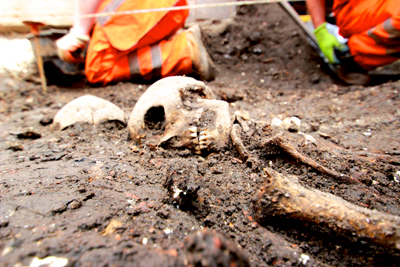
Buried-at-BedlamA team of volunteers are searching through historical records for evidence of people buried at the Bedlam burial ground in the 16th and 17th centuries. The 15 member team are carrying out the work at the London Metropolitan Archives as archaeologists prepare to excavate 3,000 skeletons from the former burial site next year in anticipation of the construction of the new Liverpool Street Crossrail Station – part of the £14.8 billion cross London Crossrail project. About 400 skeletons have already been removed during preliminary works. Located near Bethlem Hospital, the burial ground opened in the 16th century as part of the city’s response to the plague and was the first burial ground in London not associated with a parish church. Among those buried here were Robert Lockyer, a soldier executed under the orders of Oliver Cromwell for leading the Bishopsgate mutiny of 1649, and Leveller John Lilburne. Crossrail are keen to hear from members of the public who may be able to provide further details of burials at Bedlam – if you can help, email bedlamrecords@crossrail.co.uk.