LondonLife II – The Lady Mayor’s Show…

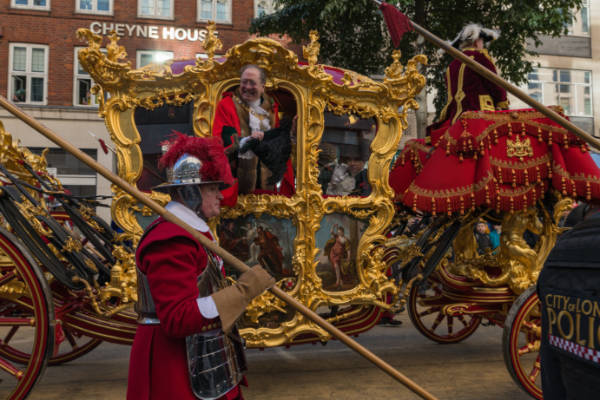
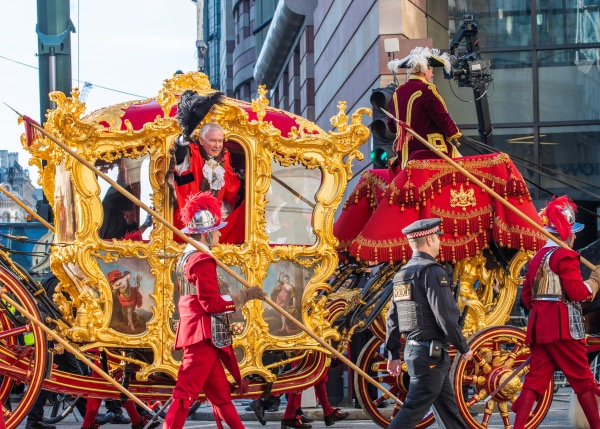
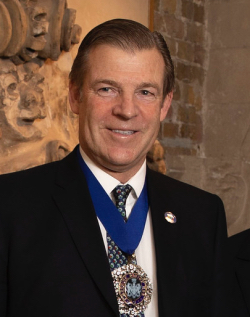
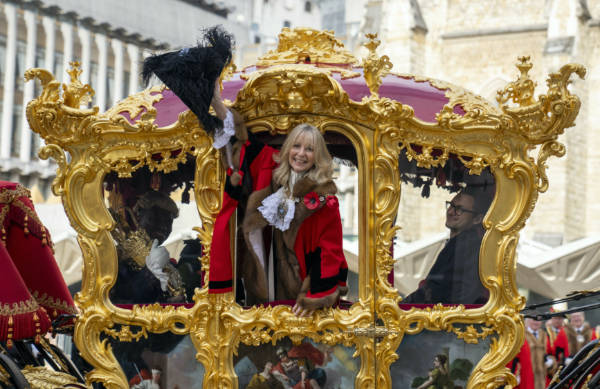
The historic Lady Mayor’s Show took place on Saturday through the streets of the City of London. Dame Susan Langley, the 697th Lord Mayor of London, is only the third woman to hold the post in more than 800 years, and is the first ever to be titled the ‘Lady Mayor of London’.

The new Lady Mayor of London, Dame Susan Langley, waves from her carriage at the Lady Mayor’s Show. PICTURE: Ben Turner/UK MOD © Crown copyright 2025.
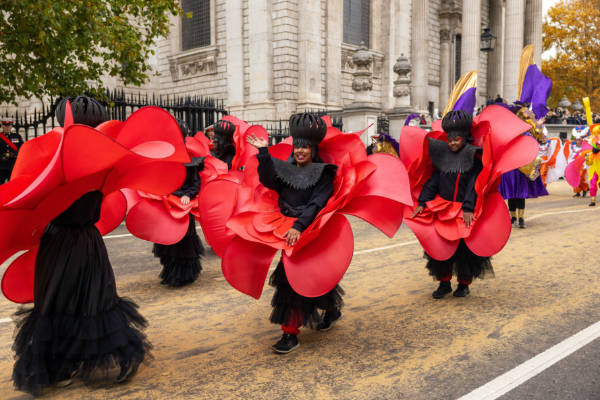
Participants in the Lady Mayor’s Show. PICTURE: Cpl Danielle Dawson/UK MOD © Crown copyright 2025
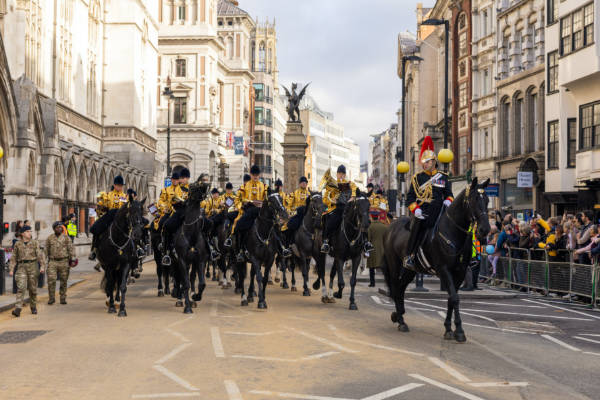
A military band in the Lady Mayor’s Show. PICTURE: Cpl Danielle Dawson/UK MOD © Crown copyright 2025
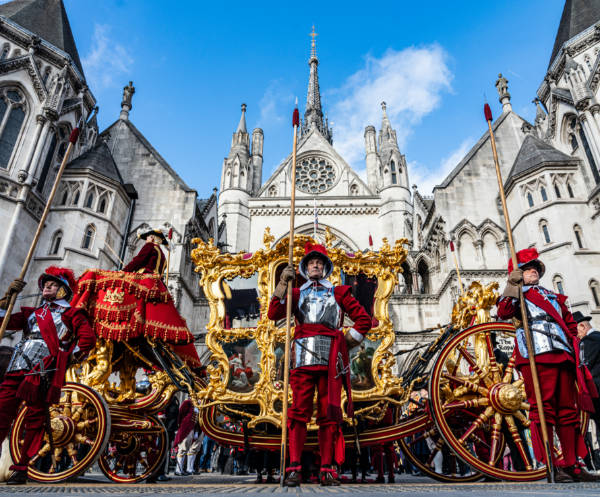
Pikemen guard the Lady Mayor’s carriage outside The Royal Courts of Justice. PICTURE: Ben Turner/UK MOD © Crown copyright 2025

This Week in London – The first Lady Mayor’s Show; Joseph Wright ‘of Derby’ at the National Portrait Gallery; and, Audrey Hepburn’s Blue Plaque…

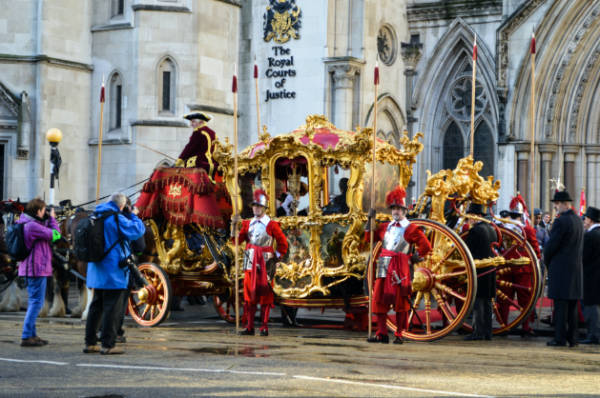
The State Coach at the Royal Courts of Justice in the 2013 Lord Mayor’s Show. PICTURE: S Pinter/iStockphoto.

The Lord Mayor’s Show – or this year, for the first time in its 800 year history, the Lady Mayor’s Show – takes place on Saturday as Dame Susan Langley is celebrated as the City of London’s 697th Lord Mayor of London. Langley, who takes office at Guildhall on Friday in the ancient ‘Silent Ceremony’, is the third woman to hold the role and the first to adopt the title “Lady Mayor”. The more than three mile-long procession, which kicks off at 11am, features around 7,000 participants, 200 horses and more than 50 decorated floats and travels from the Mansion House, the official mayoral residence, through the City to the Royal Courts of Justice, via St Paul’s Cathedral, before returning. The centrepiece as always is the State Coach carrying the Lady Mayor as she fulfills the dual purpose of showing herself to residents and swearing allegiance to the crown. For more – including details of the procession’s route, head to https://lordmayorsshow.london/.

The first exhibition dedicated to the work of 18th century artist Joseph Wright ‘of Derby’ opens at The National Gallery tomorrow. Wright of Derby: From the Shadows focuses on his career between 1765 and 1773 when he created his candlelight series. On show are a number of works from this series including Three Persons Viewing the Gladiator by Candlelight (1765), A Philosopher giving that Lecture on the Orrery in which a lamp is put in place of the Sun (1766), and the gallery’s own An Experiment on a Bird in the Air Pump (1768). Mezzotint prints of Wright’s works – key to the establishment of his international reputation – will also be on display. The exhibition, in the Sunley Room, runs until 10th May. Admission charge applies. For more, see www.nationalgallery.org.uk/exhibitions/wright-of-derby-from-the-shadows.

Hollywood icon Audrey Hepburn has been honoured with an English Heritage Blue Plaque on her former home in Mayfair. The plaque at 65 South Audley Street was where Hepburn lived in a flat with her mother between 1949 to 1954 as she launched her career as an actor. It was from here that she travelled to the West End to perform in chorus lines, appeared in British films such as 1951’s The Lavender Hill Mob and while living here that she was cast as the lead in Gigi on Broadway – a key stepping stone towards her breakthrough performance in 1953’s Roman Holiday. Hepburn was born in Brussels but had strong ties to London, training at the Ballet Rambert and working as a dancer and model before moving on to acting. Of course, as well as Roman Holiday, Hepburn performed notable roles SabrinaFunny FaceBreakfast at Tiffany’sMy Fair Lady, and Charade. She later dedicated herself to humanitarian work, serving as a UNICEF Goodwill Ambassador, and was awarded the Presidential Medal of Freedom shortly before her death in 1993. For more on English Heritage Blue Plaques, see www.english-heritage.org.uk/visit/blue-plaques/.

Send all items to exploringlondon@gmail.com

London Explained – Lord Mayor or Mayor?

Lord Mayor of London or Mayor of London? They have similar titles but their roles and responsibilities (not to mention their history) are quite different.

The Lord Mayor’s Show in November, 2023, with then newly elected Lord Mayor of London Michael Mainelli. PICTURE: j Thomas Salas/Shutterstock

The older of the two posts is the Lord Mayor of London, a title which refers to the governance of the City of London, known to many as the “Square Mile” in the heart of the capital.

The Lord Mayor of London (officially, since 2006, known as the Lord Mayor of the City of London) heads the City of London Corporation and is an elected position; in fact it’s one of the world’s oldest continuously elected offices dating back to the late 12th century.

The Lord Mayor, who holds office for one year, is elected by the City liverymen at the Common Hall held on Michaelmas (29th September) each year. They must be serving in the office of Alderman at the time.

The Lord Mayor of London takes office on the Friday before the second Saturday of November in what is known as The Silent Ceremony (the Lord Mayor’s Show, a celebration of the newly elected Lord Mayor, takes place the following day).

The role of the Lord Mayor of London – who takes precedence over all individuals in the City of London with the exception of the monarch – has historically been to represent the residents and businesses within the City although in modern times the role is effectively an “international ambassador” for the UK’s financial and professional services sector.

The current Lord Mayor of London is Alastair King who is the 696th Lord Mayor of London. The Lord Mayor of London works out of offices at their official residence near the Royal Exchange and Bank of England known as Mansion House.

Onto the Mayor of London. A much more modern position (it was created in the year 2000), the Mayor of London is directly elected by the registered voters of Greater London. They serve as the chief executive of the Greater London Authority and work with the 25 members of the London Assembly.

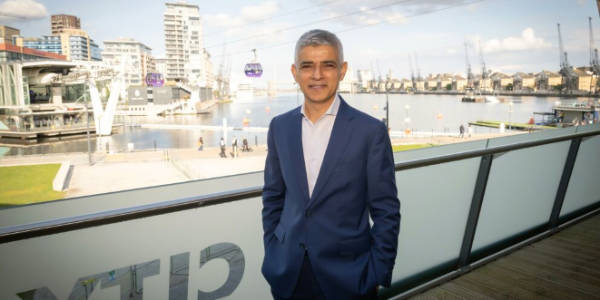
The Mayor of London, Sadiq Khan. PICTURE: Courtesy of the Mayor of London

The Mayor of London is charged with overseeing the strategic governance of Greater London which includes the City of London and all 32 London boroughs (each of which also has a ceremonial or elected mayor).

Responsible for setting an overall vision for the city, the Mayor is tasked with creating policies on everything from arts and culture, the environment and the economy to policing and crime, transport, sport and housing.

The Mayor of London is based at City Hall at Royal Docks in Newham.

The current Mayor of London is Sadiq Khan, the third to serve in the role, has been mayor since 2016. The previous two mayors include Ken Livingstone and Boris Johnson, who, of course, went on to be PM.

What’s in a name?….Giltspur Street

This City of London street runs north-south from the junction of Newgate Street, Holborn Viaduct and Old Bailey to West Smithfield. Its name comes from those who once travelled along it.

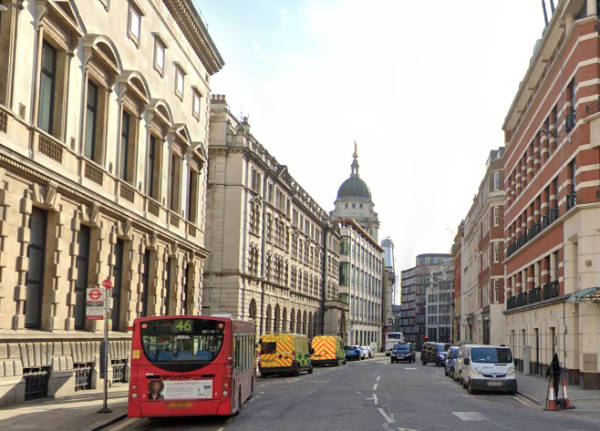
Looking south down Giltspur Street, with the dome of the Old Bailey visible, in 2018. PICTURE: Courtesy of Google Maps

An alternative name for the street during earlier ages was Knightrider Street which kind of gives the game away – yes, the name comes from the armoured knights who would ride along the street in their way to compete in tournaments held at Smithfield. It’s suggested that gilt spurs may have later been made here to capitalise on the passing trade.

The street is said to have been the location where King Richard II met with the leaders of the Peasant’s Revolt who had camped at Smithfield. And where, when the meeting deteriorated, the then-Lord Mayor of London William Walworth, ending up stabbing the peasant leader Wat Tyler who he later captured and had beheaded.

St Bartholomew’s Hospital can be found on the east side of the street. On the west side, at the junction with Cock Lane is located Pye Corner with its famous statue of a golden boy (said to be the place where the Great Fire of London was finally stopped).

There’s also a former watch house on the west side which features a monument to the essayist late 18th century and 19th century Charles Lamb – the monument says he attended a Bluecoat school here for seven years. The church of St Sepulchre-without-Newgate stands at the southern end with the Viaduct Tavern on the opposite side of the road.

The street did formerly give its name to the small prison known as the Giltspur Street Compter which stood here from 1791 to 1853. A prison for debtors, it stood at the street’s south end (the location is now marked with a City of London blue plaque).

This Week in London – Lord Mayor’s Show; ‘Poppy Fields at the Tower’; and, ‘The Great Mughals’ at the V&A…

The Lord Mayor’s Show – featuring the 696th Lord Mayor of London, Alastair King – will be held this Saturday. The three-mile long procession – in which the Lord Mayor will ride in the Gold State Coach – features some 7,000 people, 250 horses, and 150 floats. It will set off from Mansion House at 11am and travel down Poultry and Cheapside to St Paul’s Cathedral before moving on down Ludgate Hill and Fleet Street to the Royal Courts of Justice. The return journey will set off again at 1:10pm from Temple Place and travel via Queen Victoria Street back to Mansion House where he will take the salute from the Pikemen and Musketeers at 2:40pm. For more information, including where to watch the show, head to https://lordmayorsshow.london.

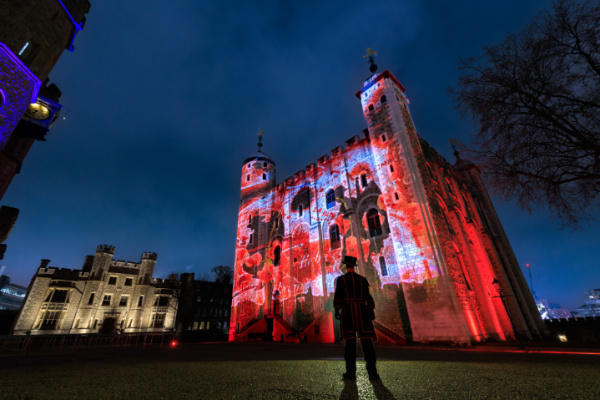
 Poppy Field at the Tower. PICTURE: © Luxmuralis / Historic Royal Palaces.

An immersive sound and light show commemorating World War I and II opens at the Tower of London tomorrow ahead of Armistice Day and Remembrance Sunday. Historic Royal Palaces has partnered with Luxmuralis to present Poppy Fields at the Tower with visitors invited to go inside the Tower where – recalling the 2014 display Bloodswept Lands and Seas of Red in the Tower of London moat to mark the centenary of World War I – the walls will not only be illuminated with tumbling poppies but also historic photographs, documents and plans. The display is being accompanied by music composed by David Harper, and poetry recordings. Visitors will also be granted special access to see the Crown Jewels after-hours to learn more about their removal from the Tower during both World Wars. Runs until 16th November and should be pre-booked. Admission charges apply. For more, see https://www.hrp.org.uk/tower-of-london/whats-on/poppy-fields-at-the-tower/.

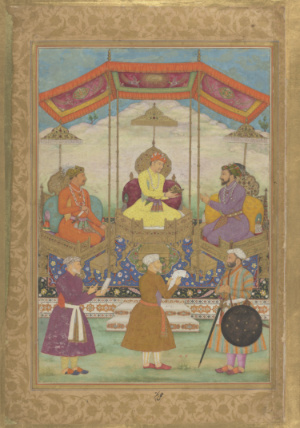
Akbar handing the imperial crown to Shah Jahan in the presence of Jahangir, Bichitr. Dated regnal year 3 (18th January 1630–7 January 1631), the borders c1630–1640. Opaque watercolour and gold on paper. Folio
from the Minto Album. © CC BY – 4.0. Chester Beatty, Dublin

An exhibition celebrating the golden age of the Mughal Court opens at the V&A in South Kensington on Saturday. The Great Mughals: Art, Architecture and Opulence examines the “creative output and internationalist culture” of Mughal Hindustan during the age of its greatest emperors, a period spanning c1560 to 1660. More than 200 objects are on display arranged in three sections corresponding to the reigns of the Emperor Akbar (1556-1605), Jahangir (1605 to 1627) and Shah Jahan (1628 to 1658). The objects include paintings, illustrated manuscripts, vessels made from mother of pearl, rock crystal, jade and precious metals. Highlights include four folios from the Book of Hamza, commissioned by Akbar in 1570, and the Ames carpet which was made in the imperial workshops between c1590 and 1600 and is on display for the first time in the UK. There’s also a unique wine cup made from white nephrite jade in the shape of a ram’s head for Shah Jahan in 1657, two paintings depicting a North American Turkey Cock and an African zebra created by Jahangir’s artists, and a gold dagger and scabbard set with over 2,000 rubies, emeralds and diamonds. Runs in Galleries 38 and 39 until 5th May. Admission charge applies. For more, see www.vam.ac.uk.

• Send all items for inclusion to exploringlondon@gmail.com.

This Week in London – Dick Whittington explored at the Guildhall Library; Francis Bacon’s portraits; and, the 60th Photographer of the Year competition…

PICTURE: Courtesy of the City of London Corporation

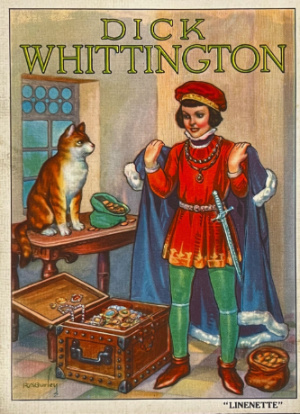
A new exhibition exploring the life of one of the City of London’s most famous Lord Mayors has opened at the City of London’s Guildhall Library. Marking the library’s 600th anniversary, Whittington, the Man, the Myth and the Cat uses chapbooks (small printed booklets used for street literature in early modern Europe), children’s books, and works relating to pantomimes, to investigate Whittington’s story (including the question of whether or not he owned a cat). The exhibition details Whittington’s “rags to riches” tale and the many myths that later grew up around him, revealing information about his many loans to to kings (Richard II, Henry IV and Henry V), how he was three times Lord Mayor of London (1397, 1406 and 1419) and how he paid for the building of public lavatories at St Martin Vintry and a refuge for unmarried mothers at St Thomas’ Hospital as well as the rebuilding of Newgate Prison, and the establishment of the first library at Guildhall. Addressing the myth of the Whittington’s cat, it explains how it may have come about as a result of a play on words – ‘cat’ (or cattes) being a word used to describe a fleet of boats used for importing and exporting which was a mistranslation of the French word, ‘achat’, for trade. The exhibition, which runs until April next year, is free to visit. For more, see www.cityoflondon.gov.uk/services/libraries/guildhall-library.

The first exhibition in almost 20 years to focus on Francis Bacon’s portraits opened at the National Portrait Gallery, off Trafalgar Square, this week. Francis Bacon: Human Presence charts the artist’s career through 50 of his works arranged in five sections – ‘Portraits Emerge’, ‘Beyond Appearance’, ‘Painting from the Masters’, ‘Self Portraits’, and ‘Friends and Lovers’. Works on show include self-portraits as well as Head VI (1949), Study for a Pope I (1961), Three Studies for a Portrait of Isabel Rawsthorne (1965) and Portrait of a Man Walking Down Steps (1972). The exhibition also includes photographic portraits and film of Bacon by some of the century’s leading photographers, including Cecil Beaton, Arnold Newman, and Bill Brandt. Can be seen until 19th January. Admission charge applies. For more, see www.npg.org.uk.

‘The Swarm of Life’ by Shane Gross, Canada, winner of the 60th Wildlife Photographer of the Year competition.

A Canadian marine conservation photojournalist, Shane Gross, has won this year’s Wildlife Photographer of the Year competition for an image capturing the magical underwater world of western toad tadpoles. The Swarm of Life is among 100 prize-winning images which are going on show at the Natural History Museum in South Kensington from tomorrow as it celebrates the 60th year of its Photographer of the Year competition. This year’s contest attracted a record-breaking 59,228 entries from 117 countries and territories. Among the other images on display are German Alexis Tinker-Tsavalas’ Life Under Dead Wood  depicting the fruiting bodies of slime mould with a tiny springtail (Tinker-Tsavalas won Young Wildlife Photographer of the Year). Wildlife Photographer of the Year is developed and produced by the Natural History Museum, London. The exhibition runs until 29th June. Admission charge applies. For more, see www.nhm.ac.uk/wpy.

Send all items for inclusion to exploringlondon@gmail.com

This Week in London – Silk Road treasures; a new Lord Mayor of London; and, reassessing the UK’s early Emo scene…

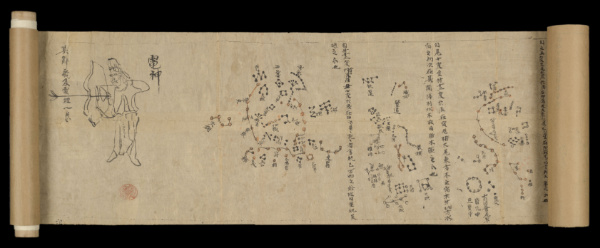
Dunhuang Star Chart 649 – 700 CE – Or.8210/S.3326 © British Library Board

The world’s earliest complete printed book with a date, the earliest known manuscript atlas of the night sky and the earliest surviving historical document in Tibetan are among treasures on show in a new exhibition at the British Library. A Silk Road Oasis: Life in Ancient Dunhuang features more than 50 manuscripts, printed documents and pictorial works including many which were sealed in the so-called ‘Library Cave’ in the Buddhist Mogao cave complex near the oasis town of Dunhuang in Gansu province, China, for almost 900 years before they were rediscovered in 1900. Highlights in the display include the Diamond Sutra (868 AD) – the world’s earliest complete printed book with a date, the Dunhuang star chart (649-700) – the earliest known manuscript atlas of the night sky (pictured), and the Old Tibetan Annals (641-761) – the earliest surviving historical document in Tibetan. On public display for the first time is a rubbing of the Stele of Sulaiman – a carved stone slab that was erected in the caves in 1348, a copy of the Diamond Sutra written in the scribe’s own blood (considered by Buddhists to be an act of powerful sincerity), and one of the most important and complete manuscripts among the Old Uyghur Manichaean texts, the Xuastuanift. There is also a 9th century manuscript fragment about the prophet Zoroaster or Zarathustra (believed to be nearly 400 years older than any other surviving Zoroastrian scripture) and the longest surviving manuscript text in the Old Turkic script, a Turkic omen text known as the Irk Bitig or Book of Omens (930 or 942). The exhibition, which explores Silk Road interactions through a case of characters including a scribe, merchant and Buddhist nun, runs until 23rd February and is accompanied by a programme of events. Admission charge applies. For more, see https://silkroad.seetickets.com/timeslots/filter/a-silk-road-oasis-life-in-ancient-dunhuang

Alderman Alastair King has been elected the 696th Lord Mayor of London. King, who succeeds Lord Mayor Professor Michael Mainelli, takes office on 8th November for a one year term with the annual Lord Mayor’s Show, which takes place the following day, his first public event. “It is a tremendous honour to be elected as the 696th Lord Mayor of the City of London,” the Lord Mayor-elect, whose role will see him serving as a global ambassador for the UK financial and professional services industry, said. “London remains the world’s leading financial centre, but global competition is fierce. We have the expertise and talent to thrive, yet we must do more to unlock growth, equip people to innovate, and harness the remarkable dynamic diversity that makes the City exceptional.”

An “unfiltered” look at the early Emo scene in the UK is the subject of a new exhibition at the Barbican Music Library. I’m Not Okay (An Emo Retrospective), a collaboration between the library and the Museum of Youth Culture (MOYC), features personal photos taken on early digital and phone cameras and focuses on the first-generation Emo scene (2004-2009), a time when bands such as My Chemical Romance, Fall Out Boy, and Finch were “hugely influential”.  Jamie Brett, creative director at the MOYC said the Emo scene “resonated deeply with teens who wanted to express their angst, doubts, insecurity, and sense of feeling and being different, and channelled their collective melancholy into a transatlantic subculture”. The exhibition, which is free to enter, can be seen until 15th January. For more, see www.cityoflondon.gov.uk/services/libraries/barbican-music-library.

Send all items for inclusion to exploringlondon@gmail.com.

LondonLife – Marking the King’s birthday; remembering the sacrifice of those who gave their lives in war; and, welcoming a new Lord Mayor…

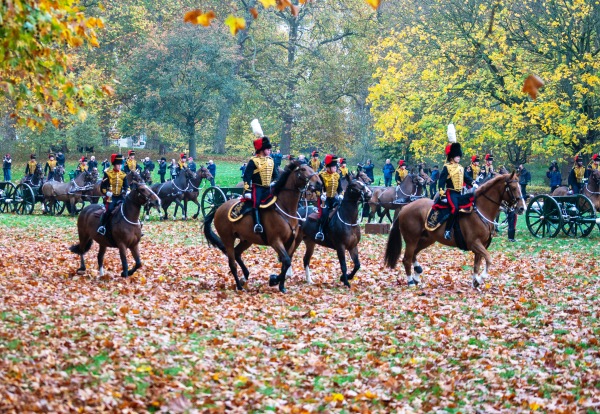
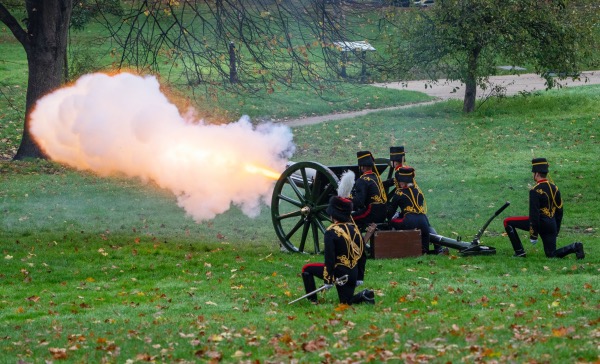
Members of the King’s Troop Royal Horse Artillery arrive at Green Park for the 41 gun salute to celebrate King Charles III’s 74th birthday on Monday. In London, The King’s Troop Royal Horse Artillery and The Honourable Artillery Company each fired celebratory Royal Salutes at 12 noon and 1pm respectively in what was the first formal birthday salute for King Charles III since he became monarch. PICTURE: Giles Anderson/UK MOD © Crown copyright 2022.
Members of the King’s Troop Royal Horse Artillery firing a 41-gun salute to celebrate King Charles III’s 74th birthday. PICTURE: Giles Anderson/UK MOD © Crown copyright 2022.
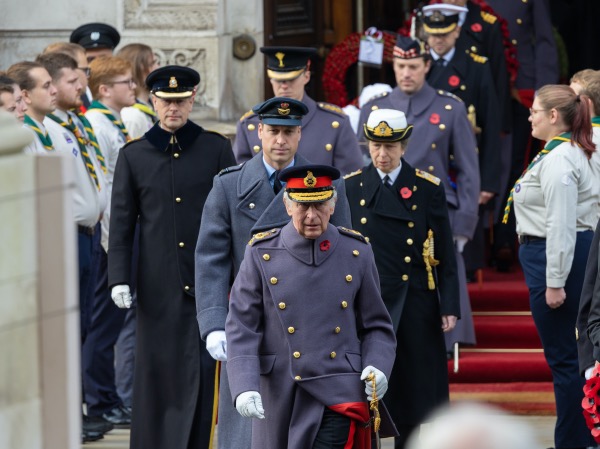
King Charles III leads the royal party to their position at the Cenotaph on Sunday as armed forces personnel from the Royal Navy, British Army and Royal Air Force came together for Remembrance Sunday and the National Service of Remembrance. Joining the King and members of the Royal Family, more than 600 members of the Armed Forces honoured the brave servicemen and women killed in all conflicts since the First World War. PICTURE: Simon Walker / No10 Downing Street/UK MOD © Crown copyright 2022.
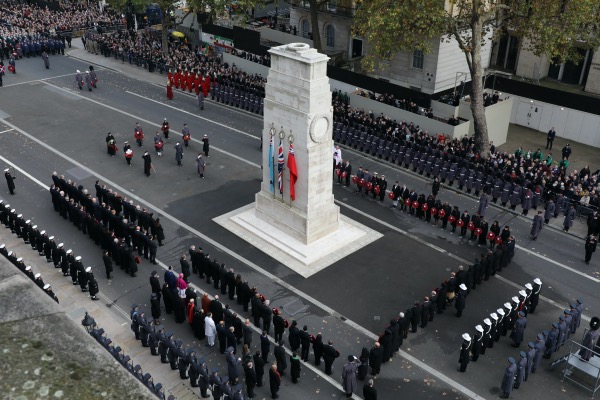
Armed Forces personnel from the Royal Navy, British Army and Royal Air Force gathered at the Cenotaph on Remembrance Sunday, for the National Service of Remembrance. PICTURE: Cpl Tim Hammond/UK MOD © Crown copyright 2022.
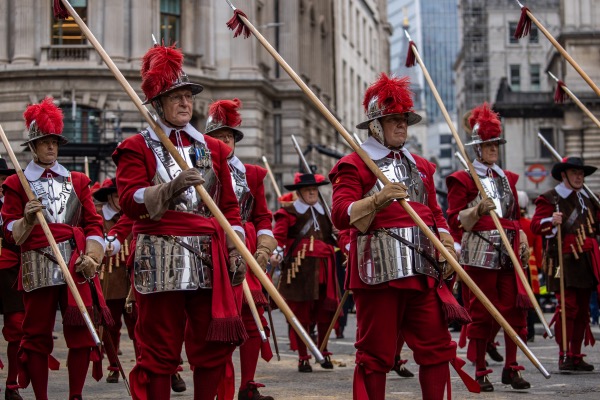
Pikeman march through the streets of the City of London for the Lord Mayor’s Show on Saturday. Some 6,500 people, 250 horses, more than 50 decorated floats, and a flying pig, took part in the parade. PICTURE: Corporal Rob Kane/UK MOD © Crown copyright 2022.
Nicholas Lyons, elected as the 694th Lord Mayor of the City of London, waves from the golden State Coach, which has been used in every Lord Mayor’s Show since 1757 and is the oldest ceremonial vehicle in regular use in the world. PICTURE: Lt Reilly AGC (ETS)/UK MOD © Crown copyright 2022

London Explained – The Lord Mayor of London…

Not to be confused with the Mayor of London (a position currently held by Sadiq Khan, the Mayor is the head of the Greater London Authority – more on that in a later post), the Lord Mayor of London serves as the head of the City of London Corporation which governs the Square Mile.

Lord Mayor of London William Russell in February, 2020. PICTURE: Bank of England (licensed under CC BY-NC-ND 2.0/image cropped)

The Lord Mayor of London is generally elected annually (last year was an exception due to the coronavirus pandemic) by members of the City’s livery companies who are summoned by the previous Mayor to meet at at Guildhall on Michaelmas Day (29th September) or on the closest weekday

The Lord Mayor is subsequently sworn into office in November in an event known as the ‘Silent Ceremony’ because, aside from a short declaration from the incoming mayor, no speeches are made. The following day, the Lord Mayor participates in a procession from the City of London to the Royal Courts of Justice in the City of Westminster, where they swear allegiance to the Crown. The event is known as the Lord Mayor’s Show (this year it’s being held on 13th November).

Lord Mayors must be one of the City of London’s 25 alderman (elected to represent the City’s wards) and must first served as one of the City’s two sheriffs prior to taking on the position – the sheriffs support the Lord Mayor in their role as advisors. They also host dinners for visiting dignitaries, accompany the Lord Mayor in their business travels and look after the judges at the Old Bailey.

The first Lord Mayor is said to have been Henry FitzAilwin, who served between 1189 and 1212. The current Lord Mayor, William Russell, is the 692nd to hold the post. Until 1354, the title was simply Mayor of London.

The role of the Lord Mayor these days is to serve as an international ambassador for the UK’s financial and professional services sector.

The official residence of the Lord Mayor is called the Mansion House. It is used for some of the City’s official events.

Where’s London’s oldest…livery company?

There are 110 livery companies in London, representing various “ancient” and modern trades. But the oldest is said to be the Worshipful Company of Weavers.

What was then known as the Weavers’ Guild was granted a charter by King Henry II in 1155 (although the organisation has an even older origins – there is an entry in the Pipe Rolls as far back as 1130 recording a payment of £16 made on the weaver’s behalf to the Exchequer).

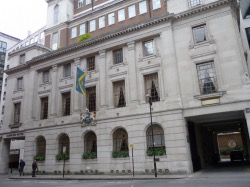
Saddler’s Hall in Gutter Lane where the Worshipful Company of Weavers is based out of.

In 1490, the Weaver’s Guild obtained a Grant of Arms, in the early 16th century it claimed the status of an incorporated craft, and, in 1577 it obtained ratification of its ordinances from the City of London.

By the late 16th century, the company – its numbers swollen by foreign weavers including Protestants fleeing persecution in Europe – built a hall on land it owned in Basinghall Street. A casualty of the Great Fire of London, the hall was rebuilt by 1669 but by the mid-1850s had fallen into disrepair and was pulled down and replaced by an office block.

After the office building was destroyed during World War II (fortunately some of the company’s treasures which had been stored there had already been moved), the company considered rebuilding the hall but decided its money could be better used, including on charitable works.

For many years, the company’s business was run from various clerk’s offices outside the City of London but since 1994 it has been run from Saddlers’ House.

The company, which ranks 42nd in the order of precedence for livery companies, has the motto ‘Weave Truth With Trust’.

For more, see www.weavers.org.uk.

10 London buildings that were relocated…8. Temple Bar…

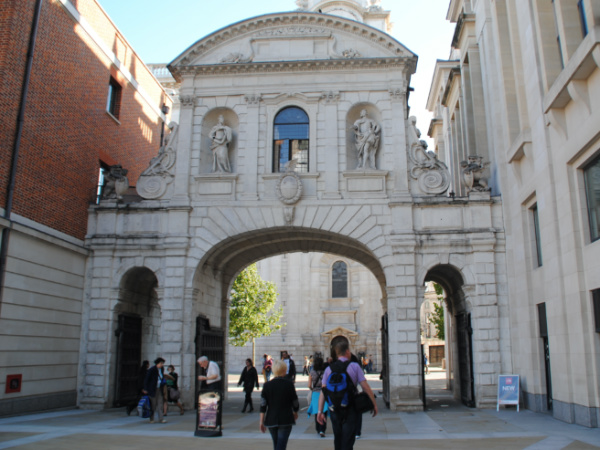
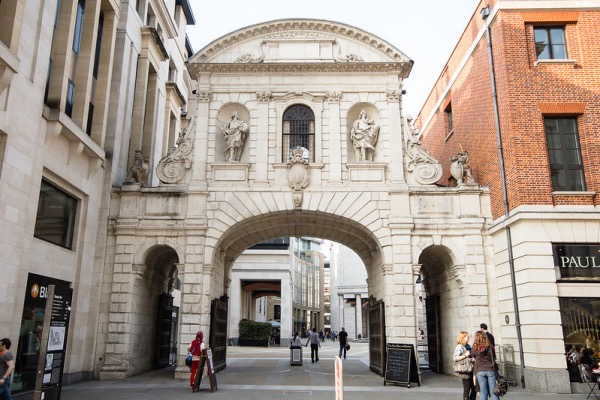
This ornate Baroque archway only stands with walking distance from where it originally stood marking the entrance to the City of London. But it came to this position by a somewhat roundabout route.

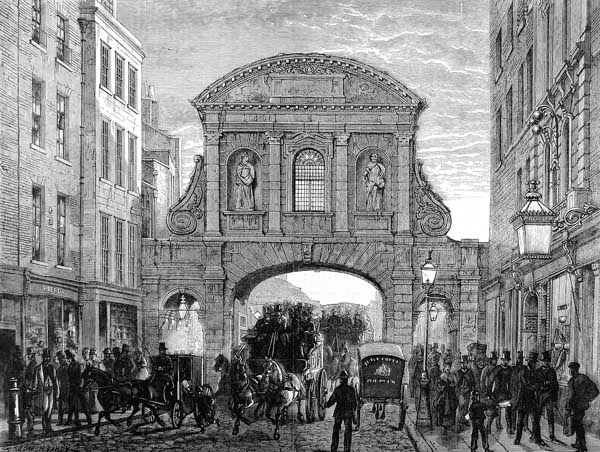
Temple Bar – with statues of Queen Anne and King James I (looking towards St Paul’s Cathedral) PICTURE: David Adams.

The gate was originally constructed at the junction where Fleet Street becomes the Strand, it marked the boundary between the City of London and Westminster.

While the first gate on the site dates back to the 14th century (prior to that the boundary was apparently marked with a chain two posts), the gate we see today dates from 1672 when, despite having survived the Great Fire of London, the previous gate – a crumbing wooden structure – was demolished and this upmarket replacement built to the design of none other than Sir Christopher Wren (earlier designs for the gate created by Inigo Jones were never acted upon).

An artist’s impression of the Temple Bar in 1870 from Illustrated London News.

Made of Portland stone, the new structure featured figures of King Charles I and King Charles II on the west side and King James I and Queen Anne of Denmark on the east (it’s said that a third of the total £1,500 cost was spent on the statuary alone).

Shortly after its construction, it became a location for the display of the remains of traitors (usually heads), the first of which were the body parts of Rye House plotter Sir Thomas Armstrong and the last of which was the head of Jacobite Francis Towneley in 1746 (there’s also a story that such was the interest when the heads of the Rye House plotters – who had planned to assassinate King Charles II and crown his brother, the future King James II, in his place – were displayed, telescopes were rented out so people could get a closer look).

Temple Bar with statues of King Charles I and King Charles II (looking into Paternoster Square). PICTURE: Eric Heupel (licensed under CC BY-NC-ND 2.0)

Among the luminaries who passed under the central arch were Anne Boleyn (the day before her coronation) and Queen Elizabeth I. The Queen did so most famously on her way to give thanks in St Paul’s Cathedral for the English victory over the Spanish Armada and since then, whenever a Sovereign has wanted to enter the City past Temple Bar, there’s been a short ceremony in which the Sovereign asks permission of the Lord Mayor of London to enter. Granting this, the Mayor then offers the Sword of State as a demonstration of loyalty and this is subsequently carried before the Sovereign as they proceed through the City as a sign of the Lord Mayor’s protection.

The Temple Bar stood in its original location until 1878 when, to help traffic flow, it was carefully removed brick-by-brick over a period of 11 days (the City of London Corporation well aware of its historical significance) . It was initially intended that the gateway would be rebuilt somewhere else in the city, but time passed and no suitable site was found.

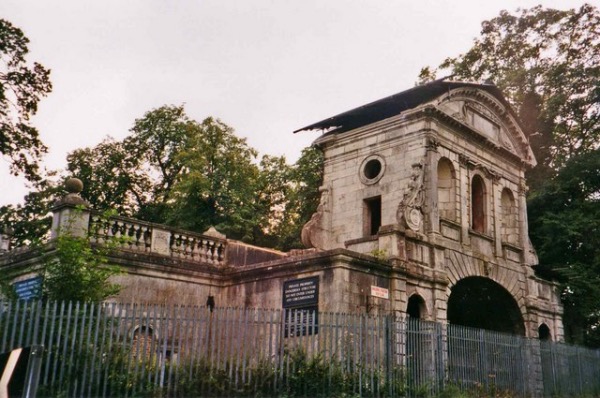
Instead, the gate lay in pieces in a yard in Farringdon Road before, in the mid 1880s, Sir Henry Bruce Meux had all 2,500 stones transported via trolleys pulled by horses to his estate at Theobalds Park in Hertfordshire and re-erected there as a gateway (the Lady Meux apparently used the small upper room for entertaining – among those said to have dined here was King Edward VII and Winston Churchill).

Temple Bar at Theobolds Park. PICTURE: Christine Matthews (licensed under CC BY-SA 2.0)

In 1976, the Temple Bar Trust was formed to have the archway returned to London – they eventually succeeded 30 years later in 2004 when it was re-erected on its current site between St Paul’s and Paternoster Square at a cost of some £3 million.

The original site of the Temple Bar is now marked with a Victorian era memorial – erected in 1888 – which features statues of Queen Victoria and Edward, the Prince of Wales.

10 London buildings that were relocated…2. Crosby Hall, Chelsea…

This hall was originally constructed in Bishopsgate as the great hall at the heart Crosby Place, the mansion of wealthy merchant and courtier Sir John Crosby.

Built over the decade from 1466 to 1475 on land which had previously been part of St Helen’s Convent, the property became famous for royal connections.

Richard, Duke of Gloucester, had apparently acquired the property from Sir John’s widow by 1483 and it was one of his homes when the Princes in the Tower – Edward V and his younger brother Richard – were murdered, leading to his coronation as King Richard III (as a result the hall is the setting for several scenes in Shakespeare’s Richard III).
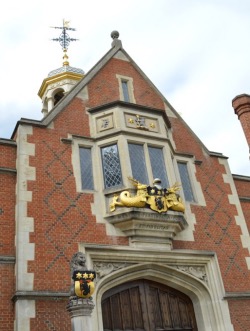
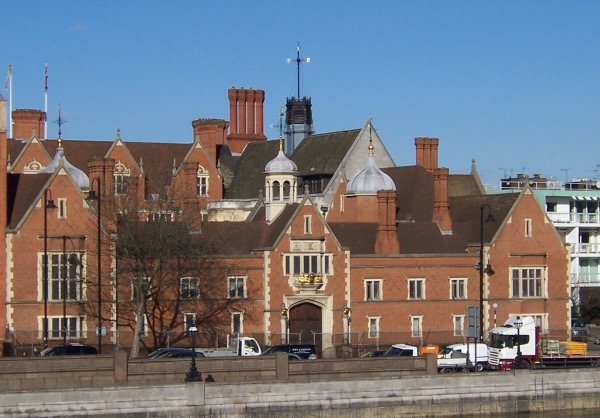
Catherine of Aragon, meanwhile, resided in the hall with her retinue after she arrived from Spain on her way to marry Prince Arthur, King Henry VII’s eldest son and then heir (and King Henry VIII’s older brother).

The property was later – in the 1530s – owned by Sir Thomas More (although he probably never lived here), and subsequently, from about 1576 to 1610 by Sir John Spencer, a Lord Mayor of London (Queen Elizabeth I was apparently among his guests) while Sir Walter Raleigh had lodgings here in 1601.

It served as head office of the East India Company from 1621 to 1638 and, having survived the Great Fire of London, was used in various capacities including as a Presbyterian Meeting House and for various commercial uses, including as a warehouse and restaurant.

In 1908, it was bought by the Chartered Bank of India, Australia and China who wanted to build new offices on the site. The hall was saved from demolition and in 1910 moved stone-by-stone and, under the eye of Walter Godfrey, reconstructed on its present location in Cheyne Walk in Chelsea, a Thames-side site which had formerly been part of Sir Thomas More’s Chelsea garden which was provided by the London County Council.

Having been used to house Belgian refugees during World War I, it was formerly opened by Elizabeth, Duchess of York (later the Queen Mother), in 1926.

Around that time, the property was leased by the British Federation of University Women which had WH Godfrey build a tall Arts and Crafts residential block at right angles to the great hall (the residential block has subsequently bene adapted to appear Jacobean to fit with the hall).

The now Grade II*-listed hall – which, although not complete, is the only surviving example of a City of London medieval merchant’s house – was purchased by philanthropist and businessman Sir Christopher Moran in 1988 and is now part of an expansive private residence designed with the hall as its centrepiece (recent visitors have included Prime Minister Boris Johnson).

PICTURES: Top – sarflondondunc (licensed under CC BY-ND-NC 2.0/Image cropped); Right- Matt Brown (CC BY 2.0/Image cropped)
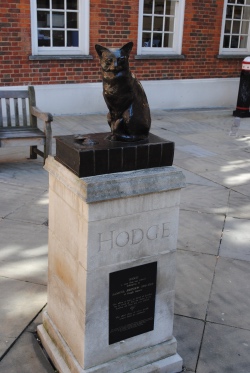
10 (lesser known) monuments featuring animals in London – 3. Hodge…

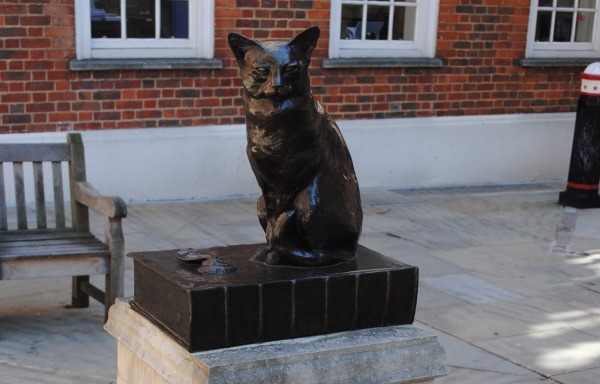
This famous cat, belonging to lexicographer Dr Samuel Johnson (1709-84), is memorialised outside his former home in Gough Square.

Johnson was known for his fondness of this particular cat – his biographer James Boswell, reports, for example: “I recollect him one day scrambling up Dr Johnson’s breast, apparently with much satisfaction, while my friend smiling and half-whistling, rubbed down his back, and pulled him by the tail.”

According to Boswell, Johnson told him that while he had had finer cats, Hodge – who is believed to have been a black cat – was a “very fine cat indeed”. Such was the cat’s renown that poet Percival Stockdale wrote an Elegy on The Death of Dr Johnson’s Favourite Cat.

This statue to Hodge was erected in 1966 by then Lord Mayor of London, Sir Roger Cook. The work of Jon Bickley (who apparently modelled Hodge on his own cat Thomas Henry), it depicts Hodge sitting on top of Johnson’s famous (and massive) dictionary and next to some empty oyster shells (the latter a reference to Johnson’s habit of feeding oysters to Hodge – while this wasn’t unusual, Johnson’s going out himself to fetch them himself – lest his servants resent Hodge – was).

The monument, which has Hodge looking towards his former home, features a plaque which has Johnson’s quote about Hodge – “a very fine cat indeed” – as well as his famous quote about the city in which they lived – “Sir, when a man is tired of London, he is tired of life, for there is in London all that life can afford.”

Dr Johnson’s former house and workplace at number 17 Gough Square, where he lived for 11 years, is now a museum.


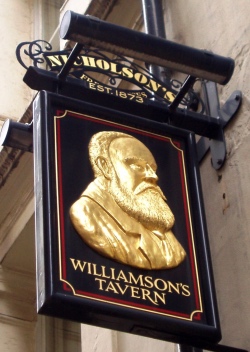
London Pub Signs – Williamson’s Tavern…

Located in the heart of the City of London (actually, according to a myth, it’s the exact centre of the Roman-era city), Williamson’s Tavern dates from the mid-18th century.

The tavern, located in Groveland Court, just off Bow Lane, owes its name to Robert Williamson who bought residence which once stood on the site – and happened to be the home of the Lord Mayor of London – in  the mid-1700s.

It was Williamson who turned the premises, which had been built soon after the Great Fire of 1666, into a hotel and tavern (the Lord Mayor, meanwhile, moved into the George Dance-designed Mansion House in 1752).

Said to be popular among merchants and seafarers, the hotel, meanwhile, remained in the family until 1914 when James Williamson died and the property was auctioned.  The hotel eventually disappeared but the tavern – now housed in a building dating from the early 1930s – lives on.

There is a remnant of its glorious past nearby – King William III and Queen Mary II, who were said to have dined at the previous Lord Mayor’s residence, presented the Lord Mayor with a gift in the form of now Grade II-listed wrought-iron gates with their monogram and they still stand at one end of Groveland Court.

The tavern, meanwhile, claims to have “probably…the oldest excise license in the City of London”. It also features a stone plaque in the floor which, so the story goes, marks the exact centre of London (although its apparently covered by carpet) and there are some Roman-era bricks or tiles incorporated into a fireplace which were discovered during the 1930s rebuild.

It’s also said to have a resident ghost – Martha (also the name of one of the pub’s dining rooms). According to the pub’s website, police dogs won’t go near the place as a result while longer serving members of staff say they have all seen a painting of her in various parts of the pub (of course, no such painting exists).

The tavern is now part of the Nicholson’s chain. For more, see www.nicholsonspubs.co.uk/restaurants/london/williamsonstaverngrovelandcourtlondon.

PICTURE: Ewan Munro (licensed under CC BY-SA 2.0)


This Week in London – The 803rd Lord Mayor’s Show; the National Service of Remembrance; and the Romanov’s at the Queen’s Gallery…

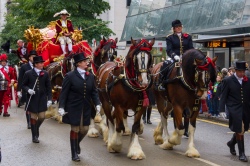
The 803rd Lord Mayor’s Show will this Saturday wend its way through the streets of the City of London as new Lord Mayor Peter Estlin takes office. This year’s hour-and-a-half long procession features more than 7,000 people, 200 horses and 140 motor and steam-driven vehicles. Leaving from Mansion House at 11am, it travels to the Royal Courts via St Paul’s and then returns along Embankment at 1.15pm. And while there will be no fireworks this year, there will be two new ‘family entertainment zones’. The first, in Paternoster Square and around St Paul’s Cathedral, will include a film show featuring archival footage, art installations and street theatre as well as food stalls. The second, in Bloomberg Arcade near Mansion House, will feature music and dance, art and sound installations, the MOLA’s (Museum of London Archaeology) Time Truck, as well as technology and apprenticeship workshops and food. For more information, head to https://lordmayorsshow.london. PICTURE: The Lord Mayor’s coach during last year’s procession (John; licensed under CC BY-NC-ND 2.0)

The National Service of Remembrance at the Cenotaph in Whitehall will this Sunday mark a century since the end of World War I. Starting at 11am (the public will be admitted to Whitehall from 8am), the service commemorates the contribution of British and Commonwealth military and civilian servicemen and women involved in the two World Wars and later conflicts. This year’s ceremony will be followed by ‘The Nation’s Thank You – The People’s Procession’, featuring 10,000 members of the public. Large viewing screens will be placed to the north of the Cenotaph, near the green outside the main Ministry of Defence building and outside the Scotland Office, and south of the Cenotaph on the corner of King Charles Street. For more on the day, follow this link and for more on bell-ringing ceremonies across the day, see https://armistice100.org.uk.

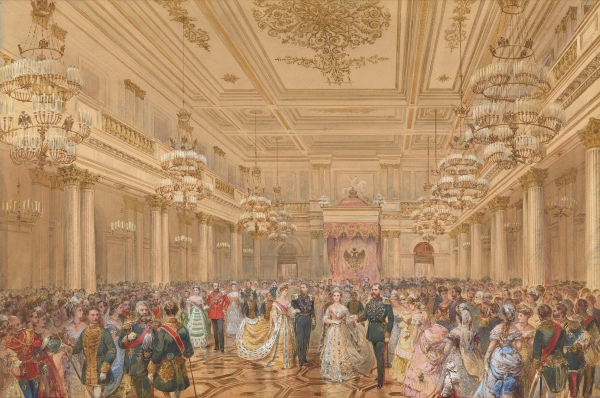
The relationship between the British Royal Family and the Romanovs in Russia is explored in a new art exhibition opening at the The Queen’s Gallery, Buckingham Palace, this Friday. Highlights of Russia: Royalty & the Romanovs include a series of watercolours specially commissioned by Prince Alfred, second eldest son of Queen Victoria, to record his wedding to Grand Duchess Maria Alexandrovna, daughter of Alexander II, at the Winter Palace in St Petersburg in 1874 so that his mother, who was unable to attend, didn’t miss out. There’s also works by Fabergé and portraits of royal figures by the likes of Sir Godfrey Kneller and Sir Thomas Lawrence. The exhibition is accompanied by another display featuring renowned photographer Roger Fenton’s images from the war in Crimea in 1855. Both exhibitions run until 28th April. Admission charges apply. The exhibition is accompanied by a programme of events. For more, see www.rct.uk/visit/the-queens-gallery-buckingham-palace. PICTURE (above): Nicholas Chevalier, The Bal Polonaise at the Winter Palace, St Petersburg, 23 January 1874, 1876 (Royal Collection Trust/© Her Majesty Queen Elizabeth II 2018).

Send all items for inclusion to exploringlondon@gmail.com.

Famous Londoners – Sir John Lawrence, Lord Mayor of London…

The Lord’s Mayor’s Show is coming up soon (10th November) so we thought it a good time to take a quick look at the life of one of the city’s most memorable Lord Mayors – Sir John Lawrence, who served in the office in 1664-65.

Sir John, a merchant and member of the Worshipful Company of Haberdashers (and Master of the company in 1677), is remembered for the role he played during the Great Plague of 1665 which preceded the Great Fire of London the following year.

Following the arrival of the plaque in London, those with the means took to their heels and left the city for safer climes. But Sir John assured the public that he and the City officers would remain at their posts to keep law and order among the frightened populace.

He oversaw the issuing of a series of plague-related orders designed to stem the spread of disease and appointed people to oversee and attend to the needs of households affected by the disease and search out the bodies to be taken away as well as doctors to tend to the sick and help prevent infection.

His efforts in ensuring the food supply remained steady have been particularly praised as has his opening of his own home in St Helen’s Bishopsgate to those servants who were discharged when the households in which they worked fled the city.

His tenure as mayor is often favourably contrasted with that of his successor, Sir Thomas Bludworth but Sir John also had numerous other positions during his lifetime, including as president of St Thomas’ Hospital, a committee member of the East India Company and a Fellow of the Royal Society.

Sir John was married and had two children. He died on 26th January, 1692, and was buried at the Church of St Helen’s Bishopsgate.

He is remembered on a plaque at Bunhill Fields for being mayor when, at the City’s expense, the burial ground was enclosed with a wall.

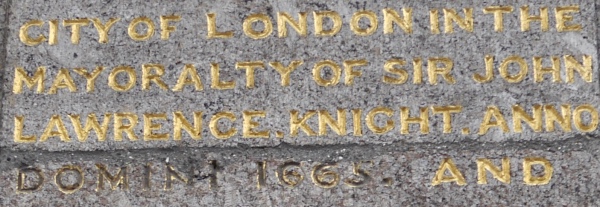
PICTURE: Part of the inscription at the gates of Bunhill Fields commemorating Sir John’s role in enclosing the burial ground. (Edwardx; licensed under CC BY-SA 3.0).


This Week in London – The Lord Mayor’s Show; Cézanne’s portraits; venom and its uses; and, Russia’s visual revolution…

The Lord Mayor’s Show takes place this Saturday as the new Lord Mayor of London, Charles Bowman, takes office with the event once again culminating in a spectacular fireworks display over the Thames. The Lord Mayor will arrive in the City at 9am via a flotilla which includes the QRB Gloriana and other traditional Thames barges. Riding in the splendid State Coach, the Lord Mayor then joins in the world famous procession which sets off from Mansion House at 11am, pausing at the Royal Courts where he swears allegiance to the monarch before returning via Victoria Embankment at 1pm. The fireworks display will start at 5.15pm from a barge moored between Blackfriars and Waterloo Bridges. For more details, head to https://lordmayorsshow.london. Meanwhile, on Sunday, annual Remembrance Sunday services will be held around the country centred on the Cenotaph in Whitehall where, in a break with tradition, Prince Charles is expected to lay a wreath on behalf of the Queen who, along with Prince Philip, will be watching from the balcony of the Foreign and Commonwealth Office building.

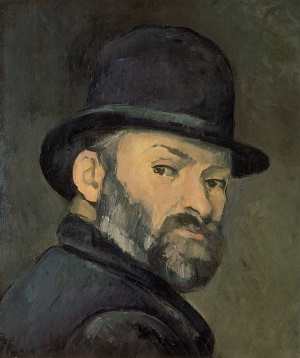
More than 50 portraits by Paul Cézanne have gone on show in a landmark exhibition at the National Portrait Gallery. Cézanne Portraits features works previously unseen in the UK including three self-portraits – one of which is Self Portrait in a Bowler Hat (1885-86) –  and two portraits of his wife –  Madame Cézanne Sewing (1877) and Madame Cézanne (1886–7) – as well as Boy in a Red Waistcoat (1888-90) and Madame Cézanne in a Yellow Chair, both of which haven’t been seen in London since the 1930s. The exhibition, which includes paintings spanning the period from the 1860s until shortly before Cézanne’s death in 1906, explores the special pictorial and thematic characteristics of the artist’s portraiture work such as his use of complementary pairs and his creation of multiple versions of works featuring the same subject. The exhibition, which has already been on show at the Musée d’Orsay and will be at the National Gallery of Art in Washington DC from late March next year, runs until 11th February. Admission charge applies. For more, see www.npg.org.uk. PICTURE: Self-Portrait with Bowler Hat by Paul Cézanne, 1885-6, © Private Collection 

The use of venom as the ultimate natural weapon is the subject of a new exhibition opening at the Natural History Museum on Friday. Venom: Killer and Cure explores how the use and effects of venom, the different biological roles it plays and how humans have attempted to harness and neutralise its power, with the former including some remarkable medical innovations. Specimens on show include everything from snakes to spiders, wasps, scorpions and the duck-billed platypus as well as live example of a venomous creature. Highlights include a gaboon viper head – a snake species with the largest known venom fangs, an emperor scorpion which engages in unusual mating behaviour known as “sexual stingings”, a flower urchin which can inject venom that causes muscular paralysis in humans for up to six hours, a tarantula hawk wasp which has one of the most painful venomous stings, and a box jellyfish, larger specimens of which can cause death in humans in two to five minutes. Admission charge applies. For more, see www.nhm.ac.uk.

Coinciding with the centenary of the Russian Revolution comes a new exhibition at the Tate Modern which offers a visual history of Russia and the Soviet Union. Red Star Over Russia: A Revolution in Visual Culture 1905-55 is based around the collection of late graphic designer David King (1943-2016) and charts how seismic events such as the overthrow of the last Tsar, the revolutionary risings of 1917 and Stalin’s campaign of terror inspired a wave of art and graphic design across the country. The display includes more than 250 posters, paintings, photographs, books and other ephemera by artists such as El Lissitzky, Aleksandr Rodchenko and Nina Vatolina. Runs until 18th February. Admission charge applies. For more, see www.tate.org.uk.

Send all items for inclusion to exploringlondon@gmail.com.

This Week in London – New museum on policing in the Square Mile; the 801st Lord Mayor’s Show; and maps on show at the BL…

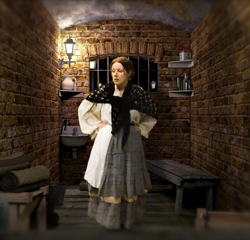
catherineeddowes2Stories including that of Catherine Eddowes, one of the victims of the notorious Jack the Ripper whose tale is brought to life through a virtual hologram (pictured), that of the Houndsditch Murders which claimed the lives of three police officers, and those of the more than 70 horses which have served in the City of London Police are among those told in the new purpose-built City of London Police Museum. A collaboration between the City of London Police and the City of London Corporation’s Guildhall Library, the new facility covers the 177 year history of the men and women charged with policing the Square Mile. Other stories highlighted in the museum include that of the recruitment of women into the force, the impact of the two World Wars on policing in the capital (featuring photographs taken by City of London police officers Arthur Cross and Fred Tibbs), the force’s tackling of terrorism and the progress of its communications, uniforms and kit and the victory of the City of London Police as the winner of the Olympic gold medal for the tug of war in 1920 (which, given the event was dropped, leaves them as the current champions). Entry to the museum, which opened this week at Guildhall, is free. For more, see www.cityoflondon.police.uk/about-us/history/museum/Pages/default.aspx. PICTURE: Courtesy City of London Police Museum.

The Lord Mayor’s Show takes place this Saturday, kicking off with a river pageant followed by the grand procession through City streets and fireworks over the Thames. The 801st Lord Mayor’s Show celebrates the election of Andrew Parmley as the 689th Lord Mayor of the City of London. This year’s procession, which kicks off at 11am and runs from Mansion House down Cheapside to the Royal Courts of Justice – where the Lord Mayor swears allegiance to the Crown – and back again at 1pm via Victoria Embankment, features 6,500 participants, 180 horses and 164 vehicles including steam engines, fire engines and a tank. The Show’s Pageantmaster, Dominic Reid, is celebrating his 25th consecutive show this year (his father organised 20 shows before him). The river pageant, featuring the QRB Gloriana, sets off from Westminster at 8.30am with Tower Bridge opening in salute at 9.25am. The fireworks display, which takes place over the Thames between Blackfriars and Waterloo, starts at 5.15pm. The tradition dates back to 1215. For more, see https://lordmayorsshow.london.

A major new exhibition looking at the history of the 20th century through maps has opened at the British Library in King’s Cross. Maps and the 20th Century: Drawing the Line features maps ranging from the first sketch of the London Underground dating from 1931, to declassified Ministry of Defence maps from the Cold War era, John Betjeman’s personal set of Ordinance Survey maps from the 1920s, a Russian moon globe from 1961 and EH Shepard’s first map of the Hundred Acre Wood (home of Winnie the Pooh). Other highlights include 3D relief models of the Western Front from 1917, a dress made of World War II escape maps printed on silk, an aerial photograph of Liverpool with targets marked used by the Luftwaffe, a map of the Atlantic Ocean floor from 1968. The exhibition, which runs to 1st March, is running in conjunction with a series of events exploring how maps continue to shape and influence our world. Admission charge applies. For more, follow this link.

Send all items for inclusion to exploringlondon@gmail.com

Famous Londoners – Five notable Lord Mayors of London…

The Lord Mayor’s Show will be held on 12th November so we thought in the lead-up to it, we’d look briefly at the lives of five of the notable Lord Mayors of London during the 801 years of the institution…

William Hardel: Mayor of London (the title Lord didn’t come until a century later) in 1215, Hardel was the only commoner on the committee – known as the enforcers – appointed to see that the provisions of the Magna Carta were carried out.

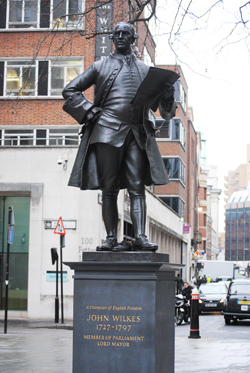
john-wilkesJohn Wilkes: A radical, politician, journalist and notorious womaniser, he was Lord Mayor of Lord in 1774. He is noted for being the subject of what is reputedly the only cross-eyed statue in London (pictured), found at the intersection of Fetter Lane and New Fetter Lane in the City of London. It is said to be a true-to-life depiction.

David Salomans: The first Jewish Lord Mayor of London, the banker and MP was elected in 1855. One of his tasks during his time as Lord Mayor was the removal of the inscription on The Monument which had blamed Roman Catholic conspirators for the Great Fire of London.

Robert Fowler: The last Lord Mayor of London to have served in the office more than once, Fowler held the office in 1883 and 1885. Many others had done so previously – including the famous Richard ‘Dick’ Whittington – but none since.

Dame Mary Donaldson: The first female Lord Mayor of London, she was elected in 1983, having previously held the honours of being first female alderman (1975) and first female sheriff (1981). Dame Fiona Woolf became the second female Lord Mayor in 2013.

For more on the Lord Mayors, see our earlier entries on Henry Fitz-Ailwyn, Richard ‘Dick’ Whittington, William Walworth and Thomas Bludworth.

What’s in a name?…Mansion House

the-mansion-houseMansion House, perhaps best known as a tautological-sounding Tube station, is actually the name of the official residence of the Lord Mayor of London (a suitable subject, we felt, given the upcoming Lord Mayor’s Show in November).

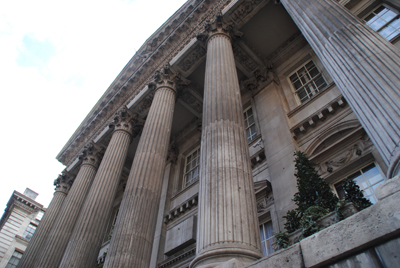
mh2Designed by George Dance the Elder and built between 1739 to 1753 (many years after the idea of an official residence for the Lord Mayor was proposed in the aftermath of the Great Fire of London), the Palladian-style property – located a stone’s throw from the Royal Exchange and the Bank of England on a short stretch of street named after the property – has been the home of the Lord Mayor since the latter date.

It was built on the site of what was known as the Stocks Market (it had previously been the location of some stocks – used to punish people for various misdemeanours), the name isn’t actually as repetitive as it looks but actually means “official residence” and was previously used to designate homes which went with particular ecclesiastical jobs.

As well as accommodation for the Lord Mayor, the interior of the Grade I-listed property features two halls known as the Egyptian Hall and what was initially known as the Dancing Gallery but is now the Ballroom (we’ll be taking a more in-depth look at the property at a later date).

The Tube station opened in 1871 as the eastern terminus of the Metropolitan District Railway. Interestingly, Bank station is actually closer to the property with Mansion House station located to the south-west down Queen Victoria Street.