This Week in London – Lee Miller at the Tate; the Hallelujah Chorus’ origins and impact, and conkers on Hampstead Heath…

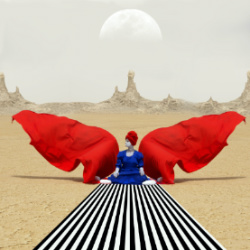
• The UK’s largest retrospective of trail-blazing 20th century surrealist photographer Lee Miller opens at Tate Britain today. Lee Miller features around 230 vintage and modern prints, some of which are on display for the first time, which reveal how her approach pushed boundaries and led to the creation of some of the most iconic images of last century. Highlights include the newly discovered solarisation exemplar, Sirène (Nimet Eloui Bey) (c1930-32), her celebrated surrealist image of Egypt’s Siwa Oasis, Portrait􏰊of Space (1937), London-based works such as You will not lunch in Charlotte Street today (1940) and Fire Masks􏰘(1941) which convey the “pathos and absurdity” of the city in wartime, and war-related images including portraits of Miller and David E Scherman in Hitler’s private bath in April, 1945, as well as a rare 1950 self-portrait showing Miller posed in Oskar Kokoschka’s London studio flanked by artworks. Runs until 15th February. Admission charge applies. For more, see www.tate.org.uk/whats-on/tate-britain/lee-miller

The initial and enduring impact of the Hallelujah Chorus is the subject of a new display at the Foundling Museum in Bloomsbury. A Grand Chorus explores the profound impact music can have on listeners and performers and brings together musical scores, librettos, and musical instruments as well as paintings, photographs, audio, video, personal testimonies􏰞, and other archival material spanning three centuries. Originally􏰞composed as part of his famous Messiah oratorio, George Frideric Handel later incorporated the Hallelujah Chorus into an anthem he created specially􏰞for the Foundling Hospital that premiered in 1749 as a fund-raising exercise. The exhibition also showcases a major sound and video installation by􏰞Mikhail Karikis – We are Together􏰈 Because (2025), described as a modern counterpart to the Hallelujah Chorus. Runs until 29th March. Admission charge applies. For more, see https://foundlingmuseum.org.uk/event/a-grand-chorus-the-power-of-music/.

• Swing a conker at the Hampstead Heath Conker Championships this Sunday. People are all ages are invited to join in, whether a conker veteran or a newcomer, with competitions held in a range of age categories. The competition is being held near the Parliament Hill Bandstand from 1pm to 4pm. Entry is free. For more, see www.cityoflondon.gov.uk/events/go-conkers-on-hampstead-heath-5-october.

Send all items for inclusion to exploringlondon@gmail.com

This Week in London – Guildhall Library marks 600 years; the David Bowie Centre opens; the Chelsea History Festival; and returning to the Blitz Club…

Guildhall Library is celebrating its 600th anniversary with a new exhibition. The display, which can be seen for free at the library, looks at the founding of the original library in 1425, what a medieval library would have looked like and what books it would have included as well as links with the library as it is today. Runs until 30th December. For more, see www.cityoflondon.gov.uk/things-to-do/history-and-heritage/guildhall-library/information-and-enquiries/visit-guildhall-library.

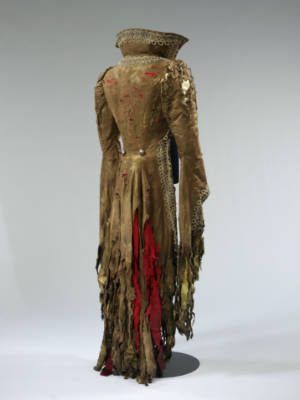
Frockcoat designed by Alexander McQueen and David Bowie for his 50th Birthday Concert, 1997. Image courtesy of the V&A

David Bowie’s final, unrealised musical projects – The Spectator, an unseen Ziggy Stardust guitar, and Bowie’s costume designs are just some of the treasures housed in the new David Bowie Centre which opened to the public this month. Located at the V&A East Storehouse in Queen Elizabeth Olympic Park, the new home for David Bowie’s archive features nine displays show-casing more than 200 items which also include handwritten lyrics, photography, costumes and sketches. As well as seeing the displays, visitors can book one-on-one time with some of the 90,000-plus objects in the archive through the ‘Order an Object’ service. More than 500 items were requested in the first week of the service going live with a frockcoat designed by Alexander McQueen and David Bowie for his 50th birthday concert in 1997 the most frequently requested item. Entry to the archive is free, but ticketed. For more, including bookings, see www.vam.ac.uk/exhibitions/david-bowie-centre.

The annual Chelsea History Festival kicked off yesterday with more than 80 events taking place until Sunday. Events include tours of the Royal Hospital Chelsea, and the chance to visit the Soane Stable Yard, the free exhibition Lost and Found in Hong Kong: The Unsung Chinese Heroes at D-Day at the hospital, walking tours including ‘Rock ‘n’ Roll Chelsea’ and ‘1960s Chelsea’, and a medicinal trees tour at the Chelsea Physic Garden. For the full programme head here.

A major exhibition on the Blitz club – which helped shape London’s culture not only in the mid-1980s but in the decades that followed – has opened at the Design Museum in Kensington High Street. Located in a Covent Garden side street, the club is credited with having “transformed 1980s London style”, generating a creative scene that had an enormous impact on popular culture in the following decade. Blitz: The Club that Shaped the 80s features more than 250 items including clothing and accessories, design sketches, musical instruments, flyers, magazines, furniture, artworks, photography, vinyl records and rare film footage. Runs until 29th March. Admission charge applies. For more, see https://designmuseum.org/exhibitions/blitz-the-club-that-shaped-the-80s.

Send all items to exploringlondon@gmail.com.
This Week in London – Rare Tudor choirbook at Lambeth; Sculpture in the City returns; and, picturing Blondie…

One of only two surviving choirbooks from the reign of King Henry VIII is on display in a new exhibition at the Lambeth Palace Library. Sing Joyfully: Exploring Music in Lambeth Palace Library displays the ‘Arundel’ or ‘Lambeth’ Choirbook (Arundel, Sussex, c. 1525) – this year marking its 500th birthday – along with other items from the library’s collection such as two leaves of a 14th century polyphony recently discovered in the binding of an early printed book. The exhibition, which is free, can be seen until 6th November. For more, see www.lambethpalacelibrary.info/sing-joyfully/.

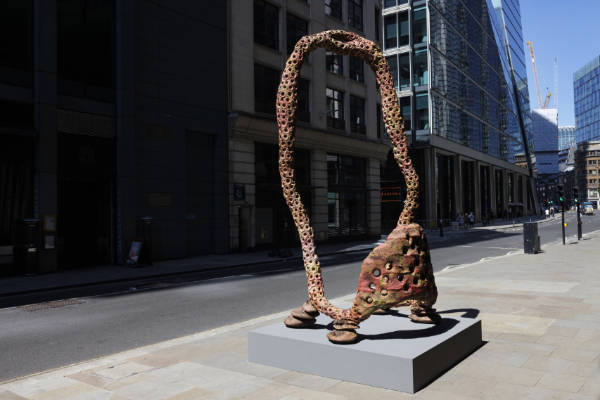
Looping Loop, © Andrew Sabin, Courtesy of the artist and Brooke Benington. PICTURE © Nick Turpin

On Now: Sculpture in the City. The 14th edition of the annual sculpture exhibition in the City of London features 11 pieces including three new works as well as six works which have been retained from previous iterations of the exhibition and two permanent acquisitions. The new works include: Ai Weiwei’s Roots: Palace, a cast-iron tree root sculpture located outside St Botolph without Bishopsgate which, as part of a series created in collaboration with Brazilian artists and communities, explores the concept of unrootedness; Jane and Louise Wilson’s Dendrophiles which, located beneath the escalators of The Leadenhall Building, combines ink drawings based on images of DNA with 3D scans of ancient oak wooden samples; and, Andrew Sabin’s Looping Loop which, located outside 70 St Mary Axe, which forms a continuous loop creating what’s described as a “lively, pulsating sensation”. Runs until April. For more – including a map of the locations – see https://www.sculptureinthecity.org.uk/.

Rare, behind the scenes images of US band Blondie have gone on show at the Barbican Music Library from today. Taken by photographer Martyn Goddard during the group’s breakthrough year of 1978, the 50 images show the band in concert, backstage, in the studio and during photo shoots. The display of photographs is complemented by poster prints, album covers, tour and concert memorabilia, period cameras, and photographic equipment. There are also items lent by Alan Edwards, who has handled Blondie’s publicity since 1978, from his private collection. Blondie in Camera 1978 runs until 5th January. Admission is free. For more see, www.cityoflondon.gov.uk/services/libraries/barbican-music-library.

Send all items for inclusion to exploringlondon@gmail.com.

This Week in London – West Ham Park celebrates its 150th; rare examples of 17th century paper-cutting; King Henry VIII jousts at Hampton Court; the collection of Elizabeth Legh; and, ‘Horrible Science’…

West Ham Park celebrates its 150th anniversary this weekend with a festival of music, food, sport, and other activities. On Saturday there will be a free, family-friendly festival with music – including appearances by Australian-born singer-songwriter Celina Sharma and singer-songwriter, Fiaa Hamilton, as well as a DJ set from Ellis – along with arts and crafts, a children’s fun fair and local food stalls. On Sunday, activities are based around the theme of ‘give it a go’ with visitors able try out various sports and health activities, including football, cricket, tennis, athletics, Tai Chi, and long-boarding. There will also be free taster sessions and opportunities to meet local sporting legends. An outdoor exhibition about the park’s history can be seen in Guildhall Yard in the City leading-up to the event after which it will be moved to Aldgate Square. West Ham Park is the largest green space in the London Borough of Newham and has been managed by the City of London Corporation since 1874. Activities on both days start at 12pm. For more, see www.cityoflondon.gov.uk/westhampark150.

To see the rest of this post (and all of our coverage), subscribe for just £3 a month. This small contribution – less than the cost of a cup of coffee – will help us continue and grow our coverage. We appreciate your support!

10 significant (and historic) London trees…6. Mendelssohn’s Tree…

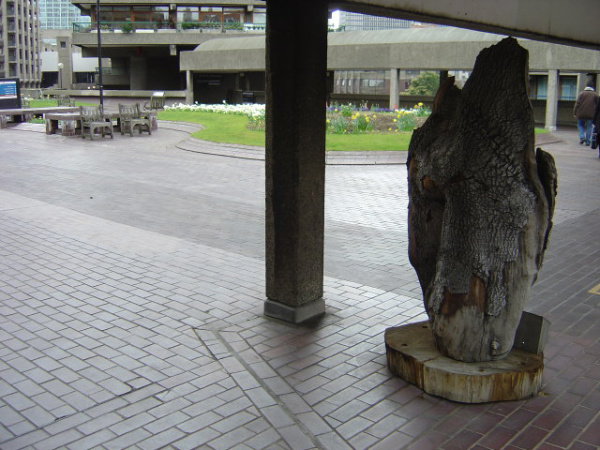
PICTURE: Alan Murray-Rust (licensed under CC BY-SA 2.0)

Standing on a Barbican walkway is the remnant of a tree believed to be at least 500-years-old which fell during a storm January, 1990.

The now hollowed-out stub of the beech tree (Fagus Sylvatica) had previously been located in the woodland known as Burnham Beeches, in Buckinghamshire – a woodland which was purchased by the City of London Corporation in 1880.

But what apparently sets this tree out from the others at Burnham Beeches is that it is believed famed German composer Felix Mendelssohn Bartholdy (1808-1847) used to sit under its then leafy branches while staying nearby during his several visits to England.

He is said to have done so to gain inspiration for his compositions and among the works he is said to have composed while here is some “incidental music” for A Midsummer Night’s Dream (although it has been suggested this might not actually be the exact tree under which he sat).

The tree and its plaque were installed in 1993 by the Barbican Horticultural Society and unveiled by conductor and composer Carl Davis.

There is now a replacement “Mendelssohn’s Tree” in Burnham Beeches which was planted in 2005.

WHERE: Barbican, off Aldersgate St (nearest Tube station is Barbican); WHEN: Anytime; COST: Free; WEBSITE: N/A.

This Week in London – Caravaggio’s last painting; Hampton Court’s Tulip Festival; and, ‘Beyond the Bassline’….

Caravaggio’s last painting – the 1610 work known as The Martyrdom of Saint Ursula – has gone on display in the UK for the first time in almost 20 years. The National Gallery is displaying the work – lent by the Intesa Sanpaolo Collection (Gallerie d’Italia – Naples) – alongside another late work by the Italian artist from the gallery own collection – Salome receives the Head of John the Baptist (about 1609–10). The Martyrdom of Saint Ursula, which features a self-portrait of the artist, was only reattributed to Caravaggio in 1980 following the discovery of an archival letter describing its commission. The letter – which is being displayed along with the painting – was sent from Naples, where Caravaggio created the work, to Genoa, where his patron, Marcantonio Doria, lived. Caravaggio died in Porto Ercole on 18th July, 1610, less than two months after finishing the work. He was attempting to return to Rome where he believed he would be pardoned for a 1606 murder at the time. Admission to the display is free. Runs until 21st July. For more, see www.nationalgallery.org.uk.

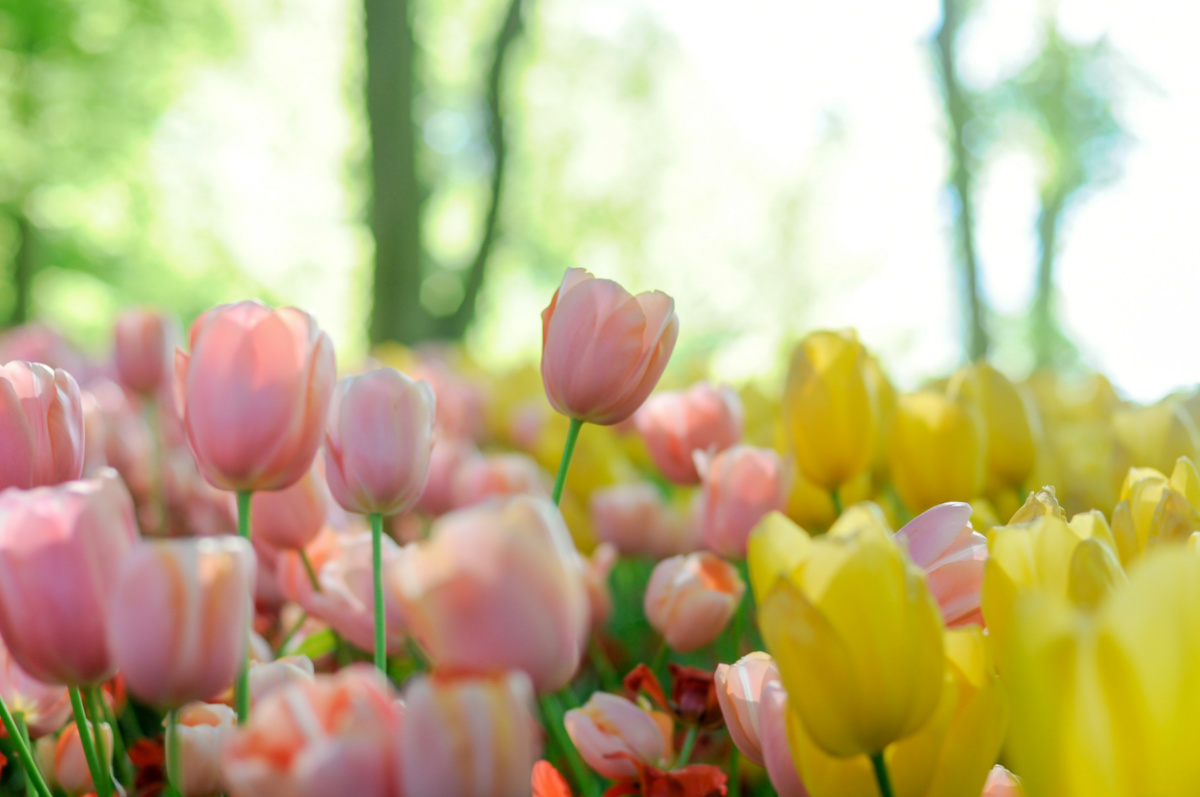
Tulips in the Netherlands. PICTURE: Giu Vicente/Unsplash

Hampton Court Palace’s Tulip Festival is on again. Displays include thousands of tulips spilling from a Victorian horse cart in the heart of the palace courtyards, giving the appearance of a Dutch flower seller’s cart, ‘floating’ bowls in the Great Fountain, free-style plantings in the kitchen gardens and more than 10,000 tulips in a display in Fountain Court. There are also daily ‘Tulip Talks’ sharing the history of the flower and Queen Mary II, who was responsible for introducing them to Hampton Court. Runs until 6th May (including in palace admission). For more, see www.hrp.org.uk/hampton-court-palace/whats-on/tulip-festival/.

Five hundred years of Black British music is being celebrated in a new exhibition at the British Library. Beyond the Bassline: 500 Years of Black British Music features soundscapes, artworks and films along with costumes, interactive displays, and of course, music. Highlights among the more than 200 exhibits include letters from 18th-century composer Ignatius Sancho, records by likes of Fela Kuti and Shirley Bassey, a nostalgic video archive of grime’s golden era captured on Risky Roadz DVD, and the equipment that Jamal Edwards used to start SB.TV, theYouTube channel dedicated to Black British music. The display concludes with a multi-screen film installation by South London-based musical movement and curatorial platform Touching Bass. Admission charge applies (with Pay What You Can days on the first Wednesday of each month). Runs until 26th August. For more, see https://beyondthebassline.seetickets.com/timeslots/filter/beyond-the-bassline.

Send all items to exploringlondon@gmail.com

This Week in London – Charles Holden’s university vision; Two-Tone at the Barbican; and celebrating Winston…

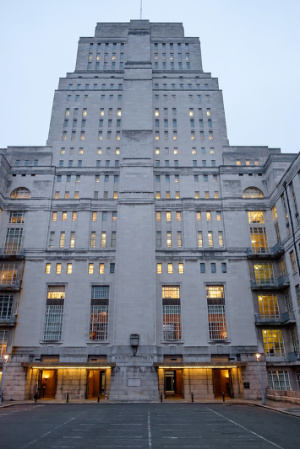
Senate House. PICTURE: Tim Abbott (licensed under CC BY-NC-ND 2.0)

A new exhibition celebrating the vision architect Charles Holden had for the design of the University of London – including the iconic Senate House – has opened at the venue. Holden had a hand in designing some 48 Tube stations and 55 Broadway – London’s first skyscraper - before in 1931 being appointed to develop the university’s Bloomsbury estate, including its headquarters. While the master plan was never completed (only the Senate House and its library were finished), it provides a fascinating insight into a part of London that could have been. Charles Holden’s Master Plan: Building the Bloomsbury Campus tells the story of institution’s design through architectural models, archival documents, photo albums, and other mixed media. The display in the Chancellor’s Hall Lobby on the first floor of the Senate House runs until 17th March. Entry is free. For more, see www.london.ac.uk/news-events/events/charles-holdens-master-plan-building-bloomsbury-campus.

A new exhibition tracing the origins and influence of the popular British music genre known as two-tone has opened at the Barbican Music Library. Two-tone, which is also known as ‘ska-rock’ or ‘ska revival’ and which had its heyday in the late 1970s and early 1980s, fused traditional Jamaican ska, rocksteady, and reggae music with elements of punk rock and new wave music. Its name comes from record label 2 Tone Records which was founded in 1978 by Jerry Dammers from The Specials, one of the most popular Two-tone bands of the time. The display – From the Caribbean to Coventry: Plotting the Rise of Two Tone – features band memorabilia as well as clothing, literature, art, photographs, and fan contributions, and explores how Caribbean immigration influenced UK youth culture. Runs until 25th May. Admission is free. For more, see https://fromthecaribbean2coventry.co.uk.

FURTHER AFIELD: Sir Winston’s family home – Chartwell in Kent – is hosting a new outdoor photography exhibition to mark what would have been his 150th birthday which features some of most spectacular birthday cakes. Press interest into Churchill’s birthday extravaganza – and in particular the cakes – was considerable and historic photographs from TopFoto have now been colourised for the first time, bringing the baking creations vividly to life. The images can be seen until 25th February. For more, see www.nationaltrust.org.uk/visit/kent/chartwell.

Send all items for inclusion to exploringlondon@gmail.com

This Week in London – Young V&A opens its doors; contemporary African photography; and, Yehudi Menuhin honoured…

The Young V&A’s Town Square PICTURE: © Luke Hayes courtesy of Victoria and Albert Museum, London.

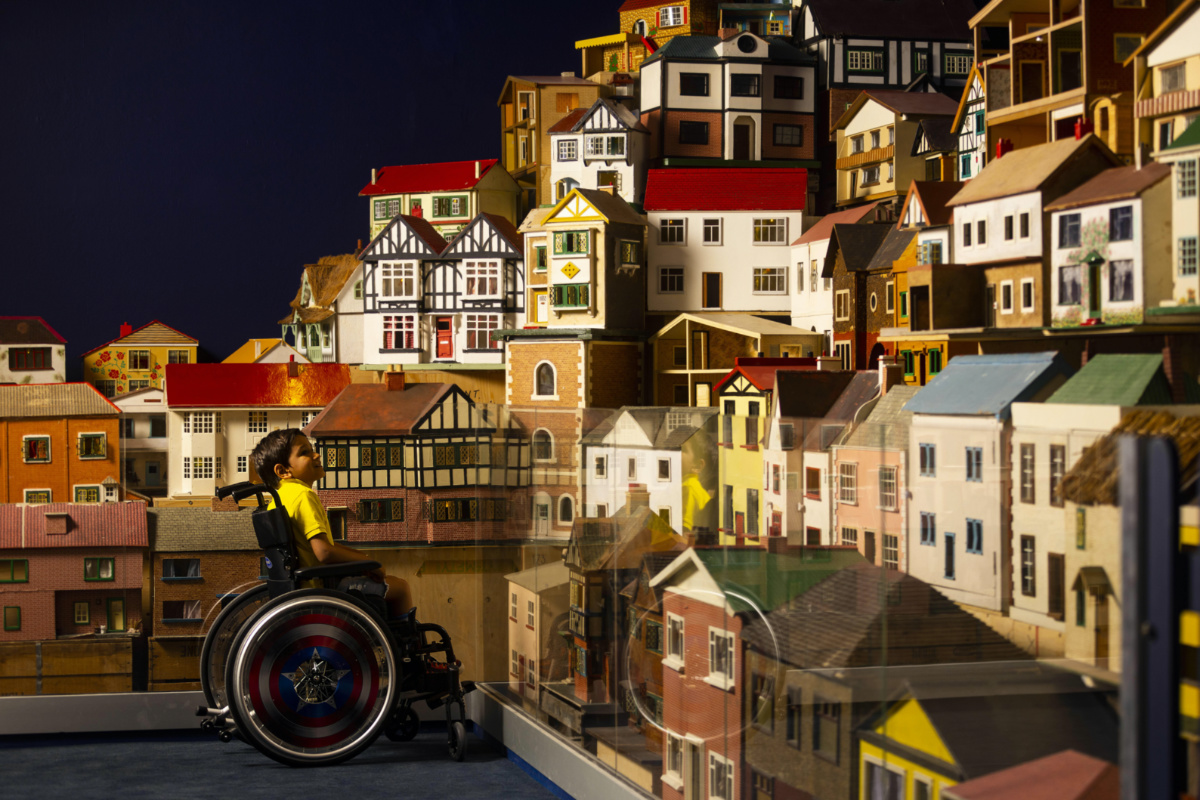
The new Young V&A in Bethnal Green has opened its doors and a free summer festival takes place this weekend. Designed with and for children aged up to 14-year-olds, the Young V&A features more than 2,000 objects, dating from 2,300 BC to today, found across three galleries – ‘Play’, ‘Imagine’ and ‘Design’. The ‘Play’ gallery includes a ‘Mini Museum’ as well as a construction zone called Imagination Playground in which children can build dens, The Arcade in which they can explore Minecraft worlds and Adventure in which they can create stories inspired by objects on show. The ‘Imagine’ gallery features a new performance space, portraits of local children and luminaries such as Quentin Blake, Kenneth Branagh and Linda McCartney, while ‘Design’ showcases innovative objects and case studies that explore how things are designed, made and used, and the ways in which design can change the world. Among the objects on show at the museum is everything from a life-size Joey the War Horse puppet to a Microline car suspended from the ceiling, Harry Potter’s Nimbus 2000 broomstick, Christopher Reeve’s original Superman costume and a large-scale installation of doll’s houses – Place (Village) – by Rachel Whiteread. Meanwhile, the free Summer Festival, which takes place on Saturday and Sunday, invites visitors to explore the museum as well as join in free and creative activities and see performances from young talent including Britain’s Got Talent finalists IMD Legion, the east London-based Grand Union Orchestra, and hula-hoop performance group Marawa’s Majorettes. There’s also the chance help create a large-scale art installation with Leap then Look. For more see vam.ac.uk/young.

‘The Place (Village)’ installation in Imagine Gallery at the Young V&A PICTURE: © David Parry, courtesy of Victoria and Albert Museum, London
Aïda Muluneh, ‘Star Shine Moon Glow, Water Life’, 2018 Photograph, inkjet print on paper; 800 x 800mm Commissioned by WaterAid. ©  Aïda Mulune

A major new exhibition celebrating contemporary African photography has opened at the Tate Modern. Featuring works by 36 artists, A World in Common: Contemporary African Photography is spread across seven thematic sections and highlights contemporary perspectives on cultural heritage, spirituality, urbanisation and climate change. As well as illuminating alternative visions of Africa’s many histories, cultures and identities, the display also explores the rise of studio photography across the continent during the 1950s and 1960s – a time when many African nations gained independence – before moving on to document the expansion and transformation of cities today as well as exploring themes of migration and climate activism. Runs until 14th January, 2024. Admission charge applies. For more, see tate.org.uk.

Celebrated 20th century violinist and conductor Yehudi Menuhin has been honoured with an English Heritage Blue Plaque at his former home in Belgravia. The six-storey house at 65 Chester Square, built by Thomas Cubitt in 1838, was where Menuhin lived and worked for the last 16 years of his life. The lower-ground floor vaults provided space for his collection of violins while an open space on the fourth floor served as his studio, a place which hosted much of his teaching and mentoring and where he also practiced yoga – including his famous headstand.

Send all items to exploringlondon@gmail.com.
This Week in London – McCartney’s photographic portraits; Georgian-era ice-cream; and, the UK’s rocky past…

In the wake of last week’s reopening of the National Portrait Gallery, another new exhibition – this time focused on the photography of Paul McCartney – opened yesterday. Paul McCartney Photographs 1963-64: Eyes of the Storm reveals, for the first time, portraits captured by McCartney using his own camera between December, 1963, and February, 1964, – a period during which John, Paul, George and Ringo went from being Britain’s most popular band to international stardom. The images reveal McCartney’s personal perspective on what it was like to be a Beatle at the start of what became known as ‘Beatlemania’ through images captured everywhere from gigs in Liverpool and London to performing on The Ed Sullivan Show in New York. Runs until 1st October. Admission charge applies. For more, see www.npg.org.uk/whatson/exhibitions/2023/paul-mccartney-photographs-1963–64-eyes-of-the-storm/.

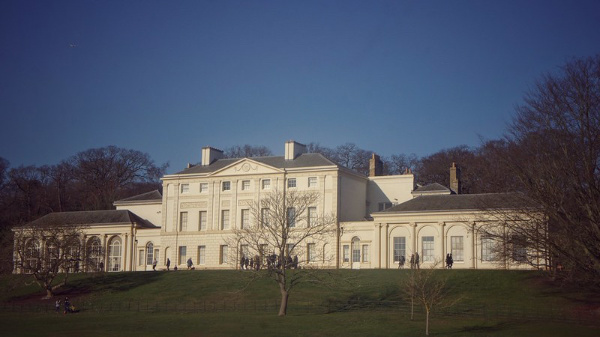
Kenwood House. PICTURE: Marc Barrot (licensed under CC BY-NC-ND 2.0)

Kenwood House in London is among 13 English Heritage sites across the country where you can try out Georgian-era “brown bread ice-cream” this summer. Created in partnership with family ice cream maker Marshfield Farm, the flavour is inspired by some of the more bizarre flavours of ice-cream popular among the Georgians including cucumber, black tea and parmesan. For the full list of places where it will be available, head to www.english-heritage.org.uk/about-us/search-news/the-best-thing-since-sliced-bread–english-heritage-re-creates-georgian-brown-bread-ice-cream-this-summer/.

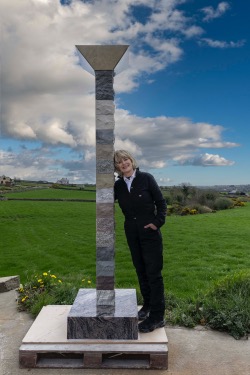
Angela Palmer with ‘Tower of Time’. PICTURE: Ewa McBride Photography.

A unique sculptural portrait of the UK formed with interlocking blocks of stones from all four countries is on show in an exhibition at the Pangolin London Sculpture Gallery in King’s Cross. Four Nations is just one of the works by Highbury-based artist Angela Palmer in the display, Deep Time: Uncovering Our Hidden. Among others is the 2.5 metre high Tower of Time, which features 16 rocks from the four countries including a 2.5-billion-year-old White Anorthosite rock, the same type of rock brought back from the Moon by Apollo 15 in 1971, and Torus of Time, a one-metre diameter ring representing the country’s three billion year history as a circle of time. Runs until 16th September. For more, see www.pangolinlondon.com.

Send all items to exploringlondon@gmail.com.
This Week in London – Boleyn ring at Hampton Court; and, Status Quo at the Barbican…

© Historic Royal Palaces/3004593

A gold signet ring once believed to have belonged to the Tudor-era Boleyn family has gone on display at Hampton Court Palace. The ring, was discovered in a field near Shurland Hall on the Isle of Sheppey in Kent, the country home of one of Anne Boleyn’s cousins and a property she visited with King Henry VIII. It is engraved with with a bull’s head – which appears in the arms of the Boleyn family (a visual pun on the family name, which was often spelled as ‘Bullen’) – and arrayed with sunbeams and stars of white enamel as well as being decorated with icons of the Virgin and Child and St Catherine of Alexandria on its shoulders. Analysis concluded the ring was consistent with objects of the early Tudor era, leading historians to suggest that it may have belonged to either Thomas or George Boleyn – Anne Boleyn’s father and brother. The ring, which was purchased by Historic Royal Palaces with support from the Arts Council England/V&A Purchase Grant Fund, the Art Fund, the Meakins Family and John Harding, under the terms of the Treasure Act 1996, can be seen in the Great Hall. Included in general admission. For more, see www.hrp.org.uk/hampton-court-palace/.

One of the UK’s most successful rock bands, Status Quo, are the subject of a new exhibition at the Barbican Music Library. Celebrating Seven Decades of Status Quo is the first ever public exhibition on the band and features never-before-seen material including the original handwritten lyrics to Caroline and Down Down as well as tour posters, photographs and more than 40 of the bands key albums. The display is a collaboration between Paul and Yvonne Harvey, who ran the band’s official fan club, ‘From The Makers Of…’ (FTMO), and Status Quo fan and collector Andy Campbell. Status Quo was formed in 1962 and has since had more than 60 chart hits as well as opening the LIVE AID concert in Wembley in July, 1985, and receiving a Brit Award for Outstanding Contribution to Music in 1991. Runs until 22nd May. Admission is free. For more, see www.cityoflondon.gov.uk/services/libraries/barbican-music-library.

Send all items to exploringlondon@gmail.com

This Week in London – Spitfires at Duxford; The Jam in photos; and, Waterloo & City line reopens…

A Spitfire at IWM Duxford. PICTURE: Peter Bromley/Unsplash

The largest collection of Spitfires gathered under one roof can be seen at the Imperial War Museum Duxford’s AirSpace hall. Twelve of the iconic planes have been gathered at the airfield, often referred to as the “home of the Spitfire”. Spitfire: Evolution of an Icon, which is being accompanied by a programme of tours, talks, events and family activities, shows how the plane evolved throughout World War II in order to keep pace with German aircraft development. As well as the IWM’s iconic Mk Ia Spitfire, the display also features Mk V, Mk IX and Mk XIV models. The Spitfires be seen until 20th February. Admission charge applies. For more including details of events, head to www.iwm.org.uk/events/spitfire-evolution-of-an-icon.

A new exhibition focused on photographs of iconic 70s and early 80s band The Jam opens at the City of London Corporation’s Barbican Music Library tomorrow. True is the Dream features the photography of Derek D’Souza who has captured the band and frontman Paul Weller, who went on to found The Style Council, on film over several decades. D’Souza’s work include a career-defining shoot of the band at Chiswick House. The display is free to see until 16th May. For more, see www.barbican.org.uk/whats-on/2022/event/true-is-the-dream.

The Waterloo & City line has reopened following a brief closure over Christmas. The London Underground line, which connects Waterloo to Bank, was temporarily closed by Transport for London in late December following increasing COVID cases in the capital and the impact on staff absence. Meanwhile, the Bank branch of the Northern line (between Moorgate and Kennington) for 17 weeks from 15th January to allow for upgrade works.

Send all items to exploringlondon@gmail.com.
10 sites of (historic) musical significance in London – A recap…

We’re completed our latest Wednesday series on London’s musical heritage. So here’s a recap before we move on…

1. 25 (and 23) Brook Street, Mayfair…

2. 23 Heddon Street…

3. Denmark Street…

4. Marc Bolan’s Rock Shrine… 

5. Henry Purcell’s grave in Westminster Abbey…

6. Royal Albert Hall… 

7. Ronnie Scott’s Jazz Club… 

8. The home where Mozart composed his first symphony…

9. Site of 2i’s Coffee Bar, Soho… 

10. Wembley Stadium, host of Live Aid…

10 sites of (historic) musical significance in London – 10. Wembley Stadium, host of Live Aid…

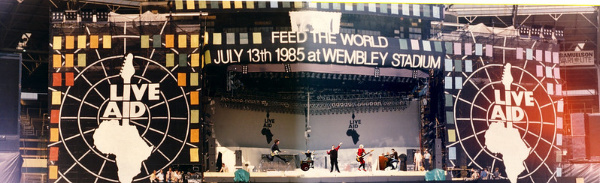
Wembley Stadium in London’s north-west has hosted numerous musical acts since the early 1970s but the most famous event was undoubtedly the British Live Aid concert in 1985.

Ultrasound perform at Live Aid at Wembley. PICTURE: cormac70 (licensed under CC BY-NC-ND 2.0)

Organised by Boomtown Rats frontman Bob Geldof and Ultravox vocialist Midge Ure (although it was apparently Boy George who first came up with the idea of a concert), the event featured an all-star line-up of the notable artists of the day.

Held to raise funds to support relief efforts aimed at those impacted by the devastating Ethiopian famine of 1983 to 1985, it followed the release of Band Aid’s single Do They Know It’s Christmas? the previous December (that song closed the British concert while We Are The World closed the US one).

About 72,000 people attended the event held on 13th July which featured artists including Paul McCartney, David Bowie, The Who (who reunited for the event), Queen and U2 (the latter two bands in show-stealing performances) and was held simultaneously with an event at at John F Kennedy Stadium in Philadelphia (attended by more than 89,000 people.

There were also concerts held in a range of other nations in Australia in support of the cause on the same day which were woven into the TV broadcast of the event. This was seen by an estimated 1.5 billion viewers worldwide.

The British event kicked off at noon and ran until 10pm that night while the US concert ended just after 4am, giving a total of 16 hours of concert time. Phil Collins famously performed at both events, taking a British Airways Concorde to the US after performing at Wembley and performing there.

Among the crowds watching were Prince Charles and Princess Diana.

10 sites of (historic) musical significance in London – 9. Site of 2i’s Coffee Bar, Soho… 

PICTURE: zoer (licensed under CC BY-NC 2.0)

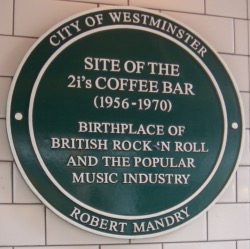
Located at 59 Old Compton Street in Soho, the 2i’s Coffee Bar is crediting with playing a key role in the development of Britain’s modern music culture during the mid-20th century with stars including Tommy Steele – described as the first British rock ‘n roll star – and Sir Cliff Richard among those who performed there.

Opened in April, 1956, the coffee house (which was named for the two men Freddie and Sammy Irani who owned building), was run by Australian wrestlers Paul Lincoln and Ray Hunter.

Its basement had a small stage and was used as a live music venue, initially with skiffle groups such as the Vipers and then as a rock ‘n roll venue. Along with Steele and Sir Cliff, others who performed there included Johnny Kidd, Tony Sheridan, Hank Marvin, Rory Blackwell and Screaming Lord Sutch as well as American acts such as Jerry Lee Lewis.

Among those who patronised the venue, meanwhile, was everyone from Beatles producer Sir George Martin to actor Sir Michael Caine and painter Francis Bacon.

The 2i’s closed in 1970. A Westminster City Council Green Plaque was unveiled at the site in 2006, marking 50 years of British rock ‘n roll.

Famous Londoners – Thomas Arne..

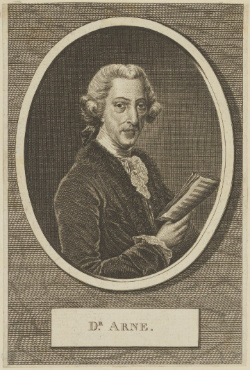
Eighteenth century English composer Thomas Arne, considered one of British greatest theatrical composers and most well known for creating the music for his patriotic song Rule Britannia, spent most of his life in London.

Thomas Augustine Arne after Robert Dunkarton line engraving, circa 1775-1800 (NPG D13867) PICTURE: © National Portrait Gallery, London

The son of an upholster, Arne, whose middle name was Augustine, was born in Covent Garden in 1710 and baptised in St Paul’s, Covent Garden. Arne was educated at Eton College where, such was his passion for music, he is said to have secretly practised with a spinet, a smaller type of harpsichord, in his room at night, muffling the strings to keep from being discovered.

He became a violin student of composer Michael Festing and, such was his love of music, that he is said to have disguised himself in the livery of servant to attend the opera.

Following his father’s wishes, Arne worked briefly as a solicitor after leaving school but was subsequently permitted to leave the law and pursue a life in music (there were other family connections to music and performance – his father had actually been involved in financing some operas and both his sister Susannah Maria and brother Richard would go on to have careers in the theatre and music worlds).

Over the more than 40 years between 1733 and 1776, Arne wrote music for about 80 stage works which included everything from plays and masques to pantomimes and operas.

His big break came when he became house composer at Drury Lane Theatre, writing music for various plays and pantomimes and involving both his brother and his sister in the performances (his residences at this time are said to have included properties in Great Queen Street and Lincoln’s Inn Fields).

Arne was already a star when, on 15th March, 1737, he married the singer Cecilia Young (he may have already had a son prior to this).

In 1738, he – along with others including George Frideric Handel – founded the Society of Musicians (which would become the Royal Society of Music). Arne also received the patronage of Frederick, the Prince of Wales – in fact, it was at the prince’s country house, Cliveden, that he debuted Rule, Britannia, during a performances of his Masque of Alfred in 1740.

Arne and his wife spent two years in Dublin in the early 1740s and on his return to London in 1744, he was again composing music for Drury Lane. He also composed music for performances at Vauxhall Gardens.

PICTURE: Spudgun67 (licensed under CC BY-SA 4.0)

Arne left Drury Lane for the Covent Garden Theatre in 1750 after he had begun to fall out of favour with theatre manager David Garrick who was increasingly turning to other composers.

In 1755, while again in Dublin, he separated from Cecilia, alleging she was mentally ill, and began a relationship with one of his students, Charlotte Brent. Brent would perform in several of his works including in Thomas and Sally (the first English opera to be completely sung) and Artaxerxes (which became one of the most successfully and influential English operas of the era). Brent would eventually go on to eventually marry a violinist in 1766.

His career took a downturn in the mid 1760s but in 1769, Garrick appointed Arne musical director for the Shakespeare festival at Stratford upon Avon. Arne composed several pieces for the event including An Ode upon Dedicating a Building to Shakespeare, the success of which put him back into favour with the London theatres.

In late 1777, Arne was reconciled with his wife (their son, Michael, went on to become a composer). But his health deteriorated soon after and Arne died on 5th March, 1778, at a house in Bow Street, Covent Garden. He was buried in the churchyard of St Paul’s, Covent Garden.

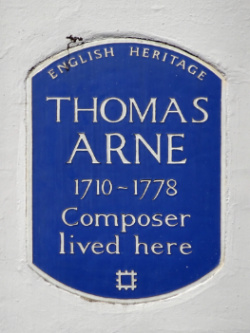
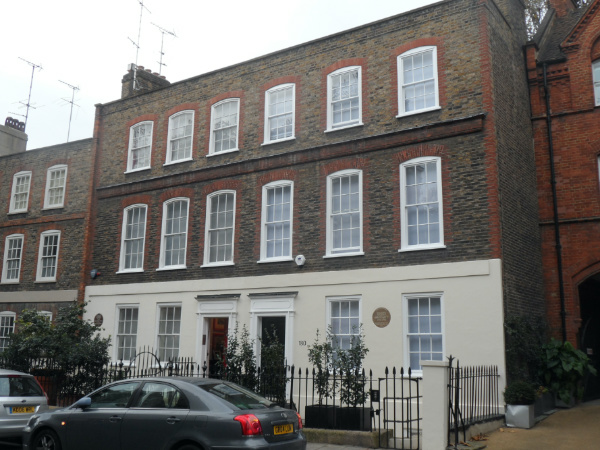
An English Heritage Blue Plaque was erected at the site of his former home at 31 King Street, Covent Garden, in 1988 (pictured above).

10 sites of (historic) musical significance in London – 8. The home where Mozart composed his first symphony…

180 Ebury Street, Belgravia. PICTURE: Spudgun67 (licensed under CC BY-SA 4.0)

Think of Austrian composer Wolfgang Amadeus Mozart and chances are it isn’t London which immediately comes to mind. But it was in a home in Belgravia that the then-precocious eight-year-old composed his first symphony.

Mozart, his father Leopold, mother Anna Maria and his elder sister Maria Anna spent almost a year-and-a-half in London, between April, 1764, and July, 1765, as part of a European grand tour. Having initially taken lodgings above a barber’s shop in Cecil Court in Soho, they moved to the more rural setting of 180 Ebury Street, then known as Five Fields Row, in August so his father could recover from a serious illness which apparently developed after he caught a cold.

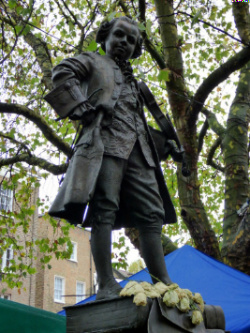
Philip Jackson’s statue of Wolfgang Amadeus Mozart in Orange Square. PICTURE: Peter O’Connor (licensed under CC BY-SA 2.0)

Mozart and his sister were both child prodigies and during their London sojourner performed in various London theatres and for King George III and Queen Charlotte at Buckingham Palace on several occasions. But, with his father now needing quiet, they were forbidden to play instruments in the house and so, according to his sister’s writings, in order to keep himself busy it was there that he composed his “first symphony for all the instruments of the orchestra, especially for trumpets and kettledrums”.

While the work she was referring to is now lost, Mozart did go on to compose the symphony that is now seen as his first at the same time. Known as K.16 in E flat major, it was first performed at the Haymarket Little Theatre in February, 1765.

Leopold did recover and so the family moved back to Soho – lodging at 20 Frith Street to be précise – in September, 1764. It was there that Mozart met the youngest son of Johann Sebastian Bach, Johann Christian, who was to be a key influence on his musical style. They left the property – and brought their time in England to an end in July, 1765, amid waning public interest in their performances (they gone from performing for the Royal Family to entertaining pub patrons). The family continued with their European tour before eventually returning to their home town of Salzburg (Mozart later settled in Vienna where he died at the young age of 35).

Mozart’s time at the Ebury Street residence (and the composition he wrote there) is commemorated with an English Heritage Blue Plaque (albeit this one is brown) which was erected by the then London County Council in 1939. Following damage in the war, it was reinstated in 1951. There’s also a statue commemorating Wolfgang Amadeus Mozart in nearby Orange Square. Designed by Philip Jackson, it was erected in 1994.

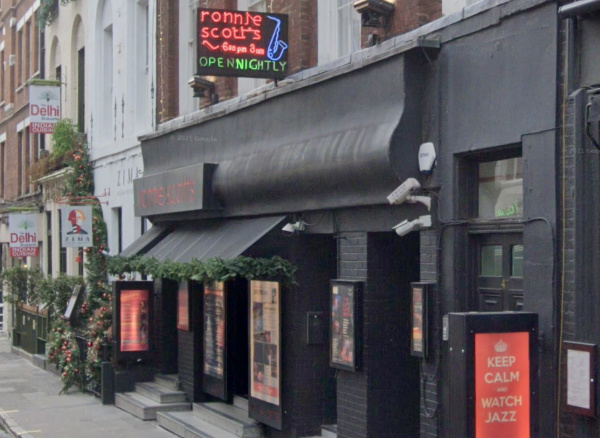
10 sites of (historic) musical significance in London – 7. Ronnie Scott’s Jazz Club… 

PICTURE: Google Maps

Tenor saxophonists Ronnie Scott and Pete King opened their jazz club in Soho in 1959.

Located in the basement of 39 Gerrard Street in Chinatown, the club was initially created as a place where local jazz musicians could jam but was soon attracting a who’s who of jazz to the stage.

The 1965, the club moved to 47 Frith Street where remains today (it took over the building next door in 1968).

Over the years, the club has played host to jazz greats including Zoot Sims, Sarah Vaughn and Count Basie to Miles Davis, Ella Fitzgerald and Wynton Marsalis as well as musicians such as Jimi Hendrix, Tom Waits, The Who and Mark Knopfler with the Notting Hillbillies.

Patrons, meanwhile, have included everyone from Harold Pinter and the Beatles to Peter O’Toole and Spike Milligan.

Scott died on 23rd December, 1996, and King continued to run the club for another nine years before selling it to theatre impresario Sally Greene.

The club celebrated its 50th anniversary in 2019 and was honoured that year with an English Heritage Blue Plaque commemorating the original site.

10 sites of (historic) musical significance in London – 6. Royal Albert Hall… 

PICTURE: Raphael Tomi-Tricot/Unsplash

Arguably the grandest music venue in London, the Royal Albert Hall, named in memory of Queen Victoria’s husband Prince Albert, has been hosting musical events since it first hosted a concert in 1871.

The Grade I-listed hall, which has a seating capacity of more than 5,000 and which did suffer from acoustic problems for many years (until mushroom-shaped fibreglass acoustic diffusers were hung from the ceiling following tests in the late 1960s), has been the setting for some of the most important – and, in some cases, poignant – music events of the past 150 years, not just in London but the world at large.

Among some of the most memorable are the Titanic Band Memorial Concert – held on 24th May, 1912, just six weeks after the sinking of the iconic ship to remember the 1514 people who died with a particular focus on the eight musicians who played on as the stricken vessal sank, the ‘Great Pop Prom’ of 15th September, 1963 – only one of a handful of occasions when The Beatles and Rolling Stones played on the same stage, and Pink Floyd’s gig of 26th June, 1969 – coming at the end of a UK tour, the on-stage antics saw the band banned (it was short-lived, however, they returned just a few years later in 1973).

Other musical figures to have taken to the stage here include everyone from composers Richard Wagner, John Philip Sousa, and Benjamin Britten to the Von Trapp family, jazz greats Billie Holiday and Ella Fitzgerald, and the likes of Shirley Bassey, Bob Dylan and Elton John – a veritable musical who’s who of the past 150 years. The venue also hosted the 13th Eurovision Song Contest in 1968.

Of course, Royal Albert Hall is famous for The Proms, an annual festival of classical music which was first performed here in 1941 after the venue where it had been held since 1895 – the Queen’s Hall on Langham Place – was lost to an incendiary bomb during World War II.

Prom stands for ‘Promenade Concert’,  a phrase which originally referred to the outdoor concerts in London’s pleasure gardens during which the audience was free to walk around while the orchestra was playing (there are still standing areas during performances). The most famous night of the season is the ‘Last Night of the Proms’ which, broadcast by the BBC, features popular classics and ends with a series of patriotic tunes to stir the blood.

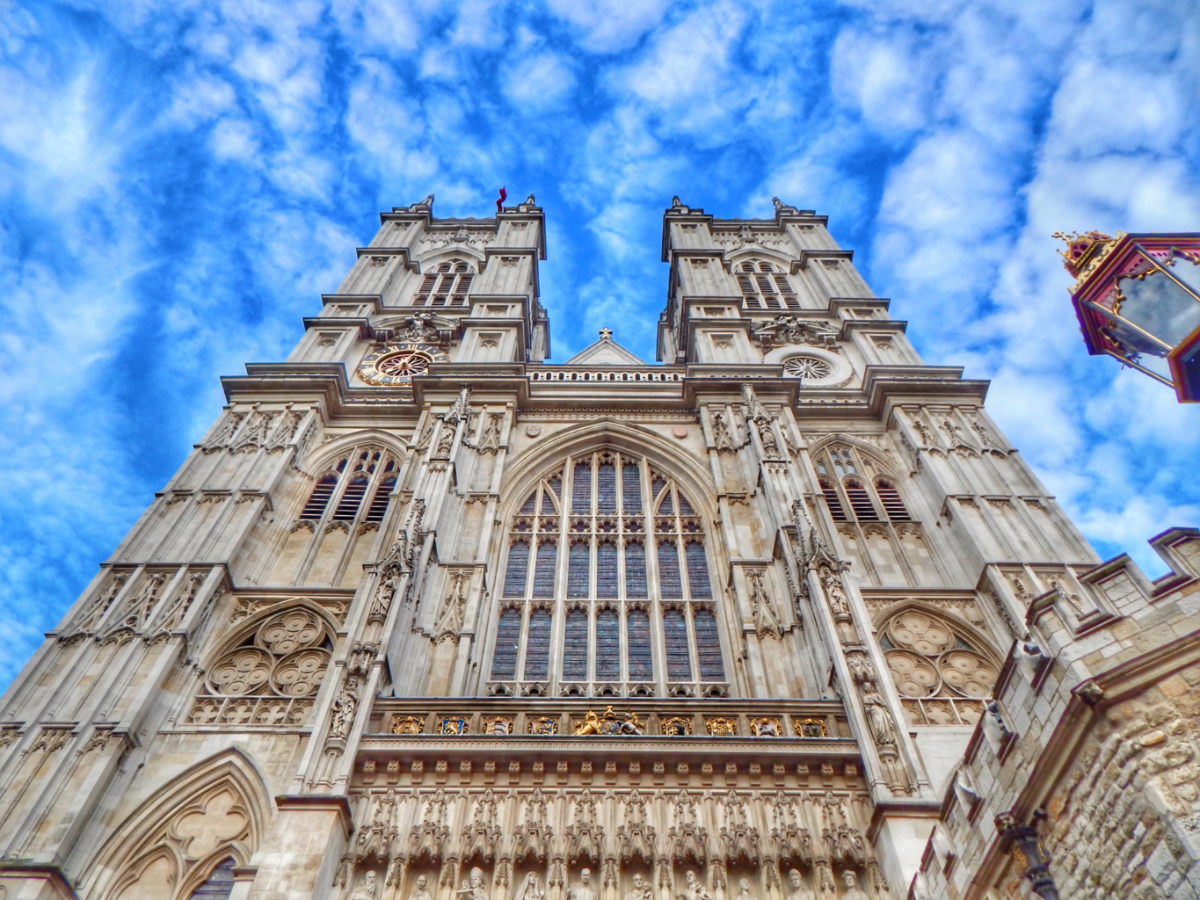
10 sites of (historic) musical significance in London – 5. Henry Purcell’s grave in Westminster Abbey…

Westminster Abbey. PICTURE: Clark Van Der Beken/Unsplash

Westminster Abbey is important for many reasons when it comes to London’s musical heritage but among them is the intrinsic connection the grand building has with Restoration-era composer and musician Henry Purcell.

Purcell, who was born in Westminster in 1659 and who died there in 1695, is famous for having composed music in a range of genres including the first English opera as well as being the organist of the Westminster Abbey (from 1679) and that of the Chapel Royal (from 1682).

Statue commemorating Henry Purcell. PICTURE: Eluveitie (licensed under CC BY-SA 3.0)

Fittingly, Purcell, who died at the age of just 36 leaving a widow and six children behind, was buried beside where the organ was then located in the north aisle of Westminster Abbey. The grave, which also contains the remains of his wife Frances, is inlaid with brass letters written in Latin.

It reads: “Here rests Henry Purcell, Organist of this Collegiate Church. Died 21 November aged 37, A.D. 1695. Immortals, welcome an illustrious guest, your gain, our loss – yet would not earth reclaim the many-sided master of his art, the brief delight and glory of his age: great Purcell lives! his spirit haunts these aisles, while yet the neighbouring organ breathes its strains, and answering choirs worship God in song. Frances, wife of Henry Purcell, is buried near her husband 14 February 1706.”

A memorial tablet to Purcell was erected on a nearby wall by Dame Annabella Howard, a former pupil of Purcell’s. The inscription in English and Latin “Here lyes Henry Purcell Esq., who left this life and is gone to that blessed place where only his harmony can be exceeded. Died 21 of November in the 37th year of his age, AD 1695”.

There is also an elaborate statue, The Flowering of the English Baroque, commemorating Purcell located just down the road from the Abbey in Christchurch Gardens, Broadway. Designed by sculptor Glynn Williams, it was unveiled by Princess Margaret on the tercentenary of the death of the composer – 22nd November 1995.

10 sites of (historic) musical significance in London – 4. Marc Bolan’s Rock Shrine… 

Located by the side of a road in Barnes is a memorial to the former singer and guitarist of glam-rock band T.Rex, Marc Bolan.

The bust of Bolan at the site. PICTURE: Britmax at the English Wikipedia (licensed under CC BY-SA 3.0)

The memorial on Queens Ride, close to Gipsy Lane, marks the spot where the 29-year-old Bolan died on 16th September, 1977, after the purple Mini he was a passenger in – driven by his girlfriend, singer Gloria Jones – left the road and struck a fence, coming to rest against a tree.

The site of the crash quickly became a place of pilgrimage for fans and in September, 1997, the Performing Right Society installed a memorial stone for Bolan. It pays tribute to Bolan as a “musician, writer, poet” and says it was erected “in recognition of his outstanding contribution to British music”.

In 2002, a bronze bust of Bolan, the work of Canadian sculptor Jean Robillard, was installed behind the memorial stone by the T.Rex Action Group in commemoration of the 25th anniversary of his death.

The TAG had taken over care of the site – including the ‘Bolan Tree’ – in 1999 under a perpetual lease and, prior to the bust’s arrival, had added since added a series of steps at the site.

The bust, which was paid for by the group’s founder Fee Warner and is located at the top of the steps, was unveiled by Bolan’s only child Rolan.

In 2005, further plaques were added at the site commemorating the other members of T.Rex who had died –  Steve Peregrin Took, Steve Currie, Mickey Finn and Dino Dines – as well as Bolan’s widow June Bolan (they were married in 1970).