 • The largest exhibition ever mounted about the life of 17th century diarist Samuel Pepys opens at the National Maritime Museum in Greenwich tomorrow. Samuel Pepys: Plague, Fire, Revolution features more than 200 paintings and objects brought together from museums, galleries and private collections which explore the life of the famous diarist (depicted here in a bust outside the Guildhall Art Gallery) against the backdrop of the tumultuous events of Stuart London, from the execution London of King Charles I in 1649 through the Great Fire of London and the Glorious Revolution on 1688. Objects on show include the famous painting, Portrait of Charles II in Coronation Robes, objects connected to Pepys’ mistresses including one of his love letters to Louise de Kéroualle (aka ‘Fubbs’ or ‘chubby’) and other personal items such as a lute owned by Pepys. The exhibition is accompanied by a series of events including Pepys Show Late: Party like it’s 1669 (26th November) and a series of walks and talks. Admission charge applies. The exhibition runs until 28th March. For more, see www.rmg.co.uk/national-maritime-museum.
• Cycles are in the spotlight at the Design Museum in Shad Thames with a new exhibition, Cycle Revolution, opening yesterday. The display, which focuses on the world of contemporary cycling, features dozens of bicycles from key manufacturers as well as high end accessories, items belonging to celebrated cyclists Sir Chris Hoy and Sir Paul Smith and specially commissioned films and photography. It looks at cycling subcultures – everyone from the “high performers” to the “cargo bikers”, examines manufacturing techniques and innovations in the use of materials and design with exhibits including a large scale recreation of a bespoke bicycle making workshop, and tackles questions about the future of cycling particularly in relation to the urban environment. The exhibition is being accompanied by a ‘cycle cafe’, large scale installations and a series of public events. Runs until 30th June. Admission charge applies. For more, see www.designmuseum.com.
• The jewellery traditions of the Indian sub-continent are set to sparkle at a new exhibition opening at the V&A in South Kensington this Saturday. Part of the V&A India Festival, Bejewelled Treasures: The Al Thani Collection features 100 items, drawn from a single private collection, including a Golconda diamond given to Queen Charlotte by the Nawab of Arcot in South India in 1767, a jade-hilted dagger that belonged to the 17th century emperor Shah Jahan (builder of the Taj Mahal), and a jewelled gold tiger’s head from the throne of the Tipu Sultan of Mysore. As well as showcasing the types of jewels collected by the Mughal emperors, the exhibition reveals the influence of India on European jewellery houses in the early 20th century and the ongoing impact of Indian influences on more modern pieces. The exhibition runs until 28th March. Admission charge applies. For more, see www.vam.ac.uk/BejewelledTreasures.
Send all items for inclusion to exploringlondon@gmail.com
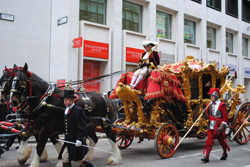 • The Lord Mayor’s Show will mark its 800th anniversary on Saturday as the newly elected Jeffrey Mountevans – the 688th Lord Mayor of the City of London – makes his way through the City to Westminster to swear loyalty to the Crown. The procession of 7,000 people, some 180 horses and 140 vehicles will set off on its way along a three-and-a-half mile route at 11am, starting at Mansion House and traveling down Cheapside to pause at St Paul’s Cathedral (which is open for free all day) before heading on via Ludgate Hill and Fleet Street to the Royal Courts of Justice before returning the City via Queen Victoria Street from 1.10pm. In a special nod to the 800th anniversary, the famous bells of St Mary-le-Bow will ring out a special 800-change at noon. The day will conclude with fireworks over the River Thames kicking off at 5.15pm (for the best view head down to the riverside between Waterloo and Blackfriars Bridges, either on Victoria Embankment or on the South Bank). The show’s origins go back to 1215 when, in exchange for a Royal Charter granting the City of London the right to elect its own mayor, King John insisted the newly elected mayor travelled to Westminster each year to swear loyalty to the Crown. For more (including a map to print out), see

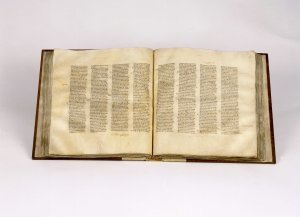 The first major exhibition to explore the history of Egypt after the pharaohs opens at the British Museum today. Egypt: Faith after the pharaohs spans 1,200 years of history – from 30 BC to 1171 AD – with 200 objects showing how Christian, Islamic and Jewish communities reinterpreted the pharaonic past of Egypt and interacted with each other. The exhibition opens with three significant examples of the Hebrew Bible, the Christian New Testament and the Islamic Qur’an – the texts include the New Testament part of the 4th century AD Codex Sinaiticus, the world’s oldest surviving Bible and the earliest complete copy of the New Testament, which is now part of the British Library’s collection. All three are juxtaposed with everyday stamps associated with each of the three religions in an illustration of the relationship between the institutional side of religion and its everyday practice, both key themes of the exhibition. Other exhibits include a pair of 6th-7th century door curtains featuring classical and Christian religious motifs, a 1st-2nd century statue of the Egyptian god Horus in Roman military costume, and a letter from the Roman Emperor Claudius (41-54 AD) concerning the cult of the divine emperor and the status of Jews in Alexandria. Admission charge applies. Runs until 7th February in Room 35. A programme of events accompanies the exhibition. For more, see



 Exploring London