This Week in London – A look inside The Crime Museum; Goya at The National Gallery; and, Africa on the Square…

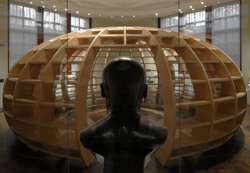
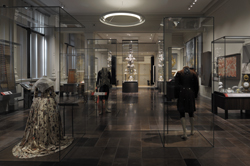
Objects and evidence from some of the UK’s most notorious crimes including the ‘Acid Bath Murder’ of 1949, the ‘Great Train Robbery’ of 1963 and the ‘Millennium Dome Diamond Heist’ of 2000 will go on show at the Museum of London from Saturday. Created with the support of the Metropolitan Police Service and the Mayor’s Office for Policing and Crime, The Crime Museum Uncovered exhibition features never-before-seen objects from the Metropolitan Police’s Crime Museum as it takes visitors through a series of real cases and tackles some of key challenges of policing in London – everything from terrorism and espionage through to counterfeiting and narcotics. The Crime Museum, which is now housed inside New Scotland Yard, was established in the mid-1870s as a teaching tool for police. Its Visitor’s Book contains some high profile names including that of King George V, Sir Arthur Conan Doyle – creator of Sherlock Holmes, illusionist Harry Houdini and comedians Stan Laurel and Oliver Hardy. Runs until 10th April. Admission charge applies. For more, see www.museumoflondon.org.uk.

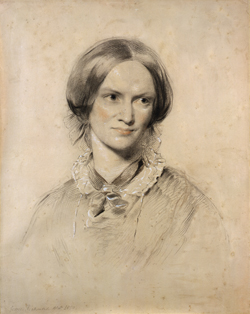
GoyaAlmost half of Goya’s surviving portraits are on show in The National Gallery in an exhibition which opened yesterday. Goya: The Portraits features more than 60 of the celebrated Spanish artist’s surviving portraits, borrowed from public and private collections around the world. Highlights include the Duchess of Alba (a 1797 work depicting one of Goya’s patrons which has only left the US once before), the immense group portrait The Family of the Infante Don Luis De Borbon (pictured), the never-seen-in-public work Don Valentin Bellvis de Moncada y Pizzaro, the rarely exhibited Countess-Duchess Benavente, and the recently conserved 1798 portrait Francisco de Saavedra, exhibited for the first time in 50 years alongside a pendant painted the same year of Gaspar Melchor de Jovellanos. There are also works of royals including Charles IV in Hunting Dress and more personal works such as self portraits and paintings of his family members. Runs until 10th January in the Sainsbury Wing near Trafalgar Square. Admission charge applies. For more, see www.nationalgallery.org.uk. PICTURE: © Fondazione Magnani Rocca, Parma, Italy.

Black History Month is being celebrated in Trafalgar Square this Saturday in Africa on the Square, a programme of events inspired by the traditions and cultures of the continent.  The line-up includes a musicians and singers, acrobats, dancers, a fashion show and a market selling African-themed products as well as a host of activities for families, from hair braiding and face painting to mosaics and batik making. There will also be a talent show giving aspiring performances aged between 16 and 25 the chance to perform in front of a live audience. The free event runs between noon and 6pm. For more, see www.london.gov.uk/africa.

Send all items for inclusion to exploringlondon@gmail.com.
LondonLife – The Australian coast comes to London…

Blue-PacificThe National Gallery has unveiled a coastal masterpiece by Australian painter Sir Arthur Streeton, Blue Pacific, lent to the gallery by a private collector for the next two years.

Painted in 1890, the painting – never seen before in the UK – depicts people strolling along the clifftops at Coogee in Sydney, looking eastward over the gleaming blue of the Pacific Ocean.

Christopher Riopelle, the gallery’s curator of post-1800 European paintings, says Streeton’s use of the vertical format was “brilliantly calculated to exploit the contrast between the azure sheet of water and the subtly observed depictions of rock face and sky”.

“Still young, but at the height of his powers, Streeton demonstrates here how impression was a capacious and flexible tool for confronting the awesome landscape unique to Australia.”

Streeton (1867-1943) was considered one of the most advanced landscape painters in Australia in the 1880s and 1890s and was one of the first to adopt an impressionist style. His masterpiece, Golden Summer (1889), was exhibited at the Royal Academy of Arts in 1891.

Blue Pacific is now on show in Room 43 at the gallery off Trafalgar Square alongside Monet’s Water-Lilies and Manet’s The Execution of Maximilian.  Entry is free. For more on the gallery, see www.nationalgallery.org.uk.

PICTURE: Blue Pacific, 1890, Sir Arthur Streeton (1867 – 1943), oil on canvas, © on loan from a private collection/via National Gallery.

This Week in London – Indian textiles at the V&A; a “typical London street” on show; and, Nobel laureate given Blue Plaque…

Tipus_Tent_c_National_Trust_ImagesA spectacular tent used by the Tipu Sultan, ruler of the 18th century Kingdom of Mysore (pictured), is among highlights in an exhibition exploring the “incomparably rich world” of handmade textiles from India which opens at the V&A in South Kensington on Saturday. Part of the V&A’s India Festival marking the 25th anniversary of the opening of the museum’s Nehru Gallery, The Fabric of India has exhibits ranging from the earliest known Indian textile fragments (dating from the 3rd century) through to contemporary fashions. Among the around 200 handmade objects – which include everything from ancient ceremonial banners and sacred temple hangings to modern saris and bandanna handkerchiefs – are a Hindu narrative cloth depicting avatars of Vishnu dating from about 1570, an 18th century crucifixion scene made for an Armenian Christian church in south-east India, block-printed ceremonial textiles from Gujarat – made in the 14th century for the Indonesian market, bed-hangings originally belonging to the Austrian Prince Eugene (1663-1736), and a selection of clothing made using Khadi, a cloth which Mahatma Gandhi promoted using in the 1930s when he asked people to make the fabric as a symbol of resistance to colonial rule. Admission charges apply. Runs until 10th January. For more see, www.vam.ac.uk/fabricofindia. PICTURE: © National Trust Images.

Westbury Road in Bounds Green, Haringey, is the subject of a new photographic and art exhibit which opened at the Geffrye Museum in Shoreditch this week. A Street Seen: The Residents of Westbury Road is a collaborative exhibition featuring the works of photographer Andrew Buurman and artist Gabriela Schutz as they document the homes, gardens and residents of what is described as a “typical London street”. The display includes a six metre long panoramic drawing of Victorian houses by Schutz and a series of photographs depicting residents in their back gardens taken over a two year period by Buurman. Runs until 3rd April. For more, see www.geffrye-museum.org.uk.

One of the founding fathers of sports medicine, Nobel Prize winner AV Hill, has been honoured with an English Heritage blue plaque unveiled at his former home in Highgate in London’s north last month. Hill, as well as being noted for his work in the field of physiology, was also an independent MP during World War II and a humanitarian who is credited with helping more than 900 academics – including 18 Nobel laureates – escape persecution by the Nazis. He lived at the property at 16 Bishopswood Road for 44 years, between 1923 and 1967, 10 years before his death. For more on blue plaques, see www.english-heritage.org.uk/visit/blue-plaques/.

Send all items for inclusion to exploringlondon@gmail.com.
 

LondonLife – Supermoon over Docklands…

Supermoon

London photographer Ian Wylie captures the “supermoon” rising over Canary Wharf in London’s east on Sunday, ahead of the lunar eclipse in the early hours of Monday. As seen from London Bridge at 6:54pm – 20 minutes after moonrise and six minutes after sunset. A supermoon occurs when the moon reaches the closest part of its orbit to Earth and hence appears larger than normal. This week’s supermoon coincided with a lunar eclipse – in which the moon passes behind the Earth through its shadow (also known as an umbra) – which later made the moon appear red (a lunar eclipse is also known as a “blood moon”). Last seen in 1982, the phenomena will apparently not be visible again until 2033. PICTURE: © Ian Wylie/Flickr

This Week in London – Celts at the British Museum; the Fallen Woman at the Foundling; and Ai Weiwei…

Gundestrup_Whole-ImageThe story of the Celts and their culture is being explored in a new exhibition which opens at the British Museum in Bloomsbury today. Celts: Art and Identity, being run in partnership with National Museums Scotland, is the first British exhibition on the Celts in 40 years. Highlights of the display include a hoard of four gold torcs found at Blair Drummond in Stirling in 2009, Christian artefacts including iron handbells used to call people to prayer, elaborately illustrated Gospels, carved stone crosses and, a gilded bronze processional cross which, dating from 700-800 AD and coming from Tully Lough in Ireland, will be on show for the first time in Britain. Also present will be the Gundestrup cauldron, which dates from 100 BC-1 AD and comes from Denmark (pictured), London artefacts such as the Waterloo helmet and Battersea shield, and works created more recently which reflect on an often mythical Celtic past such as George Henry and Edward Atkinson Homel’s 1890 painting The Druids: Bringing in the Mistletoe. Runs until 31st January in the Sainsbury Exhibition Gallery (Room 30). Admission charge applies. For more, see www.britishmuseum.org. PICTURE: © The National Museum of Denmark.

A new exhibition exploring the myth and reality of the ‘fallen woman’ in Victorian Britain opens at the Foundling Museum in Bloomsbury tomorrow. The Fallen Woman features works by artists including Dante Gabriel Rossetti, Richard Redgrave, George Frederic Watts and George Cruikshank, displayed alongside stereoscopes and depictions of the fallen woman in the era’s popular media. It also looks at the petitions of women applying to the Foundling Hospital, bringing to life the real ‘fallen women’ of the period through a specially-commissioned sound installation by artist and musician Steve Lewinson. The exhibition runs until 3rd January. Admission charge applies. For more, see www.foundlingmuseum.org.uk.

The London Transport Museum’s Depot in Acton hosts its autumn open days this weekend. The day includes the chance to see the original printing blocks used for the Johnston font – London Transport’s iconic typeface, expert talks on transport vehicles, a chance to see how the moquette – the seat covering on the tube – is made and film screenings from the LTM archive. From 11am to 5pm Saturday and Sunday. Admission charge applies. For more, see www.ltmuseum.co.uk.

The Worshipful Company of Woolmen will be holding their annual  sheep drive across London bridge this Sunday. The event, free to watch, kicks off at 10am and runs until 5pm. For more, see www.woolmen.com.

• On Now: Ai Weiwei. This landmark exhibition at the Royal Academy of Arts in Piccadilly celebrates the work of Honorary Royal Academician and leading Chinese artist Ai Weiwei with significant works from 1993 onwards and new, site specific installations. Among the key exhibits is Straight (2008-12), a body of work related to the Sichuan earthquake of 2008, fabricated from 90 tonnes of bent and twisted rebar which was collected by the artist and straightened by hand. Runs until 13th December.  Admission charge applies. For more, see www.royalacademy.org.uk.

Send all items for inclusion to exploringlondon@gmail.com.

Treasures of London – Duke of Wellington’s cloak…

Duke-of-Wellingtons-CloakRecently acquired by the National Army Museum (fittingly given this is the 200th anniversary of the Battle of Waterloo), this cloak was worn by the Duke of Wellington during the Waterloo Campaign.

Spattered with mud, the cloak is made from blue wool and trimmed with a navy collar and facings. Purchased by the museum at auction for £38,000, it will now form part of a collection of other Waterloo and Napoleonic items in the museum’s permanent collection.

The cloak can apparently be traced back to Lady Caroline Lamb, who had an affair with Wellington in the summer of 1815 and is believed to have been given the cloak as a memento. The first documented owner was Grosvenor Charles Bedford who was given the cloak in 1823 by the surgeon and anatomist Anthony Carlisle.

On presenting Bedford with the cloak, Carlisle had commented that it had been given to him by Lady Caroline who had received it from the duke. The cloak has been passed down within Bedford’s family ever since.

The National Army Museum in Chelsea already possesses a portrait of Wellington by Edward Stroehling (1768-1826) which depicts him wearing a similar cloak.

The cloak will go on display when the museum reopens next year. For more on the museum in the meantime, see www.nam.ac.uk.

PICTURE: Courtesy National Army Museum.

This Week in London – Cosmonauts at the Science Museum; space on show at the Royal Observatory; Simon Schama’s portrait picks; and, celebrating iconic road signs…

Vostock- The greatest collection of Soviet spacecraft and artefacts ever exhibited outside of Russia can be seen at the Science Museum from tomorrow. Cosmonauts: Birth of the Space Age tells the story of Russia’s involvement in the ‘space age’ from the late 19th century through to life onboard Mir and the International Space Station. Exhibits cover the 1957 launch of Sputnik – the world’s first artificial satellite, the sending of the first human into space – Yuri Gagarin, in 1961, as well as the first women – Valentina Tereshkova – in 1963. Star objects include rocket pioneer Konstantin Tsiolkovsky’s 1933 drawings depicting spaceflight, an original model of Sputnik from 1957, and Vostok-6, the capsule that carried Tereshkova, as well as some of the many technologies developed for use on board the Salyut and Mir space stations and the ISS. The exhibition, a collaboration between the Science Museum, the State Museum Exhibition Centre ROSIZO and the Federal Space Agency Roscosmos, runs at the South Kensington museum until 13th March. Admission charge applies. For more, see www.sciencemuseum.ac.uk. PICTURE: Visitors study the Vostok 6 descent module, which safely returned Valentina Tereshkova from space. © Science Museum

Still talking of space and an exhibition of images of space goes on show at the Royal Observatory Greenwich from tomorrow. The Insight Astronomy Photographer of the Year 2015 awards, now in its seventh year, received more than 2,700 entries from amateurs and professionals who live in more than 60 countries across the globe. The winners, which will be announced today at a special ceremony at the Royal Observatory, were selected from short-listed pictures which include a meteor flying through space above Mt Ranier in the US, the night sky mirrored on the world’s largest salt flat of Salar de Uyuni in Bolivia, and images capturing a range of phenomena from across the universe – from the hyper giant star, Eta Carinae, to the supernova remnant known as the Jellyfish Nebula. The exhibition is free. For more, see www.rmg.co.uk.

Historian Simon Schama has joined with the National Portrait Gallery in creating five new temporary displays featuring portraits arranged by theme rather than year. Simon Schama’s The Face of Britain, which coincides with the launch of a five part TV series and book, will feature a range of portraits taken from the gallery’s collection around the themes of power, love, fame, people and self-portraits. It juxtaposes portraits of the likes of former PM Sir Winston Churchill and Margaret Thatcher with Queen Elizabeth I; and those of explorer Francis Drake and Thomas Carlyle alongside Amy Winehouse. The displays are integrated into a free trail with eight to 12 works in each of the five rooms. A full programme of events accompanies the displays which will be in the gallery, just off Trafalgar Square, until 4th January. Admission is free. For more, see www.npg.org.uk.

The London Design Festival kicks off on Saturday and as part of the event, the Design Museum is marking the 50th anniversary of Calvert and Kinneir British road signage with a free exhibition. MADE NORTH has commissioned a number of leading designers and artists to create their own interpretations of Margaret Calvert and Jock Kinneir’s circle, triangle and square signs including Sir Peter Blake, Sir Terence Conran, Sir Keith Grange, Betty Jackson, Julian Opie and Richard Rogers. A display of more than 40 of the new signs – along with a number of Calvert and Kinneir originals and a one-off version of the Road Works sign specially created by Calvert – are on show at a free installation in the Design Museum’s Tank and Riverside Hall until 25th October. More of the newly designed anniversary signs can be seen at locations across the city and at www.britishdesignproject.co.uk. For more on the London Design Museum, see www.designmuseum.org, and for the full programme of the London Design Festival, which runs until 27th September, check out www.londondesignfestival.com.

Send all items for inclusion to exploringlondon@gmail.com.
LondonLife – Remembering Agatha Christie…

Agatha_ChristieToday marks 125 years since the birth of the world’s best-selling novelist, Agatha Christie, subject of this memorial which was unveiled in Covent Garden in 2012.

Standing at St Martin’s Cross – the intersection of Cranbourn and Great Newport Streets, the memorial – which also marks 60 years and 25,000 performances of her record breaking long-running London play The Mousetrap – is the work of sculptor Ben Twiston-Davies.

It takes the form of a 2.4 metre high book with a bust of Christie in profile and features a series of motifs from Christie’s works as well as a ‘bookshelf’ of her best sellers in English and other languages, the titles of which were selected in a competition involving fans.

Christie, who was born on 15th September, 1890, in Torquay, Devon, and died on 12th January, 1976, is famous for the scores of detective novels she wrote – featuring the likes of detectives Miss Marple and London’s own Hercule Poirot – which have gone on to sell more than two billion copies around the world.

The memorial was unveiled on 18th November, 2012, by Christie’s grandson, Matthew Pritchard, along with Sir Stephen Waley-Cohen, chairman of Mousetrap Productions, and the Lord Mayor of Westminster, Cr Angela Harvey.

For more on the memorial, see www.agathachristiememorial.co.uk. For more on events surrounding the anniversary, see www.agathachristie.com.

PICTURE: Diagram Lajard

This Week in London – Palaces mark Queen Elizabeth II’s long reign; Richmond Park’s open day; celebrating a famous London redhead; and, London shops features in new work…

Dorothy-Wilding-1952A special photographic display has opened at Buckingham Palace this week to commemorate the fact that Queen Elizabeth II has this week become Britain’s longest-reigning monarch. The outdoor photographic display Long To Reign Over Us features a selection of photographs spanning the period from 1952 to today including informal family moments, official portraits and visits of the Queen to places across the UK and Commonwealth. Highlights include a black and white portrait by Dorothy Wilding from the start of the Queen’s reign in 1952, Cecil Beaton’s official Coronation Day portrait from 1953 and a 2006 image of the Queen with her Highland Ponies. The displays, which are also being shown as Windsor Castle and the Palace of Holyroodhouse in Edinburgh, can be seen by visitors to Buckingham Palace’s summer opening until 27th September. Admission charge applies. For more, see www.royalcollection.org.uk. PICTURE: Dorothy Wilding. Royal Collection Trust/© William Hustler and Georgina Hustler/National Portrait Gallery, London 

Still celebrating the Queen becoming Britain’s longest reigning monarch, and a new film installation celebrating the reigns of Queen Elizabeth II and Queen Victoria – whose reign she has now surpassed – has opened at Kensington Palace. The film installation explores key moments in the reigns of both – coronations, weddings, births as well as other key moments in their public lives –  and also examines the impact of new technologies in the reigns of both queens. For more, see www.hrp.org.uk/kensingtonpalace.

Richmond Park in London’s south-west is holding its annual open day this Sunday with a range of activities for kids including pony rides, the opportunity to see inside a bug hotel with a fibro-optic camera and the chance make pills in a restored Victorian pharmacy. The Holly Lodge Centre, normally reserved for schools and learning groups, will open its doors to the general public will be at the centre of the day, offering a range of activities for children while there will also be a guided walk led by the Friends of Richmond Park, vintage car displays, and a World War I re-enactment. The day runs from 11am to 4pm. Entrance to the Royal Park is free but parking is £5. For more, see www.royalparks.org.uk.

This Saturday is Redhead Day UK 2015 and to mark the occasion, the Guildhall Art Gallery in the City of London is inviting visitors to celebrate by taking a selfie with Dante Gabriel Rossetti’s iconic redhead La Ghirlandata. Painted by Rossetti in 1873, the artwork, said to be one of the finest pre-Raphaelite works in the world, is on permanent display at the gallery. The painting features on the cover of Jacky Colliss Harvey’s new book Red: A Natural History of the Redhead, three copies of which will be given away in a special draw at the gallery. Entry is free. For more, see www.cityoflondon.gov.uk/things-to-do/visit-the-city/attractions/guildhall-galleries/Pages/guildhall-art-gallery.aspx.

A six metre high ceramic installation created for the V&A by artist Barnaby Barford has gone on display in the museum’s Medieval & Renaissance Galleries in South Kensington. The Tower of Babel is composed of 3,000 small bone china buildings, each of which depicts a real London shop. Bamford photographed more than 6,000 shopfronts in the process of making the work, cycling more than 1,000 miles as he visited every postcode in London. The work can be seen until 1st November. Admission is free. See www.vam.ac.uk.

Send all items for inclusion to exploringlondon@gmail.com.
Special – Queen Elizabeth II becomes longest reigning monarch…

Queen-Elizabeth-II
We interrupt our regular programming this week to mark the day in which Queen Elizabeth II becomes the UK’s longest reigning monarch, passing the record reign of her great-great-grandmother, Queen Victoria.

The milestone of 63 years, seven months and two days (the length of Queen Victoria’s reign) will reportedly be passed at about 5.30pm today (the exact time is unknown as the Queen’s father, King George VI, passed away in his sleep).

While the Queen, now 89 (pictured here in 2010), will pass the day in Scotland attending official duties, in London Prime Minister David Cameron will lead tributes in the House of Commons.

As we go to press a flotilla of vessels – including Havengore and Gloriana – will process along the River Thames between Tower Bridge, open as a sign of respect, and the Houses of Parliament. As they passed HMS Belfast, the ship will fire a four gun salute.

Today is the 23,226th day of the Queen’s reign during which she has met numerous major historical figures – from Charles de Gaulle to Nelson Mandela – and seen 12 British Prime Ministers come and go.

This Week in London – The Waterloo Cartoon on show; see inside a former Huguenot’s home; and, Royal Parks’ harvest festivals…

A monumental Victorian-era drawing of the Battle of Waterloo has gone on display in London for the first time since 1972. The Waterloo Cartoon, more formally known as The Meeting of Wellington and Blucher after the Battle of Waterloo, measures more than 13 metres long and three metres high. A preparatory drawing for a wall painting which still exists in the House of Lords’ Royal Gallery, it took artist Daniel Maclise more than a year to complete in 1858-59 and was based on eye-witness accounts (the artist even recruited Queen Victoria and Prince Albert to use their German contacts to gather information from Prussian officers present on the day). Long considered a masterpiece, it was bought by the Royal Academy in 1870 – the year of Maclise’s death – and was on show at Burlington House until the 1920s. It has been in storage for much of last century and, newly restored following a grant from Arts Council England, has now gone on display to mark the 200th anniversary of the Battle of Waterloo. The newly conserved drawing is the focus of a new exhibition – Daniel Maclise: The Waterloo Cartoon, which opened at the Royal Academy in Piccadilly yesterday (between May and August, it was on show as part of a Waterloo exhibition at the Royal Armouries in Leeds). Runs until 3rd January. Admission charge applies. For more, see www.royalacademy.org.uk.

There’s a rare chance to see inside a former Huguenot merchant’s house dating from 1719 in Spitalfields this weekend. The property at 19 Princelet Street was the home of the Ogier family, who had come to London escaping persecution in France and worked in the silk weaving trade. It was later subdivided into lodgings and workshops with later occupants following a range of trades and professionals while a synagogue was opened in the garden in 1869. The site – which the Spitalfields Centre charity hopes to establish as a museum of immigration – is not generally open to the public but will be open this Saturday and Sunday – from 2pm to 6pm. Entry is free (but donations would be welcome) and there may be queues so its suggested you arrive early. For more, see www.19princeletstreet.org.uk.

Watch a bee keeping demonstrations, help dig up some potatoes and introduce the children to some farm animals. The Kensington Gardens’ Harvest Festival will be held this Sunday, between 11am and 4pm, and will also include a range of children’ activities, experts from the Royal Parks Guild on hand to answer your questions about food growing and complimentary hot and cold drinks available throughout the day while stocks last. It’s the first of three harvest festivals to be held in Royal Parks this month with Greenwich Park set to host its inaugural harvest festival on 13th September (11am to 4pm) and The Regent’s Park Allotment Garden to host one on 19th September (11am to 5pm). For more, see www.royalparks.org.uk.

Send all items for inclusion to exploringlondon@gmail.com.
This Week in London – Tall ships at Greenwich; immersive art at Tate Britain; and, ‘Nature’s Bounty’ at Kew…

It’s all about big masted ships at Greenwich this Bank Holiday weekend as up to 15 ships drop anchor at the Royal Greenwich Tall Ships Festival. Two tall ships, the Dar Mlodziezy and Santa Maria Manuela, will be moored on Tall Ships Island in the river at Maritime Greenwich (accessed via MBNA Thames Clippers) while an additional 13 ships will be taking people on cruises from their base at Royal Arsenal Woolwich (tickets can be booked via Sail Royal Greenwich). On Saturday, a free family festival will be held in Woolwich Town Centre and at Royal Arsenal Riverside with music, roving entertainers, food and other activities including a fireworks display on the river at 10pm (fireworks can also be seen on Thursday, Friday and Sunday nights on the river at Maritime Greenwich at around 9.15pm). For more information – including how and where to book tickets, see www.royalgreenwich.gov.uk/tallships2015.

An immersive art project allowing visitors to engage with paintings in a multi sensory experience opened at Tate Britain on Milbank yesterday. Tate Sensorium has won this year’s annual IK Prize, presented by the Tate and supported by the Porter Foundation, awarded for a project which uses innovative technology to enable the public to explore the gallery’s collection in new ways. The display features four works by celebrated figures in 20th century painting: Francis Bacon’s Figure in a Landscape (1945), David Bomberg’s In the Hold (c 1913-1914), Richard Hamilton’s Interior II (1964) and John Latham’s Full Stop (1961). As part of the experience, which has been produced by creative studio Flying Object in conjunction with a cross-disciplinary team, visitors are offered the chance to wear biometric measurement wristbands to record the emotional impact of the experience. Admission to exhibition in gallery 34 is free but tickets are limited. Runs until 20th September. For more, see www.tate.org.uk/sensorium.

A series of detailed paintings of fruit, vegetables and edible plants from all over the world goes on show at the Shirley Sherwood Gallery of Botanical Art at Kew Gardens on Saturday. Nature’s Bounty features works from the Shirley Sherwood and Kew collections including works from the 19th century text, Fleurs, Fruits et Feuillages Chosis de la Flore et de la Pomona de L’ile de Java drawn by botanical artist Berthe Hoola Van Nooten as well as works from the Shirley Sherwood and Kew collections. The exhibition runs until 31st January. Admission charge applies. For more, see www.kew.org.

Send all items for inclusion to exploringlondon@gmail.com.
This Week in London – Party like a Georgian; a playground with a history; and, a Dickens whodunnit…

Kensington-Palace• Join the Georgian Queen Caroline for a garden party in the grounds of Kensington Palace this weekend. The Georgian Court will be taking to the palace gardens for a summer celebration featuring music, military drills and theatre as they bring the era to life. Visitors are encouraged to immerse themselves in the experience as a courtier with the gardens decked out in a range of tents where they can try out costumes and powdered wigs as well as learn court etiquette, swordplay and dancing while the ice-house will feature Georgian ice-cream (and it’s rather odd flavours such as parmesan). Runs from tomorrow until Sunday. Admission charges apply (under 16s go free with a maximum of six children per paying adult). For more, see www.hrp.org.uk/KensingtonPalace/. PICTURE: ©Historic Royal Palaces

First created in 1923, a playground in Victoria Tower Gardens – newly named the Horseferry Playground – has been reopened after improvement works. The works, carried out under the management of Royal Parks, have seen the reintroduction of a sandpit as well as the installation of new swings and slide, dance chimes and a stare play installation to represent the River Thames. The playground, located close to the Houses of Parliament in Westminster, also features a series of timber horse sculptures, new seating and a refreshment kiosk with metal railings designed by artist Chris Campbell depicting events such as the Great Fire of London and Lord Nelson’s funeral barge and views of the River Thames. The project has also seen the Spicer Memorial, commemorating role of paper merchant and philanthropist Henry Spicer in the establishment of the playground – then just a large sandpit, restored. For more, see www.royalparks.org.uk/parks/victoria-tower-gardens.

Now On – A Dickens Whodunnit: Solving the Mystery of Edwin Drood. This temporary exhibition at the Charles Dickens Museum in Bloomsbury explores the legacy of Dickens’ final novel The Mystery of Edwin Drood, left unfinished after his death in 1870. Visitors are able to investigate crime scenes, search for murder clues and see the table on which the novel was penned as well as clips from theatrical adaptations, and a wealth of theories on ‘whodunit’. The exhibition runs until 11th November. Admission charge applies. For more, see www.dickensmuseum.com.

Send all items for inclusion to exploringlondon@gmail.com.
LondonLife – Crossrail unearthed mass burial believed to be of Great Plague victims…

Plague-Pit---Crossrail

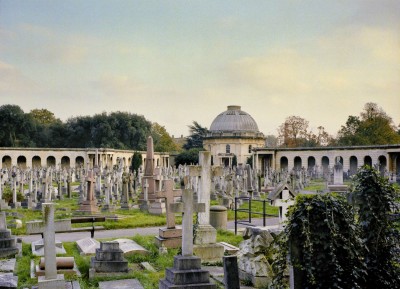
Thirty skeletons found in a mass burial – the latest archaeological find at Crossrail’s Liverpool Street site – are believed to have been victims of the Great Plague of 1665. Made during the excavation of the former Bedlam burial ground in order to make way for a new eastern entrance to the station, the discovery comes during the 350th anniversary year of the Great Plague. Jay Carver, the lead archaeologist for Crossrail, said the mass burial – with the bodies placed in now long gone wooden coffins – was unlike other individual burials found in the cemetery and thus “is likely a reaction to a catastrophic event”. “Only closer analysis will tell if this is a plague pit from the Great Plague of 1665 but we hope this gruesome but exciting find will tell us more about one of London’s notorious killers.” Clues which suggest that may be the case include a headstone found nearby marked “1665” and the fact that the 30 people all seem to have been buried on the same day. Museum of London Archaeology osteologists will now analyse the skeletons to find out the cause of death. Archaeologists have excavated more than 3,500 skeletons from the site since excavation of the burial ground – used between 1569 to at least 1738 – began earlier this year. It suggested 30,000 Londoners were buried there during that period. For more on the the Great Plague, see our earlier post herePICTURE: © Crossrail Ltd.

This Week in London – Animals in the British Library; Gladiators at Guildhall; and celebrating “pocket parks”…

title-page-1950-cs-lewis-the-lion-the-witch-and-the-wardrobe-copyright-cs-lewis-pteFrom Peter Rabbit to Aesop’s Fables, animals and their appearance in some of the classics of literature are the subject of a new exhibition which opened at the British Library in St Pancras yesterday. Animal Tales explores the role animals have played in traditional tales around the world along with their importance in the development of children’s literature, and their use in allegorical stories such as CS Lewis’ The Lion, the Witch and the Wardrobe as well as literary transformations between man and beast (this last in a nod to the fact it’s the centenary of Franz Kafka’s The Metamorphosis). Highlights in the exhibition include one of the first children’s picture books – the 1659 edition of Comenius’ Orbis sensualism pictus, an 18th century woodblock edition of Wu Cheng’en’s Journey to the West, and a soundscape installation drawn from the library’s world leading collection of natural history recordings along with other animal tales from the sound archive. The exhibition, which runs until 1st November, will be accompanied by a series of events. Entry is free (and the display includes a children’s reading area and a family trail brochure). For more, see www.bl.uk. PICTURE: The title page from the 1950 London edition of CS Lewis’ The Lion, the witch and the wardrobe. © CS Lewis Pte Ltd.

Gladiators will battle it out on the former site of London’s open air Roman amphitheatre in Guildhall Yard this weekend. The shows – which will recreate what gladiatorial games were like in Roman Londinium – will be presided over by an emperor with the crowd asked to pick its side. The ticketed event, being put on by the Museum of London, takes place Friday night from 7pm to 8pm and on Saturday and Sunday, from noon to 1pm and between 3pm and 4pm. Admission charges apply. To book, see www.museumoflondon.org.uk.

A new International Visitors Victim Service has been launched in London to specifically help foreign nationals affected by crime in the city. The first of its kind in the UK, the service, which has been established by the Metropolitan Police working with independent charity Victim Support and embassies, already operates across the five central London boroughs and is now available through a mobile police kiosk located in the West End’s “impact zone”, an area which spans Leicester Square and Piccadilly Circus (alternatively they can contact the International Visitor Advocates by calling 0207 259 2424 or visit the West End Central Police Station at 27 Savile Row.

The Mayor of London, Boris Johnson, has celebrated the creation of 100 new pocket parks across London’s 26 boroughs in a scheme which is now being adopted by other locations across the country. The parks range from a rain garden in Vauxhall to a dinosaur playground in Hornsey and have seen more than 25 hectares of community land converted into enhanced green areas. A free exhibition is running at City Hall until 28th August which focuses on the stories of 11 people involved in the creation of the parks. For more on London’s “great outdoors”, you can see an interactive map at www.london.gov.uk/outdoors.

Send all items for inclusion to exploringlondon@gmail.com.
This Week in London – Virtual reality at the British Museum; British Library’s Grade I listing; and, Deptford’s cardboard tower…

Get an up close and in-depth look at the Bronze Age as virtual reality comes to the British Museum this weekend. For the first time, families including children aged 13 or over will be able to wear Samsung Gear VR devices to virtually explore a Bronze Age site designed by Soluis Heritage which features objects from the museum’s collections. They will also be able to enter an “immersive fulldome” where they can explore a virtual reality world featuring a Bronze Age roundhouse and objects. The event will take place in the Samsung Digital Discovery Centre on Saturday and Sunday. For more, see www.britishmuseum.org.

british-library-aerial-shotThe British Library at St Pancras has been given Grade I heritage status, joining the top 2.5 per cent of listed buildings in England. Designed by architect Sir Colin St John Wilson and his partner MJ Long and completed in the late Nineties, the library is the largest public building to have been built in the UK in the 20th century. At the heart of the library is the King’s Library tower which houses the library of George III as well as the Treasures Gallery where national treasures such as the Magna Carta, Lindisfarne Gospels and original Beatles lyrics are displayed. The library was listed along with seven other libraries in England, all of which have been given Grade II status. Meanwhile the record-breaking exhibition Magna Carta: Law, Liberty, Legacy has entered its final month before closing on 1st September. The display features two of the four surviving Magna Cartas as well as the US Declaration of Independence and Bill of Rights – in the UK for the first time – and more than 200 objects including medieval manuscripts, artworks, 800-year-old garments and esoterica such as King John’s teeth and thumb bone. Admission charge applies. For more, see www.bl.uk/magna-carta. PICTURE: Tony Antoniou/British Library.

Help build The People’s Tower in Douglas Square in Deptford, south east London, this weekend. French artist Olivier Grossetete has been invited by the Albany to build the tower – with your help – out of cardboard boxes. Tower assembly takes place between 10am and 3pm on Saturday and then between 11am and 5pm on Sunday, there will be free live music and family entertainment in the Albany Garden as the tower is finished and then knocked down. No booking is required. For more, check out www.thealbany.org.uk.

Send all items for inclusion to exploringlondon@gmail.com.
LondonLife – London’s celebration of sculpture…

(i)-Damien-Hirst,-Charity.-Sculpture-in-the-City-2015Damien Hirst’s seven foot tall statue Charity (2002-2003) stands in the shadow of the Gherkin as a highlight of this year’s Sculpture in the City event. Kicking off last month, the exhibition – the fifth of its kind – features 14 works by a series of internationally renowned artists. Other sculptures (pictured below) include Adam Chodzko’s 2010 work Ghost (on show at Leadenhall Market), Laura Ford’s 2012 work Day of Judgement – Cats 1 & 2 (150 Leadenhall Street), Sigalit Laudau’s 2011 work ‘O my friends, there are no friends’ (St Helen’s Square), and Kris Martin’s 2012 work Bells II (on the corner of Bishopsgate and Wormwood Street). The works can be seen until May next year. For more (including a map of locations), see www.cityoflondon.gov.uk/sculptureinthecity. PICTURES: Nick Turpin.

Adam-Chodzko's-'Ghost',-Leadenhall-Market.-Sculpture-in-the-City-2015,-Photograph-by-Nick-Turpin

(i)-Laura-Ford's-'Days-of-Judgement---Cats-1-&-2'.-Sculpture-in-the-City-2015,-Photograph-by-Nick-Turpin

(iii)-Sigalit-Landau.-O-my-friends,-there-are-no-friends.-Sculpture-in-the-City-2015.

Kris-Martin--Bells-II_landscape

This Week in London – Buckingham Palace offers a “Royal Welcome”; exploring London’s outdoor spaces; and contemporary portraiture at the V&A…

Buckingham-PalaceBuckingham Palace opened its 19 State Rooms to the public last weekend under the theme of ‘A Royal Welcome’. As well as the chance to see the State Rooms themselves, a series of displays and films are located throughout the palace which show how Royal Household staff are involved in welcoming the tens of thousands of guests who come to the palace each year for receptions, State Banquets, garden parties and investitures. And, for the first time, the public can enter the palace through the Grand Entrance where the Australian State Coach will be displayed. Other highlights include the Palace Ballroom – set up for a State Banquet with silver gilt candelabra and centrepieces from King George IV’s grand service, displays recreating part of the dresser’s workroom and the palace kitchens, pantries and wine cellars in the throes of preparing for a State Banquet, and some of the gifts received during State Visits to the palace. Items of Queen Elizabeth II’s personal jewellery are also on display including the Kokoshnik Tiara, worn at a State Banquet in honour of the President of Mexico this year, Queen Mary’s Dorset bow brooch and the diamond Coronation necklace and earrings. The palace is open until 27th September. Admission charge applies. For more, see www.royalcollection.org.uk.

A new interactive map of public outdoor areas in London has been created to help encourage the city’s residents and tourists to make the most of the great outdoors this summer. The map details more than 200 public spaces including squares, green spaces and public street amenities, many of which have been improved as part of the Mayor of London, Boris Johnson’s Great Outdoors initiative which has seen more than £400 million invested in 242 projects since 2009. To check out the map, follow this link.

A new exhibition examining contemporary portraiture – and its inspiration from traditional modes of portraiture such as miniatures, medals and death masks – opened at the V&A in South Kensington this week. Facing History: Contemporary Portraiture features more than 80 prints and photographs drawn from the V&A’s collection and created by artists including Julian Opie, Grayson Perry, Thomas Ruff, Maud Sulter and Gavin Turk. Works featured include self-referential pieces like Grayson Perry’s pair of prints, Mr and Mrs Perry and Gavin Turk’s Portrait of Something that I’ll Never Really See, portraits of real and fictional characters like Brian D Cohen’s Man with Eyes Closed (Walter White) whose subject is both a character from US TV series Breaking Bad and Bryan Cranston, the actor who played him, Cecilia Mandrile’s identity-card inspired ID-Intensively Displaced series, and 11 pieces from Ellen Heck’s Forty Fridas. Exhibition runs until 24th April. Admission is free. For more, see www.vam.ac.uk.

Send all items for inclusion to exploringlondon@gmail.com

This Week in London – Celebrate summer at the Tate; Titian revealed at Apsley House; and, exploring the unconscious at The Freud Museum…

Turbine-HallOn Saturday, the Tate Modern’s Turbine Hall on South Bank will host an “audio-visual feast” of music, performances, art installations and activities. The free Turbine Festival will feature everything from an alternative hair salon and a London bus built on the day by artist John Costi to a pop-up juice bar where you can make your own drinks and a record shop where you can design your own vinyl record sleeve. The day will also feature performances by Grime/HipHop/AfroPop artist Afrikan Boy, Felix’s Machines – who will transform live music and sound into a 3D visual show, and poet Jacob Sam-La Rose, as well as a programme of “bite-sized” films running in collaboration with the London Short Film Festival, and a series of interactive workshops covering everything from beatboxing to crafting. Visitors to the festival, sponsored by Hyundai, are also encouraged to contribute to a special project by My Culture Museum by submitting photographs or bringing objects to be archived and curated. Runs from 12.30pm to 9.30pm. For more, see www.tate.org.uk.

•  Three paintings previously attributed to later followers of 16th century Venetian artist Titian but subsequently found to be by the artist himself and his studio have gone on display together for the first time at Apsley House. The three paintings – which include Titian’s Mistress (c1560), A Young Woman Holding Rose Garlands (c1550) and Danae (c1553) – were all in poor condition before conservation and cleaning by experts from English Heritage, the Museo del Prado in Madrid and the Hamilton Kerr Institute revealed their true quality (and Titian’s signature on two of the paintings). All three works were held in the Spanish Royal Collection and among 160 that Joseph Bonaparte, brother of Napoleon and King of Spain, tried to take out of the country following his defeat by the Duke of Wellington at the Battle of Vittoria in 1813. Wellington was subsequently given the paintings by a grateful King Ferdinand VII. The Titian at Apsley House exhibition, which opened earlier this month, runs at the Duke of Wellington’s home at Hyde Park Corner until 31st October. Admission charges apply. For more, see www.english-heritage.org.uk/visit/places/wellington-arch/.

On Now: Festival of the Unconscious. This festival at Sigmund Freud’s former London home and now home to The Freud Museum sees artists, designers, writers and performers taking another look at Freud’s seminar 1915 paper, The Unconscious. Features of the festival, which runs until 4th October, include specially commissioned films by animators from Kingston University running throughout the house, sound and video installations by London-based art project Disinformation in the dining room and an installation from stage designers at the Royal Central School of Speech and Drama in Freud’s study. There’s also a display by Julian Rothenstein, co-author of Psychobox, and a chance to recline and “free-associate” on a psycho-analytic couch in Freud’s bedroom. An extensive programme of events accompanies the displays. Admission charges apply. For more, see www.freud.org.uk.

Send all items for inclusion to exploringlondon@gmail.com.
LondonLife – From Burning Man to the British Library…

Crossroads

Visual artist David Normal brings the British Library’s collections to life in an “epic suite of murals” called Crossroads of Curiosity. Unveiled at the library at a special event on the eve of the summer solstice (20th June), the art installation – which has its origins in a work first created for Nevada’s Burning Man Festival in 2014 – juxtaposes images from millions of digitised book illustrations the library released onto Flickr in 2013. The installation can be seen in the library’s piazza in King’s Cross until 8th November. Entry is free. For more, see www.crossroadsofcuriosity.com. PICTURES: Courtesy of the British Library.

Crossroads2