LondonLife – The Royal Menagerie

A new exhibition has opened at the Tower of London celebrating the Royal Menagerie which was located there for more than 600 years.

Over the years featuring everything from lions and leopards to elephants, camels, kangaroos and crocodiles, the menagerie was founded at the Tower of London during the reign of King John (1199-1216), although as far back as the reign of King Henry I (1100-1135) animals were being presented to the king as gifts. Some notable early animals included a ‘white bear’ believed to be a polar bear from Norway and an African elephant, a gift of King Louis IX of France, both of which were presented to King Henry III.

While the early location of the menagerie – which had a long history of attracting curious sightseers – remains unknown, during the rein of King Edward III (1327-1377) there is reference to it being in a position near the Middle Tower (now the main entrance to the Tower) which suggests it was then already located in what became known as the Lion Tower – a now ruined barbican built by King Edward I in 1276-77.

Animal accommodations in the Lion Tower were substantially upgraded during the reign of King James I (1603-1625) – James was noted to have enjoyed watching the lions fight other animals in the tower’s exercise yard). Further upgrades were made under the watchful eye of Sir Christopher Wren, then Surveyor of the King’s Works, between 1672 and 1675.

The office of the menagerie’s ‘keeper’, meanwhile, had been  formalised in the 1400s with the title awarded for life – it was subsequently held by some important officials.

While in 1687 some of the beasts and birds were transferred to new accommodations at St James’s Park, the menagerie remained at the Tower until 1830 when, following the death of King George IV, the decision to move the animals – then said to number 150 – to the recently founded Zoological Society of London’s zoo at Regent’s Park. Initially only some animals were sold to the zoo but by the end of 1835 the menagerie had been completely emptied with many of the remaining animals apparently sold to an American ‘showman’ Benjamin Franklin Brown who exported them to the US.

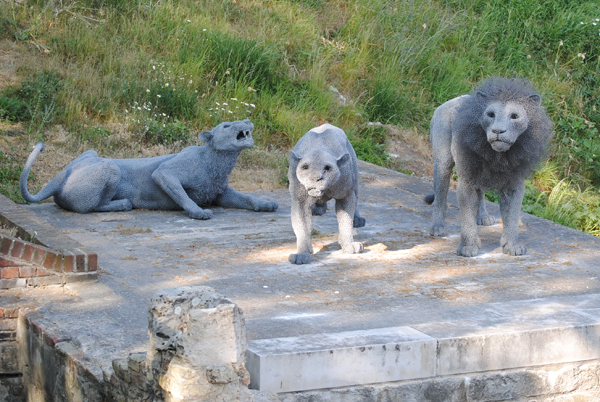
The new exhibition, Royal Beasts, is housed in the newly opened Brick Tower (entry via the Martin Tower, itself entered via the wall walk), and gives visitors views from a hitherto closed-off part of the north wall. There are also a series of life-size sculptures of various animals (see the three lions pictured), created by artist Kendra Haste, located around the tower. And, to gain a feel for how the menagerie was viewed during different eras, you can watch the short live action show featuring some of the “rarees” and “curiosities” which were housed within the tower (check with staff for times).

For more on the menagerie’s history, see Geoffrey Parnell’s guide, ‘The Royal Menagerie at the Tower of London’, available for sale at the Tower (£3.99).

WHERE: ‘Royal Beasts’, Tower of London (nearest tube station Tower Hill); WHEN: 9am to 5.30pm, Tuesday to Saturday, 10am to 5.30pm Sunday to Monday (until 31st October); COST: Included in Tower of London admission – £19.80 adults; £10.45 children under 15; £17.05 concessions; £55 for a family (prices include a voluntary donation); WEBSITE: www.hrp.org.uk/toweroflondon/.

Lost London – The Skylon

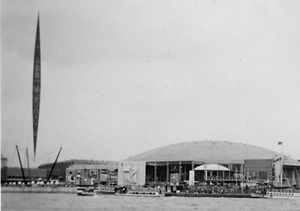
A sleek, futuristic, cigar-like sculpture that resembled what early science-fiction writers thought space-craft would look like, the Skylon was the centrepiece of the 1951 Festival of Britain site in South Bank and remains the enduring icon of the post-war celebration.

Designed by young architects Hidalgo Moya and Philip Powell (with the assistance of engineer Felix Samuely), the 300 foot tall Skylon, which, supported by cables, seem to hang in the air over the Thames, some 40 foot above the ground.

The structure (seen on the left of the picture of the Festival of Britain site) was dismantled in 1952 on the orders of the then-Prime Minister Winston Churchill who apparently saw it as an unwanted symbol of Clement Attlee’s Labour Government which had lost power earlier that year.

Strangely, the fate of the structure remains something of a mystery – Jude Kelly, artistic director at the Southbank Centre describes it as being “like the Loch Ness monster” in an interview with the Guardian newspaper earlier this year. “People have sightings of Skylon – they think – and bits of it, but nobody really knows what happened to it,” she said, adding that it was very hard to understand why it was thrown away.

While some fragments remain – including the base (and a model of it) which can be found at the Museum of London –  a common theory is that the rest of it was cut up and dropped into the Thames while other theories have it being buried under Jubilee Gardens or simply sold for scrap metal and “turned into ashtrays”.

There is an ongoing campaign to have the Skylon, which these days lends its name to a riverside restaurant at the Southbank Centre, rebuilt, although not necessarily in its original location.

The story of the Skylon, which sat on a site now occupied by the Southbank Centre, is told in the Museum of 1951 (see Southbank Centre website for details), open as part of the celebrations of the 60th anniversary of the 1951 Festival of Britain. On Tuesday, architect Nicholas Grimshaw and former president of the Royal Institute of British Architects Jack Pringle will lead a discussion at the Southbank Centre on the Skylon. For more information, follow this link.

PICTURE: John Ritchie Addison (via Wikipedia)

Treasures of London – Admiral Lord Nelson’s coat

It was roughly two hours into the Battle of Trafalgar on 21st October, 1805, about 1.15pm, that Great Britain’s most famous seaman, Admiral Horatio Lord Nelson, was fatally struck by a musket ball.

Fired by a marksmen in the rigging of the French ship Redoubtable, the musket ball struck him in the left shoulder as he stood on the deck of his flagship, HMS Victory.

Having fallen to his knees, he was spotted by the Victory‘s captain, Thomas Hardy, before he collapsed. Carried below the decks to the ship’s cockpit, it was there that he died (the Victory can still be visited at Portsmouth).

His damaged coat, meanwhile, was placed under the head of Midshipman George Augustus Westphal, who was being treated for his injuries nearby. Blood from the midshipman (late himself an admiral) stuck his hair to one of the epaulettes, part of which was was cut away and retained by his family as a memento.

The “undress jacket” was later returned to Nelson’s mistress, Emma Lady Hamilton, in accordance with his wishes. She later gave it to Joshua Jonathan Smith, Lord Mayor of London in 1810-1811, to as payment of a debt just prior to retiring to France in 1814. It was Prince Albert, the consort of Queen Victoria, who later purchased the coat for £150 from Smith’s widow and presented it to Greenwich Hospital in 1845.

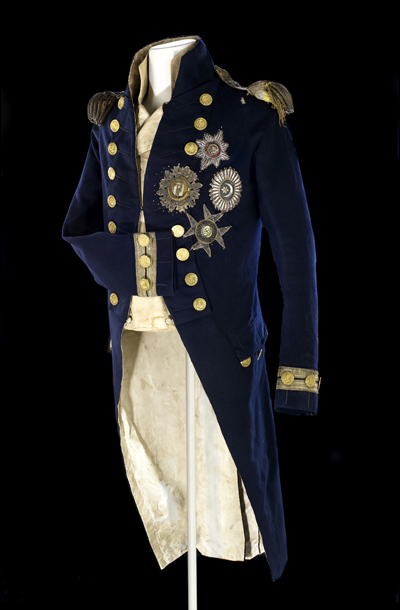
The jacket can now be found in the National Maritime Museum in Greenwich (housed in a section of the former Naval College). Along with the fatal musket ball hole on the left shoulder, the tails and left sleeve of the jacket are stained with the blood of John Scott, Nelson’s secretary, who had died in the early moments of the battle on the spot where Nelson was later shot. It’s also possible to see where the epaulette was damaged during the treatment of Midshipman Westphal.

The front of the coat also features embroidered versions of the four orders of chivalry awarded to Nelson – these are the star of the Order of the Bath, the Order of the Crescent awarded by the Sultan of Turkey, the Order of St Ferdinand and of Merit awarded by Ferdinand IV of Naples, and the German Order of St Joachim. According to the National Maritime Museum, “Nelson habitually wore them on all his uniform coats”.

The coat’s right sleeve is positioned as Nelson would have worn it – in 1797 he had lost his right arm at the Battle of Santa Cruz de Tenerife.

PICTURE: Vice-admiral’s undress coat worn by Nelson (1758-1805) at the Battle of Trafalgar. There is a bullet hole on the left shoulder, close to the epaulette. (c) National Maritime Museum, Greenwich, London, Greenwich Hospital Collection.

WHERE: National Maritime Museum, Romney Road, Greenwich, (nearest DLR station is Cutty Sark or Greenwich mainline station); WHEN: Open 10am to 5pm daily; COST: Free; WEBSITE: www.nmm.ac.uk.

LondonLife – St Paul’s celebrates 300 years since its completion…

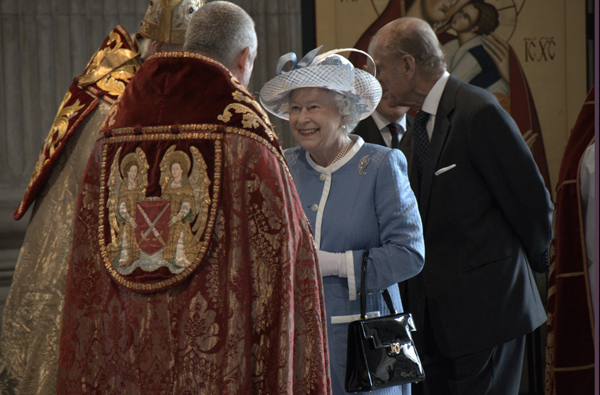
Queen Elizabeth II attends the tercentenary service at St Paul’s. PICTURE: Graham
Lacdao/St Paul’s Cathedral

A service was held at St Paul’s today in celebration of the 300 year anniversary of the cathedral’s completion.

The tercentenary service also marks the end of a massive 15 year, £40 million repair and cleaning project, meaning the cathedral is now clear of scaffolding for the first time in 15 years.

Designed by the indomitable Sir Christopher Wren, work on St Paul’s Cathedral began in 1677 and was formally completed in 1710 (although it had been holding services since 1697). (For more on the history of St Paul’s, see our earlier post, part of our series on Wren’s London, here).

Said to have the largest dome after St Peter’s in Vatican City, St Paul’s has been at the centre of London’s (and the United Kingdom’s) religious and political life for centuries, hosting state funerals (Lord Nelson, the Duke of Wellington and Winston Churchill’s were all held here) as well as the royal wedding of Prince Charles and Lady Diana and many celebration services.

Sights include the crypt – containing the tombs of both Nelson and Wellington – and the Whispering Gallery (see our earlier post on the Whispering Gallery here) as well as the exterior viewing galleries.

To celebrate the cathedral’s liberation from scaffolding, St Paul’s is holding a 300th Anniversary Photography Competition in which photographers are invited to submit their best exterior shots of the building. The 10 winning images will then be displayed in the cathedral crypt. The competition runs until 16th July.

To enter, upload pictures to St Paul’s 300th anniversary competition group at Flickr – www.flickr.com/groups/stpaulslondon/. For more information, see www.stpauls.co.uk/photocomp.

King James I’s London – 7. The Gunpowder Plot

One of the most significant events during the early year of King James I’s reign was the discovery of the Gunpowder Plot.

The plot, which involved a group of Catholic conspirators including Robert Catesby and  Guido ‘Guy’ Fawkes (you can read more about Fawkes in our earlier entry on Bonfire Night), centred on a plan to blow up the House of Lords in Westminster Palace during the State Opening of Parliament in November 1605, thus killing the king (who had aggrieved Catholics in a public denunciation at the Hampton Court Conference in 1604; it should also be noted that he was already aware of several other failed Catholic plots to kill him) and, presumably, many MPs and Lords.

It is believed they intended replacing James with his daughter, Princess Elizabeth, whom they hoped could be made more amendable to Catholic worship.

But such a plot was hard to keep mum and an anonymous tip-off to Lord Monteagle, a Catholic, not to attend the event, led authorities to eventually uncover the plot in a basement storeroom below the House of Lords where, at around midnight on 4th November, they found Fawkes guarding the 36 barrels of gunpowder.

Fawkes was sentenced to be hung, drawn and quartered – a sentence never fully carried out after he leapt off the scaffold and broke his neck – and the other plotters, who had fled from London soon after the discovery, were either killed during subsequent arrest attempts, imprisoned or executed.

So happy was King James I – that he had Act of Parliament passed which made the 5th November a day of thanksgiving – it remained in force until 1859. Celebrations of the plot’s foiling continue every year on Bonfire Night.

But what were some of the significant places in the event? The cellar where Fawkes was arrested no longer exists – it was destroyed during a fire in 1834.

The conspirators who had been arrested were subsequently taken to the Tower of London where King James I authorised the torture of at least Fawkes and perhaps others among the conspirators. Fawkes capitulated quickly and signed two confessions (which are now in The National Archives). Another of the conspirators, Francis Tresham, died of natural causes while in the Tower.

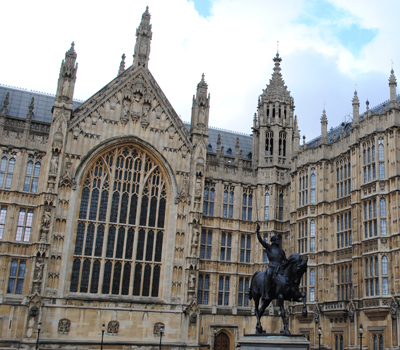
The eight surviving conspirators went on trial at Westminster Hall – still part of the Houses of Parliament complex today; the end of the hall is visible in the above picture – in late January 1606 and were all condemned to death for treason.

Four of them were executed on 30th January in St Paul’s Churchyard outside St Paul’s Cathedral while the remaining four including Fawkes were executed the next day outside Westminster Hall in Old Palace Yard. The heads of Catesby and Thomas Percy, both of whom had been killed during a shoot-out in Staffordshire, were set up outside the Houses of Parliament.

Arrests – and in some cases executions – of others believed to be associated with the plot continued in the following months.

Another place of note in the story of the Gunpowder Plot is Syon Park in the city’s west, now the London home of the Duke of Northumberland. The aforementioned Thomas Percy was a cousin of the then Earl of Northumberland, Henry Percy, and apparently dined with the Catholic earl at the house on the night of 4th November, before the plot was uncovered.

That association subsequently led to the earl’s arrest and he was confined to the Tower for the next 15 years on the order of the king.

Treasures of London – Nelson’s Column

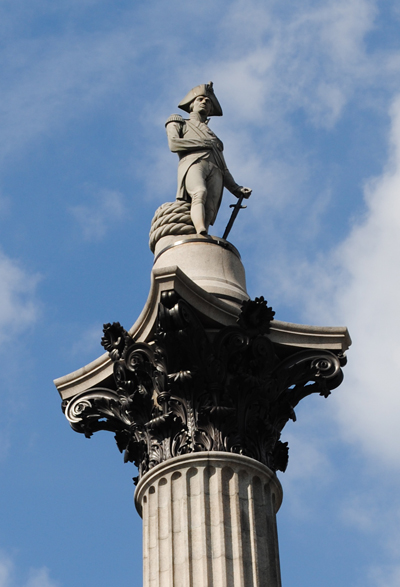
Towering over Trafalgar Square, Nelson’s Column was constructed in the 1840s to commemorate the man many believe to be Britain’s greatest naval hero, Admiral Lord Nelson.

Parliament started discussions on a monument commemorating Nelson only 10 years after his death at the Battle of Trafalgar in October 1805, but it wasn’t until 1838 that the Nelson Memorial Committee was finally formed and public subscriptions called for to raise funds for the monument.

The government agreed to provide the location and, following a controversial competition (which had to be run twice), William Railton’s designs showing a Corinthian column topped by a statue of Nelson (which it was stipulated had to be made by EH Bailey) with four lions at its base, was adopted.

The column was completed in 1843. It featured a bronze capital, made from old cannons taken from the Woolwich Arsenal and shaped in the form of acanthus leaves, and Bailey’s 5.5 metre (17 foot) tall statue of Nelson (made from Craigleith sandstone quarried in Scotland and donated by the Duke of Buccleuch). The four bronze identical lions, made by sculptor Sir Edwin Landseer and said to be modelled on a dead cat from a zoo, were not added until 1867.

On the column’s pedestal are four bronze relief panels showing Nelson’s four great victories – the Battle of Cape St Vincent, the Battle of the Nile, the Battle of Copenhagen and the Battle of Trafalgar, the scene of which depicts the admiral in the throes of dying (he was killed by a musket bullet fired from the French vessel Redoubtable and was carried below decks where he died). They were apparently made from French guns captured at each of the battles.

The Grade I-listed column, which cost £47,500 to build, was refurbished in a four month exercise costing £420,000 in 2006, during which it was discovered that it was actually 16 foot shorter than had previously been thought (its total height, to the tip of Nelson’s hat, is actually 169 feet instead of the 185 feet previously supposed). It had previously been refurbished in 1986 and in 1968. You can see a gallery of images taken during the most recent restoration here.

Interestingly, it is reported that just before Bailey’s statue was raised to the top of the column in 1843, 14 stonemasons who had worked on it during construction held a celebration dinner party on the plinth at the top.

Around London – Apsley House history goes online; Australian landscapes at the British Museum; Dame Judy Dench awarded Freedom of the City of London; and, Out of this World on at British Library

A detailed history of Apsley House, the former home of Arthur Wellesley, 1st Duke of Wellington, has gone live online as part of a pilot project aimed at “deepening the public’s understanding of English history”. The property, known as Number 1, London, is one of 12 initially being profiled in depth in a pilot project on the new English Heritage online resource, Portico. Others include Down House, the former home of Charles Darwin, located in Kent, as well as Beeston Castle, Brough Castle, Byland Abbey, Carlisle Castle, Dunstanburgh Castle, Easby Abbey, Kenilworth Castle, Lullingstone Roman Villa, Rievaulx Abbey and Wroxeter Roman City near Shrewsbury. Brief historical details are also provided for an additional 220 lesser known free sites including Dunster Yarn Market in Somerset. For more see www.english-heritage.org.uk/professional/archives-and-collections/portico/.

The West Lawn of the British Museum Forecourt has been turned into an image of the Australian continent as part of a five year partnership programme between the museum and the Royal Botanic Gardens, Kew. The landscape moves from the vegetation of the eastern Australia’s coast through to the red centre and onto a rocky Western Australian outcrop. It showcases some of the continent’s unique and highly threatened flora. The  construction of the landscape, which follows one showcasing that of South Africa last year, is part of the museum’s ‘Australian season’. Runs until October. Admission is free. See www.britishmuseum.org.

• Dame Judy Dench was awarded the Freedom of the City of London for services to acting at a ceremony at the Guildhall last week. The winner of an Academy Award, nine BAFTAs and three Laurence Olivier Awards, Dame Judy is an icon of stage and screen. She is reportedly looking forward to driving her sheep over London Bridge and occasionally wearing a sword in public – both privileges of those awarded the Freedom of the City of London. The Freedom of the City’s origins are believed to date back to 1237 and enabled recipients to carry out their trade. Today people are nominated for or apply for the Freedom for the link with the City or are awarded it for a significant contribution to London life. Many of the traditional privileges – such as driving your sheep over London Bridge or being hanged with a silken rope – no longer exist.

Now On: Out of this World: Science Fiction but not as you know it. The British Library’s first exhibition which explores science fiction through literature, film, illustrations and sound. Guest curated by Andy Sawyer, director of science fiction studies MA at the University of Liverpool, the exhibition traces the evolution of the genre from Lucian of Samosata’s True History, written in the 2nd century AD, through to the recent writings of Cory Doctorow and China Mieville. Highlights include a 1516 edition of Sir Thomas More’s Utopia, a 1647 edition of Lucian’s True History, and a 1906 edition of HG Wells text, The War of the Worlds. Runs until 25th September. For more see, www.bl.uk/sciencefiction.

King James I’s London – 6. The Queen’s House, Greenwich

Long an admired landmark of Greenwich, the origins of the Queen’s House go back to the reign of King James I.

It was the Queen, Anne of Denmark, who commissioned the building of The Queen’s House in 1616 and gave it the name by which it is still known. Sadly, however, she died before it was completed.

King James I was said to have been a frequent visitor to the Tudor Palace of Greenwich (the building had earlier been known as the Palace of Placentia and was the birthplace of King Henry VIII in 1491).

King James  is traditionally said to have awarded the Manor of Greenwich to Queen Anne as an apology after he had publicly sworn at her when she had accidentally shot one of his favorite hunting dogs.

In 1616, Queen Anne decided to build a new property on the site as both a private retreat and a place where she could entertain and it was to the rising star Inigo Jones that she turned to for the design (in recognition of his growing status, he was appointed Surveyor of the King’s Works the following year).

The house was Jones’ most important job to date and the design he came up – based on a H with the two sides joined by a bridge over the Greenwich to Woolwich road – with is said to be the first Classical building in England.

Among the original features which survive to this day are the striking black and white geometrically patterned marble floor of the Great Hall (the room having been designed as a perfect cube), the painted ceiling of the Queen’s Presence Chamber and the iron balustrade the Tulip Stairs – said to be the first “geometric self-supporting spiral stair in Britain”.

Queen Anne became ill in 1618 and died the following year without seeing the end result of her commission. The work subsequently was shelved and only restarted (and completed in 1638) after King Charles I gave it to his wife, Queen Henrietta Maria.

She only had possession for a short time before Parliamentary forces seized it during the Civil War. After the Restoration, the Queen’s House was returned briefly to her by her son King Charles II (it was at this time that the original H-shape of the house was altered to a square) before part of it as later used as studio for painters and then as grace and favor apartments.

With the Old Royal Naval College now occupying the surrounding site, in 1805, King George III gave the property to the Royal Naval Asylum – a charity caring for the orphan children of seamen – and it later became part of the Royal Hospital School.

The National Maritime Museum took possession in 1934 and the building now houses the National Martime Museum’s collection of fine art. As an interesting aside, there have been several reported sightings of ghosts in the house, the latest as recently as 2002.

WHERE: The Queen’s House, National Maritime Museum, Greenwich (nearest DLR station is Cutty Sark); WHEN: 10am to 5pm daily (check website for closures); COST: Free; WEBSITE: www.nmm.ac.uk/places/queens-house

Treasures of London – The Portuguese Centrepiece, Apsley House

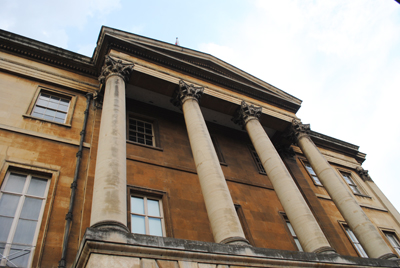
Having just been cleaned as part of a renovation of the State Dining Room at Apsley House (pictured) – the former London residence of Arthur Wellesley, the Duke of Wellington, the silver-gilt Portuguese Centrepiece  was presented as part of a complete service to the duke in 1816.

The gift of the Portuguese Regency Council, it was created in honor of the duke’s role in leading the armies of Spain, Britain and Portugal to victory over Napoleon’s forces in the Peninsular War of 1808-14.

The service, which consists of more than 1,000 pieces, was designed by Portuguese court artist Domingos Antonio de Sequeira who took three years to complete it with much of the work carried out in Sequeira’s house and neighbouring workshops. Subsequently damaged in the sea crossing to England, repairs had to be made before it was formally presented to the duke late in 1816.

The eight metre long centrepiece commemorates all the battles of the Peninsular War in which the allies were victorious. It was acquired for the nation in 1948 and is now permanently displayed on the duke’s original mahogany dining table, designed especially to support its weight.

WHERE: Apsley House, 149 Piccadilly, Hyde Park (nearest tube station is Hyde Park Corner); WHEN: 11am to 5pm Wednesday to Sunday (until 31st October); COST: £6.30 an adult/£5.70 concessions/£3.80 a child (English Heritage members free); WEBSITE: www.english-heritage.org.uk/daysout/properties/apsley-house/

King James I’s London – 5. Holland House

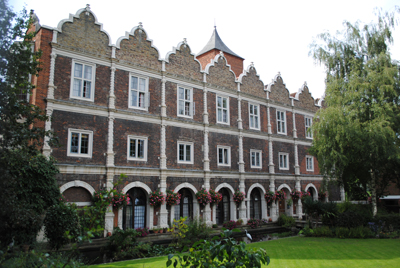
A Jacobean mansion located in Kensington’s Holland Park, Holland House was first built in 1605 for Sir Walter Cope, Chancellor of the Exchequer for King James I. 

Sir Walter apparently entertained the king and his wife, Queen Anne of Denmark, at the property – then named Cope Castle – on numerous occasions at the property and reportedly hosted the king the night after his son, Henry Frederick, the Prince of Wales, died in 1612.

Its name came with a later owner – the ill-fated Henry Rich, Cope’s son-in-law, who was made the 1st Earl of Holland in 1624 and was later executed for his role in supporting the Royalist cause during the Civil War during which the house was occupied by parliamentary troops.

The home was later used by various family members – among luminaries associated with the property are the essayist Joseph Addison who died there in 1719 as well as, in later years, the likes of Lord Byron, Benjamin Disraeli, Charles Dickens and Sir Walter Scott, all of whom visited the property during the property’s golden age in the 19th century when it was an important social gathering place.

The house was largely destroyed in a bombing raid in September 1940 and passed into ownership of the local authority. A youth hostel is now housed inside the restored east wing of the building while other buildings are used for a restaurant and function centre – all set within the 22 hectare (55 acre) Holland Park. Some of the ruins provide a backdrop for open-air theatre performances and concerts in summer.

WHERE: Holland Park (nearest tube stations are Holland Park, Kensington High Street and Notting Hill); WHEN: 7.30am to 30 minutes before dusk (check signs by entrance); COST: Park entrance is free (house is not open to the public); WEBSITE: www.rbkc.gov.uk/leisureandlibraries/parksandgardens/yourlocalpark/hollandpark.aspx

Where’s London’s oldest…bookshop?

Hatchards on Piccadilly (right next to Fortnum & Mason) is generally accepted as being London’s oldest surviving bookshop.

It was founded in 1797 by John Hatchard in Piccadilly (there seems some dispute over whether it still stands on exactly the same site).

The shop currently holds three royal warrants for the supply of books to the Royal Household.

Among high profile past customers have been Queen Charlotte (wife of King George III), former PMs Benjamin Disraeli and  Arthur Wellesley, the Duke of Wellington, and literary figures such as Rudyard Kipling, Oscar Wilde and Lord Byron.

It remains popular with lovers of literature and is noted for hosting book-signings by prominent authors with many signed book on the shelves.

For more, see www.hatchards.co.uk.

Lost London – The Rose Theatre

First opened in 1587, The Rose was one of the first purpose-built theatres in London and the first Elizabethan theatre in Bankside, then an area noted for its entertainments including gambling dens, bear and bull baiting pits, and brothels.

The theatre was built for businessman and theatre developer, Philip Henslowe, and his partner John Cholmley, and subsequently hosted plays including Christopher Marlowe’s The Jew of Malta and Shakespeare’s Henry VI part I and Titus Andronicus. Among the actors was Edward Alleyn, Henslowe’s son-in-law, while among the companies which performed there were Lord Strange’s Men, Sussex’s Men, the Queen’s Men and the Admiral’s Men.

Its success led to the building of rival theatres in the area including The Swan in 1595 and The Globe in 1599. It had apparently fallen out of use by 1603 and was abandoned soon after.

The theatre fell out of history until the late 1980s when, following the demolition of a 1950s office block, archaeologists from the Museum of London uncovered the remains of much of the theatre’s floorplan, revealing that it was a smallish many sided structure based on a 14-sided polyhedron. A campaign to save the remains was launched – attracting support from acting luminaries including Sir Laurence Olivier and Peggy Ashcroft – and much of the site was preserved from development.

Some 700 objects, including jewellery, coins and a fragment of one of the moneyboxes used to collect entrance money, were excavated at the site.

The site was reopened to the public in 1999 – it now features displays and some of the objects found by archaeologists – and part of it has been used as a performance space again since 2007.

WHERE: Rose Theatre, Park Street, Bankside; WHEN: 10am to 5pm Saturdays (Shakespeare’s Globe also offer tours during matinee performances at The Globe when tours there are not available – see www.shakespeares-globe.org for more details); COST: Free (donations welcomed and there is a charge for tours from The Globe); WEBSITE: www.rosetheatre.org.uk

The Royal Wedding – Royal residences…

Word is that Prince William and his soon-to-be wife, Catherine Middleton, have yet to formally decide where they will live when in London (they are expected to spend much of their first two-and-a-half years of marriage in North Wales). 

Their initial London base, however, will reportedly be Clarence House. Located in The Mall, just down the road from Buckingham Palace and beside St James’s Palace, the grand building is currently the home of William’s father Charles, the Prince of Wales, his wife Camilla, Duchess of Cornwall, and, William’s brother, Prince Harry (it is also the home of William himself).

In years gone past, Clarence House served as the home of the newly married Queen Elizabeth II (then Princess Elizabeth) and her husband, Prince Philip, the Duke of Edinburgh. Prince Charles, who lived there with his parents until the age of three, returned to the property in August 2003 after the death of his grandmother Queen Elizabeth, the Queen Mother, who had lived in the building from 1953.

Clarence House was built between 1825 and 1827 to the designs of architect John Nash on the orders of Prince William Henry, the Duke of Clarence and later King William IV.

Choices for a permanent home in London for the soon-to-be married couple reportedly include Buckingham Palace (see yesterday’s entry), as well as Kensington Palace.

It was converted from a Jacobean mansion for King William III and Queen Mary II and has since been the home of many royals including, most famously, Diana, Princess of Wales. She and her then husband, Prince Charles, moved in following their wedding in 1981, and Princess Diana continued to live there after her divorce in 1996.

Other notable royal residents have included Queen Anne and Princess Margaret, sister of Queen Elizabeth II.

Another option – St James’s Palace – was built in 1531 on the site of a medieval leper hospital by King Henry VIII. Used initially for state occasions and to house royal relatives (Tudor monarchs actually lived at Whitehall Palace), it became the official royal residence in 1702, when Whitehall Palace burnt down, and remained so until the 1830s when King George III moved to Buckingham Palace.

Famous Londoners – Peter, the Wild Boy

Found living ‘wild’ in the woods near Hamelin in northern Germany, in 1725, Peter was brought to London at the behest of King George I the following year (the king had heard of his plight while visiting his Hanoverian homeland and had initially had him taken to his summer palace at Herrenhausen). Peter subsequently spent time at the court of the king as well as those of the Prince of Wales, the future King George II, and his wife, Caroline of Ansbach.

On his arrival in London, Peter, believed to be about 15 or 16 years old when he was found, quickly acquired celebrity status – Daniel Defoe wrote a pamphlet, Mere Nature Delineated, in which he mused about his nature and Jonathan Swift wrote a satire on the excitement surrounding his arrival in London while a wax figure of him was exhibited in the Strand and along with other palace courtiers, he appears in a now famous painting by William Kent which still hangs on the king’s grand staircase in Kensington Palace.

Treated by the royals as something of a ‘pet’, efforts were made to educate Peter but later abandoned due to his apparent lack of progress. Many were also said to have been shocked at his lack of manners – something that may have helped contribute to his eventual departure from court.

When the king died in 1727, his daughter-in-law, now Queen Caroline, granted a yeoman farmer in Hertfordshire, James Fenn, a pension in return for looking after Peter.  He is recorded as having wandered off on a couple of occasions and, after one incident involving a fire in 1751, was fitted with a collar to prevent further escapes (the collar is still in the keeping of the Berkhamsted School in Hertfordshire).

Peter subsequently spent the remainder of his life in rural England (where he was known to have developed a love for gin but was generally remarked upon as being timid). Meeting him a few years before his death, Scottish philosopher and judge James Burnett, Lord Monboddo, recorded that while Peter could understand what was said to him, he could only say the words ‘Peter’ and ‘King George’.

Peter died in 1785, when he was at least 70-years-old. He was buried in the churchyard of St Mary’s Church in Northchurch, Hertfordshire.

It is now believed that Peter may have been affected by the chromosomal disorder Pitt-Hopkins Syndrome, thanks to the work of Historic Royal Palaces historian Lucy Worsley who, while researching the lives of courtiers at Kensington Palace for her book Courtiers, noted features such as Peter’s “cupid bow lips”, coarse hair and drooping eyelids in Kent’s portrait and passed on a description to a professor of genetics.

It is thought such a diagnosis may help explain why Peter ended up living alone in the German forest where he was found.

Around London – Apsley House’s State Dining Room reopens; St Pancras Renaissance Hotel restored; Sir Basil Spence honored; and, your chance to lift Tower Bridge…

The State Dining Room at Apsley House, the Duke of Wellington’s former London residence, reopened to the public last weekend after a make-over. The revitalisation works included repairing and cleaning the ceiling and chandelier as well as the Portuguese silver centre piece, which was presented to Wellington by the Portuguese Council of Regency to commemorate his victories over Napoleon in the Peninsular War. The house, which bears the landmark address of Number One London, was given to the nation in 1947 by the 7th Duke of Wellington, whose family continues to occupy private rooms in the premises. See www.english-heritage.org.uk/daysout/properties/apsley-house/.

Seventy-six years after it last hosted a guest, the former Midland Grand Hotel at London’s St Pancras station reopened its doors quietly earlier this month following a 10 year, £150 million restoration project. The Grade I-listed Victorian Gothic building, designed by Sir George Gilbert Scott (he also designed the Albert Memorial), originally opened in 1873. It closed in 1935 but was saved from demolition in the 1960s after a campaign led by poet laureate Sir John Betjeman. Among the highlights of the recent project is the restoration of the Sir George Gilbert Scott suite to look like it did in the Victorian era. The hotel, rebranded the St Pancras Renaissance Hotel,  will be officially opened on 5th May, exactly 138 years after it first opened. See www.marriott.com/hotels/travel/lonpr-st-pancras-renaissance-london-hotel/.

Architect Sir Basil Spence (1907-1976) has been honored with an English Heritage blue plaque outside his former home and office in Islington. The architect, best known for his redesign of Coventry Cathedral after it was bombed by the Luftwaffe during World War II, lived and worked at 1 Canonbury Place from 1956 until the mid-1960s. He and his family then moved next door while he continued to use the property as his offices (it remained in use as architectural offices long after his death). Other commissions for which Sir Basil is known include Kensington and Chelsea Town Hall, the controversial Knightsbridge Barracks and the Swiss Cottage Library. Internationally, his works included the unusual ‘beehive’ extension to the Parliament Building in Wellington, New Zealand.

• Now On: Your chance to lift the two 1,100 tonne bascules at Tower Bridge. The City of London Corporation this week launched their annual competition to find a “guest bridge driver”. Enter by going to Tower Bridge’s website (www.towerbridge.co.uk) and answering a question about the bridge or the Square Mile. The winner will be drawn next month and as well as using the controls to lift and lower the bridge, will receive a commemorative certificate in the control cabin, a tour of the Tower Bridge Exhibition and the chance to visit the underground bascule chamber and fifth-level turrets, neither of which are normally open to the public. They’ll also be presented with a bottle of champagne.

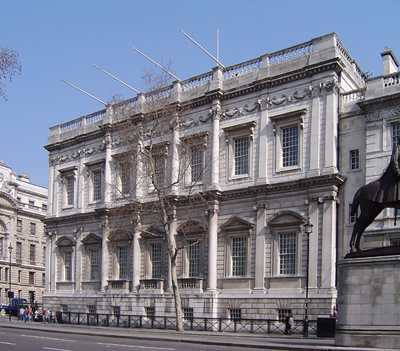
King James I’s London – The Banqueting House

This year marks 400 years since the creation of the King James Bible (it was completed in 1611). So, in a new special Wednesday series, we’re taking a look at London during the reign of King James I (he’s the one who commissioned the Bible). First up in our list of some of the key sites from his reign in 1603 to 1625, is the Banqueting House in Whitehall.

All that’s left of the Palace of Whitehall after a fire destroyed the rest in 1698, the Banqueting House was completed towards the end of King James I’s reign in 1622. In a sharp break from the fiddly Elizabethan architecture found in the remainder of the palace, the Banqueting House was the first building in central London which paid homage to the plainer Palladian style, brought back from Italy by ‘starchitect’ Inigo Jones.

The three floor Banqueting House replaced an earlier banqueting house which, funnily enough, had been destroyed by fire only a few years earlier. The new building was built to host royal ceremonies such as the reception of ambassadors and, most importantly, performances of court masques, which at the time were growing in sophistication and were being designed to communicate to audiences messages about the Stuart concept of kingship.

The building is centred on a “double cube” room  – a hall built so that its length is exactly double its width and height. The great chamber also features a balcony believed to have been created not for ministrels but as a space for an audience to watch the proceedings going on below.

It should be noted that the massive ceiling paintings were added after King James I’s death – it was his ill-fated son, King Charles I, who commissioned Flemish artist Peter Paul Rubens to paint them around 1630 (they were in place by March, 1636). It was, incidentally, from one of the windows in the Banqueting House that King Charles I stepped out onto a scaffold and had his head cut off – although that was in 1649, long after the era we’re focusing on here.

Inigo Jones and Ben Jonson’s Masque of Augurs was the first masque performed here in 1622, even before the building was complete. The last was Sir William Davenant’s The Temple of Love in 1635 after which the masques were stopped, apparently because the torches typically used to illuminate them would cause smoke damage to the paintings now on the ceiling.

WHERE: The Banqueting House, Whitehall (nearest tube station is Westminster); WHEN: 10am to 5pm, Monday to Saturday (check website for closing dates as the hall is used for functions) ;  COST: £5 an adult/£4 concessions/children under 16 free; WEBSITE: www.hrp.org.uk/BanquetingHouse/

PICTURE: Wikipedia

Famous Londoners – Sir Robert Peel

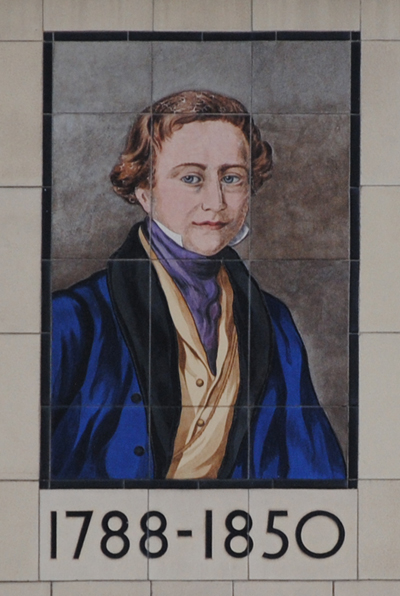
Credited as the creator of the Metropolitan Police Force, Sir Robert Peel was a two-time Prime Minister who oversaw landmark social reforms in arenas ranging from the workplace and prisons to trade.

Born on 5th February, 1788, into a wealthy Lancashire family (his father, also Robert Peel, was a cotton mill owner), Sir Robert was educated at Harrow and Oxford before entering parliament as part of the Duke of Wellington’s Tory government in 1809.

He married in 1820 and he and his wife Julia Floyd, the youngest daughter of General Sir John Floyd, had five sons and two daughters.

Having served in roles including under-secretary for wars and colonies and chief secretary for Ireland during his early political life, Sir Robert was appointed Home Secretary in 1822. It was during his subsequent time in the office that he introduced many reforms related to prisons and law and order – including reducing the number of crimes punishable by death by about 100 – and at the same time ordered the foundation of the Metropolitan Police Force (the terms ‘Bobby’ and ‘Peeler’ are both references to his name).

Having later spent time on the Opposition benches, he became Prime Minister in 1834 after Earl Grey’s Whig Government was dismissed by King William IV. It was during this time that he issued the famous Tamworth Manifesto, seen as a defining moment in the creation of the Conservative Party. But frustrated at the minority government, he resigned a year later.

It wasn’t until 1841 that Sir Robert returned to government, again becoming Prime Minister. Subsequent years saw him overseeing the introduction of laws forbidding the employment of women and children underground, limiting working hours for women and children in factories, and, after a long fight, repealing the trade-restricting Corn Laws – a party-splitting act which was apparently a bid to free up more food for the Irish population then in the midst of a devastating famine.

Sir Robert resigned from politics in 1846 and died four years later on 2nd July, 1850, after he was injured falling from a horse in Constitution Hill, London. He was buried at his home, Drayton Manor, near Tamworth in Staffordshire.

The city’s most famous statue of Sir Robert stands in Parliament Square, outside the Palace of Westminster.


Around London – Happy St Patrick’s Day; 18th century workhouse saved; David Gestetner honored; and, Watteau’s drawings…

• First-up, we’d like to wish you all a happy St Patrick’s Day! And if you missed the St Patrick’s Day Parade and free festival in London last Sunday, don’t worry, there’s still plenty of Irish cheer on the city streets with the London Eye and Battersea Power Station both turning green to mark the occasion while the green beer is flowing at the city’s many Irish pubs.

The building some believe served as a model for the workhouse in Charles Dickens’ novel Oliver Twist has been saved from demolition with a Grade II listing. Completed in 1778, the Covent Garden Workhouse in Cleveland Street became the workhouse of The Strand Poor Law Union in 1836 and was later used as an infirmary before more recently serving as the outpatients department of the Middlesex Hospital. The workhouse is believed to the most well preserved of the three surviving 18th century workhouses in London. Announcing the listing this week, John Penrose, Minister for Heritage and Tourism, said that while it is unknown whether or not the building was the inspiration for the workhouse featured in Oliver Twist, “we know that it is the sole survivor of the workhouses  that were operating in the capital when Dickens wrote his famous novel and that as a young man he lived just nine doors along from it”. Simon Thurley, chief executive of English Heritage, said the listing also recognised the association between the workhouse and Dr Joseph Rogers, whose direct experience of the workhouse when working as Chief Medical Officer led him to launch important reforms of the system of healthcare provision for the poor.

David Gestetner, a key player in the development of office copying technology, has been commemorated with a blue plaque outside his former residence at 124 Highbury New Park in Islington. The Hungarian-born Gestetner lived at the property for 41 years until his death in 1939. The plaque was unveiled on Tuesday by two of his great grand-children.

On Now: Watteau: The Drawings. The first retrospective exhibition of the drawings of French artist Jean-Antoine Watteau opened last Saturday at the Royal Academy of Arts. Watteau is known for inventing the genre of fetes galantes (small pictures of social gatherings of elegant people in parkland settings) and for his mastery of the ‘three chalks’ or trois crayons technique using red, black and white. The exhibition features more than 80 works on paper. There is an admission charge. Runs until 5th June. See http://www.royalacademy.org.uk for more information.

Curious London Memorials – 10. The Bard or not The Bard?

For the last in our series of curious London memorials, we’re looking at one which isn’t quite what it seems.

At first glance, the granite plinth topped by a bronze bust of William Shakespeare which stands in gardens at the junction of Love Lane and Aldermanbury in the City, looks like yet another tribute to the Bard.

But take a closer look and you’ll read that the inscriptions in fact refer to John Heminge and Henry Condell, two actors and friends of the Bard, who were responsible for collecting his works and giving them “to the world”.

The two men were partners with Shakespeare at the Globe and it was they who were behind the publication of his First Folio in 1623. They were both buried here in what was formerly the churchyard of St Mary Aldermanbury (first destroyed in the Great Fire of 1666 and then again in the Blitz although the surviving walls were later rebuilt in the US – more on that another time), Heminge on 12th October, 1630, and Condell on 29th December, 1627.

It’s worth quoting the inscription on the memorial – and there is a lot of it – at greater length. “The fame of Shakespeare,” it reads, “rests on his incomparable dramas. There is no evidence that he ever intended to publish them and his premature death in 1616 made this the interest of no-one else. Heminge and Condell had been co-partners with him in the Globe Theatre Southwark and from the accumulated plays there of thirty-five years with great labour selected them. No men living were so competent having acted with him in them for many years and well knowing his manuscripts. They were published in 1623 in folio, thus giving away their private rights therein. What they did was priceless, for the whole of his manuscripts with almost all those of the dramas of the period have perished.”

The memorial was erected by Charles Clement Walker, of Shropshire, in 1896. Walker, who has his own memorial in Northampton Square in Clerkenwell, was a Justice of the Peace for the counties of Salop and Stafford and a native of the parish of Clerkenwell.

The bronze bust of Shakespeare was by Charles Allen.

Treasures of London – The Whispering Gallery, St Paul’s Cathedral

Found 98 feet (30 metres) above the cathedral’s floor, the Whispering Gallery at London’s iconic St Paul’s Cathedral is an architectural marvel.

As with other “whispering galleries” found around the world, its construction is such that something whispered into the wall on one side of the gallery, which runs around the interior of the cathedral’s inner dome (part of the first ever ‘triple dome’), can be heard on the other side of the gallery, around 100 feet (30 metres) away.

The dome (pictured right), the design of which draws inspiration from that of St Peter’s Basilica in Vatican City, was constructed to the designs of Sir Christopher Wren. The cathedral, including the dome, was essentially completed in 1708.

As well as giving views down into the cathedral, the Whispering Gallery – a relatively easy climb of only 257 steps – also provides a close-up view of murals painted on the dome’s inner surface by Sir James Thornhill. Painted between 1715 and 1719, these depict images from St Paul’s life.

Two further galleries on the dome are also publicly accessible – the Stone Gallery, which stands 173 feet (53.4 metres) above the cathedral floor, and the Golden Gallery, which stands 280 feet (85.4 metres) above the cathedral floor and offers stunning views of the city as well as southward over the Thames. But be prepared for a long climb – 528 steps – up what are in places narrow, winding staircases.

The current ball and cross on top of the dome date from 1821 (these replaced those which had first topped the cathedral). Together they stand 23 feet (seven metres) high and weigh seven tonnes.

WHERE: St Paul’s Cathedral, St Paul’s Churchyard (nearest tube station is St Paul’s); WHEN: The galleries are open from 9.30am to 4.15pm, Monday to Saturday (small children must be accompanied by an adult)/Cathedral is open from 8.30am;  COST: £14.50 an adult/£13.50 concessions and students/£5.50 a child (6-18 years)/£34.50 a family of four; WEBSITE: www.stpauls.co.uk