10 London locations related to Sir Christopher Wren…3. Scotland Yard…

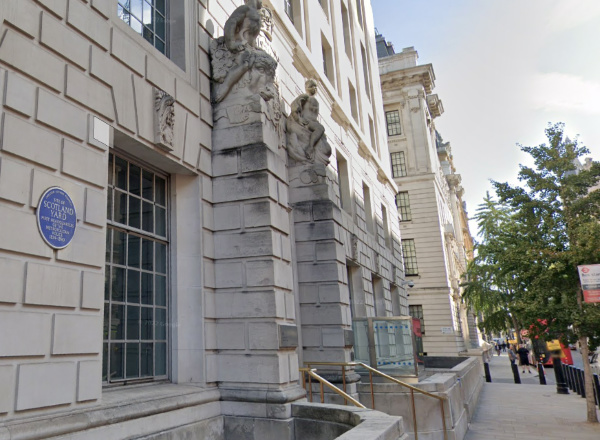
An English heritage Blue Plaque marking the location of Scotland Yard. PICTURE: Google Maps

OK, so there’s not much left to see here – at least not from Wren’s time. But it was in Scotland Yard that Wren spent much of his time after being appointed Surveyor-General of the King’s Works.

The yard, which was located just north of the kitchens serving the Palace of Whitehall and to the south of aristocratic mansions built along the Strand, was the location of the Office of Works. It served as a workplace for Wren and was also the location of his main residence between 1669 and 1718 when he lived in a house built by his predecessor in the office, John Denham.

According to a recent lecture by Professor Simon Thurley at Gresham College, newly identified plans of the house show the ground floor contained a hall, with a kitchen and scullery to the rear while on the first floor was a great dining room, a smaller private dining room, bedroom and dressing room. A floor above contains quarters for servants and possibly the nursery for his children. There were cellars below, two yards and a long narrow walled garden (he also had a stable nearby for his horses and carriage). Most importantly, a door connected the house directly with the Office of Works next door.

Said Thurley: “Although slightly further [from] the royal lodgings than some apartments, Wren’s house was amongst the largest and best appointed of all the houses allocated to senior courtiers.”

Wren lived here with his two wives – his first wife Faith Coghill died of smallpox here in 1675 and his second wife Jane Fitzwilliam died of tuberculosis in 1680 as well as their children – Christopher, William and Elizabeth. Both William and Elizabeth never left their father’s care and died before him.

The origins of the name of Scotland Yard – which has since become synonymous with the Metropolitan Police (now based at New Scotland Yard) – apparently come from the fact the site contained lodgings where the Kings of Scotland stayed when visiting London (the last Scottish royal to stay here did so before Wren’s time, apparently in the reign of King Henry VIII).

From the Stuart period onward, the site was used for government offices – as well as Wren, other famous residents included Inigo Jones, one of Wren’s predecessors as Surveyor of Works, and, during the Commonwealth, John Milton, while serving as Latin Secretary to Oliver Cromwell.

The location of Scotland Yard is these days commemorated in the name of Great Scotland Street and Scotland Place, just off Whitehall. There’s also an English Heritage Blue Plaque marking the site in Whitehall Place, although Wren doesn’t get a mention on that (it’s entirely devoted to the former police presence).

London pub signs – The Pyrotechnists Arms…

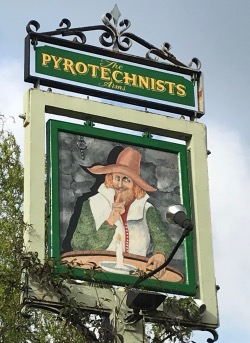
Guy Fawkes depicted on The Pyrotechnists Arms sign. PICTURE: Matt Brown (licensed under CC BY 2.0)

A rather unusual name for a pub, this Nunhead establishment owes its name to the past history of the area in which it’s built.

The pub’s name apparently comes from the fireworks factory, Brocks Fireworks, which was built nearby in 1868.

The pub’s sign features images of Guy Fawkes and other Gunpowder Plot conspirators – apparently some believe Fawkes imbibed at an establishment in the area (though clearly not this one given it’s relatively recent origins).

The building originally dates from 1874 and underwent a refit in the 1930s, of which many features – including the bar counters – still remain.

The ‘Pyro’ is located at 39 Nunhead Green. For more, see https://www.facebook.com/thepyronunhead.

10 London locations related to Sir Christopher Wren…2. St Martin-in-the-Fields…

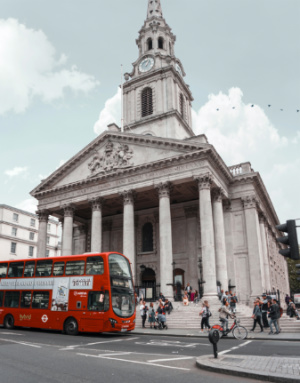
The current Church of St Martin-in-the-Fields. PICTURE: Javier Martinez/Unsplash

Not one of the many churches rebuilt by Wren after the Great Fire of 1666, St Martin-in-the-Fields, located just to the east of what is now Trafalgar Square, is special to the great architect for very personal reasons.

For it was in this church that his first wife Faith (nee Coghill) and his first son Gilbert were both buried, having died within a few years of each other, along with his second wife Jane (nee Fitzwilliam).

Wren married Faith Coghill, a childhood neighbour and daughter of Sir Thomas Coghill of Bletchingdon, at the age of 37 on 7th December, 1669, at the Temple Church (it’s been suggested it was his appointment that year as Surveyor of the King’s Works that may have provided him with the financial security he desired before marrying).

Their first child – Gilbert – was born in October, 1762. But he died at the age of just 18-months-old. A second child, Christopher (Wren the Younger), was born in February, 1675 (he would go on to live a full life and follow in his father’s footsteps as an architect).

Faith died of smallpox on 3rd September that same year. She was buried beneath the chancel of St Martin-in-the-Fields beside Gilbert.

On 24th February, 1677, Wren married again, this time to Jane Fitzwilliam, daughter of William FitzWilliam, 2nd Baron FitzWilliam, and Jane Perry, in a private ceremony believed to have been undertaken in the Chapel Royal at Whitehall. The couple had two children together – Jane in November that year and William in June, 1679.

Tragically, Jane also died after only a few years of marriage of tuberculosis on 4th October, 1680. She was buried alongside Wren’s first wife and child in St Martin-in-the-Fields.

Wren was not to marry again – and for his long 90 years of life, he was only in the end married for nine.

The medieval church of St Martins-in-the-Fields was altered several times during its lifetime – including being enlarged and beautified – but it’s this earlier church that Wren would have known. The current church was rebuilt to the designs of James Gibbs in the early 1720s and was completed in 1726 after Wren’s death in 1723.

Interestingly, the first wife of Wren’s son Christopher – Mary – was also buried in the church in 1712 and a monument to her can still be seen in the crypt.

Famous Londoners – Thomas Dagger…

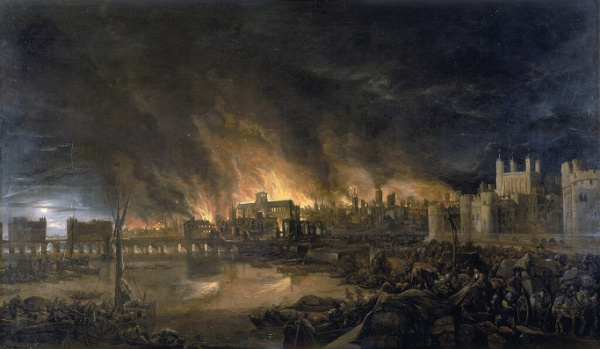
Josepha Jane Battlehooke’s ‘The Great Fire of London’ depicts the scene as though from a boat in the. vicinity of Tower Wharf. PICTURE: Public domain via Wikipedia.

Thomas Dagger, a 17th century journeyman baker, only became famous rather recently when new research identified him as the first witness to one of the seminal events in London’s history – the Great Fire of 1666.

The research was undertaken by Professor Kate Loveman at the University of Leicester for the Museum of London and will be used to inform its gallery displays when it opens its new site at Smithfield in 2026.

Drawing on letters, pamphlets, legal and guild records, Professor Loveman put Dagger, who worked in Thomas Farriner’s bakery on Pudding Lane, at the centre of the the fire’s origin story.

It’s well-known that the fire began in Farriner’s bakery in the early hours of 2nd September, 1666, and went on to consume some 13,200 homes in the city, leaving some 65,000 people homeless. But reports differ as to who was in the bakery when the fire started.

Among accounts pointing to Dagger being present is a letter from MP Sir Edward Harley who wrote in a letter to his wife that Thomas Farriner’s “man” – a term referring to his servant or journeyman – was woken after in the early hours on 2nd September choking from smoke. He reported that Farriner, his daughter and “his man” then escaped out of an upper window, but his maid died.

Dagger’s name is also found grouped with other Farriner household members among witnesses on a subsequent indictment targeting Frenchman Robert Hubert who was convicted and hanged for starting the fire after making a somewhat dubious confession.

Professor Loveman concludes that, based on her research, Thomas Dagger was the first witness to the Great Fire of London, woken by choking smoke shortly before 2am on 2nd September. Aware of the fire, he then alerted other members of the household before, along with his boss Thomas Farriner, Farriner’s son Thomas Farriner, Jr, and Farriner’s daughter Hanna, escaping by climbing out of an window. An unnamed maid who was in the house did not escape with them and was killed.

Professor Loveman’s research further showed that Dagger arrived in London from Wiltshire in 1655 and was apprenticed to one Richard Sapp for nine years but ended up serving part of that time with Farriner. Soon after the fire, in 1667, he took his freedom and by January the following year had married and had a baby. He went on to establish his own bakery at Billingsgate.

Says Professor Loveman: “It was fascinating to find out more about what happened on that famous night. Although most of the evidence about the Farriners is well known to historians, Thomas Dagger’s role has gone unrecognised. Unlike the Farriners, his name didn’t become associated with the fire at the time. Soon after the disaster, he merges back into the usual records of Restoration life, having children and setting up his own bakery. His is a story about the fire, but also about how Londoners recovered.”

Lost London – The London Coffee House…

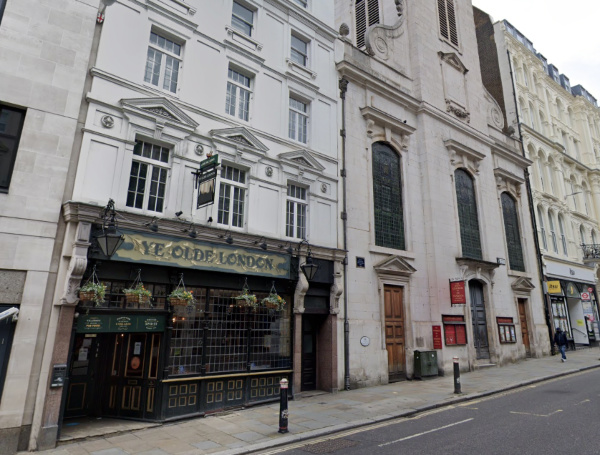
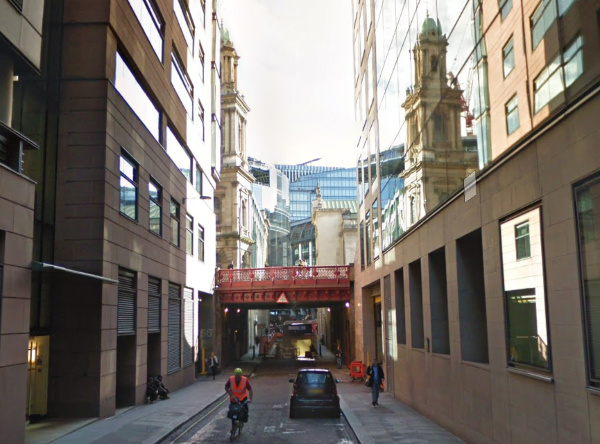
Site of the London Coffee House. PICTURE: Google Maps

Established in the early 1730s on Ludgate Hill (next to St Martin Ludgate), the proprietor of this establishment was one James Ashley (hence the coffee house also being known as Ashley’s London Punch House – the punch was apparently particularly affordable).

It was known to have been frequented by the likes of Joseph Priestley and his friend, American Benjamin Franklin, while James Boswell described its customers as being primarily physicians, dissenting clergy and “masters of academies”.

Its location also meant it served as a place where Old Bailey juries which could not reach a decision were sequestered for the night.

Continued to be favoured by Americans, in 1851 philanthropist George Peabody gave a dinner here for those from the United States who were connected with the Great Exhibition being held in Hyde Park.

In 1806, a statue of Hercules and a hexagonal Roman altar, dedicated to Claudia Martina by her soldier husband, were found here. The coffee house has also been identified as the “Coffee House on Ludgate Hill” mentioned in Charles Dickens’ Little Dorritt.

It closed in 1867. The site is now occupied by a pub, The Ye Olde London.

10 London locations related to Sir Christopher Wren…1. The Old Court House, Hampton Court Palace Green…

This year marks the 300th anniversary of the death of Sir Christopher Wren (25th February, 1723), whose designs helped to transform post-Great Fire London.

In a new series we’re looking at 10 locations which help tell Wren’s story but while we’ve previously runs numerous articles focused on the many buildings he designed, in this series the focus is more on his personal life.

First up, it’s one of the most well-known properties related to Wren’s life – the home in which he spent the latter years after his life just outside Hampton Court Palace.

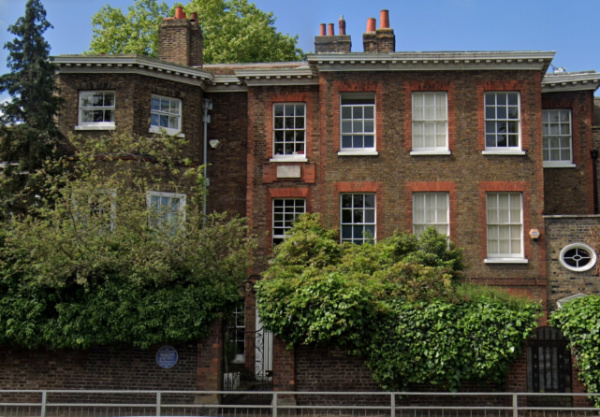
Known as the Old Court House, Wren first came to live in the house after he was appointed Surveyor-General to King Charles II in 1669. His post brought with it lodgings at the royal palaces and at Hampton Court Palace, it was the Old Court House (the property had been built for in 1536 as a wood and plaster house; Wren’s immediate predecessor in the office, Sir John Denham, had rebuilt it partly in brick).

Then in 1708, Queen Anne granted him a 50-year lease on the property, apparently at least partly in lieu of overdue fees he was owed for the building of St Paul’s Cathedral. It’s also believed that the Queen had granted the lease on condition that Wren repair or rebuilt the property.

Wren, who had hitherto only lived intermittently at the property (presumably while working on Hampton Court Palace on the orders of King William III and Queen Mary II), made some major alterations to the property from 1710 onwards (it’s suggested this was done to the designs of Wren’s assistant William Dickinson).

He came to live here on a more permanent basis after he retired from the Office of Works in 1718 and remained here until his death in 1723 (although he didn’t die here – more on that later).

It’s said Wren, whose time as the Royal Surveyor-General spanned the reigns of six monarchs, spent his time here “free from worldly affairs”, choosing to and pass his days ‘in contemplation and studies”.

It was subsequently the home of Wren’s son Christopher (1645-1747) and his grandson Stephen (b 1772). It remained a grace and favour house associated with Hampton Court Palace until 1958.

The Grade II* brown and red brick property, which was combined with the house next door in the early 19th century and them divided off in 1960, is now in private ownership and there’s an English Heritage Blue Plaque on the outside wall mentioning Wren’s residence.

Where’s London’s oldest…barbershop?

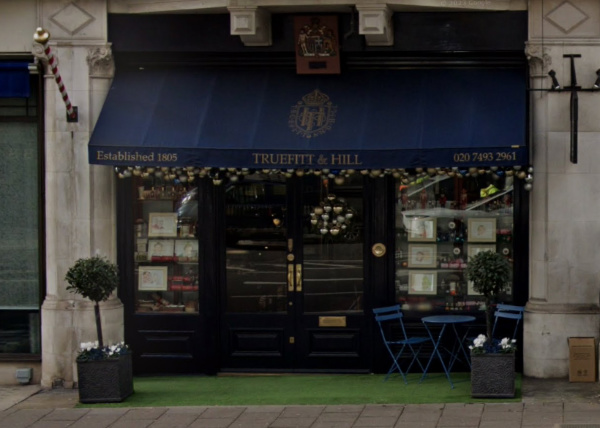
Truefitt and Hill at 71 St James’s Street. PICTURE: Google Maps

This one comes with a Guinness World Records stamp of approval. The oldest barbershop in the world, according to the record-recording organisation, is Truefitt & Hill.

William Francis Truefitt, who styled himself as hairdresser to the British Royal Court, established his first barbershop at 2 Cross-Lane, Long Acre, on 21st October, 1805 – famously on the same day as the Battle of Trafalgar.

In 1811, he moved the business to 40 Old Bond Street. In 1935, Truefitt acquired Old Bond Street firm Edwin S Hill & Co – which had been established in 1911 – and the firm moved to its address at 23 Old Bond Street.

The company, which now has outlets around the world – received its first Royal Warrant – wigmaker – from King George III and also held a warrant from the late Prince Philip.

Royalty aside, customers at the shop have included everyone from Lawrence Olivier to Mahatma Gandhi, Frank Sinatra, John Wayne, David Niven, Oscar Wilde and Winston Churchill. The firm was also referenced by such literary luminaries as Charles Dickens and William Thackeray.

The firm moved to its current location at 71 St James’s Street in 1994.

For more, see www.truefittandhill.co.uk.

10 historic vessels in London’s Thames…8. MV Havengore….

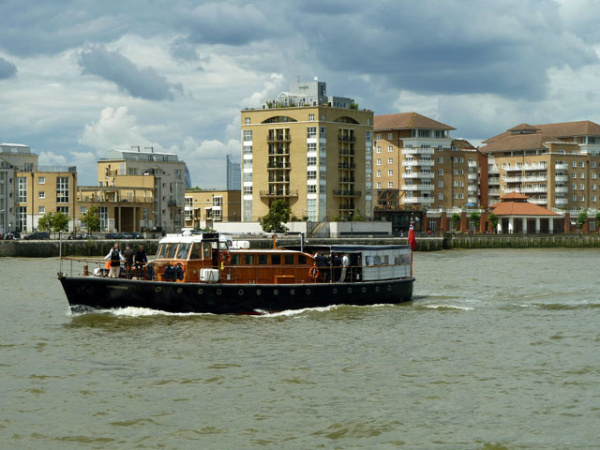
The MV Havengore. PICTURE: Robin Webster (licensed under CC BY-SA 2.0)

Still plying the waters of the Thames, the MV Havengore is perhaps most famous for having carried the coffin of Sir Winston Churchill on the River Thames as part of his state funeral in 1965.

The MV Havengore – named for a low-lying island off the coast of Essex – was originally constructed as a hydrographic survey launch for the Port of London Authority in 1956. As the PLA’s principal survey vessel and flagship, she was moored at Gravesend and tasked with recording changes to Thames bed and estuary. She became the first survey vessel in the UK to have a computer to record survey data.

The highpoint of her during her almost 40 years of service with the PLA came on 30th January, 1965, when she transported the body of Churchill from Tower Pier to Festival Pier. On the journey, she was saluted by flight of 16 fighter jets while dock cranes were made to bow as she passed (there’s a plaque on board commemorating her role in the funeral).

But the almost 26 metre long vessel also participated in other historic events including the river pageant to celebrate the Queen Elizabeth II’s Silver Jubilee in 1977 and, more recently, the flotilla formed to celebrate the Queen’s Diamond Jubilee in 2012 as well as the Thames tribute to the Queen’s long reign in 2015 and the Queen’s 90th birthday parade in 2016.

The MV Havengore was withdrawn from service in 1995 and sold after which she underwent restoration and refitting at the Chatham Historic Dockyard. The vessel was then used to provide excursions for underprivileged children on the Medway.

Sold again in 2006, she has subsequently undergone further restoration work. The MV Havengore is these days used for a range of ceremonial, corporate and private events. When not on the river, she is berthed at St Katharine Docks. The vessel was listed, as of May this year, as being up for sale.

London pub signs…The Red Lion, Westminster…

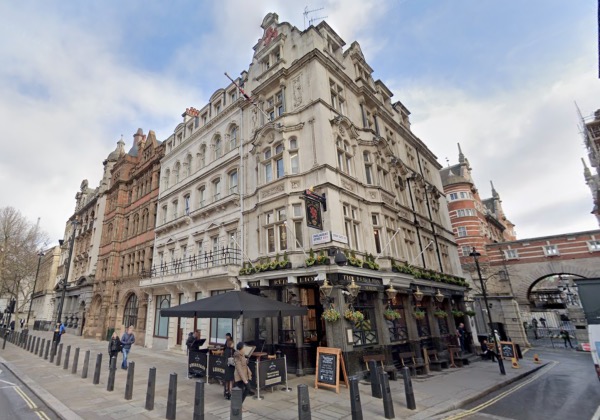
The Red Lion pub. PICTURE: Google Maps

There has been a pub on this storied Whitehall location, located between conveniently for politicians between the Houses of Parliament and Downing Street, since at least the 15th century.

PICTURE: TomasEE (licensed under CC BY 3.0)

Then named Hopping Hall, a pub is recorded on this site at 48 Parliament Street (on the corner with Derby Gate) as early as 1434. It passed into the hands of the Crown by 1531 and by the early 19th century it had taken on the name of the Red Lion (at the time, it was visited by Charles Dickens as a young man). The current, now Grade II-listed, building was erected on the site in 1890.

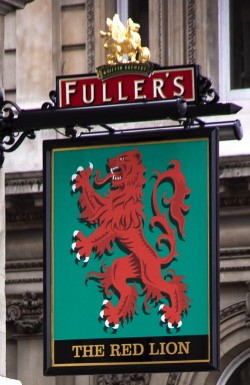
The pub’s name – one of the most common in England (there’s several more in London alone) – apparently originated at the ascension of the Scottish King James I to the throne in 1603. The King ordered that all significant buildings display the red heraldic lion of Scotland and that included pubs. Hence the Red Lion.

The four storey pub has been popular among politicians (and journalists interviewing politicians) including Prime Ministers – indeed, it’s claimed to have served every PM up until Edward Heath in the 1970s (as such it’s one of the many pubs in London which features division bells, although the function of these has apparently been replaced by an app).

For more, see www.redlionwestminster.co.uk.

This Week in London – Three of London’s oldest charters on show and other coronation celebrations; Sir Christopher Wren’s life explored; and, a Pre-Raphaelite model and artist honoured…

• Three of the City of London’s oldest charters go on display at the City of London Heritage Gallery on Saturday as part of a series of events commemorating the coronation of King Charles III. On display will be the William Charter, which, drawn up in 1067 following the coronation of King William the Conqueror, was the earliest known royal document in Europe to guarantee the collective rights of all people in a town and not just a select few. Also to be seen is the Shrievalty Charter, which, issued by King John in 1199, confirms the rights of Londoners to elect their own sheriffs, and the Mayoralty Charter, which, also issued by King John – this time in 1215, confirmed that the Mayor of London could also chosen by Londoners with the proviso that they were publicly presented. Visitors can also see the beautifully illustrated Cartae Antiquae which records charters and statutes covering laws enacted from the reign of Edward III (1327 onwards) to the accession of Henry VII in 1485 and was used as an essential reference tool by City officials, as well as prints of the 19th century coronations of Queen Victoria, King William IV and King George IV. Admission is free but booking is recommended. Runs until 5th October. For more, see www.cityoflondon.gov.uk/events/heritage-gallery-exhibition.

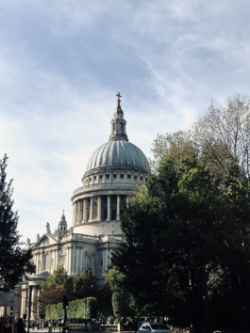
St Paul’s Cathedral PICTURE: Vinay Datla/Unsplash

• Other events marking the coronation kick off in the City of London in the coming week. Among the extensive list of activities is a pop-up well-being garden in Seething Lane where you can pose for pictures with a floral crown installation, a guided walking tour of the City entitled ‘1000 Years of Royalty – the Best, the Worst and the Very Horribilus’, and a “Cockney knees-up” with Pearly King and Pearly Prince at Leadenhall Market. For more details and the full list of events, head to www.cityoflondon.gov.uk/events/coronation.

• A new exhibition commemorating the expansive career of Sir Christopher Wren opens today in St Paul’s Cathedral – the extraordinary building designed by Wren to replace the medieval cathedral destroyed in the Great Fire of London in 1666 Part of a series of events marking the 300th anniversary of the death of Sir Christopher in 1723, Sir Christopher Wren: The Quest for Knowledge explores not only his early life and career as an architect but also his lesser-known contributions to the fields of mathematics, astronomy and physiology. The display, located in the north aisle of the crypt, features drawings, photographs and objects from the cathedral’s collections. Entry to the exhibition is included in general admission. For more, see www.stpauls.co.uk/whats-on/exhibition-christopher-wren-quest-for-knowledge.

• The Pre-Raphaelite model and artist, Marie Spartali Stillman, has been honoured with an English Heritage Blue Plaque at what was her family home in Battersea. It was while living at The Shrubbery – a 1770s Grade II-listed property now located on Lavender Gardens – that Stillman first modelled for Pre-Raphaelite artists. Tutored by Ford Madox Brown, she went on to become one of a small number of professional women artists in the late 19th century, creating more than 150 works over a period spanning 50 years. Stillman is the first female Pre-Raphaelite artist and one of only very few female artists to receive a Blue Plaque. For more, see www.english-heritage.org.uk/visit/blue-plaques/.

Send all items for inclusion to exploringlondon@gmail.com

This Week in London – Georgian fashion; Shakespeare’s First Folio; what’s new at the British Museum…

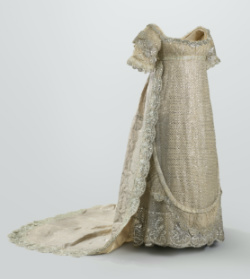
Wedding dress worn by 
Princess Charlotte of Wales, 1816. PICTURE: Royal Collection Trust/© His Majesty King Charles III 2023

• The only royal wedding dress that survives from the Georgian period – the silk embroidered bridal gown of Princess Charlotte of Wales, daughter of King George IV – is one of the star sights at a new exhibition at The Queen’s Gallery, Buckingham Palace. Style and Society: Dressing the Georgians features more than 200 works from the Royal Collection including rare surviving examples of clothing and accessories as well as artworks by artists such as Gainsborough, Zoffany and Hogarth. Other highlights include a portrait of the wedding ceremony of George IV and Princess Caroline of Brunswick by John Graham – on display for the first time – as well as the original silver and gold dress samples supplied for the bride and other royal guests. There’s also a Thomas Gainsborough,’ depicting’s full-length portrait of Queen Charlotte wearing a magnificent court gown, a preserved gown of similar style worn at Queen Charlotte’s court in the 1760, and life-size coronation portraits of George III and Queen Charlotte by Allan Ramsay. Other items include a 1782 portrait of Prince Octavius, the 13th child of George III and Queen Charlotte, by Benjamin West in which the three-year-old wears a a style of dress known as a ‘skeleton suit’, jewellery including diamond rings given to Queen Charlotte on her wedding day and a bracelet with nine lockets – one with a miniature of the left eye of Princess Charlotte of Wales, and accessories such as a silver-gilt travelling toilet service acquired by the future George IV as a gift for his private secretary at a cost of £300. The exhibition can be seen until 8th October. Admission charges apply. For more, see www.rct.uk.

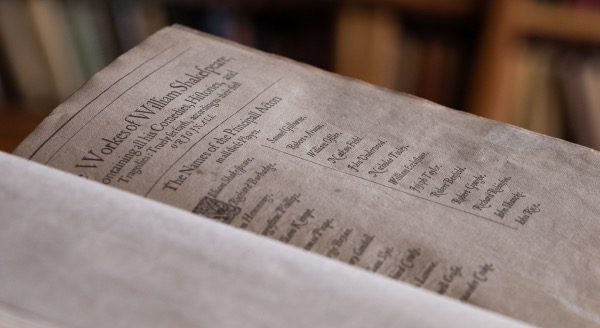
One of the finest copies of Shakespeare’s First Folio goes on display at the City of London’s Guildhall Library for just one day on Monday, 24th April, as part of the celebrations surrounding the 400th anniversary of its publication. The document will be on display between 10.30am to 3.30pm with a 10-minute introductory talk given on the hour throughout the day. Two small and original copies (‘Quartos’) of Henry IV Part One and Othello will also be on display, next to a replica copy of the First Folio that visitors can look through. The First Folio brought together 36 plays in one volume and was published in an edition of around 750 copies on 8th November, 1623 – seven years after Shakespeare’s death. It is now regarded as one of the most valuable books in the literary world. For more, see www.cityoflondon.gov.uk/things-to-do/history-and-heritage/guildhall-library.

Prints and drawings acquired by the British Museum over the past five years have gone on show in Room 90. New acquisitions: Paul Bril to Wendy Red Star features works ranging from an early 17th-century study for a fresco by the Flemish artist Paul Bril to 19th century drawings by Dante Gabriel Rossetti, 2019 prints by the Apsáalooke (Crow) artist Wendy Red Star and Cornelia Parker’s From H to B and back again – made during with the COVID-19 pandemic. Can be seen until 10th September. Admission is free. For more, see britishmuseum.org/exhibitions/new-acquisitions-paul-bril-wendy-red-star.

Send all items for inclusion to exploringlondon@gmail.com.

This Week in London – Shakespeare’s First Folio; Charles Dickens and fog; and, Berthe Morisot at Dulwich…

The Dulwich College Folio. PICTURE: © Dulwich College

Shakespeare’s First Folio goes on display at the National Maritime Museum in Greenwich from tomorrow. The display is part of a national celebration of the 400th anniversary of the folio’s publication. Shakespeare’s First Folio was published in 1623, seven years after the playwright’s death. Some 235 copies are known to survive with 50 remaining in the UK. The version on display – the Dulwich College Folio, which includes the Comedies and Histories (but lack the Tragedies), is believed to have been acquired by the college in 1686 from the estate of William Cartwright, a bookseller and actor who performed with the King’s Company and is known to have played Brabantio in Othello and Falstaff in Henry IV Part I and Part II. The two volumes feature handwritten notes, ink and water stains, and burn holes, suggesting they were well-used before the college acquired them. The Tempest and the Thames can be seen until 24th September. Admission is free. For more, see www.rmg.co.uk/folio-400.

London’s fog and its reflection in Charles Dickens’ writings are the subject of a new exhibition opening at the Charles Dickens Museum in Bloomsbury. A Great and Dirty City: Dickens and the London Fog explores how the fog affected Dickens’ work, his health and that of his family, and how London has endeavoured to mitigate the problem of air pollution over the past couple of centuries. Among the items on display are the hearthstone Dickens laid in front of the fireplace in the Drawing Room, the fire poker from Dickens’ dining room at Gad’s Hill Place (his home from 1856 until his death in 1870), original first edition parts of Dickens’ ‘foggiest’ novel Bleak House, an original pen and wash illustration by Frederick Barnard depicting Martin Chuzzlewit, Mary Graham, and Mark Tapley, and, a letter from Dickens to his sister-in-law Helen Dickens in which he writes about his brother Alfred’s “inflammation in the region of the lungs” which is dated on 16th July, 1860 – just 11 days before Alfred’s death. Runs until 22nd October. Admission charge applies. For more, see https://dickensmuseum.com.

Forty of Impressionist painter Berthe Morisot’s works have been brought together for a new exhibition at the Dulwich Picture Gallery. Berthe Morisot: Shaping Impressionism, which opens tomorrow, is the first major UK exhibition of the renowned Impressionist since 1950 and features many works never seen before. Highlights include Eugène Manet on the Isle of Wight (1875) – painted while Morisot was on honeymoon in England, Self-Portrait (1885) – which will appear alongside Jean-Honoré Fragonard’s Young Woman (c.1769) from Dulwich Picture Gallery’s collection, Apollo revealing his divinity to the shepherdess Issé, after François Boucher (1892), In the Apple Tree (1890) and Julie Manet with her Greyhound Laerte (1893). Runs until 10th September. Admission charge applies. For more, see www.dulwichpicturegallery.org.uk.

Send all items to exploringlondon@gmail.com.

10 historic London homes that are now museums…10. Flamsteed House…

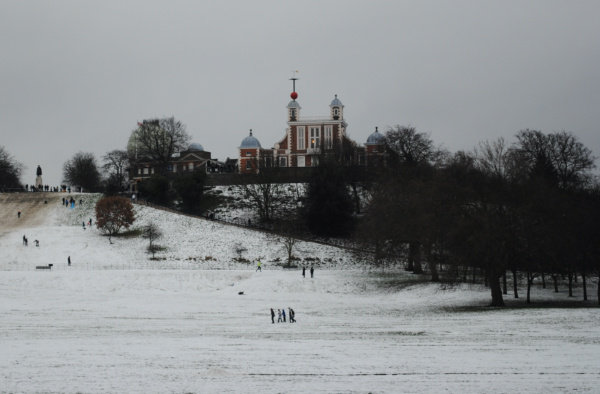
Flamsteed House from Greenwich Park. PICTURE: David Adams

Located at the heart of what is now known as the Old Royal Observatory in Greenwich is a residence, built for the first Astronomer Royal John Flamsteed and subsequently used by his successors to the post.

The property was built at the behest of King Charles II after he appointed Flamsteed to the post in March, 1675. Flamsteed, who initially worked out of the Queen’s House below, laid the foundation stone for the new property on 16th August that year.

Designed by Sir Christopher Wren and built under the supervision of Robert Hooke, the building was constructed on the foundations of the previous building on the site – known variously as Duke Humphrey’s Tower or Greenwich Castle) – and used bricks from spare stock at Tilbury Fort, and wood, iron and lead from a demolished gatehouse at the Tower of London.

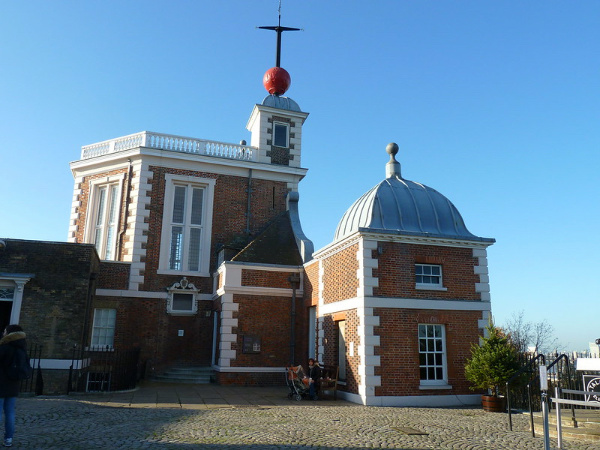
Costing some £520, the three story property featured a large hall and parlour on the ground floor, a bedroom and study for the then-single Flamsteed, a basement kitchen and “astronomer rooms” while on the floor above was a single large, octagonal room, known initially as the “Great Room” and later as the “Octagon. Room”, featuring a series of tall windows through which Flamstead could conduct his observations of the heavens.

A telescope was mounted on the roof and two summerhouses, one of which contained Flamsteed’s camera obscura, were built on either side. Other buildings on the site during Flamsteed’s time included the adjoining Quadrant House and Sextant House (so-named for the equipment they housed).

The original property was extended several times and a series of additional buildings were also added to the site including what is now known as the Meridian Building (which incorporates not only Flamsteed’s Sextant House and Quadrant House but subsequent additions including apartments for an assistant, fireproof record rooms and domes to house equipment including the Telescope Dome.

Flamsteed House. PICTURE: givingnot@rocketmail.com (licensed under CC BY-NC 2.0)

In 1946, the scientific work of the observatory was relocated to Herstmonceux in Sussex and the complex came under the management of the National Maritime Museum. In 1960, Flamsteed House was reopened as part of the museum; other buildings later followed suit.

The site was renovated in the early 1990s and reopened to the public as a museum in 1993.

These days Flamsteed House hosts displays about its construction as well as what life was like for those who lived there. Wren’s Octagon Room, which houses a collection of timepieces and astronomical instruments, remains a highlight.

Flamsteed House is now topped by a time-ball which was installed in 1919 (replacing an earlier one which was installed in 1833) and drops each day at 1pm.

WHERE: Flamsteed House, Royal Observatory Greenwich (nearest stations are Cutty Sark DLR and Greenwich and Maze Hill Stations); WHEN: 10am to 5pm daily; COST: £16 adults/£10 under 25s/students/£8 children; WEBSITE: www.rmg.co.uk/royal-observatory/attractions/flamsteed-house.

10 historic London homes that are now museums…9. Turner’s House…

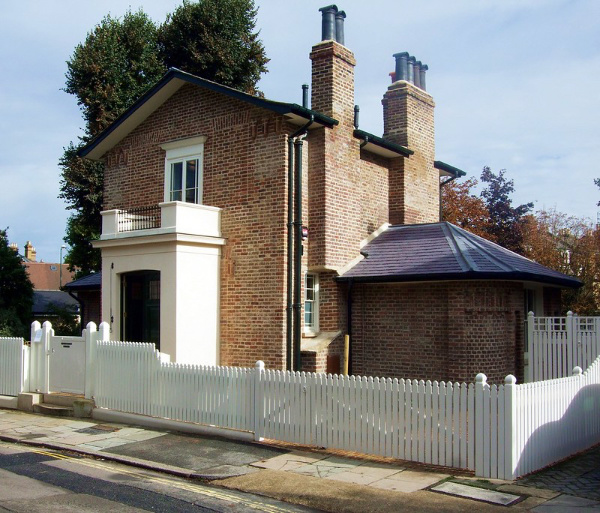
PICTURES: Jim Linwood (licensed under CC BY 2.0)

Located close to the River Thames in south-west London, Sandycombe Lodge was designed and built by the artist JMW Turner as a country retreat.

The Twickenham property, which was constructed in 1812-13 on land the famed “painter of light” had bought six years earlier, also provided a home for Turner’s father, ‘Old William’, who was a retired Covent Garden barber and wigmaker. Old William would tend the garden and keep the house when Joseph Mallord William Turner, who is best known for his expressive landscapes and marine paintings, wasn’t present.

The finished property featured a large sitting room overlooking the expansive garden. It was initially known as Solus Lodge and the name later changed to Sandycombe.

Turner would use the home as a base for sketching and fishing trips. He painted many scenes of local landscapes including, notably, England: Richmond Hill on the Prince Regent’s Birthday in 1819.

Among those who visited Turner at the property was his friend and fishing companion, Sir John Soane (his influence can be seen on the home’s design in features such as the use of arches inside and the skylight above the stairs).

Turner, who also had a property in Cheyne Walk, Chelsea, where he died in 1851, only had the house for 13 years – with his father’s health declining and his own touring schedule which meant he wasn’t able to spend as much time at the property as he would have liked, Turner sold Sandycombe in 1826 to his neighbour Joseph Todd. Todd, the owner of Twickenham Park, enlarged the villa and rented it out.

It subsequently passed through numerous hands (the large grounds around gradually diminishing).

Used as a factory for making goggles in World War II, it was in a poor state when purchased by Professor Harold Livermore and his wife Ann in 1947. In the 1950s, they secured a Grade II*-listing for the property and later set up the The Sandycombe Lodge Trust, now Turner’s House Trust, in 2005.

On Livermore’s death in 2010 at the age of 95, the trust became the owner of Sandycombe. Following a significant restoration which aimed to take the house back to Turner’s original designs and which was completed in 2017, it opened to the public as a museum.

Displayed in the house are some of Turner’s sketches as well as model ships he used in creating his art. A ‘speaking clock’ captures recollections of friends and Old William is brought to life digitally in the basement. What remains of the gardens have also been restored.

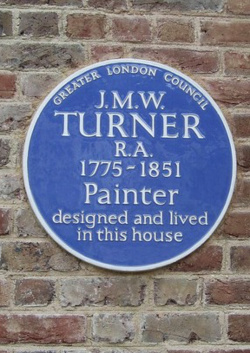
The house features an English Heritage Blue Plaque.

WHERE: Sandycombe Lodge, 40 Sandycoombe Road, St Margarets, Twickenham (nearest rail is St Margarets; nearest Tube station is Richmond); WHEN: 12pm to 4pm Wednesday to Sunday (until 2nd July); COST: £8 adults/£3 child (3 to 15 years)/£17 family; WEBSITE: https://turnershouse.org.

This Week in London – Wren letter in the Painted Hall; art from America’s South; and, ‘Finding Family’ at the Foundling Museum…

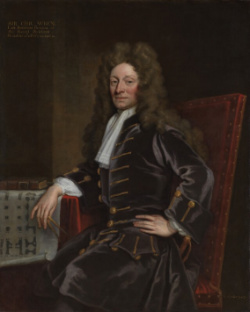
Sir Christopher Wren, by Sir Godfrey Kneller, Bt, oil on canvas, 1711 NPG 113

A letter written by Sir Christopher Wren requesting stone for the construction of the Royal Hospital for Seamen in Greenwich is on display in the Painted Hall vestibule. Wren wrote the letter requesting 2,000 tonnes of Portland stone to Thomas Gilbert, overseer of the King’s Quarries of the Isle of Portland, on 11th October, 1700. It is being displayed along with information explaining how the stone was brought from Dorset to London. The display is one of a series of events taking place at the Old Royal Naval College marking the 300th anniversary of Wren’s death on 25th February, 1723. Can be seen until January, 2024. An admission charge applies. For more, see https://ornc.org/whats-on/painted-hall-display-letter-written-by-sir-christopher-wren/. For more on events surrounding the 300th anniversary of Wren’s death, head to https://ornc.org/celebrating-wren300/.

Slavery, the cruel segregationist policies of the Jim Crow era, and the civil rights movement in the southern United States are all explored in a new exhibition at the Royal Academy. Souls Grown Deep like the Rivers: Black Artists from the American South, features around 64 works – including assemblages, sculpture, paintings, reliefs, and drawings – by 34 artists spanning the period from the mid-20th century to the present. Drawn mostly from the collection of the Souls Grown Deep Foundation in Atlanta, Georgia, many of the works are being seen in Europe for the first time. The display in the Gabrielle Jungels-Winkler Galleries also features quilts by the celebrated quiltmakers of Gee’s Bend, Alabama, and the neighbouring communities of Rehoboth and Alberta. Opening on Friday, the exhibition can be seen until 18th June. Admission charge applies. For more, see royalacademy.org.uk.

Three masterpieces from The National Gallery’s collection – by Hogarth, Gainsborough and the Le Nain Brothers – have gone on show at The Foundling Museum in Bloomsbury as part of a new exhibition exploring what family is and can be. Finding Family examines the ways in which artists have represented and responded to ideas of family with reference to the historic paintings as well as contemporary works of art. The art is accompanied by creative writing created by participants in ‘Tracing Our Tales’ – the museum’s award-winning programme for young care leavers – who have responded to the exhibition’s themes. Opens on Friday and runs until 27th August. Admission charge applies. For more, see https://foundlingmuseum.org.uk/event/finding-family/.

Send items for inclusion to exploringlondon@gmail.com.

Where’s London’s oldest…chair?

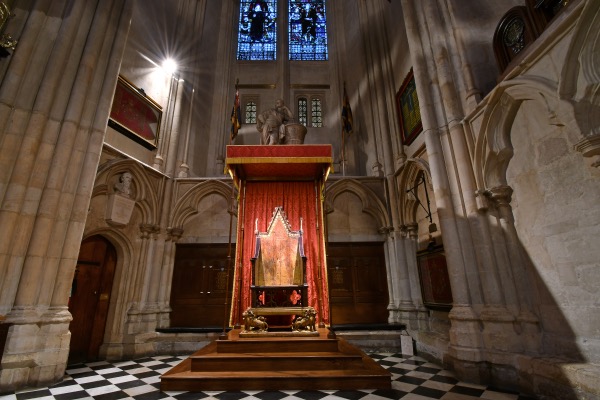
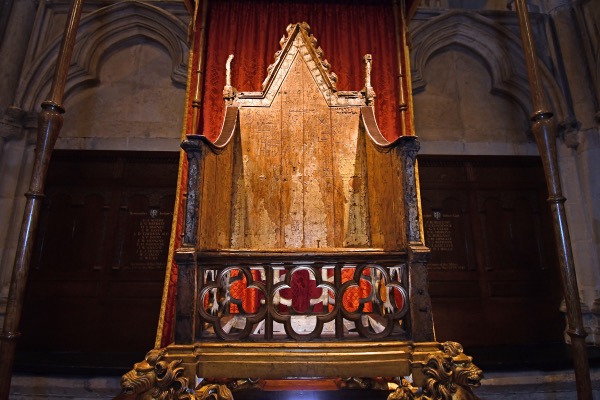
The Coronation Chair in Westminster Abbey PICTURE: Jim Dyson/Getty Images/Dean and Chapter of Westminster

The coronation of King Charles III is taking place in Westminster Abbey on 6th June and in preparation for that, the Coronation Chair is getting a makeover.

The six foot tall chair, which was made around 1300, is commonly referred to as the oldest piece of furniture in the UK which is still used for its original purpose and which is by a known maker.

The chair was constructed on the orders of King Edward I in 1300-1301 specifically to hold the Scone of Stone which he had brought south from Scotland several years before and which he had given into the care of the Abbot of Westminster.

Made of oak and painted by one Master Walter, the chair was decorated with patterns of birds, foliage and animals on a gilt background. On the seat back was painted the figure of a king, possibly King Edward I, with his feet resting on a lion. The chair, which would have had the appearance of being made of gold, would have also been decorated with coloured glass.

The space for the stone below the seat was originally fully enclosed and it’s believed the chair originally contained no seat with the King sitting on a cushion placed directly on the Stone of Scone.

The chair now rests on four gilt lions which were added in the 16th century (although those currently there are replacements made in 1727).

The Coronation Chair in Westminster Abbey PICTURE: Jim Dyson/Getty Images/Dean and Chapter of Westminster

While there is some debate over whether King Edward II was sitting in the chair when he was crowned in 1308, that has certainly been the case from the 1399 when King Henry IV was crowned while sitting on it. Twenty-six subsequent monarchs including everyone from King Henry VIII to Queen Elizabeth II followed suit (Oliver Cromwell, meanwhile, had the chair removed to Westminster Hall when installed there as Lord Protector).

The chair has been graffitied in earlier centuries thanks mostly to Westminster schoolboys and visitors. Among the most legible graffiti scrawled upon it is “P Abbott slept in this chair 5-6 July 1800”. It also suffered minor damage in a bomb attack in 1914 thought to have been carried out by Suffragettes (it didn’t suffer any damage in World War II thanks to its being removed to Gloucester Cathedral).

The Stone of Scone, which had been taken briefly back to Scotland by Scottish Nationalists in 1950, was formally returned to Scotland in 1996 where it can now be seen at Edinburgh Castle. It is being returned to London for the coronation.

The chair, which for centuries had been kept in the Chapel of St Edward the Confessor, was moved to the abbey’s ambulatory in 1998 and then again moved again in 2010, this time to a specially-built enclosure in St George’s Chapel, located at the west end of the nave, so it could undergo conservation work. The two year conservation program was completed in 2013.

The chair is currently undergoing cleaning and work to stabilise what’s left of the gilding ahead of the coronation.

10 historic London homes that are now museums…6. Hogarth’s House…

Described as the “father of British painting”, 18th century artist William Hogarth bought this property in Chiswick at the height of his fame in 1749.

PICTURE: Patche99z/Public Domain

The property, which had been built between 1713 and 1717 and had previously been the country property of a pastor and his family, then located in what was a rural area and served as the Hogarths country home (they had an inner London home in Leicester Fields).

Hogarth extended the home and had a studio installed above a (now lost) coach house in the rear of the garden. As well as his wife Jane, occupants included Hogarth’s sister Anne and his mother-in-law.

Following Hogarth’s death in 1764 (Hogarth, who actually died in the Leicester Fields property, is buried in the nearby St Nicholas Church), Jane continued to live at the property and along with her cousin Mary Lewis, ran a business selling prints of her husband’s works. Mary inherited the house when Jane died in 1789 and remained there until her own death in 1808.

The house, which features three stories and an attic, subsequently passed through various hands including, from 1814 to 1833, Rev Henry Francis Cary, who translated Dante’s Divine Comedy (and counted literary luminaries such as Samuel Taylor Coleridge and Charles Lamb as friends). It was sold for redevelopment in 1901 and, following a failed campaign by artists and writers to buy the house, it was purchased by Chiswick resident, Lieutenant-Colonel Robert William Shipway.

Drawing on the help of the architect Frederick William Peel and Hogarth’s biographer, Henry Austin Dobson, he had the house restored and turned into a museum, installing a collection of the artist’s works and commissioning replica furniture based on images in Hogarth’s prints (he even personally took photographs for a guidebook).

The house opened to the public in 1904 and in 1909 Shipway gave the house to Middlesex County Council. Its ownership passed to Hounslow Council when Middlesex County Council was abolished in 1965.

It was damaged by in September, 1940, during World War II after a parachute mine detonated nearby but was repaired and reopened in 1951. A single storey extension to the property was rebuilt at the time to provide a space for exhibitions.

The now-Grade I-listed property’s interior was refurbished for the tercentenary of Hogarth’s birth in 1997 and again in 2011. A further project in 2020 known as the Mulberry Garden Project – funded by the National Lottery Heritage Fund – added the Weston Studio for learning and activities, but also re-landscaped and reinterpreted the garden to highlight historic planting and themes. 

The house and garden are currently managed by London Borough of Hounslow.

Inside, the house continues to show Hogarth’s artistic output including such famous engraving series as A Harlot’s ProgressA Rake’s Progress and Marriage à-la-mode. The house also contains some of the replica furniture commissioned by Shipway.

In the garden is a Mulberry tree believed to be the last survivor of an orchard first established on the site in the 1670s.

There’s a statue of Hogarth and his famous pug dog, Trump, located in Chiswick High Road.

WHERE: Hogarth’s House, Hogarth Lane, Great West Road, Chiswick (nearest Tube station is Turnham Green while nearest Overground is Chiswick Station); WHEN: 12pm to 5pm Tuesday to Sunday and Bank Holiday Mondays; COST: Free; WEBSITE: https://hogarthshouse.org.

What’s in a name?…Shoe Lane…

Looking south down Shoe Lane from near Charterhouse Street where it passes under the Holborn Viaduct. PICTURE: Courtesy of Google Maps.

This name of this rather long laneway, which runs from Charterhouse Street, under Holborn Viaduct, all the way south to Fleet Street, doesn’t have anything to do with footwear.

The name is actually a corruption of the Sho Well which once stood at the north end of the thoroughfare (and which itself may have been named after a tract of land known as Shoeland Farm thanks to it resembling a shoe in shape).

In the 13th century the lane was the London home of the Dominican Black Friars – after they left in the late 13th century, the property became the London home of the Earl of Lincoln and later became known as Holborn Manor.

In the 17th century, the lane was known as for its signwriters and broadsheet creators as well as for a famous cockpit which was visited by none other than diarist Samuel Pepys in 1663. It was also the location of a workhouse.

Prominent buildings which have survived also include St Andrew Holborn, designed by Sir Christopher Wren (it actually survived the Great Fire of London but was in such a bad state of repair that it was rebuilt anyway). The street these days is lined with office buildings.

Famous residents have included John de Critz, Serjeant Painter to King James I and King Charles I, preacher Praise-God Barebone who gave his name to Barebone’s Parliament held in 1653 during the English Commonwealth, and Paul Lovell, who, so the story goes, refused to leave his house during the Great Fire of 1666 and so died in his residence.

This Week in London – Stephen Lawrence and Dick Whittington remembered; Museum of London seeks Jewish-fashion items for new display; and, become a volunteer ranger at The Regent’s Park…

The Guildhall Art Gallery which contains the City of London Heritage Gallery. PICTURE: Jim Linwood (licensed under CC BY 2.0)

Stephen Lawrence, a London teenager who was killed in a racially motivated murder in 1993, and four-times medieval Mayor of London, Richard Whittington, are both remembered in a new display at the City of London Heritage Gallery. Among the items on show is a report by the headteacher of John Roan School in Greenwich which was created following Lawrence’s death along with the last will and testament of Whittington and a book recording his third election as mayor in 1406 and showing his decorated coat of arms. Also on show in the gallery is a Bomb Damage Map which, produced by London County Council, shows the extent of damage to Rotherhithe and part of the Isle of Dogs following a German Luftwaffe raid in September, 1940. The display can be seen until 28th April. Admission is free but booking is recommended. For more, see www.cityoflondon.gov.uk/events/heritage-gallery-exhibition.

The Museum of London is seeking information on high-profile items of clothing created by leading Jewish fashion designers ahead of an exhibition running later this year. Fashion City: How Jewish Londoners Shaped Global Style, scheduled to open in October, will explore the major contribution of Jewish designers had in making London an iconic fashion city during the 20th century. It will feature pieces from the museum’s own collections but those behind the exhibition are also looking for a range of other high profile items. These include menswear made by Mr Fish and Cecil Gee which were worn by famous names such as Sean Connery, David Bowie, Mick Jagger, Muhammad Ali, Michael Caine and The Beatles, womenswear made by Rahvis in the 1930s and 1940s and worn by Hollywood film stars, hats made by Otto Lucas and worn by the likes of Greta Garbo and Wallis Simpson, a theatre costume made by Neymar for Cecil Landau’s 1949 production of Sauce Tartare, and 1930s gowns made by dressmaker Madame Isobel (Isobel Spevak Harris). Anyone who has information about the location of these objects are asked to email fashioncity@museumoflondon.org.uk with any information. More information on the exhibition will be provided closer to the date.

The Royal Parks is looking for volunteer rangers in The Regent’s Park this spring. Following the success of volunteer ranger programmes in Richmond, Bushy and Greenwich Parks, the charity is seeking “friendly and chatty people who are passionate about The Regent’s Park, and keen to inspire and educate visitors”. Volunteers, who need to commit to a minimum of three hours per month, will work in pairs and share facts about the park’s heritage as well as provide tips on the best walking and cycling routes and inform visitors on how everyone can help nature thrive in the parks. Rangers can choose from a range of 90-minute volunteering sessions across weekdays and weekends. Applications close on 26th February. Full training will be provided. To apply, visit www.royalparks.org.uk/rangers.

Send all items for inclusion to exploringlondon@gmail.com

10 historic London homes that are now museums…3. Keats House…

Briefly the home of Romantic poet John Keats, this Hampstead premises is a now a museum dedicated to the writer and exhibition space.

Constructed in around 1815 as a pair of semi-detached dwellings, the now Grade I-listed house was one of the first to be built in the area. The two residences were initially occupied by critic Charles Wentworth Dilke and his family, and by the writer Charles Armitage Brown.

PICTURE: It’s No Game (licensed under CC BY 2.0)

Keats, a friend of Dilke and Brown, began visiting the Regency-era villa, then named Wentworth Place, soon after. He was then living with his two younger brothers nearby in Well Walk but after George married and emigrated to America and Tom died of tuberculosis and, Brown invited Keats to move in as a lodger.

He did so in December, 1818, and it was while living at the property that he composed La Belle Dame sans Mercians, completed The Eve of St Agnes and write his famous odes, including Ode to a Nightingale.

The Dilkes family moved out in April, 1819, and Mrs Brawne and her daughter moved in. Keats developed an intimate relationship with the daughter, Fanny, and the couple were secretly engaged but owing to his premature death, never married.

In September, 1820, with his health failing, Keats left the property and headed to Rome (the trip was funded by friends who hoped the warm climate would help improve his health). He died in the eternal city on 23rd February, 1821, and was buried in the city’s Protestant cemetery.

Brown, meanwhile, left the property in June, 1822 (he also left for Italy) and Keats’ sister Fanny – who had become friends with Fanny Brawne – moved into Brown’s half of the house with her husband Valentin Llanos between 1828 and 1831. The Brawnes left in early 1830.

Subsequent occupants included actor Eliza Chester who converted the two residences into one.

The property was threatened with demolition in the early 20th century but saved by public subscription. It opened to the Keats Memorial House on 9th May, 1925. In 1931, a new building was erected nearby house artefacts related to Keats.

Since 1998 the property has been under the management of the City of London Corporation. It underwent a restoration project in the mid-1970s and again between 2007 and 2009. The Keats Foundation was established in November, 2010, and is involved in educational initiatives, both at Keats House and elsewhere.

Visitors to the house today are taken on a journey through Keats’ short life and legacy. Among the artefacts which can be seen there are items related to his time as a medical student, portraits of some of the famous people Keats met while living at the property including the poets Samuel Taylor Coleridge and Percy Bysshe Shelley as well as Shelley’s wife Mary (author of Frankenstein), a bust of Keats which stands at his actual height – just over five feet tall, and a mask of Keats’ face made by his artist friend Benjamin Haydon. 

There’s also portraits of both Keats and Fanny, Fanny’s engagement ring, and a volume of Shakespeare’s plays Keats gave her before leaving for Rome as well as busts of Charles Brown and editor Leigh Hunt (it was through Hunt that Keats met Dilke and Brown).

The garden features a 200-year-old mulberry tree and a plum tree which was planted to commemorate Ode to A Nightingale.

A Blue Plaque (although it’s actually brown) was unveiled at the house at 10 Keats Grove by representatives of the Royal Society of Arts on the property as far back as 1896 to commemorate Keats.

WHERE: Keats House, 10 Keats Grove, Hampstead (nearest Overground station is Hampstead Heath; nearest Tube stations are Hampstead and Belsize Park); WHEN: 11am to 1pm and 2pm to 4pm, Thursday, Friday and Sunday; COST: £8 adults/£4.75 concession; 18 and under free; WEBSITE: www.cityoflondon.gov.uk/things-to-do/attractions-museums-entertainment/keats-house/visit-keats-house.