Around London – Cutty Sark reopens; Genghis Khan at Marble Arch; New theatre for the West End; and, Shakespeare’s cash…

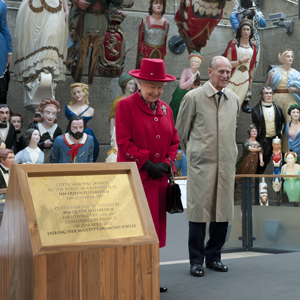
• The Cutty Sark, the world’s last surviving 19th century tea clipper, reopens to the public today following a £50 million, six year conservation project. The project to restore the Greenwich-docked ship has involved raising it more than three metres so visitors can walk underneath and see for themselves the sleek lines which helped the vessel set a then record-breaking speed of 17.5 knots or 20mph in sailing from Sydney to London. As well as raising the ship three metres, the project has involved encasing the ship’s hull in a glass casing to protect it from the weather – this area also contains the museum’s extensive collection of more than 80 ships’ figureheads, never been seen in its entirety on the site. The ship’s weather deck and rigging, meanwhile, have been restored to their original specification and new, interactive exhibitions on the vessel’s history have been installed below deck. Originally launched in 1869 in Dumbarton, Scotland, Cutty Sark visited most major ports around the world, carrying cargoes including tea, gunpowder, whiskey and buffalo horns and made its name as the fastest ship of the era when carrying wool between Australia and England. The ship became a training vessel in the 1920s and in 1954 took up her current position in the dry dock at Greenwich before opening to the public. In November 2006, the ship’s rig was dismantled in preparation for a restoration project – this received a setback on 21st May, 2007, when a fire broke out aboard the ship and almost destroyed it. The ship – which was officially reopened by Queen Elizabeth II and the Duke of Edinburgh (pictured) yesterday – is now under the operational management of the umbrella body, Royal Museums Greenwich. For more (including the online purchasing of tickets), see www.rmg.co.uk/cuttysark or www.cuttysark.org.uk. PICTURE: National Maritime Museum, London.

• A large statue of Genghis Khan has invaded Marble Arch. The 16 foot (five metre) tall sculpture of the Mongolian warlord, created by artist Dashi Namdakov, was erected by Westminster City Council as part of its ongoing City of Sculpture festival which is running in the lead-up to the Olympics. The statue has sparked some controversy – Labour councillors at Westminster have reportedly suggested Dambusters hero Guy Gibson would be a more suitable subject for a statue than the warlord Khan. The Russian artist, who has an exhibition opening at the Halcyon Gallery in Mayfair next month, told the Evening Standard he simply wanted to honor Khan on the 850th anniversary of his birth.

• Development of a new West End theatre, the first to be built in the area in 30 years, has been given the green light. The new 350 seat theatre will be part of a development project located between Charing Cross Road and Oxford Street which will also feature office and retail spaces. The site was occupied by a pickle factory in the 19th and 20th centuries and from 1927 was the home of the Astoria cinema, remodelled as a live venue in the 1980s. Live music was last presented there in 2009 when the site was compulsorily acquired for the Crossrail project.

• On Now: Crowns and Ducats: Shakespeare’s money and medals. This exhibition at the British Museum explores the role of money in Shakespeare’s world and looks at how coins – a frequently recurring motif in Shakespeare’s work – and medals were issued to mark major events. Objects in the display include Nich0las Hilliard’s ‘Dangers Averted’ medal of Elizabeth I and William Roper’s print of the Queen, the first to be signed and dated by a British artist, as well as a money box such as might have been used at the Globe and a hoard of coins, including a Venetian ducat, deposited in Essex around the time of Shakespeare’s birth. Almost every coin mentioned in Shakespeare’s plays will be on show – from ‘crack’d drachmas’ to ‘gilt twopences’. Runs until 28th October in room 69a. Entry is free. For more, see www.britishmuseum.org.

Celebrating the Diamond Jubilee with 10 royal London locations – 2. The Queen’s childhood homes

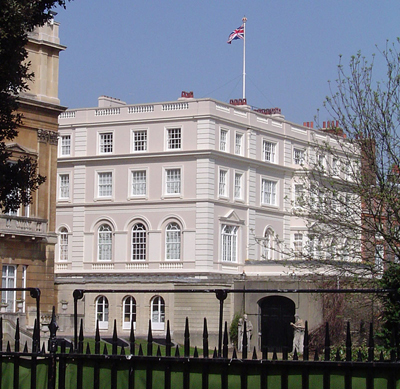
Having spent the first few months of her life at 17 Bruton Street, the future Queen Elizabeth II moved into her parents’ new property at 145 Piccadilly.

The property, located close to Hyde Park Corner, was previously the townhouse of the Marquesses of Northampton (interestingly, it was while living here that her father the Duke of York first started visiting the Harley Street-based Australian speech therapist Lionel Logue, as depicted in The King’s Speech). The 25 bedroom house was later destroyed by a bomb during the war, long after the Yorks had moved out.

As well as the house at 145 Piccadilly, the young Princess Elizabeth (and from 1930 her younger sister and only sibling Princess Margaret) also lived at White Lodge in the centre of Richmond Park in the city’s south-west. The Lodge, a Georgian property built as a hunting lodge for King George II, now houses part of the Royal Ballet School.

She also considerable time outside the city, staying in places including Scotland with her grandparents at either Balmoral Castle (owned by the Royal Family) or at Glamis Castle (owned by the parents of her mother, the Earl and Countess of Strathmore) as well as, from the age of six, at Royal Lodge in Windsor Great Park, the country home of the Yorks. The princess apparently had her own small house, known as Y Bwthyn Bach (the Little Cottage), in the grounds  – a gift from the people of Wales in 1932.

Following the death of King George V and subsequent abdication of King Edward VIII in 1936, new King George VI and his family moved from 145 Piccadilly to Buckingham Palace. Following the outbreak of World War II in 1939, the princesses lived in Balmoral, Scotland, and Sandringham but spent most of the war at Windsor Castle.

Princess Elizabeth, meanwhile, had met Prince Philip of Greece during the 1930s and in 1947, he asked for permission to marry her.

Celebrating the Diamond Jubilee with 10 royal London locations – 1. The Queen’s birthplace

This week we start a new series in honour of this year being the Diamond Jubilee of Queen Elizabeth II. We’ll be looking at locations across the city which have played an important role in the story of the Queen. First up, it’s the Queen’s birthplace – a now non existent townhouse in Mayfair.

The property at 17 Bruton Street, which is marked by a small plaque installed in 1977 – the Queen’s Silver Jubilee (it’s in the middle of the image to the right), was actually the home of the Queen Mother’s parents, the Earl and Countess of Strathmore. It and the neighbouring townhouse at 18 Bruton Street have both been demolished and replaced with a rather bland office building.

Born here at 2.40am on 21st April, 1926, the Queen, named Elizabeth Alexandra Mary, was the first child of the then Duke and Duchess of York (later King George VI and Queen Elizabeth). At her birth, Queen Elizabeth II was only third in line to the throne after her uncle, the Prince of Wales (later, briefly, King Edward VIII), and her father.

The Queen’s grandparents, King George V and Queen Mary, both visited the newborn child at the property (along with an apparently large crowd outside). Elizabeth was christened five weeks later at the Chapel Royal in Buckingham Palace. She spent the first few months of her life living in a room at 17 Bruton Street which had been previously used by her mother before her marriage.

Recent books on the Queen include Andrew Marr’s  The Diamond Queen: Elizabeth II and Her People, the souvenir album Queen Elizabeth II: A Diamond Jubilee Souvenir Album, and Sarah Bradford’s Queen Elizabeth II: Her Life in Our Times.

• Correction: Bruton Street was mistakenly copied here as Brunton Street. It has been corrected. Apologies for the error!

LondonLife – All is revealed at Hampton Court Palace

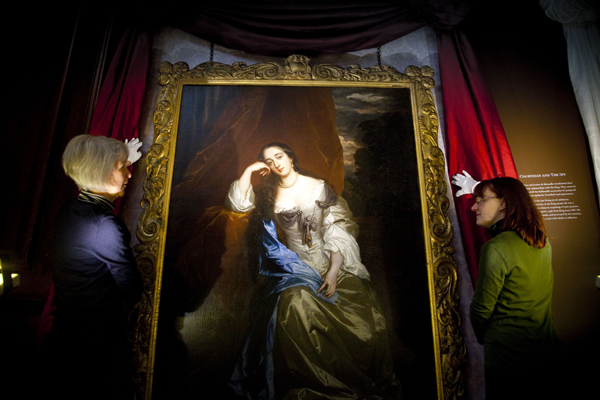
A portrait of King Charles II’s mistress, Barbara Villiers, is put into place ahead of The Wild, The Beautiful and the Damned exhibition which opened at Hampton Court Palace earlier this month. The portrait, which dates from about 1662, was painted by Sir Peter Lely – he also painted a picture King Charles II’s other principal mistress, Nell Gwyn, which is being shown together with the Villiers portrait for the first time. The exhibition, which focuses on the beauty, mistresses and debauchery of the Stuart Court, spans the reigns of the Stuarts from Charles II to Queen Anne and looks at how kings, queens and courtesans “swept away the Puritanical solemnity of the mid-17th century, and attempted to rewrite the moral code of social behaviour”. Runs until 30th September (admission is included in entry ticket; free to Historic Royal Palaces members). There are late openings on the first Monday of each month and note that the exhibition includes adult content. For more, see http://bit.ly/HvyiOE.

PICTURE: Richard Lea-Hair/newsteam.

Around London – Crown Jewels polished for Diamond Jubilee; Diana’s dresses at Kensington Palace; a plaque for Ziggy Stardust; and At Home with the World…

• A revamped Crown Jewels display opens today at the Tower of London to mark the Diamond Jubilee of Queen Elizabeth II. The new display features graphics, music and newly restored film footage and will focus on the coronation ceremony as its central theme, exploring how the regalia are used in the ceremony. The regalia – which includes some of the most extraordinary diamonds in the world such as the Star of Africa and Koh-i-Nur – is being displayed in the order in which it is used at the coronation ceremony. The Crown Jewels have been on show to the public at the Tower of London since at least 1661 after they were remade for King Charles II’s coronation. The previous collection had been largely destroyed in the Civil War although some pieces survived including a gilt silver spoon probably made for King Henry II or King Richard I (the “Lionheart”). For more information, see www.hrp.org.uk/TowerOfLondon/.

Five dresses worn by Diana, Princess of Wales, have gone on display at Kensington Palace  which re-opened to the public this week following a £12 million overhaul. The five dresses include a black silk taffeta gown (designed by Emanuel) which Diana wore to a fundraising event at the Goldsmith’s Hall in 1981 – her first official engagement with Prince Charles as well as a formal dinner dress of ivory silk (Catherine Walker) created for a State Banquet for the King and Queen of Malaysia in 1993 and a black ribbed silk shift evening dress (Gianni Versace) worn to the London premiere of Apollo 13 in Hammersmith in 1995. For more on the revamp of the palace see our earlier post. Or visit www.hrp.org.uk/KensingtonPalace/.

• A plaque commemorating the site where the iconic image for the cover of David Bowie’s 1972 album The Rise and Fall of Ziggy Stardust and the Spiders of Mars was photographed has been unveiled in the West End. The plaque at the somewhat innocuous site at 23 Heddon Street, just off Regent Street, was installed by the Crown Estate and unveiled this week by Gary Kemp of Spandau Ballet. The image for the album cover was shot by the late photographer Brian Ward who managed to persuade Bowie to step outside the ‘studio’ space he had rented upstairs despite the fact it was a cold, wet January night.

• On Now: At Home with the World. This exhibition at the Geoffrye Museum explores the cosmopolitan nature of London’s homes over the past 400 years and looks at how diverse cultures have helped shaped the homes – covering everything from Chinese porcelain and the tea craze of the 1700s to the use of Islamic and Indian patterns in the 1800s, the popularity of Scandinavian and American design in the 1900s and the globalism of today. The period rooms on show at the museum have been reinterpreted to highlight the international influences. This is one of a series of Stories of the World: London exhibitions taking place across the city which are exploring four aspects of life – home, identity, journeys and place – as part of the London 2012 Cultural Olympiad program. Runs until 9th September. Entry is free. For more, see www.geffrye-museum.org.uk.

Treasures of London – The Banqueting House…

While we’ve looked at some of the history of the Banqueting House during last year’s special on King James I’s London, we thought we’d take a more in-depth look as part of our Treasures of London series…

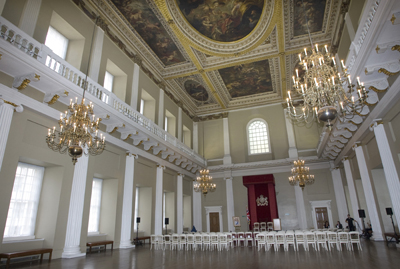
A perfect double cube with a sumptuous painted ceiling, this early 17th century building is the only remaining complete structure from the Palace of Whitehall which was destroyed by fire in 1698.

The building replaced an earlier banqueting hall built on the orders of Queen Elizabeth I and another, shorter-lived hall, built by King James I, which was destroyed by fire in 1619.

Following its destruction, King James had Inigo Jones design a new hall to provide, as the previous hall had, a location for state occasions, plays and masques – something of a cross between an organised dance, an amateur theatrical performance and just a chance to dress up.

Jones, who partnered with Ben Jonson to produce masques, designed the hall – which has a length double the width – with these performances specifically in mind. The first one – Jones and Jonson’s Masque of Augurs – was performed on Twelfth Night, 1622, even before the building was completed (the last masque was performed here, incidentally, in 1635, after which, thanks they were moved to a purpose built structure nearby, ostensibly to save the newly installed paintings from being damaged by the smoke of torches – see below).

The incredible paintings on the ceilings, which celebrate the reign of King James I and will be the subject of their own Treasures of London article at a later date, were installed by March 1636. Produced by Flemish artist Sir Peter Paul Rubens, they had been commissioned by King Charles I, King James’ son, in commemoration of his father. Ironically, it was outside the building where the monarchy was so celebrated that King Charles I was beheaded in 1649 (this is marked in a ceremony held at the Banqueting House on 30th January each year).

Following the king’s execution, Whitehall Palace wasn’t used for several years until Lord Protector Oliver Cromwell took up residence there in 1654, using the Banqueting House as a hall if audience. It stood empty after Cromwell’s death in 1658 until the Restoration in 1660 when King Charles II again used it as a grand ceremonial hall for receiving foreign embassies and conducting court ceremonies (these including the ancient custom of what is known as ‘Touching for the King’s Evil’ to cure those afflicted with the disease of scrofula as well as the washing of the feet of the poor by the sovereign on Maundy Thursday.)

King James II was the last king to live at Whitehall Palace and during his reign, from 1685-88, it was used as a royal storehouse. But it was revived for formal use following his reign – it was here that King William III and Queen Mary II were officially offered the crown on 13th February, 1689.

During their reign, the court’s focus shifted to Kensington but the Banqueting House was used for Queen Mary to lay in state after her death in 1694.

Following the destruction of the remainder of Whitehall Palace in 1698 – the origins of this fire are apparently owed to a maid who had put some linen by a charcoal fire to dry – the Banqueting Hall was used briefly as a Chapel Royal and, following a renovation in the late 1700s, it was used for concerts and, from 1808, as a place of worship for the Horse Guards.

Further renovation works followed and in 1837, it was re-opened as a Chapel Royal and used as such until 1890 when this practice was formally discontinued. In 1893, Queen Victoria gave the Royal United Services Institute the use of the building as a museum – among the things displayed there were the skeleton of Napoleon’s horse, Marengo. In 1962, the exhibits were dispersed and the Banqueting House today is used for a range of royal, corporate and social events.

There is an undercroft underneath, designed as a place where King James I could enjoy drinking with his friends. It was later used for storage.

WHERE: Corner of Whitehall and Horse Guards Avenue (nearest Tube stations are Westminster and Embankment); WHEN: Monday to Saturday 10am to 5pm; COST: £5 adults/£4 concessions/children under 16 free (Historic Royal Palaces members free); WEBSITE: www.hrp.org.uk/BanquetingHouse/.

PICTURE: Courtesy of Historic Royal Palaces/newsteam.co.uk

Celebrating Charles Dickens – 7. Five other London sites of significance…

We’ve looked at Charles’ Dickens childhood in London and some of his residences, workplaces and the pubs he attended. Before we take a look at some of the sites relevant to his writings, Exploring London takes a look at just a handful of the many other London sites associated with the famous Victorian author…

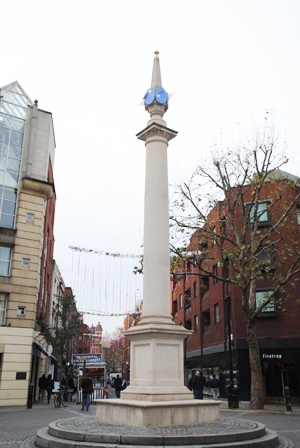
• Seven Dials and the former St Giles slum, Soho. An notorious slum of the 19th century, this area was among a number of “rookeries” or slums toured by Dickens in 1850 in the company of Inspector Field and police from Scotland Yard, and later helped to inform much of his writing. Seven Dials itself – located at the junction of Mercer and Earlham Streets and Upper St Martin’s Lane (pictured right is the monument at the junction’s centre) – has just undergone a renovation but much of the St Giles area is now irrevocably modernised. We’ll be mentioning another notorious slum located in Saffron Hill, Clerkenwell, in an upcoming week.

• Holland House, Kensington. Dickens became a friend of Lady Holland’s after attending one of her exclusive soirees at the age of 26. He was a guest at the house, now a youth hostel, in Holland Park on numerous occasions.

• Royalty House, Dean Street, Soho. The former site of the Royalty Theatre, known in Dickens’ day as Miss Kelly’s Theatre, it was here on 21st September, 1845, that Dickens and a group of friends performed Ben Jonson’s play, Every Man in his Humour (1598). Dickens acted as stage manager and director as well as playing the part of Captain Bobadil.

• Buckingham Palace. It was here in March 1870 – not long before his death – that Dickens had his only face-to-face meeting with Queen Victoria. She apparently found him to have a  “large, loving mind and the strongest sympathy with the poorer classes”.

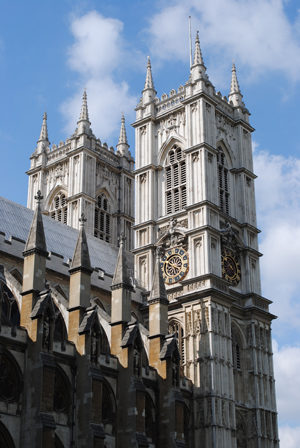
• Westminster Abbey. Our final stop for it was here that Dickens was buried on 14th June, 1870, following his death at his home near Rochester in Kent. Dickens had apparently wanted to be buried in Rochester but given his public profile, Westminster Abbey was seen as the only fitting place of rest for him (his wishes for a small, private funeral were, however, respected but thousands did visit the site in the days following). His grave sits in Poet’s Corner.

LondonLife – The Queen visits the newly transformed Kensington Palace…

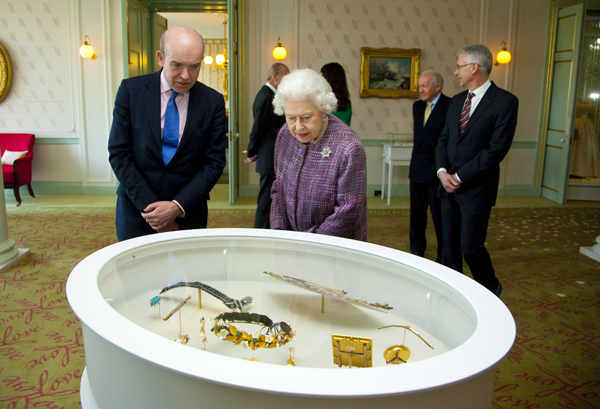
Queen Elizabeth II looks over gifts exchanged by Queen Victoria and Prince Albert in a display which forms part of the Victoria Revealed exhibition at Kensington Palace.

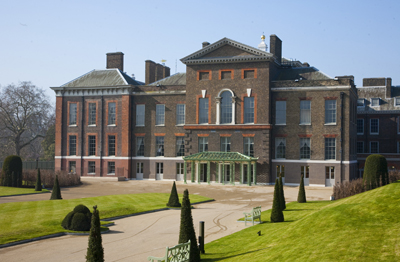
The Queen and Duke of Edinburgh visited palace last week to officially reopen the building following a £12 million, two year renovation project aimed at “transforming the visitor experience”.

The works have involved restoring the palace gardens – which will now be permanently open to the public free-of-charge – and reconnecting the palace with the surrounding parklands of Kensington Gardens partly through the provision of a new entrance. Landscape designer Todd Longstaffe-Gowan’s plan – which centres on a statue of Queen Victoria – features new lawns and avenues and a “maze-like path” inspired by 18th century “wilderness walks”.

There is also a new visitor reception area and “orientation hub” as well as a new courtyard terrace and cafe to complement The Orangery, shop and learning centre.

Victoria Revealed, a new permanent exhibition at the palace looks in intimate detail at the life of the Queen who once lived here and features everything from her black silk baby shoes to her wedding dress and the mourning clothing she wore following the death of Prince Albert as well as archive film footage showing the celebrations for the Diamond Jubilee of her reign in 1897.

The palace reopens on 26th March.

WHERE: The Broad Walk, Kensington Gardens, Kensington (nearest Tube stations are High Street Kensington or Queensway); WHEN: Daily 10am to 6pm (until 31st October); COST: £14.50 adult/£12 concession/children under 16 free (online booking discounts available, Historic Royal Palaces members free); WEBSITE: www.hrp.org.uk/KensingtonPalace.

PICTURES: Courtesy of Historic Royal Palaces/newsteam.co.uk

10 London sites to celebrate Charles Dickens – 5. Seven pubs associated with Dickens (including one he never visited)…

There hardly seems to be a pub in London which doesn’t claim some connection with the Victorian author but we thought we’d confine ourselves to five pubs with more well-established credentials…

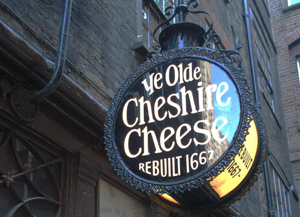
• Ye Olde Cheshire Cheese. This pub is a Fleet Street institution with parts of the current building dating back to 1667 when it was rebuilt following the Great Fire. Dickens was among numerous literary figures who frequented the premises – the pub is perhaps most famously associated with the lexicographer Dr Samuel Johnson (although there is apparently no recorded evidence he ever attended here); other literary figures who came here include Mark Twain and Sir Arthur Conan Doyle – and, according to a plaque in Wine Court, worked out of the pub for a period while producing his journal All The Year Round.

• The One Tun, Saffron Hill. Said to have been established as an ale house on its present site in 1759, the pub was rebuilt in the mid-Victorian era  and was apparently patronised by Dickens between 1833 and 1838. It’s also apparently the inspiration for the pub called The Three Cripples in Oliver Twist (The Three Cripples was actually a lodging house next door to the One Tun and didn’t sell ale). For more, see www.onetun.com

• The George Inn, Southwark. Dating from the 17th century, the George Inn in Borough High Street is the last galleried coaching inn left standing in London and is now cared for by the National Trust (and leased for use by a private company). Dickens is known to have come here when it was running as a coffee house and he mentions it in the book, Little Dorrit. For more, see     www.nationaltrust.org.uk/george-inn/.

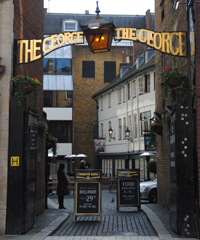
• George & Vulture, Castle Court (near Lombard Street). Established in the 18th century on the site of an older inn, this well-hidden pub was not only frequented by Dickens but is mentioned in The Pickwick Papers more than 20 times.

• The Grapes, Limehouse. Formerly known as The Bunch of Grapes, there has been a pub on the site for almost more than 430 years. Dickens was known to be a patron here (his godfather lived in Limehouse) and mentioned the pub – renamed The Six Jolly Fellowship Porters – appears in his novel Our Mutual Friend. For more, see www.thegrapes.co.uk.

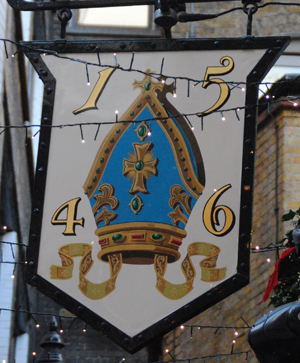
• Ye Olde Mitre, Ely Place. This pub dates from the mid 1500s by Bishop Goodrich of Ely to house his retainers and later rented out to Sir Christopher Hatton (it still houses the remains of a cherry tree which Sir Christopher is said to have danced around during a May Day celebration with none other than the future Queen Elizabeth I). Dickens (and the ubiquitous Dr Johnson) are both said to have drunk here.

• And lastly, The Dickens Inn in St Katharine Docks. It’s worth noting up front that Charles Dickens had nothing to do with this pub – dating back to at least 1800, it was once a warehouse and is thought to have been used to either house tea or play a role in a local brewing operation – but it was his great grandson, Cedric Charles Dickens, who formally opened the pub in 1976, apparently declaring, “My great grandfather would have loved this inn”. For more, see www.dickensinn.co.uk.

This list is by no means comprehensive – we’d love to hear from you if you know of any other pubs Dickens frequented…

Queen unveils final Jubilee Greenway plaque; a Barbican weekend; and, the Transit of Venus at Greenwich…

Queen Elizabeth II this week unveiled the final plaque marking the end of the 37 mile/60 kilometre Jubilee Greenway in front of Buckingham Palace. The circular Greenway – marked by 542 glass plaques – has been created to celebrate the Queen’s Diamond Jubilee. It can be walked or cycled and takes in key sites around London, including Kensington Palace, Regent’s Park, the Thames Barrier and Olympic sites including Greenwich Park (equestrian events), the O2 Arena (hosting gymnastics, trampoline and basketball events) as well as the main stadium at Olympic Park. The Greenway is divided into 10 sections and you can download either the entire walk or brochures for one of the sections only here.

This weekend sees the Barbican Centre play host to the event known as ‘Barbican Weekender’ – two days of free art, dance, music, theatre and film at the Barbican Foyers. Part of London 2012 Festival, the event’s ‘Freestage’ programme features Roxxxan,Dizralie and the Small Gods, young drummers from East London and performance poetry by the Barbican Young Poets. There’s also street dance classes with Boy Blue Entertainment, the chance to make an Opera in a Day with the Hip Hop Shakespeare Company, a Digital Graffiti wall, street food stalls, the Wah Nails Pop-Up boutique and free running by Streets United. For more, see www.barbican.org.uk/weekender.

• On Now – Measuring the Universefrom the Transit of Venus to the edge of the cosmos. Marking the 2012 transit of Venus, this exhibition at the Greenwich Observatory follows the story of man’s ongoing quest to understand the vastness of space, looking at the people and technologies involved in seeing farther than ever before – from the Astronomer Royal, Edmond Halley, to Captain James Cook and Edwin Hubble and through to the possibilities offered by the Cosmic Microwave Background Explorer. It’s accompanied by a series of talks, observing events – including this month’s Daytime Sky Watch sessions – and a planetarium show. Runs until 2nd September. Admission is free. For more information, see www.rmg.co.uk.

LondonLife – Celebrate Valentine’s Day with Victoria and Albert

The countdown to the March re-opening of Kensington Palace and accompanying launch of the major new exhibition, Victoria Revealed, has begun and to celebrate Historic Royal Palaces is releasing a new animated film about the “era defining” romance between Queen Victoria and Prince Albert. Released in five short daily episodes starting today, the film, Victoria 4 Albert, portrays the story of the couple from their same day births to their wedding ceremony and draws on excerpts from Queen Victoria’s personal diaries and Albert’s letters. The film, which also includes key moments from Victoria’s life at Kensington Palace, have been created and directed by acclaimed filmmaker and animator Chiara Ambrosio and features a voiceover by Julia Rayner (of The Pianist, Extras). The palace reopens on 26th March following a £12 million refurbishment project. In the meantime, head here to see the first of the clips…

LondonLife – A look back at Queen Elizabeth II’s reign…

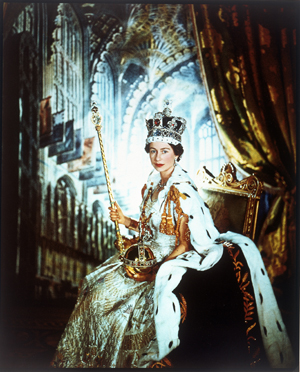
In celebration of Queen Elizabeth II’s Diamond Jubilee (the 60th anniversary of her reign officially passed on Monday), the Victoria and Albert Museum is holding an exhibition of portraits of the Queen taken by the acclaimed late photographer Cecil Beaton, including this one of Queen Elizabeth II in Coronation Robes taken in June, 1953. The exhibition, Queen Elizabeth II by Cecil Beaton: A Diamond Jubilee Celebration, depicts the Queen in various roles – as princess, monarch and mother – and includes a number of never-before-seen photographs as well as excerpts from Beaton’s diaries and letters. Runs from tomorrow (8th February to 22nd April). For more, see http://www.vam.ac.uk.

Image: Copyright, Victoria and Albert Museum, London

LondonLife Special – Long-serving royals…

Today marks 60 years since Queen Elizabeth II ascended to the throne, making her Britain’s second-longest serving monarch. While the celebrations are yet to kick off in earnest (the Diamond Jubilee weekend will be officially held over the 2nd to 5th June), we thought we’d take a quick look at the top 10 longest-serving monarchs who were crowned at Westminster Abbey in London:

1. Queen Victoria – 63 years (20th June, 1837-22nd January, 1901)

2. Queen Elizabeth II – 60 years (6th February, 1952-current)

3. King George III – 59 years (25th October, 1760-29th January, 1820)

4. King James I (VI of Scotland) – 57 years (24th July, 1567-27th March, 1625)

5. King Henry III – 56 years (18th October, 1216-16th November, 1272)

6. King Edward III – 50 years (25th January, 1327-21st June, 1377)

7. Queen Elizabeth I – 44 years (17th November, 1558-24th March, 1603)

8. King Henry VI – 38 years (31st August, 1422-4th March,1461, and, 31st October, 1470-11th April, 1471)

9. King Henry VIII – 37 years (22nd April, 1509-28th January, 1547)

10. King Henry I – 35 years (3rd August, 1100-1st December, 1135)

Around London: A new pleasure garden for London; music hall star Dame Gracie Fields honored; mystery portraits at the NPG; and, celebrating the Olympics (from a Peruvian perspective)…

A new pleasure garden will be built in the city’s east as part of celebrations for next year’s Diamond Jubilee. London Pleasure Gardens, announced back in March, will be built upon a 60,000 square metre site at Pontoon Dock, opposite the ExCeL Exhibition Centre, and consist of an “ever-evolving creative playground for both resident Londoners and tourists alike”. The gardens, which will feature landscaped walkways, a floating cinema, an ‘adult’s playground’ and a range of facilities such as a ‘glass cafe’ – are expected to be open for the Queen’s Jubilee Weekend on 1st June. It’s expected that more than 40,000 people a day will pass through the site during the Olympics. London has had a long association with the concept of pleasure gardens – places where people gathered to listen to music, see art, eat and drink and talk, the most famous of which was the Vauxhall Pleasure Gardens. But the Royal Docks also had its own pleasure gardens in the past – these existed between 1851 and 1884 and were named the Royal Victoria Gardens.  For more, see www.londonpleasuregardens.com.

• Music hall star Dame Gracie Fields has been honored by English Heritage with a blue plaque on the Islington house where she lived for three years in the 1920s. It was while living at 72a Upper Street with her parents and first husband Archie Pitt, that she consolidated her reputation as one of Britain’s most popular performers and it was also during this time that she recorded for the first time (she was to become a regular on the BBC and by 1933 had cut a massive four million discs) and appeared before King George V and Queen Mary at a Royal Variety Performance. Following her success, Fields and Pitt built a mansion in The Bishop’s Avenue, Hampstead, called ‘The Tower’ in honor of the show which had made her a star – Mr Tower of London. She later separated from Pitt and married an Italian born director Monty Banks. They moved to the US in 1940 amid fears her husband would be interned and, after the war, she settled on the Italian island of Capri where, following Banks’ death in 1950, she married again. She made her final appearance on the London stage in 1978 – closing a Royal Variety Performance – and died back in Capri the following year.

• And, briefly…..A new species of dinosaur – Spinops sternbergorum – has reportedly been discovered at the Natural History Museum, identified from bones previously gathering dust on a shelf at the museum.

On Now: Imagined Lives: Portraits of Unknown People. This exhibition at the National Portrait Gallery centres on a group of 14 portraits from the 16th and 17th centuries which depict unknown people. Originally thought to represent famous figures like Queen Elizabeth I, the identity of the sitters is now considered unknown. In response to the pictures, eight internationally renowned authors – from Alexander McCall Smith and Joanna Trollope to Julian Fellowes and Terry Pratchett – have written imaginative short stories about the portraits, bringing them to life. The exhibition was originally shown in Somerset but is now running at the NPG until 22nd July. Admission is free. For more information, see www.npg.org.uk.

On Now: London and the Olympics. The Museum of London is hosting a new display which looks at the 1908 and 1948 Olympic Games held in London but, in twist, looks at not only the experiences of Londoners but those of the 41 man team Peru sent to the 1948 games. Pictures included in the display come from an album made by one of the athletes, Enrique Mendizabal Raig, recording the team’s visit (you can find the images on Flickr here). Entry is free. Runs until September. For more, see www.museumoflondon.org.uk.

10 curiously named churches of London – 4. St James Garlickhythe

Situated close to London’s riverfront, there is believed to have been a church on this site since at least 1100, although it is believed to have been previously dedicated jointly to the apostles St James and St John.

The name of Garlickhythe can be explained by its location – the word ‘hythe’ is a Saxon word for a landing place or jetty and it is believed garlic, used as a preservative and medication, was unloaded nearby and even possibly traded on Garlick Hill where the church stands.

The church was rebuilt in the 1300s and again after the Great Fire (it was another of Sir Christopher Wren’s designs and thanks to the abundance of natural light inside was known as ‘Wren’s Lantern’) but it largely escaped damaged in World War II (the projecting tower clock was among the casualities but while a 500 lb bomb buried itself in the south-east corner of the church, it failed to explode).

What bombs failed to do, however, a death watch beetle did and when one was discovered in the roof timbers in the 1950s, the church was closed until 1963 while it was restored. The exterior clock was restored in 1988 and repairs to the south transept were required after a crane counterweight smashed into the church in 1991.

Inside, the church boasts the second highest ceiling  – 40 foot – of any churches in London (St Paul’s being the highest) and much of the carved woodwork inside, including the font cover, altar table and churchwardens pews, is still original.

There is also original ironwork including a mayoral swordrest as well as a Stuart and Georgian coat-of-arms (the Stuart arms are among a number of features which come from St Michael Queenhithe – it was combined with this parish in the late 1800s; St Michael’s was pulled down in 1894 ).

The magnificent Bernhard Schmidt organ was installed in 1718. The church also houses two rare chalices dating from the time of Edward VI in the mid-16th century and some other rare plate as well as the oldest parish registers in England (these date from the 16th century with the first entry being that of the baptism of Edward Butler on 18th November, 1535).

St James Garlickhythe, which sits in the parish of St James Garlickhythe with St Michael Queenhithe and Holy Trinity-the-Less (the latter being another now demolished church), boasts connections to 12 livery companies including the Vintners (the church is located in Vintry Ward) and the Joiners. Among those buried there are six former mayors.

The church is currently appealing for funds for a new ring of eight bells to mark the Diamond Jubilee of Queen Elizabeth II next year.

And we couldn’t mention the church without referring to Jimmy Garlick, the church’s mummy. An embalmed body of an older man, this was discovered in the church vaults in 1855 and, identity unknown, was subsequently put on display so that curious onlookers could, for a small fee, look upon him or apparently even touch him. Jimmy, whose identity remains unknown, is no longer on public view.

WHERE: Garlick Hill (just off Upper Thames Street) (nearest Tube station is Mansion House). WHEN: See website for service timesCOST: Free; WEBSITE: www.stjamesgarlickhythe.org.

What’s In a Name?…Elephant and Castle

A somewhat neglected area located in the Borough of Southwark, just south-east of Borough, Elephant and Castle takes its rather odd name from a coaching inn which once stood on the site – the Elephant and Castle.

The area is more correctly known as Newington but the name Elephant and Castle was apparently adopted informally in the mid 18th century as the area rose in prominence thanks in part to the opening of Westminster Bridge.

The inn, which stood on the site of a former playhouse, was apparently rebuilt several times but there is now no sign of it – the current, rather ugly, Elephant and Castle pub which is said to stand a short distance from where the tavern once stood, was built in the 1960s.

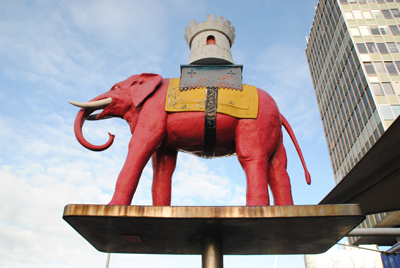
The origins of the sign of the Elephant and Castle, meanwhile, apparently comes from the mid-15th century when members of the Cutler’s Company adopted the sign of the elephant as their symbol (perhaps representing the ivory they used in their trade). The Worshipful Company of Cutlers still has an elephant carrying a castle on its back in its coat-of-arms.

The area of Elephant and Castle, meanwhile, was known for its shopping and theatres before it was heavily bombed in the Blitz. It still features a rather grim shopping mall (pictured is the sign of the elephant and castle out front) which was said to have been the first covered shopping mall in Europe when it opened in the mid-1960s – it is apparently due for demolition as part of a larger regeneration project. The area has already seen some major new developments like the the residential tower known as Strata.

Other prominent buildings include the Metropolitan Tabernacle – standing opposite the shopping centre, this was founded by preacher Charles Hadden Spurgeon in the 19th century and rebuilt after World War II (interestingly, the site of the tabernacle is where three men, known as the Southwark Martyrs, were burnt at the stake for heresy in 1557 during a period of religious persecution in the reign of Queen Mary I).

Famous residents have included Charlie Chaplin – who lived in a workhouse in the area as a child – while other notable features include a large stainless box which stands at the centre of the area’s major road intersection, linking what is now New Kent Road and Kennington Park Road (via Newington Butts) with roads leading to Lambeth, Westminster, Waterloo and London Bridges among others (this is actually a memorial to scientist Michael Faraday, who was born in nearby Newington Butts). The area also boasts its own Tube station, Elephant & Castle.

Lost London: Gates Special – Ludgate

We’re launching a new ‘Lost London’ special looking at some of the now disappeared gates of London. First up is Ludgate which once stood on the western side of the city.

The gate is believed to have been constructed in Roman times and is known to have been rebuilt a several times – once in 1215 and another time after it was destroyed in the Great Fire – before being demolished in 1760 to allow for the road to be widened.

The origins of the name – which is today commemorated in street names like Ludgate Hill and Ludgate Circus – are sketchy but may have been named after the mythical pre-Roman King Lud, who was, so the legend goes, buried underneath this portal (this myth was popularised by the 12th century writer Geoffrey of Monmouth). Others have suggested ‘lud’ is a corruption of ‘flud’ or ‘flood’ and the gate was so named because it prevented the city being flooded by the River Fleet. Another possibility is that ‘lud’ is simply an old English word for a postern gate, a small secondary gate.

Whatever the origins of its name, it has been suggested it was through Ludgate that William the Conqueror passed when first entering the city. In 1377 it became a prison for petty criminals like debtors and trespassers – serious criminals were sent to Newgate – and this lasted until its final destruction.

There is a blue plaque on the wall of the church of St Martin-within-Ludgate in Ludgate Hill marking where Ludgate once stood (pictured above). It is believed that some badly corroded statues standing under a porch at the church of St Dunstan-in-the-West on Fleet Street are of Lud and his sons and were taken down from the gate before its demolition. William Kerwin’s statue of Queen Elizabeth I which dates from 1586 sits in a niche on the front of the church is also believed to have been removed from Ludgate.

Where’s London’s oldest…hotel?

Brown’s Hotel in Mayfair (now officially the Rocco Forte Brown’s Hotel) is generally awarded the accolade of being London’s oldest hotel. 

The hotel, which initially fronted on to Dover Street, was founded in a series of former Georgian townhouses in 1837 by James and Sarah Brown, formerly valet and maid to Lord and Lady Byron.

After being sold to the Ford family in 1859, the hotel was extensively modernised with electricity, the installation of permanent bath tubs, lifts, and in first for London hotels, an on-site restaurant. The building itself underwent a major expansion in the late 1890s when the family bought the St George’s Hotel which backed onto Brown’s and fronted onto Albemarle Street. The two buildings were merged into one, an extra floor added, and a new facade built for the hotel facing out onto Albemarle Street (pictured right). Three further townhouses were incorporated into the building in the early 1900s.

Possibly the most notable event to take place at the hotel was in 1876 when Alexander Graham Bell made the first ever telephone call there. Other visitors included authors Rudyard Kipling (who wrote The Jungle Book while resident) and Agatha Christie (At Bertram’s Hotel is said to be based on Brown’s), royalty such as Queen Victoria and the French Emperor Napoleon III and his wife Empress Eugenie (they stayed in 1871), and world leaders like US Presidents Theodore Roosevelt and Franklin Roosevelt, British Prime Minister Winston Churchill (said to count the bar among his favorities), Cecil Rhodes, founder of Rhodesia, and Emperor Haile Selassie, who took refuge there in 1936 after the Italians invaded Ethiopia.

The hotel, which now features 117 guestrooms, underwent a multi-million pound refurbishment in the mid-Noughties after becoming part of the Rocco Forte Collection of hotels. As well as The Albemarle restaurant and The Donovan Bar, it also serves award-winning afternoon teas at The English Tea Room.

For more about Brown’s Hotel, see www.brownshotel.com.

Around London – Illuminating manuscripts at the BL; Capability Brown and Richard Burton blue plaqued; and, Grayson Perry at the British Museum…

Opened to the public last week, Royal Manuscripts: The Genius of Illumination – a landmark exhibition at the British Library – features a “treasure trove” of illuminated manuscripts collected by the kings and queens of England between the 9th and 16th century. Highlights include 16 illuminated manuscripts of King Edward IV, what the library calls the first “coherent collection” of royal books; the Psalter of King Henry VIII, A History of England by Matthew Paris, a 13th century monk, scholar and advisor to King Henry III; Thomas Hoccleve’s Regement of Princes – a early 15th century instruction book on how to be an effective ruler; a 14th century Genealogical Chronicle of the English Kings; and, The Shrewsbury Book, created in Rouen in 1445 and presented to Margaret of Anjou on her marriage to King Henry VI by the renowned military commander John Talbot, 1st Earl of Shrewsbury. An impressive series of public events featuring well known writers and historians – including Eamon Duffy, Michael Wood, and Andrew Marr –  is taking place alongside the exhibition. Runs until 13th March. An admission charge applies. For more, see www.bl.uk.

PICTURE: The Coronation of Henry III, Images of English Kings, from Edward the Confessor to Edward I, England, c. 1280-1300, Cotton Vitellius, A. xiii, f. 6 © British Library Board

• Leading 18th century landscape gardener Lancelot ‘Capability’ Brown has been honored with a blue plaque at his former home in Hampton Court Palace. Brown, who designed more than 120 landscapes during his lifetime, lived at Wilderness House after King George III appointed him Chief Gardener at the palace – he lived there from 1764 until his death in 1783. Brown’s legacy can still be seen at country houses around England – including at Petworth House in West Sussex, Alnwick Castle in Northumberland, Chatsworth House in Derbyshire and Blenheim Palace in Oxfordshire. He had earned the name ‘Capability’ by the 1760s – apparently he often spoke of a property’s capabilities when speaking of it. English Heritage unveiled the plaque last week. For more, see www.english-heritage.org.uk.

A second blue plaque worth mentioning this week is that marking the former home of actor Richard Burton. Michael Sheen – currently playing Hamlet at the Young Vic – was among those who last week attended the unveiling on the plaque at the home Burton and his wife actress Sybil Williams lived in from 1949 to 1956, the period during which he rose to international fame. While living at the house 6 Lyndhurst Road in Hampstead, Burton was a member of the Old Vic theatre company – performing, to the acclaim of critics, roles including that of Hamlet, Othello, Coriolanus and Henry V – and in 1952 made his Hollywood debut with My Cousin Rachel. Other films he appeared in during the period include The Robe (1953), The Desert Rats (1953), and Alexander the Great (1956). Following the close of the Old Vic season in 1956, Burton moved to Switzerland and went on to even greater public fame following his role in the 1963 film Cleopatra alongside his then lover (and later wife) Elizabeth Taylor. For more, see www.english-heritage.org.uk.

• On Now: Grayson Perry – The Tomb of the Unknown Craftsman. This exhibition at the British Museum explores a range of themes connected with the ideas of craftsmanship and sacred journeys and includes 190 objects from the museum’s collection selected by the artist along with a works by Grayson himself, many of which will be on public view for the first time. They include everything from Polynesian fetishes to Buddhist votive offerings, a prehistoric hand axe to 20th century badges and a re-engraved coin from 1882 featuring a bust of Queen Victoria with a beard and boating hat. At the heart of the exhibition sits Grayson’s own work, The Tomb of the Unknown Craftsman, a richly decorated cast-iron “coffin-ship”. Runs until 19th February. An admission charge applies. For more, visit www.britishmuseum.org.

Favourite Places – London Historians’ Mike Paterson on war memorials in London…

In a special Favorite Places to mark Remembrance Day, Mike Paterson, director of London Historians, talks about his favorite war memorials…

At this time of year, the focus is inevitably on Lutyens’ Cenotaph in Whitehall. Version 1, in wood and plaster,  was hurredly constructed in just two weeks in time for the 1919 victory parade. The version we know today was unveiled on 11th November the following year and is a plain, austere and fitting tribute to all our lost service personnel, the centre of the nation’s attention every Remembrance Sunday.

It is estimated there are over 70,000 war memorials in Britain. As a nation we have, let’s face it, a bellicose history, and London in particular has been intimately involved in both World Wars. No surprise then, that as you walk the streets, you happen upon something referencing conflict around every corner. In addition to memorials themselves, we have dozens of now largely forgotten field marshals, generals and other martial leaders.

But the best, I believe, are the ones celebrating the common soldier. I have some favourites. The City of London Regiment infantryman atop a tall plinth in Holborn by Albert Toft (1922), dramatically standing tall, his rifle by his side, bayonet fixed. In Borough High Street there is a fine statue by P Lindsay Clark (1922), remembering the men from St Saviour’s (pictured, right). It is of a soldier, rifle slung, purposefully leaning forward as he trudges through the mud. A very recent statue unveiled by the Queen in 2000 is of a five-man tank crew, in Whitehall Place very near Embankment Station. By Vivien Mallock, it gives a very strong feeling of cameraderie and I always find it uplifting when walking by.

But of all the memorials to the rank and file soldier, by far the most outstanding is, for me, the Royal Artillery monument on Hyde Park Corner, unveiled in 1925. It commemorates the 49,000 artillerymen who lost their lives in the Great War.

The piece comprises a massive Portland stone plinth mounted by a 9.2 inch howitzer gun, augmented on all sizes by statues in bronze of gunners in various poses. One of these men – controversial at the time – is dead, covered by his great coat; you can see his hand and part of the side of his face.

The memorial (pictured, right) was designed by Charles Sargeant Jagger (1885 – 1934). Lionel Pearson constructed the stone parts while Jagger himself sculpted the soldiers.  Informally posed, they are all exquisite examples of the sculpor’s art.

The most striking is that of the artillery driver, leaning back onto the plinth and resting his outstretched arms on it. His cape – stretched from wrist to wrist – hangs down limply. In fact, the man rather resembles a crucified figure without the cross. I was delighted some months ago to discover a maquette (small working model) of this figure at the Honourable Artillery Company HQ in the City.

Jagger – a First World War veteran himself – was an outstanding memorial sculptor. If you’re waiting for a train at Paddington and have a little time on your hands, do check out his memorial to the fallen soldiers of the Great Western Railway. It’s a deeply poignant depiction of a squaddie – his coat draped over his shoulders and wearing a long, home-made scarf – reading a letter from home. You can find it on Platform 1, and I defy you not to be deeply moved.

PICTURES: Mike Paterson