10 sites from Victoria and Albert’s London – 7. The Palace of Westminster…


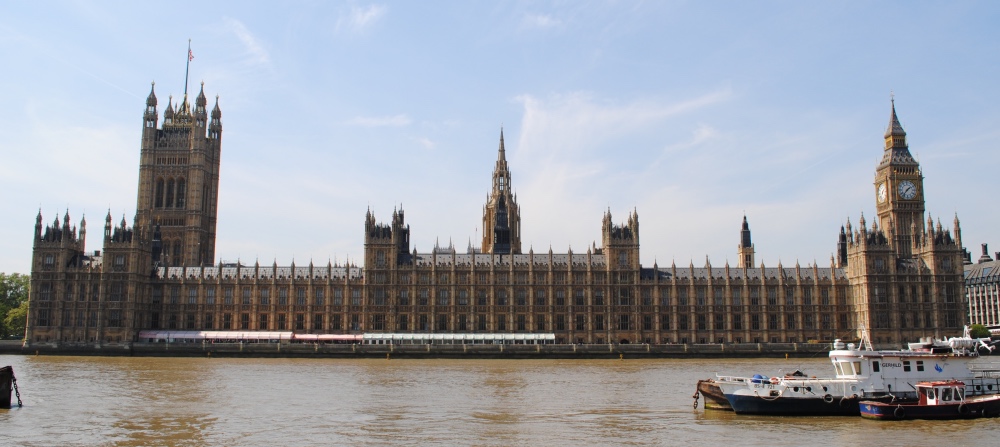
Following the destruction of much of the Palace of Westminster in a fire which broke out on 16th October, 1834, work was launched on a new building to house both the House of Commons and the House of Lords – a building to which both Queen Victoria and Prince Albert had strong connections.

Rebuilding commenced in earnest for the new building 27th August, 1840, when Sarah Barry, wife of architect Charles Barry (his plans for a new Perpendicular Gothic-style Parliament building had been selected from some 97 submissions), laid the foundation stone of the new complex.

Work, to the designs of Barry with the aid of Augustus Pugin, progressed (although a lot slower than was originally envisaged – and a lot more expensively) and the new House of Lords was opened in 1847 followed by the new House of Commons in 1852 (when Barry received a knighthood).

The Clock Tower, meanwhile, now renamed the Elizabeth Tower, was not completed until 1858, but when the Victoria Tower was roofed in 1860, the work was largely complete (although construction wasn’t officially completed until 10 years later – Barry died in 1860 and the work was continued by his son, Edward Middleton Barry).

In 1852, Queen Victoria became the first monarch to take the route since used by all sovereigns at the State Opening of Parliament – arriving in the Irish State Coach (still used by Queen Elizabeth II today) she entered the entrance at the base of the Victoria Tower (now known as the Sovereign’s Entrance) and proceeded to the Robing Room where she was dressed in the Imperial State Crown and the Robe of State before processing through the Royal Gallery to the chamber of the House of Lords where she took her seat on the Throne (located opposite the door leading to the House of Commons).

Prince Albert, known for his passion for the arts, chief connection came when he was appointed chair of the Royal Fine Arts Commission in 1835. It oversaw the placement of paintings and sculptures in the building, including five vast frescoes by William Dyce depicting the Arthurian legend which can be seen in the Robing Room.

The prince tragically died on 14th December, 1861, and while the structural work had largely been completed, much of the decorative schemes the commission had envisaged for the palace hadn’t been finished. As a result, many of the decorative aspects Prince Albert had overseen the planning of were never completed.

Portrayals of the Queen and Prince in the building today include a white marble statue of Queen Victoria holding a sceptre and laurel crown in the Prince’s Chamber and portraits of the Queen and Prince Albert by Franz Xaver Winterhalter which flank the Chair of State in the Robing Room.

WHERE: Houses of Parliament (nearest Tube stations are Westminster, St James’s Park and Embankment); WHEN: Tours are held on Saturdays until 25th January 2020 and Monday to Friday between until 30th August 2019 (except 26th August); COST: £26.50 adults/£22 concessions/£11.50 children five to 15 years (children under five are free); WEBSITE: www.parliament.uk.

This Week in London – Women in the British Army; communications secrets exposed; and, cinema at Somerset House…

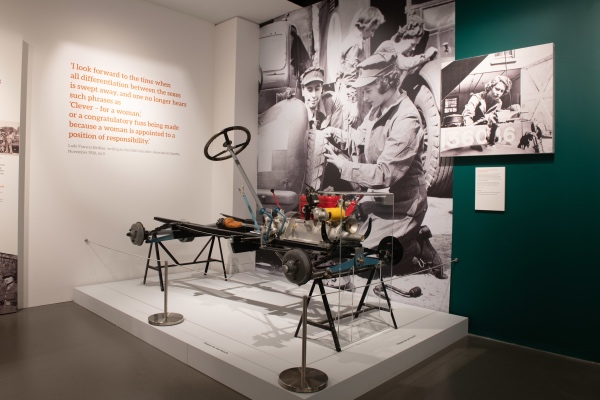
An exhibition exploring the changing roles of women in the British Army from 1917 to the present day has opened at the National Army Museum in Chelsea. Rise of the Lionesses, which is being held in partnership with the WRAC Association, charts the major contributions women have made to the Army’s history as well as how perceptions of “appropriate” roles for females have affected these contributions and how women have fought to redefine those roles. Highlights include the combat shirt and medical kit belonging to Sergeant Chantelle Taylor – the first female British soldier to kill in combat, the first Army-issue bra, and the vehicle chassis used to train Princess Elizabeth (now Queen Elizabeth II) while she served in the Auxiliary Territorial Service during World War II (pictured above). The free display can be seen until 20th October and is accompanied by a programme of public events. For more, head to this link. PICTURE: Courtesy of National Army Museum.

• Communications intelligence and cyber security are explored in an exhibition at the Science Museum, making the centenary of UK intelligence, security and cyber agency,  GCHQ. Top Secret: From ciphers to cyber security features more than 100 objects including cipher machines used during World War II, secure telephones of the type used by British Prime Ministers, and an encryption key used by the Queen. There’s also encryption technology used by Peter and Helen Kroger who, until their arrest in the 1960s, were part of the most successful Soviet spy ring in Cold War Britain, and the remains of the crushed hard drive alleged to contain top secret information which was given by Edward Snowden to The Guardian in 2013 while the work of GCHQ’s National Cyber Security Centre is also explored with visitors able to see a computer infected with the WannaCry ransomware which, in 2017, affected thousands of people and organisations including the NHS. Runs until 23rd February. Admission is free. For more, head to www.sciencemuseum.org.uk.

The pioneering work of Hungarian avant garde artist Dóra Maurer goes on show at the Tate Modern on South Bank next Monday in the first UK exhibition celebrating her five decade career. The free display brings together 35 of her works – from conceptual photographic series and experimental films to colourful graphic works and striking geometric paintings – with highlights including Seven Foldings (1975), Triolets (1981), Timing (1973/1980) and the six-metre-long Stage II (2016). The year-long display is one of several free displays opening at the Tate Modern this month. Others include an exhibition of Sol LeWitt’s graphic woodcut prints, a show featuring photograms, films, painting and drawings by Polish émigré artists Franciszka Themerson and Stefan Themerson, and photography displays by Mitch Epstein, Naoya Hatakeyama and David Goldblatt. For more, see www.tate.org.uk.

Cinema is being celebrated at Somerset House this month with the launch of Film4 Summer Screen at Somerset House. The event includes courtyard screenings, specially curated DJ sets and live performances, and panel discussions from industry insiders. Actor Antonio Banderas will join Spanish director Pedro Almodóvar to introduce the festival’s opening night premiere, Pain and Glory, with other special guests including the cast of Shane Meadows’ BAFTA-award winning film This is England, Francis Lee, the director and writer of God’s Own Country, and  the film’s lead actor Josh O’Connor as well as Peter Webber, director of Inna de Yard. Runs from 8th to 21st August. For more, see www.somersethouse.org.uk.

Send all items for inclusion to exploringlondon@gmail.com.
10 sites from Victoria and Albert’s London – 6. The South Kensington Museum…

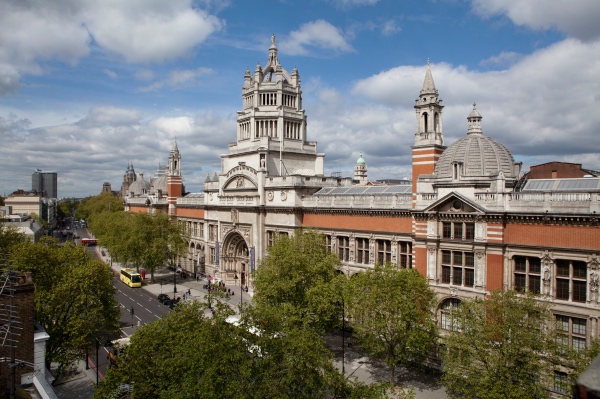
Better known today as the Victoria and Albert Museum following its renaming in 1899, the South Kensington Museum was created in the aftermath of the success of the Great Exhibition of 1851.

Initially located in Marlborough House on the Mall, it moved to its South Kensington site in 1857, opening to the public on 22nd June that year. Recorded among the visitors in the initial couple of years was Queen Victoria – who visited twice in February, 1858, and then again open 14th April when she was accompanied by Prince Albert.

The purpose of the later visit was to open the Art Rooms on the ground floor of Sheepshanks Gallery, a building which had been specifically constructed to house paintings given by John Sheepshanks (the building, located on the eastern side of the John Madejski Garden now contains sculptures on the ground floor and silver and stained glass on the first floor).

One interesting connection between the Queen and the museum can be found in a six metre tall plaster cast of Michelangelo’s David. The cast was given to Queen Victoria as a gift from the Grand Duke of Tuscany in 1857 but she didn’t want the trouble of housing the giant figure (and she was apparently shocked by its nudity – more on that in a moment). So the Queen gave the statue to the museum where it was installed in a prominent position (and can today be seen in Room 46b).

But ah, yes, the nudity. The story goes that in response to the Queen’s shock, a proportionally accurate plaster fig leaf was commissioned to cover David‘s nether regions whenever the Queen visited (apparently by being hung on two small hooks on the cast). The fig leaf, like the statue, can still be seen – it’s housed in a small case on the back of the plinth David‘s standing on.

David is one of only a few items in the V&A’s collection today which once belonged to the Queen or Prince Albert. Others include the Raphael cartoons which she loaned to the museum in 1865 (and are still on loan from the current Queen).

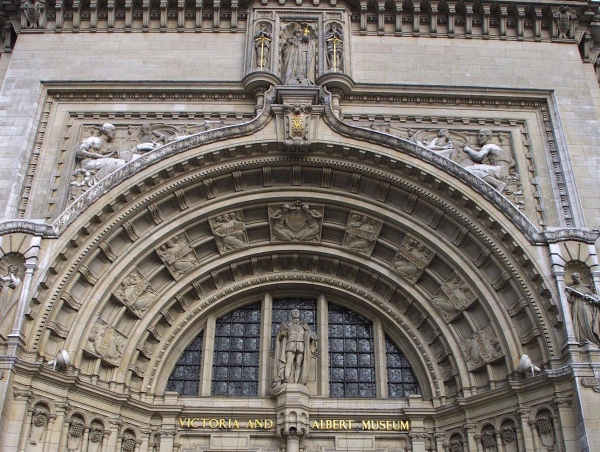
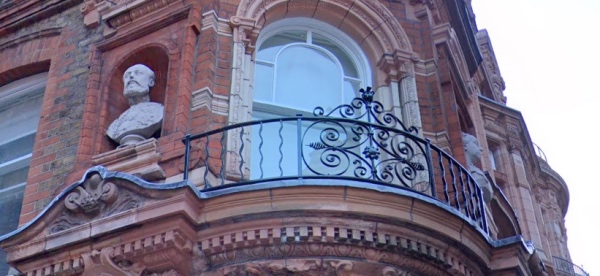
As part of the redevelopment of the museum in the late 19th and early 20th centuries (when it was also renamed the Victoria and Albert Museum despite the Queen’s wishes it be called the Albert Museum), statues of the royal couple were installed above the museum’s main entrance in Cromwell Road with Prince Albert positioned just below the Queen who is flanked  by St George and St Michael (see above).

PICTURES: Courtesy V&A

WHERE: Victoria and Albert Museum, Cromwell Road (nearest Tube stations are South Kensington and Gloucester Road); WHEN: 10am to 5.45pm daily (Fridays to 10pm); COST: Free; WEBSITE: www.vam.ac.uk

Treasures of London – Queen Victoria outside Kensington Palace…

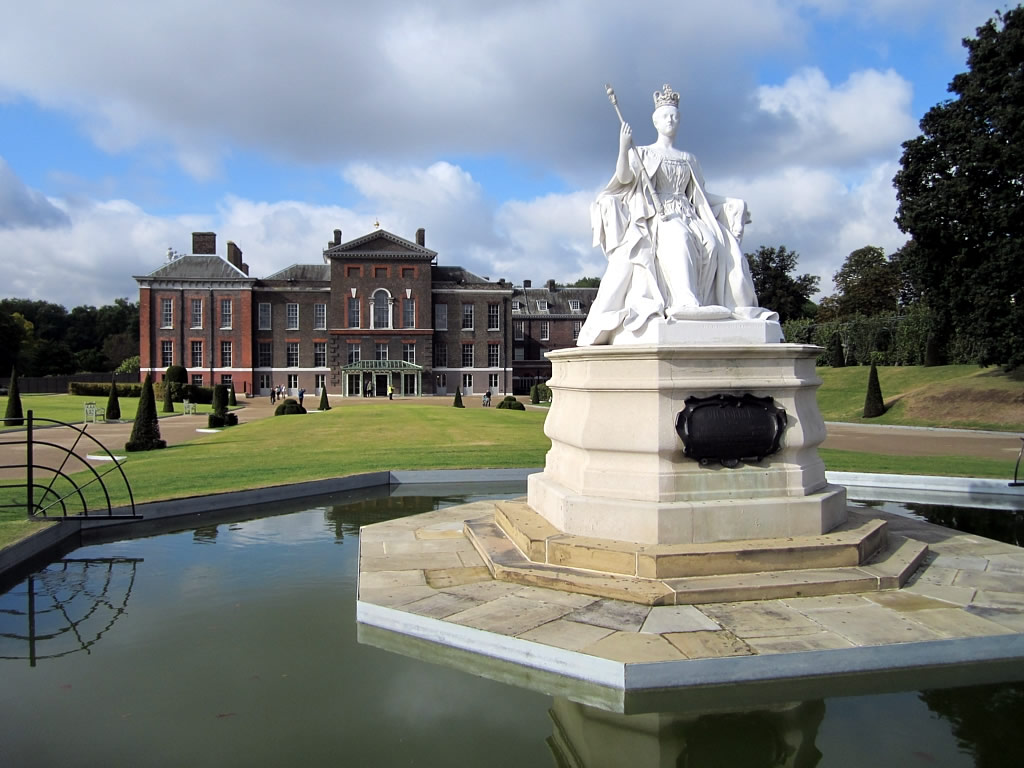
This statue in Kensington Gardens, just to the east of Kensington Palace, is one of numerous depicting the Queen located around London. But what sets this one apart is the sculptor – none other than the Queen’s daughter, Princess Louise.

The statue was erected in 1893 and funded by the citizens of Kensington – officially the Kensington Golden Jubilee Memorial Executive Committee – to commemorate the Queen’s Golden Jubilee (actually held in 1887).

Kensington Palace was, of course, where the Queen was born and lived until her accession to the throne.

Made of marble, the statue depicts Victoria, seated and wearing her coronation robes in 1837 at the age of just 18. It sits on a plinth in the middle of a small ornamental pond.

Princess Louise, the Duchess of Argyll, had been taught by sculptor Mary Thornycroft and and Sir Edgar Boehm and was widely known among artists. She was apparently approached by her friend, painter Alma Tadema, about making the work and initially refused before later agreeing to make it.

Other works she created include a memorial commemorating those who fought in the South African War in St Paul’s Cathedral and another statue of Queen Victoria, this one located in Montreal, Canada.

Princess Louise married John, Marquess of Lorne, heir of the Duke of Argyll, who went on to serve as Governor-General of Canada from 1878-1884.

PICTURE: David Stanley (licensed under CC BY 2.0)

This Week in London – Queen Victoria at Buckingham Palace; royal etchings; and, Ed Ruscha at Tate Modern…

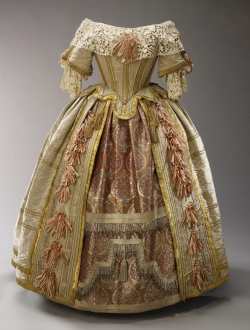
The impact of Queen Victoria on Buckingham Palace, transforming what was empty residence into “the most glittering court in Europe”, is a special focus of this year’s summer opening of Buckingham Palace. Marking the 200th anniversary of the birth of the Queen, the exhibition Queen Victoria’s Palace recreates the music, dancing and entertaining that characterised the early part of the Queen’s reign using special effects and displays. Highlights include the Queen’s costume (pictured) for the Stuart Ball of 13th July, 1851, where attendees dressed in the style of King Charles II’s court. There’s also a recreation of a ball held in the palace’s newly completed Ballroom and Ball Supper Room on 17th June, 1856, to mark the end of the Crimean War and honour returning soldiers which uses a Victorian illusion technique known as Pepper’s Ghost to bring to life Louis Haghe’s watercolour, The Ball of 1856. The table in the State Dining Room, meanwhile, has been dressed with items from the ‘Victoria’ pattern dessert service, purchased by the Queen at the 1851 Great Exhibition, and the room also features the Alhambra table fountain, a silver-gilt and enamel centrepiece commissioned by Victoria and Albert in the same year, and silver-gilt pieces from the Grand Service, commissioned by the Queen’s uncle, King George IV, on which sit replica desserts based on a design by Queen Victoria’s chief cook, Charles Elme Francatelli. The summer opening runs until 29th September. Admission charges apply. For more, see www.rct.uk/visit/the-state-rooms-buckingham-palace. PICTURE: Royal Collection Trust/ © Her Majesty Queen Elizabeth II 2019

 The Victorian reign is also the subject of a new exhibition at the British Museum where rare etchings by Queen Victoria and Prince Albert have gone on display. At home: Royal etchings by Queen Victoria and Prince Albert features 20 artworks that they created during the early years of their marriage and depict scenes of their domestic lives at Windsor Castle and Claremont including images of their children and pets. The display includes three works donated to the museum by King George V, Queen Victoria’s grandson, in 1926, and it’s the first time they’ve gone on public display. Prince Albert introduced the Queen to the practice of etching soon after their wedding and under the guidance of Sir George Hayter they made their first works on 28th August, 1840. They would go on to collaborate on numerous works together. The display can be seen in Room 90a until mid-September. Admission is free. For more, see www.britishmuseum.org. PICTURE: The Princess Royal and Prince of Wales, 1843, by Albert, Prince Consort (after Queen Victoria) © The Trustees of the British Museum.

American artist Ed Ruscha is the subject of the latest “Artist Rooms” annual free display in the Tate Modern’s Blavatnik building on South Bank. The display features works spanning Ruscha’s six-decade career, including large, text-based paintings and his iconic photographic series. There is also a display of Ruscha’s artist’s books – including Various Small Fires 1964 and Every Building on the Sunset Strip 1966 – as well as some 40 works on paper gifted to Tate by the artist. Highlights include his series of photographs of LA’s swimming pools and parking lots, paintings inspired by classic Hollywood cinema, and works such as DANCE? (1973), Pay Nothing Until April (2003) and Our Flag (2017). Runs until spring 2020. Admission is free. For more, see www.tate.org.uk.

Send all items for inclusion to exploringlondon@gmail.com.
10 sites from Victoria and Albert’s London – 5. West End theatres…

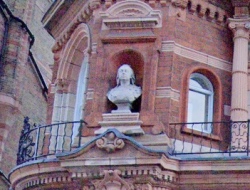
Queen Victoria and Prince Albert both had an abiding love of performance and were avid theatre-goers (the Queen first attended the theatre as monarch to watch The Siege of Rochelle and Simpson & Co at the Drury Lane Theatre just a few months after ascending the throne in 1837).

Until Prince Albert’s death in 1861, they were regularly seen at various theatres with the Queen attending both ‘in state’ (that is, formally as monarch with all the pomp and ceremony that entails) as well as in private (despite Prince Albert’s concerns over her security). The royal couple’s visits to the theatre generally took place from February to June when the Queen was principally in residence at Buckingham Palace.

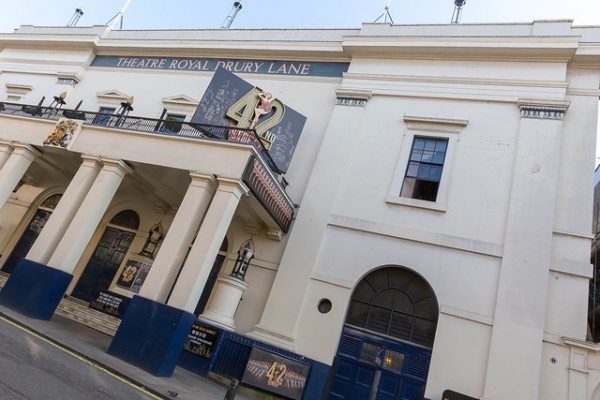
As well as the Drury Lane Theatre (more formally, the Theatre Royal Drury Lane – pictured above in 2018), other theatres they attended include the Theatre Royal Haymarket and the Covent Garden Theatre, now the Royal Opera House.

They also attended the now demolished Princess’s Theatre in Oxford Street, most notably to see Charles Kean’s production of The Corsican Brothers in February, 1852. Keen not only directed but played both brothers mentioned in the title. So enamoured was the Queen of it, that she would see it four times.

The royal couple were such great admirers of Kean that they even had him stage private theatrical performances at Windsor Castle and when he died, Queen Victoria sent a letter of condolence to his wife.

PICTURE: Marco Verch (licensed under CC BY 2.0)


LondonLife – A new occupant heading for Number 10…

News today that Boris Johnson will be the next Prime Minister of the UK. Johnson, who will take over from Theresa May – only the second woman to hold the office – as PM tomorrow after winning the Conservative Party vote over Foreign Secretary Jeremy Hunt, will be the 14th Prime Minister to serve in the office during the reign of Queen Elizabeth II. PICTURE: US State Department

10 sites from Victoria and Albert’s London – 4. Hyde Park…

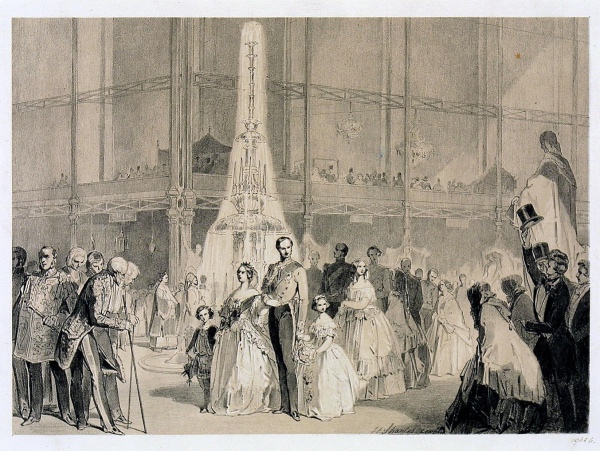
As well as being a location for Queen Victoria and Prince Albert’s carriage rides, Hyde Park was the scene of what the Queen described as “the greatest day in our history” – the opening of the Great Exhibition in 1851.

Designed by Joseph Paxton, the vast Crystal Palace had been constructed on the south side of the park and it was at noon on 1st May, 1851 (having already celebrated their son Arthur’s first birthday), that the Queen and Prince arrived in a closed carriage to officially open the exhibition, encountering, as they did so, the biggest crowd they’d ever seen.

They were greeted by massed choirs as they entered the Crystal Palace after which Prince Albert delivered an address to the Queen and she made a short reply before the choir then sang the Hallelujah Chorus. The Royal Family – the Queen holding the hand of Bertie, the Prince of Wales, and the Prince holding that of Princess Victoria “Vicky” – then toured the building, cheered on by thousands of onlookers.

The exhibition, with its thousands of displays from around the world, was then officially declared open by the Lord Chamberlain and 100 cannons were fired outside.

The royal couple returned to Buckingham Palace where, for the first time, they walked out onto the balcony to greet the thousands of people massed outside.

Victoria described the day as one to “live for ever” in her journal. Paul Thomas Murphy, in his book Shooting Victoria, records that she went on to write: “God bless my dearest Albert, God bless my dearest country, which has shown itself so great to-day. One felt so grateful to the great God, who seemed to pervade all and to bless all.”

Interestingly, the park was also where Queen Victoria, in the presence of Prince Albert and other members of the Royal Family, presented 62 men with the first Victoria Crosses on 26th June, 1857. It was also where, sadly without the Prince, the Queen made a surprise appearance on 22nd June, 1887, as thousands of school children ate a free meal given as a gift to celebrate her Golden Jubilee.

PICTURE: ‘Her Majesty and the Princes passing through the Crystal Palace’, 1851 Sharles, H (artist) ; Ackermann & Co. (printer and publisher)/© Victoria and Albert Museum London.

WHERE: Hyde Park (nearest Tube stations are Lancaster Gate, Marble Arch, Hyde Park Corner and Knightsbridge); WHEN: 5am to midnight; COST: Free; WEBSITE: www.royalparks.org.uk/parks/hyde-park

10 sites from Victoria and Albert’s London – 3. Constitution Hill…

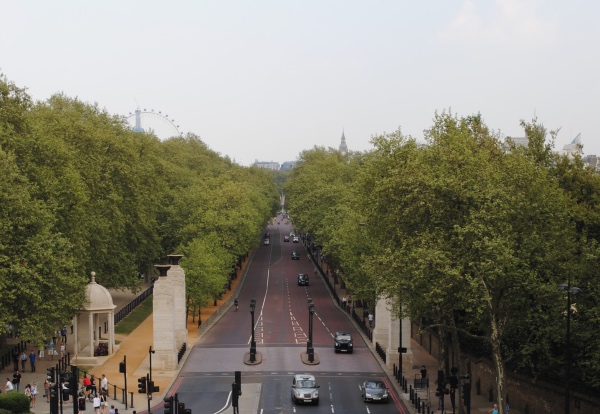
It was on this road connecting the western end of The Mall outside Buckingham Palace with Hyde Park Corner that an infamous incident took place during Queen Victoria and Prince Albert’s early years together.

For it was from a footpath on Constitution Hill that the first of eight assassination attempts were made on the Queen as the couple – the Queen then pregnant – rode out from the palace in a low slung carriage headed for Hyde Park as was their custom.

Edward Oxford was just 18-years-old when at on 10th June, 1840, he took up a position on a footpath on Constitution Hill where he stood for a couple of hours before, at about 6pm, as the royal couple’s carriage sailed past, he fired two pistols at them.

Both shots missed (in fact, no bullets were ever found) and Queen Victoria was quick to order the carriage to drive on (she and Albert would also ride out along the same route the next day despite the scare – this time there was a sizeable crowd of well-wishers eager to convey their good sentiments to the Queen and a procession of these followed their carriage up the hill to Hyde Park).

Oxford, meanwhile, was immediately seized by onlookers and stripped of his guns. He immediately admitted his crime, was subsequently arrested, charged with treason and later acquitted on grounds of insanity before being detained in an asylum at Her Majesty’s pleasure (he was eventually discharged with the proviso that he head to one of England’s overseas colonies and ended up living out his days in Melbourne, Australia).

An interesting footnote is that future artist John Everett Millais, then aged just 11-years-old, was among those standing on Constitution Hill watching the Queen drive past on the day of the assassination attempt.

There were another seven assassination attempts on Queen Victoria over the ensuing years. For more on them, check out Paul Thomas Murray’s detailed book Shooting Victoria: Madness, Mayhem and the Modernisation of the Monarchy.

PICTURE: A view down Constitution Hill towards Buckingham Palace fro, the top of Wellington Arch.

10 sites from Victoria and Albert’s London – 2. Buckingham Palace…

You may have noticed that last week we kicked off a new Wednesday series on 10 (more) London garden squares, only having kicked off a new series on 10 sites from Victoria and Albert’s London the week before. To clarify, we are currently running the Victoria and Albert series, the garden squares entry snuck in by accident (but we’ll be returning to the garden squares down the track)! Apologies for any confusion...


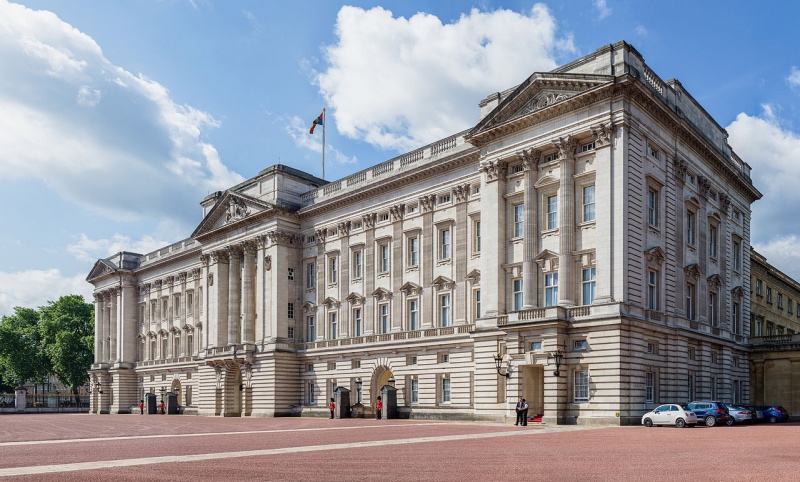
Queen Victoria, the first British monarch to use Buckingham Palace as an official residence, moved her household into the palace just three weeks after ascending to the throne on 20th June, 1837.

The palace, which had been empty for seven years following the death of her uncle King George IV, had been undergoing a grand repurposing under architect John Nash, transforming it from a house into a palace.

Originally built in 1703 as a London residence for John Sheffield, the 3rd Earl of Mulgrave, in 1761 the property had been purchased by King George III as a family home for his wife Queen Charlotte (14 of the couple’s 15 children were born here).

Remodelling of the property began the following year and had been continued by King George IV following his accession to the throne in 1820. As a result of the ongoing work, George IV never lived in the palace nor did his successor, King William IV, who preferred Clarence House.

The building works still weren’t finished when Victoria moved in. Her ministers had advised her to remain at Kensington Palace, her childhood home, until the works were finished but Victoria wasn’t having any of that – the move would help her escape the overbearing care of her mother Victoria, Duchess of Kent, the ambitious Sir John Conroy, and the so-called (and stifling) ‘Kensington System’ of rules under which she’d been brought up.

When Victoria married Albert (see the previous entry) on 10th February, 1840, the newly weds made the palace their London home. It was here that, over the next 17 years, Victoria would give birth to eight of their nine children (starting with Victoria ‘Vicky’, in 1840), and where the couple would work, controversially at side-by-side desks.

The couple’s growing family was soon stretching the palace accommodations and following a request from Queen Victoria, in 1846 some £20,000 was granted by Parliament on 13th August to complete and extend the grand property with an additional £50,000 for the works raised from the sale of the Royal Pavilion to the Brighton Corporation.

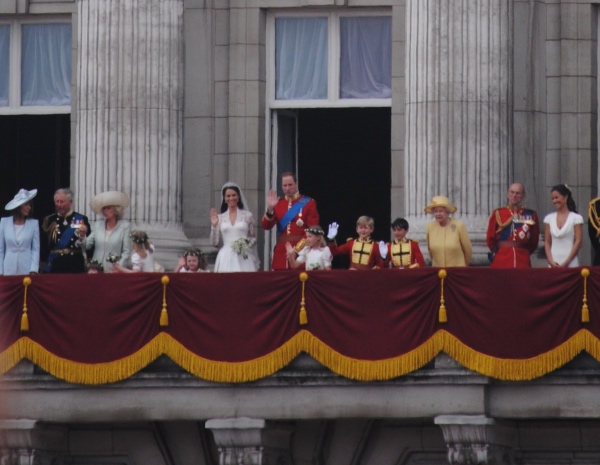
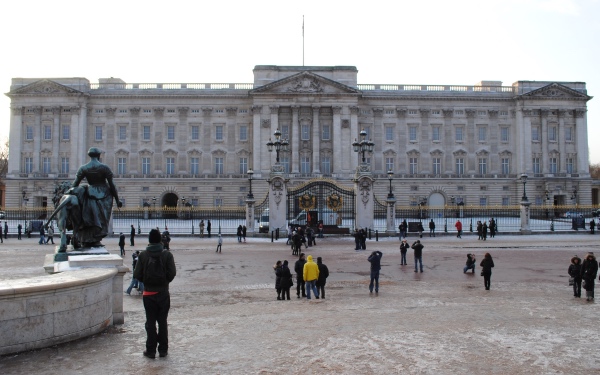
Under the direction of architect Edward Blore and builder Thomas Cubitt, the East Wing was added at the front of the palace, enclosing what had previously been a horseshoe-shaped courtyard and creating the famous central balcony where the Royal Family now gather on special occasions. Queen Victoria made the first public appearance on the balcony in 1851 during the Great Exhibition (pictured above are members of the Royal Family at the wedding of Prince William and Kate Middleton).

A new ballroom – designed by Nash’s student James Pennethorne – was added to the State Rooms shortly after. This was inaugurated in May, 1856, with a ball held there the following month to mark the end of the Crimean War.

The ball was one of several held at the palace during those years along with official royal ceremonies and other entertainments including musical performances by the likes of Felix Mendelssohn and Johann Strauss II.

A new exhibition, Queen Victoria’s Palace, opens at Buckingham Palace next month. 

WHERE: State Rooms, Buckingham Palace (nearest Tube stations are Victoria, Green Park and Hyde Park Corner); WHEN: 20th July to 29th September (opening at 9am, closing times vary – see website for details); COST: £25 an adult/£14 a child (under 17s/under fives free)/£22.80 concession/£64 family; WEBSITE: www.royalcollection.org.uk/visit/buckinghampalace.

PICTURES: Top – Diliff (licensed under CC BY-SA 1.0); Lower – David Adams.

10 sites from Victoria and Albert’s London – 1. Chapel Royal, St James’s Palace…

This year marks the 200th anniversary of the births of both Queen Victoria (24th May) and Prince Albert (26th August) and, in celebration, we’re running a special series on London locations that played a key role in their joint lives.

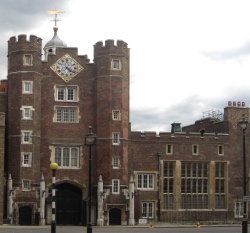
First up is the Chapel Royal at St James’s Palace where the royal couple were married on 10th February, 1840. It was the first marriage of a reigning queen since Queen Mary I in 1554.

The chapel, which hosted the christening of Prince George in 2013 and Prince Louis in 2018, was built in about 1540 and substantially altered since, including under the eye of Sir Robert Smirke in 1837.  It was built on a north-south axis rather than the more usual east-west (a sizeable window on its northern wall can be seen to the right of the palace’s main gatehouse – see picture).

The chapel, which features a richly decorate ceiling said to have been painted by Holbein, has been used regularly by the Chapel Royal – a department of Royal Household – since 1702.

At the wedding, the Queen wore a white satin gown with a deep flounce of handmade Honiton lace, designed by William Dyce, which featured a long veil and an 18 foot long train (she had 12 train bearers). Her jewellery included a sapphire broach given to her by Albert and she wore a headress of orange blossoms. Victoria’s dress is said by some to have popularised the idea of the white wedding dress among the English (although there is apparently some debate over this).

Among those in attendance was Victoria’s mother, the Dowager Duchess of Kent and Strathearn, Albert’s father and brother, the Duke and Prince of Saxe-Coburg and Gotha respectively, and various other royals including Queen Adelaide, the widow of King William IV, as well as the Prime Minister, Lord Melbourne (who, in fact, carried the Sword of State). Given the fact Victoria’s father was dead, it was her uncle, the Duke of Sussex, who walked her up the aisle.

It was a big affair in the city – people lined the roads between Buckingham and St James’s palaces and some reportedly even climbed trees for a better view. Victoria wrote in her diary that she’d never seen such crowds “and they cheered most enthusiastically”.

The wedding breakfast, which featured a 300lb cake which was nine foot in circumference, was held at Buckingham Palace after which the newly weds headed off to Windsor for a two day honeymoon.

Famously, before the wedding, the Archbishop of Canterbury had apparently asked Victoria whether, given she was Queen, she wanted to remove the word “obey” from her wedding vows. Victoria had refused.

There are limited opportunities for the public to attend services in the Chapel Royal at certain times of the year.

PICTURE: Johan Bilien (licensed under CC BY-SA 2.0)

LondonLife – Trooping the Colour marks the Queen’s birthday…

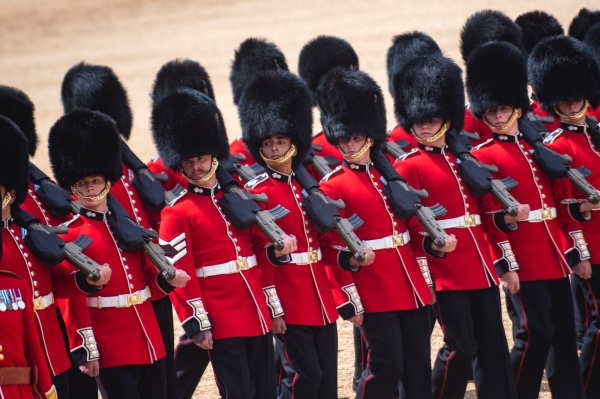
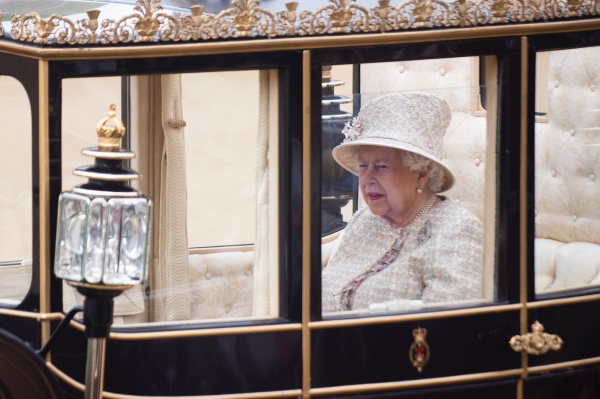
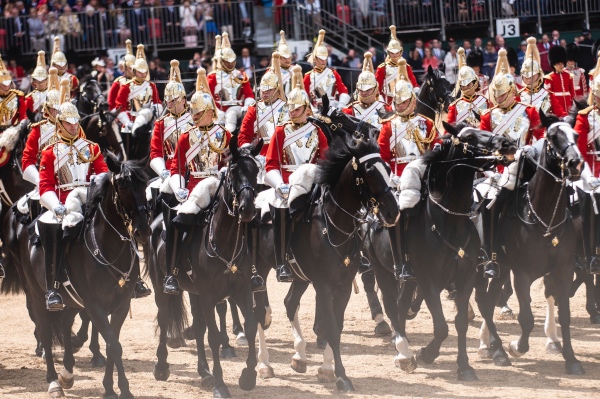
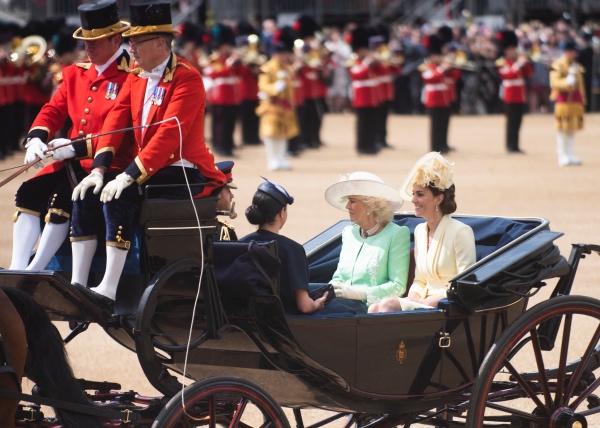
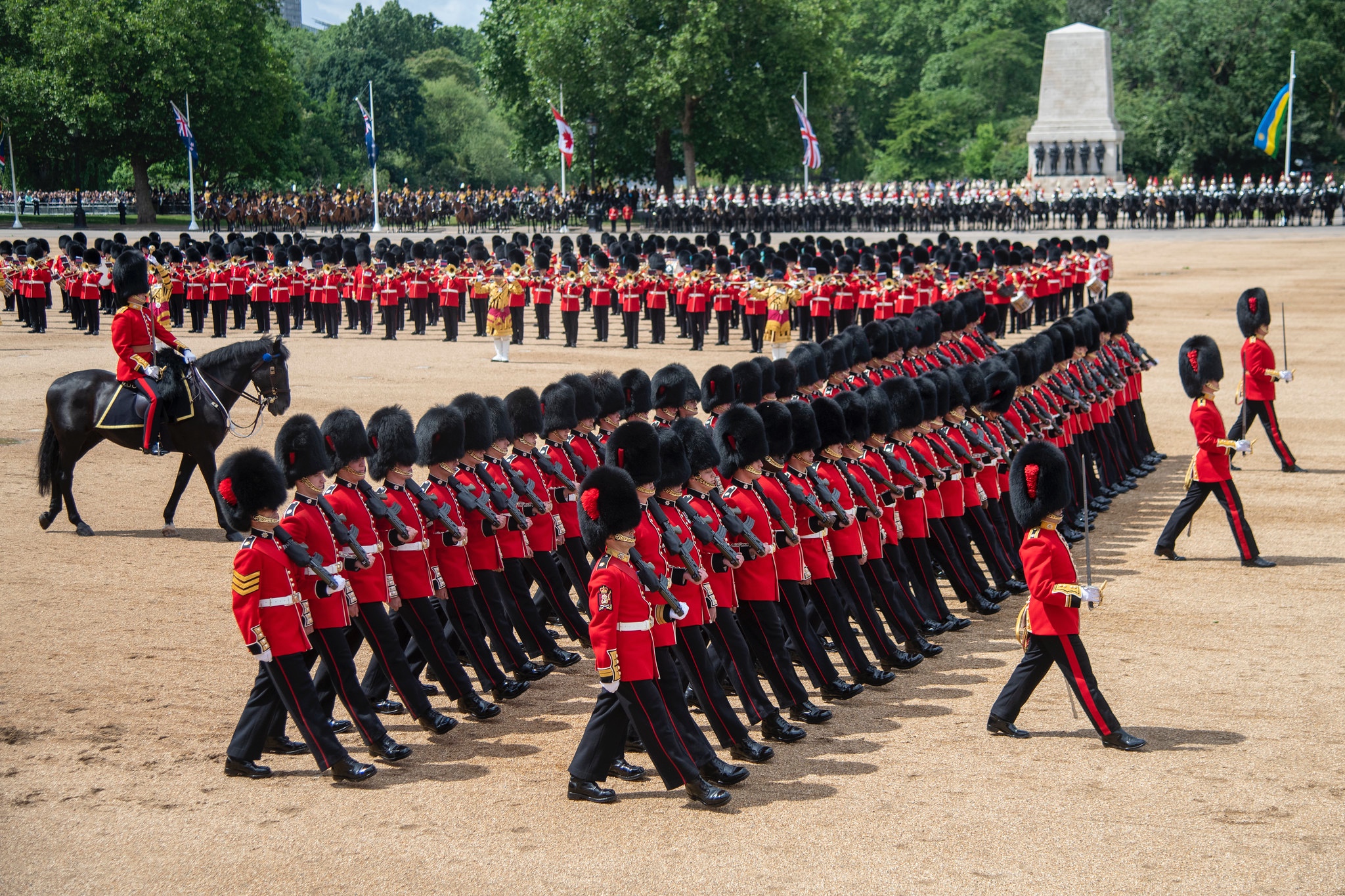
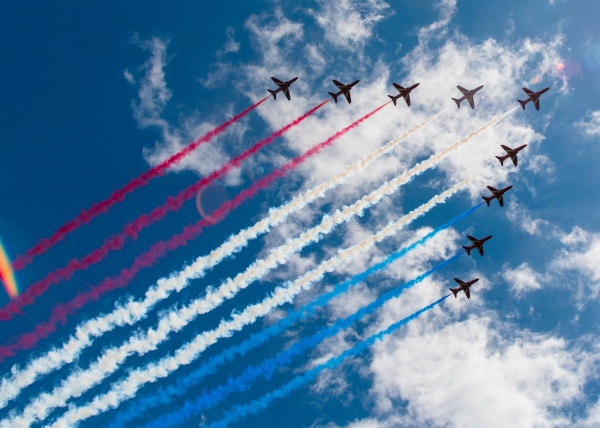
The Queen’s birthday was marked on Saturday with the annual Trooping the Colour in central London. More than 400 soldiers, close to 300 horses and 400 musicians took part in the event, believed to have first been performed during the reign of King Charles II. As well as Queen Elizabeth II, other members of the Royal Family in attendance included Camilla, Duchess of Cornwall, Kate, Duchess of Cambridge, Meghan, Duchess of Sussex, and Prince Harry, Duke of Sussex (see image below). ALL PICTURES: US Department of Defence photo by US Navy Petty Officer 1st Class Dominique A Pineiro (Via Flickr account of the Chairman of the Joint Chiefs of Staff/licensed under CC BY 2.0).


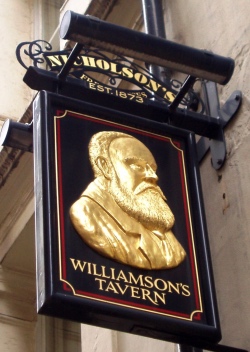
London Pub Signs – Williamson’s Tavern…

Located in the heart of the City of London (actually, according to a myth, it’s the exact centre of the Roman-era city), Williamson’s Tavern dates from the mid-18th century.

The tavern, located in Groveland Court, just off Bow Lane, owes its name to Robert Williamson who bought residence which once stood on the site – and happened to be the home of the Lord Mayor of London – in  the mid-1700s.

It was Williamson who turned the premises, which had been built soon after the Great Fire of 1666, into a hotel and tavern (the Lord Mayor, meanwhile, moved into the George Dance-designed Mansion House in 1752).

Said to be popular among merchants and seafarers, the hotel, meanwhile, remained in the family until 1914 when James Williamson died and the property was auctioned.  The hotel eventually disappeared but the tavern – now housed in a building dating from the early 1930s – lives on.

There is a remnant of its glorious past nearby – King William III and Queen Mary II, who were said to have dined at the previous Lord Mayor’s residence, presented the Lord Mayor with a gift in the form of now Grade II-listed wrought-iron gates with their monogram and they still stand at one end of Groveland Court.

The tavern, meanwhile, claims to have “probably…the oldest excise license in the City of London”. It also features a stone plaque in the floor which, so the story goes, marks the exact centre of London (although its apparently covered by carpet) and there are some Roman-era bricks or tiles incorporated into a fireplace which were discovered during the 1930s rebuild.

It’s also said to have a resident ghost – Martha (also the name of one of the pub’s dining rooms). According to the pub’s website, police dogs won’t go near the place as a result while longer serving members of staff say they have all seen a painting of her in various parts of the pub (of course, no such painting exists).

The tavern is now part of the Nicholson’s chain. For more, see www.nicholsonspubs.co.uk/restaurants/london/williamsonstaverngrovelandcourtlondon.

PICTURE: Ewan Munro (licensed under CC BY-SA 2.0)


LondonLife – Queen Victoria turns 200…

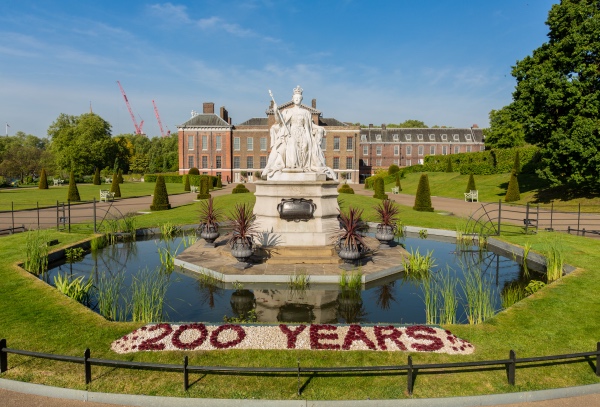
Queen Victoria was born on 24th May, 1819, at Kensington Palace and to celebrate the bicentenary, the palace, as well as holding two new exhibitions inside – Victoria: A Royal Childhood and Victoria: Woman and Crown, also features a new floral display in the surrounding gardens. A new display in the Sunken Garden which features plant species connected to the Victorian period – including heliotrope, canna, pelargonium and begonia – was planted this month for visitors to enjoy over the summer months. In addition, the palace’s gardens and estates team are showcasing a selection of new plant species discovered during the Queen’s reign around the formal gardens – everything from the Chilean lantern tree identified in 1848 to the Chinese fringe tree identified in 1845 – while the decorative pond which surrounds the statue of the Queen outside the East Front of the palace is being planted with aquatic plants and marginals that highlight and complement the iconic sculpture. There is also a special floral illustration using Victorian-style carpet bedding formed of Sempervivum ‘Mahogany’ to spell out ‘200 years’ in front of the statue (see picture). For more, see www.hrp.org.uk/Victoria2019. PICTURE: © Historic Royal Palaces/Richard Lea-Hair.

This Week in London – Kensington Palace celebrates Victoria; unseen Leonardo; and, William Hogarth and sound…


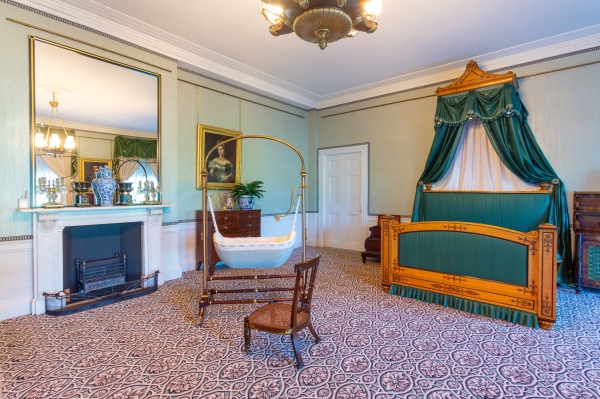
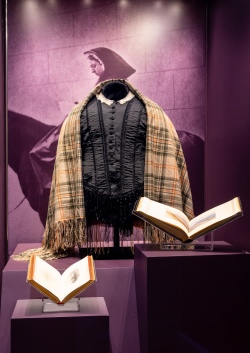
Queen Victoria’s childhood and later life are being re-examined in two new displays which open this week at Kensington Palace to mark the 200th anniversary of her birth. Victoria: A Royal Childhood features objects related to her early years – such as a scrapbook of mementos created by her German governess, Baroness Lehzen (on public display for the first time) – shown along a newly presented route through the rooms she once occupied in the palace. Visitors will experience how her childhood was governed by the strict rules of the ‘Kensington System’ and see how she escaped isolation and family feuding into a fantasy world of story writing, doll making and drawing inspired by her love of opera and ballet. Her education, family life, closest friendships and bitter struggles are explored with interactive displays helping visitors bring to life the rooms in which she lived. Meanwhile, the palace is also hosting another new exhibition – Victoria: Woman and Crown – which looks at the private woman behind the public monarch and examines her later life, including her response to the death of Prince Albert, her role in shaping royal dynasties and politics across Europe and her complex love affair with India. Among objects on show here are rare survivals from the Queen’s private wardrobe including a simple cotton petticoat dated to around the time of her marriage, and a fashionable pair of silver boots, both of which were recently acquired by Historic Royal Palaces with support from Art Fund. Entry to the two exhibitions is included in the standard admission charge. The palace gardens, meanwhile, are being planted with a special floral display in celebration of the anniversary centred on plant species connected to the Victorian period  including heliotrope, canna, pelargonium and begonia. For more, see www.hrp.org.uk/Victoria2019. PICTURES: Top  – The Birth Room in ‘Victoria: A Royal Childhood’; Right – Queen Victoria’s Highland dress in the ‘Victoria: Woman and Crown’ exhibition (Both images © Historic Royal Palaces/Richard Lea-Hair)

A newly identified sketch of the Renaissance master Leonardo da Vinci goes on public view for the first time at The Queen’s Gallery, Buckingham Palace, from tomorrow. Marking 500 years since the artist’s death, Leonardo da Vinci: A Life in Drawing also features the only other surviving portrait of Leonardo made during his lifetime as well as 200 of his drawings in which is a comprehensive survey of his life. The newly identified sketch was discovered by Martin Clayton, head of prints and drawings at the Royal Collection Trust, while he was undertaking research for the exhibition and has been identified as a study of Leonardo made by an assistant shortly before da Vinci’s death in 1519. The other contemporary image of Leonardo, by his pupil Francesco Melzi, was produced at about the same time. Other highlights of the exhibition include Leonardo’s Studies of hands for the Adoration of the Magi (c1481) – also on public display for the first time, studies for The Last Supper and many of the artist’s ground-breaking anatomical studies, such as The Fetus in the Womb (c1511). The drawings in the Royal Collection have been together since Leonardo’s death and are believed to have been acquired in the reign of King Charles II. Runs until 13th October. Admission charge applies. For more, see www.rct.uk/leonardo500/london.

The use of sound in the art of William Hogarth is being explored in a new exhibition opening in The Foundling Museum on Friday. Hogarth & the Art of Noise focuses on the work The March of the Guards to Finchley and unpacks the social, cultural and political context in which it was created including the Jacobite uprising, the plight of chimney boys and the origins of God Save the King. It uses sound, wall-based interpretation, engravings and a specially commissioned immersive soundscape by musician and producer Martin Ware to reveal how Hogarth orchestrated the natural and man-made sounds of London. Complementing the exhibition is a display of works from contemporary British artist Nicola Bealing which takes as its starting point subjects and narratives found in 18th century broadside ballads. Runs until 1st September. Admission charge applies. For more, see www.foundlingmuseum.org.uk.

Send items for inclusion to exploringlondon@gmail.com.
10 of London’s most curious (and historic) graves – 9. Horatio, Lord Nelson (St Paul’s Cathedral)…

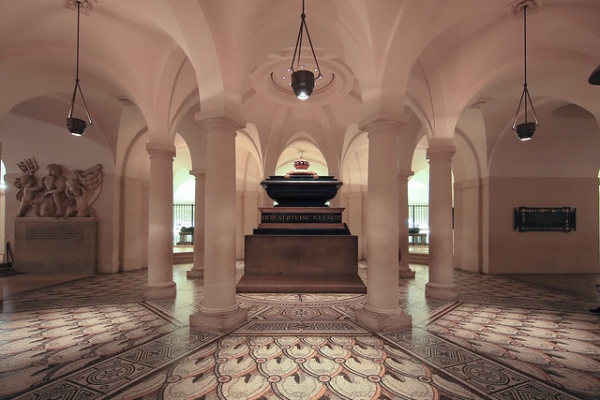
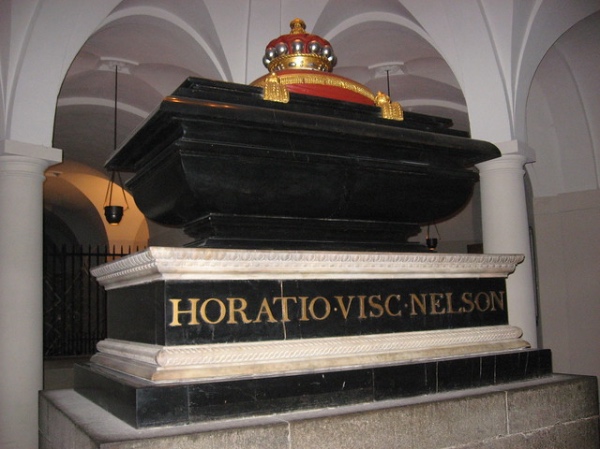
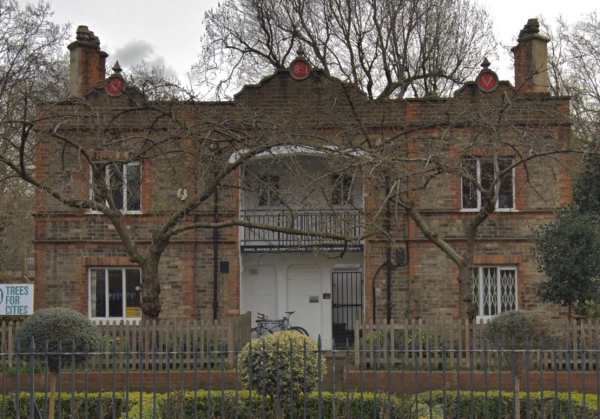
One of the star sites in the crypt of St Paul’s Cathedral, the tomb of Horatio, Lord Nelson, is certainly grand.

Located in what is known as the Nelson Chamber, it centres on a polished back sarcophagus which sits on a stone plinth surrounded by columns with a mosaic floor featuring nautical motifs underneath.

But what makes this tomb unusual is that the sarcophagus actually predates the cathedral itself – and it wasn’t originally made for Nelson.

The sarcophagus was initially commissioned by Cardinal Thomas Wolsey, Lord Chancellor of King Henry VIII, and made by Florentine sculptor Benedetto da Rovezzano in about 1524. But when Wolsey fell out of favour – and eventually died in disgrace – the then unfinished sarcophagus was seized by King Henry VIII.

King Henry intended to use it for himself and commissioned Benedetto to rework it but it wasn’t complete when he died and while his children – King Edward VI, Queen Mary I and Queen Elizabeth I – had intended to complete it after his death, none did so.

It was Queen Elizabeth I who moved the unfinished work out of Westminster to Windsor but during the Commonwealth various pieces designed to accompany the completed tomb were dispersed.

They included four large bronze angels that Benedetto had completed in 1529 which were intended to stand on the tomb’s four corners – for many years these were used as decorative features on gate pillars at Harrowden Hall in Northampshire but were finally recovered by the V&A in 2015 after a national appeal and can now be seen there.

The sarcophagus itself remained at Windsor until King George III presented it to the Admiralty in tribute to Lord Nelson.

Suitably fitted out, his remains were enclosed within when he was buried in St Paul’s crypt on 9th January, 1806.

Nelson’s body, which had been preserved in a keg of brandy on its journey aboard the HMS Victory back from the Battle of Trafalgar where he was killed in 1805, is actually held inside a wooden coffin which sits inside the sarcophagus. This coffin was made from the mainmast of the French ship L’Orient which was presented to Nelson following victory at the Battle of the Nile.

Meanwhile, the sarcophagus itself, which would have been topped with Wolsey’s cardinal’s hat had it fulfilled its original intention, is now topped with a coronet – a symbol of Nelson’s title of viscount.

A monument to Nelson, the work of John Flaxman, can also be seen inside the cathedral.

WHERE: Nelson Chamber, The Crypt, St Paul’s Cathedral (nearest Tube stations are St Paul’s, Mansion House and Blackfriars); WHEN: 8.30am to 4.30pm Monday to Saturday; COST: £20 adults/£17.50 concessions/£8.50 children (online and group discounts; family tickets available); WEBSITE: www.stpauls.co.uk.

PICTURE: Above – Michael Broad  (licensed under CC BY-NC-ND 2.0); Below – reverendlukewarm (licensed under CC BY-SA 2.0).

This Week in London – Victoria’s coronet in new display; Edvard Munch at the British Museum; and Abram Games wartime posters…

A sapphire and diamond coronet made for Queen Victoria goes on permanent display in the V&A’s William and Judith Bollinger Gallery from today. The new display is being unveiled as part of the V&A’s commemoration of the 200th anniversary of the births of the Queen and her husband, Prince Albert. The coronet was designed for the Queen by Prince Albert in 1840, the year they were married. Albert based the design on the Saxon Rautenkranz (circlet of rue) which runs diagonally across the coat of arms of Saxony. Victoria wore the coronet in a famous portrait by Franz Xavier Winterhalter completed in 1842 and again in 1866 when she wore it instead of her crown at the opening of Parliament. Entrance to the gallery is free. For more, see www.vam.ac.uk.

A major new exhibition of the work of Edvard Munch (1863-1944) opens at the British Museum in Bloomsbury today. Edvard Munch: love and angst, a collaboration with Norway’s Munch Museum, features 83 artworks taken from the museum’s collection as well as loans from across the UK and Europe. Highlights include a black-and-white lithograph of The Scream – the first time any version of the work has been on show in the UK for a decade, Vampire II – considered to be one of his most elaborate and technically accomplished prints, the controversial erotic image Madonna, and, Head by Head, a print representing the complex relationship between human beings. All of the latter three latter prints are being displayed alongside their original matrix (the physical objects Munch used to transfer ink onto paper). Runs until 21st July in the Sir Joseph Hotung Exhibition Gallery. Admission charge applies. For more, see www.britishmuseum.org. (PICTURE: The Scream (1895), Edvard Munch (1863-1944), Private Collection, Norway. Photo: Thomas Widerberg)

A retrospective of the work of Abram Games (1914-1996), a poster artist for the War Office during World War II, has opened at the National Army Museum in Chelsea. The Art of Persuasion: Wartime Posters By Abram Games features more than 100 posters he designed while working in the War Office’s Public Relations Department between 1941 and 1945. It explores how his Jewish refugee heritage, his experiences while a soldier and the turbulent politics of the time shaped his career and how his work – Games is described as a “master of reductive design” – still influences design professionals today. In conjunction with the opening of the exhibition last week, Games has been commemorated with an English Heritage Blue Plaque at his former home in Golders Green. Runs until 24th November. Admission charge applies. For more, see www.nam.ac.uk/artofpersuasion.

Send all items for inclusion to exploringlondon@gmail.com.
This Week in London – ‘Beasts of London’; the Cold War remembered; Prince Albert and the V&A; and, ‘Power UP’ returns..

A state-of-the-art, multi-sensory experience focusing on the beasts, large and small, that have helped shaped London opens at the Museum of London tomorrow. Beasts of London, being run in conjunction with the Guildhall School and Music & Drama, tells the story of the capital from before London existed through to the city today, all through the perspective of animals. Inspired by objects in the museum’s collection, the nine “episodes” of the experience encompass subjects including the arrival of the Romans, the creation of the first menageries during the medieval period, the plague years of the 1600s, the first circuses in the late 1700s, the end of the animal-baiting period in the Victorian era and the role of animals in today’s contemporary city. There’s also a special episode on the contribution horses have made to the city. Well-known identities including Kate Moss, Brian Blessed, Pam Ferris, Nish Kumar, Stephen Mangan, Angellica Bell and Joe Pasquale provide voices for the animals alongside actors from the Guildhall School. The family-friendly experience can be enjoyed until 5th January, 2020. Admission charge applies. For more, see www.museumoflondon.org.uk/beastsoflondon. PICTURE: Lion sculpture; courtesy Museum of London.

A new exhibition about Britain’s role in the Cold War opens at the National Archives in Kew today – exactly 70 years since the formation of NATO. Protect and Survive: Britain’s Cold War Revealed features original documents including political memos, spy confessions, civil defence posters and even a letter from Winston Churchill to the Queen as it explores the complexities of government operations during a time of paranoia, secrets and infiltration. Other highlights include George Orwell’s infamous list of suspected communist sympathisers, Winston Churchill and Joseph Stalin’s ‘percentages agreement’, a plan of Lionel ‘Buster’ Crabb’s fateful spy mission, ‘Atom spy’ Klaus Fuchs’ confession and Civil Defence posters. There’s also a recreated government bunker and a 1980s living room showing the impact of the Cold War on both government and ordinary lives as well as digital screens on which Dame Stella Rimington, the first female Director General of MI5, shares her experiences along with insights from historian Dominic Sandbrook and curator Mark Dunton. The display is being accompanied by a series of events including night openings, film screening and talks. Runs until 9th November (30th anniversary of the fall of the Berlin Wall). Admission charge applies. For more, see nationalarchives.gov.uk/coldwar.

Prince Albert’s personal contributions to the V&A’s Library collection are the subject of a new exhibition which opened this week as part of the South Kensington Institute’s celebration of the 200th anniversaries of the births of both the Prince and Queen Victoria. Prince Albert: Science & the Arts on the Page features books and photographs include one volume containing a letter written by the Prince’s librarian Ernst Becker highlighting Albert’s wish to promote knowledge and learning in science and the arts. There’s also a volume of songs written and set to music by Albert and his brother, featuring amendments in Albert’s own hand, as well as his signed season ticket to the Great Exhibition of 1851. Runs until 1st September on the Library Landing. Admission is free. Head here for more.

Forty years of computer game history is once again on show at the Science Museum from Saturday. Returning for its fourth year, Power UP features 160 consoles and hundreds of games, from retro classics like Space Invaders to the latest in VR technology. Special events include two adults-only evening sessions on 10th and 17th April. Runs until 22nd April. For more, see sciencemuseum.org.uk/power-up.

Send all items for inclusion to exploringlondon@gmail.com.

What’s in a name?…Belgravia

This well-to-do district of west London owes its name to the family of Hugh Grosvenor, the 7th Duke of Westminster and owner of the Grosvenor Estate, the land upon which Belgravia is located.

The country estate of the duke’s family – the Grosvenors – is known as Eaton Hall and it lies just to the south of Chester. Various names related to the estate appear on the London map. Among them is Belgravia.

Belgravia take its name from the tiny village of Belgrave which lies within the estate’s boundary (the word Belgrave, incidentally, comes from the Old French for “beautiful wood”).

The London residential area now known as Belgravia, meanwhile, was formerly known as Five Fields and used for grazing. The Westbourne River meandered through it, crossed by “Bloody Bridge”, so-called because it was a known haunt of robbers.

It later became the site of market gardens and houses began to appear in the area following King George III’s move to what was then Buckingham House but development of the area didn’t begin in earnest until the 1820s when Robert Grosvenor, later the first Marquess of Westminster (pictured here in a statue in Belgrave Square), began developing the estate with the aid of builder Thomas Cubitt.

Designed with Belgrave Square at its centre, the new development immediately became associated with the more affluent end of society, a connection which continues to this day.

As well as Belgrave Square, the district, which straddles both the City of Westminster and the Royal Borough of Kensington and Chelsea, includes Eaton, Chester and Lowndes Squares (the first two names associated with the duke’s country estate; the third named after William Lowndes, a politician and Secretary to the Treasury under King William III and Queen Anne.

Palatial terraced houses aside, landmarks include the Grade II-listed St Peter’s Church, located at the east end of Eaton Square, which was first built in the 1820s and rebuilt in the 1830s. The area is also home to numerous embassies and consulates including those of Norway, Spain, Malaysia and Egypt, and, in keeping with the international feel, also boasts several statues of notable foreigners including Simon Bolivar and Christopher Columbus.

Famous residents have included former Prime Ministers Stanley Baldwin, Neville Chamberlain and Margaret Thatcher (the first two lived in Eaton Square; Thatcher in Chester Square), Louis Mountbatten, who lived in Wilton Crescent, and Alfred, Lord Tennyson, who lived in Upper Belgrave Street, as did Lord Lucan who mysteriously disappeared in 1974 after his children’s nanny was found murdered.

PICTURES: Top – Terraced homes in Grosvenor Crescent, which runs off Belgrave Square (Google Maps); Right – Statue of Lord Robert Grosvenor, first Marquess of Westminster (David Adams).

This Week in London – Van Gogh and Britain; miniature Elizabethan portraits; and, ‘Jews, Money, Myth’…

At Eternity's GateThe first exhibition to examine the work of Dutch artist Vincent van Gogh through his relationship with Britain has opened at Tate Britain this week. Van Gogh and Britain includes more than 40 works by the artist including L’Arlésienne (1890), Starry Night on the Rhone (1888), and Sunflowers (1888). The exhibition will also feature later works by Van Gogh including two he painted while in the Saint-Paul asylum – At Eternity’s Gate (1890 – pictured) and Prisoners Exercising (1890). The exhibition shows how Van Gogh, who lived in London between 1873 and 1876 working as a trainee art dealer, responded to works by artists like John Constable and John Everett Millais and his love of British writers like William Shakespeare, Christina Rossetti and, particularly, Charles Dickens (L’Arlésienne features one of Dickens’ favourite books in the foreground). The show runs until 11th August and is being accompanied by a series of talks and other events. Admission charge applies. For more, see www.tate.org.ukPICTURE: Vincent van Gogh (1853 –1890), ‘Sorrowing old man (‘At Eternity’s Gate’)’ (1890), Collection Kröller-Müller Museum, Otterlo

On Now – Elizabethan Treasures: Miniatures by Hilliard and Oliver. This exhibition at the National Portrait Gallery – which is focused on the work of Nicholas Hilliard (1547-1619) and Isaac Oliver (c1565-1617) – is the first major display of Tudor and Jacobean portrait miniatures to be held in the UK for more than 35 years and includes new discoveries as well as portraits on public display for the first time. A large section of the exhibition is devoted to portraits of Queen Elizabeth I as well as King James I, his wife Anne of Denmark and his three children – Henry, Elizabeth and Charles (later King Charles II). There are also miniatures of famous figures like Sir Walter Ralegh, Sir Francis Drake and a little known portrait of Shakespeare’s patron, the Earl of Southampton. Other highlights include a previously unknown portrait by Hilliard of King Henri III of France. Runs until 19th May. Admission charge applies. For more, see www.npg.org.uk.

A major exhibition exploring the role of money in Jewish life has opened at the Jewish Museum London in Camden Town. Jews, Money, Myth looks at the “ideas, myths and stereotypes” that link money and Jews over two millennia. It features art works such as Rembrandt’s Judas Returning the Thirty Pieces of Silver as well as new commissions by Jeremy Deller and Doug Fishbone along with film, literature and cultural emphemera ranging from board games and cartoons to costumes and figurines. There are a series of related events. For more, see www.jewishmuseum.org.uk.

Send all items for inclusion to exploringlondon@gmail.com.