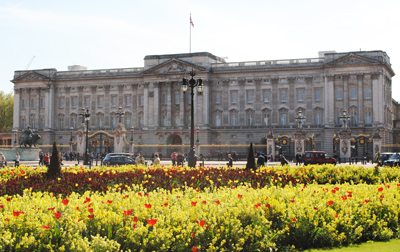
Celebrating the Diamond Jubilee with 10 royal London locations – 9. Royal chapels…

Palaces aside, the Queen also owns a series of chapels – the Chapels Royal – in London which, although not as grand as Westminster Abbey, have each played an important role in the history of the monarchy. 

The term Chapel Royal originally referred to a group of priests and singers dedicated to serving the Sovereign’s personal spiritual needs and as such would follow the monarch around the country. It was in Stuart times that they became more settled establishments with the two main Chapels Royal – the Chapel Royal and the Queen’s Chapel – located in St James’s Palace.

• The Chapel Royal, St James’s Palace. Constructed by King Henry VIII, the chapel was decorated by Hans Holbein the Younger in honor of the king’s (short) marriage to Anne of Cleves. Queen Mary I’s heart is said to be buried beneath the choir stalls and it was here that Queen Elizabeth I apparently prayed waiting for news of the progress of the Spanish Armada. King Charles I took the Sacrament of Holy Communion here before his execution in 1649 and the chapel was where Queen Victoria married Prince Albert (her marriage certificate still hangs on the wall). In more recent times, the coffin of Diana, Princess of Wales, was placed before the altar so family and friends could pay their respects before her 1997 funeral. Among the composers and organists associated with the chapel are Thomas Tallis, William Byrd, Henry Purcell and George Frideric Handel. The chapel is not open to the public except for services.
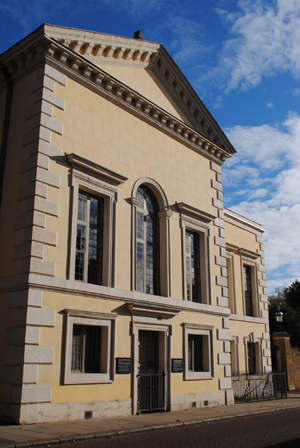
• The Queen’s Chapel, St James’ Palace (pictured right). Now located outside the palace walls, this chapel was built by King James I for the Catholic Henrietta Maria, the bride of his son, then Prince Charles (later King Charles I). Designed by Inigo Jones, Grinling Gibbons and Sir Christopher Wren were also involved in its creation. The chapel was used by Henrietta Maria until the Civil War and later became the home of the Danish Church in London. The chapel is not open to the public except for services.For more on this chapel or the Chapel Royal at St James’s Palace, follow this link.

• The Queen’s Chapel of the Savoy. Built in the Middle Ages to serve the now long gone Savoy Palace, London home of Count Peter of Savoy (uncle to King Henry III’s wife, Eleanor of Provence, the original building was destroyed in the Peasant’s Revolt of 1381. The current building, located in Savoy Hill, off the Strand, was built on the orders of King Henry VII in the late 15th and early 16th century to serve the hospital he founded on the site of the palace. The chapel since served many other congregations – including a German Lutheran congregation – but remains royal property via the Duchy of Lancaster, which is held in trust for the Sovereign and used to provide an income for the British monarch. It is officially the Chapel of the Royal Victorian Order. For more, see www.duchyoflancaster.co.uk/duties-of-the-duchy/the-queens-chapel-of-the-savoy/.
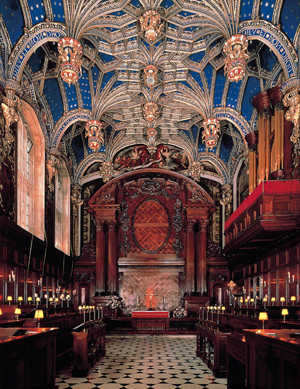
• Chapel Royal, Hampton Court Palace (pictured right). There has been a chapel here since the Knights Hospitallers occupied the site in the 13th century but it was Cardinal Wolsey who built the chapel to its present dimensions after acquiring the property in 1518. The current building, however, dates from the later ownership of King Henry VIII – Wolsey surrendered the property to him when he fell from favour – and further works in the eighteenth and nineteenth centuries. Many subsequent monarchs have worshipped here. The chapel, with its stunning ceiling, is open to the public when visiting Hampton Court Palace. For more, see www.chapelroyal.org. PICTURE: Historic Royal Palaces/newsteam.co.uk

• The Chapel Royal of St Peter ad Vincula, Tower of London. Originally a parish church, this was incorporated into the walls of the Tower in the reign of King Henry III. It was subsequently rebuilt at least twice – in the reign of King Edward I and King Henry VIII – and is home to the graves of important personages executed at the Tower including Henry VIII’s one-time wives, Anne Boleyn and Catherine Howard as well as Jane Grey, the nine day queen, and Sir Thomas More and Bishop John Fisher. The chapel can be accessed during a Yeoman Warder’s tour of the Tower of London. For more, including details of an appeal for its restoration, see www.hrp.org.uk/TowerOfLondon/stories/thechapelproject.

• Chapel Royal of St John the Evangelist, Tower of London. Located within the White Tower, this beautiful chapel – arguably the oldest church in London – dates back to the construction of the tower by King William the Conqueror the late 11th century and remains one of the best preserved examples of Anglo-Norman architecture in England. King Henry III added stained glass windows but for much of its later history the chapel was used for records storage. Tradition records that King Henry VII’s wife, Elizabeth of York, was laid in state here following her death in childbirth and that it was here Queen Mary was betrothed by proxy to Philip of Spain. This can be visited as part of a visit to the Tower of London. For more, see www.hrp.org.uk/TowerOfLondon/Sightsandstories/Prisoners/Towers/ChapelofStJohns

For more on churches in London, check out Stephen Millar’s London’s City Churches
and Stephen Humphrey’s London’s Churches and Cathedrals: A Guide to London’s Most Historic Churches and Cathedrals, Leigh Hatt’s London’s 100 Best Churches: An Illustrated Guide or the Pevsner Architectural Guide London: City Churches.

Where is it? #31…

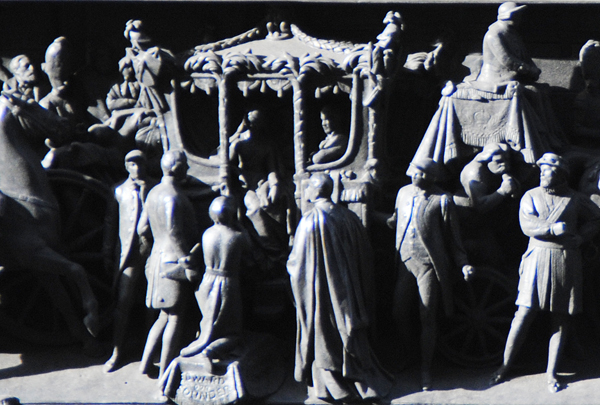
The latest in the series in which we ask you to identify where in London this picture was taken and, importantly in this case, what it’s of. If you think you can identify this picture, leave a comment below. We’ll reveal the answer early next week. Good luck!

Well done to Jameson Tucker, this is indeed a relief on the Temple Bar Memorial, which stands where the Strand turns into Fleet Street. It depicts Queen Victoria on a royal progress to the Guildhall in 1837, a few months after her accession, when she was met at this spot by the Lord Mayor and Aldermen and presented with the sword of state and keys to the city.

According to a tradition said to date back to 1215, the Temple Bar is the only place where the monarch may enter London after first seeking permission from the Lord Mayor and being presented with the City’s Pearl Sword (one of five City swords, this is said to have been first given to the City by Queen Elizabeth I).

The monument itself was designed by Sir Horace Jones and erected in 1880 to mark the location where the Temple Bar – the ceremonial entrance to the City of London – originally stood (the last incarnation of the Temple Bar, designed by Sir Christopher Wren, is now located near in Paternoster Square near St Paul’s – see our earlier post for more on Wren’s Temple Bar).

On top of the granite and bronze monument stands a rearing griffin (actually it’s supposed to be a dragon), one of the city’s official boundary markers, sculpted by Charles Birch while on either side are bronze statues, by Sir Joseph Edgar Boehm, of Queen Victoria and Edward, Prince of Wales (later King Edward VII), who in 1872 were the last of the Royal family to pass through the Temple Bar gateway before its demolition in 1878 (they were on their way to St Paul’s to attend a thanksgiving service following the prince’s recovery from typhoid).

This is depicted in a relief on the north side of the monument by Charles Kelsey. Charles Mabey’s relief showing the Queen’s progress is located on the south side of the monument; he also designed one on the east side which shows a curtain being drawn over the old Temple Bar.

Treasures of London – The Queen Victoria Memorial…

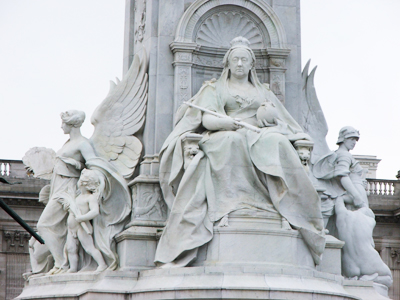
It’s partly obscured now, thanks to preparations for the current Diamond Jubilee, and we have touched on it before (see our earlier post here) but we thought it appropriate to take a look at the main London memorial to the only other British monarch ever to have celebrated a Diamond Jubilee – Queen Victoria.

Prominently located outside of Buckingham Palace at the head of The Mall, work on the Grade I listed Queen Victoria Memorial commenced in 1903.  Dedicated to the Queen, who ruled from 1819-1901, it was unveiled by King George V, grandson of King Victoria, and that of his cousin German Emperor Wilhelm II in May, 1911 (although it wasn’t completed until 1924).

The statue, nicknamed the Wedding Cake, was designed by Sir Aston Webb (he who also designed the currently facade to Buckingham Palace and The Mall – down which the statue of Victoria serenely gazes), and sculpted by Sir Thomas Brock, who, so the story goes, received his knighthood after King George V was so moved at the dedication that he spontaneously decided to knight him then and there.

At 25 metres high, this vast statue is made of 2,300 tons of white marble, 800 tones of granite and 70 tons of bronze. It is the largest statue in London with the exception of that dedicated to Prince Albert in Kensington (it could be described as a companion piece) and is the largest statue of a monarch in England.

The statue is redolent with symbolism – four bronze lions at the base represent the idea of Power (a pair of these was apparently donated by New Zealand) while other bronze figures represent Peace, Progress, Manufacture and Agriculture. There is a nautical theme around the base with depictions of mermaids and ship’s prows among the scenes depicted, all of which evoke Seapower.

On the same level as the seated Queen are Truth, Justice and what’s variously described as Charity or Motherhood while above her are gilded figures representing Courage, Constancy and Winged Victory.

PICTURE: Louise Schuller (www.sxc.hu)

Around London – Leicester Square reopens; RA and MOL exhibitions mark Diamond Jubilee; ‘Jed’ retires; and, the history of horses at the British Museums…

• Leicester Square officially reopened last night following a £15.3 million transformation which has seen every paving stone replaced, new plants, and 40 new water jets placed around the Grade II listed fountain and statue of William Shakespeare. The 17 month makeover also included new lighting, new seating and a refurb of the underground toilets. The square – which owes its name to Robert Sidney, the 2nd Earl of Leicester, who purchased this land in 1630 and, after building himself a mansion, kept aside part of the land for public use – now welcomes as many as 250,000 tourists a day and is known as one of the world’s premiere sites for the release of new films.

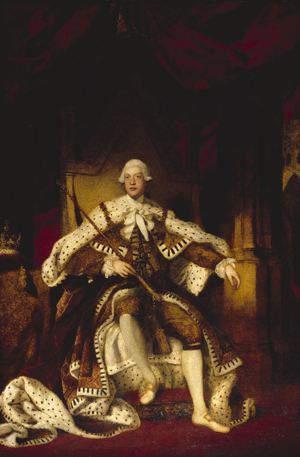
• The Royal Academy of Arts is marking the Queen’s Diamond Jubilee with a new exhibition opening tomorrow which features a selection of paintings by Royal Academicians elected during the early part of the Queen’s reign. The Queen’s Artists will include works by Jean Cooke, Frederick Gore and Ruskin Spear and will be displayed in the Reynolds and Council Rooms. Meanwhile The Saloon will house a collection of sculptures, paintings and drawings prepared by Royal Academicians for British coins and royal seals on loan from the Royal Mint Museum. The collection includes portraits of the Queen by Edward Bawden and Sir Charles Wheeler which have never before been shown in public, and Sir Anthony Caro’s new coin design of the London 2012 Olympic Games. Over in the Tennant Gallery, The King’s Artist’s George III’s Academy, will look at the king’s role in the foundation of the academy in 1768 and his influence in selecting the first artists. Highlights include portraits of King George III (pictured) and Queen Charlotte painted by the academy’s first president, Sir Joshua Reynolds. Admission charge applies. For more, see www.royalacademy.org.uk. PICTURE: Copyright Royal Academy of Arts, London/John Hammond.

• A new exhibition focusing on Londoners and their treasured souvenirs commemorating Queen Elizabeth II opens tomorrow at the Museum of London. At Home with the Queen features 12 photographic portraits of Londoners at home with their mementos as well as a selection of royal commemorative objects from the museum’s collection. The latter include trinkets produced for Queen Victoria’s Diamond Jubilee in 1897, official Coronation Day street decorations, Silver Jubilee paper tableware and souvenirs relating to the current Diamond Jubilee. Runs until 28th October. Admission is free. For more (including a series of events running on conjunction with the exhibition), see www.museumoflondon.org.uk.

The Royal Parks’ Shire horse, Jed, retired last week after a decade of service working in Richmond Park. The Queen presented a commemorative retirement rosette to Jed who was born in 1993 and joined the Royal Parks from Bass Brewery in Burton upon Trent almost 10 years ago. Horses have been used in Richmond Park since it was enclosed by King Charles I in 1637. The horses took a break in 1954 but the Shires were reintroduced in 1993 as a way to sustainably manage the parkland. For more on Richmond Park, see www.royalparks.org.uk/parks/richmond-park.

On Now: The horse: from Arabia to Royal Ascot. This major free exhibition at the British Museum is part of the august institution’s Diamond Jubilee celebrations and traces the history of the horse from domestication around 3,500 BC through to present day, with a particular focus on Britain’s equestrian tradition, from the introduction of the Arabian breed in the 18th century to events like Royal Ascot. Highlights include one of the earliest known depictions of horse and rider – a terracotta mould found in Mesopotamia dating from around 2000 to 1800 BC, a cylinder seal of Darius dating from 522 to 486 BC depicting the king hunting lions in a chariot, a 14th century Furusiyya manuscript, an Arabian manual of horsemanship, and the 19th century Abbas Pasha manuscript, the primary source of information about the lineage of purebred Arabian horses acquired by Abbas Pasha (mid-nineteenth century viceroy of Egypt). The exhibition is being held in Room 35. Runs until 30th September. For more, see www.britishmuseum.org.

Daytripper – Windsor Castle…

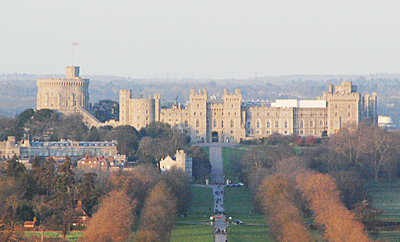
Given we’re marking the Queen’s Diamond Jubilee with a look at sites of significance to her story located in London, it’s perhaps only fitting that we take a look at the nearest royal residence outside the city.

Windsor, located as close as half an hour by train from London’s Paddington station (or around 50 minutes to an hour from Waterloo), boasts plenty to see including the historic town centre, nearby Eton, great river and country walks and, of course, Legoland. But today our attention will remain on Windsor Castle, the oldest and largest inhabited castle in the world.

There has been a fortress on this site since shortly after the Norman invasion when in about 1080 King William the Conqueror ordered it constructed on a ridge above the river bank as part of a series of defensive fortifications around London. The earth and timber Norman castle was gradually added to over the years – King Henry I (reigned 1100-1135), the first king to live here, added domestic quarters while King Henry II (reigned 1154-1189) built substantial royal apartments transforming the castle into a palace and began replacing the outer timber walls with stone fortifications as well as rebuilding the Norman Keep as the Round Tower (parts of which still date from this period). King Henry III (reigned 1216-1272) built upon and expanded his work.

But it was in the reign of King Edward III (1307-1327) that the castle was expanded enormously. This included the reconstruction of the lower ward including the rebuilding of the chapel, naming it St George’s (although the current chapel dates from the reign of King Edward IV – 1461-1470), and the reconstruction of the upper ward complete with apartments for him and his wife, Queen Phillipa, arranged around courtyards (although some of the work wasn’t completed until the reign of his successor, King Richard II – 1377-1399). It was also during King Edward III’s reign that the castle became the base for the Order of the Garter (which he created in 1348), a role it still fulfills.

Other works were ordered by successive Tudor monarchs including King Henry VIII, Queen Elizabeth I, and Queen Mary I. Parliamentary forces seized the castle during the Civil War (Oliver Cromwell did use it as his headquarters for a time) and Royalists were imprisoned here (King Charles I was in fact buried in a vault beneath St George’s Chapel after his execution having been previously imprisoned here).

The next major additions came in the reign of King Charles II (1660-1685) when the Upper Ward and State Apartments were reconstructed in baroque splendor, the latter complete with splendid murals ceiling paintings by Italian artist Antonio Verro (the murals were later destroyed but some of the ceiling paintings survive).

From the time of King William III (1689-1702), monarchs began spending more time at Hampton Court Palace but the focus returned to Windsor with King George III. He ordered a range of improvements and updates including modernising Frogmore House in the Home Park for his wife Queen Caroline (the property was subsequently used by various royals but no-one currently lives there), but many of these were stopped prematurely due to his illness. His son, King George IV, picked up where his father left off.

In the reign of Queen Victoria, Windsor became the royal family’s principal residence and was visited by heads of state including King Louis Philippe in 1844 and Emperor Napoleon III in 1855. The Queen’s husband, Prince Albert, died here on 14th December, 1861.

King Edward VII (1901-1910) and King George V (1910-1936) both had a hand in redecorating the palace and the Queen’s father, King George VI (1936-1952), was living in the Royal Lodge in Windsor Great Park when he succeeded to the throne.

In more recent times, the castle was the home to the Queen, then Princess Elizabeth and her sister Princess Margaret, for much of World War II. The castle suffered its greatest setback in recent times in 1992 when a serious fire broke out in the Queen’s Private Chapel which destroyed several rooms including the ceiling of St George’s Hall which dated from the reign of King George IV. Restoration works took five years to complete.

Today the Queen spends many private weekends at the castle while the court is officially in residence here for a month over the Easter period and during Ascot Week in June – it’s at this time that the Garter Day celebrations take place with the installation of new knights.

The Queen also hosts State Visits here with banquets held in St George’s Hall as well as what are known as a ‘sleep and dine’ in which high profile figures are invited to dinner with the Queen before being shown a special display of items from the Royal Library and then spending the night. The Royal Standard flies from the Round Tower when the Queen is in residence.

As well as touring the State Apartments, the Gallery, Queen Mary’s Dolls’ House (completed in the 1920s for Queen Mary, wife of King George V), and St George’s Chapel, visitors to the castle can experience the Changing of the Guard at 11am every day but Sundays between May and early August (and every second day after that).

WHERE: Windsor (a short walk from either Windsor Central Station or Windsor & Eton Riverside Station); WHEN: 9.45am to 5.15pm until 27th July (times vary after this date – check the website); COST: £17 an adult/£10.20 a child (under 17s – under fives free)/£15.50 concession/£44.75 family (price includes an audio tour); WEBSITE: www.royalcollection.org.uk/visit/windsorcastle.

Around London – ‘Wild London’; National Trust photography contest; JK Rowling gets Freedom; and, Royal Devotion at Lambeth…

• Celebrate the Diamond Jubilee next Tuesday in Richmond Park as it hosts ‘Wild London’, the borough’s “first festival aimed at celebrating London’s woodlands, parks and gardens”. The event, which is being put on by Richmond Council and Royal Parks, will mark the Queen’s first visit to the borough in 23 years. It will showcase the conservational, recreational and inspirational role that parks and gardens play in London and will include hands-on exhibits, demonstrations, displays and performances. The event will be the first in a series celebrating the Diamond Jubilee held in Royal Parks. For more information, see www.richmond.gov.uk/home/leisure_and_culture/diamond_jubilee.htm

• The National Trust has launched a new photography competition aimed at celebrating green spaces and the life of the Trust founder Octavia Hill. The competition, called Your Space, is running in conjunction with National Trust Magazine and is open for entries until August. The competition was launched by internationally acclaimed photographers – Mary McCartney, Joe Cornish, Arnhel de Serra and Charlie Waite – with a new collection of pictures at National Trust places. One of the three Trust founder, Octavia Hill was a leading environmental campaigner in the Victorian Age and campaigned to save places in and around London like Parliament Hill. Entries in the competition, which aims to capture images of everyday green spaces, could include pictures from the local park or countryside. For details on how to enter, follow this link

• The author of the Harry Potter books, JK Rowling, received the Freedom of the City of London this week. The books have sold an estimated 450 million copies worldwide and have been made into films. The Freedom ceremony took place at Mansion House, the official residence of the Lord Mayor of London. Speaking before the ceremony on Tuesday, Rowling was quoted as saying that both her parents were Londoners. “They met on a train departing from King’s Cross Station in 1964, and while neither of them ever lived in London again, both their daughters headed straight for the capital the moment that they were independent.  To me, London is packed with personal memories, but it has never lost the aura of excitement and mystery that it had during trips to see family as a child. I am prouder than I can say to be given the Freedom of the City, which, on top of all the known benefits (and few people realize this), entitles me to a free pint in The Leaky Cauldron and a ten Galleon voucher to spend in Diagon Alley.” For more, see www.cityoflondon.gov.uk.

• On Now: Royal Devotion. This exhibition in the Great Hall of Lambeth Palace is being held to mark both the Diamond Jubilee of Queen Elizabeth II and the 350th anniversary of the revised Book of Common Prayer. The display charts the relationship between Crown and Church and its embodiment in the history of the Book of Common Prayer, one of the most important books in the English language. As well as the 1662 revision of the Book of Common Prayer, highlights include a 1549 printing of the Book of Common Prayer, medieval illuminated manuscripts, including the Book of Hours of King Richard III, Queen Elizabeth I’s personal prayer book and a copy of the book of private devotions compiled for Queen Elizabeth II in preparation for her coronation, the Book of Common Prayer used at the wedding of Queen Victoria, and King Charles I’s own handwritten revision of State Prayers. Admission fee applies. Runs until 14th July. For more, see www.lambethpalacelibrary.org/

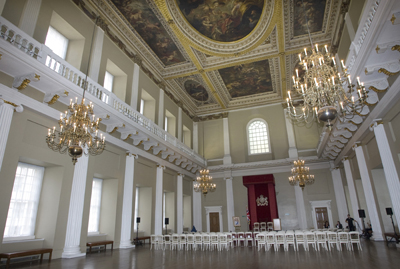
Treasures of London – The Banqueting House…

While we’ve looked at some of the history of the Banqueting House during last year’s special on King James I’s London, we thought we’d take a more in-depth look as part of our Treasures of London series…

A perfect double cube with a sumptuous painted ceiling, this early 17th century building is the only remaining complete structure from the Palace of Whitehall which was destroyed by fire in 1698.

The building replaced an earlier banqueting hall built on the orders of Queen Elizabeth I and another, shorter-lived hall, built by King James I, which was destroyed by fire in 1619.

Following its destruction, King James had Inigo Jones design a new hall to provide, as the previous hall had, a location for state occasions, plays and masques – something of a cross between an organised dance, an amateur theatrical performance and just a chance to dress up.

Jones, who partnered with Ben Jonson to produce masques, designed the hall – which has a length double the width – with these performances specifically in mind. The first one – Jones and Jonson’s Masque of Augurs – was performed on Twelfth Night, 1622, even before the building was completed (the last masque was performed here, incidentally, in 1635, after which, thanks they were moved to a purpose built structure nearby, ostensibly to save the newly installed paintings from being damaged by the smoke of torches – see below).

The incredible paintings on the ceilings, which celebrate the reign of King James I and will be the subject of their own Treasures of London article at a later date, were installed by March 1636. Produced by Flemish artist Sir Peter Paul Rubens, they had been commissioned by King Charles I, King James’ son, in commemoration of his father. Ironically, it was outside the building where the monarchy was so celebrated that King Charles I was beheaded in 1649 (this is marked in a ceremony held at the Banqueting House on 30th January each year).

Following the king’s execution, Whitehall Palace wasn’t used for several years until Lord Protector Oliver Cromwell took up residence there in 1654, using the Banqueting House as a hall if audience. It stood empty after Cromwell’s death in 1658 until the Restoration in 1660 when King Charles II again used it as a grand ceremonial hall for receiving foreign embassies and conducting court ceremonies (these including the ancient custom of what is known as ‘Touching for the King’s Evil’ to cure those afflicted with the disease of scrofula as well as the washing of the feet of the poor by the sovereign on Maundy Thursday.)

King James II was the last king to live at Whitehall Palace and during his reign, from 1685-88, it was used as a royal storehouse. But it was revived for formal use following his reign – it was here that King William III and Queen Mary II were officially offered the crown on 13th February, 1689.

During their reign, the court’s focus shifted to Kensington but the Banqueting House was used for Queen Mary to lay in state after her death in 1694.

Following the destruction of the remainder of Whitehall Palace in 1698 – the origins of this fire are apparently owed to a maid who had put some linen by a charcoal fire to dry – the Banqueting Hall was used briefly as a Chapel Royal and, following a renovation in the late 1700s, it was used for concerts and, from 1808, as a place of worship for the Horse Guards.

Further renovation works followed and in 1837, it was re-opened as a Chapel Royal and used as such until 1890 when this practice was formally discontinued. In 1893, Queen Victoria gave the Royal United Services Institute the use of the building as a museum – among the things displayed there were the skeleton of Napoleon’s horse, Marengo. In 1962, the exhibits were dispersed and the Banqueting House today is used for a range of royal, corporate and social events.

There is an undercroft underneath, designed as a place where King James I could enjoy drinking with his friends. It was later used for storage.

WHERE: Corner of Whitehall and Horse Guards Avenue (nearest Tube stations are Westminster and Embankment); WHEN: Monday to Saturday 10am to 5pm; COST: £5 adults/£4 concessions/children under 16 free (Historic Royal Palaces members free); WEBSITE: www.hrp.org.uk/BanquetingHouse/.

PICTURE: Courtesy of Historic Royal Palaces/newsteam.co.uk

Celebrating Charles Dickens – 7. Five other London sites of significance…

We’ve looked at Charles’ Dickens childhood in London and some of his residences, workplaces and the pubs he attended. Before we take a look at some of the sites relevant to his writings, Exploring London takes a look at just a handful of the many other London sites associated with the famous Victorian author…

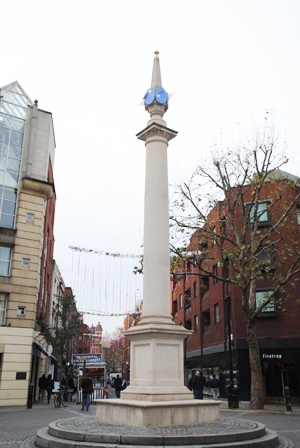
• Seven Dials and the former St Giles slum, Soho. An notorious slum of the 19th century, this area was among a number of “rookeries” or slums toured by Dickens in 1850 in the company of Inspector Field and police from Scotland Yard, and later helped to inform much of his writing. Seven Dials itself – located at the junction of Mercer and Earlham Streets and Upper St Martin’s Lane (pictured right is the monument at the junction’s centre) – has just undergone a renovation but much of the St Giles area is now irrevocably modernised. We’ll be mentioning another notorious slum located in Saffron Hill, Clerkenwell, in an upcoming week.

• Holland House, Kensington. Dickens became a friend of Lady Holland’s after attending one of her exclusive soirees at the age of 26. He was a guest at the house, now a youth hostel, in Holland Park on numerous occasions.

• Royalty House, Dean Street, Soho. The former site of the Royalty Theatre, known in Dickens’ day as Miss Kelly’s Theatre, it was here on 21st September, 1845, that Dickens and a group of friends performed Ben Jonson’s play, Every Man in his Humour (1598). Dickens acted as stage manager and director as well as playing the part of Captain Bobadil.

• Buckingham Palace. It was here in March 1870 – not long before his death – that Dickens had his only face-to-face meeting with Queen Victoria. She apparently found him to have a  “large, loving mind and the strongest sympathy with the poorer classes”.

• Westminster Abbey. Our final stop for it was here that Dickens was buried on 14th June, 1870, following his death at his home near Rochester in Kent. Dickens had apparently wanted to be buried in Rochester but given his public profile, Westminster Abbey was seen as the only fitting place of rest for him (his wishes for a small, private funeral were, however, respected but thousands did visit the site in the days following). His grave sits in Poet’s Corner.

LondonLife – The Queen visits the newly transformed Kensington Palace…

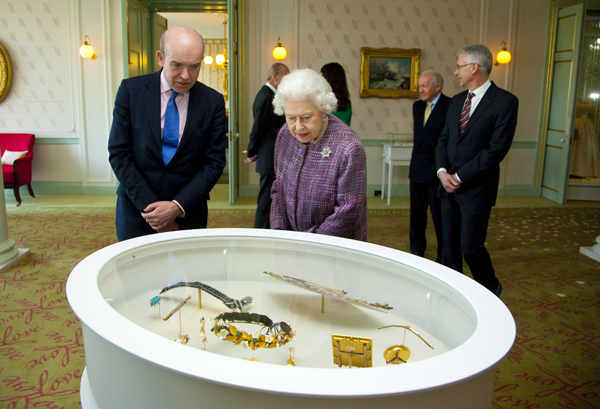
Queen Elizabeth II looks over gifts exchanged by Queen Victoria and Prince Albert in a display which forms part of the Victoria Revealed exhibition at Kensington Palace.

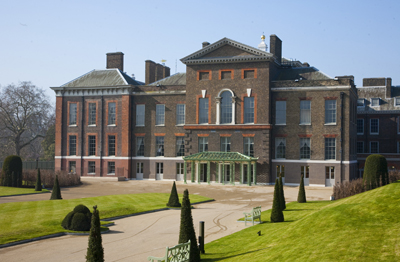
The Queen and Duke of Edinburgh visited palace last week to officially reopen the building following a £12 million, two year renovation project aimed at “transforming the visitor experience”.

The works have involved restoring the palace gardens – which will now be permanently open to the public free-of-charge – and reconnecting the palace with the surrounding parklands of Kensington Gardens partly through the provision of a new entrance. Landscape designer Todd Longstaffe-Gowan’s plan – which centres on a statue of Queen Victoria – features new lawns and avenues and a “maze-like path” inspired by 18th century “wilderness walks”.

There is also a new visitor reception area and “orientation hub” as well as a new courtyard terrace and cafe to complement The Orangery, shop and learning centre.

Victoria Revealed, a new permanent exhibition at the palace looks in intimate detail at the life of the Queen who once lived here and features everything from her black silk baby shoes to her wedding dress and the mourning clothing she wore following the death of Prince Albert as well as archive film footage showing the celebrations for the Diamond Jubilee of her reign in 1897.

The palace reopens on 26th March.

WHERE: The Broad Walk, Kensington Gardens, Kensington (nearest Tube stations are High Street Kensington or Queensway); WHEN: Daily 10am to 6pm (until 31st October); COST: £14.50 adult/£12 concession/children under 16 free (online booking discounts available, Historic Royal Palaces members free); WEBSITE: www.hrp.org.uk/KensingtonPalace.

PICTURES: Courtesy of Historic Royal Palaces/newsteam.co.uk

LondonLife – Celebrate Valentine’s Day with Victoria and Albert

The countdown to the March re-opening of Kensington Palace and accompanying launch of the major new exhibition, Victoria Revealed, has begun and to celebrate Historic Royal Palaces is releasing a new animated film about the “era defining” romance between Queen Victoria and Prince Albert. Released in five short daily episodes starting today, the film, Victoria 4 Albert, portrays the story of the couple from their same day births to their wedding ceremony and draws on excerpts from Queen Victoria’s personal diaries and Albert’s letters. The film, which also includes key moments from Victoria’s life at Kensington Palace, have been created and directed by acclaimed filmmaker and animator Chiara Ambrosio and features a voiceover by Julia Rayner (of The Pianist, Extras). The palace reopens on 26th March following a £12 million refurbishment project. In the meantime, head here to see the first of the clips…

LondonLife Special – Long-serving royals…

Today marks 60 years since Queen Elizabeth II ascended to the throne, making her Britain’s second-longest serving monarch. While the celebrations are yet to kick off in earnest (the Diamond Jubilee weekend will be officially held over the 2nd to 5th June), we thought we’d take a quick look at the top 10 longest-serving monarchs who were crowned at Westminster Abbey in London:

1. Queen Victoria – 63 years (20th June, 1837-22nd January, 1901)

2. Queen Elizabeth II – 60 years (6th February, 1952-current)

3. King George III – 59 years (25th October, 1760-29th January, 1820)

4. King James I (VI of Scotland) – 57 years (24th July, 1567-27th March, 1625)

5. King Henry III – 56 years (18th October, 1216-16th November, 1272)

6. King Edward III – 50 years (25th January, 1327-21st June, 1377)

7. Queen Elizabeth I – 44 years (17th November, 1558-24th March, 1603)

8. King Henry VI – 38 years (31st August, 1422-4th March,1461, and, 31st October, 1470-11th April, 1471)

9. King Henry VIII – 37 years (22nd April, 1509-28th January, 1547)

10. King Henry I – 35 years (3rd August, 1100-1st December, 1135)

Where’s London’s oldest…hotel?

Brown’s Hotel in Mayfair (now officially the Rocco Forte Brown’s Hotel) is generally awarded the accolade of being London’s oldest hotel. 

The hotel, which initially fronted on to Dover Street, was founded in a series of former Georgian townhouses in 1837 by James and Sarah Brown, formerly valet and maid to Lord and Lady Byron.

After being sold to the Ford family in 1859, the hotel was extensively modernised with electricity, the installation of permanent bath tubs, lifts, and in first for London hotels, an on-site restaurant. The building itself underwent a major expansion in the late 1890s when the family bought the St George’s Hotel which backed onto Brown’s and fronted onto Albemarle Street. The two buildings were merged into one, an extra floor added, and a new facade built for the hotel facing out onto Albemarle Street (pictured right). Three further townhouses were incorporated into the building in the early 1900s.

Possibly the most notable event to take place at the hotel was in 1876 when Alexander Graham Bell made the first ever telephone call there. Other visitors included authors Rudyard Kipling (who wrote The Jungle Book while resident) and Agatha Christie (At Bertram’s Hotel is said to be based on Brown’s), royalty such as Queen Victoria and the French Emperor Napoleon III and his wife Empress Eugenie (they stayed in 1871), and world leaders like US Presidents Theodore Roosevelt and Franklin Roosevelt, British Prime Minister Winston Churchill (said to count the bar among his favorities), Cecil Rhodes, founder of Rhodesia, and Emperor Haile Selassie, who took refuge there in 1936 after the Italians invaded Ethiopia.

The hotel, which now features 117 guestrooms, underwent a multi-million pound refurbishment in the mid-Noughties after becoming part of the Rocco Forte Collection of hotels. As well as The Albemarle restaurant and The Donovan Bar, it also serves award-winning afternoon teas at The English Tea Room.

For more about Brown’s Hotel, see www.brownshotel.com.

Around London – Illuminating manuscripts at the BL; Capability Brown and Richard Burton blue plaqued; and, Grayson Perry at the British Museum…

Opened to the public last week, Royal Manuscripts: The Genius of Illumination – a landmark exhibition at the British Library – features a “treasure trove” of illuminated manuscripts collected by the kings and queens of England between the 9th and 16th century. Highlights include 16 illuminated manuscripts of King Edward IV, what the library calls the first “coherent collection” of royal books; the Psalter of King Henry VIII, A History of England by Matthew Paris, a 13th century monk, scholar and advisor to King Henry III; Thomas Hoccleve’s Regement of Princes – a early 15th century instruction book on how to be an effective ruler; a 14th century Genealogical Chronicle of the English Kings; and, The Shrewsbury Book, created in Rouen in 1445 and presented to Margaret of Anjou on her marriage to King Henry VI by the renowned military commander John Talbot, 1st Earl of Shrewsbury. An impressive series of public events featuring well known writers and historians – including Eamon Duffy, Michael Wood, and Andrew Marr –  is taking place alongside the exhibition. Runs until 13th March. An admission charge applies. For more, see www.bl.uk.

PICTURE: The Coronation of Henry III, Images of English Kings, from Edward the Confessor to Edward I, England, c. 1280-1300, Cotton Vitellius, A. xiii, f. 6 © British Library Board

• Leading 18th century landscape gardener Lancelot ‘Capability’ Brown has been honored with a blue plaque at his former home in Hampton Court Palace. Brown, who designed more than 120 landscapes during his lifetime, lived at Wilderness House after King George III appointed him Chief Gardener at the palace – he lived there from 1764 until his death in 1783. Brown’s legacy can still be seen at country houses around England – including at Petworth House in West Sussex, Alnwick Castle in Northumberland, Chatsworth House in Derbyshire and Blenheim Palace in Oxfordshire. He had earned the name ‘Capability’ by the 1760s – apparently he often spoke of a property’s capabilities when speaking of it. English Heritage unveiled the plaque last week. For more, see www.english-heritage.org.uk.

A second blue plaque worth mentioning this week is that marking the former home of actor Richard Burton. Michael Sheen – currently playing Hamlet at the Young Vic – was among those who last week attended the unveiling on the plaque at the home Burton and his wife actress Sybil Williams lived in from 1949 to 1956, the period during which he rose to international fame. While living at the house 6 Lyndhurst Road in Hampstead, Burton was a member of the Old Vic theatre company – performing, to the acclaim of critics, roles including that of Hamlet, Othello, Coriolanus and Henry V – and in 1952 made his Hollywood debut with My Cousin Rachel. Other films he appeared in during the period include The Robe (1953), The Desert Rats (1953), and Alexander the Great (1956). Following the close of the Old Vic season in 1956, Burton moved to Switzerland and went on to even greater public fame following his role in the 1963 film Cleopatra alongside his then lover (and later wife) Elizabeth Taylor. For more, see www.english-heritage.org.uk.

• On Now: Grayson Perry – The Tomb of the Unknown Craftsman. This exhibition at the British Museum explores a range of themes connected with the ideas of craftsmanship and sacred journeys and includes 190 objects from the museum’s collection selected by the artist along with a works by Grayson himself, many of which will be on public view for the first time. They include everything from Polynesian fetishes to Buddhist votive offerings, a prehistoric hand axe to 20th century badges and a re-engraved coin from 1882 featuring a bust of Queen Victoria with a beard and boating hat. At the heart of the exhibition sits Grayson’s own work, The Tomb of the Unknown Craftsman, a richly decorated cast-iron “coffin-ship”. Runs until 19th February. An admission charge applies. For more, visit www.britishmuseum.org.

The Royal Parks – 2. Kensington Gardens

Once the western part of King Henry VIII’s hunting ground, the 111 hectare Kensington Gardens is now primarily associated with the palace which sits at its heart.

The origins of the gardens go back to 1689 when King William III and Queen Mary II decided to make Kensington Palace (which, as we mentioned last week, was formerly known as Nottingham House) their home. Queen Mary oversaw the creation of a formal, Dutch-style garden featuring hedges and flower beds.

Queen Anne expanded the gardens after King William III’s death and commissioned landscape designers Henry Wise and George Loudon to create an English-style garden. She also ordered the construction of the Orangery which still stands to the north of the palace complex today (and houses a fine restaurant).

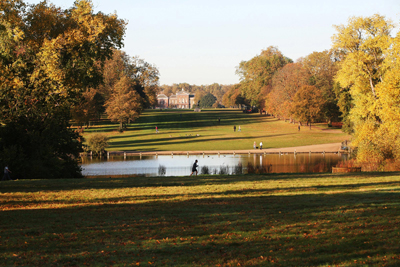
But it’s to Queen Caroline, wife of King George II, to whom Kensington Gardens owe its current form for it was she who in 1728, scythed off 300 acres of Hyde Park and employed Charles Bridgeman to create a new garden. His designs included damming the Westbourne stream to create the Long Water and the adjoining Serpentine in Hyde Park. He was also responsible for the creation of the Round Pond in front of the palace and, a landscape-history making move, used a ditch known as a ha-ha to separate the gardens from Hyde Park.

By the reign of King Charles II, the gardens had become fashionable for the elite to stroll in with the Broad Walk a popular promenade. But the gardens gradually fell from favour – a move exacerbated when Queen Victoria, who was born in Kensington Palace, moved to live at Buckingham Palace.

There were some changes made during the era, however. They included the creation of the ornamental Italian water gardens at the northern end of the Long Water and the Albert Memorial (see our previous story here) on the southern edge of the gardens.

Other highlights there today include the Peter Pan statue (see our earlier story on this), the Serpentine Gallery (with, in summer, a temporary pavilion), the Peter Pan-themed Diana, Princess of Wales Memorial Playground (opened in 2000), and the Elfin Oak, a stump which originally came from Richmond Park and is carved with tiny figures of woodland animals and fairies.

There’s also a statue of Queen Victoria directly outside of Kensington Palace which, interestingly, was sculpted by her daughter Princess Louise in celebration 50 years of her reign, as well as statues of Edward Jenner, creator of the small pox vaccine, and John Hanning Speke, discoverer of the Nile.

Other facilities include a cafe and, next to the magazine, an allotment.

WHERE: Kensington Gardens (nearest tube stations are that of Queensway, Bayswater, Lancaster Gate, South Kensington, Gloucester Road and Kensington High Street); WHEN: 6am to dusk; COST: Free; WEBSITE: http://www.royalparks.gov.uk/Kensington-Gardens.aspx

PICTURE: Courtesy of Royal Parks. © Giles Barnard

Daytripper – Brighton

It’s summer and that means, fingers crossed that the weather holds, Londoners start looking for the beach. One of the easiest to access coastal resorts – just an hour on the train – is the East Sussex town of Brighton.

Its history dates back to before the Doomsday Book and by medieval times, the town – previously known as Brighthelmstone – was prosperous enough to become a target to French raiders who burnt it down during a raid in 1514.

Yet much of what we now know as Brighton dates from the late 18th century when the town was transformed into a fashionable seaside resort. But before we get to that, there’s a couple of notable survivors from earlier days worth mentioning.

First up is the  14th century St Nicholas’ Church which, although considerably altered in later years, still contains a Norman font and has several graves of interest in the churchyard including that of Captain Nicholas Tattersall who carried King Charles II to France in his boat in 1651, as well as those of Phoebe Hessel, famed for having served 17 years in the army during the 1700s disguised as a man, Sake Dene Mohomed who first brought Turkish baths to Brighton and Amon Wilds, a famed Regency architect and builder.

And for a feel of what the medieval streetscape may have been like, head to the central shopping area known as The Lanes which still follows the medieval street pattern (although the shops date from later period) and which, boasting a range of interesting shops, is well worth spending some time poking about in.

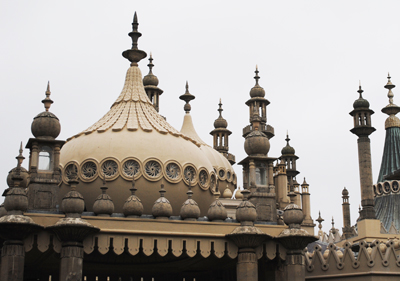
While Brighton had gradually been establishing a reputation as a sea bathing resort in the years prior to 1783, in that year the town’s profile received a valuable boost when the Prince Regent (later King George IV) visited the town. So taken with it was he that not only did he make repeat visits, he also constructed the magnificently opulent Royal Pavilion (pictured) – completed in 1822 and designed by John Nash – which still stands as one of the town’s foremost attractions.

The property, which Queen Victoria sold to the town in 1850 for the grand price of £53,000, boasts a series of exquisitely decorated chambers inspired by exotic ‘oriental’ themes. A 10 year, £10 million restoration project was completed in 1991.

Other properties in the town dating from a similar era include the Brighton Dome, which, completed in 1808, was originally the stables for the Prince Regent (back in the day when the Royal Pavilion was simply a farmhouse – in fact, it’s said that it was that fact people commented that the Prince’s horses were better accommodated than the man himself which helped spur him to build the Royal Pavilion). These days it’s the town’s main landmark entertainment venue and contains a concert hall and theatre.

Another property of the era is the Western Pavilion which feature a large Indian dome in reference to those of the Royal Pavilion and was built by Amon Henry Wilds, son of the architect Amon Wilds and a partner in his architectural practice, in 1831 as a residence. It stands next to the Gothic house built by his father, and another architect, Charles Busby, in the 1820s.

The arrival of the railway in 1841 further opened up the town to Londoners which in itself led to the construction of numerous waterfront hotels (the most famous of which is the Grand Hotel, built in 1864 and the scene of a 1984 IRA bombing aimed at killing then PM Margaret Thatcher).

The boom also saw three piers built running out off the foreshore – the Chain Pier (built in 1823 and destroyed by a storm in 1896), the West Pier (constructed in 1866, the derelict remains of which stand starkly in the waters off the town today after it was closed in 1975), and the Palace Pier (constructed in 1899, it is now hosts a lively funfair and, since 2000, has been formally known as Brighton Pier).

The late 1800s also saw the founding the Booth Museum (1874) by naturalist and collector Edward Thomas Booth (located in Dyke Road, it is now known as the Booth Museum of Natural History) and Volk’s Electric Railway which opened in 1883 and is now the ‘world’s oldest operating electric railway’, still running daily trains between Brighton Pier and Black Rock near the Marina.

Brighton, now part of the City of Brighton & Hove, remains a popular beach resort for Londoners, both for its beach and its nightlife, so on a warm day be prepared to fight the crowds.

Among the town’s other, more recent, attractions are the Sea Life Centre on the waterfront, home to more than 150 creatures including sharks and rays, the Brighton Museum & Art Gallery in the city’s ‘cultural quarter’ near the Royal Pavilion, and the Brighton Fishing Museum, also located on the waterfront, it traces the story of the town’s fishing community.

Visit Brighton has a range of maps and walks to help you explore the city. Visit www.visitbrighton.com for more information.

Treasures of London – Admiral Lord Nelson’s coat

It was roughly two hours into the Battle of Trafalgar on 21st October, 1805, about 1.15pm, that Great Britain’s most famous seaman, Admiral Horatio Lord Nelson, was fatally struck by a musket ball.

Fired by a marksmen in the rigging of the French ship Redoubtable, the musket ball struck him in the left shoulder as he stood on the deck of his flagship, HMS Victory.

Having fallen to his knees, he was spotted by the Victory‘s captain, Thomas Hardy, before he collapsed. Carried below the decks to the ship’s cockpit, it was there that he died (the Victory can still be visited at Portsmouth).

His damaged coat, meanwhile, was placed under the head of Midshipman George Augustus Westphal, who was being treated for his injuries nearby. Blood from the midshipman (late himself an admiral) stuck his hair to one of the epaulettes, part of which was was cut away and retained by his family as a memento.

The “undress jacket” was later returned to Nelson’s mistress, Emma Lady Hamilton, in accordance with his wishes. She later gave it to Joshua Jonathan Smith, Lord Mayor of London in 1810-1811, to as payment of a debt just prior to retiring to France in 1814. It was Prince Albert, the consort of Queen Victoria, who later purchased the coat for £150 from Smith’s widow and presented it to Greenwich Hospital in 1845.

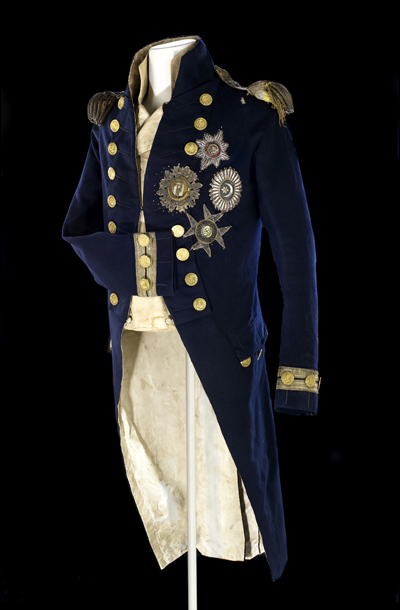
The jacket can now be found in the National Maritime Museum in Greenwich (housed in a section of the former Naval College). Along with the fatal musket ball hole on the left shoulder, the tails and left sleeve of the jacket are stained with the blood of John Scott, Nelson’s secretary, who had died in the early moments of the battle on the spot where Nelson was later shot. It’s also possible to see where the epaulette was damaged during the treatment of Midshipman Westphal.

The front of the coat also features embroidered versions of the four orders of chivalry awarded to Nelson – these are the star of the Order of the Bath, the Order of the Crescent awarded by the Sultan of Turkey, the Order of St Ferdinand and of Merit awarded by Ferdinand IV of Naples, and the German Order of St Joachim. According to the National Maritime Museum, “Nelson habitually wore them on all his uniform coats”.

The coat’s right sleeve is positioned as Nelson would have worn it – in 1797 he had lost his right arm at the Battle of Santa Cruz de Tenerife.

PICTURE: Vice-admiral’s undress coat worn by Nelson (1758-1805) at the Battle of Trafalgar. There is a bullet hole on the left shoulder, close to the epaulette. (c) National Maritime Museum, Greenwich, London, Greenwich Hospital Collection.

WHERE: National Maritime Museum, Romney Road, Greenwich, (nearest DLR station is Cutty Sark or Greenwich mainline station); WHEN: Open 10am to 5pm daily; COST: Free; WEBSITE: www.nmm.ac.uk.

Around London – The Tower hosts Royal Beasts; take a ride on a 1938 tube train; Lambeth Palace Library celebrates the King James Bible; and, see model cathedrals at Sir John Soane’s house…

• The history of the Royal Menagerie is the focus of a new exhibition on now at the Tower of London. Royal Beasts explores the history of the Tower menagerie which, founded during the reign of King John in the early 1200s, remained there for more than 600 years. Among the animals were lions (the first record of which dates from 1210), a grizzly bear (a gift from the Hudson Bay Company to King George III), elephants, tigers, ostriches and kangaroos. Highlights of the exhibition include modern animal sculptures by artist Kendra Haste and interactive sensory displays. The recently restored north wall walk and the never before opened Brick Tower will host some of the displays, including sights, sounds and smells of some of the animals. See www.hrp.org.uk/TowerofLondon.

A 1938 tube train will run along the western end of the Piccadilly Line this Sunday (that’s Father’s Day in case you’ve forgotten) as part of the London Transport Museum’s Heritage Vehicles on the Move 2011 programme. Leaving Northfields, the train will travel to High Street Kensington via Earl’s Court (crossing from the Piccadilly to the District Line in a move not normally experienced by the general public) before heading back down the District Line to Acton Town where it will change back onto the Piccadilly Line. The train will then undertake the “fishhook move”, visiting Heathrow Terminal 4 before going to Terminals 1,2,3 and 5. The entire journey is expected to last about two hours. Tickets, which can be purchased at the museum ticket desk or by calling 020 7565 7298, will need to be collected at Northfields Station. For more, see www.ltmuseum.co.uk/whats-on/events/vehicles-on-the-move.

• Lambeth Palace Library is celebrating the 400th anniversary of the King James Bible with a new exhibition. The exhibits include a 1611 edition of the Bible as well as Medieval Bible translations, landmark editions of the Bible which drew on the textual scholarship of the Renaissance and Reformation and early printed vernacular versions. Runs until 29th July. Admission is by pre-booking only. For information on buying tickets and more, see www.lambethpalacelibrary.org/content/2011exhibition.

On Now: Time is running out to see Sir Herbert Oakley’s collection of 27 models of European and English cathedrals at the Sir John Soane Museum. The models were made in the 1850s by William Gorringe, who was a modelmaker by appointment to Queen Victoria. Runs until 25th June. For more, see www.soane.org/exhibitions/

The Royal Wedding – Eight curious facts about Royal Weddings past and present…

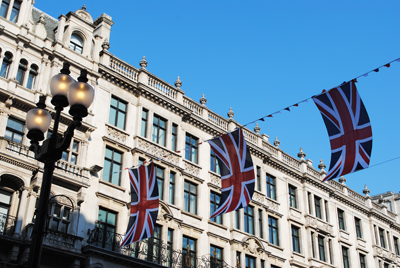
PICTURE: Bunting in Regent Street ahead of the Royal Wedding tomorrow.

Ahead of the wedding of Prince William and Kate Middleton tomorrow, here’s a look at some of the more curious and interesting facts related to London’s Royal Wedding past…

The first public Royal Wedding in modern times was that of Prince Albert, Duke of York (later King George VI), and Lady Elizabeth Bowes-Lyon (later Queen Elizabeth, the Queen Mother) which took place on 26th April, 1923. Instead of being held at a royal chapel as was more usual, they were married at Westminster Abbey in a public display which was apparently staged to lift the national spirit in the aftermath of World War I.

Lady Diana Spencer (later Diana, Princess of Wales) memorably said Prince Charles’ name in the wrong order during their wedding ceremony at St Paul’s Cathedral on 29th July, 1981. Lady Diana accidentally called him Philip Charles Arthur George instead of the correct Charles Philip Arthur George.

• Queen Victoria’s extravagant wedding cake was the first to feature a model of the bride and groom on its summit (with a figure of Britannia looming over them). The two tier cake measured nine foot across and weighed 300 lbs.

While white wedding dresses had been worn for some time, it was apparently after Queen Victoria wore a white dress at her 1840 wedding that the idea spread to the masses. (Interestingly, the first documented princess to wear a white wedding dress is said to have been Philippa of England, the daughter of King Henry IV, in 1406).

The first televised Royal Wedding was that of Princess Margaret, younger sister of Queen Elizabeth II, to Antony Armstrong-Jones (Lord Snowdon) on 6th May, 1960. It attracted some 300 million viewers worldwide.

The tradition of a royal bride leaving her bouquet on the Tomb of the Unknown Warrior in Westminster Abbey was started by Queen Elizabeth, the Queen Mother. She apparently did so in tribute to her brother Fergus who had died during World War I. Princess Mary, daughter of King George V, made a similar gesture at her wedding in 1922 – she left her bouquet at the Cenotaph in Whitehall after her wedding.

One of the most scandalous Royal Weddings was that of George, Prince of Wales (later King George IV) to Princess Caroline of Brunswick on 8th April, 1795 at the Chapel Royal in St James’s Palace. Described as being “far from a love match” on the Historic Royal Palaces’ website, Prince George was said to have been drunk during the wedding and at one stage apparently even attempted to escape from the ceremony.

If the rain stays away, the newly married prince and his bride will be returning to Buckingham Palace in the 1902 State Landau. The open-topped carriage was constructed for King Edward VII’s coronation and apparently made roomy to accommodation him. The carriage was used by Prince Charles and Lady Diana when they left St Paul’s Cathedral after their 1981 wedding. If the weather it poor, it’s expected that the 1881 Glass Coach, bought for the coronation of King George V in 1911, will be used instead.

For more fascinating facts on Royal Weddings, see the BBC website (www.bbc.co.uk/history/royal_weddings), or Historic Royal Palaces’ blog, The ‘other’ royal weddings (http://blog.hrp.org.uk). For more on the current Royal Wedding, see the official website (www.officialroyalwedding2011.org).

The Royal Wedding – Royal residences…

Word is that Prince William and his soon-to-be wife, Catherine Middleton, have yet to formally decide where they will live when in London (they are expected to spend much of their first two-and-a-half years of marriage in North Wales). 

Their initial London base, however, will reportedly be Clarence House. Located in The Mall, just down the road from Buckingham Palace and beside St James’s Palace, the grand building is currently the home of William’s father Charles, the Prince of Wales, his wife Camilla, Duchess of Cornwall, and, William’s brother, Prince Harry (it is also the home of William himself).

In years gone past, Clarence House served as the home of the newly married Queen Elizabeth II (then Princess Elizabeth) and her husband, Prince Philip, the Duke of Edinburgh. Prince Charles, who lived there with his parents until the age of three, returned to the property in August 2003 after the death of his grandmother Queen Elizabeth, the Queen Mother, who had lived in the building from 1953.

Clarence House was built between 1825 and 1827 to the designs of architect John Nash on the orders of Prince William Henry, the Duke of Clarence and later King William IV.

Choices for a permanent home in London for the soon-to-be married couple reportedly include Buckingham Palace (see yesterday’s entry), as well as Kensington Palace.

It was converted from a Jacobean mansion for King William III and Queen Mary II and has since been the home of many royals including, most famously, Diana, Princess of Wales. She and her then husband, Prince Charles, moved in following their wedding in 1981, and Princess Diana continued to live there after her divorce in 1996.

Other notable royal residents have included Queen Anne and Princess Margaret, sister of Queen Elizabeth II.

Another option – St James’s Palace – was built in 1531 on the site of a medieval leper hospital by King Henry VIII. Used initially for state occasions and to house royal relatives (Tudor monarchs actually lived at Whitehall Palace), it became the official royal residence in 1702, when Whitehall Palace burnt down, and remained so until the 1830s when King George III moved to Buckingham Palace.

The Royal Wedding – London’s royal reception venue

Following the wedding ceremony at Westminster Abbey on Friday, the now married happy couple will head in a carriage via a processional route down The Mall to Buckingham Palace.

There, they will enjoy a champagne reception with 600 guests hosted by the Queen before, at 1.30pm, appearing on the balcony of the palace to wave to the crowds and watch an aircraft flypast expected to include a Lancaster, Spitfire, Hurricane, two Typhoons and two Tornados.

Buckingham Palace, which has served as the official London residence of the reigning monarch since 1837, has a long tradition of hosting royal events. Then much smaller and known as Buckingham House, the property was built for the Duke of Buckingham in 1705.

It passed into royal hands when it was bought by King George III in 1761 for his wife, Queen Charlotte, to use as a family home located conveniently close to St James’s Palace where many court functions were held.

The house was extensively remodelled in 1762 and again, this time on the orders of King George IV, in the 1820s (after initially wanting to use it, like his father, as a family home, the king decided after the works had started to instead transform it into a palace, created to the designs of architect John Nash).

When King George IV died in 1830, his brother King William IV ordered the works to be continued albeit with a new architect, Edward Blore (the spiralling costs of Nash’s work are said to have cost him the contract). The king himself never lived in the house – even offering at at one stage as a seat for Parliament after the Houses of Parliament were destroyed by fire in 1834 – and it wasn’t until the accession of Queen Victoria in 1837 that the palace became the sovereign’s official residence.

Further works were subsequently needed to ensure there was adequate accommodations for the Queen’s family and it was during these works that the monumental Marble Arch – designed as the centrepiece of the palace’s courtyard – was moved away to its present location on the north-eastern corner of Hyde Park.

The palace, which now boasts 775 rooms including 19 staterooms, has since been the site of numerous royal wedding receptions – it was on the balcony  where Queen Elizabeth II and Philip, the Duke of Edinburgh, greeted crowds on 20th November, 1947, after their wedding in Westminster Abbey and, similarly, where Prince William’s parents, Prince Charles and Princess Diana, held a reception before greeting crowds on 29th July, 1981, after their ceremony at St Paul’s Cathedral.

Buckingham Palace was also the location for Queen Victoria’s wedding breakfast following the ceremony in the Chapel Royal at St James’s Palace on 10th February, 1840.