Where is it?…#62

Where-is-it--#62

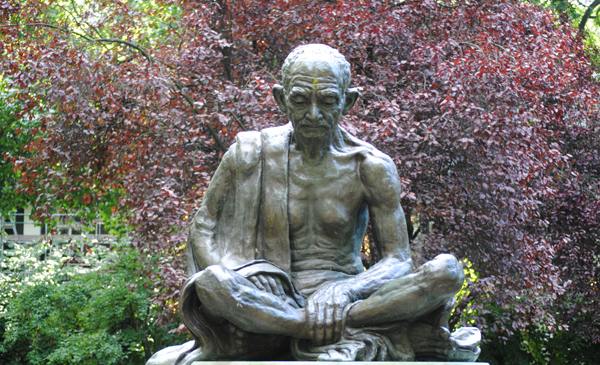
Can you identify where in London this picture was taken and who it’s of? If you think you can, leave a comment below. We’ll reveal the answer early next week. Good luck!

Congrats to all who correctly placed this as a statue of Mahatma Gandhi located in Tavistock Square in Bloomsbury. Sculpted by Polish-born Fredda Brilliant, the statue was installed in the centre of the square’s gardens as far back as 1968.


Where is it?…#60…

Where-is-it--#60
Can you identify where in London this picture was taken and what it’s of? If you think you can, leave a comment below. We’ll reveal the answer early next week. Good luck!

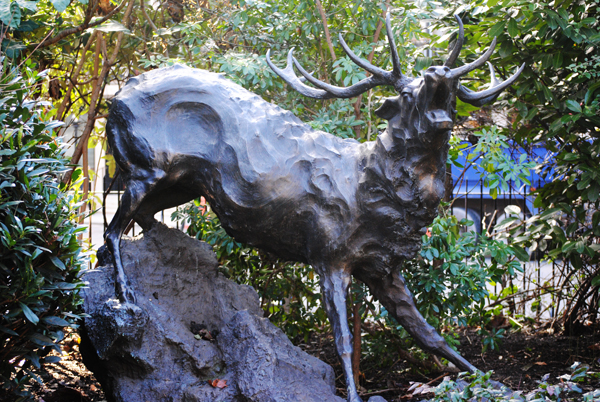
Well done to Jameson, this is indeed located in St James’s Square. Called – rather aptly – Stag, the sculpture dates from 2001 and is the work of Marcus Cornish. The larger-than-life bronze sculpture is located in the south-west corner of the West End square. For more on the work of Mr Cornish, see www.marcuscornish.com. Other statues in the square include an equestrian statue of King William III, the work of John Bacon Senior and Junior, which was installed in 1808.

Where is it?…#59

Where-is-it--#59

Can you identify where in London this picture was taken and what it’s of? If you think you can, leave a comment below. We’ll reveal the answer early next week. Good luck!

Well done to Carol and Jameson, this statue is indeed located on the north-western corner of the Bank of England (the corner of Lothbury and Prince’s Street) and is indeed a depiction of architect Sir John Soane (1753-1837), noted for his work on the Bank of England (the bank’s design was substantially later reworked by Sir Herbert Baker in the 1920s-1930s (for more on Soane and his work, see our earlier posts here and here). The statue, by William Dick Reid, was unveiled in 1937.

Where is it?…#58

Where-is-it--#58

Can you identify where in London this picture was taken? If you think you can, leave a comment below. We’ll reveal the answer early next week. Good luck!

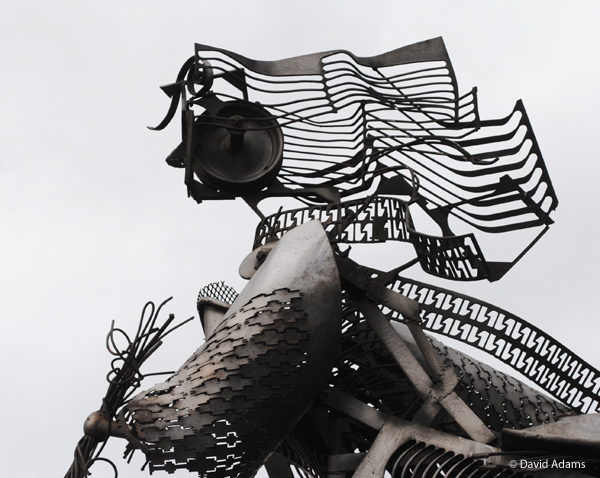
A bit of a harder one this week (so we thought we’d leave a bit longer before giving you the answer!). This is a sculptural figure – aptly named Figurehead for Docklands – which stands at the north-east corner of Poplar Dock in East London. Designed in 1997 by Anna Bisset, it’s made of cast iron and welded steel and was inspired by the idea of ship’s figureheads. Initially put on show at Tidal Basin, Royal Victoria Dock, over the summer of 1995 as part of an outdoor exhibition organised by the University of East London and the London Docklands Development Corporation, it was subsequently purchased by the LLDC and put on permanent display in its current location. For more of Anna Bisset’s work, visit www.annabisset.co.uk.

We’ll post our next Where is it? over the weekend…

Where is it?…#57

Where-is-it--#57

Can you identify where in London this picture was taken (obviously out of season!)? If you think you can, leave a comment below. We’ll reveal the answer early next week. Good luck!

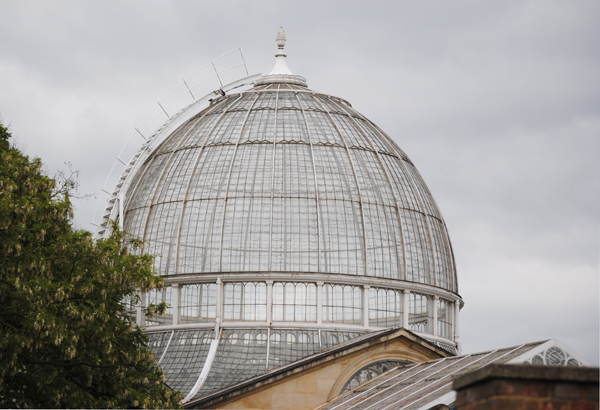
Well done to Mike, Visiting Houses and Gardens and Roberta Stimson (via Facebook) – this is indeed the Great Conservatory at Syon Park – London home of the Duke of Northumberland – located on the banks of the Thames in west London. The magnificent structure was commissioned by the third duke, Hugh Percy, and designed by architect Charles Fowler in 1826. Constructed of gunmetal, Bath stone and glass, it is said to have inspired Joseph Paxton in his designs for the Crystal Palace. For more on Syon Park, see www.syonpark.co.uk.

Where is it?…#56

Where-is-it--#56

Can you identify where in London this picture was taken and who the statue represents? If you think you can, leave a comment below. We’ll reveal the answer early next week. Good luck!

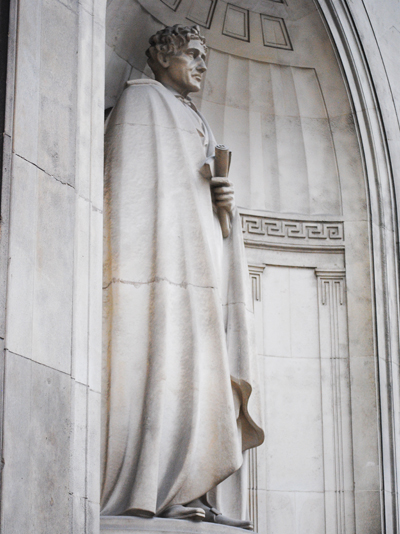
No takers this week. This is a statue of John Flaxman (1755-1826), located on the facade of Burlington House in Piccadilly, home of the Royal Academy of Arts since 1867. The sculptor and draughtsman, a leading figure of the Neoclassicism movement, was made an associate of the RA in 1797. For more on the Royal Academy of Arts, see www.royalacademy.org.uk.

Where is it?…#55

Where-is-it--#55

Can you identify where in London this picture was taken? If you think you can, leave a comment below. We’ll reveal the answer early next week. Good luck!

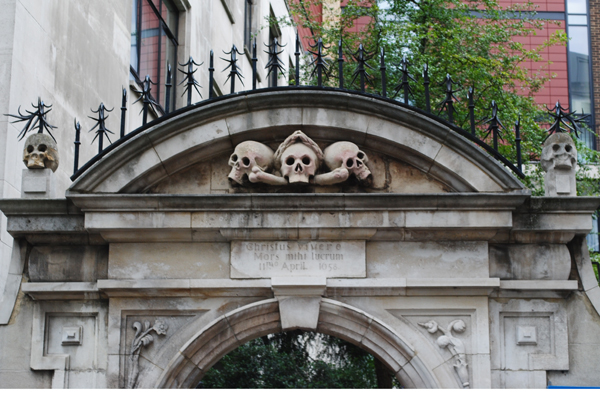
Well done to Jennifer and Parktown, this is indeed the gateway to the church of St Olave Hart Street, located on the corner of Hart Street and Seething Lane in the City of London. The church – which has a history going back to at least the 13th century – is named after St Olaf of Norway and, as mentioned, is indeed, burial place of the diarist Samuel Pepys. Charles Dickens referred to the church as “St Ghastly Grim” thanks to this rather macabre gateway. For more on the history of the church, see our earlier post here.

Where is it?…#54

Where-is-it--#54The return for 2013 of our series in which we ask you to identify where in London this picture was taken. If you think you can identify this picture, leave a comment below. We’ll reveal the answer early next week. Good luck!

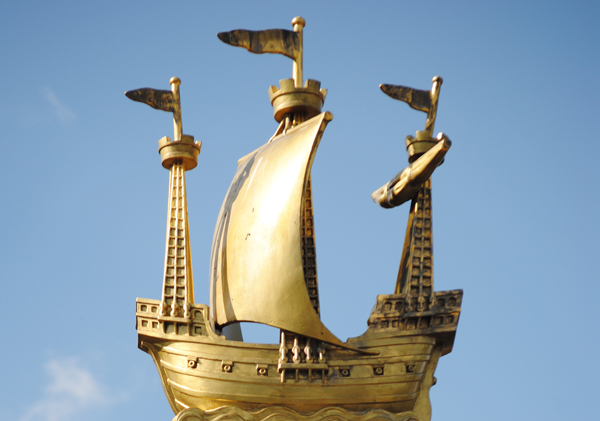
Thanks for the comments Parktown but this ship is not in Rotherhithe nor does it have anything to do with Lloyds! This is part of the decorative scheme of Chelsea Bridge which crosses the Thames between Chelsea and Battersea Park in London’s west. Initially known as Victoria Bridge, the first bridge here opened in 1857 (Albert Bridge, which opened later, is located further west). But increased traffic eventually led to its demolition in the 1930s (it had been renamed some years earlier to avoid the association of a royal name with a bridge which had become structurally unsound) and the current bridge, the first self-anchored suspension bridge (that is, the suspension cables attach to the deck and don’t extend to the ground) in Britain, was opened on the site in 1937. This gilt galleon sits atop a decorative lamp post at the bridge’s entrance (there are several) and below it is the coat-of-arms of the now defunct London County Council.

Where is it?…#53

Where-is-it--#53

The latest in the series in which we ask you to identify where in London this picture was taken. If you think you can identify this picture, leave a comment below. We’ll reveal the answer early next week. Good luck!

Well done to Angelo and Carol – this is indeed part of a series of sculptures which project out of the facade of Allington House (formerly known as Saga House) at the junction of Victoria and Allington Streets. The sculptures – known as The Endangered Species Triptych, they include an elephant, tiger, orang-utan, shark and birds – have reportedly adorned the building since the 1980s and are the work of Barry Baldwin. Weighing more than 12 tonnes, they project almost a metre out of the building’s facade. There are indeed plans to demolish the building and a campaign, spearheaded by London historian and guide Peter Berthoud, has been launched to save the sculptures. You can find out more and sign a petition here: www.change.org/en-GB/petitions/land-securities-stop-the-demolition-of-the-sculptures-at-allington-house#.

Where is it? #52…

The latest in the series in which we ask you to identify where in London this picture was taken and what it’s of. If you think you can identify this picture, leave a comment below. We’ll reveal the answer early next week. Good luck!

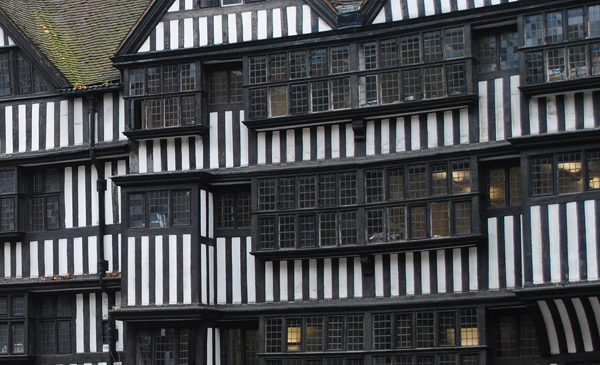
Well done to all those who identified this as Staple Inn in High Holborn. The last surviving of the buildings once known as the Inns of Chancery – medieval period schools which provided legal training, the current structure dates from about 1580 and is a rare survivor from before the Great Fire of London in 1666. As mentioned by Mike below, it had to be largely rebuilt after the hall was devastated by a flying bomb in August, 1944. Staple Inn is now home to the Institute of Actuaries (we’ll be taking a more in-depth look at the building and its history in an upcoming post).

Where is it?…#51…

The latest in the series in which we ask you to identify where in London this picture was taken and, although this is a little odd this week, what it’s of. If you think you can identify this picture, leave a comment below. We’ll reveal the answer early next week. Good luck!

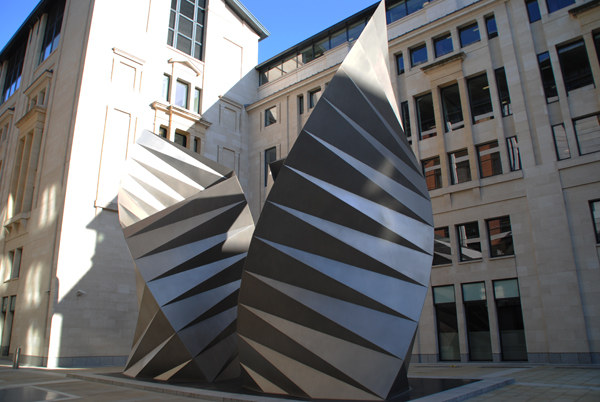
Well done to all those who correctly said this sculpture, Paternoster Vents (although many refer to it as Angel’s Wings), is located in Bishop’s Court, just to the west of Paternoster Square near St Paul’s Cathedral. The work of Thomas Heatherwick (yes, the same man who designed the stunning Olympic cauldron used in this year’s Games), it is actually some beautifully designed cooling vents for an electrical substation underneath. The 11 metre high sculpture takes its design from folded paper and is made from stainless steel.

Where is it?…#50

The latest in the series in which we ask you to identify where in London this picture was taken and what it’s of. If you think you can identify this picture, leave a comment below. We’ll reveal the answer early next week. Good luck!

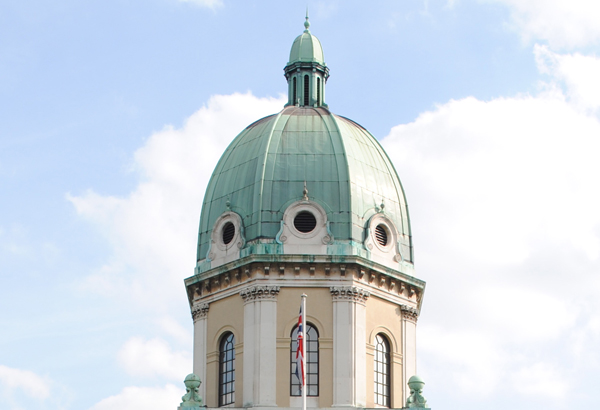
Well done to Martine Poupaux, this is indeed the dome on top of the Imperial War Museum in Lambeth Road, London. The museum, which was formally established by an Act of Parliament in 1920, was initially based in the Crystal Palace and then from 1924 to 1935 in two galleries adjoining the former Imperial Institute, South Kensington. It reopened at its current home in 1936 at a ceremony attended by King George VI. The building was formerly the central portion of Bethlem Royal Hospital, or ‘Bedlam’, which have moved to the site in 1815 (the dome wasn’t part of the original building – it was added later). We’ll be exploring more this history in upcoming posts. For more on the Imperial War Museum, see www.iwm.org.uk/visits/iwm-london.

Where is it?…#49

The latest in the series in which we ask you to identify where in London this picture was taken and what it’s of. If you think you can identify this picture, leave a comment below. We’ll reveal the answer early next week. Good luck!

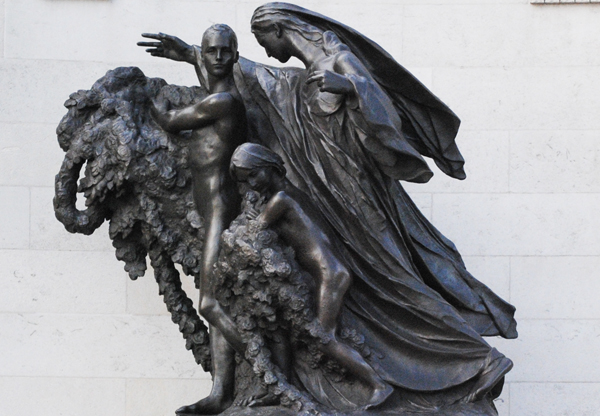
Sunday was Remembrance Day, so we thought it appropriate to have a war memorial as last week’s Where is it? This memorial, located at Victoria Embankment on the north bank of the Thames, is the Anglo-Belgian War Memorial, given in 1920 as a gift to Britain by the people of Belgium as a thank you for their help in providing a refuge in England during World War I. The work of celebrated Belgian sculptor Victor Rosseau, it features three bronze figures – a Belgian mother, a boy and a girl, the latter two carrying garlands – and although you can’t see it in this picture, there’s two figures behind them on the Portland stone surround representing ‘honour’ and ‘liberty’.

Where is it?…#48

The latest in the series in which we ask you to identify where in London this picture was taken and who it’s of. If you think you can identify this picture, leave a comment below. We’ll reveal the answer early next week. Good luck!

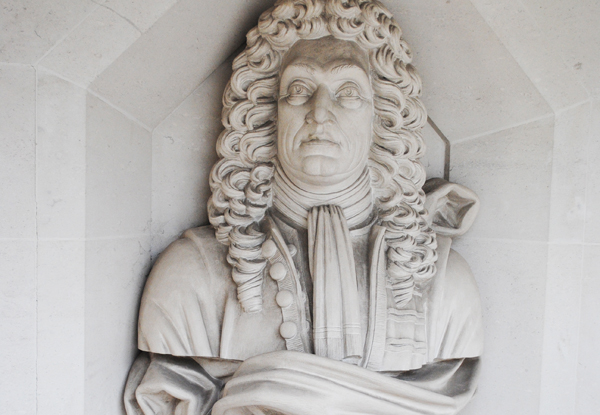
Well done to Angelo (and, I suspect the correct location for Mike), this is indeed a bust of Sir Christopher Wren and is located in a loggia outside the Guildhall Art Gallery facing into Guildhall Yard. It and three other larger than life busts of notable Londoners – playwright William Shakespeare, statesman Oliver Cromwell and diarist Samuel Pepys – are all the work of Tim Crawley and were installed when the gallery was completed in 1999. Along with them is a full length statue of Dick Whittington and his famous cat – these are the work of Laurence Tindall.

Where is it?…#47

The latest in the series in which we ask you to identify where in London this picture was taken and what it’s of. If you think you can identify this picture, leave a comment below. We’ll reveal the answer early next week. Good luck!

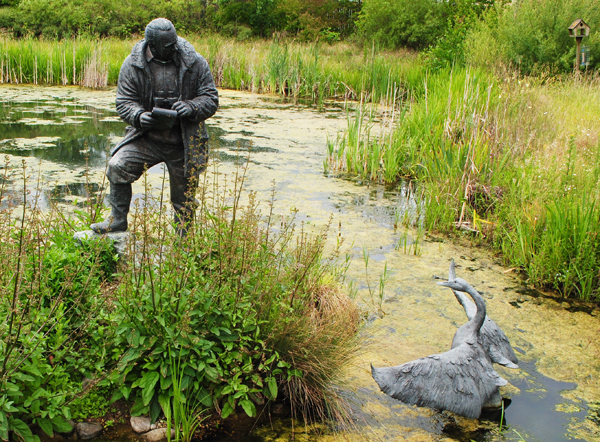
Well done Janet, this is indeed a statue of conservationist Sir Peter Scott (1909-1989) just outside the main entrance of the London Wetland Centre in Barnes in London’s west. A founder of the World Wildlife Fund, Sir Peter – the only child of Antarctic explorer Robert Falcon Scott – also founded the Wildlife & Wetlands Trust which operates a network of wetland centres across the UK including the London Wetland Centre. This 44 acres of recreated wetlands opened in 2000 and is located in a loop of the Thames previously occupied by four Victorian-era reservoirs. The statue of Sir Peter with two Bewick swans is the work of sculptor Nicola Godden and was unveiled by Sir David Attenborough in 2000. For more on the centre, see www.wwt.org.uk/visit/london/.

Where is it?…#46

The latest in the series in which we ask you to identify where in London this picture was taken and what it’s of. If you think you can identify this picture, leave a comment below. We’ll reveal the answer early next week. Good luck!

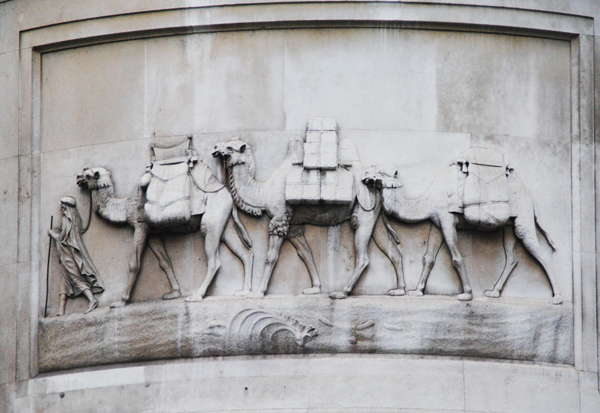
Well done to Carol Stanley – this is indeed located at 20 Eastcheap in the City of London. The building on the facade of which this relief of a camel train sits was formerly the offices of Peek Bros & Co, dealers in tea, coffee and spices. Peek House was built in 1883 after the previous structure, along with others on this side of Eastcheap, was demolished to make way for the Underground’s Metropolitan Line. The picture was carved by William Theed the Younger, who also sculpted the Africa group – including camel – on the Albert Memorial.

Where is it?…#45


The latest in the series in which we ask you to identify where in London this picture was taken and what it’s of. If you think you can identify this picture, leave a comment below. We’ll reveal the answer early next week. Good luck!

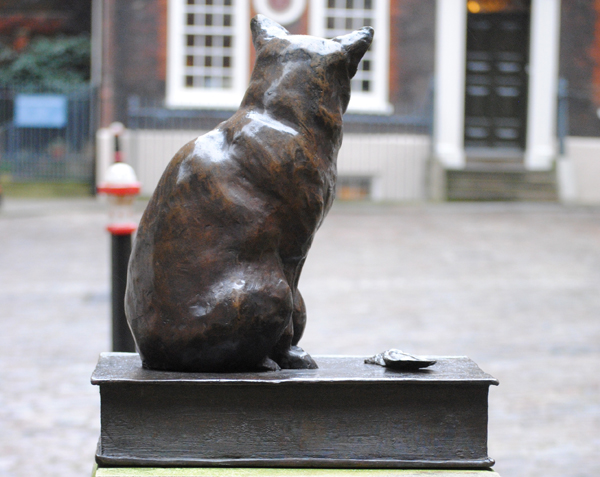
Congrats to Mike, Debbie, Janet, and Zoe (on Facebook), this is indeed the back of the statue of Hodge the cat in Gough Square in the City of London, just outside Dr Johnson’s House at No 17. One of the cats of the famed lexicographer, Dr Samuel Johnson, Hodge had his own moment of stardom in James Boswell’s Life of Johnson in which Dr Johnson is heard remarking that he’s had better cats than Hodge before, apparently in response to Hodge’s reaction, stating that he was “a very fine; a very fine cat indeed” (Johnson was apparently unusual for his love of cats; Boswell did not suffer the same love). This bronze statue of Hodge, by sculptor Jon Bickley and placed here in 1997, has Hodge sitting on a copy of Dr Johnson’s famous dictionary and beside him is some empty oyster shells, referring to Dr Johnson’s habit of buying oysters for his cats to eat. For more on Dr Johnson’s House (where Dr Johnson lived from 1747-59), see www.drjohnsonshouse.org.
Where is it?…#44

The latest in the series in which we ask you to identify where in London this picture was taken and what it’s of. If you think you can identify this picture, leave a comment below. We’ll reveal the answer early next week. Good luck!

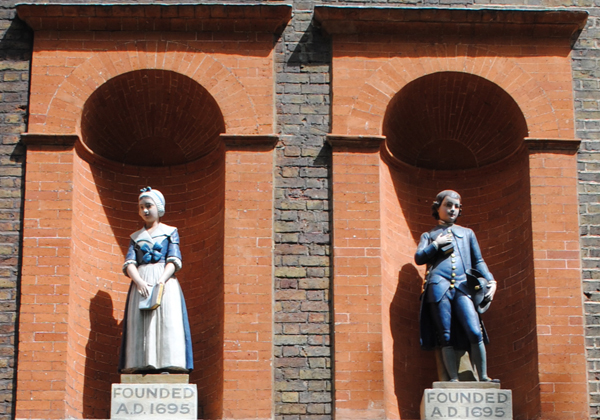
Well done to Janet and Mike – these are indeed statues on the front of the former St John’s Old School in Wapping, east London. Located in Scandrett Street near the former parish church, the school was founded in 1695 although the current building dates from the mid-1700s. The costumes worn by the students are typical of the “blue coats” worn at charity schools (blue was apparently the cheapest dye) which were created for orphan children so they could be cared for and trained in the skills they would need to work in domestic service. Boys and girls were segregated and you can see the separate entrances for them on this building’s facade. The ‘model students’, some of the best on display in London, are made of Coade stone. The building is now used for residential accommodation.

Where is it?…#43

The latest in the series in which we ask you to identify where in London this picture was taken and what it’s of. If you think you can identify this picture, leave a comment below. We’ll reveal the answer early next week. Good luck!

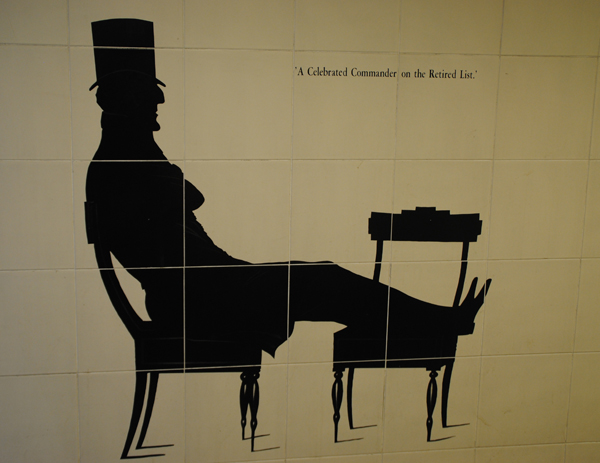
This image is one of many found in a subterranean tunnel surrounding Hyde Park Corner Underground Station and depicts, of course, the 1st Duke of Wellington, Arthur Wellesley, enjoying his latter years. The ‘Iron Duke’ has strong connections to Hyde Park Corner – his former home, Apsley House, No 1. London, is located there as is the Wellington Arch, the Decimus Burton memorial to him. For more on the Duke, see our earlier post here and for more on Wellington Arch, see our earlier ‘Where is it?’ post here.

Where is it?…#42

The latest in the series in which we ask you to identify where in London this picture was taken and what it’s of. If you think you can identify this picture, leave a comment below. We’ll reveal the answer early next week. Good luck!

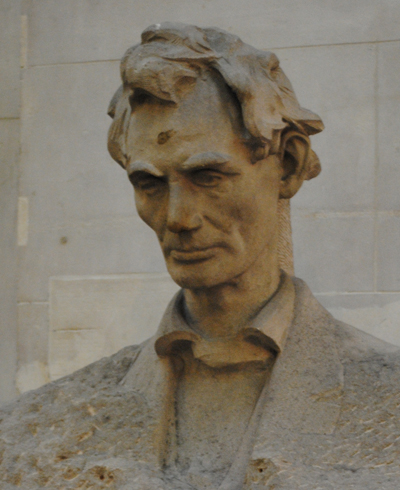
Well done to Carol, this bust – yes, of Abraham Lincoln, 16th President of the United States – is located just inside the ‘rear’ entrance of the Royal Exchange in the heart of the City. The work of Irish-American sculptor Andrew O’Connor, it was carved from a block of limestone apparently quarried near the President’s birthplace in central Kentucky. The bust, which shows Lincoln is his prime, was presented to The Gresham Committee by the Lincoln Committee in 1930.

(And sorry about the previous #42 post – a technical glitch meant we had to shelve it!)