10 of London’s greatest Victorian projects – 3. The Palm House, Kew Gardens…

We head back before the creation of the grand buildings of Albertopolis for this week’s entry to the construction of the Palm House at Kew Gardens – widely considered the world’s most important surviving Victorian-era glass and iron structure.

Palm-House,-KewDesigned by the great architect Decimus Burton (his other works include Wellington Arch), the now Grade I-listed Palm House was built under the supervision of leading Irish glasshouse designer Richard Turner between 1844 and 1848 as a home for Kew’s collection of exotic palms. Turner borrowed from the ship-building industry to build the structure, which contains 16,000 panes of glass, with the design essentially that of an upturned ship’s hull.

Due to the fact that the palms needed a warm environment in which to live, coal-fed boilers were located in a basement below the Palm House which heated water pipes running throughout the building (the smoke from the boilers was diverted to the Italianate Campanile located a short distance away which acted as a smoke stack).

The Palm House (the earliest known picture is shown above) has been restored several times – first in the 1950s when the boilers were converted to run on oil and moved to a site behind the Campanile, and again in the 1980s, a complete overhaul which involved almost completely emptying the structure of its resident palms, dismantling and rebuilding the structure itself. It was officially reopened by Queen Elizabeth, the Queen Mother, in 1990.

Among the many exotic plants inside the glasshouse – which rises to a height of 19 metres – highlights include the rare triangle palm (Dypsis decaryi) from Madagascar, a Mexican yam (Dioscorea macrostachya), used apparently in the development of the contraceptive pill, a double coconut palm (Lodoicea maldivica) which bears the largest seed in the world, and a cycad (Encephalartos altensteinii) which has been described as the “world’s oldest pot plant” and was brought to Kew from South Africa in 1775.

WHERE: The Palm House, Kew Gardens (nearest Tube station is Kew Gardens); WHEN: 9.30am to 3.45pm except Tuesday when it closes at 2pm (closing times change with the seasons); COST: £14.50 adults/£12.50 concessions/children 16 and under free; WEBSITE: www.kew.org.

PICTURE: Royal Botanic Gardens Kew
LondonLife – The Big Chill 2…

Big-Chill2

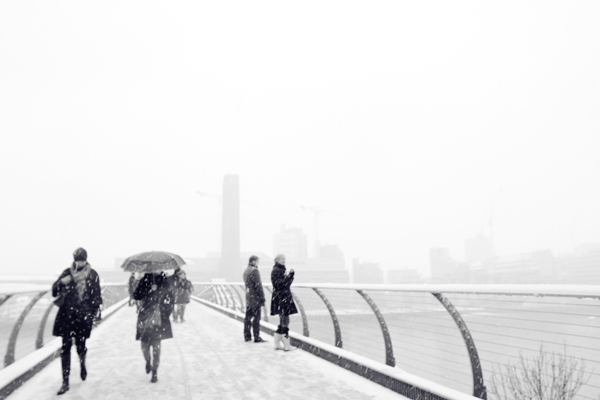
Says the photographer, Ben Bibriesca: “Instead of spending another lazy weekend in, my flatmate and I decided to plan a trip to the Tate Modern. Unfortunately due to the snow, all our friends dropped out. We decided to still go but spent more time outdoors taking photos in the snow then at the actual museum. This shot was taken right before we crossed the bridge to get to our destination. I just loved the way everything was snow covered and white.” For more of Ben’s work, see www.flickr.com/photos/benbibriesca/.

Taken an interesting photograph of somewhere in London? We’re always looking for interesting images of the city so if you’ve got one you reckon captures a snippet of life in London, please contact us at exploringlondon@gmail.com or via Flickr at www.flickr.com/groups/exploringlondon/.

What’s in a name?…Richmond

It was King Henry VII, father of King Henry VIII, who brought the name Richmond to London.

Richmond-PalaceInheritor of the title of the Earl of Richmond (the title relates to lands in Yorkshire and centres on the castle of Richmond), on being crowned king, Henry VII gained the use of Sheen (or Shene) Palace located on the banks of the Thames, about seven miles south west of Westminster (the history of which we’ll look at in greater detail in an upcoming post).

Sheen Palace was largely destroyed in a fire in 1497 and the king gave orders for it to be rebuilt (Richmond Palace is pictured here – found on a sign at Richmond). It was on its completion in around 1502 that Henry decided to rename the palace after his former earldom – Richmond.

The name Richmond, by the way, comes from a French word for ‘old hill’.

The once separated town of Richmond is now at the centre of the London Borough of Richmond upon Thames (it became a municipal borough in 1890) and a popular residential suburb for London’s wealthy (among those who have lived there are Mick Jagger and Jerry Hall) – sought after for its riverside amenity, quaint village green, and panoramic views from Richmond Hill as well as its fine shopping and dining.

Richmond’s other great drawcard is Richmond Park, one of the city’s eight Royal Parks, and home to more than 600 deer (see our earlier entry on it here).

Where is it?…#55

Where-is-it--#55

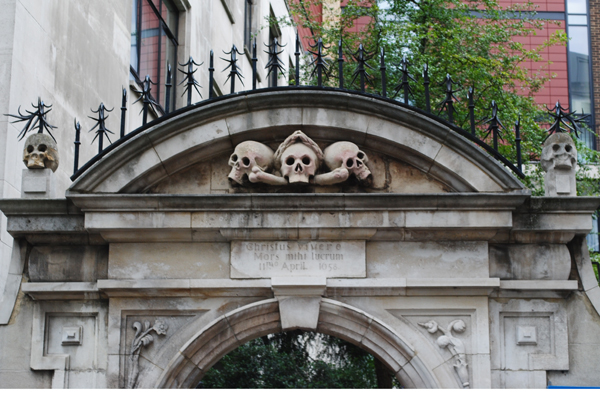
Can you identify where in London this picture was taken? If you think you can, leave a comment below. We’ll reveal the answer early next week. Good luck!

Well done to Jennifer and Parktown, this is indeed the gateway to the church of St Olave Hart Street, located on the corner of Hart Street and Seething Lane in the City of London. The church – which has a history going back to at least the 13th century – is named after St Olaf of Norway and, as mentioned, is indeed, burial place of the diarist Samuel Pepys. Charles Dickens referred to the church as “St Ghastly Grim” thanks to this rather macabre gateway. For more on the history of the church, see our earlier post here.

Around London – Of foundling tokens; a French field marshal’s grave marker; behind the scenes at Royal Albert Hall; Tom Daley’s swimming trunks; and, crime fiction at the British Library…

A new exhibition opens at the Foundling Museum tomorrow (25th January) which tells the often heart-breaking stories behind the tokens left by mothers with their babies at the Foundling Hospital between 1741-1760. While hundreds of tokens were removed from the hospital’s admission files in the 1860s, Fate, Hope & Charity reunites the tokens – which range from coins and jewellery to playing cards, poems and even a nut – with the foundlings to whom they were given. A moving exhibition. Museum admission charge applies. For more, see www.foundlingmuseum.org.uk.

The Duc and Duchesse de La Rochefoucauld-Doudeauville were among those who attended the dedication of a ledger stone marking the grave of their kinsman, Field Marshal Francois de La Rochefoucauld, the Marquis de Montendre, at Westminster Abbey last week. Born in 1672, de La Rochefoucauld served in the British Army during the reign of King William III and Queen Mary II after fleeing France as a Huguenot refugee (he had also succeeded his brother as marquis). He was promoted to field marshal in 1739 but died later that year and was buried in the abbey. The floor stone which was replaced by the new ledger stone will be sent to France for inscription and installation at Montendre. For more on the abbey, see www.westminster-abbey.org.

• One we should have mentioned with our piece on Royal Albert Hall last week. The Royal Albert Hall is running behind the scenes tours of the venue every Monday until 11th February as well as Tuesday 29th January (so you’ll have to be quick!). The tour – which runs as an extension of the front of house tour – takes in the loading bay located under the hall and one of the many dressing rooms (currently in use by Cirque de Soleil who are in residency with their new show KOOZA. The 90 minute Behind the Scenes tours cost £16. Booking in advance is strongly recommended. For more, see www.royalalberthall.com.

A pair of swimming trunks worn by diver Tom Daley during the 2012 Olympic Games has been donated to the Museum of London. The trunks join an ever increasing collection of Olympics and Paralympics-related outfits in the museum with others including a leotard worn by bronze-medal winning gymnast Beth Tweddle. A display featuring the Olympic kit is being planned for spring. Meanwhile, still aty the museum and an exhibition featuring a series of photographs exploring the city’s major arterial roadways opens on Saturday. The free exhibition, Highways: Photographs by John Davies, features six specially commissioned photographs taken by Davies in 2001-02 – just prior to the introduction of the Congestion Charge in 2003. Routes featured include the Elephant and Castle roundabout, the Hammersmith Flyover, Marble Arch and Hyde Park, St Pancras Station Midland Grand Hotel and the A501, the junction of Poultry and Queen Victoria Street and the Blackwall Tunnel entrance. Runs until 16th June. For more, see www.museumoflondon.org.

• On Now: Murder in the Library: An A-Z of Crime Fiction. This exhibition at the British Library looks at the history of crime fiction and features never-before-seen manuscripts, printed books, rare audio recordings, artworks and artefacts. Highlights include Arthur Conan Doyle’s manuscript of the Sherlock Holmes story, The Adventure of the Retired Colourman (1926); the first appearance in print of Miss Marple (in Royal Magazine in 1929); John Gielgud’s annotated script for the film Murder on the Orient Express, crime novels from unlikely authors including Pele and burlesque performer Gypsy Rose Lee and the 1933 book, the Jigsaw Puzzle Murders in which readers had to complete a jigsaw puzzle to solve the crime. A series of events will be taking place alongside the exhibition. Entry to the library’s Folio Society Gallery is free. Runs until 12th May. For more see www.bl.uk.

10 of London’s greatest Victorian projects – 2. Two South Kensington Museums…

Located in the South Kensington estate – known to some during the Victorian era as Albertopolis (see previous entry in this series) – each of the two museums mentioned here represents an architectural and cultural feat in its own right, for the sake of space (and to allow us to explore a wider range of buildings as part of this series) we’re grouping them together…

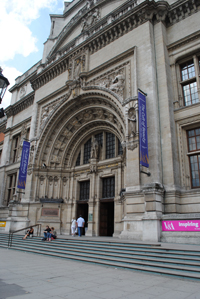
V&A2• Victoria and Albert Museum: Following on from the success of the Great Exhibition of 1851, the V&A as it’s popularly known, was established in 1852 and funded by the profits from the exhibition.

Initially known as the Museum of Manufactures, it was founded with the three aims of making art accessible, educating people and inspiring British designers and manufacturers.

Renamed the South Kensington Museum after moving to its current site in 1857, its collections – which now include everything from metalwork, furniture and textiles to fine art such as paintings, drawings and sculptures from a range of contemporary and historical periods – continued to expand.

Located in what were only meant to be temporary exhibition buildings – factory-like structures which become known as the ‘Brompton Boilers’, in 1899 Queen Victoria laid the foundation stone for the grand new facade and entrance that we see today (it was at this point that that the museum took on its current name).

The Science Museum – the third major museum of Albertopolis – initially formed part of this museum and only gained its independent status in 1909.

WHERE: Victoria and Albert Museum (nearest Tube stations are South Kensington and Knightsbridge); WHEN: 10am to 5.45pm daily (late opening Fridays); COST: Free (apart from special exhibitions); WEBSITE: www.vam.ac.uk.


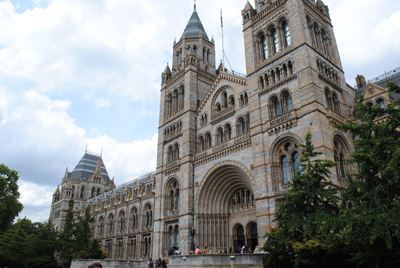
NHM Natural History Museum: Created to house what was previously the natural history collection of the British Museum (itself founded out of the collections of Sir Hans Sloane), the museum was founded thanks largely to the efforts of Sir Richard Owen.

The superintendent of the natural history department at the British Museum and later the founder of the NHM, it was he led the campaign for a separate premises for the museum’s natural history collections which had outgrown the museum’s home in Bloomsbury.

It first opened its doors on Easter Monday, 1881, but the museum legally remained part of the British Museum until 1963 and continued to be known as British Museum (Natural History) until 1992.

Known as the Waterhouse Building (after Alfred Waterhouse, the young architect who designed it following the death of the original designer, engineer Captain Francis Fowke, who was also involved in the initial design of Royal Albert Hall), the museum’s main structure – faced in terracotta – is said to be one of the finest examples of a Romanesque structure in Britain.

The premises and collections of the Geological Museum – now the ‘red zone’ of the NHM –  merged with the Natural History Museum in 1985.

WHERE: Natural History Museum (nearest Tube stations are South Kensington and Knightsbridge); WHEN: 10am to 5.50pm daily; COST: Free (apart from special exhibitions); WEBSITE: www.nhm.ac.uk.

LondonLife – The big chill…

Sam-C-Moore

Says the photographer, Sam C Moore (of SCM Photography): “I was on my way to St Clement Danes and the telephone box against the snowy street background really caught my eye, and almost directly adjacent to it was a bike that had been parked up which added to help frame the shot. All I needed now was a black cap to drive past, so waited (very briefly) and, of course, being London. I got my wish” For more of Sam’s work, see www.flickr.com/people/84891527@N00/.

Taken an interesting photograph of somewhere in London? We’re always looking for interesting images of the city so if you’ve got one you reckon captures a snippet of life in London, please contact us at exploringlondon@gmail.com or via Flickr at www.flickr.com/groups/exploringlondon/

London Pub Signs – The Gun…

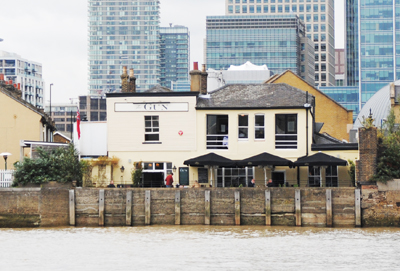
This Docklands pub – the site of which has hosted a public house for more than 250 years – is located in an area where iron foundries were once employed to produce cannons for the Royal Navy’s many ships of the line.

The-GunBut according to the pub’s website (and a plaque outside the building), the name comes from something much more specific – the cannon which was fired at celebrations surrounding the opening of the West India Import Docks in 1802.

And that’s not only historical link this Grade II-listed pub (seen here from the Thames) has with the navy. Heroic naval figure Vice Admiral Horatio Lord Nelson, who lived just up the road and was a frequent visitor to the docks, was apparently a regular at the pub where he was secretly meet with his mistress Lady Emma Hamilton (the room they met in is now called The River Room).

There’s also a history of smugglers operating out of the pub and a still present spyhole is said to have been used to watch for revenue officers.

In 2001 much of the interior of the pub was destroyed in a fire. It remained closed for three years before brothers Tom and Ed Martin bought the building and undertook a painstaking restoration in consultation with English Heritage, reopening the building’s doors in 2004.

As well as its historical associations, The Gun now boasts a couple of bars and dining rooms and  riverside terrace. During summer, the pub also opens a second terrace area under a Portuguese barbeque theme – A Grelha at the Gun.

For more on The Gun (located at 27 Coldharbour in the Docklands), see www.thegundocklands.com.

Where is it?…#54

Where-is-it--#54The return for 2013 of our series in which we ask you to identify where in London this picture was taken. If you think you can identify this picture, leave a comment below. We’ll reveal the answer early next week. Good luck!

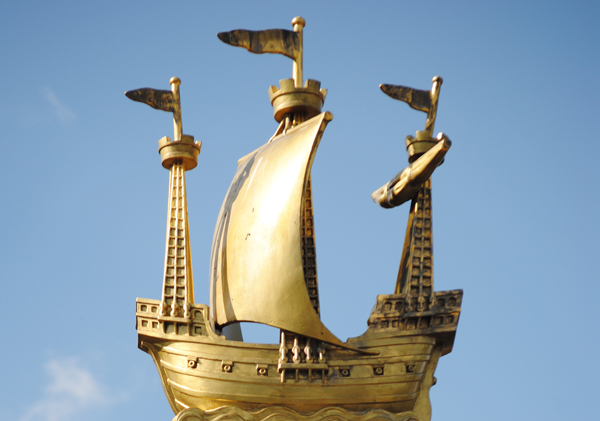
Thanks for the comments Parktown but this ship is not in Rotherhithe nor does it have anything to do with Lloyds! This is part of the decorative scheme of Chelsea Bridge which crosses the Thames between Chelsea and Battersea Park in London’s west. Initially known as Victoria Bridge, the first bridge here opened in 1857 (Albert Bridge, which opened later, is located further west). But increased traffic eventually led to its demolition in the 1930s (it had been renamed some years earlier to avoid the association of a royal name with a bridge which had become structurally unsound) and the current bridge, the first self-anchored suspension bridge (that is, the suspension cables attach to the deck and don’t extend to the ground) in Britain, was opened on the site in 1937. This gilt galleon sits atop a decorative lamp post at the bridge’s entrance (there are several) and below it is the coat-of-arms of the now defunct London County Council.

Lost London – Frost fairs…

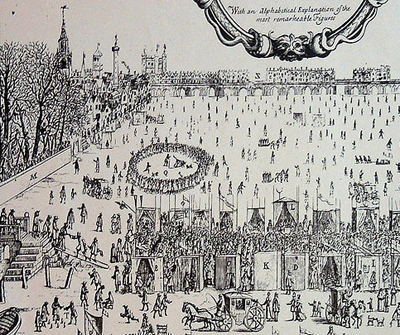
 As London undergoes the big chill with much of the rest of the country, we thought we’d take a quick look at the frost fairs which were once held on top of the frozen River Thames.

While records reveal the Thames froze over as far back as the city’s Roman era, the first recorded ‘frost fair’ dates from the mid-16th century (Queen Elizabeth I is said to have attended one in 1564) while the last was held in 1814.

Frost_Fair_of_1683While the lower temperatures played a role in allowing the ice to get thick enough to hold frost fairs on top (the period between the 14th and 19th centuries is known as the ‘Little Ice Age’ in northern Europe), so too did the fact that the Thames was broader and shallower than it is now, not to mention the narrow arches of Old London Bridge (it was demolished in 1831 – for more on this, see our earlier entry) which slowed the waters of the Thames.

The fairs were set up in a range of locations along the river. Descriptions of them talk of a range of activities being carried out on the river’s frozen surface – yes, the use of sleds and skates but also things like bear-baiting, coach, horse racing, dancing and puppet plays as well as the setting up of booths or stalls from which traders sold food, souvenirs, and, importantly, drink.

One of the longest of the fairs – recorded by diarist John Evelyn – was held over the winter of 1683-84 and located between Temple and Southwark. It featured streets of stalls with different traders grouped in different areas. King Charles II himself was a visitor.

During the last and biggest frost fair, held on the river near Blackfriars Bridge, a street known as ‘City Road’ ran down the middle of the Thames and donkeys gave people rides.

There is a frieze depicting a ‘frost fair’ underneath the southern end of Southwark Bridge.

PICTURE: Detail of an image of the Frost Fair of 1684 with London Bridge in the background. Source: Wikipedia.

Around London – Duchess of Cambridge at the NPG; Imperial War Museum closed for now; and, Frozen London…

The controversial first official painted portrait of Kate Middleton, the Duchess of Cambridge, has gone on display at the National Portrait Gallery. Unveiled on 11th January, the portrait by Paul Emsley has already sparked considerable criticism. Emsley, the 2007 winner of the gallery’s BP Portrait Award competition, was chosen by the gallery’s director Sandy Nairne to paint the portrait which took three-and-a-half months to paint. It is now on permanent display in the gallery as part of Contemporary Collections in the Lerner Galleries in Room 36, on the ground floor. Admission is free. For more (including a film on the making of the portrait), see  www.npg.org.uk.

The Imperial War Museum has closed its doors until July this year as the museum undergoes an extensive refurbishment. In July, the museum will launch a new exhibition –  Horrible Histories®: Spies, and also reopen of The Lord Ashcroft Gallery: Extraordinary Heroes, The Holocaust Exhibition, Secret War, A Family in Wartime and the Explore History Centre. The redevelopment, meanwhile, will continue until summer 2014 when the brand new First World War Galleries will be opened, marking the 100-year anniversary of the start of the First World War. For more, see www.iwm.org.uk/visits/iwm-london.

On Now: Frozen London. This exhibition at the London Metropolitan Archives looks at the impact of some of the most severe winters the city has ever experienced which occurred between 1683 and 1895. A highlight is a look at the Frost Fairs which took place on the River Thames during that time. Runs until April 25th. Admission is free. For more, follow this link. Correction: Opened 21st January-25th April.

10 of London’s greatest Victorian projects – 1. Royal Albert Hall…

The London Underground’s first railway journey took place on 9th January, 1863, and to celebrate we’re taking a look at 10 great Victorian-era projects in London. First up is Royal Albert Hall in South Kensington.

Royal-Albert-HallOpened on 29th March, 1871 (and in continuous use ever since), Royal Albert Hall was built in fulfilment of Prince Albert’s dream of creating a hall that would stand in the heart of the South Kensington estate and provide a focal point for the promotion of the arts and sciences.

It was on the back of the success of the Great Exhibition held in Hyde Park in 1851, that Prince Albert, Prince Consort to Queen Victoria, proposed the creation of a permanent arts and sciences precinct in South Kensington and advised the purchase of land for that purpose (the hall is located on land once occupied by Gore House). But it wasn’t until after his death in 1861 that his vision was actually realised.

Construction of the hall – which was to serve as the centrepoint of the cultural precinct which became known, somewhat derisively, as Albertopolis – started in April 1867 (initially to be known as The Central Hall of Arts and Sciences, the hall apparently had its named changed to the Royal Albert Hall of Arts and Sciences by Queen Victoria while she was laying the foundation stone on 20th May that year – around 7,000 people attended the event). It was designed by engineers Captain Francis Fowke and, after his death, Lieutenant Colonel Harry Darracott Scott, based on concepts put forward by the man described as the “driving force” behind the project, Henry Cole (later the first director of what is now the Victoria and Albert Museum). He had been inspired by the Roman amphitheatres he had seen while touring in southern France.

While initial proposals had suggested the hall would accommodate as many as 30,000 people, this was later scaled back to about 7,000 (and today the figure is apparently about 5,500 thanks to fire regulations).

The central auditorium, measuring 185 feet by 219 feet, is covered by a glazed dome constructed of wrought iron girders and was the largest structure of its kind in the world at the time of its building. The hall’s exterior was built from about six million red bricks and features an 800 foot long terracotta frieze showing figures engaged in a range of cultural pursuits. Much of the interior decorative detail was added later.

So overcome was Queen Victoria at the building’s opening in 1871 that Edward, the Prince of Wales, had to speak in her place, declaring it open on her behalf before a crowd which included then Prime Minister Benjamin Disraeli. Her only reported comment on the hall was that it reminded her of the British constitution.

The Grade One listed hall – which thankfully only suffered minor damage during World War II bombing raids (the German pilots apparently used its bulk as a navigation aid) – has since undergone substantial modifications including works undertaken to improve the hall’s acoustics, the replacement of gas lighting (electricity was first demonstrated in the hall in 1873) and demolition in 1889 of an adjoining glass conservatory to its south. A massive programme of improvements was carried out between 1996 and 2004 at the cost of more than £69 million.

The list of those who have performed or spoken at the hall reads something like a who’s who – among them are classical composers Wagner, Verdi, Elgar and Rachmaninov, singers and musicians including Frank Sinatra, Jimi Hendrix, The Beatles, The Who, Eric Clapton, Elton John, Adele, and Jay Z as well as sports personalities including boxer Mohammed Ali and tennis player John McEnroe, explorers like Sir Ernest Shackleton, world figures such as Queen Elizabeth II, Sir Winston Churchill, former South African president Nelson Mandela, the Dalai Lama and former US president Bill Clinton and other high profile personalities such as Albert Einstein, Alan Ginsberg and Paul Robeson.

Among the other events held in the hall have been a marathon race, Greco-Roman wrestling and two Welsh National Eisteddfod’s (in 1887 and 1909). One of the most popular series of events now held there each year are the BBC Promenade Concerts, known as The Proms they include more than 70 events, which have been held in the hall since World War II.

A Victorian masterpiece. For more on the hall, see www.royalalberthall.com.

LondonLife – Celebrating London Underground’s 150th…

London-Underground1

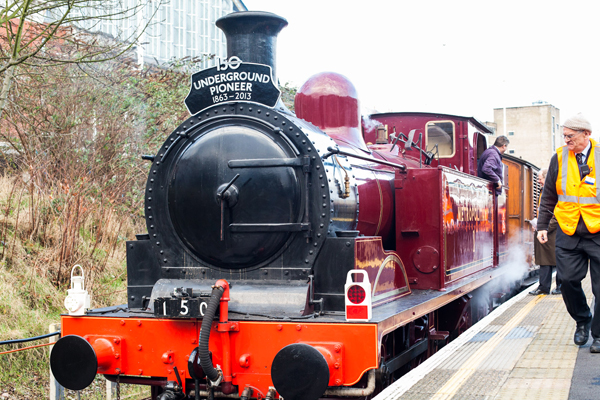
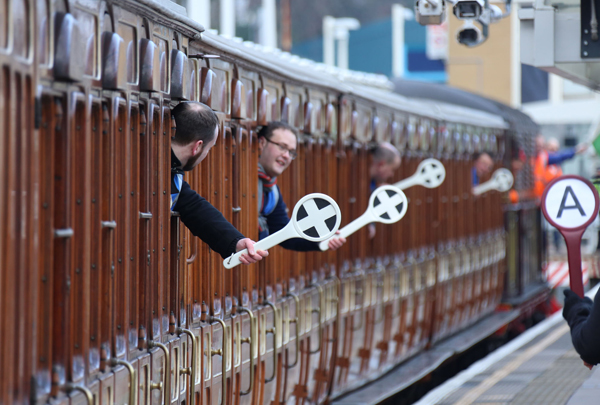
Metropolitan Locomotive No 1 recreated the first London Underground journey, which took place on 9th January, 1863, on the Metropolitan Line between Paddington and Farringdon, as part of the network’s 150th anniversary celebrations last Sunday. The newly restored locomotive was the last to be built at Neasden in 1898 by the Metropolitan Railway. It was pulling the Metropolitan Railway Jubilee Carriage No 353, the oldest operational underground carriage in existence. Ex Metropolitan Railway electric Locomotive No.12 Sarah Siddons also formed part of the train. The train will also be running this coming Sunday (20th January) and on special occasions throughout this year and is just one of a series of events planned by the London Transport Museum to mark the anniversary of what is the world’s oldest underground railway. They include an upcoming exhibition of London Underground’s poster art (more on that to come). For more, see www.ltmuseum.co.uk. PICTURES: © Transport for London from the London Transport Museum collection.

London-Underground3

Where’s London’s oldest…Thames tunnel?

While the Greenwich foot tunnel may these days be more well-known due to the fact it is still open to pedestrians, London’s oldest under-Thames tunnel (also credited as the oldest underwater tunnel in the world) actually runs between Rotherhithe on the river’s southern bank and Wapping on the northern.

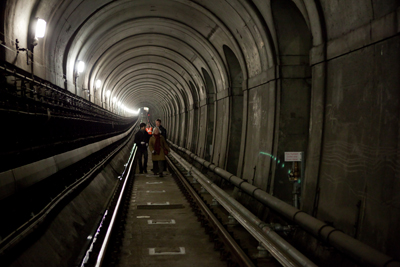
Thames_Tunnel-in-2010First opened in 1843, the Thames Tunnel (pictured left during a brief reopening to pedestrians in 2010) was the first major project of star Victorian engineer (and delightfully named) Isambard Kingdom Brunel (who, at the age of just 19 started work on the job with his father, a French engineer named Marc Isambard Brunel) and was known for a time as the eighth Wonder of the World.

It was constructed after demand grew for a way to transport goods across the crowded Port of London to the east of London Bridge. Given the height of the masts of larger ships, a bridge was deemed impracticable with the ramps required to take wheeled transport to the necessary height far too long (although this problem was overcome at the end of the 1800s by the use of new bascule technology in the construction of Tower Bridge).

Following several failed attempts to dig a tunnel under the Thames, Marc Brunel was given permission to build the new tunnel in the mid 1820s. The project relied on the use of a ‘tunnelling shield’, a then state-of-the-art technological solution to under river tunnelling which had only a few years earlier been patented by Marc Brunel and Thomas Cochrane, and Brunel initially thought the project would only take three years (it ended up taking as many as 18).

Construction by the newly formed Thames Tunnel Company, which had the support of none other than the Duke of Wellington, commenced in early 1825 at the Rotherhithe end. The shield enabled miners to dig out the tunnel while bricklayers came along behind them. While it significantly reduced the risk of a collapse (although several floods still did occur, taking the lives of six men – a fact which didn’t apparently much deter the sightseers who paid for the privilege of seeing the shield in operation), working conditions remained terrible with the men constantly showered with water from the river which was at that time the city’s main sewer. How many died indirectly as a result of working on the project is unknown.

Brunel-plaqueIndeed, such was the stress of the project that Marc Brunel, later knighted for his efforts in building the tunnel, himself suffered a stroke during its construction. Isambard Brunel, who took over as the project’s engineer when the resident engineer fell ill in 1826, himself came close to being killed when he had to flee the flooding tunnel.

After much delay (including seven years in which the unfinished tunnel was left untouched) and several more disasters, the tunnel was finally completed in November, 1841.

After being fitted out with lighting, spiral staircases and roads in the following years, it was finally opened to pedestrians only on 25th March, 1843. While it was originally envisaged that the primary purpose of the tunnel would be to transport goods under the river, this never occurred.

Still, it did capture the public’s attention and as many as 50,000 people walked through the tunnel on the opening day (among the initial visitors to the tunnel was Queen Victoria herself). Within 10 weeks of its opening, a million people (a figure equal to what was then half the population of London) had reportedly passed through it.

Despite the number of people initially using it, however, the tunnel was still not a financial success and over the ensuing years became noted as a gathering place for unsavoury types. In 1865 it was purchased by the East London Railway Company which subsequently incorporated the tunnel into its railway network with both the Wapping and Rotherhithe entrance shafts converted into stations. It later become part of the London Underground network – the  – and since 2010 has been part of the London Overground.

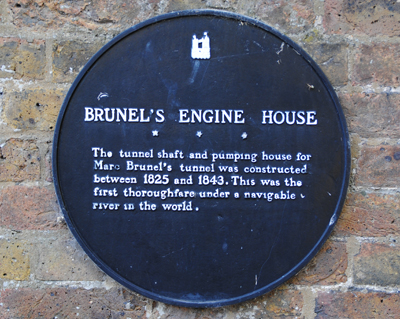
Both stations are still in use and you can get a good sense of what the tunnel was like by riding the overground between Rotherhithe and Wapping. The Brunel Museum in Rotherhithe – actually housed within a building originally used to house machinery for draining the tunnel – see plaque above – is also a great place to find out more about the project and Brunel. Visit www.brunel-museum.org.uk for details.

PICTURES: Top – Lars Plougmann (Wikipedia)/Other – David Adams

For more on the life of Brunel, see Steven Brindle’s Brunel: The Man Who Built the World.

Exploring London’s taking a very short break…

After a busy year, we’re taking a week off – our usual coverage will resume on 14th January. In the meantime, feel free to browse through our extensive archives. And stay tuned for some new features being launched this year…

Exploring London’s 10 most popular posts for 2012 – 2 and 1…

And so we come to the final two entries in our countdown and both, not suprisingly, are part of our Diamond Jubilee related coverage…

2. LondonLife – A look back at Queen Elizabeth II’s reign. Concerning a V&A exhibition of portraits of the Queen.

1. Celebrating the Diamond Jubilee with 10 royal London locations – 5. Buckingham Palace. One of a series looking at London locations associated with the Queen, this examined some of the history of London’s most famous palace.

Wishing all our readers a very Happy New Year!

Exploring London’s 10 most popular posts for 2012 – 4 and 3…

4. Around London – Olympic Rings unveiled on Tower Bridge; London from above; Blake on Primrose; V&A illustrations; and, Munch at the Tate Modern. More on an Olympic theme.

3. LondonLife – Florence Nightingale remembered. A piece mentioning the annual service at Westminster Abbey commemorating the life of the ‘Lady with the Lamp’. Part of our LondonLife series.

Exploring London’s 10 most popular posts for 2012 – 6 and 5…

Both of the next two are from our Thursday updates – Around London…

6. Around London: Olympic Torch Relay hits London; mascots pop-up all over the city; and Shakespeare at the British Museum – not a surprising mention, given the Olympic theme;

5. Around London – Butler’s Retreat reopens in Epping Forest; Designs of the Year; and, Lucian Freud’s last work. The reason for this update’s inclusion remains a bit of a mystery – but it was a big year for the late Lucian Freud.

Exploring London’s 10 most popular posts for 2012 – 8 and 7…

8. Olympics Special – London bridges aglow. A piece showing how many of inner London’s bridges were illuminated at night during the Games.

7. LondonLife – The Queen visits the newly transformed Kensington Palace. Queen Elizabeth II pays a visit to mark the completion of a £12 million, two year renovation project at Kensington Palace.

Exploring London’s 10 most popular posts for 2012 – 10 and 9…

And so the countdown begins…

10. LondonLife – Unveiling the Bomber Command Memorial. Marking the unveiled of the much anticipated Bomber Command Memorial in Green Park in late June.

9. Where’s London’s oldest…shop? Part of our series looking at London’s oldest buildings and features, this looked at The Old Curiosity Shop in Portsmouth Street, commonly credited with being London’s oldest shop. The fact that it tied in with the bicentenary of the birth of author Charles Dickens, who wrote a book of the same name, no doubt helped it into our list.