Famous Londoners – Arthur Wellesley, the Duke of Wellington

Best known for his defeat of Napeleon at the Battle of Waterloo, Arthur Wellesley, the Duke of Wellington, was not a native Londoner. But his involvement in the military and politics meant he went on to have a significant impact on the city.

Wellesley (whose surname was actually Wesley until his family changed it in 1798) was born in Ireland in early May, 1769, and, following his schooling – including time spent at Eton and in France, he entered the British Army as an ensign in 1787, subsequently serving as an aide-de-camp to two Lords Lieutenant of Ireland. While in Ireland, he was also elected an MP in the Irish Parliament.

His military career took him to the Netherlands and then India, where he was later appointed Governor of Seringapatam and Mysore.

Returning to Europe, Wellesley took a leave of absence from the army and, having been knighted, again entered politics becoming the Tory MP for Rye in 1806, then MP for Newport on the Isle of Wight before being appointed Chief Secretary for Ireland.

He left these tasks to fight in the Napoleonic Wars – most notably in the Peninsular War where he led the allied armies to victory at the 1813 Battle of Vitoria (and was subsequently promoted to the rank of field marshal).

Following Napoleon’s exile, Wellington was created the Duke of Wellington. He served briefly as ambassador to France before Napoleon’s return in 1815. It was for his subsequent role at the Battle of Waterloo, in which Napoleon was finally and totally defeated, that Wellington is mostly remembered now.

Entering politics after his return to England in 1819, he was named Commander-in-Chief of the British Army in 1827 and was twice elected Prime Minister, from 1828-30 and again in 1834, before his death in 1852 after which he received a state funeral.
It’s not hard to find reference to the duke in today’s London and countless pubs testify to his one-time popularity.

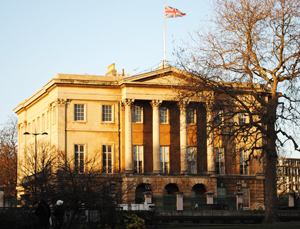
He purchased his most famous residence, Apsley House (which attracted the nickname of Number 1 London, thanks to it being the first house one encountered in London after passing through the toll gate) in 1817. Indeed, it was the installation of iron shutters at this property – a measure taken to prevent a mob demanding electoral reform from destroying it – that led to him being given the nickname, the “Iron Duke”.

These days Apsley House is managed by English Heritage and contains the Duke’s collection of artworks and furnishings.

Opposite Apsley House, close to Hyde Park Corner, stands an equestrian statue of Wellington and behind it Wellington Arch, which dates from between 1826-30, and originally stood parallel to the Hyde Park Screen. In 1846, a vast statue of the Duke was mounted on top of the arch but this was replaced with a sculpture of Peace in her Quadriga when the arch was relocated to its present site in 1882 due to a need to widen the road. There are great views from the top.

At Hyde Park Corner, close to Park Lane, stands another memorial to Wellington, this time a massive statue of the Greek hero Achilles. It was put there in 1822 (and incidentally sparked considerable controversy – it was London’s first nude public sculpture in centuries and despite the careful placing of a fig leaf, didn’t please everybody).

Wellington was buried in St Paul’s Cathedral and his huge block-like tomb in the crypt is given a level of prominence only equaled by that of Admiral Nelson.

The National Portrait Gallery this week launches an exhibition, Thomas Lawrence: Regency Power and Brilliance, which features the Duke’s favorite painting of himself (not the one above). The painting, by Sir Thomas Lawrence, hasn’t been on public exhibition for 60 years. From 21st October.

PICTURES: Image of the Duke of Wellington is by Sir Thomas Lawrence (1814). Source: Wikipedia.
Where’s London’s oldest…red telephone box?

An iconic symbol of Britishness, these days the red telephone boxes found throughout the city may well have more use as a prop in tourist’s photos than for actually making phone calls. But where’s the oldest?

Nestled under the gateway into the Royal Academy of the Arts in Piccadilly sits a rather non-descript looking red telephone box.

Created in 1924, it is actually a prototype of the red phone boxes that later became ubiquitous across the country.

The phone box prototype was designed by Sir Giles Gilbert Scott, one of three architects who were asked to create designs for the boxes after the Post Office’s initial designs were apparently rejected.

Scott’s successful design is the only one of the three to survive and while it’s made of wood, the later boxes were made of cast iron and painted red for visibility.

Around London…

Richmond’s historic Ham House will be appearing in the forthcoming film Never Let Me Go, based on the best-selling novel by Kazuo Ishiguro. The historic house – which was built in 1610 for Sir Thomas Vavasour, Knight Marshal to James I – was transformed into a fictional English boarding school named Hailsham for the movie which stars Carey Mulligan, Andrew Garfield and Keira Knightley. The house site, which is owned by the National Trust, was ‘let go’ for the film meaning lawns for left unmown for several weeks and weeds encouraged to grow while inside an institutional atmosphere was reportedly created by the installation of flourescent lighting and removal of objects usually displayed there. For more information on Ham House, see www.nationaltrust.org.uk/main/w-vh/w-visits/w-findaplace/w-hamhouse/w-hamhouse-history.html

• Leaflets showing the route of this year’s Lord Mayor’s Show have been released by the City of London. The ‘show’, to be held on 13th November, is the world’s oldest civic procession and has been held for 795 years. It commemorates the day when the newly elected Mayor had to make the journey from the City to Westminster to declare his allegiance to the monarch (this year’s Lord Mayor of the City of London – the City’s 683rd – is Alderman Michael Bear (not to be confused with the Mayor of London Boris Johnson)). The procession kicks off at 11am, with the route going from Mansion House to the Royal Courts of Justice and back. This year it will involve from than 6,500 people from livery companies, military units, marching bands, local schools and businesses and community groups. For more about the event, see www.lordmayorsshow.org.

Now on: London’s contemporary art fair, the Frieze Art Fair, is off and running in Regent’s Park until Sunday, while at Primrose Hill, The Museum of Everything has launched Exhibition #3 which features the bizarre animal tableaux of Victorian taxidermist Walter Potter. At the National Gallery, meanwhile, the new exhibition of Canaletto and his Rivals has opened (it runs until 16th January), while the city has been abuzz with the Tate Modern‘s latest exhibitions, Gauguin, and Ai Weiwei’s Sunflower Seeds.

Wren’s London – 6. St Stephen Walbrook, St Mary-le-Bow, and St Mary-at-Hill

Sir Christopher Wren was responsible for designing more than 50 churches in the City of London after the Great Fire of 1666. We’ve already touched on a couple in this series – St Paul’s, of course, and St Bride’s in Fleet Street – and while we won’t be looking at all of rest in detail, here are three stars that have survived…

• St Stephen Walbrook, which is the parish church of the Lord Mayor and was that of Wren himself, is a little gem of a church and is generally thought to be the finest of Wren’s city churches from an architectural perspective. Tucked away behind Mansion House in Walbrook, the church as we know it was built between 1672-79 (although there may have been a Christian church on the site as early as 700 AD) and features a beautiful coffered dome (a sign of what was to come when Wren built St Paul’s). These days the chairs are arranged around white altar stone by sculptor Henry Moore which has been placed under the centre of the dome. Other features worth noting are Wren’s original altar screen and a glass-encased telephone which was the first dedicated help-line in London for the suicidal established by the charity Samaritans. These days the church is home to the London Internet Church. For more information, see http://ststephenwalbrook.net.

• St Mary-le-Bow, which is named for the bow-shaped arches in the Norman-era crypt, was rebuilt by Wren in 1670-80 after the Great Fire. In keeping with the church’s name, he designed a steeple with arches resembling the ‘bows’ below. While the church, located in Cheapside, was badly damaged when bombed in World War II, the steeple – topped by an original 1674 weathervane shaped like a dragon – remained standing along with the outer walls. The church was restored in the mid-Twentieth century and the bells, destroyed in a German air raid, rehung. It’s said that only those born within the sound of St Mary’s bells can be said to be true Cockneys (the Bow bells were also those Dick Whittington apparently heard when leaving London, leading him to turn around and embrace fame and fortune). For more information, see www.stmarylebow.co.uk.

• St Mary-at-Hill, which has served the parish of Billingsgate for almost 1,000 years, was one of the first to be rebuilt after the Great Fire. Both Wren and his assistant Robert Hooke were believed to have been involved in building the church, which was completed in 1677 and lies in Lovat Lane, just off Eastcheap. It was designed as a Greek cross with a dome at its centre  – Wren later put forward a similar design for for St Paul’s which was rejected. Overhauled in the late 1700s and a couple of times in the 1800s, it survived World War II only to be damaged extensively by fire in 1988 after which it was restored. The church’s connection to Billingsgate – the site of London’s former fish market lies just down the road – means that the fish harvest is still celebrated here every October. For more information, see www.stmary-at-hill.org.

Daytripper – Battle Abbey

In the first of an occasional series featuring daytrip destinations from London, we’re taking a look at Battle Abbey in East Sussex, site of the country-defining Battle of Hastings in 1066.

Last weekend, the clash of weapons could once more be heard on the field below the abbey ruins as about 350 re-enactors gathered as they do every year close to the anniversary of the Battle of Hastings on 14th October and fought it out all over again (pictured above). Yes, King Harold and the English army were defeated (again!), but there’s always hope for next year!

And while you’ll now have to wait a year to see the re-enactment played out once more, given its location only an hour-and-a-half from London by train, the abbey ruins and battlefield site are a great site for a daytrip.

The abbey itself was built soon after the Battle of Hastings on what was then known as Senlac Hill and although it has been suggested Duke William of Normandy (aka William the Conqueror or William the Bastard) made a vow before the battle to build the abbey should God grant him victory, it is believed he ordered the abbey’s construction as both a memorial to the dead and a public act of penance.

The building work began within a few years of the fight with the high altar to be placed on the site where King Harold had fallen. The church was used from about 1076 onwards but was officially consecrated in 1094 in the presence of King William himself.

Quickly becoming one of the country’s wealthiest religious houses (thanks largely to gifts from the king), it housed monks of the Benedictine order until, in the mid-1500s, the monks left as part of Henry VIII’s suppression of religious houses and the property was granted to the king’s friend Sir Anthony Browne.

His descendant, the sixth Viscount Montague, later sold it to the Webster family in 1721 and it remained a family home and later also housed a school (the Battle Abbey School which still occupies part of the site).  In 1976, it was bought by the government with the aid of funds from Americans.

Not too much now remains of the original abbey – some ground floor chambers once used by novices still stand in what was the dormitory range (and feature incredible vaulted ceilings), the west range around the cloister still stands (now in use as part of Battle Abbey School) and the foundations of the chapter house are still there.

The church itself is no longer existant but the site of the high altar, where King Harold died, is now marked with a memorial stone which, when we visited was laden with memorial wreathes.

Of particular significance is the Great Gatehouse – the current structure dates from 1338 and is said to be one of the finest monastic gateways still surviving in Britain. It now contains an exhibition on the abbey’s history. There’s also a cafe on the site.

Below the abbey lies the rest of the battlefield site and while remains from the battle have never been found, English Heritage provide audio guides on which events from the day are reconstructed as you follow a path around the field.

The surrounding market town of Battle – dominated by the abbey gatehouse – is also well worth a look – it’s attractions include Yesterday’s World, a museum in a 15th century Wealden Hall House which contains memorabilia about life in the Victoria era through to the 1970s. The town also lies on the 1066 Country Walk, which runs from Pevensey to Rye and retraces the steps of King William’s army after they landed in England.

WHERE: High Street, Battle, East Sussex (trains run from Charing Cross to Battle station); WHEN: 10am to 4pm to March 31st (open to 6pm from April to September) ; COST: Free for English Heritage members or £7 adults/£6 concessions/£3.50 children/£17.50 a family ; WEBSITE: www.english-heritage.org.uk/1066

What’s In A Name? – Piccadilly

One of the principal thoroughfare’s of London’s West End – and lending its name to that most famous of intersections, Piccadilly Circus, the name Piccadilly derives from the stiff ruffs known as ‘piccadils’ which were widely worn by the fashionable during the 17th century.

The street was known as Portugal Street until the 17th century. While there are several different stories explaining the name, the most widely accepted story is that the name’s origins go back to a tailor by the name of Robert Baker.

He’d made a fortune from making and selling piccadils and used that money to purchase a large tract of land in the area, then largely countryside, and 1611-12 built a mansion there which became known, probably derisively, as Piccadilly Hall in reference to his trade.

When the area came to be developing in the years after the Restoration of Charles II in 1660, the name stuck.

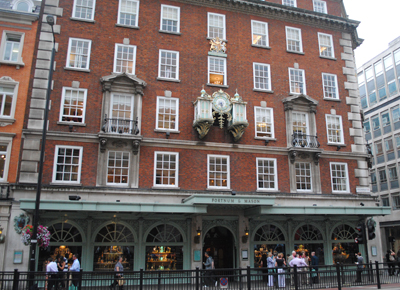
Famous sights along Piccadilly include grocer Fortnum & Mason, founded in 1707 by one of Queen Anne’s footmen (pictured above), the Royal Academy of the Arts, the Ritz Hotel, which opened in 1906 and indicated a new level in luxurious hotels, the Wren-designed St James’ Church, and the entry to the 19th century Burlington Arcade.

Wren’s London – 5. Royal Hospital Chelsea

Known as the home of the scarlet-coated ‘Chelsea Pensioners’, the Royal Hospital Chelsea’s origins go back to December 1681 when King Charles II issued a Royal Warrant authorising the building of a royal hospital to care for old and maimed soldiers.

Sir Christopher Wren, then Charles II’s Surveyor-General of Works, was subsequently commissioned to design and construct the new buildings on a site next to the River Thames in Chelsea. Sir Stephen Fox, a commissioner of the Treasury, had the unenviable task of finding enough money to fund it – a task he managed through tapping a range of different sources.

Charles II didn’t live to see the completed project (although he did inspect the partially complete work just before his death in 1685) which was finally finished in 1692. The first pensioners were admitted in February that year.

Wren’s initial design comprised a single quadrangle with accommodation blocks for more than 400 veterans and their officers on the sides, and a chapel and great hall in a colonnaded building at the northern end while the southern end is open to the river (the picture above shows the ‘rear’ of the Hospital as seen from Royal Hospital Road). Known as Figure Court, it was named after a 7′ tall statue of Charles II which stands within it and which depicts the king as a Roman general.

Before the work was complete, however, Wren had realised that the design would not be large enough and added a two further quadrangles – one on each side of the original, they are known as Light Horse and College Courts – to the design.

There are some 300 ‘in-pensioners’ who still live in the hospital’s ‘berths’. When inside, they are encouraged to wear the Royal Hospital’s blue uniform while their famous scarlet coats with tricorne hats are worn on ceremonial occasions including Founder’s Day.

Held on a day close to 29th May – Charles II’s birthday and the date of his restoration – Founder’s Day commemorates his escape after the Battle of Worcester in 1651 and is known as Oak Apple Day in remembrance of the story that the fleeing Charles had to hide in an oak tree to avoid capture by parliamentary forces.

Women were first admitted to the hospital in 2009.

WHERE: Royal Hospital Road, Chelsea (nearest tube station is Sloane Square); WHEN: Entry to the courts, chapel and Great Hall is from 10am to 12pm, 2pm to 4pm; the museum is open Monday to Saturday, 10am to noon, 2pm to 4pm and Sundays 2pm to 4pm (closed Sundays from October to March); COST: Free; WEBSITE: www.chelsea-pensioners.co.uk

Around London…

• A new online portal showing the history of women through their relationship to buildings around the UK – including in London – has been launched. Visible in Stone: A history of women through buildings, 1850-1950 is the work of English Heritage in conjunction with the London Metropolitan University Special Collections, The Women’s Library and TUC Library Collection. Among the collection of historic photographs, posters and advertisements are the stories of many London buildings – everything from the 18th century Unitarian Chapel at Newington Green in the city’s north where women’s rights advocate Mary Wollstonecraft found “support and stimulation” when founding her school, to the Harrod’s Shoe Lounge as it looked in 1919, and the first public conveniences built for women (the Ladies’ Lavatory Company opened its first, near Oxford Circus, in 1884). English Heritage is also asking people to upload images of buildings that played a role in the lives of their grandmothers. To do so, head to www.flickr.com/groups/visibleinstone.

• Milestones passed in the past week include the 15oth celebration of London’s Battersea Dogs and Cats Home. The charity was founded in October 1860 by Mary Tealby after she found an abandoned puppy and commenced caring for it and other lost dogs in a disused stableyard in Holloway. Writer Charles Dickens was among it’s early supporters. The home has cared for more than 3.1 million animals since it was established (it started caring for cats in 1883) and in 2009 took in more than 10,000 dogs and cats. For more information, see www.battersea.org.uk.

• Lastly, London’s free Metro newspaper is holding a ‘Postcards from the Future’ competition showing images of London as it might become should our worst fears about the impact of climate change be realised. View a gallery of stunning images (or find out how to enter) here.

LondonLife – Tower Bridge opening

Tower Bridge opens up to allow a boat to pass up the Thames. The bascule bridge (the word ‘bascule’ is taken from the French for ‘see-saw’) was completed in 1894 and was built to cater for East End traffic while minimising disruption to boats moving up and down the rive. It was the first bridge built to the east of London Bridge (a bridge which many often confuse it with!). For more information, see www.towerbridge.org.uk.

Where’s London’s oldest…pub?

There’s a number of contenders for this controversial title and a number of different ways of looking at the question. So, rather than take sides, we’ll just canvas a few of them.

Our initial contenders are:

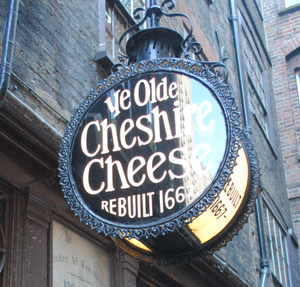
• Ye Olde Cheshire Cheese (145 Fleet Street, the City). Built in 1667 after the Great Fire of London, the current building replaced one previously on the site. The cellar is apparently 13th century and forms part of the remains of an old monastery on the site. Dr Samuel Johnson, who lived just around the corner while creating his famous dictionary, was a regular here and the pub is also said to have been frequented by writers Mark Twain, Alfred, Lord Tennyson, and Sir Arthur Conan Doyle, creator of Sherlock Holmes.

The Spaniards Inn (Spaniard’s Road, Hampstead). Located on the edge of Hampstead Heath, the Spaniard’s Inn dates from around 1585. The story goes that it was named after the Spanish ambassador to the court of James I who lived here for a time (another version says it was two Spanish brothers who first converted the building into a pub in the 1700s). Other historical figures associated with the inn include the highwayman Dick Turpin (some say he was born here while others say he used to wait here while watching for vulnerable coaches to pass by), the poets Byron and Keats and the painter Sir Joshua Reynolds – who apparently visited, and Charles Dickens who mentioned the inn in the Pickwick Papers (it also gets a mention in Bram Stoker’s Dracula).

• The Lamb and Flag (33 Rose Street, Covent Garden). The building has been occupied since Tudor times but it’s only been a licensed premises since 1623. The pub, certainly the oldest still standing in Covent Garden, was previously associated with prize fighting and was apparently once called the Bucket of Blood. The poet John Dryden is said to have been involved in a fight here.

The George Inn (77 Borough High Street, Borough). Located on the south side of London Bridge, the George Inn is a rare surviving galleried coaching inn. Now owned and leased by the National Trust, the current building dates from 1676 after the previous inn was destroyed by fire. The inn is mentioned in Dickens’ Little Dorrit and the author himself was apparently a regular visitor.

UPDATE: It seems we left one of the list which is certainly worth mentioning –  The Prospect of Whitby in Wapping (57 Wapping Wall). There’s been a tavern on this site on the bank of the Thames since 1520 and during its early days it became known the ‘Devil’s Tavern’ due to its rather dodgy clientele, alleged to have included smugglers, prostitutes and thieves as well as more famous people such as diarist Samuel Pepys, the notorious Judge Jeffreys, known as the ‘Hanging Judge’, and much later, Charles Dickens. Later destroyed by fire, it was rebuilt and given the new name, The Prospect of Whitby, after a ship that moored nearby. The building now incorporates a ship’s mast.

The Tip – Cheaper palaces?

Thinking of visiting the Tower of London and Hampton Court Palace while in London? Become a member of Historic Royal Palaces and you could make substantial savings, especially if travelling as a family. The annual pass allows you to enter all five Royal Palaces – including Hampton Court and the Tower as well as Kensington Palace, the Banqueting House and Kew Palace – as many times as you like during the year and brings with it invitations to members only events. It’s certainly worth checking out whether its worth it. For more information, see www.hrp.org.uk/SupportUs/Membership/Default.aspx

Around London – Strawberry Hill to reopen; ‘Films on Foot’ festival; and images of a London menagerie…

• Horace Walpole’s Georgian Gothic villa Strawberry Hill will reopen its doors this weekend after a £9 million restoration project. The house at Twickenham in west London was built between 1747 and 1792 had fallen into such a state of disrepair that it had been listed as one of the world’s most endangered heritage sites in 2004. The son of Sir Robert Walpole, Britain’s first prime minister, Walpole built the house as a summer getaway and created an architectural masterpiece incorporating the features of cathedrals into the property. For more information, see www.strawberryhillhouse.org.uk.

• Walking charity, the Ramblers is holding a Films on Foot festival celebrating London’s film heritage this October. The festival, which runs from 13th to 28th October, coincides with the 54th Times BFI London Film Festival and will feature 16 free “films on foot” walks taking in different areas around London which have been used in films. The walks will start every weekday at 7pm and every weekend at 1.30pm (you simply have to turn up at the starting place to take part). There is also a self-guided film walk along South Bank available for download. For more about the festival, see www.ramblers.org.uk/walkthemes/filmsonfoot/

Animals from across London feature in a new exhibition at National Theatre. A London Bestiary features the work of photographer Ianthe Ruthven who has captured some of the most famous and lesser known animals around London – everything from the lions guarding Nelson’s Column to the statue of a dog in Highgate cemetery and an elephant and camel from the Albert Memorial. Runs until 31st October. For more information, see www.nationaltheatre.org.uk/60094/exhibitions/a-london-bestiary.html.

Wren’s London – 4. Hampton Court Palace

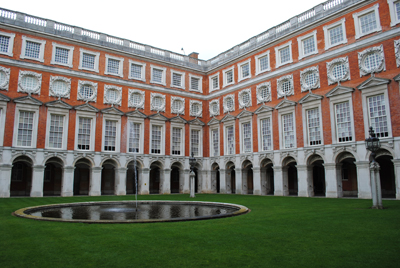
Hampton Court Palace in London’s outer south-west is known to many as the palace of Henry VIII. Yet a considerable part of the complex of buildings we see today was also created during the reign of some time joint rulers William III and Mary II.

It was to Christopher Wren – assisted by the able Nicholas Hawksmoor – that the rulers turned when looking to update the Royal Apartments. Wren’s designs for a domed baroque palace to rival Versailles in France were apparently so ambitious that they were only half-built (and built in haste – two workmen died and another 11 were injured when the main wall collapsed in 1689). The death of the queen in 1694 also meant work on the palace stopped – it was resumed in 1697 (under control of Wren’s deputy William Talman who had offered a lower price than Wren) but again stalled after the death of the king in 1702.

Wren’s imprint is on the palace we see today is nonetheless considerable and includes the Baroque-style South and East Front (the size of the formal gardens which radiate out from the latter give a glimpse into the grand plans Wren had for the palace), Fountain Court which replaced the Tudor Cloister Court and around which were located new state apartments for both the king and queen, and the Orangery.

Among those who worked on the interiors of were the famous woodcarver Grinling Gibbons and painter Antonio Verrio.

WHERE: Hampton Court Palace, East Molesey, Surrey (nearest station is Hampton Court from Waterloo); WHEN: 10am to 6pm everyday (winter hours 10am to 4.30pm from 31st October to 26th March); COST: Adult £15.40, Concession £12.65, Child under 16 £7.70 (under fives free), family tickets, garden only tickets and online booking discounts available; WEBSITE: www.hrp.org.uk/HamptonCourtPalace/

Famous Londoners – Samuel Pepys

A navy administrator and an MP who lived in London for much for the 17th century, it is for his remarkable diary – filled with reflections on great events and the intimate goings on of daily life – that Samuel Pepys is renowned around the world.

Born the son of a tailor in Salisbury Court, Fleet Street (the site is now marked with a plaque), on 23rd February, 1633, Pepys (pronounced ‘peeps’) attended St Paul’s School before moving on to Cambridge University. After graduation, he entered the household of one of his father’s cousins, Sir Edward Montagu, as a secretary around 1655 – the same year he married Elisabeth de St Michel.

Under the patronage of Sir Edward – after he became the Earl of Sandwich – Pepys was appointed Clerk of the Acts to the Navy Board – a task which saw him playing a key role in shaping the English fleet which fought (unsuccessfully) in the Second Anglo-Dutch War (1665-1667).

In 1673, he became Secretary to the Admiralty and the same year was elected an MP for Castle Rising in Norfolk (he later became an MP for Harwich). Pepys also served as president of the Royal Society from 1684-1686, and even visited Tangier where he was involved in the evacuation of the short-lived English colony there. He was imprisoned twice in later years – at least once on suspicion of supporting the Jacobites – but the charges were dropped and he retired at the age of 57 in 1690.

In 1701 he moved out to a house in Clapham and lived there until his death on 26th May, 1703 (his wife Elisabeth had died many years earlier in 1669 and they’d had no children). His extensive library – including his six volume diary – were bequeathed to Magdalene College at Cambridge.

Despite an illustrious public career, it is his diary for which Pepys is most celebrated. Covering the years from 1660 to 1669 (he only stopped writing for fear he would go blind), it records his reactions to such monumental events as Charles II’s coronation (he was present as a youth at the beheading of Charles I), the Great Plague of London in 1665 and the Great Fire of London the following year as well as intimate details from his personal life including how he spent his leisure time, his various illnesses and his sexual liaisons. Written originally in a form of shorthand, it was first published in 1825 – and only fully published in 1976 – and has since gone on to enthral and entertain millions around the world.

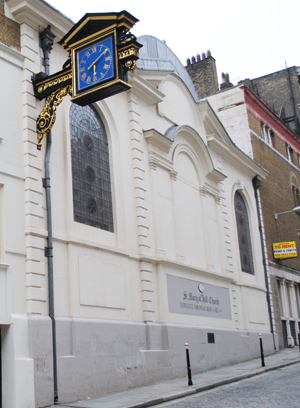
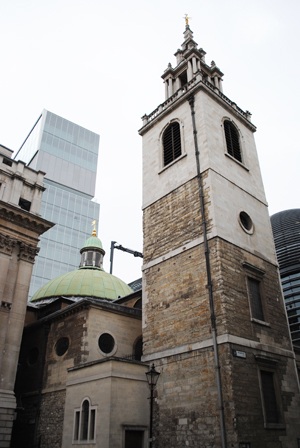
Among places in London which still hold a Pepys connection are St Bride’s Church (he was baptised there), All Hallows by the Tower (it was in the tower from which Pepys watched the Great Fire), St Olave’s on Seething Lane (pictured above) where Pepys and his wife are buried (he was living in Seething Lane when he started the diary and St Olave’s served as his parish church between 1660 and 1674). Further down Seething Lane, there is a bust of Pepys in the gardens which now cover the Navy Office where Pepys once lived and worked.

There is also an exhibition on Pepy’s in Prince Henry’s Room at 17 Fleet Street (the building dates from around 1610 and was a pub when Pepys was alive), although it is currently closed.  An online version of Pepys’ diary can be found at the website Pepys’ Diary. For more on Pepys’ life, we do recommend Claire Tomalin’s best-selling biography Samuel Pepys: The Unequalled Self.

Around London – where did you go last weekend?

Exploring London visited the home of 19th century artist Lord Frederic Leighton in Kensington last weekend as part of Open House London.

Built over a period of more than 30 years from 1864 until Lord Leighton’s death in the home in 1896, the house is a monument to the decorative arts with a series of intricately decorated halls and rooms including the superb domed ‘Arab Hall’ featuring tiles brought from Damascus in Syria and an overhanging lattice window from Egypt.

The house, which once hosted Queen Victoria as well as nineteenth century luminaries poet Robert Browning and artist William Morris, was preserved as a museum as far back as 1900 and is now in the care of the Royal Borough of Kensington and Chelsea.

WHERE: 12 Holland Park Road (nearest tube station is High Street Kensington); WHEN: 10am to 5.30pm, closed Tuesdays; COST: £5 adult, £1 concessions ( with free return entry within 12 months); WEBSITE: www.rbkc.gov.uk/subsites/museums/leightonhousemuseum.aspx

So where did you go as part of Open House London and what was good about it? Share your experiences with us here…

Wren’s London – 3. The Royal Observatory, Greenwich

Leaving Wren’s churches momentarily, we turn this week to another of Wren’s designs, that of the Royal Observatory in Greenwich in London’s east.

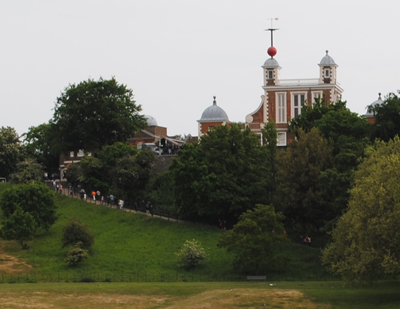
Commissioned in 1675 by King Charles II, the first part of the observatory – Flamsteed House, named for the first Astronomer Royal, John Flamsteed – was designed by Wren with, it is believed, the assistance of architect and scientist Robert Hooke.

Built using second-hand materials including stone brought from a Tudor fort at Tilbury, Flamsteed House was located on the former site of Greenwich Castle which had been previously used as a guest house and hunting lodge by Henry VIII. It is said to be the first purpose-built scientific research facility in the country.

The turreted building includes the Octagon Room from which Flamsteed made observations of events in the skies (although its position meant its use for this was somewhat limited), as well as living quarters for the astronomer. On top of the house is a red time ball which, since it was first used in 1833, has marked the time by falling at 1pm each day.

These days part of the National Maritime Museum and a UNESCO World Heritage Site since 1997, the site also hosts the Prime Meridian and is the place from where Greenwich Mean Time, since 1884 the basis for all world time, is calculated.

WHERE: Blackheath Avenue, Greenwich (nearest DLR station is Cutty Sark); WHEN: 10am to 5pm Monday to Sunday; COST: Entry is free; WEBSITE: www.nmm.ac.uk/places/royal-observatory/

LondonLife – the Thames near Richmond

Sun reflects off the River Thames in a view from Richmond Hill Road, looking westward. Beyond the island on the far back is Marble Hill House, built Henrietta Howard, mistress of King George II when he was Prince of Wales, which is set in almost 27 hectares (66 acres) of parkland. Richmond is located in the south-west of the city.

What’s in a name? – Bloomsbury

Famous for its literary, intellectual and artistic heritage, Bloomsbury covers an area in central London which lies between Holborn and Euston Road.

The area, which became a fashionable residential district in the 17th and 18th centuries, derives its name from an earlier era and is named after William de Blemund (‘Blemundsbury’ means the manor of Blemund), who acquired land there in 1201.

It was later owned by the Earl of Southampton, who had begun developing the area in the 1660s – a task which was continued when the land passed, through the marriage of his daughter, into the hands of the Dukes of Bedford. Successive dukes were then involved – to varying degrees – in the development of series of residential squares and streets which eventually included the likes of Bedford, Russell and, of course, Bloomsbury Squares.

In the early 20th century, the area become home to what is known as the Bloomsbury Group – its members included the writers Virginia Woolf, Lytton Strachey and EM Forster. These days the area is noted for being home to the British Museum (first opened to the public in 1759) and the University of London.

Treasures of London – The Great Vine at Hampton Court Palace

PICTURE: Historic Royal Palaces/newsteam.co.uk

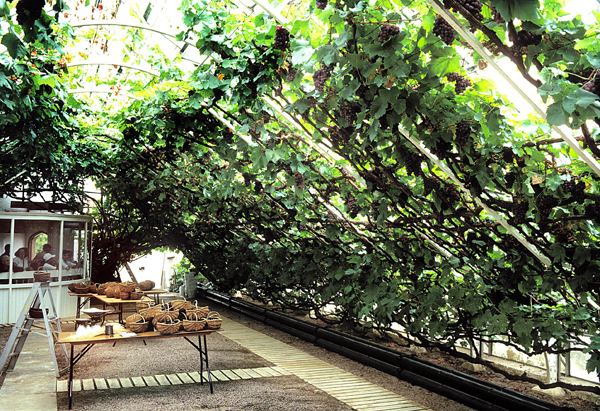
In the first in a series looking at some of the treasures held in museums, galleries and other collections London along with some of the more unusual things you’ll find in the city, we’re heading out to the southwest of the city firstly to Hampton Court Palace and what is perhaps a lesser known treasure, the Great Vine.

Claimed to be the oldest and largest vine in the world, it was believed to have been planted by Lancelot ‘Capability’ Brown around 1768 and has prospered ever since, now being an astonished 12 foot (3.65 metres) around the base and boasting ‘rods’ of up to 120 metres in length.

The vine, which is housed in a purpose-built greenhouse in the gardens, still produces a whopping 22o to 32o kilograms (500 to 700 bunches) of black, sweet grapes annually (you can even buy the grapes in Hampton Court’s Garden Shop – they’ve been sold to the public since the 1930s), although this is well down on the 2,245 bunches of grapes picked in 1807.

WHERE: Hampton Court Palace, East Molesey, Surrey (nearest station is Hampton Court from Waterloo); WHEN: 10am to 6pm everyday (winter hours 10am to 4.30pm from 31st October to 26th March); COST: Adult £15.40, Concession £12.65, Child under 16 £7.70 (under fives free), family tickets, garden only tickets and online booking discounts available; WEBSITE: www.hrp.org.uk/HamptonCourtPalace/

Around London…

A 9 ft (2.7 metre) tall bronze statue of Air Chief Marshal Sir Keith Park, commander of the RAF in London and the south-east during the Battle of Britain, was unveiled in Waterloo Place, just off Pall Mall, this week. Sir Keith, a New Zealander who joined the RAF after fighting at Gallipoli and the Somme during World War I, was described as the “brain” behind London’s air defences. The unveiling of the statue on Battle of Britain Day (12th September) follows a three year campaign to honor Sir Keith, who died in 1975, with such a monument. A prototype of the statue occupied the Fourth Plinth at Trafalgar Square for six months after it was unveiled in November last year. For more information, see www.sirkeithpark.com.

Spend a night at the museum (well, part of one anyway). The Natural History Museum is opening its doors for one night only as part of European Researchers’ Night on Friday, 24th September. Scientists will be on hand to chat and there will be opportunities to see rare specimens not usually on display including a giant squid. There will also be three bars offering drinks and food. The event, which we can promise won’t include you being chased down hallways by dinosaur skeletons, runs from 4pm – 10pm. For more information, see www.nhm.ac.uk.

Don’t forget! Open House London kicks off this weekend. For more information, see last week’s Around London post.