Famous Londoners – Charles Frederick Field…

The real person behind writer Charles Dickens’ ‘Inspector Bucket’, Charles Frederick Field was a police officer with the Metropolitan Police who rose to the rank of inspector before, following retirement, becoming a private detective.

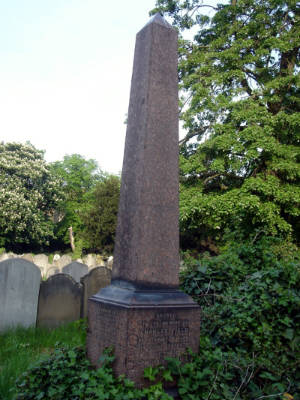
Field’s funerary monument in Brompton Cemetery. PICTURE: Edwardx (licensed under CC BY-SA 1.0)

Field, the son of a Chelsea pub proprietor, had apparently wanted to be an actor but due to his straitened economic situation had instead joined the Metropolitan Police at its founding in 1829.

Field served in several divisions across London, eventually rising to the rank of inspector. He joined the Detective Branch, which had only been formed in 1842, in 1846.

It was while with the Detective Branch that he encountered Dickens and they formed what’s described as a lasting friendship. From 1850 onwards Dickens wrote as series of articles about the world of the Detective Branch and the work of Field (sometimes using a pseudonym) including his essay ‘On Duty With Inspector Field’.

Dickens is also believed to have used Field as the model for Inspector Bucket in Bleak House, first published as a serial in 1852 and 1853.

Field, who was noted as a bit of a raconteur and for his love of disguises even when not really required (perhaps explained by theatrical bent), retired from the Met in 1852 and set up his own enquiry office. He apparently caused controversy after his retirement by using his rank in his private work which somewhat soured his relationship with the force.

Field, who died in 1874 and is buried in Brompton Cemetery, has since been the subject of several works of fiction.

This Week in London – Showtime! at the Charles Dickens Museum; the ‘Future of Food’; and, Peter Rabbit hops to Hampton Court…

PICTURE: VV Shots/iStockphoto

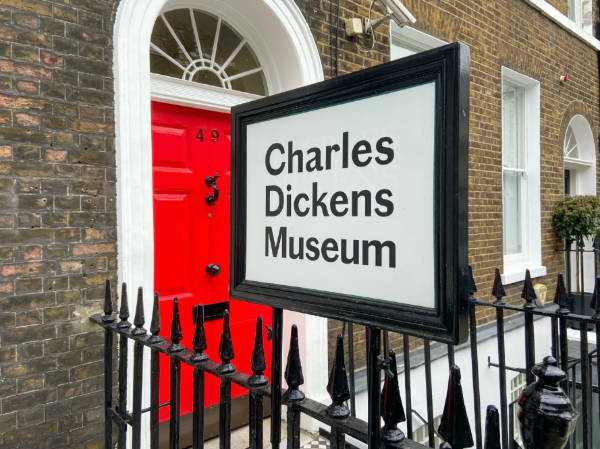
The enduring appeal of Charles Dickens’ works and how they have been adapted for the stage, screen and radio is the focus of a new exhibition at the Charles Dickens Museum in Bloomsbury. Showtime! looks at productions starting from as far back as 1837 and including such classics as The Muppets Christmas Carol and Oliver! the musical with objects on show including original playbills, posters, programmes, photographs and props. There’s also the opportunity to hear from actors and writers about what makes Dickens so adaptable and see Dickens’ own works which he annotated with stage directions. The display can be seen until 26th January. Admission charge applies. For more, see www.dickensmuseum.com.

A major new exhibition on the future of food – how science is creating more sustainable ways of producing and consuming food – opens at the Science Museum today. Future of Food reveals how the way we grow food and eat impacts the climate, nature, and society. Among the more than 100 objects on show are cricket burgers and cell-grown salmon as well as 3,500-year-old fermented sourdough bread, the first Quorn burger dating from 1981 and the first beef steak grown outside a cow. There is also the chance to join a multiplayer interactive game and create your own “future for food”. Runs until 4th January. Admission is free. For more, see https://www.sciencemuseum.org.uk/see-and-do/future-of-food.

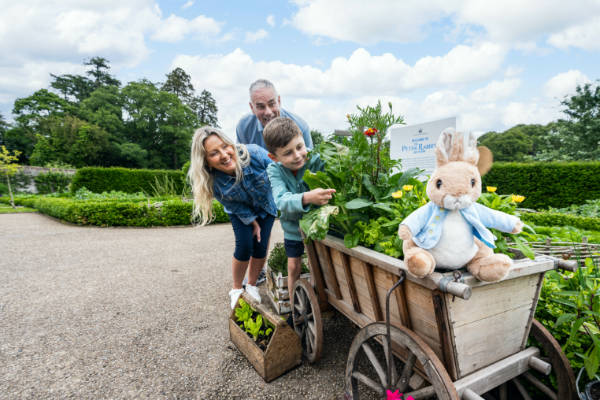
The Peter Rabbit Adventure at Hampton Court Palace. PICTURE: Courtesy of Historic Royal Palaces.

Peter Rabbit is hopping over to Hampton Court Palace to take part in a new family trail that brings Beatrix Potter’s beloved characters to life in the palace gardens from tomorrow. The Peter Rabbit Adventure, included as part of the palace admission, is spread over the Kitchen Garden, Tiltyard, and Wilderness and the activities on the trail will introduce little ones to the plants, vegetables and wildlife that inhabit the gardens. These include the chance to use Mrs Tiggy-winkle’s washing equipment to make music among the trees, to join in a search for Peter Rabbit under wheelbarrows and flowerpots in the Tiltyard, and to try to hop, skip and jump as high as Peter and his friends. A larger-than-life Peter Rabbit will be greeting families in the Kitchen Gardens. Runs until 7th September. For more, see https://www.hrp.org.uk/hampton-court-palace/whats-on/the-peter-rabbit-adventure/.

Send all inclusions to exploringlondon@gmail.com

This Week in London – London homes at Christmas; Christmas Eve at the Dickens’; and, ‘Women & Freud’…

A Christmas Tree (not part of the Museum of the Home). PICTURE: Tj Holowaychuk/Unsplash

The Museum of the Home in Shoreditch has once again redressed its ‘Rooms through Time’ display for the festive season. Located in the Grade I-listed Almshouses and adjoining Branson Coates Wing, the display spans the some 400 years and explores how seasonal festivals, culture and personal traditions” have shaped our lives at home during the winter months. This year the redressing also includes seven new period homes which reflecting the stories of East London. See everything from a Midwinter Celebration in 1630 to a Midnight Mass in 1956, a Christmas Party in 1978, and a futuristic New Year’s Eve in 2049. Runs until 12th January. Admission is free. For more, see www.museumofthehome.org.uk/whats-on/rooms-through-time/winter-past-2024-2025/.

Join the Dickens family for Christmas. The Charles Dickens Museum in Bloomsbury is holding a special Christmas Eve opening with the house decorated in a traditional Victorian style. Guests, who each receive a free mince pie and mulled wine or soft drink alternative, will be able to watch adaptations of A Christmas Carol, including The Muppet Christmas Carol, throughout the day in ‘The Smallest Theatre in the World.’ Admission charge applies. To book, head to https://dickensmuseum.com/blogs/all-events/christmas-eve-at-the-charles-dickens-museum.

On Now: Women & Freud: Patients, Pioneers, Artists. This display at the Freud Museum in South Hampstead draws on manuscripts, images, objects, visuals, and film footage to bring to life the many women who shaped Freud’s life including everyone from the early “hysterics”, who Freud called “his teachers” to later patients such as Princesse Marie Bonaparte (who went on to become an analyst) through to his daughter Anna Freud and her partner Dorothy Burlingham, to artists such as Marie-Louise von Motesiczky, Louise Bourgeois, Paula Rego, Alice Anderson and Tracey Emin. The exhibition also celebrates the 100th anniversary of the first publication of Sigmund Freud’s work by Hogarth Press, founded and owned by Virginia and Leonard Woolf and a key feature in Bloomsbury life. Admission charge applies. Runs until 5th May. For more, see www.freud.org.uk/exhibitions/freuds-women/

Send all items for inclusion to exploringlondon@gmail.com.

This Week in London – The Olympics on the big screen; new portraits at the National Portrait Gallery; and, Charles Dickens’ pets…

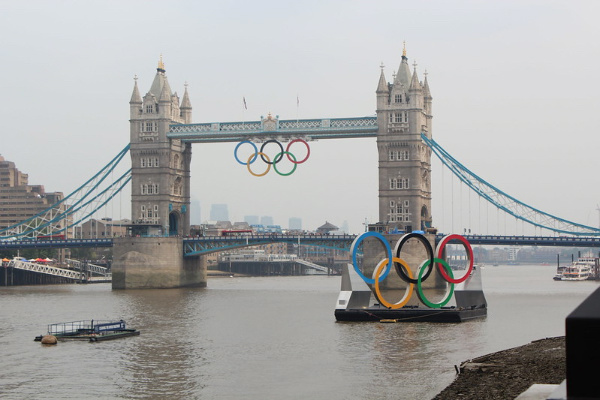
Memories of 2012. This year the Games are in Paris but there’s plenty of places to watch on a big screen in London. PICTURE: Peter Burgess (licensed under CC BY 2.0)

• The Olympics are in full swing across the Channel in Paris and to ensure you don’t miss any of the action, big screens are showing the coverage across London. Among them are official Team GB Fanzones – there’s a list of locations on the Team GB website here. Other locations include Lyric Square in Hammersmith, Bishops Square in Spitalfields, the Old Royal Naval College grounds in Greenwich and by the Thames at London Bridge as part of the Summer by the River festival.

• New portraits of human rights campaigner Peter Tatchell and singer Sam Smith have gone on display at the National Portrait Gallery as part of its History Makers Display. The full-length portrait of Tatchell, which has been acquired by the gallery, was painted by artist Sarah Jane Moon to coincide with his 70th birthday on 25th January, 2022, and is the first portrait of Tatchell to enter the gallery’s collection.. Meanwhile, titled Gloria, the portrait of five-time Grammy Award winner Smith is the work of artistic duo Pierre Commoy and Gilles Blanchard and was created in 2023. It’s on loan from the singer. For more, see www.npg.org.uk.

• On Now: Faithful Companions: Charles Dickens & his Pets. This exhibition at the Charles Dickens Museum in Bloomsbury takes a look at the many pets – dogs, ravens, goldfinches, and cats – that lived in the home of Charles Dickens, exploring the stories of the likes of Grip the raven and Timber the dog as well as those of animals made famous in his novels. The display includes hand-written letters, family photo albums and artworks. Runs until 12th January next year. Admission charge applies. For more, head to https://dickensmuseum.com/blogs/all-events/faithful-companions-charles-dickens-his-pets.

Send all items for inclusion to exploringlondon@gmail.com

What’s in a name?…Nunhead…

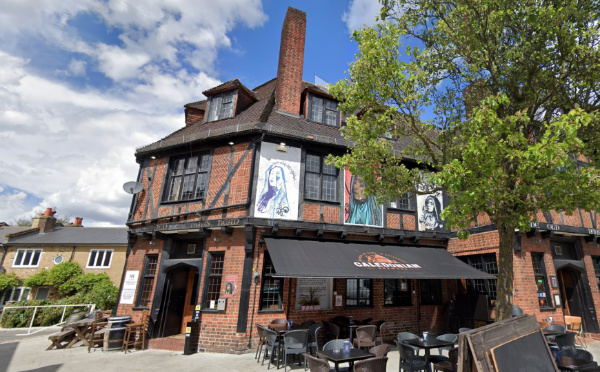
This district of London, which lies to the south-east of Peckham in the London Borough of Southwark, is believed to owe its name to a local tavern named, you guessed it, the Nun’s Head on the linear Nunhead Green (there’s still a pub there, called The Old Nun’s Head, in a building dating from 1905).

The Old Nun’s Head near Nunhead Green. PICTURE: Google Maps

There may well have been actual nuns here (from which the tavern took its name) – it’s suggested that there was a nunnery here which may have been connected to the Augustinian Priory of St John the Baptist founded in the 12th century at Holywell (in what is now Shoreditch).

A local legend gets more specific. It says that when the nunnery was dissolved during the Dissolution, the Mother Superior was executed for her opposition to King Henry VIII’s policies and her head was placed in a spike on the site near the green where the inn was built.

While the use of the name for the area goes back to at least the 16th century, the area remained something of a rural idyll until the 1840s when the Nunhead Cemetery, one of the “Magnificent Seven” cemeteries of Victorian London, was laid out and the area began to urbanise.

The chapel at Nunhead Cemetery. PICTURE: Owen Barritt (licensed under CC BY-SA 2.0)

A fireworks manufactory – Brocks Fireworks – was built here in 1868 (evidenced by the current pub, The Pyrotechnists Arms). The railway arrived in 1871.

St Antholin’s Church was built in 1877 using funds from the sale of the City of London church, St Antholin’s, Budge Row, which was demolished in 1875. St Antholin’s in Nunhead was destroyed during the Blitz and later rebuilt and renamed St Antony’s (the building is now a Pentecostal church while the Anglican parish has been united with that of St Silas).

There’s also a Dickens connection – he rented a property known as Windsor Lodge for his long-term mistress, actress Ellen Ternan, at 31 Lindon Grove and frequently visited her there (in fact, it has even been claimed that he died at the property and his body was subsequently moved to his home at Gad’s Hill to avoid a scandal).

Nunhead became part of the Metropolitan Borough of Camberwell in 1900. These days, it’s described by Foxtons real estate agency as “a quiet suburb with pretty roads and period appeal”.

Lost London – The London Coffee House…

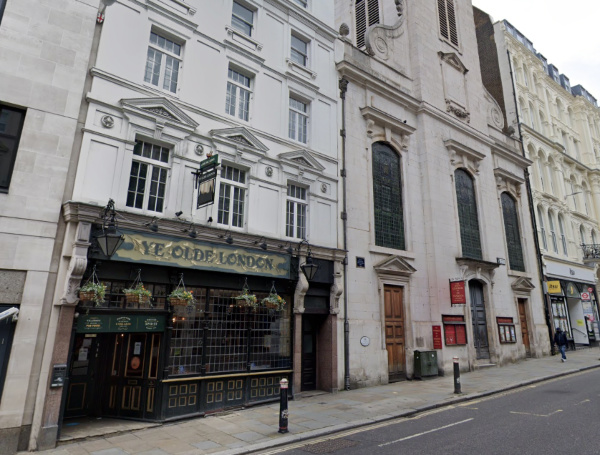
Site of the London Coffee House. PICTURE: Google Maps

Established in the early 1730s on Ludgate Hill (next to St Martin Ludgate), the proprietor of this establishment was one James Ashley (hence the coffee house also being known as Ashley’s London Punch House – the punch was apparently particularly affordable).

It was known to have been frequented by the likes of Joseph Priestley and his friend, American Benjamin Franklin, while James Boswell described its customers as being primarily physicians, dissenting clergy and “masters of academies”.

Its location also meant it served as a place where Old Bailey juries which could not reach a decision were sequestered for the night.

Continued to be favoured by Americans, in 1851 philanthropist George Peabody gave a dinner here for those from the United States who were connected with the Great Exhibition being held in Hyde Park.

In 1806, a statue of Hercules and a hexagonal Roman altar, dedicated to Claudia Martina by her soldier husband, were found here. The coffee house has also been identified as the “Coffee House on Ludgate Hill” mentioned in Charles Dickens’ Little Dorritt.

It closed in 1867. The site is now occupied by a pub, The Ye Olde London.

London pub signs…The Red Lion, Westminster…

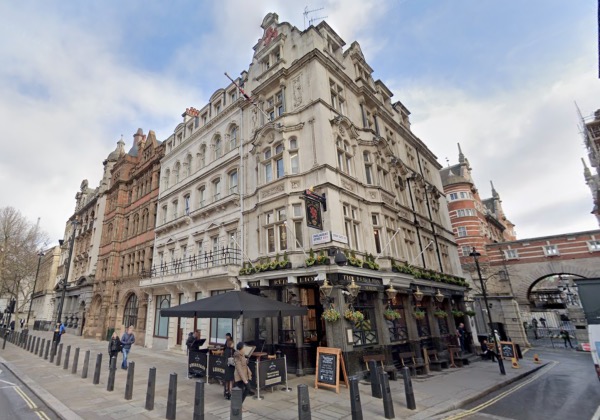
The Red Lion pub. PICTURE: Google Maps

There has been a pub on this storied Whitehall location, located between conveniently for politicians between the Houses of Parliament and Downing Street, since at least the 15th century.

PICTURE: TomasEE (licensed under CC BY 3.0)

Then named Hopping Hall, a pub is recorded on this site at 48 Parliament Street (on the corner with Derby Gate) as early as 1434. It passed into the hands of the Crown by 1531 and by the early 19th century it had taken on the name of the Red Lion (at the time, it was visited by Charles Dickens as a young man). The current, now Grade II-listed, building was erected on the site in 1890.

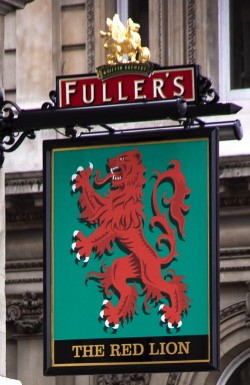
The pub’s name – one of the most common in England (there’s several more in London alone) – apparently originated at the ascension of the Scottish King James I to the throne in 1603. The King ordered that all significant buildings display the red heraldic lion of Scotland and that included pubs. Hence the Red Lion.

The four storey pub has been popular among politicians (and journalists interviewing politicians) including Prime Ministers – indeed, it’s claimed to have served every PM up until Edward Heath in the 1970s (as such it’s one of the many pubs in London which features division bells, although the function of these has apparently been replaced by an app).

For more, see www.redlionwestminster.co.uk.

This Week in London – Shakespeare’s First Folio; Charles Dickens and fog; and, Berthe Morisot at Dulwich…

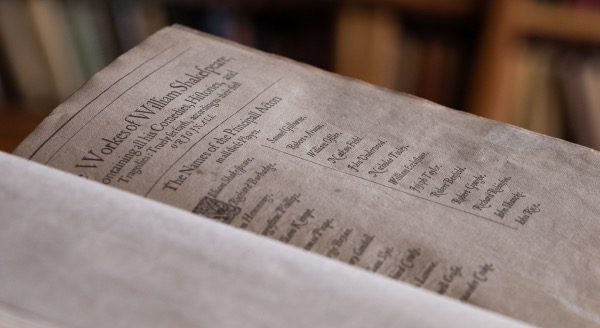
The Dulwich College Folio. PICTURE: © Dulwich College

Shakespeare’s First Folio goes on display at the National Maritime Museum in Greenwich from tomorrow. The display is part of a national celebration of the 400th anniversary of the folio’s publication. Shakespeare’s First Folio was published in 1623, seven years after the playwright’s death. Some 235 copies are known to survive with 50 remaining in the UK. The version on display – the Dulwich College Folio, which includes the Comedies and Histories (but lack the Tragedies), is believed to have been acquired by the college in 1686 from the estate of William Cartwright, a bookseller and actor who performed with the King’s Company and is known to have played Brabantio in Othello and Falstaff in Henry IV Part I and Part II. The two volumes feature handwritten notes, ink and water stains, and burn holes, suggesting they were well-used before the college acquired them. The Tempest and the Thames can be seen until 24th September. Admission is free. For more, see www.rmg.co.uk/folio-400.

London’s fog and its reflection in Charles Dickens’ writings are the subject of a new exhibition opening at the Charles Dickens Museum in Bloomsbury. A Great and Dirty City: Dickens and the London Fog explores how the fog affected Dickens’ work, his health and that of his family, and how London has endeavoured to mitigate the problem of air pollution over the past couple of centuries. Among the items on display are the hearthstone Dickens laid in front of the fireplace in the Drawing Room, the fire poker from Dickens’ dining room at Gad’s Hill Place (his home from 1856 until his death in 1870), original first edition parts of Dickens’ ‘foggiest’ novel Bleak House, an original pen and wash illustration by Frederick Barnard depicting Martin Chuzzlewit, Mary Graham, and Mark Tapley, and, a letter from Dickens to his sister-in-law Helen Dickens in which he writes about his brother Alfred’s “inflammation in the region of the lungs” which is dated on 16th July, 1860 – just 11 days before Alfred’s death. Runs until 22nd October. Admission charge applies. For more, see https://dickensmuseum.com.

Forty of Impressionist painter Berthe Morisot’s works have been brought together for a new exhibition at the Dulwich Picture Gallery. Berthe Morisot: Shaping Impressionism, which opens tomorrow, is the first major UK exhibition of the renowned Impressionist since 1950 and features many works never seen before. Highlights include Eugène Manet on the Isle of Wight (1875) – painted while Morisot was on honeymoon in England, Self-Portrait (1885) – which will appear alongside Jean-Honoré Fragonard’s Young Woman (c.1769) from Dulwich Picture Gallery’s collection, Apollo revealing his divinity to the shepherdess Issé, after François Boucher (1892), In the Apple Tree (1890) and Julie Manet with her Greyhound Laerte (1893). Runs until 10th September. Admission charge applies. For more, see www.dulwichpicturegallery.org.uk.

Send all items to exploringlondon@gmail.com.

Five locations located to Charles Dickens’ ‘A Christmas Carol’…

Charles Dickens’ A Christmas Carol is forever linked to Christmas in London. So, with Christmas almost upon us, here’s a quick look at five locations mentioned or alluded to in the famous book…

1. 16 Bayham Street, Camden Town. Bob Cratchit’s house is described as being in Camden Town but what’s interesting is that as a child Dickins’ himself lived here at this property. So whether or not it’s the actual address Dickens had in mind for Cratchit’s property, it’s certainly in the vicinity.

The Royal Exchange today. PICTURE: Klaudia Piaskowska/Unsplash

2. The Royal Exchange. Referenced in regard to Ebenezer Scrooge who did business there. The current building was still being completed when Dickens wrote A Christmas Carol in 1843 following a fire at the premises several years before. It was opened in 1844.

3. Simpsons Tavern. Scrooge is said to have taken his “melancholy dinner in his usual melancholy tavern” which has been suggested could refers to Simpsons. Located in Ball Court, the current premises opened in 1757. The George & Vulture in Michael’s Alley is also mentioned as a possibility.

4. Newman’s Court. Located near Cornhill (which is mentioned in the book as the site where Bob Cratchit goes on a slide after leaving Scrooge’s office), it’s been suggested more than once that while the location of Scrooge’s counting house is not specified in the text, a location in Newman’s Court would fit the bill.

5. Leadenhall Market. Following Scrooge’s transformation, he sends a boy out to buy a turkey- commentators suggest the poulterer the boy attends was located in Leadenhall Market which would have been a predecessor to the current building which dates from 1881.

10 historic stairways in London – 10. Nancy’s Steps…

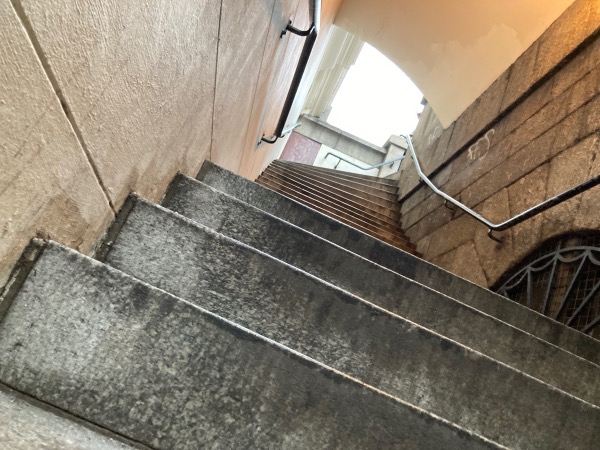
PICTURE: Matt Brown (licensed CC-BY-2.0)

We close our series of historic London stairs with a stairway that has raised its share of controversy in recent years, largely due to the plaques associated with it.

The steps, which are located in Southwark at the southern end of London Bridge and which lead down to Montague Close, are a remnant of the John Rennie-designed London Bridge which was completed in 1831 and which was replaced in the mid-20th century (and which was sold off and relocated to Lake Havasu in the US).

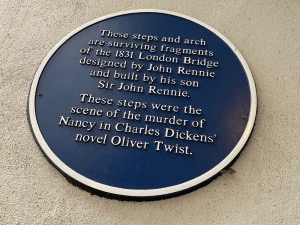
The plaque at the base of the steps. PICTURE: Matt Brown (licensed CC-BY-2.0)

The controversy arises through the plaques associated with the steps which state that the steps where the scene of the murder of Nancy in Charles Dickens’ Oliver Twist. There’s a couple of problems with that claim.

The first is that Nancy wasn’t murdered here in the book – it is in their lodgings that Bill Sikes kills Nancy believing she has betrayed him. The confusion probably comes about because the musical Oliver! did set Nancy’s murder on the steps.

The bridge does, however, play a role in the book and have a connection to Nancy and its probably due to this connection that it has its name, Nancy’s Steps.

Because it was on steps located here – “on the Surrey bank, and on the same side of the bridge as Saint Saviour’s Church [now known as Southwark Cathedral]” that Nancy talks to Oliver’s benefactors while Noah Claypole eavesdropped on the conversation (which leads him reporting back to Sikes and eventually to her murder).

The second error made in the plaque is that Rennie’s bridge (and hence the steps) was completed in 1831 and with Oliver Twist published in serial form just a few years later can’t be the “ancient” bridge referred to in the text. The reference can only relate to the medieval bridge which occupied the site for hundreds of years until it was demolished following the completion of Rennie’s bridge.

Treasures of London – Bas-relief of Charles Dickens (and some famous friends)…

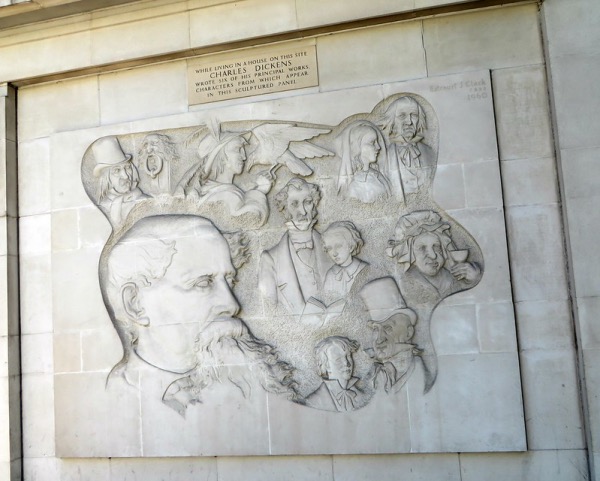
PICTURE: Eden, Janine and Jim (licensed under CC BY 2.0).

Christmas is fast arriving so we went in search of some related monuments in London and found one depicting two famous characters from an iconic Yuletide text.

Located on the site of a house where 19th century writer Charles Dickens wrote six of his famous books, including A Christmas Carol, is a stone relief featuring several characters from them including Scrooge and Marley’s Ghost (represented as a door knocker in the top left).

Dickens lived at the property at what was then 1 Devonshire Terrace, Marylebone, between 1839 and 1851. It was demolished in the late 1950s and replaced with an office block upon which was incorporated the stone relief.

The bas-relief is the work of Estcourt J “Jim” Clack and features a large portrait of Dickens as well as the characters who, alongside the characters from A Christmas Carol.

They apparently include Barnaby Rudge with his raven ‘Grip’ (from the book of the same name), Little Nell and Granddad (The Old Curiosity Shop), Dombey and his daughter Florence (Dombey and Son), Sairey Gamp (Martin Chuzzlewit), David Copperfield and Wikins Micawber (David Copperfield).

Correction: The name of Barnaby Rudge’s raven has been corrected.

London Pub Signs – Dirty Dicks…

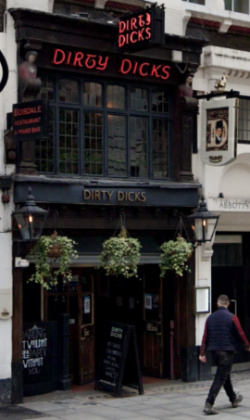
This City of London pub, located close to Liverpool Street Station, was originally known as The Old Jerusalem and dates back to the mid-18th century.

Dirty Dicks. PICTURE: Courtesy of Google Maps.

But the pub’s name was changed in the 19th century, inspired by the tragic history of a local businessman by the name of Nathaniel (there are some that suggest his name was Richard) Bentley.

The story goes that Bentley, who owned a hardware shop and warehouse, had been something of a dandy in his youth, earning the nickname, the “Beau of Leadenhall Street”.

But when his fiance died on the eve of their wedding day, he broke down and subsequently refused to clean anything, including himself (there was also speculation that he’d closed the dining room where the wedding breakfast was to be held with the spread still on the table). His home, shop and warehouse in Leadenhall Street became filthy and so famous that letters were apparently addressed to ‘The Dirty Warehouse, London’. He died in 1809 and the warehouse was later demolished.

William Barker, the owner of The Old Jerusalem, subsequently changed the name of his pub to Dirty Dick’s and it apparently became known for its own lack of cleanliness in sympathy with the man after whom it was named.

Charles Dickens is said to have been a patron of this establishment and it’s said that Bentley’s story inspired Dickens to create the character of Miss Havisham for this book, Great Expectations.

In keeping with its name, the cellar bar was for years cluttered with cobwebs and all sorts of items including a mummified cat but more recent years have seen the clutter removed (although some has been preserved and relocated to a glass display case).

The pub, at 202 Bishopsgate, is now owned by Young’s. For more, see www.dirtydicks.co.uk.

Treasures of London – Charles Dickens’ writing desk and chair…

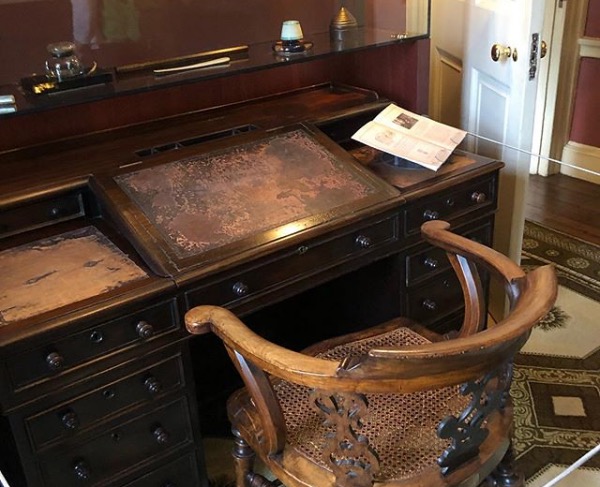
Charles Dickens’ desk and chair at the Charles Dickens Museum. PICTURE: Alyx Dellamonica (Licensed under CC BY-NC 2.0)

Among the treasures to be found at Dickens’ former house (and now the Charles Dickens Museum) in Doughty Street, Bloomsbury, is the desk and accompanying chair where Dickens’ wrote several of his later novels including Great ExpectationsOur Mutual Friend and the unfinished The Mystery of Edwin Drood.

Dickens purchased the mahogany pedestal writing desk as well as the walnut and fruitwood smoker’s armchair in 1859. He used them in the study of his final home at Gad’s Hill Place in Kent (Dickens also had an identical chair in his London office which is now in the New York State Library).

After the author’s death in 1870, the desk and chair – which feature in Luke Fildes’ 1870 work The Empty Chair and the RW Buss’ 1875 work Dickens’ Dream  – were passed down through the Dickens family until they was auctioned in the 2000s with the funds raised used to benefit the Great Ormond Street Hospital.

While the desk and chair had previously been loaned to the museum for display, in 2015 the establishment was able to purchase the desk and chair and make it part of its permanent collection thanks to a £780,000 grant from the National Heritage Memorial Fund.

While the museum is currently closed due to the coronavirus pandemic, we include these details for when it reopens.

WHERE: 48-49 Doughty Street, Bloomsbury (nearest Tube stations are Russell Square, Chancery Lane or Holborn). WHEN: Currently closedCOST: £9.50 adults/£7.50 concessions/£4.50 children (under six free); WEBSITE: www.dickensmuseum.com.

Exploring London’s 100 most popular posts of all time! – Numbers 32 and 31…

The next two in our countdown…

32. 10 London sites to celebrate Charles Dickens – 5. Seven pubs associated with Dickens (including one he never visited)…

31. The Royal Wedding – Eight curious facts about Royal Weddings past and present…

10 (lesser known) National Trust properties in London…4. The Strand Lane ‘Roman’ Baths…

Please note: Exploring London is aware that sites across London have closed temporarily as a result of the COVID-19 outbreak. But we’re continuing our coverage as usual – in the hope you can visit at a later time…

Located at 5 Strand Lane in the West End, these brick-lined baths were long-reputed to be of Roman origin. But they are actually believed to be the remains of a cistern built in 1612 to supply water to fountain in the gardens of Old Somerset House.
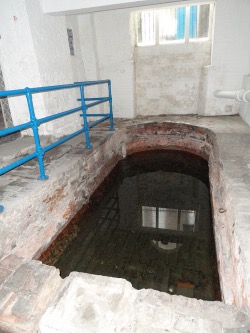
The fountain had been built by French engineer, Salomon de Caus, after he was commissioned to do so as part of King James I’s efforts to refurbish Somerset House for Queen Anne of Denmark.

Following the demolition of the fountain, the cistern was neglected until the 1770s when the cistern was used a public cold plunge bath attached to a property at 33 Surrey Street. A second bath, called the ‘Essex Bath’ was added (it’s now under the nearby KCL Norfolk Building).

The idea that they were Roman is believed to have originated in the 1820s when the bath was so described as an advertising gimmick (Charles Dickens’ helped popularise the idea in his book David Copperfield – it is believed Dickens himself may have bathed here).

The 1.3 metre deep bath passed through a couple of different hands in the ensuing decades including Oxford Street draper Henry Glave and Rev William Pennington Bickford, the Rector of St Clement Danes, who, believing in the bath’s Roman origins, hoped to turn them into a tourist attraction.

But his plans came to nothing due to a lack of funds and following his death, in 1944, the National Trust agreed to take on ownership while London County Council agreed to see to its maintenance. They reopened the baths, following repairs, in 1951.

These days, while owned by the Trust, the baths are managed by Westminster Council.

WHERE: 5 Strand Lane (nearest Tube station is Temple); WHEN: While National Trust properties are temporarily closed, viewings are usually arranged through Westminster Council and Somerset House Old Palaces tour; COST: Free; WEBSITE:  www.nationaltrust.org.uk/features/strand-lane-roman-baths.

PICTURE: Michael Trapp (licensed under CC BY-SA 4.0)
10 (lesser known) monuments featuring animals in London – 10. Jacob the horse…


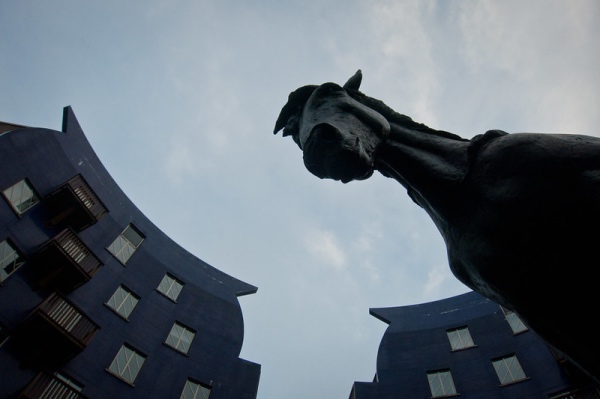
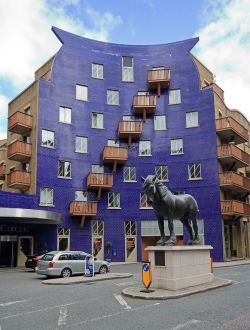
The statue of ‘Jacob’, a working dray horse, represents the horses who once worked at John Courage’s Anchor Brewhouse in Bermondsey near Tower Bridge.

The Courage horses – responsible for delivering beer from the brewery to pubs in London – were stabled beside the establishment, near where the monument now stands in Queen Elizabeth Street. Though the brewery buildings remain (and are now apartments), the stables do not.

Jacob, the statue, was installed by Jacobs Island Company and Farlane Properties in 1987 at the centre of the residential development known as ‘The Circle’ to commemorate the history of the site. The monument, which was delivered to the site by helicopter, is the work of artist Shirley Pace.

Jacob’s name apparently comes from Jacob’s Island which was formerly located in the area.

The area where the brewery stood was formerly part of the parish of Horsleydown – a moniker that is said by some to have derived from “horse-lie-down”, a description of working horses resting nearby on the south bank of the Thames before crossing London Bridge into the City of London.

PICTURES: Top – Nico Hogg (licensed under CC BY-NC 2.0); Right – Marc Pether-Longman (licensed under CC-BY-NC-ND 2.0)


This Week in London – British printmaking; the Taste of London; and, Dickens abroad…

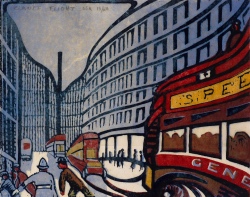
British printmaking between World War I and II is under the spotlight in a new exhibition which opened at Dulwich Picture Gallery this week. Cutting Edge: Modernist British Printmaking, which marks 90 years since the inaugural exhibition on British linocuts was held at the Redfern Gallery, features 120 prints, drawings and posters and spotlights the work of artists of the Grosvenor School including those of teacher Claude Flight and nine of his leading students – Cyril Power, Sybil Andrews, Lill Tschudi, William Greengrass and Leonard Beaumont among them. A number of the works are being displayed publicly for the first tome and several international loans – including prints by the Australian students Dorrit Black, Ethel Spowers and Eveline Syme – are making their debut as part of a major UK showing. The display can be seen until 8th September. Admission charge applies. For more, see www.dulwichpicturegallery.org.uk. PICTURE: Claude Flight, Speed, 1922, © The Estate of Claude Flight. All Rights Reserved, [2019] / Bridgeman Images/ photo Photo © Elijah Taylor (Brick City Projects)

Food festival, the Taste of London, is on again in The Regent’s Park across this weekend. Opened last night, the festival features the chance to sample food from London’s best restaurants as well as learn from world-class chefs, and visit gourmet food and artisan producer markets. For more, including tickets, see https://london.tastefestivals.com.

On Now: Global Dickens: For Every Nation Upon Earth. This exhibition at the Charles Dickens Museum in Bloomsbury paints a global picture of one of London’s favourite sons, starting with his trips to Europe and North America and going on to consider how his influence spread across the world. On display is his leather travelling bag, a Manga edition of A Christmas Carol,  and a copy of David Copperfield that went to the Antarctic on the 1910 Scott expedition. Can be seen until 3rd November. Included in admission charge. For more, see www.dickensmuseum.com.

Send all items for inclusion to exploringlondon@gmail.com.

Lost London – Horsemonger Lane Gaol…

This Southwark establishment was built to the designs of Surrey surveyor George Gwilt in the 1790s and survived until the late 19th century.

Constructed adjacent to the Sessions House as a replacement for a former Tudor-era jail, it was once the largest prison in the country housing as many as 300 inmates, male and female. Quadrangular in shape, it featured three wings for criminals and a fourth for debtors and was three stories tall.

The prison had a constant turnover of temporary residents – during 1837, it’s recorded that some 1,300 debtors and 2,506 criminals spent time here.

Famous inmates included writer and intellectual Leigh Hunt (imprisoned for two years for libelling the Prince Regent – he met Lord Byron for the first time here) as well as Colonel Edward Despard, an Irishman found guilty of high treason and, along with six others, sentenced to be hanged, drawn and quartered (commuted to hanging and beheading and carried out on 21st February, 1803).

The prison was also a site of executions and more than 130 men and women were apparently executed here (Charles Dickens wrote to The Times of his horror after attending the hangings of murderers Maria and Frederick Manning here).

The executions initially took place on the roof of the gatehouse but were later moved inside the prison.

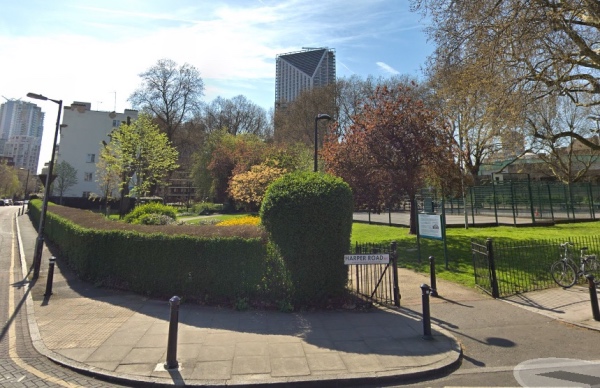
In the mid-1800s, the prison was renamed the Surrey County Gaol or New Gaol (Horsemonger Lane was renamed Union Road and is now Harper Road).

The gaol was closed in 1878 – it no longer met required standards – and demolished three years later on 1881 and the site is today a public park called Newington Gardens.

Lost London – Jacob’s Island…

Famous for its mentions by Charles Dickens, Jacob’s Island – located in Bermondsey – was not actually a true island.

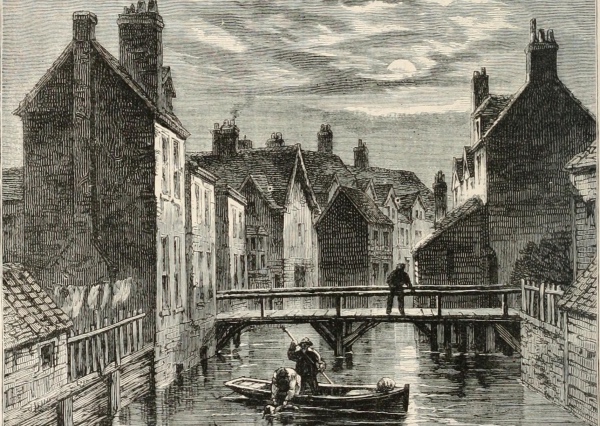
It was a small parcel of land formed into an “island” thanks to its location in a loop of the Neckinger River and, on the south side of the loop, a man-made ditch which was used as a mill run for Bermondsey Abbey.

The “island” – which on a modern map was located just to the south of the street known as Bermondsey Wall West, east of Mill Street, west of George Row and north of Wolseley Street, was home to a notorious slum or “rookery” between the 18th and early 19th centuries,

It was most famously mentioned in Charles Dickens’ book, Oliver Twist and was where the notorious Bill Sikes died in the mud of ‘Folly Ditch’ – a reference to the ditch surrounding the island – as he attempted to elude the authorities.

Dickens describes Jacob’s Island in the book as a place “where the buildings on the banks are dirtiest and the vessels on the river blackest with the dust of colliers and the smoke of close-built low roofed houses, there exists the filthiest, the strangest, the most extraordinary of the many localities that are hidden in London”. In the preface to the 1867 edition of the book, he even wrote of its ongoing existence which was apparently doubted by one City alderman, saying “Jacob’s Island continues to exist (like an ill-bred place as it is) in the year one thousand eight hundred and sixty-seven, though improved and much changed”.

The slum itself existed until the late-1800s – much of it was razed in a fire of 1861 – in subsequent decades, the ditches surrounding it were filled in and the area redeveloped into warehouses.

The River Neckinger, incidentally, is one of London’s ‘lost rivers’. Its name means ‘devil’s neckerchief’ or ‘devil’s necklace’ – a reference to the hangman’s noose – and it is believed to refer in here to the gibbet from which pirates were hung close to the mouth of where the river entered the Thames at nearby St Saviour’s Dock and where their bodies left to deter others from taking a similar path.

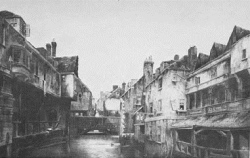
PICTURE: Top – Jacob’s Island and Folly Ditch, an engraving from a book published in 1873 (Internet Archive Book Images/licensed under CC BY-SA 2.0); Right – ‘Folly Ditch’, pictured here in about 1840.


London Pub Signs – The Victoria, Paddington…

No prizes here for guessing that this pub owes its name to the long serving 19th century monarch, Queen Victoria.

There’s apparently a story that the Queen stopped off here on her way to Paddington Station and that, as a result, the pub was named in her honour.

Whatever the truth of that, the now Grade II-listed pub – located at 10a Strathearn Place (on the corner with Surrey Place) – was apparently built in 1838 – the first year if Victoria’s reign (and possibly a more valid reason for its name) and remodelled around the turn of the 20th century.

It features a luxuriously decorated interior with fireplaces, mirrors, and an original counter as well as paintings of the Queen, Prince Albert and their family.

The upstairs Theatre Bar features decorative elements taken from the former Gaiety Theatre which were installed in the late 1950s.

The pub, which was apparently patronised by the likes of author Charles Dickens (he is said to have written some of Our Mutual Friend here), Sir Winston Churchill and Charlie Chaplin as well as David Bowie – who did a live performance when launching an EP here in the 1960s.

It’s also been associated with more recent celebs like musicians Ronnie Wood and Liam Gallagher, artist Damien First and actor Keira Knightley.

There’s also a story that in 1960s one of the paintings on the walls was found to be a valuable portrait of a member of the Royal Family. It’s now apparently in the Royal Collection.

The pub is now part of the Fuller’s group – and has twice won their ‘Pub of the Year’ award. For more, see www.victoriapaddington.co.uk.

PICTURE: Ewan Munro (licensed under CC BY-SA 2.0)