This Week in London – Showtime! at the Charles Dickens Museum; the ‘Future of Food’; and, Peter Rabbit hops to Hampton Court…

PICTURE: VV Shots/iStockphoto

The enduring appeal of Charles Dickens’ works and how they have been adapted for the stage, screen and radio is the focus of a new exhibition at the Charles Dickens Museum in Bloomsbury. Showtime! looks at productions starting from as far back as 1837 and including such classics as The Muppets Christmas Carol and Oliver! the musical with objects on show including original playbills, posters, programmes, photographs and props. There’s also the opportunity to hear from actors and writers about what makes Dickens so adaptable and see Dickens’ own works which he annotated with stage directions. The display can be seen until 26th January. Admission charge applies. For more, see www.dickensmuseum.com.

A major new exhibition on the future of food – how science is creating more sustainable ways of producing and consuming food – opens at the Science Museum today. Future of Food reveals how the way we grow food and eat impacts the climate, nature, and society. Among the more than 100 objects on show are cricket burgers and cell-grown salmon as well as 3,500-year-old fermented sourdough bread, the first Quorn burger dating from 1981 and the first beef steak grown outside a cow. There is also the chance to join a multiplayer interactive game and create your own “future for food”. Runs until 4th January. Admission is free. For more, see https://www.sciencemuseum.org.uk/see-and-do/future-of-food.

The Peter Rabbit Adventure at Hampton Court Palace. PICTURE: Courtesy of Historic Royal Palaces.

Peter Rabbit is hopping over to Hampton Court Palace to take part in a new family trail that brings Beatrix Potter’s beloved characters to life in the palace gardens from tomorrow. The Peter Rabbit Adventure, included as part of the palace admission, is spread over the Kitchen Garden, Tiltyard, and Wilderness and the activities on the trail will introduce little ones to the plants, vegetables and wildlife that inhabit the gardens. These include the chance to use Mrs Tiggy-winkle’s washing equipment to make music among the trees, to join in a search for Peter Rabbit under wheelbarrows and flowerpots in the Tiltyard, and to try to hop, skip and jump as high as Peter and his friends. A larger-than-life Peter Rabbit will be greeting families in the Kitchen Gardens. Runs until 7th September. For more, see https://www.hrp.org.uk/hampton-court-palace/whats-on/the-peter-rabbit-adventure/.

Send all inclusions to exploringlondon@gmail.com

This Week in London – The Charles Dickens Museum celebrates 100 years; activist Olive Morris commemorated; and, ‘The Story of Soldier Magazine’…

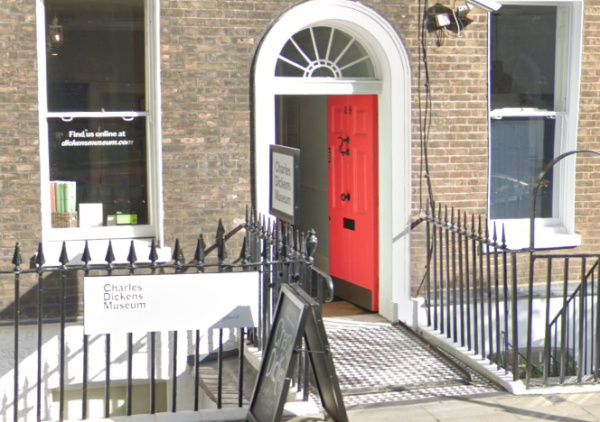
The Charles Dickens Museum. PICTURE: Courtesy of Google Maps

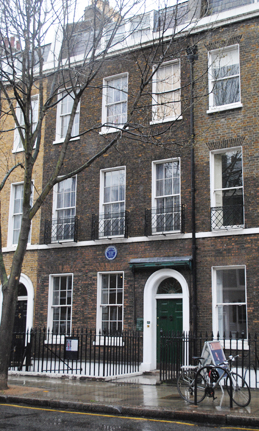
The Charles Dickens Museum, located in the author’s former home at 48 Doughty Street in Bloomsbury, is marking its centenary this year, and to celebrate the occasion, it’s holding a special exhibition of highlights from its collection. The museum, which first opened its doors on 9th June, 1925, has brought together everything from Dickens’ hairbrush, walking stick and only surviving suit through to portraits and photographs made during his lifetime as well as original manuscripts, letters to his family and friends and rare first editions. The exhibition runs on 29th June. Admission charge applies. For more, see https://dickensmuseum.com/.

Housing rights campaigner and activist Olive Morris has been commemorated with an English Heritage Blue Plaque in Brixton. Jamaican-born Morris (1952-1979), who dedicated her life to helping the oppressed and exploited, hosted Black women’s study groups and lived as a squatter at the three storey property at 121 Ralston Road in the 1970s. She was a significant figure in the British Black Panther movement, co-founded the Brixton Black Women’s Group and the Organization of Women of African and Asian Descent in 1978, and was one of the “Old Bailey three” who were acquitted after being prosecuted over a protest outside the Old Bailey, winning the right to a fair representation of Black people on the jury during the court proceedings. For more, see www.english-heritage.org.uk/visit/blue-plaques/.

Soldier magazine, the official magazine of the British Army, is marking its 80th anniversary with an exhibition ay the National Army Museum. The Story of Soldier Magazine charts the publication’s history from March, 1945, when it was launched by Field Marshal Bernard Law Montgomery, through the role it’s played in covering every major conflict since as well as the issues shaping military life. Runs until 6th July. Admission is free. For more, see https://www.nam.ac.uk.

Send all items for inclusion to exploringlondon@gmail.com.

This Week in London – London homes at Christmas; Christmas Eve at the Dickens’; and, ‘Women & Freud’…

A Christmas Tree (not part of the Museum of the Home). PICTURE: Tj Holowaychuk/Unsplash

The Museum of the Home in Shoreditch has once again redressed its ‘Rooms through Time’ display for the festive season. Located in the Grade I-listed Almshouses and adjoining Branson Coates Wing, the display spans the some 400 years and explores how seasonal festivals, culture and personal traditions” have shaped our lives at home during the winter months. This year the redressing also includes seven new period homes which reflecting the stories of East London. See everything from a Midwinter Celebration in 1630 to a Midnight Mass in 1956, a Christmas Party in 1978, and a futuristic New Year’s Eve in 2049. Runs until 12th January. Admission is free. For more, see www.museumofthehome.org.uk/whats-on/rooms-through-time/winter-past-2024-2025/.

Join the Dickens family for Christmas. The Charles Dickens Museum in Bloomsbury is holding a special Christmas Eve opening with the house decorated in a traditional Victorian style. Guests, who each receive a free mince pie and mulled wine or soft drink alternative, will be able to watch adaptations of A Christmas Carol, including The Muppet Christmas Carol, throughout the day in ‘The Smallest Theatre in the World.’ Admission charge applies. To book, head to https://dickensmuseum.com/blogs/all-events/christmas-eve-at-the-charles-dickens-museum.

On Now: Women & Freud: Patients, Pioneers, Artists. This display at the Freud Museum in South Hampstead draws on manuscripts, images, objects, visuals, and film footage to bring to life the many women who shaped Freud’s life including everyone from the early “hysterics”, who Freud called “his teachers” to later patients such as Princesse Marie Bonaparte (who went on to become an analyst) through to his daughter Anna Freud and her partner Dorothy Burlingham, to artists such as Marie-Louise von Motesiczky, Louise Bourgeois, Paula Rego, Alice Anderson and Tracey Emin. The exhibition also celebrates the 100th anniversary of the first publication of Sigmund Freud’s work by Hogarth Press, founded and owned by Virginia and Leonard Woolf and a key feature in Bloomsbury life. Admission charge applies. Runs until 5th May. For more, see www.freud.org.uk/exhibitions/freuds-women/

Send all items for inclusion to exploringlondon@gmail.com.

This Week in London – The Olympics on the big screen; new portraits at the National Portrait Gallery; and, Charles Dickens’ pets…

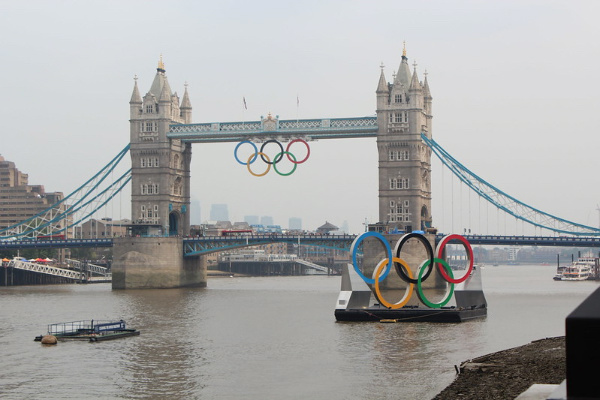
Memories of 2012. This year the Games are in Paris but there’s plenty of places to watch on a big screen in London. PICTURE: Peter Burgess (licensed under CC BY 2.0)

• The Olympics are in full swing across the Channel in Paris and to ensure you don’t miss any of the action, big screens are showing the coverage across London. Among them are official Team GB Fanzones – there’s a list of locations on the Team GB website here. Other locations include Lyric Square in Hammersmith, Bishops Square in Spitalfields, the Old Royal Naval College grounds in Greenwich and by the Thames at London Bridge as part of the Summer by the River festival.

• New portraits of human rights campaigner Peter Tatchell and singer Sam Smith have gone on display at the National Portrait Gallery as part of its History Makers Display. The full-length portrait of Tatchell, which has been acquired by the gallery, was painted by artist Sarah Jane Moon to coincide with his 70th birthday on 25th January, 2022, and is the first portrait of Tatchell to enter the gallery’s collection.. Meanwhile, titled Gloria, the portrait of five-time Grammy Award winner Smith is the work of artistic duo Pierre Commoy and Gilles Blanchard and was created in 2023. It’s on loan from the singer. For more, see www.npg.org.uk.

• On Now: Faithful Companions: Charles Dickens & his Pets. This exhibition at the Charles Dickens Museum in Bloomsbury takes a look at the many pets – dogs, ravens, goldfinches, and cats – that lived in the home of Charles Dickens, exploring the stories of the likes of Grip the raven and Timber the dog as well as those of animals made famous in his novels. The display includes hand-written letters, family photo albums and artworks. Runs until 12th January next year. Admission charge applies. For more, head to https://dickensmuseum.com/blogs/all-events/faithful-companions-charles-dickens-his-pets.

Send all items for inclusion to exploringlondon@gmail.com
This Week in London – Hans Holbein at The Queen’s Gallery; ‘Crown and Coronation’ at the Tower; Christmas at Kew; and, Charles Dickens’ friendship with Wilkie Collins explored…

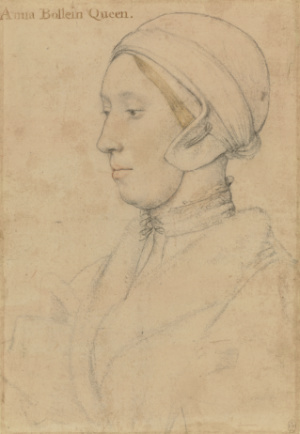
Hans Holbein the Younger, 
Anne Boleyn (1532)/Royal Collection Trust / © His Majesty King Charles III 2023.

The largest exhibition of the work of Tudor-era artist Hans Holbein the Younger has opened at The Queen’s Gallery, Buckingham Palace. Holbein at the Tudor Court features more than 50 works by Holbein including intimate portrait drawings of the royal family and the Tudor nobility including one of few surviving drawings of Anne Boleyn made during her lifetime, drawings of Jane Seymour and Sir Thomas More, and an unfinished portrait of King Henry VIII’s son Prince Edward. Other portraits include that of Derich Born, a 23-year-old Steelyard merchant, and one of Richard Southwell, a convicted murderer who was one of King Henry VIII’s closest advisors. The exhibition also features objects including a Brussels tapestry, jewel-like miniatures and Henry VIII’s magnificent armour, usually on show at Windsor and in London for the first time in a decade. Runs until 14th April. Admission charge applies. For more, see www.rct.uk/collection/themes/exhibitions/holbein-at-the-tudor-court/the-queens-gallery-buckingham-palace

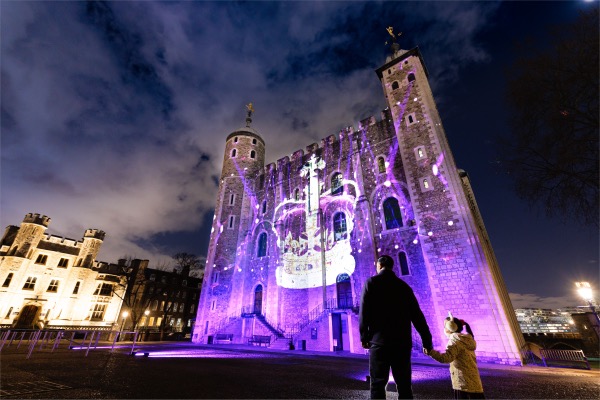
The White Tower looking south-east, showing a coloured light projection of St Edward’s Crown, the crown used at the moment of Coronation. PICTURE: © His Majesty King Charles III 2023 -Royal Collection Trust – Historic Royal Palaces

The magnificence of coronations and the Crown Jewels will be on show at the Tower of London from tomorrow night in a new light and sound show. Crown and Coronation – which has been created by Historic Royal Palaces in partnership with Luxmuralis as part of an artistic collaboration between artist Peter Walker and composer David Harper – brings the “spectacle, significance and shared experience” of coronations to life and demonstrates the pivotal role of the Crown Jewels in the ceremony as it takes visitors on a journey through the past 1,000 years. Images of the jewels will be projected on the White Tower in the show with visitors then able to view the actual jewels themselves in a special after hours opening. But you’ll have to be quick – the show can only be seen for nine days, ending on 25th November before it embarks on a two year UK-wide tour. Admission charge applies. For more, see www.hrp.org.uk/tower-of-london/.

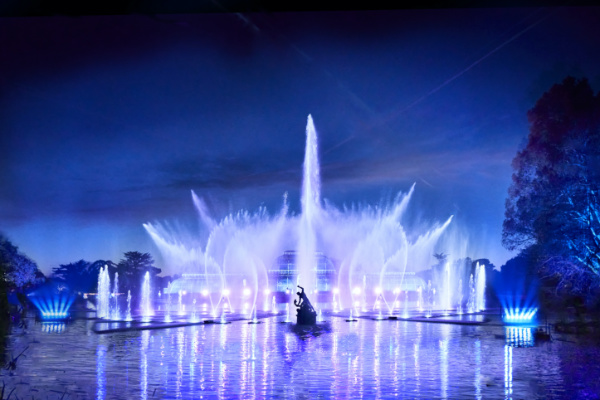
The Palm House light show, part of Christmas at Kew. PICTURE: © Raymond Gubbay Ltd, Richard Haughton

Christmas returned to Kew this week with the launch of it’s new festive light trail featuring seven new installations. Highlights of this year’s trail include three metre tall illuminated flowers, cascading lights suspended from the tree canopy, one of the longest light tunnels to ever feature in Kew’s Christmas celebrations and the Hive – which recreates life inside a beehive – as well as the iconic Palm House light show, the twinkling tunnel of light inspired by arched church windows known as the ‘Christmas Cathedral’, and a ‘Fire Garden’ at the Temperate House. There’s also festive treats to sample and visitors can experience a traditional Christmas dinner at The Botanical Brasserie. Admission charges applies. Runs until 7th January (advance bookings only). For more, see www.kew.org/christmas.

Charles Dickens’ friendship and collaboration with writer Wilkie Collins is explored in a new exhibition at The Charles Dickens Museum in Bloomsbury. Dickens met Collins, who would become one of his most significant friends, in 1851 as they performed together in a play at the house of John Forster and their personal and professional relationship lasted more than 15 years. The display features works produced as a result of the friendship – everything from articles in Dickens’s Household Words through to novellas and plays such as The Lazy Tour of Two Idle Apprentices and The Frozen Deep – and features original letters, historic objects, and interactive displays focusing on everything from the pair’s moustache-growing contests and cruising international entertainment districts to co-writing side by side, discussing writer’s block and plot devices. Admission is included with general admission. Runs until 25th February. For more, see https://dickensmuseum.com.

Send all items to exploringlondon@gmail.com.

This Week in London – Hieroglyphs explored at the British Museum; King Charles III coronation date announced; ‘The Admiral’s Revenge’ in Greenwich’; and, Dickens and ghosts…

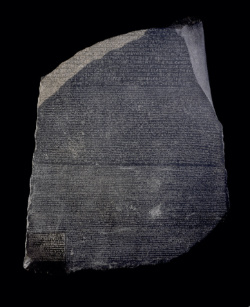
The Rosetta Stone. Granodiorite; Rasid, Egypt; Ptolemaic, 196 BC © The Trustees of the British Museum.

• Marking 200 years since French Egyptologist Jean-Francois Champollion (1790-1832) was able to decipher hieroglyphs using the Rosetta Stone, a new exhibition opening at the British Museum explores how the stone and other inscriptions and objects helped scholars unlock one of the world’s oldest civilisations. Hieroglyphs: unlocking ancient Egypt centres on the Rosetta Stone but also features more than 240 other objects, many of which are shown for the first time. Alongside the Rosetta Stone itself, highlights include: “the Enchanted Basin”, a large black granite sarcophagus from about 600 BCE which is covered with hieroglyphs and images of gods; the richly illustrated, more than 3000-year-old Book of the Dead papyrus of Queen Nedjmet which measures more than four metres long; and the mummy bandage of Aberuait, a souvenir from one of the earliest ‘mummy unwrapping events’ in the 1600s where attendees each received a piece of the linen, preferably inscribed with hieroglyphs. There’s also the personal notes of key figures in the race to decipher hieroglyphs including those of Champollion which come from the Bibliothèque nationale de France as well as those of England’s Thomas Young (1773 – 1829) from the British Library. The exhibition can be seen in the Sainsbury Exhibition Gallery until 19th February. Admission charge applies. For more, see britishmuseum.org/hieroglyphs.

• King Charles III will be crowned at Westminster Abbey on 6th May next year, Buckingham Palace has announced this week. The Queen Consort, Camilla, will be crowned alongside him in the first such coronation since 12th May, 1937, when King George VI and Queen Elizabeth were crowned in the abbey. The ceremony, which will be conducted by the Archbishop of Canterbury, will, according to the palace, “reflect the monarch’s role today and look towards the future, while being rooted in longstanding traditions and pageantry”. King Charles III is expected to sign a Proclamation formally declaring the coronation date at a meeting of the Privy Council later this year. The first documented coronation at Westminster Abbey was that of King William the Conqueror on 25th December, 1066, and there have been 37 since, the most recent being that of Queen Elizabeth II on 2nd June, 1953.

https://www.youtube.com/embed/Vfmo5dgTEl0″ title=”YouTube video player” frameborder=”0″ allow=”accelerometer; autoplay; clipboard-write; encrypted-media; gyroscope; picture-in-picture” allowfullscreen

A new dark comedy, The Admiral’s Revenge, has opened in The Admiral’s House in the Old Royal Naval College, Greenwich. The play, set in 1797, features sea shanties, puppetry and follows a crew of shipmates in the wake of the ill-fated Battle of Tenerife. Audiences have the chance to explore the Admiral’s House before the show and enjoy a complimentary rum cocktail. Runs until 12th November. For ticket prices, head to https://ornc.org/whats-on/1797-the-mariners-revenge/.

A new exhibition exploring Charles Dickens’ interest in the paranormal has opened at the Charles Dickens Museum in Bloomsbury. To Be Read At Dusk: Dickens, Ghosts and the Supernatural explores Dickens’ famous ghost stories, including A Christmas Carol, and reveals his influence on the genre. Highlights include a copy of The Chimes which Dickens gifted to fellow author Hans Christian Anderson, original John Leech sketches of Dickens’ ghosts of the past, present and future and original tickets and playbills relating to the author’s public performances of his ghost stories. The display will also look into Dickens’ own views on the supernatural as a fascinated sceptic and includes  correspondence in which he was asking about the location of a supposedly haunted house. Runs until 5th March. Admission charge applies. For more, see https://dickensmuseum.com/blogs/all-events/to-be-read-at-dusk-dickens-ghosts-and-the-supernatural.

Send all items to exploringlondon@gmail.com
This Week in London – Skateboarding explored at Somerset House; and, looking behind ‘Oliver Twist’…

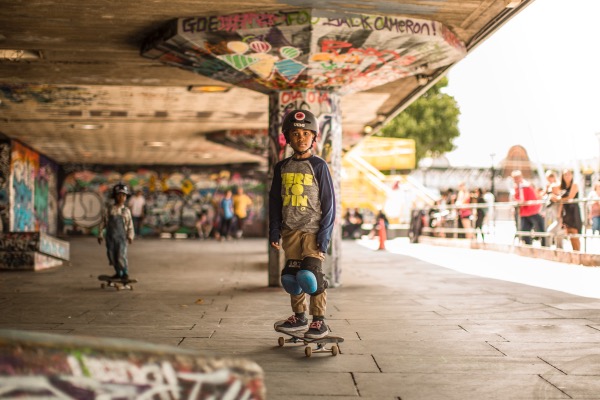
One of the images in No Comply – ‘Here to win’ © Katie Edwards.jpg

A celebration of skateboarding and its impact on communities and culture of the past 45 years is underway at Somerset House. No Comply: Skate Culture and Community is a free exhibition featuring imagery from some of the world’s foremost photographers capturing skateboarding scenes from across the UK as well as early editions of skateboarding titles like Alpine Sports, Read and Destroy (R.A.D) and Skateboard!, and original film commissions including a new short film from London-based director Dan Emmerson and a new short by skate videographer Sirus f Gahan. The display also explores the influence of skateboarding on mainstream culture – everything from fashion brands to video games – and uses archival objects, photographs and personal anecdotes to share stories from skate communities in the UK and beyond as well as those of skateboarding-related non-profit initiatives including Free Movement Skateboarding and SkatePal. Runs until 19th September; pre-booking required. For more, see www.somersethouse.org.uk.

• On Now: More! Oliver Twist, Dickens and Stories of the City. This exhibition at the Charles Dickens Museum in Doughty Street, Bloomsbury, showcases a selection of letters, illustrations, postcards and photos – including a provocative artwork by artist Cold War Steve – as it explores the story of Oliver Twist and the inspiration behind it. Can be seen until 17th October; admission charge applies. For more, see https://dickensmuseum.com.

Send all items for inclusion to exploringlondon@gmail.com.

Treasures of London – Charles Dickens’ writing desk and chair…

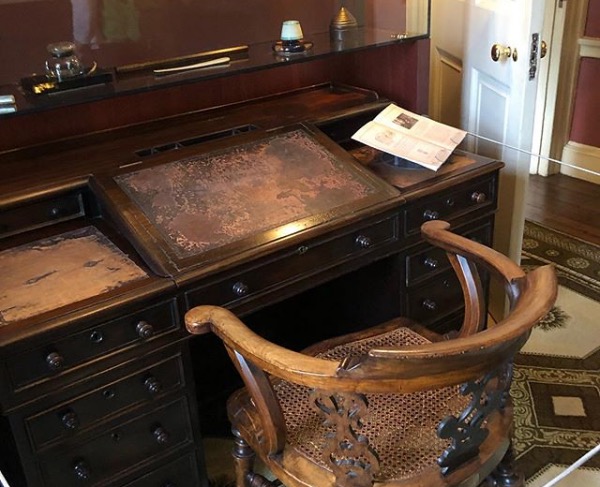
Charles Dickens’ desk and chair at the Charles Dickens Museum. PICTURE: Alyx Dellamonica (Licensed under CC BY-NC 2.0)

Among the treasures to be found at Dickens’ former house (and now the Charles Dickens Museum) in Doughty Street, Bloomsbury, is the desk and accompanying chair where Dickens’ wrote several of his later novels including Great ExpectationsOur Mutual Friend and the unfinished The Mystery of Edwin Drood.

Dickens purchased the mahogany pedestal writing desk as well as the walnut and fruitwood smoker’s armchair in 1859. He used them in the study of his final home at Gad’s Hill Place in Kent (Dickens also had an identical chair in his London office which is now in the New York State Library).

After the author’s death in 1870, the desk and chair – which feature in Luke Fildes’ 1870 work The Empty Chair and the RW Buss’ 1875 work Dickens’ Dream  – were passed down through the Dickens family until they was auctioned in the 2000s with the funds raised used to benefit the Great Ormond Street Hospital.

While the desk and chair had previously been loaned to the museum for display, in 2015 the establishment was able to purchase the desk and chair and make it part of its permanent collection thanks to a £780,000 grant from the National Heritage Memorial Fund.

While the museum is currently closed due to the coronavirus pandemic, we include these details for when it reopens.

WHERE: 48-49 Doughty Street, Bloomsbury (nearest Tube stations are Russell Square, Chancery Lane or Holborn). WHEN: Currently closedCOST: £9.50 adults/£7.50 concessions/£4.50 children (under six free); WEBSITE: www.dickensmuseum.com.

This Week in London – Party like a Georgian; a playground with a history; and, a Dickens whodunnit…

Kensington-Palace• Join the Georgian Queen Caroline for a garden party in the grounds of Kensington Palace this weekend. The Georgian Court will be taking to the palace gardens for a summer celebration featuring music, military drills and theatre as they bring the era to life. Visitors are encouraged to immerse themselves in the experience as a courtier with the gardens decked out in a range of tents where they can try out costumes and powdered wigs as well as learn court etiquette, swordplay and dancing while the ice-house will feature Georgian ice-cream (and it’s rather odd flavours such as parmesan). Runs from tomorrow until Sunday. Admission charges apply (under 16s go free with a maximum of six children per paying adult). For more, see www.hrp.org.uk/KensingtonPalace/. PICTURE: ©Historic Royal Palaces

First created in 1923, a playground in Victoria Tower Gardens – newly named the Horseferry Playground – has been reopened after improvement works. The works, carried out under the management of Royal Parks, have seen the reintroduction of a sandpit as well as the installation of new swings and slide, dance chimes and a stare play installation to represent the River Thames. The playground, located close to the Houses of Parliament in Westminster, also features a series of timber horse sculptures, new seating and a refreshment kiosk with metal railings designed by artist Chris Campbell depicting events such as the Great Fire of London and Lord Nelson’s funeral barge and views of the River Thames. The project has also seen the Spicer Memorial, commemorating role of paper merchant and philanthropist Henry Spicer in the establishment of the playground – then just a large sandpit, restored. For more, see www.royalparks.org.uk/parks/victoria-tower-gardens.

Now On – A Dickens Whodunnit: Solving the Mystery of Edwin Drood. This temporary exhibition at the Charles Dickens Museum in Bloomsbury explores the legacy of Dickens’ final novel The Mystery of Edwin Drood, left unfinished after his death in 1870. Visitors are able to investigate crime scenes, search for murder clues and see the table on which the novel was penned as well as clips from theatrical adaptations, and a wealth of theories on ‘whodunit’. The exhibition runs until 11th November. Admission charge applies. For more, see www.dickensmuseum.com.

Send all items for inclusion to exploringlondon@gmail.com.

This Week in London – Dunkirk Little Ships at Royal Docks a highlight of ‘Museums at Night’; the Magna Carta in stitches; and Peter Kennard’s works on show…

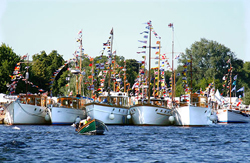
Dunkirk-Little-Ships-More than 20 Dunkirk Little Ships will gather at London’s Royal Docks this weekend ahead of their Return to Dunkirk journey marking the 75th anniversary of the Dunkirk evacuations. The event, which is part of the UK’s annual festival of late openings Museums at Night, will see the ships parade around Royal Victoria Dock on Saturday night with the Silver Queen offering twilight trips and the chance to step on board some of the other ships (the Little Ships will continue with their own festival on Sunday commencing with a church service by the quayside at 11am). Other events being offered in London as part of Museums at Night include ‘Dickens After Dark’ in which the Charles Dickens Museum will open its doors to visitors for night of Victorian entertainment on Friday night and a night of music featuring the Royal College of Music at Fulham Palace (also on Friday night). Among the other London properties taking part are the Handel House Museum, Benjamin Franklin House, the Wellcome Collection, Museum of the Order of St John, and the National Archives in Kew. For a full list of events, check out http://museumsatnight.org.uk

Meanwhile, Dulwich Picture Gallery in south London is holding its first weekend culture festival, MayFest: Men of Mystery, as part of Museums at Night. On Friday and Saturday nights, there will be tours of the gallery’s new exhibition featuring the work of artist Eric Ravilious followed by outdoor cinema screenings of Alfred Hitchcock’s Rear Window and The 39 Steps as well as free swing dance lessons, street foods and a pop-up vintage shop which will help people get the vintage look. Visitors are being encouraged to dress up in styles of the 1930s and 1940s with a prizes awarded to those with the “best vintage style”. The gallery will also be inviting visitors to take part in a mass installation drop-in workshop held in the gallery’s grounds over the weekend and Saturday morning will see special events for children. For more, see www.dulwichpicturegallery.org.uk/whats-on/.

A major new work by acclaimed artist Cornelia Parker goes on display in the entrance hall of the British Library in King’s Cross tomorrow to mark the 800th anniversary of the Magna Carta. The almost 13 metre long Magna Carta (An Embroidery) replicates the entire Wikipedia entry on the Magna Carta as it was on the 799th anniversary of the document and was created by many people ranging from prisoners and lawyers to artists and barons. It accompanies the library’s exhibition Magna Carta: Law, Liberty, Legacy. Entry to see the artwork is free. For more, see www.bl.uk/cornelia-parker.

The works of Peter Kennard, described as “Britain’s most important political artist”, are on display in a new exhibition which opens at the Imperial War Museum in London today. Peter Kennard: Unofficial War Artist is the first major retrospective exhibition of his work and features more than 200 artworks and other items drawn from his 50 year career including an art installation, Boardroom, created especially for the display. Works on show include his iconic transposition of Constable’s painting Haywain which he showed carrying cruise missiles about to be deployed in Greenham Common, the Decoration paintings created in 2004 in response to the Iraq War of 2003, his seminal STOP paintings which reference events of the late 1960s such as the ‘Prague Spring’ and anti-Vietnam war protests and his 1997 installation Reading Room. The free exhibition runs at the Lambeth institution until 30th May next year. For more, see www.iwm.org.uk/london.

Send all items for inclusion to exploringlondon@gmail.com.

Around London: Charles Dickens Museum reopens; ‘The History Man’s’ blue plaque; and, a Dandy exhibition at the Cartoon Museum…

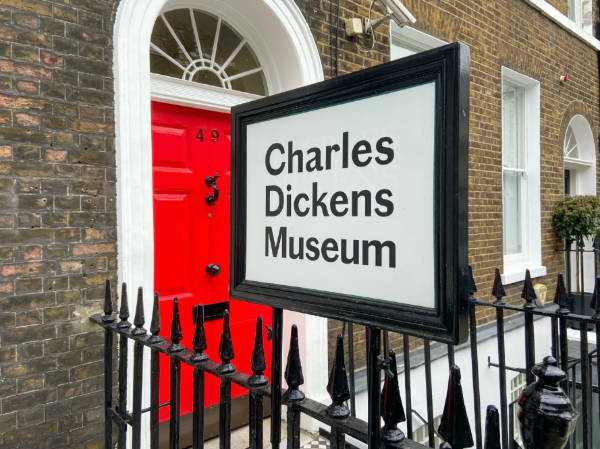
The only surviving London house lived in by author Charles Dickens – now occupied by the Charles Dickens Museum – reopens on Monday after a £3.1 million restoration and refurbishment. The redevelopment of the Georgian, Grade I listed townhouse at 48 Doughty Street in Bloomsbury – a project named Great Expectations – has seen the museum expand into a neighbouring property at 49 Doughty Street which now houses a visitor and learning centre and cafe. Inside the house itself, the rooms have been returned to their appearance during Victorian times and on display will be some of Dickens’ personal items which haven’t been seen before. They include a set of photographic prints from 1865 which depict a train crash in Staplehurst, Kent, in which Dickens was involved. The museum, which is where Dickens wrote Oliver Twist, Nicholas Nickleby and finished The Pickwick Papers while living here between 1837-1839, was first opened in 1925. This year marks the bicentenary of Dickens’ birth (he was born on 7th February, 1812, in Portsmouth). For more on the museum and upcoming events there (including Christmas performances of A Christmas Carol and a series of special Dickensian Christmas walks), see www.dickensmuseum.com. For more on Dickens, see our earlier special – 10 London sites to celebrate Charles Dickens.

Historian and broadcaster AJP Taylor, known as ‘The History Man’, has been honoured by English Heritage with a blue plaque placed on his former home at 13 St Mark’s Crescent in Primrose Hill.  Taylor lived at the mid-nineteenth century semi-detached villa between 1955 and 1978 during the height of his fame. First appearing on television as early as 1942, Taylor was a regular on television discussion programmes between the 1950s and 1980s, and is described as one of the first ‘media dons’. He also wrote weekly columns in the press and books including the controversial The Origins of the Second World War. Married three times, he had six children and died of Parkinson’s disease in 1990. For more, see www.english-heritage.org.uk/about/news/?topic=Blue%20Plaques.

On Now: A Dandy 75th Birthday Exhibition. This exhibition at the Cartoon Museum in Bloomsbury focuses on The Dandy, Britain’s longest running comic (officially recognised by the Guinness Book of Records), and follows its development from its birth with the release of the first issue on 4th December, 1937 (which, incidentally, was so popular it sold 481,895) through to this year’s issues including the final print issue released on 4th December this year (after which The Dandy goes digital). Runs until 24th December. Admission charge applies. For more see www.cartoonmuseum.org.

Celebrating Charles Dickens – 9. Dickens’ literary connections, part 2…

In which we continue our look at some of London’s connections with Dickens’ writings…

• ‘Oliver Twist’ workhouse, Cleveland Street. The building, recently heritage listed following a campaign to save it, is said to have served as the model for the workhouse in Oliver Twist and was apparently the only building of its kind still in operation when Dickens wrote the book in the 1830s. Dickens had lived as a teenager nearby in a house in Cleveland Street and was living less than a mile away in Doughty Street (now the Charles Dickens Museum) when he wrote Oliver Twist. Thanks to Ruth Richardson – author of Dickens and the Workhouse: Oliver Twist and the London Poor – for mentioning this after last week’s post.

• Clerkenwell Green. It is here that Mr Brownlow first comes into contact with Oliver Twist and, mistakenly suspecting him of stealing from him, chases him through the surrounding streets. Interestingly, the grass (which you would expect when talking about a green) has been gone for more than 300 years – so it wasn’t here in Dickens’ time either.

• Barnard’s Inn, Fetter Lane. It was here, at one of London’s Inns of Court, that Pip and Herbert Pocket had chambers in Great Expectations. Barnard’s Inn, now the home of Gresham College, is only one of a number of the Inns of Court with which Dickens and his books had associations – the author lived for a time at Furnival’s Inn while Lincoln’s Inn (off Chancery Lane) features in Bleak House and the medieval Staple Inn on High Holborn makes an appearance in his unfinished novel, The Mystery of Edwin Drood. And, as mentioned last week, Middle Temple also features in his books.

• ‘Dickens House’, Took’s Court. Renamed Cook’s Court in Bleak House, the house – located in a court between Chancery and Fetter Lane – was where the law stationer Mr Snagsby lived and worked in the book. It’s now occupied by music promoter and impresario Raymond Gubbay.

• London Bridge. The bridge, a new version of which had opened in 1831 (it has since been replaced), featured in many of Dickens’ writings including Martin Chuzzlewit, David Copperfield and Great Expectations. Other bridges also featured including Southwark Bridge (Little Dorrit) and Blackfriars Bridge (Barnaby Rudge) and as well as Eel Pie Island, south-west along the Thames River at Twickenham, which is mentioned in Nicholas Nickleby.

We’ve only included a brief sample of the many locations in London related in some way to Dickens’ literary works. Aside from those books we mentioned last week, you might also want to take a look at Richard Jones’ Walking Dickensian London,  Lee Jackson’s Walking Dickens’ London or, of course, Claire Tomalin’s recent biography, Charles Dickens: A Life.

10 London sites to celebrate Charles Dickens – 1. The Charles Dickens Museum

In the first of a new special series written in honor of the bicentenary of the birth of author Charles Dickens (he was born on 7th February, 1812), we take a look at the Charles Dickens Museum.

Housed in one of Dickens’ former London residences at 48 Doughty Street in Bloomsbury, this property is now the focal point for people wanting to find out more about the writer and his life as evidenced by the visit of Prince Charles and Camilla, the Duchess of Cornwall, on Tuesday to officially mark Dickens’ birth.

Dickens lived in the property from 1837 to 1839 and it was here that significant family events, such as the birth of two of his children – Mary and Kate – and the death of his wife Catherine’s 17-year-old sister Mary took place (Mary’s tragic death is believed to be the inspiration for that of the character Little Nell in the novel The Old Curiosity Shop). It was also at the property that he wrote some of his most famous novels, including Oliver Twist, Nicholas Nickleby, and The Pickwick Papers.

A growing demand for space, however, led Dickens to move his household to 1 Devonshire Terrace in 1839. The Doughty Street house meanwhile, the only one of Dickens’ London homes to have survived, remained a residential property but in 1923 it was threatened with demolition and subsequently acquired by the Dickens Fellowship. The museum opened there two years later.

The museum now claims to hold more than 100,000 Dickens-related artifacts. The house is displayed as it might have been when Dickens lived there – artifacts on display over four floors include his personal possessions and furnishings as well as manuscripts, letters, first edition copies of some of his books and portraits, including R.W. Buss’ spectacular (and unfinished) Dickens’ Dream, showing the author at his country home of Gads Hill Place in Kent surrounded by many of the characters that he had created.

It’s important to note that from 9th April, the museum will be closed as it undergoes a £3.2 million project, called Great Expectations, which will involve the restoration and expansion of the museum. It is expected to reopen in December this year in time to celebrate a Dickensian Christmas.

For more on events celebrating Charles Dickens and his works this year, see www.dickensfellowship.org or www.dickens2012.org.

WHERE: 48 Doughty Street, Bloomsbury (nearest Tube stations are Russell Square, Chancery Lane or Holborn). WHEN: 10am to 5pm Monday to Sunday (last admission 4.30pm) COST: £7 adults/£5 concessions/£3 children (under 10 free); WEBSITE: www.dickensmuseum.com.

Around London…

• A team of archaeologists from the Museum of London have unearthed the remains of a brewhouse close to the purpose-built theatre, known simply as The Theatre, where Shakespeare first acted. The brewhouse could represent what became a dedicated ‘tap room’ aimed at theatre customers and may well have been a watering hole of the Bard himself. It – and a nearby bakehouse – were originally part of Holywell Priory, once one of the richest in England, which was dissolved in 1539. You can follow the dig’s progress here: www.mymuseumoflondon.org.uk/blogs/blog/category/excavations-at-shakespeare’s-theatre/

London’s Dickens Museum has unveiled the long-lost tombstone of a cartoonist who took his own life after he was believed to have been rejected by the famous author. Robert Seymour apparently took his own life after Charles Dickens was believed to have informed him that he would no longer be employed to illustrate The Pickwick Papers (there remains considerable debate over whether Dickens should be blamed for his death). The gravestone had been missing for a century but was reportedly discovered in the crypt of a London church by scholar Stephen Jarvis. It will now be displayed in the back garden of the museum which is housed at 48 Doughty Street in Dicken’s only surviving London home (he lived there between 1837 and 1839 while writing novels including The Pickwick Papers and Oliver Twist). The museum is preparing to celebrate the bicentenary of Dickens’ birth in 2012.  www.dickensmuseum.com

• Sir William and Sir Joseph Hooker – the father and son responsible for transforming Kew Gardens in the nineteenth century – have been honored with a blue plaque at their former home on Kew Green. The home where Princess Alexandra was to unveil the plaque became the official residence of the garden’s director when Sir William moved there in 1851. Sir William had been appointed director of the Botanic Gardens 10 years before and during his 24 year tenure not only greatly expanded them but also opened them to the public. His son, Sir Joseph, had travelled aboard the HMS Erebus as it explored the southern oceans between 1839-1843 before succeeding his father as director upon his death in 1865. www.english-heritage.org.uk/about/news/princess-alexandra-unveils-blue-plaque-for-former-directors-of-kew-gardens