10 of London’s World War I memorials – 5. Royal Artillery Memorial…

Royal-Artillery-Memorial

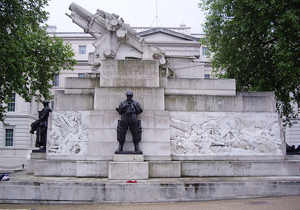
Often deemed to be one of London’s finest war memorials, if not the finest (indeed London Historians’ Mike Paterson has said so previously on these very pages), the Royal Artillery Memorial at Hyde Park Corner commemorates the more than 49,000 members of the Royal Artillery Regiment who died in World War I.

Royal-Artillery-Memorial3Designed by sculptor Charles Sargeant Jagger – who had served in the infantry during the war – and architect Lionel Pearson, it was unveiled in 1925 by Prince Arthur and Anglican priest, Rev Alfred Jarvis.

The monument, described by architectural historian Nikolaus Pevsner as a “masterpiece of British 20th century sculpture”, features an oversized stone replica of a 9.2 inch Howitzer Mk I atop a stone plinth accompanied by a series of four realistic bronze figures and a series of carved reliefs depicting scenes of military life.

The figures represent a gun crew: a driver, artillery captain, shell carrier and, controversially at the time, a dead soldier lying beneath his cape and helmet with an inscription from Shakespeare’s Henry V –  “Here was a royal fellowship of death”.

Three bronze panels were later added at the south end of the monument in commemoration of the almost 30,000 of the Royal Artillery who died in World War II. It was unveiled by the then Princess Elizabeth in 1949.

In late 2011, English Heritage completed a major restoration of the Grade I-listed work with a grant from the Bulldog Trust.

PICTURE: Above – David Adams. Below – virtusincertus/Flickr

This Week in London – Breaker’s Yard opens at Sutton House; WWI remembered; and, preparing for an Open House…

A former car breaker’s yard in Hackney has reopened as a “pocket park” of “installations and hidden spaces” following an extensive transformation project. Located next to the National Trust’s Tudor manor house, Sutton House, Breaker’s Yard incorporates elements from the site’s history including car tyres, a bus greenhouse, bespoke metal gates made out of more than 1,000 toy cars donated by celebrities, locals and artists, and a multi-storey caravan sculpture, The Grange, created by landscape designer Daniel Lobb who also designed the park in collaboration with arts-based educational charity, The House of Fairy Tales. The flower-filled park also features an ice-cream van, decorated by Rose Blake – daughter of Sir Peter Blake, which will act as a “playful shop”. The park is one of a 100 ‘pocket parks’ created under a $2 programme by the Mayor of London, Boris Johnson, in this case in collaboration with the National Trust and a host of volunteers. Entry to the park is free but admission charge applies to the house. For more on the park and Sutton House, see www.nationaltrust.org.uk/sutton-house/.

A photographic exhibition, Exploring London’s First World War Memorials, is running at City Hall near Tower Bridge in Southwark. Organised by the Mayor of London with aid from the War Memorials Trust, English Heritage and others, the exhibition is centred on new images of war memorials by London-based photographer James O Jenkins. As well as more traditional monuments, the memorials take the form of everything from fountains to paintings, buildings and landscape features. Entry is free. Runs until 12th September. For more, see www.london.gov.uk/events. Meanwhile, the Guildhall Library is showcasing images taken by photographer Simon Gregor for the Remembrance Image Project. Runs until 12th November and is part of a series of World War I commemorative events the library is running. Others include an installation by artist Rebecca Louise Law called Poppy made up of 8,000 paper poppies from the Royal British Legion. For more on World War I commemorative events at the Guildhall LIbrary follow this link.

Open House London’s programme is available for download from tomorrow (Friday, 15th August). The event, which will be held over the weekend of 20th and 21st September, will this year be conducted under the theme of ‘revealing’ and will feature more than 800 buildings, from Open House “favourites” like The Gherkin (aka 30 St Mary Axe) and the Foreign and India Office through to lesser known properties like Wandsworth’s Quaker Meeting House or the Butcher’s Hall in the City (some of which have to be booked before the weekend). There will also be a free programme of neighbourhood walks, engineering and landscape tours, cycle rides and talks by experts. To see the programme, head to www.openhouselondon.org.uk.

Send all items for inclusion to exploringlondon@gmail.com.

This Week in London – Celebrating the Year of the Bus; the British Library looks at WWI; medieval jousting and The Duke of Wellington; and, Blue Plaque nominations resumed…

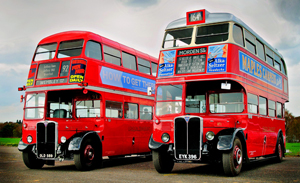
BusesAlmost 50 buses, from a horse-drawn model of the 1820s to the New Routemasters of today, will come to Regent Street on Sunday in celebration of the Year of the Bus. The ‘Regent Street Bus Cavalcade’ – which will stretch from Piccadilly Circus to Oxford Circus and will see the iconic West End street closed to traffic – will also feature a variety of free family events including Lego workshops (there will be a bus shelter and bus stop made entirely out of Lego outside Hamley’s toy shop), children’s theatre performances, a pop-up London Transport canteen and the chance to have a personal message recorded by the voice of London’s buses, Emma Hignett. There will also be an exhibition – Battle Bus – which provides information about the B-type bus (a newly restored version of which will be on display) which was used during World War I to carry soldiers to the frontline as well as ambulances and mobile pigeon lofts while jewellery company Tatty Devine will feature a special range of bus-inspired jewellery and hold jewellery-making workshops on board a London bus. The cavalcade, supported by the Regent Street Association and The Crown Estate, is part of Transport for London’s celebrations marking the Year of the Bus, organised in partnership with the London Transport Museum and the capital’s bus operators. The free event runs from 11.30am to 6pm. For more information, see www.tfl.gov.uk/yearofthebus and www.ltmuseum.co.uk.

A new exhibition of materials showing how people coped at home and on the front during World War I opens at the British Library in King’s Cross today as part of efforts to mark the war’s centenary. Enduring War: Grief, Grit and Humour features personal objects such as letters, a handkerchief bearing the lyrics of It’s A Long, Long Way to Tipperary, Christmas cards, school essays about airship raids over London sit and recruitment posters, humorous magazines and even a knitting pattern for balaclavas. Highlights include a letter in which Sir Arthur Conan Doyle expresses his concern over his son serving at the front, manuscripts by war poets such as Rupert Brooke as well as Wilfred Owen’s manuscript for Anthem for Doomed Youth, Vaughan Williams’ A Pastoral Symphony and Laurence Binyon’s For the Fallen. A specially commissioned video and ‘soundscape’, Writing Home, features personal messages contained on postcards written to and from the front. A range of events accompanies the free exhibition. Runs until 12th October. For more on the exhibition, see www.bl.uk.

Armoured knights on horseback can be seen jousting at Eltham Palace in south London this weekend. The former childhood home of King Henry VIII will host a Grand Medieval Joust which will also include displays of foot combat, the antics of a court jester, medieval music performances and a series of children’s events including a knight’s school. Runs from 10am to 5pm on both Saturday and Sunday. Admission charge applies. For more, see www.english-heritage.org.uk/events. Meanwhile, the Battle of Waterloo is being remembered at the Duke of Wellington’s home of Apsley House near Hyde Park Corner. Visitors will come face-to-face with Wellington’s troops and their wives, having the chance to take a look inside a soldier’s knapsack, see the equipment he used and the drills he performed as well as see the Battle of Waterloo recreated in vegetables. The Waterloo Festival – this year marks 200 years since Napoleon’s abdication and exile to Elba – runs from 11am to 5pm on Saturday and Sunday. Admission charge applies. For more, see www.english-heritage.org.uk/apsley/.

Nominations have reopened for English Heritage’s Blue Plaques scheme in London. In 2012 nominations were temporarily suspended while new funding for the scheme was found and thanks to one individual’s donation and the creation of a new Blue Plaques Club to support the scheme on an ongoing basis, they have now reopened. There are 880 official Blue Plaques on London’s streets – remembering everyone from Florence Nightingale to Fred Perry and Charles Darwin. For more and details on nominations, see www.english-heritage.org.uk/discover/blue-plaques/.

Send all items of interest for inclusion to exploringlondon@gmail.com.

LondonLife – ‘Belle’ and Kenwood House…

Belle3

Part of the history of Kenwood House in north London hits the big screen this week with the premiere of the film Belle.

The film, which opens on Friday, is inspired by the story of Dido Elizabeth Belle (played by Gugu Mbatha-Raw), the illegitimate daughter of Admiral Sir John Lindsay and a slave woman named Maria, who spent her childhood years at the property in the care of her great-uncle Lord Mansfield (played by Tom Wilkinson) in the second half of the 18th century.

The idea for film was apparently sparked when Belle‘s writer Misan Sagay saw a painting of Dido which hangs at Scone Palace in Scotland (a copy of the painting, which was formerly attributed to Johann Zoffany but is now unattributed, can be seen hanging in the Housekeeper’s Room at Kenwood).

Lauren Houlistan, English Heritage senior curator, says Dido grew up at Kenwood from about the age of five (about 1766) and seemed to have been considered one of the family.

She says that while Lord Mansfield was “very fond of her”, Dido’s position was, however, “lower than that of her white, legitimate cousin, Elizabeth – Dido was given a smaller allowance and is noted as only joining visitors after dinner”. Dido is known to have managed the dairy at Kenwood in 1779 and was described as “superintendent” over the daily and poultry yard (for more on Dido’s extraordinary life, see our earlier post here).

Kenwood House was undergoing restoration when the film was being made so scenes for the film set in the house were shot at various other English Heritage properties including Chiswick House and the Ranger’s House in Greenwich.

WHERE: Kenwood House, Hampstead Lane, Hampstead (nearest Tube stations are Golders Green and Archway/nearest train stations are Gospel Oak and Hampstead Heath); WHEN: 10am to 5pm daily; COST: Free; WEBSITE: www.english-heritage.org.uk/daysout/properties/kenwood/.

PICTURE: Gugu Mbatha-Raw stars as Dido Elizabeth Belle and Sarah Gadon Lady Elizabeth Murray and  in Belle. © Twentieth Century Fox.

10 significant sites from Georgian London – 8. Marble Hill House…

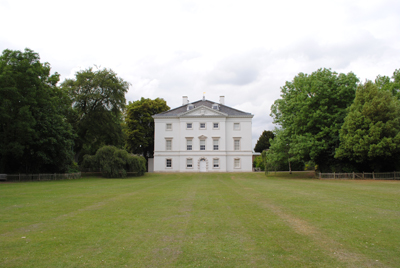
Marble-Hill-HouseA Palladian villa located on the bank of the Thames between Richmond and Twickenham, Marble Hill House was built in the mid to late 172os for Henrietta Howard, mistress of King George II and later Countess of Suffolk.

The symmetrical property – seen as a model for later Georgian-era villas in both England and overseas – was constructed by Roger Morris. He, along with Henry Herbert – a friend of the countess and later the 9th Earl of Pembroke – was also involved in its design as was Colen Campbell, architect to the Prince of Wales and future King George II, who is believed to have drawn up the first sketch designs for the house.

As well as being familiar with the work of neo-Palladian Inigo Jones, Lord Herbert had travelled in Italy and there is it believed had directly encountered the works of sixteenth century Italian architect Andrea Palladio whose architecture the property emulated (see our earlier post on Chiswick House here).

Key rooms include the ‘great room’ – a perfect cube, this is the central room of the house and boasts a wealth of gilded carvings; the dining parlour which had hand-painted Chinese wallpaper; and, Lady Suffolk’s rather sparsely furnished but nonetheless impressive, bedchamber.

Marble-Hill-GrottoHoward, who as well as being a mistress of King George II both before and after his accession to the throne in 1727, was a Woman of the Bedchamber to his wife, Queen Caroline of Ansbach, and, as a result, initially spent little time at the property (which coincidentally was built using money the King had given her while he was still Prince of Wales).

But after she become the Countess of Suffolk in 1731 when her estranged husband Charles Howard became 9th Earl of Suffolk after his brothers’ deaths, Lady Suffolk was appointed Mistress of the Robes, and following the death of her husband in 1733, retired from court.

In 1735 following the end of her intimate relationship with the King, she married a second time, this time happily, to George Berkeley, younger brother of the 3rd Earl of Berkeley and an MP. Together the new couple split their time between a house in Savile Row and Marble Hill. Her husband died in 1746 and Lady Suffolk, who had come to be considered a very “model of decorum”, died at Marble Hill in 1767.

Among the visitors who had spent time at the property were poet and neighbour Alexander Pope (responsible for the design of the grounds along with royal landscape gardener Charles Bridgeman), writer and satirist Jonathan Swift, and, in Lady Suffolk’s later years, Horace Walpole – son of PM Sir Robert Walpole and builder of the Gothic masterpiece Strawberry Hill.

Following Lady Suffolk’s death, later residents of the property included another Royal Mistress – Mrs Fitzherbert, mistress to the future King George IV, Swedenborgian Charles Augustus Tulk and Jonathan Peel, brother of Sir Robert Peel (you can read more about Sir Robert Peel here).

Following the latter’s death, the house stood empty for many years before publication of plans for a redevelopment by then owner William Cunard caused a public outcry which saw the property pass into the hands of the London County Council around the year 1900.

The house opened to the public as a tea room in 1903 and remained as such until the mid-1960s when, now in the hands of the Greater London Council, it underwent a major restoration project and was reopened as a museum. In 1996, the house – which now stands on 66 acres and can be seen in a much lauded view from Richmond Hill – came into the care of English Heritage.

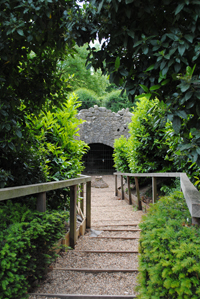
The grounds – Marble Hill Park – are open to the public for free and include a cafe located in the former coach house. Other features in the grounds include Lady Suffolk’s Grotto – pictured above – based on one at Pope’s residence nearby. It was restored after being rediscovered in the 1980s.

WHERE: Marble Hill House, Richmond Road, Twickenham (nearest Tub-e station is Richmond (1 miles) or train stations at St Margaret’s or Twickenham);  WHEN: Various times Saturday and Sunday – entry to the house by guided tour only; COST: £5.90 adults/£3.50 children (5-15 years)/£5.30 concession/£15.30 family; WEBSITE: www.english-heritage.org.uk/daysout/properties/marble-hill-house/.

Daytripper – Walmer Castle…

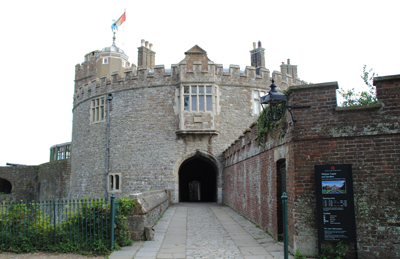
Walmer-CastleA coastal artillery fort built on the orders of King Henry VIII in light of a threatened Catholic invasion, Walmer Castle on the Kentish coast is officially the residence of the Lord Warden of the Cinque Ports.

What was a rather functional artillery platform has been embellished significantly in the years since it became the official residence of the Lord Warden in 1708, creating a comfortable home for holders of the title who have included Queen Elizabeth, the Queen Mother, the Duke of Wellington and bookseller WH Smith.

The ‘castle’, located about a two hour, 10 minute train journey from London (and then a mile walk from Walmer Station), was constructed in 1539 as one of a string of forts – others include nearby Deal Castle and the long gone Sandown Castle – designed to protect the watery stretch between Goodwin Sands and the coast known as the Downs.

Its low circular design, featuring a central ‘keep’ reached by a drawbridge and surrounded by a curtain wall with four projecting, semi-circular bastions, was influenced by the need to defend against heavy artillery and provide a platform for guns.

Initially garrisoned with ten gunners, four soldiers and two porters under the command of a captain and a lieutenant, Walmer saw little action during Tudor times but was the site of a siege during the Civil War.

Obsolete by the end of the 17th century, it was the Duke of Dorset who was the first Lord Warden (an office created in the thirteenth century to oversee the affairs of the Cinque Ports Confederation, a grouping of five ports including Hastings, Romney, Hythe, Dover and Sandwich) to use Walmer Castle as a residence, embarking on a renovation and extension of the existing structure.

Further alterations was carried out by successive Lords Warden, the most extensive being those made by  the 2nd Earl Granville, Lord Warden between 1865 and 1891, who commissioned architect George Devey to oversee the additions.

The gardens, meanwhile, which are well worth visiting in their own right, were also Granville’s work as well as that of an earlier Lord Warden, Prime Minister William Pitt the Younger, who was Lord Warden between 1792 and 1806.

The Duke of Wellington (Lord Warden between 1829 and 1852) reputedly enjoyed his time staying at the castle – he was even visited by the young Princess Victoria here in 1835 (she later stayed for a month with her family when Queen) and died here on 14th September 1852. His room can still be seen inside – the contents include the armchair he was sitting in when he died (the rooms also include a small museum dedicated to Wellington and another dedicated to William Pitt).

Not all Lords Warden enjoyed the property. Sir Winston Churchill, Lord Warden  between 1941 and 1965, never stayed here but Sir Robert Menzies, Prime Minister of Australia and Lord Warden between 1966 and 1978, did and the Queen Mother, Lord Warden between 1978 and 2002, was a regular visitor.

The castle was opened to the public soon after responsibility for it was transferred from the War Office to the Ministry of Works in 1905. It is now under the care of English Heritage and the rooms inside are decorated as they were in the 1930s (it was WH Smith who ensured historic furnishings at Walmer could not be removed). There are even a couple of holiday cottages on site which can now be rented.

WHERE: Walmer Castle, Kingsdown Road, Deal, Kent; WHEN: 10am to 6pm daily (until 6th July); COST: Adults £7.90/Children (5-15 years) £4.70/Concession £7.10; WEBSITE: www.english-heritage.org.uk/daysout/properties/walmer-castle-and-gardens/.

LondonLife – London from above…

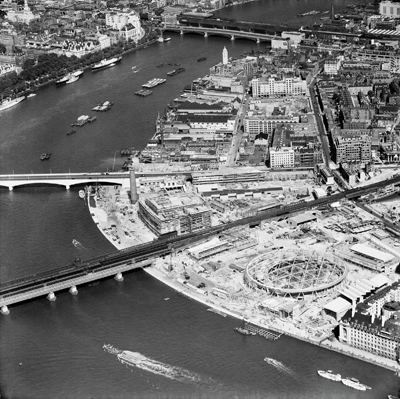
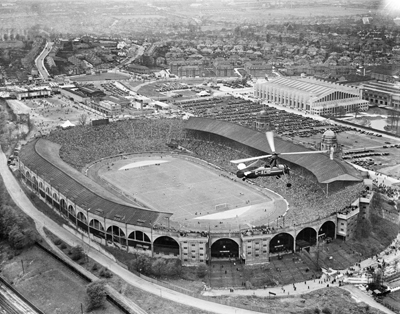
Aerofilms1A website launched last year – Britain from Above – boasts some unique perspectives on London among its more than 61,000 images including this one above of the South Bank site of the Festival of Britain – a national exhibition held at various venues across Britain as a post-war “tonic” for the nation – under construction, taken on 14th August, 1950. The website features images taken as part of a collection of aerial photographs taken between 1919 and 1953 by pioneering air survey company Aerofilms Ltd. It has been created by English Heritage, the Royal Commission on the Ancient and Historical Monuments of Scotland and the Royal Commission on the Ancient and Historical Monuments of Wales following their joint purchase of the company’s collection of more than 1.26 million negatives and 2000 photo albums and forms part of a four year project which aims to conserve and digitise some 95,000 of the oldest and most valuable photographs in the collection. Under the project, the general public is invited to share and record their knowledge and memories of the photographs featured. To get involved, head to www.britainfromabove.org.uk. Below can be seen an image of the FA Cup Final being played between Sheffield Wednesday and West Bromwich Albion (Sheffield were 4-2 victors) at Wembley Stadium on 27th April, 1935. PICTURES: © English Heritage. Aerofilms Collection EAW031792/© English Heritage. Aerofilms Collection EPW046905.

Aerofilms2

This Week in London – Data visualisation at the BL; Kenneth Williams honoured; and, celebrating ‘frost fairs’…

NASA's-Perpetual-Ocean-cropAn examination of the historical use of visual data has opened at the British Library. Beautiful Science, which is running in The Folio Society Gallery, features the work of scientists and statisticians down the ages and focuses on the key themes of public health, weather and evolution. Among items on display are Robert Fludd’s Great Chain of Being (1617), Florence Nightingale’s seminal ‘rose diagram’ (1858) which illustrated that more Crimean War deaths were being caused by poor hospital conditions that battlefield wounds, and a contemporary moving infographic from NASA showing ocean currents (pictured). A programme of events is running with the exhibition which closes on 26th May. Entry is free. For more, see www.bl.uk/beautiful-science. PICTURE: NASA’s Perpetual Ocean © NASA/Goddard Space Flight Center

Comic Kenneth Williams (1926-1988) has been honoured with an English Heritage Blue Plaque at the London apartment he lived in during the hey day of the ‘Carry On’ series of films during the 1960s. Williams lived in flat 62 on the top floor of Farley Court, located between Madame Tussauds and Baker Street station, between 1963 and 1970 during which he starred in such films as Carry on Cleo and Carry on up the Khyber and also appeared in radio comedy programmes such as Round the Horne and Just a Minute. For more, see www.english-heritage.org.uk/discover/blue-plaques/.

Two exhibitions celebrating London’s Frost Fairs are underway at the Museum of London and its Docklands sister. Frozen Thames: Frost Fair 1814 at the Museum of London in the City and Frozen Thames: Frost Fair 1684 at the Museum of London Docklands both feature objects, paintings, keepsakes, engravings and etchings from the museum’s collection. Highlights at the Museum of London exhibition include the only surviving piece of gingerbread from the 1814 fair, the last fair of its kind, as well as etchings by satirical artist George Cruikshank and a print by George Thompson while among the items on display at the Docklands museum are two paintings by a Dutch artist Abraham Hondius (c. 1625-91). Both exhibitions are free and both run until 30th March. For more, see www.museumoflondon.org.uk.

This Week in London – Finds from below London on display; Reassessing the German Renaissance; and, Powell and Pressburger’s Blue Plaque…

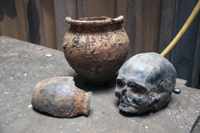
Roman-skull-found-at-Liverpool-Street-ticket-hall-_102065More than 50 objects – including skulls from the Roman era – unearthed as part of the Crossrail project have gone on display to the public for the first time. Portals to the Past also features a Roman cremation pot (which still contained remains when discovered), 16th century jewellery, and flint used by Londoners some 9,000 years ago. The free exhibition runs at the Crossrail Visitor Information Centre behind Centre Point at 6-18 St Giles High Street until 15th March. To coincide with it, Crossrail archaeologists will be running a series of lectures on Wednesday evenings starting at 6pm. No booking is required but numbers are limited so it’s recommended that attendees turn up early. For more information, www.crossrail.co.uk/sustainability/archaeology/archaeology-exhibition-portals-to-the-past-february-2014.

A new exhibition celebrating the artists of the German Renaissance opened at the National Gallery yesterday. Strange Beauty: Masters of the German Renaissance features paintings, drawings and prints by the likes of Hans Holbein the Younger, Albrecht Durer and Lucas Cranach the Elder and examines how perceptions of the pieces have changed over time. Works include Holbein’s Anne of Cleves, Hans Baldung Grien’s Portrait of a Young Man with a Rosary, and Matthias Grunewald’s drawing of An Elderly Woman with Clasped Hands. There is also a reconstruction of the Liesborn altarpiece, created in 1465 and originally housed at the Benedictine Abbey of Liesborn in Germany. Runs until 11th May. Admission charge applies. For more, see www.nationalgallery.co.uk.

Film-makers Michael Powell (1905-1990) and Emeric Pressburger (1902-1988) have been commemorated with the placement of an English Heritage Blue Plaque at the site of their former workplace, a flat in Dorset House, on Gloucester Place in Marylebone. It was from Flat 120 in the apartment block that they oversaw the production of some of their greatest films including The Life and Death of Colonel Blimp (1943), A Matter of Life and Death (1946), Black Narcissus (1947) and The Red Shoes (1948) between 1942 and 1947. Film director Martin Scorsese was among those who unveiled the plaque. For more, see www.english-heritage.org.uk/discover/blue-plaques/.

Send all items of interest for inclusion to exploringlondon@gmail.com.

10 significant sites from Georgian London – 1. Chiswick House…

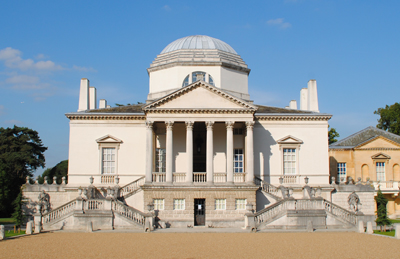
Chiswick-HouseAn icon of the Georgian era, Chiswick House in west London is one of the pre-eminent examples of neo-Palladian architecture in Britain and exemplifies the elegance of the time.

Designed by Richard Boyle, the third Earl of Burlington (1694-1753), the two storey, domed villa was inspired by what Lord Burlington had seen of ancient and sixteenth century architecture during his tours of Italy – in particular the work of Andrea Palladio – as well as the work of Palladio admirer, famed English architect Inigo Jones (his statue along with that of Palladio can be seen outside),

Chiswick-House2It was constructed in the 1720s, most likely between 1727 and 1729, on a site which had been purchased by the first Earl of Burlington (his grandfather) in 1682 and which was already occupied by a Jacobean-era house (this property, which the third Earl significantly renovated, was eventually pulled down in 1788). The interiors were designed by William Kent in collaboration with Burlington and feature luxurious rooms with velvet-covered walls such as the magnificently restored Blue Velvet Room.

The exact purpose of the property remains something of a mystery – it’s been suggested it was built to as a pavilion for private contemplation, grand entertainments and to house the Earl’s art collection and the fact it had no kitchen is supportive of such a conclusion. But there is evidence it was also used as a functioning house – the fact Lady Burlington died in her bedchamber in the premises in 1758 and the link which was eventually built by Lord Burlington between it and the older property on the estate are suggestive of this.

Chiswick-House3Whatever its purpose, the architectural and artistic masterpiece was complemented by formal gardens which Lord Burlington, again, along with the aid of Kent, extensively altered to create a highly planned but naturalistic-looking landscape. Known as the “birthplace of the English Landscape Movement”, the gardens have influenced everyone from ‘Capability’ Brown to the design of New York City’s Central Park.

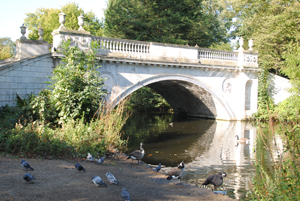
Following Lord Burlington’s death in 1753, the house passed into the hands of his grandson, the fifth Duke of Devonshire (his wife was the rather infamous Duchess Georgiana). He extended the house into a large mansion, adding new wings (these weren’t removed until the 1950s) and improved the gardens, adding the stone bridge (pictured) that still stands over the lake.

Upon the fifth Duke’s death in 1811, the house passed into the hands of the sixth Duke, known as the ‘Bachelor Duke’. He made considerable use of the property and guests included Tsar Alexander I of Russia, King Fredrick William III of Prussia, Queen Victoria and Prince Albert, and Tsar Nicholas I (again, of Russia). The Bachelor Duke also extended the grounds and brought a range of exotic animals into them, including an elephant, kangaroos and emus.

Upon his death in 1858, he left the property to his sister and after her death only four years later, it was subsequently let to some rather high-brow tenants including the Prince of Wales who received the Shah of Persia there in 1873,

The estate was eventually sold by the ninth Duke to the Middlesex County Council and after the war, gifted to the Minister of Works. In 1984, care for the house was transferred to English Heritage. The gardens are now owned by the London Borough of Hounslow.

Along with the Chiswick House and Gardens Trust, English Heritage recently completed a £12 million restoration of the gardens which, this year will host the fourth annual Camellia Festival next month. But this stunning property is well worth a visit any time of the year.

WHERE: Chiswick House, Burlington Lane, Chiswick (nearest Tube station is Turnham Green/nearest train station is Chiswick);  WHEN: 10am to 4pm Saturday and Sunday (until 31st March); COST: £5.90 adults/£3.50 children (5-15 years)/£5.30 concession/£15.30 family; WEBSITE: www.english-heritage.org.uk/daysout/properties/chiswick-house/ or www.chgt.org.uk.

This Week in London – William Shakespeare’s influence; new Fourth Plinth commissions; the car and landscape; and London Stories…

First up, apologies that we were unable to launch our new Wednesday series yesterday due to some technical difficulties (stayed tuned for next week). And now, on with the news…

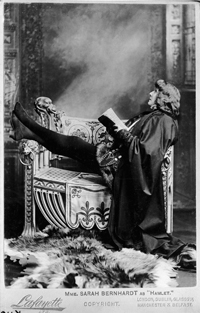
Sarah_Bernhardt_by_Lafayette_Ltd_1899_c__Victoria_and_Albert_Museum_London__William Shakespeare’s influence on successive generations of theatrical performance is the subject of a new exhibition at the V&A to mark the 450th anniversary of his birth on 23rd April. Shakespeare: Greatest Living Playwright centres on the Bard’s First Folio which, published in 1623, contains 36 plays including 18 works – Macbeth, The Tempest and Twelfth Night among them – which would be unknown without it. The display includes interviews, archive footage and photography and objects from the V&A collections as well as an audio-visual presentation by Fifty Nine Productions featuring interviews with contemporary theatre practitioners such as actors, directors and designers. Objects on display include a skull used by Sarah Bernhardt when playing Hamlet in 1899, an embroidered handkerchief used by Ellen Terry when playing Desdemona in 1881 at the Lyceum Theatre, and a pair of red boots worn by actor-manager Henry Irving in an 1887 production of Richard III. Runs in the V&A’s Theatre and Performance Galleries until 21st September. Admission is free. For more, see www.vam.ac.uk. PICTURE: Sarah Bernhardt as Hamlet, 1899, © Victoria and Albert Museum, London.

A skeletal horse and a giant hand giving a thumbs up will adorn the Fourth Plinth in Trafalgar Square during 2015-16. Hans Haacke’s Gift Horse is derived from an etching by painter George Stubbs and, while being a comment on the equestrian statue of King William IV which was intended for the plinth, also features an electronic ribbon displaying a live ticker of the London Stock Exchange on its front leg. Meanwhile David Shrigley’s Really Good is a 10 metre high hand giving a thumbs up – sending a positive message to those who see it. For more, see www.london.gov.uk/priorities/arts-culture/fourth-plinth.

The impact of the car on England’s landscape and the listed buildings of motoring history are the focus of a new exhibition in Wellington Arch. Carscapes: How the Motor Car Reshaped England features archive photographs, historic advertising, cartoons and motoring magazines as well as a 1930s traffic light, a petrol pump and other accessories and memorabilia. Wellington Arch, which is managed by English Heritage, is a fitting location for the exhibition – it was moved to its current position due to increasing traffic back in 1883. Admission charge apply. For more, see www.english-heritage.co.uk.

A new exhibition exploring some of the true and not-so-true stories inspired by and produced in London opens at the London Transport Museum in Covent Garden tomorrow. London Stories features the best entries from The Serco Prize for Illustration 2014 with more than 50 works of art on display depicting a well-known or obscure London narrative. The short-listed illustrations tackle everything from ghost buses to Buffalo Bill’s Wild West Show of 1887, a Pearly King and Queen, Lenin’s ‘Love letter to London’ and an escaped monkey jazz band. There’s also a host of musical and literary references – everything from Mary Poppins to Sweeney Todd and Oranges and Lemons. Tomorrow there will be a late opening of the exhibition complete with cash bar, DJ and story-telling for adults as well as the chance to create your own London story with illustration workshops and a photo-booth. Organised by London Transport Museum in partnership with the Association of Illustrators, it runs until 6th April. Admission charge applies. For more, see www.ltmuseum.co.uk.

Send all items of interest for inclusion to exploringlondon@gmail.com.

This Week In London – Kenwood House reopens; robot safari at the Science Museum; Kew Gardens illuminates for Christmas; Vivien Leigh at the NPG; and more…

Kenwood House in north London is being reopened to the public today following a £5.95 million restoration project which has seen the library returned to what Scottish architect Robert Adam had intended it to be. The project, which saw the Hampstead property closed since March last year, has also seen the restoration of three other Robert Adam-designed rooms – the entrance hall, Great Stairs and antechamber or entrance to the library – as well as the redecoration of four rooms in 18th century style, repainting of the exterior and the repair of the home’s roof – a job aimed at protecting the rooms and its stellar

Kenwood-House-Librarycollection of artworks by the likes of Rembrandt and Vermeer. English Heritage has also endeavoured to make the property more homely, replacing ticket desks and rope barriers with an open fire, warm rugs and leather couches on which visitors can relax. The library (pictured) was built and decorated to Adam’s designs between 1767 and 1770 as part of a wider remodelling of the villa for its owner Lord Chief Justice William Murray, 1st Earl of Mansfield. Redecorated many times since, it was restored in the 1960s but this redecoration was later found to be inaccurate. The Caring for Kenwood restoration project, which has also seen restoration of the Kenwood Dairy, was funded by a £3.89 million grant from the Heritage Lottery Fund as well as support from the Wolfson Foundation and other donors. To coincide with the reopening, a new app exploring Kenwood House has been released which can be downloaded for free from the iTunes store. For more, see www.english-heritage.org.uk/daysout/properties/kenwood/. PICTURE: English Heritage/Patricia Payne.

Head out on a “robot safari” this weekend with a special free event at Science Museum in South Kensington. Robot SafariEU, part of Eurobotics week, features 13 biometric robots from across Europe including an underwater turtle robot, a shoal of luminous fish robots, a robotic cheetah cub and Pleurobot, a robotic salamander. Roboticists from across Europe will be on hand to help visitors interact with the bots. Suitable for all ages, the event kicked off on Wednesday night and runs again on the weekend. Admission is free but timed tickets are required. For more, see www.sciencemuseum.org.uk/RobotSafari.

A memorial to author, scholar and apologist CS Lewis was dedicated at Westminster Abbey last Friday – the 50th anniversary of his death. Conducting the service, the Dean of Westminster, the Very Reverend Dr John Hall, said Lewis was “one of the most significant Christian apologists of the 20th century” and the author of stories that had “inspired the imagination and faith of countless readers and film-goers”. Douglas Gresham, younger stepson of Lewis, read from the author’s book, The Last Battle, at the service. The memorial is located in Poet’s Corner in the abbey’s south transept. For more see www.westminster-abbey.org.

A Blue Plaque commemorating Al Bowlly – described as “Europe’s most popular crooner and famous radio and record star” – will be unveiled at his home in Charing Cross Road this week. Bowlly, who lived between 1899 and 1941, was the voice beyond songs like Goodnight Sweetheart and The Very Thought Of You. The English Heritage Blue Plaque will be unveiled at Charing Cross Mansions, 26 Charing Cross Road – his home during the pinnacle of his career. For more, see www.english-heritage.co.uk/discover/blue-plaques/.

Kew Gardens has opened its gates after dark for the first time with a “captivating show of lights, sound and landscape” this festive season. A mile long illuminated trail, created in partnership with entertainment promoter Raymond Gubbay, will take visitors’ through the garden’s unique tree collections, kicking off at Victoria Gate where a Christmas village (and Santa’s Woodland Grotto) is located. The gardens will be open every Thursday to Sunday until 23rd December and then be open every night from 26th December to 4th January from 4.45pm to 10pm. Admission charge applies. For more, see www.kew.org/Christmas.

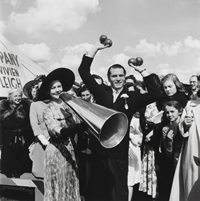
VivienLeighActress Vivien Leigh is the star of a new exhibition opening on Saturday at the National Portrait Gallery. Starring Vivien Leigh: A Centenary Celebration tells her story with a focus on her Academy Award-winning role in 1939’s Gone With The Wind. The display features more than 50 portraits of Leigh by the likes of Cecil Beaton, Angus McBean and Madame Yevonde – many of which have never been exhibited in the gallery before – and a selection of memorabilia including magazine covers, vintage film stills and press books. Among the photos will be a newly acquired image of Leigh and her husband, Laurence Olivier, taken by British photojournalist Larry Burrows at a garden party in 1949 (pictured), along with two rarely seen portraits of Leigh – one taken on the set of The School for Scandal by Vivienne in 1949 and the other by Paul Tanqueray in 1942. The exhibition will be held in Room 33 and runs until 20th July. Admission is free. For more, see www.npg.org.uk. PICTURE:  Copyright – Larry Burrows Collection 2013.

This Week in London – JMW Turner and the sea; welcoming the ‘new’ Tate Britain; Hyde Park Winter Wonderland; and more…

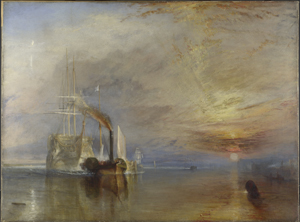
The-Fighting-Temeraire,-tugged-to-her-last-Berth-to-be-broken-up,-1838-©-The-National-Gallery,-LondonA major exhibition on painter JMW Turner’s fascination with the sea opens at the National Maritime Museum in Greenwich tomorrow. Turner and the Sea is the first “full scale” examination of the artist’s relationship with the sea and features works on loan from some of the world’s greatest art institutions. Highlights among the oils, watercolours, prints and sketches on show include The Fighting Temeraire (1839) (pictured), Snow Storm – Steam-Boat off a Harbour’s Mouth (1842), Staffa, Fingal’s Cave (1832), Whalers (1845) and Calais Pier (1803) as well as Turner’s largest painting and only royal commission, The Battle of Trafalgar (1824). The works are being exhibited alongside works by other notable British and European artists including Thomas Gainsborough, Willem van de Velde, Claude-Joseph Vernet and John Constable. Runs until 21st April. Admission charges apply. See www.rmg.co.uk for more details. PICTURE: The Fighting Temeraire, tugged to her last Berth to be broken up, 1838 by JMW Turner, 1839, oil on canvas. © The National Gallery, London.

• The ‘new’ Tate Britain was unveiled to the public this week following a £45 million upgrade and refurbishment and the house-warming party is on this weekend. The work has seen the oldest part of the Grade II* listed building in Millbank transformed thanks to architects Caruso St John and sees the main entrance reopened as well as The Whistler Restaurant, new learning studios an a new archive gallery as well as a new cafe and bar for Tate members. It’s unveiling follows the opening in May of 10 new galleries and new BP displays including the chronological presentation of the Tate’s collection of British art. The house-warming party, a free event, takes place on Saturday from 3pm to 10pm and features music, the giving out of free limited edition prints and a series of talks, film screenings, workshops and even a treasure hunt. For more, see www.tate.org.uk.

Hyde Park Winter Wonderland kicks off again tomorrow with highlights including the ice sculptures of ‘The Magical Kingdom’, the giant observation wheel, the ice rink and Santa Land. There will also be more than 200 chalets in the Angels Christmas & Yuletide Markets, the Bavarian village is back, and Zippo’s Circus will also be returning with a range of shows include Cirque Berserk for the evening crowd. Entry is free but tickets for various attractions can be bought at www.hydeparkwinterwonderland.com. Runs until 5th January.

ON NOW: The Young Durer: Drawing the Figure. This exhibition at the Courtauld Gallery looks at the figure drawing of the young Albrect Durer (1471-1528), focusing on works created in his formative years between 1490-1496. Among the exhibition’s highlights is Mein Agnes (My Agnes), A Wise Virgin, and Three Studies of Durer’s left hand. The exhibition runs until 12th January.

• FURTHER AFIELD: Only a hop, skip and jump from London lies Down House, former home of naturalist Charles Darwin, in Kent. English Heritage are this weekend marking the anniversary of publication of his controversial book On the Origin of Species by Means of Natural Selection (it was published on 24th November, 1859) with a range of specialist talks and tours at the property this weekend. For more on the weekend, see www.english-heritage.org.uk/daysout/events/origin-weekend-dh-23-nov/

Around London: Heritage Open Days; Afghanistan supply lines; and Leslie Howard’s Blue Plaque…

It’s a good weekend for a day trip with heritage sites all around the fringes of greater London throwing their doors open this weekend as part of the annual Heritage Open Days event. Among places taking part in this year’s event – which will be followed by Open House London next weekend – are Cleaves Almshouses – established in 1669 and located in Kingston upon Thames, Watford’s oldest building – St Mary’s Church, Lopping Hall in Loughton (so named for the fact it was given to the townspeople in exchange for lopping rights in Epping Forest), and St George’s RAF Chapel of Remembrance at Biggin Hill Airfield in Kent. There are more than 4,500 properties taking part over the weekend, which kicks off today and runs until Sunday, across England. For more information – including full listings of all premises taking part, check out www.heritageopendays.org.uk.

A new display taking at in-depth look at the complexities of supplying soldiers in Afghanistan’s Helmand Province opened at the Imperial War Museum this week. War Story: Supplying Frontline Afghanistan follows the journey from RAF Brize Norton in the UK to Camp Bastion in Afghanistan and then to forward operating bases and patrol bases on the frontline and features photographs, interviews and time lapse footage collected by IWM staff on trips to Afghanistan undertaken last year and this year – the first time IWM teams have visited an active theatre of conflict since World War I. Runs until 27th April. For more, see www.iwm.org.uk.

A blue plaque honouring actor and film director Leslie Howard was unveiled by English Heritage at his former childhood home in Upper Norwood in south London last week. Born in the London suburb of Forest Hill, his family moved to Vienna when was only three-years-old but returned to London five years later and lived at 45 Farquhar Road in Upper Norwood for the next four years before moving to another address nearby. Howard made his West End debut in 1917 – adopting the stage name Leslie Howard in favor of his birth name Leslie Howard Steiner – subsequently appeared on stage and in films including Pygmalion (1938) and Gone with the Wind (1939). He died in 1943 when the plane he was in was shot down by enemy fire over the English Channel. For more, see www.english-heritage.org.uk/discover/blue-plaques/.

LondonLife – New life for the Blue Plaques scheme…

Alexander-Pope

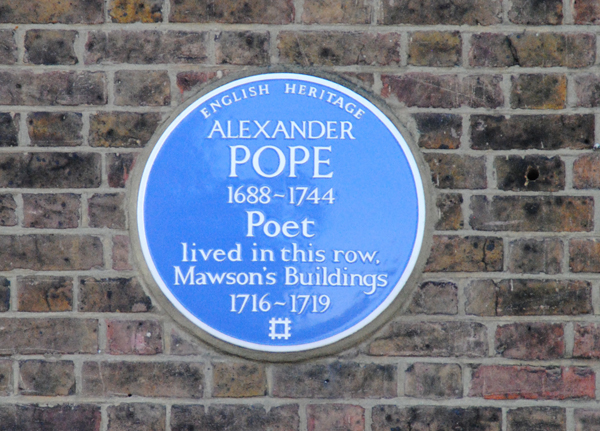
The humble Blue Plaque is set for a new lease on life following an announcement this week. The London Evening Standard has announced it will help breathe new life into English Heritage’s Blue Plaque’s scheme this week with the scheme – which was suspended in January due to funding cuts – set to relaunch next year in association with the newspaper. As many as 20 new plaques have already been funded through a £80,000 donation from property developer David Pearl, says the paper, and the public are being urged to help financially support the programme at www.english-heritage.org.uk/donate. The Standard also noted that from next year its readers will be able to vote for candidates for future plaques. Each Blue Plaque costs about £4,000 to create and install. Pictured is a Blue Plaque commemorating poet Alexander Pope’s residence in a Chiswick property between 1716-1719.  The property is now the Mawson Arms public house.

Treasures of London: The Americus Backers grand piano…

Americus-Backers-piano

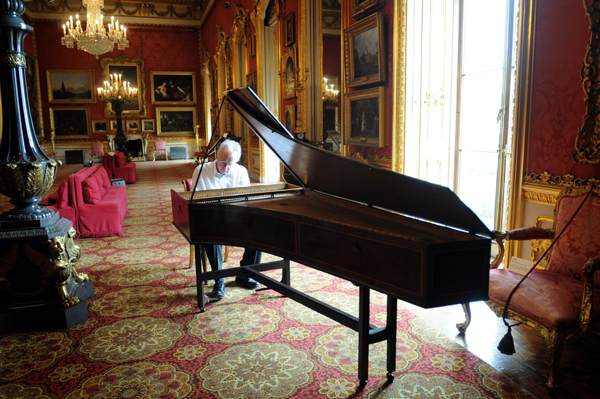
The oldest surviving English grand piano, built in London in 1772 by Americus Backers, has gone on display at Apsley House in London, home of the 1st Duke of Wellington, Arthur Wellesley.

Known to have been played by the Iron Duke’s wife Kitty (nee Pakenham), it has been suggested (although remains unconfirmed) that the piano belonged to the Iron Duke’s father, Lord Mornington, who was politician and a composer.

The piano, which has been loaned to English Heritage by Lord and Lady Douro and is expected to remain at the house for the foreseeable future, is the earliest example of a piano with loud and soft pedals and is illustrative of the impact Backers, described by some as “the father of the English grand pianoforte style”, had on the development of piano design.

While much of the detail of Backers’ life  remains obscured, he was apprenticed to a piano builder in Saxony before coming to England in the 1750s and taking up residence in Jermyn Street in 1763 where he apparently lived until his death in 1778. He is known to have built both pianofortes and harpsicords.

The piano, the only known pianoforte by Backers still existing, was previously on loan to the Russell Collection in Edinburgh.

In celebration of the return of the piano to Apsley House, the residence is hosting a special concert this Tuesday (21st May), between 7pm-9pm – the first time the piano will have been heard for at least 5o years (albeit for a short period only with most of the concert performed on a 1781 Ganer. ‘The Duke of Wellington’s Music of the French Wars’ will be held in the Waterloo Gallery. Tickets are £45 each and limited seats are available. Call English Heritage Customer Services on 0870 333 1183 for bookings or see www.english-heritage.org.uk. PICTURE:  Professor David Owen Norris, who has researched and devised the programme has been devised the programme for the evening, playing the piano.He will be joined by the soprano Amanda Pitt. Image courtesy of English Heritage.

Around London – Tudor and Stuart fashion; Wellington Arch treasures; Hunterian celebrates 200 years; Regent Street and the world; and, Kaffe Fassett at the FTM…

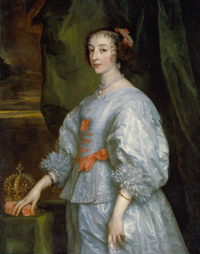
Queen-Henrietta-Maria-(Royal-Collection)A landmark exhibition looking at fashion in the Tudor and Stuart eras opens at The Queen’s Gallery, Buckingham Palace, tomorrow. In Fine Style: The Art of Tudor and Stuart Fashion features everything from a diamond ring given by King Charles I to his then 19-year-old wife Henrietta Maria, an ornate set of armour which belonged to 13-year-old Henry, Prince of Wales (the older brother of King Charles I – he died of typhoid fever at the age of 19), and a diamond-encrusted box in which Queen Mary II kept black fabric patches worn to conceal blemishes or highlight the creaminess of skin. A 58.5 carat pearl, named ‘La Peregrina’ (‘The Wanderer’) and given to Queen Mary I as an engagement gift from Philip II of Spain (and later presented to Elizabeth Taylor by Richard Burton on Valentine’s Day, 1969), is also among the objects on show along with a pendant featuring a miniature of Queen Elizabeth I. The exhibition also features more than 60 portraits from the Royal Collection showing the fashions of the time, including a portrait by Sir Peter Lely of court beauty Frances Stuart, Duchess of Richmond, who famously refused to become King Charles II’s mistress. Admission charge applies. Runs until 6th October. For more, see www.royalcollection.co.uk. PICTURE: Sir Anthony van Dyck, Queen Henrietta Maria, 1609-69. Royal Collection Trust/© 2013, Her Majesty Queen Elizabeth II.

A medieval crozier and bejewelled ring discovered in Cumbria in 2010 are on public display for the first time in a new exhibition at Wellington Arch. The artefacts, which were discovered at Furness Abbey, are featured in an English Heritage exhibition, A Monumental Act: How Britain Saved Its Heritage, which explores how the Ancient Monuments Act of 1913 helped protect Britain’s historical fabric. Other objects in display include some of the historic artefacts found in the 20 years following the act – a Roman bronze weight from Richborough Roman Fort in Kent and a 13th century sculpture of Christ found at Rievaulx Abbey in Yorkshire. Admission charge applies. The exhibition runs until 7th July. For more, see www.english-heritage.org.uk/daysout/properties/wellington-arch/.

The Hunterian Museum at the Royal College of Surgeons is celebrating its bicentenary this year and to mark the occasion, they’re holding a free exhibition focusing on the museum’s collections of human anatomy and pathology; natural history and artworks. The display will consider how the objects in the collection have informed the medical world and fallen under the gaze of visitors who have included surgeons as well as monarchs. The exhibition in the Qvist Gallery at the museum in Lincoln’s Inn Fields opens on Tuesday, 14th May, and runs until 9th November. For more, see www.rcseng.ac.uk/museums/hunterian.

The world comes to Regent Street this Sunday with the ‘InsureandGo The World on Regent Street’ festival. Representatives from countries including Argentina, Egypt, Trinidad and Tobago, Turkey and China as well as the UK will showcasing the best of each country’s culture, music and dance, art, food and fashion. Activities will include tango lessons from Argentina, professional henna drawing from Egypt, a steel band from Trinidad and Tobago, and a Chinese drumming performance and lion dancing. The street will be closed for the day. For more, see www.regentstreetonline.com.

On Now: Kaffe Fassett – A Life in Colour. This exhibition at the Fashion and Textile Museum in Bermondsey Street celebrates the work of American-born artist Kaffe Fassett and features more than 100 works including nine foot wide knitted shawls, coats and throws, patchwork quilts and a ‘feeling wall’ where visitors can touch the textiles on display. Admission charge applies. Runs until 29th June. For more, see www.ftmlondon.org.

Around London – Chiswick House furnishings; Miniature German Bibles; free buses to Isabella Plantation; and, marking the 50th anniversary of the Profumo Affair…

A collection of furniture originally belonging to the 5th Duke of Devonshire and his wife, Georgiana, the Duchess of Devonshire, has been returned to the Palladian masterpiece, Chiswick House, in west London. The furniture – which includes four French fauteuils (open arm chairs) by the leading Parisian chair maker Jean-Baptiste Tilliard, four neo-classical chairs with caned backs and seats and a ladies’ roll-top writing desk – was purchased by English Heritage at an auction in 2010 with the assistance of Art Fund. It had been removed from the house to the family estate in the late 1800s. Extensive conservation work on the furnishings was carried out thanks to the support of The Art Fund, Chiswick House Friends and The Pilgrim Trust prior to their being restored to the house. They are now displayed in the bedchamber while a mahogany pole-screen – designed in about 1730 by William Kent, protégé and collaborator of the house’s first owner and architect, Richard Boyle, 3rd Earl of Burlington – has also been acquired and will be displayed in Lord Burlington’s Blue Velvet Room. Admission charge applies. For more information, see  www.english-heritage.org.uk/daysout/properties/chiswick-house/ or www.chgt.org.uk.

German miniature picture Bibles are the subject of a new exhibition at The Courtauld Gallery. The third display in the gallery’s Illuminating Objects programme, the display centres on Bibles created by two sisters who belonged to a family of printmakers, Johanna Christina (Or Christiana) and Maria Magdalena Kusel, in Augsburg in the late 17th century. While many of the 17th century ‘thumb’ Bibles were created for children, the Kusel sisters most likely made theirs for private devotion. It is believed this is the first time the two Bibles have gone on public display. Visitors to the Courtauld website are also able to turn the Bible’s pages. Runs until 22nd July. For more, see www.courtauld.ac.uk/gallery/exhibitions/2013/illuminating/bible.

Royal Parks are offering free travel to the newly improved Isabella Plantation – a 40 acre ornamental woodland garden in Richmond Park – this Sunday. The minibus service, which will travel from the traffic lights on Ham Common to the plantation, will be running between 10am and 4pm. The plantation, which features azaleas, rhododendrons, camellias, magnolias, daffodils and bluebells, has recently been the subject of a £1.5 million improvement project funded by the Heritage Lottery Fund and BIG Lottery Fund. Improvements have included enhancements to ponds and streams and upgrades to the existing path network. For more, see www.royalparks.org.uk/parks/richmond-park.

A display commemorating the 50th anniversary of the Profumo Affair has opened at the National Portrait Gallery. Scandal ’63: The Fiftieth Anniversary of the Profumo Affair looks in depth at the scandal in which Secretary of State for War John Profumo was found to have had a brief affair with nightclub hostess and model Christine Keeler who happened to also romantically involved with Yevgeny Ivanov, a senior Russian naval attache (rather controversial during the Cold War). The display features a vintage print of one of Lewis Morley’s seated nude portraits of Keeler as well as press images of other key protagonists in the matter including her friends Mandy Rice-Davies and Paula Hamilton-Marshall. Also featured is on-set photographs of Keeler taken to publicise The Keeler Affair, a film which was banned in Britain (and later remade in 1989), images of a now lost work of pop art by Pauline Boty featuring four of the key players (it was titled Scandal ’63), and a pastel of Keeler by Stephen Ward (pictured). Admission is free. Runs until 15th September. For more, see www.npg.org.uk.

Around London – Margaret Thatcher’s funeral; telling the Jewel Tower’s story; depot open weekend; and, Designs of the Year…

Margaret Thatcher’s funeral will be held next Wednesday at St Paul’s Cathedral from 11am with Queen Elizabeth II among those attending (the first time she has attended the funeral of a British politician since Sir Winston Churchill’s in 1965). The funeral procession of the former Prime Minister, who died on Monday aged 87, will start at the Houses of Parliament and make its way down Whitehall to Trafalgar Square before moving down the Strand, Fleet Street and Ludgate Hill to St Paul’s Cathedral. Baroness Thatcher’s coffin will carried in a hearse for the first part of the journey and will be transferred to a gun carriage drawn by six horses of the King’s Troop Royal Horse Artillery at St Clement Danes church on the Strand for the final part of the journey. There will be a gun salute at the Tower of London. Meanwhile, a Book of Condolence has opened at St Margaret’s Church, beside Westminster Abbey, this morning and will be available for people to pay their respects until 17th April, during the church’s opening hours. St Margaret’s – which stands between Westminster Abbey and the Houses of Parliament – is commonly known as the parish church of the House of Commons.

The story of the Jewel Tower – one of the last remaining parts of the medieval Palace of Westminster – is told in a new exhibition at the historic property. Now in the care of English Heritage, the tower – located to the south of Westminster Abbey, was built in 1365 to house King Edward III’s treasury, later used as King Henry VIII”s ‘junk room’, the record office for the House of Lords, and, from 1869, served was the “testing laboratory” for the Office of Weights and Measures. The exhibition, which opened this month, is part of the English Heritage celebrations commemorating the centenary of the 1913 Ancient Monuments Act. The Jewel Tower is open daily until November. Admission charge applies. For more, see www.english-heritage.co.uk.

See some of the earliest underground trains, a Lego version of Baker Street station and ride the Acton Miniature Railway. The London Transport Museum’s depot in Acton is holding it’s annual spring open weekend this Saturday and Sunday and in celebration of the Underground’s 150th anniversary, attractions will include the Metropolitan Steam Locomotive No. 1 and the recently restored Metropolitan Carriage 353 along with model displays, rides on the miniature railway, film screenings, talks, and workshops. Wales’ Ffestiniog Railway team – celebrating their own 150th anniversary – will also be present with the narrow gauge train, Prince. Open from 11am to 5pm both days. Admission charge applies. For more, see www.ltmuseum.co.uk.

Now On: Designs of the Year. The Design Museum has unveiled contenders for the sixth annual Designs of the Year competition and you can what they are in this exhibition. Consisting of more than 90 nominations spanning seven categories, the nominated designs include the Olympic Cauldron by Heatherwick Studio, The Shard – western Europe’s tallest building – by Renzo Piano, a non-stick ketchup bottle invented by the Varanasi Research Group at MIT, and Microsoft’s Windows phone 8. The exhibition runs until 7th July – the winners will be announced this month. Admission charge applies. For more, see www.designmuseum.org.

Around London – Prehistoric life on show at Wellington Arch; Your favourite Michael Caine movie; Lichtenstein at the Tate; and, looking at Classical Greece through 19th century eyes…

Apologies for missing our series on Great Victorian Projects yesterday. It will resume next week. In the meantime…

Fourteen rare Victorian paintings of life in prehistoric times have gone on display at Wellington Arch near Hyde Park Corner. The watercolors – which were commissioned by MP and archaeologist Sir John Lubbock in 1869 and have never before been displayed in public together – form the centrepiece of a new English Heritage exhibition, The General, The Scientist & The Banker: The Birth of Archaeology and the Battle for the Past. The “ground-breaking” works were painted by animal illustrator Ernst Griset and were ‘informed’ by then-recent archaeological finds including stone tools and fossils. The exhibition, which also includes rare artefacts, drawings and manuscripts tells the story of archaeological pioneers who fought to bring about recognition and legal protection for Britain’s ancient monuments and looks in detail at the achievements of three men – scientist Charles Darwin, archaeologist General Pitt-Rivers and banker Sir John Lubbock. The exhibition is the first of five being held in the arch’s Quadriga Gallery to mark the centenary of the 1913 Ancient Monuments Act. Runs until 21st April. Admission charge applies. For more, see www.english-heritage.org.uk/daysout/properties/wellington-arch/.

Get Carter or The Ipcress File? Alfie or Educating Rita? The Museum of London is asking fans to vote for their favourite Michael Caine movie ahead of the opening of their new free exhibition on the actor next month. Voting for Caine on Screen can be found by following this link and closes at 5pm on 14th March after which the top four films will be revealed.  A full list of Sir Michael’s movies – and there’s more than 100 – is available on the voting form. More on the exhibition to come.

On Now: Lichtenstein: A Retrospective. This exhibition on level two of the Tate Modern on South Bank is the first major retrospective on the Pop artist Roy Lichtenstein (1923-1997) for 20 years and brings together more than 125 of his most definitive paintings and sculptures as it reassesses his work and legacy. Key works include Look Mickey (1961), Whaam! (1963) and Drowning Girl (1963). Co-organised by The Art Institute of Chicago and Tate Modern, it runs until 27th May. Admission charge applies. For more, see www.tate.org.uk.

On Now: In search of Classical Greece: Travel drawings of Edward Dodwell and Simone Pomardi, 1805-1806. This free exhibition at the British Museum looks at Greece through the eyes of classical late eighteenth and early nineteenth century scholar Edward Dodwell and his Italian artist Simone Pomardi and features works produced during their travels in 1805-06. Lent by the Packard Humanities Institute, the works have never been seen in public before. See them in Room 90. Runs until 28th April. For more, see www.britishmuseum.org.