Bonfire Night – Five places in London featured in the events of the Gunpowder Plot…

It’s 5th November and that means Bonfire Night, the annual event featuring bonfires, effigies of Guy Fawkes (and others), and fireworks displays in commemoration of the November, 1605, foiling of a conspiracy to kill King James I (and many others) by blowing up the House of Lords (you can read more about it in earlier posts here and here).

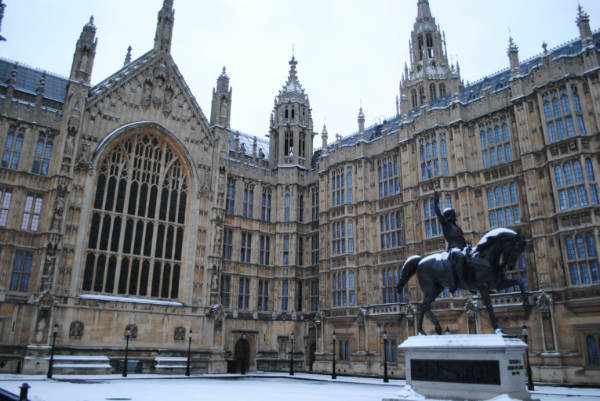
Looking across Old Palace Yard outside the Houses of Parliament to the southern end of Westminster Hall. PICTURE: David Adams

Here’s five places of significance to the story of the plot:

1. The Houses of Parliament: It was in the undercroft beneath the House of Lords that Guy Fawkes was found with 36 barrels of gunpowder. The cellar is now gone – having been destroyed when the Houses of Parliament burned down in 1834.

Subscribe for just £3 a month to support our work and access all of our stories…

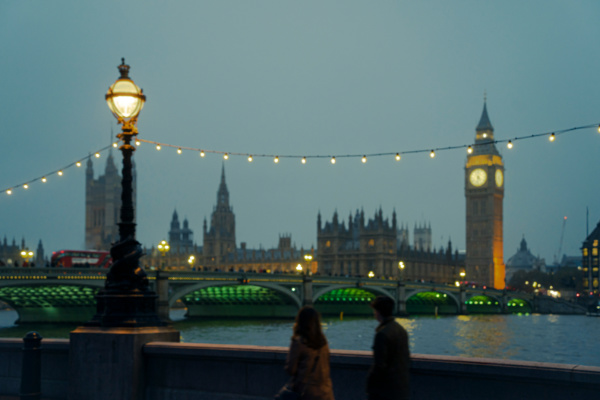
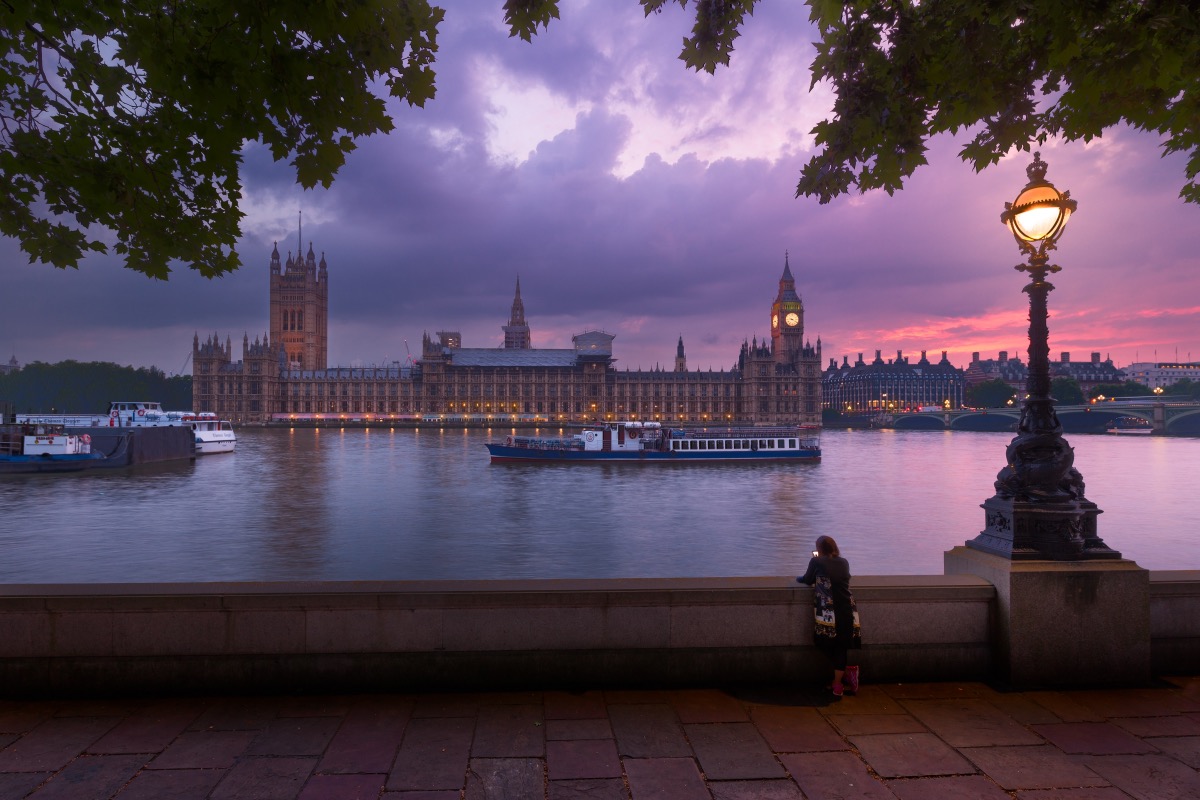
LondonLife – View of Westminster Bridge…

PICTURE: Jeffrey Zhang/Unsplash

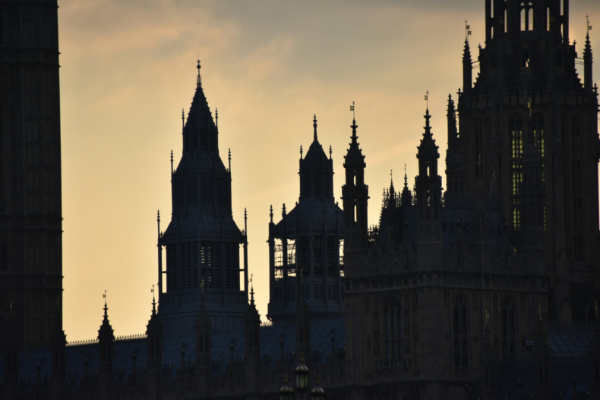
LondonLife – Parliamentary pinnacles…

PICTURE: Maria Vartic/Unsplash

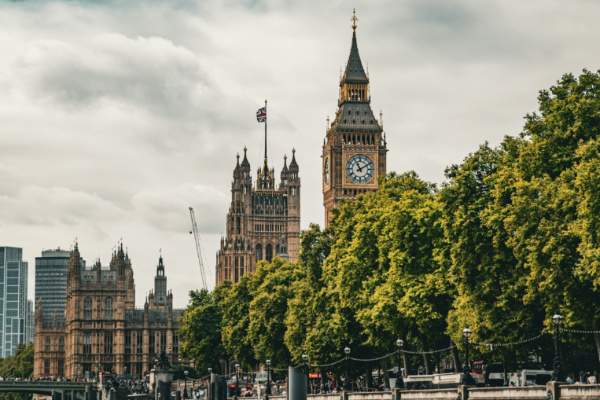
LondonLife – View from the river…

PICTURE: Clovis Wood Photography/Unsplash

Looking south towards the Houses of Parliament from the River Thames.

LondonLife – Scenes from the State Opening of Parliament…

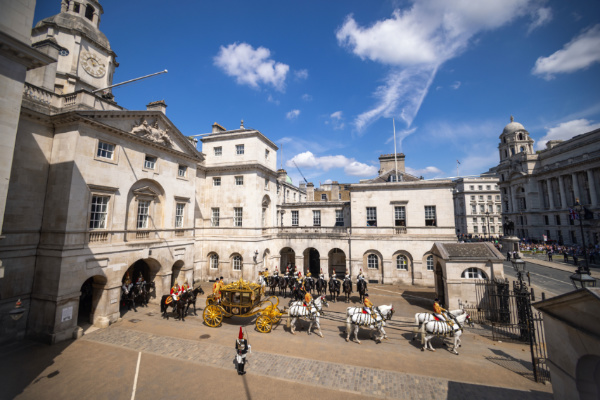
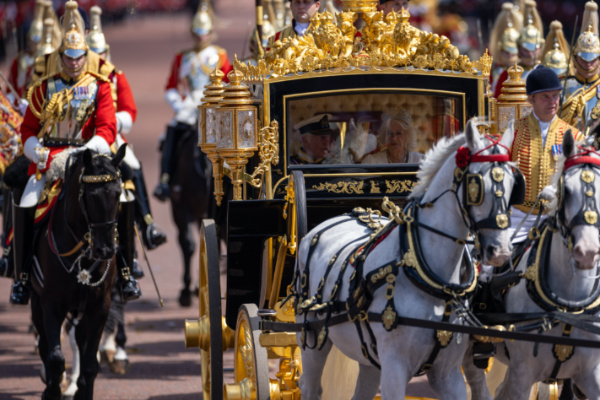
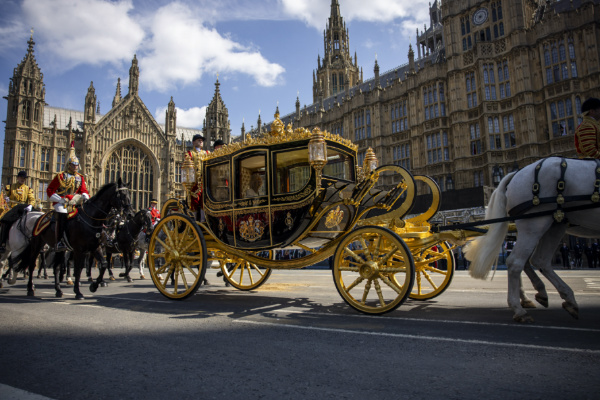
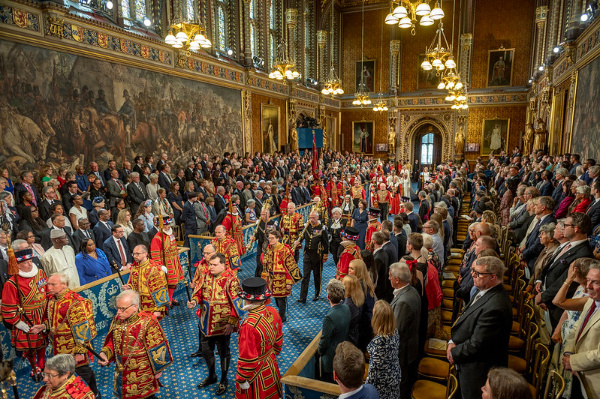
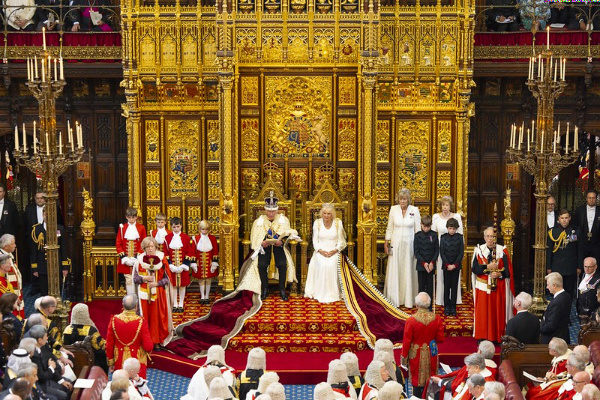
Last Wednesday, 17th July, was the State Opening of Parliament, the first since the new Labour government took office. More than 1,100 members of the armed forces were in attendance, accompanied by 200 military horses, as the procession of King Charles III and Queen Camilla made its way to the Houses of Parliament where the King delivered a speech outlining the government’s plans.

King Charles III is escorted by The Sovereign’s Escort of The Household Cavalry Mounted Regiment through Horse Guards Tilt Yard as part of the State Opening of Parliament parade. PICTURE: Petty Officer Joel Rouse/UK MOD © Crown copyright 2024
King Charles III, and Queen Camilla, escorted by The Sovereign’s Escort of The Household Cavalry Mounted Regiment. PICTURE: Corporal Nanda Atherton/© MoD Crown Copyright 2024

The procession travels past the Houses of Parliament to the Sovereign’s Entrance. PICTURE: Sergeant Rob Kane/© MoD Crown Copyright 2024
Heralds, Black Rod, the Lord Speaker, Lord Chancellor and leaders of the House of Lords and Commons are among those proceeding through the Royal Gallery ahead of King Charles III and Queen Camilla. PICTURE: Copyright House of Lords 2024/Photography by Roger Harris © (licensed under CC BY-NC-ND-2.0)
King Charles III delivers the King’s Speech from the throne, written by the government, during the State Opening of Parliament. PICTURE: Copyright House of Lords 2024/Photography by Roger Harris © (licensed under CC BY-NC-ND-2.0)
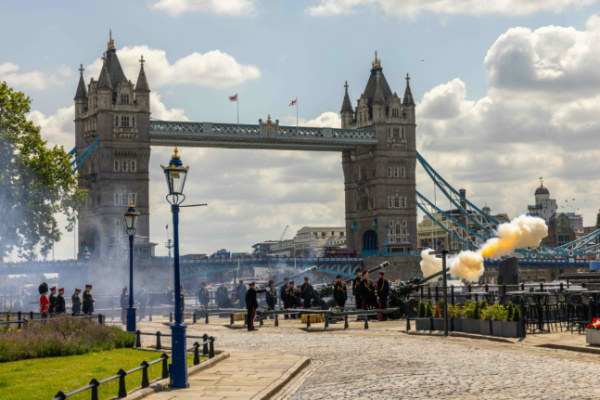
Members of the the Army’s oldest regiment, The Honourable Artillery Company at the Tower of London firing a 41-gun signal salute. A further 62-round celebratory gun salute sounded to mark the 77th birthday of Her Majesty Queen Camilla. PICTURE: Cpl Danielle Dawson/UK MOD © Crown copyright 2024.

London pub signs…The Red Lion, Westminster…

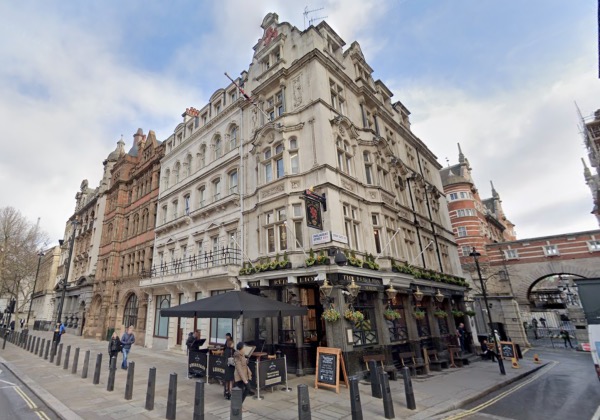
The Red Lion pub. PICTURE: Google Maps

There has been a pub on this storied Whitehall location, located between conveniently for politicians between the Houses of Parliament and Downing Street, since at least the 15th century.

PICTURE: TomasEE (licensed under CC BY 3.0)

Then named Hopping Hall, a pub is recorded on this site at 48 Parliament Street (on the corner with Derby Gate) as early as 1434. It passed into the hands of the Crown by 1531 and by the early 19th century it had taken on the name of the Red Lion (at the time, it was visited by Charles Dickens as a young man). The current, now Grade II-listed, building was erected on the site in 1890.

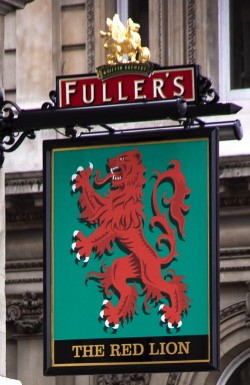
The pub’s name – one of the most common in England (there’s several more in London alone) – apparently originated at the ascension of the Scottish King James I to the throne in 1603. The King ordered that all significant buildings display the red heraldic lion of Scotland and that included pubs. Hence the Red Lion.

The four storey pub has been popular among politicians (and journalists interviewing politicians) including Prime Ministers – indeed, it’s claimed to have served every PM up until Edward Heath in the 1970s (as such it’s one of the many pubs in London which features division bells, although the function of these has apparently been replaced by an app).

For more, see www.redlionwestminster.co.uk.

LondonLife – A tumultuous week in national politics and (another) new PM…

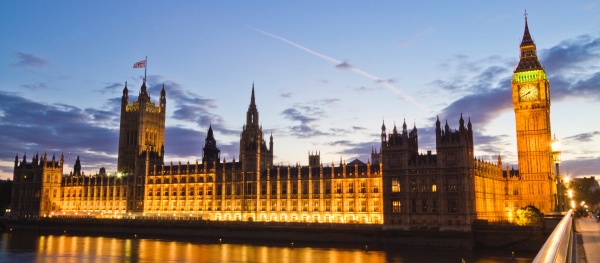
The Houses of Parliament (pictured here in 2020). PICTURE: Yaopey Yang/Unsplash

Rishi Sunak was appointed as the nation’s third Prime Minister in less than two months today following Liz Truss announcement she would resign on Friday. Sunak visited King Charles III at Buckingham Palace after Truss visited earlier to officially resign.

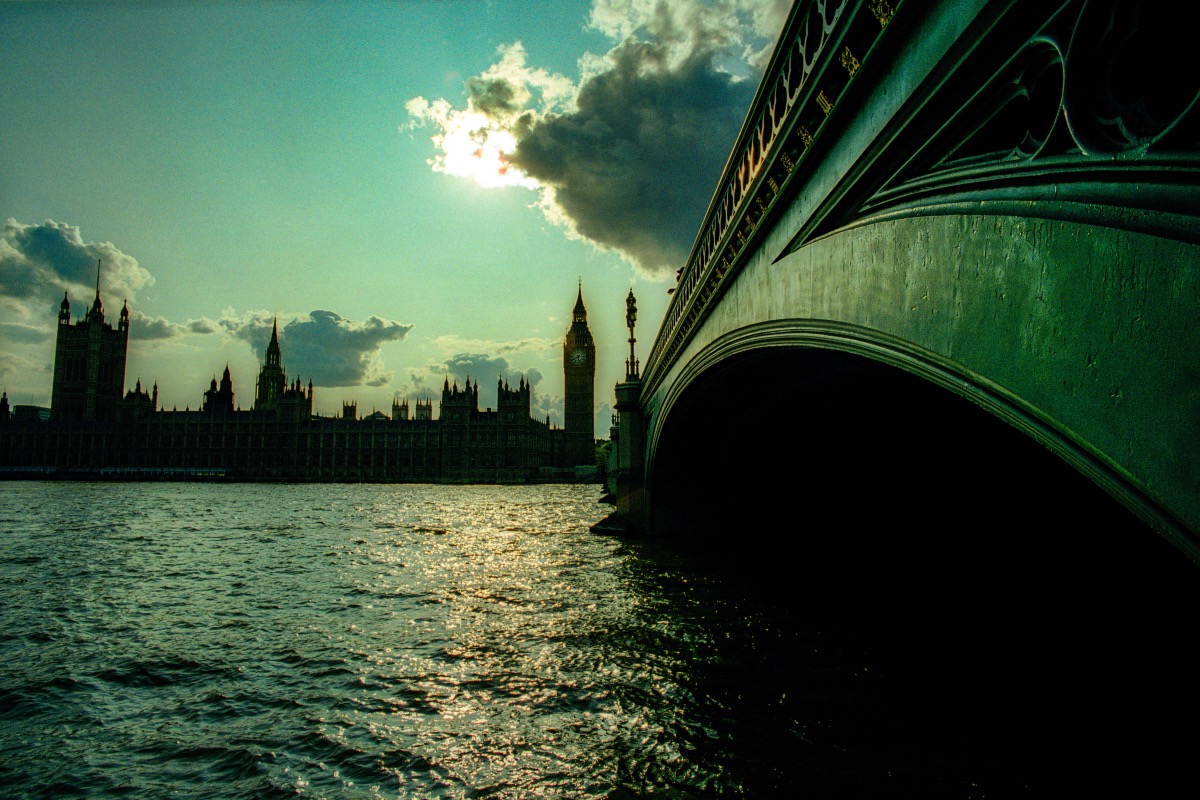
LondonLife – Parliamentary silhouette…

Looking across the River Thames alongside Westminster Bridge. PICTURE: Mark Haupt/Unsplash

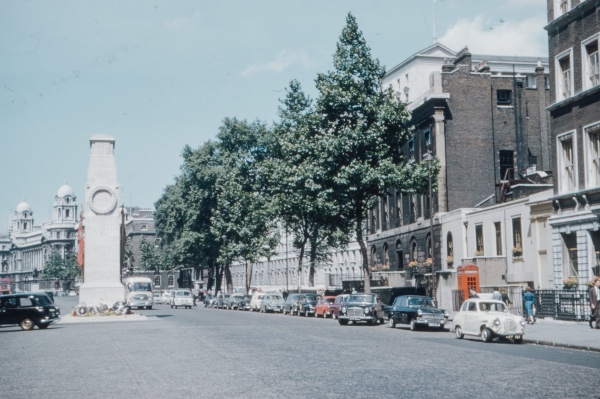
LondonLife – A trip down memory lane…

Images of London from the 1960s showing, top, a view of Whitehall ad the Cenotaph, and below, looking across the Thames to the Houses of Parliament. PICTURES: Annie Spratt/Unsplash

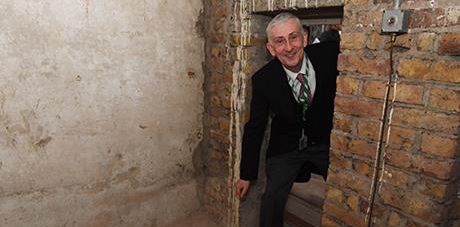
LondonLife – “Secret” door rediscovered in the Houses of Parliament…

A forgotten door built for festivities surrounding the coronation of King Charles II in 1661 has been rediscovered in the Houses of Parliament. 

The door, hidden behind panelling in cloister formerly used as offices by the Parliamentary Labour Party, was originally constructed to allow guests at the coronation to make their way to his celebratory banquet in Westminster Hall.

It was subsequently used by the likes of Robert Walpole, often referred to as the first Prime Minister as well as architect-led rivals Charles James Fox and William Pitt the Younger, and diarist Samuel Pepys.

The door and passageway behind it survived the fire which destroyed much of the Palace of Westminster in 1834 but it was thought the passage had been filled in during restoration works after the Palace of Westminster was bombed in World War II.

Liz Hallam Smith, an historical consultant from the University of York who is working with the team undertaking the renovations, said they were trawling through “10,000 uncatalogued documents relating to the palace at the Historic England Archives in Swindon, when we found plans for the doorway in the cloister behind Westminster Hall”.

“As we looked at the paneling closely, we realised there was a tiny brass key-hole that no-one had really noticed before, believing it might just be an electricity cupboard,” she said. “Once a key was made for it, the paneling opened up like a door into this secret entrance.”

In the small room behind the door, the team discovered the original hinges for two wooden doors some three-and-a-half meters high that would have opened into Westminster Hall. They also found graffiti, scribbled in pencil by bricklayers who worked on the restoration of the palace in 1851 following the 1834 fire.

One section reads “This room was enclosed by Tom Porter who was very fond of Ould Ale” and another, “These masons were employed refacing these groines…[ie repairing the cloister] August 11th 1851 Real Democrats”, the latter a reference suggesting the men were part of the working class male suffrage Chartist movement.

Sir Lindsay Hoyle, the House of Commons Speaker, described the find as “part of our parliamentary history”: “To think that this walkway has been used by so many important people over the centuries is incredible.”

PICTURE: Sir Lindsay Hoyle and the door (UK Parliament/Jessica Taylor)


A Moment in London’s History…The election of Nancy Astor

This marks the 100th anniversary – last month in fact – of the entry of the first woman to the British Parliament.

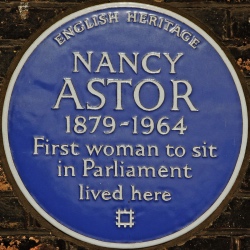
Nancy Astor, who won the seat of Plymouth Sutton on 15th November, 1919, took her seat in Parliament two weeks later on 1st December, about a year after women won the right to stand as an MP.

Astor, whose husband, Waldorf Astor, had previously occupied her seat (but whose seat became vacant when he was elevated to the House of Lords following the death of his father, Viscount Astor), was the first to take her seat in the House of Commons but not the first elected.

That honour goes to Constance Markiewicz, who won for Sinn Fein in 1918 – while she was detained in Holloway Prison – and who never took her seat in the House of Commons.

The American-born Astor met with a somewhat hostile reception from some – Winston Churchill famously told her MPs had hoped to “freeze her out”.

She delivered her maiden speech on 24th February, 1920, warning the MPs that given some women aged over 30 could now vote, they intended to use it and “use it wisely”.

Astor ended up winning seven elections and, despite being seen increasingly as a figure of controversy in part because of her support – along with her husbands and their associates – of Neville Chamberlain’s policy of appeasement with Germany in the lead-up to World War II, remained MP for Plymouth Sutton until 1945.

She decided not to stand again based on the advice of the Conservative Party – who saw her increasingly as a liability, and her husband.

PICTURE: A Blue Plaque commemorating Nancy Astor on a property at 4 St James’s Square, St James’s (Leo Reynolds (licensed under CC BY-NC-SA 2.0/image cropped)

Lost London – St Stephen’s Chapel…

The chapel, which served as the House of Commons from the mid-16th century until it was destroyed in the fire at the Palace of Westminster in 1834, was first recorded as part of the palace in the reign of King John (1199-1216).

It was rebuilt  in the late 13th century, on the orders of King Edward I. The king, apparently impressed by the Sainte Chapelle, built as a royal chapel by King Louis IX in Paris, ordered the chapel rebuilt to rival it.

The two storey, richly decorated stone chapel featured two levels, the upper floor for use of the Royal Family (it could only be entered from the Royal Apartments), the lower for courtiers and the Royal Household – was largely complete by 1348.

The then 15-year-old King Richard II married Anne of Bohemia in the chapel in 1382 and the ill-fated Richard, Duke of York (the younger of the two so-called Princes in the Tower) married Anne Mowbray here while still young children. Richard’s father, King Edward IV, had laid in state here for eight days after his death in 1483. Thomas Cranmer was consecrated as Archbishop of Canterbury here in 1533.

The Palace of Westminster was no longer used as a royal residence following the death of King Henry VIII in   and in 1547 it was deconsecrated under the Abolition of Chantries Act instituted by King Henry’s son, King Edward VI, after which it was used as a debating chamber for the House of Commons (which had hitherto been meeting in xxx).

During the Commonwealth, Oliver Cromwell had the chapel’s crypt white-washed and, so the story goes, used it for stabling his horses.

The chapel’s architecture was amended several times over the ensuing centuries to better accomodate MPs – it included the addition of extra seats and among the architects who worked on it was Sir Christopher Wren – before the fire of 1834 while completely destroyed the main chapel, leaving just the crypt below and adjoining cloisters.

The crypt, now known as the Chapel of St Mary Undercroft, was subsequently restored to its original use as a place of worship (it had been used for various purposes over its life). Interestingly, women’s suffragist Emily Davison had spent the night in a broom cupboard in the crypt in 1911 so, as woman banned from the premises, she could address the House of Commons the next day.

The site of the chapel is now covered by St Stephen’s Hall and its porch, constructed as part of the rebuild after the fire.

To see modern revisualisations of what the chapel may once have looked like, head to www.virtualststephens.org.uk.


10 sites from Victoria and Albert’s London – 7. The Palace of Westminster…


Following the destruction of much of the Palace of Westminster in a fire which broke out on 16th October, 1834, work was launched on a new building to house both the House of Commons and the House of Lords – a building to which both Queen Victoria and Prince Albert had strong connections.

Rebuilding commenced in earnest for the new building 27th August, 1840, when Sarah Barry, wife of architect Charles Barry (his plans for a new Perpendicular Gothic-style Parliament building had been selected from some 97 submissions), laid the foundation stone of the new complex.

Work, to the designs of Barry with the aid of Augustus Pugin, progressed (although a lot slower than was originally envisaged – and a lot more expensively) and the new House of Lords was opened in 1847 followed by the new House of Commons in 1852 (when Barry received a knighthood).

The Clock Tower, meanwhile, now renamed the Elizabeth Tower, was not completed until 1858, but when the Victoria Tower was roofed in 1860, the work was largely complete (although construction wasn’t officially completed until 10 years later – Barry died in 1860 and the work was continued by his son, Edward Middleton Barry).

In 1852, Queen Victoria became the first monarch to take the route since used by all sovereigns at the State Opening of Parliament – arriving in the Irish State Coach (still used by Queen Elizabeth II today) she entered the entrance at the base of the Victoria Tower (now known as the Sovereign’s Entrance) and proceeded to the Robing Room where she was dressed in the Imperial State Crown and the Robe of State before processing through the Royal Gallery to the chamber of the House of Lords where she took her seat on the Throne (located opposite the door leading to the House of Commons).

Prince Albert, known for his passion for the arts, chief connection came when he was appointed chair of the Royal Fine Arts Commission in 1835. It oversaw the placement of paintings and sculptures in the building, including five vast frescoes by William Dyce depicting the Arthurian legend which can be seen in the Robing Room.

The prince tragically died on 14th December, 1861, and while the structural work had largely been completed, much of the decorative schemes the commission had envisaged for the palace hadn’t been finished. As a result, many of the decorative aspects Prince Albert had overseen the planning of were never completed.

Portrayals of the Queen and Prince in the building today include a white marble statue of Queen Victoria holding a sceptre and laurel crown in the Prince’s Chamber and portraits of the Queen and Prince Albert by Franz Xaver Winterhalter which flank the Chair of State in the Robing Room.

WHERE: Houses of Parliament (nearest Tube stations are Westminster, St James’s Park and Embankment); WHEN: Tours are held on Saturdays until 25th January 2020 and Monday to Friday between until 30th August 2019 (except 26th August); COST: £26.50 adults/£22 concessions/£11.50 children five to 15 years (children under five are free); WEBSITE: www.parliament.uk.
This Week in London – The history of women in Parliament; Michael Jackson portraits; and, Nevinsons honoured…

The campaign for women to be able to vote and stand as representatives in Parliament is the subject of an exhibition opening at the Houses of Parliament. Staged in Westminster Hall, Voice & Vote: Women’s Place in Parliament features historic objects, pictures and archives from Parliamentary collections and elsewhere with the “immersive” recreation of some of the lost historical spaces in the Palace of Westminster among the highlights. These include ‘The Ventilator’ – a space above the House of Commons Chamber where women, banned from the public galleries, watched and listened to Parliamentary debates, ‘The Cage’ – a ladies gallery closed off by brass grills built as part of the House of Commons when it was reconstructed after the 1834 fire, and ‘The Tomb’ – a room for women MPs after the 1918 decision allowing them to stand for Parliament. The exhibition, which is free to attend, runs from until 6th October. Tickets have to be pre-booked via Parliament’s website. PICTURE: Michael D Beckwith/Unsplash

The final commissioned portrait of popstar Michael Jackson is among images on show in a new National Portrait Gallery exhibition exploring his influence on contemporary art. Along that work – Kehinde Wiley’s 2010 work Equestrian Portrait of King Philip II (Michael Jackson), the exhibition Michael Jackson: On the Wall features American artist and activist Faith Ringgold’s story quilt Who’s Bad?, a series of collages by Isaac Julien, and a ‘dinner jacket’ covered with forks, spoons and knives made by costume designer Michael Lee Bush as well as a pop-graffiti style portrait by Keith Haring, on show for the first time in 30 years. Among new works created specially for the exhibition are a line drawing by artist Michael Craig-Martin which is based on the image of 11-year-old Michael used for the cover of Rolling Stone magazine in April, 1971, and a large-scale painting by Yan Pei Ming, In Memory of Michel Jackson. Opening today, the exhibition can be seen until 21st October. Admission charge applies. For more, see www.npg.org.uk.

World War I artist CRW Nevinson and his father, journalist Henry Nevinson, have both been honoured with an English Heritage Blue Plaque. The plaque was unveiled at a property at 4 Downside Crescent in Hampstead where the Nevinson family lived between 1903 and 1941 before bombing raids made the home uninhabitable. Richard “CRW” Nevinson (1889-1946) was one of the most famous artists of the Great War and used a variety of styles, including Futurism and Cubism, to capture the brutality of the war based on his experience while serving briefly with the  Royal Army Medical Corps in France (before he was sent home in 1915 for rheumatic pain). His father, who reported on the Boer War and World War I, was known as “the king of war correspondents” and was a champion of universal suffrage. For more, see www.english-heritage.org.uk/visit/blue-plaques/.

Send all items for inclusion to exploringlondon@gmail.com

A Moment in London’s History – The great flood of 1928…

It was 90 years ago this month – 6th and 7th January, 1928 – that the River Thames flooded disastrously in what was the last major flood in central London.

Fourteen people are reported to have died and some 4,000 made homeless when the river burst its banks and spilled over the top of the Thames Embankment. Part of the Chelsea Embankment collapsed.

The flood – which was blamed on a range of factors including a sudden thaw upstream, heavy rain, a tidal surge and the impact of dredging – peaked at about 1.30am on 7th January at a height of 18 foot, three inches (5.56 metres) above ordnance datum.

The city saw extensive flooding on the City of London itself as well as in Southwark and as far upriver as Putney and Hammersmith and downriver in Greenwich and Woolwich as well as beyond.

Most of the deaths occurred when the embankment gave way near Lambeth Bridge and a wall of water swept through the slums on the Westminster side of the bridge with 10 people losing their lives.

Among the buildings flooded were the Tate Gallery at Millbank – where many works including some by JMW Turner were damaged, parts of the Houses of Parliament including Westminster Hall and the House of Commons, numerous Underground stations and Blackwall and Rotherhithe tunnels. The moat of the Tower of London, dry for 80 years, was filled.

While the flood waters receded by the end of the day, the damage took years to repair with many buildings in Millbank, the worst affected area, demolished. Embankments were raised in the wake of the flooding but it wasn’t until after the North Sea flood of 1953 that authorities took action to build the Thames Barrier (it was eventually completed in 1982).

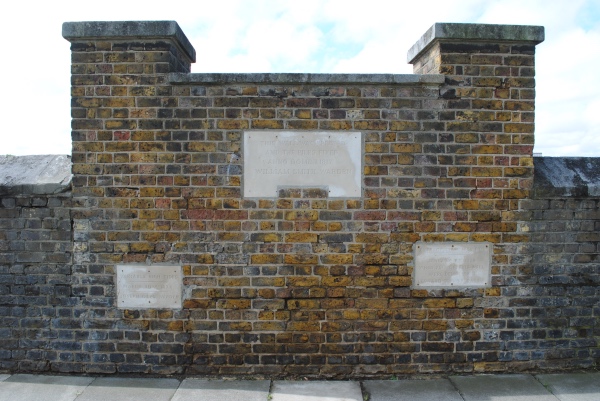
Above – A marker recording the height of the flood outside Trinity Hospital in Greenwich (the plaque below right records the details).

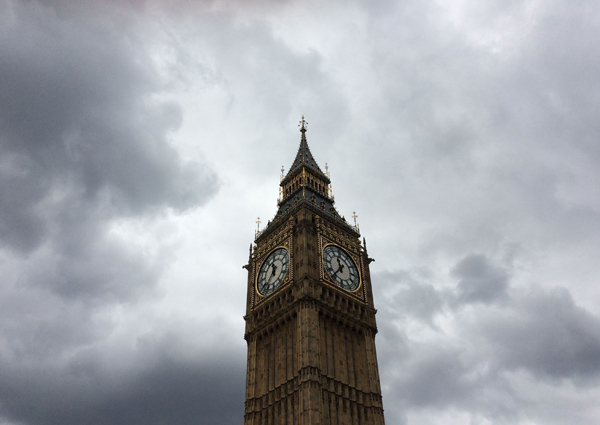
LondonLife – Monochrome cityscape on a dreary day…

PICTURE: Hala AlGhanim/Unsplash

LondonLife Special – Big Ben falls silent…

And so the day has finally arrived. Following its usual bonging at midday today, the famous bell nick-named Big Ben has now controversially fallen silent as what have been described as “critical” conservation works are carried out.

How long the 13.7 tonne bell, which sits at the top of Elizabeth Tower (formerly known as the Clock Tower) at the northern end of the Palace of Westminster (also known as the Houses of Parliament) and is officially known as the “Great Bell”, will be silent remains something of a mystery.

Following uproar over the initial announcement that the bell would be silent for four years (until 2021), officials have now said that the plan will now be reviewed. There have also been claims that the bell will continue to toll for significance events such as Remembrance Sunday and New Year’s Eve (Conservative MPs also reportedly want the bell to toll as the UK leaves the EU on 29th March, 2019).

It should be noted that while the mechanism which strikes the bell will be stopped from doing so during works to protect the ears of those working on it, the clock faces on the tower will continue to show the time.

The giant bell, which was cast by the Whitechapel Bell Foundry, went into action on 11th July, 1859, and has been bonging almost continually since. It apparently stopped for two years during World War I for fears it would attract Zeppelins to the site and was silent during the funerals of former PMs Winston Churchill and Margaret Thatcher. It was last silent in 2007 when maintenance was carried out.

PICTURE: Athena/Unsplash


Recap – 10 of the most memorable (and historic) views of London

We have finished our series on 10 of the most memorable (and historic) views of London. And while there’s plenty of views we didn’t mention (we’ll be featuring more in an upcoming series at some point), we think we have captured 10 worth seeing. So, in case you missed any, here they are again…

1. View from St Paul’s Cathedral’s dome…

2. The city skyline from Primrose Hill…

3. View from General Wolfe, Greenwich…

4. View from King Henry’s Mound, Richmond Park…

5. View from the top of The Monument…

6. View from Parliament Hill…

7. View of the Houses of Parliament from across the Thames…

8. View from Point Hill, Greenwich…

9. High level views from Tower Bridge…

10. View of Maritime Greenwich…

We’ll kick off our new special Wednesday series next week…

10 of the most memorable (and historic) views of London – 7. View of the Houses of Parliament from across the Thames…

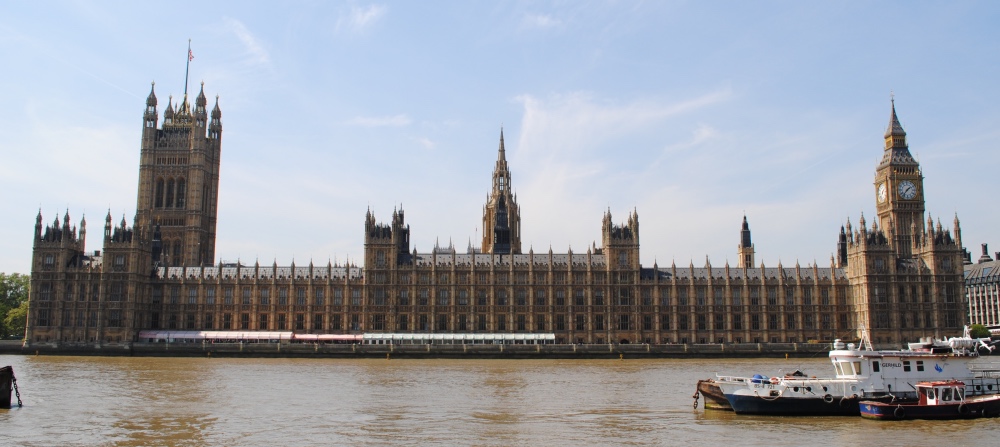
A smaller scale albeit spectacular view – in this one, the focus is on a particular building – but among the most splendid views of London is that of the Houses of Parliament (aka The Palace of Westminster) from across the Thames.

Featured in various ways in numerous films and TV shows (1980s sitcoms Yes Minister and Yes, Prime Minister among them) as well on bottles of HP Sauce, the iconic view from the east bank of the Thames, taking the facade of the building with the bookends of Victoria and Elizabeth Towers, has only been around its current form following the completion of  Sir Charles Barry’s gothic masterpiece in 1870 (although the Palace of Westminster and adjacent buildings have occupied the site for far longer).

The site, along with the neighbouring Westminster Abbey and St Margaret’s Church, is protected as part of the UNESCO World Heritage List, the official listing of which notes that the “iconic silhouette of the ensemble is an intrinsic part of its identity, which is recognised internationally with the sound of ‘Big Ben’ being broadcast regularly around the world”.

PICTURE: Cody Thompson/Unsplash

LondonLife – In the aftermath of tragedy…

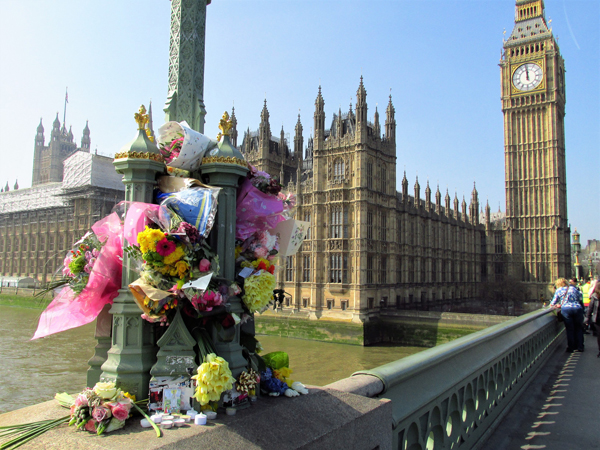
Flowers on Westminster Bridge, placed there in the wake of last week’s terror attack in which an assailant, named as 52-year-old Khalid Masood, killed three people and injured at least 50 as he drove a vehicle at high speed across the bridge along a pedestrian walkway. Crashing outside the Houses of Parliament he then stabbed to death PC Keith Palmer before he was shot dead by another officer. Addressing a vigil in Trafalgar Square in the aftermath of the attack, London Mayor Sadiq Khan said the city “will never be cowed” by terrorism. “Those evil and twisted individuals who try to destroy our shared way of life will never succeed and we condemn them,” he said. PICTURE: David Holt/Flickr/CC BY 2.0